Downloaded 214 times



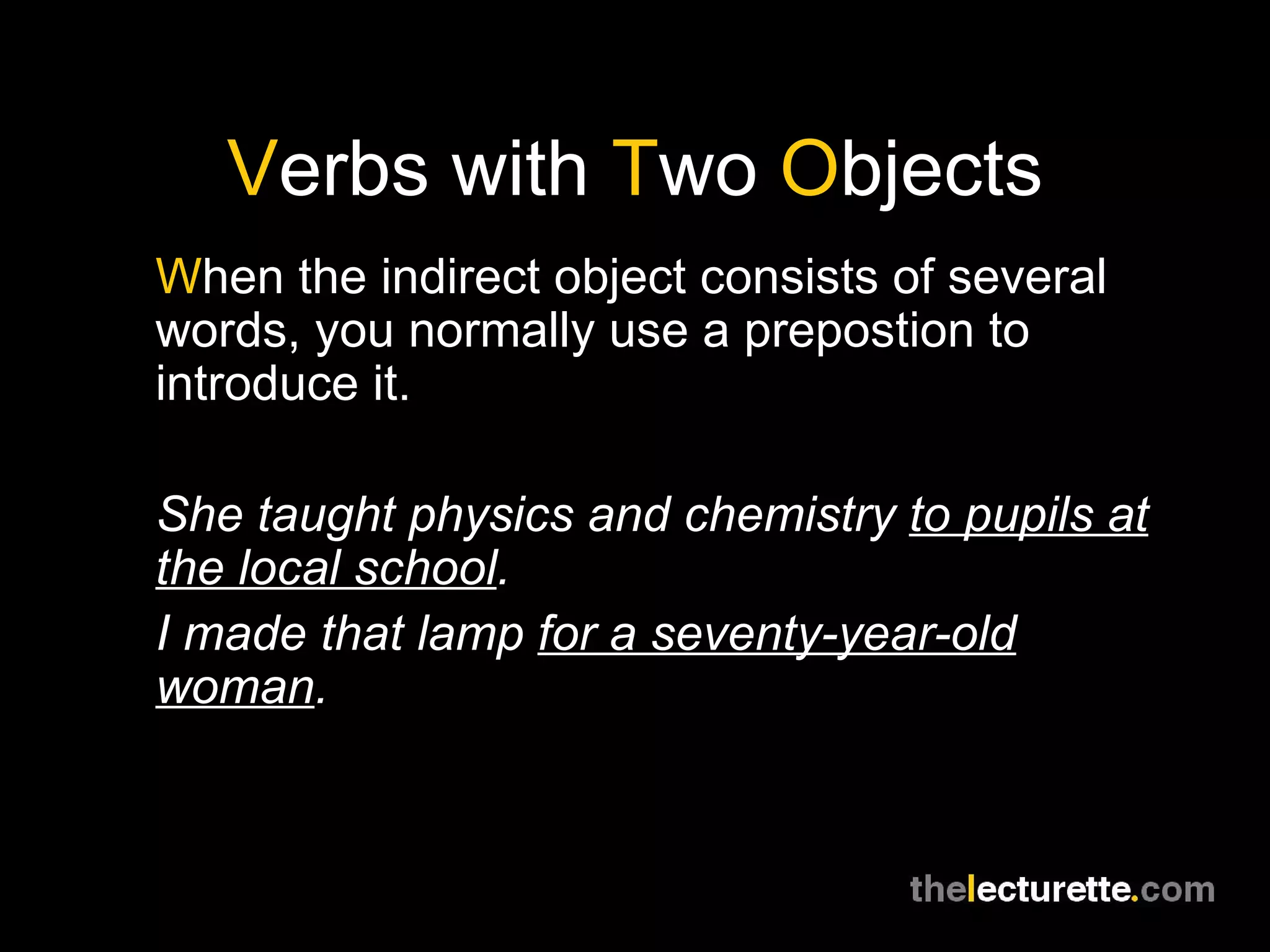
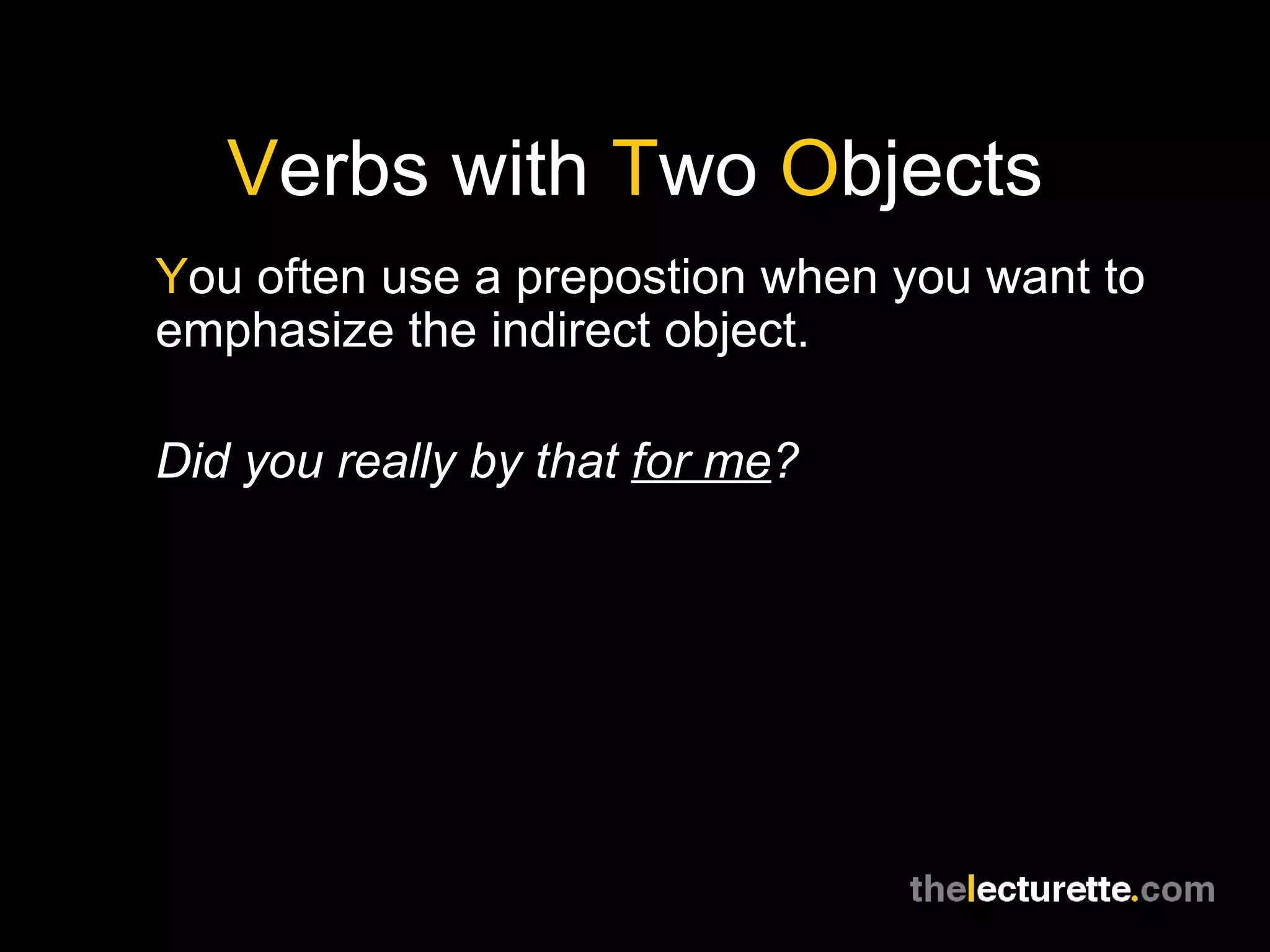

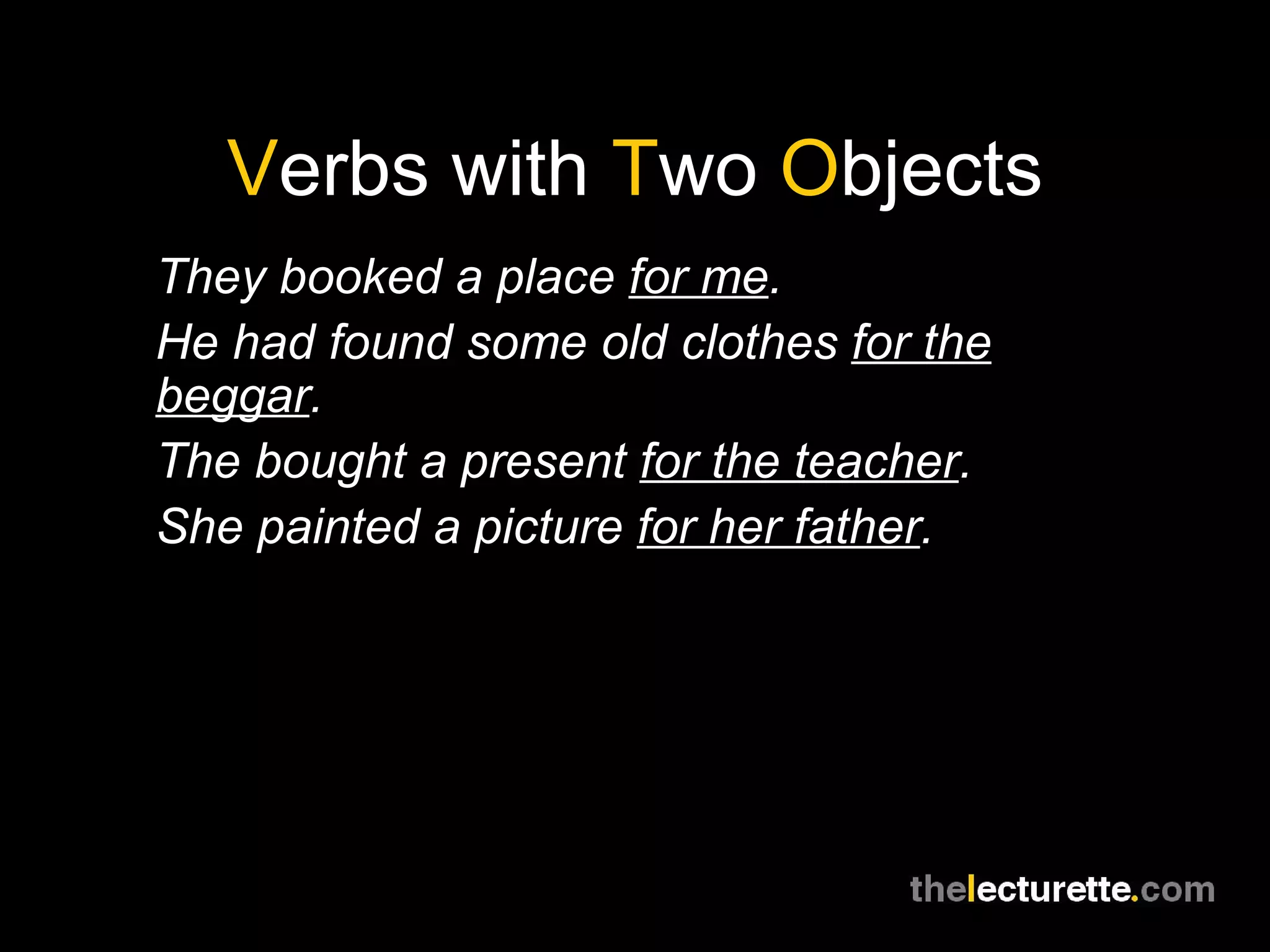
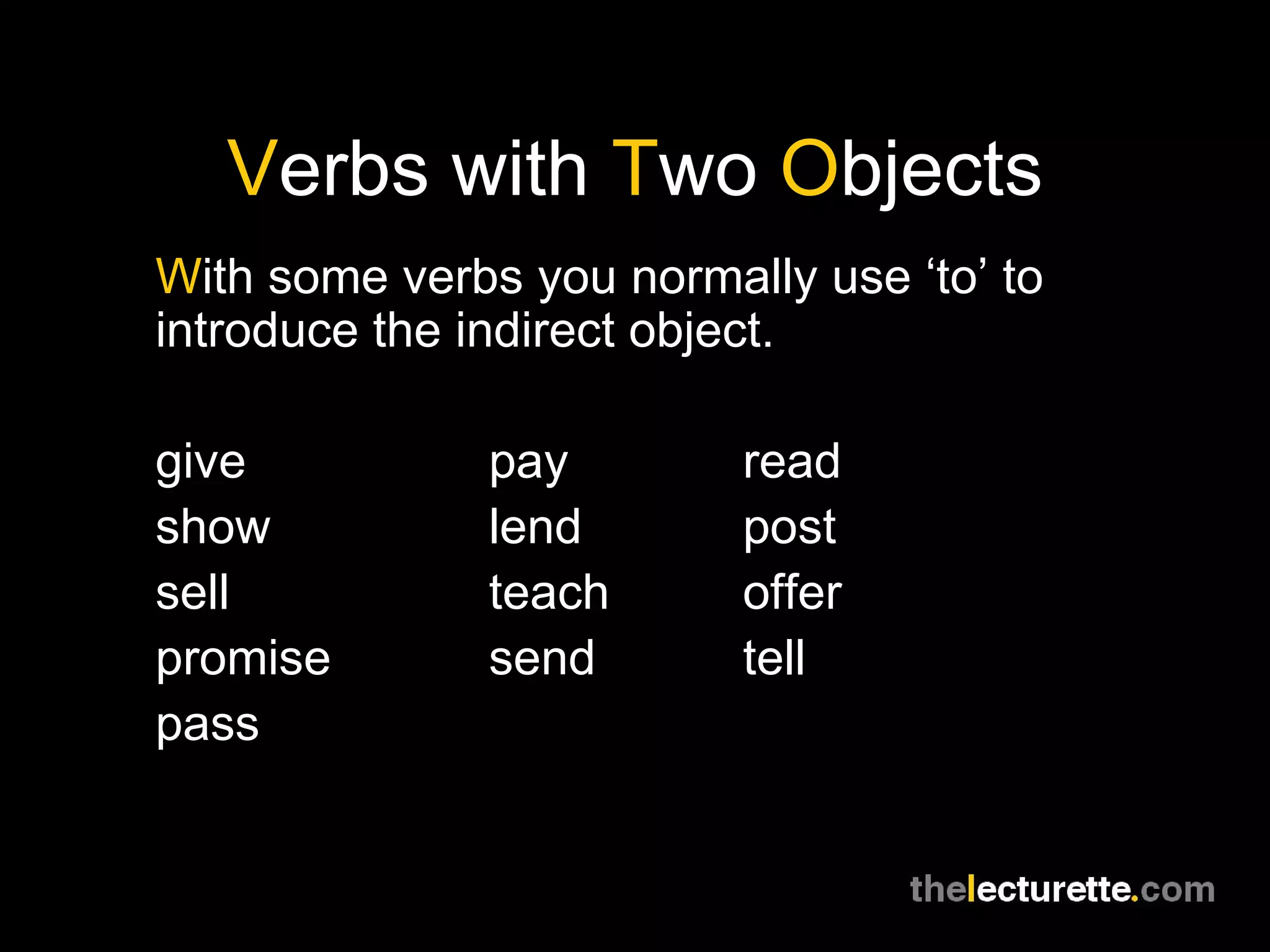


The document explains verbs that take two objects, specifically direct and indirect objects, known as ditransitive verbs. It provides examples of how to position indirect objects before or after direct objects, depending on the context, and discusses the use of prepositions 'to' and 'for' to introduce indirect objects. Additionally, it highlights verbs that typically pair with one preposition over the other and the nuanced meanings that may arise from these choices.


