TO BE Created by Javier González Marín
Present tense verb BE (+) Full form I  am  your teacher. You  are  in room 13. He  is  James. She  is  Marta. It  is  a school. We  are  students. You  are  in Class two. They  are  teachers/tables. Contraction I ’m  your teacher. You ’re  in room 13. He ’s  James. She ’s  Marta. It ’s  a school. We ’re  students. You ’re  in Class two. They ’re  teachers/tables.
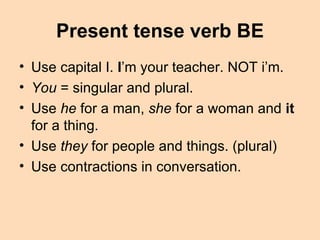
Present tense verb BE Use capital I.  I ’m your teacher. NOT i’m. You  = singular and plural. Use  he  for a man,  she  for a woman and  it  for a thing. Use  they  for people and things. (plural) Use contractions in conversation.
Present tense verb BE (-) Italian. Spanish. teachers. I ’m not You  aren’t He/She/It  isn’t We  aren’t You  aren’t They  aren’t I  am not You  are not He/She/It  is not We  are not You  are not They  are not Contraction Full form
Present tense verb BE (-) Put  not  after the verb to make negatives. You can also contract  are not  and  is not  like this: You  are not  Italian. You ’re not  Italian. She  is not  Polish. She ’s not  Polish.
Present tense verb BE (?) No, Yes, German? Russian? Polish? I ’m not . you  aren’t . he/she/it  isn’t . we  aren’t . you  aren’t . they  aren’t . I  am . you  are . he/she/it  is . we  are you  are . they  are . Am  I Are  you Is  he / she / it Are  we Are  you Are  they
Present tense verb BE (?) In questions, put  be  before  you ,  he , etc. Are you  Spanish?  NOT   You are Spanish ? Where  are you  from?  NOT   Where you are from ? Don’t use contractions in short answers. Are you Scottish ? Yes,  I am .  NOT   Yes, I’m .

2. present tense verb be (+)

  • 1.
    TO BE Createdby Javier González Marín
  • 2.
    Present tense verbBE (+) Full form I am your teacher. You are in room 13. He is James. She is Marta. It is a school. We are students. You are in Class two. They are teachers/tables. Contraction I ’m your teacher. You ’re in room 13. He ’s James. She ’s Marta. It ’s a school. We ’re students. You ’re in Class two. They ’re teachers/tables.
  • 3.
    Present tense verbBE Use capital I. I ’m your teacher. NOT i’m. You = singular and plural. Use he for a man, she for a woman and it for a thing. Use they for people and things. (plural) Use contractions in conversation.
  • 4.
    Present tense verbBE (-) Italian. Spanish. teachers. I ’m not You aren’t He/She/It isn’t We aren’t You aren’t They aren’t I am not You are not He/She/It is not We are not You are not They are not Contraction Full form
  • 5.
    Present tense verbBE (-) Put not after the verb to make negatives. You can also contract are not and is not like this: You are not Italian. You ’re not Italian. She is not Polish. She ’s not Polish.
  • 6.
    Present tense verbBE (?) No, Yes, German? Russian? Polish? I ’m not . you aren’t . he/she/it isn’t . we aren’t . you aren’t . they aren’t . I am . you are . he/she/it is . we are you are . they are . Am I Are you Is he / she / it Are we Are you Are they
  • 7.
    Present tense verbBE (?) In questions, put be before you , he , etc. Are you Spanish? NOT You are Spanish ? Where are you from? NOT Where you are from ? Don’t use contractions in short answers. Are you Scottish ? Yes, I am . NOT Yes, I’m .