Original Article


                      Veinlite Transillumination in the Pediatric
                               Emergency Department
                                         A Therapeutic Interventional Trial
                         Yiannis L. Katsogridakis, MD, MPH,*y Roopa Seshadri, PhD, AM,yzx
                              Christine Sullivan, MBA, MS,x and Mark L. Waltzman, MDk

                                                                                 n 1998, Frey1 reported peripheral intravenous (IV) inser-
Objectives: We hypothesized that transillumination would increase
peripheral intravenous (IV) insertion success rates in pediatric emer-
                                                                               I tion success rates for admitted patients, at a large urban
                                                                               children’s hospital, of 23% for physicians, 44% for staff
gency department patients. Primary outcome was success in first
attempt, and secondary outcome was success within 2 attempts.                  registered nurses (RNs), and 98% for IV nurse clinicians. The
Methods: We evaluated IV insertion by pediatric emergency de-                  number of attempts ranged from 1 to 10 on a single patient,
partment physicians and nurses using the Veinlite (TransLite, Sugar            and the average time required per IV start was 20 minutes,
Land, Tex). Patients who required nonemergent IV insertion were                with an estimated average cost of $24. In 1992, Friedland
enrolled if younger than 3 years or aged 3 to 21 years with a history          and Brown2 reported a 74% success rate in the first IV at-
of difficult access. Participants were randomly assigned to transil-            tempt in 214 children in an emergency department (ED) by
lumination or nontransillumination. Analyses were performed using a            registered nurses.
mixed-effects logistic regression model adjusting for provider effect.                Kuhns et al3 described the use of transillumination
Results: We evaluated 240 patients. After adjusting for signifi-                of an extremity to facilitate infant venipuncture in 1975.
cant covariates (safety catheter [P = 0.008], visibility [P = 0.01],           They noted that venipuncture in infants could be difficult
and palpability [P = 0.03]) and controlling for provider effect, IV            because superficial veins were often too small to palpate
placement was more likely successful in first attempt in trans-                 and were difficult to see with ambient light. The use of
illuminated patients (P = 0.03; odds ratio, 2.1 [95% confidence                 the initial transillumination devices required caution be-
interval, 1.1Y3.9]). After adjusting for significant covariates (safety         cause of production of heat and iatrogenic second-degree
catheter [P G 0.001], location [P = 0.005], and palpability [P =               burns.4,5 The development and improvement of fiber optic
0.05]) and controlling for provider effect, IV placement was more              lights has resulted in transilluminators that illuminate
likely successful within 2 attempts in transilluminated patients (P =          veins without danger of thermal injury when used appro-
0.01; odds ratio, 3.5 [95% confidence interval, 1.4Y8.9]). Intra-               priately.5Y9
cluster correlation for random effect of provider was 10% in first                     In a pediatric ED, IV insertion is often a difficult ex-
attempt and 16% within 2 attempts.                                             perience for patients, parents, and medical providers. In-
Conclusions: After adjusting for multiple significant covariates and
                                                                               creased dexterity is required in the cannulation of infants,
controlling for random effect of provider, our results indicated a
                                                                               and children and adolescents with chronic medical condi-
benefit in the use of Veinlite transillumination for IV insertion in
                                                                               tions. When unsuccessful, alternatives include intraosseous
first attempt and within 2 attempts. This technique seemed to
                                                                               infusion, central venous access, and venous cutdown. These
facilitate nonemergent IV placement in pediatric patients compared
                                                                               more invasive procedures require greater skill and are
with standard practice.
                                                                               associated with increased morbidity.10Y13 Therefore, tech-
Key Words: transillumination, peripheral intravenous insertion, IV             niques that optimize peripheral line placement are essential.
                                                                               We know of no published prospective randomized con-
                                                                               trolled trial comparing the success of IV placement with and
*Department of Pediatrics, Division of Pediatric Emergency Medicine,           without transillumination in a pediatric ED.
   Children’s Memorial Hospital; yFeinberg School of Medicine, North-                 Our hypothesis was that transillumination would
   western University; and zDepartments of Pediatrics and Preventive
   Medicine, ‘Mary Ann and J. Milburn Smith Child Health Research
                                                                               increase IV success rates in pediatric ED patients younger
   Program, Children’s Memorial Research Center, Children’s Memorial           than 3 years and in those aged 3 to 21 years with a his-
   Hospital, Chicago, IL; and kDepartment of Medicine, Division of             tory of difficult access. We studied IV placement by 4
   Emergency Medicine, Children’s Hospital Boston and Harvard Medical          pediatric emergency medicine fellows (MDs) and 4 pediatric
   School, Boston, MA.
Presented at the Pediatric Academic Societies’ Annual Meeting in Washington,
                                                                               ED RNs, using the Veinlite (TransLite, Sugar Land, Tex).
   DC, in May 2005.                                                            Our primary outcome was success rate of IV placement in
Address correspondence and reprint requests to Yiannis L. Katsogridakis,       the first attempt and our secondary outcome was success
   MD, MPH, Division of Pediatric Emergency Medicine, Children’s               rate of IV placement within 2 attempts. We planned enroll-
   Memorial Hospital, 2300 Children’s Plaza, Box 62, Chicago, IL 60614-
   3394. E-mail: ykatsogridakis@childrensmemorial.org.
                                                                               ment of 240 patients to detect a difference of 20 percent-
Copyright * 2008 by Lippincott Williams & Wilkins                              age points in IV success rates, with 80% power using a
ISSN: 0749-5161/08/2402-0083                                                   2-sided test.

Pediatric Emergency Care  Volume 24, Number 2, February 2008                                                                            83


             Copyright @ 2008 Lippincott Williams  Wilkins. Unauthorized reproduction of this article is prohibited.
Katsogridakis et al                                            Pediatric Emergency Care  Volume 24, Number 2, February 2008


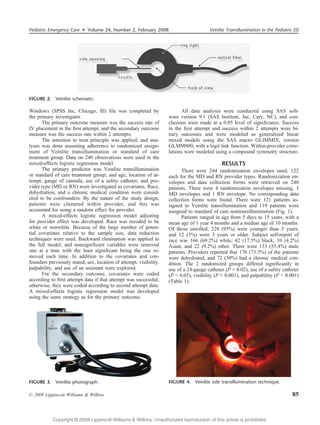
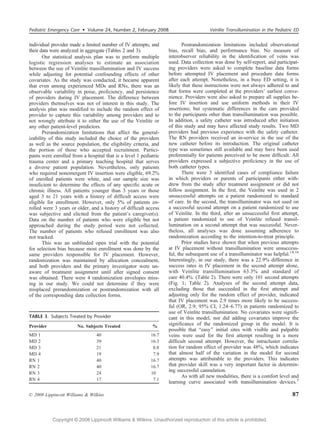
                         METHODS                                    attached to either a small or a large C-shaped ring. This
       Providers included 4 MDs with experience placing             transilluminator is a cold light source that uses the trans-
IVs in a pediatric residency and pediatric emergency medi-          mission transillumination method or a patented side trans-
cine fellowship and 4 RNs with 4 to 12 years experience             illuminating method to visualize veins. In the transmission
placing IVs in a pediatric ED setting. Their prestudy suc-          transillumination technique, the Veinlite ring is placed under
cess rates during a 4-week period were 56% in the first              an extremity, and the light is transmitted through that ex-
attempt and 85% within 2 attempts. Their success rate in the        tremity. In the side transillumination technique, the Veinlite
first attempt was similar to success rates reported in the           ring is placed on the skin and a ring of bright fiber-optic light
literature.1,2,14                                                   is directed at an angle into the skin and focused under the
       This study was a prospective, unblinded, randomized,         skin. Side transillumination provides uniform illumination
open, therapeutic interventional trial. Parental or guardian        within the open area of the C-shaped ring and allows for
written informed consent was obtained and, when appropri-           imaging of veins without shadows (Figs. 2Y4).15
ate, assent or consent from the participant. All study param-              Providers received standardized directions on the safe
eters and forms were approved by the hospital’s institutional       and correct use of the Veinlite and demonstrated their pro-
review board.                                                       ficiency before the initiation of the study. Methods to im-
       Enrollment occurred at a large, freestanding, urban,         prove venous cannulation including tourniquet application
tertiary-care pediatric teaching hospital ED from September         and swabbing with alcohol were done as per routine. An
2002 to May 2004. The hospital has a pediatric emergency            assistant to help immobilize patients was available as needed.
medicine fellowship program and an annual ED volume of              The initial provider was responsible for the first and sec-
approximately 50,000 visits.                                        ond IV attempts. A 22- or 24-gauge cannula was used for
       We enrolled a convenience sample of children younger         children younger than 3 years and a 20-, 22-, or 24-gauge
than 3 years who presented to the ED and required non-              cannula in older participants. All supplies necessary to
emergent IVs. In addition, we recruited patients aged be-           insert and secure the IV were prepared before attempt at
tween 3 and 21 years, with a history of chronic illness, who        access.
previously required IV insertion and were identified as                     The IV placement was considered successful only if
having difficult access by their caregivers. Patients who re-        10 mL of isotonic sodium chloride solution could be in-
quired emergent IV placement were excluded.                         fused without evidence of local infiltration. After confir-
       Participating MD or RN providers approached parents          mation of placement by infusion, if an IV was Blost[ during
or guardians and patients on whom they were to attempt              immobilization, the attempt was considered successful. If the
IV placement if they satisfied eligibility requirements. In          initial 2 attempts failed, a new provider could be asked to
addition, the primary investigator enrolled eligible patients.      obtain venous access. This was considered an unsuccessful
Participants were randomly assigned to the Veinlite group or        intervention. The new clinician did not have to be a study
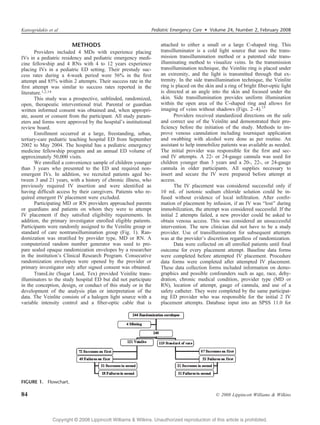
standard of care nontransillumination group (Fig. 1). Ran-          provider. Use of transillumination for subsequent attempts
domization was stratified by provider type, MD or RN. A              was at the provider’s discretion regardless of randomization.
computerized random number generator was used to pre-                      Data were collected on all enrolled patients until final
pare sealed opaque randomization envelopes by a researcher          outcome for every placement attempt. Baseline data forms
in the institution’s Clinical Research Program. Consecutive         were completed before attempted IV placement. Procedure
randomization envelopes were opened by the provider or              data forms were completed after attempted IV placement.
primary investigator only after signed consent was obtained.        These data collection forms included information on demo-
       TransLite (Sugar Land, Tex) provided Veinlite trans-         graphics and possible confounders such as age, race, dehy-
illuminators to the study hospital ED but did not participate       dration, chronic medical condition, provider type (MD or
in the conception, design, or conduct of this study or in the       RN), location of attempt, gauge of cannula, and use of a
development of the analysis plan or interpretation of the           safety catheter. They were completed by the same participat-
data. The Veinlite consists of a halogen light source with a        ing ED provider who was responsible for the initial 2 IV
variable intensity control and a fiber-optic cable that is           placement attempts. Database input into an SPSS 11.0 for


FIGURE 1. Flowchart.

84                                                                                             * 2008 Lippincott Williams  Wilkins


                Copyright @ 2008 Lippincott Williams  Wilkins. Unauthorized reproduction of this article is prohibited.
Pediatric Emergency Care  Volume 24, Number 2, February 2008                          Veinlite Transillumination in the Pediatric ED


FIGURE 2. Veinlite schematic.

Windows (SPSS Inc, Chicago, Ill) file was completed by                     All data analyses were conducted using SAS soft-
the primary investigator.                                           ware version 9.1 (SAS Institute, Inc, Cary, NC), and con-
      The primary outcome measure was the success rate of           clusions were made at a 0.05 level of significance. Success
IV placement in the first attempt, and the secondary outcome         in the first attempt and success within 2 attempts were bi-
measure was the success rate within 2 attempts.                     nary outcomes and were modeled as generalized linear
      The intention to treat principle was applied, and ana-        mixed models using the SAS macro GLIMMIX, version
lyses was done assuming adherence to randomized assign-             GLMM800, with a logit link function. Within-provider corre-
ment of Veinlite transillumination or standard of care              lations were modeled using a compound symmetry structure.
treatment group. Data on 240 observations were used in the
mixed-effects logistic regression model.                                                     RESULTS
      The primary predictor was Veinlite transillumination                There were 244 randomization envelopes used, 122
or standard of care treatment group; and age, location of at-       each for the MD and RN provider types. Randomization en-
tempt, gauge of cannula, use of a safety catheter, and pro-         velopes and data collection forms were retrieved on 240
vider type (MD or RN) were investigated as covariates. Race,        patients. There were 4 randomization envelopes missing, 3
dehydration, and a chronic medical condition were consid-           MD envelopes and 1 RN envelope. No corresponding data
ered to be confounders. By the nature of the study design,          collection forms were found. There were 121 patients as-
patients were clustered within provider, and this was               signed to Veinlite transillumination and 119 patients were
accounted for using a random effect for provider.                   assigned to standard of care nontransillumination (Fig. 1).
      A mixed-effects logistic regression model adjusting                 Patients ranged in age from 5 days to 15 years, with a
for provider effect was developed. Race was recoded to be           mean age of 1 year 4 months and a median age of 10 months.
white or nonwhite. Because of the large number of poten-            Of those enrolled, 228 (95%) were younger than 3 years,
tial covariates relative to the sample size, data reduction         and 12 (5%) were 3 years or older. Subject self-report of
techniques were used. Backward elimination was applied to           race was 166 (69.2%) white, 42 (17.5%) black, 10 (4.2%)
the full model, and nonsignificant variables were removed            Asian, and 22 (9.2%) other. There were 133 (55.4%) male
one at a time with the least significant being the one re-           patients. Providers reported that 176 (73.3%) of the patients
moved each time. In addition to the covariates and con-             were dehydrated, and 72 (30%) had a chronic medical con-
founders previously stated, sex, location of attempt, visibility,   dition. The 2 randomized groups differed significantly in
palpability, and use of an assistant were explored.                 use of a 24-gauge catheter (P = 0.02), use of a safety catheter
      For the secondary outcome, covariates were coded              (P = 0.05), visibility (P G 0.001), and palpability (P G 0.001)
according to first attempt data if that attempt was successful;      (Table 1).
otherwise, they were coded according to second attempt data.
A mixed-effects logistic regression model was developed
using the same strategy as for the primary outcome.


FIGURE 3. Veinlite photograph.                                      FIGURE 4. Veinlite side transillumination technique.

* 2008 Lippincott Williams  Wilkins                                                                                             85


           Copyright @ 2008 Lippincott Williams  Wilkins. Unauthorized reproduction of this article is prohibited.
Katsogridakis et al                                                        Pediatric Emergency Care  Volume 24, Number 2, February 2008


                                                                                 nificant covariates included use of a safety catheter
TABLE 1. Characteristics and Comparison of
Randomization Groups
                                                                                 (P = 0.008), visibility (P = 0.01), and palpability (P =
                                                                                 0.03). Intracluster correlation for random effect of provider
                                        Veinlite      Standard                   was 10%, which means that 10% of the variation in the
Characteristics                        (n = 121)      (n = 119)        P         model for the first attempt was attributable to the providers.
                                                                                        In the second attempt, providers described 59 (57.8%)
Mean (SD)                                                                        of the veins at the site as visible and 44 (43.1%) as palpable.
  Age (yrs)                     1.33 (1.89) 1.33 (1.74) 1.00                     The location of the next attempt was the dorsum of the
  Weight (kg)                    9.9 (7.0)   9.4 (5.1)   0.60                    hand in 59 (57.8%), antecubital fossa in 26 (25.5%), dorsum
Frequency (%)                                                                    of the foot in 12 (11.8%), and saphenous in 5 (4.9%). In
  Male sex                        68 (56)     65 (54)    0.81                    95 (93.1%) second attempts, a 24-gauge catheter was used,
  White race                      89 (74)     77 (65)    0.14                    and a 22-gauge catheter was used in 7 (6.9%). A safety cath-
  Hispanic/Latino ethnicity       24 (20)     34 (29)    0.11                    eter was used in 84 (82.3%) of the second attempts.
  Provider MD                     58 (48)     61 (51)    0.61                           Within 2 attempts, there was an 11.1% difference in
  Dehydrated                      88 (73)     88 (74)    0.83                    success rates, with Veinlite transillumination 85.1% and
  Chronic medical condition       35 (29)     37 (31)    0.71
                                                                                 standard of care 74.0% (Table 2). In univariate analysis,
                                                                                 controlling for the random effect of provider only, Veinlite
  Dorsum of hand, first attempt 102 (84)       89 (75)    0.07
                                                                                 use did predict success within 2 attempts (P = 0.01).
  24-Gauge, first attempt        116 (96)    104 (87)     0.02*                   Significant covariates included use of a safety catheter (P G
  Safety catheter, first attempt 102 (84)    110 (92)     0.05                    0.0001), location (P = 0.0009), sex (P = 0.03), and palpa-
  Visible, first attempt           59 (49)     95 (80)   G0.001                   bility (P = 0.02).
  Palpable, first attempt          47 (39)     74 (62)   G0.001                          The within 2 attempts final mixed-effects logistic
  Assistant to immobilize       117 (97)    113 (95)     0.54*                   regression model included randomized group, palpability,
    patient, first attempt                                                        location of attempt, and use of a safety catheter. After ad-
    Means were compared using t test, and frequencies were compared using        justing for significant covariates and controlling for provider
W2 test or Fisher exact test (indicated by *) not controlling for the random     effect, Veinlite use did predict success within 2 attempts
effect of provider.                                                              (P = 0.01). In patients randomized to use of Veinlite, IV
                                                                                 placement was 3.5 times more likely to be successful within
       In the first attempt, providers described 154 (64.2%)                      2 attempts (OR, 3.5; 95% CI, 1.4Y8.9). Significant covariates
of the veins at the site as visible and 121 (50.4%) as palpa-                    included use of a safety catheter (P G 0.001), location
ble. The location of the initial attempt was the dorsum of                       (P = 0.005), and palpability (P = 0.05). Intracluster cor-
the hand in 191 (79.6%), antecubital fossa in 41 (17.1%),                        relation for random effect of provider was 16%, which
dorsum of the foot in 7 (2.9%), and saphenous in 1 (0.4%). In                    means 16% of the variation in the model within 2 attempts
220 (91.7%) first attempts, a 24-gauge catheter was used, and                     was attributable to the providers.
a 22-gauge catheter was used in 20 (8.3%). A safety catheter                            No adverse outcomes were reported with the use of
was used in 212 (88.3%) of the initial attempts.                                 the Veinlite transilluminator during the study period.
       In the first attempt, there was a 3.2% difference in
success rates, with Veinlite transillumination 59.5% and
standard of care 56.3% (Table 2). In univariate analysis,                                                DISCUSSION
controlling for the random effect of provider only, Veinlite                            The use of a randomized controlled study design
use did not predict success in the first attempt (P = 0.53).                      minimizes bias and confounding while allowing for detec-
Significant covariates included use of a safety catheter (P =                     tion of a small, but clinically significant, treatment effect.
0.01), visibility (P = 0.01), and palpability (P = 0.02).                        Data were collected on multiple variables that we antici-
       The first attempt final mixed-effects logistic regres-                      pated may affect our outcomes. In this study, we tried to
sion model included randomized group, visibility, palpability,                   ensure that the IV placement procedure was standardized
and use of a safety catheter. After adjusting for significant                     except for the use of Veinlite transillumination. The details
covariates and controlling for provider effect, Veinlite use                     of the procedure were specified, and we attempted to limit
did predict success in the first attempt (P = 0.03). In pa-                       provider variability by selecting participants that were ex-
tients randomized to use of Veinlite, IV placement was 2.1                       perienced in pediatric IV insertion. Eight providers were
times more likely to be successful in the first attempt (odds                     selected to facilitate patient enrollment and study completion. As
ratio [OR], 2.1; 95% confidence interval [CI], 1.1Y3.9). Sig-                     a result of this relatively large number of providers, each

TABLE 2. Results

Randomization                    Success on First Attempt                      Success on Second Attempt               Success Within 2 Attempts
Veinlite                               72/121 (59.5%)                                31/49 (63.3%)                          103/121 (85.1%)
Standard of care                       67/119 (56.3%)                                21/52 (40.4%)                           88/119 (74.0%)
Total                                 139/240 (57.9%)                               52/101 (51.5%)                          191/240 (79.6%)


86                                                                                                           * 2008 Lippincott Williams  Wilkins


                  Copyright @ 2008 Lippincott Williams  Wilkins. Unauthorized reproduction of this article is prohibited.
Pediatric Emergency Care  Volume 24, Number 2, February 2008                          Veinlite Transillumination in the Pediatric ED


individual provider made a limited number of IV attempts, and             Postrandomization limitations included observational
their data were analyzed in aggregate (Tables 2 and 3).            bias, recall bias, and performance bias. No measure of
       Our statistical analysis plan was to perform multiple       interobserver reliability in the identification of veins was
logistic regression analyses to estimate an association            used. Data collection was done by self-report, and participat-
between the use of Veinlite transillumination and IV success       ing providers were asked to complete baseline data forms
while adjusting for potential confounding effects of other         before attempted IV placement and procedure data forms
covariates. As the study was conducted, it became apparent         after each attempt. Nonetheless, in a busy ED setting, it is
that even among experienced MDs and RNs, there was an              likely that these instructions were not always adhered to and
observable variability in poise, proficiency, and persistence       that forms were completed at the providers’ earliest conve-
of providers during IV placement. The difference between           nience. Providers were also asked to prepare all supplies be-
providers themselves was not of interest in this study. The        fore IV insertion and use uniform methods in their IV
analysis plan was modified to include the random effect of          insertions; but systematic differences in the care provided
provider to capture this variability among providers and to        to the participants other than transillumination was possible.
not wrongly attribute it to either the use of the Veinlite or      In addition, a safety catheter was introduced after initiation
any other patient-level predictors.                                of this study and may have affected study results. Two MD
       Prerandomization limitations that affect the general-       providers had previous experience with the safety catheter.
izability of this study included the choice of the providers       The RN providers received an in-service in the use of the
as well as the source population, the eligibility criteria, and    new catheter before its introduction. The original catheter
the portion of those who accepted recruitment. Partici-            type was sometimes still available and may have been used
pants were enrolled from a hospital that is a level 1 pediatric    preferentially for patients perceived to be more difficult. All
trauma center and a primary teaching hospital that serves          providers expressed a subjective proficiency in the use of
a diverse patient population. Nevertheless, only patients          both catheter types.
who required nonemergent IV insertion were eligible, 69.2%                There were 3 identified cases of compliance failure
of enrolled patients were white, and our sample size was           in which providers or parents of participants either with-
insuficient to determine the effects of any specific acute or        drew from the study after treatment assignment or did not
chronic illness. All patients younger than 3 years or those        follow assignment. In the first, the Veinlite was used in 2
aged 3 to 21 years with a history of difficult access were          unsuccessful attempts on a patient randomized to standard
eligible for enrollment. However, only 5% of patients en-          of care. In the second, the transilluminator was not used on
rolled were 3 years or older, and a history of difficult access     a successful second attempt on a patient randomized to use
was subjective and elicited from the patient’s caregiver(s).       of Veinlite. In the third, after an unsuccessful first attempt,
Data on the number of patients who were eligible but not           a patient randomized to use of Veinlite refused transil-
approached during the study period were not collected.             lumination on a second attempt that was successful. Never-
The number of patients who refused enrollment was also             theless, all analyses was done assuming adherence to
not tracked.                                                       randomization according to the intention-to-treat principle.
       This was an unblinded open trial with the potential                Prior studies have shown that when previous attempts
for selection bias because most enrollment was done by the         at IV placement without transillumination were unsuccess-
same providers responsible for IV placement. However,              ful, the subsequent use of a transilluminator was helpful.14,16
randomization was maintained by allocation concealment,            Interestingly, in our study, there was a 22.9% difference in
and both providers and the primary investigator were un-           success rates in IV placement in the second attempt alone,
aware of treatment assignment until after signed consent           with Veinlite transillumination 63.3% and standard of
was obtained. There were 4 randomization envelopes miss-           care 40.4%. (Table 2). There were only 101 second attempts
ing in our study. We could not determine if they were              (Fig. 1; Table 2). Analyses of the second attempt data,
misplaced prerandomization or postrandomization with all           excluding those that succeeded in the first attempt and
of the corresponding data collection forms.                        adjusting only for the random effect of provider, indicated
                                                                   that IV placement was 2.9 times more likely to be success-
                                                                   ful (OR, 2.9; 95% CI, 1.24Y6.77) in patients randomized to
                                                                   use of Veinlite transillumination. No covariates were signifi-
TABLE 3. Subjects Treated by Provider                              cant in this model, nor did adding covariates improve the
Provider               No. Subjects Treated                %       significance of the randomized group in the model. It is
                                                                   possible that Beasy[ initial sites with visible and palpable
MD 1                            40                        16.7     veins were used for the first attempt resulting in a more
MD 2                            39                        16.3     difficult second attempt. However, the intracluster correla-
MD 3                            21                         8.8     tion for random effect of provider was 48%, which indicates
MD 4                            19                         7.9     that almost half of the variation in the model for second
RN 1                            40                        16.7     attempts was attributable to the providers. This indicates
RN 2                            40                        16.7     that provider skill was a very important factor in determin-
RN 3                            24                        10
                                                                   ing successful cannulation.
                                                                          As with all new modalities, there is a comfort level and
RN 4                            17                         7.1
                                                                   learning curve associated with transillumination devices.3

* 2008 Lippincott Williams  Wilkins                                                                                             87


           Copyright @ 2008 Lippincott Williams  Wilkins. Unauthorized reproduction of this article is prohibited.
Katsogridakis et al                                             Pediatric Emergency Care  Volume 24, Number 2, February 2008


An increased familiarity and dexterity with the Veinlite            Deveney, RN, BSN, Andrew Fine, MD, Jeffrey Flaskerud,
may have resulted in a larger benefit. The IV placement in a         MD, Stephanie Harrison, RN, BSN, Michele Morin, RN,
more difficult subset of patients, such as those with dark           MSN, and Suzanne Niro, RN, for recruiting patients and
skin tone, high body mass index, or severe dehydration,             participating in this study as invaluable providers.
may also have resulted in a larger relative benefit. In our
study, data on skin tone and level of dehydration were not
collected. Weight but not height data were collected, and                                        REFERENCES
the effect of body mass index could not be evaluated.                1. Frey AM. Success rates for peripheral i.v. insertion in a children’s
       There are previous reports of modified fiber-optic                 hospital. Financial implications. J Intraven Nurs. 1998;21(3):160Y165.
light sources being used to facilitate arterial and venous can-      2. Friedland LR, Brown R. Introduction of a Bsafety[ intravenous catheter
nulation, but uniform acceptance or availability of such                for use in an emergency department: a pediatric hospital’s experience.
                                                                        Infect Control Hosp Epidemiol. 1992;13(2):114Y115.
devices does not exist.3,6,14,16Y18 Our intent was to show that      3. Kuhns LR, Martin AJ, Gildersleeve S, et al. Intense transillumination
transillumination increased success rates in routine IV place-          for infant venipuncture. Radiology. 1975;116:734Y735.
ment and should not only be used as an adjunct after pre-            4. Kuhns LR, Wyman ML, Roloff DW, et al. Letter: a caution about using
vious attempts have failed. An increased success rate should            photoillumination devices. Pediatrics. 1976;57(6):975Y976.
decrease the anxiety, pain, time, and cost associated with IV        5. McArtor RD, Saunders BS. Iatrogenic second-degree burn caused by a
                                                                        transilluminator. Pediatrics. 1979;63(3):422Y423.
insertion. Preventing more invasive attempts at access or            6. Bellotti GA, Bedford RF, Arnold WP. Fiberoptic transillumination for
less optimal therapeutic interventions would also facilitate            intravenous cannulation under general anesthesia. Anesth Analg. 1992;
medical care.                                                           60(5):348Y351.
       Our results only indicated a benefit in the use of             7. Uy J, Kuhns LR, Wall PM, et al. Light filtration during transillumina-
                                                                        tion of the neonate: a method to reduce heat buildup in the skin.
Veinlite transillumination for peripheral IV insertion in first          Pediatrics. 1977;60(3):308Y312.
attempt and within 2 attempts after adjusting for multiple           8. Curran JS. A restraint and transillumination device for neonatal arterial/
significant covariates and controlling for provider effect.              venipuncture: efficacy and thermal safety. Pediatrics. 1980;66(1):128Y130.
Although our study has many limitations, this technique              9. Dinner M. Transillumination to facilitate venipuncture in children.
                                                                        Anesth Analg. 1992;74(3):467.
seemed to facilitate nonemergent IV placement in pediatric          10. Rosetti VA, Thompson BM, Miller J, et al. Intraosseous infusion: an
patients who were cared for in a children’s hospital ED. An             alternative route of pediatric intravascular access. Ann Emerg Med.
increased success rate would support increasing the avail-              1985;14(9):885Y888.
ability and use of this and similar devices that facilitate         11. Stenzel JP, Green TP, Fuhrman BP, et al. Percutaneous central venous
IV cannulation.                                                         catheterization in a pediatric intensive care unit: a survival analysis of
                                                                        complications. Crit Care Med. 1989;17(10):984Y988.
       A repeat study with both a larger sample size and a          12. Statter MB. Peripheral and central venous access. Semin Pediatr Surg.
larger number of providers may better illustrate the efficacy            1992;1(3):181Y187.
and use of Veinlite transillumination, especially given the         13. Gauderer MW. Vascular access techniques and devices in the pediatric
differences in vein visibility and palpability in our 2 ran-            patient. Surg Clin North Am. 1992;72(6):1267Y1284.
domized groups and the amount of variation attributable to          14. Nager AL, Krasic RB. Use of transillumination to assist placement of
                                                                        intravenous catheters in the pediatric emergency department [Abstract].
the providers. Further study of transillumination and other             Pediatr Emerg Care. 1992;8(5):307.
noninvasive modalities, such as ultrasound, to facilitate IV        15. TransLite. Veinlite-Advanced Transillumination Technology for Sclero-
insertion should be encouraged.                                         therapy, Laser Treatment, Phlebology, or for Venous Access in Emer-
                                                                        gency Medicine. Available at: http://www.veinlite.com/. Accessed
                                                                        August 5, 2001.
                  ACKNOWLEDGMENTS                                   16. Goren A, Laufer J, Yativ N, et al. Transillumination of the palm for
       The authors thank Nizar A. Mullani, President, Trans-            venipuncture in infants. Pediatr Emerg Care. 2001;17(2):130Y131.
Lite, for providing the Veinlite transilluminators and images       17. Cole FS, Todres ID, Shannon DC. Technique for percutaneous
                                                                        cannulation of the radial artery in the newborn infant. J Pediatr. 1978;
for this publication; Maggie C. McCarthy, MS, MPH, for                  92(1):105Y107.
preparing the randomization envelopes and creating the              18. Pearse RG. Percutaneous catheterization of the radial artery in newborn
database; Allison Beitel, MD, Ari Cohen, MD, Meredith                   babies using transillumination. Arch Dis Child. 1978;53:549Y554.


88                                                                                                   * 2008 Lippincott Williams  Wilkins


                Copyright @ 2008 Lippincott Williams  Wilkins. Unauthorized reproduction of this article is prohibited.

Veinlite paper

  • 1.
    Original Article Veinlite Transillumination in the Pediatric Emergency Department A Therapeutic Interventional Trial Yiannis L. Katsogridakis, MD, MPH,*y Roopa Seshadri, PhD, AM,yzx Christine Sullivan, MBA, MS,x and Mark L. Waltzman, MDk n 1998, Frey1 reported peripheral intravenous (IV) inser- Objectives: We hypothesized that transillumination would increase peripheral intravenous (IV) insertion success rates in pediatric emer- I tion success rates for admitted patients, at a large urban children’s hospital, of 23% for physicians, 44% for staff gency department patients. Primary outcome was success in first attempt, and secondary outcome was success within 2 attempts. registered nurses (RNs), and 98% for IV nurse clinicians. The Methods: We evaluated IV insertion by pediatric emergency de- number of attempts ranged from 1 to 10 on a single patient, partment physicians and nurses using the Veinlite (TransLite, Sugar and the average time required per IV start was 20 minutes, Land, Tex). Patients who required nonemergent IV insertion were with an estimated average cost of $24. In 1992, Friedland enrolled if younger than 3 years or aged 3 to 21 years with a history and Brown2 reported a 74% success rate in the first IV at- of difficult access. Participants were randomly assigned to transil- tempt in 214 children in an emergency department (ED) by lumination or nontransillumination. Analyses were performed using a registered nurses. mixed-effects logistic regression model adjusting for provider effect. Kuhns et al3 described the use of transillumination Results: We evaluated 240 patients. After adjusting for signifi- of an extremity to facilitate infant venipuncture in 1975. cant covariates (safety catheter [P = 0.008], visibility [P = 0.01], They noted that venipuncture in infants could be difficult and palpability [P = 0.03]) and controlling for provider effect, IV because superficial veins were often too small to palpate placement was more likely successful in first attempt in trans- and were difficult to see with ambient light. The use of illuminated patients (P = 0.03; odds ratio, 2.1 [95% confidence the initial transillumination devices required caution be- interval, 1.1Y3.9]). After adjusting for significant covariates (safety cause of production of heat and iatrogenic second-degree catheter [P G 0.001], location [P = 0.005], and palpability [P = burns.4,5 The development and improvement of fiber optic 0.05]) and controlling for provider effect, IV placement was more lights has resulted in transilluminators that illuminate likely successful within 2 attempts in transilluminated patients (P = veins without danger of thermal injury when used appro- 0.01; odds ratio, 3.5 [95% confidence interval, 1.4Y8.9]). Intra- priately.5Y9 cluster correlation for random effect of provider was 10% in first In a pediatric ED, IV insertion is often a difficult ex- attempt and 16% within 2 attempts. perience for patients, parents, and medical providers. In- Conclusions: After adjusting for multiple significant covariates and creased dexterity is required in the cannulation of infants, controlling for random effect of provider, our results indicated a and children and adolescents with chronic medical condi- benefit in the use of Veinlite transillumination for IV insertion in tions. When unsuccessful, alternatives include intraosseous first attempt and within 2 attempts. This technique seemed to infusion, central venous access, and venous cutdown. These facilitate nonemergent IV placement in pediatric patients compared more invasive procedures require greater skill and are with standard practice. associated with increased morbidity.10Y13 Therefore, tech- Key Words: transillumination, peripheral intravenous insertion, IV niques that optimize peripheral line placement are essential. We know of no published prospective randomized con- trolled trial comparing the success of IV placement with and *Department of Pediatrics, Division of Pediatric Emergency Medicine, without transillumination in a pediatric ED. Children’s Memorial Hospital; yFeinberg School of Medicine, North- Our hypothesis was that transillumination would western University; and zDepartments of Pediatrics and Preventive Medicine, ‘Mary Ann and J. Milburn Smith Child Health Research increase IV success rates in pediatric ED patients younger Program, Children’s Memorial Research Center, Children’s Memorial than 3 years and in those aged 3 to 21 years with a his- Hospital, Chicago, IL; and kDepartment of Medicine, Division of tory of difficult access. We studied IV placement by 4 Emergency Medicine, Children’s Hospital Boston and Harvard Medical pediatric emergency medicine fellows (MDs) and 4 pediatric School, Boston, MA. Presented at the Pediatric Academic Societies’ Annual Meeting in Washington, ED RNs, using the Veinlite (TransLite, Sugar Land, Tex). DC, in May 2005. Our primary outcome was success rate of IV placement in Address correspondence and reprint requests to Yiannis L. Katsogridakis, the first attempt and our secondary outcome was success MD, MPH, Division of Pediatric Emergency Medicine, Children’s rate of IV placement within 2 attempts. We planned enroll- Memorial Hospital, 2300 Children’s Plaza, Box 62, Chicago, IL 60614- 3394. E-mail: ykatsogridakis@childrensmemorial.org. ment of 240 patients to detect a difference of 20 percent- Copyright * 2008 by Lippincott Williams & Wilkins age points in IV success rates, with 80% power using a ISSN: 0749-5161/08/2402-0083 2-sided test. Pediatric Emergency Care Volume 24, Number 2, February 2008 83 Copyright @ 2008 Lippincott Williams Wilkins. Unauthorized reproduction of this article is prohibited.
  • 2.
    Katsogridakis et al Pediatric Emergency Care Volume 24, Number 2, February 2008 METHODS attached to either a small or a large C-shaped ring. This Providers included 4 MDs with experience placing transilluminator is a cold light source that uses the trans- IVs in a pediatric residency and pediatric emergency medi- mission transillumination method or a patented side trans- cine fellowship and 4 RNs with 4 to 12 years experience illuminating method to visualize veins. In the transmission placing IVs in a pediatric ED setting. Their prestudy suc- transillumination technique, the Veinlite ring is placed under cess rates during a 4-week period were 56% in the first an extremity, and the light is transmitted through that ex- attempt and 85% within 2 attempts. Their success rate in the tremity. In the side transillumination technique, the Veinlite first attempt was similar to success rates reported in the ring is placed on the skin and a ring of bright fiber-optic light literature.1,2,14 is directed at an angle into the skin and focused under the This study was a prospective, unblinded, randomized, skin. Side transillumination provides uniform illumination open, therapeutic interventional trial. Parental or guardian within the open area of the C-shaped ring and allows for written informed consent was obtained and, when appropri- imaging of veins without shadows (Figs. 2Y4).15 ate, assent or consent from the participant. All study param- Providers received standardized directions on the safe eters and forms were approved by the hospital’s institutional and correct use of the Veinlite and demonstrated their pro- review board. ficiency before the initiation of the study. Methods to im- Enrollment occurred at a large, freestanding, urban, prove venous cannulation including tourniquet application tertiary-care pediatric teaching hospital ED from September and swabbing with alcohol were done as per routine. An 2002 to May 2004. The hospital has a pediatric emergency assistant to help immobilize patients was available as needed. medicine fellowship program and an annual ED volume of The initial provider was responsible for the first and sec- approximately 50,000 visits. ond IV attempts. A 22- or 24-gauge cannula was used for We enrolled a convenience sample of children younger children younger than 3 years and a 20-, 22-, or 24-gauge than 3 years who presented to the ED and required non- cannula in older participants. All supplies necessary to emergent IVs. In addition, we recruited patients aged be- insert and secure the IV were prepared before attempt at tween 3 and 21 years, with a history of chronic illness, who access. previously required IV insertion and were identified as The IV placement was considered successful only if having difficult access by their caregivers. Patients who re- 10 mL of isotonic sodium chloride solution could be in- quired emergent IV placement were excluded. fused without evidence of local infiltration. After confir- Participating MD or RN providers approached parents mation of placement by infusion, if an IV was Blost[ during or guardians and patients on whom they were to attempt immobilization, the attempt was considered successful. If the IV placement if they satisfied eligibility requirements. In initial 2 attempts failed, a new provider could be asked to addition, the primary investigator enrolled eligible patients. obtain venous access. This was considered an unsuccessful Participants were randomly assigned to the Veinlite group or intervention. The new clinician did not have to be a study standard of care nontransillumination group (Fig. 1). Ran- provider. Use of transillumination for subsequent attempts domization was stratified by provider type, MD or RN. A was at the provider’s discretion regardless of randomization. computerized random number generator was used to pre- Data were collected on all enrolled patients until final pare sealed opaque randomization envelopes by a researcher outcome for every placement attempt. Baseline data forms in the institution’s Clinical Research Program. Consecutive were completed before attempted IV placement. Procedure randomization envelopes were opened by the provider or data forms were completed after attempted IV placement. primary investigator only after signed consent was obtained. These data collection forms included information on demo- TransLite (Sugar Land, Tex) provided Veinlite trans- graphics and possible confounders such as age, race, dehy- illuminators to the study hospital ED but did not participate dration, chronic medical condition, provider type (MD or in the conception, design, or conduct of this study or in the RN), location of attempt, gauge of cannula, and use of a development of the analysis plan or interpretation of the safety catheter. They were completed by the same participat- data. The Veinlite consists of a halogen light source with a ing ED provider who was responsible for the initial 2 IV variable intensity control and a fiber-optic cable that is placement attempts. Database input into an SPSS 11.0 for FIGURE 1. Flowchart. 84 * 2008 Lippincott Williams Wilkins Copyright @ 2008 Lippincott Williams Wilkins. Unauthorized reproduction of this article is prohibited.
  • 3.
    Pediatric Emergency Care Volume 24, Number 2, February 2008 Veinlite Transillumination in the Pediatric ED FIGURE 2. Veinlite schematic. Windows (SPSS Inc, Chicago, Ill) file was completed by All data analyses were conducted using SAS soft- the primary investigator. ware version 9.1 (SAS Institute, Inc, Cary, NC), and con- The primary outcome measure was the success rate of clusions were made at a 0.05 level of significance. Success IV placement in the first attempt, and the secondary outcome in the first attempt and success within 2 attempts were bi- measure was the success rate within 2 attempts. nary outcomes and were modeled as generalized linear The intention to treat principle was applied, and ana- mixed models using the SAS macro GLIMMIX, version lyses was done assuming adherence to randomized assign- GLMM800, with a logit link function. Within-provider corre- ment of Veinlite transillumination or standard of care lations were modeled using a compound symmetry structure. treatment group. Data on 240 observations were used in the mixed-effects logistic regression model. RESULTS The primary predictor was Veinlite transillumination There were 244 randomization envelopes used, 122 or standard of care treatment group; and age, location of at- each for the MD and RN provider types. Randomization en- tempt, gauge of cannula, use of a safety catheter, and pro- velopes and data collection forms were retrieved on 240 vider type (MD or RN) were investigated as covariates. Race, patients. There were 4 randomization envelopes missing, 3 dehydration, and a chronic medical condition were consid- MD envelopes and 1 RN envelope. No corresponding data ered to be confounders. By the nature of the study design, collection forms were found. There were 121 patients as- patients were clustered within provider, and this was signed to Veinlite transillumination and 119 patients were accounted for using a random effect for provider. assigned to standard of care nontransillumination (Fig. 1). A mixed-effects logistic regression model adjusting Patients ranged in age from 5 days to 15 years, with a for provider effect was developed. Race was recoded to be mean age of 1 year 4 months and a median age of 10 months. white or nonwhite. Because of the large number of poten- Of those enrolled, 228 (95%) were younger than 3 years, tial covariates relative to the sample size, data reduction and 12 (5%) were 3 years or older. Subject self-report of techniques were used. Backward elimination was applied to race was 166 (69.2%) white, 42 (17.5%) black, 10 (4.2%) the full model, and nonsignificant variables were removed Asian, and 22 (9.2%) other. There were 133 (55.4%) male one at a time with the least significant being the one re- patients. Providers reported that 176 (73.3%) of the patients moved each time. In addition to the covariates and con- were dehydrated, and 72 (30%) had a chronic medical con- founders previously stated, sex, location of attempt, visibility, dition. The 2 randomized groups differed significantly in palpability, and use of an assistant were explored. use of a 24-gauge catheter (P = 0.02), use of a safety catheter For the secondary outcome, covariates were coded (P = 0.05), visibility (P G 0.001), and palpability (P G 0.001) according to first attempt data if that attempt was successful; (Table 1). otherwise, they were coded according to second attempt data. A mixed-effects logistic regression model was developed using the same strategy as for the primary outcome. FIGURE 3. Veinlite photograph. FIGURE 4. Veinlite side transillumination technique. * 2008 Lippincott Williams Wilkins 85 Copyright @ 2008 Lippincott Williams Wilkins. Unauthorized reproduction of this article is prohibited.
  • 4.
    Katsogridakis et al Pediatric Emergency Care Volume 24, Number 2, February 2008 nificant covariates included use of a safety catheter TABLE 1. Characteristics and Comparison of Randomization Groups (P = 0.008), visibility (P = 0.01), and palpability (P = 0.03). Intracluster correlation for random effect of provider Veinlite Standard was 10%, which means that 10% of the variation in the Characteristics (n = 121) (n = 119) P model for the first attempt was attributable to the providers. In the second attempt, providers described 59 (57.8%) Mean (SD) of the veins at the site as visible and 44 (43.1%) as palpable. Age (yrs) 1.33 (1.89) 1.33 (1.74) 1.00 The location of the next attempt was the dorsum of the Weight (kg) 9.9 (7.0) 9.4 (5.1) 0.60 hand in 59 (57.8%), antecubital fossa in 26 (25.5%), dorsum Frequency (%) of the foot in 12 (11.8%), and saphenous in 5 (4.9%). In Male sex 68 (56) 65 (54) 0.81 95 (93.1%) second attempts, a 24-gauge catheter was used, White race 89 (74) 77 (65) 0.14 and a 22-gauge catheter was used in 7 (6.9%). A safety cath- Hispanic/Latino ethnicity 24 (20) 34 (29) 0.11 eter was used in 84 (82.3%) of the second attempts. Provider MD 58 (48) 61 (51) 0.61 Within 2 attempts, there was an 11.1% difference in Dehydrated 88 (73) 88 (74) 0.83 success rates, with Veinlite transillumination 85.1% and Chronic medical condition 35 (29) 37 (31) 0.71 standard of care 74.0% (Table 2). In univariate analysis, controlling for the random effect of provider only, Veinlite Dorsum of hand, first attempt 102 (84) 89 (75) 0.07 use did predict success within 2 attempts (P = 0.01). 24-Gauge, first attempt 116 (96) 104 (87) 0.02* Significant covariates included use of a safety catheter (P G Safety catheter, first attempt 102 (84) 110 (92) 0.05 0.0001), location (P = 0.0009), sex (P = 0.03), and palpa- Visible, first attempt 59 (49) 95 (80) G0.001 bility (P = 0.02). Palpable, first attempt 47 (39) 74 (62) G0.001 The within 2 attempts final mixed-effects logistic Assistant to immobilize 117 (97) 113 (95) 0.54* regression model included randomized group, palpability, patient, first attempt location of attempt, and use of a safety catheter. After ad- Means were compared using t test, and frequencies were compared using justing for significant covariates and controlling for provider W2 test or Fisher exact test (indicated by *) not controlling for the random effect, Veinlite use did predict success within 2 attempts effect of provider. (P = 0.01). In patients randomized to use of Veinlite, IV placement was 3.5 times more likely to be successful within In the first attempt, providers described 154 (64.2%) 2 attempts (OR, 3.5; 95% CI, 1.4Y8.9). Significant covariates of the veins at the site as visible and 121 (50.4%) as palpa- included use of a safety catheter (P G 0.001), location ble. The location of the initial attempt was the dorsum of (P = 0.005), and palpability (P = 0.05). Intracluster cor- the hand in 191 (79.6%), antecubital fossa in 41 (17.1%), relation for random effect of provider was 16%, which dorsum of the foot in 7 (2.9%), and saphenous in 1 (0.4%). In means 16% of the variation in the model within 2 attempts 220 (91.7%) first attempts, a 24-gauge catheter was used, and was attributable to the providers. a 22-gauge catheter was used in 20 (8.3%). A safety catheter No adverse outcomes were reported with the use of was used in 212 (88.3%) of the initial attempts. the Veinlite transilluminator during the study period. In the first attempt, there was a 3.2% difference in success rates, with Veinlite transillumination 59.5% and standard of care 56.3% (Table 2). In univariate analysis, DISCUSSION controlling for the random effect of provider only, Veinlite The use of a randomized controlled study design use did not predict success in the first attempt (P = 0.53). minimizes bias and confounding while allowing for detec- Significant covariates included use of a safety catheter (P = tion of a small, but clinically significant, treatment effect. 0.01), visibility (P = 0.01), and palpability (P = 0.02). Data were collected on multiple variables that we antici- The first attempt final mixed-effects logistic regres- pated may affect our outcomes. In this study, we tried to sion model included randomized group, visibility, palpability, ensure that the IV placement procedure was standardized and use of a safety catheter. After adjusting for significant except for the use of Veinlite transillumination. The details covariates and controlling for provider effect, Veinlite use of the procedure were specified, and we attempted to limit did predict success in the first attempt (P = 0.03). In pa- provider variability by selecting participants that were ex- tients randomized to use of Veinlite, IV placement was 2.1 perienced in pediatric IV insertion. Eight providers were times more likely to be successful in the first attempt (odds selected to facilitate patient enrollment and study completion. As ratio [OR], 2.1; 95% confidence interval [CI], 1.1Y3.9). Sig- a result of this relatively large number of providers, each TABLE 2. Results Randomization Success on First Attempt Success on Second Attempt Success Within 2 Attempts Veinlite 72/121 (59.5%) 31/49 (63.3%) 103/121 (85.1%) Standard of care 67/119 (56.3%) 21/52 (40.4%) 88/119 (74.0%) Total 139/240 (57.9%) 52/101 (51.5%) 191/240 (79.6%) 86 * 2008 Lippincott Williams Wilkins Copyright @ 2008 Lippincott Williams Wilkins. Unauthorized reproduction of this article is prohibited.
  • 5.
    Pediatric Emergency Care Volume 24, Number 2, February 2008 Veinlite Transillumination in the Pediatric ED individual provider made a limited number of IV attempts, and Postrandomization limitations included observational their data were analyzed in aggregate (Tables 2 and 3). bias, recall bias, and performance bias. No measure of Our statistical analysis plan was to perform multiple interobserver reliability in the identification of veins was logistic regression analyses to estimate an association used. Data collection was done by self-report, and participat- between the use of Veinlite transillumination and IV success ing providers were asked to complete baseline data forms while adjusting for potential confounding effects of other before attempted IV placement and procedure data forms covariates. As the study was conducted, it became apparent after each attempt. Nonetheless, in a busy ED setting, it is that even among experienced MDs and RNs, there was an likely that these instructions were not always adhered to and observable variability in poise, proficiency, and persistence that forms were completed at the providers’ earliest conve- of providers during IV placement. The difference between nience. Providers were also asked to prepare all supplies be- providers themselves was not of interest in this study. The fore IV insertion and use uniform methods in their IV analysis plan was modified to include the random effect of insertions; but systematic differences in the care provided provider to capture this variability among providers and to to the participants other than transillumination was possible. not wrongly attribute it to either the use of the Veinlite or In addition, a safety catheter was introduced after initiation any other patient-level predictors. of this study and may have affected study results. Two MD Prerandomization limitations that affect the general- providers had previous experience with the safety catheter. izability of this study included the choice of the providers The RN providers received an in-service in the use of the as well as the source population, the eligibility criteria, and new catheter before its introduction. The original catheter the portion of those who accepted recruitment. Partici- type was sometimes still available and may have been used pants were enrolled from a hospital that is a level 1 pediatric preferentially for patients perceived to be more difficult. All trauma center and a primary teaching hospital that serves providers expressed a subjective proficiency in the use of a diverse patient population. Nevertheless, only patients both catheter types. who required nonemergent IV insertion were eligible, 69.2% There were 3 identified cases of compliance failure of enrolled patients were white, and our sample size was in which providers or parents of participants either with- insuficient to determine the effects of any specific acute or drew from the study after treatment assignment or did not chronic illness. All patients younger than 3 years or those follow assignment. In the first, the Veinlite was used in 2 aged 3 to 21 years with a history of difficult access were unsuccessful attempts on a patient randomized to standard eligible for enrollment. However, only 5% of patients en- of care. In the second, the transilluminator was not used on rolled were 3 years or older, and a history of difficult access a successful second attempt on a patient randomized to use was subjective and elicited from the patient’s caregiver(s). of Veinlite. In the third, after an unsuccessful first attempt, Data on the number of patients who were eligible but not a patient randomized to use of Veinlite refused transil- approached during the study period were not collected. lumination on a second attempt that was successful. Never- The number of patients who refused enrollment was also theless, all analyses was done assuming adherence to not tracked. randomization according to the intention-to-treat principle. This was an unblinded open trial with the potential Prior studies have shown that when previous attempts for selection bias because most enrollment was done by the at IV placement without transillumination were unsuccess- same providers responsible for IV placement. However, ful, the subsequent use of a transilluminator was helpful.14,16 randomization was maintained by allocation concealment, Interestingly, in our study, there was a 22.9% difference in and both providers and the primary investigator were un- success rates in IV placement in the second attempt alone, aware of treatment assignment until after signed consent with Veinlite transillumination 63.3% and standard of was obtained. There were 4 randomization envelopes miss- care 40.4%. (Table 2). There were only 101 second attempts ing in our study. We could not determine if they were (Fig. 1; Table 2). Analyses of the second attempt data, misplaced prerandomization or postrandomization with all excluding those that succeeded in the first attempt and of the corresponding data collection forms. adjusting only for the random effect of provider, indicated that IV placement was 2.9 times more likely to be success- ful (OR, 2.9; 95% CI, 1.24Y6.77) in patients randomized to use of Veinlite transillumination. No covariates were signifi- TABLE 3. Subjects Treated by Provider cant in this model, nor did adding covariates improve the Provider No. Subjects Treated % significance of the randomized group in the model. It is possible that Beasy[ initial sites with visible and palpable MD 1 40 16.7 veins were used for the first attempt resulting in a more MD 2 39 16.3 difficult second attempt. However, the intracluster correla- MD 3 21 8.8 tion for random effect of provider was 48%, which indicates MD 4 19 7.9 that almost half of the variation in the model for second RN 1 40 16.7 attempts was attributable to the providers. This indicates RN 2 40 16.7 that provider skill was a very important factor in determin- RN 3 24 10 ing successful cannulation. As with all new modalities, there is a comfort level and RN 4 17 7.1 learning curve associated with transillumination devices.3 * 2008 Lippincott Williams Wilkins 87 Copyright @ 2008 Lippincott Williams Wilkins. Unauthorized reproduction of this article is prohibited.
  • 6.
    Katsogridakis et al Pediatric Emergency Care Volume 24, Number 2, February 2008 An increased familiarity and dexterity with the Veinlite Deveney, RN, BSN, Andrew Fine, MD, Jeffrey Flaskerud, may have resulted in a larger benefit. The IV placement in a MD, Stephanie Harrison, RN, BSN, Michele Morin, RN, more difficult subset of patients, such as those with dark MSN, and Suzanne Niro, RN, for recruiting patients and skin tone, high body mass index, or severe dehydration, participating in this study as invaluable providers. may also have resulted in a larger relative benefit. In our study, data on skin tone and level of dehydration were not collected. Weight but not height data were collected, and REFERENCES the effect of body mass index could not be evaluated. 1. Frey AM. Success rates for peripheral i.v. insertion in a children’s There are previous reports of modified fiber-optic hospital. Financial implications. J Intraven Nurs. 1998;21(3):160Y165. light sources being used to facilitate arterial and venous can- 2. Friedland LR, Brown R. Introduction of a Bsafety[ intravenous catheter nulation, but uniform acceptance or availability of such for use in an emergency department: a pediatric hospital’s experience. Infect Control Hosp Epidemiol. 1992;13(2):114Y115. devices does not exist.3,6,14,16Y18 Our intent was to show that 3. Kuhns LR, Martin AJ, Gildersleeve S, et al. Intense transillumination transillumination increased success rates in routine IV place- for infant venipuncture. Radiology. 1975;116:734Y735. ment and should not only be used as an adjunct after pre- 4. Kuhns LR, Wyman ML, Roloff DW, et al. Letter: a caution about using vious attempts have failed. An increased success rate should photoillumination devices. Pediatrics. 1976;57(6):975Y976. decrease the anxiety, pain, time, and cost associated with IV 5. McArtor RD, Saunders BS. Iatrogenic second-degree burn caused by a transilluminator. Pediatrics. 1979;63(3):422Y423. insertion. Preventing more invasive attempts at access or 6. Bellotti GA, Bedford RF, Arnold WP. Fiberoptic transillumination for less optimal therapeutic interventions would also facilitate intravenous cannulation under general anesthesia. Anesth Analg. 1992; medical care. 60(5):348Y351. Our results only indicated a benefit in the use of 7. Uy J, Kuhns LR, Wall PM, et al. Light filtration during transillumina- tion of the neonate: a method to reduce heat buildup in the skin. Veinlite transillumination for peripheral IV insertion in first Pediatrics. 1977;60(3):308Y312. attempt and within 2 attempts after adjusting for multiple 8. Curran JS. A restraint and transillumination device for neonatal arterial/ significant covariates and controlling for provider effect. venipuncture: efficacy and thermal safety. Pediatrics. 1980;66(1):128Y130. Although our study has many limitations, this technique 9. Dinner M. Transillumination to facilitate venipuncture in children. Anesth Analg. 1992;74(3):467. seemed to facilitate nonemergent IV placement in pediatric 10. Rosetti VA, Thompson BM, Miller J, et al. Intraosseous infusion: an patients who were cared for in a children’s hospital ED. An alternative route of pediatric intravascular access. Ann Emerg Med. increased success rate would support increasing the avail- 1985;14(9):885Y888. ability and use of this and similar devices that facilitate 11. Stenzel JP, Green TP, Fuhrman BP, et al. Percutaneous central venous IV cannulation. catheterization in a pediatric intensive care unit: a survival analysis of complications. Crit Care Med. 1989;17(10):984Y988. A repeat study with both a larger sample size and a 12. Statter MB. Peripheral and central venous access. Semin Pediatr Surg. larger number of providers may better illustrate the efficacy 1992;1(3):181Y187. and use of Veinlite transillumination, especially given the 13. Gauderer MW. Vascular access techniques and devices in the pediatric differences in vein visibility and palpability in our 2 ran- patient. Surg Clin North Am. 1992;72(6):1267Y1284. domized groups and the amount of variation attributable to 14. Nager AL, Krasic RB. Use of transillumination to assist placement of intravenous catheters in the pediatric emergency department [Abstract]. the providers. Further study of transillumination and other Pediatr Emerg Care. 1992;8(5):307. noninvasive modalities, such as ultrasound, to facilitate IV 15. TransLite. Veinlite-Advanced Transillumination Technology for Sclero- insertion should be encouraged. therapy, Laser Treatment, Phlebology, or for Venous Access in Emer- gency Medicine. Available at: http://www.veinlite.com/. Accessed August 5, 2001. ACKNOWLEDGMENTS 16. Goren A, Laufer J, Yativ N, et al. Transillumination of the palm for The authors thank Nizar A. Mullani, President, Trans- venipuncture in infants. Pediatr Emerg Care. 2001;17(2):130Y131. Lite, for providing the Veinlite transilluminators and images 17. Cole FS, Todres ID, Shannon DC. Technique for percutaneous cannulation of the radial artery in the newborn infant. J Pediatr. 1978; for this publication; Maggie C. McCarthy, MS, MPH, for 92(1):105Y107. preparing the randomization envelopes and creating the 18. Pearse RG. Percutaneous catheterization of the radial artery in newborn database; Allison Beitel, MD, Ari Cohen, MD, Meredith babies using transillumination. Arch Dis Child. 1978;53:549Y554. 88 * 2008 Lippincott Williams Wilkins Copyright @ 2008 Lippincott Williams Wilkins. Unauthorized reproduction of this article is prohibited.