By Prof. Hitesh Dholakiya
Basics of Vector,
Triangular, Parallelogram
& polygon law
Electromagnetics
E
n
g
i
n
e
e
r
i
n
g
F
u
n
d
a
Engineering Funda Android App Electromagnetic Theory YT Playlist
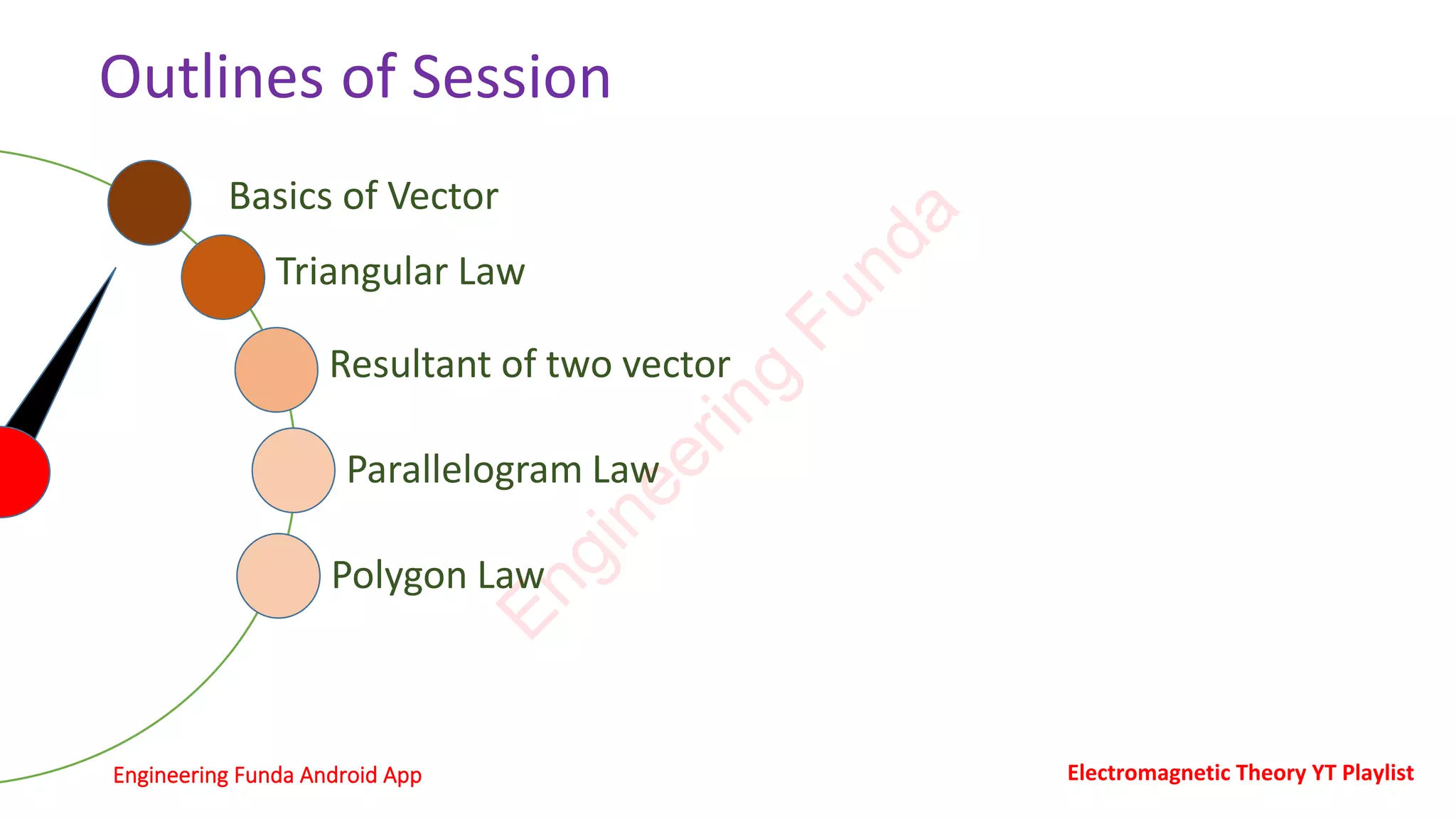
Basics of Vector
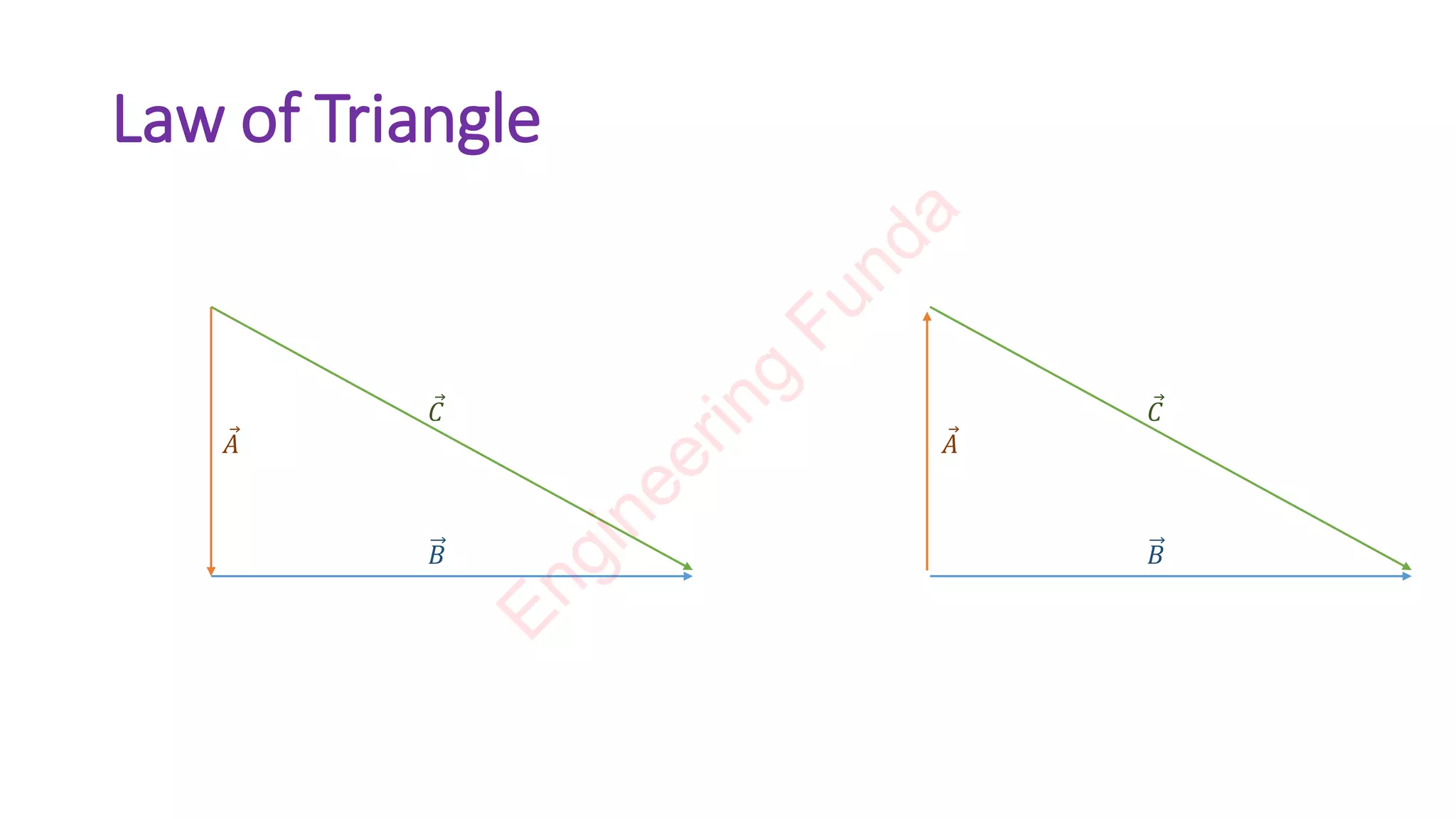
Triangular Law
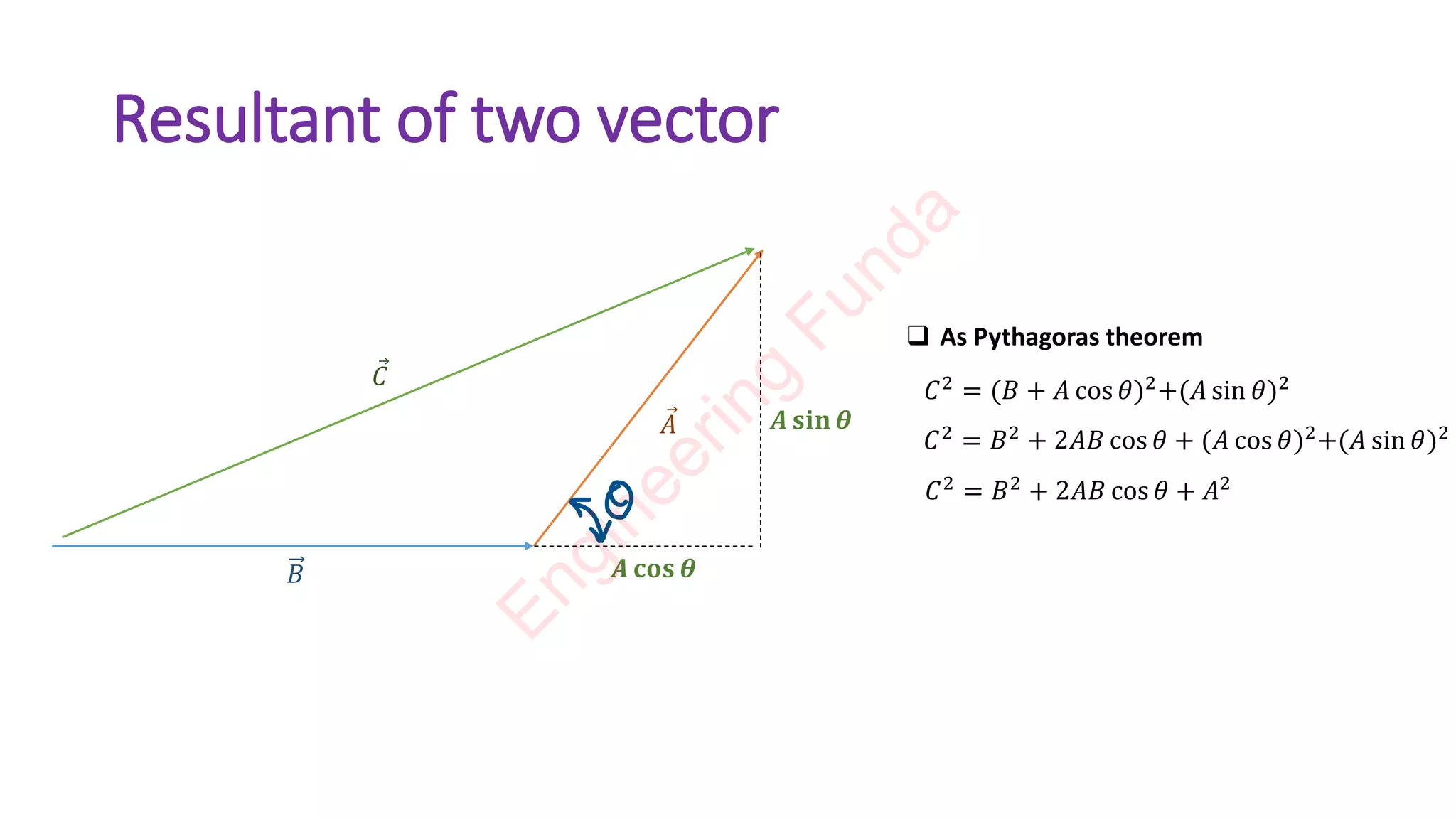
Resultant of two vector
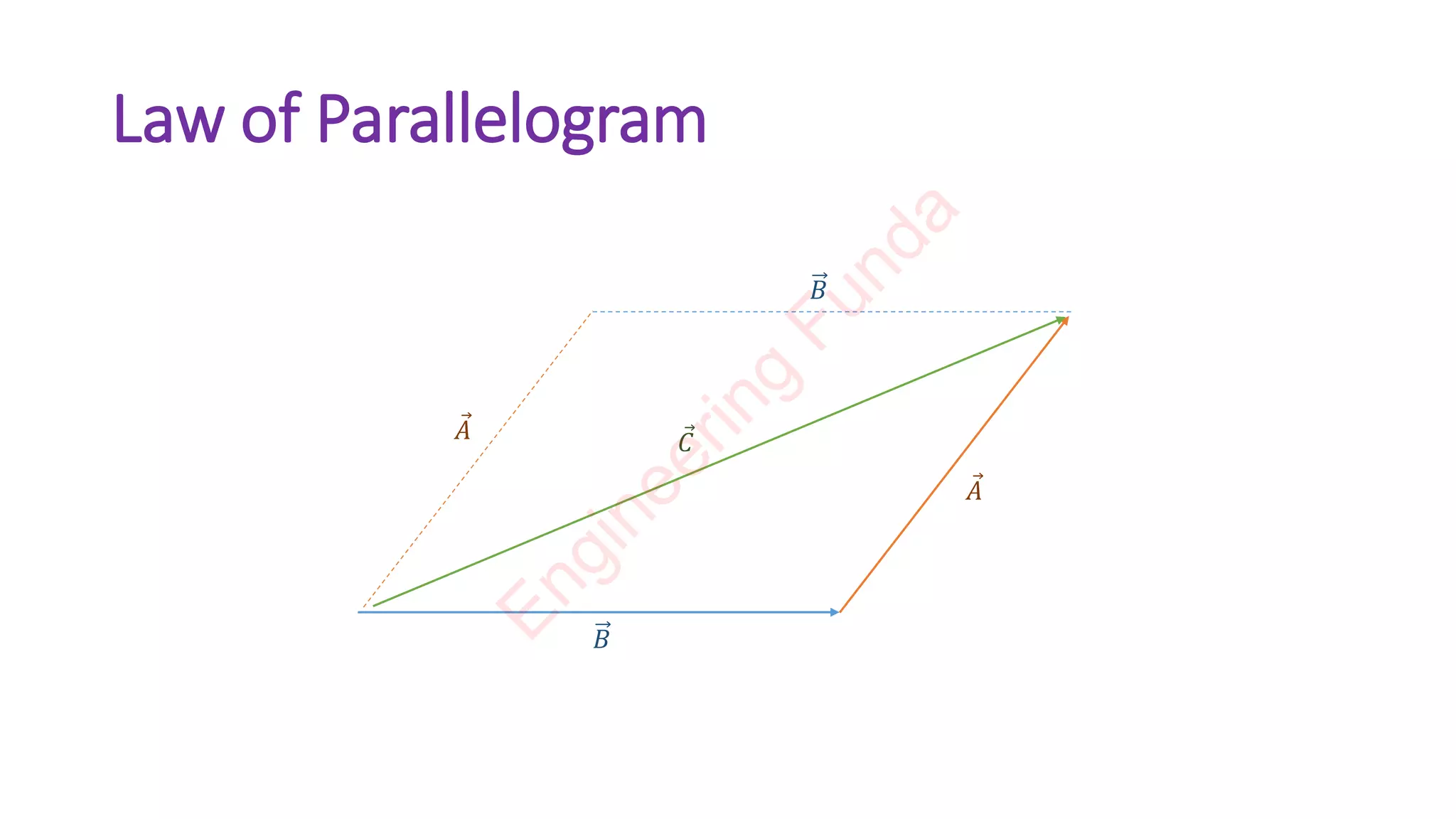
Parallelogram Law
Outlines of Session
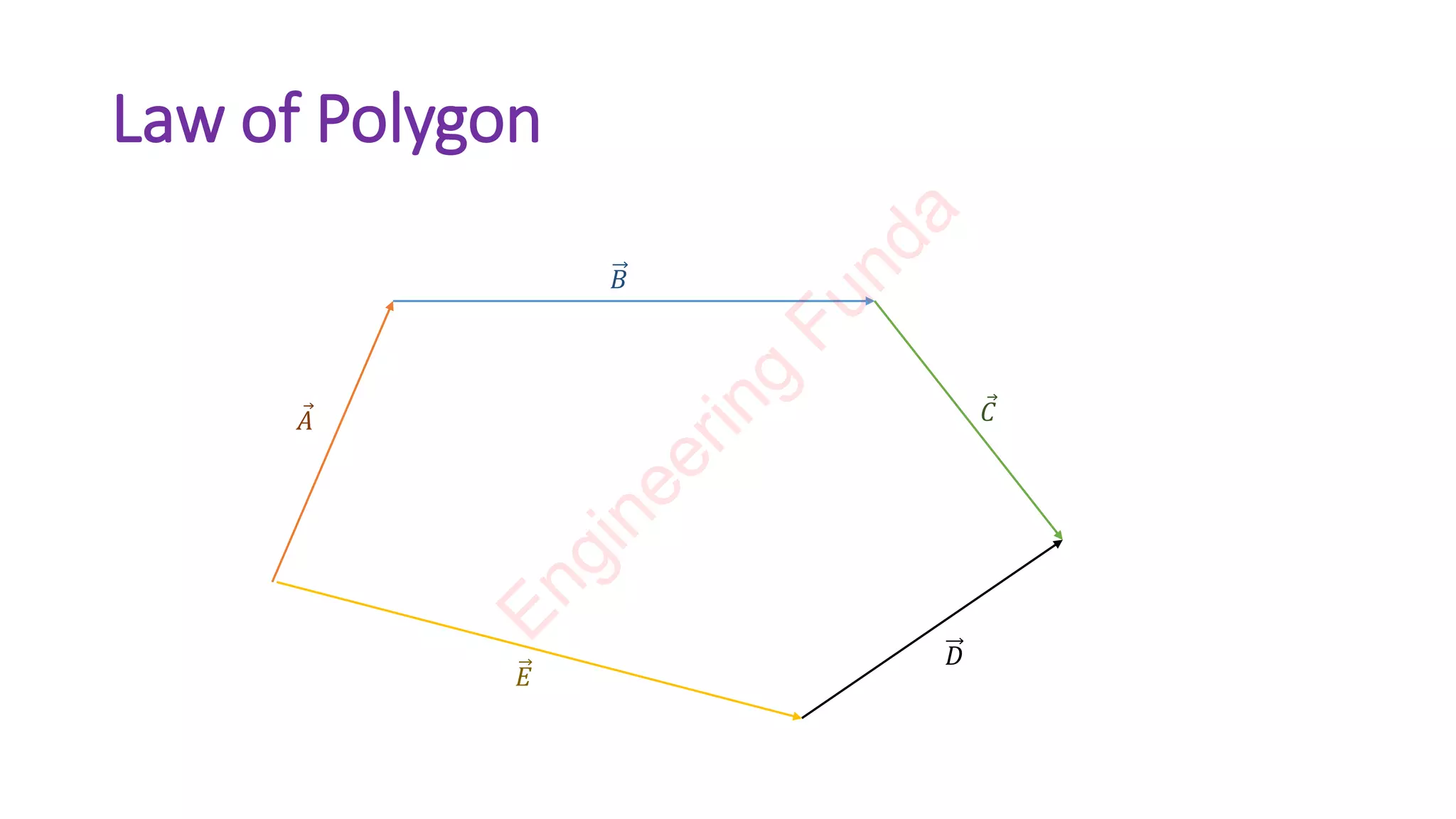
Polygon Law
E
n
g
i
n
e
e
r
i
n
g
F
u
n
d
a
Engineering Funda Android App Electromagnetic Theory YT Playlist
Basics of Vector
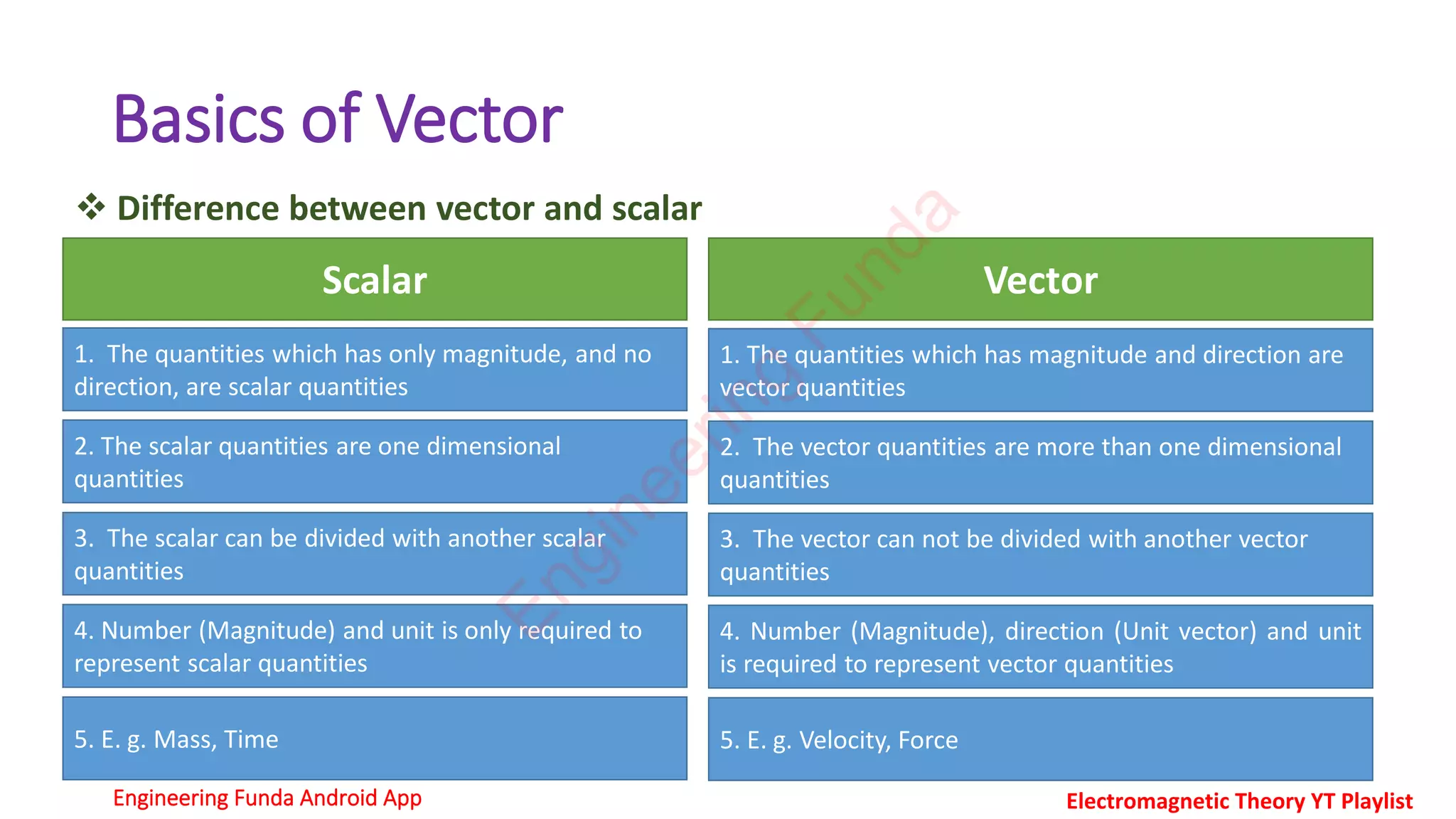
❖ Difference between vector and scalar
Scalar Vector
1. The quantities which has magnitude and direction are
vector quantities
1. The quantities which has only magnitude, and no
direction, are scalar quantities
2. The vector quantities are more than one dimensional
quantities
2. The scalar quantities are one dimensional
quantities
3. The vector can not be divided with another vector
quantities
3. The scalar can be divided with another scalar
quantities
4. Number (Magnitude), direction (Unit vector) and unit
is required to represent vector quantities
4. Number (Magnitude) and unit is only required to
represent scalar quantities
5. E. g. Velocity, Force
5. E. g. Mass, Time
E
n
g
i
n
e
e
r
i
n
g
F
u
n
d
a
Engineering Funda Android App Electromagnetic Theory YT Playlist
Basics of Vector
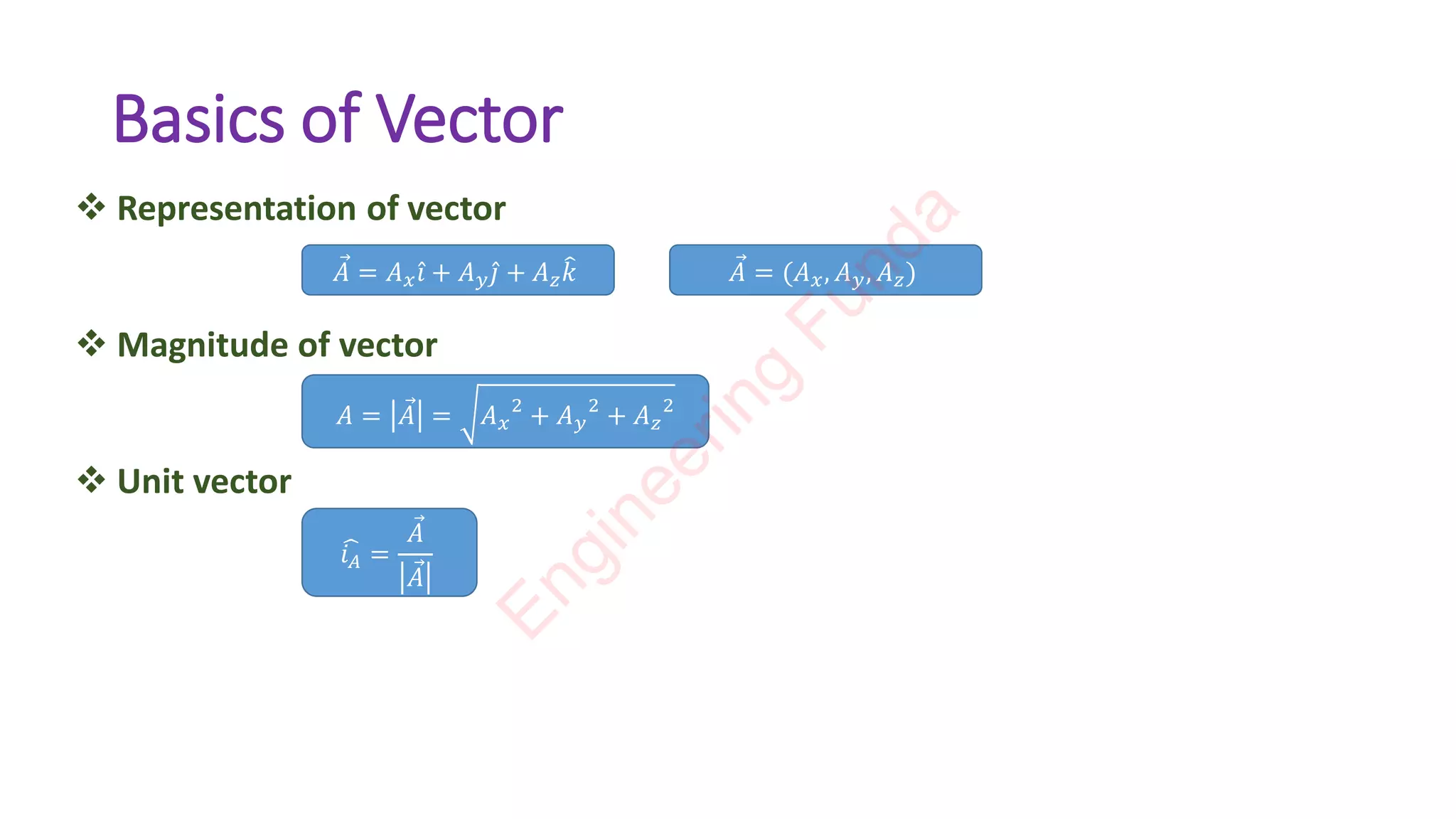
❖ Representation of vector
❖ Magnitude of vector
❖ Unit vector
Ԧ
𝐴 = 𝐴𝑥 Ƹ
𝑖 + 𝐴𝑦 Ƹ
𝑗 + 𝐴𝑧
෠
𝑘 Ԧ
𝐴 = (𝐴𝑥, 𝐴𝑦, 𝐴𝑧)
𝐴 = Ԧ
𝐴 = 𝐴𝑥
2
+ 𝐴𝑦
2
+ 𝐴𝑧
2
෡
𝑖𝐴 =
Ԧ
𝐴
Ԧ
𝐴
E
n
g
i
n
e
e
r
i
n
g
F
u
n
d
a
Law of Triangle
Ԧ
𝐴
𝐵
Ԧ
𝐶
Ԧ
𝐴
𝐵
Ԧ
𝐶
E
n
g
i
n
e
e
r
i
n
g
F
u
n
d
a
Resultant of two vector
Ԧ
𝐴
𝐵
Ԧ
𝐶
𝑨 𝐜𝐨𝐬 𝜽
𝑨 𝐬𝐢𝐧 𝜽
❑ As Pythagoras theorem
𝐶2 = (𝐵 + 𝐴 cos 𝜃)2+(𝐴 sin 𝜃)2
𝐶2 = 𝐵2 + 2𝐴𝐵 cos 𝜃 + (𝐴 cos 𝜃)2+(𝐴 sin 𝜃)2
𝐶2 = 𝐵2 + 2𝐴𝐵 cos 𝜃 + 𝐴2
E
n
g
i
n
e
e
r
i
n
g
F
u
n
d
a
Law of Parallelogram
Ԧ
𝐴
𝐵
Ԧ
𝐶
Ԧ
𝐴
𝐵
E
n
g
i
n
e
e
r
i
n
g
F
u
n
d
a
Law of Polygon
Ԧ
𝐴
𝐵
Ԧ
𝐶
𝐷
𝐸
E
n
g
i
n
e
e
r
i
n
g
F
u
n
d
a

Vector Analysis.pdf

  • 1.
    By Prof. HiteshDholakiya Basics of Vector, Triangular, Parallelogram & polygon law Electromagnetics E n g i n e e r i n g F u n d a Engineering Funda Android App Electromagnetic Theory YT Playlist
  • 2.
    Basics of Vector TriangularLaw Resultant of two vector Parallelogram Law Outlines of Session Polygon Law E n g i n e e r i n g F u n d a Engineering Funda Android App Electromagnetic Theory YT Playlist
  • 3.
    Basics of Vector ❖Difference between vector and scalar Scalar Vector 1. The quantities which has magnitude and direction are vector quantities 1. The quantities which has only magnitude, and no direction, are scalar quantities 2. The vector quantities are more than one dimensional quantities 2. The scalar quantities are one dimensional quantities 3. The vector can not be divided with another vector quantities 3. The scalar can be divided with another scalar quantities 4. Number (Magnitude), direction (Unit vector) and unit is required to represent vector quantities 4. Number (Magnitude) and unit is only required to represent scalar quantities 5. E. g. Velocity, Force 5. E. g. Mass, Time E n g i n e e r i n g F u n d a Engineering Funda Android App Electromagnetic Theory YT Playlist
  • 4.
    Basics of Vector ❖Representation of vector ❖ Magnitude of vector ❖ Unit vector Ԧ 𝐴 = 𝐴𝑥 Ƹ 𝑖 + 𝐴𝑦 Ƹ 𝑗 + 𝐴𝑧 ෠ 𝑘 Ԧ 𝐴 = (𝐴𝑥, 𝐴𝑦, 𝐴𝑧) 𝐴 = Ԧ 𝐴 = 𝐴𝑥 2 + 𝐴𝑦 2 + 𝐴𝑧 2 ෡ 𝑖𝐴 = Ԧ 𝐴 Ԧ 𝐴 E n g i n e e r i n g F u n d a
  • 5.
  • 6.
    Resultant of twovector Ԧ 𝐴 𝐵 Ԧ 𝐶 𝑨 𝐜𝐨𝐬 𝜽 𝑨 𝐬𝐢𝐧 𝜽 ❑ As Pythagoras theorem 𝐶2 = (𝐵 + 𝐴 cos 𝜃)2+(𝐴 sin 𝜃)2 𝐶2 = 𝐵2 + 2𝐴𝐵 cos 𝜃 + (𝐴 cos 𝜃)2+(𝐴 sin 𝜃)2 𝐶2 = 𝐵2 + 2𝐴𝐵 cos 𝜃 + 𝐴2 E n g i n e e r i n g F u n d a
  • 7.
  • 8.