SAP Business Suite powered by SAP HANA | Fact Book
Retail
Find Out How SAP®
Business Suite powered by
SAP HANA®
Delivers Business Value in Real Time
SAP Business Suite powered by SAP HANA | Fact Book
Disclaimer
This document is not subject to your license agreement or any other service or subscription agreement with SAP. SAP has no
obligation to pursue any course of business outlined in this document or any related presentation, or to develop or release any
functionality mentioned therein. This document, or any related presentation and SAP's strategy and possible future
developments, products, and/or platforms directions and functionality are all subject to change and may be changed by SAP at
any time for any reason without notice. The information in this document is not a commitment, promise, or legal obligation to
deliver any material, code or functionality. This document is provided without a warranty of any kind, either express or implied,
including but not limited to, the implied warranties of merchantability, fitness for a particular purpose, or non-infringement. This
document is for informational purposes and may not be incorporated into a contract. SAP assumes no responsibility for errors or
omissions in this document, except if such damages were caused by SAP's willful misconduct or gross negligence.
All forward-looking statements are subject to various risks and uncertainties that could cause actual results to differ materially
from expectations. Readers are cautioned not to place undue reliance on these forward-looking statements, which speak only as
of their dates, and they should not be relied upon in making purchasing decisions.
SAP Business Suite powered by SAP HANA | Fact Book
SAP®
Business Suite powered by SAP HANA®
Retail
Driven by changes in consumer behavior and the advent of new
technology, the retail market is changing rapidly. Consumers are
now demanding multichannel shopping as they increasingly
interact through multiple touch points. Besides physical stores,
they shop more and more via Web stores and mobile devices
and expect a consistent retail experience, which requires
retailers to harmonize processes across the channel silos. In
addition, global verticalized players are getting stronger – for
example, manufacturers are extending their business to the
retail area and vice versa – which demands modified supply-
chain processes. Looking at these massive transformations of
retail processes, SAP is positioned well to support customers
and consumers along this journey.
SAP®
Business Suite powered by SAP HANA®
leads the way to
new real-time business practices in the following key areas of
retail:
SAP Customer Activity Repository.......................................................5
Master Data Management....................................................................13
Item Management, Assortments, and Listing (SAP Merchandising for
Retail and Wholesale Distribution)......................................................13
Customer-Centric Merchandising .......................................................17
Real-Time Customer Insight and Predictive Analytics ........................17
Optimized Merchandise and Assortment Planning (SAP Planning for
Retail, SAP Assortment Planning for Retail)........................................18
Marketing, Campaign, and Promotion Planning (SAP Customer
Engagement Intelligence)...................................................................21
Marketing, Campaign, and Promotion Planning (SAP Promotion
Management for Retail)......................................................................24
Perfect Price and Promotion Execution (SAP Merchandising for Retail
and Wholesale Distribution)................................................................27
Collaborative Sourcing, Buying, and Manufacturing ........................31
Sourcing and Buying Excellence (SAP Merchandising for Retail and
Wholesale Distribution).......................................................................31
Customer-Driven Supply Chain...........................................................36
Demand and Replenishment Planning (SAP Forecasting and
Replenishment for Retail, SAP Merchandising for Retail and Wholesale
Distribution)........................................................................................36
SAP Business Suite powered by SAP HANA | Fact Book
Integrated Demand and Replenishment Planning (SAP Merchandising
for Retail and Wholesale Distribution)................................................39
Optimized Logistics and Fulfillment Execution (SAP Merchandising for
Retail and Wholesale Distribution).....................................................42
Unified Customer Experience .............................................................44
Store Excellence (On-Shelf Availability)..............................................44
Store Excellence (SAP Fiori Apps for Retail).......................................46
Store Excellence (SAP Merchandising for Retail and Wholesale
Distribution)........................................................................................49
Important pillars of the SAP HANA platform strategy for the retail
industry are:
SAP Customer Activity Repository, a new retail application based
on the SAP HANA platform. It is intended to support retailers in
becoming more customer-centric by bringing together customer, sales,
and inventory information from siloed applications and offering built-in
predictive functionality. On this repository other SAP retail applications
are planned, such as for assortment planning, demand planning, and
promotion planning. It is SAP’s strategic intention that partners and
customers will also be able to develop applications on SAP Customer
Activity Repository.
Running the SAP Merchandising for Retail and Wholesale
Distribution package (the industry solution for retail – IS-Retail) in
SAP Business Suite smarter, faster, and simpler on SAP HANA. This
supports retail business processes via the “generic” SAP ERP application
enhanced by retail-specific business objects (such as promotions) or
generic objects adjusted to meet retailers’ requirements (such as article
maintenance based on material maintenance). Many of the generic line-
of-business (LoB) business objects and processes (for example, in the
areas of materials management, sales and distribution, and logistics
execution) cover core retail business processes and therefore are used in
this retail solution. Thus, business innovations delivered by SAP HANA in
the generic solution areas are in almost all cases relevant and beneficial
for retailers as well. Please check the SAP HANA Fact Books for
additional information.
SAP Business Suite powered by SAP HANA | Fact Book
5
SAP Customer Activity Repository
SAP Customer Activity Repository allows retail companies to process and
analyze consumer behavior and the impact on future business. Based on
SAP HANA, it is a foundation to access retail data in real time that offers
built-in forecasting functionality and serves as platform for retail applications.
It collects transactional data that was previously spread over multiple
independent applications in diverse formats such as point-of-sale (POS)
systems, e-commerce systems, and enterprise resource planning (ERP)
systems. It enables retailers to discover, visualize, predict, and share hidden
insights in real time.
The repository provides a common foundation and a harmonized
multichannel transaction data model for a series of consuming applications.
Retailers can use SAP Customer Activity Repository to gradually transform
their system landscapes from traditional database technology to a
revolutionary in-memory database technology.
SAP Customer Activity Repository features the following:
POS data transfer and audit (POS data management): POS data transfer
and audit is a very powerful POS data processing and auditing
functionality helping retailers to perform the data auditing, cleansing,
aggregation, and harmonization of POS data in an automated way.
Multichannel sales repository and multichannel sales analytics: Capture
sales transactions across multiple channels by introducing a new
multichannel data model. This enables retailers to get a 360-degree view
of the customer and offers and to get instant aggregation to any desired
level across channels without losing the detailed information.
Inventory visibility analytics: Provide real-time visibility into current stock
situation in the stores by taking ERP stock in unrestricted use and
unprocessed sales and goods movements into account.
On-shelf availability: Best-in-class algorithms help retailers to detect and
visualize out-of-shelf situations in the stores when they happen in real
time and take action to prevent further lost sales. For details please see
the section “Store Excellence (On-Shelf Availability).”
Predictive functionality, leveraging the demand data foundation (DDF)
and unified demand forecast (UDF): A new generation of forecasting for
retail planning applications is part of SAP Customer Activity Repository
and directly leverages the speed of SAP HANA.
SAP Business Suite powered by SAP HANA | Fact Book
6
Business Practices Today
Retailers need to quickly analyze patterns (such as product affinities, buying
patterns) and react quickly (create/update promotions, replenish stores) so
that the right product mix is at the right channel at the right time. With today’s
ever-growing amount of enterprise data to sort through, this is increasingly
difficult to do. Today, retailers have complex landscapes that require
replication of the same data to multiple applications.
Ambition
Ambitions vary by area within the retail organization. For example, marketing
staff need accurate, multichannel sales data spanning multiple customer
segments so they can shift promotion spend as customer demand shifts.
Planning of supply and demand requires up-to-the-minute inventory to make
sure the stores are able to meet the demand. The stores require real-time
sales and inventory information to make sure the shelves are always
stocked. IT wants to streamline its infrastructure footprint. And finally, the
CEO wants to be able to deliver all of this with quick turnaround time, and
with as few costs and headaches as possible.
SAP Customer Activity Repository is intended to support retailers in
becoming more customer-centric by bringing together customer, sales, and
inventory information from application silos.
Challenges
Today’s retailer is faced with consumers who are socially connected,
technically savvy, and used to up-to-the-minute information. They have
greater access than ever before to information right at their fingertips.
Retailers are faced with numerous challenges, one of them being complex
landscapes that require replication of the same data to multiple siloed
applications.
SAP Business Suite powered by SAP HANA | Fact Book
7
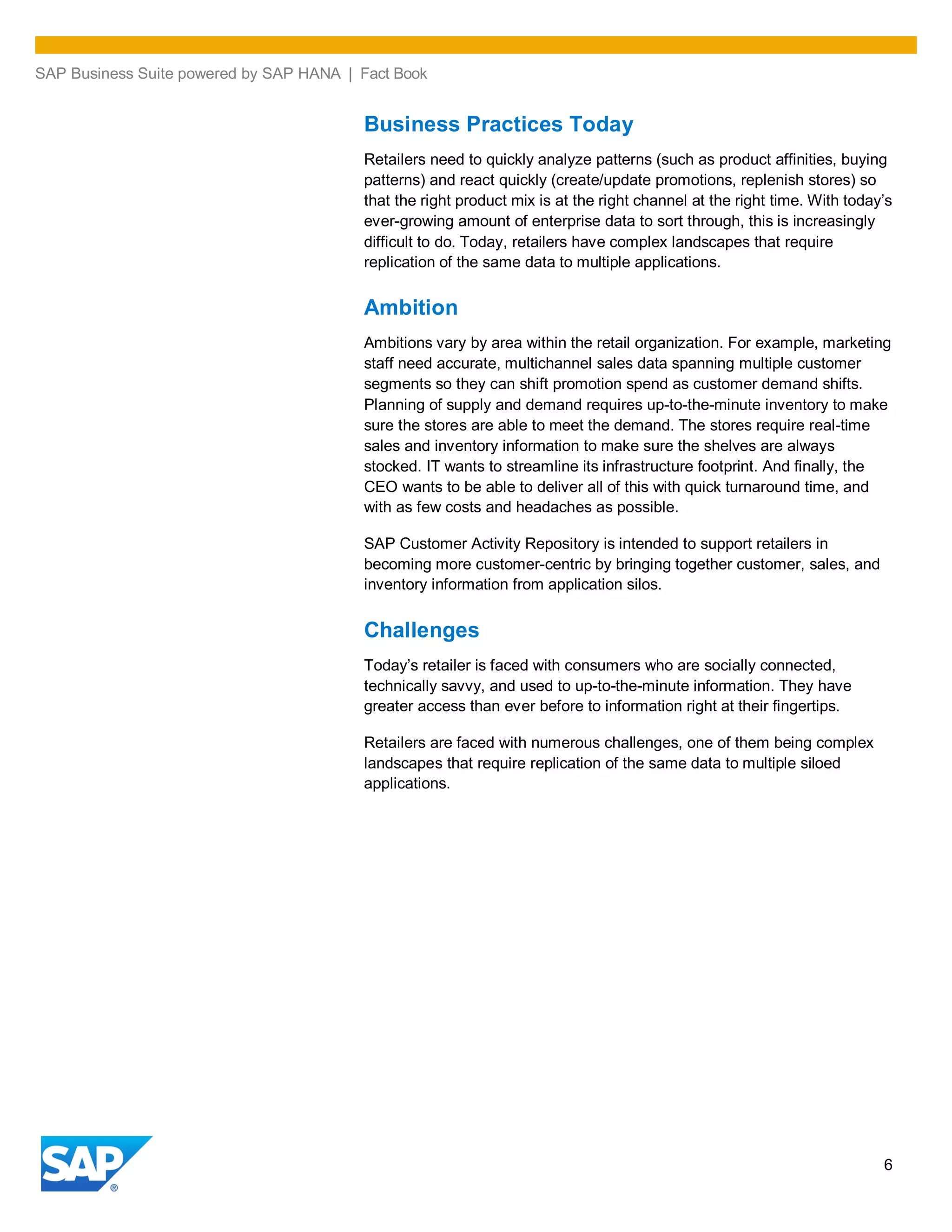
Figure 1: Retail Solution and System Landscape from SAP prior to SAP
®
Customer Activity
Repository
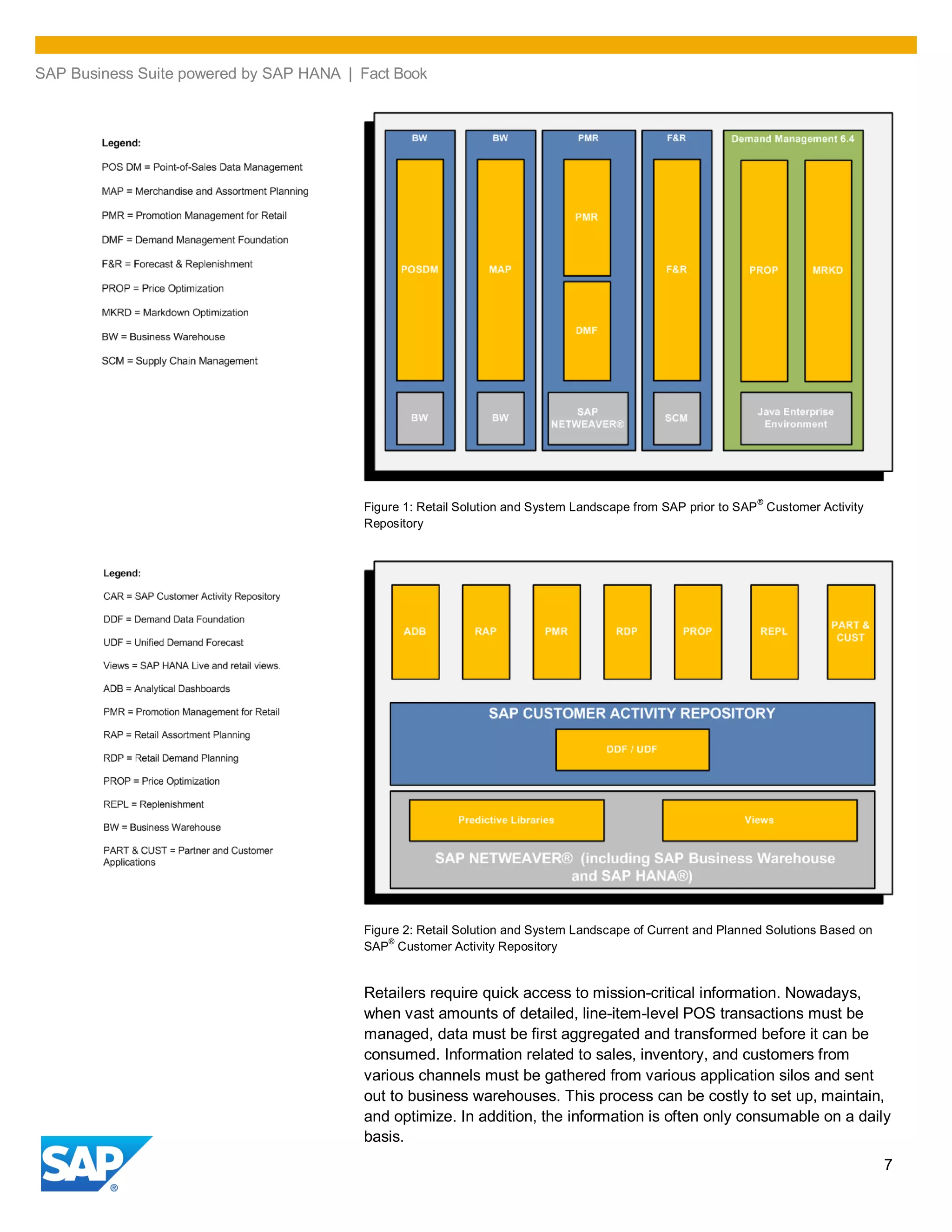
Figure 2: Retail Solution and System Landscape of Current and Planned Solutions Based on
SAP
®
Customer Activity Repository
Retailers require quick access to mission-critical information. Nowadays,
when vast amounts of detailed, line-item-level POS transactions must be
managed, data must be first aggregated and transformed before it can be
consumed. Information related to sales, inventory, and customers from
various channels must be gathered from various application silos and sent
out to business warehouses. This process can be costly to set up, maintain,
and optimize. In addition, the information is often only consumable on a daily
basis.
SAP Business Suite powered by SAP HANA | Fact Book
8
Business Innovation with SAP HANA
A 360-degree, multichannel view of the customer, thanks to the
coexistence of POS transactions, sales orders, and billing documents, is
available in one common data foundation. Customer segmentation can be
done via the SAP Customer Engagement Intelligence solution, which
accesses multichannel transactional data in SAP Customer Activity
Repository. This provides users with the ability to drill through target
segments, demographics, and transactional data for better insight into
consumer behavior.
In addition, an interaction center run with the SAP Customer Relationship
Management (SAP CRM) application can now consume SAP Customer
Activity Repository directly, giving call center agents full access not only to
Web channel orders but to POS transactions as well.
The unified demand forecast uses multiple demand data sources for
modeling and forecasting. Retailers can generate a UDF based on powerful
algorithms and statistical methods that account for the many factors
impacting demand – price velocity, seasons and trends, events, product
relations, and more.
In addition, the previous version of UDF (demand management foundation
that was not based on SAP HANA) lacked the ability to visualize the
modeling and forecasting values. With the new UDF visualization, users will
now be able to assess the accuracy of the model, as well as validate the
forecast(s).
Because future demand across all customer channels – including store, Web
shop, channel, regional and category sales – can be better anticipated,
retailers are in the driver’s seat when it comes to optimizing plans and
decisions across all levels of the value chain.
Real-time inventory visibility is now available by merging ERP unrestricted
stock data with unprocessed sales and goods movements from the store
transaction log all within the same repository. This allows immediate
snapshots on inventory stock and valuation, while avoiding time-consuming
outbound processing and aggregation of data.
Reduce
TCO
By having a single
platform for all
retail applications
SAP Business Suite powered by SAP HANA | Fact Book
9
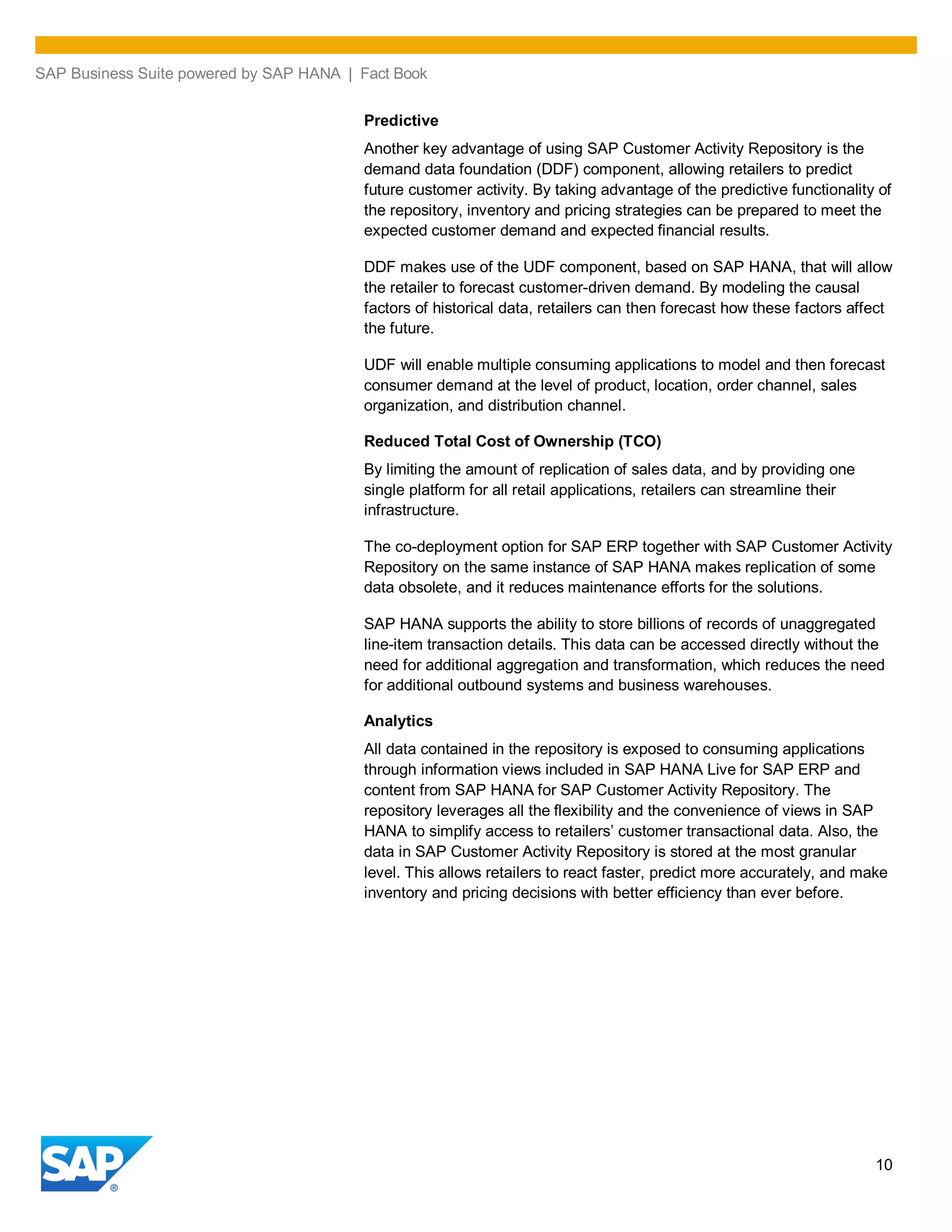
Figure 3: An SAPUI5 Demo Application, Displaying Multichannel Sales and Inventory
Information (showing how front-end applications can easily access views that expose the
granular, line-item data based on SAP HANA
®
in SAP
®
Customer Activity Repository)
Innovation in Detail
Collection, Auditing, and Processing
SAP Customer Activity Repository consolidates data related to customer
transactional activities in one, unified platform. Transactions that retailers’
customers carry out in their brick-and-mortar stores are transferred to the
repository using trickle-feed processing. Sales documents created in the
source SAP ERP software as a result of orders customers place on the
Web, through a call center, or from a catalog are regularly replicated to the
repository. SAP Customer Activity Repository classifies all these transaction
by the order channel in which they were carried out.
Collecting loyalty information at the point of sale as well as the replication of
customer information from a source CRM system to the repository allows
retailers to drill down to the individual customer level when analyzing the
transactional data.
Inventory Visibility
SAP Customer Activity Repository allows retailers to gain insight into true
inventory position. Inventory information is replicated to the repository from
source SAP ERP software and combined with the unprocessed POS sales
information available in the repository. (This includes POS sales figures as
well as store goods movements that have not yet been sent to SAP ERP –
that is, goods movements not related to sales transaction, such as goods
receipt postings and postings of spoiled merchandise to scrap.) Combining
the current inventory information from SAP ERP with unprocessed POS
sales figures gives retailers a clearer picture of their inventory.
SAP Business Suite powered by SAP HANA | Fact Book
10
Predictive
Another key advantage of using SAP Customer Activity Repository is the
demand data foundation (DDF) component, allowing retailers to predict
future customer activity. By taking advantage of the predictive functionality of
the repository, inventory and pricing strategies can be prepared to meet the
expected customer demand and expected financial results.
DDF makes use of the UDF component, based on SAP HANA, that will allow
the retailer to forecast customer-driven demand. By modeling the causal
factors of historical data, retailers can then forecast how these factors affect
the future.
UDF will enable multiple consuming applications to model and then forecast
consumer demand at the level of product, location, order channel, sales
organization, and distribution channel.
Reduced Total Cost of Ownership (TCO)
By limiting the amount of replication of sales data, and by providing one
single platform for all retail applications, retailers can streamline their
infrastructure.
The co-deployment option for SAP ERP together with SAP Customer Activity
Repository on the same instance of SAP HANA makes replication of some
data obsolete, and it reduces maintenance efforts for the solutions.
SAP HANA supports the ability to store billions of records of unaggregated
line-item transaction details. This data can be accessed directly without the
need for additional aggregation and transformation, which reduces the need
for additional outbound systems and business warehouses.
Analytics
All data contained in the repository is exposed to consuming applications
through information views included in SAP HANA Live for SAP ERP and
content from SAP HANA for SAP Customer Activity Repository. The
repository leverages all the flexibility and the convenience of views in SAP
HANA to simplify access to retailers’ customer transactional data. Also, the
data in SAP Customer Activity Repository is stored at the most granular
level. This allows retailers to react faster, predict more accurately, and make
inventory and pricing decisions with better efficiency than ever before.
SAP Business Suite powered by SAP HANA | Fact Book
11
Benefits
React quicker to customer demand and stock the store shelves
sooner: Analyze sales and inventory across channels, digging into billions
of line-item-level transaction details based on SAP HANA directly – without
taking the time to set up business warehouses.
Simplify the IT landscape: Eliminate replication of the same sales
information to multiple applications, and access one pool of data from
various applications. Also, the characteristics of SAP HANA such as high
compression, scalability (both scaling up and scaling out), and parallelism
enable retailers to readily scale up their IT infrastructure while opening new
stores.
Understand the multichannel business end to end: Gain a holistic view
of sales transactions across all channels, including:
One consolidated pool for customer transactions across channels.
Availability of POS, sales order, and return transactions at one place
Real-time access into customer sales data across channels
Real-time flash reports within split seconds
Eliminate organizational siloes: The UDF does away with the previous
multiple forecasting algorithms and provides one single unified forecast
algorithm, so that all teams across organizational units are working with the
same results.
Reduce lost sales: Algorithms driven by SAP HANA that analyze billions of
line-item details can generate on-shelf availability alerts so that shelves are
always stocked.
Improve inventory visibility: Real-time views of inventory quantities and
valuations for the store channel are available.
SAP Business Suite powered by SAP HANA | Fact Book
12
Road Map and Outlook
SAP Customer Activity Repository is planned to continue to act as a central
hub for all retail operations and will innovate by providing additional, real-
time inventory key performance indicators (KPIs) allowing for deeper access
to information throughout the supply chain. Additional retail applications for
retail assortment planning, demand planning, replenishment, and markdown
optimization are planned to eventually consume SAP Customer Activity
Repository as their single source of truth, allowing retailers to break free of
their current operating siloes, and taking advantage of a unified platform for
all multichannel retail planning and analytic decision making.
Furthermore, the SAP Customer Activity Repository is also available as a
turnkey or preassembled application – the SAP HANA Customer Activity
Repository rapid-deployment solution – that comes already loaded with
analytics. This provides a quick path to going live and accelerates innovation
adoption with lowest TCO possible. For further details see
http://service.sap.com/rds-car.
Product Details/Prerequisites
Mandatory
SAP HANA software, SP06
SAP HANA studio
SAP Landscape Transformation replication server for SAP HANA 2.0
SAP NetWeaver
®
7.40 technology platform
SAP ERP 6.0, enhancement package 5
SAP HANA Live for SAP ERP, SP02
Optional
SAP CRM 7.0, enhancement package 2, or SAP CRM 7.0, enhancement
package 2, version for SAP HANA, or higher
SAP HANA database clients
How to Get Started
http://help.sap.com/car
SAP Business Suite powered by SAP HANA | Fact Book
13
Master Data Management
Item Management, Assortments, and Listing
(SAP Merchandising for Retail and
Wholesale Distribution)
Business Practices Today
Item management comprises all activities around products, including
exchange with collaboration partners, article maintenance, data cleansing,
attribute enrichment, and distribution to other solutions (please see separate
sections titled “Store Excellence” for communication with store solutions).
Article master data is maintained for specific aspects, or views, such as:
Basic article data with groupings, categorizations, available units of
measure with their respective Global Trade Item Numbers (GTINs), and
more
Purchasing data with relevant suppliers, including the respective
procurement data and purchase prices
Sales data with relevant sales units of measures and their sales prices
Logistics data for the distribution centers and stores with attributes for
controlling the supply chain, including replenishment and forecasting
parameters
Retail is the industry with the highest product volumes; there are retailers
with more than 1 million different SKUs and thousands of stores (thus
resulting in close to a billion product-location combinations). Efficient article
maintenance is only possible with sophisticated reference/default/copy-from
mechanisms, forcing the retailer to maintain data explicitly only where really
necessary. Obviously, item management for these data volumes and the
clever referencing mechanism result in high demand for performance. Thus,
in certain scenarios users would benefit from improved performance to be
able to maintain articles more efficiently. Furthermore, shorter process steps
running in the “dark” reduce the likelihood for negative side effects, such as
locking issues. Additionally, to react to business requirements, mass
maintenance tools are needed to support the user.
Listing is a central functionality in retail to control which products will be
carried in which locations. The business object assortment serves as the
link between articles and locations.
Listing checks evaluate whether an article-location combination is relevant
for a specific process, such as whether an article can be purchased at a
specific date by a specific store, or whether information for an article should
be sent to the POS solution of a specific store. Those listing checks are
executed from many different processes. The combination of the high reuse
of listing check functionality with the transactional volume of a typical retailer
results in extremely high requirements for performance of the listing check.
>60%
Faster article mass
maintenance for level
article-location*
>50%
Faster article creation*
SAP Business Suite powered by SAP HANA | Fact Book
14
Ambition
Retailers need efficient maintenance options to cope with massive volumes
of product-related activities. This is true for maintenance in dialog, when
users need to adjust articles, assortments, and listings to reflect new
business insight, as well as for reorganization and housekeeping-like
processes, which help ensure a lean master data basis.
The listing checks that evaluate relevance of an article-location combination
in most operational process steps must be as efficient as possible.
Challenges
Response times of functionality managing massive volumes of articles
and article-related master data, like assortments
Execution times of listing checks being carried out in most operational
procesess (like purchase order creation)
Business Practice Optimizations with SAP HANA
As the basis for all real-time processes in retail and the foundation for
innovation and value-adding processes, the initial focus was on optimizing
the performance for SAP HANA for important retail processes related to the
article maintenance, assortment, listing, and listing checks.
Value Help
Value help (also known as search help) is widely used across all SAP
solutions. On many input fields the user can press the F4 key and get a list
showing the valid inputs. Evolving technologies allow more sophisticated
approaches, with Google driving innovation in this area. Having a Google-
like search in SAP solutions is a big advantage for end users: it saves time,
is more efficient, and helps to avoid missing existing documents and objects,
which could easily lead to wrong business decisions. The new search
comprises three aspects:
Type-ahead search: When the user starts typing in a search field, a drop-
down box appears offering suggestions for how to complete the search,
or offers some results.
Fuzzy search: When the user doesn’t quite know how to spell a word, a
fuzzy search helps to find results that are similar to the search term.
Multicolumn search: In SAP’s legacy search capabilities, one search term
is matched to one field at a time. For example, if a search term of
“Montreal” is typed for a customer’s name field, then only search results
where the customer name contains Montreal will be returned. However,
in a multicolumn search, if the search term matches any field (city, street
name, customer name, or other), then that record will be returned by the
search.
>320%
Faster mass listing
and listing
reorganization*
>60%
Faster assortment
assignment*
SAP Business Suite powered by SAP HANA | Fact Book
15
Optimizations in Detail
Performance optimizations for SAP HANA in article maintenance,
assortments, listings, and listing checks were focused on the following
key processes, transactions, and reports:
Assortment assignment (sites): WSOA6
Mass listing: WSM3
Listing reorganization: WSM8
Listing check in selected scenarios like purchase order creation
(ME21N), collective purchase order (WF10), and rack jobber processing
in POS inbound (RBDAPP01)
Display listing conditions change docs: WSLI
Mass changes to articles: MM46
Create article and change article: MM41 and MM42
Value help for various business objects (not only master data but
operational documents as well)
Benefits
Based on faster dialog and batch transactions in article maintenance,
assortments, listings, and listing checks, retail organizations can react
faster to business insight and requirements.
Higher end-user acceptance is gained by reduced response times.
Road Map and Outlook
In future releases, SAP plans to evolve the software in the following areas:
Performance optimizations for additional process steps in listing checks
are planned.
After the end of the lifetime of an article, the retailer needs to do some
housekeeping to reduce the number of active articles (for example,
fashion retailers often have six-digit numbers of products they must
remove from the solution after the end of a season) to avoid negative
consequences based on volume (and resulting performance issues). The
process is called article discontinuation. Many detailed checks are
necessary to evaluate whether an article can be discontinued (to ensure
there is no more inventory, there are no open purchase orders, and so
on). These checks are very performance-intense, and thus
discontinuation of all articles of a season can negatively affect other
processes being executed in parallel.
>120x
Faster display of
listing conditions
change docs*
SAP Business Suite powered by SAP HANA | Fact Book
16
Product Details/Prerequisites
The following performance optimizations for SAP HANA as described under
“Optimizations in Detail” are available with SAP ERP 6.0, enhancement
package 7, SP02. See also these notes:
Assortment assignment (sites): SAP Note 1910429, SAP Note 191039
Mass listing: Listing reorganization: SAP Note 1911874
Listing check (in selected scenarios, such as rack jobber in POS
inbound): SAP Note 1911212, SAP Note 1912694
Display listing conditions change docs: SAP Note 1912676
The following performance optimizations for SAP HANA are available with
SAP ERP 6.0, enhancement package 7, SP03. See also notes:
Item management: mass maintenance of articles: MM46 SAP Note
1939329, SAP Note 1911874, SAP Note 1944594
The following performance optimizations for SAP HANA are available with
SAP ERP 6.0, enhancement package 7, SP04. See also notes:
Create article: MM41 SAP Note 1954120, SAP Note 1962074, SAP
Note 1964287, SAP Note 1966329
Change article: MM42 SAP Note 1973246
The following performance optimizations for SAP HANA are available with
SAP ERP 6.0, enhancement package 7, SP05. See also notes:
Value help: SAP Note 2019994
How to Get Started
SAP ERP 6.0, enhancement package 7, SP02, SP03, SP04, SP05, or via
notes listed above
SAP Business Suite powered by SAP HANA | Fact Book
17
Customer-Centric Merchandising
Real-Time Customer Insight and
Predictive Analytics
This end-to-end process is supported by SAP Customer Activity Repository.
As the repository delivers beyond this process, it has a section of its own in
this document. Please see the preceding section for more information on
real-time customer insight and predictive analytics.
SAP Business Suite powered by SAP HANA | Fact Book
18
Optimized Merchandise and
Assortment Planning
(SAP Planning for Retail, SAP Assortment
Planning for Retail)
Business Practices Today
Merchandise and assortment planning is used to define corporate budgets
and efficient assortments for every channel. The goal is to provide real-time,
what-if, demand-driven forecasts that incorporate metrics for weekly,
product, customer, and store performance. The SAP Planning for Retail
application facilitates a comprehensive planning process that cascades
information from the financial and merchandise plan to meet department
objectives in partnership with finance and merchandising organizations. This
enables retail buying and planning organizations to accurately budget
planned purchases for vendor products against merchandise, location, and
customer hierarchies.
Ambition
Get the right products, in the right clusters, in the most desired shopping
channel. Use the latest optimization techniques and real-time analytics,
planned for delivery with the SAP Assortment Planning for Retail application,
to rapidly and intuitively segment large amount of sales data to suggest
relevant assortment line plans for each selling channel. The results are fully
assorted proposed product lines by store cluster.
Make planning cycles faster and more accurate with sophisticated
planning functions that are executed in real time
Quickly access accurate planning information to make better decisions
on which assortment drives customers to buy
Refine assortments in the right store for the right customer to enhance
profitability
Challenges
Flawed execution – It is difficult to get products to the customer in time to
generate new sales in a highly competitive environment.
Lack of information – There is insufficient planning at store level to
accurately match customer demand and shopping habits.
Lack of consistency – Different and in many cases manual sources of
information and metrics deliver complicated, disparate planning processes.
SAP Business Suite powered by SAP HANA | Fact Book
19
Business Innovation with SAP HANA
The software greatly benefits from in-memory planning, because
merchandise planning requires aggregation and disaggregation of high data
volumes, which would lead to performance issues with traditional databases.
Merchandise and Financial Planning
Develop sales and margin targets by channel as a basis for top-down
financial planning and open-to-buy budget.
Channel Planning
Plan comparable, noncomparable, and new-store sales performance to
analyze selling locations, and labor schedules.
Innovation in Detail
Data access: The ability to read, save, and copy plan data decreases
response time dramatically.
Calculation speed: Time-dependent calculations such as weeks of supply
and inventory turn decrease response time dramatically.
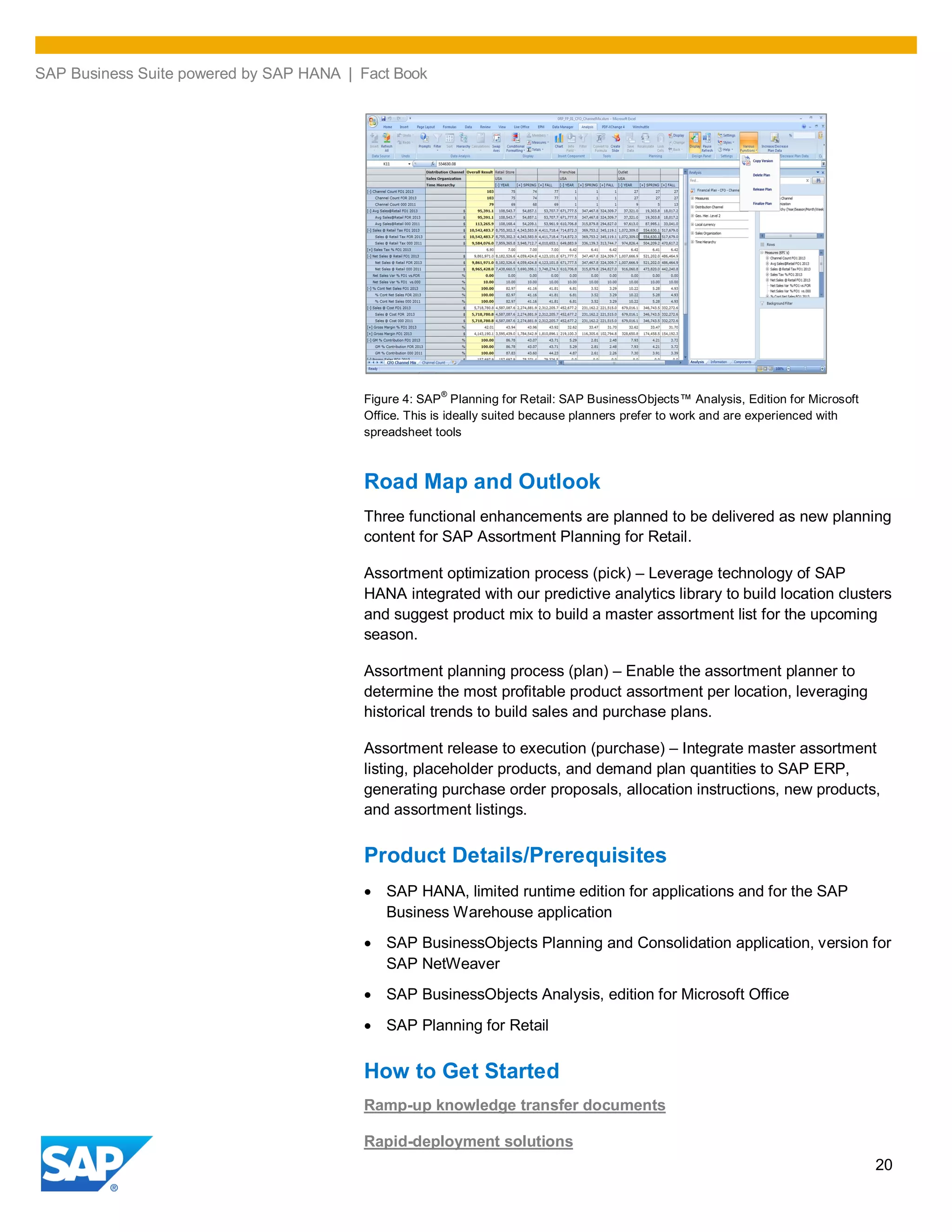
Microsoft Excel look and feel: Planners feel comfortable with SAP
BusinessObjects™ Analysis software, edition for Microsoft Office, using the
Excel user interface.
Predelivered content: Workbooks standardized on the cost method of
accounting allow implementation in less than 90 days.
Benefits
Integrated plan delivering aligned and targeted product assortments
across channels
Fine-tuned category mix and pricing for local needs to increase sales
One unified view of customer demand
Improved customer service with fewer stock-outs to drive increased
sales
Increased speed of products to the customer
SAP Business Suite powered by SAP HANA | Fact Book
20
Figure 4: SAP
®
Planning for Retail: SAP BusinessObjects™ Analysis, Edition for Microsoft
Office. This is ideally suited because planners prefer to work and are experienced with
spreadsheet tools
Road Map and Outlook
Three functional enhancements are planned to be delivered as new planning
content for SAP Assortment Planning for Retail.
Assortment optimization process (pick) – Leverage technology of SAP
HANA integrated with our predictive analytics library to build location clusters
and suggest product mix to build a master assortment list for the upcoming
season.
Assortment planning process (plan) – Enable the assortment planner to
determine the most profitable product assortment per location, leveraging
historical trends to build sales and purchase plans.
Assortment release to execution (purchase) – Integrate master assortment
listing, placeholder products, and demand plan quantities to SAP ERP,
generating purchase order proposals, allocation instructions, new products,
and assortment listings.
Product Details/Prerequisites
SAP HANA, limited runtime edition for applications and for the SAP
Business Warehouse application
SAP BusinessObjects Planning and Consolidation application, version for
SAP NetWeaver
SAP BusinessObjects Analysis, edition for Microsoft Office
SAP Planning for Retail
How to Get Started
Ramp-up knowledge transfer documents
Rapid-deployment solutions
SAP Business Suite powered by SAP HANA | Fact Book
21
Marketing, Campaign, and
Promotion Planning
(SAP Customer Engagement Intelligence)
Business Practices Today
SAP Customer Engagement Intelligence is a fully integrated software
solution that consists of several analytic applications, including SAP
Audience Discovery and Targeting and SAP Social Contact Intelligence.
In this document the focus is on SAP Audience Discovery and Targeting, as
it has the highest relevance for chief marketing officers at retailers and
ideally fulfills the retailers’ requirements regarding customer segmentation.
Today, only a few retailers use sophisticated segmentation, and typically
processes are not integrated.
In the road map section, plans for further functionality in the SAP Product
Recommendation Intelligence application are introduced.
Ambition
Retailers’ ambition is to give personalized promotions to consumers with
offerings tailored to the exact needs of the specific customer or a target
group.
To make fact-based sales and marketing decisions, retailers must analyze
customer information in real time across multiple dimensions such as
revenue, margin, cost of service, and predicted lifetime value.
Challenges
Customer segmentation is created manually or via batch.
Product selection is based on experience of marketing department only.
The data basis (that is, sales history) needs to be replicated.
Resulting segmentations are not integrated with subsequent process
steps.
SAP Business Suite powered by SAP HANA | Fact Book
22
Business Innovation with SAP HANA
SAP Audience Discovery and Targeting offers hierarchical, decision-tree
segmentation for rapid targeting of large customer populations using SAP or
non-SAP data stored in an SAP HANA database. Using statistical algorithms
and predictive models out of SAP HANA, retailers can trigger initiatives
(such as customized offers) for each segment and channel and manage
target groups for quick insight to action. Benefits include:
Real-time customer insights for intelligent sales recommendations and
decision making
Support for personalized customer engagements, enabling a more
individualized sales approach
Support for strategic and effective selling to close the gap between go-to-
market strategies and sales execution
Ability to base the solution on SAP Customer Activity Repository,
resulting in:
– Up-to-the-minute view of the customer, independent of channel
– One set of data and insight across channels, products, and operations
– High-speed predictive analytics delivering a single calculation of
customer demand across all channels
– Common real-time data platform to execute planning applications
– Open innovation platform for customers and partners
Deployment possible in the cloud as well as on premise
Innovation in Detail
SAP Audience Discovery and Targeting leverages the powerful predictive
engine in SAP HANA to run advanced statistical algorithms. These are used
to detect correlations in customer behaviors that can help to anticipate
customer needs and offer highly targeted promotions and selling
recommendations to the retailer’s sales force.
Because SAP Audience Discovery and Targeting can be based on SAP
Customer Activity Repository, please see details in that section as well.
Benefits
Retail can invest the right resources in the right customers, products, and
channels.
Purchase opportunities are being maxed, and consequently, the retailer
achieves higher revenue.
Sales conversion rate are higher.
Cross-selling and up-selling opportunities can be identified.
Customer engagements can be actively managed to reduce attrition of
customers.
SAP Business Suite powered by SAP HANA | Fact Book
23
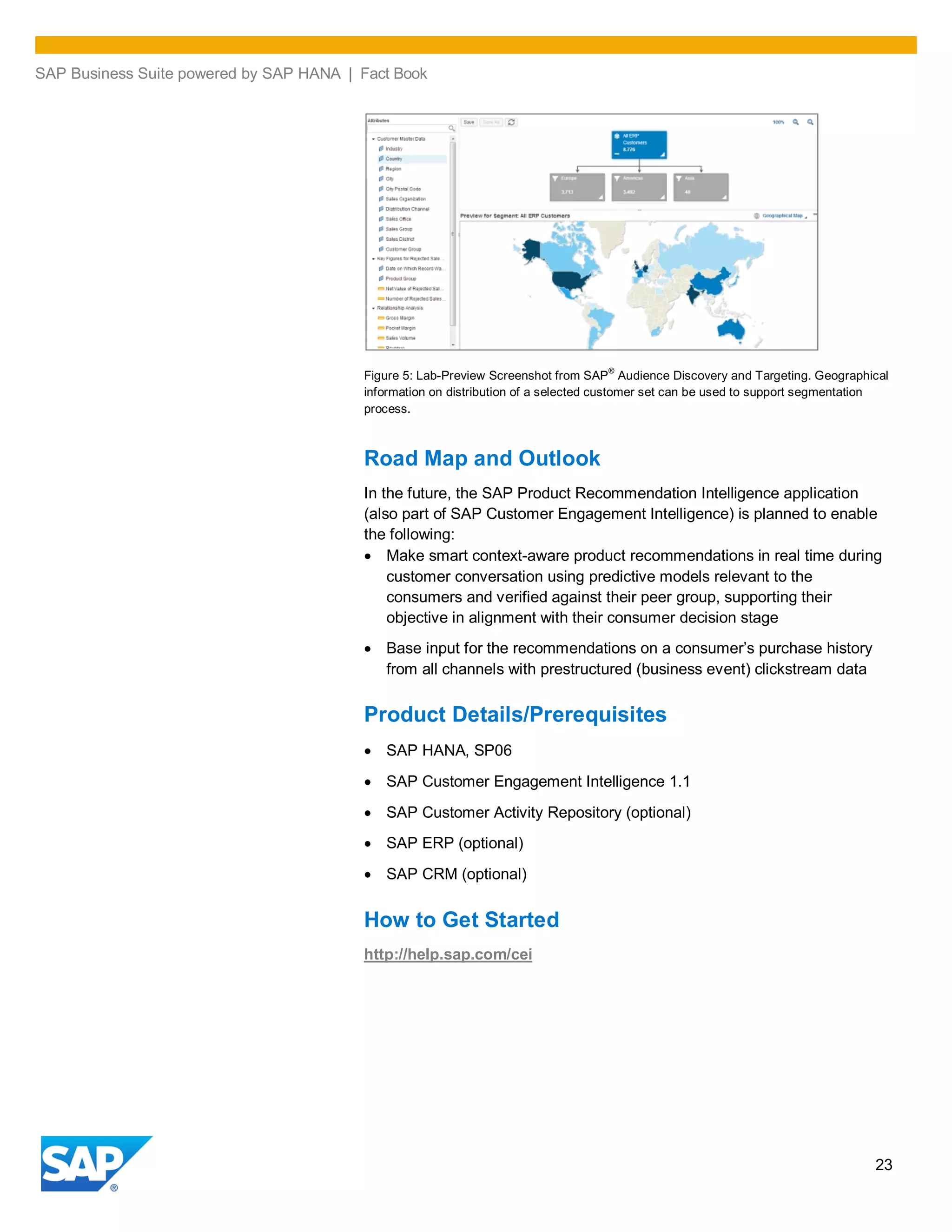
Figure 5: Lab-Preview Screenshot from SAP
®
Audience Discovery and Targeting. Geographical
information on distribution of a selected customer set can be used to support segmentation
process.
Road Map and Outlook
In the future, the SAP Product Recommendation Intelligence application
(also part of SAP Customer Engagement Intelligence) is planned to enable
the following:
Make smart context-aware product recommendations in real time during
customer conversation using predictive models relevant to the
consumers and verified against their peer group, supporting their
objective in alignment with their consumer decision stage
Base input for the recommendations on a consumer’s purchase history
from all channels with prestructured (business event) clickstream data
Product Details/Prerequisites
SAP HANA, SP06
SAP Customer Engagement Intelligence 1.1
SAP Customer Activity Repository (optional)
SAP ERP (optional)
SAP CRM (optional)
How to Get Started
http://help.sap.com/cei
SAP Business Suite powered by SAP HANA | Fact Book
24
Marketing, Campaign, and
Promotion Planning
(SAP Promotion Management for Retail)
Business Practices Today
Usually, retail customers run a large percentage of their business through
promotions. Approximately 90% of retail companies around the world
execute promotions, which can account for between 20% and 50% of total
revenues. To get the planning right, they need an application that is both
predictive and transactional to help them execute more financially effective
promotions than their as-is planning process.
Ambition
Facilitate collaboration and bring predictive analysis to the planning
process
Plan and execute multichannel promotions
Use best-in-class forecasting algorithms as basis for various levels of
planning; single version of the (forecast) truth as this forecast is also
used by other relevant solution (such as for promotional procurement)
Smoothly integrate with mobile promotions and loyalty management
solutions
Challenges
Currently, much of the retail market carries out a lot of the promotional
planning process in a fragmented and isolated way. This results in
suboptimal promotions (from a price and product mix perspective) and thus
lost revenue. Furthermore, the process requires manual intervention and is
therefore error-prone, resulting, for example, in unsatisfied customers if the
promoted product is not available.
Business Innovation with SAP HANA
The SAP Promotion Management for Retail application can solve these
problems by consolidating master data on SAP Customer Activity Repository
running on SAP HANA and delivering an application for collaboration and
execution. Please note that SAP Promotion Management for Retail runs on
other databases as well.
The main advantages of SAP Promotion Management for Retail add-on for
SAP Customer Activity Repository (running on SAP HANA) are:
The ability to make use of the pushed-down best-in-class algorithms
Additional analytics and dashboards to understand promotional
effectiveness before, during, and after the event
SAP Business Suite powered by SAP HANA | Fact Book
25
See also the advantages of SAP Customer Activity Repository, including
shared master data and no redundant persistence of sales history.
Innovation in Detail
See benefits in the section on SAP Customer Activity Repository
Advantages of unified demand forecasting
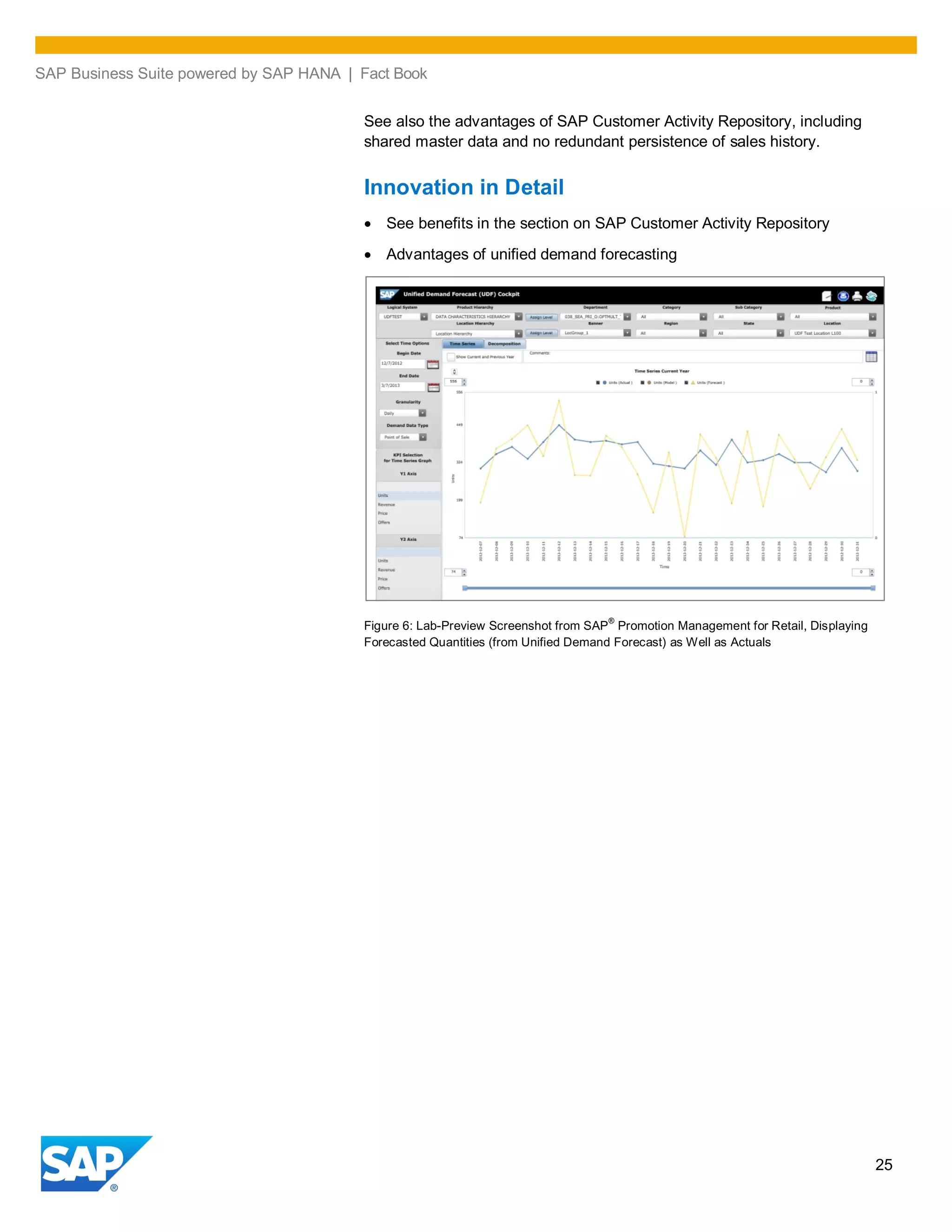
Figure 6: Lab-Preview Screenshot from SAP
®
Promotion Management for Retail, Displaying
Forecasted Quantities (from Unified Demand Forecast) as Well as Actuals
SAP Business Suite powered by SAP HANA | Fact Book
26
Benefits
Please note that the following KPIs, based on SAP analysis and research,
refer to business processes addressed by SAP Promotion Management for
Retail. Of course, KPIs should be expected to deviate based on a
customer’s business processes and context.
Improved revenue due to more effective promotions – Industry and
customer benchmarks estimate this range of improvement between 1%
and 12%
Improved gross margins due to efficient promotions – Industry and
customer benchmarks estimate this range of improvement between 3%
and 5%
Improved working capital through leaner inventory and more frequent
turns – Industry and customer benchmarks estimate this range of
improvement between 1% and 3%
Ability to execute a unified demand forecast across channels and supply
chain activities
Improved financial analytics and performance measurements now
possible with speed and flexibility of SAP HANA
Road Map and Outlook
SAP plans to continue innovations related to the forecasting algorithms that
power many of the existing business processes within SAP Customer
Activity Repository and SAP Promotion Management for Retail, and future
business processes related to planning (see the section “Optimized
Merchandise and
Assortment Planning
(SAP Planning for Retail, SAP Assortment Planning for Retail). As more
applications leverage the foundation of SAP Customer Activity Repository,
including forecasting, these applications will evolve to support shorter
lifecycle selling seasons and fast-fashion products. SAP plans to continue to
integrate demand intelligence throughout the relevant solution portfolio to
recommend best promotions and pricing in line with customer preferences
and demand patterns. In addition, SAP plans to continue to focus on
expanding multichannel promotion planning and execution capabilities to
enable retailers to market to customers across channels and devices.
Product Details/Prerequisites
For deployment on SAP HANA:
SAP HANA software, SP06
SAP NetWeaver 7.4
SAP Customer Activity Repository 1.0
SAP Promotion Management for Retail 8.0
SAP Business Suite powered by SAP HANA | Fact Book
27
How to Get Started
http://help.sap.com/retail-pm
Perfect Price and Promotion Execution
(SAP Merchandising for Retail and
Wholesale Distribution)
Business Practices Today
For retailers, promotions are the key mechanism to attract customers and
increase sales. Thus, efficient promotion maintenance and seamless
integration into operational processes are of major importance – especially
because retailers often work with many promotions in parallel, each of which
can be valid for a high number of products and stores. Promotion
maintenance is separated in two main process steps: First is the creation or
change of a promotion (either in dialog or via an application programming
interface). Second is the creation and transfer of the information to the
relevant follow-on activities (like allocation creation for procurement, or price
activation), typically executed in batch mode.
Ambition
To increase revenue, customer loyalty, and market share, retailers need
effective pricing capabilities. Strategic and operational pricing functionality
enables retailers to counteract pressures such as competitive online pricing
and rapidly changing consumer preferences, while protecting profits despite
rising costs.
By understanding the unique patterns that shoppers produce when making
purchases, retailers can proactively manage their pricing. Efficient execution
of prices at the point of purchase across all channels helps improve gross
margin and can be achieved by applying a defined set of rules.
Strategic and operational pricing leverages shopper demand patterns,
enabling the retailer to align pricing with their overall merchandising strategy.
This enables anticipating what shoppers want through analytical insight and
predicting the trade-offs between revenue, profit, and price image.
Tight integration with all solutions touched during the various stages of a
promotion – from long-term planning, to forecasting, to execution, to vendor
fund settlement – is a necessity. Retailers want to address customers via
selective or multiple channels simultaneously.
>220%
Faster promotion
change
maintenance*
SAP Business Suite powered by SAP HANA | Fact Book
28
Challenges
Working with many products and many stores via promotion maintenance in
some contexts may not be very user friendly because of long response
times. Thus, users may not work efficiently, and adjustments may be
cumbersome to apply.
Batch processes for subsequent process steps can have long runtimes,
which prevent adjusting promotions on short notice to react to business
insight or exceptions (for example, when delivery from vendor or logistics
service provider is delayed and a product needs to be substituted).
Business Practice Optimizations with SAP HANA
As the basis for real-time processes in retail and the foundation for
innovation and value-adding processes, the initial focus was on optimizing
the performance for SAP HANA for important retail processes, including
promotion maintenance, and subsequent process steps.
Optimizations in Detail
Performance optimizations for SAP HANA in the area of promotion
maintenance and subsequent processing steps have focused on the
following:
Promotion maintenance
– Promotion creation via transaction: WAK1
– Promotion change via transaction: WAK2
Subsequent processing
– Supply source determination via transaction: WAK20
– Price activation via transaction: WAK16
– Allocation table generation via transaction: WAK17
– Promotion listing via transaction: WAK18
Benefits
Support more efficient, user-friendly interaction
Enable short-term adjustments of promotions, so reaction to business
insight from real-time analytics is possible, along with faster reaction in
the case of exceptions (such as in the supply chain)
SAP Business Suite powered by SAP HANA | Fact Book
29
Road Map and Outlook
A significant portion of the runtime of both promotion maintenance and the
subsequent processing step, price activation, is spent in the area of sales
prices/conditions in general. Planned future optimizations in this area will
lead to considerable performance gains in promotion management.
Content for operational reporting for retail based on SAP HANA Live is
envisaged, among other optimizations in perfect price and promotion
optimization, such as promotion execution monitoring. Promotions are of
major importance for retailers for different reasons, including increasing
revenue by attracting customers to enter stores and buy both promoted and
regular merchandise, strengthening customer loyalty, and increasing profits
by taking advantage of special supplier/manufacturer contracts. All regular
business processes are relevant for promotions as well (planning, marketing,
merchandising, supply chain, analytics, and so forth), and often exist in
parallel to the regular processes in a promotion specific flavor. As
promotional processes are even more time critical and resource intense
(based on increased quantities), the retailer needs to take extra care that
promotional processes are smoothly integrated and that potential issues and
exceptions are detected as soon as possible and mitigated. Thus, a unified
promotional monitoring is needed that offers transparency of all relevant
processes (such as detecting incorrect master data, missed order dates,
incorrect POS communication, supply chain related incidents, critical stock
levels, and the like) in one spot, including the necessary insight-to-action
functionality to resolve issues.
Predictive applications for price optimization and markdown optimization on
SAP Customer Activity Repository are planned for the future. These will
optimize retail prices to maximize profitability and appeal to consumers.
They will help retailers set optimal pricing to respond to increasing
competition, narrowing margins, and changing consumer tastes. They will
also replace manual pricing with automatic pricing at the store and SKU
level, in alignment with core business objectives and customer demand. The
integrated execution saves overhead, simplifies dynamic price changes as
consumer demand shifts, and maximizes overall sales and profitability.
SAP Business Suite powered by SAP HANA | Fact Book
30
Product Details/Prerequisites
The performance optimizations for SAP HANA described under
“Optimizations in Detail” are available with SAP ERP 6.0, enhancement
package 7, SP02. See also notes:
SAP Note 1897248 and some prerequisite notes: SAP Note 1890618,
SAP Note 1893101, SAP Note 1902241, and SAP Note 1907808
The following performance optimizations for SAP HANA and process
renovations are available with SAP ERP 6.0, enhancement package 7,
SP05. See also notes:
Improve the accesses to purchasing info records and the prerequisite
notes: SAP Note 2018087, SAP Note 2002558, SAP Note 2015049
How to Get Started
SAP ERP 6.0, enhancement package 7, SP02, SP05, or via notes listed
above
SAP Business Suite powered by SAP HANA | Fact Book
31
Collaborative Sourcing,
Buying, and Manufacturing
Sourcing and Buying Excellence
(SAP Merchandising for Retail and
Wholesale Distribution)
Business Practices Today
Collaborative sourcing, buying, and manufacturing allow retailers to
analyze their overall business network, collaborate more effectively with
business partners, and streamline execution in order to deliver broader and
differentiating value to consumers cost-efficiently.
Sourcing and buying excellence comprises smart sourcing and buying of
products and services from external vendors. This strongly contributes to the
retailer’s bottom line.
Collective purchase orders are used by retailers for efficiently procuring
articles from a vendor if the recipients of the articles (store or customers) are
known at the time of procurement and a “pull process” based on orders of
the recipients will be used to plan the distribution. This allows retailers to
control the flow of merchandise from the vendor to the recipient and to
leverage the vendor’s capabilities of prepacking for a most efficient flow in
the retailer’s warehouse (for example, cross-docking or flow-through).
The monitoring of merchandise distribution is a time-critical process in
retail. It includes adjustments of the recipient’s quantities based on actual
goods receipts quantities from the supplier, and the generation of the
respective outbound deliveries to the stores,
The compensation management process between the retailer and the
vendor has a major impact on the retailer’s margin due to possible
chargebacks if the agreed order volume has been achieved or exceeded. It
is an important basis for further fact-based negotiations with the vendors.
Compensation management functionality is the successor of the subsequent
settlement functionality, offering high flexibility for all types of sales and
purchasing rebates, including chargebacks and vendor funds. The
condition contract is the central object that serves as an outline agreement
between vendors and customers to grant purchasing or sales rebates,
chargebacks, and vendor funds for a certain time period. The periodical
settlement of the contract can take place based on internal or external data
sources – for example, cumulated statistical business warehouse or LIS
data, customer-owned revenue statistics, revenues from vendors, purchase
orders, or agency business.
SAP Business Suite powered by SAP HANA | Fact Book
32
The agency business functionality supports third-party billing and invoicing
processes. Company headquarters may bundle and settle the payment flows
toward their own stores/subsidiaries or offer the settlement of payments to
their vendors and franchisees/customers as a service for which they charge
fees. The bundling and settlement of invoices is a huge volume business
process. Some customers settle up to a million items per day.
Global trade management is the central component for trading business or
specific direct (drop) shipment processes within SAP ERP. The specific
characteristic of trading business is the direct connection between suppliers
and customers through purchase orders and sales orders in a trading
contract, which allows the allocation of expenses to one specific deal and
the calculation of profit margins. Trading business is especially affected by
the technology revolution and must respond to requirements for more
transparency, faster decision making, and better risk mitigation. Opportunity
trading becomes more and more important; it requires reacting quickly on
new demands and supply offers and using new channels for sourcing and
selling. The margin pressure is extremely high, and in many cases margins
can just be secured by opportunity trades. Immediate insights into the status
of deals and into their logistics execution, as well as alerts for potential risks,
are critical success factors for our trading customers.
Ambition
Retailers need efficient execution in real time to help eliminate errors, reduce
manual intervention, and save costs. This applies whether they are
executing sourcing events to find qualified vendors, managing agreements
and contracts, reconciling and settling trade funds, or managing operational
procurement and distribution planning processes from ordering to invoicing.
For the efficient execution of sourcing and buying in retail, the real-time
processing of collective purchase orders and merchandise distribution is
important, in addition to taking advantage of generic optimizations in
materials management.
Contract and compensation negotiations with the vendors should be
supported efficiently based on real-time insight into the contract situation and
the underlying data relevant for the compensation. This can provide
sustainable savings and stimulate competition among qualified vendors to
cut costs while minimizing risks.
The settlement runs in compensation management and agency business
need to be as streamlined as possible, considering the huge data volumes
concerned.
Realization of opportunities is a vital challenge in global trade
management. This requires in particular a streamlined and efficient
processing of trading contracts.
SAP Business Suite powered by SAP HANA | Fact Book
33
Challenges
Long runtimes of batch jobs for processing of key retail business objects,
such as the creation of collective purchase orders, and merchandise
distribution, make it difficult to react quickly to changes.
To reduce the procurement lead time and enable closer interaction with
the vendors, faster processing time for collective purchase orders is
needed.
Periodic settlement of huge amounts of contracts with complex pricing
procedures entail long runtimes.
Real-time transparency in the supply chain is needed to better control the
supply network and as basis for effective negotiations with the vendors.
Efficiency and transparency for trading contract processing are required
to ensure the profitability of trading businesses.
Business Practice Optimizations with SAP HANA
As the basis for a real-time supply chain management in retail and
wholesale distribution and as foundation for innovation and value-adding
processes, the initial focus was on optimizing the performance for SAP
HANA for important retail and wholesale distribution processes related to the
supply chain, including agency business.
Optimizations in Detail
Performance optimizations for SAP HANA in the area of collective
purchase orders were done for transaction WF10.
The merchandise distribution monitor WF30 was optimized for SAP
HANA.
Performance optimizations for SAP HANA in compensation management
and agency business were made for the following processes:
Condition contract maintenance: WCOCO
Condition contract settlement: W2BR_SV
Vendor billing document processing: WLF1
Performance optimization for global trade management mainly concerns the
trading execution workbench, in order to accelerate the display of source
documents.
To speed up trading contract processing for global trade management
running on SAP HANA, an SAP Fiori®
app to approve trading contracts is
now available,
>60%
Faster processing of
condition contract*
SAP Business Suite powered by SAP HANA | Fact Book
34
Benefits
Based on faster dialog and batch transactions in collective purchase
orders and merchandise distribution, businesses can react faster to
supply chain–related changes.
Reduced processing time for collective purchase orders enables closer
interaction with the vendors and faster procurement.
Higher end-user acceptance is gained by reduced response times.
Accelerated insight into the condition contract in the context of
compensation management allows more effective negotiations with the
vendors.
Accelerated condition contract settlement significantly relieves the batch
window.
Road Map and Outlook
In future releases, SAP plans to evolve the solution in the following areas:
Enable buyers to analyze large volumes of data and perform real-time
what-if calculations while negotiating with their vendors.
Content for operational reporting for retail based on SAP HANA Live is
envisaged, among other areas in the supply chain, such as for vendor
evaluations.
Performance optimizations in the area of global trade management: For
global trade management running on SAP HANA, SAP plans to improve
operational reporting to speed up processes in daily business.
SAP Business Suite powered by SAP HANA | Fact Book
35
Product Details/Prerequisites
The following performance optimizations for SAP HANA as described under
“Optimizations in Detail” are available with SAP ERP 6.0, enhancement
package 7, SP02. See also these notes:
Collective purchase orders: SAP Note 1910901, SAP Note 1911097
Process condition contract: SAP Note 1879393
The following performance optimizations for SAP HANA are available with
SAP ERP 6.0, enhancement package 7, SP03. See also notes:
Merchandise distribution monitor: SAP Note 1942569
Condition contract settlement: SAP Note 1928202
Vendor billing document: SAP Note 1929646
The following performance optimizations for SAP HANA are available with
SAP ERP 6.0, enhancement package 7, SP05. See also notes:
Collective purchase orders: SAP Note 2017658, SAP Note 2021197,
SAP Note 2015403
How to Get Started
SAP ERP 6.0, enhancement package 7, SP02, SP03, SP05, or via notes
listed above
SAP Business Suite powered by SAP HANA | Fact Book
36
Customer-Driven Supply Chain
Demand and
Replenishment Planning
(SAP Forecasting and Replenishment for
Retail, SAP Merchandising for Retail and
Wholesale Distribution)
Business Practices Today
From a procurement-planning perspective, retail products are procured in
two main ways: pull mode and push mode. Pull mode means that the
quantities to be procured are requested from the locations from which the
demand will be fulfilled – for example, via replenishment of reorderable items
from the stores. This type of replenishment is based on sales forecasts and
order optimization rules. The process itself shows various degrees of
automation and user interactions in the different steps, and is at times also
dependent on the type of merchandise that is planned.
Ambition
Having the right quantities of the right product at the right location at the right
point in time is a key differentiating factor in retail, so the importance of the
replenishment process cannot be overestimated. Yet this process needs to
be supported by the most sophisticated algorithms for analyzing and
predicting customer demand. It should be highly automated with as little
interaction by the user as possible. A true demand-driven replenishment is of
course multilevel capable and processes information from the lower level to
optimize stock across the entire supply network. It enables the creation of
accurate and timely purchase orders based on anticipated customer
demand, current inventories, and both logistical and cost aspects. In addition
to helping prevent stock-outs and minimizing overstock, the software
supports efforts to launch sales campaigns, build customer and vendor
relationships, and reduce labor costs.
Challenges
At many retailers, several solutions are needed at different levels of the
supply chain with little to no integration. These are often modular
applications that are not connected to the execution system (ERP back end).
Consequently, the time needed to run replenishment for a large amount of
product often challenges the available time windows.
SAP Business Suite powered by SAP HANA | Fact Book
37
Business Practice Optimizations with SAP HANA
Key benefits of a deployment of functionality in SAP Forecasting and
Replenishment for Retail that runs on SAP HANA are:
Making possible a consistent overall SAP HANA strategy for customers
Improved performance along several process steps, thus enabling time-
critical batch windows to be more relaxed
New deployment options available with the SAP HANA Enterprise Cloud
service
Using the power of SAP HANA to run a state-of-the-art replenishment
solution like SAP Forecasting and Replenishment for Retail will not only
result in performance improvements but also enable new options for
operational reporting.
Optimizations for SAP Forecasting and Replenishment for Retail have been
carried out in the areas of inbound interface processing, the forecasting and
replenishment processor, multi-echelon replenishment, and aggregated
order forecast.
Optimizations for SAP Merchandising for Retail and Wholesale Distribution
have been carried out in the areas of outbound interface processing.
Optimizations in Detail
Although activities have been focused on porting functionality in SAP
Forecasting and Replenishment for Retail to SAP HANA, several
optimizations have been carried out in the areas of inbound interface
processing, the forecasting and replenishment processor, and aggregated
order forecast. Significant performance improvements have been achieved
especially for inbound staging processes. Performance optimizations for
SAP Forecasting and Replenishment for Retail running on SAP HANA are
planned to focus on the following areas:
Inbound: Inbound processing for stock and consumption
Inbound: Creation and processing
Inbound: General inbound processing
Forecasting and replenishment processor
Multiple-echelon replenishment – aggregated order forecast
In addition, major performance improvements are also possible for
customers who will run SAP Merchandising for Retail and Wholesale
Distribution on SAP HANA, including:
Outbound processing (initialize) for master data, lane, purchase order,
sales order, promotion (DIF), stock, and consumption: Transactions
FRE01, FRE11
Outbound processing (delta) for lane, sales price, purchase order, stock,
and consumption: Transactions FRE02, FRE05
>200%
Faster order
forecast
aggregation*
SAP Business Suite powered by SAP HANA | Fact Book
38
New search capabilities for relevant business objects, as described in the
section “Value Help,” improve user efficiency, and user acceptance.
Benefits
Automated replenishment is a core process strongly supported with SAP
Forecasting and Replenishment for Retail, and it significantly benefits from
improved performance, as time-critical batch windows can be relaxed.
Product Details/Prerequisites
The following performance optimizations for SAP HANA, as described in
“Optimizations in Detail,” are available with the SAP Supply Chain
Management 7.0 application, enhancement package 3, SP03. See also
notes:
Inbound: Inbound processing for stock and consumption:
SAP Note 1933603
Inbound: Creation and processing: SAP Note 1951643
Inbound: General inbound processing: SAP Note 1950504
General forecasting and replenishment processor: SAP Note 1929668
Multi-echelon replenishment – aggregated order forecasting aggregation:
SAP Note 1929668
Collective note: SAP Note 1927627
Value help: SAP Note 2019838
The following performance optimizations for SAP HANA as described in
“Optimizations in Detail” are available with SAP ERP 6.0, enhancement
package 7, SP04. See also note:
Collective note: SAP Note 1967837
How to Get Started
SAP ERP 6.0, enhancement package 7, SP04, or via notes listed above
SAP Supply Chain Management 7.0 application, enhancement package 3,
SP03, or via notes listed above
>2–5x
Faster delta transfer
of lane and purchase
orders data
(from SAP ERP)*
>90%–500%
Faster inbound processing
of demand influencing
factors and stock*
SAP Business Suite powered by SAP HANA | Fact Book
39
Integrated Demand and
Replenishment Planning
(SAP Merchandising for Retail
and Wholesale Distribution)
Business Practices Today
From a procurement-planning perspective, retail products are procured in
two main ways: pull mode and push mode. Pull mode means that the
quantities to be procured are requested from the locations from which the
demand will be fulfilled – for example, via replenishment of reorderable items
from the stores. In push mode the quantities of a product for a store are
determined centrally, such as for one-off seasonal merchandise or
promotion-related events. The allocation table is the planning tool used by
a purchasing organization to distribute stocks of a product among sites at
specific periods. An allocation table consists of items in which the total
quantity of an article to be allocated is defined.
There are various methods to determine quantities for individual stores (for
example, taking into account historical sales and current inventory). How an
article is procured is defined at the item level, that is, via direct delivery from
the vendor to the store, or via delivery to the distribution center and then to
the stores. Follow-on operational documents (purchase orders, stock
transfer orders, deliveries) can be created automatically. The allocation table
is fully integrated with the merchandise distribution and collective purchase
order; see the section “Collaborative Sourcing, Buying, and Manufacturing.”
The main aspects of procurement planning include the following:
Plan, monitor, and control retail merchandise allocation and distribution,
among several retail locations.
Distribute quantities via allocation strategies, and automate logistics
processes for building inventories based on location-specific customer
demand.
By streamlining the manual processes involved in managing retail
inventories, empower staff to increase their productivity and improve the
customer-shopping experience.
SAP Business Suite powered by SAP HANA | Fact Book
40
Ambition
Having the right quantities of the right product at the right location at the right
point in time is a key differentiating factor in retail, so the importance of
allocation functionality cannot be overestimated. Thus, full real-time
integration in all retail processes (demand, stock transparency, supply chain
status) as well as usage of sophisticated predictive algorithms enables the
retailer to meet consumer demand at the lowest possible inventory levels
and with the leanest supply chain.
Challenges
Working with outdated data, as well as using many manual steps and fixed
ratios, leads to nonoptimal distribution of the quantities, with the potential of
out-of-stock situations or high capital binding in overstock situations.
Business Practice Optimizations with SAP HANA
With improved performance, users can work more efficiently with high-
volume allocations.
As a basis for a real-time sophisticated allocation management in retail,
initial focus was on optimizing the performance for the key allocation
transaction on SAP HANA.
Further innovations relevant for the supply chain, see the section on SAP
Customer Activity Repository and find out how the repository supports real-
time processes (inventory visibility) and helps prevent out-of-stock situations
(on-shelf availability algorithms).
Optimizations in Detail
Performance optimizations for SAP HANA in the area of allocation focused
on allocation table creation, changes, and the generation of follow-on
documents.
Benefits
Users can work more efficiently with allocation table maintenance, thus
leaving more time for sophisticated quantity calculations, and shorter cycles
to adjust the allocation table to gain insight from related business processes,
especially from the supply chain.
Short-term adjustments of allocation tables are enabled, so reacting to
business insight from real-time analytics, or reacting faster in case of
exceptions (such as those caused in the supply chain), is possible.
>30%
Faster allocation
table creation*
SAP Business Suite powered by SAP HANA | Fact Book
41
Road Map and Outlook
SAP plans to evolve the retail industry functionality in SAP ERP in the
following area in future releases:
Optimize replenishment based on retail functionality in SAP ERP (used
by some retailers who do not need the sophistication of SAP Forecasting
and Replenishment for Retail for their stores) for usage on SAP HANA,
and evaluate additional innovation
Further planned innovations for retail include:
New allocation solution as “consuming” solution on SAP Customer
Activity Repository, with all the resulting benefits
Customer demand planning. In retail, this is a business planning process
that enables supply chain teams to develop demand forecasts for all
different customer sales channels as input to supply and inventory
planning. As part of an integrated planning strategy, demand planning
aims at aligning top-down hierarchical sales/financial plans and bottom-
up demand forecasts toward an active and agreed-upon demand plan
that drives procurement and inventory decisions. While merchandising
and marketing are influencing and shaping demand, demand planning
aims at accurately predicting demand as a basis for fulfillment.
Product Details/Prerequisites
The performance optimization for SAP HANA as described in “Optimizations
in Detail” is available with SAP ERP 6.0, enhancement package 7, SP02.
See also notes:
Allocation table creation: SAP Note 1908941, SAP Note 1910645
The following performance optimizations for SAP HANA are available with
SAP ERP 6.0, enhancement package 7, SP03. See also notes:
Allocation table changes: SAP Note 1943502
Generate allocation follow-on documents: SAP Note 1943502
How to Get Started
SAP ERP 6.0, enhancement package 7, SP02, SP03, or via notes listed
above
SAP Business Suite powered by SAP HANA | Fact Book
42
Optimized Logistics and
Fulfillment Execution
(SAP Merchandising for Retail
and Wholesale Distribution)
Business Practices Today
In light of decreasing margins, rising customer expectations, and mounting
supply chain complexity, retailers face the challenge of ensuring the cost-
efficient and reliable execution of their operations. Best-run companies
master this challenge by optimizing logistics and fulfillment execution
processes, which is of paramount importance in order to remain competitive
in today’s environment.
Retail stock overview provides an overview of all stocks for a selection of
retail articles or generic materials at all organizational levels. This is a very
central functionality in both distribution center– and store-related scenarios.
Ambition
Transparent inventory levels are the basis for the most critical processes a
retailer runs: customer-facing processes (with the goal to increase sales and
customer satisfaction) and supply chain processes (with the goal to save
cost). Thus the ability to run accurate inventory lookups in real time is a
must-have for a retailer.
Challenges
The retail stock overview is called from multiple roles within a retail company
for various sizes of sets of products and locations, such as sales personnel
in customer-facing operations, supply chain managers as part of inventory
optimizations, and category managers to control assortments. It is often
called several times a day per person. Therefore it is important to increase
efficiency of this central functionality.
Business Practice Optimizations with SAP HANA
As the basis for a real-time logistics and fulfillment execution in retail, our
initial focus was on optimizing the performance on SAP HANA for important
retail transactions related to logistics and fulfillment.
Optimizations in Detail
Optimizations for logistics and fulfillment transactions were done exploiting
the ability of SAP HANA to very efficiently access granular data via views, as
well as execute aggregations and calculations on the fly close to data.
>330%
Faster retail stock
overview*
SAP Business Suite powered by SAP HANA | Fact Book
43
Benefits
Real-time data retrieval of inventory information for a range of articles
and organizational levels
Real-time overview of the current stock situation in the distribution center
as the basis for efficiently distributing the requested goods to the receiver
and save costs
Real-time overview of the current stock in the store to quickly answer or
react to customer requests and thus increase sales and customer
satisfaction
Several business scenarios for store and distribution center that benefit
from this optimization (such as procurement, store and multichannel
sales order management, and store connectivity)
Transactions with high usage in other industries besides retail, thus
providing cross-industry benefits
Road Map and Outlook
In future releases, content is planned for operational reporting for retail
based on SAP HANA Live, which may also leverage generic content in the
area of logistics and fulfillment execution.
Product Details/Prerequisites
The performance optimization for SAP HANA as described under
“Optimizations in Detail” is available with SAP ERP 6.0, enhancement
package 7, SP02. See also notes:
Retail stock overview: SAP Note 1876946, SAP Note 1884131
Further technical optimizations for better maintainability are available with
SAP ERP 6.0, enhancement package 7, SP04. See also SAP Note
1983672.
How to Get Started
SAP ERP 6.0, enhancement package 7, SP02, SP04, or via notes listed
above
SAP Business Suite powered by SAP HANA | Fact Book
44
Unified Customer Experience
Store Excellence (On-Shelf Availability)
Business Practices Today
Gone are the days of the loyal customer who will only shop at his or her
favorite store no matter what. Nowadays, if the consumer walks into a store
to purchase an item, it better be on the shelf. Retailers struggle to balance
keeping consumers happy with the high costs of managing inventory levels
and monitoring shelf stock. Often, system stock is not a good indicator of
what is actually on the shelf. The system may have 10 units on hand, but
those 10 units may be in a back store or in overstock. If consumers do not
find the item they want the moment they arrive at the shelf, or have trouble
accessing it, they will often leave the store and visit a competitor, or buy a
competing brand.
Ambition
On-shelf availability is critical to retaining customers and increasing the
bottom line, yet most retailers struggle with lost sales due to items not being
accessible for purchase. Retailers want to reduce the amount of “random
store walks” they do on a regular basis to combat this epidemic. A real-time
alert-driven tool is required, based on actual transaction history, trends, and
other demand-influencing factors (discounts and promotions), notifying the
store associate where the on-shelf availability exists and what follow-on
actions to take.
Challenges
Processing potentially billions of detailed line items in sales transaction logs
in a fast and reliable manner is virtually impossible using today’s classic
relational database models.
Business Innovation with SAP HANA
SAP HANA allows for fast, accurate, on-the-fly number crunching by
processing vast amounts of fine-grained information. It allows for embedded
predictive algorithms to run on demand, returning the results to the associate
on any sort of device, be it mobile or desktop.
SAP Business Suite powered by SAP HANA | Fact Book
45
Innovation in Detail
Why are algorithms within SAP HANA required to detect on-shelf availability
issues?
The algorithm resides within SAP Customer Activity Repository and
analyzes billions of line-item details to generate sales models for thousands
of items. Then, on a scheduled basis, an analysis is triggered against this
model. If products are not selling as frequently as expected, alerts are
generated. These alerts can even be fine-tuned by the retailer based on
factors such as confidence levels and other demand influences (promotions,
fast vs. slow sellers, discounts). All of this analysis would take hours, if not
days, to run against the massive amount of sales data were it not for the
vast in-memory computing power of SAP HANA.
Benefits
Retailers can analyze, discover, and optimize issues in the supply chain that
have an impact on on-shelf availability.
They can take advantage of the information to:
Gain insights into past on-shelf availability situations
Identify hotspots (for example, stores, suppliers, days of the week)
Define measures to optimize hotspots
Monitor success and continue with optimization
Product Details/Prerequisites
On-shelf availability algorithms are part of SAP Customer Activity Repository
1.0.
On-shelf availability algorithms do not support a standard mobile or desktop
user interface. SAP offers a template to create a dashboard and OData
service to create a mobile app.
How to Get Started
http://help.sap.com/osa
SAP Business Suite powered by SAP HANA | Fact Book
46
Store Excellence (SAP Fiori Apps for Retail)
Business Practices Today
Today, retailers are serving a new generation of consumers. Consumers
want to feel totally satisfied with their purchases. To remain competitive,
retailers must connect with their customers and offer a superior experience
through store excellence. Retailers must empower their employees to fulfill
their customers' needs by providing the right people, solutions, and
technology.
A recent innovation is the creation of SAP Fiori apps for retailers (based on
the SAPUI5 technology), which deliver many advantages.
The classical end-user experience has been focused on transaction
execution and not usability. Today, however, more and more organizations
want to empower a wider set of employees to access and interact with
specific ERP data and processes, ideally without making additional
investments in training. A retailer may have information and functions in the
ERP solution that are used by multiple roles. Users may be required to open
different screens when they want to view this information. With SAP Fiori
apps, the retailer can provide end users with access to the most important
and relevant information and functions in one single environment. And SAP
Fiori provides a single entry point for each role, via an SAP Fiori launchpad.
Ambition
SAP Fiori apps for the retail industry aim to make employees more
productive. In-store merchandising apps are provided for the roles of store
associate and store manager, and fact sheet apps for the roles of master
data specialist and promotion specialist. Fact sheet apps display contextual
information about central objects in business operations. From these apps,
users can navigate to relevant information and can access related functions
in the operational system.
Challenges
Empower employees to fulfill their customers' needs by providing the right
people, solutions, and technology.
SAP Business Suite powered by SAP HANA | Fact Book
47
Innovation in Detail
The In-Store Merchandising app lets retail store associates access
information in back-end systems to improve transaction speed
productivity and accuracy, and it enables customer service and inventory
management. It increases productivity by providing store associates with
role-based and real-time access to functions (such as product lookup)
and information (such as detailed product) to provide customers with
information they need. Companies can increase workforce efficiency,
improve store performance, and increase store sales, shopper loyalty,
and customer and employee satisfaction.
The Article fact sheet app displays contextual information about an
article. Users can access related functions in operational system. They
can view information such as unrestricted-use stock, articles by category
(such as single and generic), and articles by type (such as trading
goods). They can navigate to the Site, Allocation Table, Promotion, and
other fact sheet apps. And they can access functions such as display
article, display stock overview, and display price overview.
The Promotion fact sheet app displays contextual information about
promotions. Users can access related functions in the transactional back-
end solution. They can view most relevant information such as promo
start/end dates, promo type, promo sales price, and more. They can
navigate to Article, Allocation Table, Purchase Order, Site, and other fact
sheet apps. Furthermore, users can access functions such as display
promotion, subsequent processing, and define additionals.
The Allocation Table fact sheet app displays contextual information of
an allocation table. Users can access related functions in the
transactional backend solution. They can view total sales values of
articles of an allocation table, and values of generated sales orders. They
can display activity status of follow-on document processing. In addition,
users can display status and options for allocation table maintenance.
The Site fact sheet app displays contextual information about sites (store
and distribution center). Users can access related functions in the
transactional back-end solution. They can view current open good
receipts, view sites by category such as store or distribution center, see
status of sites such as open or closed, navigate to related Promotion,
Allocation Table, Purchase Order, and other fact sheet apps, and access
functions for display site and stock overview.
The Bonus Buy fact sheet app displays contextual information about
bonus buy. Users can access related functions in the transactional back-
end solution. They can view bonus buy and access-related functions.
SAP Business Suite powered by SAP HANA | Fact Book
48
Benefits
Role-based access to all relevant information
Real-time mobile and desktop software to save time, increase sales, and
improve customer and employee satisfaction
Increased workforce efficiency, more sales, and enhanced customer
loyalty and employee satisfaction
Optimized inventory accuracy and replenishment
Road Map and Outlook
SAP plans to evolve the solution in the following areas in future releases:
Adding fact sheets for additional business objects
Enhancing the In-Store Merchandising app to support the following
processes
– Adjust stock and count ad hoc
– Transfer stock
– Order stock
– Receive stock
– In-store pickup
– In-store markdown
– Request local article
– Store manager analytics
– Customer order management
Product Details/Prerequisites
The SAP Fiori app for in-store merchandising requires SAP ERP,
enhancement package 7, SP04, and SAP Mobile Platform 3.0.
Retail fact sheet apps require SAP ERP 6.0, enhancement package 7,
SP02, and UI for SAP ERP 6.0, enhancement package 7.
How to Get Started
SAP Help
SAP Business Suite powered by SAP HANA | Fact Book
49
Store Excellence
(SAP Merchandising for Retail
and Wholesale Distribution)
Business Practices Today
Retailers with physical stores use POS solutions to support the in-store
processes. As SAP ERP is the system of record for both master and
transactional business objects, data needs to be exchanged between SAP
ERP and the POS solution(s). POS outbound and inbound data exchange
needs to be distinguished. Typically, part of POS outbound master data is
sent to the store POS solutions, including product information, sales prices,
taxes, promotional information, and so forth. POS inbound comprises,
among other things, sales transactions (product quantities plus terms of
payment), financial transactions (such as down payments), and goods
movements (such as post to waste) from POS solutions to the retail
component. As a result of processing those transactions, corresponding
documents will be posted in SAP ERP (goods movements documents to
adjust inventory, financial documents to reflect payments, and the like).
Because of high volumes and the resulting long execution times, many
store-related business processes are executed during the night via batch
processing. As there are interdependencies (for example, to run
replenishment, inventory needs to be up-to-date, so POS inbound
processing must be executed successfully prior to the replenishment run),
the batch processes need to be executed sequentially. On the other hand,
the nightly batch window (bound by store opening hours) is limited, which is
shortened even more when a retailer operates in different time zones.
In addition to the store communication mentioned here, there is typically high
volume data exchange to realize vendor collaboration, as well as integration
with other solutions. Together, this results in enormous data volumes for
data exchange. To ensure data and process integrity, data exchange needs
to be permanently monitored, and any errors corrected as soon as possible.
For certain scenarios the usability of tools is limited by response times – for
example, if missing or wrong article information is detected in a store, as of
today it is not possible for business users to do a root cause analysis in real
time by searching for issues and error messages for a specific article in the
intermediate document (IDoc) segments.
Store personnel work in dialog with the retail functionality in SAP ERP via
the SAP In-Store Merchandise and Inventory Management application as
part of both consumer-facing processes and operational processes such as
store order creation, sales price lookup, inventory checks, and so forth. As
many store users concurrently execute those transactions, response times
for store orders are especially critical. Also, store order creation is used in
batch processes like replenishment, which typically runs in a tight batch
window.
>540%
Faster assortment
list initialization*
SAP Business Suite powered by SAP HANA | Fact Book
50
Ambition
Innovate by introducing more sophisticated predictive solutions, so that
the nightly batch window is no longer the limiting factor.
POS outbound: It must be possible to react during the day to new
business insight – for example, to:
– Adjust promotions based on gained real-time insight via promotion
analytics
– Introduce ad hoc markdowns based on real-time insight in inventory
levels, such as for perishables (as an example, if inventory levels for
fresh flowers are too high one hour prior to store closing, an ad hoc
markdown can be triggered)
POS inbound: Faster processing of store transactions leads to improved
transparency needed to react to business requirements.
IDoc monitoring: Real-time check of business-related issues in IDoc
processing by the business users allows immediate reaction.
Retail store order: Fast response is possible for online requests and high
throughput is enabled when called for in batch jobs such as
replenishment
Challenges
For many retailers, the nightly batch window is not sufficient to execute all
process steps with the desired sophistication, especially during high-volume
seasons such as Christmas, when accuracy and sophistication is needed
most.
POS outbound: Most retailers cannot transfer updates on products or sales
prices during the day because of performance restrictions (typically this is
only possible for single stores in error scenarios). Thus it’s not possible to
react to business insight the same day, which negatively affects revenue and
customer satisfaction.
POS inbound: As store transactions cannot be processed during the day in a
timely manner, the business is flying blind and does not operate using
accurate, up-to-date data.
IDoc monitoring: Search of business data in IDoc segments without SAP
HANA is too time-consuming for ad hoc analysis.
Response time for store order creation needs to be very fast because this is
used, for example, in a clienteling process. When store order creation is
used in replenishment, this runtime significantly influences the total runtime.
>200x
Faster search of
articles in IDoc
segments*
SAP Business Suite powered by SAP HANA | Fact Book
51
Business Practice Optimizations with SAP HANA
As the basis for real-time processes in retail and the foundation for
innovation and value-added processes, our initial focus was on optimizing
the performance for SAP HANA for important retail processes, including
store connectivity.
A significant portion of the runtime of store outbound processes is spent in
the area of sales prices and conditions in general. A renovation in this area
enables the determination of condition records via multiple selection, leading
to significant performance gains in store communication.
Optimizations in Detail
Performance optimizations for SAP HANA in the area of POS outbound
focused on the following:
Assortment list full version/initial load (high-performance retailing)
Assortment list change version (high-performance retailing)
POS outbound (IDoc) initial load
POS outbound (IDoc) change version
POS outbound based on enterprise services (full version/initial load) for:
– Request merchandise replication as bulk
– Request retail event store replication
o POS inbound – for example, report
RBDAPP01/RWPOS_PARA_ENQUEUE for IDoc WPUUMS
o IDoc monitor: WLF_IDOC
o Retail store order: WSTA
Benefits
Optimization of store outbound processing, resulting in:
– Relaxing the nightly batch window, helping to ensure all process steps
can be executed in time, even in high seasons
– Process steps with more sophisticated predicative solutions
– Using ad hoc communication during the day to react to real-time
business insight
Optimization of store inbound processing, resulting in:
– A more relaxed nightly batch window, as above
– Store transactions that can be processed faster during the day, thus
creating a more accurate data basis for informed business decisions
o Real-time check of issues related to wrong data in the store via the
IDoc monitor allows immediate reaction by the business users. For
example, they can send correct prices to the store and thus save
costs and increase customer satisfaction.
>200%
Faster POS outbound
and assortment list
change run*
SAP Business Suite powered by SAP HANA | Fact Book
52
Road Map and Outlook
SAP plans to evolve the solution in the following areas in future releases:
Process innovation in the area of store connectivity can be achieved via
exploiting advanced functionality of SAP HANA beyond performance
optimizations.
Product Details/Prerequisites
The following performance optimizations for SAP HANA as described under
“Optimizations in Detail” are available with SAP ERP 6.0, enhancement
package 7, SP02. See also notes:
High-performance retailing assortment list
– Full version/initial load: SAP Note 1876771, SAP Note 1886047, SAP
Note 1881079, SAP Note 1894751
– Change version: SAP Note 1904378
POS outbound with IDocs
– Initialization: SAP Note 1882956
– Change messages: SAP Note 1896123, SAP Note 1909221
POS inbound
– SAP Note 1873670
The following performance optimizations for SAP HANA are available with
SAP ERP 6.0, enhancement package 7, SP03. See also notes:
POS outbound based on enterprise services (WESOUT)(full
version/initial load)
– Merchandise enterprise service SAP Note 1906905, SAP Note
1932907
– Promotion enterprise service SAP Note 1933090
IDoc monitor: WLF_IDOC SAP Note 1937690
The following performance optimizations for SAP HANA and process
renovations are available with SAP ERP 6.0, enhancement package 7,
SP04. See also notes:
Determination of condition records via multiple selection, as base for all
optimizations containing the business function for sales condition multi-
access: SAP Note 1977913, SAP Note 1978149
Prerequisites for all optimizations/process renovations containing the
business function for sales condition multi-access: SAP Note 1977972,
ABAP dictionary, SAP Note 1982882
High-performance retailing assortment list (sales condition determination
renovation by multi-access): WDBI_HPR (full version/initial load) and
WDBU_HPR (change version) – SAP Note 1982068, SAP Note
1983772
POS outbound with IDocs: (sales condition determination renovation by
multi-access): WPMU (change messages) – SAP Note 1982796
SAP Business Suite powered by SAP HANA | Fact Book
53
IDoc monitor: WLF_IDoc (replace SAP HANA stored procedure with
ABAP-managed database procedure [AMDP] and add data aging
concept) – SAP Note 1937690
Retail store order: WSTA – SAP Note 1983614
The following performance optimizations for SAP HANA and process
renovations are available with SAP ERP 6.0, enhancement package 7,
SP05. See also notes:
POS outbound with merchandise enterprise service using sales condition
multi-access and buffering of purchasing info records: SAP Note
2002547, SAP Note 2006749, SAP Note 2003294, SAP Note 2010913
POS outbound with IDocs using sales condition multi-access and listing
check renovation: SAP Note 2016917, SAP Note 2006075
Retail store order: WSTA – SAP Note 2017658, SAP Note 2015403,
SAP Note 2021197
How to Get Started
SAP ERP 6.0, enhancement package 7, SP02, SP03, SP04, SP05, or via
notes listed above
*All performance KPIs are preliminary. SAP internal lab measurements and productive
customer performance can deviate.
www.sap.com
Studio SAP | 28550enUS (14/08)
© 2014 SAP SE or an SAP affiliate company. All rights reserved.
No part of this publication may be reproduced or transmitted in any form
or for any purpose without the express permission of SAP SE or an SAP
affiliate company.
SAP and other SAP products and services mentioned herein as well as
their respective logos are trademarks or registered trademarks of SAP SE
(or an SAP affiliate company) in Germany and other countries. Please see
http://www.sap.com/corporate-en/legal/copyright/index.epx#trademark
for additional trademark information and notices. Some software products
marketed by SAP SE and its distributors contain proprietary software
components of other software vendors.
National product specifications may vary.
These materials are provided by SAP SE or an SAP affiliate company for
informational purposes only, without representation or warranty of any
kind, and SAP SE or its affiliated companies shall not be liable for errors
or omissions with respect to the materials. The only warranties for SAP
SE or SAP affiliate company products and services are those that are set
forth in the express warranty statements accompanying such products
and services, if any. Nothing herein should be construed as constituting an
additional warranty.
In particular, SAP SE or its affiliated companies have no obligation to
pursue any course of business outlined in this document or any related
presentation, or to develop or release any functionality mentioned therein.
This document, or any related presentation, and SAP SE’s or its affiliated
companies’ strategy and possible future developments, products, and/
or platform directions and functionality are all subject to change and
may be changed by SAP SE or its affiliated companies at any time for
any reason without notice. The information in this document is not a
commitment, promise, or legal obligation to deliver any material, code, or
functionality. All forward-looking statements are subject to various risks
and uncertainties that could cause actual results to differ materially from
expectations. Readers are cautioned not to place undue reliance on these
forward-looking statements, which speak only as of their dates, and they
should not be relied upon in making purchasing decisions.

Vdocuments.mx sap retail-55fed4ead31a0

  • 1.
    SAP Business Suitepowered by SAP HANA | Fact Book Retail Find Out How SAP® Business Suite powered by SAP HANA® Delivers Business Value in Real Time
  • 2.
    SAP Business Suitepowered by SAP HANA | Fact Book Disclaimer This document is not subject to your license agreement or any other service or subscription agreement with SAP. SAP has no obligation to pursue any course of business outlined in this document or any related presentation, or to develop or release any functionality mentioned therein. This document, or any related presentation and SAP's strategy and possible future developments, products, and/or platforms directions and functionality are all subject to change and may be changed by SAP at any time for any reason without notice. The information in this document is not a commitment, promise, or legal obligation to deliver any material, code or functionality. This document is provided without a warranty of any kind, either express or implied, including but not limited to, the implied warranties of merchantability, fitness for a particular purpose, or non-infringement. This document is for informational purposes and may not be incorporated into a contract. SAP assumes no responsibility for errors or omissions in this document, except if such damages were caused by SAP's willful misconduct or gross negligence. All forward-looking statements are subject to various risks and uncertainties that could cause actual results to differ materially from expectations. Readers are cautioned not to place undue reliance on these forward-looking statements, which speak only as of their dates, and they should not be relied upon in making purchasing decisions.
  • 3.
    SAP Business Suitepowered by SAP HANA | Fact Book SAP® Business Suite powered by SAP HANA® Retail Driven by changes in consumer behavior and the advent of new technology, the retail market is changing rapidly. Consumers are now demanding multichannel shopping as they increasingly interact through multiple touch points. Besides physical stores, they shop more and more via Web stores and mobile devices and expect a consistent retail experience, which requires retailers to harmonize processes across the channel silos. In addition, global verticalized players are getting stronger – for example, manufacturers are extending their business to the retail area and vice versa – which demands modified supply- chain processes. Looking at these massive transformations of retail processes, SAP is positioned well to support customers and consumers along this journey. SAP® Business Suite powered by SAP HANA® leads the way to new real-time business practices in the following key areas of retail: SAP Customer Activity Repository.......................................................5 Master Data Management....................................................................13 Item Management, Assortments, and Listing (SAP Merchandising for Retail and Wholesale Distribution)......................................................13 Customer-Centric Merchandising .......................................................17 Real-Time Customer Insight and Predictive Analytics ........................17 Optimized Merchandise and Assortment Planning (SAP Planning for Retail, SAP Assortment Planning for Retail)........................................18 Marketing, Campaign, and Promotion Planning (SAP Customer Engagement Intelligence)...................................................................21 Marketing, Campaign, and Promotion Planning (SAP Promotion Management for Retail)......................................................................24 Perfect Price and Promotion Execution (SAP Merchandising for Retail and Wholesale Distribution)................................................................27 Collaborative Sourcing, Buying, and Manufacturing ........................31 Sourcing and Buying Excellence (SAP Merchandising for Retail and Wholesale Distribution).......................................................................31 Customer-Driven Supply Chain...........................................................36 Demand and Replenishment Planning (SAP Forecasting and Replenishment for Retail, SAP Merchandising for Retail and Wholesale Distribution)........................................................................................36
  • 4.
    SAP Business Suitepowered by SAP HANA | Fact Book Integrated Demand and Replenishment Planning (SAP Merchandising for Retail and Wholesale Distribution)................................................39 Optimized Logistics and Fulfillment Execution (SAP Merchandising for Retail and Wholesale Distribution).....................................................42 Unified Customer Experience .............................................................44 Store Excellence (On-Shelf Availability)..............................................44 Store Excellence (SAP Fiori Apps for Retail).......................................46 Store Excellence (SAP Merchandising for Retail and Wholesale Distribution)........................................................................................49 Important pillars of the SAP HANA platform strategy for the retail industry are: SAP Customer Activity Repository, a new retail application based on the SAP HANA platform. It is intended to support retailers in becoming more customer-centric by bringing together customer, sales, and inventory information from siloed applications and offering built-in predictive functionality. On this repository other SAP retail applications are planned, such as for assortment planning, demand planning, and promotion planning. It is SAP’s strategic intention that partners and customers will also be able to develop applications on SAP Customer Activity Repository. Running the SAP Merchandising for Retail and Wholesale Distribution package (the industry solution for retail – IS-Retail) in SAP Business Suite smarter, faster, and simpler on SAP HANA. This supports retail business processes via the “generic” SAP ERP application enhanced by retail-specific business objects (such as promotions) or generic objects adjusted to meet retailers’ requirements (such as article maintenance based on material maintenance). Many of the generic line- of-business (LoB) business objects and processes (for example, in the areas of materials management, sales and distribution, and logistics execution) cover core retail business processes and therefore are used in this retail solution. Thus, business innovations delivered by SAP HANA in the generic solution areas are in almost all cases relevant and beneficial for retailers as well. Please check the SAP HANA Fact Books for additional information.
  • 5.
    SAP Business Suitepowered by SAP HANA | Fact Book 5 SAP Customer Activity Repository SAP Customer Activity Repository allows retail companies to process and analyze consumer behavior and the impact on future business. Based on SAP HANA, it is a foundation to access retail data in real time that offers built-in forecasting functionality and serves as platform for retail applications. It collects transactional data that was previously spread over multiple independent applications in diverse formats such as point-of-sale (POS) systems, e-commerce systems, and enterprise resource planning (ERP) systems. It enables retailers to discover, visualize, predict, and share hidden insights in real time. The repository provides a common foundation and a harmonized multichannel transaction data model for a series of consuming applications. Retailers can use SAP Customer Activity Repository to gradually transform their system landscapes from traditional database technology to a revolutionary in-memory database technology. SAP Customer Activity Repository features the following: POS data transfer and audit (POS data management): POS data transfer and audit is a very powerful POS data processing and auditing functionality helping retailers to perform the data auditing, cleansing, aggregation, and harmonization of POS data in an automated way. Multichannel sales repository and multichannel sales analytics: Capture sales transactions across multiple channels by introducing a new multichannel data model. This enables retailers to get a 360-degree view of the customer and offers and to get instant aggregation to any desired level across channels without losing the detailed information. Inventory visibility analytics: Provide real-time visibility into current stock situation in the stores by taking ERP stock in unrestricted use and unprocessed sales and goods movements into account. On-shelf availability: Best-in-class algorithms help retailers to detect and visualize out-of-shelf situations in the stores when they happen in real time and take action to prevent further lost sales. For details please see the section “Store Excellence (On-Shelf Availability).” Predictive functionality, leveraging the demand data foundation (DDF) and unified demand forecast (UDF): A new generation of forecasting for retail planning applications is part of SAP Customer Activity Repository and directly leverages the speed of SAP HANA.
  • 6.
    SAP Business Suitepowered by SAP HANA | Fact Book 6 Business Practices Today Retailers need to quickly analyze patterns (such as product affinities, buying patterns) and react quickly (create/update promotions, replenish stores) so that the right product mix is at the right channel at the right time. With today’s ever-growing amount of enterprise data to sort through, this is increasingly difficult to do. Today, retailers have complex landscapes that require replication of the same data to multiple applications. Ambition Ambitions vary by area within the retail organization. For example, marketing staff need accurate, multichannel sales data spanning multiple customer segments so they can shift promotion spend as customer demand shifts. Planning of supply and demand requires up-to-the-minute inventory to make sure the stores are able to meet the demand. The stores require real-time sales and inventory information to make sure the shelves are always stocked. IT wants to streamline its infrastructure footprint. And finally, the CEO wants to be able to deliver all of this with quick turnaround time, and with as few costs and headaches as possible. SAP Customer Activity Repository is intended to support retailers in becoming more customer-centric by bringing together customer, sales, and inventory information from application silos. Challenges Today’s retailer is faced with consumers who are socially connected, technically savvy, and used to up-to-the-minute information. They have greater access than ever before to information right at their fingertips. Retailers are faced with numerous challenges, one of them being complex landscapes that require replication of the same data to multiple siloed applications.
  • 7.
    SAP Business Suitepowered by SAP HANA | Fact Book 7 Figure 1: Retail Solution and System Landscape from SAP prior to SAP ® Customer Activity Repository Figure 2: Retail Solution and System Landscape of Current and Planned Solutions Based on SAP ® Customer Activity Repository Retailers require quick access to mission-critical information. Nowadays, when vast amounts of detailed, line-item-level POS transactions must be managed, data must be first aggregated and transformed before it can be consumed. Information related to sales, inventory, and customers from various channels must be gathered from various application silos and sent out to business warehouses. This process can be costly to set up, maintain, and optimize. In addition, the information is often only consumable on a daily basis.
  • 8.
    SAP Business Suitepowered by SAP HANA | Fact Book 8 Business Innovation with SAP HANA A 360-degree, multichannel view of the customer, thanks to the coexistence of POS transactions, sales orders, and billing documents, is available in one common data foundation. Customer segmentation can be done via the SAP Customer Engagement Intelligence solution, which accesses multichannel transactional data in SAP Customer Activity Repository. This provides users with the ability to drill through target segments, demographics, and transactional data for better insight into consumer behavior. In addition, an interaction center run with the SAP Customer Relationship Management (SAP CRM) application can now consume SAP Customer Activity Repository directly, giving call center agents full access not only to Web channel orders but to POS transactions as well. The unified demand forecast uses multiple demand data sources for modeling and forecasting. Retailers can generate a UDF based on powerful algorithms and statistical methods that account for the many factors impacting demand – price velocity, seasons and trends, events, product relations, and more. In addition, the previous version of UDF (demand management foundation that was not based on SAP HANA) lacked the ability to visualize the modeling and forecasting values. With the new UDF visualization, users will now be able to assess the accuracy of the model, as well as validate the forecast(s). Because future demand across all customer channels – including store, Web shop, channel, regional and category sales – can be better anticipated, retailers are in the driver’s seat when it comes to optimizing plans and decisions across all levels of the value chain. Real-time inventory visibility is now available by merging ERP unrestricted stock data with unprocessed sales and goods movements from the store transaction log all within the same repository. This allows immediate snapshots on inventory stock and valuation, while avoiding time-consuming outbound processing and aggregation of data. Reduce TCO By having a single platform for all retail applications
  • 9.
    SAP Business Suitepowered by SAP HANA | Fact Book 9 Figure 3: An SAPUI5 Demo Application, Displaying Multichannel Sales and Inventory Information (showing how front-end applications can easily access views that expose the granular, line-item data based on SAP HANA ® in SAP ® Customer Activity Repository) Innovation in Detail Collection, Auditing, and Processing SAP Customer Activity Repository consolidates data related to customer transactional activities in one, unified platform. Transactions that retailers’ customers carry out in their brick-and-mortar stores are transferred to the repository using trickle-feed processing. Sales documents created in the source SAP ERP software as a result of orders customers place on the Web, through a call center, or from a catalog are regularly replicated to the repository. SAP Customer Activity Repository classifies all these transaction by the order channel in which they were carried out. Collecting loyalty information at the point of sale as well as the replication of customer information from a source CRM system to the repository allows retailers to drill down to the individual customer level when analyzing the transactional data. Inventory Visibility SAP Customer Activity Repository allows retailers to gain insight into true inventory position. Inventory information is replicated to the repository from source SAP ERP software and combined with the unprocessed POS sales information available in the repository. (This includes POS sales figures as well as store goods movements that have not yet been sent to SAP ERP – that is, goods movements not related to sales transaction, such as goods receipt postings and postings of spoiled merchandise to scrap.) Combining the current inventory information from SAP ERP with unprocessed POS sales figures gives retailers a clearer picture of their inventory.
  • 10.
    SAP Business Suitepowered by SAP HANA | Fact Book 10 Predictive Another key advantage of using SAP Customer Activity Repository is the demand data foundation (DDF) component, allowing retailers to predict future customer activity. By taking advantage of the predictive functionality of the repository, inventory and pricing strategies can be prepared to meet the expected customer demand and expected financial results. DDF makes use of the UDF component, based on SAP HANA, that will allow the retailer to forecast customer-driven demand. By modeling the causal factors of historical data, retailers can then forecast how these factors affect the future. UDF will enable multiple consuming applications to model and then forecast consumer demand at the level of product, location, order channel, sales organization, and distribution channel. Reduced Total Cost of Ownership (TCO) By limiting the amount of replication of sales data, and by providing one single platform for all retail applications, retailers can streamline their infrastructure. The co-deployment option for SAP ERP together with SAP Customer Activity Repository on the same instance of SAP HANA makes replication of some data obsolete, and it reduces maintenance efforts for the solutions. SAP HANA supports the ability to store billions of records of unaggregated line-item transaction details. This data can be accessed directly without the need for additional aggregation and transformation, which reduces the need for additional outbound systems and business warehouses. Analytics All data contained in the repository is exposed to consuming applications through information views included in SAP HANA Live for SAP ERP and content from SAP HANA for SAP Customer Activity Repository. The repository leverages all the flexibility and the convenience of views in SAP HANA to simplify access to retailers’ customer transactional data. Also, the data in SAP Customer Activity Repository is stored at the most granular level. This allows retailers to react faster, predict more accurately, and make inventory and pricing decisions with better efficiency than ever before.
  • 11.
    SAP Business Suitepowered by SAP HANA | Fact Book 11 Benefits React quicker to customer demand and stock the store shelves sooner: Analyze sales and inventory across channels, digging into billions of line-item-level transaction details based on SAP HANA directly – without taking the time to set up business warehouses. Simplify the IT landscape: Eliminate replication of the same sales information to multiple applications, and access one pool of data from various applications. Also, the characteristics of SAP HANA such as high compression, scalability (both scaling up and scaling out), and parallelism enable retailers to readily scale up their IT infrastructure while opening new stores. Understand the multichannel business end to end: Gain a holistic view of sales transactions across all channels, including: One consolidated pool for customer transactions across channels. Availability of POS, sales order, and return transactions at one place Real-time access into customer sales data across channels Real-time flash reports within split seconds Eliminate organizational siloes: The UDF does away with the previous multiple forecasting algorithms and provides one single unified forecast algorithm, so that all teams across organizational units are working with the same results. Reduce lost sales: Algorithms driven by SAP HANA that analyze billions of line-item details can generate on-shelf availability alerts so that shelves are always stocked. Improve inventory visibility: Real-time views of inventory quantities and valuations for the store channel are available.
  • 12.
    SAP Business Suitepowered by SAP HANA | Fact Book 12 Road Map and Outlook SAP Customer Activity Repository is planned to continue to act as a central hub for all retail operations and will innovate by providing additional, real- time inventory key performance indicators (KPIs) allowing for deeper access to information throughout the supply chain. Additional retail applications for retail assortment planning, demand planning, replenishment, and markdown optimization are planned to eventually consume SAP Customer Activity Repository as their single source of truth, allowing retailers to break free of their current operating siloes, and taking advantage of a unified platform for all multichannel retail planning and analytic decision making. Furthermore, the SAP Customer Activity Repository is also available as a turnkey or preassembled application – the SAP HANA Customer Activity Repository rapid-deployment solution – that comes already loaded with analytics. This provides a quick path to going live and accelerates innovation adoption with lowest TCO possible. For further details see http://service.sap.com/rds-car. Product Details/Prerequisites Mandatory SAP HANA software, SP06 SAP HANA studio SAP Landscape Transformation replication server for SAP HANA 2.0 SAP NetWeaver ® 7.40 technology platform SAP ERP 6.0, enhancement package 5 SAP HANA Live for SAP ERP, SP02 Optional SAP CRM 7.0, enhancement package 2, or SAP CRM 7.0, enhancement package 2, version for SAP HANA, or higher SAP HANA database clients How to Get Started http://help.sap.com/car
  • 13.
    SAP Business Suitepowered by SAP HANA | Fact Book 13 Master Data Management Item Management, Assortments, and Listing (SAP Merchandising for Retail and Wholesale Distribution) Business Practices Today Item management comprises all activities around products, including exchange with collaboration partners, article maintenance, data cleansing, attribute enrichment, and distribution to other solutions (please see separate sections titled “Store Excellence” for communication with store solutions). Article master data is maintained for specific aspects, or views, such as: Basic article data with groupings, categorizations, available units of measure with their respective Global Trade Item Numbers (GTINs), and more Purchasing data with relevant suppliers, including the respective procurement data and purchase prices Sales data with relevant sales units of measures and their sales prices Logistics data for the distribution centers and stores with attributes for controlling the supply chain, including replenishment and forecasting parameters Retail is the industry with the highest product volumes; there are retailers with more than 1 million different SKUs and thousands of stores (thus resulting in close to a billion product-location combinations). Efficient article maintenance is only possible with sophisticated reference/default/copy-from mechanisms, forcing the retailer to maintain data explicitly only where really necessary. Obviously, item management for these data volumes and the clever referencing mechanism result in high demand for performance. Thus, in certain scenarios users would benefit from improved performance to be able to maintain articles more efficiently. Furthermore, shorter process steps running in the “dark” reduce the likelihood for negative side effects, such as locking issues. Additionally, to react to business requirements, mass maintenance tools are needed to support the user. Listing is a central functionality in retail to control which products will be carried in which locations. The business object assortment serves as the link between articles and locations. Listing checks evaluate whether an article-location combination is relevant for a specific process, such as whether an article can be purchased at a specific date by a specific store, or whether information for an article should be sent to the POS solution of a specific store. Those listing checks are executed from many different processes. The combination of the high reuse of listing check functionality with the transactional volume of a typical retailer results in extremely high requirements for performance of the listing check. >60% Faster article mass maintenance for level article-location* >50% Faster article creation*
  • 14.
    SAP Business Suitepowered by SAP HANA | Fact Book 14 Ambition Retailers need efficient maintenance options to cope with massive volumes of product-related activities. This is true for maintenance in dialog, when users need to adjust articles, assortments, and listings to reflect new business insight, as well as for reorganization and housekeeping-like processes, which help ensure a lean master data basis. The listing checks that evaluate relevance of an article-location combination in most operational process steps must be as efficient as possible. Challenges Response times of functionality managing massive volumes of articles and article-related master data, like assortments Execution times of listing checks being carried out in most operational procesess (like purchase order creation) Business Practice Optimizations with SAP HANA As the basis for all real-time processes in retail and the foundation for innovation and value-adding processes, the initial focus was on optimizing the performance for SAP HANA for important retail processes related to the article maintenance, assortment, listing, and listing checks. Value Help Value help (also known as search help) is widely used across all SAP solutions. On many input fields the user can press the F4 key and get a list showing the valid inputs. Evolving technologies allow more sophisticated approaches, with Google driving innovation in this area. Having a Google- like search in SAP solutions is a big advantage for end users: it saves time, is more efficient, and helps to avoid missing existing documents and objects, which could easily lead to wrong business decisions. The new search comprises three aspects: Type-ahead search: When the user starts typing in a search field, a drop- down box appears offering suggestions for how to complete the search, or offers some results. Fuzzy search: When the user doesn’t quite know how to spell a word, a fuzzy search helps to find results that are similar to the search term. Multicolumn search: In SAP’s legacy search capabilities, one search term is matched to one field at a time. For example, if a search term of “Montreal” is typed for a customer’s name field, then only search results where the customer name contains Montreal will be returned. However, in a multicolumn search, if the search term matches any field (city, street name, customer name, or other), then that record will be returned by the search. >320% Faster mass listing and listing reorganization* >60% Faster assortment assignment*
  • 15.
    SAP Business Suitepowered by SAP HANA | Fact Book 15 Optimizations in Detail Performance optimizations for SAP HANA in article maintenance, assortments, listings, and listing checks were focused on the following key processes, transactions, and reports: Assortment assignment (sites): WSOA6 Mass listing: WSM3 Listing reorganization: WSM8 Listing check in selected scenarios like purchase order creation (ME21N), collective purchase order (WF10), and rack jobber processing in POS inbound (RBDAPP01) Display listing conditions change docs: WSLI Mass changes to articles: MM46 Create article and change article: MM41 and MM42 Value help for various business objects (not only master data but operational documents as well) Benefits Based on faster dialog and batch transactions in article maintenance, assortments, listings, and listing checks, retail organizations can react faster to business insight and requirements. Higher end-user acceptance is gained by reduced response times. Road Map and Outlook In future releases, SAP plans to evolve the software in the following areas: Performance optimizations for additional process steps in listing checks are planned. After the end of the lifetime of an article, the retailer needs to do some housekeeping to reduce the number of active articles (for example, fashion retailers often have six-digit numbers of products they must remove from the solution after the end of a season) to avoid negative consequences based on volume (and resulting performance issues). The process is called article discontinuation. Many detailed checks are necessary to evaluate whether an article can be discontinued (to ensure there is no more inventory, there are no open purchase orders, and so on). These checks are very performance-intense, and thus discontinuation of all articles of a season can negatively affect other processes being executed in parallel. >120x Faster display of listing conditions change docs*
  • 16.
    SAP Business Suitepowered by SAP HANA | Fact Book 16 Product Details/Prerequisites The following performance optimizations for SAP HANA as described under “Optimizations in Detail” are available with SAP ERP 6.0, enhancement package 7, SP02. See also these notes: Assortment assignment (sites): SAP Note 1910429, SAP Note 191039 Mass listing: Listing reorganization: SAP Note 1911874 Listing check (in selected scenarios, such as rack jobber in POS inbound): SAP Note 1911212, SAP Note 1912694 Display listing conditions change docs: SAP Note 1912676 The following performance optimizations for SAP HANA are available with SAP ERP 6.0, enhancement package 7, SP03. See also notes: Item management: mass maintenance of articles: MM46 SAP Note 1939329, SAP Note 1911874, SAP Note 1944594 The following performance optimizations for SAP HANA are available with SAP ERP 6.0, enhancement package 7, SP04. See also notes: Create article: MM41 SAP Note 1954120, SAP Note 1962074, SAP Note 1964287, SAP Note 1966329 Change article: MM42 SAP Note 1973246 The following performance optimizations for SAP HANA are available with SAP ERP 6.0, enhancement package 7, SP05. See also notes: Value help: SAP Note 2019994 How to Get Started SAP ERP 6.0, enhancement package 7, SP02, SP03, SP04, SP05, or via notes listed above
  • 17.
    SAP Business Suitepowered by SAP HANA | Fact Book 17 Customer-Centric Merchandising Real-Time Customer Insight and Predictive Analytics This end-to-end process is supported by SAP Customer Activity Repository. As the repository delivers beyond this process, it has a section of its own in this document. Please see the preceding section for more information on real-time customer insight and predictive analytics.
  • 18.
    SAP Business Suitepowered by SAP HANA | Fact Book 18 Optimized Merchandise and Assortment Planning (SAP Planning for Retail, SAP Assortment Planning for Retail) Business Practices Today Merchandise and assortment planning is used to define corporate budgets and efficient assortments for every channel. The goal is to provide real-time, what-if, demand-driven forecasts that incorporate metrics for weekly, product, customer, and store performance. The SAP Planning for Retail application facilitates a comprehensive planning process that cascades information from the financial and merchandise plan to meet department objectives in partnership with finance and merchandising organizations. This enables retail buying and planning organizations to accurately budget planned purchases for vendor products against merchandise, location, and customer hierarchies. Ambition Get the right products, in the right clusters, in the most desired shopping channel. Use the latest optimization techniques and real-time analytics, planned for delivery with the SAP Assortment Planning for Retail application, to rapidly and intuitively segment large amount of sales data to suggest relevant assortment line plans for each selling channel. The results are fully assorted proposed product lines by store cluster. Make planning cycles faster and more accurate with sophisticated planning functions that are executed in real time Quickly access accurate planning information to make better decisions on which assortment drives customers to buy Refine assortments in the right store for the right customer to enhance profitability Challenges Flawed execution – It is difficult to get products to the customer in time to generate new sales in a highly competitive environment. Lack of information – There is insufficient planning at store level to accurately match customer demand and shopping habits. Lack of consistency – Different and in many cases manual sources of information and metrics deliver complicated, disparate planning processes.
  • 19.
    SAP Business Suitepowered by SAP HANA | Fact Book 19 Business Innovation with SAP HANA The software greatly benefits from in-memory planning, because merchandise planning requires aggregation and disaggregation of high data volumes, which would lead to performance issues with traditional databases. Merchandise and Financial Planning Develop sales and margin targets by channel as a basis for top-down financial planning and open-to-buy budget. Channel Planning Plan comparable, noncomparable, and new-store sales performance to analyze selling locations, and labor schedules. Innovation in Detail Data access: The ability to read, save, and copy plan data decreases response time dramatically. Calculation speed: Time-dependent calculations such as weeks of supply and inventory turn decrease response time dramatically. Microsoft Excel look and feel: Planners feel comfortable with SAP BusinessObjects™ Analysis software, edition for Microsoft Office, using the Excel user interface. Predelivered content: Workbooks standardized on the cost method of accounting allow implementation in less than 90 days. Benefits Integrated plan delivering aligned and targeted product assortments across channels Fine-tuned category mix and pricing for local needs to increase sales One unified view of customer demand Improved customer service with fewer stock-outs to drive increased sales Increased speed of products to the customer
  • 20.
    SAP Business Suitepowered by SAP HANA | Fact Book 20 Figure 4: SAP ® Planning for Retail: SAP BusinessObjects™ Analysis, Edition for Microsoft Office. This is ideally suited because planners prefer to work and are experienced with spreadsheet tools Road Map and Outlook Three functional enhancements are planned to be delivered as new planning content for SAP Assortment Planning for Retail. Assortment optimization process (pick) – Leverage technology of SAP HANA integrated with our predictive analytics library to build location clusters and suggest product mix to build a master assortment list for the upcoming season. Assortment planning process (plan) – Enable the assortment planner to determine the most profitable product assortment per location, leveraging historical trends to build sales and purchase plans. Assortment release to execution (purchase) – Integrate master assortment listing, placeholder products, and demand plan quantities to SAP ERP, generating purchase order proposals, allocation instructions, new products, and assortment listings. Product Details/Prerequisites SAP HANA, limited runtime edition for applications and for the SAP Business Warehouse application SAP BusinessObjects Planning and Consolidation application, version for SAP NetWeaver SAP BusinessObjects Analysis, edition for Microsoft Office SAP Planning for Retail How to Get Started Ramp-up knowledge transfer documents Rapid-deployment solutions
  • 21.
    SAP Business Suitepowered by SAP HANA | Fact Book 21 Marketing, Campaign, and Promotion Planning (SAP Customer Engagement Intelligence) Business Practices Today SAP Customer Engagement Intelligence is a fully integrated software solution that consists of several analytic applications, including SAP Audience Discovery and Targeting and SAP Social Contact Intelligence. In this document the focus is on SAP Audience Discovery and Targeting, as it has the highest relevance for chief marketing officers at retailers and ideally fulfills the retailers’ requirements regarding customer segmentation. Today, only a few retailers use sophisticated segmentation, and typically processes are not integrated. In the road map section, plans for further functionality in the SAP Product Recommendation Intelligence application are introduced. Ambition Retailers’ ambition is to give personalized promotions to consumers with offerings tailored to the exact needs of the specific customer or a target group. To make fact-based sales and marketing decisions, retailers must analyze customer information in real time across multiple dimensions such as revenue, margin, cost of service, and predicted lifetime value. Challenges Customer segmentation is created manually or via batch. Product selection is based on experience of marketing department only. The data basis (that is, sales history) needs to be replicated. Resulting segmentations are not integrated with subsequent process steps.
  • 22.
    SAP Business Suitepowered by SAP HANA | Fact Book 22 Business Innovation with SAP HANA SAP Audience Discovery and Targeting offers hierarchical, decision-tree segmentation for rapid targeting of large customer populations using SAP or non-SAP data stored in an SAP HANA database. Using statistical algorithms and predictive models out of SAP HANA, retailers can trigger initiatives (such as customized offers) for each segment and channel and manage target groups for quick insight to action. Benefits include: Real-time customer insights for intelligent sales recommendations and decision making Support for personalized customer engagements, enabling a more individualized sales approach Support for strategic and effective selling to close the gap between go-to- market strategies and sales execution Ability to base the solution on SAP Customer Activity Repository, resulting in: – Up-to-the-minute view of the customer, independent of channel – One set of data and insight across channels, products, and operations – High-speed predictive analytics delivering a single calculation of customer demand across all channels – Common real-time data platform to execute planning applications – Open innovation platform for customers and partners Deployment possible in the cloud as well as on premise Innovation in Detail SAP Audience Discovery and Targeting leverages the powerful predictive engine in SAP HANA to run advanced statistical algorithms. These are used to detect correlations in customer behaviors that can help to anticipate customer needs and offer highly targeted promotions and selling recommendations to the retailer’s sales force. Because SAP Audience Discovery and Targeting can be based on SAP Customer Activity Repository, please see details in that section as well. Benefits Retail can invest the right resources in the right customers, products, and channels. Purchase opportunities are being maxed, and consequently, the retailer achieves higher revenue. Sales conversion rate are higher. Cross-selling and up-selling opportunities can be identified. Customer engagements can be actively managed to reduce attrition of customers.
  • 23.
    SAP Business Suitepowered by SAP HANA | Fact Book 23 Figure 5: Lab-Preview Screenshot from SAP ® Audience Discovery and Targeting. Geographical information on distribution of a selected customer set can be used to support segmentation process. Road Map and Outlook In the future, the SAP Product Recommendation Intelligence application (also part of SAP Customer Engagement Intelligence) is planned to enable the following: Make smart context-aware product recommendations in real time during customer conversation using predictive models relevant to the consumers and verified against their peer group, supporting their objective in alignment with their consumer decision stage Base input for the recommendations on a consumer’s purchase history from all channels with prestructured (business event) clickstream data Product Details/Prerequisites SAP HANA, SP06 SAP Customer Engagement Intelligence 1.1 SAP Customer Activity Repository (optional) SAP ERP (optional) SAP CRM (optional) How to Get Started http://help.sap.com/cei
  • 24.
    SAP Business Suitepowered by SAP HANA | Fact Book 24 Marketing, Campaign, and Promotion Planning (SAP Promotion Management for Retail) Business Practices Today Usually, retail customers run a large percentage of their business through promotions. Approximately 90% of retail companies around the world execute promotions, which can account for between 20% and 50% of total revenues. To get the planning right, they need an application that is both predictive and transactional to help them execute more financially effective promotions than their as-is planning process. Ambition Facilitate collaboration and bring predictive analysis to the planning process Plan and execute multichannel promotions Use best-in-class forecasting algorithms as basis for various levels of planning; single version of the (forecast) truth as this forecast is also used by other relevant solution (such as for promotional procurement) Smoothly integrate with mobile promotions and loyalty management solutions Challenges Currently, much of the retail market carries out a lot of the promotional planning process in a fragmented and isolated way. This results in suboptimal promotions (from a price and product mix perspective) and thus lost revenue. Furthermore, the process requires manual intervention and is therefore error-prone, resulting, for example, in unsatisfied customers if the promoted product is not available. Business Innovation with SAP HANA The SAP Promotion Management for Retail application can solve these problems by consolidating master data on SAP Customer Activity Repository running on SAP HANA and delivering an application for collaboration and execution. Please note that SAP Promotion Management for Retail runs on other databases as well. The main advantages of SAP Promotion Management for Retail add-on for SAP Customer Activity Repository (running on SAP HANA) are: The ability to make use of the pushed-down best-in-class algorithms Additional analytics and dashboards to understand promotional effectiveness before, during, and after the event
  • 25.
    SAP Business Suitepowered by SAP HANA | Fact Book 25 See also the advantages of SAP Customer Activity Repository, including shared master data and no redundant persistence of sales history. Innovation in Detail See benefits in the section on SAP Customer Activity Repository Advantages of unified demand forecasting Figure 6: Lab-Preview Screenshot from SAP ® Promotion Management for Retail, Displaying Forecasted Quantities (from Unified Demand Forecast) as Well as Actuals
  • 26.
    SAP Business Suitepowered by SAP HANA | Fact Book 26 Benefits Please note that the following KPIs, based on SAP analysis and research, refer to business processes addressed by SAP Promotion Management for Retail. Of course, KPIs should be expected to deviate based on a customer’s business processes and context. Improved revenue due to more effective promotions – Industry and customer benchmarks estimate this range of improvement between 1% and 12% Improved gross margins due to efficient promotions – Industry and customer benchmarks estimate this range of improvement between 3% and 5% Improved working capital through leaner inventory and more frequent turns – Industry and customer benchmarks estimate this range of improvement between 1% and 3% Ability to execute a unified demand forecast across channels and supply chain activities Improved financial analytics and performance measurements now possible with speed and flexibility of SAP HANA Road Map and Outlook SAP plans to continue innovations related to the forecasting algorithms that power many of the existing business processes within SAP Customer Activity Repository and SAP Promotion Management for Retail, and future business processes related to planning (see the section “Optimized Merchandise and Assortment Planning (SAP Planning for Retail, SAP Assortment Planning for Retail). As more applications leverage the foundation of SAP Customer Activity Repository, including forecasting, these applications will evolve to support shorter lifecycle selling seasons and fast-fashion products. SAP plans to continue to integrate demand intelligence throughout the relevant solution portfolio to recommend best promotions and pricing in line with customer preferences and demand patterns. In addition, SAP plans to continue to focus on expanding multichannel promotion planning and execution capabilities to enable retailers to market to customers across channels and devices. Product Details/Prerequisites For deployment on SAP HANA: SAP HANA software, SP06 SAP NetWeaver 7.4 SAP Customer Activity Repository 1.0 SAP Promotion Management for Retail 8.0
  • 27.
    SAP Business Suitepowered by SAP HANA | Fact Book 27 How to Get Started http://help.sap.com/retail-pm Perfect Price and Promotion Execution (SAP Merchandising for Retail and Wholesale Distribution) Business Practices Today For retailers, promotions are the key mechanism to attract customers and increase sales. Thus, efficient promotion maintenance and seamless integration into operational processes are of major importance – especially because retailers often work with many promotions in parallel, each of which can be valid for a high number of products and stores. Promotion maintenance is separated in two main process steps: First is the creation or change of a promotion (either in dialog or via an application programming interface). Second is the creation and transfer of the information to the relevant follow-on activities (like allocation creation for procurement, or price activation), typically executed in batch mode. Ambition To increase revenue, customer loyalty, and market share, retailers need effective pricing capabilities. Strategic and operational pricing functionality enables retailers to counteract pressures such as competitive online pricing and rapidly changing consumer preferences, while protecting profits despite rising costs. By understanding the unique patterns that shoppers produce when making purchases, retailers can proactively manage their pricing. Efficient execution of prices at the point of purchase across all channels helps improve gross margin and can be achieved by applying a defined set of rules. Strategic and operational pricing leverages shopper demand patterns, enabling the retailer to align pricing with their overall merchandising strategy. This enables anticipating what shoppers want through analytical insight and predicting the trade-offs between revenue, profit, and price image. Tight integration with all solutions touched during the various stages of a promotion – from long-term planning, to forecasting, to execution, to vendor fund settlement – is a necessity. Retailers want to address customers via selective or multiple channels simultaneously. >220% Faster promotion change maintenance*
  • 28.
    SAP Business Suitepowered by SAP HANA | Fact Book 28 Challenges Working with many products and many stores via promotion maintenance in some contexts may not be very user friendly because of long response times. Thus, users may not work efficiently, and adjustments may be cumbersome to apply. Batch processes for subsequent process steps can have long runtimes, which prevent adjusting promotions on short notice to react to business insight or exceptions (for example, when delivery from vendor or logistics service provider is delayed and a product needs to be substituted). Business Practice Optimizations with SAP HANA As the basis for real-time processes in retail and the foundation for innovation and value-adding processes, the initial focus was on optimizing the performance for SAP HANA for important retail processes, including promotion maintenance, and subsequent process steps. Optimizations in Detail Performance optimizations for SAP HANA in the area of promotion maintenance and subsequent processing steps have focused on the following: Promotion maintenance – Promotion creation via transaction: WAK1 – Promotion change via transaction: WAK2 Subsequent processing – Supply source determination via transaction: WAK20 – Price activation via transaction: WAK16 – Allocation table generation via transaction: WAK17 – Promotion listing via transaction: WAK18 Benefits Support more efficient, user-friendly interaction Enable short-term adjustments of promotions, so reaction to business insight from real-time analytics is possible, along with faster reaction in the case of exceptions (such as in the supply chain)
  • 29.
    SAP Business Suitepowered by SAP HANA | Fact Book 29 Road Map and Outlook A significant portion of the runtime of both promotion maintenance and the subsequent processing step, price activation, is spent in the area of sales prices/conditions in general. Planned future optimizations in this area will lead to considerable performance gains in promotion management. Content for operational reporting for retail based on SAP HANA Live is envisaged, among other optimizations in perfect price and promotion optimization, such as promotion execution monitoring. Promotions are of major importance for retailers for different reasons, including increasing revenue by attracting customers to enter stores and buy both promoted and regular merchandise, strengthening customer loyalty, and increasing profits by taking advantage of special supplier/manufacturer contracts. All regular business processes are relevant for promotions as well (planning, marketing, merchandising, supply chain, analytics, and so forth), and often exist in parallel to the regular processes in a promotion specific flavor. As promotional processes are even more time critical and resource intense (based on increased quantities), the retailer needs to take extra care that promotional processes are smoothly integrated and that potential issues and exceptions are detected as soon as possible and mitigated. Thus, a unified promotional monitoring is needed that offers transparency of all relevant processes (such as detecting incorrect master data, missed order dates, incorrect POS communication, supply chain related incidents, critical stock levels, and the like) in one spot, including the necessary insight-to-action functionality to resolve issues. Predictive applications for price optimization and markdown optimization on SAP Customer Activity Repository are planned for the future. These will optimize retail prices to maximize profitability and appeal to consumers. They will help retailers set optimal pricing to respond to increasing competition, narrowing margins, and changing consumer tastes. They will also replace manual pricing with automatic pricing at the store and SKU level, in alignment with core business objectives and customer demand. The integrated execution saves overhead, simplifies dynamic price changes as consumer demand shifts, and maximizes overall sales and profitability.
  • 30.
    SAP Business Suitepowered by SAP HANA | Fact Book 30 Product Details/Prerequisites The performance optimizations for SAP HANA described under “Optimizations in Detail” are available with SAP ERP 6.0, enhancement package 7, SP02. See also notes: SAP Note 1897248 and some prerequisite notes: SAP Note 1890618, SAP Note 1893101, SAP Note 1902241, and SAP Note 1907808 The following performance optimizations for SAP HANA and process renovations are available with SAP ERP 6.0, enhancement package 7, SP05. See also notes: Improve the accesses to purchasing info records and the prerequisite notes: SAP Note 2018087, SAP Note 2002558, SAP Note 2015049 How to Get Started SAP ERP 6.0, enhancement package 7, SP02, SP05, or via notes listed above
  • 31.
    SAP Business Suitepowered by SAP HANA | Fact Book 31 Collaborative Sourcing, Buying, and Manufacturing Sourcing and Buying Excellence (SAP Merchandising for Retail and Wholesale Distribution) Business Practices Today Collaborative sourcing, buying, and manufacturing allow retailers to analyze their overall business network, collaborate more effectively with business partners, and streamline execution in order to deliver broader and differentiating value to consumers cost-efficiently. Sourcing and buying excellence comprises smart sourcing and buying of products and services from external vendors. This strongly contributes to the retailer’s bottom line. Collective purchase orders are used by retailers for efficiently procuring articles from a vendor if the recipients of the articles (store or customers) are known at the time of procurement and a “pull process” based on orders of the recipients will be used to plan the distribution. This allows retailers to control the flow of merchandise from the vendor to the recipient and to leverage the vendor’s capabilities of prepacking for a most efficient flow in the retailer’s warehouse (for example, cross-docking or flow-through). The monitoring of merchandise distribution is a time-critical process in retail. It includes adjustments of the recipient’s quantities based on actual goods receipts quantities from the supplier, and the generation of the respective outbound deliveries to the stores, The compensation management process between the retailer and the vendor has a major impact on the retailer’s margin due to possible chargebacks if the agreed order volume has been achieved or exceeded. It is an important basis for further fact-based negotiations with the vendors. Compensation management functionality is the successor of the subsequent settlement functionality, offering high flexibility for all types of sales and purchasing rebates, including chargebacks and vendor funds. The condition contract is the central object that serves as an outline agreement between vendors and customers to grant purchasing or sales rebates, chargebacks, and vendor funds for a certain time period. The periodical settlement of the contract can take place based on internal or external data sources – for example, cumulated statistical business warehouse or LIS data, customer-owned revenue statistics, revenues from vendors, purchase orders, or agency business.
  • 32.
    SAP Business Suitepowered by SAP HANA | Fact Book 32 The agency business functionality supports third-party billing and invoicing processes. Company headquarters may bundle and settle the payment flows toward their own stores/subsidiaries or offer the settlement of payments to their vendors and franchisees/customers as a service for which they charge fees. The bundling and settlement of invoices is a huge volume business process. Some customers settle up to a million items per day. Global trade management is the central component for trading business or specific direct (drop) shipment processes within SAP ERP. The specific characteristic of trading business is the direct connection between suppliers and customers through purchase orders and sales orders in a trading contract, which allows the allocation of expenses to one specific deal and the calculation of profit margins. Trading business is especially affected by the technology revolution and must respond to requirements for more transparency, faster decision making, and better risk mitigation. Opportunity trading becomes more and more important; it requires reacting quickly on new demands and supply offers and using new channels for sourcing and selling. The margin pressure is extremely high, and in many cases margins can just be secured by opportunity trades. Immediate insights into the status of deals and into their logistics execution, as well as alerts for potential risks, are critical success factors for our trading customers. Ambition Retailers need efficient execution in real time to help eliminate errors, reduce manual intervention, and save costs. This applies whether they are executing sourcing events to find qualified vendors, managing agreements and contracts, reconciling and settling trade funds, or managing operational procurement and distribution planning processes from ordering to invoicing. For the efficient execution of sourcing and buying in retail, the real-time processing of collective purchase orders and merchandise distribution is important, in addition to taking advantage of generic optimizations in materials management. Contract and compensation negotiations with the vendors should be supported efficiently based on real-time insight into the contract situation and the underlying data relevant for the compensation. This can provide sustainable savings and stimulate competition among qualified vendors to cut costs while minimizing risks. The settlement runs in compensation management and agency business need to be as streamlined as possible, considering the huge data volumes concerned. Realization of opportunities is a vital challenge in global trade management. This requires in particular a streamlined and efficient processing of trading contracts.
  • 33.
    SAP Business Suitepowered by SAP HANA | Fact Book 33 Challenges Long runtimes of batch jobs for processing of key retail business objects, such as the creation of collective purchase orders, and merchandise distribution, make it difficult to react quickly to changes. To reduce the procurement lead time and enable closer interaction with the vendors, faster processing time for collective purchase orders is needed. Periodic settlement of huge amounts of contracts with complex pricing procedures entail long runtimes. Real-time transparency in the supply chain is needed to better control the supply network and as basis for effective negotiations with the vendors. Efficiency and transparency for trading contract processing are required to ensure the profitability of trading businesses. Business Practice Optimizations with SAP HANA As the basis for a real-time supply chain management in retail and wholesale distribution and as foundation for innovation and value-adding processes, the initial focus was on optimizing the performance for SAP HANA for important retail and wholesale distribution processes related to the supply chain, including agency business. Optimizations in Detail Performance optimizations for SAP HANA in the area of collective purchase orders were done for transaction WF10. The merchandise distribution monitor WF30 was optimized for SAP HANA. Performance optimizations for SAP HANA in compensation management and agency business were made for the following processes: Condition contract maintenance: WCOCO Condition contract settlement: W2BR_SV Vendor billing document processing: WLF1 Performance optimization for global trade management mainly concerns the trading execution workbench, in order to accelerate the display of source documents. To speed up trading contract processing for global trade management running on SAP HANA, an SAP Fiori® app to approve trading contracts is now available, >60% Faster processing of condition contract*
  • 34.
    SAP Business Suitepowered by SAP HANA | Fact Book 34 Benefits Based on faster dialog and batch transactions in collective purchase orders and merchandise distribution, businesses can react faster to supply chain–related changes. Reduced processing time for collective purchase orders enables closer interaction with the vendors and faster procurement. Higher end-user acceptance is gained by reduced response times. Accelerated insight into the condition contract in the context of compensation management allows more effective negotiations with the vendors. Accelerated condition contract settlement significantly relieves the batch window. Road Map and Outlook In future releases, SAP plans to evolve the solution in the following areas: Enable buyers to analyze large volumes of data and perform real-time what-if calculations while negotiating with their vendors. Content for operational reporting for retail based on SAP HANA Live is envisaged, among other areas in the supply chain, such as for vendor evaluations. Performance optimizations in the area of global trade management: For global trade management running on SAP HANA, SAP plans to improve operational reporting to speed up processes in daily business.
  • 35.
    SAP Business Suitepowered by SAP HANA | Fact Book 35 Product Details/Prerequisites The following performance optimizations for SAP HANA as described under “Optimizations in Detail” are available with SAP ERP 6.0, enhancement package 7, SP02. See also these notes: Collective purchase orders: SAP Note 1910901, SAP Note 1911097 Process condition contract: SAP Note 1879393 The following performance optimizations for SAP HANA are available with SAP ERP 6.0, enhancement package 7, SP03. See also notes: Merchandise distribution monitor: SAP Note 1942569 Condition contract settlement: SAP Note 1928202 Vendor billing document: SAP Note 1929646 The following performance optimizations for SAP HANA are available with SAP ERP 6.0, enhancement package 7, SP05. See also notes: Collective purchase orders: SAP Note 2017658, SAP Note 2021197, SAP Note 2015403 How to Get Started SAP ERP 6.0, enhancement package 7, SP02, SP03, SP05, or via notes listed above
  • 36.
    SAP Business Suitepowered by SAP HANA | Fact Book 36 Customer-Driven Supply Chain Demand and Replenishment Planning (SAP Forecasting and Replenishment for Retail, SAP Merchandising for Retail and Wholesale Distribution) Business Practices Today From a procurement-planning perspective, retail products are procured in two main ways: pull mode and push mode. Pull mode means that the quantities to be procured are requested from the locations from which the demand will be fulfilled – for example, via replenishment of reorderable items from the stores. This type of replenishment is based on sales forecasts and order optimization rules. The process itself shows various degrees of automation and user interactions in the different steps, and is at times also dependent on the type of merchandise that is planned. Ambition Having the right quantities of the right product at the right location at the right point in time is a key differentiating factor in retail, so the importance of the replenishment process cannot be overestimated. Yet this process needs to be supported by the most sophisticated algorithms for analyzing and predicting customer demand. It should be highly automated with as little interaction by the user as possible. A true demand-driven replenishment is of course multilevel capable and processes information from the lower level to optimize stock across the entire supply network. It enables the creation of accurate and timely purchase orders based on anticipated customer demand, current inventories, and both logistical and cost aspects. In addition to helping prevent stock-outs and minimizing overstock, the software supports efforts to launch sales campaigns, build customer and vendor relationships, and reduce labor costs. Challenges At many retailers, several solutions are needed at different levels of the supply chain with little to no integration. These are often modular applications that are not connected to the execution system (ERP back end). Consequently, the time needed to run replenishment for a large amount of product often challenges the available time windows.
  • 37.
    SAP Business Suitepowered by SAP HANA | Fact Book 37 Business Practice Optimizations with SAP HANA Key benefits of a deployment of functionality in SAP Forecasting and Replenishment for Retail that runs on SAP HANA are: Making possible a consistent overall SAP HANA strategy for customers Improved performance along several process steps, thus enabling time- critical batch windows to be more relaxed New deployment options available with the SAP HANA Enterprise Cloud service Using the power of SAP HANA to run a state-of-the-art replenishment solution like SAP Forecasting and Replenishment for Retail will not only result in performance improvements but also enable new options for operational reporting. Optimizations for SAP Forecasting and Replenishment for Retail have been carried out in the areas of inbound interface processing, the forecasting and replenishment processor, multi-echelon replenishment, and aggregated order forecast. Optimizations for SAP Merchandising for Retail and Wholesale Distribution have been carried out in the areas of outbound interface processing. Optimizations in Detail Although activities have been focused on porting functionality in SAP Forecasting and Replenishment for Retail to SAP HANA, several optimizations have been carried out in the areas of inbound interface processing, the forecasting and replenishment processor, and aggregated order forecast. Significant performance improvements have been achieved especially for inbound staging processes. Performance optimizations for SAP Forecasting and Replenishment for Retail running on SAP HANA are planned to focus on the following areas: Inbound: Inbound processing for stock and consumption Inbound: Creation and processing Inbound: General inbound processing Forecasting and replenishment processor Multiple-echelon replenishment – aggregated order forecast In addition, major performance improvements are also possible for customers who will run SAP Merchandising for Retail and Wholesale Distribution on SAP HANA, including: Outbound processing (initialize) for master data, lane, purchase order, sales order, promotion (DIF), stock, and consumption: Transactions FRE01, FRE11 Outbound processing (delta) for lane, sales price, purchase order, stock, and consumption: Transactions FRE02, FRE05 >200% Faster order forecast aggregation*
  • 38.
    SAP Business Suitepowered by SAP HANA | Fact Book 38 New search capabilities for relevant business objects, as described in the section “Value Help,” improve user efficiency, and user acceptance. Benefits Automated replenishment is a core process strongly supported with SAP Forecasting and Replenishment for Retail, and it significantly benefits from improved performance, as time-critical batch windows can be relaxed. Product Details/Prerequisites The following performance optimizations for SAP HANA, as described in “Optimizations in Detail,” are available with the SAP Supply Chain Management 7.0 application, enhancement package 3, SP03. See also notes: Inbound: Inbound processing for stock and consumption: SAP Note 1933603 Inbound: Creation and processing: SAP Note 1951643 Inbound: General inbound processing: SAP Note 1950504 General forecasting and replenishment processor: SAP Note 1929668 Multi-echelon replenishment – aggregated order forecasting aggregation: SAP Note 1929668 Collective note: SAP Note 1927627 Value help: SAP Note 2019838 The following performance optimizations for SAP HANA as described in “Optimizations in Detail” are available with SAP ERP 6.0, enhancement package 7, SP04. See also note: Collective note: SAP Note 1967837 How to Get Started SAP ERP 6.0, enhancement package 7, SP04, or via notes listed above SAP Supply Chain Management 7.0 application, enhancement package 3, SP03, or via notes listed above >2–5x Faster delta transfer of lane and purchase orders data (from SAP ERP)* >90%–500% Faster inbound processing of demand influencing factors and stock*
  • 39.
    SAP Business Suitepowered by SAP HANA | Fact Book 39 Integrated Demand and Replenishment Planning (SAP Merchandising for Retail and Wholesale Distribution) Business Practices Today From a procurement-planning perspective, retail products are procured in two main ways: pull mode and push mode. Pull mode means that the quantities to be procured are requested from the locations from which the demand will be fulfilled – for example, via replenishment of reorderable items from the stores. In push mode the quantities of a product for a store are determined centrally, such as for one-off seasonal merchandise or promotion-related events. The allocation table is the planning tool used by a purchasing organization to distribute stocks of a product among sites at specific periods. An allocation table consists of items in which the total quantity of an article to be allocated is defined. There are various methods to determine quantities for individual stores (for example, taking into account historical sales and current inventory). How an article is procured is defined at the item level, that is, via direct delivery from the vendor to the store, or via delivery to the distribution center and then to the stores. Follow-on operational documents (purchase orders, stock transfer orders, deliveries) can be created automatically. The allocation table is fully integrated with the merchandise distribution and collective purchase order; see the section “Collaborative Sourcing, Buying, and Manufacturing.” The main aspects of procurement planning include the following: Plan, monitor, and control retail merchandise allocation and distribution, among several retail locations. Distribute quantities via allocation strategies, and automate logistics processes for building inventories based on location-specific customer demand. By streamlining the manual processes involved in managing retail inventories, empower staff to increase their productivity and improve the customer-shopping experience.
  • 40.
    SAP Business Suitepowered by SAP HANA | Fact Book 40 Ambition Having the right quantities of the right product at the right location at the right point in time is a key differentiating factor in retail, so the importance of allocation functionality cannot be overestimated. Thus, full real-time integration in all retail processes (demand, stock transparency, supply chain status) as well as usage of sophisticated predictive algorithms enables the retailer to meet consumer demand at the lowest possible inventory levels and with the leanest supply chain. Challenges Working with outdated data, as well as using many manual steps and fixed ratios, leads to nonoptimal distribution of the quantities, with the potential of out-of-stock situations or high capital binding in overstock situations. Business Practice Optimizations with SAP HANA With improved performance, users can work more efficiently with high- volume allocations. As a basis for a real-time sophisticated allocation management in retail, initial focus was on optimizing the performance for the key allocation transaction on SAP HANA. Further innovations relevant for the supply chain, see the section on SAP Customer Activity Repository and find out how the repository supports real- time processes (inventory visibility) and helps prevent out-of-stock situations (on-shelf availability algorithms). Optimizations in Detail Performance optimizations for SAP HANA in the area of allocation focused on allocation table creation, changes, and the generation of follow-on documents. Benefits Users can work more efficiently with allocation table maintenance, thus leaving more time for sophisticated quantity calculations, and shorter cycles to adjust the allocation table to gain insight from related business processes, especially from the supply chain. Short-term adjustments of allocation tables are enabled, so reacting to business insight from real-time analytics, or reacting faster in case of exceptions (such as those caused in the supply chain), is possible. >30% Faster allocation table creation*
  • 41.
    SAP Business Suitepowered by SAP HANA | Fact Book 41 Road Map and Outlook SAP plans to evolve the retail industry functionality in SAP ERP in the following area in future releases: Optimize replenishment based on retail functionality in SAP ERP (used by some retailers who do not need the sophistication of SAP Forecasting and Replenishment for Retail for their stores) for usage on SAP HANA, and evaluate additional innovation Further planned innovations for retail include: New allocation solution as “consuming” solution on SAP Customer Activity Repository, with all the resulting benefits Customer demand planning. In retail, this is a business planning process that enables supply chain teams to develop demand forecasts for all different customer sales channels as input to supply and inventory planning. As part of an integrated planning strategy, demand planning aims at aligning top-down hierarchical sales/financial plans and bottom- up demand forecasts toward an active and agreed-upon demand plan that drives procurement and inventory decisions. While merchandising and marketing are influencing and shaping demand, demand planning aims at accurately predicting demand as a basis for fulfillment. Product Details/Prerequisites The performance optimization for SAP HANA as described in “Optimizations in Detail” is available with SAP ERP 6.0, enhancement package 7, SP02. See also notes: Allocation table creation: SAP Note 1908941, SAP Note 1910645 The following performance optimizations for SAP HANA are available with SAP ERP 6.0, enhancement package 7, SP03. See also notes: Allocation table changes: SAP Note 1943502 Generate allocation follow-on documents: SAP Note 1943502 How to Get Started SAP ERP 6.0, enhancement package 7, SP02, SP03, or via notes listed above
  • 42.
    SAP Business Suitepowered by SAP HANA | Fact Book 42 Optimized Logistics and Fulfillment Execution (SAP Merchandising for Retail and Wholesale Distribution) Business Practices Today In light of decreasing margins, rising customer expectations, and mounting supply chain complexity, retailers face the challenge of ensuring the cost- efficient and reliable execution of their operations. Best-run companies master this challenge by optimizing logistics and fulfillment execution processes, which is of paramount importance in order to remain competitive in today’s environment. Retail stock overview provides an overview of all stocks for a selection of retail articles or generic materials at all organizational levels. This is a very central functionality in both distribution center– and store-related scenarios. Ambition Transparent inventory levels are the basis for the most critical processes a retailer runs: customer-facing processes (with the goal to increase sales and customer satisfaction) and supply chain processes (with the goal to save cost). Thus the ability to run accurate inventory lookups in real time is a must-have for a retailer. Challenges The retail stock overview is called from multiple roles within a retail company for various sizes of sets of products and locations, such as sales personnel in customer-facing operations, supply chain managers as part of inventory optimizations, and category managers to control assortments. It is often called several times a day per person. Therefore it is important to increase efficiency of this central functionality. Business Practice Optimizations with SAP HANA As the basis for a real-time logistics and fulfillment execution in retail, our initial focus was on optimizing the performance on SAP HANA for important retail transactions related to logistics and fulfillment. Optimizations in Detail Optimizations for logistics and fulfillment transactions were done exploiting the ability of SAP HANA to very efficiently access granular data via views, as well as execute aggregations and calculations on the fly close to data. >330% Faster retail stock overview*
  • 43.
    SAP Business Suitepowered by SAP HANA | Fact Book 43 Benefits Real-time data retrieval of inventory information for a range of articles and organizational levels Real-time overview of the current stock situation in the distribution center as the basis for efficiently distributing the requested goods to the receiver and save costs Real-time overview of the current stock in the store to quickly answer or react to customer requests and thus increase sales and customer satisfaction Several business scenarios for store and distribution center that benefit from this optimization (such as procurement, store and multichannel sales order management, and store connectivity) Transactions with high usage in other industries besides retail, thus providing cross-industry benefits Road Map and Outlook In future releases, content is planned for operational reporting for retail based on SAP HANA Live, which may also leverage generic content in the area of logistics and fulfillment execution. Product Details/Prerequisites The performance optimization for SAP HANA as described under “Optimizations in Detail” is available with SAP ERP 6.0, enhancement package 7, SP02. See also notes: Retail stock overview: SAP Note 1876946, SAP Note 1884131 Further technical optimizations for better maintainability are available with SAP ERP 6.0, enhancement package 7, SP04. See also SAP Note 1983672. How to Get Started SAP ERP 6.0, enhancement package 7, SP02, SP04, or via notes listed above
  • 44.
    SAP Business Suitepowered by SAP HANA | Fact Book 44 Unified Customer Experience Store Excellence (On-Shelf Availability) Business Practices Today Gone are the days of the loyal customer who will only shop at his or her favorite store no matter what. Nowadays, if the consumer walks into a store to purchase an item, it better be on the shelf. Retailers struggle to balance keeping consumers happy with the high costs of managing inventory levels and monitoring shelf stock. Often, system stock is not a good indicator of what is actually on the shelf. The system may have 10 units on hand, but those 10 units may be in a back store or in overstock. If consumers do not find the item they want the moment they arrive at the shelf, or have trouble accessing it, they will often leave the store and visit a competitor, or buy a competing brand. Ambition On-shelf availability is critical to retaining customers and increasing the bottom line, yet most retailers struggle with lost sales due to items not being accessible for purchase. Retailers want to reduce the amount of “random store walks” they do on a regular basis to combat this epidemic. A real-time alert-driven tool is required, based on actual transaction history, trends, and other demand-influencing factors (discounts and promotions), notifying the store associate where the on-shelf availability exists and what follow-on actions to take. Challenges Processing potentially billions of detailed line items in sales transaction logs in a fast and reliable manner is virtually impossible using today’s classic relational database models. Business Innovation with SAP HANA SAP HANA allows for fast, accurate, on-the-fly number crunching by processing vast amounts of fine-grained information. It allows for embedded predictive algorithms to run on demand, returning the results to the associate on any sort of device, be it mobile or desktop.
  • 45.
    SAP Business Suitepowered by SAP HANA | Fact Book 45 Innovation in Detail Why are algorithms within SAP HANA required to detect on-shelf availability issues? The algorithm resides within SAP Customer Activity Repository and analyzes billions of line-item details to generate sales models for thousands of items. Then, on a scheduled basis, an analysis is triggered against this model. If products are not selling as frequently as expected, alerts are generated. These alerts can even be fine-tuned by the retailer based on factors such as confidence levels and other demand influences (promotions, fast vs. slow sellers, discounts). All of this analysis would take hours, if not days, to run against the massive amount of sales data were it not for the vast in-memory computing power of SAP HANA. Benefits Retailers can analyze, discover, and optimize issues in the supply chain that have an impact on on-shelf availability. They can take advantage of the information to: Gain insights into past on-shelf availability situations Identify hotspots (for example, stores, suppliers, days of the week) Define measures to optimize hotspots Monitor success and continue with optimization Product Details/Prerequisites On-shelf availability algorithms are part of SAP Customer Activity Repository 1.0. On-shelf availability algorithms do not support a standard mobile or desktop user interface. SAP offers a template to create a dashboard and OData service to create a mobile app. How to Get Started http://help.sap.com/osa
  • 46.
    SAP Business Suitepowered by SAP HANA | Fact Book 46 Store Excellence (SAP Fiori Apps for Retail) Business Practices Today Today, retailers are serving a new generation of consumers. Consumers want to feel totally satisfied with their purchases. To remain competitive, retailers must connect with their customers and offer a superior experience through store excellence. Retailers must empower their employees to fulfill their customers' needs by providing the right people, solutions, and technology. A recent innovation is the creation of SAP Fiori apps for retailers (based on the SAPUI5 technology), which deliver many advantages. The classical end-user experience has been focused on transaction execution and not usability. Today, however, more and more organizations want to empower a wider set of employees to access and interact with specific ERP data and processes, ideally without making additional investments in training. A retailer may have information and functions in the ERP solution that are used by multiple roles. Users may be required to open different screens when they want to view this information. With SAP Fiori apps, the retailer can provide end users with access to the most important and relevant information and functions in one single environment. And SAP Fiori provides a single entry point for each role, via an SAP Fiori launchpad. Ambition SAP Fiori apps for the retail industry aim to make employees more productive. In-store merchandising apps are provided for the roles of store associate and store manager, and fact sheet apps for the roles of master data specialist and promotion specialist. Fact sheet apps display contextual information about central objects in business operations. From these apps, users can navigate to relevant information and can access related functions in the operational system. Challenges Empower employees to fulfill their customers' needs by providing the right people, solutions, and technology.
  • 47.
    SAP Business Suitepowered by SAP HANA | Fact Book 47 Innovation in Detail The In-Store Merchandising app lets retail store associates access information in back-end systems to improve transaction speed productivity and accuracy, and it enables customer service and inventory management. It increases productivity by providing store associates with role-based and real-time access to functions (such as product lookup) and information (such as detailed product) to provide customers with information they need. Companies can increase workforce efficiency, improve store performance, and increase store sales, shopper loyalty, and customer and employee satisfaction. The Article fact sheet app displays contextual information about an article. Users can access related functions in operational system. They can view information such as unrestricted-use stock, articles by category (such as single and generic), and articles by type (such as trading goods). They can navigate to the Site, Allocation Table, Promotion, and other fact sheet apps. And they can access functions such as display article, display stock overview, and display price overview. The Promotion fact sheet app displays contextual information about promotions. Users can access related functions in the transactional back- end solution. They can view most relevant information such as promo start/end dates, promo type, promo sales price, and more. They can navigate to Article, Allocation Table, Purchase Order, Site, and other fact sheet apps. Furthermore, users can access functions such as display promotion, subsequent processing, and define additionals. The Allocation Table fact sheet app displays contextual information of an allocation table. Users can access related functions in the transactional backend solution. They can view total sales values of articles of an allocation table, and values of generated sales orders. They can display activity status of follow-on document processing. In addition, users can display status and options for allocation table maintenance. The Site fact sheet app displays contextual information about sites (store and distribution center). Users can access related functions in the transactional back-end solution. They can view current open good receipts, view sites by category such as store or distribution center, see status of sites such as open or closed, navigate to related Promotion, Allocation Table, Purchase Order, and other fact sheet apps, and access functions for display site and stock overview. The Bonus Buy fact sheet app displays contextual information about bonus buy. Users can access related functions in the transactional back- end solution. They can view bonus buy and access-related functions.
  • 48.
    SAP Business Suitepowered by SAP HANA | Fact Book 48 Benefits Role-based access to all relevant information Real-time mobile and desktop software to save time, increase sales, and improve customer and employee satisfaction Increased workforce efficiency, more sales, and enhanced customer loyalty and employee satisfaction Optimized inventory accuracy and replenishment Road Map and Outlook SAP plans to evolve the solution in the following areas in future releases: Adding fact sheets for additional business objects Enhancing the In-Store Merchandising app to support the following processes – Adjust stock and count ad hoc – Transfer stock – Order stock – Receive stock – In-store pickup – In-store markdown – Request local article – Store manager analytics – Customer order management Product Details/Prerequisites The SAP Fiori app for in-store merchandising requires SAP ERP, enhancement package 7, SP04, and SAP Mobile Platform 3.0. Retail fact sheet apps require SAP ERP 6.0, enhancement package 7, SP02, and UI for SAP ERP 6.0, enhancement package 7. How to Get Started SAP Help
  • 49.
    SAP Business Suitepowered by SAP HANA | Fact Book 49 Store Excellence (SAP Merchandising for Retail and Wholesale Distribution) Business Practices Today Retailers with physical stores use POS solutions to support the in-store processes. As SAP ERP is the system of record for both master and transactional business objects, data needs to be exchanged between SAP ERP and the POS solution(s). POS outbound and inbound data exchange needs to be distinguished. Typically, part of POS outbound master data is sent to the store POS solutions, including product information, sales prices, taxes, promotional information, and so forth. POS inbound comprises, among other things, sales transactions (product quantities plus terms of payment), financial transactions (such as down payments), and goods movements (such as post to waste) from POS solutions to the retail component. As a result of processing those transactions, corresponding documents will be posted in SAP ERP (goods movements documents to adjust inventory, financial documents to reflect payments, and the like). Because of high volumes and the resulting long execution times, many store-related business processes are executed during the night via batch processing. As there are interdependencies (for example, to run replenishment, inventory needs to be up-to-date, so POS inbound processing must be executed successfully prior to the replenishment run), the batch processes need to be executed sequentially. On the other hand, the nightly batch window (bound by store opening hours) is limited, which is shortened even more when a retailer operates in different time zones. In addition to the store communication mentioned here, there is typically high volume data exchange to realize vendor collaboration, as well as integration with other solutions. Together, this results in enormous data volumes for data exchange. To ensure data and process integrity, data exchange needs to be permanently monitored, and any errors corrected as soon as possible. For certain scenarios the usability of tools is limited by response times – for example, if missing or wrong article information is detected in a store, as of today it is not possible for business users to do a root cause analysis in real time by searching for issues and error messages for a specific article in the intermediate document (IDoc) segments. Store personnel work in dialog with the retail functionality in SAP ERP via the SAP In-Store Merchandise and Inventory Management application as part of both consumer-facing processes and operational processes such as store order creation, sales price lookup, inventory checks, and so forth. As many store users concurrently execute those transactions, response times for store orders are especially critical. Also, store order creation is used in batch processes like replenishment, which typically runs in a tight batch window. >540% Faster assortment list initialization*
  • 50.
    SAP Business Suitepowered by SAP HANA | Fact Book 50 Ambition Innovate by introducing more sophisticated predictive solutions, so that the nightly batch window is no longer the limiting factor. POS outbound: It must be possible to react during the day to new business insight – for example, to: – Adjust promotions based on gained real-time insight via promotion analytics – Introduce ad hoc markdowns based on real-time insight in inventory levels, such as for perishables (as an example, if inventory levels for fresh flowers are too high one hour prior to store closing, an ad hoc markdown can be triggered) POS inbound: Faster processing of store transactions leads to improved transparency needed to react to business requirements. IDoc monitoring: Real-time check of business-related issues in IDoc processing by the business users allows immediate reaction. Retail store order: Fast response is possible for online requests and high throughput is enabled when called for in batch jobs such as replenishment Challenges For many retailers, the nightly batch window is not sufficient to execute all process steps with the desired sophistication, especially during high-volume seasons such as Christmas, when accuracy and sophistication is needed most. POS outbound: Most retailers cannot transfer updates on products or sales prices during the day because of performance restrictions (typically this is only possible for single stores in error scenarios). Thus it’s not possible to react to business insight the same day, which negatively affects revenue and customer satisfaction. POS inbound: As store transactions cannot be processed during the day in a timely manner, the business is flying blind and does not operate using accurate, up-to-date data. IDoc monitoring: Search of business data in IDoc segments without SAP HANA is too time-consuming for ad hoc analysis. Response time for store order creation needs to be very fast because this is used, for example, in a clienteling process. When store order creation is used in replenishment, this runtime significantly influences the total runtime. >200x Faster search of articles in IDoc segments*
  • 51.
    SAP Business Suitepowered by SAP HANA | Fact Book 51 Business Practice Optimizations with SAP HANA As the basis for real-time processes in retail and the foundation for innovation and value-added processes, our initial focus was on optimizing the performance for SAP HANA for important retail processes, including store connectivity. A significant portion of the runtime of store outbound processes is spent in the area of sales prices and conditions in general. A renovation in this area enables the determination of condition records via multiple selection, leading to significant performance gains in store communication. Optimizations in Detail Performance optimizations for SAP HANA in the area of POS outbound focused on the following: Assortment list full version/initial load (high-performance retailing) Assortment list change version (high-performance retailing) POS outbound (IDoc) initial load POS outbound (IDoc) change version POS outbound based on enterprise services (full version/initial load) for: – Request merchandise replication as bulk – Request retail event store replication o POS inbound – for example, report RBDAPP01/RWPOS_PARA_ENQUEUE for IDoc WPUUMS o IDoc monitor: WLF_IDOC o Retail store order: WSTA Benefits Optimization of store outbound processing, resulting in: – Relaxing the nightly batch window, helping to ensure all process steps can be executed in time, even in high seasons – Process steps with more sophisticated predicative solutions – Using ad hoc communication during the day to react to real-time business insight Optimization of store inbound processing, resulting in: – A more relaxed nightly batch window, as above – Store transactions that can be processed faster during the day, thus creating a more accurate data basis for informed business decisions o Real-time check of issues related to wrong data in the store via the IDoc monitor allows immediate reaction by the business users. For example, they can send correct prices to the store and thus save costs and increase customer satisfaction. >200% Faster POS outbound and assortment list change run*
  • 52.
    SAP Business Suitepowered by SAP HANA | Fact Book 52 Road Map and Outlook SAP plans to evolve the solution in the following areas in future releases: Process innovation in the area of store connectivity can be achieved via exploiting advanced functionality of SAP HANA beyond performance optimizations. Product Details/Prerequisites The following performance optimizations for SAP HANA as described under “Optimizations in Detail” are available with SAP ERP 6.0, enhancement package 7, SP02. See also notes: High-performance retailing assortment list – Full version/initial load: SAP Note 1876771, SAP Note 1886047, SAP Note 1881079, SAP Note 1894751 – Change version: SAP Note 1904378 POS outbound with IDocs – Initialization: SAP Note 1882956 – Change messages: SAP Note 1896123, SAP Note 1909221 POS inbound – SAP Note 1873670 The following performance optimizations for SAP HANA are available with SAP ERP 6.0, enhancement package 7, SP03. See also notes: POS outbound based on enterprise services (WESOUT)(full version/initial load) – Merchandise enterprise service SAP Note 1906905, SAP Note 1932907 – Promotion enterprise service SAP Note 1933090 IDoc monitor: WLF_IDOC SAP Note 1937690 The following performance optimizations for SAP HANA and process renovations are available with SAP ERP 6.0, enhancement package 7, SP04. See also notes: Determination of condition records via multiple selection, as base for all optimizations containing the business function for sales condition multi- access: SAP Note 1977913, SAP Note 1978149 Prerequisites for all optimizations/process renovations containing the business function for sales condition multi-access: SAP Note 1977972, ABAP dictionary, SAP Note 1982882 High-performance retailing assortment list (sales condition determination renovation by multi-access): WDBI_HPR (full version/initial load) and WDBU_HPR (change version) – SAP Note 1982068, SAP Note 1983772 POS outbound with IDocs: (sales condition determination renovation by multi-access): WPMU (change messages) – SAP Note 1982796
  • 53.
    SAP Business Suitepowered by SAP HANA | Fact Book 53 IDoc monitor: WLF_IDoc (replace SAP HANA stored procedure with ABAP-managed database procedure [AMDP] and add data aging concept) – SAP Note 1937690 Retail store order: WSTA – SAP Note 1983614 The following performance optimizations for SAP HANA and process renovations are available with SAP ERP 6.0, enhancement package 7, SP05. See also notes: POS outbound with merchandise enterprise service using sales condition multi-access and buffering of purchasing info records: SAP Note 2002547, SAP Note 2006749, SAP Note 2003294, SAP Note 2010913 POS outbound with IDocs using sales condition multi-access and listing check renovation: SAP Note 2016917, SAP Note 2006075 Retail store order: WSTA – SAP Note 2017658, SAP Note 2015403, SAP Note 2021197 How to Get Started SAP ERP 6.0, enhancement package 7, SP02, SP03, SP04, SP05, or via notes listed above *All performance KPIs are preliminary. SAP internal lab measurements and productive customer performance can deviate.
  • 54.
    www.sap.com Studio SAP |28550enUS (14/08) © 2014 SAP SE or an SAP affiliate company. All rights reserved. No part of this publication may be reproduced or transmitted in any form or for any purpose without the express permission of SAP SE or an SAP affiliate company. SAP and other SAP products and services mentioned herein as well as their respective logos are trademarks or registered trademarks of SAP SE (or an SAP affiliate company) in Germany and other countries. Please see http://www.sap.com/corporate-en/legal/copyright/index.epx#trademark for additional trademark information and notices. Some software products marketed by SAP SE and its distributors contain proprietary software components of other software vendors. National product specifications may vary. These materials are provided by SAP SE or an SAP affiliate company for informational purposes only, without representation or warranty of any kind, and SAP SE or its affiliated companies shall not be liable for errors or omissions with respect to the materials. The only warranties for SAP SE or SAP affiliate company products and services are those that are set forth in the express warranty statements accompanying such products and services, if any. Nothing herein should be construed as constituting an additional warranty. In particular, SAP SE or its affiliated companies have no obligation to pursue any course of business outlined in this document or any related presentation, or to develop or release any functionality mentioned therein. This document, or any related presentation, and SAP SE’s or its affiliated companies’ strategy and possible future developments, products, and/ or platform directions and functionality are all subject to change and may be changed by SAP SE or its affiliated companies at any time for any reason without notice. The information in this document is not a commitment, promise, or legal obligation to deliver any material, code, or functionality. All forward-looking statements are subject to various risks and uncertainties that could cause actual results to differ materially from expectations. Readers are cautioned not to place undue reliance on these forward-looking statements, which speak only as of their dates, and they should not be relied upon in making purchasing decisions.