Venture CapitalFundraising Methodology
What Is Venture Capital?
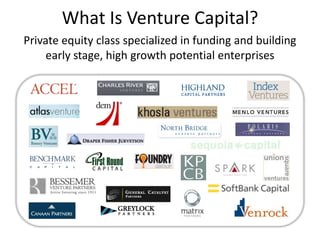
What Is Venture Capital?Private equity class specialized in funding and building early stage, high growth potential enterprises
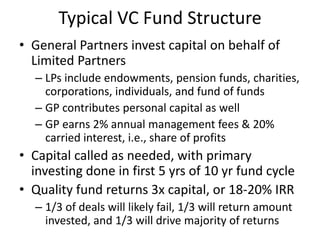
Typical VC Fund StructureGeneral Partners invest capital on behalf of Limited Partners
LPs include endowments, pension funds, charities, corporations, individuals, and fund of funds
GP contributes personal capital as well
GP earns 2% annual management fees & 20% carried interest, i.e., share of profits
Capital called as needed, with primary investing done in first 5 yrs of 10 yr fund cycle
Quality fund returns 3x capital, or 18-20% IRR
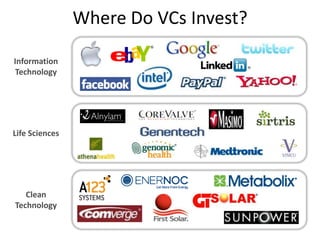
1/3 of deals will likely fail, 1/3 will return amount invested, and 1/3 will drive majority of returnsWhere Do VCs Invest?InformationTechnologyLife SciencesClean Technology
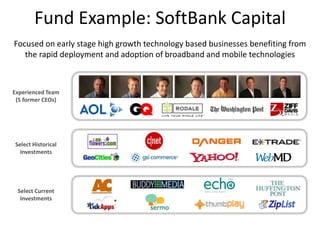
Fund Example: SoftBank CapitalFocused on early stage high growth technology based businesses benefiting from the rapid deployment and adoption of broadband and mobile technologiesExperienced Team(5 former CEOs)Select Historical InvestmentsSelect CurrentInvestments
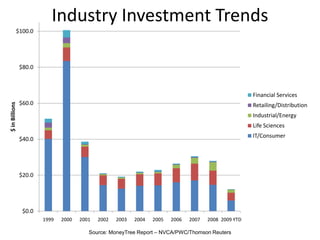
Industry Investment TrendsSource: MoneyTree Report – NVCA/PWC/Thomson Reuters
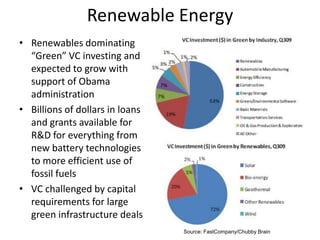
Renewable EnergyRenewables dominating “Green” VC investing and expected to grow with support of Obama administrationBillions of dollars in loans and grants available for R&D for everything from new battery technologies to more efficient use of fossil fuelsVC challenged by capital requirements for large green infrastructure dealsSource: FastCompany/Chubby Brain
Fundraising ProcessYou set the valuation. I’ll set the terms.**Don’t be fooled by the cover price
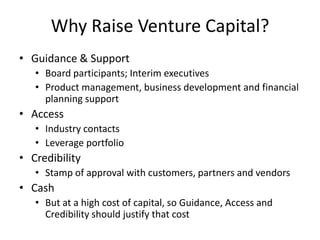
Why Raise Venture Capital?Guidance & Support
Board participants; Interim executives
Product management, business development and financial planning support
Access
Industry contacts
Leverage portfolio

VCAP

Editor's Notes

  • #6 - Focus by sector, stage and geography
  • #8 IT/Consumer had massive investment in late 90s. Volume and distribution has dropped significantly over time. Life Sciences has been more stable over time Industrial/Energy spiked more recently, although lack of capital efficiency scared some off in 2009- Retailing/Distribution has practically disappeared as a category- Financial Services has dropped as well
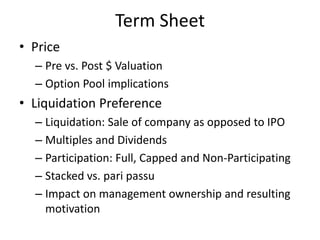
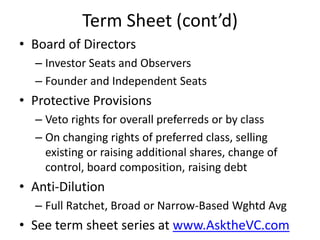
  • #17 Anti-Dilution Full Ratchet reprices the existing preferred to match the price of the new investors, which can cause a spiraling price effect that wipes out management and common If Series A invested $5M in the last round, those shares must represent $5M of value in the new deal, so a $5M pre on the next round would give all of the value to the Series A shareholders Weighted average approach results in a more reasonable price adjustment New Conversion Price = Old Conversion Price * ((Common Outstanding + Common Issuable at Old Price)/(Common Outstanding + Common Issuable at New Price)) With Narrow-Based, Common Outstanding can include just preferred class, all preferreds, and common With Broad-Based, Common Outstanding can include all preferreds converted, common, options and warrants, which is better for Company