◦ Dr.RESHMA GAFOOR
DEPARTMENT OF ORAL AND MAXILLOFACIAL SURGERY
KMCT DENTAL COLLEGE
CONTENTS
1. Introduction
2. Classification
3. Function
4. Mode of action
5. Dilution of vasoconstrictors
6. Side effects
7. Pharmacology of specific agents
8. Conclusion
9. References
INTRODUCTION
Vasoconstrictors are the drugs that constricts the blood vessels and thereby control tissue
perfusion
They are added to LA to oppose the vasodilatory action of local anesthetic agent
They are Chemically identical or similar to Sympathetic nervous system mediators
-Epinephrine & Norepinephrine
Sympathomimetic or Adrenergic drugs
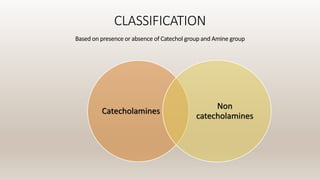
CLASSIFICATION
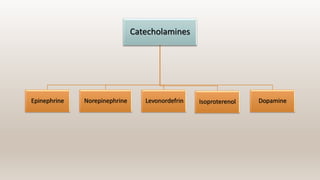
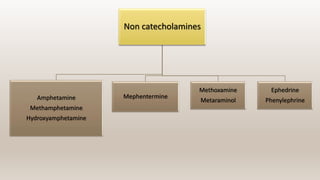
Based on presence or absence of Catechol group and Amine group
Catecholamines
Non
catecholamines
Catecholamines
Epinephrine Norepinephrine Levonordefrin Isoproterenol Dopamine
Non catecholamines
Amphetamine
Methamphetamine
Hydroxyamphetamine
Mephentermine
Methoxamine
Metaraminol
Ephedrine
Phenylephrine
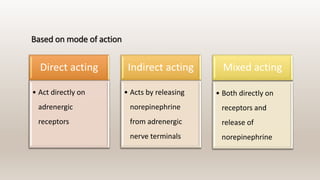
Based on mode of action
Direct acting
• Act directly on
adrenergic
receptors
Indirect acting
• Acts by releasing
norepinephrine
from adrenergic
nerve terminals
Mixed acting
• Both directly on
receptors and
release of
norepinephrine
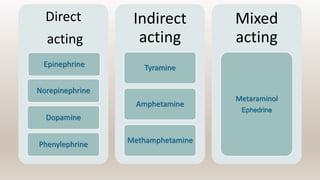
Direct
acting
Epinephrine
Norepinephrine
Dopamine
Phenylephrine
Indirect
acting
Tyramine
Amphetamine
Methamphetamine
Mixed
acting
Metaraminol
Ephedrine
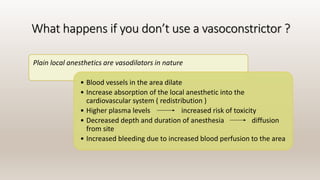
What happens if you don’t use a vasoconstrictor ?
Plain local anesthetics are vasodilators in nature
• Blood vessels in the area dilate
• Increase absorption of the local anesthetic into the
cardiovascular system ( redistribution )
• Higher plasma levels increased risk of toxicity
• Decreased depth and duration of anesthesia diffusion
from site
• Increased bleeding due to increased blood perfusion to the area
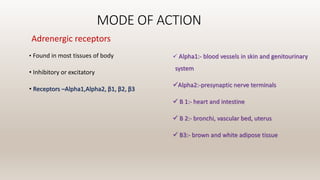
MODE OF ACTION
Adrenergic receptors
• Found in most tissues of body
• Inhibitory or excitatory
• Receptors –Alpha1,Alpha2, β1, β2, β3
 Alpha1:- blood vessels in skin and genitourinary
system
Alpha2:-presynaptic nerve terminals
 Β 1:- heart and intestine
 Β 2:- bronchi, vascular bed, uterus
 Β3:- brown and white adipose tissue
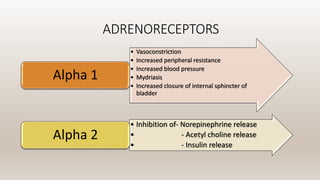
ADRENORECEPTORS
• Vasoconstriction
• Increased peripheral resistance
• Increased blood pressure
• Mydriasis
• Increased closure of internal sphincter of
bladder
Alpha 1
• Inhibition of- Norepinephrine release
• - Acetyl choline release
• - Insulin release
Alpha 2
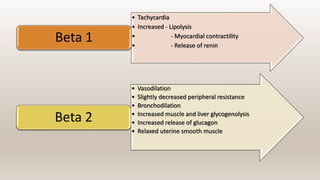
• Tachycardia
• Increased - Lipolysis
• - Myocardial contractility
• - Release of renin
Beta 1
• Vasodilation
• Slightly decreased peripheral resistance
• Bronchodilation
• Increased muscle and liver glycogenolysis
• Increased release of glucagon
• Relaxed uterine smooth muscle
Beta 2
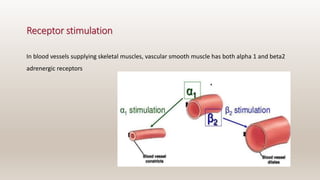
Receptor stimulation
In blood vessels supplying skeletal muscles, vascular smooth muscle has both alpha 1 and beta2
adrenergic receptors
Release of catecholamines
• For indirectly acting drugs
• Amphetamine or tyramine
• Causing the release of the norepinephrine from storage sites in adrenergic nerve terminals
• Tachyphylaxis :
-Repeated doses of drug is less effective due to depletion of norepinephrine
DILUTION OF VASOCONSTRICTORS
The dilution of vasoconstrictors is commonly referred to as a ratio
( e.g : 1 to 1000 [written 1 : 1000])
Ratio of drug to carrier medium
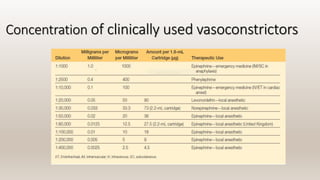
1:1000 = 1 g in 1000 ml or 1000 mg in 1000 ml of solution
1:10,000 contains 0.1 mg/ml
1:100,000 contains 0.01 mg/ml
• 1:200,000 epinephrine contains 0.005 mg/mL epinephrine
- Provides comparable results with fewer systemic side effects
- Widely used and accepted in dentistry and medicine
• In 1903, Braun suggested using adrenalin as a chemical tourniquet to prolong the duration of local
anesthetics
Concentration of clinically used vasoconstrictors
SIDE EFFECTS
Unfortunately, the effects of vasoconstrictors are not always beneficial
The cardiac excitatory action of epinephrine, which is desired in the management
of medical emergencies such as anaphylaxis, may be detrimental to a patient with
reduced cardiovascular system reserve
Angina or myocardial infarction could conceivably result if the patient's
cardiovascular system is unable to respond to the demands caused by actions of
the vasoconstrictor
Epinephrine may indirectly cause central nervous system excitation, as well have
effects on metabolism and bronchial and gastrointestinal smooth muscle
Signs and symptoms of vasoconstrictor toxicity include hypertension, tachycardia,
tremors, headache, palpitations, and cardiac dysrhythmias
Drug interactions : Significant drug interactions may occur between
vasoconstrictors injected with local anesthetic agents and either tricyclic
antidepressants or β blockers
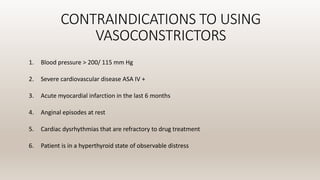
CONTRAINDICATIONS TO USING
VASOCONSTRICTORS
1. Blood pressure > 200/ 115 mm Hg
2. Severe cardiovascular disease ASA IV +
3. Acute myocardial infarction in the last 6 months
4. Anginal episodes at rest
5. Cardiac dysrhythmias that are refractory to drug treatment
6. Patient is in a hyperthyroid state of observable distress
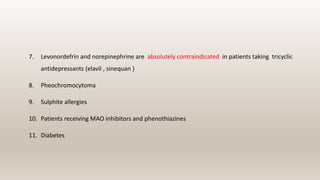
7. Levonordefrin and norepinephrine are absolutely contraindicated in patients taking tricyclic
antidepressants (elavil , sinequan )
8. Pheochromocytoma
9. Sulphite allergies
10. Patients receiving MAO inhibitors and phenothiazines
11. Diabetes
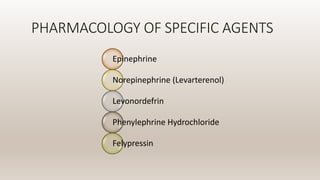
PHARMACOLOGY OF SPECIFIC AGENTS
Epinephrine
Norepinephrine (Levarterenol)
Levonordefrin
Phenylephrine Hydrochloride
Felypressin
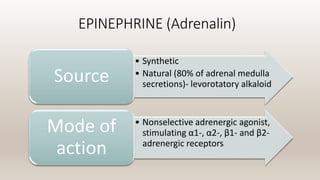
EPINEPHRINE (Adrenalin)
• Synthetic
• Natural (80% of adrenal medulla
secretions)- levorotatory alkaloid
Source
• Nonselective adrenergic agonist,
stimulating α1-, α2-, β1- and β2-
adrenergic receptors
Mode of
action
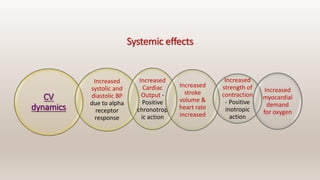
CV
dynamics
Increased
systolic and
diastolic BP
due to alpha
receptor
response
Increased
Cardiac
Output -
Positive
chronotrop
ic action
Increased
stroke
volume &
heart rate
increased
Increased
strength of
contraction
- Positive
inotropic
action
Increased
myocardial
demand
for oxygen
Systemic effects
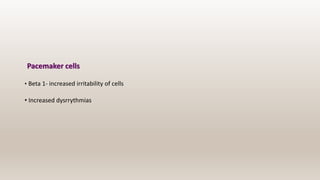
Pacemaker cells
• Beta 1- increased irritability of cells
• Increased dysrrythmias
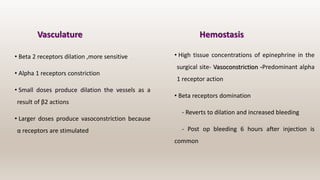
Vasculature
• Beta 2 receptors dilation ,more sensitive
• Alpha 1 receptors constriction
• Small doses produce dilation the vessels as a
result of β2 actions
• Larger doses produce vasoconstriction because
α receptors are stimulated
Hemostasis
• High tissue concentrations of epinephrine in the
surgical site- Vasoconstriction -Predominant alpha
1 receptor action
• Beta receptors domination
- Reverts to dilation and increased bleeding
- Post op bleeding 6 hours after injection is
common
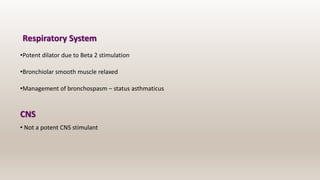
Respiratory System
•Potent dilator due to Beta 2 stimulation
•Bronchiolar smooth muscle relaxed
•Management of bronchospasm – status asthmaticus
CNS
• Not a potent CNS stimulant
Metabolism
• Epinephrine increases oxygen consumption in all tissues
• Beta stimulation – glycongenolysis in liver and skeletal muscle
• Elevates blood sugar
CLINICAL APPLICATIONS
Management of acute allergic reactions
Management of refractory bronchospasm (status asthmaticus)
Management of cardiac arrest
As a vasoconstrictor, for hemostasis
As a vasoconstrictor in local anesthetics to decrease absorption into the cardiovascular system
As a vasoconstrictor in local anesthetics to increase the depth of anesthesia
As a vasoconstrictor in local anesthetics to increase the duration of anesthesia
To produce mydriasis
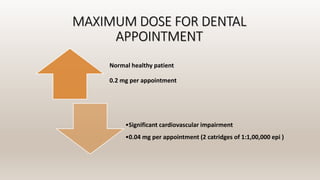
MAXIMUM DOSE FOR DENTAL
APPOINTMENT
Normal healthy patient
0.2 mg per appointment
•Significant cardiovascular impairment
•0.04 mg per appointment (2 catridges of 1:1,00,000 epi )
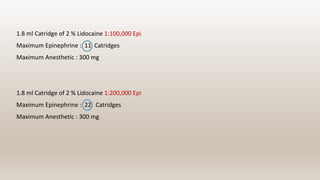
1.8 ml Catridge of 2 % Lidocaine 1:100,000 Epi
Maximum Epinephrine : 11 Catridges
Maximum Anesthetic : 300 mg
1.8 ml Catridge of 2 % Lidocaine 1:200,000 Epi
Maximum Epinephrine : 22 Catridges
Maximum Anesthetic : 300 mg
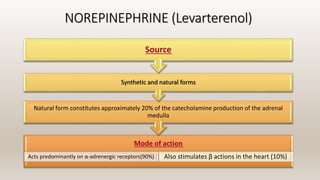
NOREPINEPHRINE (Levarterenol)
Mode of action
Acts predominantly on α-adrenergic receptors(90%) Also stimulates β actions in the heart (10%)
Natural form constitutes approximately 20% of the catecholamine production of the adrenal
medulla
Synthetic and natural forms
Source
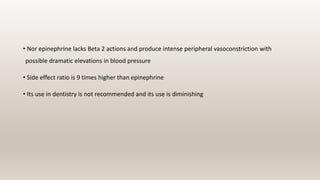
• Nor epinephrine lacks Beta 2 actions and produce intense peripheral vasoconstriction with
possible dramatic elevations in blood pressure
• Side effect ratio is 9 times higher than epinephrine
• Its use in dentistry is not recommended and its use is diminishing
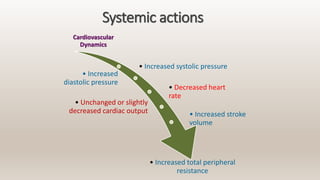
Systemic actions
Cardiovascular
Dynamics
• Increased systolic pressure
• Increased
diastolic pressure
• Decreased heart
rate
• Unchanged or slightly
decreased cardiac output • Increased stroke
volume
• Increased total peripheral
resistance
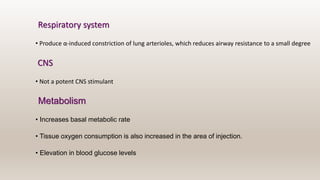
Respiratory system
• Produce α-induced constriction of lung arterioles, which reduces airway resistance to a small degree
CNS
• Not a potent CNS stimulant
Metabolism
• Increases basal metabolic rate
• Tissue oxygen consumption is also increased in the area of injection.
• Elevation in blood glucose levels
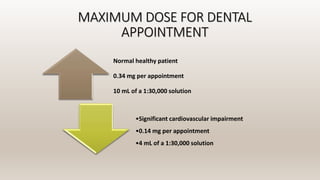
MAXIMUM DOSE FOR DENTAL
APPOINTMENT
Normal healthy patient
0.34 mg per appointment
10 mL of a 1:30,000 solution
•Significant cardiovascular impairment
•0.14 mg per appointment
•4 mL of a 1:30,000 solution
LEVONORDEFRIN
• Considered one-sixth as effective a vasopressor as epinephrine ; therefore used in high concentration (1:20,000)
• Obtained with mepivacaine in a 1:20,000 dilution.
•Mode of action though direct alpha (75%) and beta stimulation (25%)
• Levonordefrin produces less cardiac and CNS stimulation than is produced by epinephrine
• Maximum dose = 1 mg per appointment (11 catridges)
PHENYLEPHRINE HYDROCHLORIDE
• It is a vasoconstrictor in LA, for management of hypotension, as a nasal decongestant, and in
ophthalmic solutions to produce mydriasis
• Direct alpha stimulation (95%)
• No longer available In dental cartidges (was used along 4% procaine in 1:2500 dilution)
• Considered one twentieth as potent as epinephrine
• Excellent vasoconstrictor with few side effects
FELYPRESSIN (Citanest forte)
• Synthetic analogue of posterior pituitary hormone (Octapressin)
• Available as vasoconstrictor in combination with prilocaine
• Acts by directly stimulating vascular smooth muscle
• Actions more pronounced on venous than arteriolar microcirculation
•Can be safely used in patients with hypertension (safe dose 0.18 IU/ml)
• Has little effect on heart or on adrenergic nerve transmission
• Less potent than the catecholamines
• Can be safely administered to hyperthyroid patients and anyone receiving MAO
Inhibitors or tricyclic antidepressants.
• It has wide margin of safety and the incidence of systemic reaction is minimal
• Maximum dose =0.27 IU
TERMINATION OF ACTION AND DRUG
INTERACTION
By reuptake –reuptake is blocked but tricyclic antidepressants leading to prolonged duration of
action
By deactivation by extraneuronal enzymes ie catechol – o -methyl transferase
•Epinephrine to metanephrine and nor epinephrine to nor metanephrine
•Uptake by blood stream
Intraneuronal enzyme destruction
•By monoamine oxidase to dihydroxymandelic acid
•Action by both COMT and MAO -VANILLYLMANDELIC ACID
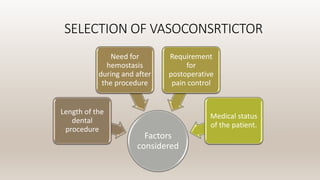
SELECTION OF VASOCONSRTICTOR
Factors
considered
Length of the
dental
procedure
Need for
hemostasis
during and after
the procedure
Requirement
for
postoperative
pain control
Medical status
of the patient.
Length of procedure
•Pulpal and hard tissue anesthesia with 2% lidocaine lasts approximately 10 minutes
•Addition of 1:50,000, 1:80,000, 1:100,000, or 1:200,000 epinephrine increases this to approximately
60 minutes
•Prilocaine 4%
-nerve block injection, provides pulpal anesthesia of about 40 to 60 minutes duration
-Infiltration injection provides approximately 10 to 15 minutes of pulpal anesthesia
•The addition of a 1:200,000 epinephrine concentration to prilocaine increases this slightly to about
60 to 90 minutes
Requirement for Hemostasis
• Epinephrine is effective in preventing or minimizing blood loss during surgical procedures However,
epinephrine also produces a rebound vasodilatory effect as the tissue level of epinephrine declines
• This leads to possible bleeding postoperatively, which potentially interferes with wound healing and
could compromise a patient's cardiovascular status
• Epinephrine produces a definite rebound β effect once α-induced vasoconstriction has ceased
• Phenylephrine a longer-acting, almost pure α-stimulating vasoconstrictor, does not produce a
rebound β effect because its β actions are minimal
• It is not as potent a vasoconstrictor as epinephrine, hemostasis during the procedure is not as
effective
• Norepinephrine is a potent α stimulator and vasoconstrictor that has produced documented cases
of tissue necrosis and sloughing
• Norepinephrine cannot be recommended as a vasoconstrictor in dentistry because its
disadvantages outweigh its advantages
• Felypressin constricts the venous circulation more than the arteriolar circulation and therefore is
of minimal value for hemostasis
Medical Status of the Patient
Hypertensive patients
• Local anesthetic solutions with vasoconstrictors are not contraindicated in hypertensive
patients, due to their hemodynamic effects, local anesthetics without vasoconstrictors are
mainly preferred by the clinicians
• Life-threatening complications due to the sudden and dramatic increase in blood pressure can
occur during dental procedures in hypertensive patients
• Use of anesthetic solutions without vasoconstrictors increase the risk of hypertensive crisis due
to the potential pain caused by insufficient intraoperative anesthesia
Ezmek, Bahadir, Ahmet Arslan, Cagri Delilbasi, and Kemal Sencift. "Comparison of Hemodynamic Effects of Lidocaine,
Prilocaine and Mepivacaine Solutions without Vasoconstrictor in Hypertensive Patients." Journal of Applied Oral Science
18.4 (2010): 354-59
Pheochromocytoma
•The presence of pheochromocytoma (a tumor involving cells that produce catecholamines) is an
absolute contraindication to the use of epinephrine
•Patients who have this disease may have an over- production of endogenous epinephrine or
norepinephrine
•A sympathetic response to the increased level of circulating catecholamines results in the
common manifestations of headache , excessive perspiration and palpitations in 75% of these
cases
•Due to the excessively high levels of circulating catecholamines already present, exogenous
epinephrine in local anesthetics could only have adverse effects and might precipitate a crisis.
Thyrotoxicosis
• Contraindication for the use of vasoconstrictors in local anesthesia.
• Thyrotoxicosis may be present in patients with primary or secondary hyperthyroidism
• The clinical manifestations of thyrotoxicosis include increased heart rate and systolic blood
pressure, marked irritability , fine tremor and elevated body temperature
• Thyroid storm can be precipitated by exogenously administered sympathomimetic amines
• Thyroid storm hypertension , delirium and eventually vasomotor collapse can result
• The mortality rate associated with this acute crisis can be as high as 70%
Drug interactions
Inhalation Anesthetics
• Some general anesthetics sensitize the myocardium to the direct myocardial effects of
sympathomimetic amines including epinephrine
• Halothane possess the lowest arrythmogenic threshold for epinephrine
• Enflurane and isoflurane have a minimal effect on myocardial sensitivity to sympathomimetics
• Several investigators has showed that epinephrine-halothane induced arrythmias are more likely to
be longer duration and more numerous than those occurring with enflurane or isoflurane
• Maximum dose with halothane is 0.1 mg in 10 minutes to 0.3 mg in 60 minutes
• Epinephrine impregnated retraction cord utilized in restorative dentistry to minimize bleeding during
impression making has been observed to provoke cardiac dysrhythmias during halothane anesthesia
• An inch of cord contains the equivalent of 0.22 to 0.30 mg of L-epinephrine in 8 % racemic
epinephrine retraction cords, approximately equal to the amount of epinephrine contained in twelve
cartridges of dental anesthetic with 1:100,000 epinephrine
Antidepressants
Two classes of antidepressant drugs are tricyclic agents and monoamine oxidase (MAO)
inhibitors
TCA prevents the neuronal uptake of catecholamines at the adrenergic nerve terminals
This results in higher concentration of vasoconstrictor at the sympathomimetic neuroeffector
junction
Beta blockers
• The beta blocking agents commonly used in the treatment of hypertension may interact with
epinephrine to enhance its vasopressor action
• If a nonselective b-blocker such as propranolol is used and significant systemic absorption of
epinephrine occurs, the beta 1,beta2 vasodilatory effects of epinephrine will be blocked,
allowing the a vasoconstrictive effects to function unopposed
• Resulting in an increase in systolic and diastolic blood pressure, and a compensatory reflex
bradycardia
Phenothiazines
• This class of drug is used largely for its antiemetic, tranquilizing and anti-psychotic effects
• Common to phenothiazine toxicity is the presence of arterial hypotension caused by the
blockage of alpha adrenergic receptors in the peripheral vasculature
• Treatment of such hypotension with epinephrine may have disastrous results as the
vasoconstricting (alphaadrenergic) property of the epinephrine is partially blocked by the
phenothiazine, but the vasodilating effect remains the same leading to worsening
hypotension
Phentolamine Mesylate in Reversal Local
Anesthesia
Phentolamine mesylate under the trade name of OraVerse
First therapeutic agent approved and marketed for the soft tissue anesthesia reversal and the
associated functional deficits due to intraoral submucosal injection of an LA consisting of a
vasoconstrictor
Dosage form of OraVerse is 0.4 mg/1.7 ml solution per cartridge
The suggested dose of OraVerse is on the basis of the number of cartridges of LA with
vasoconstrictor administered. It is administered in an equal volume, up to a maximum of 2
cartridges
OraVerse is administered at the same location and by the same technique(nerve block or
infiltration) used previously for the LA administration
The maximum dose of OraVerse recommended in pediatric patients weighing 15-30 kg is 1/2
cartridge (0.2mg)
OraVerse is contraindicated for use in children weighing less than 15 kg (33 lbs) or less than 6
years of age
Yagiela, John A. “What's new with phentolamine mesylate: a reversal agent for local anaesthesia?.” SAAD
digest vol. 27 (2011): 3-7
CONCLUSION
The use of local anesthetics with vasoconstrictors is safe in patients with cardiovascular
compromise and on controlled diabetes patients as long as a proper anesthetic technique is
performed (avoiding intravascular technique) the dose used is not higher than 5.4 ml (equivalent
to 3 vials of anesthetics with 1:100000 epinephrine) and the behavioural management of the
patient and the analgesia maintaince during the treatment are adequate.
REFERENCES
1. Malamed S. Handbook of local anesthesia 7th edition
2. Bennett C. Monheim's local anesthesia and pain control in dental practice
3. Ezmek, Bahadir, Ahmet Arslan, Cagri Delilbasi, and Kemal Sencift. "Comparison of
Hemodynamic Effects of Lidocaine, Prilocaine and Mepivacaine Solutions without
Vasoconstrictor in Hypertensive Patients." Journal of Applied Oral Science 18.4 (2010): 354-59
5. Yagiela, John A. “What's new with phentolamine mesylate: a reversal agent for local
anaesthesia?.” SAAD digest vol. 27 (2011): 3-7
6. Balakrishnan R, Ebenezer V. Contraindications of vasoconstrictors in Dentistry. Vol. 6,
Biomedical and Pharmacology Journal. 2013. p. 409-14

VASOCONSTRICTORS

  • 1.
    ◦ Dr.RESHMA GAFOOR DEPARTMENTOF ORAL AND MAXILLOFACIAL SURGERY KMCT DENTAL COLLEGE
  • 2.
    CONTENTS 1. Introduction 2. Classification 3.Function 4. Mode of action 5. Dilution of vasoconstrictors 6. Side effects 7. Pharmacology of specific agents 8. Conclusion 9. References
  • 3.
    INTRODUCTION Vasoconstrictors are thedrugs that constricts the blood vessels and thereby control tissue perfusion They are added to LA to oppose the vasodilatory action of local anesthetic agent They are Chemically identical or similar to Sympathetic nervous system mediators -Epinephrine & Norepinephrine Sympathomimetic or Adrenergic drugs
  • 4.
    CLASSIFICATION Based on presenceor absence of Catechol group and Amine group Catecholamines Non catecholamines
  • 5.
  • 6.
  • 7.
    Based on modeof action Direct acting • Act directly on adrenergic receptors Indirect acting • Acts by releasing norepinephrine from adrenergic nerve terminals Mixed acting • Both directly on receptors and release of norepinephrine
  • 8.
  • 9.
    What happens ifyou don’t use a vasoconstrictor ? Plain local anesthetics are vasodilators in nature • Blood vessels in the area dilate • Increase absorption of the local anesthetic into the cardiovascular system ( redistribution ) • Higher plasma levels increased risk of toxicity • Decreased depth and duration of anesthesia diffusion from site • Increased bleeding due to increased blood perfusion to the area
  • 10.
    MODE OF ACTION Adrenergicreceptors • Found in most tissues of body • Inhibitory or excitatory • Receptors –Alpha1,Alpha2, β1, β2, β3  Alpha1:- blood vessels in skin and genitourinary system Alpha2:-presynaptic nerve terminals  Β 1:- heart and intestine  Β 2:- bronchi, vascular bed, uterus  Β3:- brown and white adipose tissue
  • 11.
    ADRENORECEPTORS • Vasoconstriction • Increasedperipheral resistance • Increased blood pressure • Mydriasis • Increased closure of internal sphincter of bladder Alpha 1 • Inhibition of- Norepinephrine release • - Acetyl choline release • - Insulin release Alpha 2
  • 12.
    • Tachycardia • Increased- Lipolysis • - Myocardial contractility • - Release of renin Beta 1 • Vasodilation • Slightly decreased peripheral resistance • Bronchodilation • Increased muscle and liver glycogenolysis • Increased release of glucagon • Relaxed uterine smooth muscle Beta 2
  • 13.
    Receptor stimulation In bloodvessels supplying skeletal muscles, vascular smooth muscle has both alpha 1 and beta2 adrenergic receptors
  • 14.
    Release of catecholamines •For indirectly acting drugs • Amphetamine or tyramine • Causing the release of the norepinephrine from storage sites in adrenergic nerve terminals • Tachyphylaxis : -Repeated doses of drug is less effective due to depletion of norepinephrine
  • 15.
    DILUTION OF VASOCONSTRICTORS Thedilution of vasoconstrictors is commonly referred to as a ratio ( e.g : 1 to 1000 [written 1 : 1000]) Ratio of drug to carrier medium 1:1000 = 1 g in 1000 ml or 1000 mg in 1000 ml of solution 1:10,000 contains 0.1 mg/ml 1:100,000 contains 0.01 mg/ml
  • 16.
    • 1:200,000 epinephrinecontains 0.005 mg/mL epinephrine - Provides comparable results with fewer systemic side effects - Widely used and accepted in dentistry and medicine • In 1903, Braun suggested using adrenalin as a chemical tourniquet to prolong the duration of local anesthetics
  • 17.
    Concentration of clinicallyused vasoconstrictors
  • 18.
    SIDE EFFECTS Unfortunately, theeffects of vasoconstrictors are not always beneficial The cardiac excitatory action of epinephrine, which is desired in the management of medical emergencies such as anaphylaxis, may be detrimental to a patient with reduced cardiovascular system reserve Angina or myocardial infarction could conceivably result if the patient's cardiovascular system is unable to respond to the demands caused by actions of the vasoconstrictor
  • 19.
    Epinephrine may indirectlycause central nervous system excitation, as well have effects on metabolism and bronchial and gastrointestinal smooth muscle Signs and symptoms of vasoconstrictor toxicity include hypertension, tachycardia, tremors, headache, palpitations, and cardiac dysrhythmias Drug interactions : Significant drug interactions may occur between vasoconstrictors injected with local anesthetic agents and either tricyclic antidepressants or β blockers
  • 20.
    CONTRAINDICATIONS TO USING VASOCONSTRICTORS 1.Blood pressure > 200/ 115 mm Hg 2. Severe cardiovascular disease ASA IV + 3. Acute myocardial infarction in the last 6 months 4. Anginal episodes at rest 5. Cardiac dysrhythmias that are refractory to drug treatment 6. Patient is in a hyperthyroid state of observable distress
  • 21.
    7. Levonordefrin andnorepinephrine are absolutely contraindicated in patients taking tricyclic antidepressants (elavil , sinequan ) 8. Pheochromocytoma 9. Sulphite allergies 10. Patients receiving MAO inhibitors and phenothiazines 11. Diabetes
  • 22.
    PHARMACOLOGY OF SPECIFICAGENTS Epinephrine Norepinephrine (Levarterenol) Levonordefrin Phenylephrine Hydrochloride Felypressin
  • 23.
    EPINEPHRINE (Adrenalin) • Synthetic •Natural (80% of adrenal medulla secretions)- levorotatory alkaloid Source • Nonselective adrenergic agonist, stimulating α1-, α2-, β1- and β2- adrenergic receptors Mode of action
  • 24.
    CV dynamics Increased systolic and diastolic BP dueto alpha receptor response Increased Cardiac Output - Positive chronotrop ic action Increased stroke volume & heart rate increased Increased strength of contraction - Positive inotropic action Increased myocardial demand for oxygen Systemic effects
  • 25.
    Pacemaker cells • Beta1- increased irritability of cells • Increased dysrrythmias
  • 26.
    Vasculature • Beta 2receptors dilation ,more sensitive • Alpha 1 receptors constriction • Small doses produce dilation the vessels as a result of β2 actions • Larger doses produce vasoconstriction because α receptors are stimulated Hemostasis • High tissue concentrations of epinephrine in the surgical site- Vasoconstriction -Predominant alpha 1 receptor action • Beta receptors domination - Reverts to dilation and increased bleeding - Post op bleeding 6 hours after injection is common
  • 27.
    Respiratory System •Potent dilatordue to Beta 2 stimulation •Bronchiolar smooth muscle relaxed •Management of bronchospasm – status asthmaticus CNS • Not a potent CNS stimulant
  • 28.
    Metabolism • Epinephrine increasesoxygen consumption in all tissues • Beta stimulation – glycongenolysis in liver and skeletal muscle • Elevates blood sugar
  • 29.
    CLINICAL APPLICATIONS Management ofacute allergic reactions Management of refractory bronchospasm (status asthmaticus) Management of cardiac arrest As a vasoconstrictor, for hemostasis As a vasoconstrictor in local anesthetics to decrease absorption into the cardiovascular system As a vasoconstrictor in local anesthetics to increase the depth of anesthesia As a vasoconstrictor in local anesthetics to increase the duration of anesthesia To produce mydriasis
  • 30.
    MAXIMUM DOSE FORDENTAL APPOINTMENT Normal healthy patient 0.2 mg per appointment •Significant cardiovascular impairment •0.04 mg per appointment (2 catridges of 1:1,00,000 epi )
  • 31.
    1.8 ml Catridgeof 2 % Lidocaine 1:100,000 Epi Maximum Epinephrine : 11 Catridges Maximum Anesthetic : 300 mg 1.8 ml Catridge of 2 % Lidocaine 1:200,000 Epi Maximum Epinephrine : 22 Catridges Maximum Anesthetic : 300 mg
  • 32.
    NOREPINEPHRINE (Levarterenol) Mode ofaction Acts predominantly on α-adrenergic receptors(90%) Also stimulates β actions in the heart (10%) Natural form constitutes approximately 20% of the catecholamine production of the adrenal medulla Synthetic and natural forms Source
  • 33.
    • Nor epinephrinelacks Beta 2 actions and produce intense peripheral vasoconstriction with possible dramatic elevations in blood pressure • Side effect ratio is 9 times higher than epinephrine • Its use in dentistry is not recommended and its use is diminishing
  • 34.
    Systemic actions Cardiovascular Dynamics • Increasedsystolic pressure • Increased diastolic pressure • Decreased heart rate • Unchanged or slightly decreased cardiac output • Increased stroke volume • Increased total peripheral resistance
  • 35.
    Respiratory system • Produceα-induced constriction of lung arterioles, which reduces airway resistance to a small degree CNS • Not a potent CNS stimulant Metabolism • Increases basal metabolic rate • Tissue oxygen consumption is also increased in the area of injection. • Elevation in blood glucose levels
  • 36.
    MAXIMUM DOSE FORDENTAL APPOINTMENT Normal healthy patient 0.34 mg per appointment 10 mL of a 1:30,000 solution •Significant cardiovascular impairment •0.14 mg per appointment •4 mL of a 1:30,000 solution
  • 37.
    LEVONORDEFRIN • Considered one-sixthas effective a vasopressor as epinephrine ; therefore used in high concentration (1:20,000) • Obtained with mepivacaine in a 1:20,000 dilution. •Mode of action though direct alpha (75%) and beta stimulation (25%) • Levonordefrin produces less cardiac and CNS stimulation than is produced by epinephrine • Maximum dose = 1 mg per appointment (11 catridges)
  • 38.
    PHENYLEPHRINE HYDROCHLORIDE • Itis a vasoconstrictor in LA, for management of hypotension, as a nasal decongestant, and in ophthalmic solutions to produce mydriasis • Direct alpha stimulation (95%) • No longer available In dental cartidges (was used along 4% procaine in 1:2500 dilution) • Considered one twentieth as potent as epinephrine • Excellent vasoconstrictor with few side effects
  • 39.
    FELYPRESSIN (Citanest forte) •Synthetic analogue of posterior pituitary hormone (Octapressin) • Available as vasoconstrictor in combination with prilocaine • Acts by directly stimulating vascular smooth muscle • Actions more pronounced on venous than arteriolar microcirculation •Can be safely used in patients with hypertension (safe dose 0.18 IU/ml) • Has little effect on heart or on adrenergic nerve transmission • Less potent than the catecholamines
  • 40.
    • Can besafely administered to hyperthyroid patients and anyone receiving MAO Inhibitors or tricyclic antidepressants. • It has wide margin of safety and the incidence of systemic reaction is minimal • Maximum dose =0.27 IU
  • 41.
    TERMINATION OF ACTIONAND DRUG INTERACTION By reuptake –reuptake is blocked but tricyclic antidepressants leading to prolonged duration of action By deactivation by extraneuronal enzymes ie catechol – o -methyl transferase •Epinephrine to metanephrine and nor epinephrine to nor metanephrine •Uptake by blood stream Intraneuronal enzyme destruction •By monoamine oxidase to dihydroxymandelic acid •Action by both COMT and MAO -VANILLYLMANDELIC ACID
  • 42.
    SELECTION OF VASOCONSRTICTOR Factors considered Lengthof the dental procedure Need for hemostasis during and after the procedure Requirement for postoperative pain control Medical status of the patient.
  • 43.
    Length of procedure •Pulpaland hard tissue anesthesia with 2% lidocaine lasts approximately 10 minutes •Addition of 1:50,000, 1:80,000, 1:100,000, or 1:200,000 epinephrine increases this to approximately 60 minutes •Prilocaine 4% -nerve block injection, provides pulpal anesthesia of about 40 to 60 minutes duration -Infiltration injection provides approximately 10 to 15 minutes of pulpal anesthesia •The addition of a 1:200,000 epinephrine concentration to prilocaine increases this slightly to about 60 to 90 minutes
  • 44.
    Requirement for Hemostasis •Epinephrine is effective in preventing or minimizing blood loss during surgical procedures However, epinephrine also produces a rebound vasodilatory effect as the tissue level of epinephrine declines • This leads to possible bleeding postoperatively, which potentially interferes with wound healing and could compromise a patient's cardiovascular status • Epinephrine produces a definite rebound β effect once α-induced vasoconstriction has ceased
  • 45.
    • Phenylephrine alonger-acting, almost pure α-stimulating vasoconstrictor, does not produce a rebound β effect because its β actions are minimal • It is not as potent a vasoconstrictor as epinephrine, hemostasis during the procedure is not as effective • Norepinephrine is a potent α stimulator and vasoconstrictor that has produced documented cases of tissue necrosis and sloughing • Norepinephrine cannot be recommended as a vasoconstrictor in dentistry because its disadvantages outweigh its advantages • Felypressin constricts the venous circulation more than the arteriolar circulation and therefore is of minimal value for hemostasis
  • 46.
    Medical Status ofthe Patient
  • 47.
    Hypertensive patients • Localanesthetic solutions with vasoconstrictors are not contraindicated in hypertensive patients, due to their hemodynamic effects, local anesthetics without vasoconstrictors are mainly preferred by the clinicians • Life-threatening complications due to the sudden and dramatic increase in blood pressure can occur during dental procedures in hypertensive patients • Use of anesthetic solutions without vasoconstrictors increase the risk of hypertensive crisis due to the potential pain caused by insufficient intraoperative anesthesia Ezmek, Bahadir, Ahmet Arslan, Cagri Delilbasi, and Kemal Sencift. "Comparison of Hemodynamic Effects of Lidocaine, Prilocaine and Mepivacaine Solutions without Vasoconstrictor in Hypertensive Patients." Journal of Applied Oral Science 18.4 (2010): 354-59
  • 48.
    Pheochromocytoma •The presence ofpheochromocytoma (a tumor involving cells that produce catecholamines) is an absolute contraindication to the use of epinephrine •Patients who have this disease may have an over- production of endogenous epinephrine or norepinephrine •A sympathetic response to the increased level of circulating catecholamines results in the common manifestations of headache , excessive perspiration and palpitations in 75% of these cases •Due to the excessively high levels of circulating catecholamines already present, exogenous epinephrine in local anesthetics could only have adverse effects and might precipitate a crisis.
  • 49.
    Thyrotoxicosis • Contraindication forthe use of vasoconstrictors in local anesthesia. • Thyrotoxicosis may be present in patients with primary or secondary hyperthyroidism • The clinical manifestations of thyrotoxicosis include increased heart rate and systolic blood pressure, marked irritability , fine tremor and elevated body temperature • Thyroid storm can be precipitated by exogenously administered sympathomimetic amines • Thyroid storm hypertension , delirium and eventually vasomotor collapse can result • The mortality rate associated with this acute crisis can be as high as 70%
  • 50.
    Drug interactions Inhalation Anesthetics •Some general anesthetics sensitize the myocardium to the direct myocardial effects of sympathomimetic amines including epinephrine • Halothane possess the lowest arrythmogenic threshold for epinephrine • Enflurane and isoflurane have a minimal effect on myocardial sensitivity to sympathomimetics • Several investigators has showed that epinephrine-halothane induced arrythmias are more likely to be longer duration and more numerous than those occurring with enflurane or isoflurane • Maximum dose with halothane is 0.1 mg in 10 minutes to 0.3 mg in 60 minutes
  • 51.
    • Epinephrine impregnatedretraction cord utilized in restorative dentistry to minimize bleeding during impression making has been observed to provoke cardiac dysrhythmias during halothane anesthesia • An inch of cord contains the equivalent of 0.22 to 0.30 mg of L-epinephrine in 8 % racemic epinephrine retraction cords, approximately equal to the amount of epinephrine contained in twelve cartridges of dental anesthetic with 1:100,000 epinephrine
  • 52.
    Antidepressants Two classes ofantidepressant drugs are tricyclic agents and monoamine oxidase (MAO) inhibitors TCA prevents the neuronal uptake of catecholamines at the adrenergic nerve terminals This results in higher concentration of vasoconstrictor at the sympathomimetic neuroeffector junction
  • 53.
    Beta blockers • Thebeta blocking agents commonly used in the treatment of hypertension may interact with epinephrine to enhance its vasopressor action • If a nonselective b-blocker such as propranolol is used and significant systemic absorption of epinephrine occurs, the beta 1,beta2 vasodilatory effects of epinephrine will be blocked, allowing the a vasoconstrictive effects to function unopposed • Resulting in an increase in systolic and diastolic blood pressure, and a compensatory reflex bradycardia
  • 54.
    Phenothiazines • This classof drug is used largely for its antiemetic, tranquilizing and anti-psychotic effects • Common to phenothiazine toxicity is the presence of arterial hypotension caused by the blockage of alpha adrenergic receptors in the peripheral vasculature • Treatment of such hypotension with epinephrine may have disastrous results as the vasoconstricting (alphaadrenergic) property of the epinephrine is partially blocked by the phenothiazine, but the vasodilating effect remains the same leading to worsening hypotension
  • 55.
    Phentolamine Mesylate inReversal Local Anesthesia Phentolamine mesylate under the trade name of OraVerse First therapeutic agent approved and marketed for the soft tissue anesthesia reversal and the associated functional deficits due to intraoral submucosal injection of an LA consisting of a vasoconstrictor Dosage form of OraVerse is 0.4 mg/1.7 ml solution per cartridge The suggested dose of OraVerse is on the basis of the number of cartridges of LA with vasoconstrictor administered. It is administered in an equal volume, up to a maximum of 2 cartridges
  • 56.
    OraVerse is administeredat the same location and by the same technique(nerve block or infiltration) used previously for the LA administration The maximum dose of OraVerse recommended in pediatric patients weighing 15-30 kg is 1/2 cartridge (0.2mg) OraVerse is contraindicated for use in children weighing less than 15 kg (33 lbs) or less than 6 years of age Yagiela, John A. “What's new with phentolamine mesylate: a reversal agent for local anaesthesia?.” SAAD digest vol. 27 (2011): 3-7
  • 57.
    CONCLUSION The use oflocal anesthetics with vasoconstrictors is safe in patients with cardiovascular compromise and on controlled diabetes patients as long as a proper anesthetic technique is performed (avoiding intravascular technique) the dose used is not higher than 5.4 ml (equivalent to 3 vials of anesthetics with 1:100000 epinephrine) and the behavioural management of the patient and the analgesia maintaince during the treatment are adequate.
  • 58.
    REFERENCES 1. Malamed S.Handbook of local anesthesia 7th edition 2. Bennett C. Monheim's local anesthesia and pain control in dental practice 3. Ezmek, Bahadir, Ahmet Arslan, Cagri Delilbasi, and Kemal Sencift. "Comparison of Hemodynamic Effects of Lidocaine, Prilocaine and Mepivacaine Solutions without Vasoconstrictor in Hypertensive Patients." Journal of Applied Oral Science 18.4 (2010): 354-59
  • 59.
    5. Yagiela, JohnA. “What's new with phentolamine mesylate: a reversal agent for local anaesthesia?.” SAAD digest vol. 27 (2011): 3-7 6. Balakrishnan R, Ebenezer V. Contraindications of vasoconstrictors in Dentistry. Vol. 6, Biomedical and Pharmacology Journal. 2013. p. 409-14