Slide © 2010 by Lovelock & Wirtz Services Marketing 7/e Chapter 8– Page 1
Chapter 8:
Designing and Managing
Service Processes
Services Marketing 7e, Global Edition
Slide © 2010 by Lovelock & Wirtz Services Marketing 7/e Chapter 8– Page 2
Overview of Chapter 8
 Flowcharting Customer Service Processes
 Blueprinting Services to Create Valued Experiences and
Productive Operations
 Service Process Redesign
 The Customer as Co-Producer
 Self-Service Technologies
Slide © 2010 by Lovelock & Wirtz Services Marketing 7/e Chapter 8– Page 3
Flowcharting Customer
Service Processes
Slide © 2010 by Lovelock & Wirtz Services Marketing 7/e Chapter 8– Page 4
Flowcharting Service Delivery
Helps to Clarify Product Elements
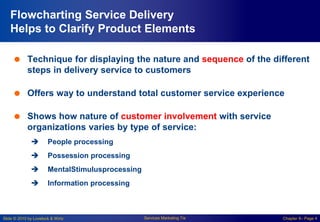
 Technique for displaying the nature and sequence of the different
steps in delivery service to customers
 Offers way to understand total customer service experience
 Shows how nature of customer involvement with service
organizations varies by type of service:
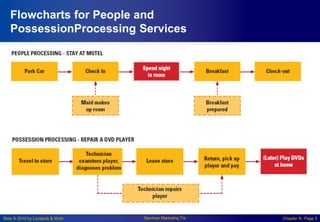
 People processing
 Possession processing
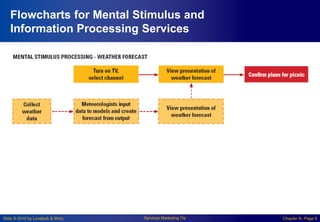
 MentalStimulusprocessing
 Information processing
Slide © 2010 by Lovelock & Wirtz Services Marketing 7/e Chapter 8– Page 5
Flowcharts for People and
PossessionProcessing Services
Slide © 2010 by Lovelock & Wirtz Services Marketing 7/e Chapter 8– Page 6
Flowcharts for Mental Stimulus and
Information Processing Services
Slide © 2010 by Lovelock & Wirtz Services Marketing 7/e Chapter 8– Page 7
Blueprinting Services to
Create Valued Experiences
and Productive Operations
Slide © 2010 by Lovelock & Wirtz Services Marketing 7/e Chapter 8– Page 8
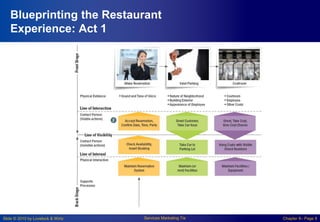
Blueprinting the Restaurant
Experience: Act 1
Slide © 2010 by Lovelock & Wirtz Services Marketing 7/e Chapter 8– Page 9
Developing a Blueprint
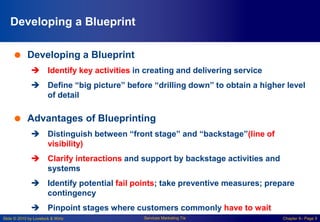
 Developing a Blueprint
 Identify key activities in creating and delivering service
 Define “big picture” before “drilling down” to obtain a higher level
of detail
 Advantages of Blueprinting
 Distinguish between “front stage” and “backstage”(line of
visibility)
 Clarify interactions and support by backstage activities and
systems
 Identify potential fail points; take preventive measures; prepare
contingency
 Pinpoint stages where customers commonly have to wait
Slide © 2010 by Lovelock & Wirtz Services Marketing 7/e Chapter 8– Page 10
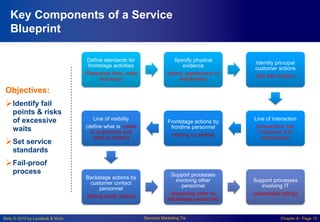
Key Components of a Service
Blueprint
Objectives:
Identify fail
points & risks
of excessive
waits
Set service
standards
Fail-proof
process
Define standards for
frontstage activities
(Response time, order
accuracy)
Specify physical
evidence
(decor, appearance of
employees)
Identify principal
customer actions
(tell their orders)
Line of interaction
(interactions bet.
Customer and
employees)
Frontstage actions by
frontline personnel
(setting up tables)
Line of visibility
(define what is visible
to customers and
what is hidden)
Backstage actions by
customer contact
personnel
(telling chefs orders)
Support processes
involving other
personnel
(preparing order by
backstage personnel)
Support processes
involving IT
(automated billing)
Slide © 2010 by Lovelock & Wirtz Services Marketing 7/e Chapter 8– Page 11
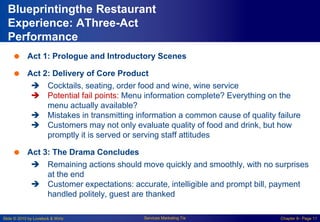
Blueprintingthe Restaurant
Experience: AThree-Act
Performance
 Act 1: Prologue and Introductory Scenes
 Act 2: Delivery of Core Product
 Cocktails, seating, order food and wine, wine service
 Potential fail points: Menu information complete? Everything on the
menu actually available?
 Mistakes in transmitting information a common cause of quality failure
 Customers may not only evaluate quality of food and drink, but how
promptly it is served or serving staff attitudes
 Act 3: The Drama Concludes
 Remaining actions should move quickly and smoothly, with no surprises
at the end
 Customer expectations: accurate, intelligible and prompt bill, payment
handled politely, guest are thanked
Slide © 2010 by Lovelock & Wirtz Services Marketing 7/e Chapter 8– Page 13
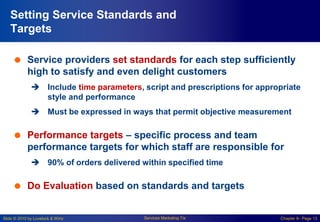
Setting Service Standards and
Targets
 Service providers set standards for each step sufficiently
high to satisfy and even delight customers
 Include time parameters, script and prescriptions for appropriate
style and performance
 Must be expressed in ways that permit objective measurement
 Performance targets – specific process and team
performance targets for which staff are responsible for
 90% of orders delivered within specified time
 Do Evaluation based on standards and targets
Slide © 2010 by Lovelock & Wirtz Services Marketing 7/e Chapter 8– Page 14
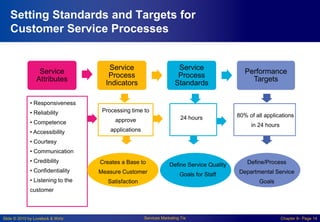
Setting Standards and Targets for
Customer Service Processes
Service
Attributes
Service
Process
Indicators
Service
Process
Standards
Performance
Targets
• Responsiveness
• Reliability
• Competence
• Accessibility
• Courtesy
• Communication
• Credibility
• Confidentiality
• Listening to the
customer
Processing time to
approve
applications
Creates a Base to
Measure Customer
Satisfaction
24 hours
Define Service Quality
Goals for Staff
80% of all applications
in 24 hours
Define/Process
Departmental Service
Goals
Slide © 2010 by Lovelock & Wirtz Services Marketing 7/e Chapter 8– Page 15
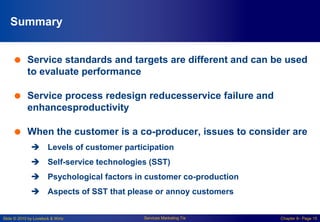
Summary
 Service standards and targets are different and can be used
to evaluate performance
 Service process redesign reducesservice failure and
enhancesproductivity
 When the customer is a co-producer, issues to consider are
 Levels of customer participation
 Self-service technologies (SST)
 Psychological factors in customer co-production
 Aspects of SST that please or annoy customers

servicess marketing chapter Eight Ch 8.pdf

  • 1.
    Slide © 2010by Lovelock & Wirtz Services Marketing 7/e Chapter 8– Page 1 Chapter 8: Designing and Managing Service Processes Services Marketing 7e, Global Edition
  • 2.
    Slide © 2010by Lovelock & Wirtz Services Marketing 7/e Chapter 8– Page 2 Overview of Chapter 8  Flowcharting Customer Service Processes  Blueprinting Services to Create Valued Experiences and Productive Operations  Service Process Redesign  The Customer as Co-Producer  Self-Service Technologies
  • 3.
    Slide © 2010by Lovelock & Wirtz Services Marketing 7/e Chapter 8– Page 3 Flowcharting Customer Service Processes
  • 4.
    Slide © 2010by Lovelock & Wirtz Services Marketing 7/e Chapter 8– Page 4 Flowcharting Service Delivery Helps to Clarify Product Elements  Technique for displaying the nature and sequence of the different steps in delivery service to customers  Offers way to understand total customer service experience  Shows how nature of customer involvement with service organizations varies by type of service:  People processing  Possession processing  MentalStimulusprocessing  Information processing
  • 5.
    Slide © 2010by Lovelock & Wirtz Services Marketing 7/e Chapter 8– Page 5 Flowcharts for People and PossessionProcessing Services
  • 6.
    Slide © 2010by Lovelock & Wirtz Services Marketing 7/e Chapter 8– Page 6 Flowcharts for Mental Stimulus and Information Processing Services
  • 7.
    Slide © 2010by Lovelock & Wirtz Services Marketing 7/e Chapter 8– Page 7 Blueprinting Services to Create Valued Experiences and Productive Operations
  • 8.
    Slide © 2010by Lovelock & Wirtz Services Marketing 7/e Chapter 8– Page 8 Blueprinting the Restaurant Experience: Act 1
  • 9.
    Slide © 2010by Lovelock & Wirtz Services Marketing 7/e Chapter 8– Page 9 Developing a Blueprint  Developing a Blueprint  Identify key activities in creating and delivering service  Define “big picture” before “drilling down” to obtain a higher level of detail  Advantages of Blueprinting  Distinguish between “front stage” and “backstage”(line of visibility)  Clarify interactions and support by backstage activities and systems  Identify potential fail points; take preventive measures; prepare contingency  Pinpoint stages where customers commonly have to wait
  • 10.
    Slide © 2010by Lovelock & Wirtz Services Marketing 7/e Chapter 8– Page 10 Key Components of a Service Blueprint Objectives: Identify fail points & risks of excessive waits Set service standards Fail-proof process Define standards for frontstage activities (Response time, order accuracy) Specify physical evidence (decor, appearance of employees) Identify principal customer actions (tell their orders) Line of interaction (interactions bet. Customer and employees) Frontstage actions by frontline personnel (setting up tables) Line of visibility (define what is visible to customers and what is hidden) Backstage actions by customer contact personnel (telling chefs orders) Support processes involving other personnel (preparing order by backstage personnel) Support processes involving IT (automated billing)
  • 11.
    Slide © 2010by Lovelock & Wirtz Services Marketing 7/e Chapter 8– Page 11 Blueprintingthe Restaurant Experience: AThree-Act Performance  Act 1: Prologue and Introductory Scenes  Act 2: Delivery of Core Product  Cocktails, seating, order food and wine, wine service  Potential fail points: Menu information complete? Everything on the menu actually available?  Mistakes in transmitting information a common cause of quality failure  Customers may not only evaluate quality of food and drink, but how promptly it is served or serving staff attitudes  Act 3: The Drama Concludes  Remaining actions should move quickly and smoothly, with no surprises at the end  Customer expectations: accurate, intelligible and prompt bill, payment handled politely, guest are thanked
  • 12.
    Slide © 2010by Lovelock & Wirtz Services Marketing 7/e Chapter 8– Page 13 Setting Service Standards and Targets  Service providers set standards for each step sufficiently high to satisfy and even delight customers  Include time parameters, script and prescriptions for appropriate style and performance  Must be expressed in ways that permit objective measurement  Performance targets – specific process and team performance targets for which staff are responsible for  90% of orders delivered within specified time  Do Evaluation based on standards and targets
  • 13.
    Slide © 2010by Lovelock & Wirtz Services Marketing 7/e Chapter 8– Page 14 Setting Standards and Targets for Customer Service Processes Service Attributes Service Process Indicators Service Process Standards Performance Targets • Responsiveness • Reliability • Competence • Accessibility • Courtesy • Communication • Credibility • Confidentiality • Listening to the customer Processing time to approve applications Creates a Base to Measure Customer Satisfaction 24 hours Define Service Quality Goals for Staff 80% of all applications in 24 hours Define/Process Departmental Service Goals
  • 14.
    Slide © 2010by Lovelock & Wirtz Services Marketing 7/e Chapter 8– Page 15 Summary  Service standards and targets are different and can be used to evaluate performance  Service process redesign reducesservice failure and enhancesproductivity  When the customer is a co-producer, issues to consider are  Levels of customer participation  Self-service technologies (SST)  Psychological factors in customer co-production  Aspects of SST that please or annoy customers