Variable Pathlength Colorimetric
Spectroscopy of Greases; an
enhancement to D7918
Rich Wurzbach, MRG Labs
York, PA, USA
12/12/18
Introduction
Grease comes in a wide array of colors
New and In-Service Grease can be evaluated
Methodology introduced in ASTM D7918-15
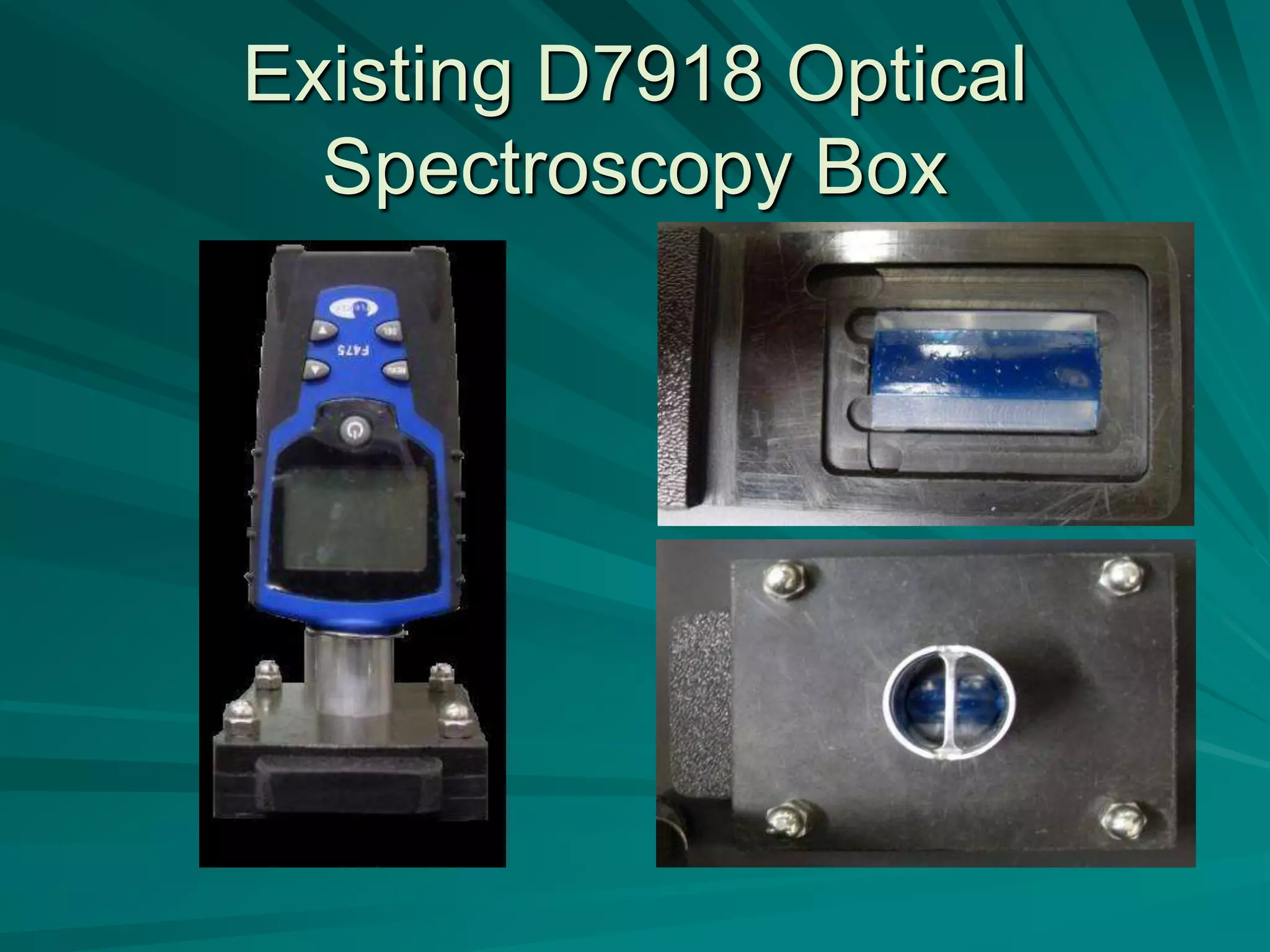
iLab, Spectroscopy Box, Thin Film Substrate of
grease
3
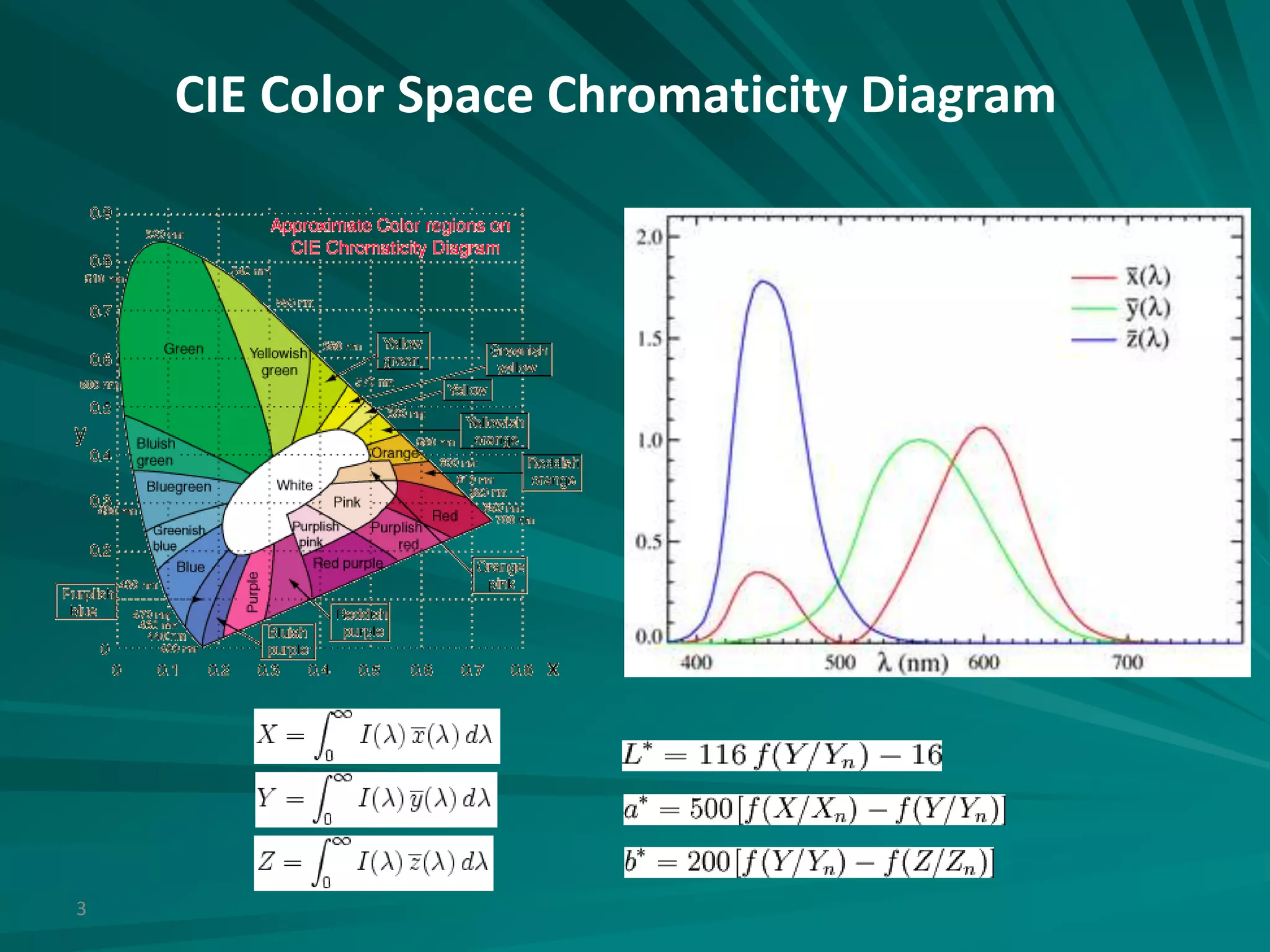
CIE Color Space Chromaticity Diagram
4
L*
40
50
60
70
80
90
a*
40
50
60
70
80
90
b*
40
50
60
70
80
90
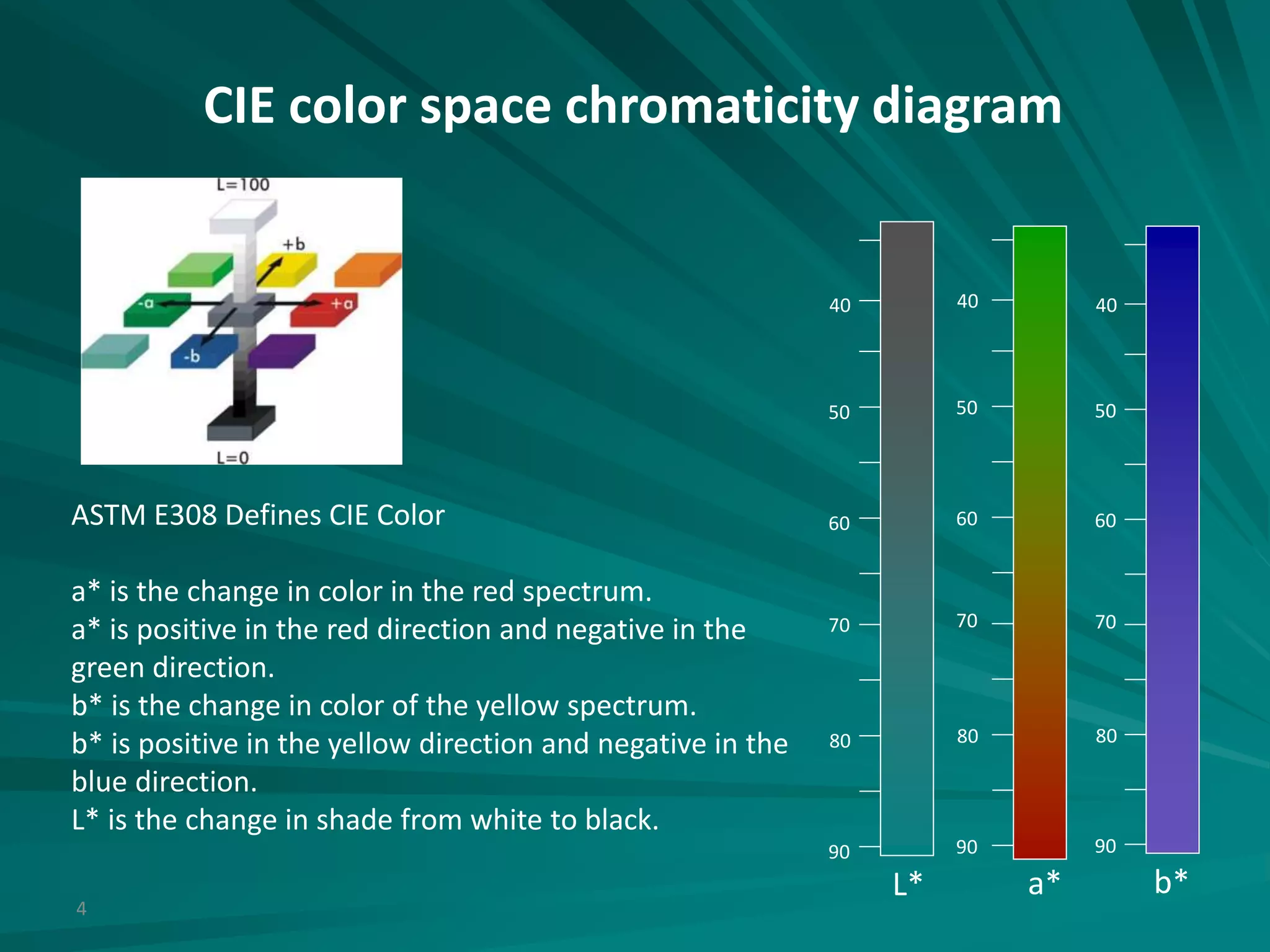
CIE color space chromaticity diagram
ASTM E308 Defines CIE Color
a* is the change in color in the red spectrum.
a* is positive in the red direction and negative in the
green direction.
b* is the change in color of the yellow spectrum.
b* is positive in the yellow direction and negative in the
blue direction.
L* is the change in shade from white to black.
Existing D7918 Optical
Spectroscopy Box
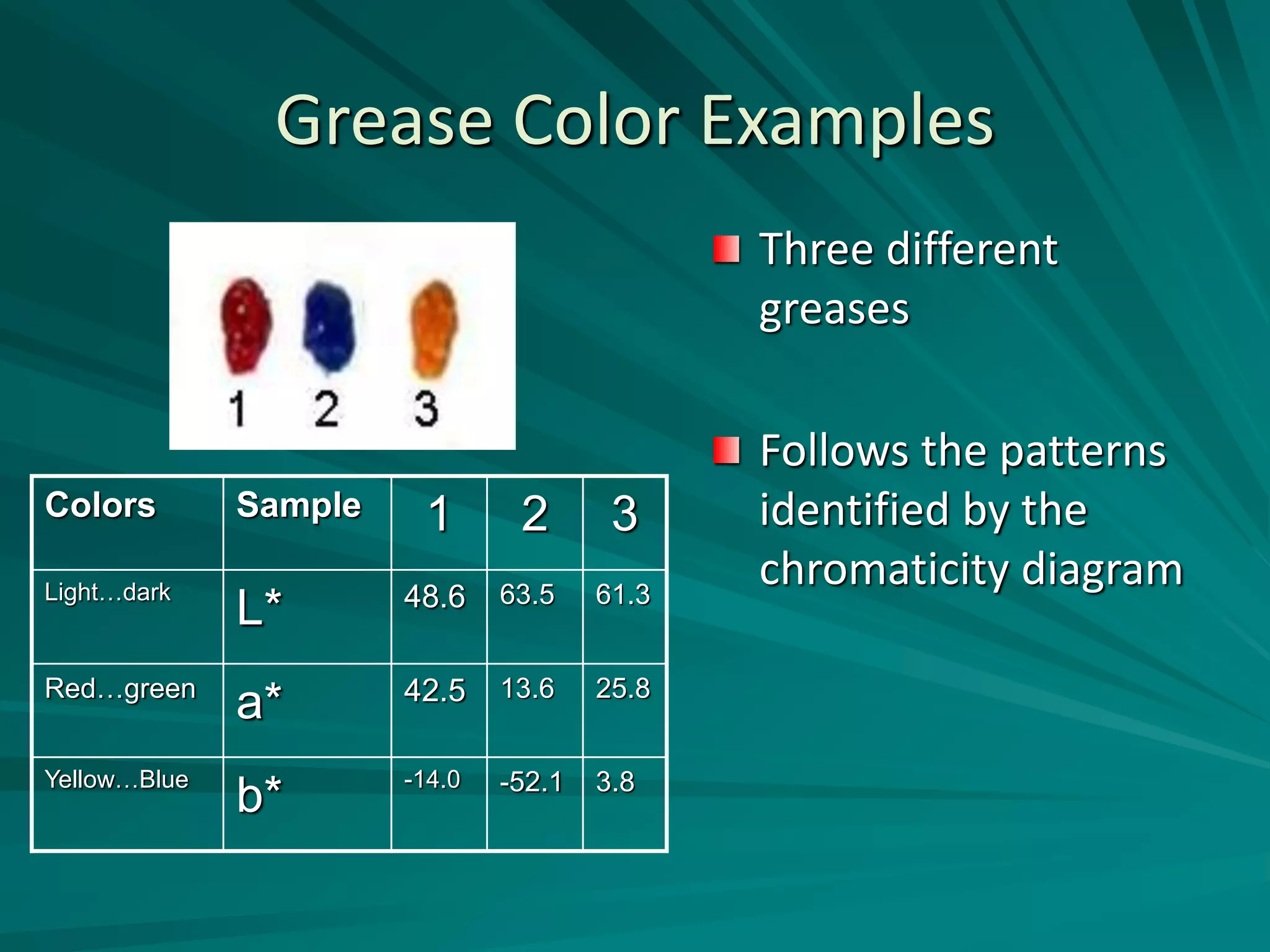
Grease Color Examples
Three different
greases
Follows the patterns
identified by the
chromaticity diagram
Colors Sample 1 2 3
Light…dark
L* 48.6 63.5 61.3
Red…green
a* 42.5 13.6 25.8
Yellow…Blue
b* -14.0 -52.1 3.8
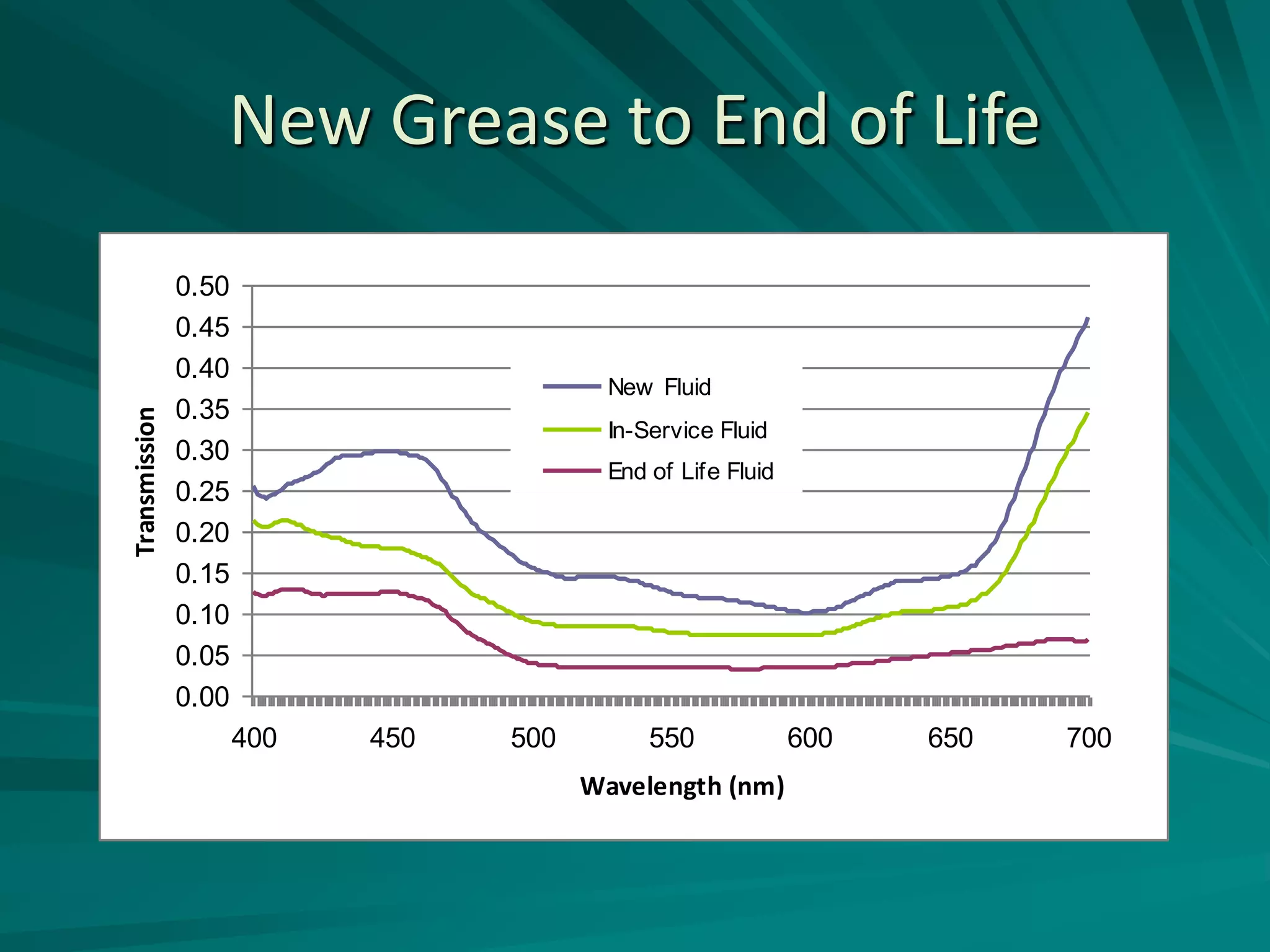
New Grease to End of Life
0.00
0.05
0.10
0.15
0.20
0.25
0.30
0.35
0.40
0.45
0.50
400 450 500 550 600 650 700
Wavelength (nm)
Transmission
New Fluid
In-Service Fluid
End of Life Fluid
Limitations of Method in D7918
iLab Spectrometer is called out in method
iLab Spectrometer is no longer manufactured
or supported
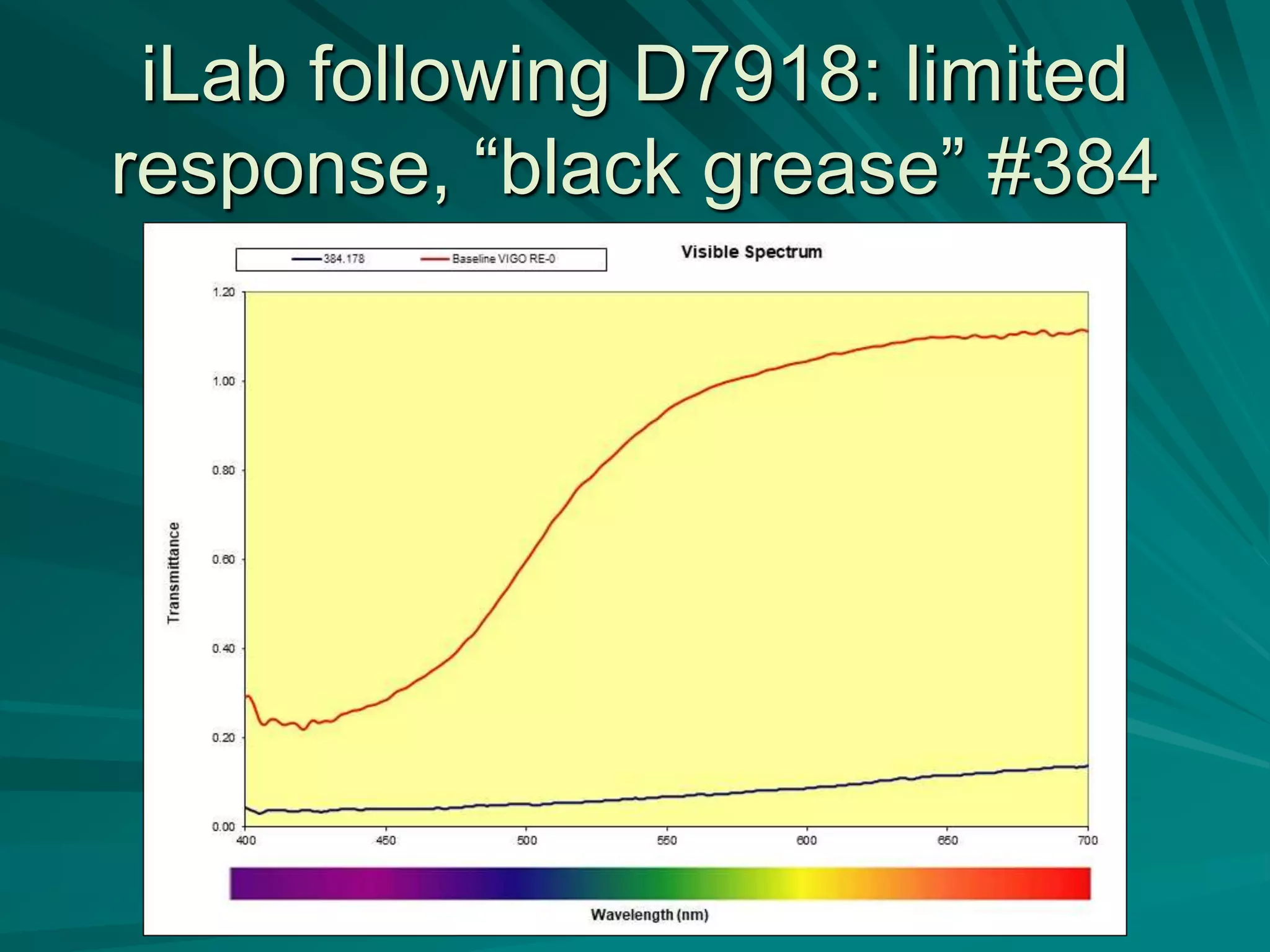
A review of 5+ years of testing shows that the
majority of in-service submitted grease
samples are “flatlined” in the visible spectrum
due to excessive absorbance at the 1mm
nominal thickness of die extrusion
iLab following D7918: limited
response, “black grease” #384
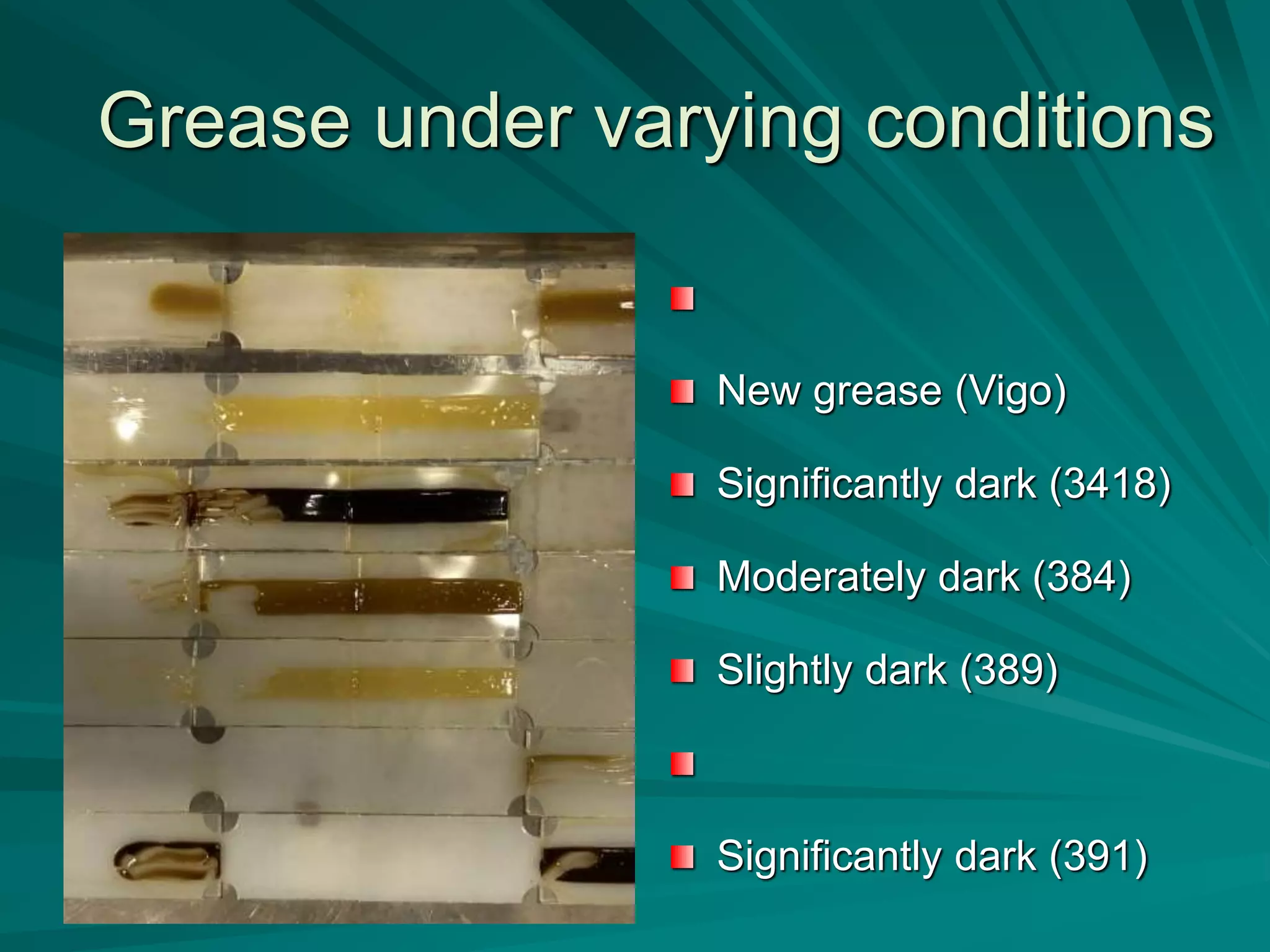
Grease under varying conditions
New grease (Vigo)
Significantly dark (3418)
Moderately dark (384)
Slightly dark (389)
Significantly dark (391)
Improvements to D7918
Introduction of a new spectrometer
Recognition of the limitations of method
due to excessive absorbance
Development of new method to allow
variable pathlength of the grease sample
Allows for a screening process for greases
without requiring die extrusion
High transmittance samples (light, new)
and low transmittance samples (used)
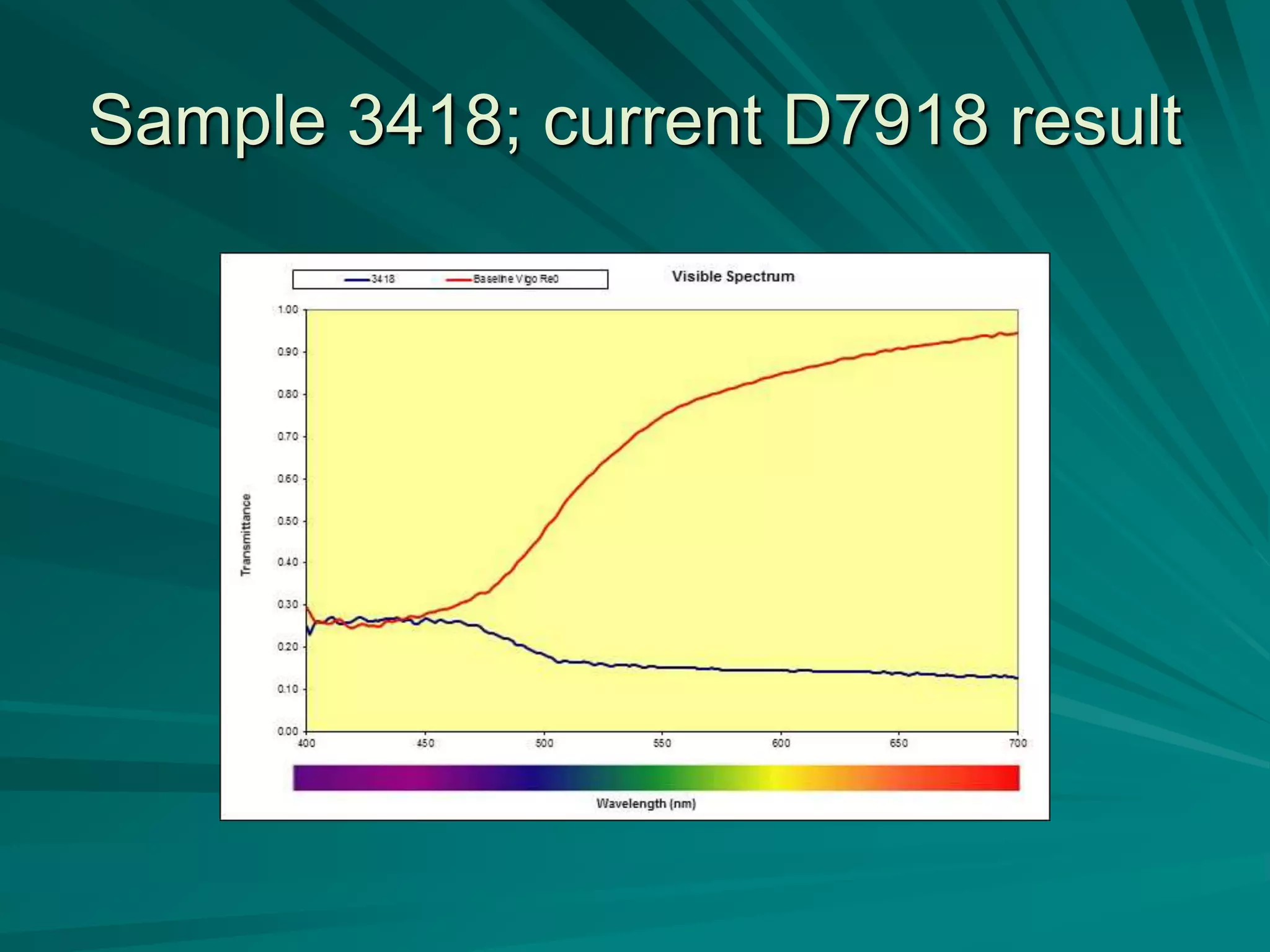
Sample 3418; current D7918 result
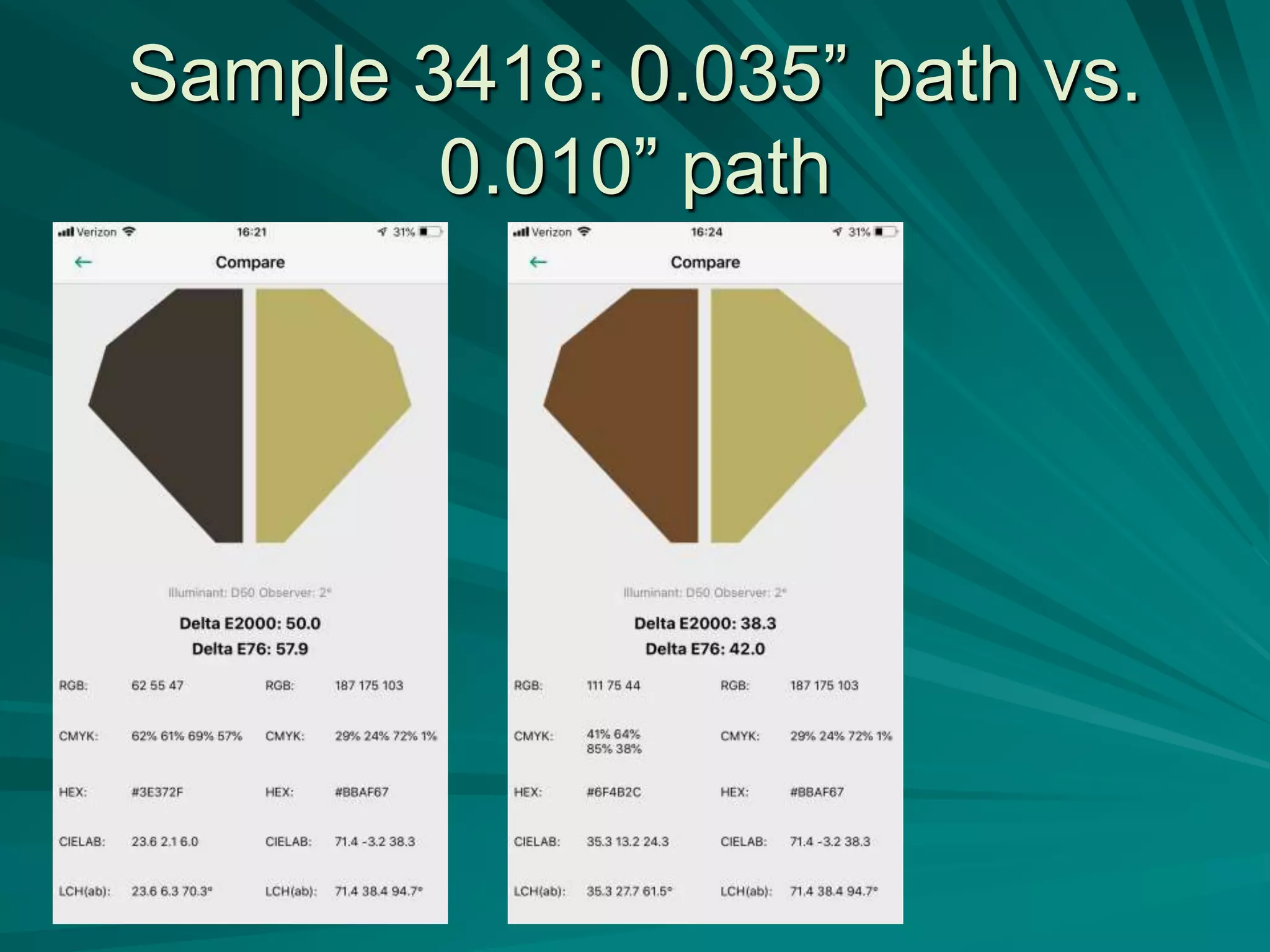
Sample 3418: 0.035” path vs.
0.010” path
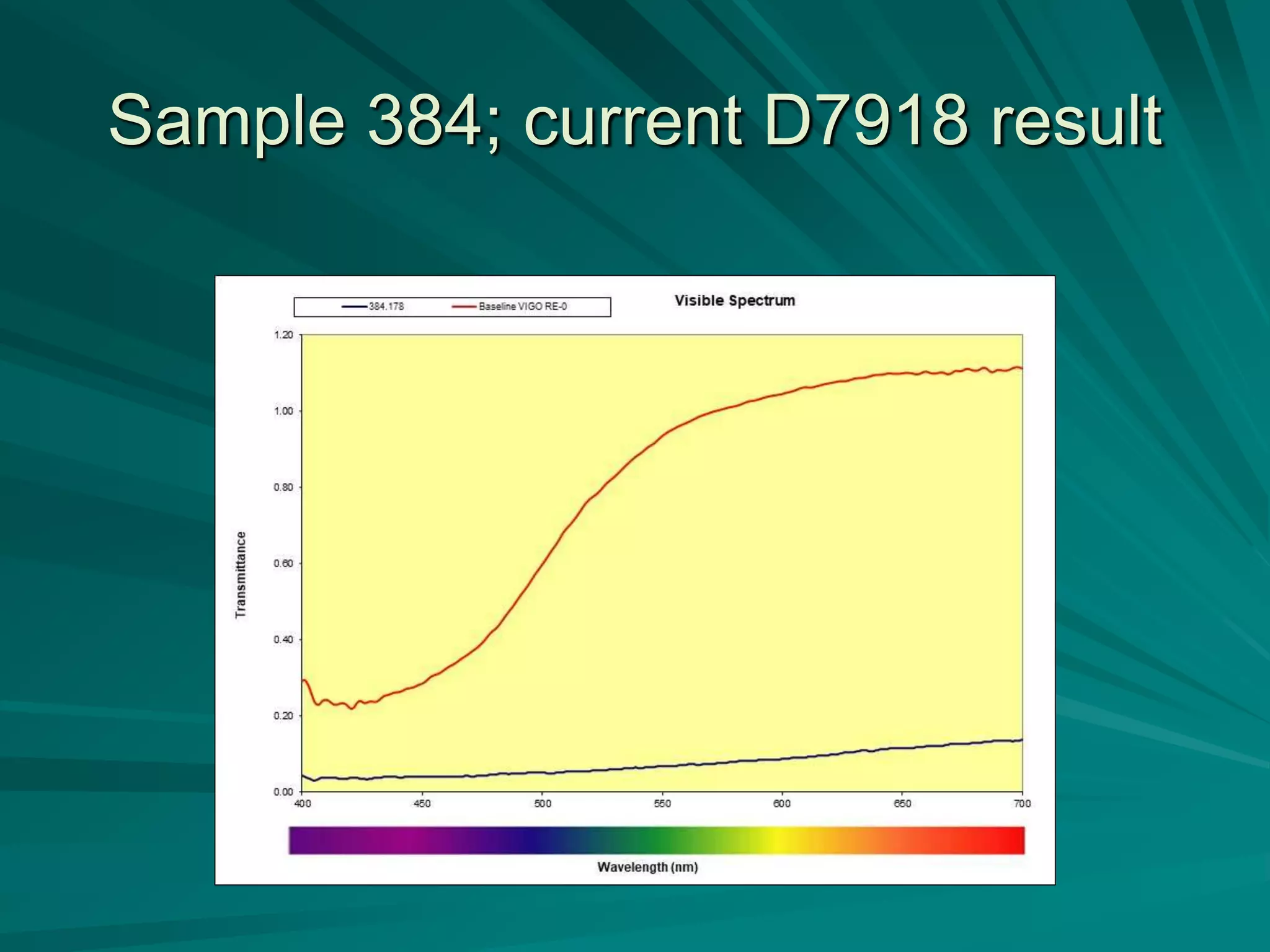
Sample 384; current D7918 result
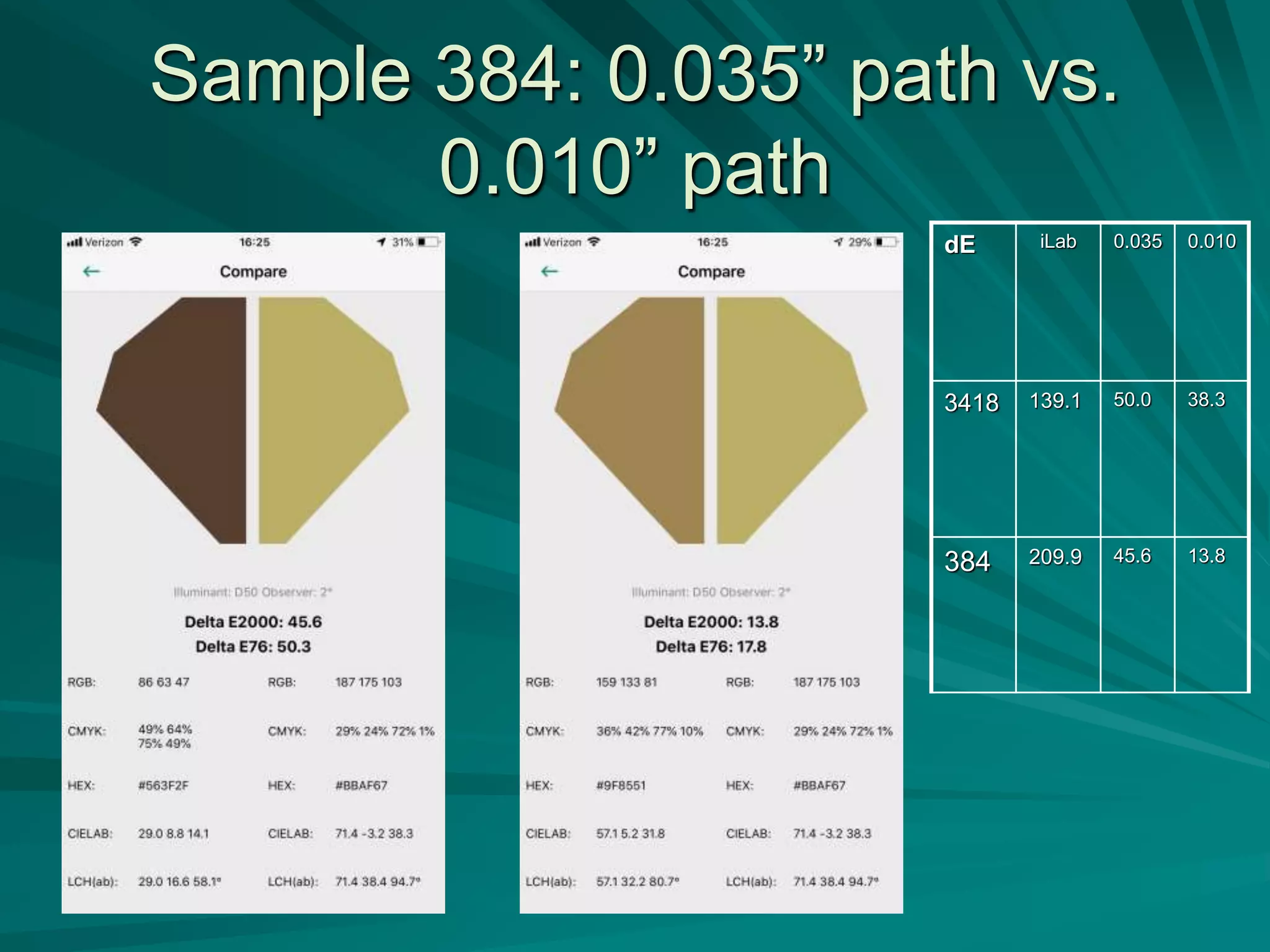
Sample 384: 0.035” path vs.
0.010” path
dE iLab 0.035 0.010
3418 139.1 50.0 38.3
384 209.9 45.6 13.8
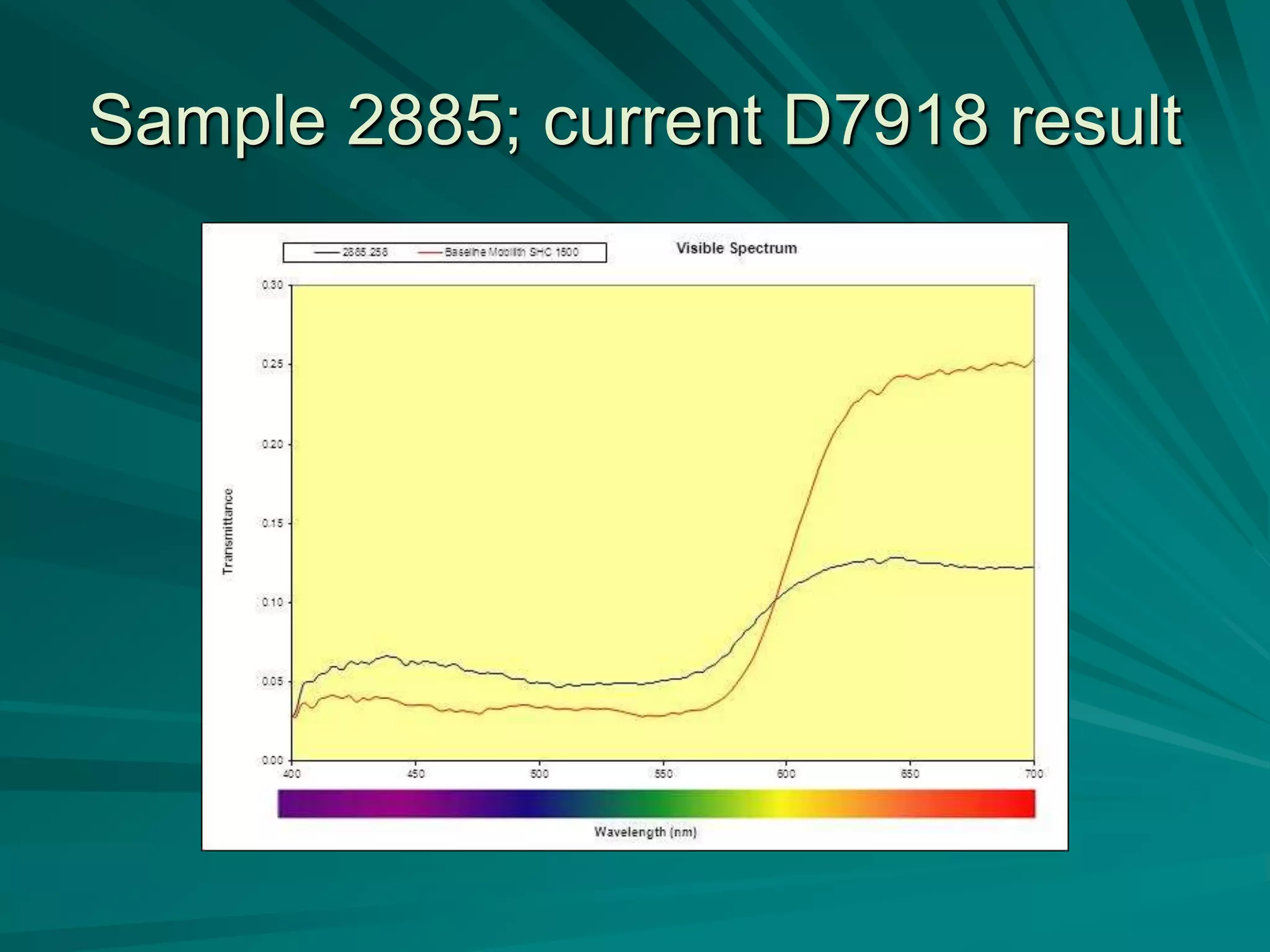
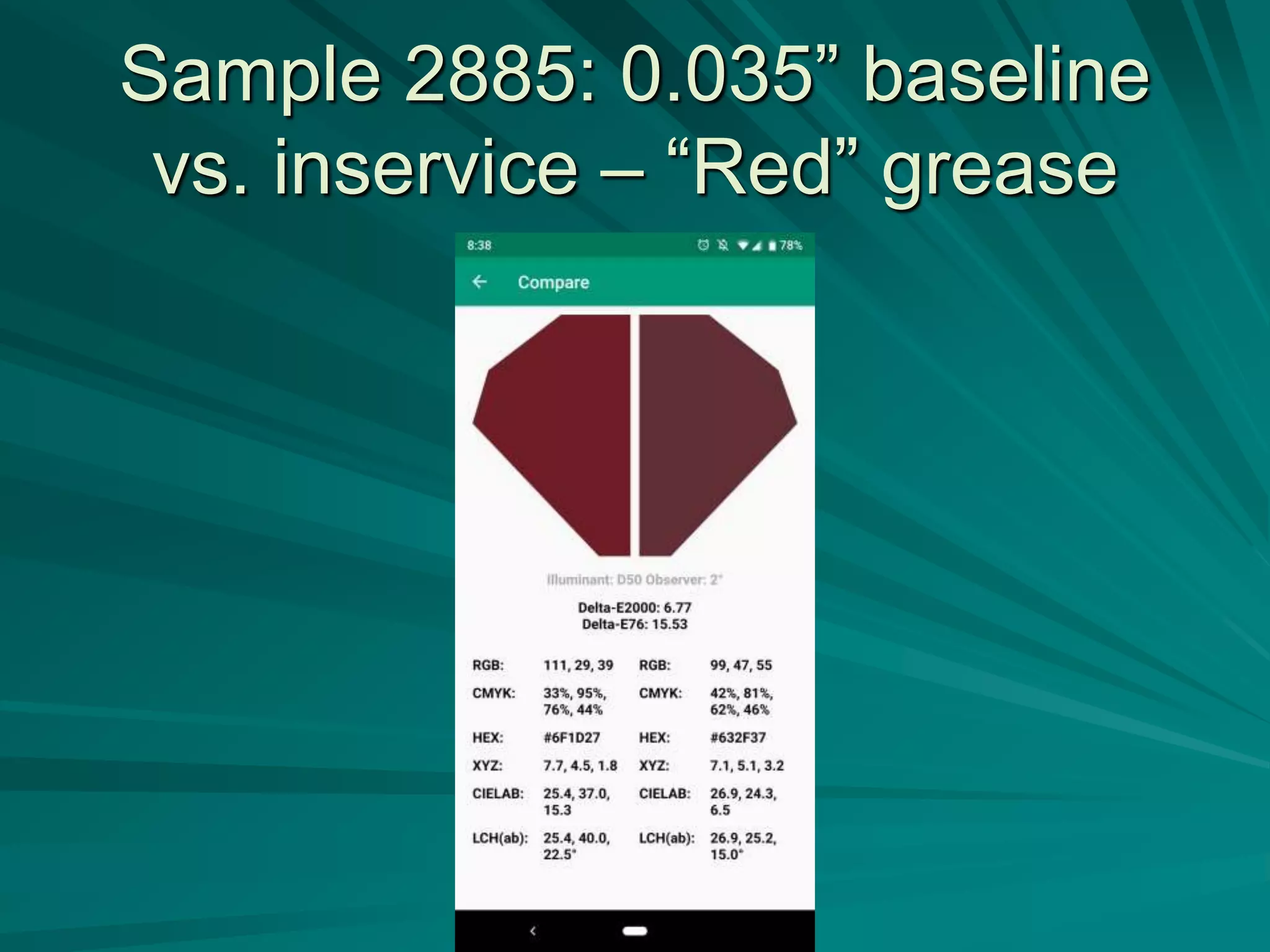
Sample 2885; current D7918 result
Sample 2885: 0.035” baseline
vs. inservice – “Red” grease
Next Steps
Inclusion of new Grease Thief Colorimeter
in current ASTM Inter-Laboratory Study
(ILS)
Submit research report and ballot revision
to D7918, removing spectrometer-specific
references, and retaining spectrum option
Continue to find grease-specific data
relationships to color-influencing
parameter changes
Continue to evaluate and create new
color-based and grease specific criteria

Variable pathlength colorimetric spectroscopy of greases 0314021

  • 1.
    Variable Pathlength Colorimetric Spectroscopyof Greases; an enhancement to D7918 Rich Wurzbach, MRG Labs York, PA, USA 12/12/18
  • 2.
    Introduction Grease comes ina wide array of colors New and In-Service Grease can be evaluated Methodology introduced in ASTM D7918-15 iLab, Spectroscopy Box, Thin Film Substrate of grease
  • 3.
    3 CIE Color SpaceChromaticity Diagram
  • 4.
    4 L* 40 50 60 70 80 90 a* 40 50 60 70 80 90 b* 40 50 60 70 80 90 CIE color spacechromaticity diagram ASTM E308 Defines CIE Color a* is the change in color in the red spectrum. a* is positive in the red direction and negative in the green direction. b* is the change in color of the yellow spectrum. b* is positive in the yellow direction and negative in the blue direction. L* is the change in shade from white to black.
  • 5.
  • 6.
    Grease Color Examples Threedifferent greases Follows the patterns identified by the chromaticity diagram Colors Sample 1 2 3 Light…dark L* 48.6 63.5 61.3 Red…green a* 42.5 13.6 25.8 Yellow…Blue b* -14.0 -52.1 3.8
  • 7.
    New Grease toEnd of Life 0.00 0.05 0.10 0.15 0.20 0.25 0.30 0.35 0.40 0.45 0.50 400 450 500 550 600 650 700 Wavelength (nm) Transmission New Fluid In-Service Fluid End of Life Fluid
  • 8.
    Limitations of Methodin D7918 iLab Spectrometer is called out in method iLab Spectrometer is no longer manufactured or supported A review of 5+ years of testing shows that the majority of in-service submitted grease samples are “flatlined” in the visible spectrum due to excessive absorbance at the 1mm nominal thickness of die extrusion
  • 9.
    iLab following D7918:limited response, “black grease” #384
  • 10.
    Grease under varyingconditions New grease (Vigo) Significantly dark (3418) Moderately dark (384) Slightly dark (389) Significantly dark (391)
  • 11.
    Improvements to D7918 Introductionof a new spectrometer Recognition of the limitations of method due to excessive absorbance Development of new method to allow variable pathlength of the grease sample Allows for a screening process for greases without requiring die extrusion High transmittance samples (light, new) and low transmittance samples (used)
  • 12.
  • 13.
    Sample 3418: 0.035”path vs. 0.010” path
  • 14.
    Sample 384; currentD7918 result
  • 15.
    Sample 384: 0.035”path vs. 0.010” path dE iLab 0.035 0.010 3418 139.1 50.0 38.3 384 209.9 45.6 13.8
  • 16.
  • 17.
    Sample 2885: 0.035”baseline vs. inservice – “Red” grease
  • 18.
    Next Steps Inclusion ofnew Grease Thief Colorimeter in current ASTM Inter-Laboratory Study (ILS) Submit research report and ballot revision to D7918, removing spectrometer-specific references, and retaining spectrum option Continue to find grease-specific data relationships to color-influencing parameter changes Continue to evaluate and create new color-based and grease specific criteria

Editor's Notes