VACUUM PROCESS CASTING
(V-PROCESS/VPC)
MOULDING LINE
By General Dynamic Multi Technical Consultancy LLP
WHAT IS V-PROCESS
This is yet another moulding process which
doesn’t need any chemical or organic binders
in the sand for moulding. One of the foundry
which adopted VPC in India could envisage to
double its moulding capacity in 2 years’ time,
after all his process cost had become
economical by 20-25% by adopting this
process.
WHO SHOULD TARGET FOR VPC
Foundries which are into Railway Castings in India
making Side Frames, Bolsters for Casnub Bogies,
Coupler etc and CMS Crossings should immediately
target to reduce sand cost and shop-floor related
pollution in their foundries.
 Foundries making large wear resistant Mn-Steel
castings like Jaw Plates, Blow-Bars, Cone and Mantel
should reduce their cost of resin sand usage and cost of
Primary, Secondary Attrition and Thermal Reclamation
and related manpower and maintenance costs.
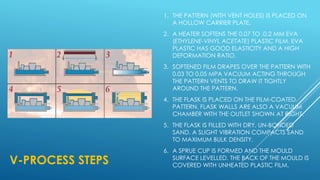
V-PROCESS STEPS
1. THE PATTERN (WITH VENT HOLES) IS PLACED ON
A HOLLOW CARRIER PLATE.
2. A HEATER SOFTENS THE 0.07 TO .0.2 MM EVA
(ETHYLENE-VINYL ACETATE) PLASTIC FILM. EVA
PLASTIC HAS GOOD ELASTICITY AND A HIGH
DEFORMATION RATIO.
3. SOFTENED FILM DRAPES OVER THE PATTERN WITH
0.03 TO 0.05 MPA VACUUM ACTING THROUGH
THE PATTERN VENTS TO DRAW IT TIGHTLY
AROUND THE PATTERN.
4. THE FLASK IS PLACED ON THE FILM-COATED
PATTERN. FLASK WALLS ARE ALSO A VACUUM
CHAMBER WITH THE OUTLET SHOWN AT RIGHT.
5. THE FLASK IS FILLED WITH DRY, UN-BONDED
SAND. A SLIGHT VIBRATION COMPACTS SAND
TO MAXIMUM BULK DENSITY.
6. A SPRUE CUP IS FORMED AND THE MOULD
SURFACE LEVELLED. THE BACK OF THE MOULD IS
COVERED WITH UNHEATED PLASTIC FILM.
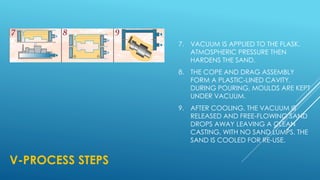
V-PROCESS STEPS
7. VACUUM IS APPLIED TO THE FLASK.
ATMOSPHERIC PRESSURE THEN
HARDENS THE SAND.
8. THE COPE AND DRAG ASSEMBLY
FORM A PLASTIC-LINED CAVITY.
DURING POURING, MOULDS ARE KEPT
UNDER VACUUM.
9. AFTER COOLING, THE VACUUM IS
RELEASED AND FREE-FLOWING SAND
DROPS AWAY LEAVING A CLEAN
CASTING, WITH NO SAND LUMPS. THE
SAND IS COOLED FOR RE-USE.
BENEFITS OF V-PROCESS
 Reduction in Sand Consumption
99%
 No water, no binder and no
additives in Sand
 Cost reduction by about < 20%
 Very Smooth Surface Finish 120 RMS
 Excellent Dimensional Accuracy
 Zero Draft
 Thin Wall Sections Possible
 Excellent Reproduction of Details
 Increased Pattern Life (no wear of
pattern)
 Very Easy Knock-out, within no time.
 No sand sticking or inclusion
 No toxic fumes from burning the
binders
 Excellent sand permeability
 Moisture related casting defects is
zero.
 Yield increases.
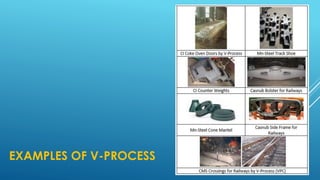
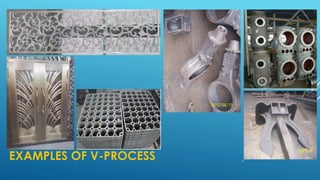
EXAMPLES OF V-PROCESS
COMPARISON
THANKS
steel@gdmtechnics.com
+91 9200258915
CONTACT US FOR END TO END
SOLUTION.

Vacuum process casting (v process)

  • 1.
    VACUUM PROCESS CASTING (V-PROCESS/VPC) MOULDINGLINE By General Dynamic Multi Technical Consultancy LLP
  • 2.
    WHAT IS V-PROCESS Thisis yet another moulding process which doesn’t need any chemical or organic binders in the sand for moulding. One of the foundry which adopted VPC in India could envisage to double its moulding capacity in 2 years’ time, after all his process cost had become economical by 20-25% by adopting this process.
  • 3.
    WHO SHOULD TARGETFOR VPC Foundries which are into Railway Castings in India making Side Frames, Bolsters for Casnub Bogies, Coupler etc and CMS Crossings should immediately target to reduce sand cost and shop-floor related pollution in their foundries.  Foundries making large wear resistant Mn-Steel castings like Jaw Plates, Blow-Bars, Cone and Mantel should reduce their cost of resin sand usage and cost of Primary, Secondary Attrition and Thermal Reclamation and related manpower and maintenance costs.
  • 4.
    V-PROCESS STEPS 1. THEPATTERN (WITH VENT HOLES) IS PLACED ON A HOLLOW CARRIER PLATE. 2. A HEATER SOFTENS THE 0.07 TO .0.2 MM EVA (ETHYLENE-VINYL ACETATE) PLASTIC FILM. EVA PLASTIC HAS GOOD ELASTICITY AND A HIGH DEFORMATION RATIO. 3. SOFTENED FILM DRAPES OVER THE PATTERN WITH 0.03 TO 0.05 MPA VACUUM ACTING THROUGH THE PATTERN VENTS TO DRAW IT TIGHTLY AROUND THE PATTERN. 4. THE FLASK IS PLACED ON THE FILM-COATED PATTERN. FLASK WALLS ARE ALSO A VACUUM CHAMBER WITH THE OUTLET SHOWN AT RIGHT. 5. THE FLASK IS FILLED WITH DRY, UN-BONDED SAND. A SLIGHT VIBRATION COMPACTS SAND TO MAXIMUM BULK DENSITY. 6. A SPRUE CUP IS FORMED AND THE MOULD SURFACE LEVELLED. THE BACK OF THE MOULD IS COVERED WITH UNHEATED PLASTIC FILM.
  • 5.
    V-PROCESS STEPS 7. VACUUMIS APPLIED TO THE FLASK. ATMOSPHERIC PRESSURE THEN HARDENS THE SAND. 8. THE COPE AND DRAG ASSEMBLY FORM A PLASTIC-LINED CAVITY. DURING POURING, MOULDS ARE KEPT UNDER VACUUM. 9. AFTER COOLING, THE VACUUM IS RELEASED AND FREE-FLOWING SAND DROPS AWAY LEAVING A CLEAN CASTING, WITH NO SAND LUMPS. THE SAND IS COOLED FOR RE-USE.
  • 6.
    BENEFITS OF V-PROCESS Reduction in Sand Consumption 99%  No water, no binder and no additives in Sand  Cost reduction by about < 20%  Very Smooth Surface Finish 120 RMS  Excellent Dimensional Accuracy  Zero Draft  Thin Wall Sections Possible  Excellent Reproduction of Details  Increased Pattern Life (no wear of pattern)  Very Easy Knock-out, within no time.  No sand sticking or inclusion  No toxic fumes from burning the binders  Excellent sand permeability  Moisture related casting defects is zero.  Yield increases.
  • 7.
  • 8.
  • 9.
  • 10.
  • 11.