January 23, 2010Agile + UX
“ART becomes SCIENCE becomes ENGINEERING”IDEAS become BEST PRACTICES become TOOLS [and DELIVERABLES]Agile + UX
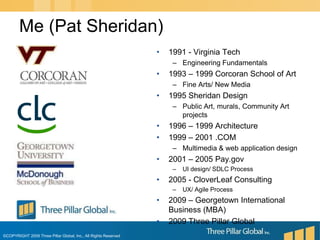
1991 - Virginia Tech Engineering Fundamentals1993 – 1999 Corcoran School of Art Fine Arts/ New Media1995 Sheridan DesignPublic Art, murals, Community Art projects1996 – 1999 Architecture1999 – 2001 .COMMultimedia & web application design2001 – 2005 Pay.govUI design/ SDLC Process2005 - CloverLeaf ConsultingUX/ Agile Process2009 – Georgetown International Business (MBA)2009 Three Pillar GlobalMe (Pat Sheridan)
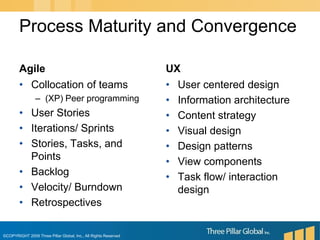
AgileCollocation of teams(XP) Peer programmingUser StoriesIterations/ SprintsStories, Tasks, and PointsBacklogVelocity/ BurndownRetrospectivesUXUser centered designInformation architectureContent strategyVisual designDesign patternsView componentsTask flow/ interaction designProcess Maturity and Convergence
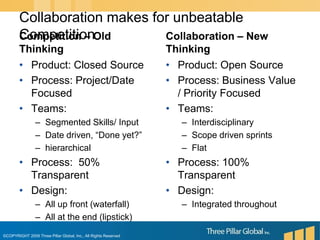
Competition – Old ThinkingCollaboration – New ThinkingProduct: Closed SourceProcess: Project/Date FocusedTeams: Segmented Skills/ InputDate driven, “Done yet?”hierarchicalProcess:  50% TransparentDesign:All up front (waterfall)All at the end (lipstick) Product: Open SourceProcess: Business Value / Priority FocusedTeams:InterdisciplinaryScope driven sprintsFlatProcess: 100% TransparentDesign:Integrated throughoutCollaboration makes for unbeatable Competition
Understand tasks at the most granular levelManage Risk and ComplexityEvaluate UI/UX choices as OptionsScope is Everything
Envision SessionDesign iterations ahead of Dev iterationsImportance of BacklogOngoing FeedbackProcess
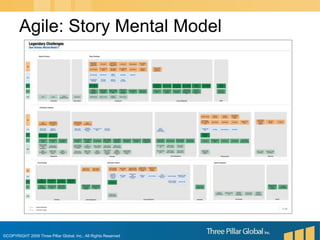
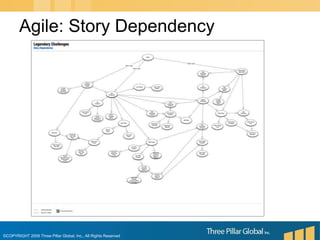
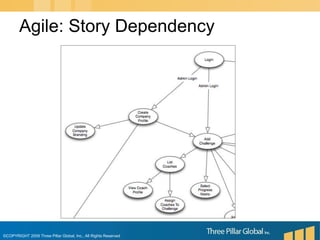
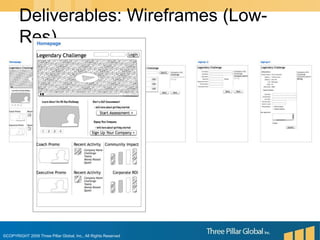
Story ListStory DependencyMental ModelWireframesDeliverables
RIA: Reaching the Next Plateau
Toolset Maturity + Process ConvergenceProcess MaturityPlatform MaturityDevice MaturityData visualizationGrids, charts, graphs, mapsUser Maturity – customization and control‘User Directed Interfaces’ as opposed to ‘design for user’RIA: Reaching the Next Plateau
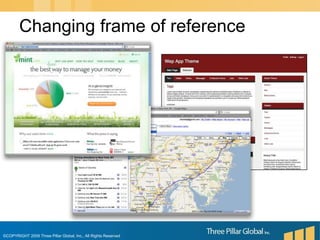
Changing frame of reference
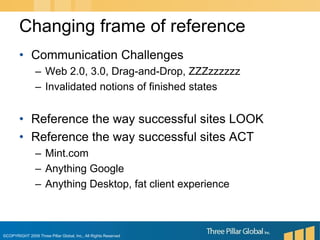
Communication ChallengesWeb 2.0, 3.0, Drag-and-Drop, ZZZzzzzzzInvalidated notions of finished statesReference the way successful sites LOOKReference the way successful sites ACTMint.comAnything GoogleAnything Desktop, fat client experienceChanging frame of reference
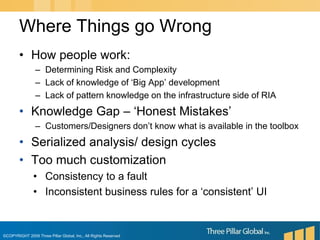
How people work:Determining Risk and ComplexityLack of knowledge of ‘Big App’ developmentLack of pattern knowledge on the infrastructure side of RIAKnowledge Gap – ‘Honest Mistakes’Customers/Designers don’t know what is available in the toolboxSerialized analysis/ design cyclesToo much customizationConsistency to a faultInconsistent business rules for a ‘consistent’ UIWhere Things go Wrong
Working: Quicker Feedback/ Dev iterationsDesigningFocus on Interactions and re-useDesign Pattern LibraryDesign Component Library [Style Guide]DevelopingCustom ComponentsAesthetics: Renderer/ Templates/ ThemesSquaring the Circle
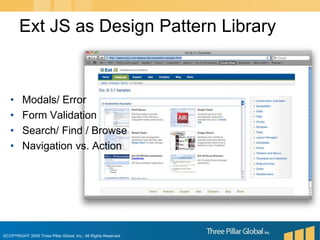
Modals/ ErrorForm ValidationSearch/ Find / BrowseNavigation vs. ActionExt JS as Design Pattern Library
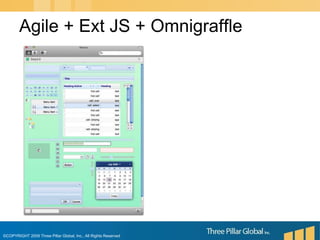
Agile + Ext JS + Omnigraffle
Meeting FacilitationHigh resolution wireframes remove Hand Waving + Leap of FaithConstraints on DesignWorking ‘with’ or ‘against’ the FrameworkScope/LOEConsistencyAgile + Ext JS + Omnigraffle
Agile: Story Mental Model
Agile: Story Dependency
Agile + Ext JS + Omnigraffle
Deliverables: Wireframes (Low-Res)
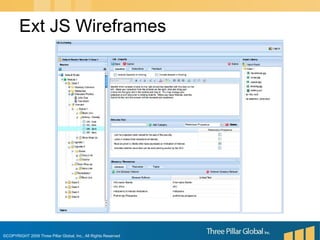
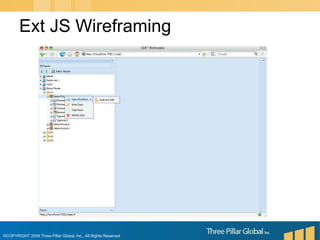
Ext JS Wireframes
Ext JS Wireframing
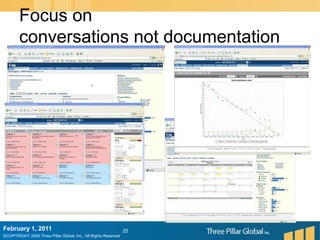
25Focus on conversations not documentationFebruary 2, 2011
Maintaining shared understandingAgile UXPrototype driven analysisBusiness, customer, and dev team stakeholders Text based ‘wireframes’Ext JS Component architecture allows for meta-code descriptionsTPG EnvisionDistributed DesignLocation independent teams/ interdisciplinary skills/ skill levelsProcess maturity, deliverables, infrastructureDistributed Design
DevelopersCommon language for discussion w/ designersAPI, Docs, examplesCustomersHighly visual deliverables80%/20% out of the boxUX/ Interaction DesignersExt JS DesignerExt JS example site == Design Pattern LibraryOmnigraffle Stencil == Rapid PrototypingExt JS Designer!!What’s in it for me?
Happy Coding!

UXCampDC 2010 - Agile UX

  • 1.
  • 2.
    “ART becomes SCIENCEbecomes ENGINEERING”IDEAS become BEST PRACTICES become TOOLS [and DELIVERABLES]Agile + UX
  • 3.
    1991 - VirginiaTech Engineering Fundamentals1993 – 1999 Corcoran School of Art Fine Arts/ New Media1995 Sheridan DesignPublic Art, murals, Community Art projects1996 – 1999 Architecture1999 – 2001 .COMMultimedia & web application design2001 – 2005 Pay.govUI design/ SDLC Process2005 - CloverLeaf ConsultingUX/ Agile Process2009 – Georgetown International Business (MBA)2009 Three Pillar GlobalMe (Pat Sheridan)
  • 4.
    AgileCollocation of teams(XP)Peer programmingUser StoriesIterations/ SprintsStories, Tasks, and PointsBacklogVelocity/ BurndownRetrospectivesUXUser centered designInformation architectureContent strategyVisual designDesign patternsView componentsTask flow/ interaction designProcess Maturity and Convergence
  • 5.
    Competition – OldThinkingCollaboration – New ThinkingProduct: Closed SourceProcess: Project/Date FocusedTeams: Segmented Skills/ InputDate driven, “Done yet?”hierarchicalProcess: 50% TransparentDesign:All up front (waterfall)All at the end (lipstick) Product: Open SourceProcess: Business Value / Priority FocusedTeams:InterdisciplinaryScope driven sprintsFlatProcess: 100% TransparentDesign:Integrated throughoutCollaboration makes for unbeatable Competition
  • 6.
    Understand tasks atthe most granular levelManage Risk and ComplexityEvaluate UI/UX choices as OptionsScope is Everything
  • 7.
    Envision SessionDesign iterationsahead of Dev iterationsImportance of BacklogOngoing FeedbackProcess
  • 8.
    Story ListStory DependencyMentalModelWireframesDeliverables
  • 9.
    RIA: Reaching theNext Plateau
  • 10.
    Toolset Maturity +Process ConvergenceProcess MaturityPlatform MaturityDevice MaturityData visualizationGrids, charts, graphs, mapsUser Maturity – customization and control‘User Directed Interfaces’ as opposed to ‘design for user’RIA: Reaching the Next Plateau
  • 11.
  • 12.
    Communication ChallengesWeb 2.0,3.0, Drag-and-Drop, ZZZzzzzzzInvalidated notions of finished statesReference the way successful sites LOOKReference the way successful sites ACTMint.comAnything GoogleAnything Desktop, fat client experienceChanging frame of reference
  • 13.
    How people work:DeterminingRisk and ComplexityLack of knowledge of ‘Big App’ developmentLack of pattern knowledge on the infrastructure side of RIAKnowledge Gap – ‘Honest Mistakes’Customers/Designers don’t know what is available in the toolboxSerialized analysis/ design cyclesToo much customizationConsistency to a faultInconsistent business rules for a ‘consistent’ UIWhere Things go Wrong
  • 14.
    Working: Quicker Feedback/Dev iterationsDesigningFocus on Interactions and re-useDesign Pattern LibraryDesign Component Library [Style Guide]DevelopingCustom ComponentsAesthetics: Renderer/ Templates/ ThemesSquaring the Circle
  • 15.
    Modals/ ErrorForm ValidationSearch/Find / BrowseNavigation vs. ActionExt JS as Design Pattern Library
  • 16.
    Agile + ExtJS + Omnigraffle
  • 17.
    Meeting FacilitationHigh resolutionwireframes remove Hand Waving + Leap of FaithConstraints on DesignWorking ‘with’ or ‘against’ the FrameworkScope/LOEConsistencyAgile + Ext JS + Omnigraffle
  • 18.
  • 19.
  • 20.
  • 21.
    Agile + ExtJS + Omnigraffle
  • 22.
  • 23.
  • 24.
  • 25.
    25Focus on conversationsnot documentationFebruary 2, 2011
  • 26.
    Maintaining shared understandingAgileUXPrototype driven analysisBusiness, customer, and dev team stakeholders Text based ‘wireframes’Ext JS Component architecture allows for meta-code descriptionsTPG EnvisionDistributed DesignLocation independent teams/ interdisciplinary skills/ skill levelsProcess maturity, deliverables, infrastructureDistributed Design
  • 27.
    DevelopersCommon language fordiscussion w/ designersAPI, Docs, examplesCustomersHighly visual deliverables80%/20% out of the boxUX/ Interaction DesignersExt JS DesignerExt JS example site == Design Pattern LibraryOmnigraffle Stencil == Rapid PrototypingExt JS Designer!!What’s in it for me?
  • 28.