Using Sandblasting Equipment For 
Glass Etching
Abra s i ve Et ching 
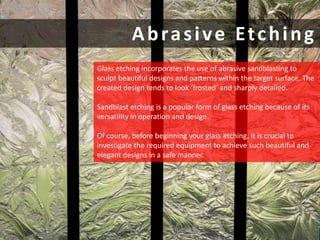
Glass etching incorporates the use of abrasive sandblasting to 
sculpt beautiful designs and patterns within the target surface. The 
created design tends to look ‘frosted’ and sharply detailed. 
Sandblast etching is a popular form of glass etching because of its 
versatility in operation and design. 
Of course, before beginning your glass etching, it is crucial to 
investigate the required equipment to achieve such beautiful and 
elegant designs in a safe manner.
Mater ial 
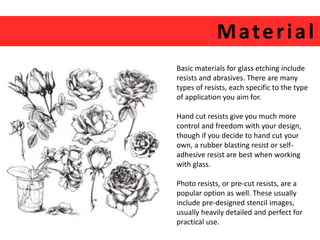
Basic materials for glass etching include 
resists and abrasives. There are many 
types of resists, each specific to the type 
of application you aim for. 
Hand cut resists give you much more 
control and freedom with your design, 
though if you decide to hand cut your 
own, a rubber blasting resist or self-adhesive 
resist are best when working 
with glass. 
Photo resists, or pre-cut resists, are a 
popular option as well. These usually 
include pre-designed stencil images, 
usually heavily detailed and perfect for 
practical use.
Protec t ive Wear 
Utilizing protective wear is essential 
with abrasive etching. The use of both 
machinery and high pressure air can 
expose you to safety hazards involving 
debris and other potentially harmful 
particulates in the air. 
Since the dust and fine particles of 
sandblasting are practically unseen, it 
is important to protect your eyes and 
skin at all times while operating 
sandblasting equipment. 
Utilizing a blast room can expose you 
to concentrated amounts of dust and 
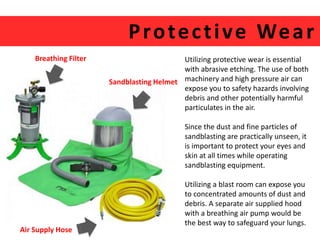
debris. A separate air supplied hood 
with a breathing air pump would be 
the best way to safeguard your lungs. 
Sandblasting Helmet 
Breathing Filter 
Air Supply Hose
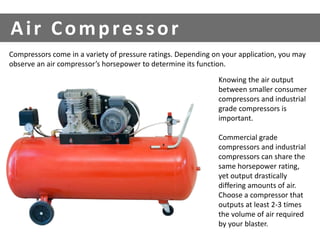
Compressors come in a variety of pressure ratings. Depending on your application, you may 
observe an air compressor’s horsepower to determine its function. 
Knowing the air output 
between smaller consumer 
compressors and industrial 
grade compressors is 
important. 
Commercial grade 
compressors and industrial 
compressors can share the 
same horsepower rating, 
yet output drastically 
differing amounts of air. 
Choose a compressor that 
outputs at least 2-3 times 
the volume of air required 
by your blaster. 
Ai r Compre s sor
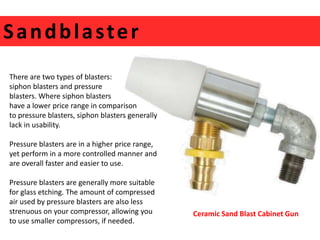
There are two types of blasters: 
siphon blasters and pressure 
blasters. Where siphon blasters 
have a lower price range in comparison 
to pressure blasters, siphon blasters generally 
lack in usability. 
Pressure blasters are in a higher price range, 
yet perform in a more controlled manner and 
are overall faster and easier to use. 
Pressure blasters are generally more suitable 
for glass etching. The amount of compressed 
air used by pressure blasters are also less 
strenuous on your compressor, allowing you 
to use smaller compressors, if needed. 
Ceramic Sand Blast Cabinet Gun 
Sandblas ter
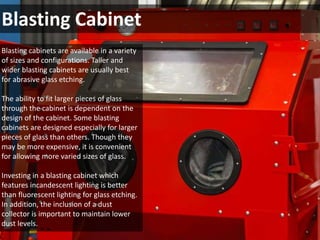
Blasting Cabinet 
Blasting cabinets are available in a variety 
of sizes and configurations. Taller and 
wider blasting cabinets are usually best 
for abrasive glass etching. 
The ability to fit larger pieces of glass 
through the cabinet is dependent on the 
design of the cabinet. Some blasting 
cabinets are designed especially for larger 
pieces of glass than others. Though they 
may be more expensive, it is convenient 
for allowing more varied sizes of glass. 
Investing in a blasting cabinet which 
features incandescent lighting is better 
than fluorescent lighting for glass etching. 
In addition, the inclusion of a dust 
collector is important to maintain lower 
dust levels.
Blas t Rooms 
Blast rooms are normally used for larger scale, heavy-duty operations. Blast rooms also come in 
many variations, yet are mostly intended for industrial use. 
Since enclosed blast rooms require a large amount of space for installation, an adequately 
proportional dust collector must be sizable to provide clean, breathable air. 
Blast rooms also allow for a range of added components and floor designs to secure and 
streamline your workflow. Wearing protective gear within a blast room is absolutely crucial.
Te chnique s 
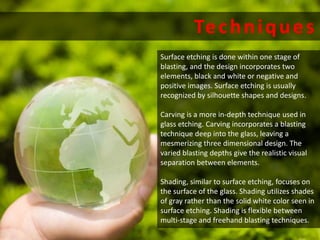
Surface etching is done within one stage of 
blasting, and the design incorporates two 
elements, black and white or negative and 
positive images. Surface etching is usually 
recognized by silhouette shapes and designs. 
Carving is a more in-depth technique used in 
glass etching. Carving incorporates a blasting 
technique deep into the glass, leaving a 
mesmerizing three dimensional design. The 
varied blasting depths give the realistic visual 
separation between elements. 
Shading, similar to surface etching, focuses on 
the surface of the glass. Shading utilizes shades 
of gray rather than the solid white color seen in 
surface etching. Shading is flexible between 
multi-stage and freehand blasting techniques.
About Us 
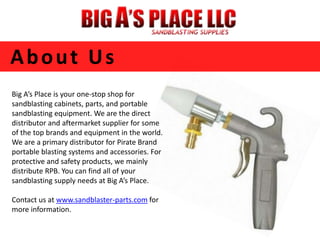
Big A’s Place is your one-stop shop for 
sandblasting cabinets, parts, and portable 
sandblasting equipment. We are the direct 
distributor and aftermarket supplier for some 
of the top brands and equipment in the world. 
We are a primary distributor for Pirate Brand 
portable blasting systems and accessories. For 
protective and safety products, we mainly 
distribute RPB. You can find all of your 
sandblasting supply needs at Big A’s Place. 
Contact us at www.sandblaster-parts.com for 
more information.
Summary 
Curious about what it takes to create etched glass? Here’s what you need to 
know about glass etching and the sandblasting equipment needed to do it.

Using sandblasting equipment for glass etching

  • 1.
  • 2.
    Abra s ive Et ching Glass etching incorporates the use of abrasive sandblasting to sculpt beautiful designs and patterns within the target surface. The created design tends to look ‘frosted’ and sharply detailed. Sandblast etching is a popular form of glass etching because of its versatility in operation and design. Of course, before beginning your glass etching, it is crucial to investigate the required equipment to achieve such beautiful and elegant designs in a safe manner.
  • 3.
    Mater ial Basicmaterials for glass etching include resists and abrasives. There are many types of resists, each specific to the type of application you aim for. Hand cut resists give you much more control and freedom with your design, though if you decide to hand cut your own, a rubber blasting resist or self-adhesive resist are best when working with glass. Photo resists, or pre-cut resists, are a popular option as well. These usually include pre-designed stencil images, usually heavily detailed and perfect for practical use.
  • 4.
    Protec t iveWear Utilizing protective wear is essential with abrasive etching. The use of both machinery and high pressure air can expose you to safety hazards involving debris and other potentially harmful particulates in the air. Since the dust and fine particles of sandblasting are practically unseen, it is important to protect your eyes and skin at all times while operating sandblasting equipment. Utilizing a blast room can expose you to concentrated amounts of dust and debris. A separate air supplied hood with a breathing air pump would be the best way to safeguard your lungs. Sandblasting Helmet Breathing Filter Air Supply Hose
  • 5.
    Compressors come ina variety of pressure ratings. Depending on your application, you may observe an air compressor’s horsepower to determine its function. Knowing the air output between smaller consumer compressors and industrial grade compressors is important. Commercial grade compressors and industrial compressors can share the same horsepower rating, yet output drastically differing amounts of air. Choose a compressor that outputs at least 2-3 times the volume of air required by your blaster. Ai r Compre s sor
  • 6.
    There are twotypes of blasters: siphon blasters and pressure blasters. Where siphon blasters have a lower price range in comparison to pressure blasters, siphon blasters generally lack in usability. Pressure blasters are in a higher price range, yet perform in a more controlled manner and are overall faster and easier to use. Pressure blasters are generally more suitable for glass etching. The amount of compressed air used by pressure blasters are also less strenuous on your compressor, allowing you to use smaller compressors, if needed. Ceramic Sand Blast Cabinet Gun Sandblas ter
  • 7.
    Blasting Cabinet Blastingcabinets are available in a variety of sizes and configurations. Taller and wider blasting cabinets are usually best for abrasive glass etching. The ability to fit larger pieces of glass through the cabinet is dependent on the design of the cabinet. Some blasting cabinets are designed especially for larger pieces of glass than others. Though they may be more expensive, it is convenient for allowing more varied sizes of glass. Investing in a blasting cabinet which features incandescent lighting is better than fluorescent lighting for glass etching. In addition, the inclusion of a dust collector is important to maintain lower dust levels.
  • 8.
    Blas t Rooms Blast rooms are normally used for larger scale, heavy-duty operations. Blast rooms also come in many variations, yet are mostly intended for industrial use. Since enclosed blast rooms require a large amount of space for installation, an adequately proportional dust collector must be sizable to provide clean, breathable air. Blast rooms also allow for a range of added components and floor designs to secure and streamline your workflow. Wearing protective gear within a blast room is absolutely crucial.
  • 9.
    Te chnique s Surface etching is done within one stage of blasting, and the design incorporates two elements, black and white or negative and positive images. Surface etching is usually recognized by silhouette shapes and designs. Carving is a more in-depth technique used in glass etching. Carving incorporates a blasting technique deep into the glass, leaving a mesmerizing three dimensional design. The varied blasting depths give the realistic visual separation between elements. Shading, similar to surface etching, focuses on the surface of the glass. Shading utilizes shades of gray rather than the solid white color seen in surface etching. Shading is flexible between multi-stage and freehand blasting techniques.
  • 10.
    About Us BigA’s Place is your one-stop shop for sandblasting cabinets, parts, and portable sandblasting equipment. We are the direct distributor and aftermarket supplier for some of the top brands and equipment in the world. We are a primary distributor for Pirate Brand portable blasting systems and accessories. For protective and safety products, we mainly distribute RPB. You can find all of your sandblasting supply needs at Big A’s Place. Contact us at www.sandblaster-parts.com for more information.
  • 11.
    Summary Curious aboutwhat it takes to create etched glass? Here’s what you need to know about glass etching and the sandblasting equipment needed to do it.