1
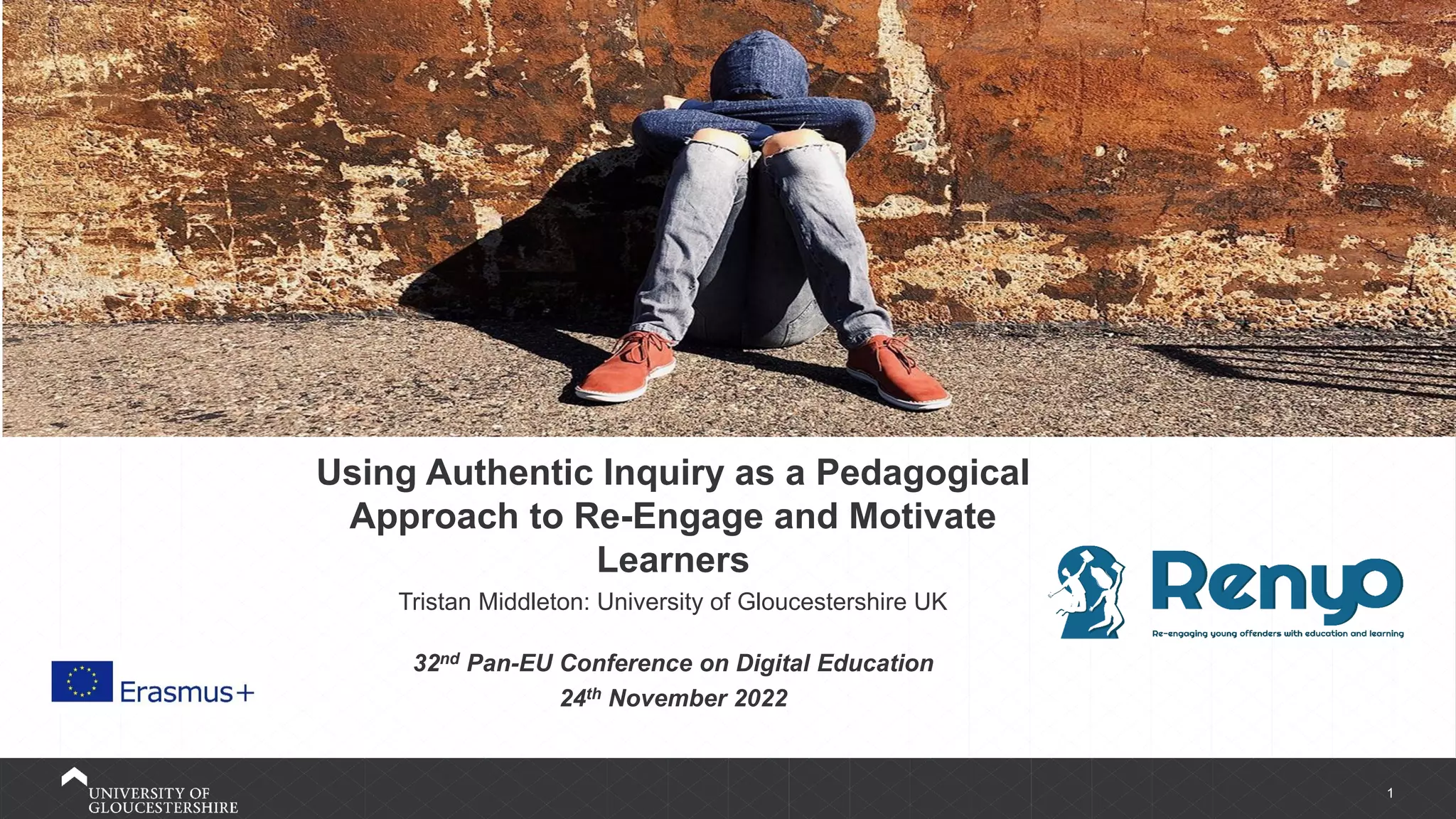
Using Authentic Inquiry as a Pedagogical
Approach to Re-Engage and Motivate
Learners
Tristan Middleton: University of Gloucestershire UK
32nd Pan-EU Conference on Digital Education
24th November 2022
24 November 2022
2
Outline
➢ Background – young people in conflict with the law
➢ Re-engaging Young Offenders with Education & Learning
(RENYO)
➢ Authentic Inquiry
➢ What we found
3
The backgrounds of young
people who offend
▪ Educational attainment is low.
▪ School dropout is high with almost 9
out of 10 young offenders having
dropped out of school for 6 months or
more before being incarcerated
(Little, 2015)
▪ Complex family and socioeconomic
backgrounds
▪ High prevalence of special
educational needs 23% compared
with 2-3% in the general population of
young people (Hughes, 2012).
▪ Young offenders described as
disengaged from education and
learning.
4
Engagement and disengagement
Engagement is multidimensional
Cognitive
Affective
Behavioural
Fredricks, Blumenfield and Paris (2004)
Disengagement is distinct to
engagement, requiring different
strategies to those who are
experiencing ‘low engagement’
(Skinner et al 2008, Jang et al, 2017)
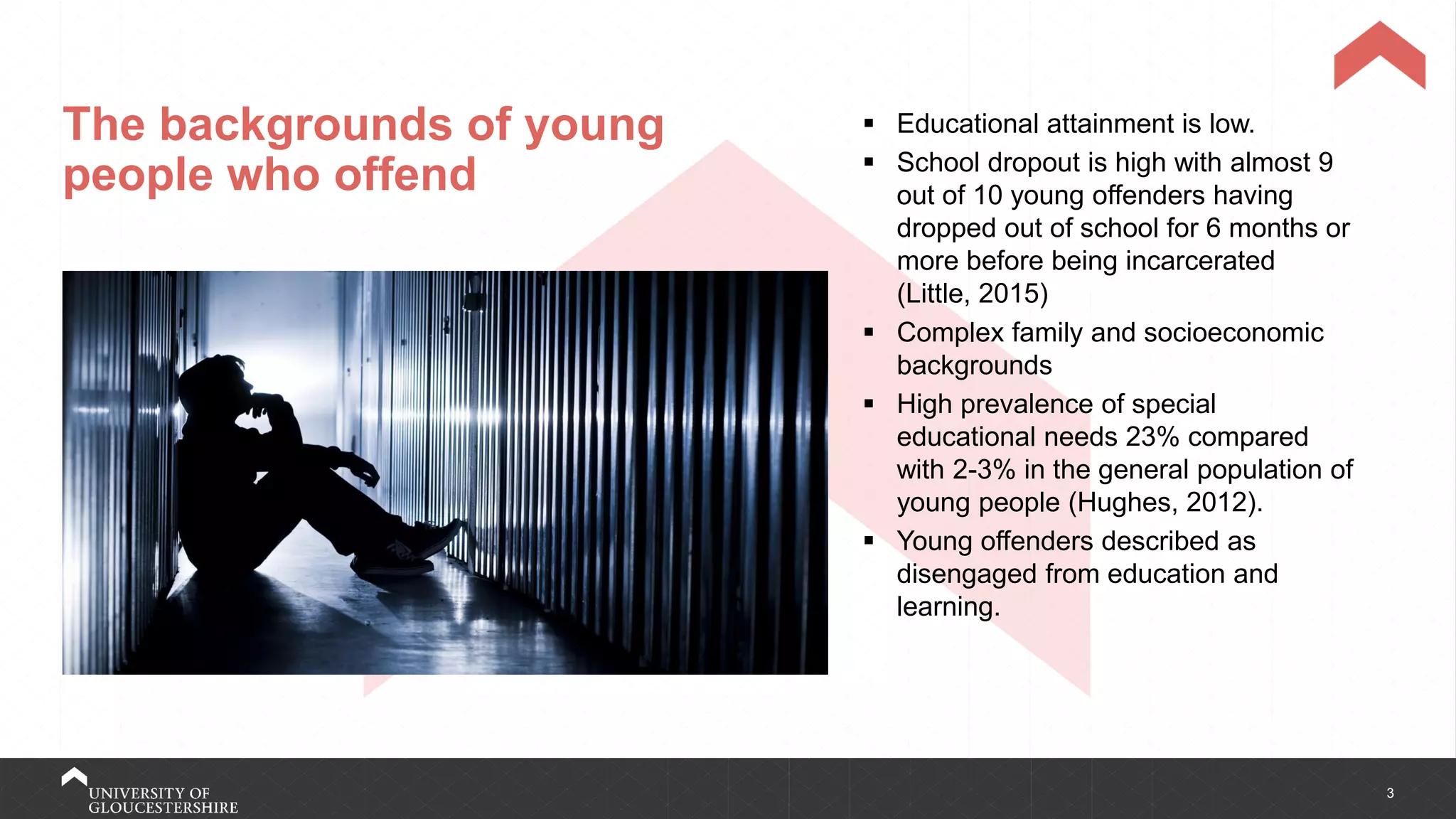
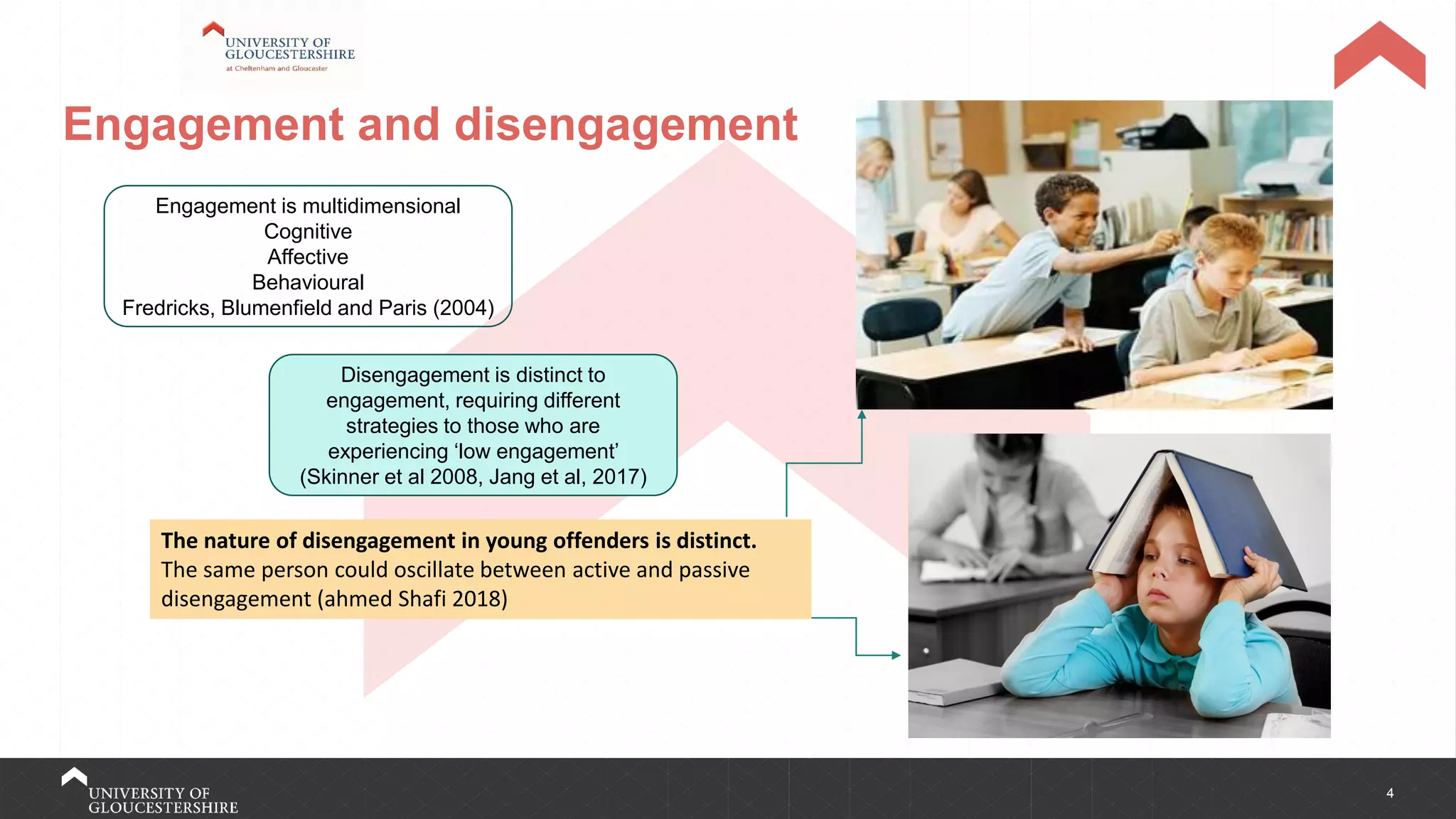
The nature of disengagement in young offenders is distinct.
The same person could oscillate between active and passive
disengagement (ahmed Shafi 2018)
5
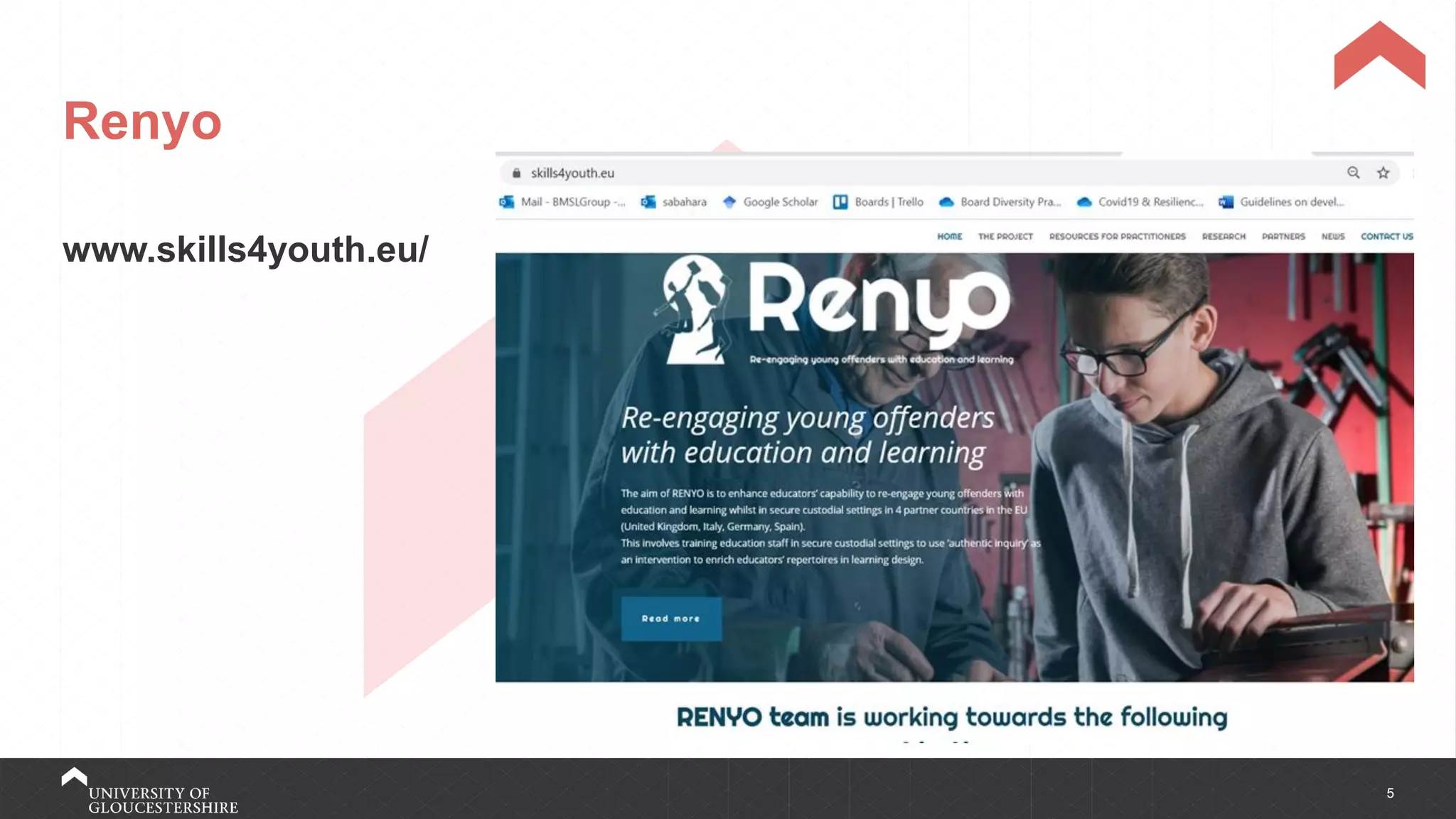
Renyo
www.skills4youth.eu/
6
Renyo
Authentic Inquiry – Explores learning in a wholistic way:
- why do you believe this ?
- what logic leads to this conclusion ?
- what facts and data do you have ?
- what examples or past experience exists ?
7
Renyo
Inquiry-guided learning:
Inquiry-guided learning refers to an array of classroom practices that
promote student learning through guided and, increasingly, independent
investigation of complex questions and problems, often for which there
is no single answer. (Lee et al., 2004)
8
Renyo
The pedagogy underpinning Authentic Inquiry:
• Learner empowerment
• Self perception
• Validation
• Creativity
• A prompt for educator reflection……
9
Renyo
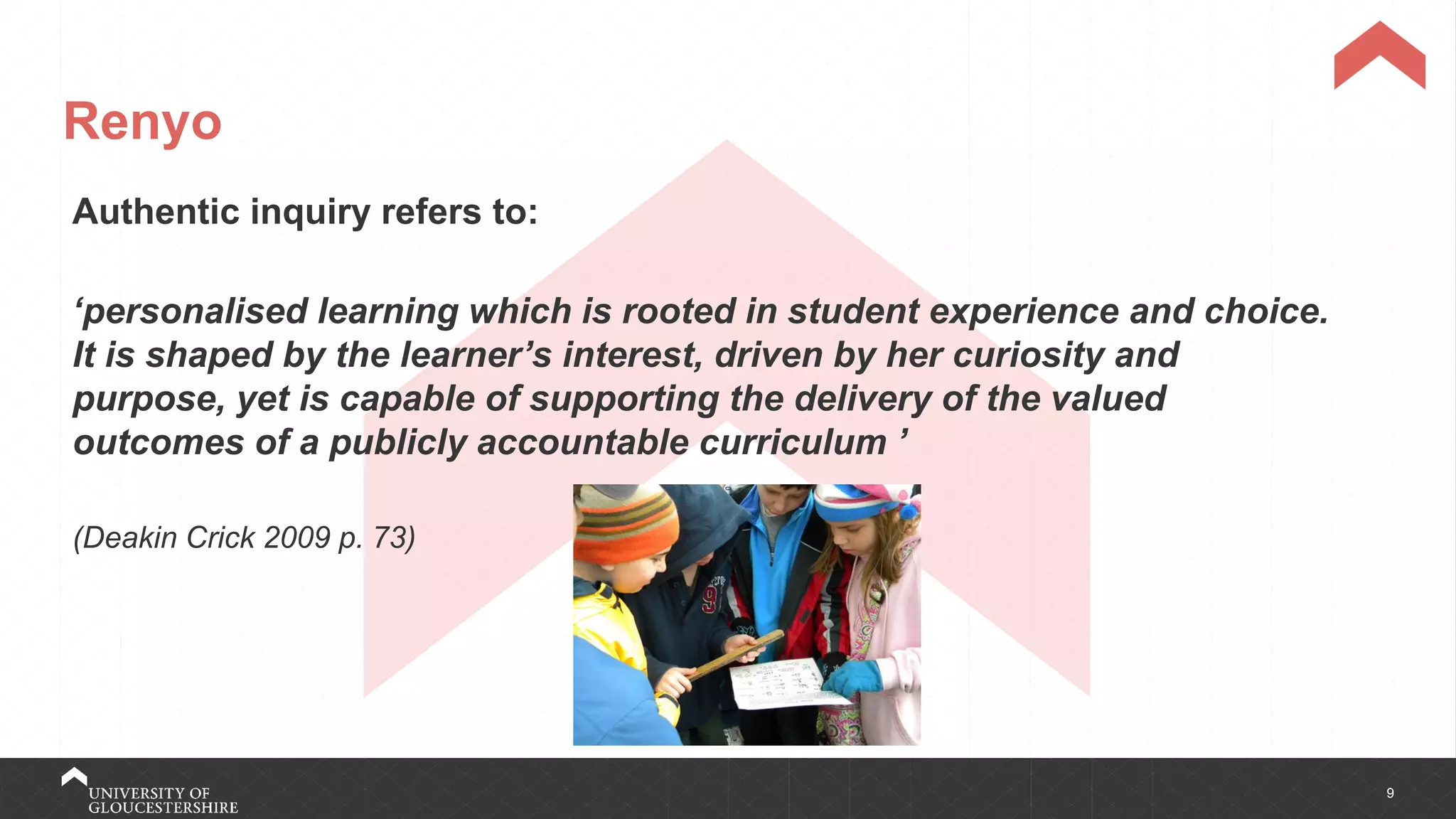
Authentic inquiry refers to:
‘personalised learning which is rooted in student experience and choice.
It is shaped by the learner’s interest, driven by her curiosity and
purpose, yet is capable of supporting the delivery of the valued
outcomes of a publicly accountable curriculum ’
(Deakin Crick 2009 p. 73)
10
Renyo
Authentic Inquiry:
Also described as ‘archaeological’ in its inquiry
11
Renyo
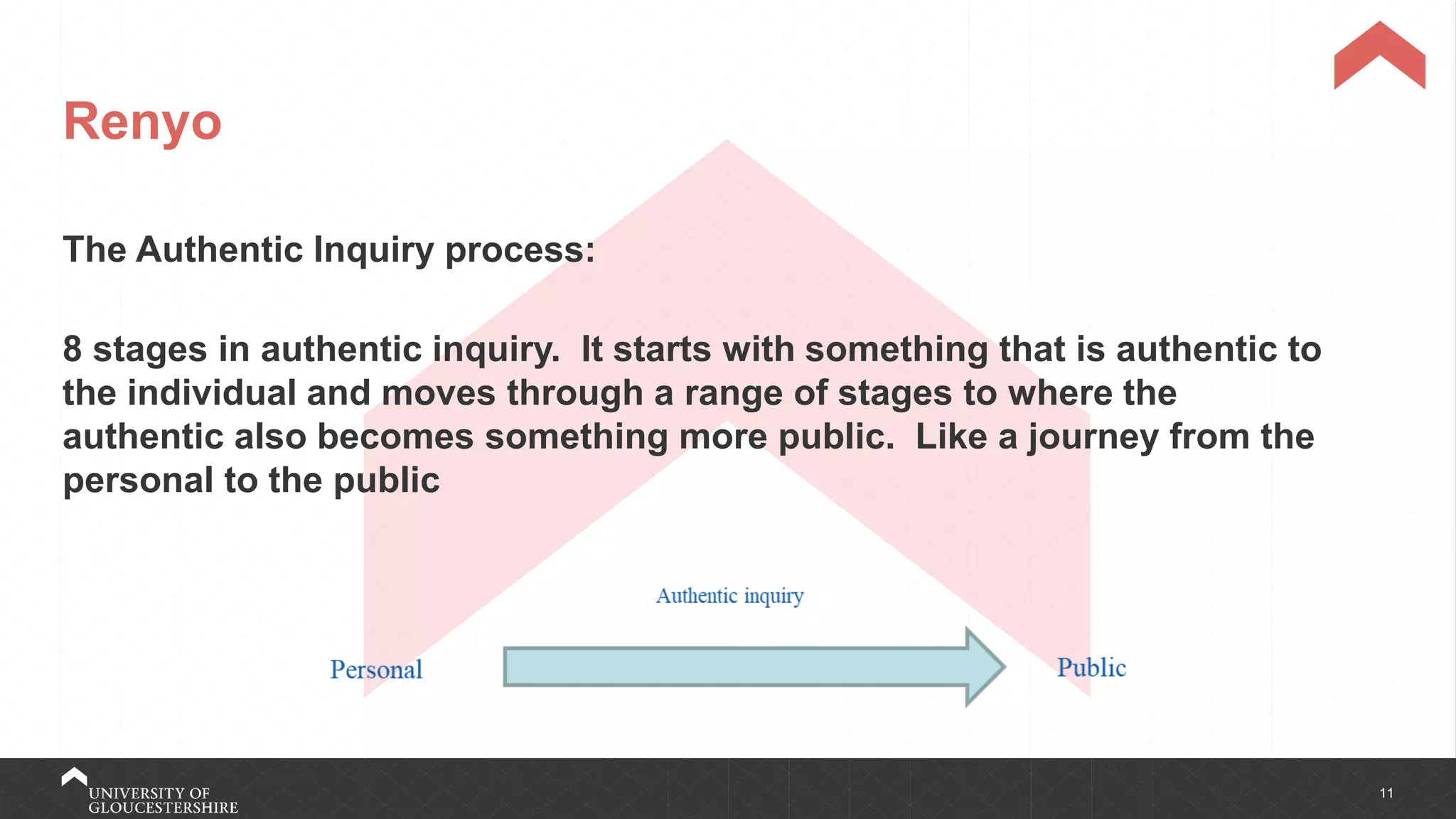
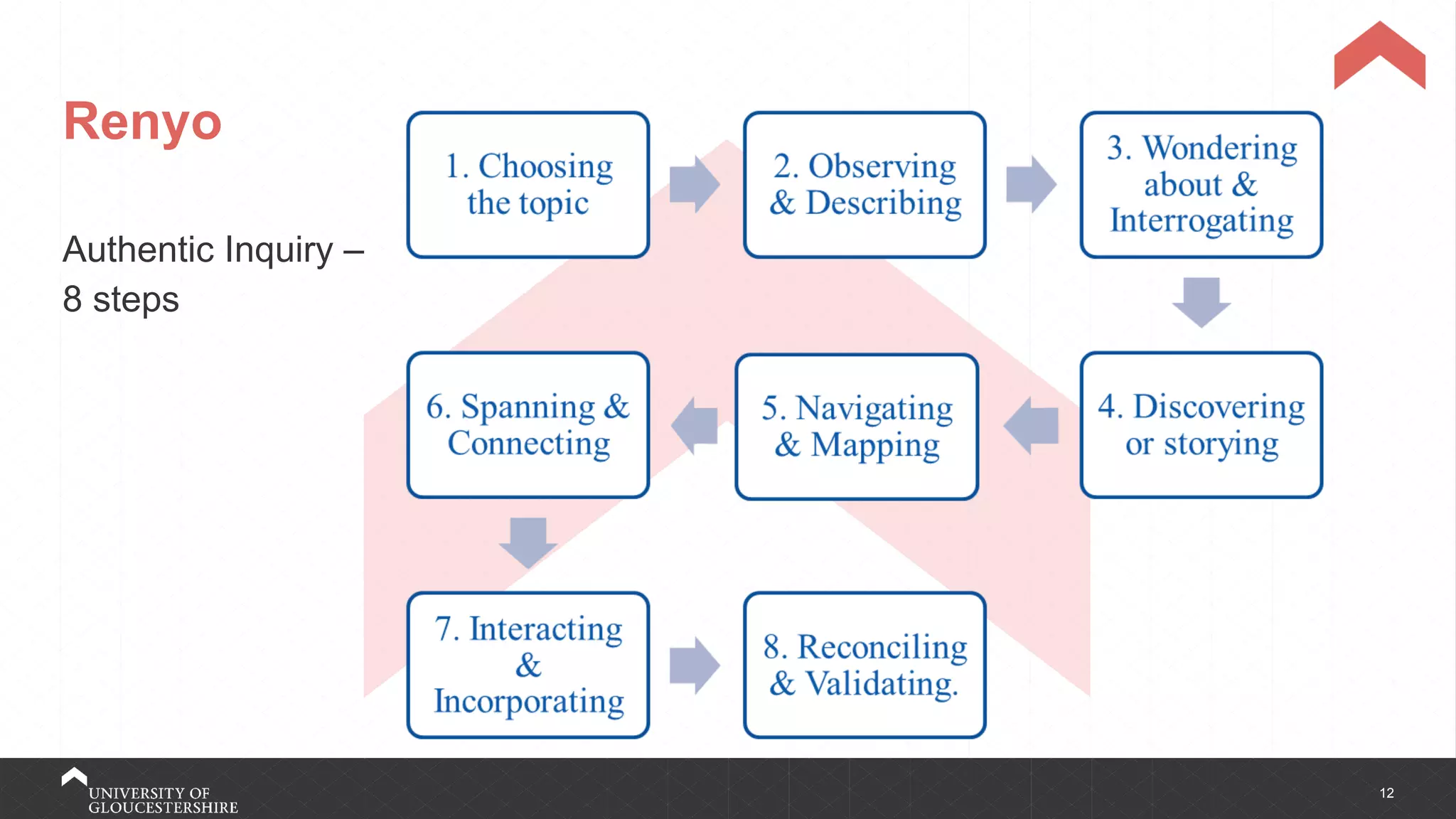
The Authentic Inquiry process:
8 stages in authentic inquiry. It starts with something that is authentic to
the individual and moves through a range of stages to where the
authentic also becomes something more public. Like a journey from the
personal to the public
12
Renyo
Authentic Inquiry –
8 steps
13
Renyo
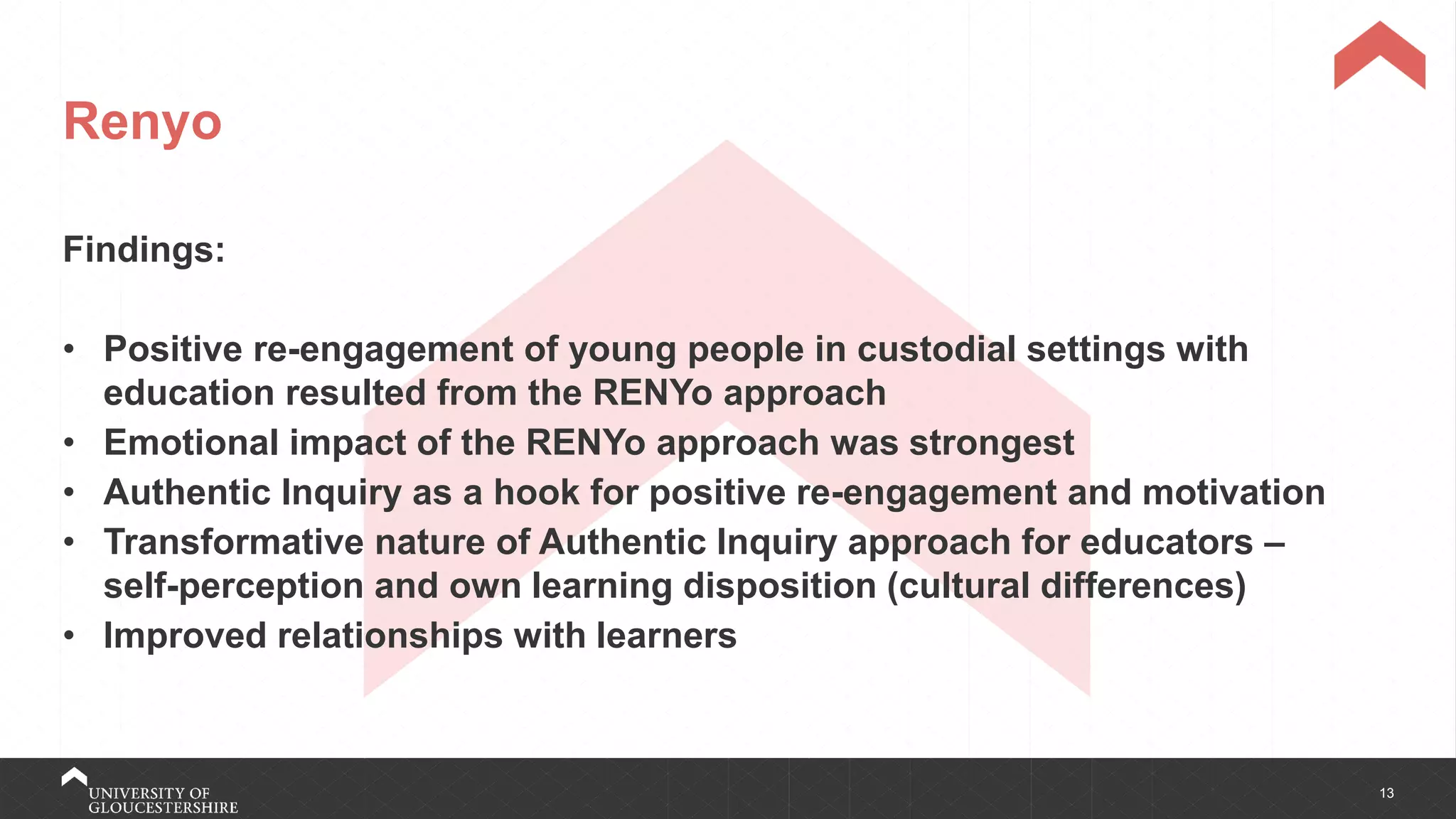
Findings:
• Positive re-engagement of young people in custodial settings with
education resulted from the RENYo approach
• Emotional impact of the RENYo approach was strongest
• Authentic Inquiry as a hook for positive re-engagement and motivation
• Transformative nature of Authentic Inquiry approach for educators –
self-perception and own learning disposition (cultural differences)
• Improved relationships with learners
14
Questions
15
References
Deakin Crick, R. (2009) ‘Inquiry-based learning: reconciling the personal with the public in a democratic and archaeological
pedagogy’, The Curriculum Journal, 20(1), pp.73-92.
Hughes, N., Williams, P., Chitsabesan, P., Davies, R., and Mounce, L. (2012) Nobody made the connection; the prevalence of
neurodisability in young people who offend. London: Office for the Children’s Commissioner.
Lee, V.S., Greene, D.B., Odom, J., Schechter, E. and Slatta, R.W. (2004) ‘What is inquiry-guided learning?’, in Lee, V.S. (Ed.)
Teaching and learning through inquiry : a guidebook for institutions and instructors. Sterling, Va : Stylus Pub.
Little, R. (2015) ‘Putting education at the heart of custody? The views of children on education in a young offender institution’,
British Journal of Community Justice, 13(2), pp.27-46.

Using Authentic Inquiry as a Pedagogical Approach to Re-Engage and Motivate Learners.pdf

  • 1.
    1 Using Authentic Inquiryas a Pedagogical Approach to Re-Engage and Motivate Learners Tristan Middleton: University of Gloucestershire UK 32nd Pan-EU Conference on Digital Education 24th November 2022 24 November 2022
  • 2.
    2 Outline ➢ Background –young people in conflict with the law ➢ Re-engaging Young Offenders with Education & Learning (RENYO) ➢ Authentic Inquiry ➢ What we found
  • 3.
    3 The backgrounds ofyoung people who offend ▪ Educational attainment is low. ▪ School dropout is high with almost 9 out of 10 young offenders having dropped out of school for 6 months or more before being incarcerated (Little, 2015) ▪ Complex family and socioeconomic backgrounds ▪ High prevalence of special educational needs 23% compared with 2-3% in the general population of young people (Hughes, 2012). ▪ Young offenders described as disengaged from education and learning.
  • 4.
    4 Engagement and disengagement Engagementis multidimensional Cognitive Affective Behavioural Fredricks, Blumenfield and Paris (2004) Disengagement is distinct to engagement, requiring different strategies to those who are experiencing ‘low engagement’ (Skinner et al 2008, Jang et al, 2017) The nature of disengagement in young offenders is distinct. The same person could oscillate between active and passive disengagement (ahmed Shafi 2018)
  • 5.
  • 6.
    6 Renyo Authentic Inquiry –Explores learning in a wholistic way: - why do you believe this ? - what logic leads to this conclusion ? - what facts and data do you have ? - what examples or past experience exists ?
  • 7.
    7 Renyo Inquiry-guided learning: Inquiry-guided learningrefers to an array of classroom practices that promote student learning through guided and, increasingly, independent investigation of complex questions and problems, often for which there is no single answer. (Lee et al., 2004)
  • 8.
    8 Renyo The pedagogy underpinningAuthentic Inquiry: • Learner empowerment • Self perception • Validation • Creativity • A prompt for educator reflection……
  • 9.
    9 Renyo Authentic inquiry refersto: ‘personalised learning which is rooted in student experience and choice. It is shaped by the learner’s interest, driven by her curiosity and purpose, yet is capable of supporting the delivery of the valued outcomes of a publicly accountable curriculum ’ (Deakin Crick 2009 p. 73)
  • 10.
    10 Renyo Authentic Inquiry: Also describedas ‘archaeological’ in its inquiry
  • 11.
    11 Renyo The Authentic Inquiryprocess: 8 stages in authentic inquiry. It starts with something that is authentic to the individual and moves through a range of stages to where the authentic also becomes something more public. Like a journey from the personal to the public
  • 12.
  • 13.
    13 Renyo Findings: • Positive re-engagementof young people in custodial settings with education resulted from the RENYo approach • Emotional impact of the RENYo approach was strongest • Authentic Inquiry as a hook for positive re-engagement and motivation • Transformative nature of Authentic Inquiry approach for educators – self-perception and own learning disposition (cultural differences) • Improved relationships with learners
  • 14.
  • 15.
    15 References Deakin Crick, R.(2009) ‘Inquiry-based learning: reconciling the personal with the public in a democratic and archaeological pedagogy’, The Curriculum Journal, 20(1), pp.73-92. Hughes, N., Williams, P., Chitsabesan, P., Davies, R., and Mounce, L. (2012) Nobody made the connection; the prevalence of neurodisability in young people who offend. London: Office for the Children’s Commissioner. Lee, V.S., Greene, D.B., Odom, J., Schechter, E. and Slatta, R.W. (2004) ‘What is inquiry-guided learning?’, in Lee, V.S. (Ed.) Teaching and learning through inquiry : a guidebook for institutions and instructors. Sterling, Va : Stylus Pub. Little, R. (2015) ‘Putting education at the heart of custody? The views of children on education in a young offender institution’, British Journal of Community Justice, 13(2), pp.27-46.