Stopping the Epidemic of
Prescription Opioid Abuse
National Prescription Drug Abuse Summit
Orlando, FL
April 2, 2013
Thomas R. Frieden, MD, MPH
Director
Centers for Disease Control and Prevention
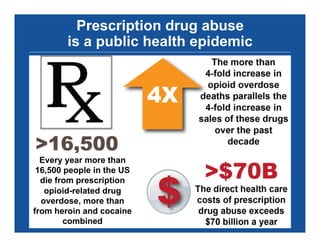
Prescription drug abuse
is a public health epidemic
Every year more than
16,500 people in the US
die from prescription
opioid-related drug
overdose, more than
from heroin and cocaine
combined
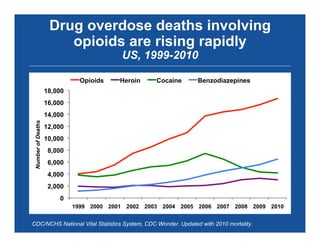
Drug overdose deaths involving
opioids are rising rapidly
US, 1999-2010
0
2,000
4,000
6,000
8,000
10,000
12,000
14,000
16,000
18,000
1999 2000 2001 2002 2003 2004 2005 2006 2007 2008 2009 2010
NumberofDeaths
Opioids Heroin Cocaine Benzodiazepines
CDC/NCHS National Vital Statistics System, CDC Wonder. Updated with 2010 mortality.
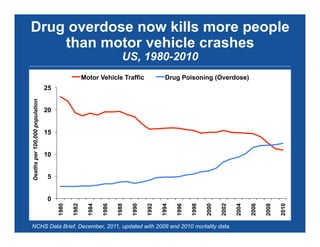
Drug overdose now kills more people
than motor vehicle crashes
US, 1980-2010
NCHS Data Brief, December, 2011, updated with 2009 and 2010 mortality data.
0
5
10
15
20
25
1980
1982
1984
1986
1988
1990
1992
1994
1996
1998
2000
2002
2004
2006
2008
2010
Deathsper100,000population
Motor Vehicle Traffic Drug Poisoning (Overdose)
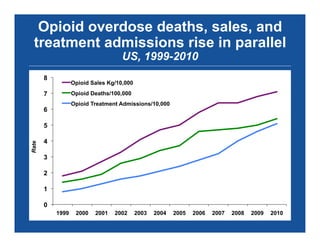
Opioid overdose deaths, sales, and
treatment admissions rise in parallel
US, 1999-2010
National Vital Statistics System, DEA’s Automation of Reports and Consolidated Orders System, SAMHSA’s TEDS
0
1
2
3
4
5
6
7
8
1999 2000 2001 2002 2003 2004 2005 2006 2007 2008 2009 2010
Rate
Opioid Sales KG/10,000
Opioid Deaths/100,000
Opioid Treatment Admissions/10,000
Opioid Sales Kg/10,000
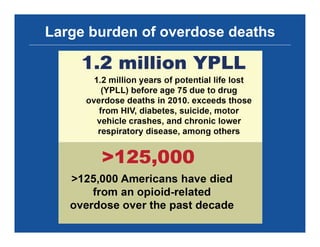
Large burden of overdose deaths
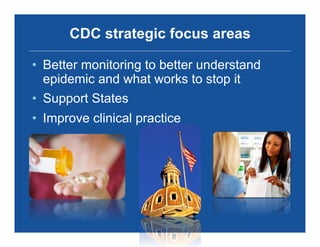
CDC strategic focus areas
•  Better monitoring to better understand
epidemic and what works to stop it
•  Support States
•  Improve clinical practice
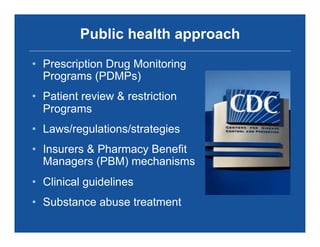
Public health approach
•  Prescription Drug Monitoring
Programs (PDMPs)
•  Patient review & restriction
Programs
•  Laws/regulations/strategies
•  Insurers & Pharmacy Benefit
Managers (PBM) mechanisms
•  Clinical guidelines
•  Substance abuse treatment
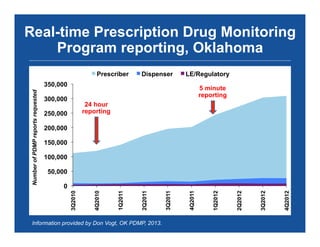
Real-time Prescription Drug Monitoring
Program reporting, Oklahoma
0
50,000
100,000
150,000
200,000
250,000
300,000
350,000
3Q2010
4Q2010
1Q2011
2Q2011
3Q2011
4Q2011
1Q2012
2Q2012
3Q2012
4Q2012
NumberofPDMPreportsrequested
Prescriber Dispenser LE/Regulatory
Information provided by Don Vogt, OK PDMP, 2013.
24 hour
reporting
5 minute
reporting
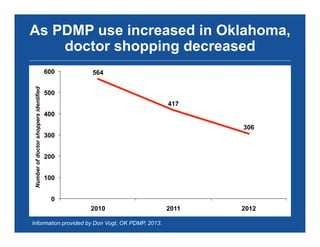
As PDMP use increased in Oklahoma,
doctor shopping decreased
564
417
306
0
100
200
300
400
500
600
2010 2011 2012
Numberofdoctorshoppersidentified
Information provided by Don Vogt, OK PDMP, 2013.
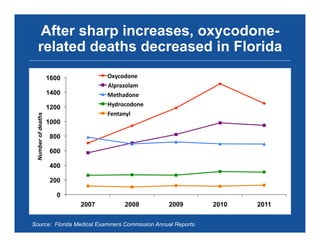
After sharp increases, oxycodone-
related deaths decreased in Florida
0
200
400
600
800
1000
1200
1400
1600
2007 2008 2009 2010 2011
Numberofdeaths
Oxycodone	
  
Alprazolam	
  
Methadone	
  
Hydrocodone	
  
Fentanyl	
  
Source: Florida Medical Examiners Commission Annual Reports.
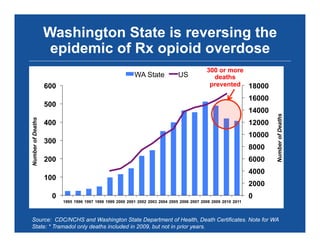
Washington State is reversing the
epidemic of Rx opioid overdose
0
2000
4000
6000
8000
10000
12000
14000
16000
18000
0
100
200
300
400
500
600
1995 1996 1997 1998 1999 2000 2001 2002 2003 2004 2005 2006 2007 2008 2009 2010 2011
NumberofDeaths
NumberofDeaths
WA State US
Source: CDC/NCHS and Washington State Department of Health, Death Certificates. Note for WA
State: * Tramadol only deaths included in 2009, but not in prior years.
300 or more
deaths
prevented
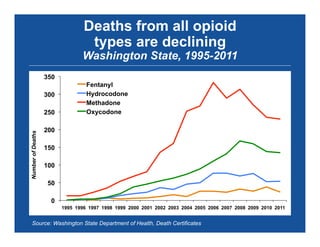
Deaths from all opioid
types are declining
Washington State, 1995-2011
0
50
100
150
200
250
300
350
1995 1996 1997 1998 1999 2000 2001 2002 2003 2004 2005 2006 2007 2008 2009 2010 2011
NumberofDeaths
Fentanyl
Hydrocodone
Methadone
Oxycodone
Source: Washington State Department of Health, Death Certificates
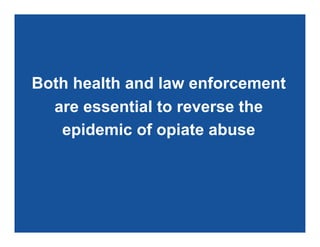
Both health and law enforcement
are essential to reverse the
epidemic of opiate abuse
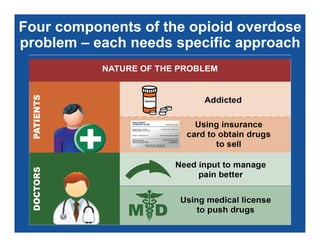
Four components of the opioid overdose
problem – each needs specific approach
Centers for Disease Control and Prevention
1600 Clifton Road NE, Atlanta, GA 30333
Phone: 1-800-CDC-INFO (232-4636)/TTY: 1-888-232-6348
E-mail: cdcinfo@cdc.gov Web: www.cdc.gov

Us response thomas_frieden

  • 1.
    Stopping the Epidemicof Prescription Opioid Abuse National Prescription Drug Abuse Summit Orlando, FL April 2, 2013 Thomas R. Frieden, MD, MPH Director Centers for Disease Control and Prevention
  • 2.
    Prescription drug abuse isa public health epidemic Every year more than 16,500 people in the US die from prescription opioid-related drug overdose, more than from heroin and cocaine combined
  • 3.
    Drug overdose deathsinvolving opioids are rising rapidly US, 1999-2010 0 2,000 4,000 6,000 8,000 10,000 12,000 14,000 16,000 18,000 1999 2000 2001 2002 2003 2004 2005 2006 2007 2008 2009 2010 NumberofDeaths Opioids Heroin Cocaine Benzodiazepines CDC/NCHS National Vital Statistics System, CDC Wonder. Updated with 2010 mortality.
  • 4.
    Drug overdose nowkills more people than motor vehicle crashes US, 1980-2010 NCHS Data Brief, December, 2011, updated with 2009 and 2010 mortality data. 0 5 10 15 20 25 1980 1982 1984 1986 1988 1990 1992 1994 1996 1998 2000 2002 2004 2006 2008 2010 Deathsper100,000population Motor Vehicle Traffic Drug Poisoning (Overdose)
  • 5.
    Opioid overdose deaths,sales, and treatment admissions rise in parallel US, 1999-2010 National Vital Statistics System, DEA’s Automation of Reports and Consolidated Orders System, SAMHSA’s TEDS 0 1 2 3 4 5 6 7 8 1999 2000 2001 2002 2003 2004 2005 2006 2007 2008 2009 2010 Rate Opioid Sales KG/10,000 Opioid Deaths/100,000 Opioid Treatment Admissions/10,000 Opioid Sales Kg/10,000
  • 6.
    Large burden ofoverdose deaths
  • 7.
    CDC strategic focusareas •  Better monitoring to better understand epidemic and what works to stop it •  Support States •  Improve clinical practice
  • 8.
    Public health approach • Prescription Drug Monitoring Programs (PDMPs) •  Patient review & restriction Programs •  Laws/regulations/strategies •  Insurers & Pharmacy Benefit Managers (PBM) mechanisms •  Clinical guidelines •  Substance abuse treatment
  • 9.
    Real-time Prescription DrugMonitoring Program reporting, Oklahoma 0 50,000 100,000 150,000 200,000 250,000 300,000 350,000 3Q2010 4Q2010 1Q2011 2Q2011 3Q2011 4Q2011 1Q2012 2Q2012 3Q2012 4Q2012 NumberofPDMPreportsrequested Prescriber Dispenser LE/Regulatory Information provided by Don Vogt, OK PDMP, 2013. 24 hour reporting 5 minute reporting
  • 10.
    As PDMP useincreased in Oklahoma, doctor shopping decreased 564 417 306 0 100 200 300 400 500 600 2010 2011 2012 Numberofdoctorshoppersidentified Information provided by Don Vogt, OK PDMP, 2013.
  • 11.
    After sharp increases,oxycodone- related deaths decreased in Florida 0 200 400 600 800 1000 1200 1400 1600 2007 2008 2009 2010 2011 Numberofdeaths Oxycodone   Alprazolam   Methadone   Hydrocodone   Fentanyl   Source: Florida Medical Examiners Commission Annual Reports.
  • 12.
    Washington State isreversing the epidemic of Rx opioid overdose 0 2000 4000 6000 8000 10000 12000 14000 16000 18000 0 100 200 300 400 500 600 1995 1996 1997 1998 1999 2000 2001 2002 2003 2004 2005 2006 2007 2008 2009 2010 2011 NumberofDeaths NumberofDeaths WA State US Source: CDC/NCHS and Washington State Department of Health, Death Certificates. Note for WA State: * Tramadol only deaths included in 2009, but not in prior years. 300 or more deaths prevented
  • 13.
    Deaths from allopioid types are declining Washington State, 1995-2011 0 50 100 150 200 250 300 350 1995 1996 1997 1998 1999 2000 2001 2002 2003 2004 2005 2006 2007 2008 2009 2010 2011 NumberofDeaths Fentanyl Hydrocodone Methadone Oxycodone Source: Washington State Department of Health, Death Certificates
  • 14.
    Both health andlaw enforcement are essential to reverse the epidemic of opiate abuse
  • 15.
    Four components ofthe opioid overdose problem – each needs specific approach
  • 16.
    Centers for DiseaseControl and Prevention 1600 Clifton Road NE, Atlanta, GA 30333 Phone: 1-800-CDC-INFO (232-4636)/TTY: 1-888-232-6348 E-mail: cdcinfo@cdc.gov Web: www.cdc.gov