Opioid Abuse:
How Innovation Can Save Lives
Ken Saffier, MD
Contra Costa Regional Medical Center and
Health Centers
November 2, 2013
AAFP 2013 State Legislative Conference
Disclosures
I have nothing to disclose.
Overview of this presentation
•
•
•
•
•

Introduction and learning objectives
The current opioid epidemic and access crisis
Buprenorphine “101” for the non-addictionist
Medically assisted therapy for drug addiction
Effective communication strategies – Group
visits and motivational interviewing
• Summary and conclusions
Learning Objectives
By the end of this presentation, participants will be
able to:

1. Explain how buprenorphine, a partial opioid
agonist, works and can save lives.
2. Witness and experience the power of patients’
first person perspectives to promote education
and treatment for other patients and
professionals.
3. Define motivational interviewing and explain
why it is particularly well-suited to helping
people with opioid addiction.
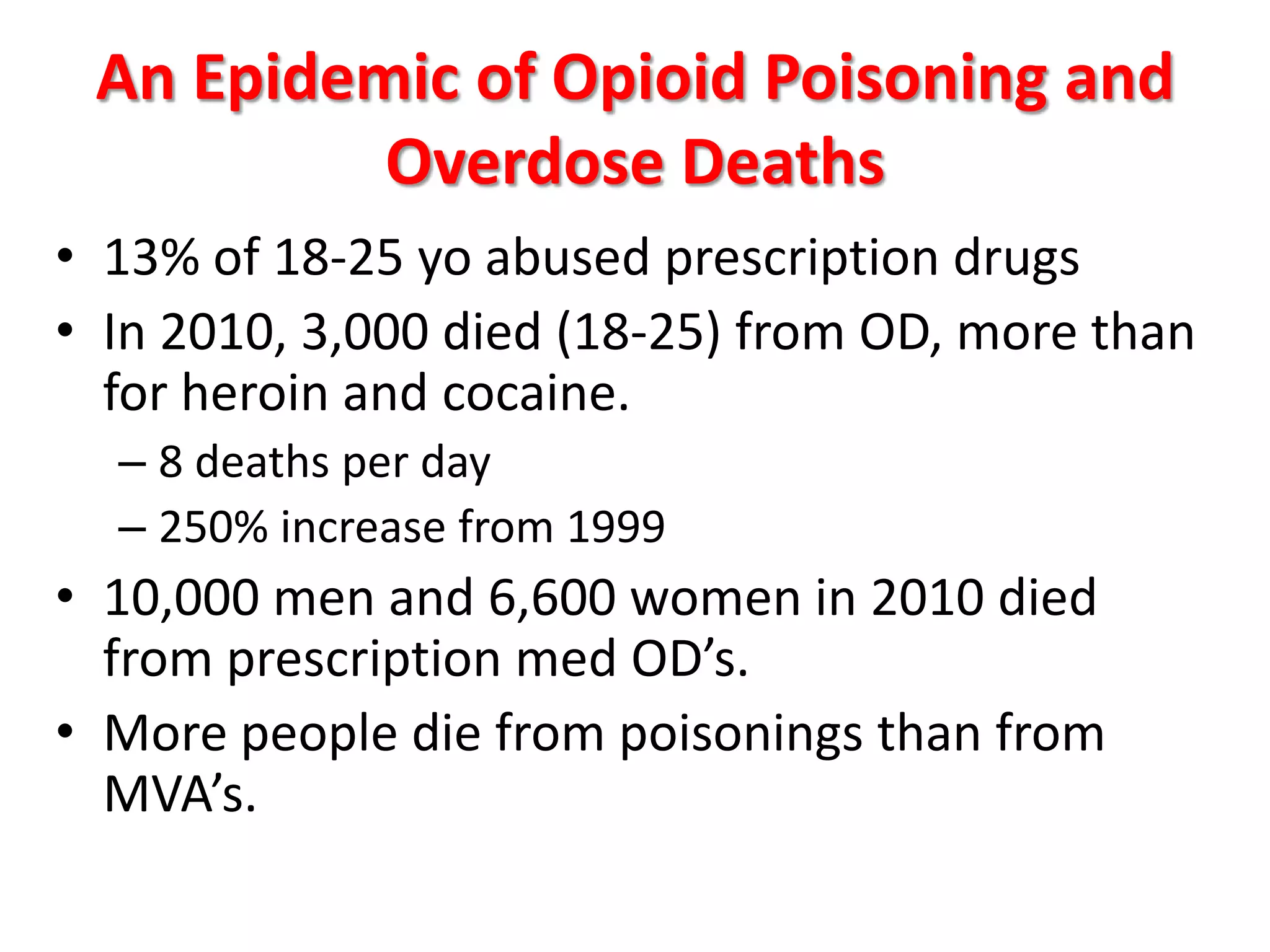
An Epidemic of Opioid Poisoning and
Overdose Deaths
• 13% of 18-25 yo abused prescription drugs
• In 2010, 3,000 died (18-25) from OD, more than
for heroin and cocaine.
– 8 deaths per day
– 250% increase from 1999

• 10,000 men and 6,600 women in 2010 died
from prescription med OD’s.
• More people die from poisonings than from
MVA’s.
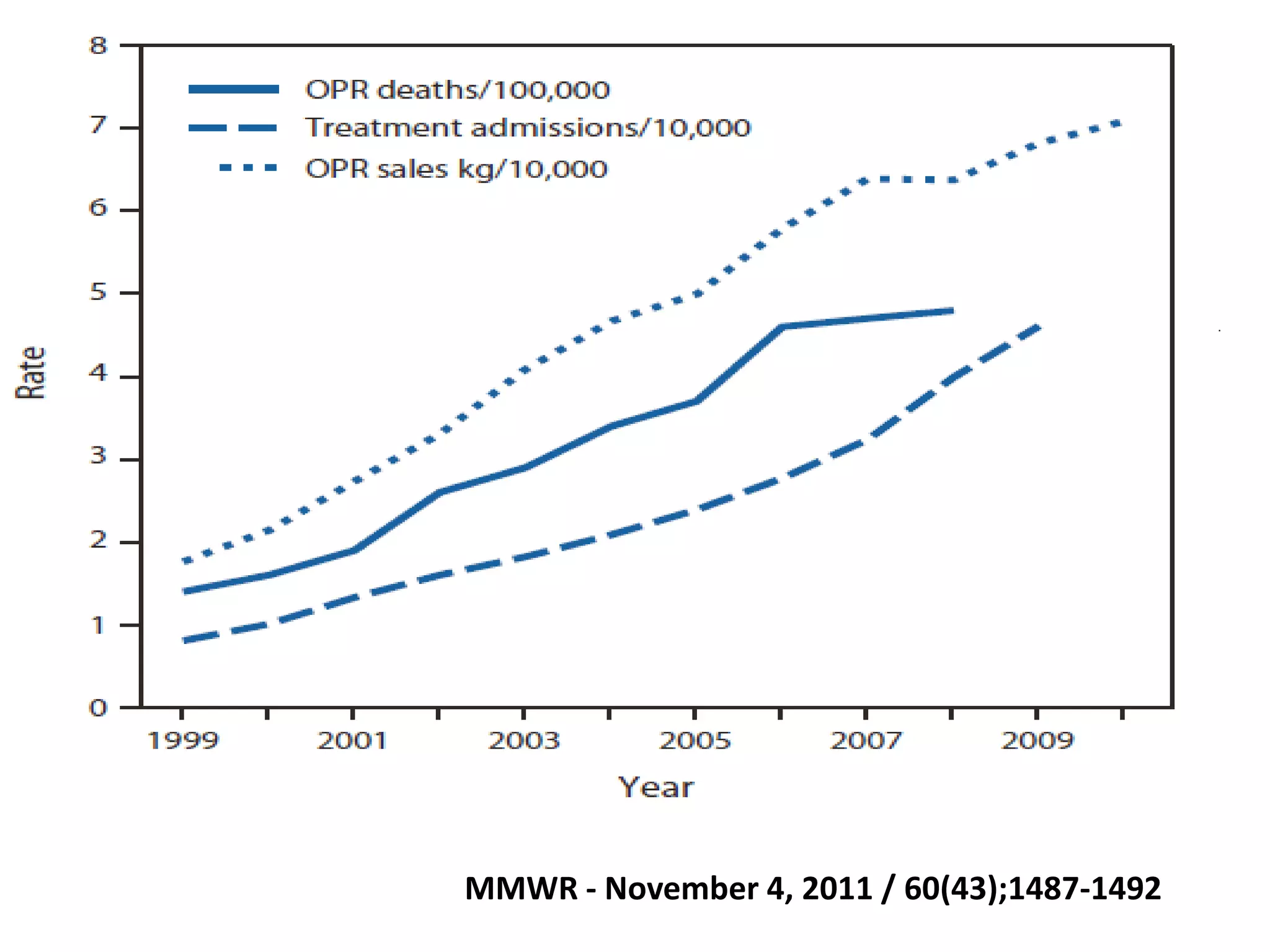
* Age-adjusted rates per 100,000 population for OPR deaths, crude rates per 10,000 population for OPR abuse treatment admissions, and crude rates per 10,000 population for kilograms sold.

MMWR - November 4, 2011 / 60(43);1487-1492
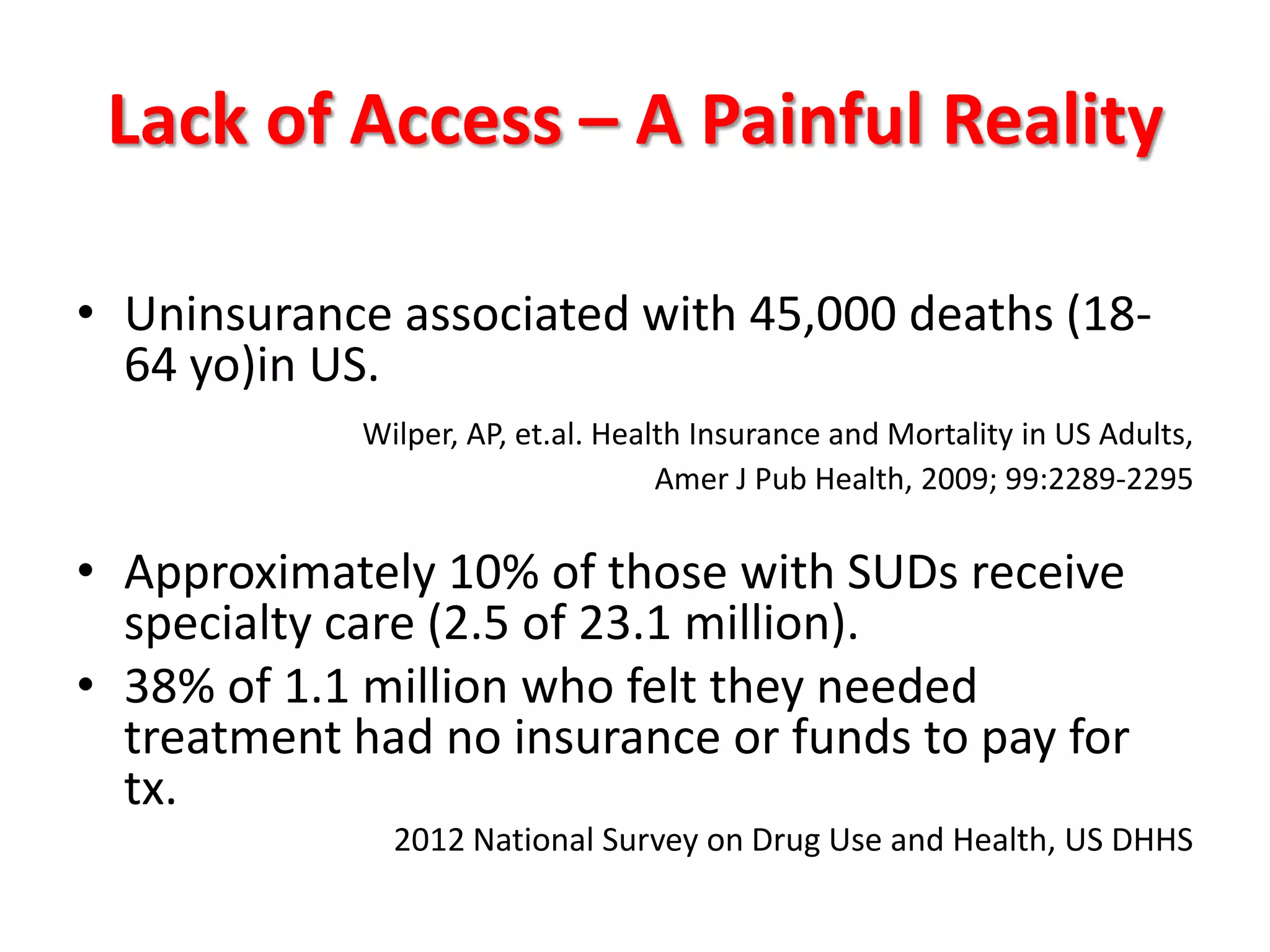
Lack of Access – A Painful Reality
• Uninsurance associated with 45,000 deaths (1864 yo)in US.
Wilper, AP, et.al. Health Insurance and Mortality in US Adults,
Amer J Pub Health, 2009; 99:2289-2295

• Approximately 10% of those with SUDs receive
specialty care (2.5 of 23.1 million).
• 38% of 1.1 million who felt they needed
treatment had no insurance or funds to pay for
tx.
2012 National Survey on Drug Use and Health, US DHHS
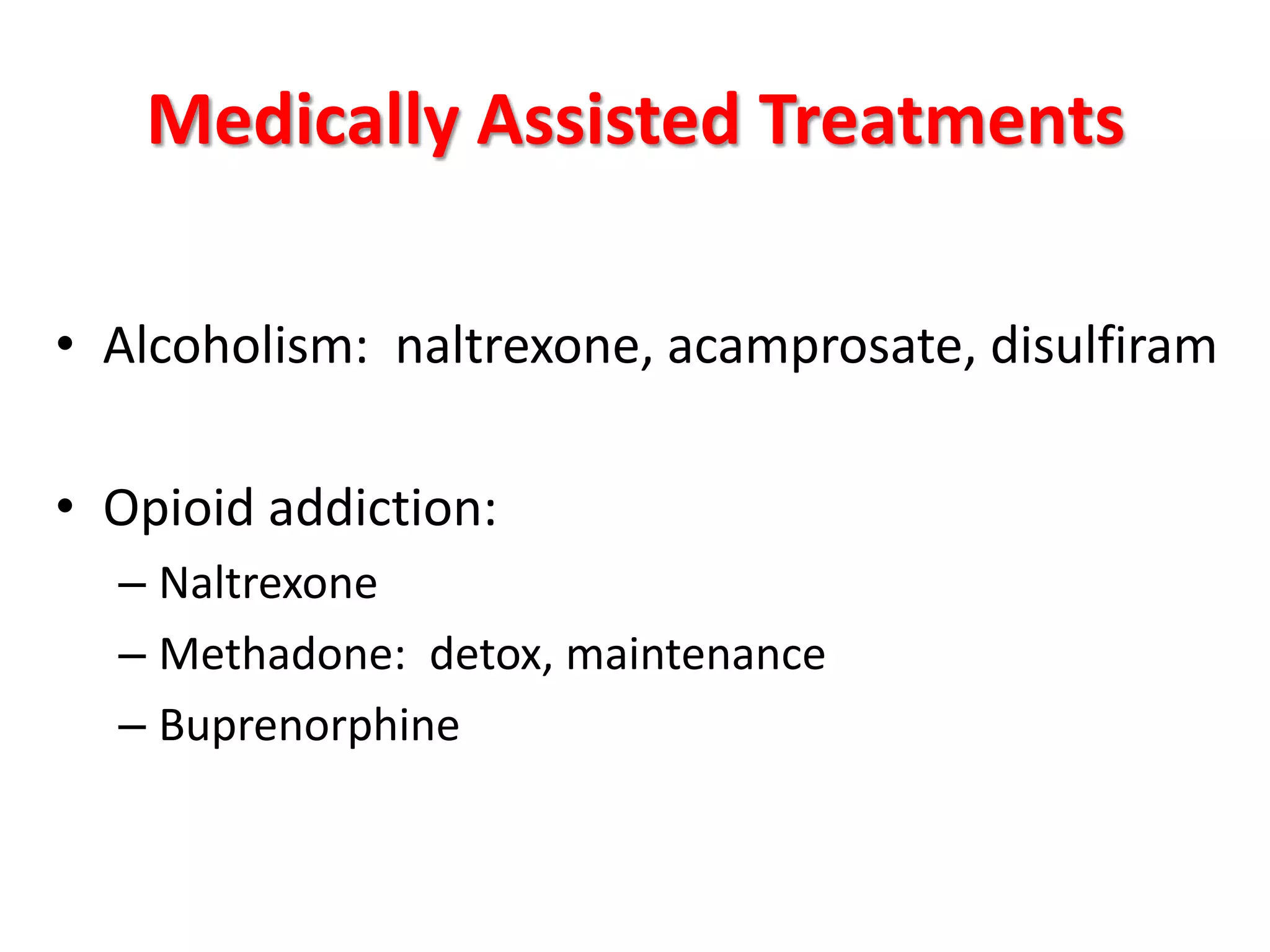
Medically Assisted Treatments
• Alcoholism: naltrexone, acamprosate, disulfiram
• Opioid addiction:
– Naltrexone
– Methadone: detox, maintenance
– Buprenorphine
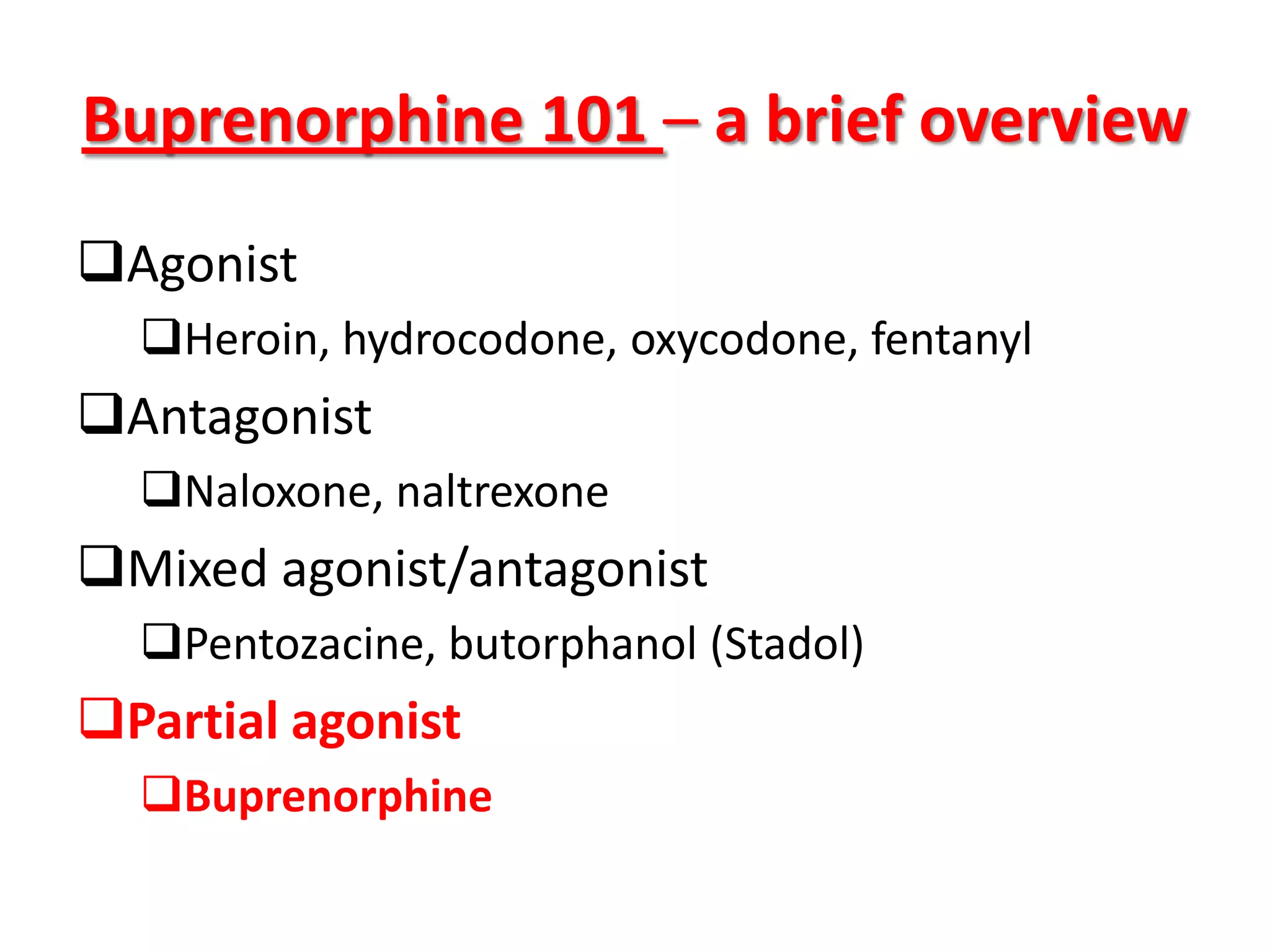
Buprenorphine 101 – a brief overview
Agonist
Heroin, hydrocodone, oxycodone, fentanyl

Antagonist
Naloxone, naltrexone

Mixed agonist/antagonist
Pentozacine, butorphanol (Stadol)

Partial agonist
Buprenorphine
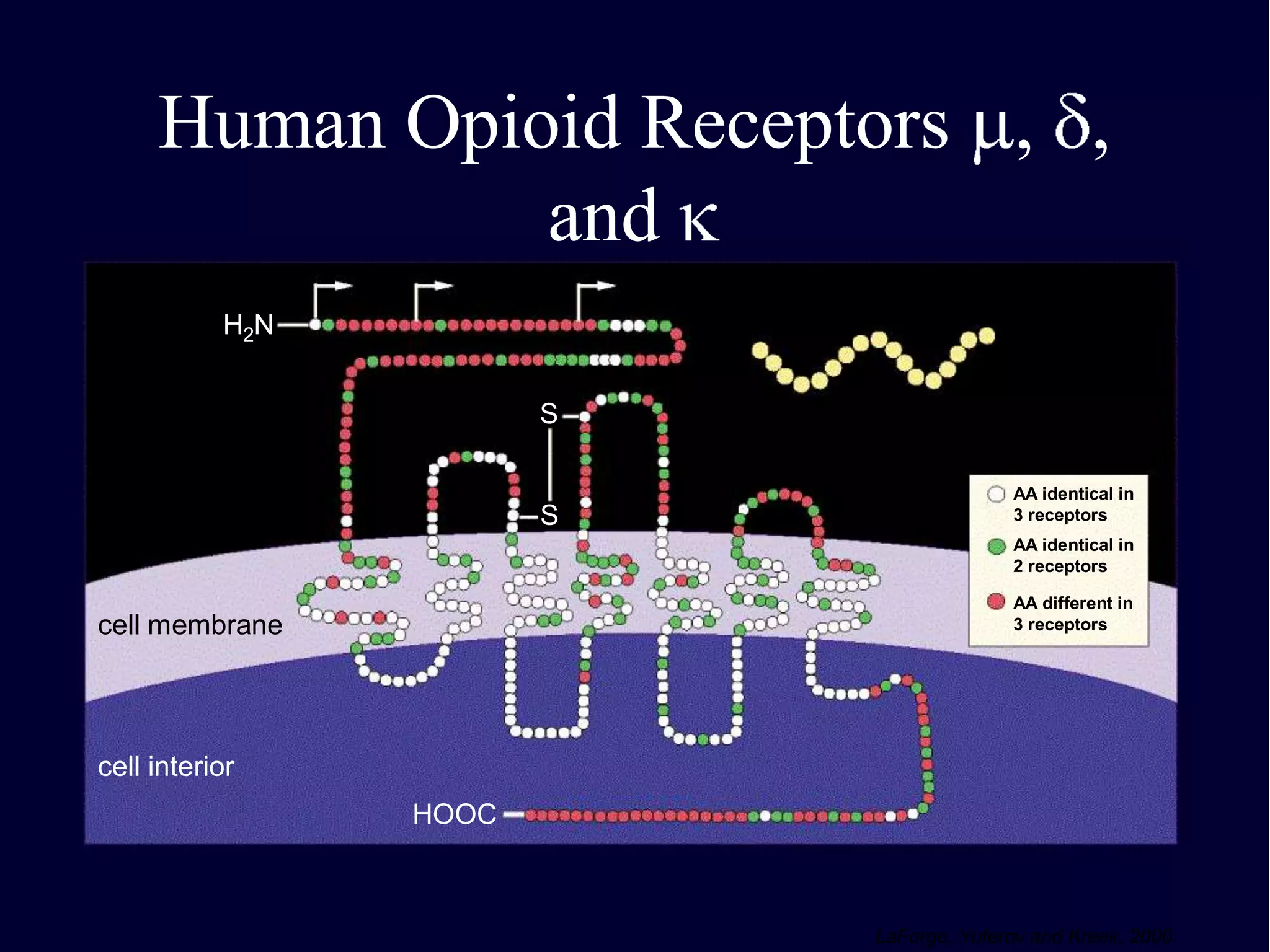
Human Opioid Receptors , ,
and
H2N
extracellular fluid

S

S

AA identical in
3 receptors
AA identical in
2 receptors
AA different in
3 receptors

cell membrane

cell interior
HOOC

LaForge, Yuferov and Kreek, 2000
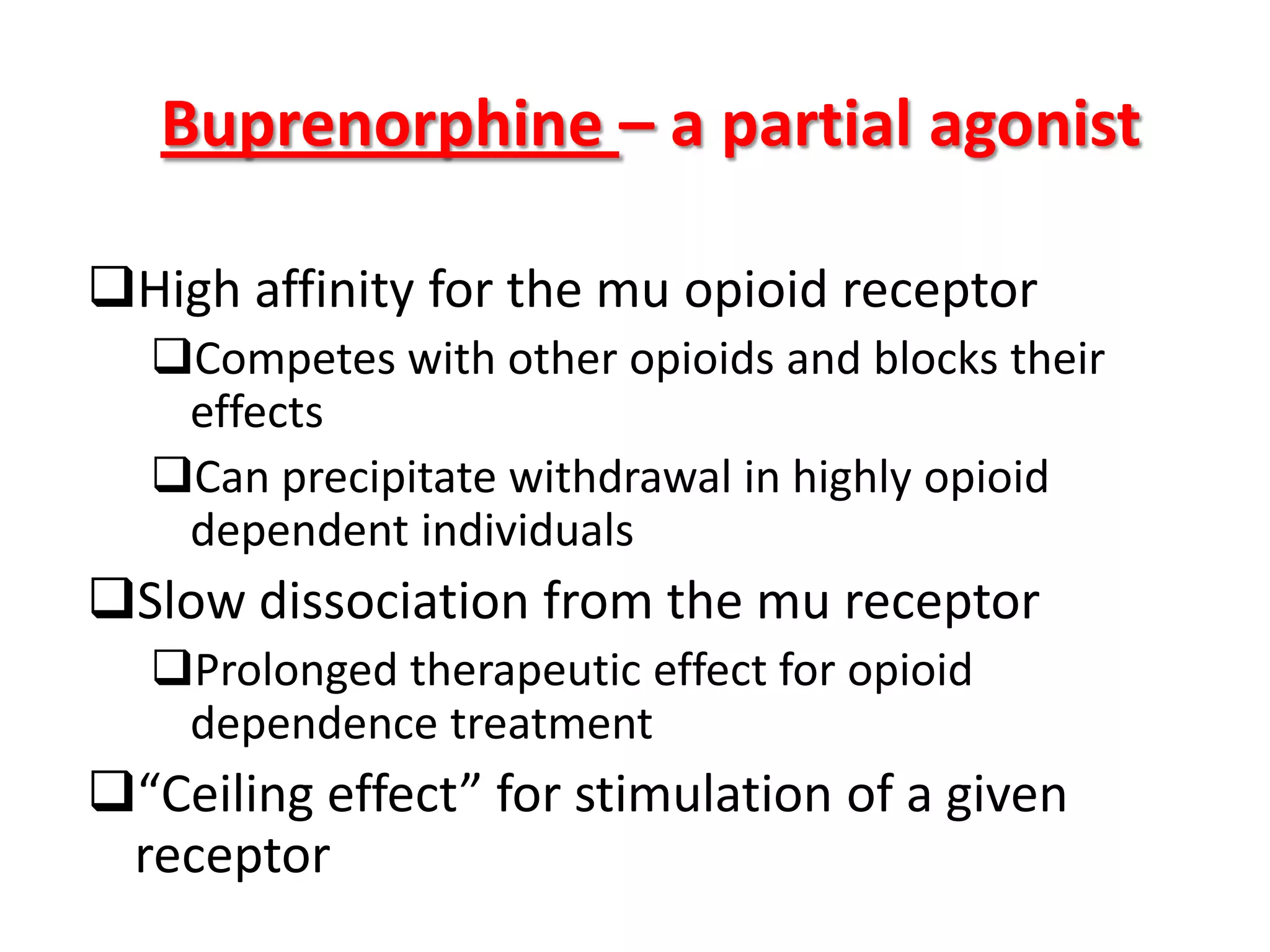
Buprenorphine – a partial agonist
High affinity for the mu opioid receptor
Competes with other opioids and blocks their
effects
Can precipitate withdrawal in highly opioid
dependent individuals

Slow dissociation from the mu receptor
Prolonged therapeutic effect for opioid
dependence treatment

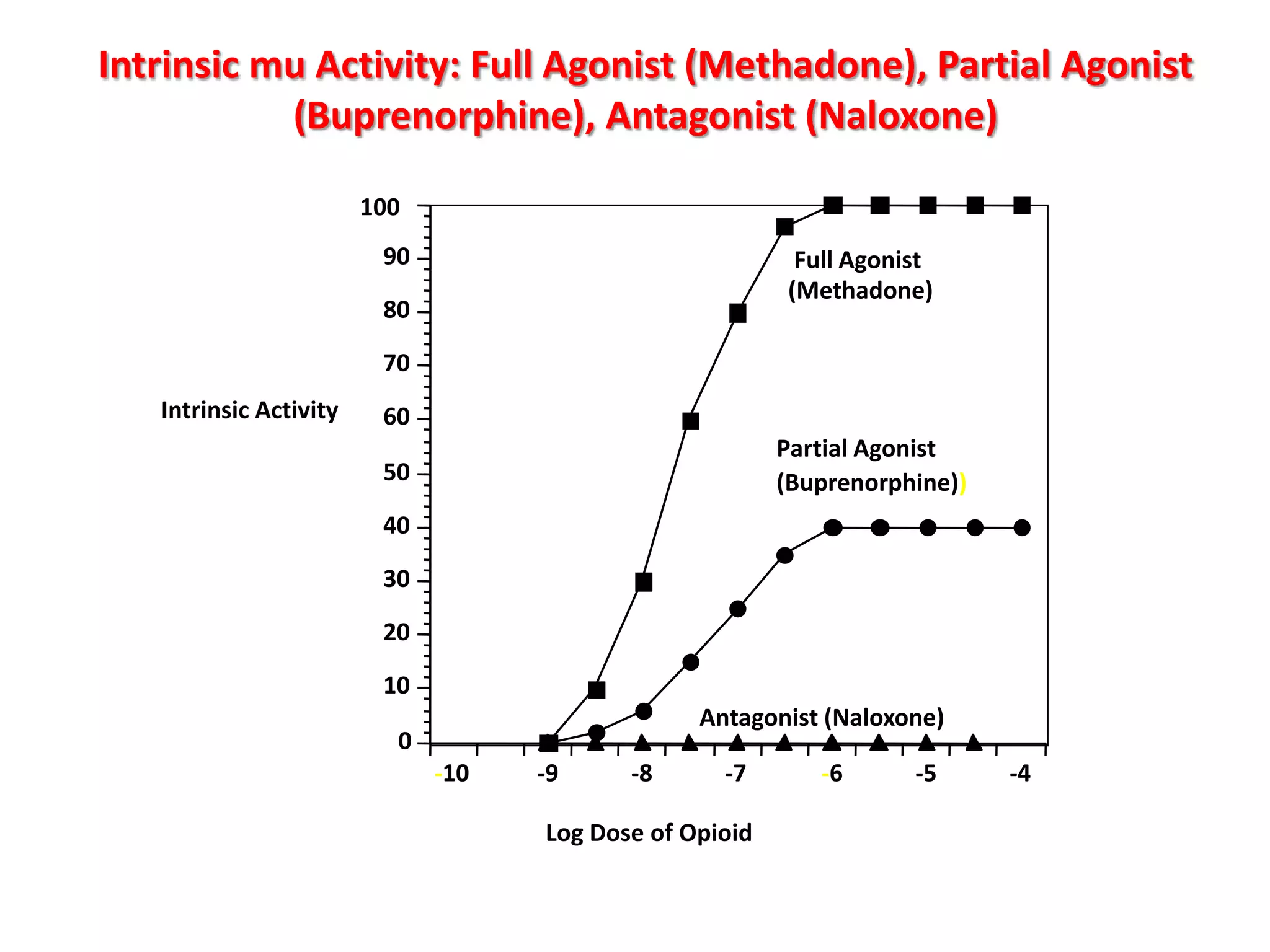
“Ceiling effect” for stimulation of a given
receptor
Intrinsic mu Activity: Full Agonist (Methadone), Partial Agonist
(Buprenorphine), Antagonist (Naloxone)
100
90

Full Agonist
(Methadone)

80
70
Intrinsic Activity

60
Partial Agonist
(Buprenorphine))

50
40
30
20
10

Antagonist (Naloxone)

0
-10

-9

-8

-7

Log Dose of Opioid

-6

-5

-4
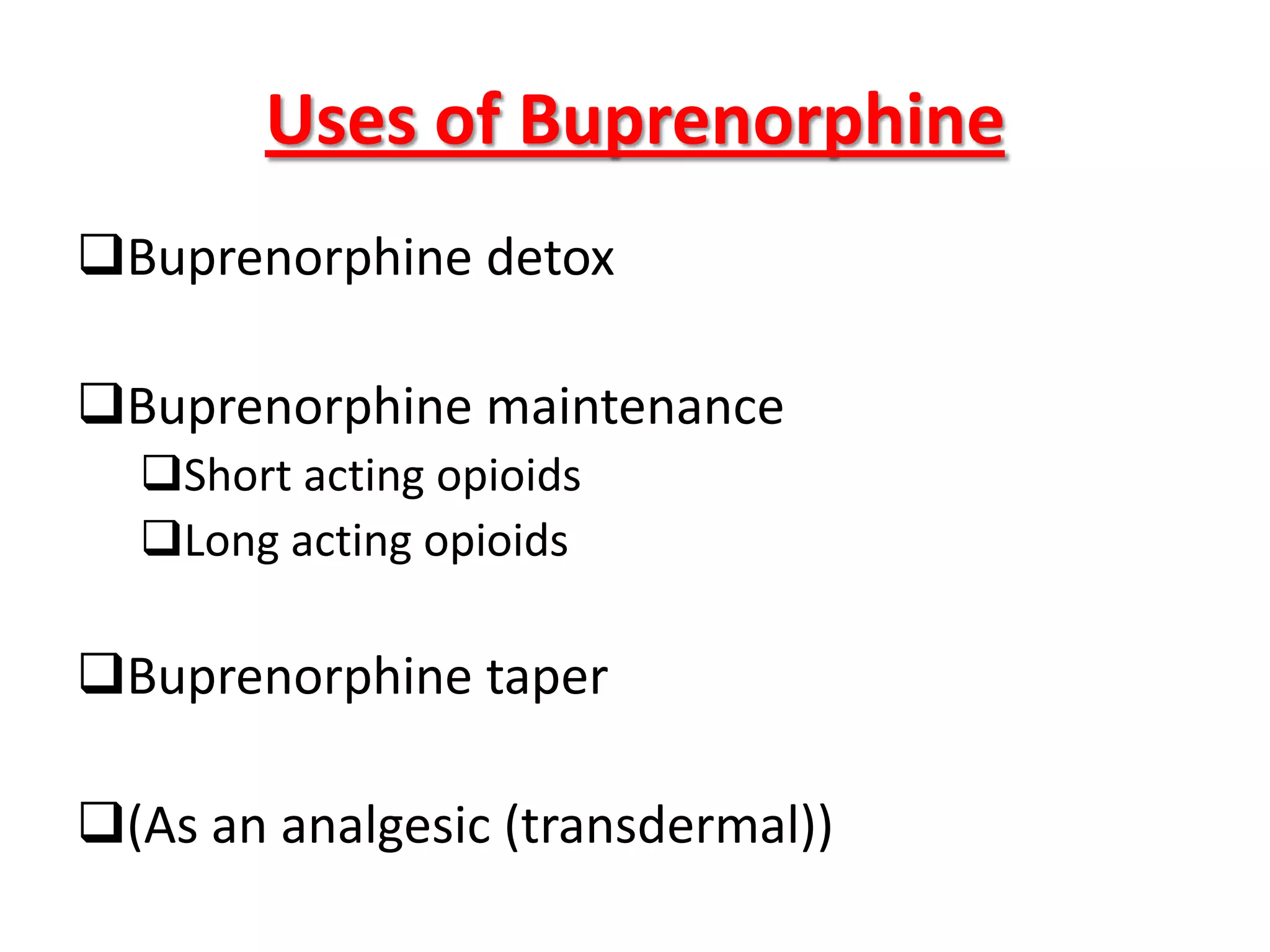
Uses of Buprenorphine
Buprenorphine detox
Buprenorphine maintenance
Short acting opioids
Long acting opioids

Buprenorphine taper
(As an analgesic (transdermal))
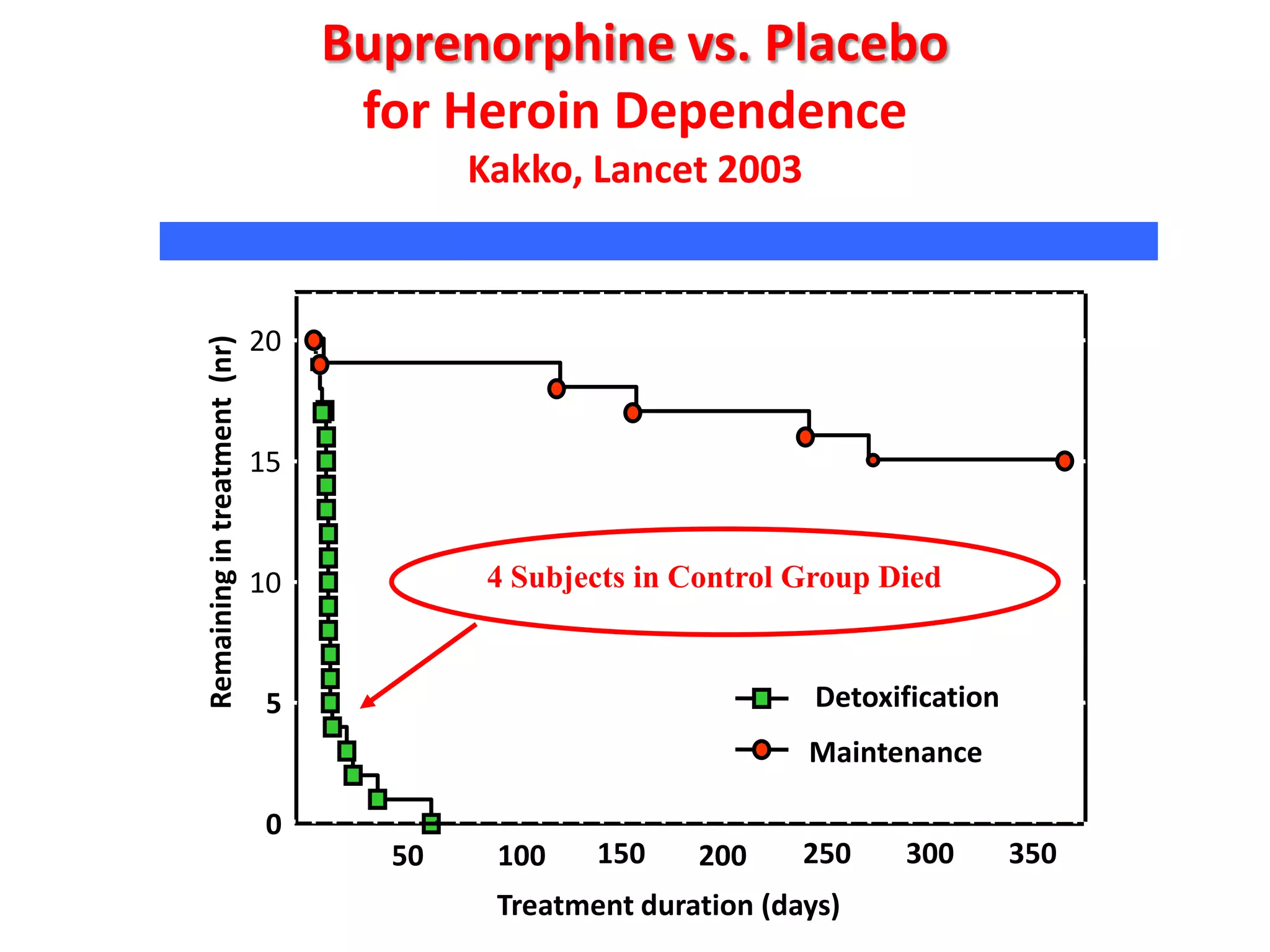
Buprenorphine vs. Placebo
for Heroin Dependence

Remaining in treatment (nr)

Kakko, Lancet 2003

20

15

4 Subjects in Control Group Died

10

Detoxification

5

Maintenance
0

0

50

100

150

200

250

Treatment duration (days)

300

350
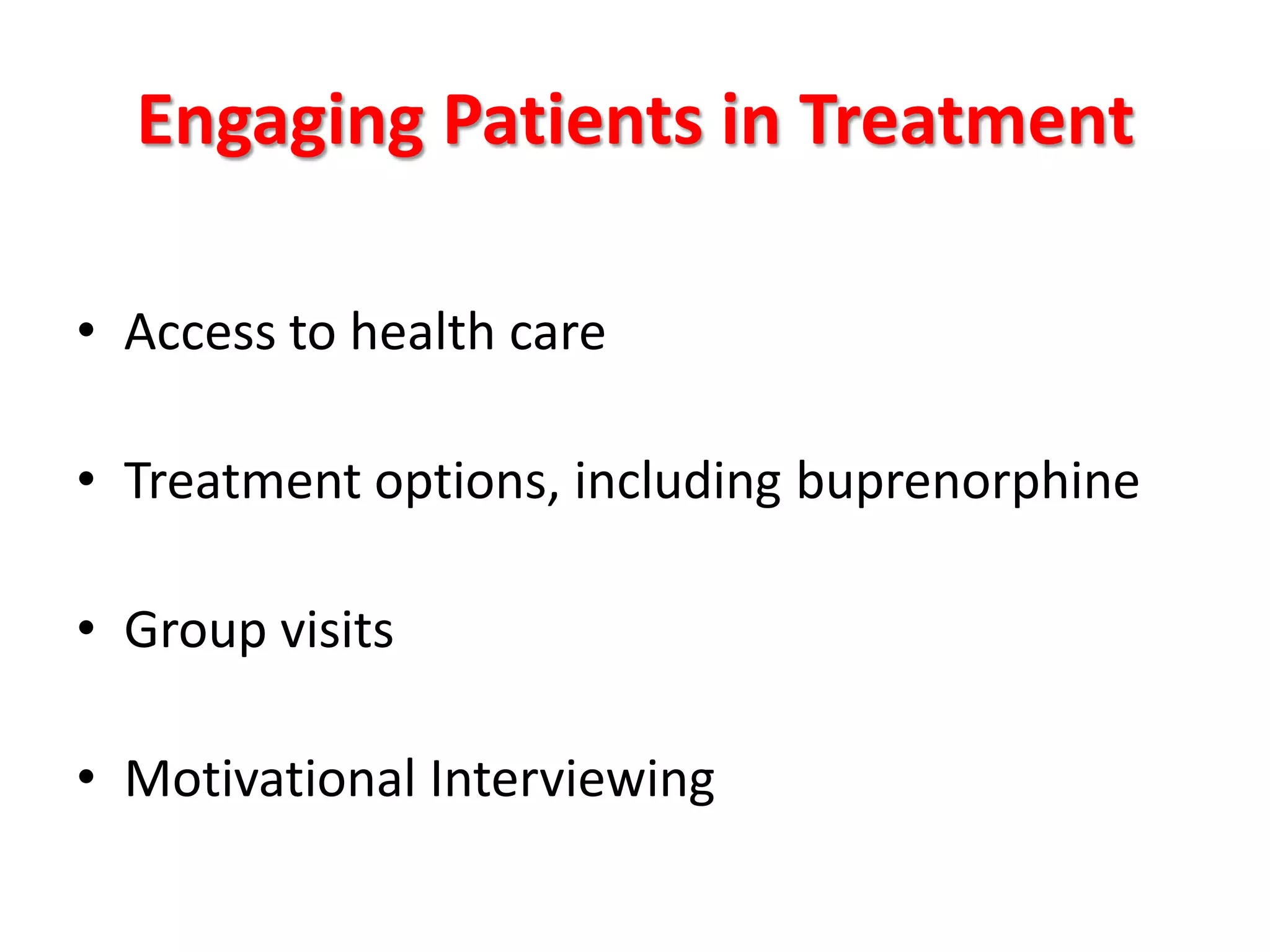
Engaging Patients in Treatment
• Access to health care
• Treatment options, including buprenorphine
• Group visits

• Motivational Interviewing
Buprenorphine Treatment Groups
•
•
•
•

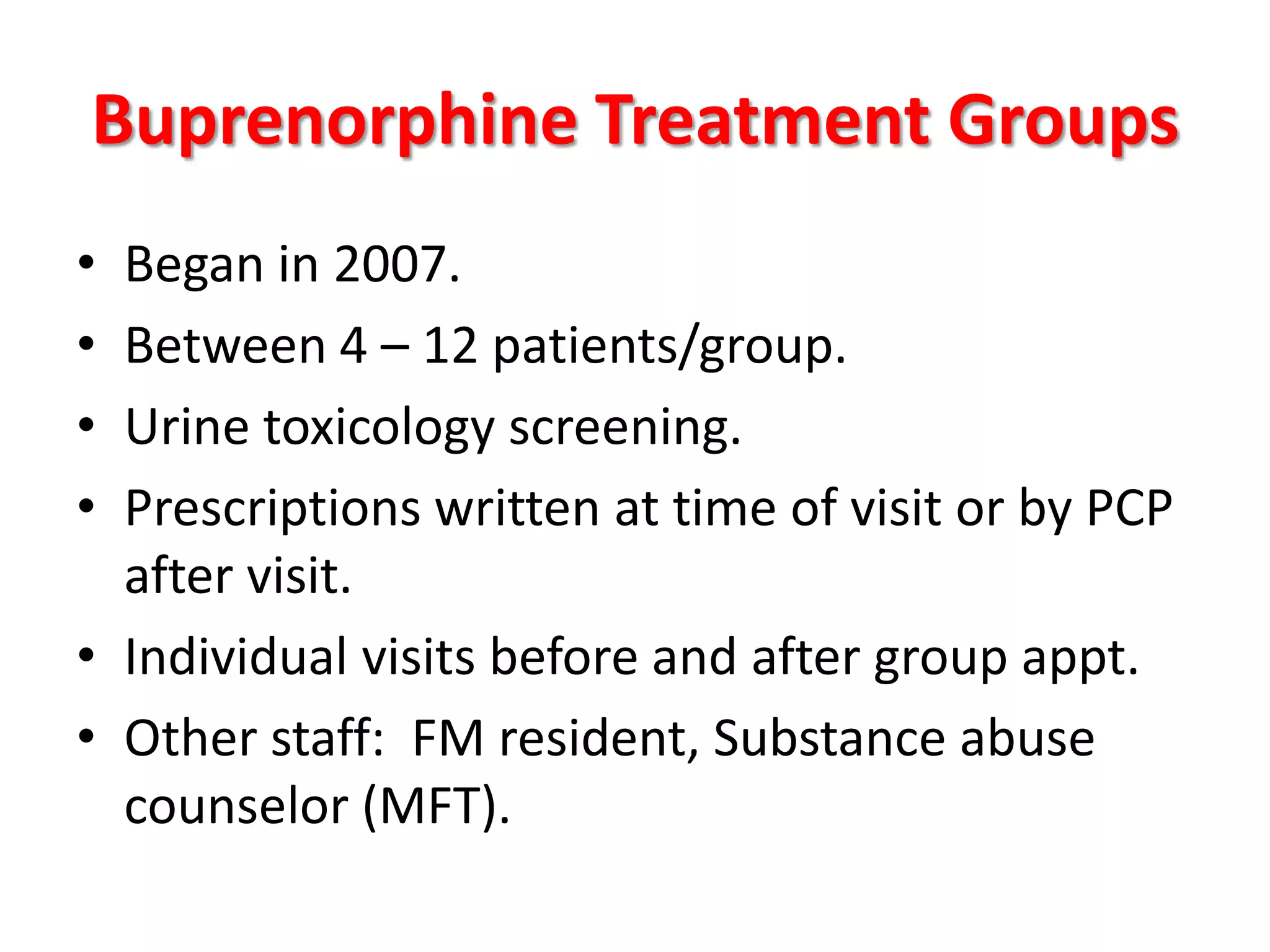
Began in 2007.
Between 4 – 12 patients/group.
Urine toxicology screening.
Prescriptions written at time of visit or by PCP
after visit.
• Individual visits before and after group appt.
• Other staff: FM resident, Substance abuse
counselor (MFT).
AVERAGE PTS/MO/YR

EST. PTS/GROUP

2007

12

3

<1 group/week

2008

21

5.25

1 group/week

2009

32

8.0

1 group/week

2010

48

6.0

2 groups/week

2011

76

6.3

3 groups/week

2012

101 (3 months)

6.3

4 groups/week
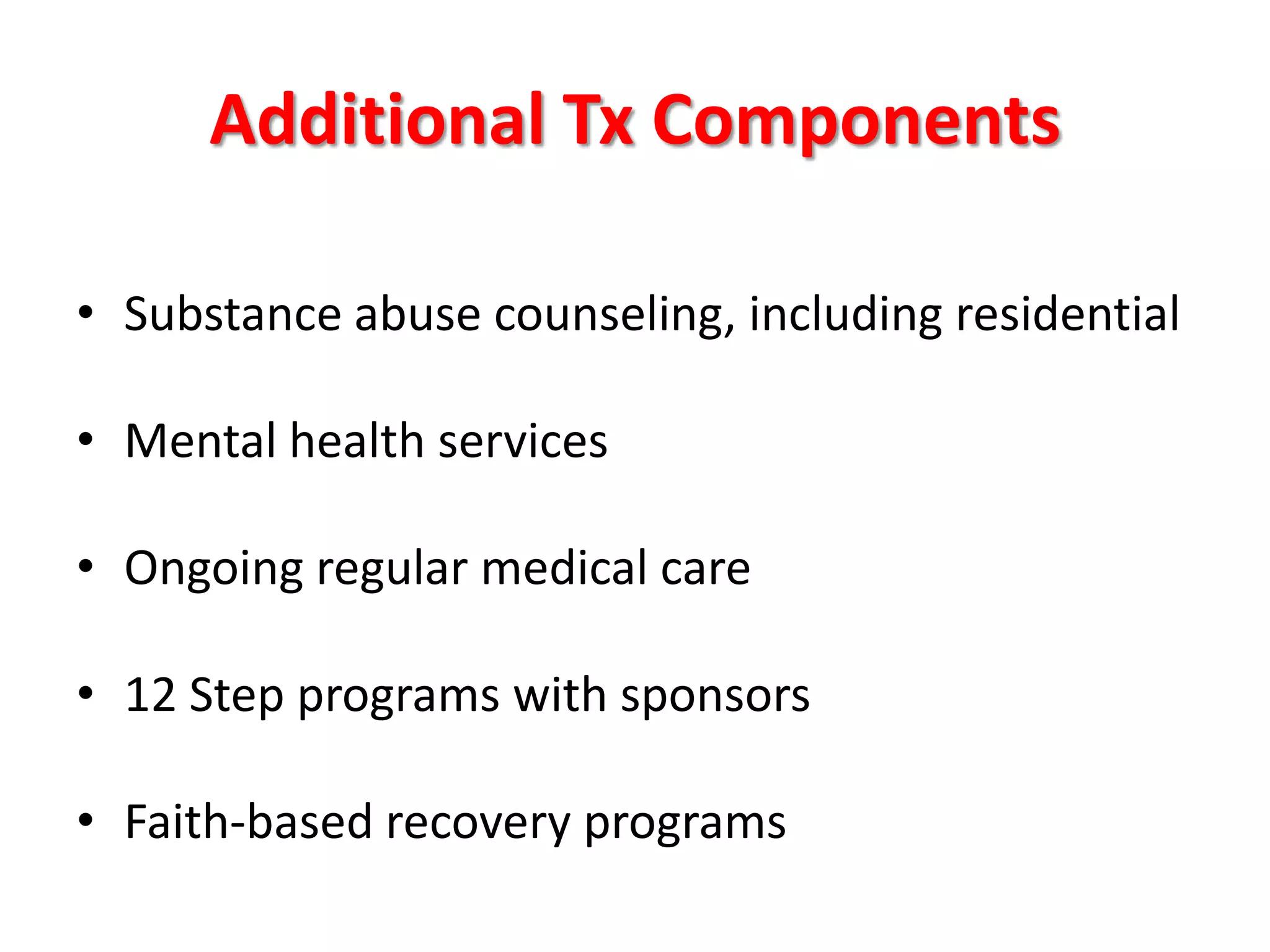
Additional Tx Components
• Substance abuse counseling, including residential
• Mental health services
• Ongoing regular medical care
• 12 Step programs with sponsors
• Faith-based recovery programs
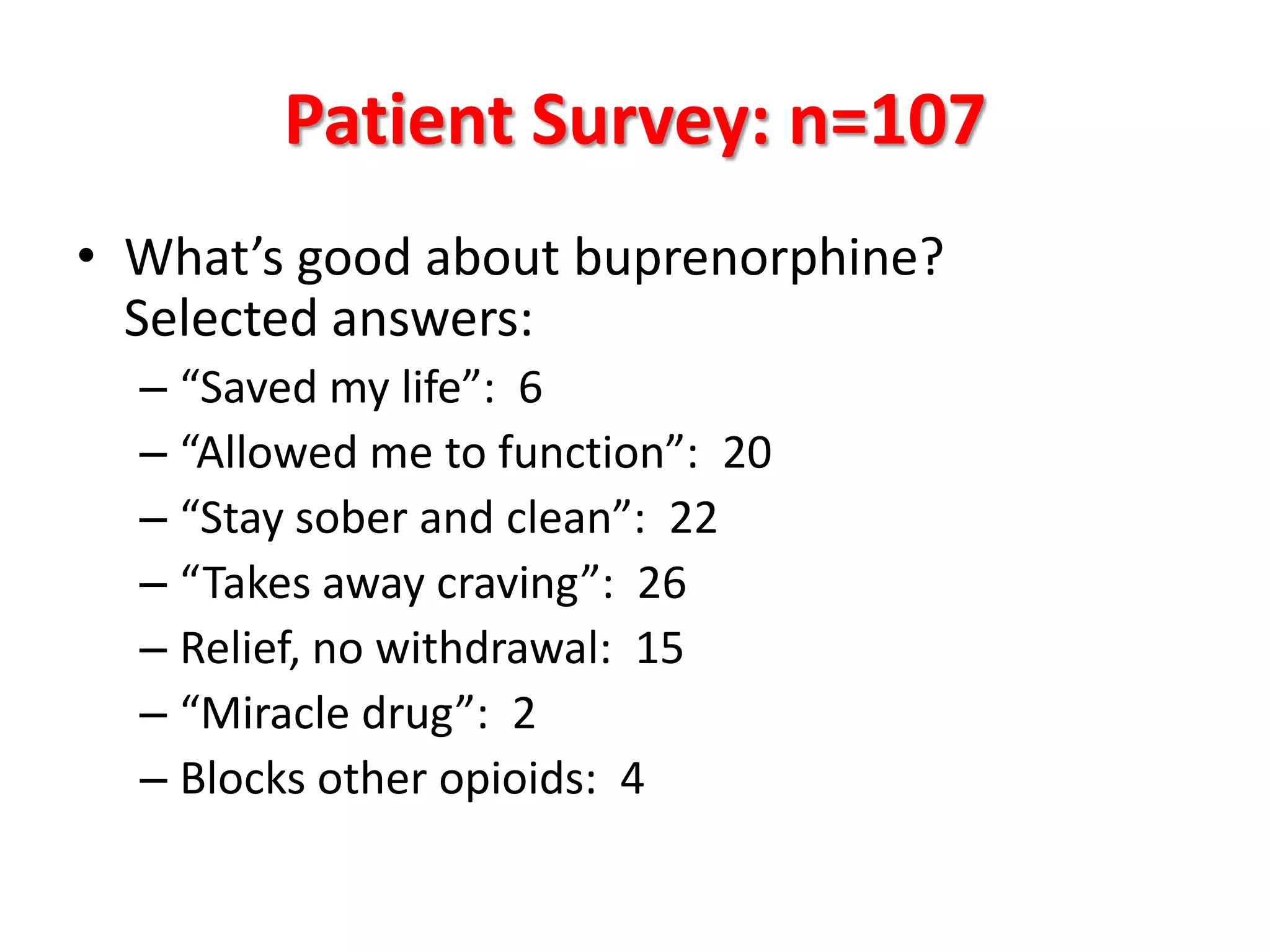
Patient Survey: n=107
• What’s good about buprenorphine?
Selected answers:
– “Saved my life”: 6
– “Allowed me to function”: 20
– “Stay sober and clean”: 22
– “Takes away craving”: 26
– Relief, no withdrawal: 15
– “Miracle drug”: 2
– Blocks other opioids: 4
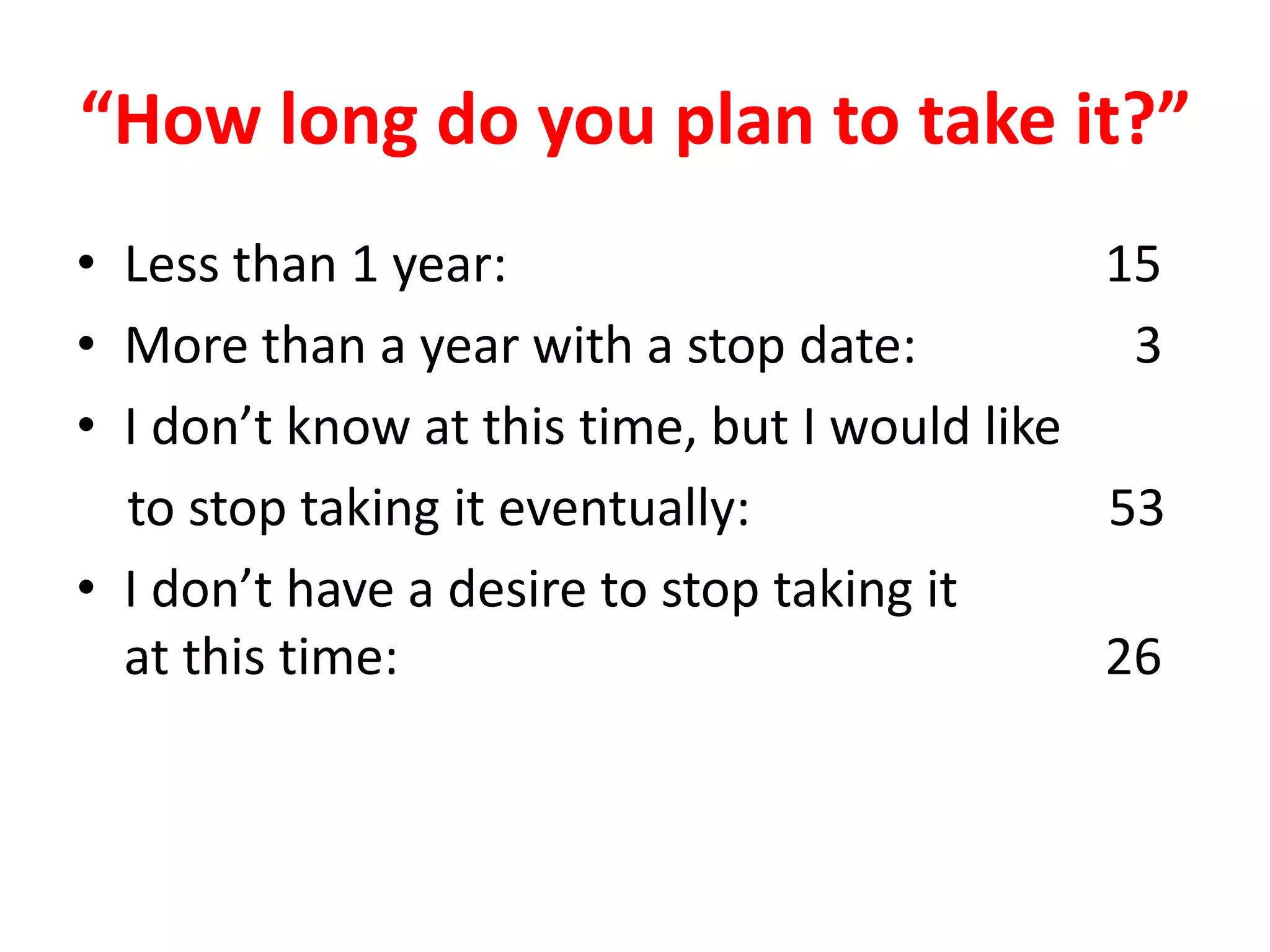
“How long do you plan to take it?”
• Less than 1 year:
15
• More than a year with a stop date:
3
• I don’t know at this time, but I would like
to stop taking it eventually:
53
• I don’t have a desire to stop taking it
at this time:
26
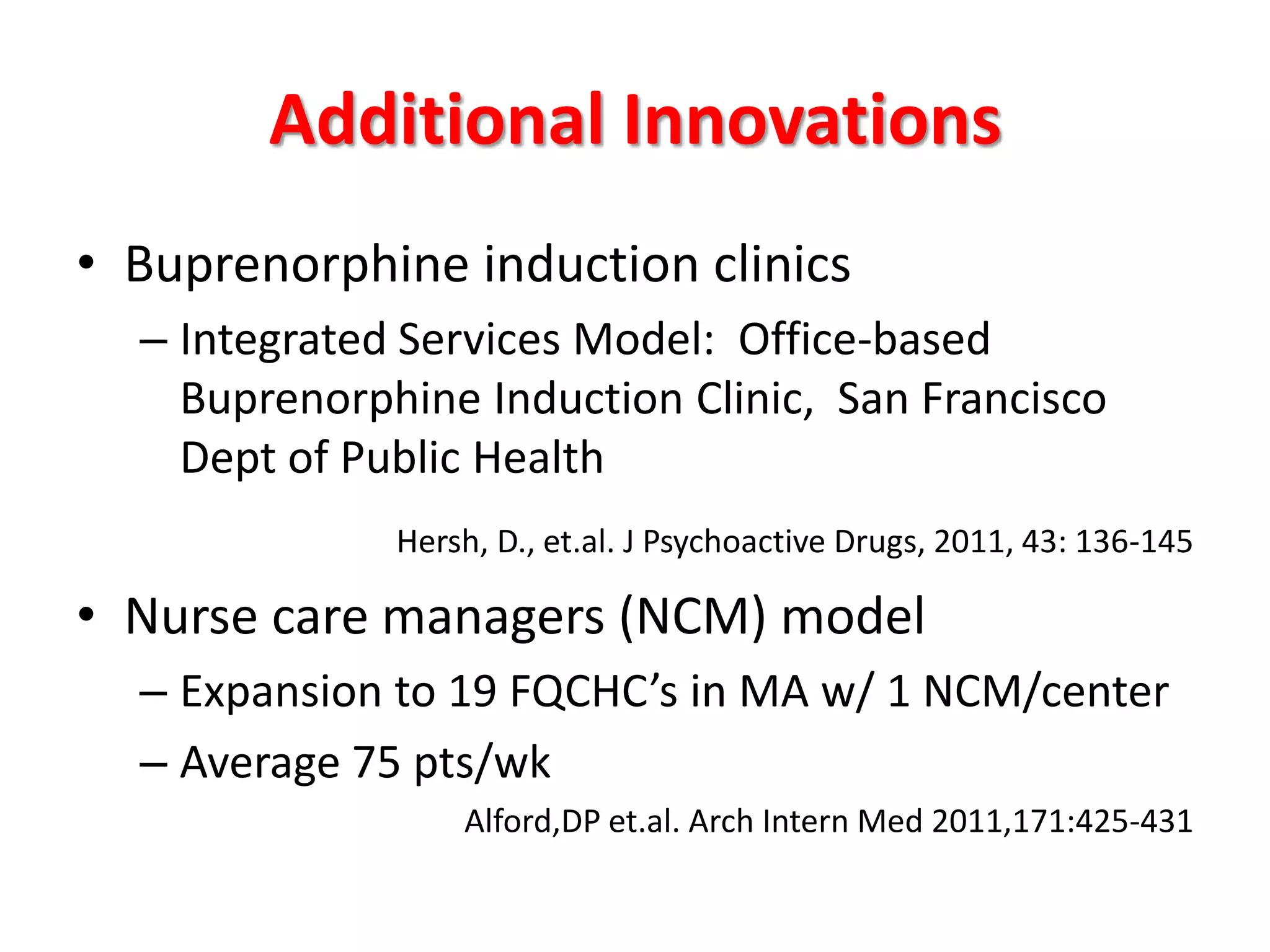
Additional Innovations
• Buprenorphine induction clinics
– Integrated Services Model: Office-based
Buprenorphine Induction Clinic, San Francisco
Dept of Public Health
Hersh, D., et.al. J Psychoactive Drugs, 2011, 43: 136-145

• Nurse care managers (NCM) model
– Expansion to 19 FQCHC’s in MA w/ 1 NCM/center
– Average 75 pts/wk
Alford,DP et.al. Arch Intern Med 2011,171:425-431
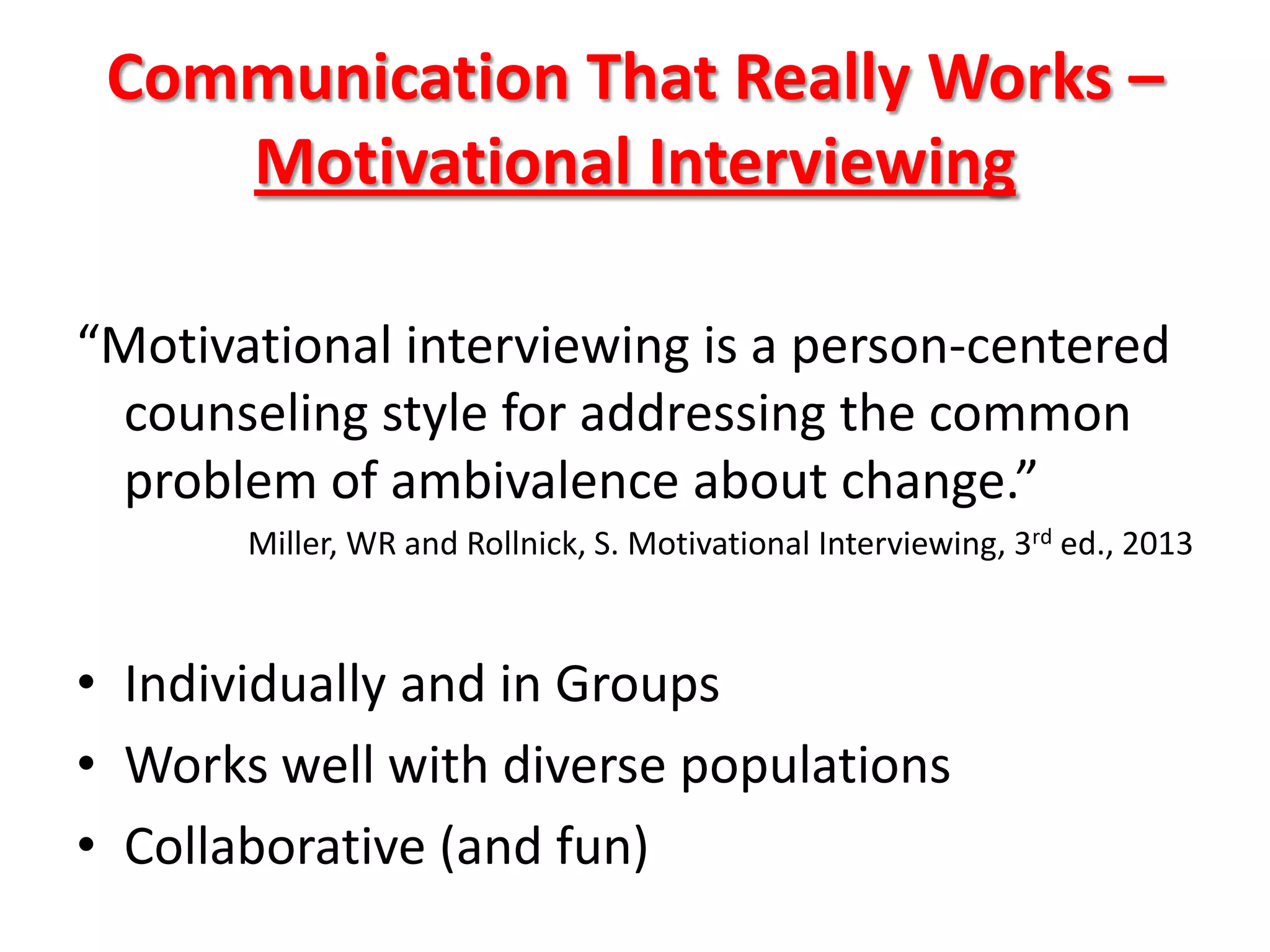
Communication That Really Works –
Motivational Interviewing
“Motivational interviewing is a person-centered
counseling style for addressing the common
problem of ambivalence about change.”
Miller, WR and Rollnick, S. Motivational Interviewing, 3rd ed., 2013

• Individually and in Groups
• Works well with diverse populations
• Collaborative (and fun)
Which Style Do You Prefer?
Dancing

Wrestling
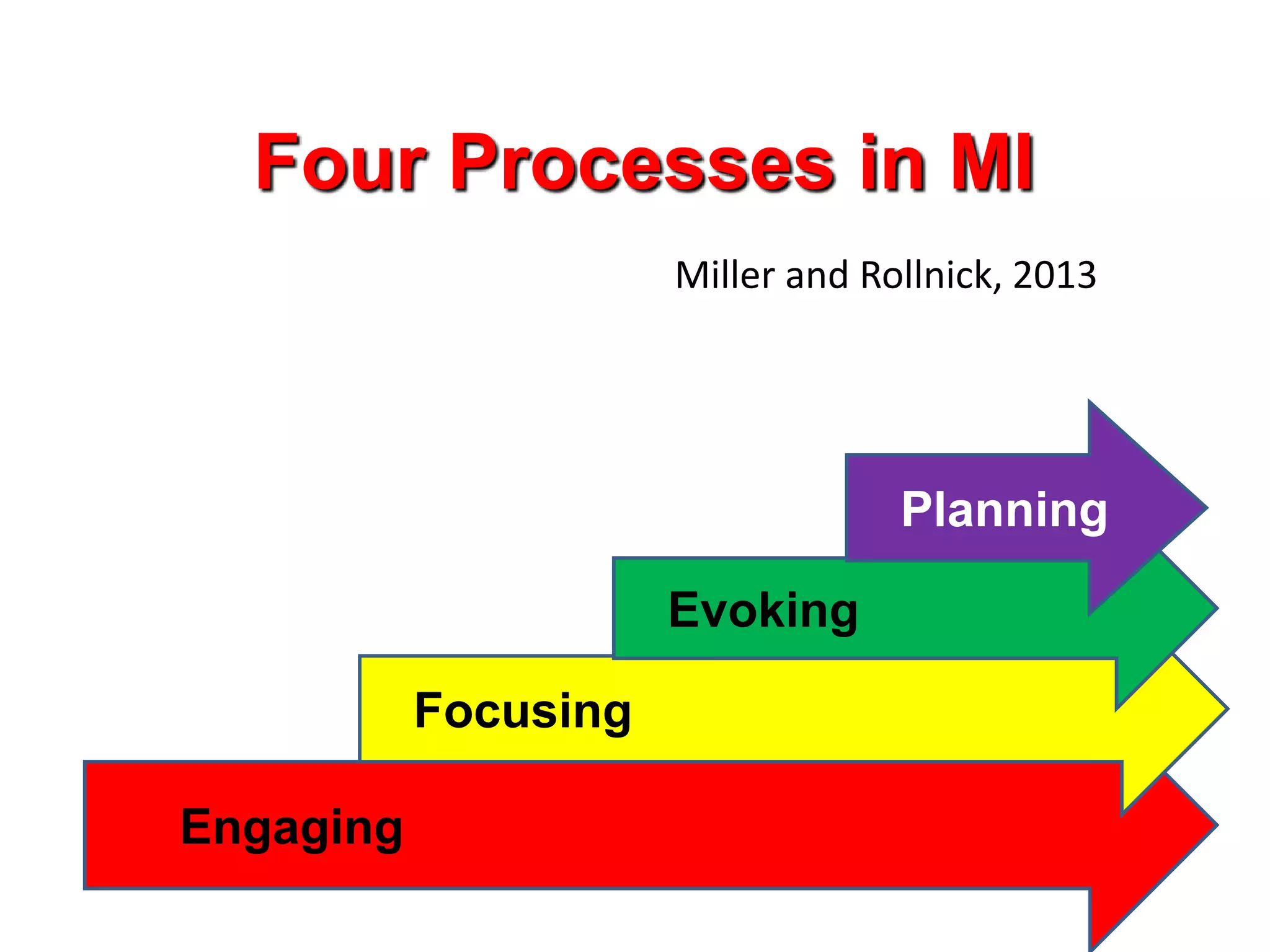
Four Processes in MI
Miller and Rollnick, 2013

Planning
Evoking
Focusing
Engaging
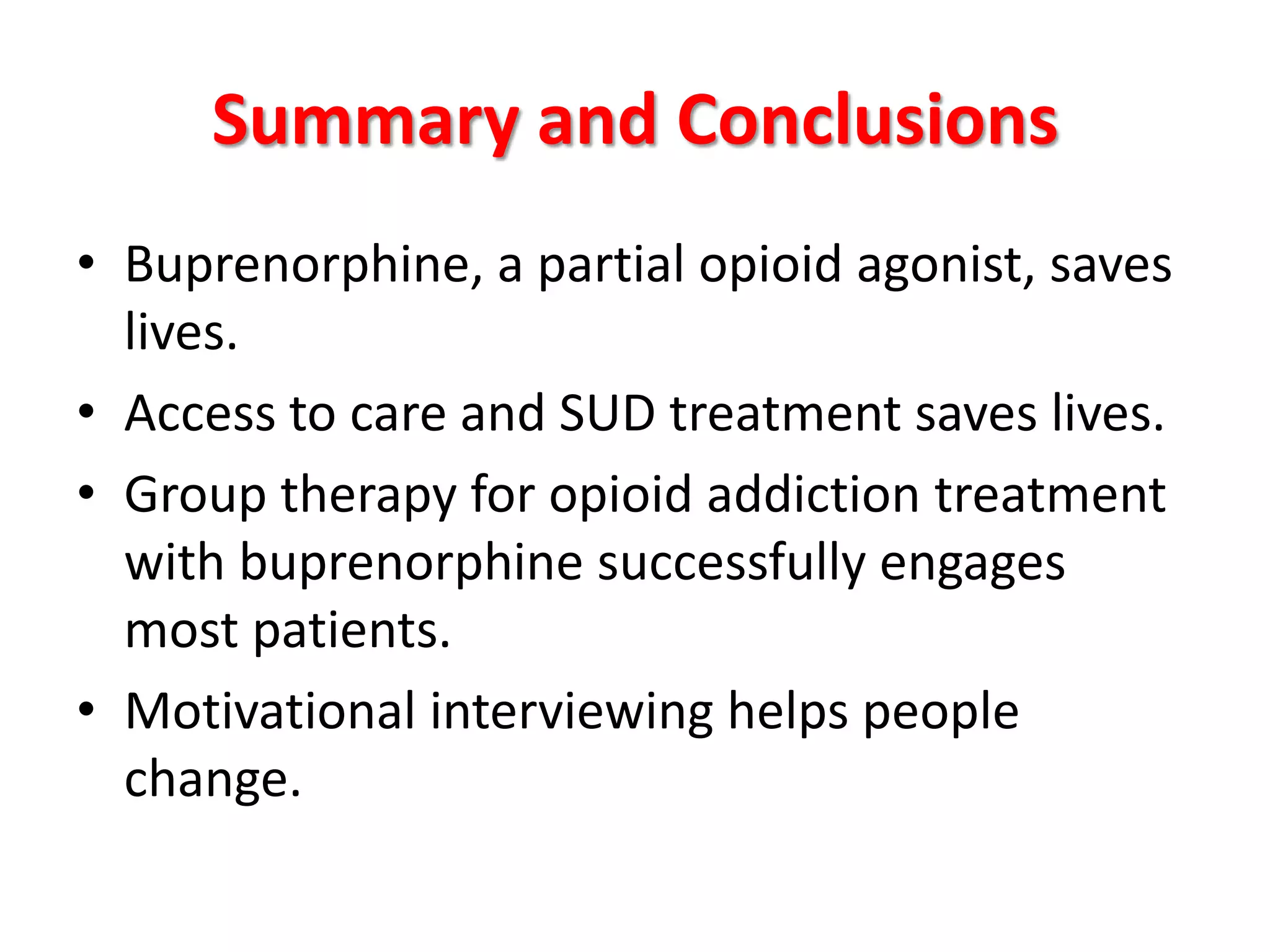
Summary and Conclusions
• Buprenorphine, a partial opioid agonist, saves
lives.
• Access to care and SUD treatment saves lives.
• Group therapy for opioid addiction treatment
with buprenorphine successfully engages
most patients.
• Motivational interviewing helps people
change.
Many Thanks
• To Karen, Rodney, Stephen, Susan and our
patients who are our excellent teachers.
• Mary Jean Kreek, MD, Andrew Saxon, MD
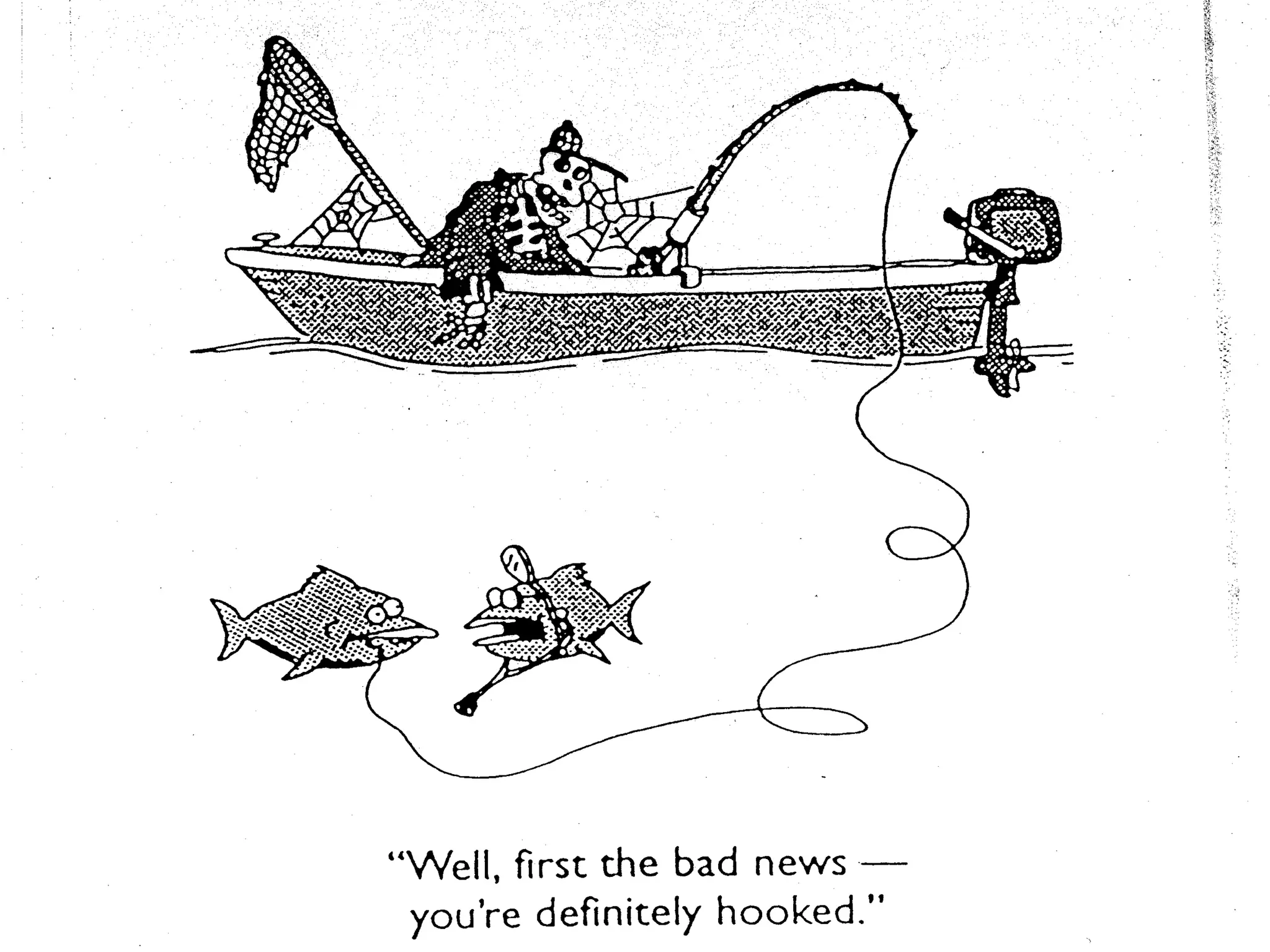
• Gary Larson

Saffier.aafp slc 2013

  • 1.
    Opioid Abuse: How InnovationCan Save Lives Ken Saffier, MD Contra Costa Regional Medical Center and Health Centers November 2, 2013 AAFP 2013 State Legislative Conference
  • 2.
  • 3.
    Overview of thispresentation • • • • • Introduction and learning objectives The current opioid epidemic and access crisis Buprenorphine “101” for the non-addictionist Medically assisted therapy for drug addiction Effective communication strategies – Group visits and motivational interviewing • Summary and conclusions
  • 4.
    Learning Objectives By theend of this presentation, participants will be able to: 1. Explain how buprenorphine, a partial opioid agonist, works and can save lives. 2. Witness and experience the power of patients’ first person perspectives to promote education and treatment for other patients and professionals. 3. Define motivational interviewing and explain why it is particularly well-suited to helping people with opioid addiction.
  • 5.
    An Epidemic ofOpioid Poisoning and Overdose Deaths • 13% of 18-25 yo abused prescription drugs • In 2010, 3,000 died (18-25) from OD, more than for heroin and cocaine. – 8 deaths per day – 250% increase from 1999 • 10,000 men and 6,600 women in 2010 died from prescription med OD’s. • More people die from poisonings than from MVA’s.
  • 6.
    * Age-adjusted ratesper 100,000 population for OPR deaths, crude rates per 10,000 population for OPR abuse treatment admissions, and crude rates per 10,000 population for kilograms sold. MMWR - November 4, 2011 / 60(43);1487-1492
  • 7.
    Lack of Access– A Painful Reality • Uninsurance associated with 45,000 deaths (1864 yo)in US. Wilper, AP, et.al. Health Insurance and Mortality in US Adults, Amer J Pub Health, 2009; 99:2289-2295 • Approximately 10% of those with SUDs receive specialty care (2.5 of 23.1 million). • 38% of 1.1 million who felt they needed treatment had no insurance or funds to pay for tx. 2012 National Survey on Drug Use and Health, US DHHS
  • 8.
    Medically Assisted Treatments •Alcoholism: naltrexone, acamprosate, disulfiram • Opioid addiction: – Naltrexone – Methadone: detox, maintenance – Buprenorphine
  • 9.
    Buprenorphine 101 –a brief overview Agonist Heroin, hydrocodone, oxycodone, fentanyl Antagonist Naloxone, naltrexone Mixed agonist/antagonist Pentozacine, butorphanol (Stadol) Partial agonist Buprenorphine
  • 10.
    Human Opioid Receptors, , and H2N extracellular fluid S S AA identical in 3 receptors AA identical in 2 receptors AA different in 3 receptors cell membrane cell interior HOOC LaForge, Yuferov and Kreek, 2000
  • 11.
    Buprenorphine – apartial agonist High affinity for the mu opioid receptor Competes with other opioids and blocks their effects Can precipitate withdrawal in highly opioid dependent individuals Slow dissociation from the mu receptor Prolonged therapeutic effect for opioid dependence treatment “Ceiling effect” for stimulation of a given receptor
  • 12.
    Intrinsic mu Activity:Full Agonist (Methadone), Partial Agonist (Buprenorphine), Antagonist (Naloxone) 100 90 Full Agonist (Methadone) 80 70 Intrinsic Activity 60 Partial Agonist (Buprenorphine)) 50 40 30 20 10 Antagonist (Naloxone) 0 -10 -9 -8 -7 Log Dose of Opioid -6 -5 -4
  • 13.
    Uses of Buprenorphine Buprenorphinedetox Buprenorphine maintenance Short acting opioids Long acting opioids Buprenorphine taper (As an analgesic (transdermal))
  • 14.
    Buprenorphine vs. Placebo forHeroin Dependence Remaining in treatment (nr) Kakko, Lancet 2003 20 15 4 Subjects in Control Group Died 10 Detoxification 5 Maintenance 0 0 50 100 150 200 250 Treatment duration (days) 300 350
  • 15.
    Engaging Patients inTreatment • Access to health care • Treatment options, including buprenorphine • Group visits • Motivational Interviewing
  • 17.
    Buprenorphine Treatment Groups • • • • Beganin 2007. Between 4 – 12 patients/group. Urine toxicology screening. Prescriptions written at time of visit or by PCP after visit. • Individual visits before and after group appt. • Other staff: FM resident, Substance abuse counselor (MFT).
  • 18.
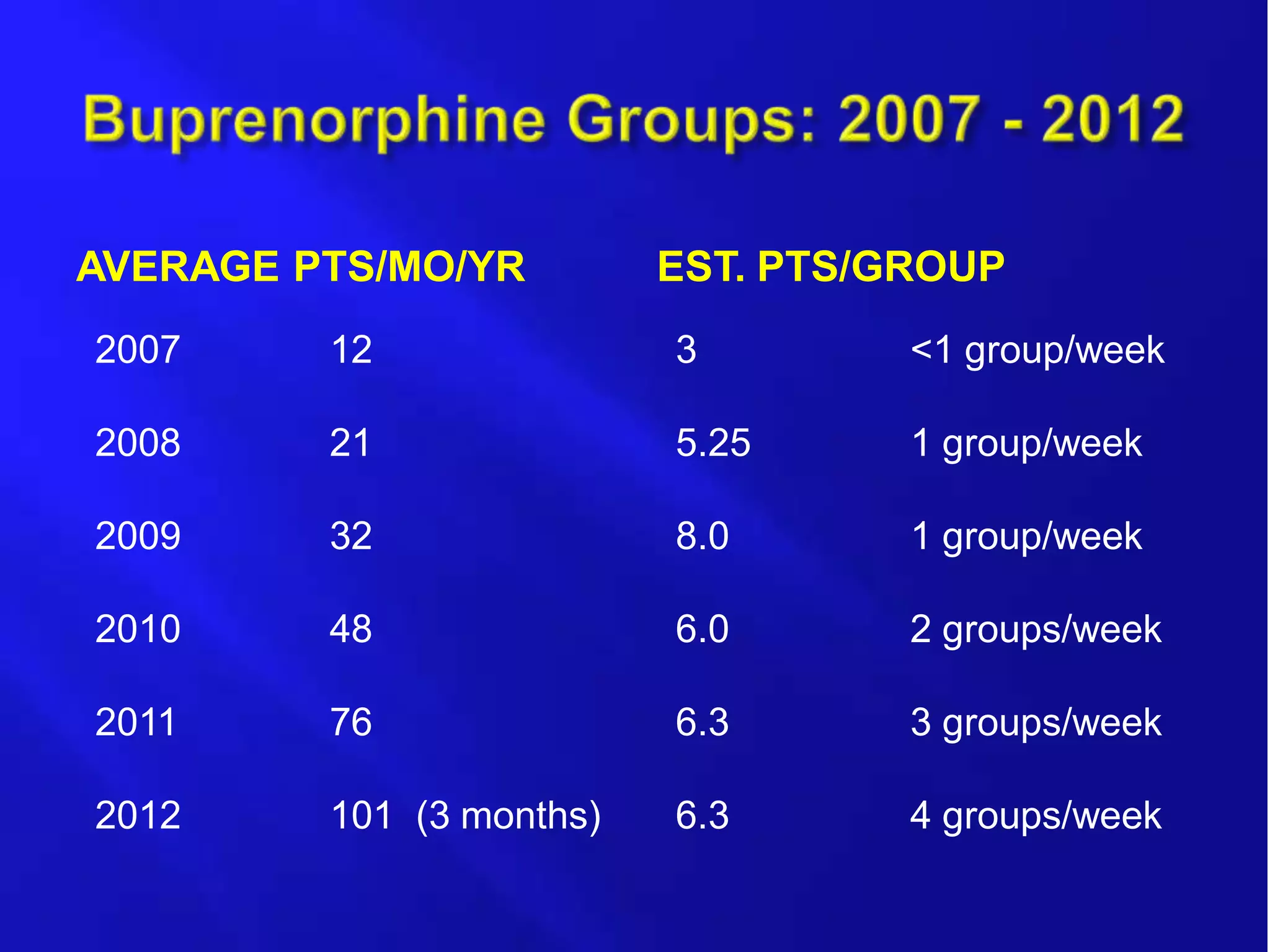
    AVERAGE PTS/MO/YR EST. PTS/GROUP 2007 12 3 <1group/week 2008 21 5.25 1 group/week 2009 32 8.0 1 group/week 2010 48 6.0 2 groups/week 2011 76 6.3 3 groups/week 2012 101 (3 months) 6.3 4 groups/week
  • 19.
    Additional Tx Components •Substance abuse counseling, including residential • Mental health services • Ongoing regular medical care • 12 Step programs with sponsors • Faith-based recovery programs
  • 20.
    Patient Survey: n=107 •What’s good about buprenorphine? Selected answers: – “Saved my life”: 6 – “Allowed me to function”: 20 – “Stay sober and clean”: 22 – “Takes away craving”: 26 – Relief, no withdrawal: 15 – “Miracle drug”: 2 – Blocks other opioids: 4
  • 21.
    “How long doyou plan to take it?” • Less than 1 year: 15 • More than a year with a stop date: 3 • I don’t know at this time, but I would like to stop taking it eventually: 53 • I don’t have a desire to stop taking it at this time: 26
  • 22.
    Additional Innovations • Buprenorphineinduction clinics – Integrated Services Model: Office-based Buprenorphine Induction Clinic, San Francisco Dept of Public Health Hersh, D., et.al. J Psychoactive Drugs, 2011, 43: 136-145 • Nurse care managers (NCM) model – Expansion to 19 FQCHC’s in MA w/ 1 NCM/center – Average 75 pts/wk Alford,DP et.al. Arch Intern Med 2011,171:425-431
  • 23.
    Communication That ReallyWorks – Motivational Interviewing “Motivational interviewing is a person-centered counseling style for addressing the common problem of ambivalence about change.” Miller, WR and Rollnick, S. Motivational Interviewing, 3rd ed., 2013 • Individually and in Groups • Works well with diverse populations • Collaborative (and fun)
  • 24.
    Which Style DoYou Prefer? Dancing Wrestling
  • 25.
    Four Processes inMI Miller and Rollnick, 2013 Planning Evoking Focusing Engaging
  • 27.
    Summary and Conclusions •Buprenorphine, a partial opioid agonist, saves lives. • Access to care and SUD treatment saves lives. • Group therapy for opioid addiction treatment with buprenorphine successfully engages most patients. • Motivational interviewing helps people change.
  • 28.
    Many Thanks • ToKaren, Rodney, Stephen, Susan and our patients who are our excellent teachers. • Mary Jean Kreek, MD, Andrew Saxon, MD • Gary Larson

Editor's Notes

  • #7 MMWR - November 4, 2011 / 60(43);1487-1492