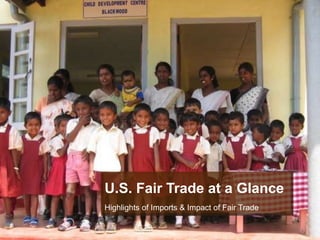
U.S. Fair Trade at a GlanceHighlights of Imports & Impact of Fair Trade
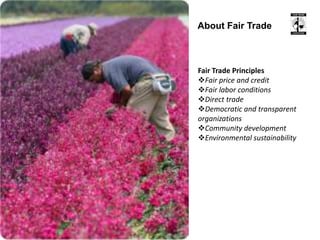
About Fair TradeFair Trade PrinciplesFair price and credit
Fair labor conditions
Direct trade
Democratic and transparent organizations
Community development
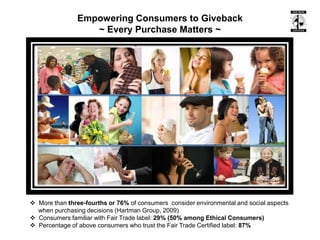
Environmental sustainabilityEmpowering Consumers to Giveback~ Every Purchase Matters ~  More than three-fourths or 76% of consumers  consider environmental and social aspects      when purchasing decisions (Hartman Group, 2009)  Consumers familiar with Fair Trade label: 29% (50% among Ethical Consumers)
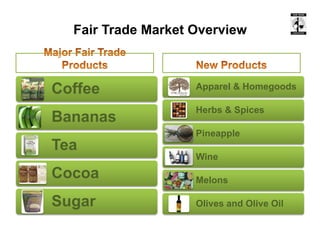
  Percentage of above consumers who trust the Fair Trade Certified label: 87% Fair Trade Market OverviewMajor Fair Trade ProductsNew Products
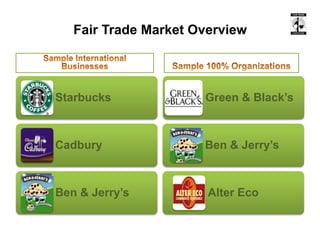
Fair Trade Market OverviewSample International BusinessesSample 100% Organizations

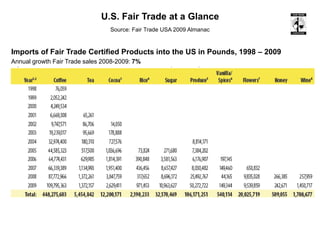
U.S. Fair Trade At A Glance

Editor's Notes

  • #4 Fair Trade offers a powerful way to reduce poverty through everyday shopping. The Fair Trade Certified™ label ensures consumers that the product purchased contains ingredients that have been sourced using strict Fair Trade—social, economic and environmental—standards.
  • #7 1 First year data for each product category may not be twelve months, depending on launch date. See product section for further details. 2 In 2009, Fair Trade USA began certifying small volumes of sports balls, olive oil, quinoa, brazil nuts, and shea butter. See New Products section for additional volume details. 3 2004-2009 figures represent an estimate of the volume of cocoa beans necessary to produce the Fair Trade Certified cocoa that was imported by U.S. licensees. 2002-2003 volumes represent the total volumes of finished cocoa products imported. 4 2009 rice figure includes an additional 890,601 pounds of rice that were not accounted for in 2008 volumes. 5 Variety of produce certified. See product section for further details. 6 2006-2008 figures represent vanilla only. 2009 figure includes both vanilla and spices. 7 Unit measure for flowers is stems. 8 Unit measure for wine is 750 ml bottles, was previously reported in liters. Source: Fair Trade USA
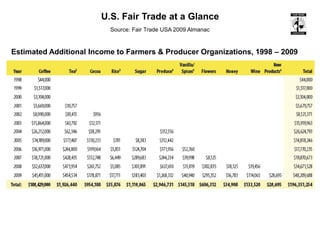
  • #8 1 Additional Income calculation methodology varies by product. For products excluding coffee and cocoa, Additional Income is the value of the premium paid. In the cases of coffee and cocoa, Additional Income takes into account the price paid above the market or farm gate rate, in addition to the premium. 2 2001 tea figure includes income generated from tea certified in the second half of 2000. 3 2009 rice figure includes an additional $16,350 in producer premium not accounted for in 2008 figures. 4 2004-2005 produce figures only include Additional Income to banana producers. 5 2006-2008 figures represent vanilla only. 2009 figure includes vanilla and other spices. 6 New Products certified in 2009 include sports balls, olive oil, quinoa, brazil nuts, and shea butter. Source: TransFair USA, ICE Market