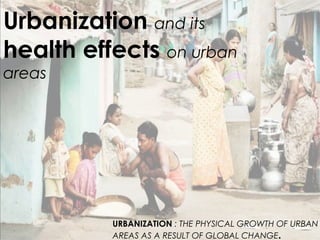
Urbanization and its
health effects on urban
areas
URBANIZATION : THE PHYSICAL GROWTH OF URBAN
AREAS AS A RESULT OF GLOBAL CHANGE.
Environmental
Housing
Social
Lifestyle
Combined factors of individual issues may cause health problems to evolve
Emerging health problems
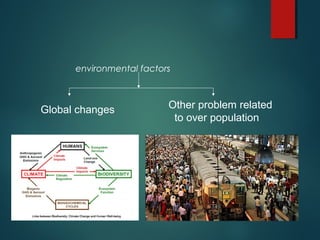
environmental factors
Global changes Other problem related
to over population
Environmental problems
 air ,water ,noise pollution
 ozone depletion
 food safety
 natural source depletion
 Climate changes
Health Problems
 Poor air – asthama, alergy
 unclean water – transmission of infections disease through
water supply (water food born diseases)
 Climate changes- extreme heat and cold
 Noise –sleep disturbances
Social
 Social problem lead to health
problem
 Social services
 Overcrowding
 Lack of resources
 Poverty
 Unemployment
 Lack of education
 Crime
 Mental , health problems
 Voilence
 Accidents- alchol
 Malnutrition caused by poverty
 Suicide -lack of health , mental services
 Injuries caused by drugs or stress
ill health obstacle to social economic
development . Poor people live shorter lives.
Lifestyle
 Major killers related lifestyle
 Problems caused by several factors
lack of education
access to health care
access to social services
poverty
overcrowding
stress (non communicable disease
such as heart disease, cancer obesity
and diabetes)
Priority
 Healthy schools
 Water supply
 Health and hygiene education
 Garbage removal and disposal
 Drainage and sanitation
 Income generation
Low Cost Housing
LOW COST HOUSING IS A NEW CONCEPT WHICH
DEALS WITH EFFECTIVE BUDGETING AND
FOLLOWING OF TECHNIQUES WHICH HELP IN
REDUCING THE COST CONSTRUCTION THROUGH THE
USE OF LOCALLY AVAILABLE MATERIALS ALONG
WITH IMPROVED SKILLS AND TECHNOLOGY WITHOUT
SACRIFICING THE STRENGTH, PERFORMANCE AND
LIFE OF THE STRUCTURE
Major causes of High
Building Costs
• EXPENSIVE MATERIALS
• LACK OF NECESSARY BUILDING SKILLS
• DESIGNS
• MATERIAL SELECTION
• BUILDING METHODS
• EQUIPMENT'S
Areas from where cost
can be reduced
1) REDUCE PLINTH AREA BY USING THINNER WALL .
2) USE LOCALLY AVAILABLE MATERIAL IN AN INNOVATIVE FORM
LIKE SOIL CEMENT BLOCKS IN PLACE OF BURNT BRICK.
3) USE ENERGY EFFICIENCY MATERIALS WHICH CONSUMES LESS
ENERGY LIKE CONCRETE BLOCK IN PLACE OF BURNT BRICK.
4) USE ENVIRONMENTALLY FRIENDLY MATERIALS WHICH ARE
SUBSTITUTE FOR CONVENTIONAL BUILDING COMPONENTS LIKE USE
R.C.C. DOOR AND WINDOW FRAMES IN PLACE OF WOODEN
FRAMES.
5) PREPLAN EVERY COMPONENT OF A HOUSE AND RATIONALIZE
THE DESIGN PROCEDURE FOR REDUCING THE SIZE OF THE
COMPONENT IN THE BUILDING.
6) BY PLANNING EACH AND EVERY COMPONENT OF A HOUSE THE
WASTAGE OF MATERIALS DUE TO DEMOLITION OF THE UNPLANNED
COMPONENT OF THE HOUSE CAN BE AVOIDED.
Methods
• RAT – TRAP BOND WALL
• CONCRETE BLOCK WALLING
• SOIL CEMENT BLOCK TECHNOLOGY
• FILLER SLAB TECHNOLOGY
URBANIZATION AND MENTAL
HEALTH
 Urbanization affects mental health
through the influence of increased
stressors and factors such as
overcrowded and polluted environment,
high levels of violence, and reduced
social support.
 Impact of urbanization is associated with
an increase in mental disorders. 
 Migrants were much more likely to report
depressive symptoms than non-migrants,
presumably due to family separation and
reduced social support.
 The detrimental impact of migration on
mental health existed only for solo
migrants, but not for migrants
accompanied by family members.
 In addition, migrants often face increase
d life and work-related stressors and
unfavorable working environments, as
they have to cope with new conditions
and are over-represented in labor-
intensive jobs.
 The elevated stress tends to put migrants
at higher risksfor stress-related health
deficits.
 The detrimental impact of migration on
mental health existed only for solo
migrants, but not for migrants
accompanied by family members.
 In addition, migrants often face increase
d life and work-related stressors and
unfavorable working environments, as
they have to cope with new conditions
and are over-represented in labor-
intensive jobs.
 The elevated stress tends to put migrants
at higher risksfor stress-related health
deficits.
KSHITIJA MHATRE (12ARC16)
AROH THOMBRE (12ARC40)
HEENA CHOUGULE

Urbanization

  • 1.
    Urbanization and its healtheffects on urban areas URBANIZATION : THE PHYSICAL GROWTH OF URBAN AREAS AS A RESULT OF GLOBAL CHANGE.
  • 2.
    Environmental Housing Social Lifestyle Combined factors ofindividual issues may cause health problems to evolve Emerging health problems
  • 3.
    environmental factors Global changesOther problem related to over population
  • 4.
    Environmental problems  air,water ,noise pollution  ozone depletion  food safety  natural source depletion  Climate changes
  • 5.
    Health Problems  Poorair – asthama, alergy  unclean water – transmission of infections disease through water supply (water food born diseases)  Climate changes- extreme heat and cold  Noise –sleep disturbances
  • 6.
    Social  Social problemlead to health problem  Social services  Overcrowding  Lack of resources  Poverty  Unemployment  Lack of education  Crime  Mental , health problems  Voilence
  • 7.
     Accidents- alchol Malnutrition caused by poverty  Suicide -lack of health , mental services  Injuries caused by drugs or stress ill health obstacle to social economic development . Poor people live shorter lives.
  • 9.
    Lifestyle  Major killersrelated lifestyle  Problems caused by several factors lack of education access to health care access to social services poverty overcrowding stress (non communicable disease such as heart disease, cancer obesity and diabetes)
  • 10.
    Priority  Healthy schools Water supply  Health and hygiene education  Garbage removal and disposal  Drainage and sanitation  Income generation
  • 11.
    Low Cost Housing LOWCOST HOUSING IS A NEW CONCEPT WHICH DEALS WITH EFFECTIVE BUDGETING AND FOLLOWING OF TECHNIQUES WHICH HELP IN REDUCING THE COST CONSTRUCTION THROUGH THE USE OF LOCALLY AVAILABLE MATERIALS ALONG WITH IMPROVED SKILLS AND TECHNOLOGY WITHOUT SACRIFICING THE STRENGTH, PERFORMANCE AND LIFE OF THE STRUCTURE
  • 12.
    Major causes ofHigh Building Costs • EXPENSIVE MATERIALS • LACK OF NECESSARY BUILDING SKILLS • DESIGNS • MATERIAL SELECTION • BUILDING METHODS • EQUIPMENT'S
  • 13.
    Areas from wherecost can be reduced 1) REDUCE PLINTH AREA BY USING THINNER WALL . 2) USE LOCALLY AVAILABLE MATERIAL IN AN INNOVATIVE FORM LIKE SOIL CEMENT BLOCKS IN PLACE OF BURNT BRICK. 3) USE ENERGY EFFICIENCY MATERIALS WHICH CONSUMES LESS ENERGY LIKE CONCRETE BLOCK IN PLACE OF BURNT BRICK. 4) USE ENVIRONMENTALLY FRIENDLY MATERIALS WHICH ARE SUBSTITUTE FOR CONVENTIONAL BUILDING COMPONENTS LIKE USE R.C.C. DOOR AND WINDOW FRAMES IN PLACE OF WOODEN FRAMES. 5) PREPLAN EVERY COMPONENT OF A HOUSE AND RATIONALIZE THE DESIGN PROCEDURE FOR REDUCING THE SIZE OF THE COMPONENT IN THE BUILDING. 6) BY PLANNING EACH AND EVERY COMPONENT OF A HOUSE THE WASTAGE OF MATERIALS DUE TO DEMOLITION OF THE UNPLANNED COMPONENT OF THE HOUSE CAN BE AVOIDED.
  • 14.
    Methods • RAT –TRAP BOND WALL • CONCRETE BLOCK WALLING • SOIL CEMENT BLOCK TECHNOLOGY • FILLER SLAB TECHNOLOGY
  • 16.
    URBANIZATION AND MENTAL HEALTH Urbanization affects mental health through the influence of increased stressors and factors such as overcrowded and polluted environment, high levels of violence, and reduced social support.  Impact of urbanization is associated with an increase in mental disorders.   Migrants were much more likely to report depressive symptoms than non-migrants, presumably due to family separation and reduced social support.
  • 17.
     The detrimentalimpact of migration on mental health existed only for solo migrants, but not for migrants accompanied by family members.  In addition, migrants often face increase d life and work-related stressors and unfavorable working environments, as they have to cope with new conditions and are over-represented in labor- intensive jobs.  The elevated stress tends to put migrants at higher risksfor stress-related health deficits.
  • 18.
     The detrimentalimpact of migration on mental health existed only for solo migrants, but not for migrants accompanied by family members.  In addition, migrants often face increase d life and work-related stressors and unfavorable working environments, as they have to cope with new conditions and are over-represented in labor- intensive jobs.  The elevated stress tends to put migrants at higher risksfor stress-related health deficits.
  • 19.
    KSHITIJA MHATRE (12ARC16) AROHTHOMBRE (12ARC40) HEENA CHOUGULE