Infrastructures
in –Urban India
Issues and
Options
Ar. Jit Kumar Gupta
Chief Town Planner
Sahara Prime City Limited
Chandigarh
E Mail- jit.kumar1944@gmail.com
• Population,
Urbanization-
•Global
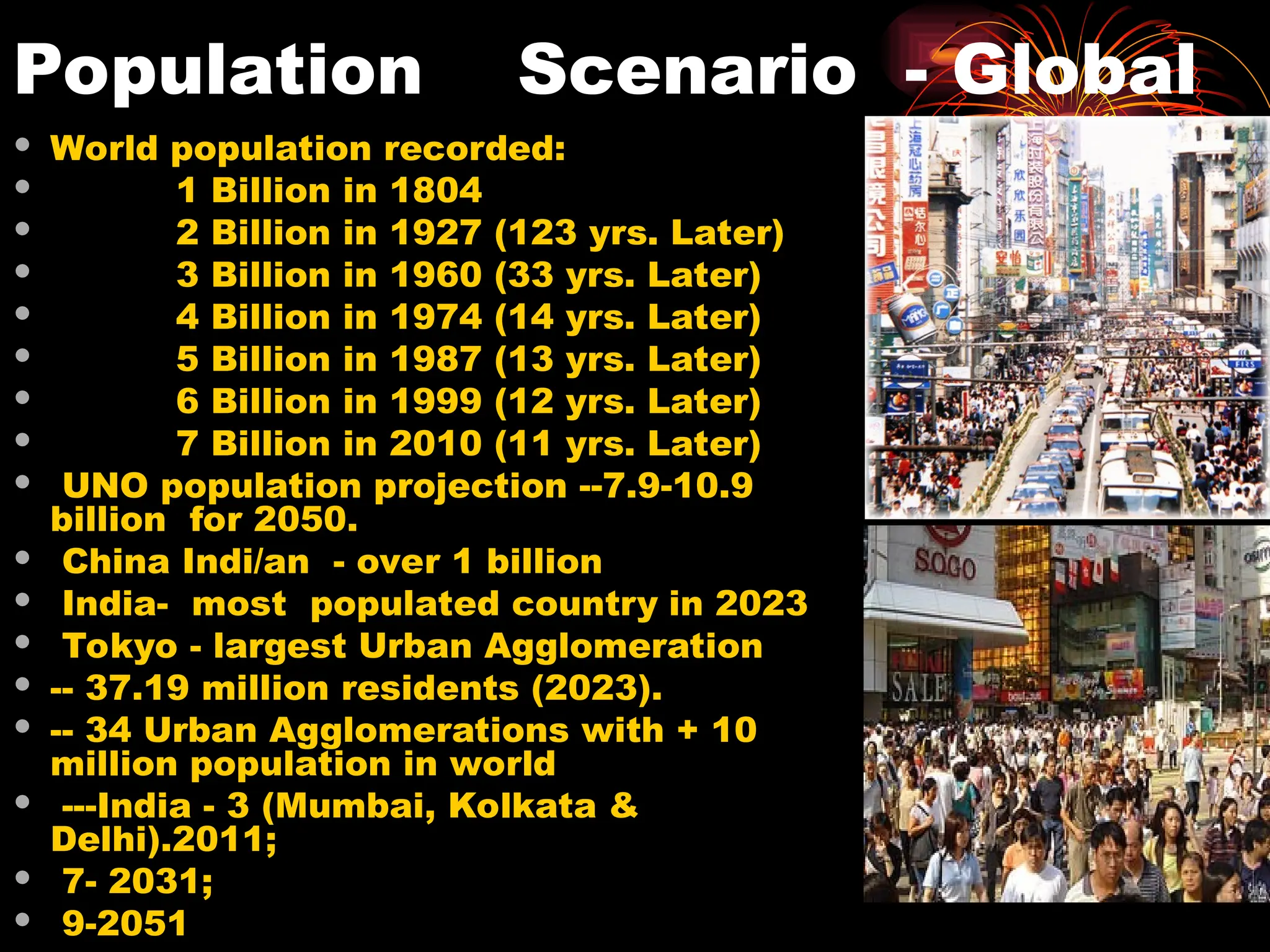
Population Scenario - Global
 World population recorded:
World population recorded:
 1 Billion in 1804
1 Billion in 1804
 2 Billion in 1927 (123 yrs. Later)
2 Billion in 1927 (123 yrs. Later)
 3 Billion in 1960 (33 yrs. Later)
3 Billion in 1960 (33 yrs. Later)
 4 Billion in 1974 (14 yrs. Later)
4 Billion in 1974 (14 yrs. Later)
 5 Billion in 1987 (13 yrs. Later)
5 Billion in 1987 (13 yrs. Later)
 6 Billion in 1999 (12 yrs. Later)
6 Billion in 1999 (12 yrs. Later)
 7 Billion in 2010 (11 yrs. Later)
7 Billion in 2010 (11 yrs. Later)
 UNO population projection --7.9-10.9
UNO population projection --7.9-10.9
billion for 2050.
billion for 2050.
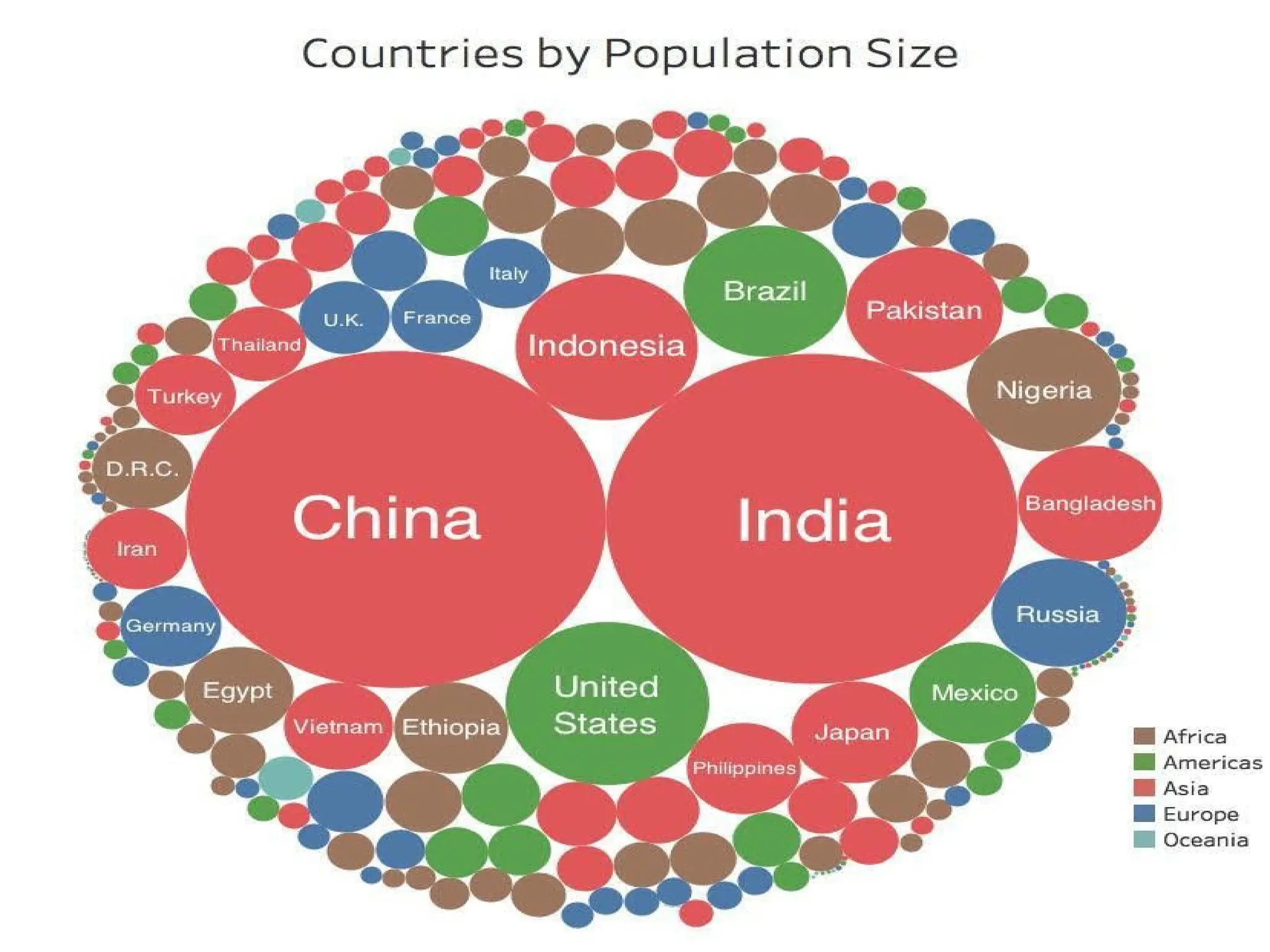
 China Indi/an - over 1 billion
China Indi/an - over 1 billion
 India- most populated country in 2023
India- most populated country in 2023
 Tokyo - largest Urban Agglomeration
Tokyo - largest Urban Agglomeration
 -- 37.19 million residents (2023).
-- 37.19 million residents (2023).
 -- 34 Urban Agglomerations with + 10
-- 34 Urban Agglomerations with + 10
million population in world
 ---India - 3 (Mumbai, Kolkata &
---India - 3 (Mumbai, Kolkata &
Delhi).2011;
Delhi).2011;
 7- 2031;
7- 2031;
 9-2051
9-2051
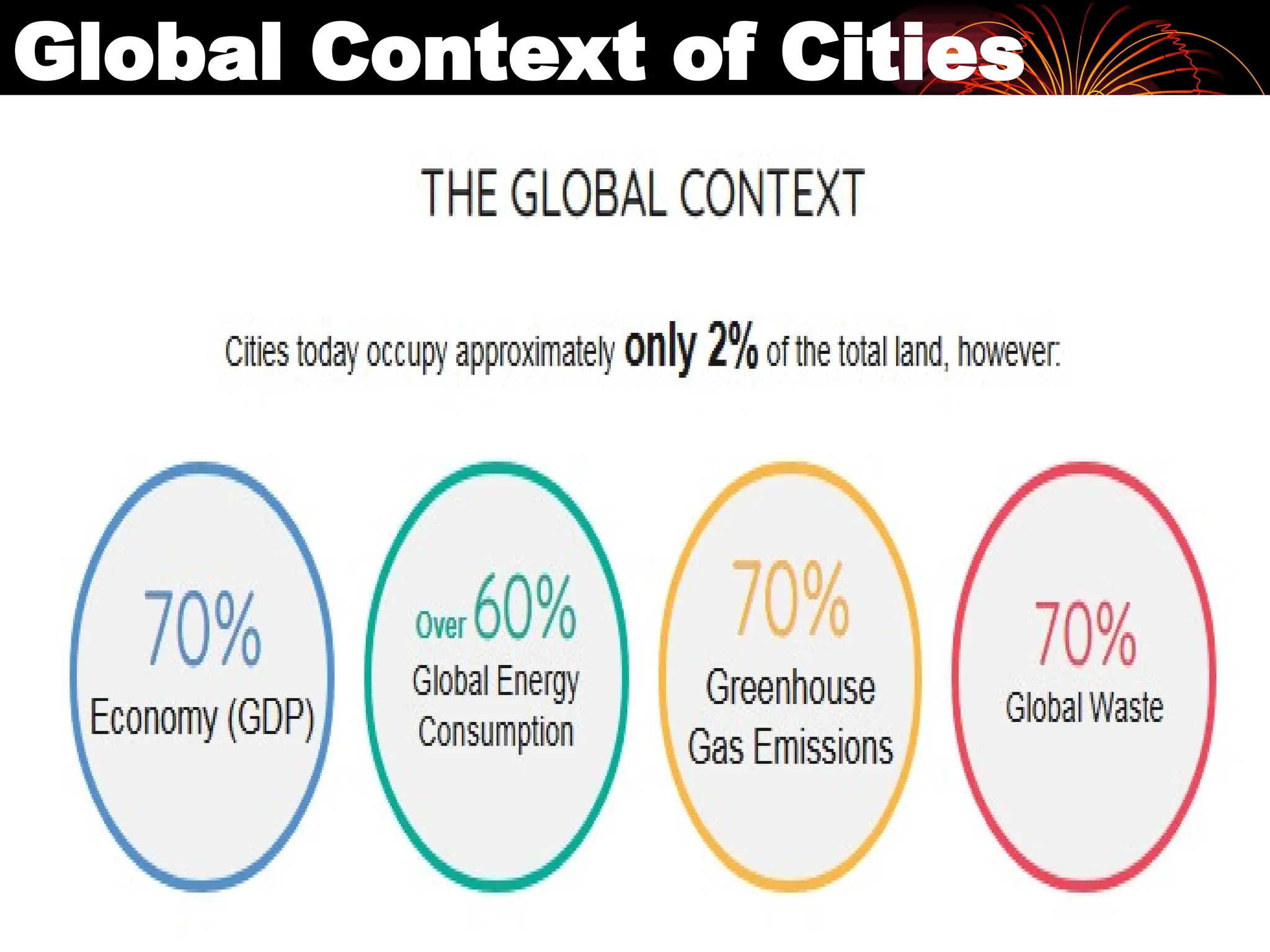
Global Context of Cities
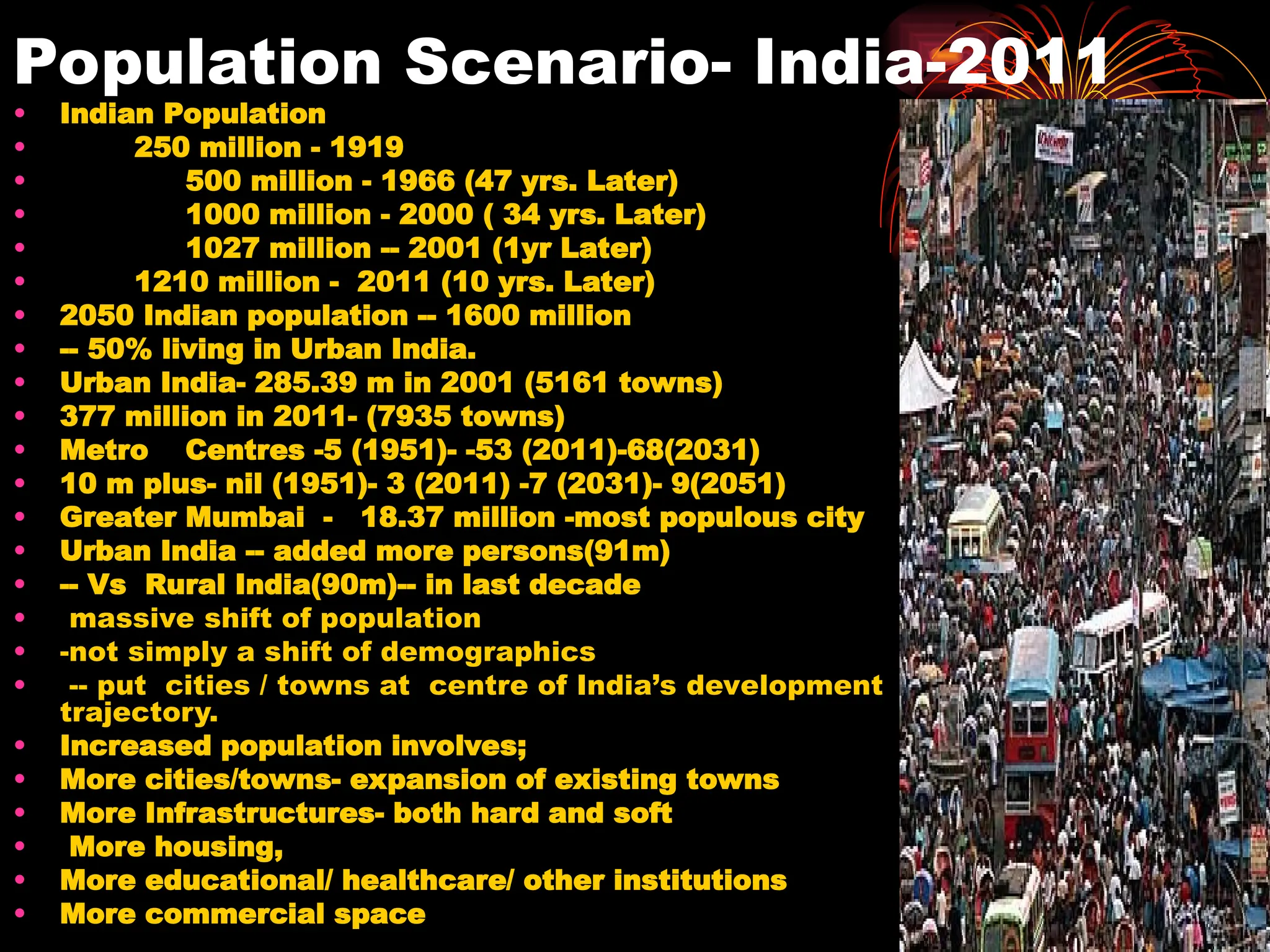
Population Scenario- India-2011
• Indian Population
• 250 million - 1919
• 500 million - 1966 (47 yrs. Later)
• 1000 million - 2000 ( 34 yrs. Later)
• 1027 million -- 2001 (1yr Later)
• 1210 million - 2011 (10 yrs. Later)
• 2050 Indian population -- 1600 million
• -- 50% living in Urban India.
• Urban India- 285.39 m in 2001 (5161 towns)
• 377 million in 2011- (7935 towns)
• Metro Centres -5 (1951)- -53 (2011)-68(2031)
• 10 m plus- nil (1951)- 3 (2011) -7 (2031)- 9(2051)
• Greater Mumbai - 18.37 million -most populous city
• Urban India -- added more persons(91m)
• -- Vs Rural India(90m)-- in last decade
• massive shift of population
• -not simply a shift of demographics
• -- put cities / towns at centre of India’s development
trajectory.
• Increased population involves;
• More cities/towns- expansion of existing towns
• More Infrastructures- both hard and soft
• More housing,
• More educational/ healthcare/ other institutions
• More commercial space
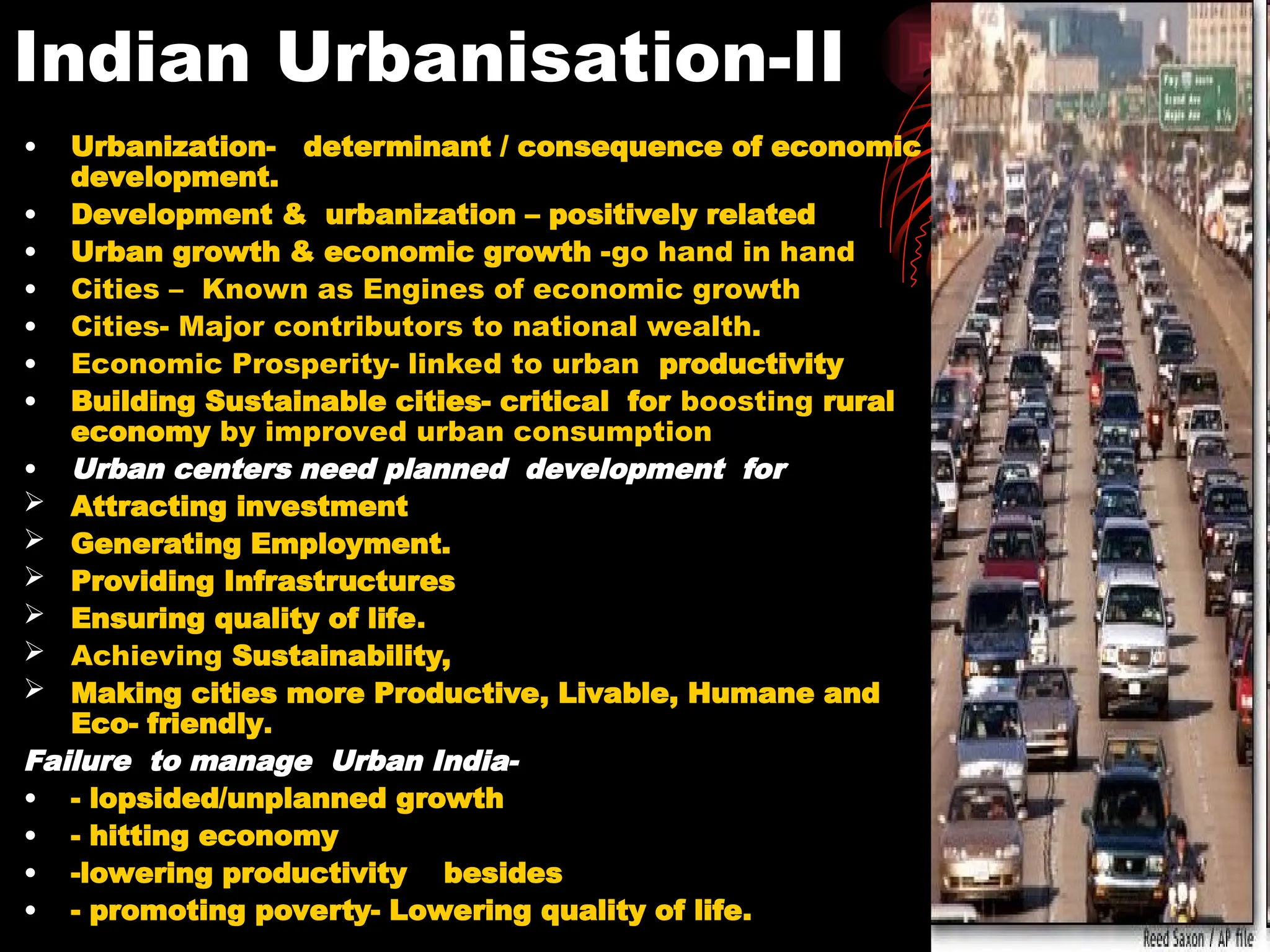
Indian Urbanisation-II
• Urbanization- determinant / consequence of economic
development.
• Development & urbanization – positively related
• Urban growth & economic growth -go hand in hand
• Cities – Known as Engines of economic growth
• Cities- Major contributors to national wealth.
• Economic Prosperity- linked to urban productivity
• Building Sustainable cities- critical for boosting rural
economy by improved urban consumption
• Urban centers need planned development for
 Attracting investment
 Generating Employment.
 Providing Infrastructures
 Ensuring quality of life.
 Achieving Sustainability,
 Making cities more Productive, Livable, Humane and
Eco- friendly.
Failure to manage Urban India-
• - lopsided/unplanned growth
• - hitting economy
• -lowering productivity besides
• - promoting poverty- Lowering quality of life.
Indian Urbanisation-III
• Cities have both positivity and negativities in
terms of;
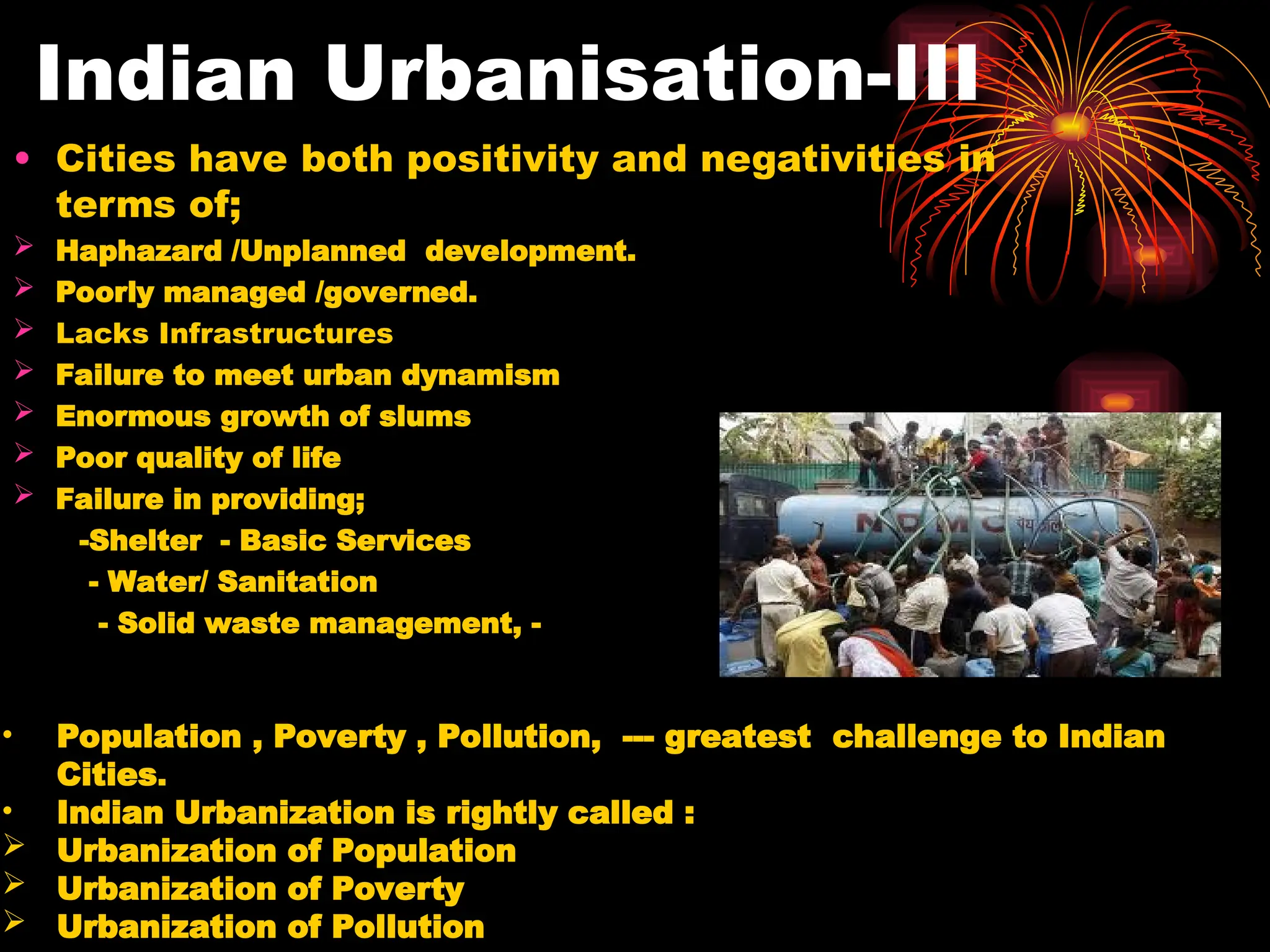
 Haphazard /Unplanned development.
 Poorly managed /governed.
 Lacks Infrastructures
 Failure to meet urban dynamism
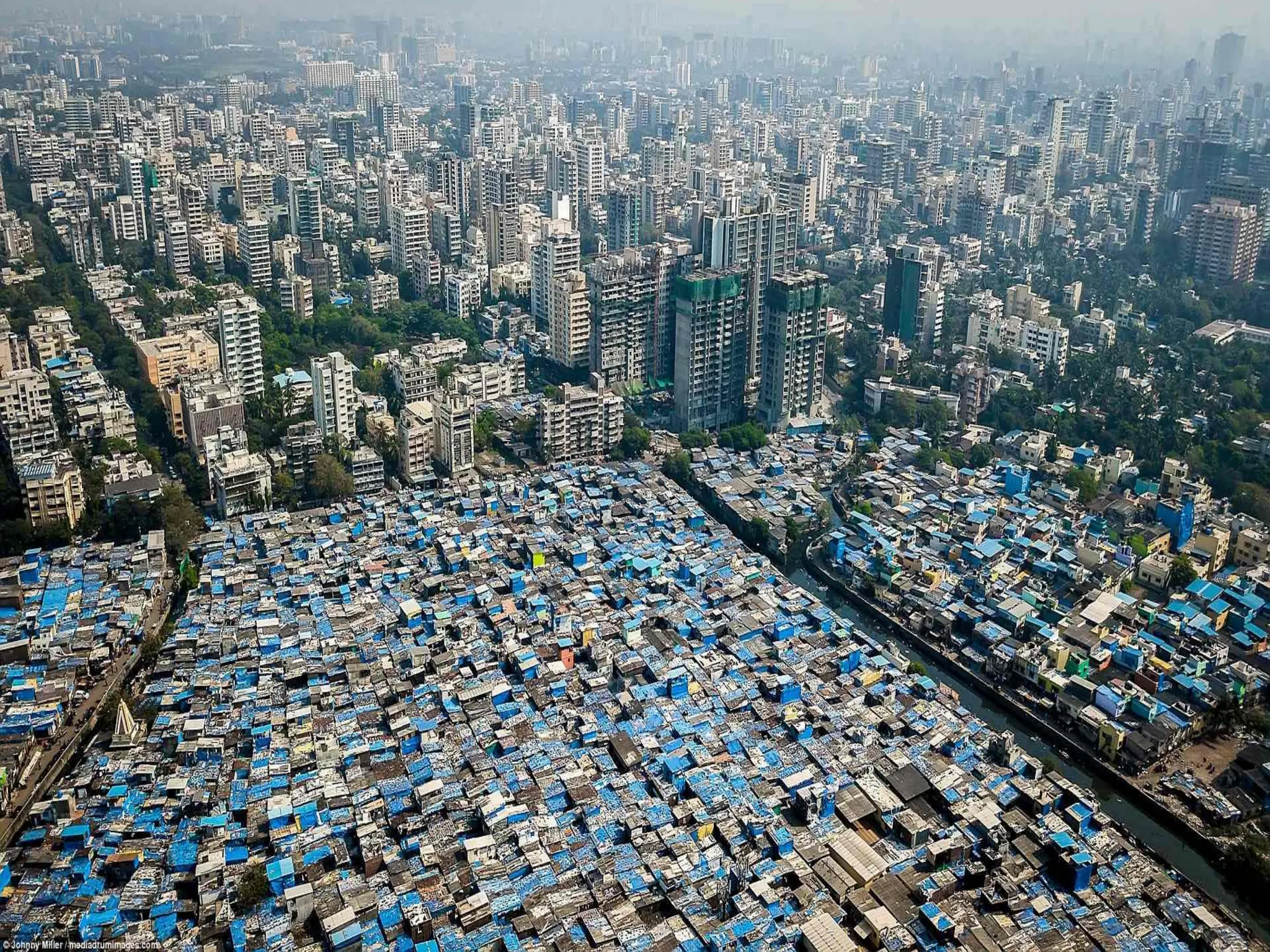
 Enormous growth of slums
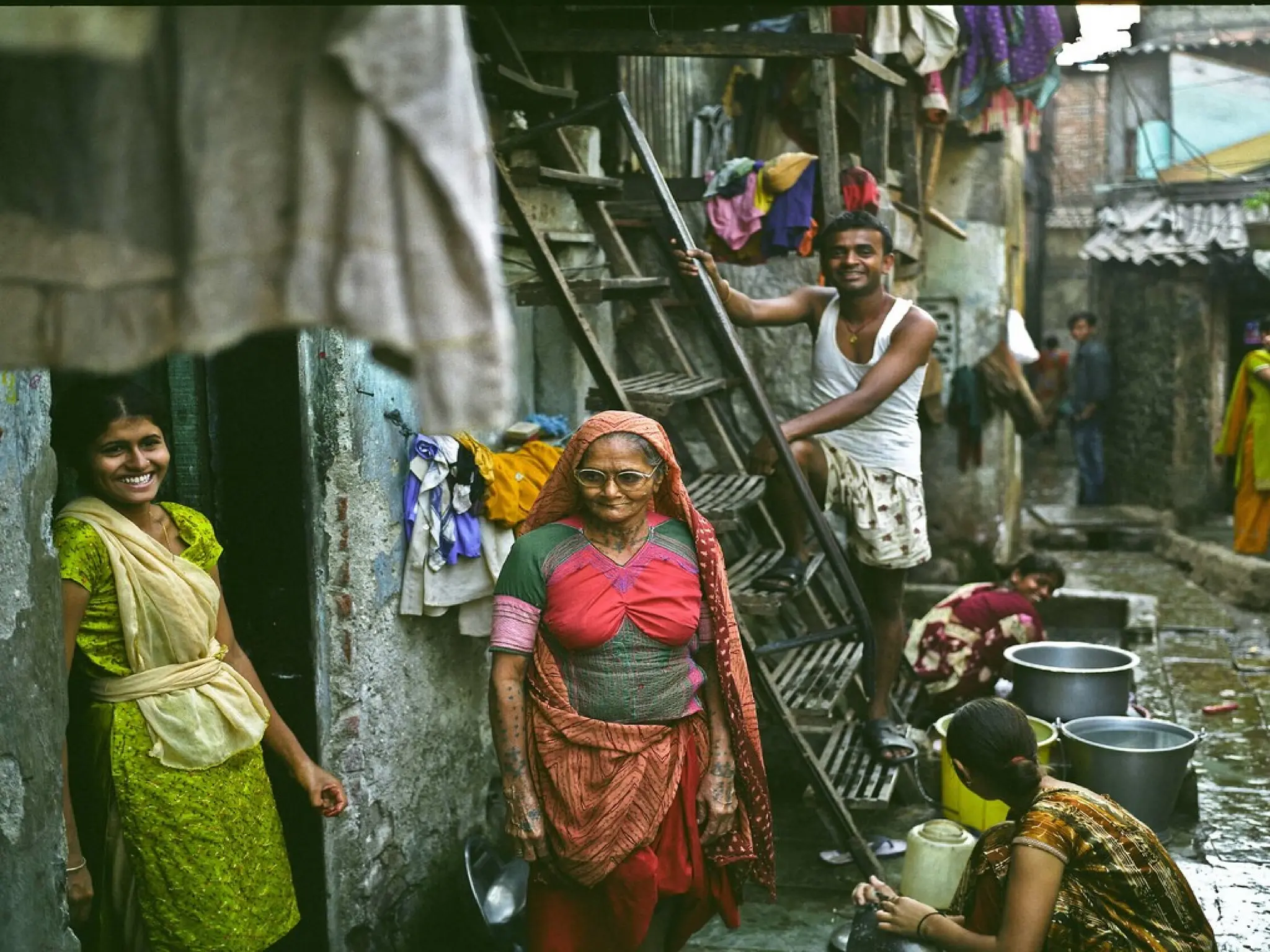
 Poor quality of life
 Failure in providing;
-Shelter - Basic Services
- Water/ Sanitation
- Solid waste management, -
• Population , Poverty , Pollution, --- greatest challenge to Indian
Cities.
• Indian Urbanization is rightly called :
 Urbanization of Population
 Urbanization of Poverty
 Urbanization of Pollution
URBAN INDIA- 2030-Mckinsey Global Inst-
• India Urban Awakening :Building Inclusive Cities-Report-
April, 2010 projects that by 2030:
• 590 m -- to live in Urban India- twice US population
• 70% GDP-- generated by cities
• 80% Revenue -- generated by cities
• 4 fold increase-- in per capita income
• 5 times --number by which GDP would multiply
• 270 million -- net increase in working age group
• 70% of new jobs(170 mil)-- generated in cities
• 91 M urban households-- middle class-- up from 22 M
• 68 Cities -- Metropolises-Europe has 35 only
• $ 1.2T capital needed - to meet projected infrastructure
demand
• 700-900 million Sqmts --of residential/ commercial area-
needed annually- a new Chicago to be created
• 2.5 b Sqmts roads paved-20times created in last decade
• 7400km (350-4ookm/year) of metro needed --20times
created in last decade
• 200 million Rural Indians --to benefit-living close to top 70
cities
• 75%urban India-- to live in bottom segment -earning Rs 80
per day
• Infrastructure-
•Genesis, Role&
Importance
Pillars of Development
• Infrastructure
• Investment
• Innovations
• Inclusion
• Infrastructure - basic physical facilities
• needed for operation of society/ enterprise: --
• --basic facilities/ system serving a country,
region, or community-- buildings, roads,
power ,water, open spaces, leisure ,mass
transit, telecommunications networks, health ,
education,
• Infrastructure - -essential for economy,
human beings; quality of life
• Globally-First federally funded infrastructure project -
Cape Henry Lighthouse-- built in 1789 at Virginia Beach,
Virginia.
Infrastructure- Genesis
French Term- first used in France in 1880s
-- infra- meaning below & structure- means building
- -foundation - upon which structure of an economy & society
built.
-Infrastructure --leveraged by urbanization /cities
--Concentration of people, institutions, economy in a limited
area
- Investments in infrastructure -- costly and capital-intensive,
- Infrastructure vital -economic , physical, social, development
/prosperity.
-- Public Sector--Large-scale infra Project- funded by Tax Revenue
•-- Private Sector/local authorities-- Small scale Infrastructure -. -
Public- Private Partnership- Large scale infra projects.
--Since 1992- Liberalization/Globalization of Indian economy
-- Major investment coming from-- Private sector or JV-
Public/Private sector
Role & Importance -
Infrastructure
-Infrastructures critical for reasons;
- Forms Backbone of Growth, Development, Prosperity of any nation
-- Help in -- Physical, social, Development of a Community/City/Country
- Developing Economy
-Promoting Business
-Generating Employment-
-Linking area of Production & Consumption
--Bridging gap between demand & supply
--Connecting places -- living and working
--- Skilling people;
-Delivering Goods/Services
-Empowering people & Communities
--Improving productivity of cities/citizens/communities-
-- Making people happy /healthy
-- -Improves accessibility; Connecting Communities- Lifeline of a city/nation
•- Employing 14 million people directly - From locomotive engineers , electrical
power line installers to truck drivers
•--construction / infrastructure jobs --11% of nation’s workforce
--
--
Infrastructures-
Typologies
Typologies of infrastructure
• Types of Infrastructure- Hard & Soft
• Hard Infrastructure- Built environment—involve physical
connections between places that carry people, materials, information
and energy-
-Transportation/ Communication network ,Roads, Power, Water supply,
Sewerage, Storm water drainage , Solid waste management,
• Soft infrastructure -- services required to maintain - health,
social needs of communities—Healthcare , Education, Leisure, Open
Spaces, Entertainment, Community facilities ,Museums, Art& Culture,
Heritage, Law Enforcement, Governance
• Essential/Non- Essential
-- a bridge across a river might be essential --while a large sports stadium
is not
• Essential infrastructure-- power stations , electricity supplies, sewage
systems, clean drinking water , major transport systems (metro systems
/railways) and telecommunications networks
• Status of
Infrastructure
STATUS OF URBAN INFRASTRUCTURE
•In India, existing infrastructure scenario critical.
•As per recent estimates:
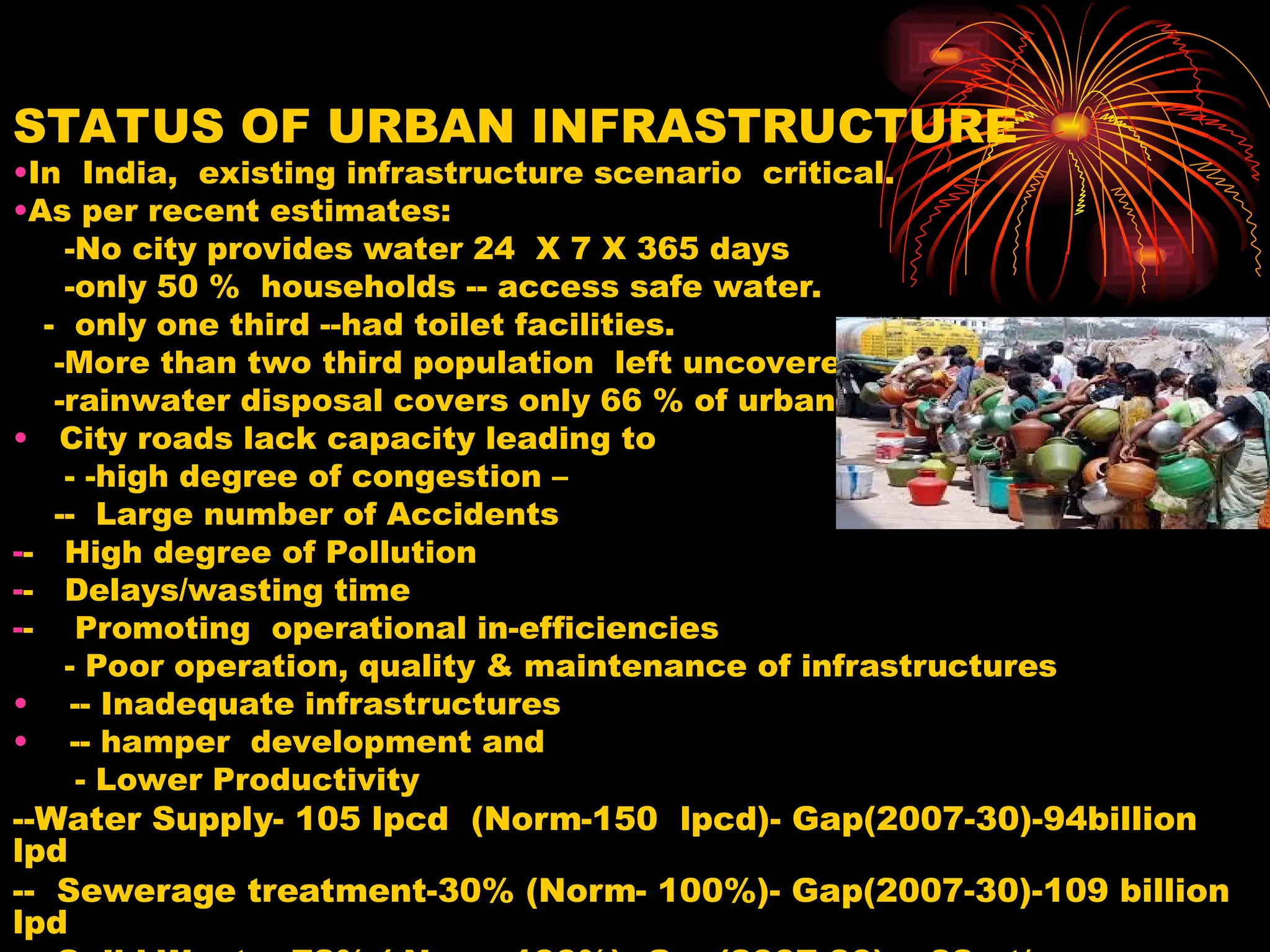
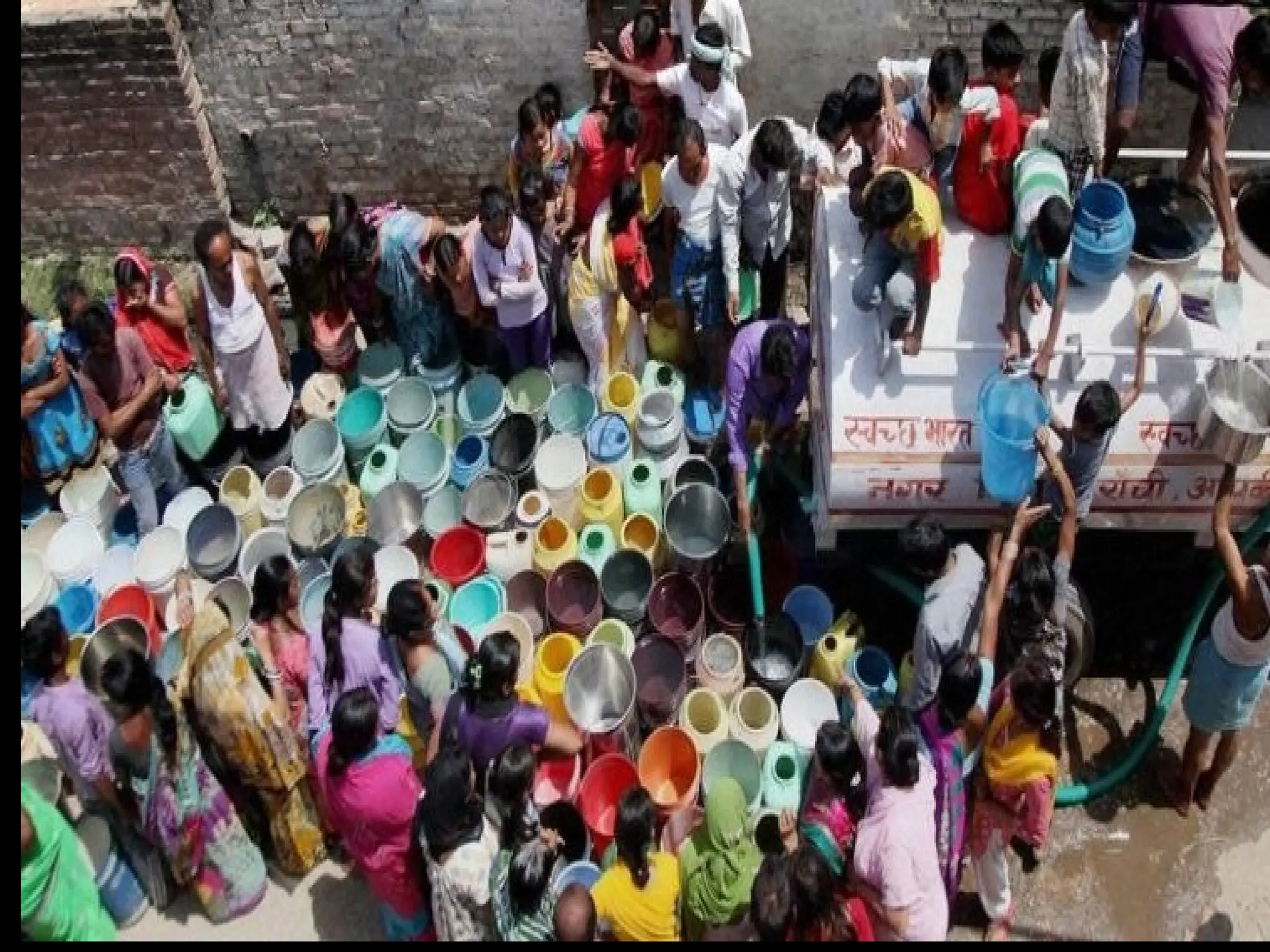
-No city provides water 24 X 7 X 365 days
-only 50 % households -- access safe water.
- only one third --had toilet facilities.
-More than two third population left uncovered by sanitation
-rainwater disposal covers only 66 % of urban population.
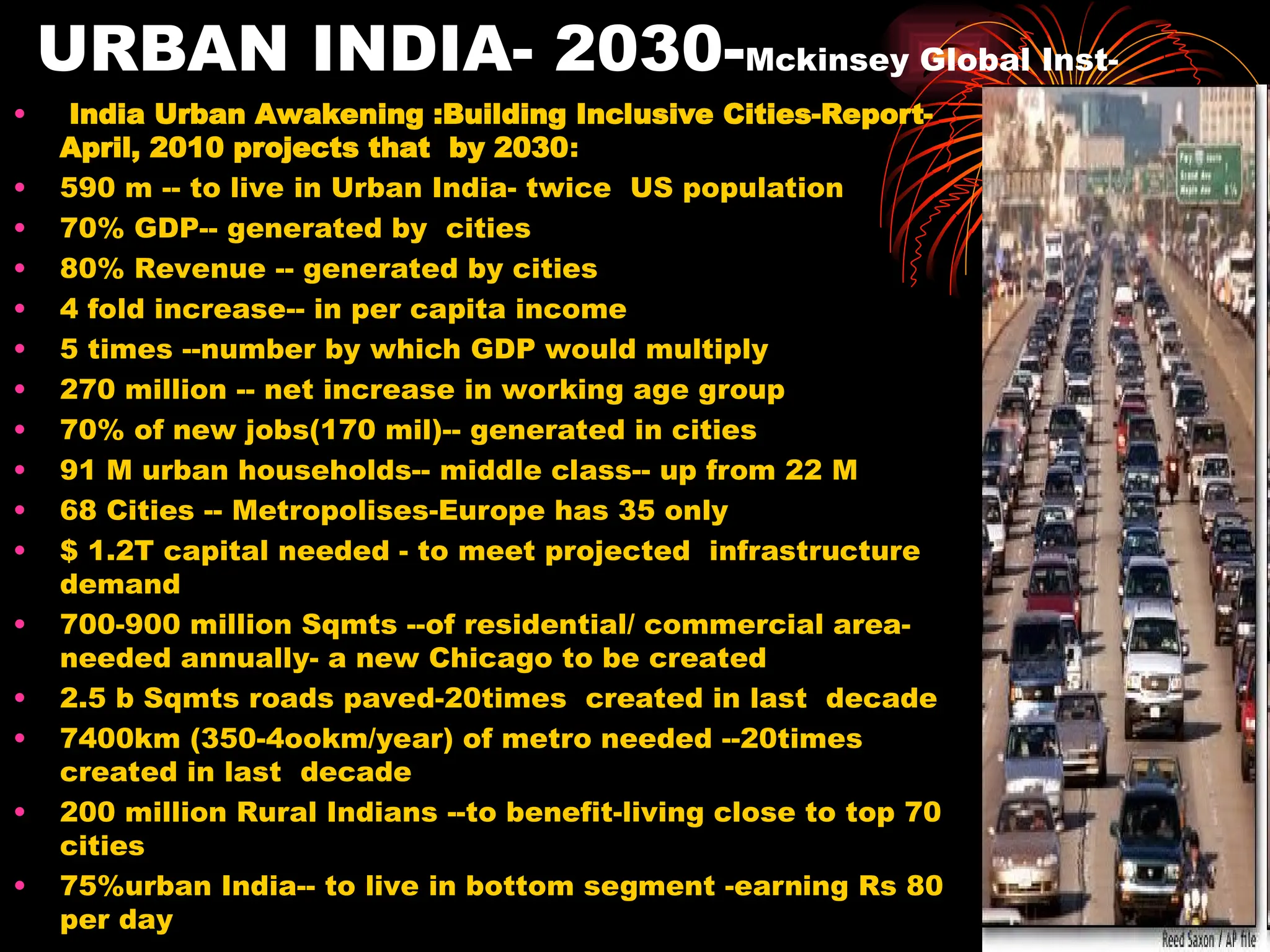
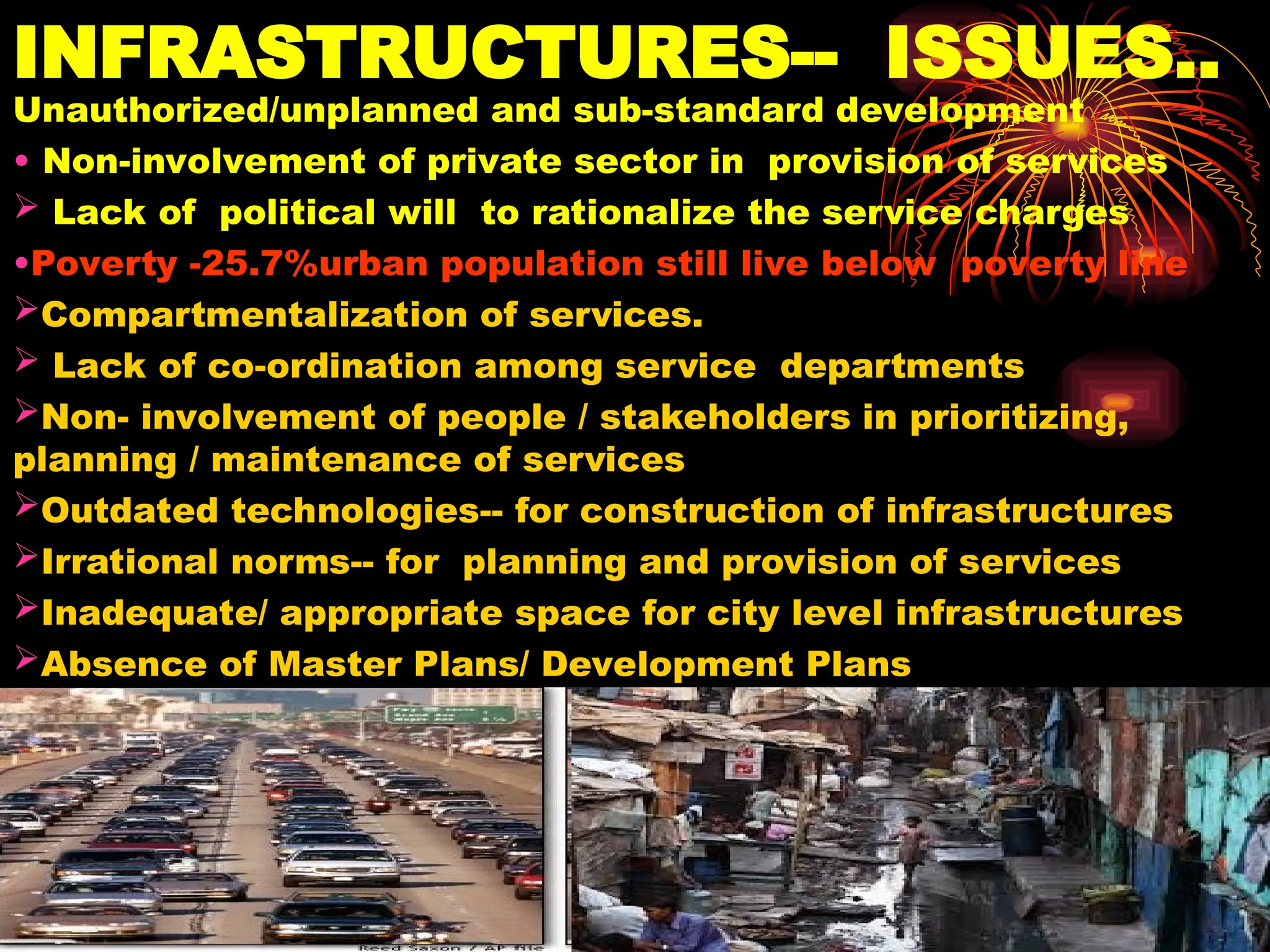
• City roads lack capacity leading to
- -high degree of congestion –
-- Large number of Accidents
-- High degree of Pollution
-- Delays/wasting time
-- Promoting operational in-efficiencies
- Poor operation, quality & maintenance of infrastructures
• -- Inadequate infrastructures
• -- hamper development and
- Lower Productivity
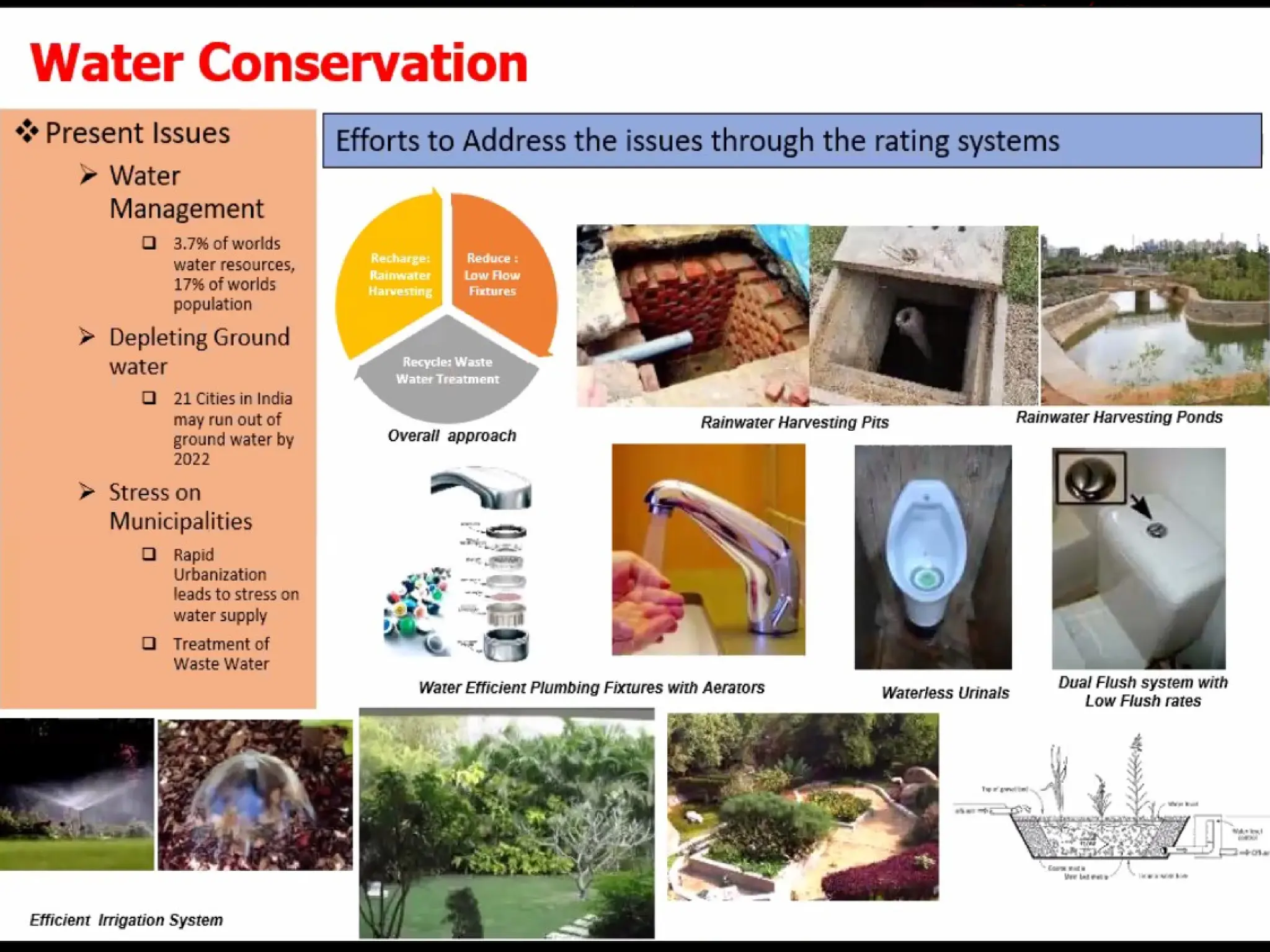
--Water Supply- 105 lpcd (Norm-150 lpcd)- Gap(2007-30)-94billion
lpd
-- Sewerage treatment-30% (Norm- 100%)- Gap(2007-30)-109 billion
lpd
Urbanization-Status
Urbanization-Status
STATE OF INFRASTRUCTURES-INDIA
• Public Transport- 30% of total trips- (Norm 50%)-
• Gap(2007-30)- Private Transport-4,40,000 lane kms,
• Railway based mass transport need 6400 kms of track
• Slum Population-24%-( norm 0%)-Shortage -38 mdu
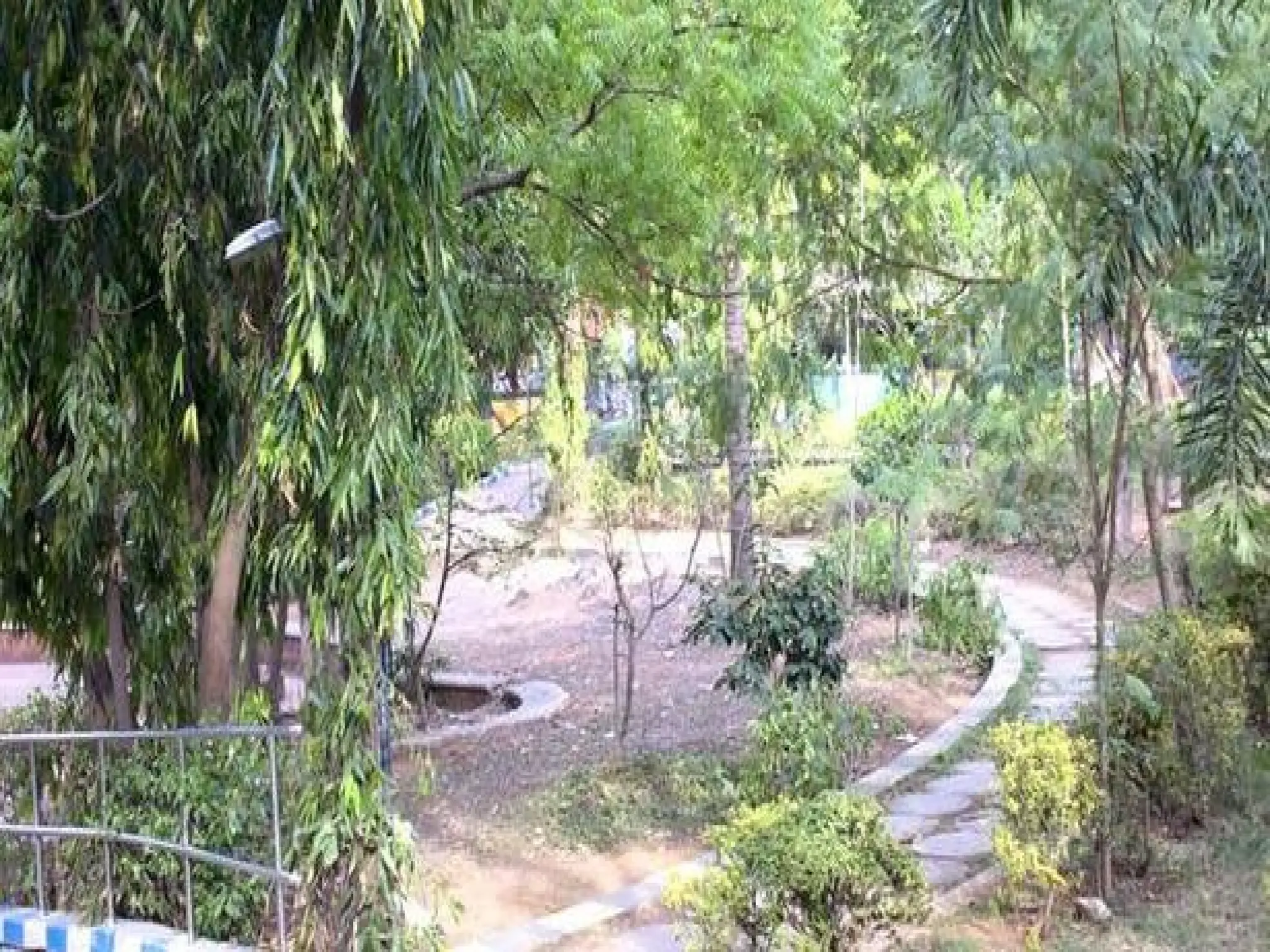
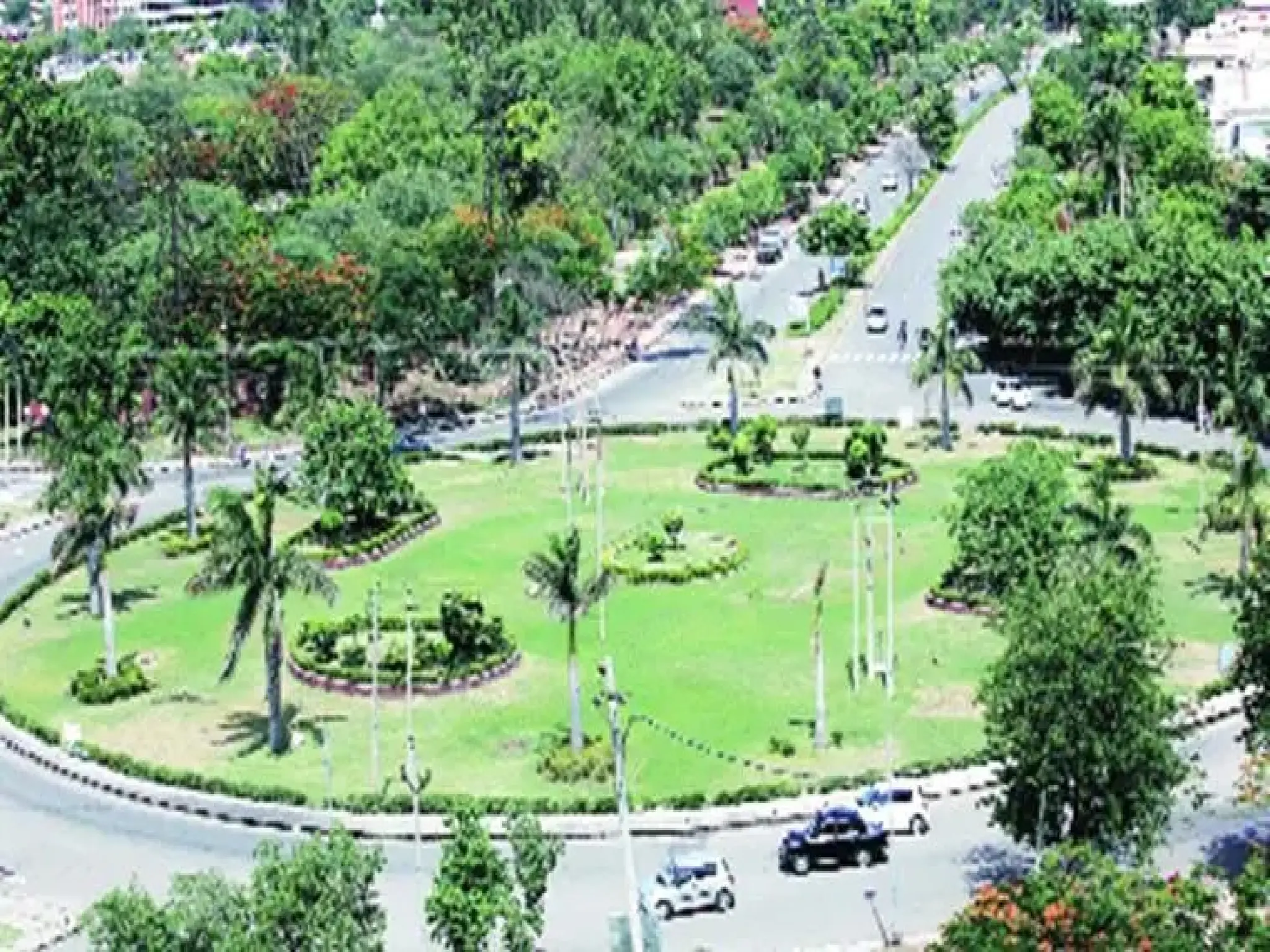
• Park & open Spaces-2.7 Sqm-( norm 9 sqm)
• High Powered Committee Report --on Urban
Infrastructure/Services(MOUD,GOI)- 2011
- Projected Investment for Urban Infrastructure for next 20 Years
(2012-13) to (2031-32)-
- -New Infrastructures -Rs 39.2 Lakh Crores( excluding cost of land)
- O&M -- old & new assets- Rs 19.9 –
- Total Cost – 59.1 Lakh Crores
- - ULBs to contribute 54% capital investment & 25% O&M cost
- Situation improving with launch of National Missions
- -PMAY; Swatchh Bharat Mission, NuLM, MnRegA; AMRUT; HRIDAY,
• Infrastructure-
Issues
Cities finding increasingly difficult to provide /maintain
•infrastructures due to …..
--Enormous increase in growth of population,
-- widening gap between demand and supply
--High cost involved in making provision of service
-Over dependence on resources starved public sector
- Lower order of priority/ allocation of funds
Irrational user charges
 poor recovery of charges
Absence of innovative planning
 and designing of infrastructures
Poor quality of construction
Low priority to maintenance
and upkeep of services
•Absence of planning framework
INFRASTRUCTURE --ISSUES
INFRASTRUCTURE ISSUES….

Inadequate and poor quality of manpower
involved in provision and maintenance.

Low allocation of financial resources
to infrastructure development at national/state/local level

Poor urban governance and poor delivery
of services

Highly subsidized urban services

Poor recovery and collection of service charges

High degree of leakage and poor accountability
INFRASTRUCTURES-- ISSUES..
Unauthorized/unplanned and sub-standard development
• Non-involvement of private sector in provision of services
 Lack of political will to rationalize the service charges
•Poverty -25.7%urban population still live below poverty line
Compartmentalization of services.
 Lack of co-ordination among service departments
Non- involvement of people / stakeholders in prioritizing,
planning / maintenance of services
Outdated technologies-- for construction of infrastructures
Irrational norms-- for planning and provision of services
Inadequate/ appropriate space for city level infrastructures
Absence of Master Plans/ Development Plans
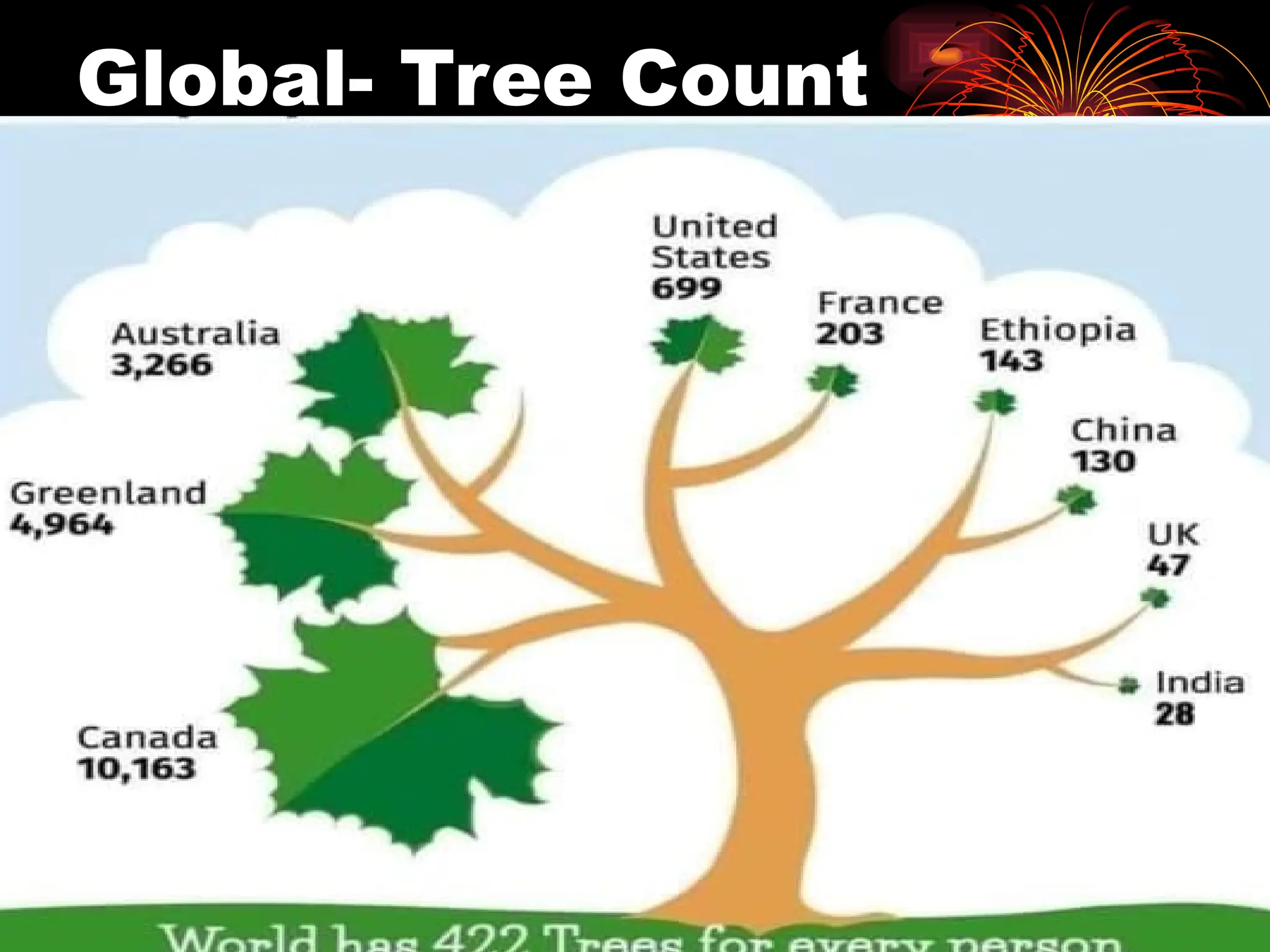
Global- Tree Count
Open Spaces
• Infrastructure-
•Approach-
Global& Local
Govt of India
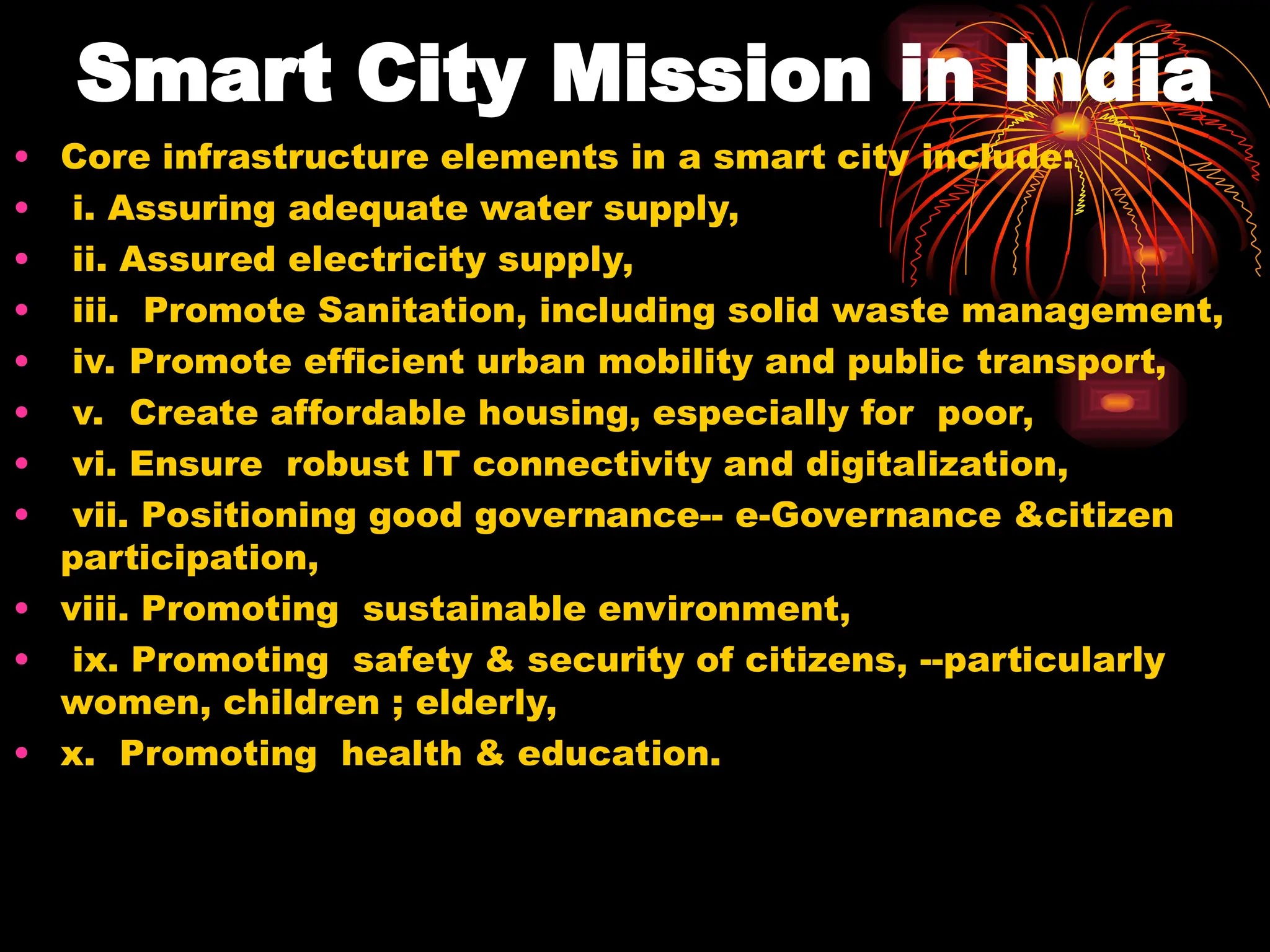
Smart City Mission in India
• Core infrastructure elements in a smart city include:
• i. Assuring adequate water supply,
• ii. Assured electricity supply,
• iii. Promote Sanitation, including solid waste management,
• iv. Promote efficient urban mobility and public transport,
• v. Create affordable housing, especially for poor,
• vi. Ensure robust IT connectivity and digitalization,
• vii. Positioning good governance-- e-Governance &citizen
participation,
• viii. Promoting sustainable environment,
• ix. Promoting safety & security of citizens, --particularly
women, children ; elderly,
• x. Promoting health & education.
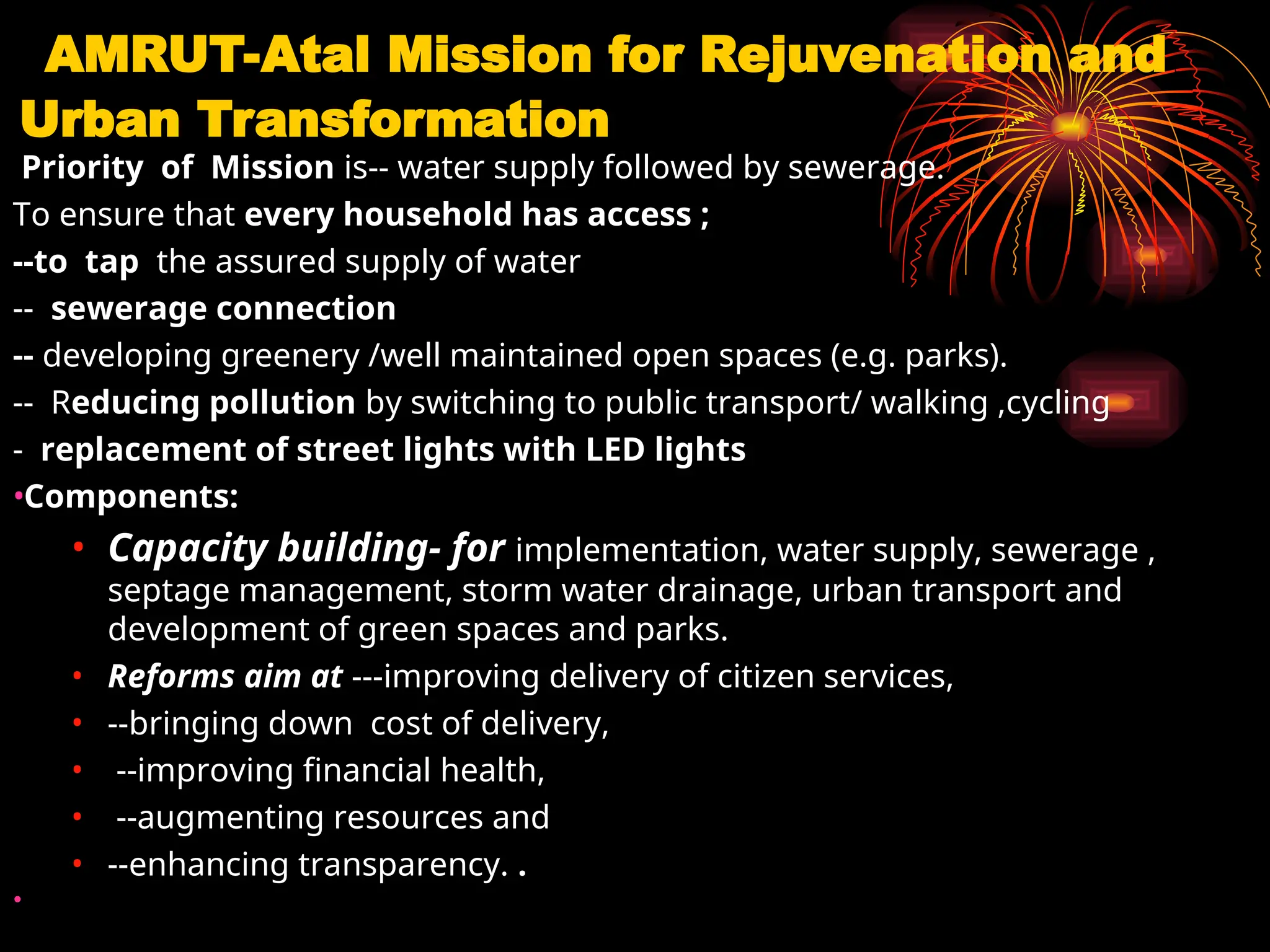
AMRUT-Atal Mission for Rejuvenation and
Urban Transformation
Priority of Mission is-- water supply followed by sewerage.
To ensure that every household has access ;
--to tap the assured supply of water
-- sewerage connection
-- developing greenery /well maintained open spaces (e.g. parks).
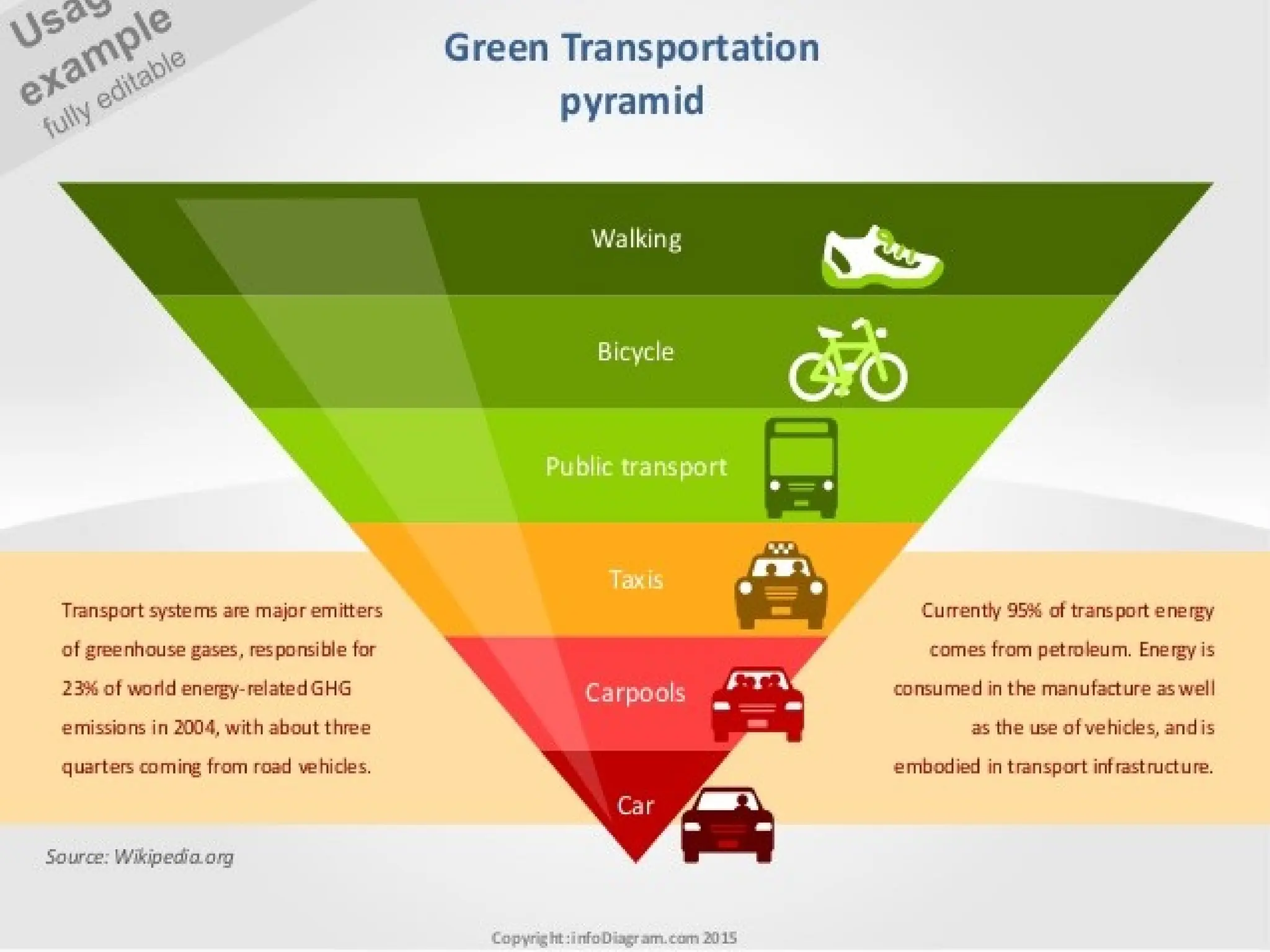
-- Reducing pollution by switching to public transport/ walking ,cycling
- replacement of street lights with LED lights
•Components:
• Capacity building- for implementation, water supply, sewerage ,
septage management, storm water drainage, urban transport and
development of green spaces and parks.
• Reforms aim at ---improving delivery of citizen services,
• --bringing down cost of delivery,
• --improving financial health,
• --augmenting resources and
• --enhancing transparency. .
•
• Infrastructure-
Concept &
•Approach
Key concepts in urban infrastructure
• Key Concepts--Capacity & Sustainability
• 1. Capacity--System to have Adequate Capacity — below capacity’ describes
inefficiency- -Full capacity --when network used to full extent.- If capacity - reached
/exceeded, urban area struggles/ suffer --if public transport system reaches capacity- -
not enough space on buses/ trains to transport—will cost businesses money in lost
revenue/prevent people from accessing services they need.
• 2. Sustainability - Make infrastructure sustainable ;supporting environmental, social
/economic needs of city - today/ future,-- Sustainable transport infrastructure-- mass
transit systems-- Appropriate energy sources--Safe and secure housing --‘Future proofing’,
ensuring infrastructure can easily adapted to unknown future needs. need to be rebuilt
• 3 Quality – construction, operation and management of infrastructure to be ensured
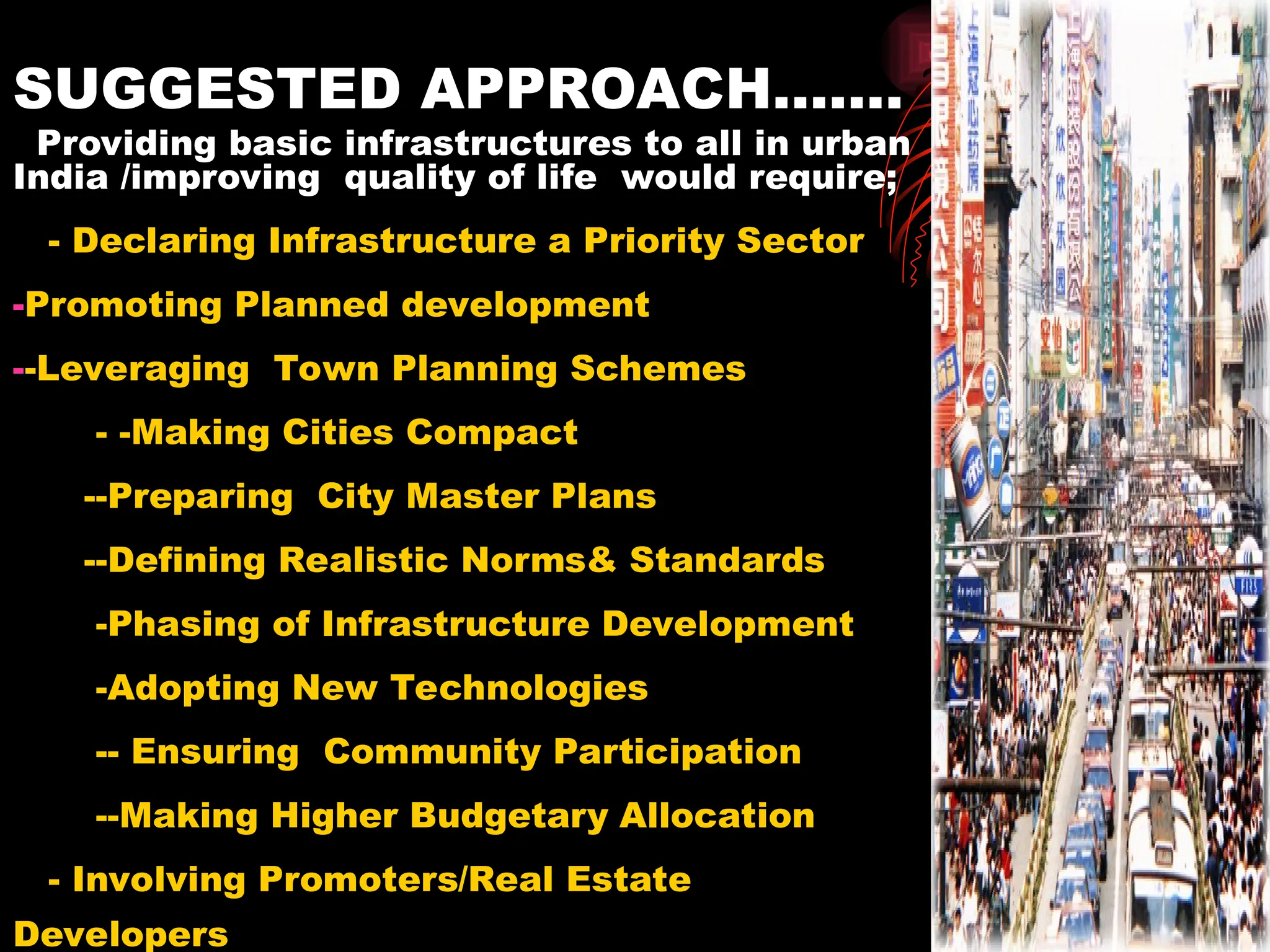
SUGGESTED APPROACH…….
Providing basic infrastructures to all in urban
India /improving quality of life would require;
- Declaring Infrastructure a Priority Sector
-Promoting Planned development
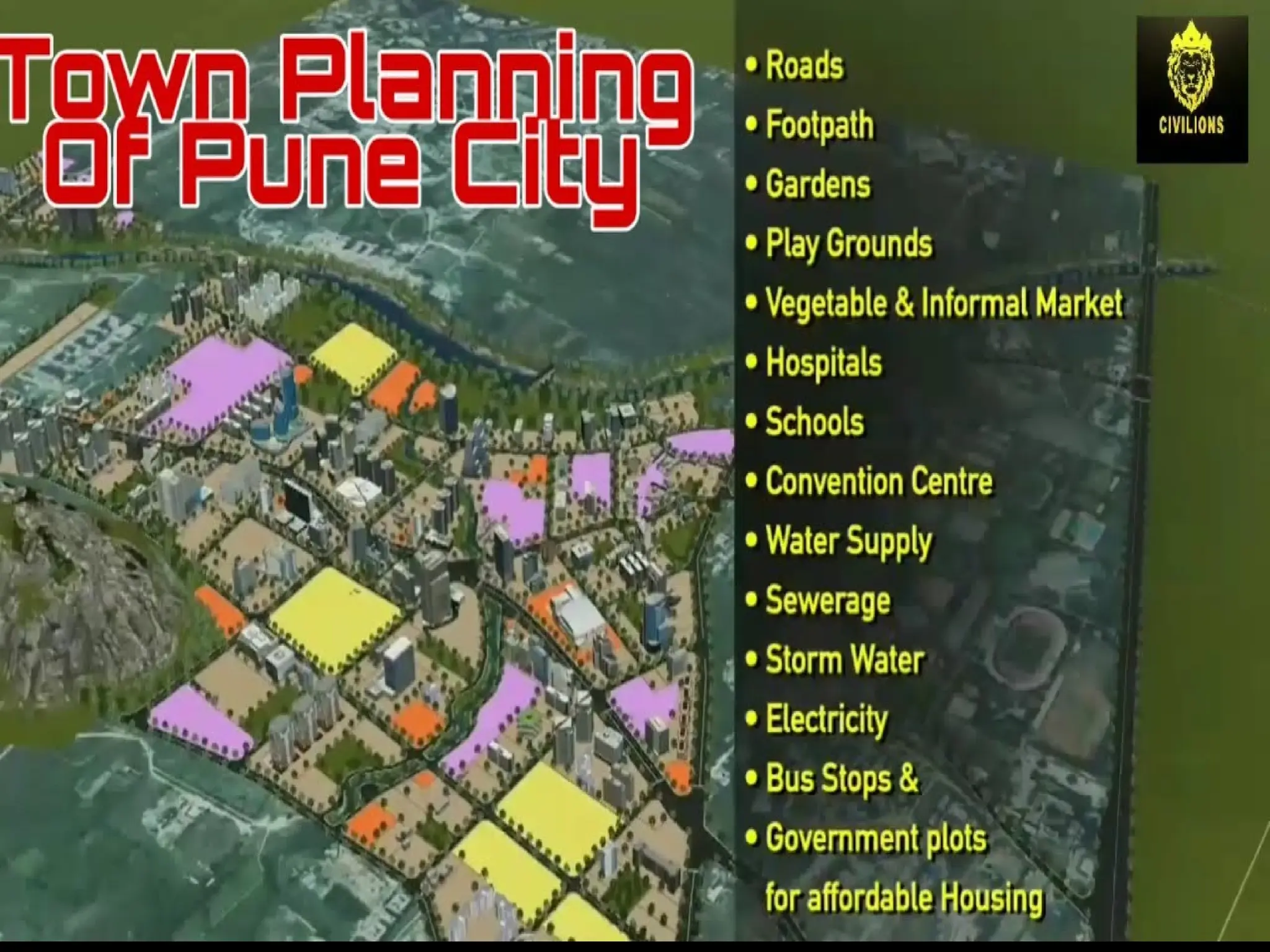
--Leveraging Town Planning Schemes
- -Making Cities Compact
--Preparing City Master Plans
--Defining Realistic Norms& Standards
-Phasing of Infrastructure Development
-Adopting New Technologies
-- Ensuring Community Participation
--Making Higher Budgetary Allocation
- Involving Promoters/Real Estate
Developers
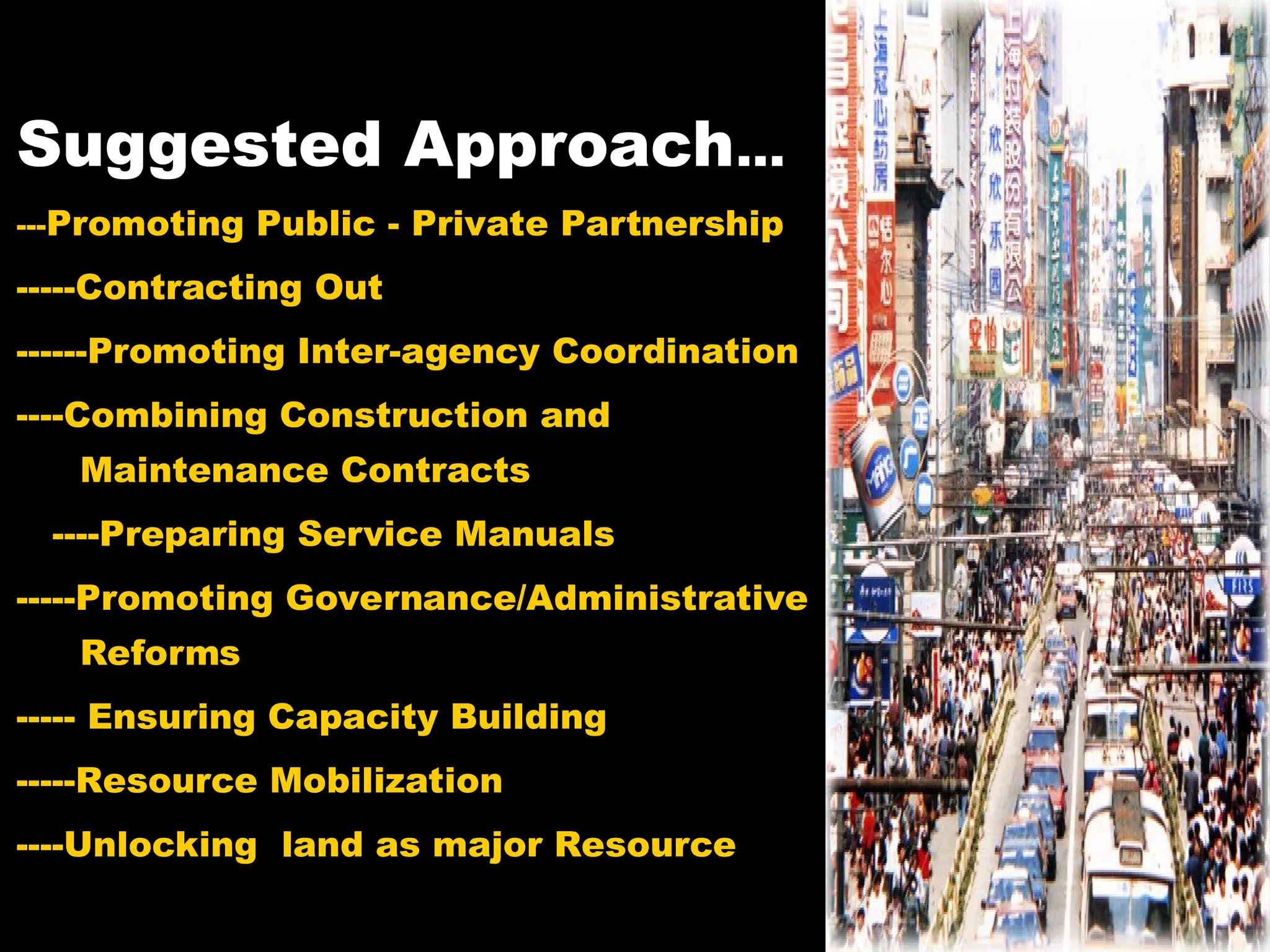
Suggested Approach...
---Promoting Public - Private Partnership
-----Contracting Out
------Promoting Inter-agency Coordination
----Combining Construction and
Maintenance Contracts
----Preparing Service Manuals
-----Promoting Governance/Administrative
Reforms
----- Ensuring Capacity Building
-----Resource Mobilization
----Unlocking land as major Resource
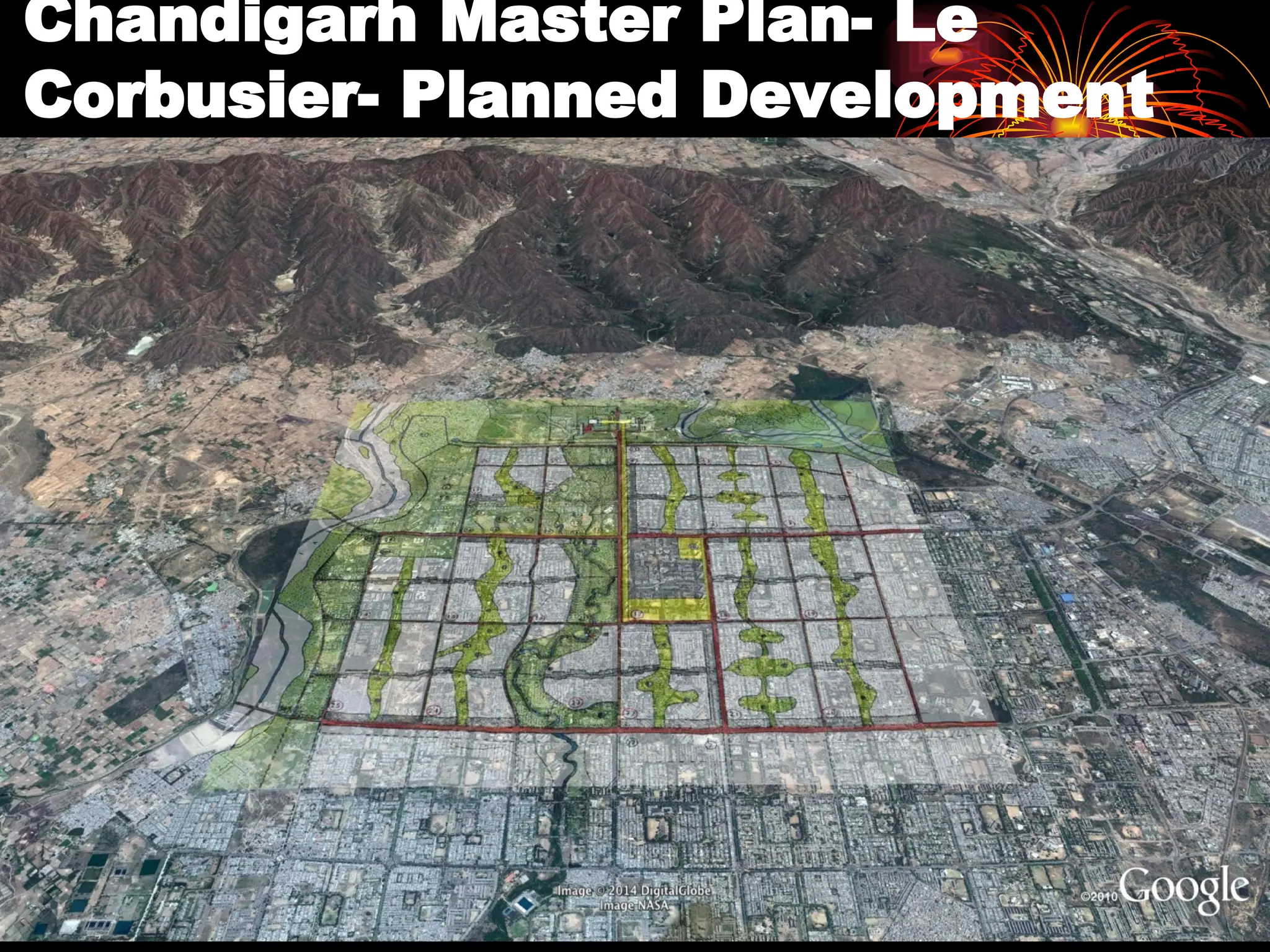
Chandigarh Master Plan- Le
Corbusier- Planned Development
Town Planning Scheme-
Ahmedabad Ring Road
Curitiba- Brazil -Worlds’ first
Sustainable city – Making Cities Green
Defining Sustainable
Transport
• Sustainable Transport --
• -- sometimes known as
Green Transport
• -- form of transport that does not use
/ rely on dwindling natural resources.
• -- relies on renewable /regenerated
energy
• -- rather than fossil fuels that have a
finite life expectancy
Cost effective strategy for energy efficiency
Least
cost
impact
Some
cost
impact
Highest
cost
impact
• Climate responsive
architectural design
• Efficient building envelope
• Daylight harvesting
• Integration of natural
sources for cooling &
heating in building design.
Offset energy demand from
the grid by installing on-site
renewable energy
• Energy efficient equipment
• Lights
• Fans
• Air- conditioners
• Efficient building Operation &
Maintenance through BMS
(Building Management System) &
Smart Metering
Using Technology
Smart Technologies
• Using smart technologies for ;
• -- smart parking- to help find a parking space / allow for digital payment.
• -- smart traffic management-- to monitor traffic flows / optimise traffic
lights to reduce congestion/ride-sharing services / digital bus stops- bus
schedule -Managing Traffic/parking --Minimizing travel
• Promoting Energy conservation / environmental efficiencies- dimming
streetlights when roads are empty–
• -- improving operations /maintenance / planning of power supplies.
• -- Combat climate change / air pollution
• --waste management / sanitation -- rubbish collection, bins /fleet
management
• -- Promoting safety measures-- monitoring areas of high crime-- using
sensors for early warning for floods, landslides, hurricanes or droughts.
• -- Smart buildings --structural health monitoring -- feedback to determine
when repairs are necessary.
• -- Citizens notifying officials of any problems,-- road potholes—
monitoring infrastructure problem leaks -- water pipes.
• -- improving efficiency of manufacturing, urban farming, energy use,
• -- connect all services to provide combined solutions for citizens.
• Infrastructure-
Raising
Resources
LAND BASED FINANCIAL FRESOURCES
• Property Tax
• Betterment Charges
• Town Planning Schemes
• Pricing (Tradable) Floor Area Ratio
• Development Charges-
• Land Use Conversion Charges
• Vacant Land Tax
• Optimum Utilization of Vacant Govt. Lands
• Transfer of Development Rights(TDR)-
• Accommodation Reservation(AR)-
• Parking Charges
• Advertisement Rights –
• Air Space Development Rights
• Infrastructure TDR-
• User Charges
• Licensing Private Colonies-
• Infrastructure
•-Way Forward
WAY FORWARD….
Habitat-II-1996
- Urban sustainability cannot be achieved without:
-Providing adequate infrastructures,
--Ensuring Adequate services
-Making services affordable
 Providing affordable infrastructures in urban
areas will be:
-- most formidable task,
---for Professionals, Administrators and Agencies
involved in
-planning, development / anagement of urban areas
.
Our capacity/capability to meet these challenges,
-effectively / efficiently,
- would hold key and
-determine future of Urban India
- which will house billions of poor / illiterates.
-PLANNED DEVELOPMENT ,WORKING WITH ALL
STAKEHOLDERS IN CO-OPERATIVE /CO-
ORDINATED /COLLABORATIVE MANNER-
ACCORDING PRIORITY-ALLOCATING RESOURCES--
THANKS
FOR YOUR
PATIENCE
AND TIME

Urban Infrastructure in urban India- issues and options.ppt

  • 1.
    Infrastructures in –Urban India Issuesand Options Ar. Jit Kumar Gupta Chief Town Planner Sahara Prime City Limited Chandigarh E Mail- jit.kumar1944@gmail.com
  • 2.
  • 3.
    Population Scenario -Global  World population recorded: World population recorded:  1 Billion in 1804 1 Billion in 1804  2 Billion in 1927 (123 yrs. Later) 2 Billion in 1927 (123 yrs. Later)  3 Billion in 1960 (33 yrs. Later) 3 Billion in 1960 (33 yrs. Later)  4 Billion in 1974 (14 yrs. Later) 4 Billion in 1974 (14 yrs. Later)  5 Billion in 1987 (13 yrs. Later) 5 Billion in 1987 (13 yrs. Later)  6 Billion in 1999 (12 yrs. Later) 6 Billion in 1999 (12 yrs. Later)  7 Billion in 2010 (11 yrs. Later) 7 Billion in 2010 (11 yrs. Later)  UNO population projection --7.9-10.9 UNO population projection --7.9-10.9 billion for 2050. billion for 2050.  China Indi/an - over 1 billion China Indi/an - over 1 billion  India- most populated country in 2023 India- most populated country in 2023  Tokyo - largest Urban Agglomeration Tokyo - largest Urban Agglomeration  -- 37.19 million residents (2023). -- 37.19 million residents (2023).  -- 34 Urban Agglomerations with + 10 -- 34 Urban Agglomerations with + 10 million population in world million population in world  ---India - 3 (Mumbai, Kolkata & ---India - 3 (Mumbai, Kolkata & Delhi).2011; Delhi).2011;  7- 2031; 7- 2031;  9-2051 9-2051
  • 6.
  • 7.
    Population Scenario- India-2011 •Indian Population • 250 million - 1919 • 500 million - 1966 (47 yrs. Later) • 1000 million - 2000 ( 34 yrs. Later) • 1027 million -- 2001 (1yr Later) • 1210 million - 2011 (10 yrs. Later) • 2050 Indian population -- 1600 million • -- 50% living in Urban India. • Urban India- 285.39 m in 2001 (5161 towns) • 377 million in 2011- (7935 towns) • Metro Centres -5 (1951)- -53 (2011)-68(2031) • 10 m plus- nil (1951)- 3 (2011) -7 (2031)- 9(2051) • Greater Mumbai - 18.37 million -most populous city • Urban India -- added more persons(91m) • -- Vs Rural India(90m)-- in last decade • massive shift of population • -not simply a shift of demographics • -- put cities / towns at centre of India’s development trajectory. • Increased population involves; • More cities/towns- expansion of existing towns • More Infrastructures- both hard and soft • More housing, • More educational/ healthcare/ other institutions • More commercial space
  • 8.
    Indian Urbanisation-II • Urbanization-determinant / consequence of economic development. • Development & urbanization – positively related • Urban growth & economic growth -go hand in hand • Cities – Known as Engines of economic growth • Cities- Major contributors to national wealth. • Economic Prosperity- linked to urban productivity • Building Sustainable cities- critical for boosting rural economy by improved urban consumption • Urban centers need planned development for  Attracting investment  Generating Employment.  Providing Infrastructures  Ensuring quality of life.  Achieving Sustainability,  Making cities more Productive, Livable, Humane and Eco- friendly. Failure to manage Urban India- • - lopsided/unplanned growth • - hitting economy • -lowering productivity besides • - promoting poverty- Lowering quality of life.
  • 9.
    Indian Urbanisation-III • Citieshave both positivity and negativities in terms of;  Haphazard /Unplanned development.  Poorly managed /governed.  Lacks Infrastructures  Failure to meet urban dynamism  Enormous growth of slums  Poor quality of life  Failure in providing; -Shelter - Basic Services - Water/ Sanitation - Solid waste management, - • Population , Poverty , Pollution, --- greatest challenge to Indian Cities. • Indian Urbanization is rightly called :  Urbanization of Population  Urbanization of Poverty  Urbanization of Pollution
  • 10.
    URBAN INDIA- 2030-MckinseyGlobal Inst- • India Urban Awakening :Building Inclusive Cities-Report- April, 2010 projects that by 2030: • 590 m -- to live in Urban India- twice US population • 70% GDP-- generated by cities • 80% Revenue -- generated by cities • 4 fold increase-- in per capita income • 5 times --number by which GDP would multiply • 270 million -- net increase in working age group • 70% of new jobs(170 mil)-- generated in cities • 91 M urban households-- middle class-- up from 22 M • 68 Cities -- Metropolises-Europe has 35 only • $ 1.2T capital needed - to meet projected infrastructure demand • 700-900 million Sqmts --of residential/ commercial area- needed annually- a new Chicago to be created • 2.5 b Sqmts roads paved-20times created in last decade • 7400km (350-4ookm/year) of metro needed --20times created in last decade • 200 million Rural Indians --to benefit-living close to top 70 cities • 75%urban India-- to live in bottom segment -earning Rs 80 per day
  • 11.
  • 12.
    Pillars of Development •Infrastructure • Investment • Innovations • Inclusion • Infrastructure - basic physical facilities • needed for operation of society/ enterprise: -- • --basic facilities/ system serving a country, region, or community-- buildings, roads, power ,water, open spaces, leisure ,mass transit, telecommunications networks, health , education, • Infrastructure - -essential for economy, human beings; quality of life • Globally-First federally funded infrastructure project - Cape Henry Lighthouse-- built in 1789 at Virginia Beach, Virginia.
  • 13.
    Infrastructure- Genesis French Term-first used in France in 1880s -- infra- meaning below & structure- means building - -foundation - upon which structure of an economy & society built. -Infrastructure --leveraged by urbanization /cities --Concentration of people, institutions, economy in a limited area - Investments in infrastructure -- costly and capital-intensive, - Infrastructure vital -economic , physical, social, development /prosperity. -- Public Sector--Large-scale infra Project- funded by Tax Revenue •-- Private Sector/local authorities-- Small scale Infrastructure -. - Public- Private Partnership- Large scale infra projects. --Since 1992- Liberalization/Globalization of Indian economy -- Major investment coming from-- Private sector or JV- Public/Private sector
  • 14.
    Role & Importance- Infrastructure -Infrastructures critical for reasons; - Forms Backbone of Growth, Development, Prosperity of any nation -- Help in -- Physical, social, Development of a Community/City/Country - Developing Economy -Promoting Business -Generating Employment- -Linking area of Production & Consumption --Bridging gap between demand & supply --Connecting places -- living and working --- Skilling people; -Delivering Goods/Services -Empowering people & Communities --Improving productivity of cities/citizens/communities- -- Making people happy /healthy -- -Improves accessibility; Connecting Communities- Lifeline of a city/nation •- Employing 14 million people directly - From locomotive engineers , electrical power line installers to truck drivers •--construction / infrastructure jobs --11% of nation’s workforce -- --
  • 15.
  • 16.
    Typologies of infrastructure •Types of Infrastructure- Hard & Soft • Hard Infrastructure- Built environment—involve physical connections between places that carry people, materials, information and energy- -Transportation/ Communication network ,Roads, Power, Water supply, Sewerage, Storm water drainage , Solid waste management, • Soft infrastructure -- services required to maintain - health, social needs of communities—Healthcare , Education, Leisure, Open Spaces, Entertainment, Community facilities ,Museums, Art& Culture, Heritage, Law Enforcement, Governance • Essential/Non- Essential -- a bridge across a river might be essential --while a large sports stadium is not • Essential infrastructure-- power stations , electricity supplies, sewage systems, clean drinking water , major transport systems (metro systems /railways) and telecommunications networks
  • 17.
  • 18.
    STATUS OF URBANINFRASTRUCTURE •In India, existing infrastructure scenario critical. •As per recent estimates: -No city provides water 24 X 7 X 365 days -only 50 % households -- access safe water. - only one third --had toilet facilities. -More than two third population left uncovered by sanitation -rainwater disposal covers only 66 % of urban population. • City roads lack capacity leading to - -high degree of congestion – -- Large number of Accidents -- High degree of Pollution -- Delays/wasting time -- Promoting operational in-efficiencies - Poor operation, quality & maintenance of infrastructures • -- Inadequate infrastructures • -- hamper development and - Lower Productivity --Water Supply- 105 lpcd (Norm-150 lpcd)- Gap(2007-30)-94billion lpd -- Sewerage treatment-30% (Norm- 100%)- Gap(2007-30)-109 billion lpd
  • 19.
  • 20.
    STATE OF INFRASTRUCTURES-INDIA •Public Transport- 30% of total trips- (Norm 50%)- • Gap(2007-30)- Private Transport-4,40,000 lane kms, • Railway based mass transport need 6400 kms of track • Slum Population-24%-( norm 0%)-Shortage -38 mdu • Park & open Spaces-2.7 Sqm-( norm 9 sqm) • High Powered Committee Report --on Urban Infrastructure/Services(MOUD,GOI)- 2011 - Projected Investment for Urban Infrastructure for next 20 Years (2012-13) to (2031-32)- - -New Infrastructures -Rs 39.2 Lakh Crores( excluding cost of land) - O&M -- old & new assets- Rs 19.9 – - Total Cost – 59.1 Lakh Crores - - ULBs to contribute 54% capital investment & 25% O&M cost - Situation improving with launch of National Missions - -PMAY; Swatchh Bharat Mission, NuLM, MnRegA; AMRUT; HRIDAY,
  • 21.
  • 22.
    Cities finding increasinglydifficult to provide /maintain •infrastructures due to ….. --Enormous increase in growth of population, -- widening gap between demand and supply --High cost involved in making provision of service -Over dependence on resources starved public sector - Lower order of priority/ allocation of funds Irrational user charges  poor recovery of charges Absence of innovative planning  and designing of infrastructures Poor quality of construction Low priority to maintenance and upkeep of services •Absence of planning framework INFRASTRUCTURE --ISSUES
  • 23.
    INFRASTRUCTURE ISSUES….  Inadequate andpoor quality of manpower involved in provision and maintenance.  Low allocation of financial resources to infrastructure development at national/state/local level  Poor urban governance and poor delivery of services  Highly subsidized urban services  Poor recovery and collection of service charges  High degree of leakage and poor accountability
  • 24.
    INFRASTRUCTURES-- ISSUES.. Unauthorized/unplanned andsub-standard development • Non-involvement of private sector in provision of services  Lack of political will to rationalize the service charges •Poverty -25.7%urban population still live below poverty line Compartmentalization of services.  Lack of co-ordination among service departments Non- involvement of people / stakeholders in prioritizing, planning / maintenance of services Outdated technologies-- for construction of infrastructures Irrational norms-- for planning and provision of services Inadequate/ appropriate space for city level infrastructures Absence of Master Plans/ Development Plans
  • 34.
  • 35.
  • 36.
  • 40.
    Smart City Missionin India • Core infrastructure elements in a smart city include: • i. Assuring adequate water supply, • ii. Assured electricity supply, • iii. Promote Sanitation, including solid waste management, • iv. Promote efficient urban mobility and public transport, • v. Create affordable housing, especially for poor, • vi. Ensure robust IT connectivity and digitalization, • vii. Positioning good governance-- e-Governance &citizen participation, • viii. Promoting sustainable environment, • ix. Promoting safety & security of citizens, --particularly women, children ; elderly, • x. Promoting health & education.
  • 41.
    AMRUT-Atal Mission forRejuvenation and Urban Transformation Priority of Mission is-- water supply followed by sewerage. To ensure that every household has access ; --to tap the assured supply of water -- sewerage connection -- developing greenery /well maintained open spaces (e.g. parks). -- Reducing pollution by switching to public transport/ walking ,cycling - replacement of street lights with LED lights •Components: • Capacity building- for implementation, water supply, sewerage , septage management, storm water drainage, urban transport and development of green spaces and parks. • Reforms aim at ---improving delivery of citizen services, • --bringing down cost of delivery, • --improving financial health, • --augmenting resources and • --enhancing transparency. . •
  • 42.
  • 43.
    Key concepts inurban infrastructure • Key Concepts--Capacity & Sustainability • 1. Capacity--System to have Adequate Capacity — below capacity’ describes inefficiency- -Full capacity --when network used to full extent.- If capacity - reached /exceeded, urban area struggles/ suffer --if public transport system reaches capacity- - not enough space on buses/ trains to transport—will cost businesses money in lost revenue/prevent people from accessing services they need. • 2. Sustainability - Make infrastructure sustainable ;supporting environmental, social /economic needs of city - today/ future,-- Sustainable transport infrastructure-- mass transit systems-- Appropriate energy sources--Safe and secure housing --‘Future proofing’, ensuring infrastructure can easily adapted to unknown future needs. need to be rebuilt • 3 Quality – construction, operation and management of infrastructure to be ensured
  • 44.
    SUGGESTED APPROACH……. Providing basicinfrastructures to all in urban India /improving quality of life would require; - Declaring Infrastructure a Priority Sector -Promoting Planned development --Leveraging Town Planning Schemes - -Making Cities Compact --Preparing City Master Plans --Defining Realistic Norms& Standards -Phasing of Infrastructure Development -Adopting New Technologies -- Ensuring Community Participation --Making Higher Budgetary Allocation - Involving Promoters/Real Estate Developers
  • 45.
    Suggested Approach... ---Promoting Public- Private Partnership -----Contracting Out ------Promoting Inter-agency Coordination ----Combining Construction and Maintenance Contracts ----Preparing Service Manuals -----Promoting Governance/Administrative Reforms ----- Ensuring Capacity Building -----Resource Mobilization ----Unlocking land as major Resource
  • 46.
    Chandigarh Master Plan-Le Corbusier- Planned Development
  • 49.
  • 50.
    Curitiba- Brazil -Worlds’first Sustainable city – Making Cities Green
  • 51.
    Defining Sustainable Transport • SustainableTransport -- • -- sometimes known as Green Transport • -- form of transport that does not use / rely on dwindling natural resources. • -- relies on renewable /regenerated energy • -- rather than fossil fuels that have a finite life expectancy
  • 52.
    Cost effective strategyfor energy efficiency Least cost impact Some cost impact Highest cost impact • Climate responsive architectural design • Efficient building envelope • Daylight harvesting • Integration of natural sources for cooling & heating in building design. Offset energy demand from the grid by installing on-site renewable energy • Energy efficient equipment • Lights • Fans • Air- conditioners • Efficient building Operation & Maintenance through BMS (Building Management System) & Smart Metering
  • 60.
  • 61.
    Smart Technologies • Usingsmart technologies for ; • -- smart parking- to help find a parking space / allow for digital payment. • -- smart traffic management-- to monitor traffic flows / optimise traffic lights to reduce congestion/ride-sharing services / digital bus stops- bus schedule -Managing Traffic/parking --Minimizing travel • Promoting Energy conservation / environmental efficiencies- dimming streetlights when roads are empty– • -- improving operations /maintenance / planning of power supplies. • -- Combat climate change / air pollution • --waste management / sanitation -- rubbish collection, bins /fleet management • -- Promoting safety measures-- monitoring areas of high crime-- using sensors for early warning for floods, landslides, hurricanes or droughts. • -- Smart buildings --structural health monitoring -- feedback to determine when repairs are necessary. • -- Citizens notifying officials of any problems,-- road potholes— monitoring infrastructure problem leaks -- water pipes. • -- improving efficiency of manufacturing, urban farming, energy use, • -- connect all services to provide combined solutions for citizens.
  • 62.
  • 63.
    LAND BASED FINANCIALFRESOURCES • Property Tax • Betterment Charges • Town Planning Schemes • Pricing (Tradable) Floor Area Ratio • Development Charges- • Land Use Conversion Charges • Vacant Land Tax • Optimum Utilization of Vacant Govt. Lands • Transfer of Development Rights(TDR)- • Accommodation Reservation(AR)- • Parking Charges • Advertisement Rights – • Air Space Development Rights • Infrastructure TDR- • User Charges • Licensing Private Colonies-
  • 64.
  • 65.
    WAY FORWARD…. Habitat-II-1996 - Urbansustainability cannot be achieved without: -Providing adequate infrastructures, --Ensuring Adequate services -Making services affordable  Providing affordable infrastructures in urban areas will be: -- most formidable task, ---for Professionals, Administrators and Agencies involved in -planning, development / anagement of urban areas . Our capacity/capability to meet these challenges, -effectively / efficiently, - would hold key and -determine future of Urban India - which will house billions of poor / illiterates. -PLANNED DEVELOPMENT ,WORKING WITH ALL STAKEHOLDERS IN CO-OPERATIVE /CO- ORDINATED /COLLABORATIVE MANNER- ACCORDING PRIORITY-ALLOCATING RESOURCES--
  • 66.

Editor's Notes

  • #52 New buildings must be designed to be climate responsive by appropriate orientation and incorporating shading devices. Envelope must be made efficient by using insulation and well sealed windows. Day