Unplugging our Students! Using Mobile Technologies to enhance Student Learning
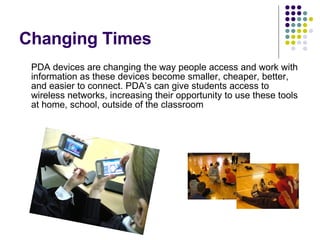
Changing Times PDA devices are changing the way people access and work with information as these devices become smaller, cheaper, better, and easier to connect. PDA’s can give students access to wireless networks, increasing their opportunity to use these tools at home, school, outside of the classroom
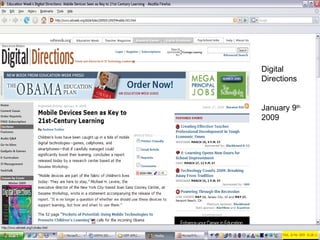
Digital Directions January 9 th  2009
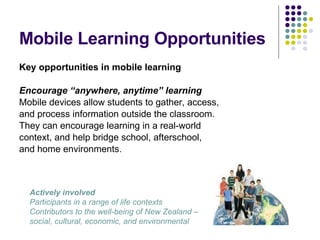
Mobile Learning Opportunities Key opportunities in mobile learning Encourage “anywhere, anytime” learning Mobile devices allow students to gather, access, and process information outside the classroom. They can encourage learning in a real-world context, and help bridge school, afterschool, and home environments. Actively involved Participants in a range of life contexts Contributors to the well-being of New Zealand – social, cultural, economic, and environmental
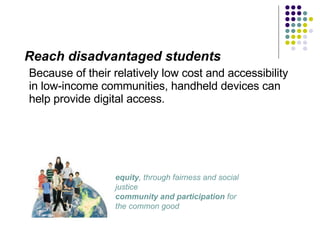
Reach disadvantaged students Because of their relatively low cost and accessibility in low-income communities, handheld devices can help provide digital access.  equity , through fairness and social justice  community and participation  for the common good
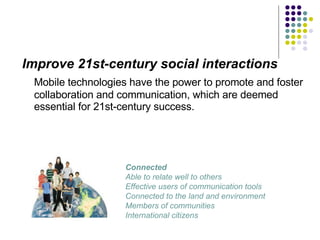
Improve 21st-century social interactions Mobile technologies have the power to promote and foster collaboration and communication, which are deemed essential for 21st-century success. Connected Able to relate well to others Effective users of communication tools Connected to the land and environment Members of communities International citizens
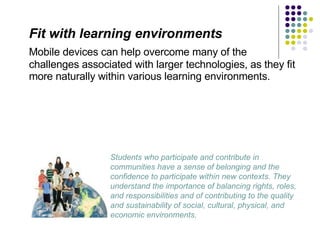
Fit with learning environments Mobile devices can help overcome many of the challenges associated with larger technologies, as they fit more naturally within various learning environments. Students who participate and contribute in communities have a sense of belonging and the confidence to participate within new contexts. They understand the importance of balancing rights, roles, and responsibilities and of contributing to the quality and sustainability of social, cultural, physical, and economic environments.
Enable a personalised learning experience Not all children are alike; instruction should be adaptable to individual and diverse learners. There are significant opportunities for genuinely supporting differentiated, autonomous, and individualised learning through mobile devices. Shuler, C. (2009). Pockets of Potential: Using Mobile Technologies to Promote Children’s Learning, New York: The Joan Ganz Cooney Center at Sesame Workshop. Students who manage themselves are enterprising, resourceful, reliable, and resilient. They establish personal goals, make plans, manage projects, and set high standards. They have strategies for meeting challenges. They know when to lead, when to follow, and when and how to act independently.
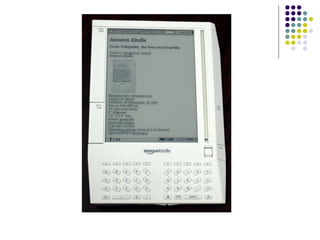
Possibilities More than half of the world’s population now owns a cell phone and children under 12 constitute one of the fastest growing segments of mobile technology users in the U.S. Technology continues to change at an accelerated pace.
 
Current Practice VS Future Opportunity The current practice among many schools in New Zealand is one of students using a computer, sometimes as part of a group or if resources are available, in a networked Lab/ Pod or very expensive C.O.W (Computers on wheels – usually a mobile storage unit containing 8 – 12 laptops).
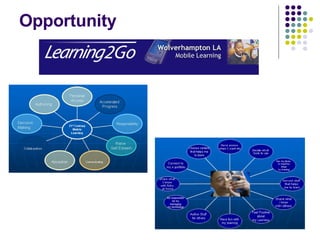
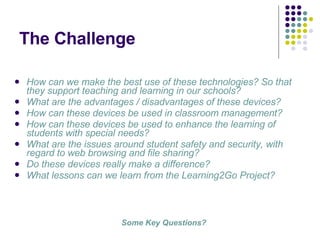
Opportunity
The Challenge How can we make the best use of these technologies? So that they support teaching and learning in our schools? What are the advantages / disadvantages of these devices? How can these devices be used in classroom management? How can these devices be used to enhance the learning of students with special needs? What are the issues around student safety and security, with regard to web browsing and file sharing? Do these devices really make a difference?  What lessons can we learn from the Learning2Go Project? Some Key Questions?
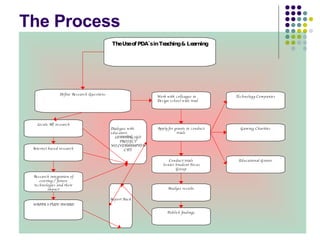
The Process The Use of PDA’s in Teaching & Learning Define Research Questions Work with colleague to Design school wide trial Locate NZ research Internet based research Apply for grants to conduct trials Technology Companies Gaming Charities Educational Grants Dialogue with educators LEARNING2GO PROJECT WOLVERHAMPTON CITY Research integration of existing / future technologies and their impact WRPPA STUDY AWARD Report Back Conduct trials Senior Student Focus Group Analyse  results Publish findings
Thank you for allowing me to  present my proposed project in more detail  The handout will provide you with supporting information, including some current research and references which have influenced me. Mike Farrelly March 2009

Unplugging Our Students!

  • 1.
    Unplugging our Students!Using Mobile Technologies to enhance Student Learning
  • 2.
    Changing Times PDAdevices are changing the way people access and work with information as these devices become smaller, cheaper, better, and easier to connect. PDA’s can give students access to wireless networks, increasing their opportunity to use these tools at home, school, outside of the classroom
  • 3.
  • 4.
    Mobile Learning OpportunitiesKey opportunities in mobile learning Encourage “anywhere, anytime” learning Mobile devices allow students to gather, access, and process information outside the classroom. They can encourage learning in a real-world context, and help bridge school, afterschool, and home environments. Actively involved Participants in a range of life contexts Contributors to the well-being of New Zealand – social, cultural, economic, and environmental
  • 5.
    Reach disadvantaged studentsBecause of their relatively low cost and accessibility in low-income communities, handheld devices can help provide digital access. equity , through fairness and social justice community and participation for the common good
  • 6.
    Improve 21st-century socialinteractions Mobile technologies have the power to promote and foster collaboration and communication, which are deemed essential for 21st-century success. Connected Able to relate well to others Effective users of communication tools Connected to the land and environment Members of communities International citizens
  • 7.
    Fit with learningenvironments Mobile devices can help overcome many of the challenges associated with larger technologies, as they fit more naturally within various learning environments. Students who participate and contribute in communities have a sense of belonging and the confidence to participate within new contexts. They understand the importance of balancing rights, roles, and responsibilities and of contributing to the quality and sustainability of social, cultural, physical, and economic environments.
  • 8.
    Enable a personalisedlearning experience Not all children are alike; instruction should be adaptable to individual and diverse learners. There are significant opportunities for genuinely supporting differentiated, autonomous, and individualised learning through mobile devices. Shuler, C. (2009). Pockets of Potential: Using Mobile Technologies to Promote Children’s Learning, New York: The Joan Ganz Cooney Center at Sesame Workshop. Students who manage themselves are enterprising, resourceful, reliable, and resilient. They establish personal goals, make plans, manage projects, and set high standards. They have strategies for meeting challenges. They know when to lead, when to follow, and when and how to act independently.
  • 9.
    Possibilities More thanhalf of the world’s population now owns a cell phone and children under 12 constitute one of the fastest growing segments of mobile technology users in the U.S. Technology continues to change at an accelerated pace.
  • 10.
  • 11.
    Current Practice VSFuture Opportunity The current practice among many schools in New Zealand is one of students using a computer, sometimes as part of a group or if resources are available, in a networked Lab/ Pod or very expensive C.O.W (Computers on wheels – usually a mobile storage unit containing 8 – 12 laptops).
  • 12.
  • 13.
    The Challenge Howcan we make the best use of these technologies? So that they support teaching and learning in our schools? What are the advantages / disadvantages of these devices? How can these devices be used in classroom management? How can these devices be used to enhance the learning of students with special needs? What are the issues around student safety and security, with regard to web browsing and file sharing? Do these devices really make a difference? What lessons can we learn from the Learning2Go Project? Some Key Questions?
  • 14.
    The Process TheUse of PDA’s in Teaching & Learning Define Research Questions Work with colleague to Design school wide trial Locate NZ research Internet based research Apply for grants to conduct trials Technology Companies Gaming Charities Educational Grants Dialogue with educators LEARNING2GO PROJECT WOLVERHAMPTON CITY Research integration of existing / future technologies and their impact WRPPA STUDY AWARD Report Back Conduct trials Senior Student Focus Group Analyse results Publish findings
  • 15.
    Thank you forallowing me to present my proposed project in more detail The handout will provide you with supporting information, including some current research and references which have influenced me. Mike Farrelly March 2009