






2016-17 Learning Benchmark Report
All content © 2015 Towards Maturity CIC Ltd. Not to be distributed or copied.
laura@towardsmaturity.org
www.towardsmaturity.org/2016benchmark
@LauraOverton
@TowardsMaturity
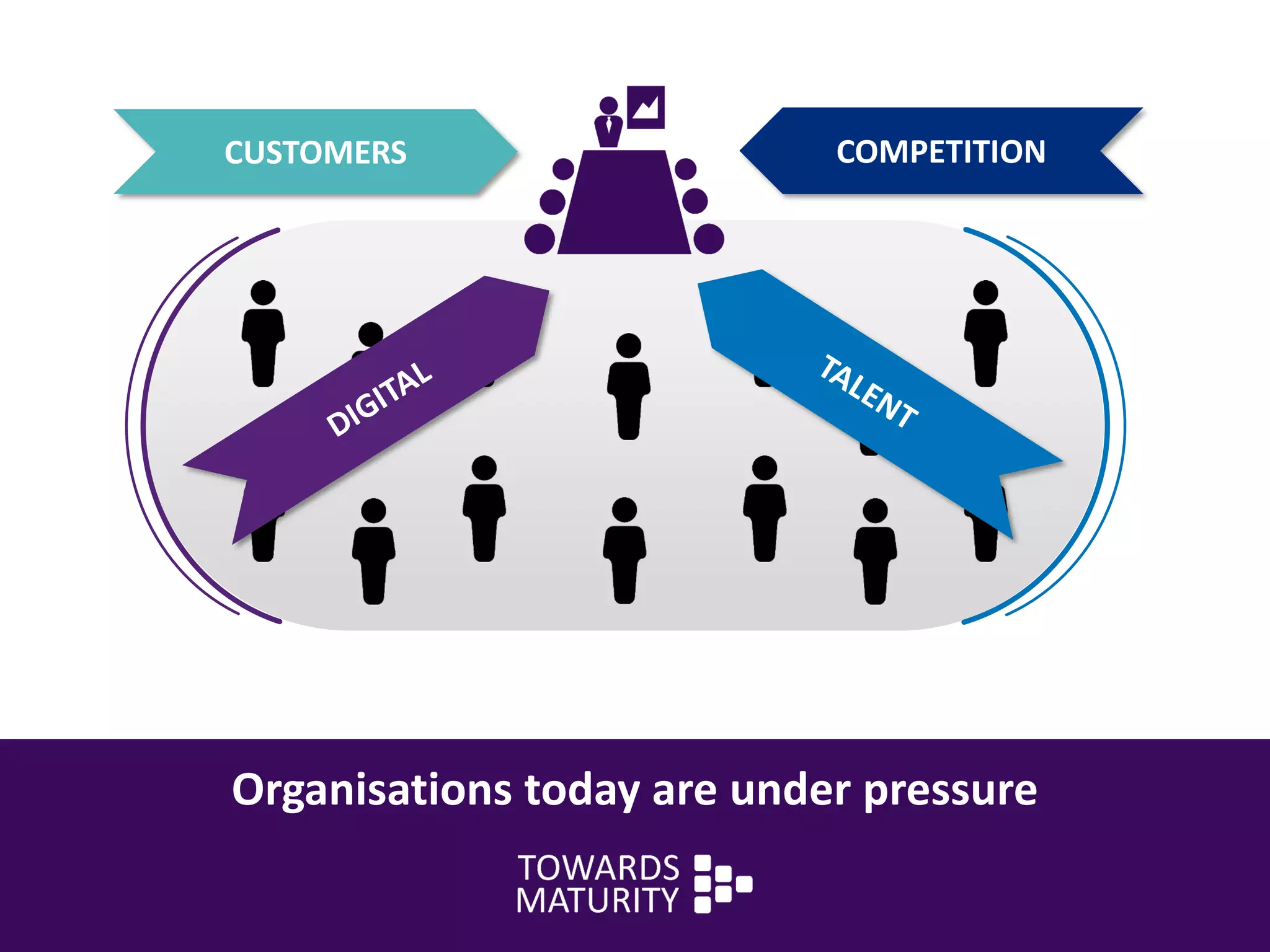
COMPETITIONCUSTOMERS
Organisations today are under pressure
What does a modern day
learning organisation
need to look like?
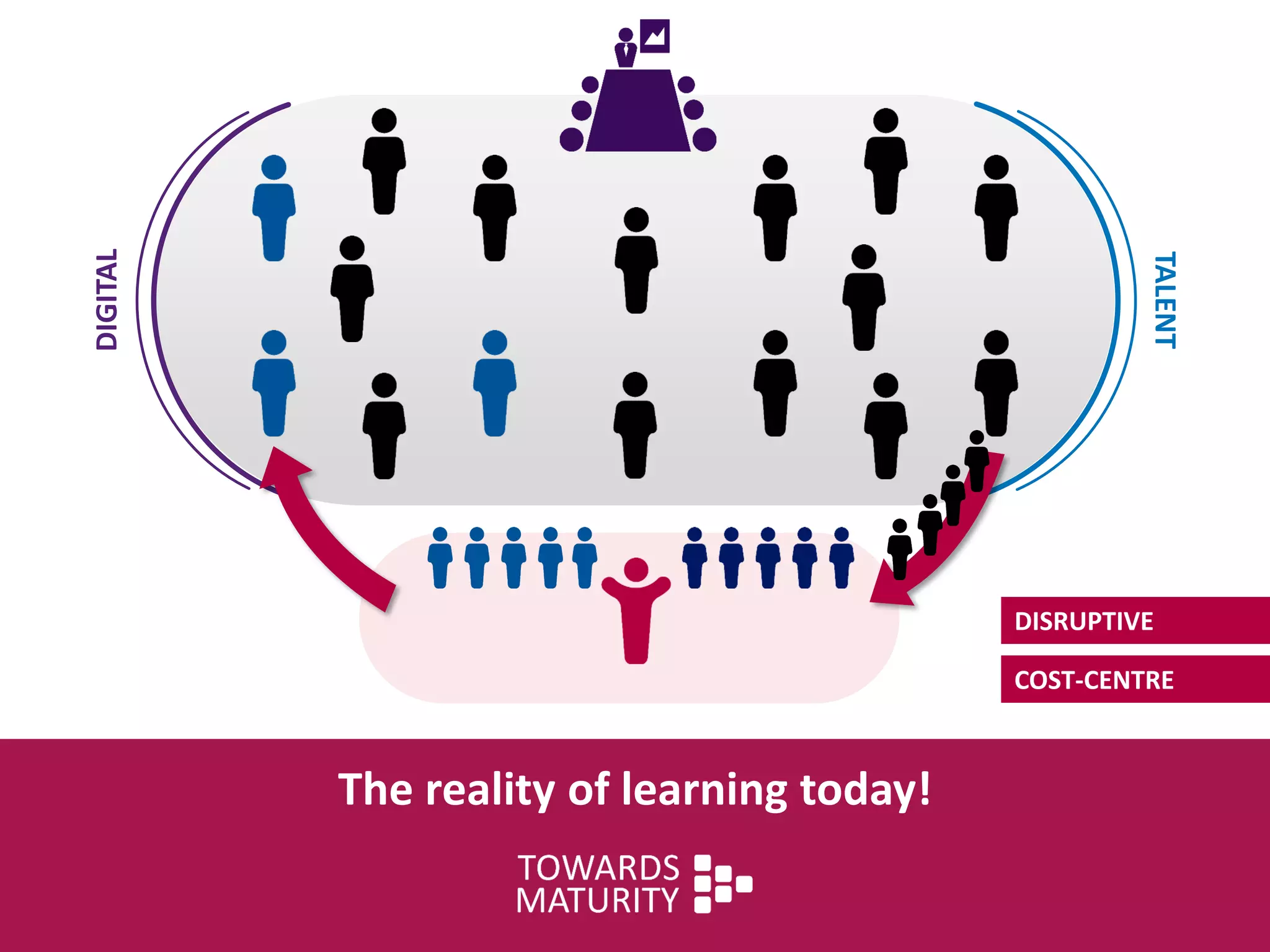
COST-CENTRE
DISRUPTIVE
DIGITAL
TALENT
The reality of learning today!
The reality of learning for modern
workers
© Towards Maturity 2015, Learner Voice Part 3:
www.towardsmaturity.org/learnervoice3
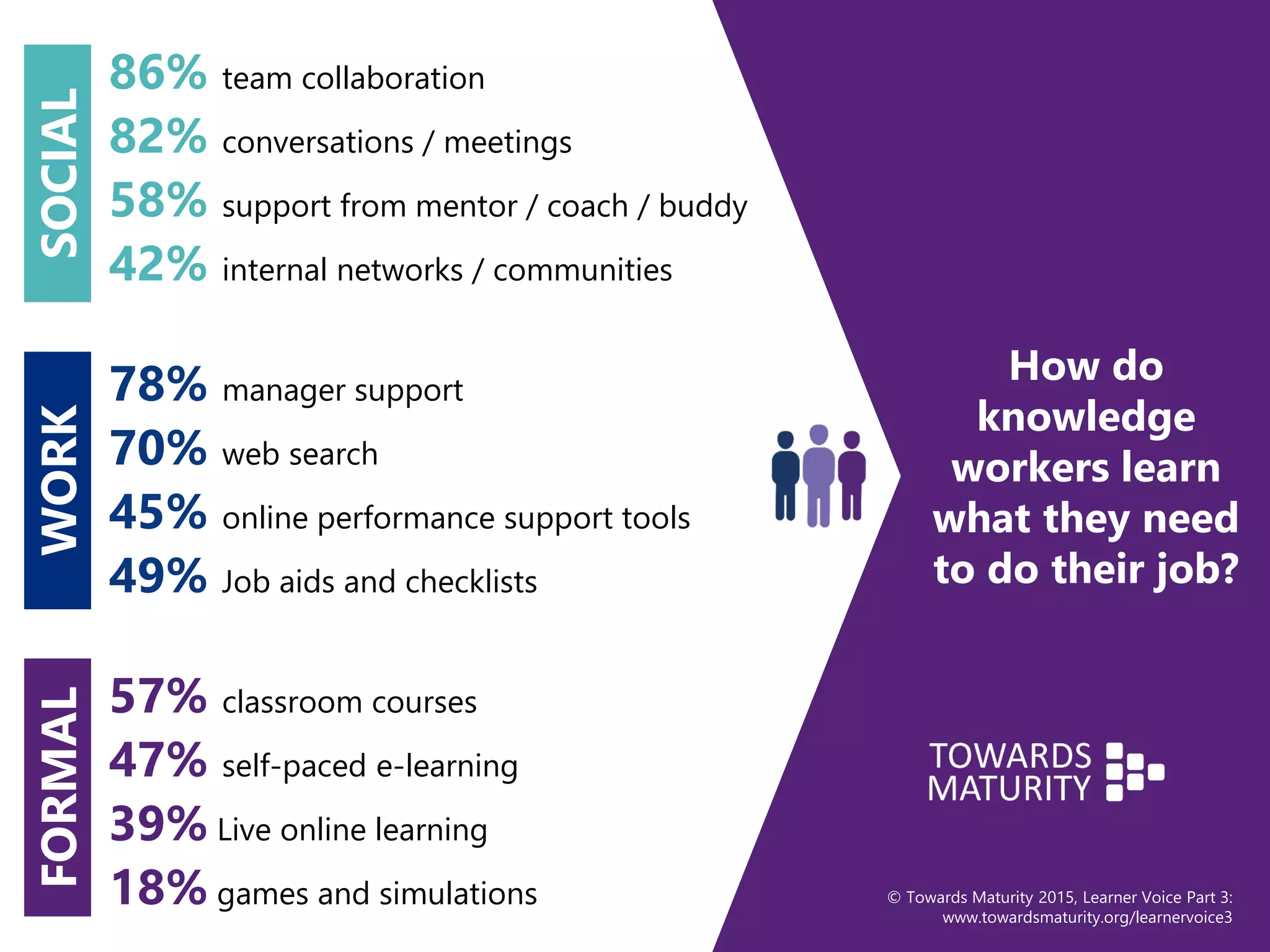
How do
knowledge
workers learn
what they need
to do their job?
86% team collaboration
82% conversations / meetings
58% support from mentor / coach / buddy
42% internal networks / communities
78% manager support
70% web search
45% online performance support tools
49% Job aids and checklists
57% classroom courses
47% self-paced e-learning
39% Live online learning
18% games and simulations
FORMALSOCIALWORK
91%
of staff like to be
able to learn at
their own pace
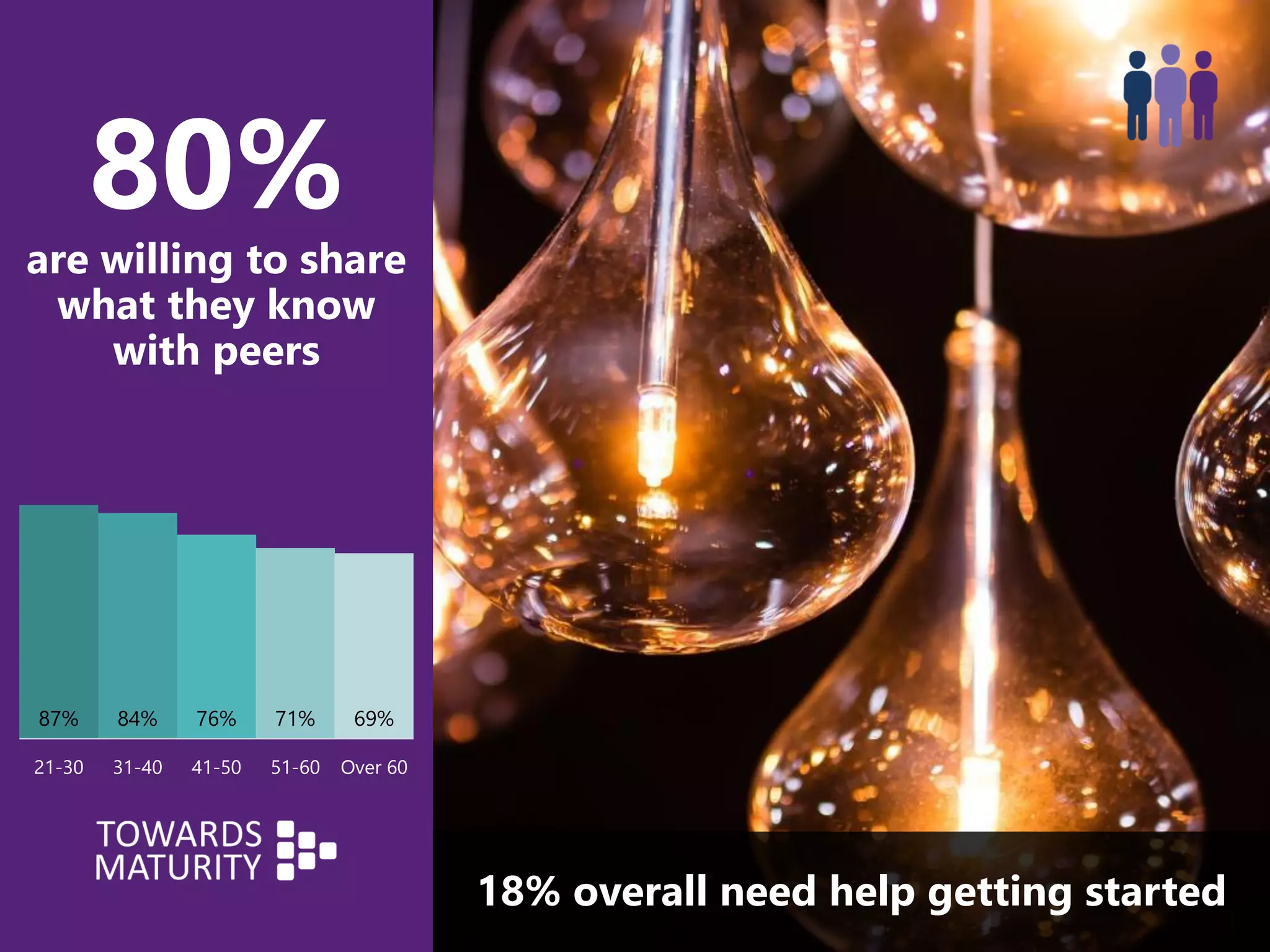
80%
are willing to share
what they know
with peers
18% overall need help getting started
87% 84% 76% 71% 69%
21-30 31-40 41-50 51-60 Over 60
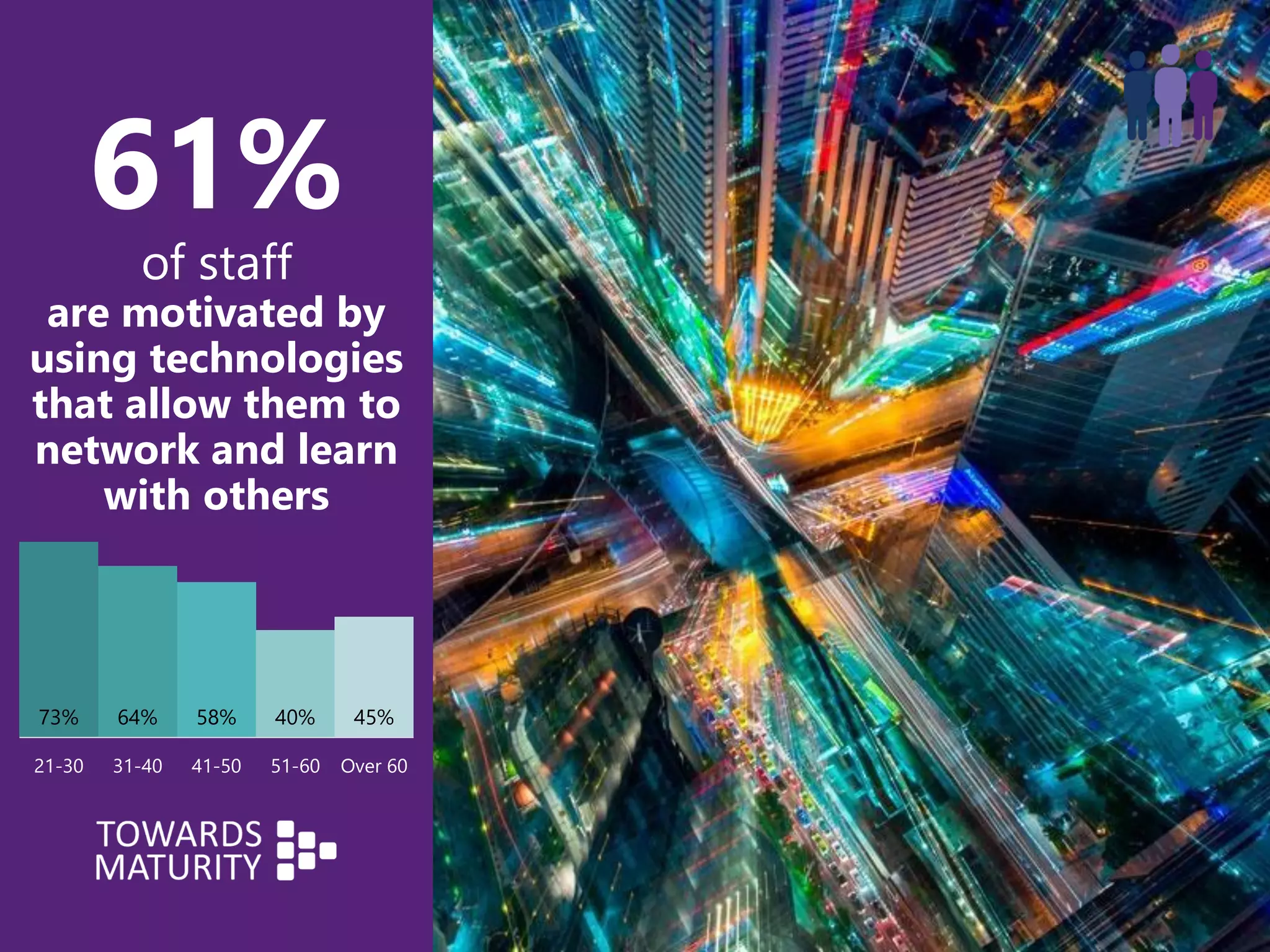
61%
of staff
are motivated by
using technologies
that allow them to
network and learn
with others
73% 64% 58% 40% 45%
21-30 31-40 41-50 51-60 Over 60
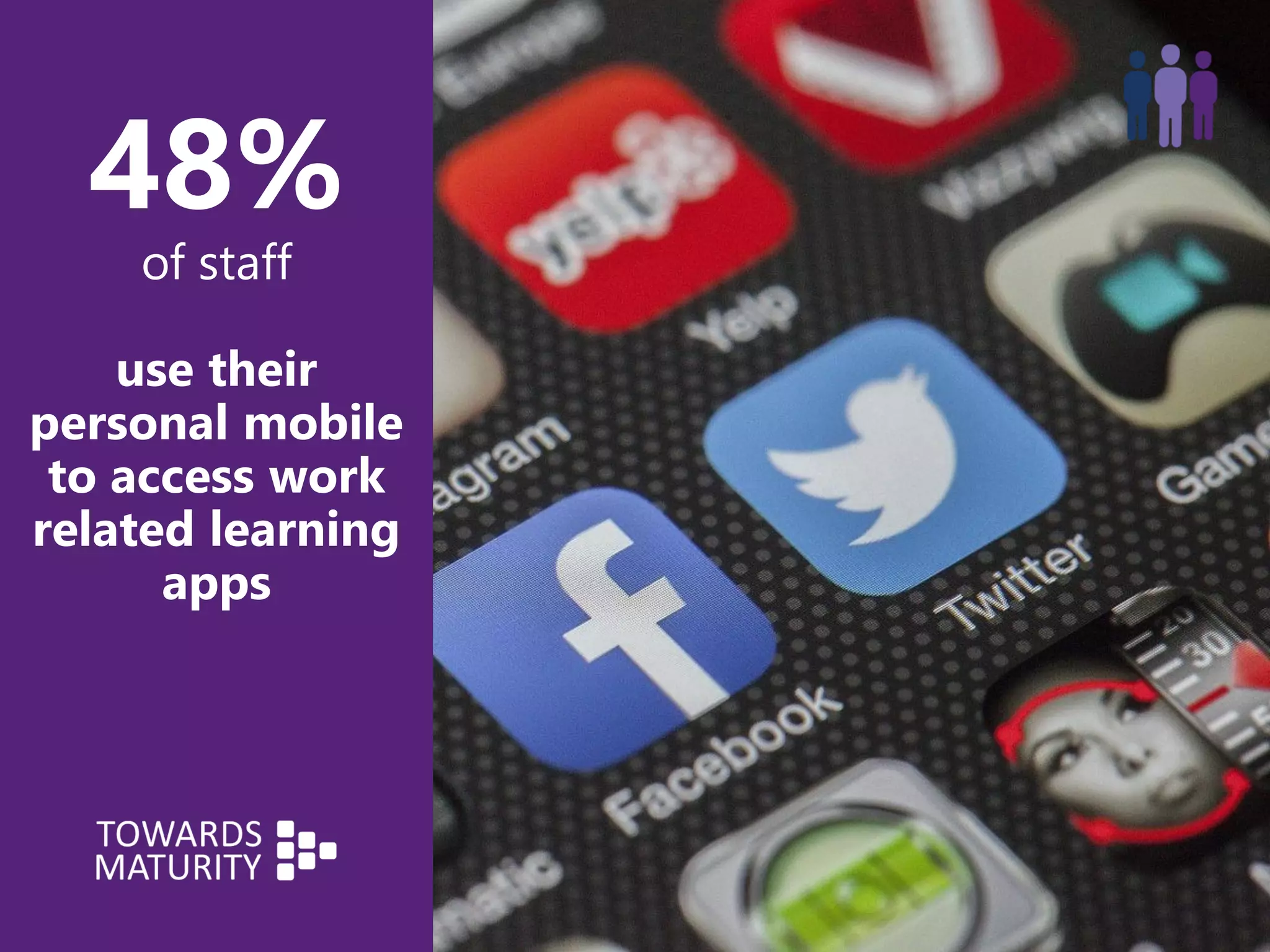
48%
of staff
use their
personal mobile
to access work
related learning
apps
How does traditional L&D
need to adapt to meet
the needs of the modern
learner?
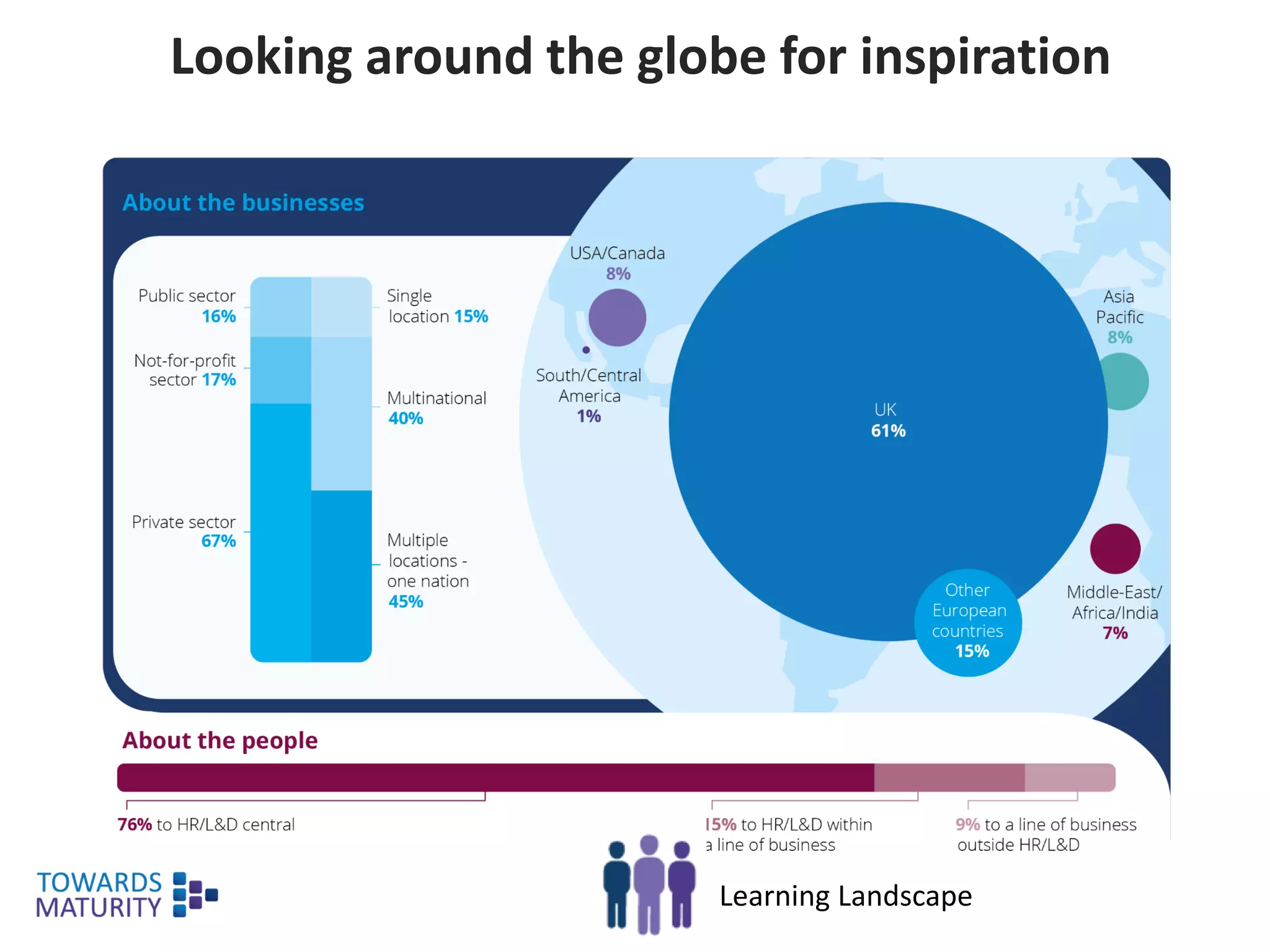
Looking around the globe for inspiration
Learning Landscape
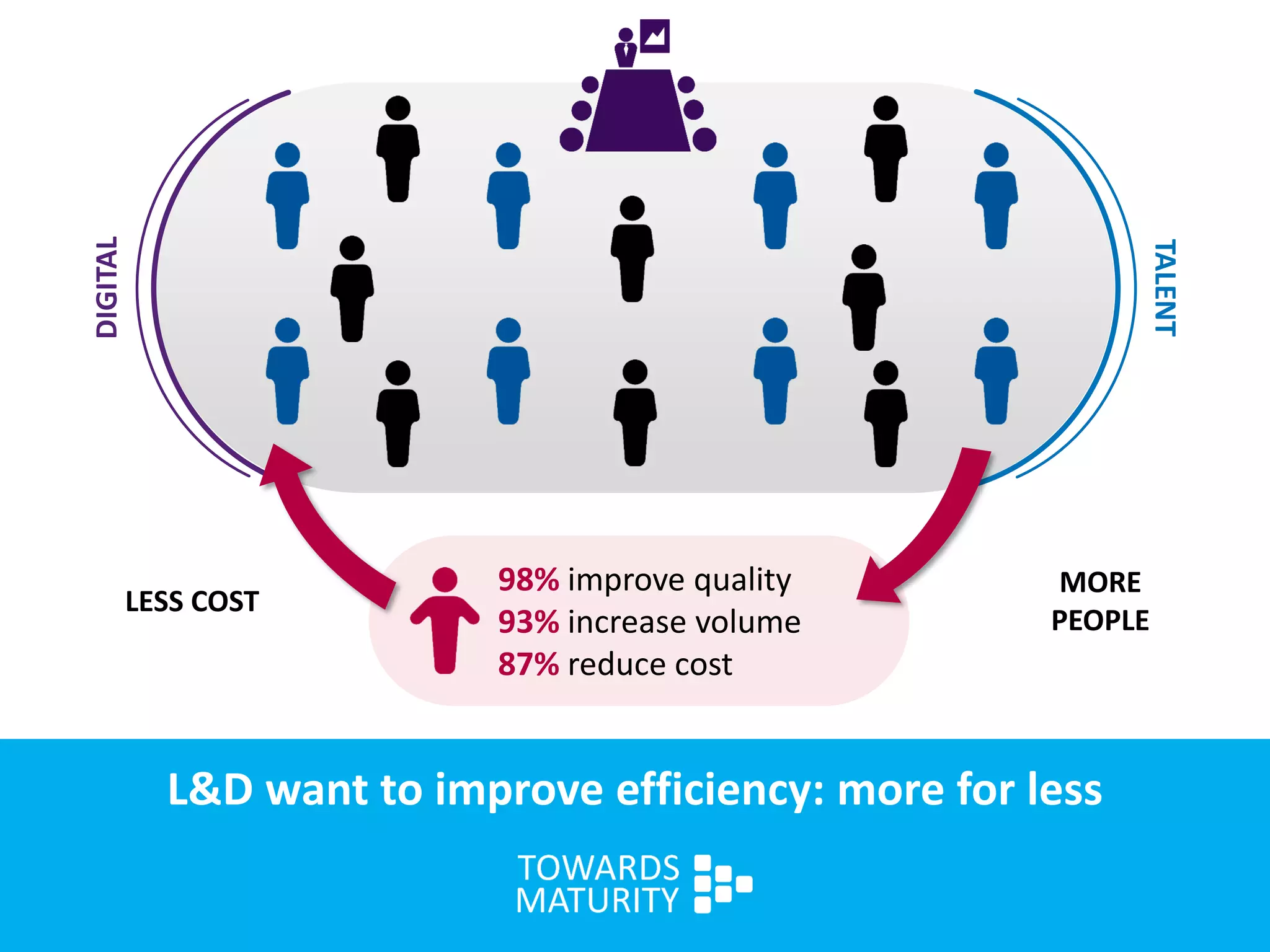
98% improve quality
93% increase volume
87% reduce cost
DIGITAL
TALENT
L&D want to improve efficiency: more for less
MORE
PEOPLE
LESS COST
DIGITAL
TALENT
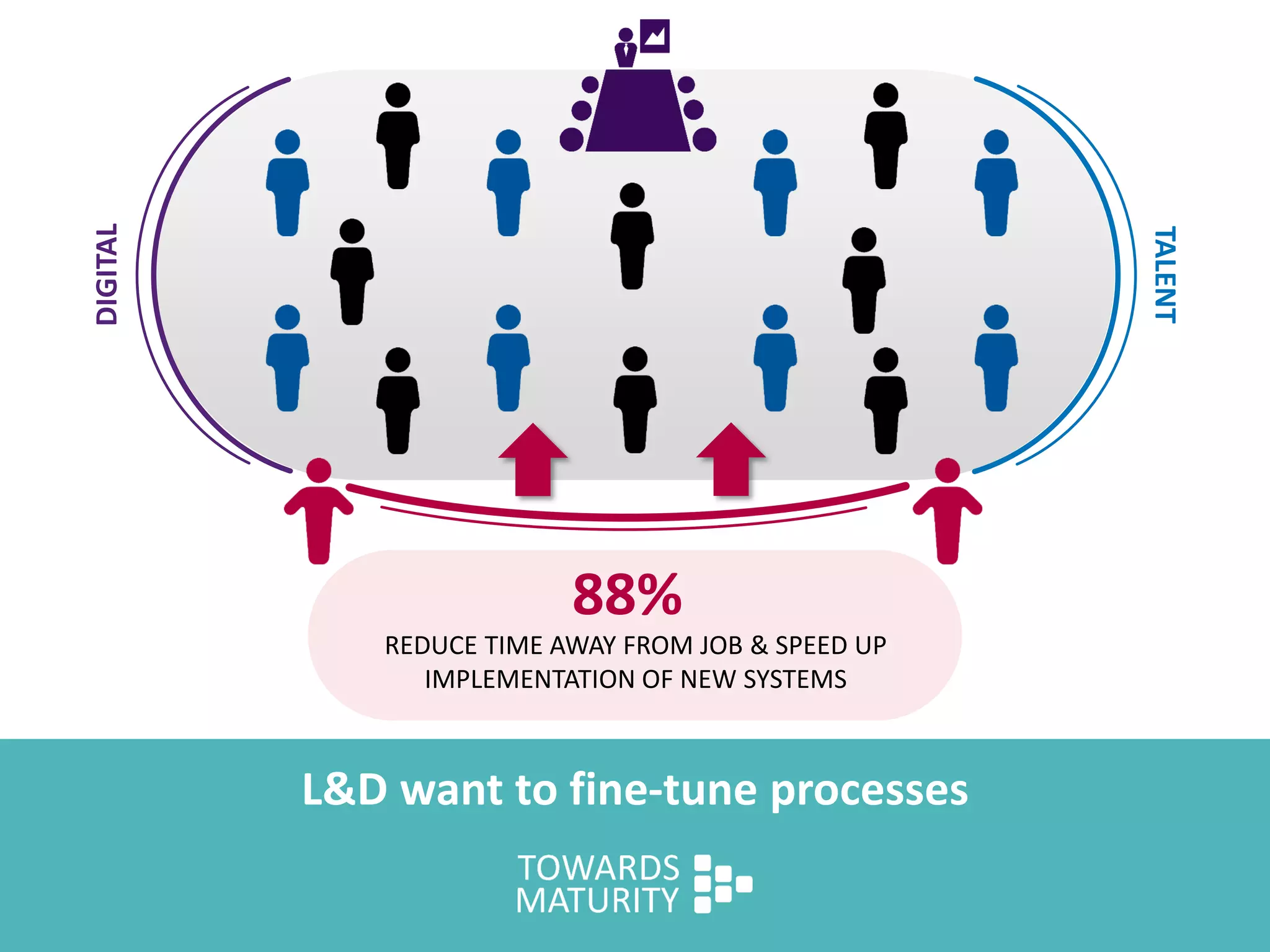
L&D want to fine-tune processes
REDUCE TIME AWAY FROM JOB & SPEED UP
IMPLEMENTATION OF NEW SYSTEMS
88%
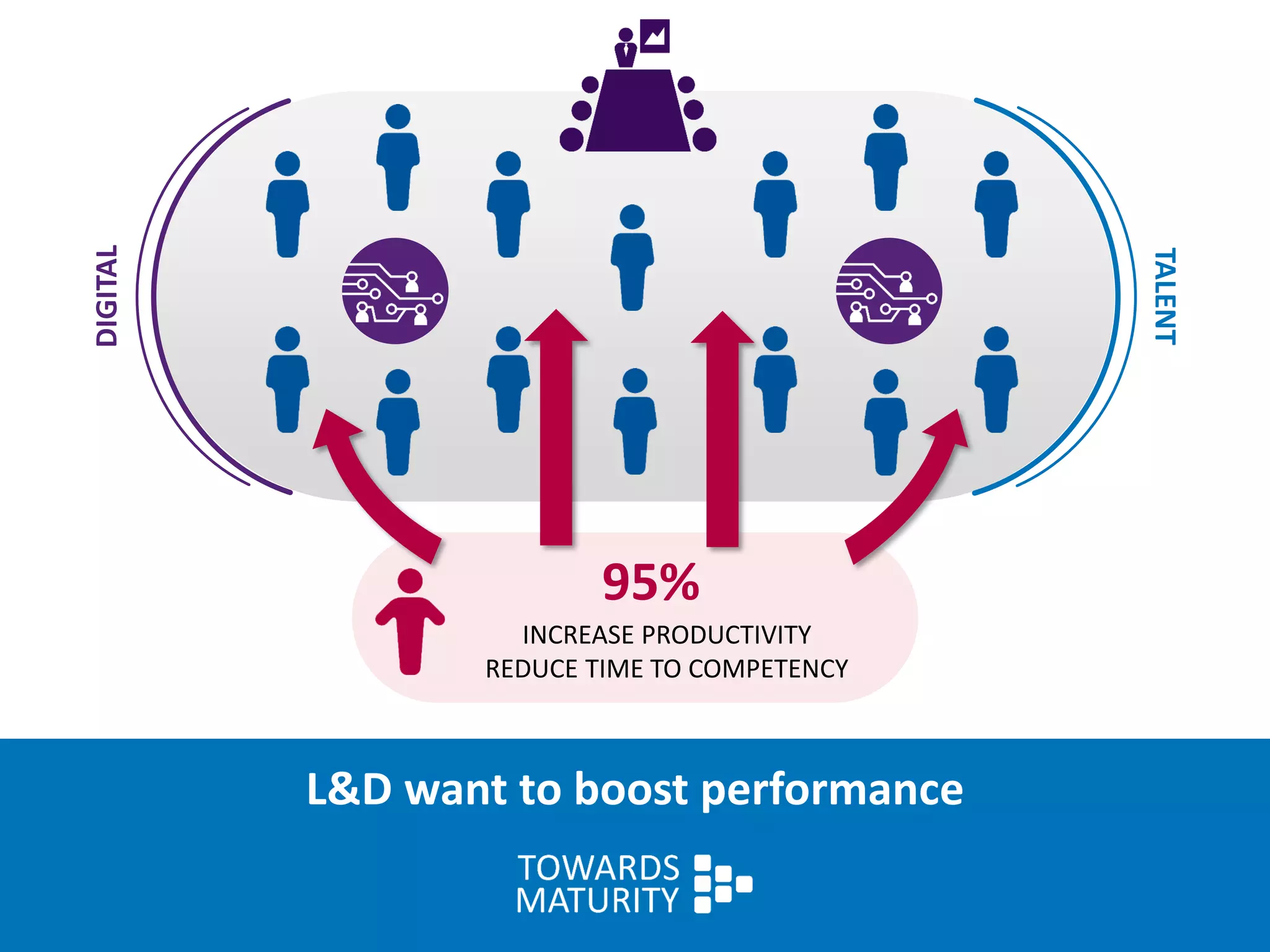
INCREASE PRODUCTIVITY
REDUCE TIME TO COMPETENCY
DIGITAL
TALENT
L&D want to boost performance
95%
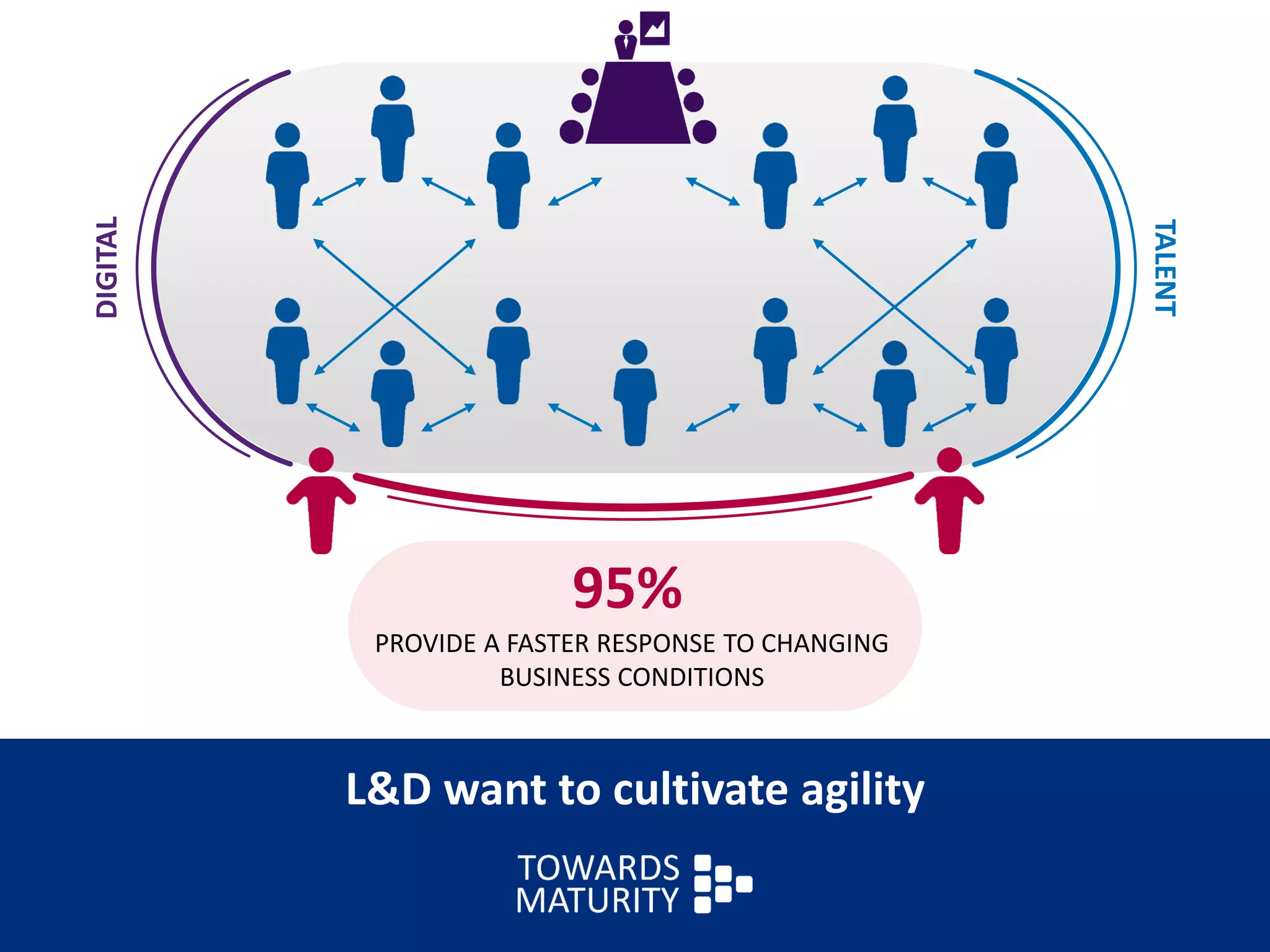
PROVIDE A FASTER RESPONSE TO CHANGING
BUSINESS CONDITIONS
95%
DIGITAL
TALENT
L&D want to cultivate agility
DIGITAL
TALENT
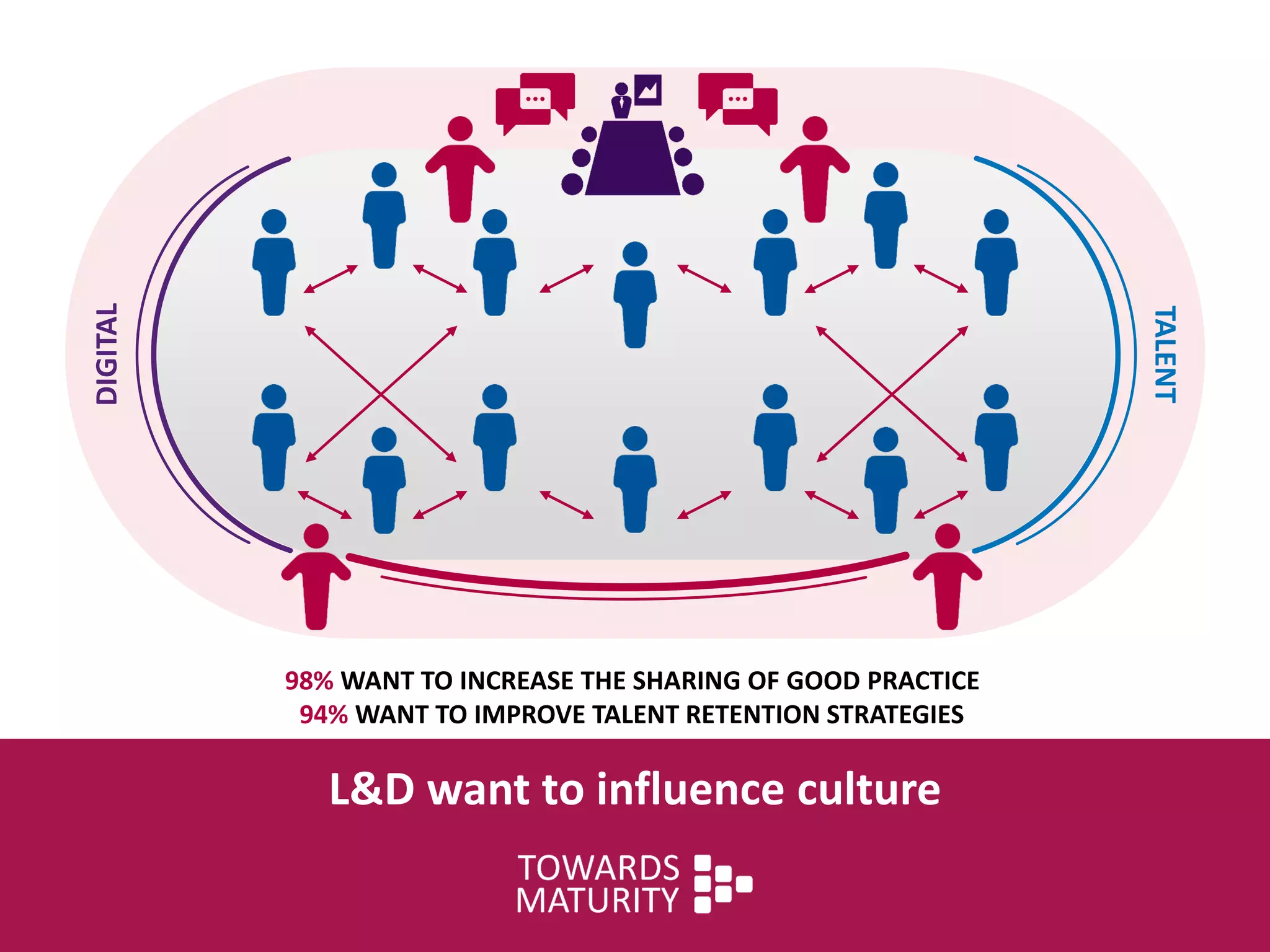
L&D want to influence culture
98% WANT TO INCREASE THE SHARING OF GOOD PRACTICE
94% WANT TO IMPROVE TALENT RETENTION STRATEGIES
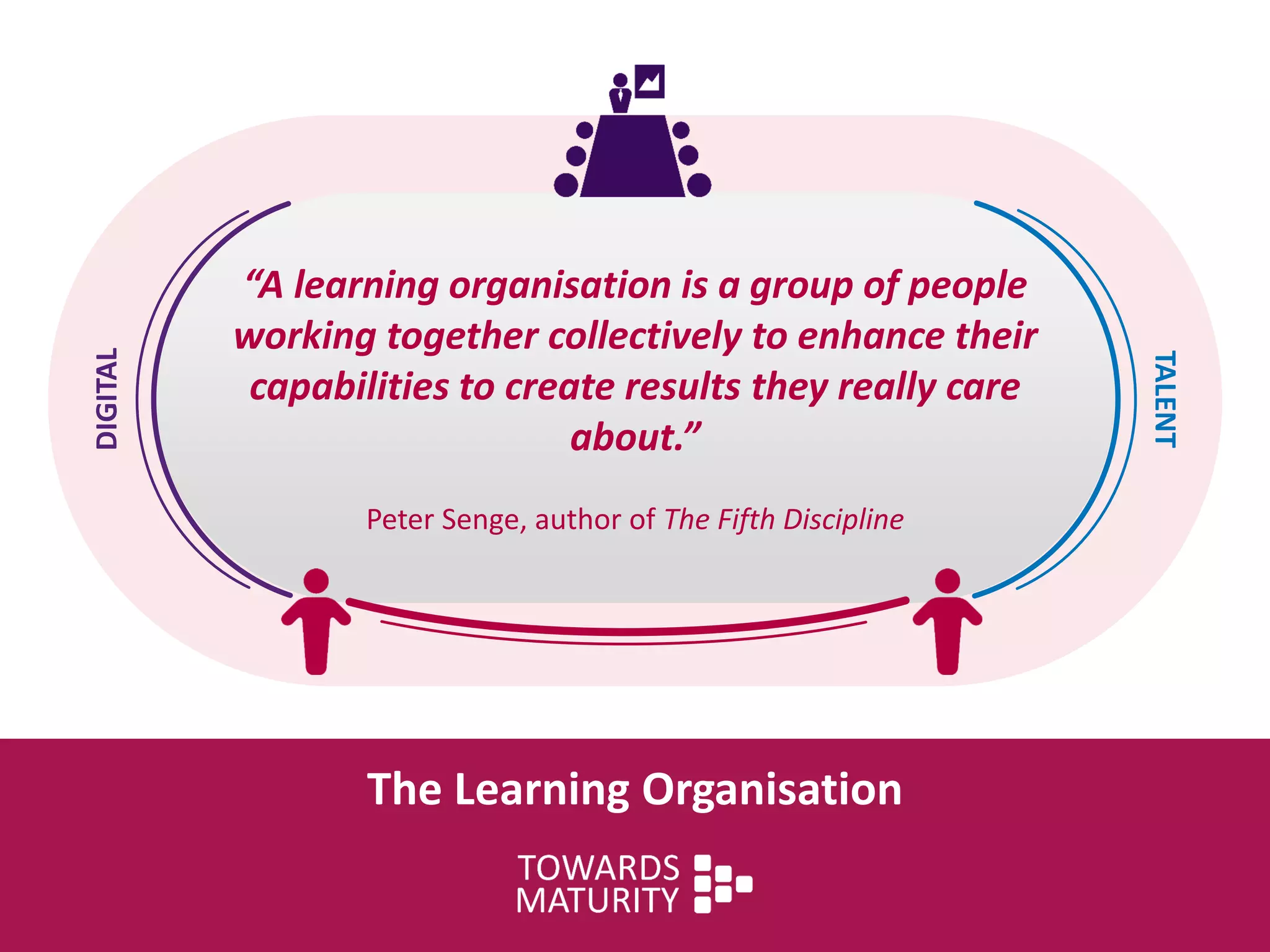
“A learning organisation is a group of people
working together collectively to enhance their
capabilities to create results they really care
about.”
Peter Senge, author of The Fifth Discipline
DIGITAL
TALENT
The Learning Organisation
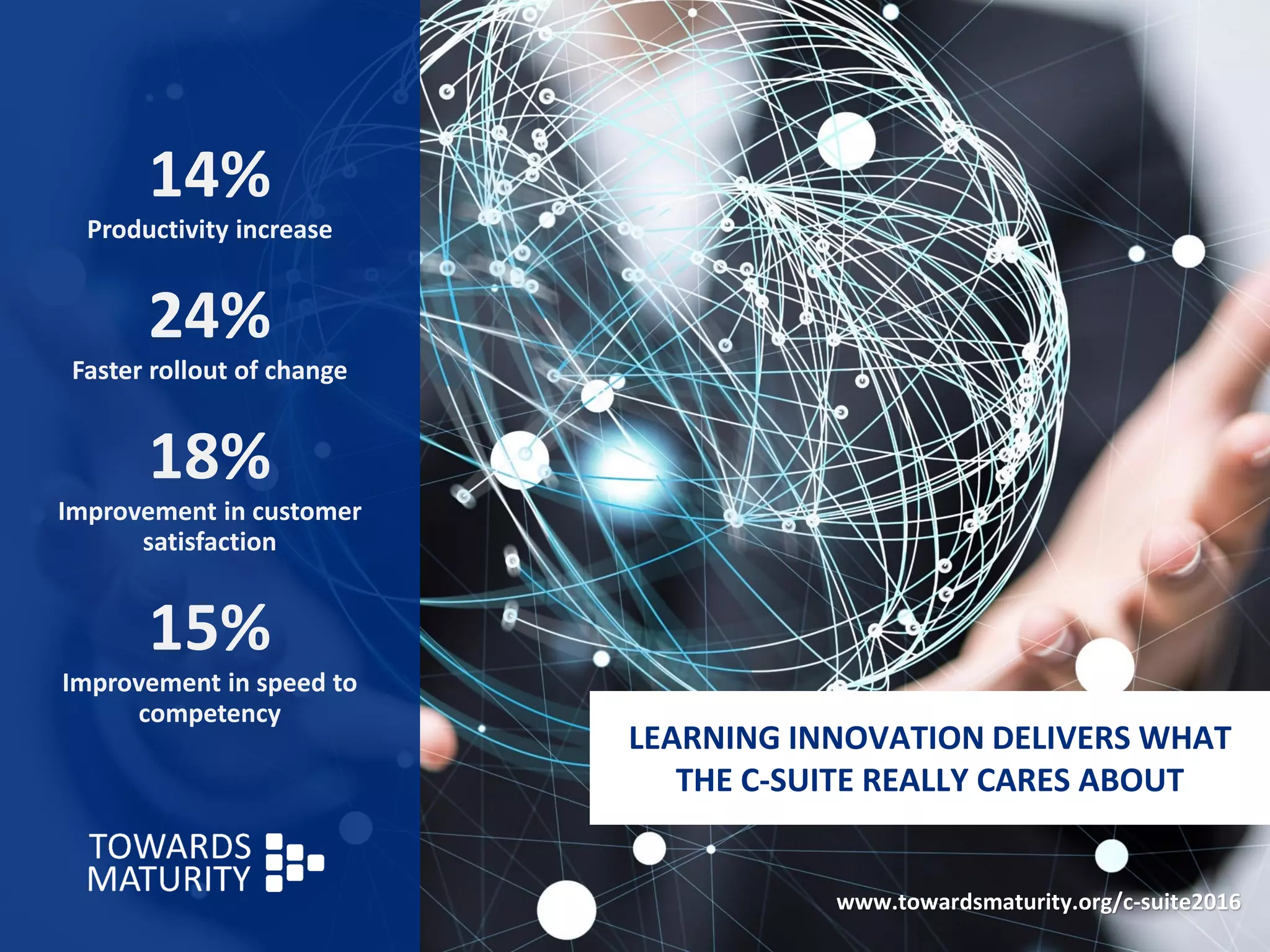
14%
Productivity increase
24%
Faster rollout of change
18%
Improvement in customer
satisfaction
15%
Improvement in speed to
competency
LEARNING INNOVATION DELIVERS WHAT
THE C-SUITE REALLY CARES ABOUT
www.towardsmaturity.org/c-suite2016
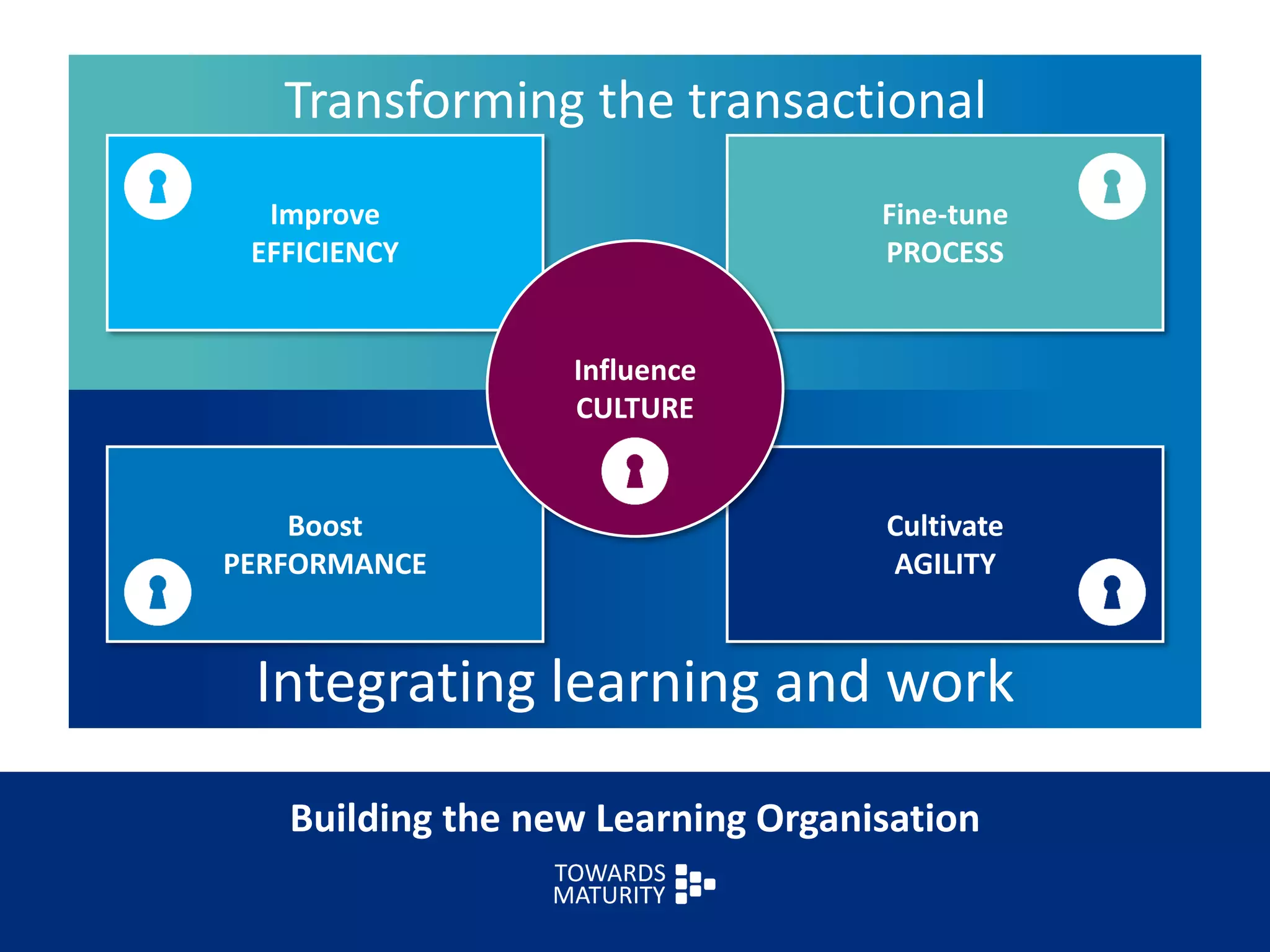
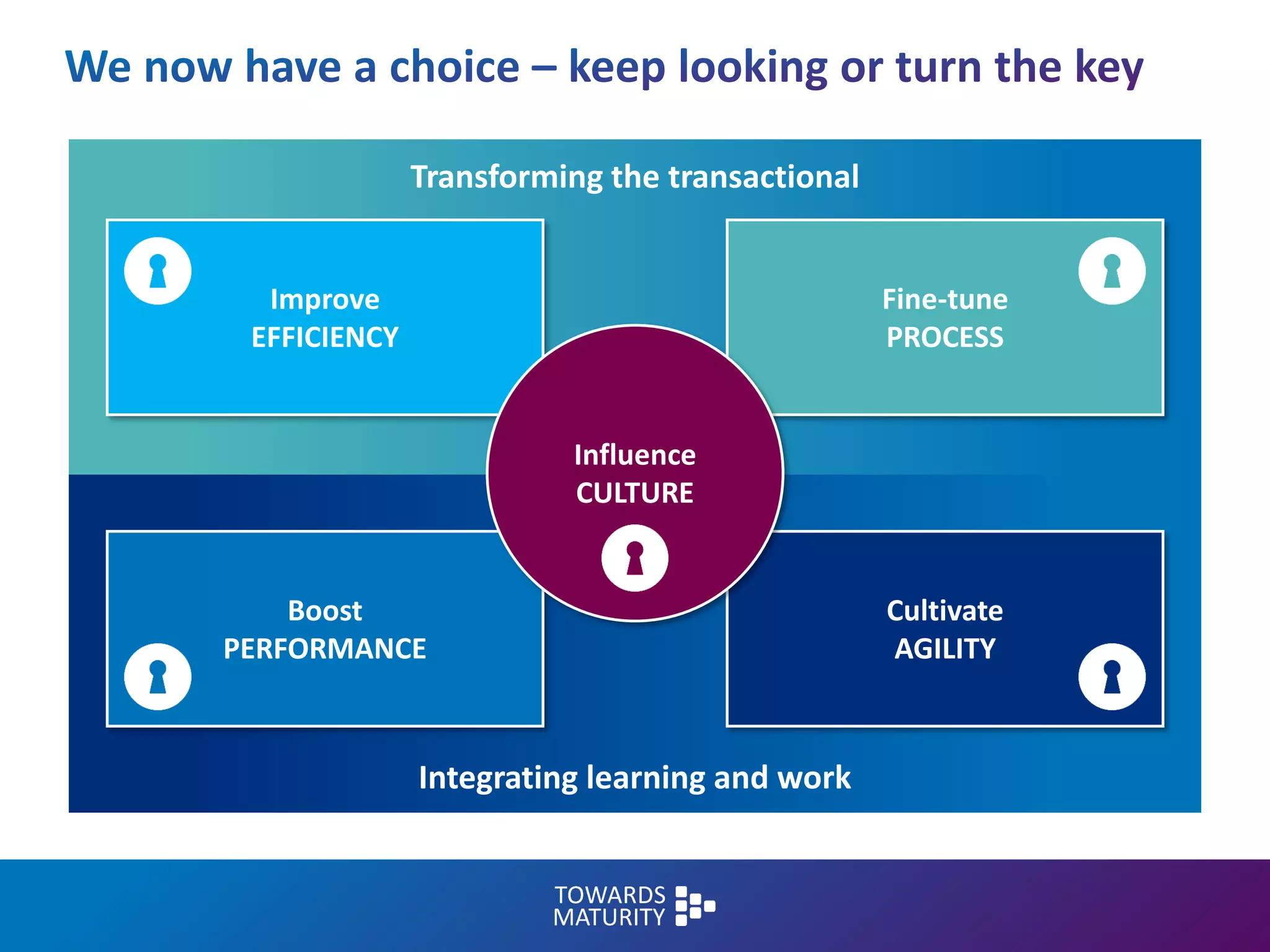
Building the new Learning Organisation
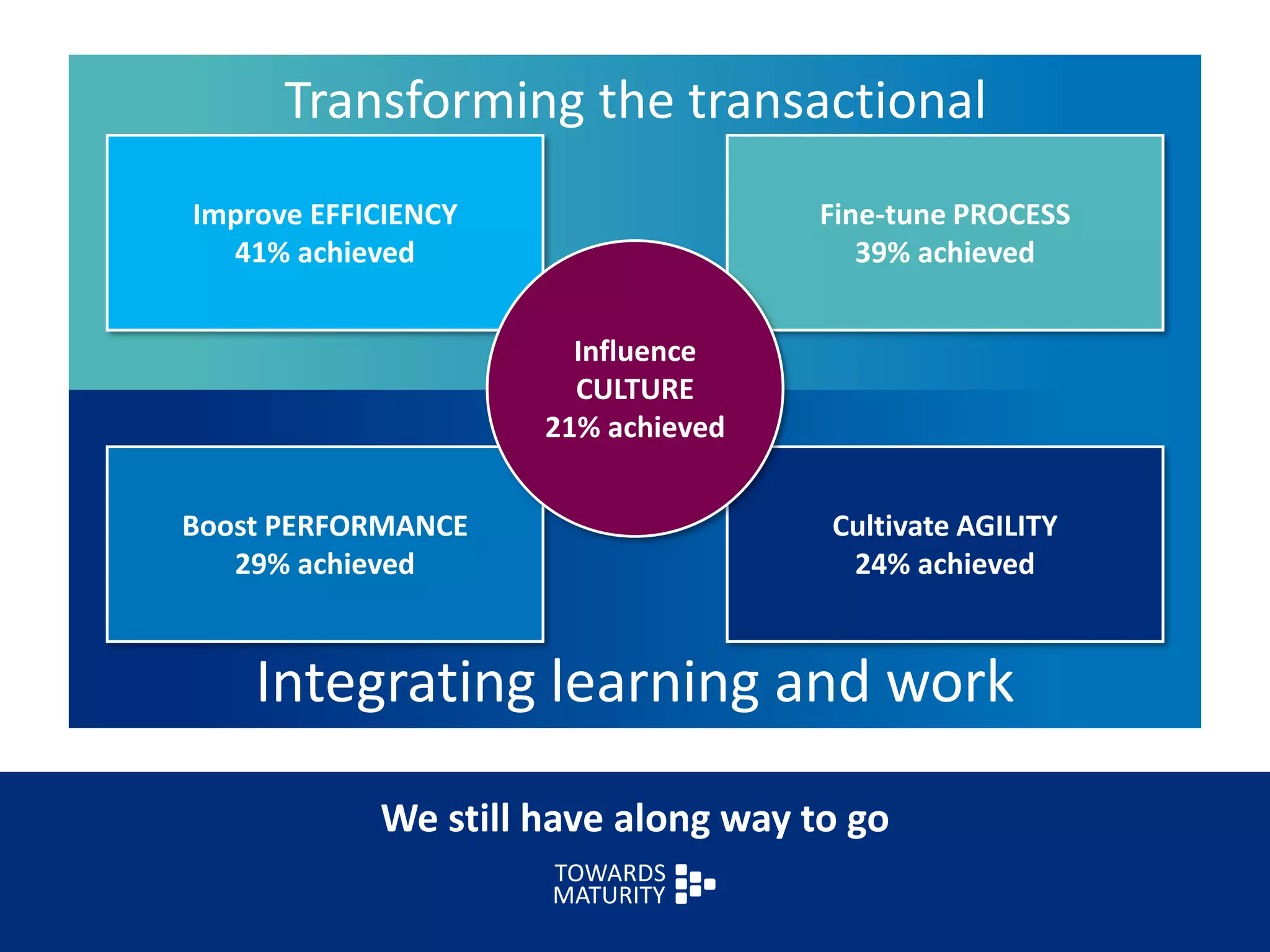
Integrating learning and work
Transforming the transactional
Boost
PERFORMANCE
Cultivate
AGILITY
Fine-tune
PROCESS
Improve
EFFICIENCY
Influence
CULTURE
We still have along way to go
Integrating learning and work
Transforming the transactional
Boost PERFORMANCE
29% achieved
Cultivate AGILITY
24% achieved
Fine-tune PROCESS
39% achieved
Improve EFFICIENCY
41% achieved
Influence
CULTURE
21% achieved
People professionals
have a critical role to play
in the transition
What is stopping
us?
What is stopping
us?
Lack of:
Skill
Attitude
Knowledge
Money
The danger of the silver bullet
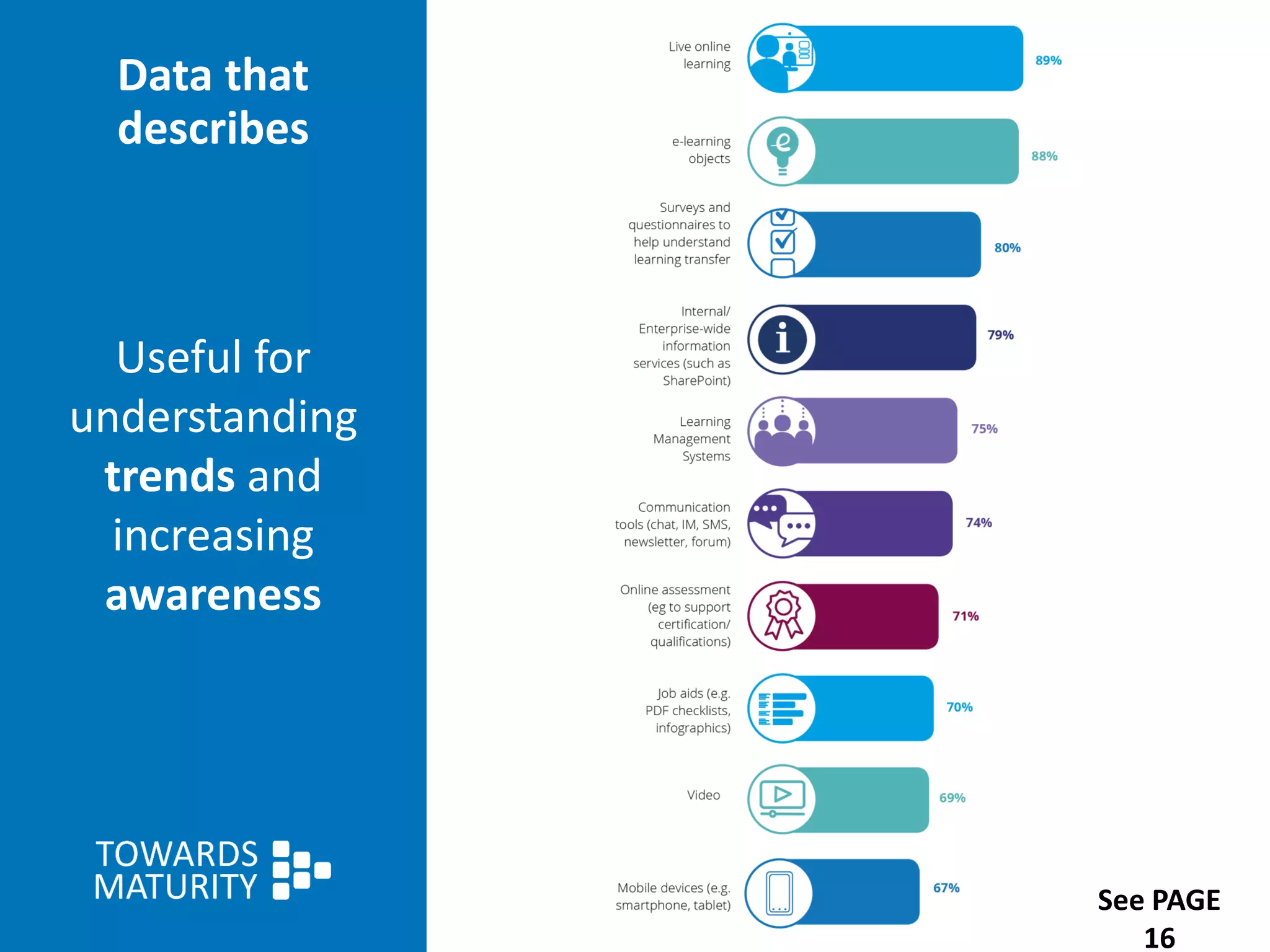
There’s data and there’s
Data that
describes
Useful for
understanding
trends and
increasing
awareness
See PAGE
16
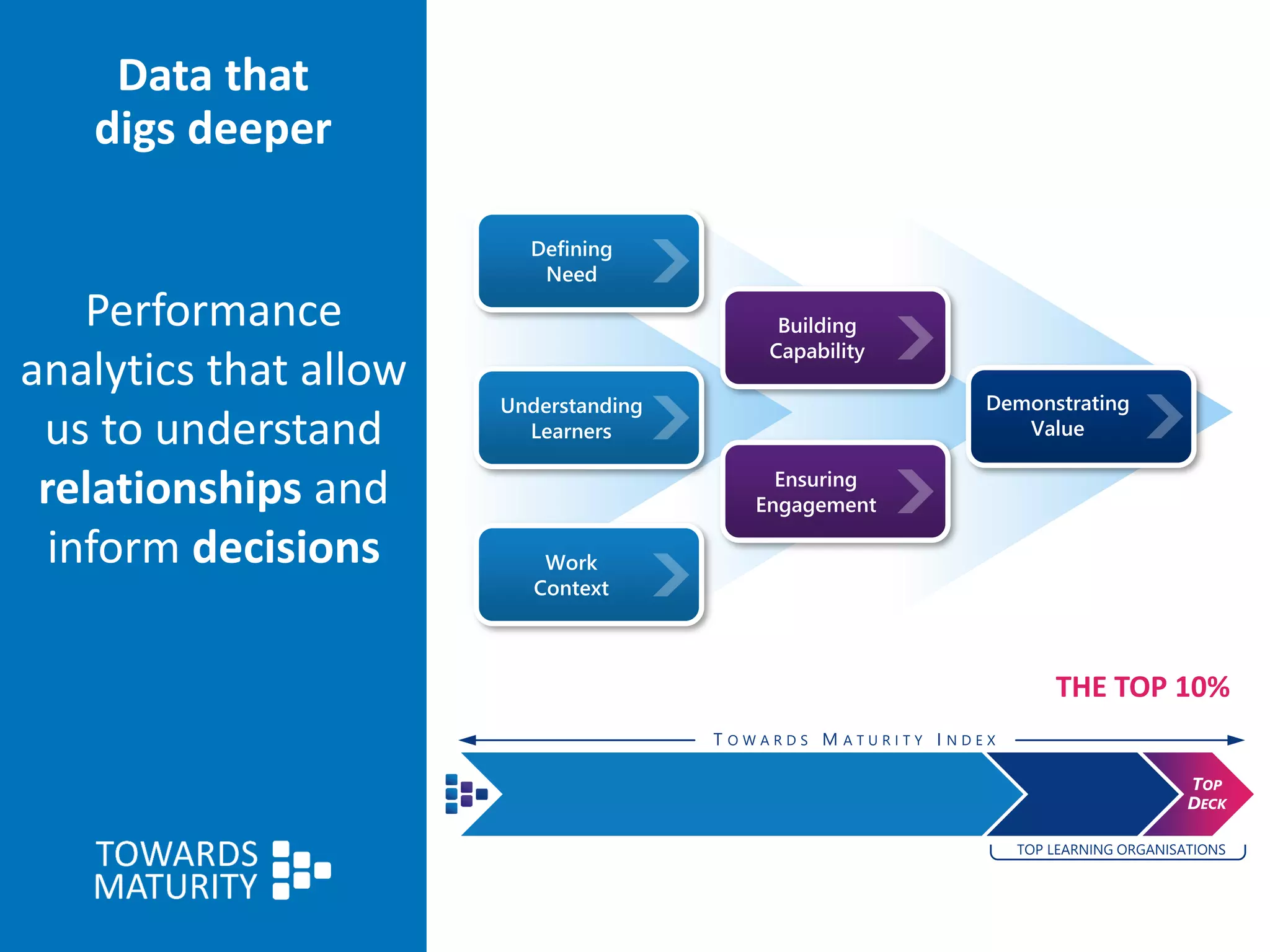
Data that
digs deeper
Performance
analytics that allow
us to understand
relationships and
inform decisions
Defining
Need
Understanding
Learners
Work
Context
Building
Capability
Ensuring
Engagement
Demonstrating
Value
THE TOP 10%
T O W A R D S M A T U R I T Y I N D E X
TOP
DECK
TOP LEARNING ORGANISATIONS
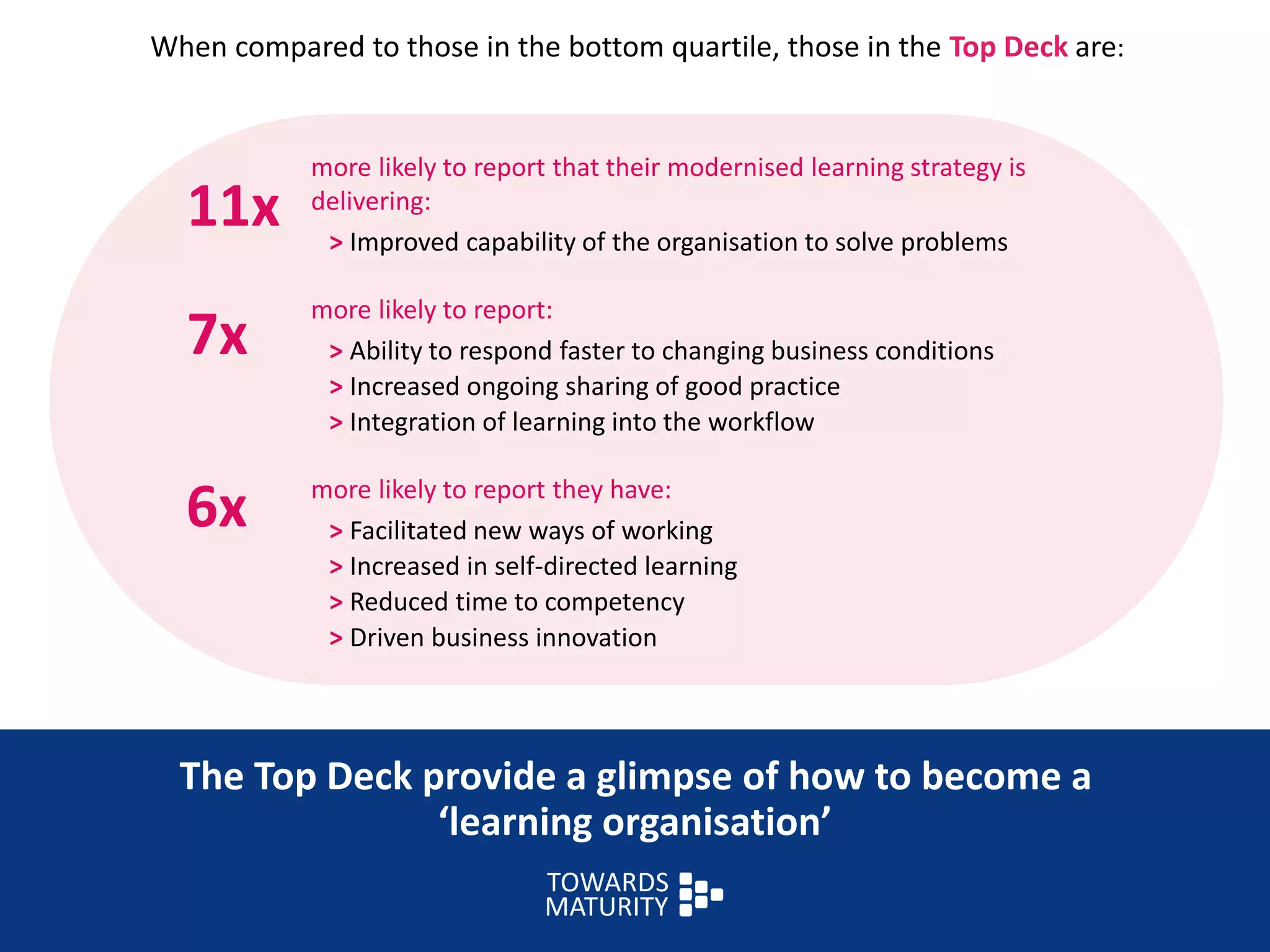
The Top Deck provide a glimpse of how to become a
‘learning organisation’
more likely to report that their modernised learning strategy is
delivering:
> Improved capability of the organisation to solve problems
more likely to report:
> Ability to respond faster to changing business conditions
> Increased ongoing sharing of good practice
> Integration of learning into the workflow
more likely to report they have:
> Facilitated new ways of working
> Increased in self-directed learning
> Reduced time to competency
> Driven business innovation
When compared to those in the bottom quartile, those in the Top Deck are:
11x
7x
6x
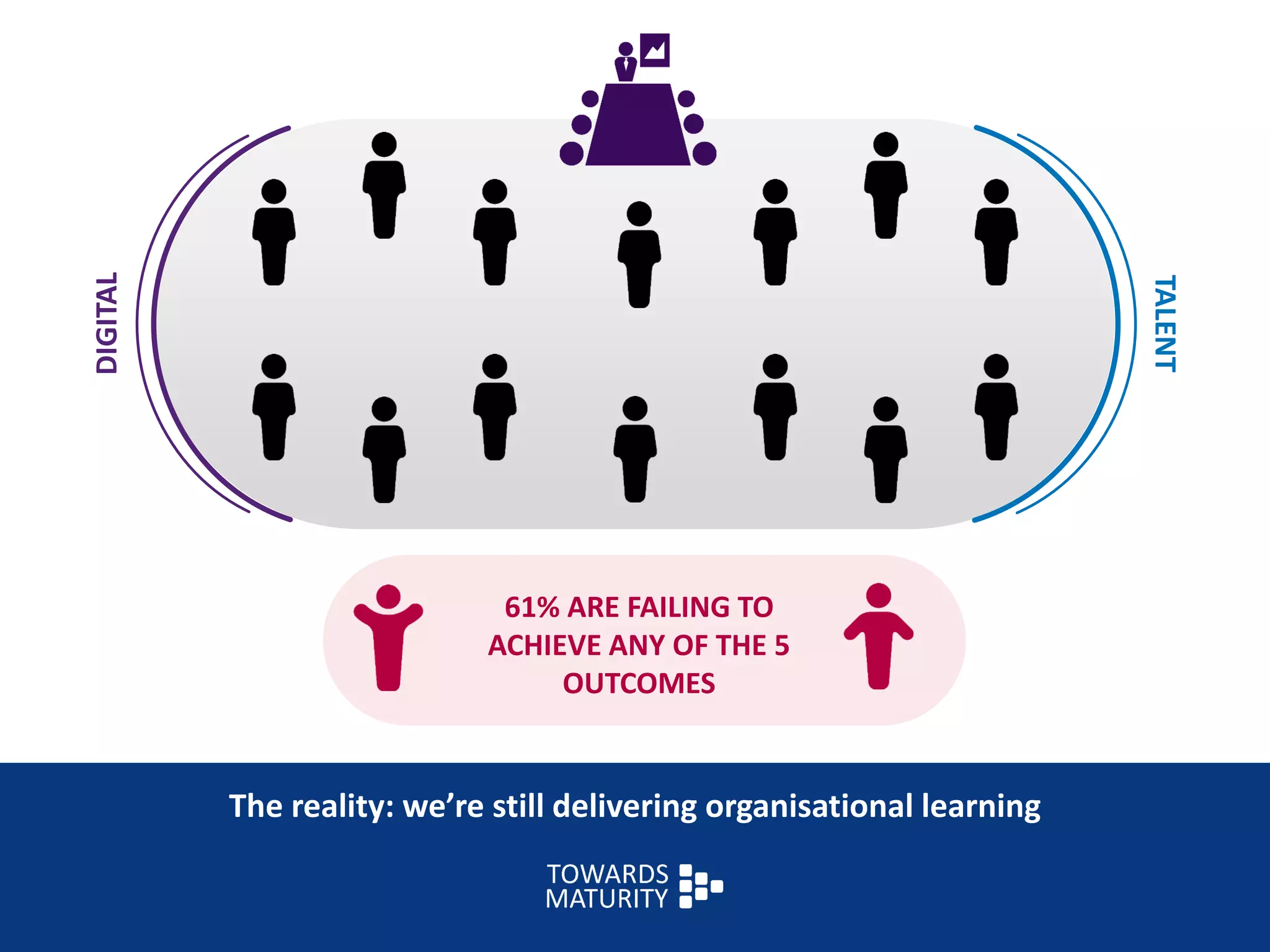
61% ARE FAILING TO
ACHIEVE ANY OF THE 5
OUTCOMES
The reality: we’re still delivering organisational learning
DIGITAL
TALENT
Introducing…
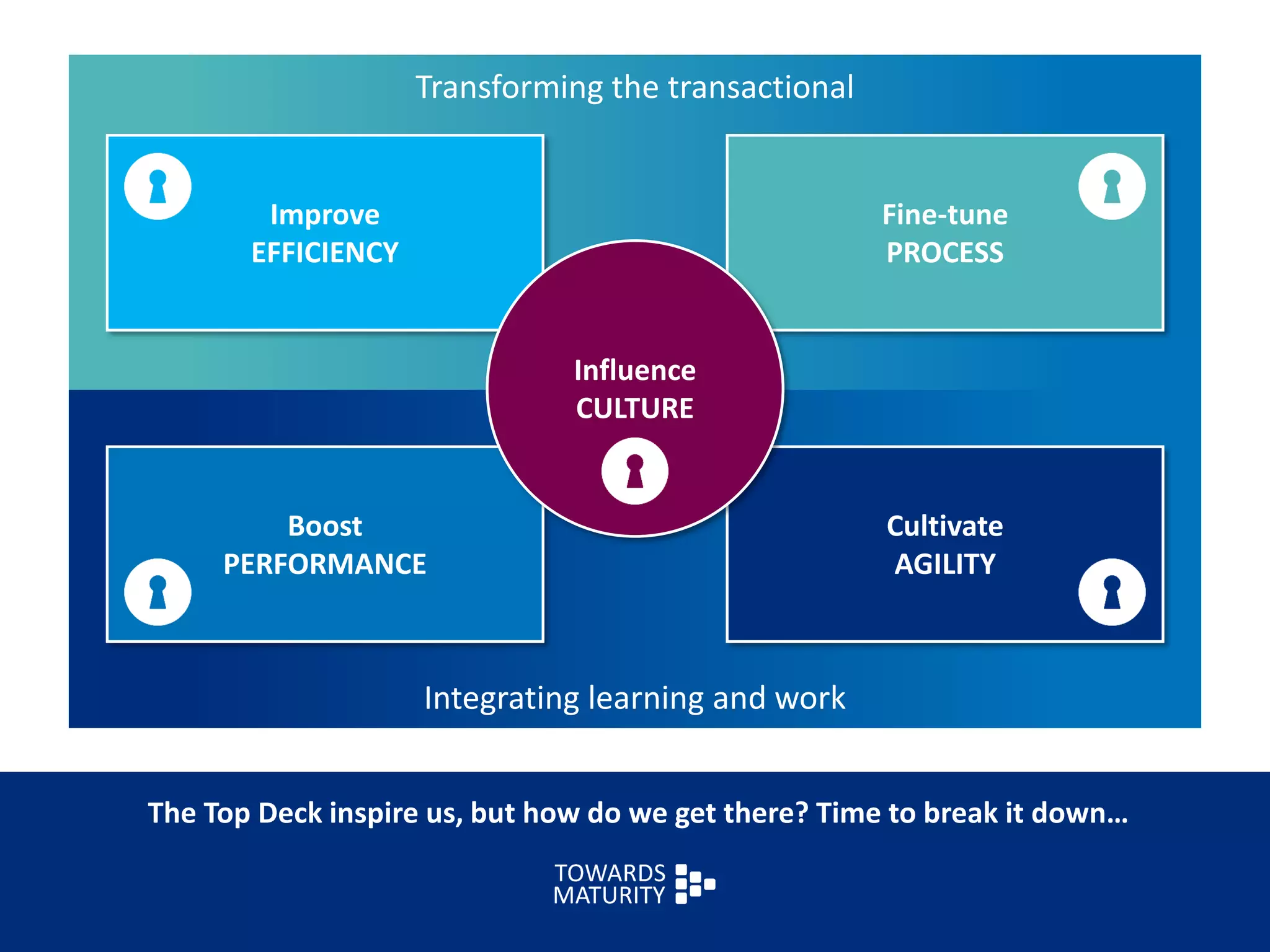
The Top Deck inspire us, but how do we get there? Time to break it down…
Integrating learning and work
Transforming the transactional
Boost
PERFORMANCE
Cultivate
AGILITY
Fine-tune
PROCESS
Improve
EFFICIENCY
Influence
CULTURE
Improving Efficiency
Fine-tuning Processes
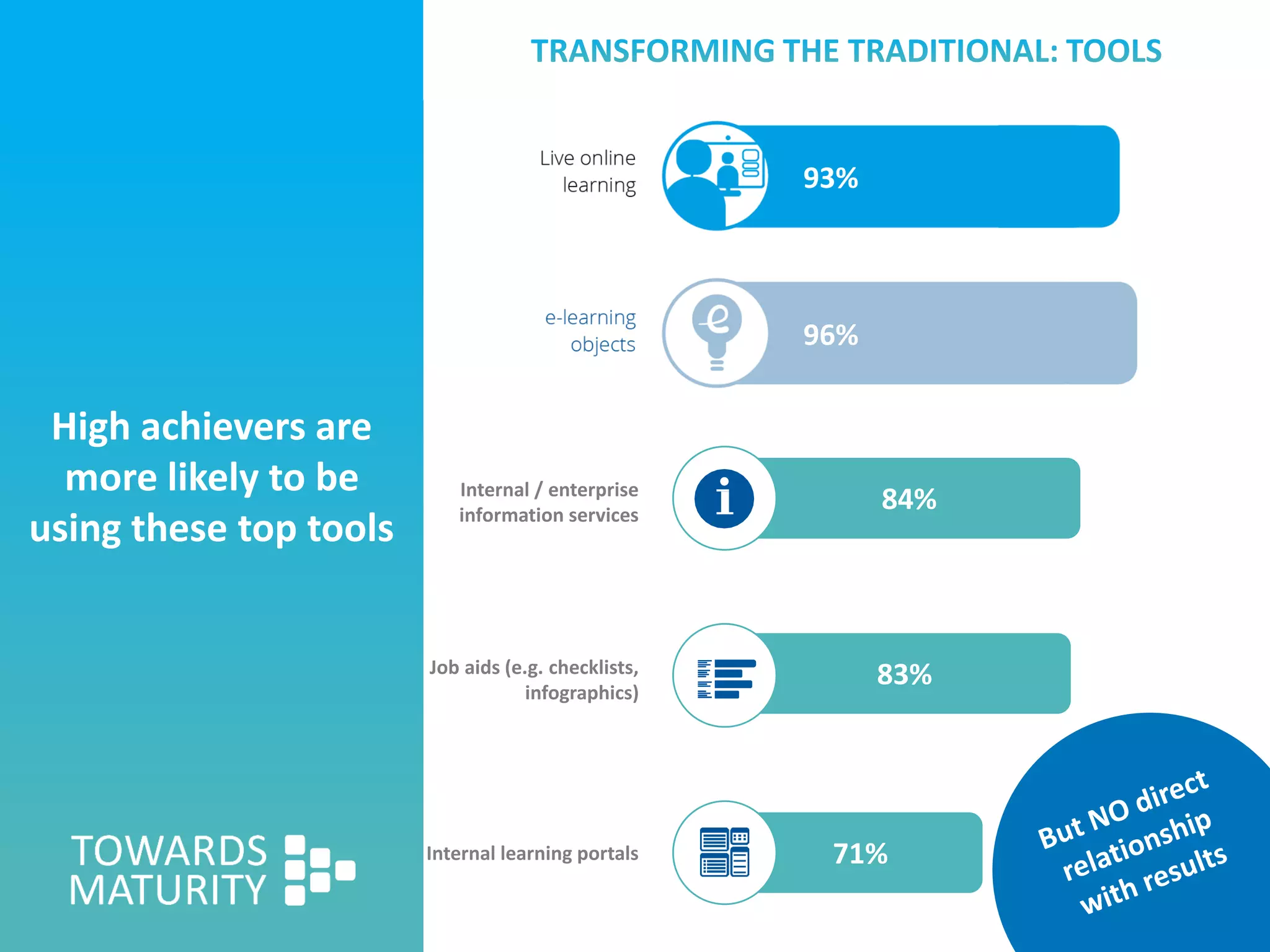
High achievers are
more likely to be
using these top tools
75%
96%
93%
83%
71%
84%Internal / enterprise
information services
Internal learning portals
Job aids (e.g. checklists,
infographics)
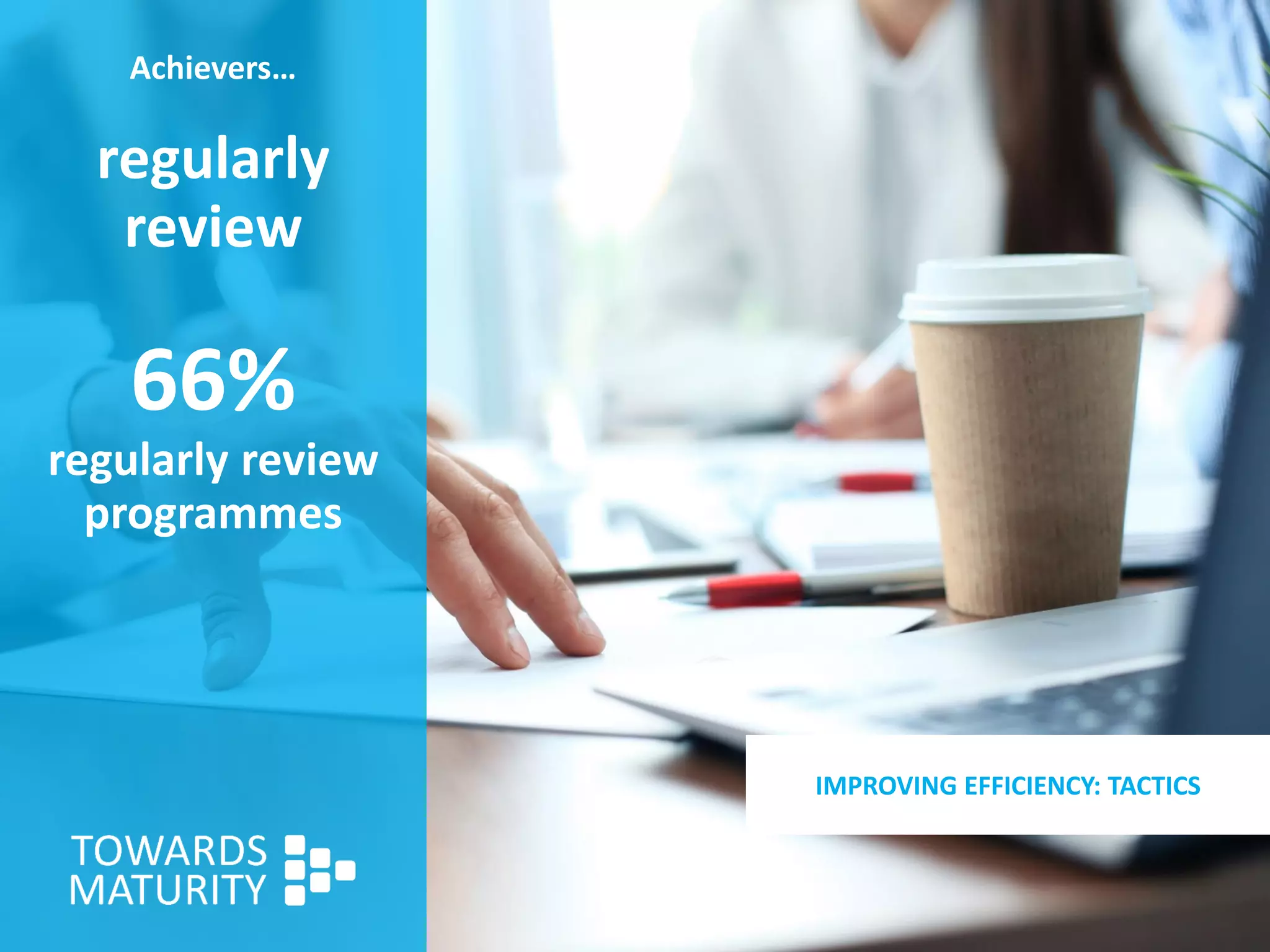
Achievers…
regularly
review
66%
regularly review
programmes
IMPROVING EFFICIENCY: TACTICS
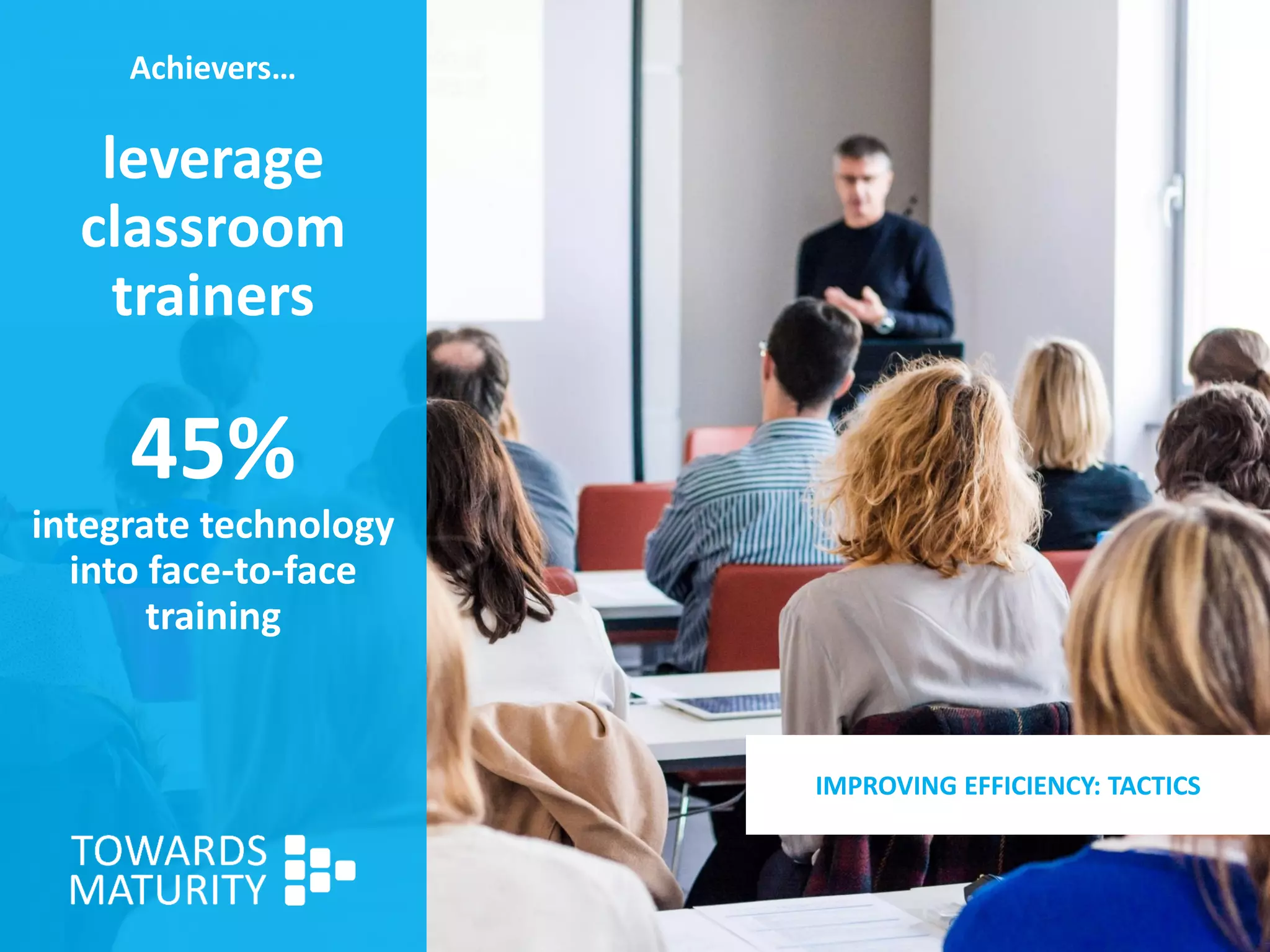
Achievers…
leverage
classroom
trainers
45%
integrate technology
into face-to-face
training
IMPROVING EFFICIENCY: TACTICS
Achievers…
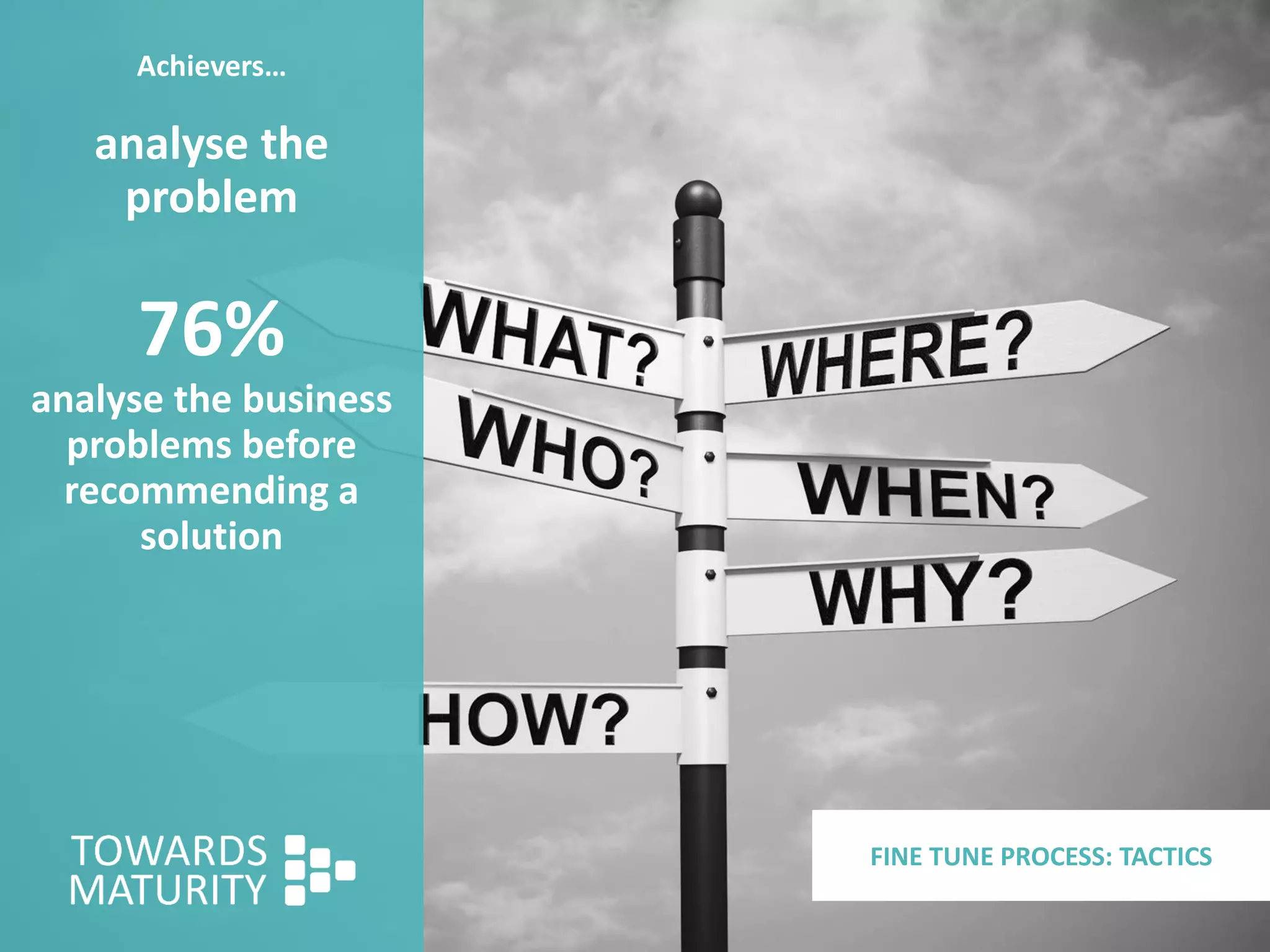
analyse the
problem
76%
analyse the business
problems before
recommending a
solution
FINE TUNE PROCESS: TACTICS
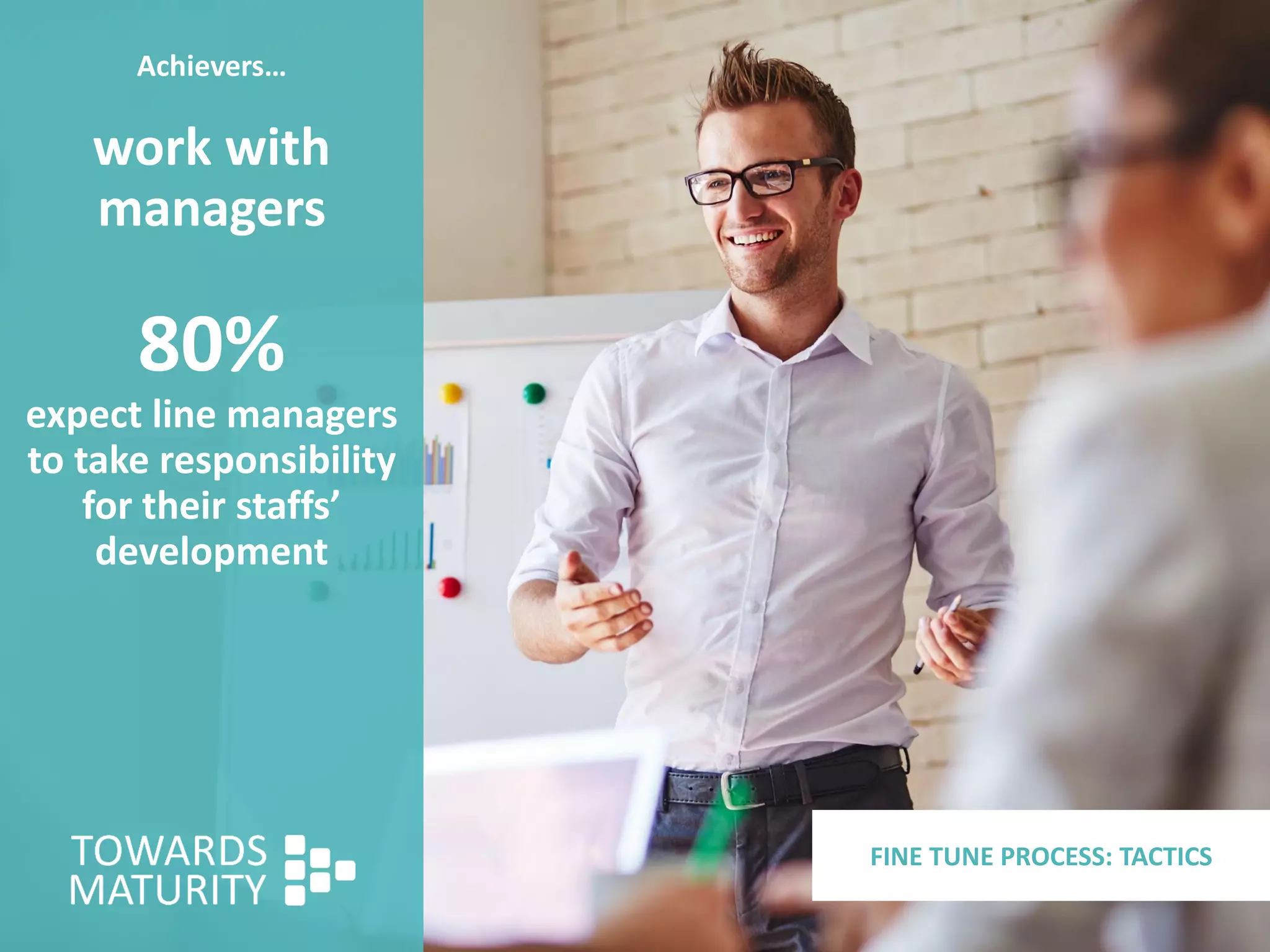
Achievers…
work with
managers
80%
expect line managers
to take responsibility
for their staffs’
development
FINE TUNE PROCESS: TACTICS
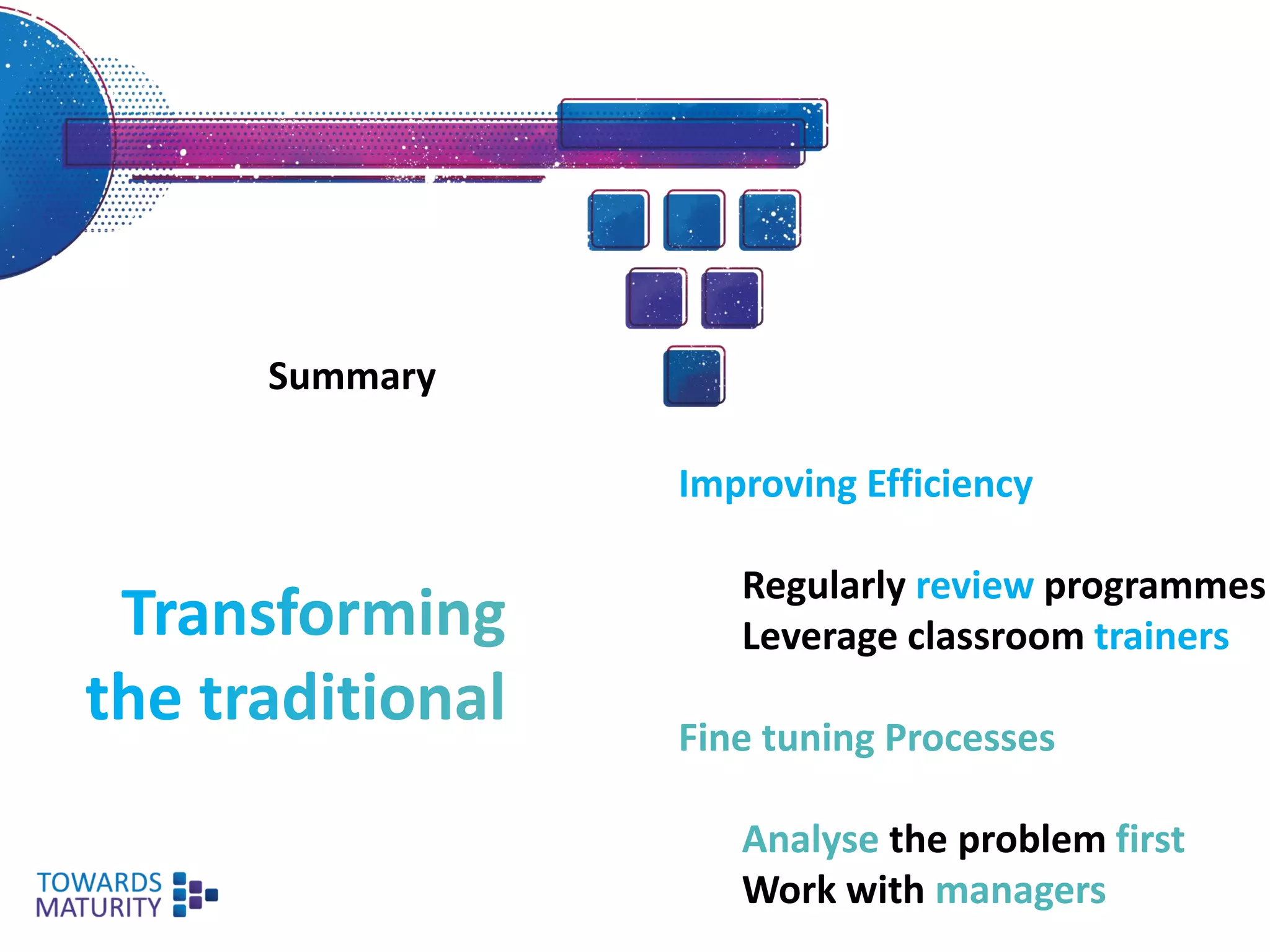
Summary
Improving Efficiency
Regularly review programmes
Leverage classroom trainers
Fine tuning Processes
Analyse the problem first
Work with managers
Boosting Performance
Cultivating Agility
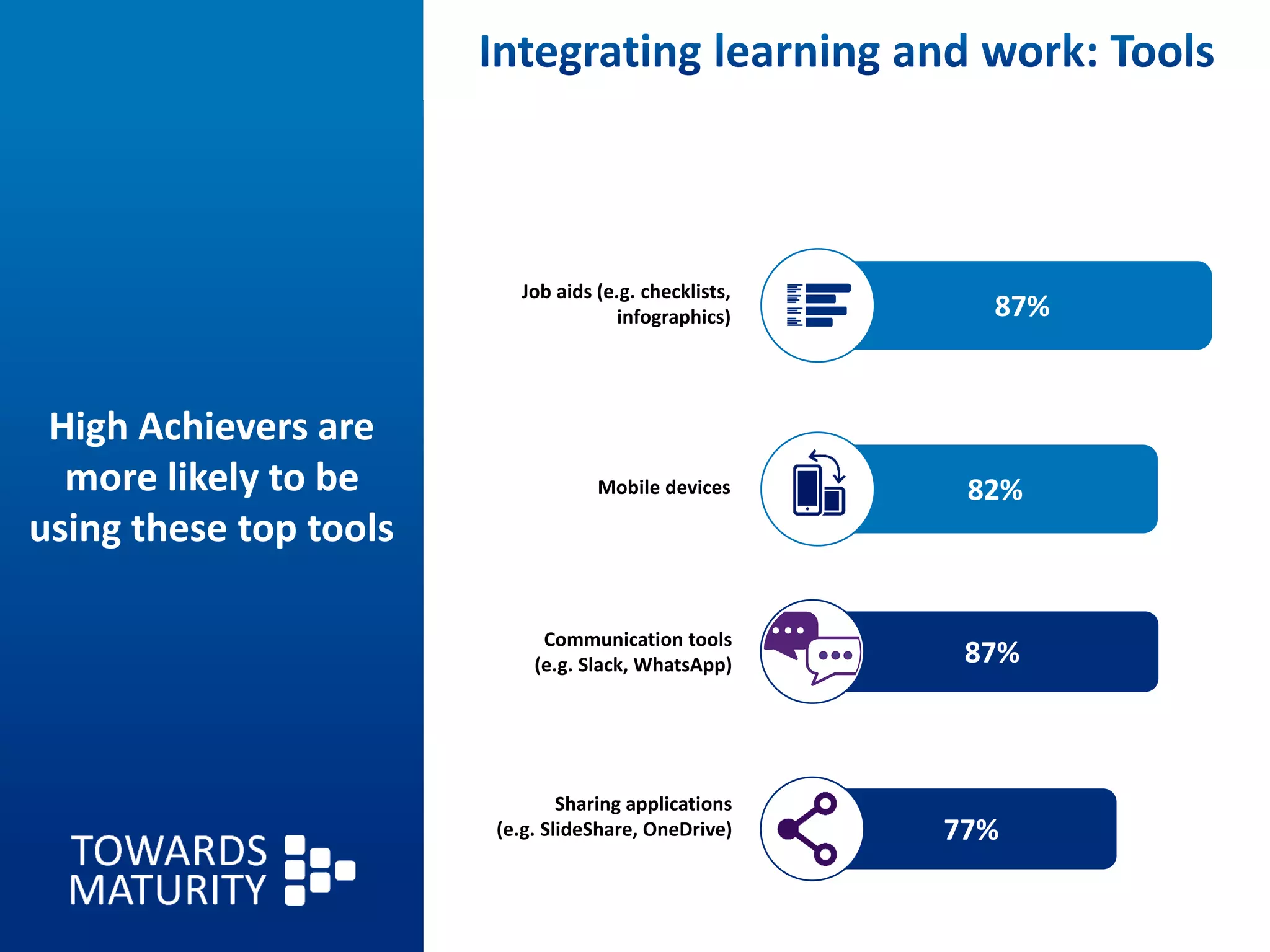
High Achievers are
more likely to be
using these top tools
82%Mobile devices
Job aids (e.g. checklists,
infographics) 87%
Communication tools
(e.g. Slack, WhatsApp)
Sharing applications
(e.g. SlideShare, OneDrive) 77%
87%
Achievers…
Responding at the
speed of work
71%
agree learning is
delivered in time
to meet the needs
of business
BOOSTING PERFORMANCE: TACTICS
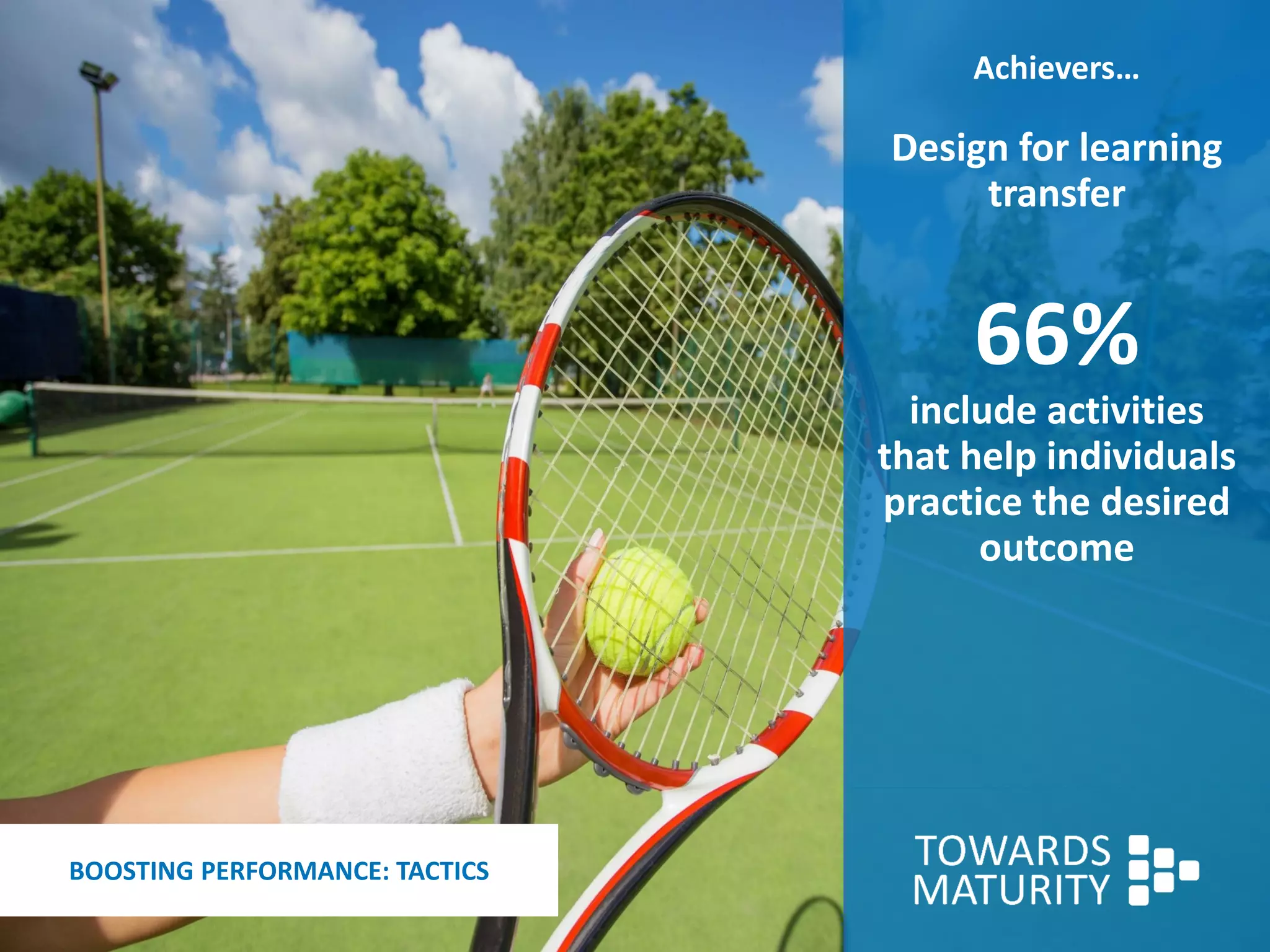
Achievers…
Design for learning
transfer
66%
include activities
that help individuals
practice the desired
outcome
BOOSTING PERFORMANCE: TACTICS
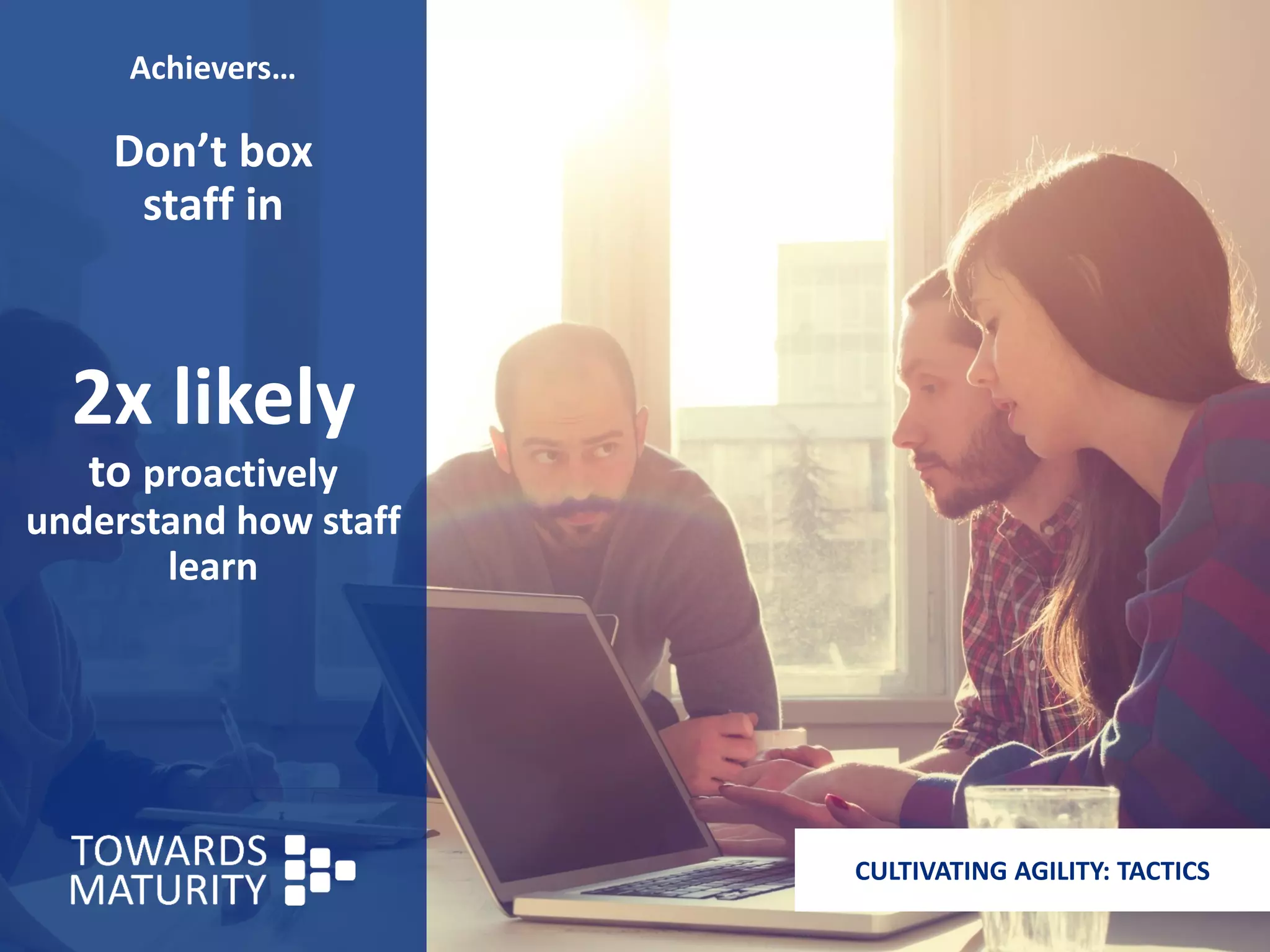
Achievers…
Don’t box
staff in
2x likely
to proactively
understand how staff
learn
CULTIVATING AGILITY: TACTICS
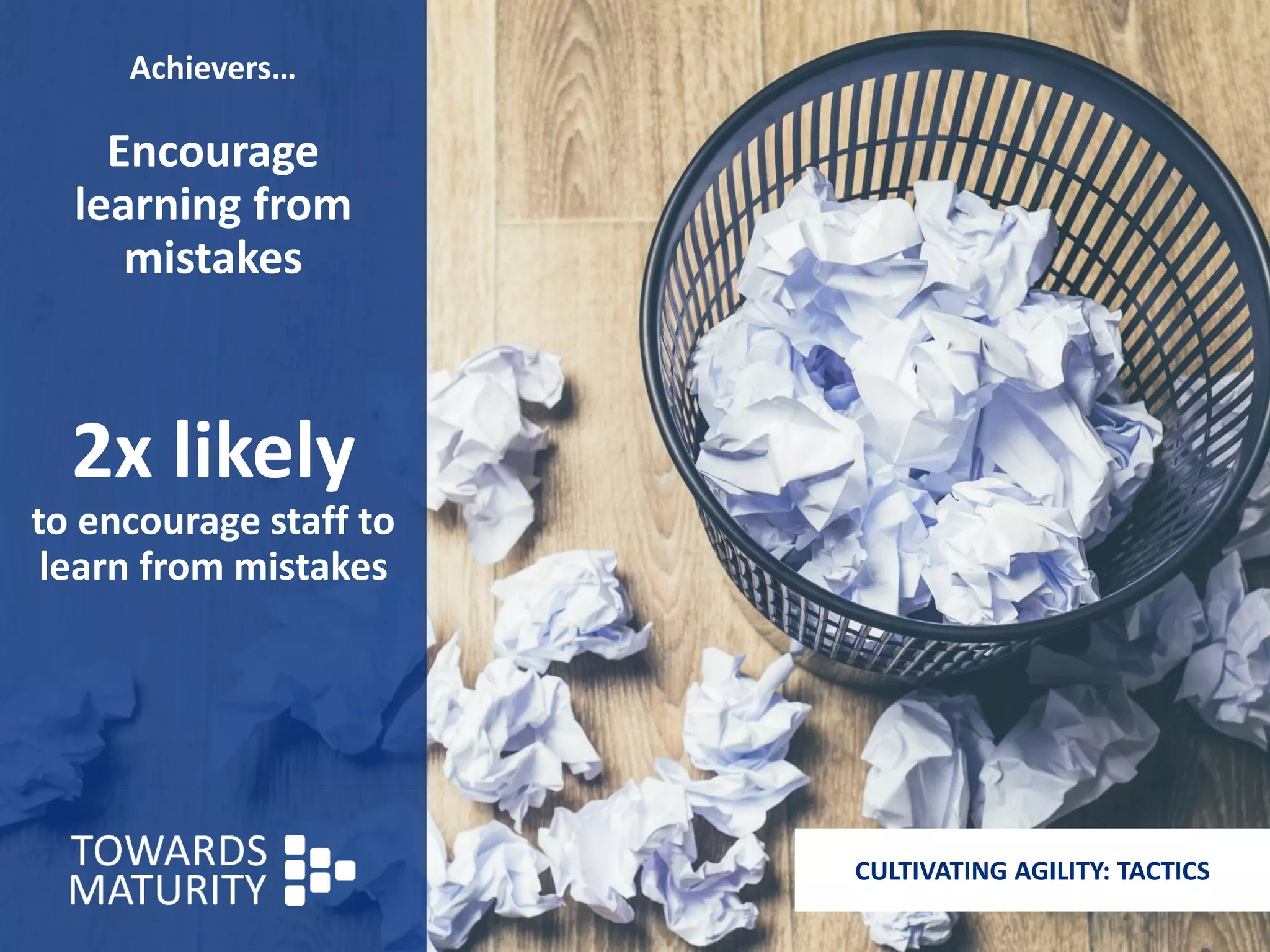
Achievers…
Encourage
learning from
mistakes
2x likely
to encourage staff to
learn from mistakes
CULTIVATING AGILITY: TACTICS
Summary
Boosting Performance
Respond at the speed of work
Design for learning transfer
Cultivating Agility
Don’t box staff in, listen!
Encourage learning from mistak
Influencing
Culture
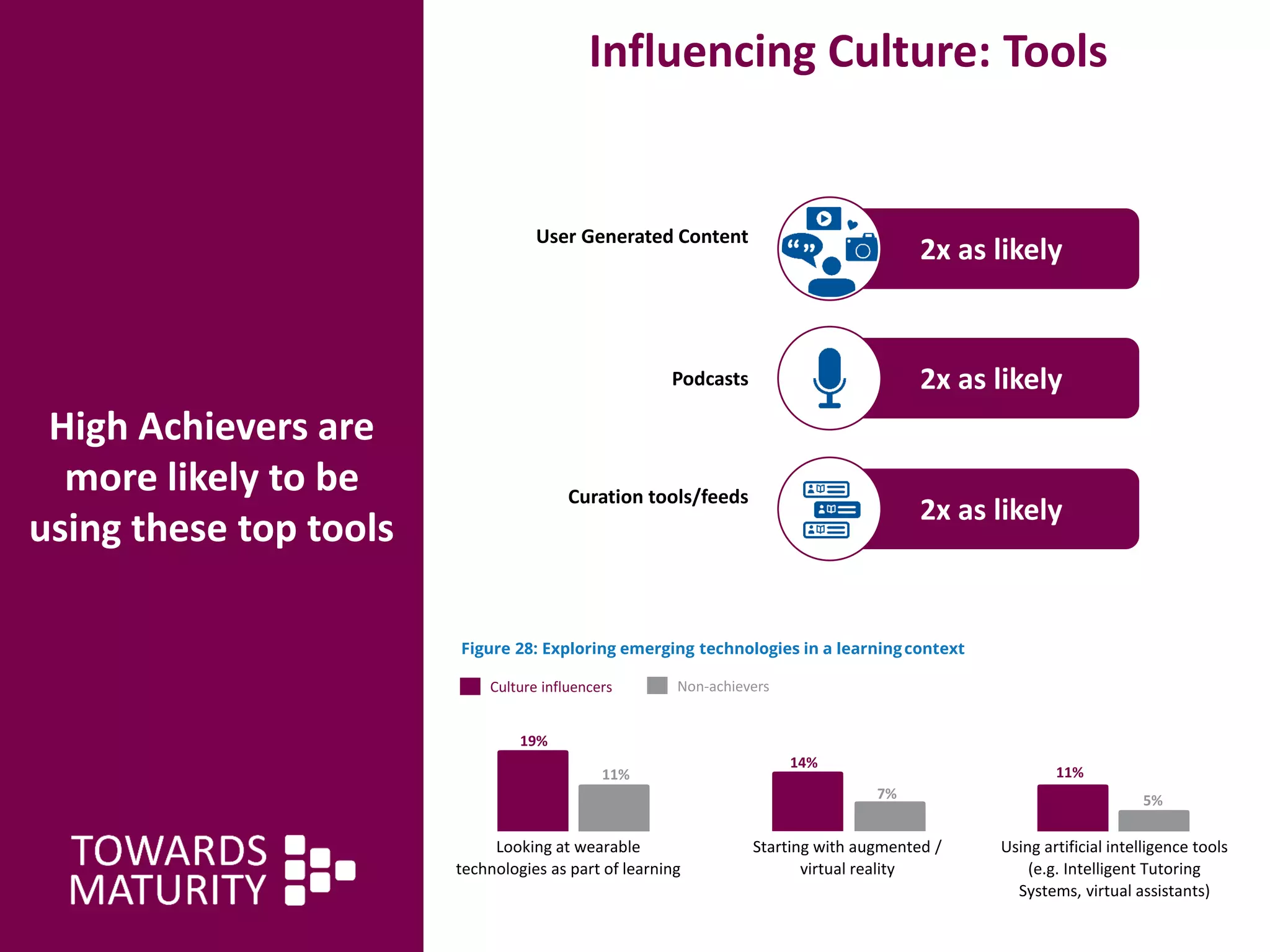
High Achievers are
more likely to be
using these top tools
Influencing Culture: Tools
User Generated Content
2x as likely
Podcasts 2x as likely
Curation tools/feeds
2x as likely
Figure 28: Exploring emerging technologies in a learningcontext
Culture influencers Non-achievers
Looking at wearable
technologies as part of learning
14%
11%11%
7% 5%
Starting with augmented /
virtual reality
Using artificial intelligence tools
(e.g. Intelligent Tutoring
Systems, virtual assistants)
19%
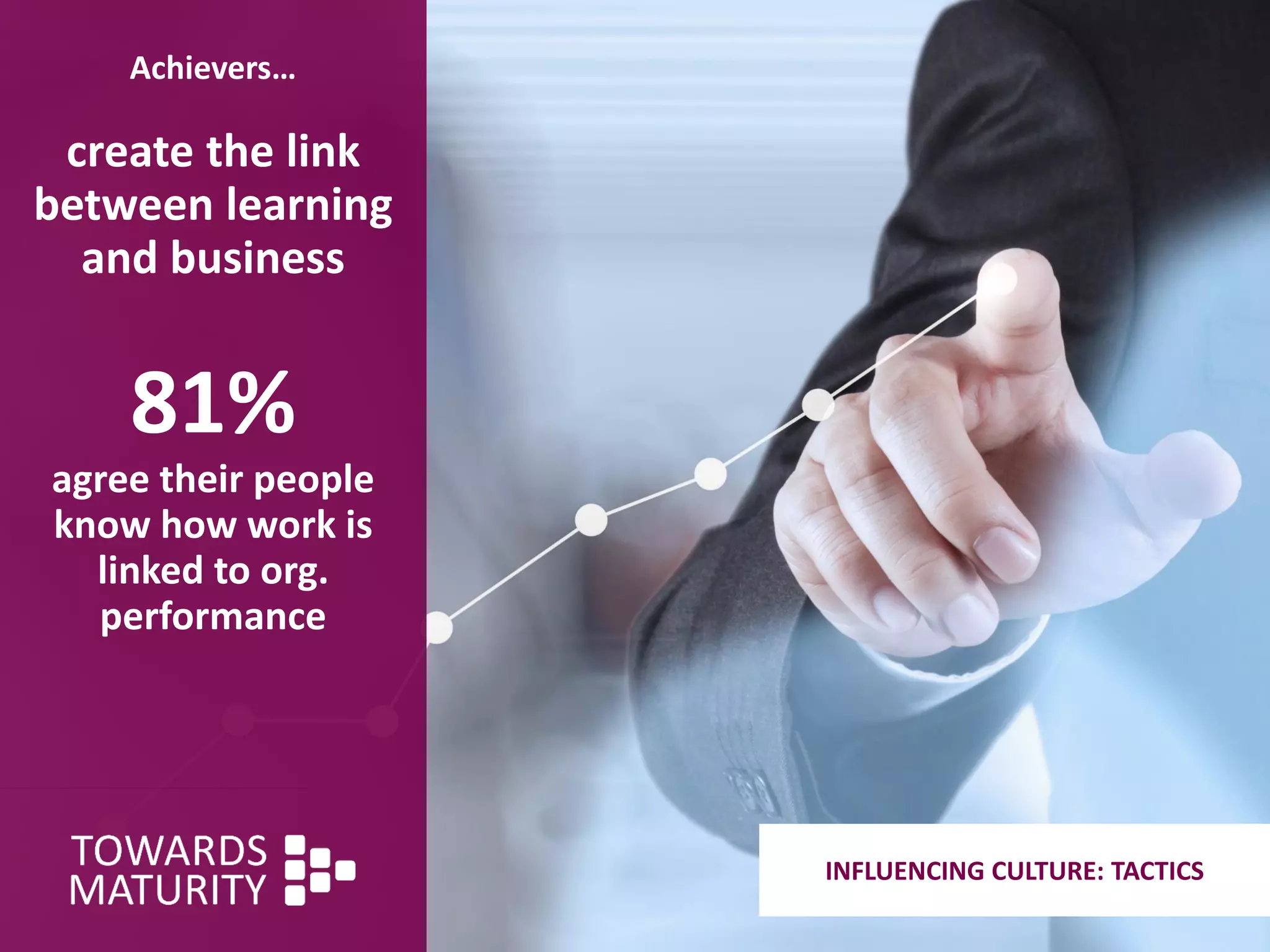
Achievers…
create the link
between learning
and business
81%
agree their people
know how work is
linked to org.
performance
INFLUENCING CULTURE: TACTICS
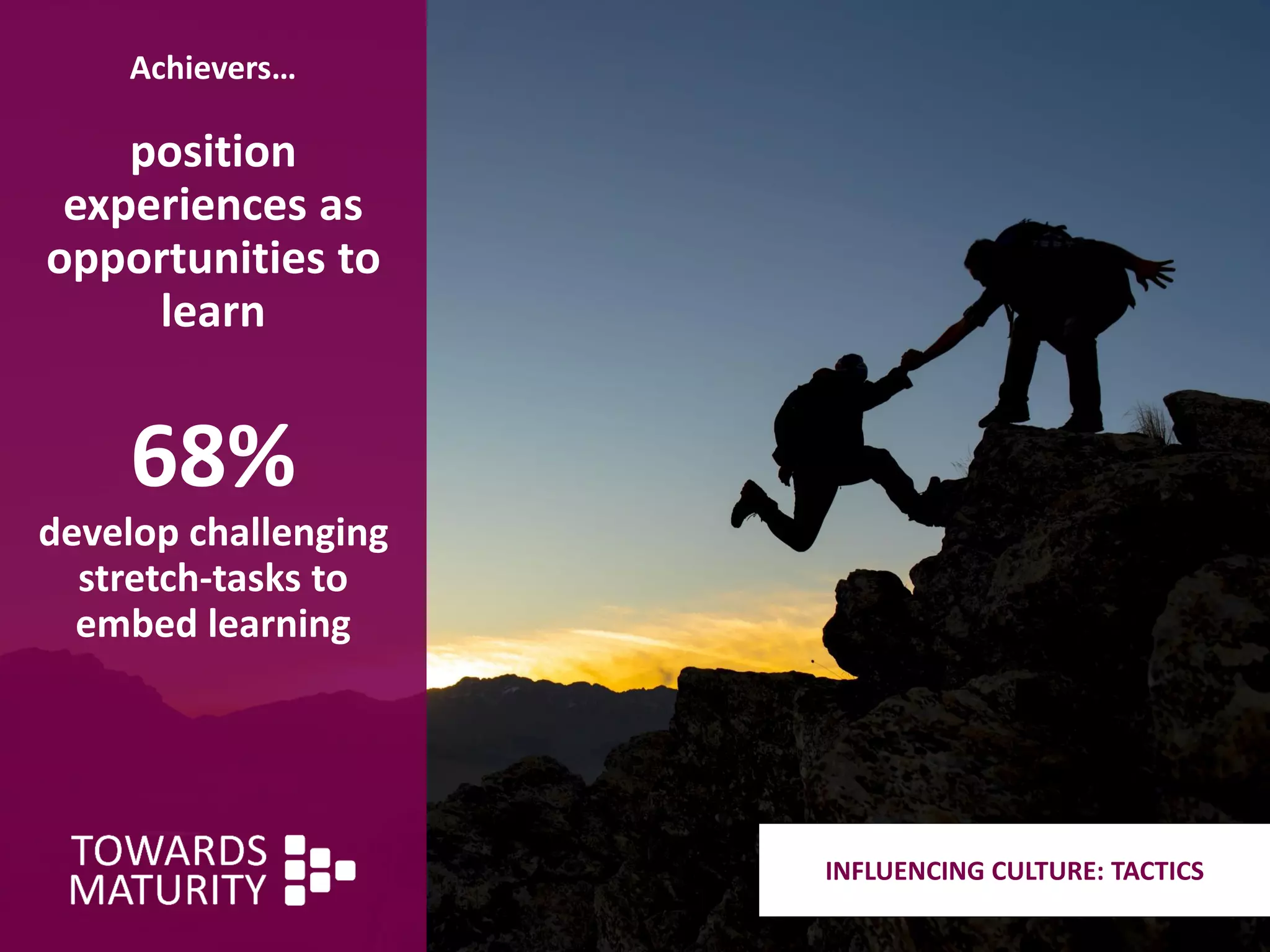
Achievers…
position
experiences as
opportunities to
learn
68%
develop challenging
stretch-tasks to
embed learning
INFLUENCING CULTURE: TACTICS
Achievers…
celebrate
success
67%
communicate
learning success
to line managers
INFLUENCING CULTURE: TACTICS
Summary
• Create the link between learning and
business
• Position experiences as opportunities
to learn
• Celebrate success
Influencing
Culture
Unlocking the
Potential of L&D
The place to
start…
What do we need
to do for
ourselves before
we can help
others?
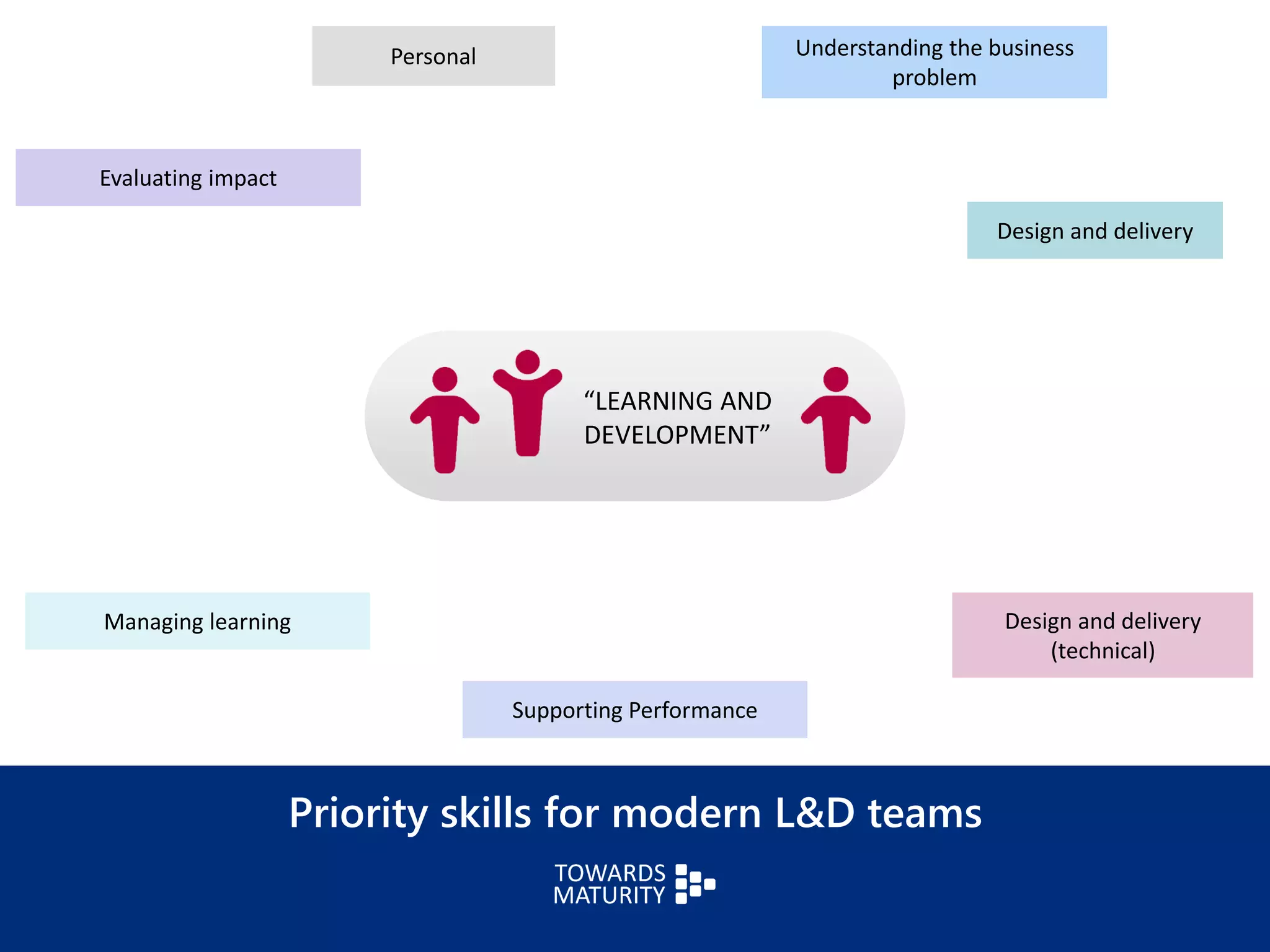
Priority skills for modern L&D teams
“LEARNING AND
DEVELOPMENT”
Managing learning
Personal Understanding the business
problem
Design and delivery
(technical)
Supporting Performance
Design and delivery
Evaluating impact
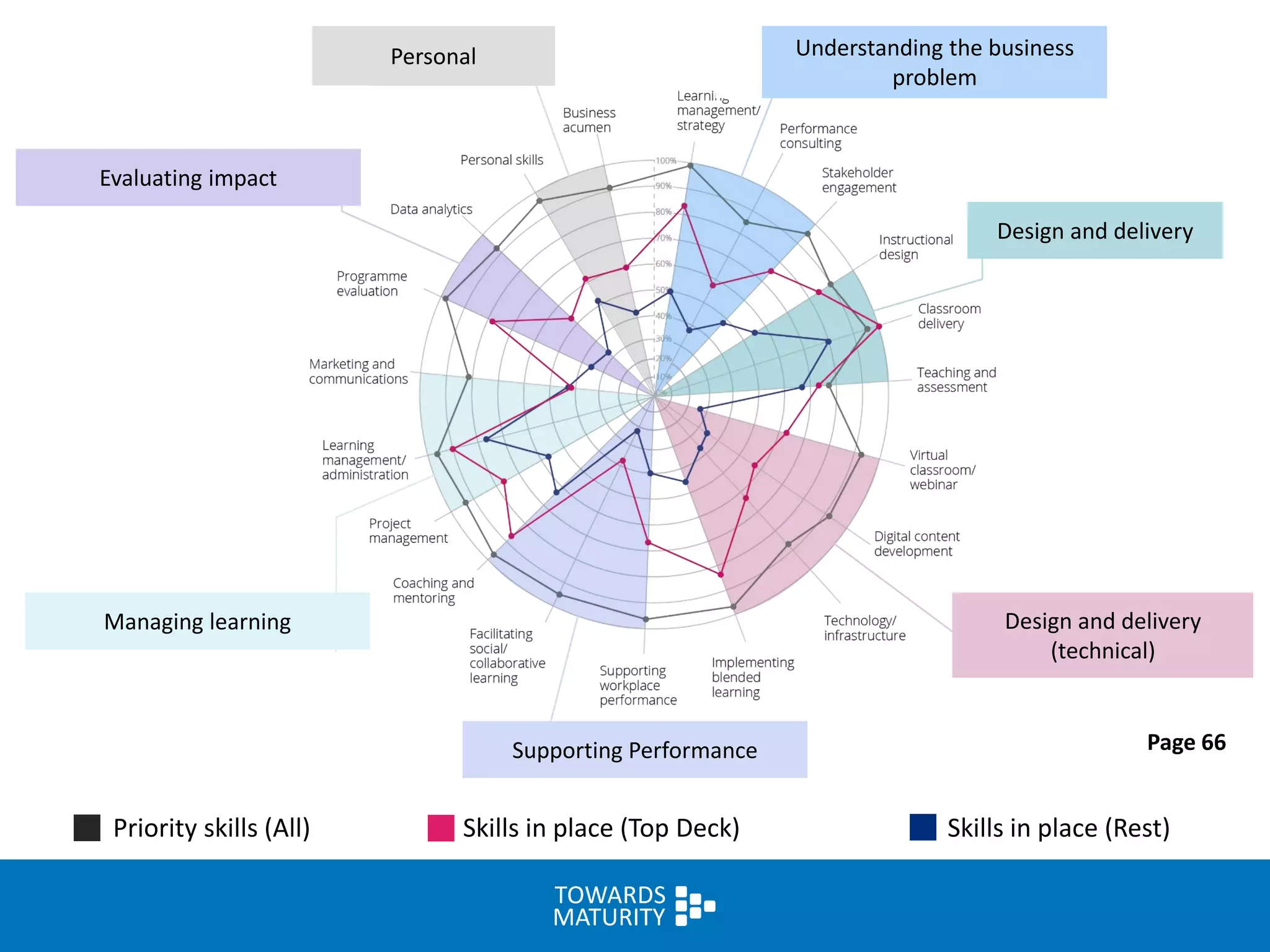
Page 66
Managing learning
Personal Understanding the business
problem
Design and delivery
(technical)
Supporting Performance
Design and delivery
Evaluating impact
Skills in place (Rest)Priority skills (All) Skills in place (Top Deck)
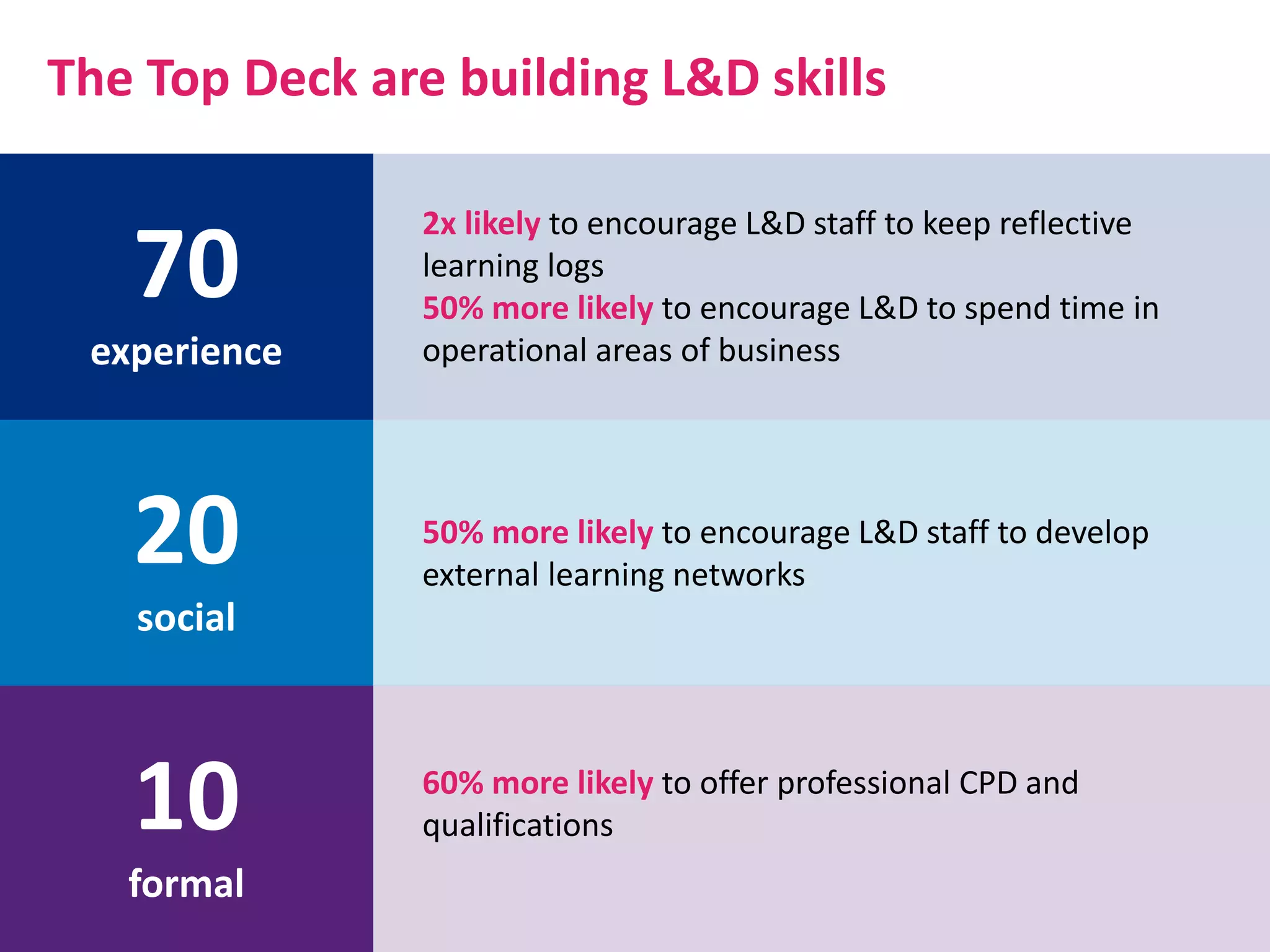
70
experience
20
social
10
formal
2x likely to encourage L&D staff to keep reflective
learning logs
50% more likely to encourage L&D to spend time in
operational areas of business
50% more likely to encourage L&D staff to develop
external learning networks
60% more likely to offer professional CPD and
qualifications
The Top Deck are building L&D skills
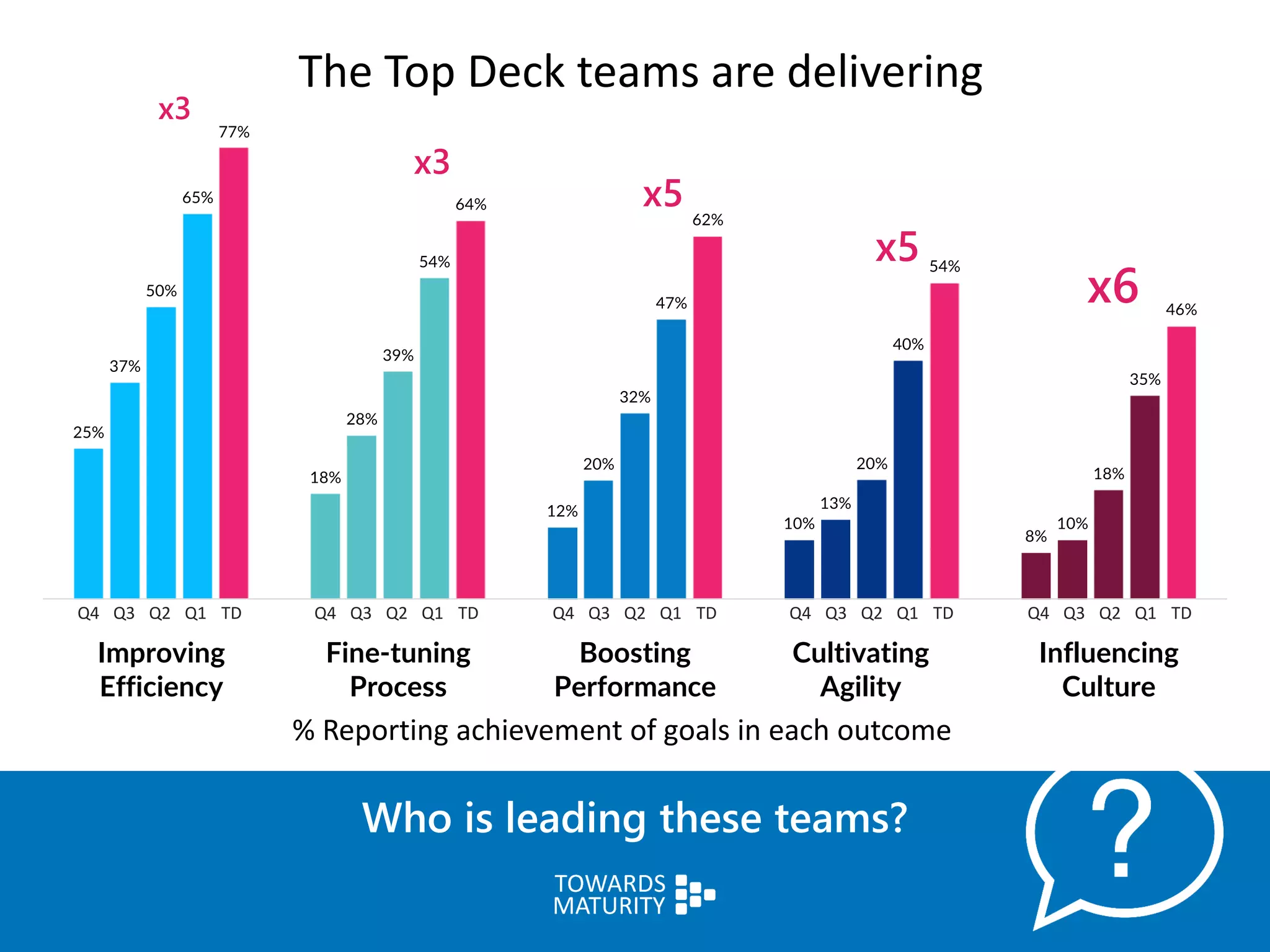
25%
18%
12%
10%
8%
37%
28%
20%
13%
10%
50%
39%
32%
20%
18%
65%
54%
47%
40%
35%
77%
64%
62%
54%
46%
Improving
Efficiency
Fine-tuning
Process
Boosting
Performance
Cultivating
Agility
Influencing
Culture
x3
x5
x6
Q4 Q3 Q2 Q1 TD Q4 Q3 Q2 Q1 TD Q4 Q3 Q2 Q1 TD Q4 Q3 Q2 Q1 TD Q4 Q3 Q2 Q1 TD
Who is leading these teams?
The Top Deck teams are delivering
x3
x5
% Reporting achievement of goals in each outcome
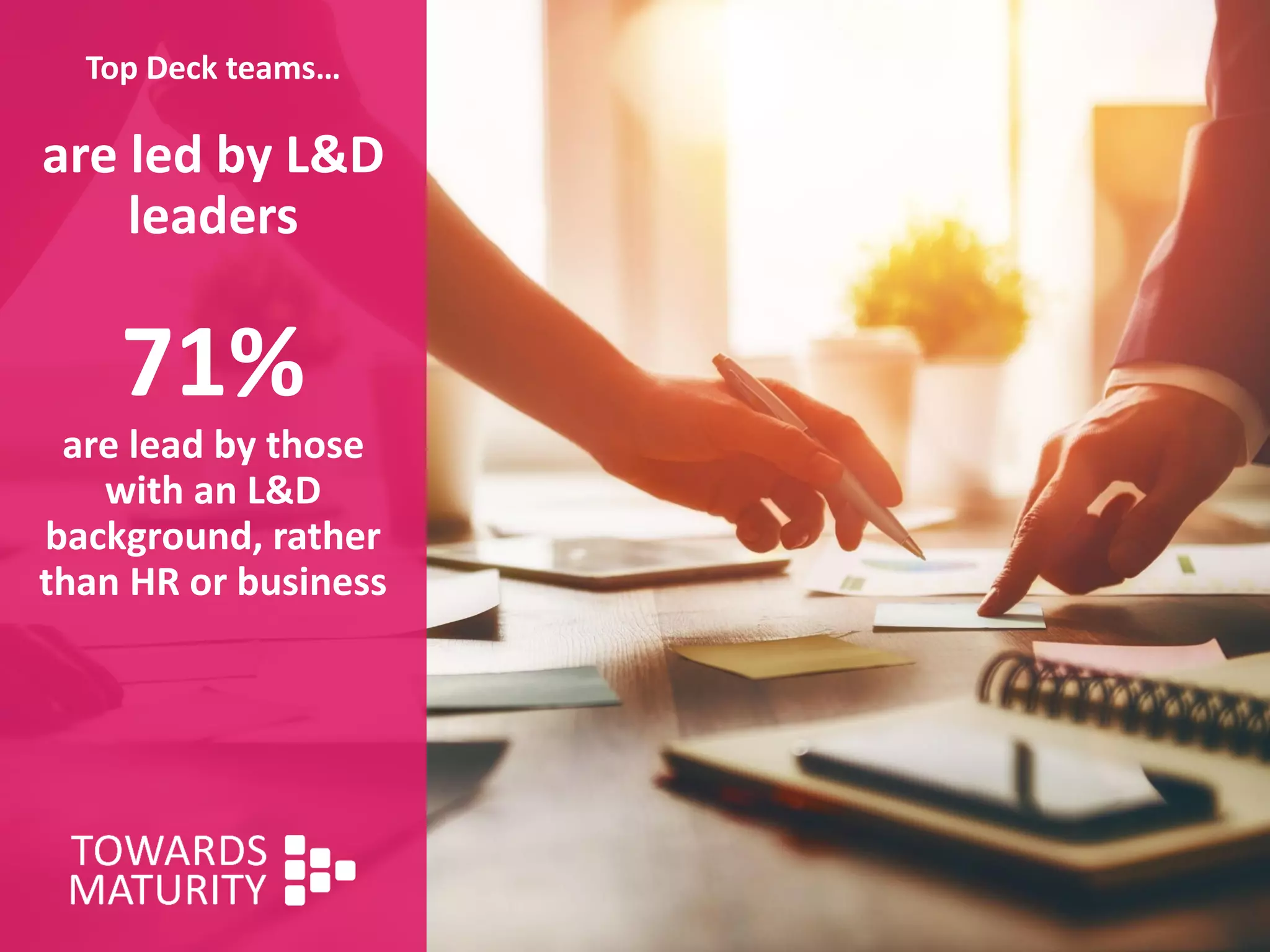
Top Deck teams…
are led by L&D
leaders
71%
are lead by those
with an L&D
background, rather
than HR or business
Achievers…
are led by L&D
leaders who
learn
94%
are active in seeking out
new work experiences
81%
build personal
knowledge networks
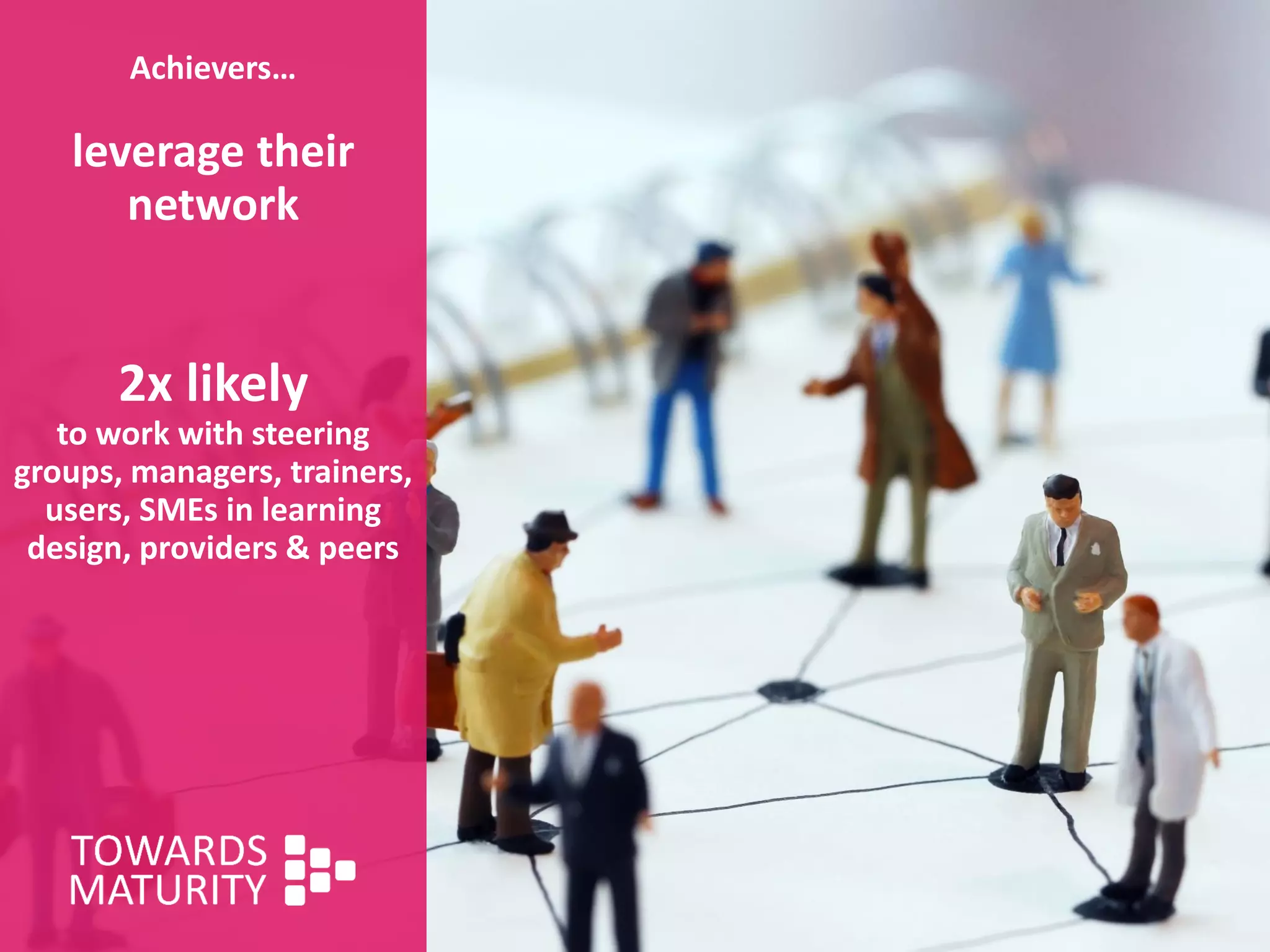
Achievers…
leverage their
network
2x likely
to work with steering
groups, managers, trainers,
users, SMEs in learning
design, providers & peers
Integrating learning and work
Transforming the transactional
Boost
PERFORMANCE
Cultivate
AGILITY
Fine-tune
PROCESS
Improve
EFFICIENCY
Influence
CULTURE
www.towardsmaturity.org/2016benchmark
Pick your key today- what are you going to do differently as
a result of today?
Thanks to our Ambassadors for making this
programme possible
Resources@towardsmaturity.org
Email for your resource pack

Unlocking Potential: Releasing the potential of the business and its people through learning

Editor's Notes

  • #2 How to go with the flow – tap into the way that modern workers learn How to improve the employee experience How to build business buy in
  • #8 For all ages
  • #11 For all ages
  • #21 Organisational (External complexity forces) ► Growing in a complex world ► Managing the demands of over-regulation Organisational (Internal complexity forces) ► Driving digital and the need for a new business model ► Investing in intelligent data analytics People (External complexity forces) ► Continually innovating and exceeding the customer experience ► Addressing major talent and capability gaps People (Internal complexity forces) ► Leveraging value from more demanding employees ► Unleashing the power of people 41% of CEOs anticipate that their company will be significantly transformed over the next 3 years. That number has risen significantly from the 2015 survey, in which 29% of CEOs held that opinion.6 There has never been a more critical time for the C-suite to demand more from their business leaders and people professionals.
  • #22 We understand the need to change
  • #23 We understand the need to change
  • #24 Skill- 62% lack of skills amongst staff to manage own learning, 59% lack of skills in L&D to implement & manage new learning Attitude- 58% reluctance of line managers to encourage new ways of learning Knowledge- 54% L&D lack knowledge about potential use and implementation of technology Money- 66% cost of development
  • #25 Skill- 62% lack of skills amongst staff to manage own learning, 59% lack of skills in L&D to implement & manage new learning Attitude- 58% reluctance of line managers to encourage new ways of learning Knowledge- 54% L&D lack knowledge about potential use and implementation of technology Money- 66% cost of development
  • #27  - ' There's Data and there's Data!' - what type do you need to make long term decision on your L&D strategy -  'we are passionate about data that drives performance rather than data that continually describes the status quo' Evidence-based decision-making
  • #30 Main message: it is clear - L&D leaders around the globe see their role in the future as an enabler of self-sustaining learning culture that builds business performance and agility. They have something to teach us. The Top Deck are shifting from organisational learning to building a ‘learning organisation’
  • #34 We understand the need to change
  • #57 Skill- 62% lack of skills amongst staff to manage own learning, 59% lack of skills in L&D to implement & manage new learning Attitude- 58% reluctance of line managers to encourage new ways of learning Knowledge- 54% L&D lack knowledge about potential use and implementation of technology Money- 66% cost of development
  • #58 ar
  • #59 ar