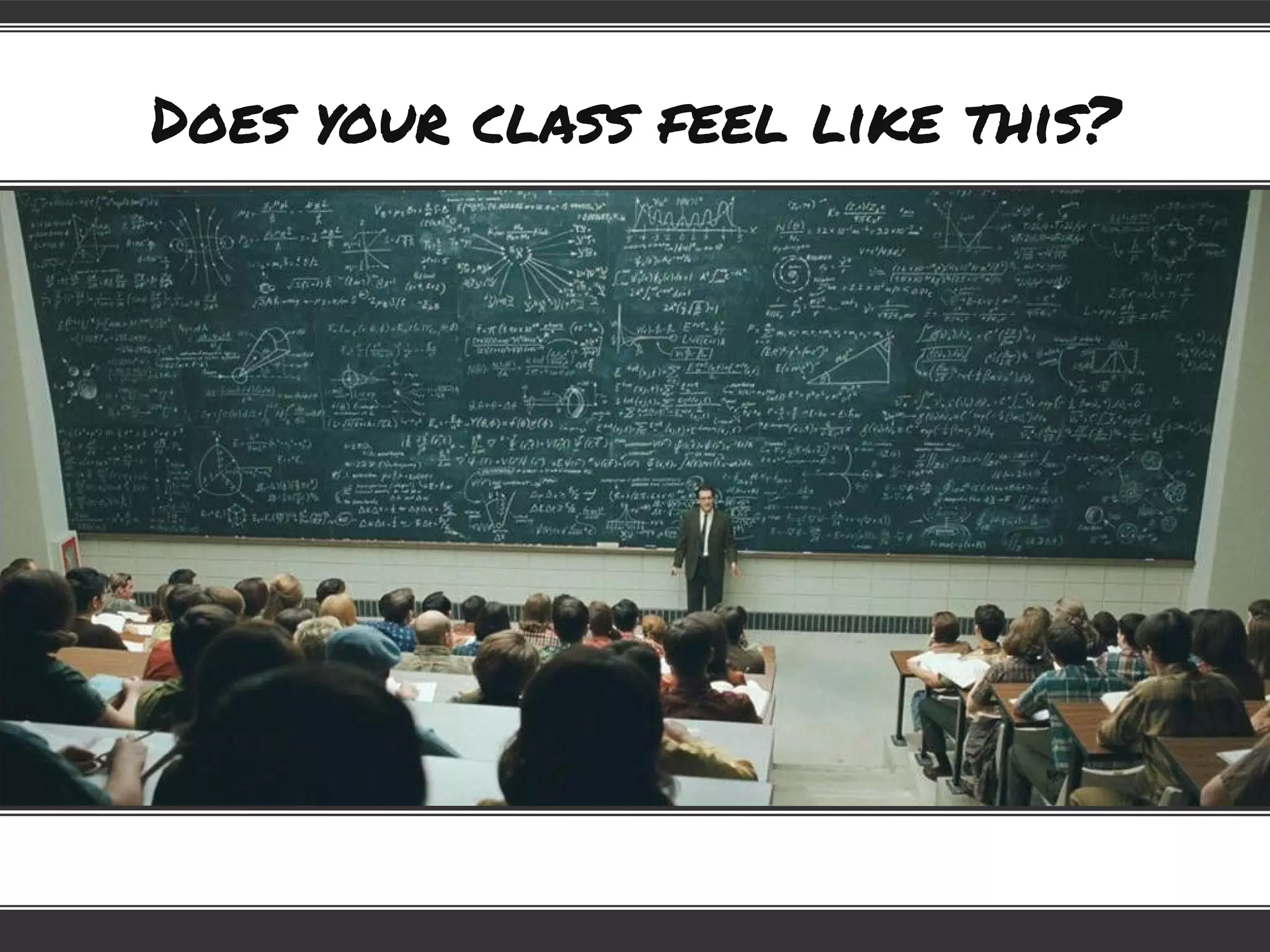
Does your class feel like this?
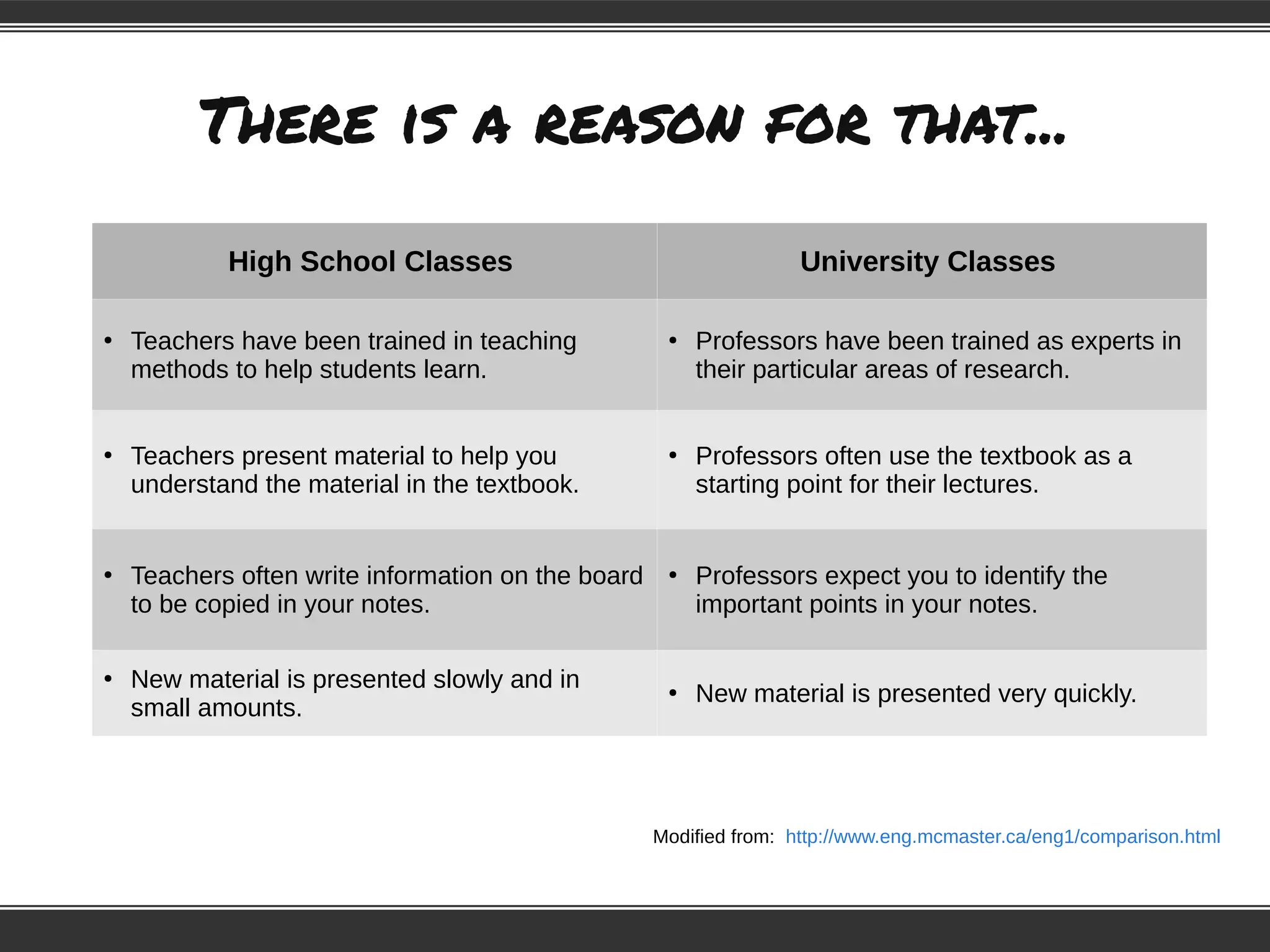
There is a reason for that...
High School Classes University Classes
●
Teachers have been trained in teaching
methods to help students learn.
●
Professors have been trained as experts in
their particular areas of research.
●
Teachers present material to help you
understand the material in the textbook.
●
Professors often use the textbook as a
starting point for their lectures.
●
Teachers often write information on the board
to be copied in your notes.
●
Professors expect you to identify the
important points in your notes.
●
New material is presented slowly and in
small amounts.
●
New material is presented very quickly.
Modified from: http://www.eng.mcmaster.ca/eng1/comparison.html
So, you’ll need to adjust
– You will need to work to keep up
– You are expected to read and understand
the assigned material
●
Lectures and assignments start with the
assumption that you've already done the
necessary preparation
You Need To:
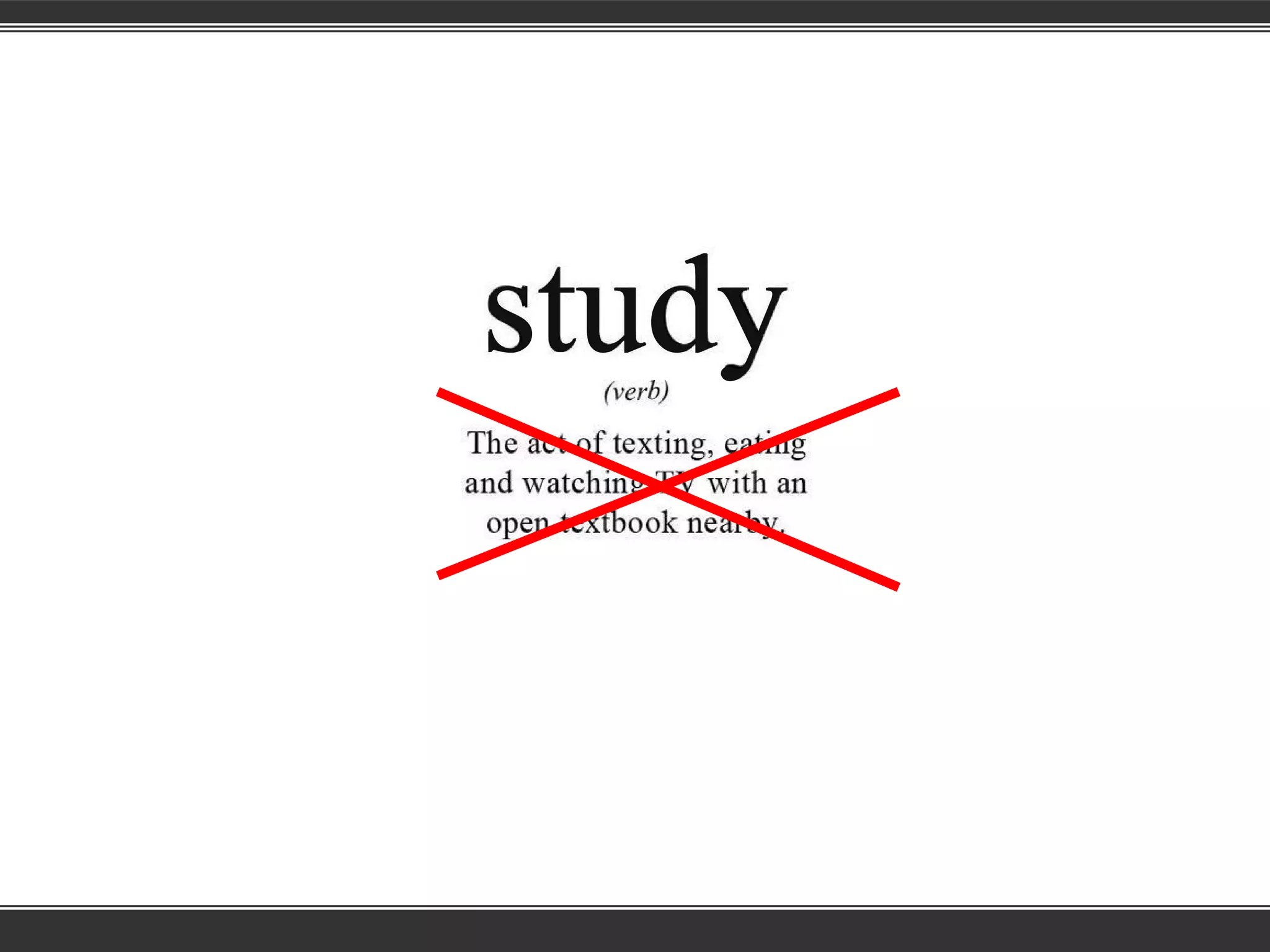
study
Please keep in mind:
Your instructor is not trying to torture you
Your instructor does not want you to fail
Your instructor is trying to teach you
something you will need to know
But...
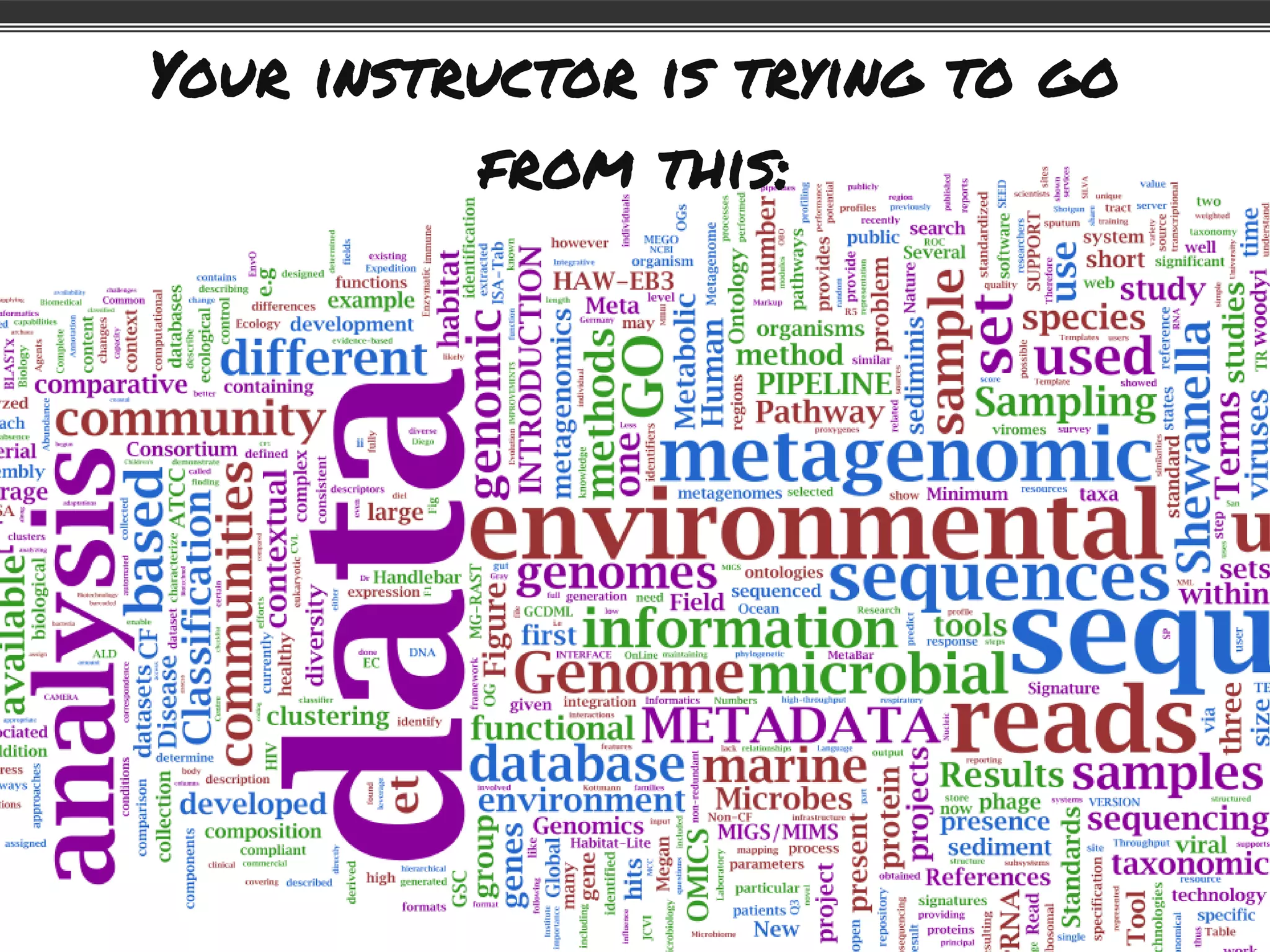
Your instructor is trying to go
from this:
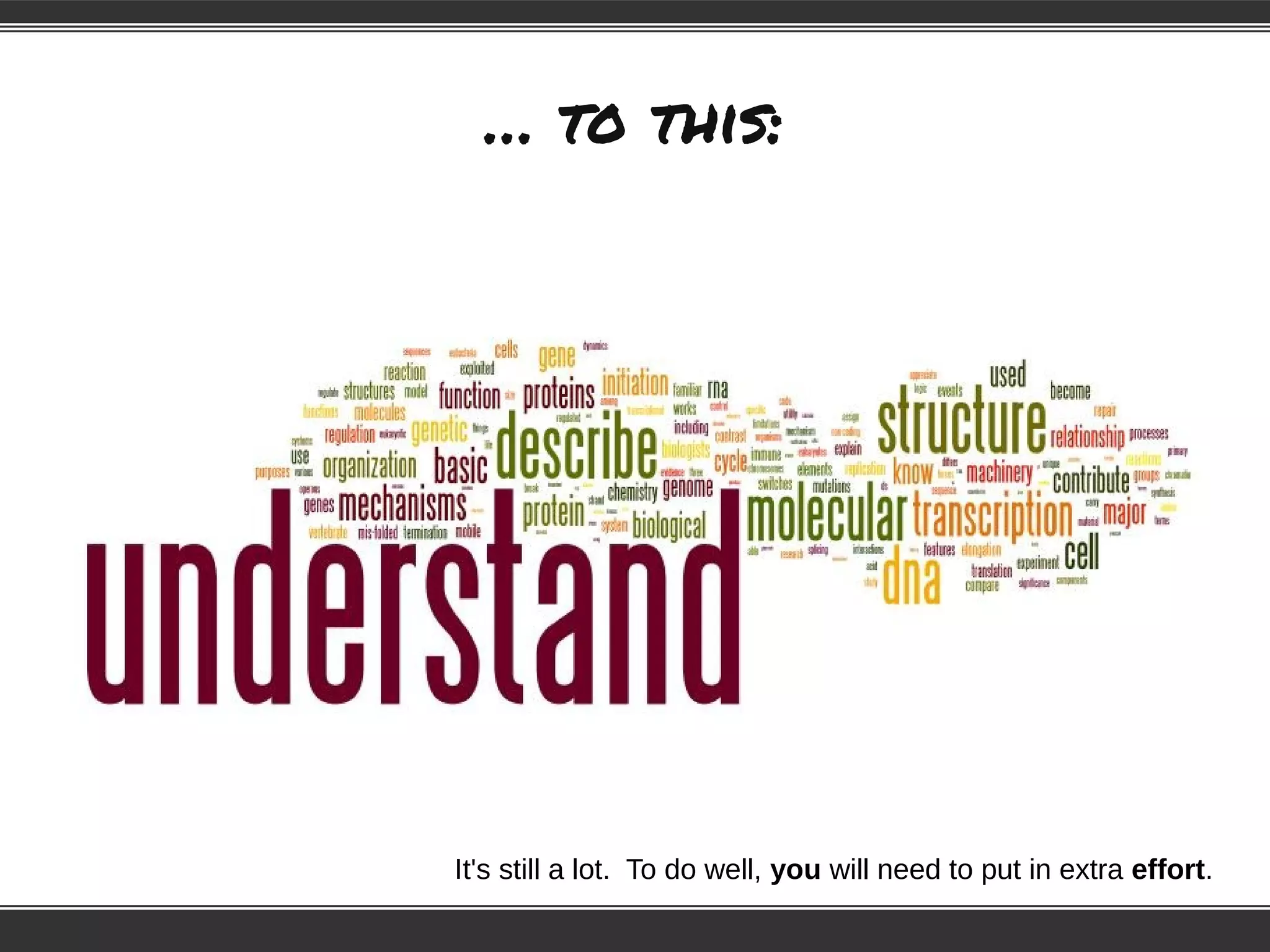
… to this:
It's still a lot. To do well, you will need to put in extra effort.
study(verb)
The application of the mind to the
acquisition of knowledge, as by
reading, investigation, or reflection
Source: www.dictionary.com
First Things First:
●
Decide to study
●
Need to be motivated
●
Set some rules for studying
●
ie. mobile phone on silent and outside the room
●
It might help to enlist your family/friends
●
Make it routine
●
Set a specific time
●
Set a specific place
●
Just do it – no excuses
Strategies for Success
●
Prepare for Lectures
●
Take Notes
●
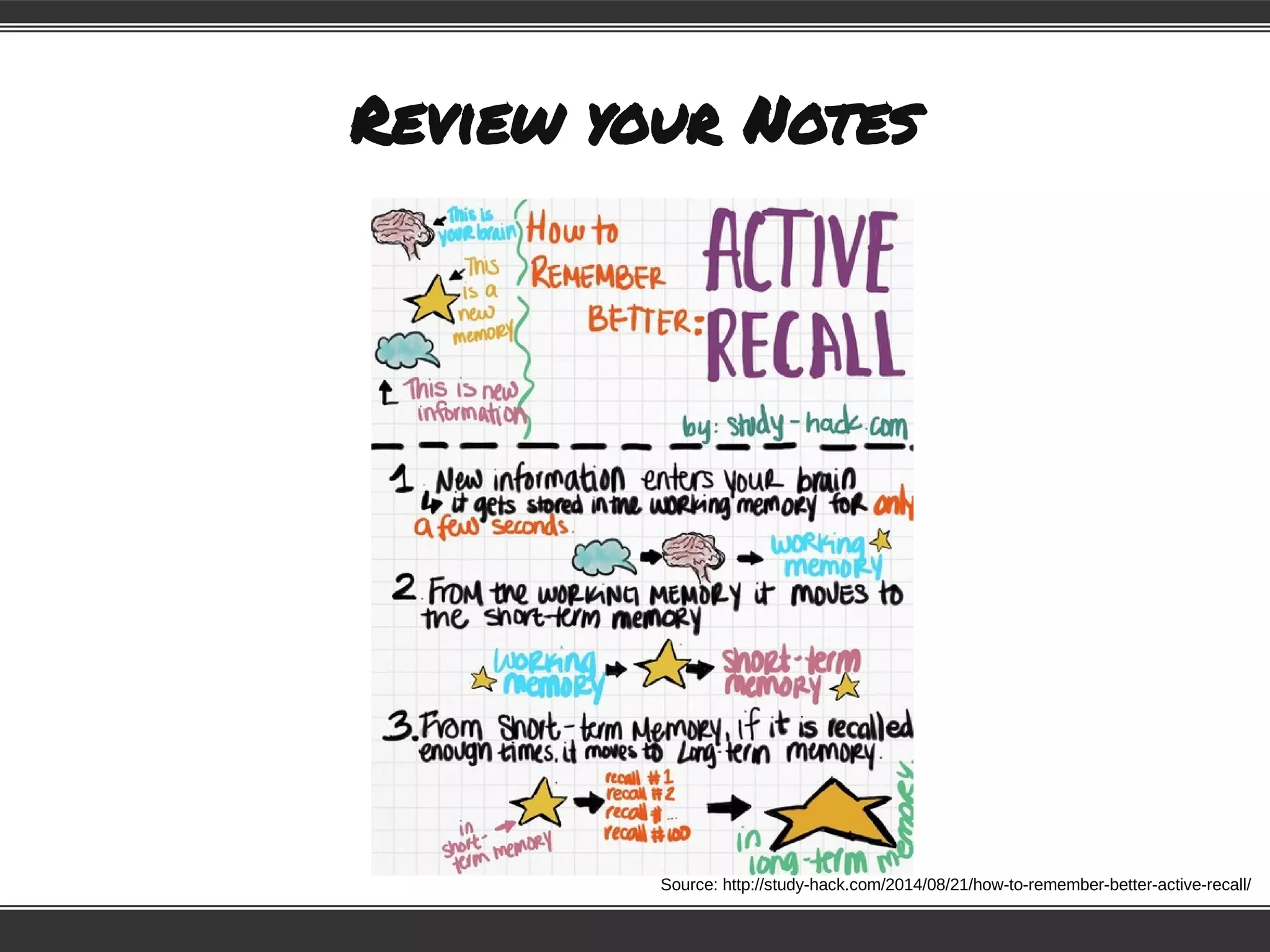
Review your Notes
●
Scheduling and Planing
Prepare for Lectures
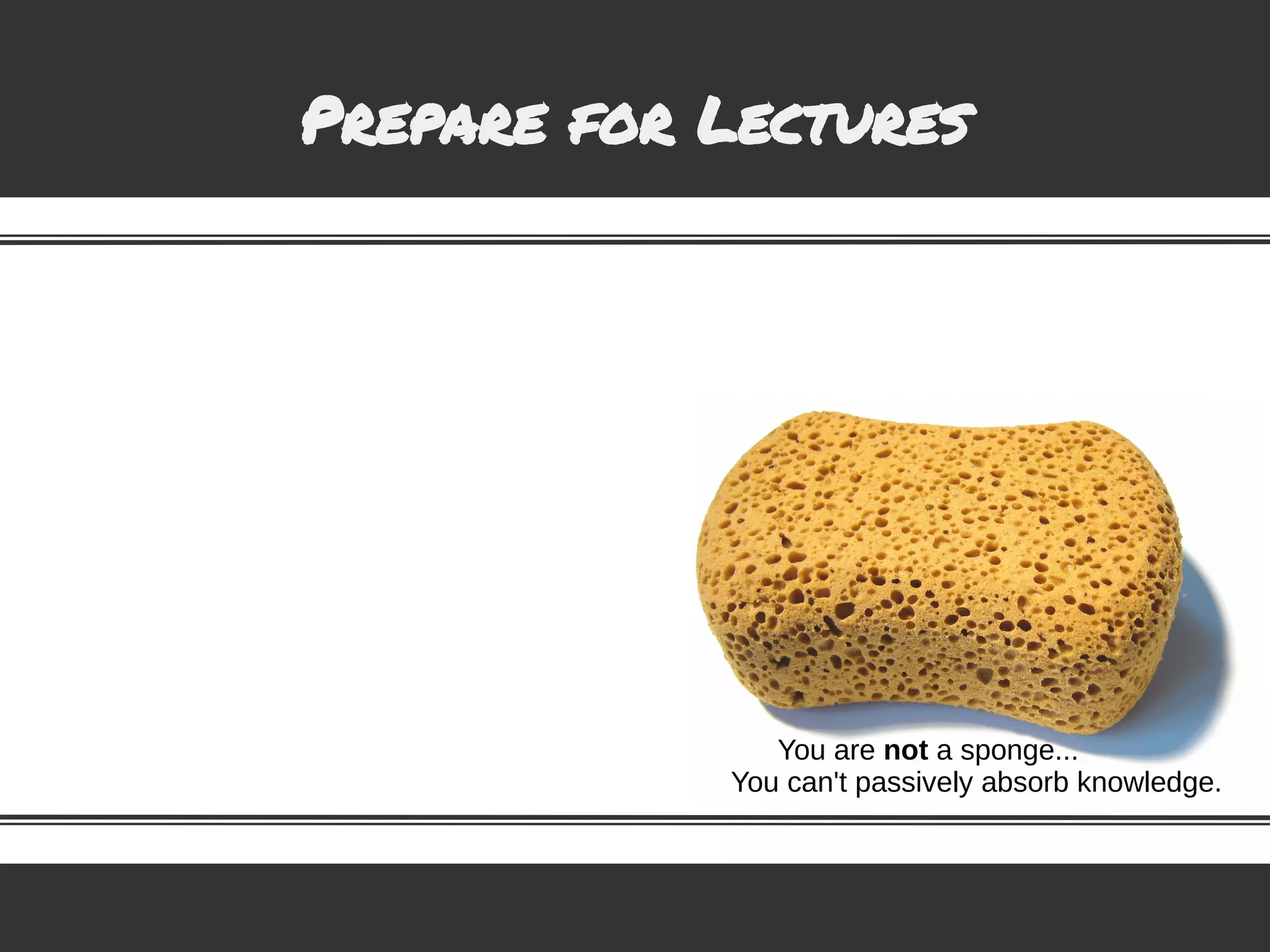
You are not a sponge...
You can't passively absorb knowledge.
Prepare for Lectures
●
Before the lecture:
●
Find out which topic is being covered
●
Find out which chapter
●
Go through the chapter/section
●
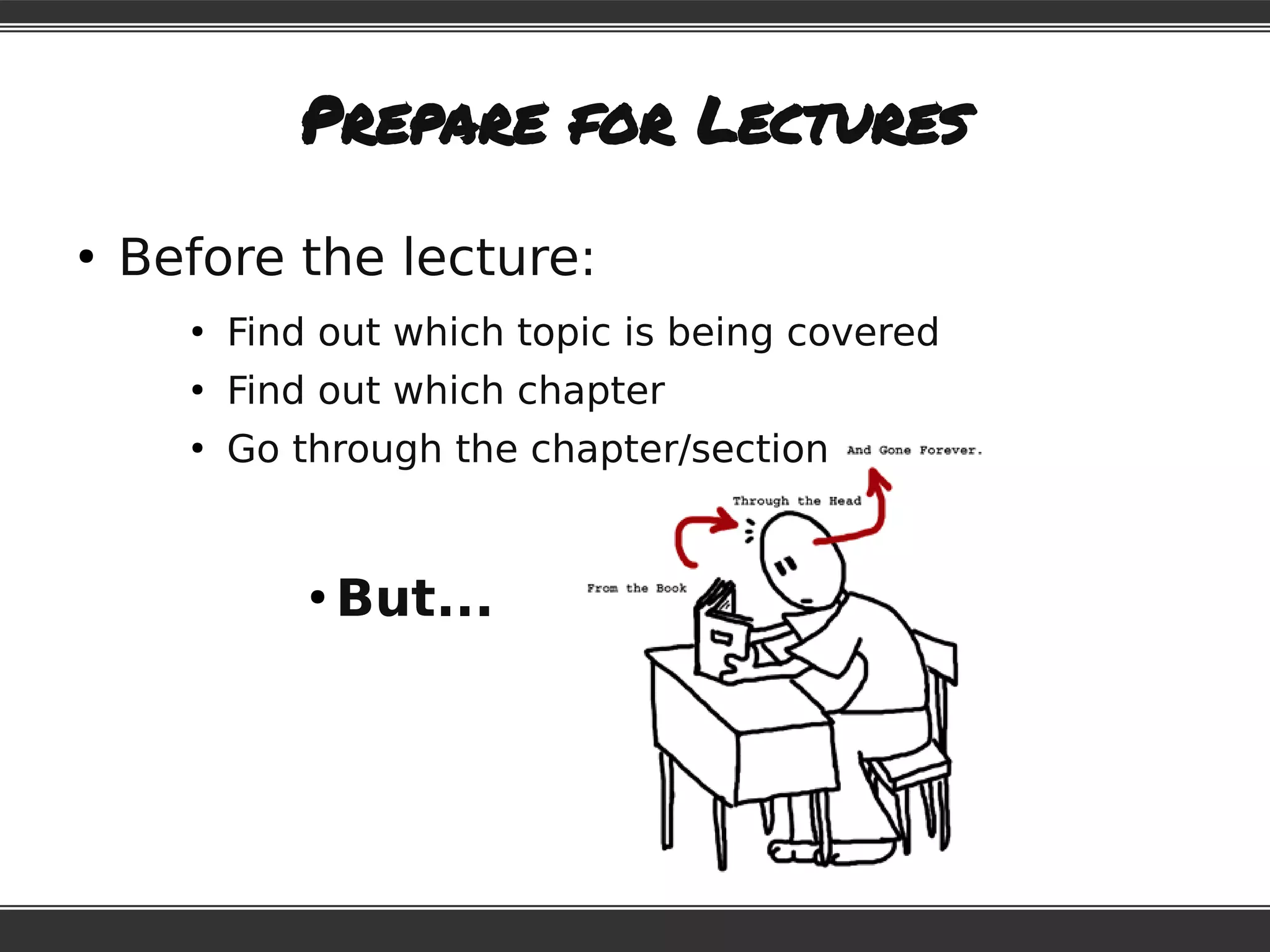
But...
Reading a Textbook Before Lecture
●
Do not start by reading the whole thing
– Don't memorize. Familiarize.
●
Skim the chapter to get an overview:
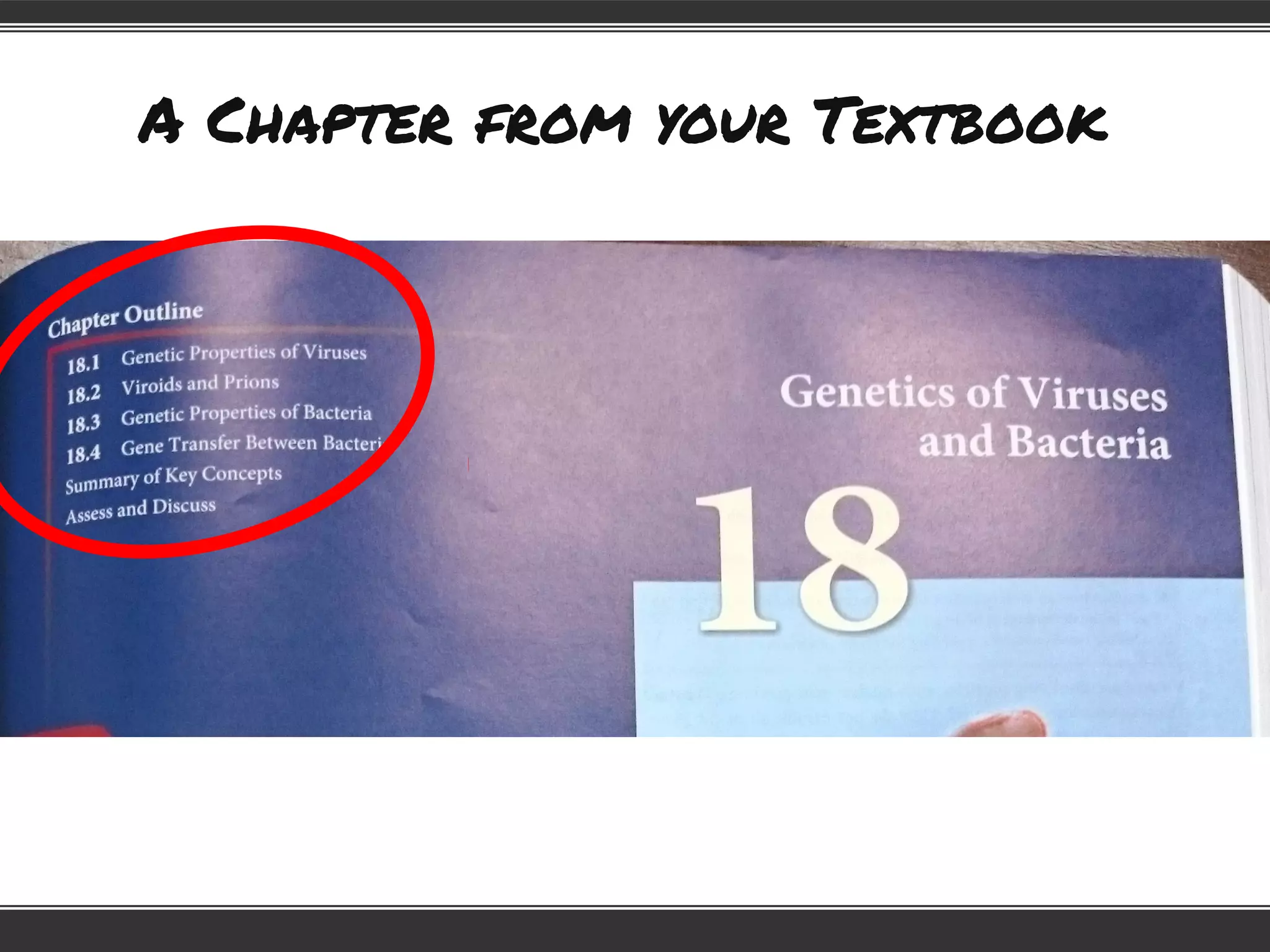
– Section headings
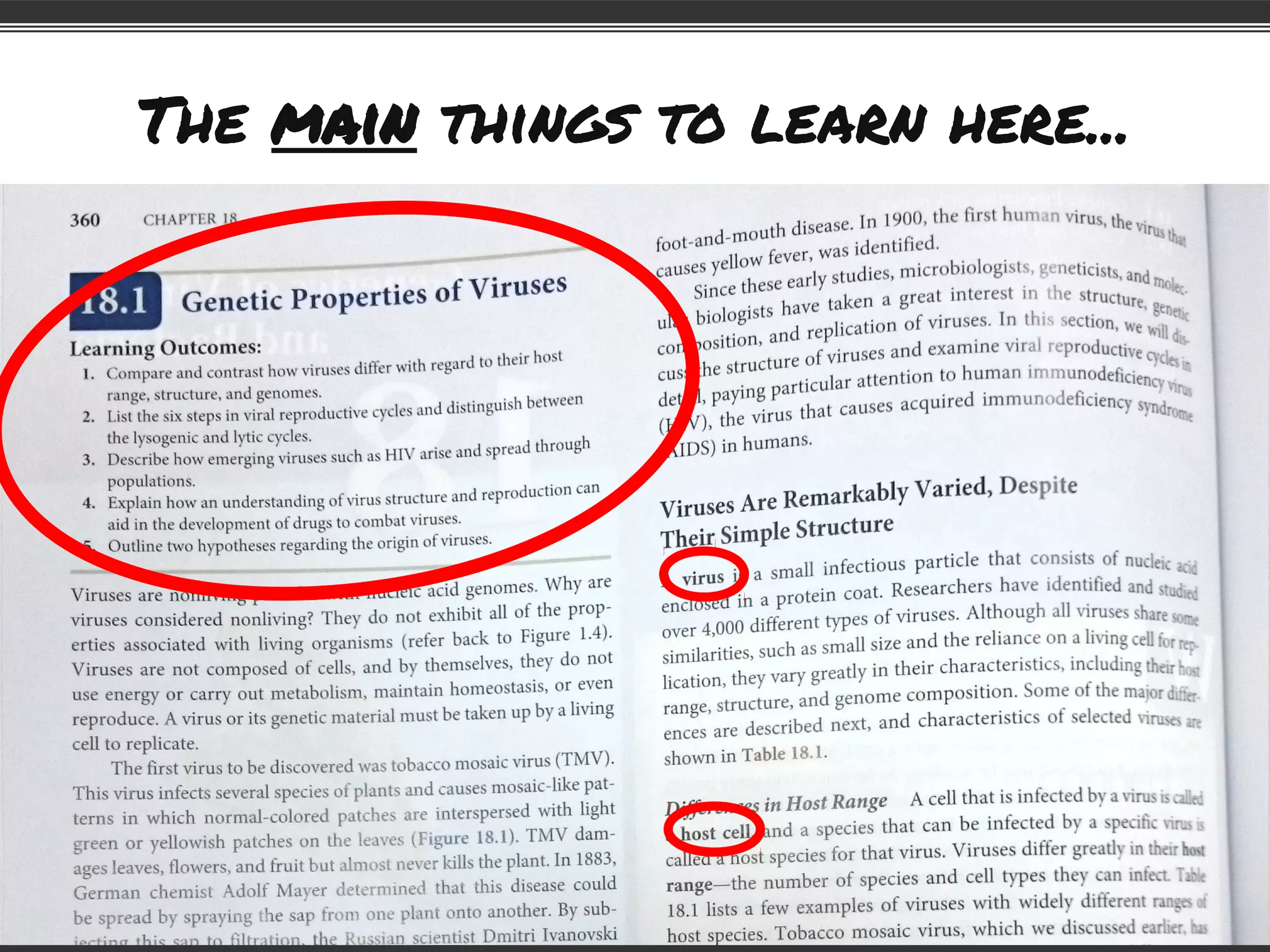
– Learning objectives
– Stuff in bold
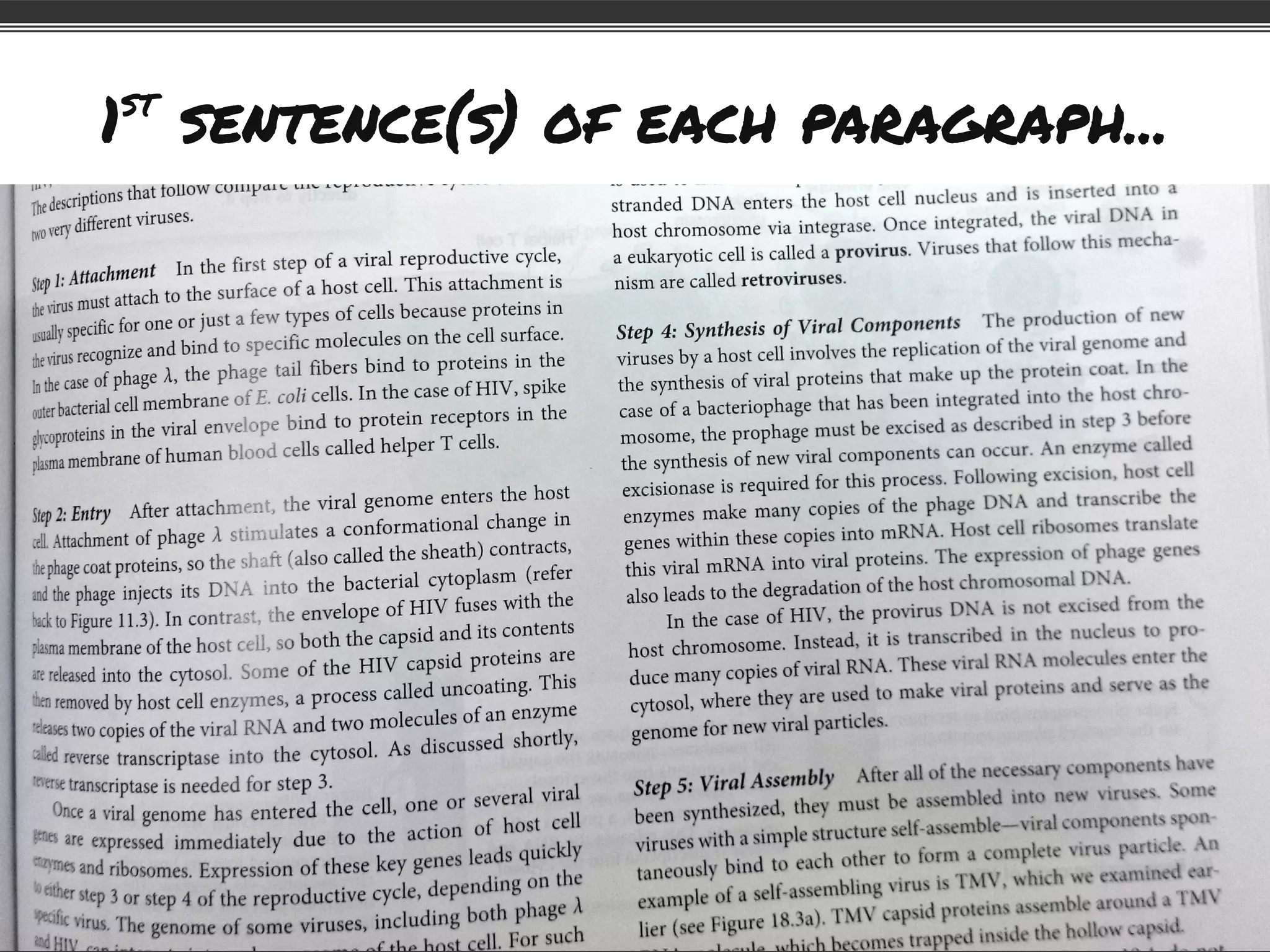
– 1st sentence or two of a paragraph
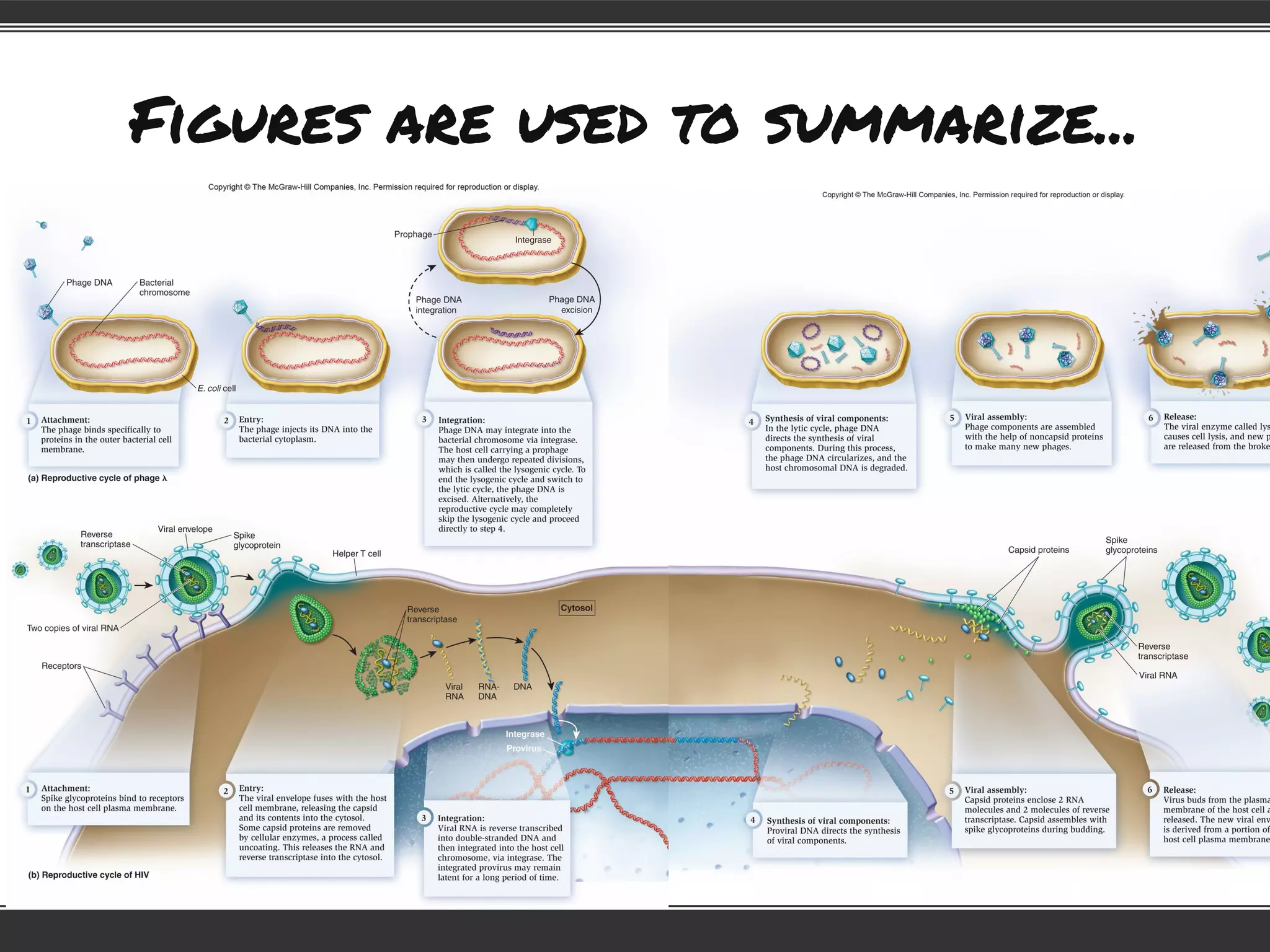
– Examine the figures and tables
●
These are often used to summarize and clarify
concepts
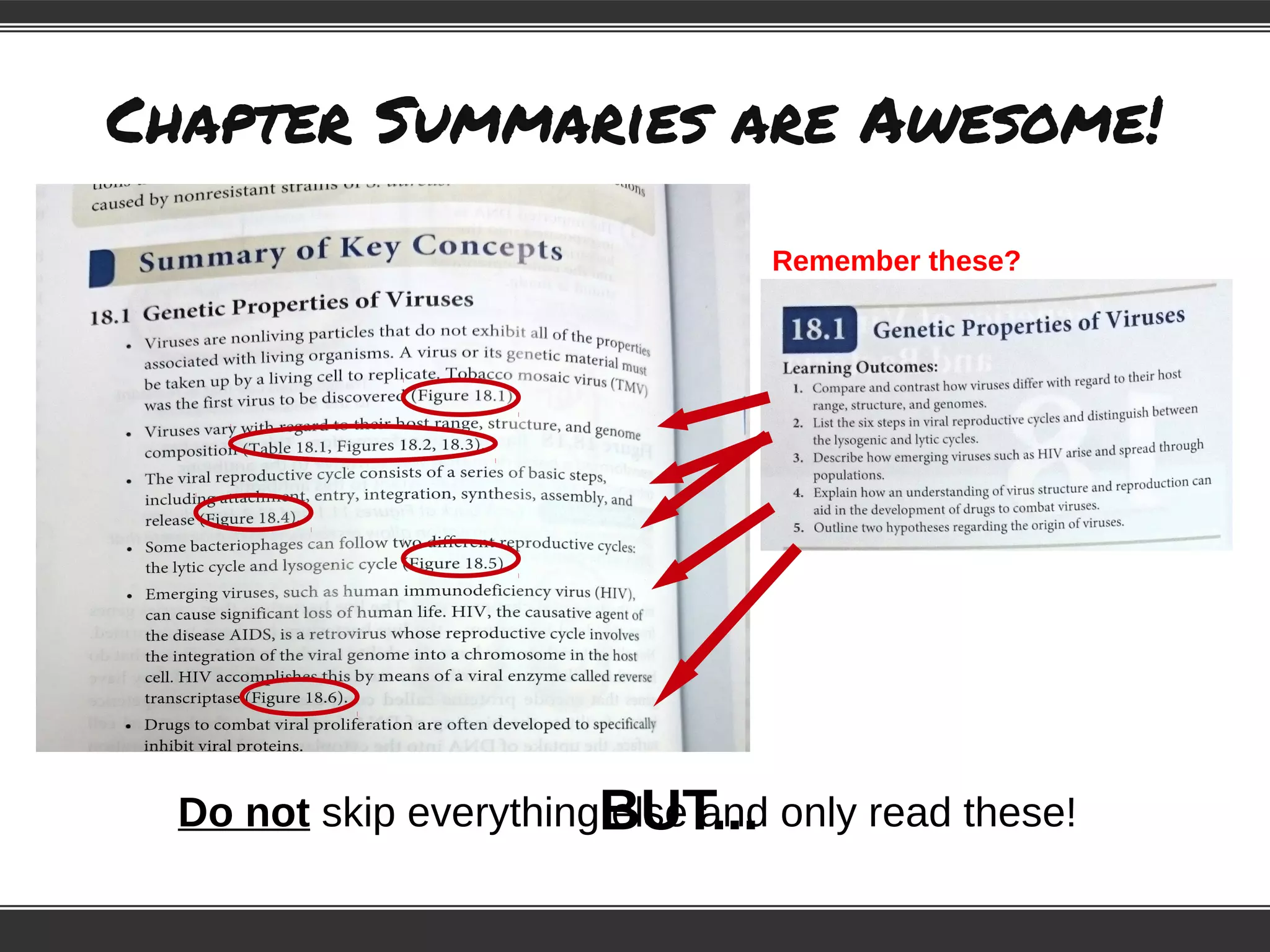
– Look at chapter summaries
●
Try to rephrase ideas
A Chapter from your Textbook
The main things to learn here...
1st
sentence(s) of each paragraph...
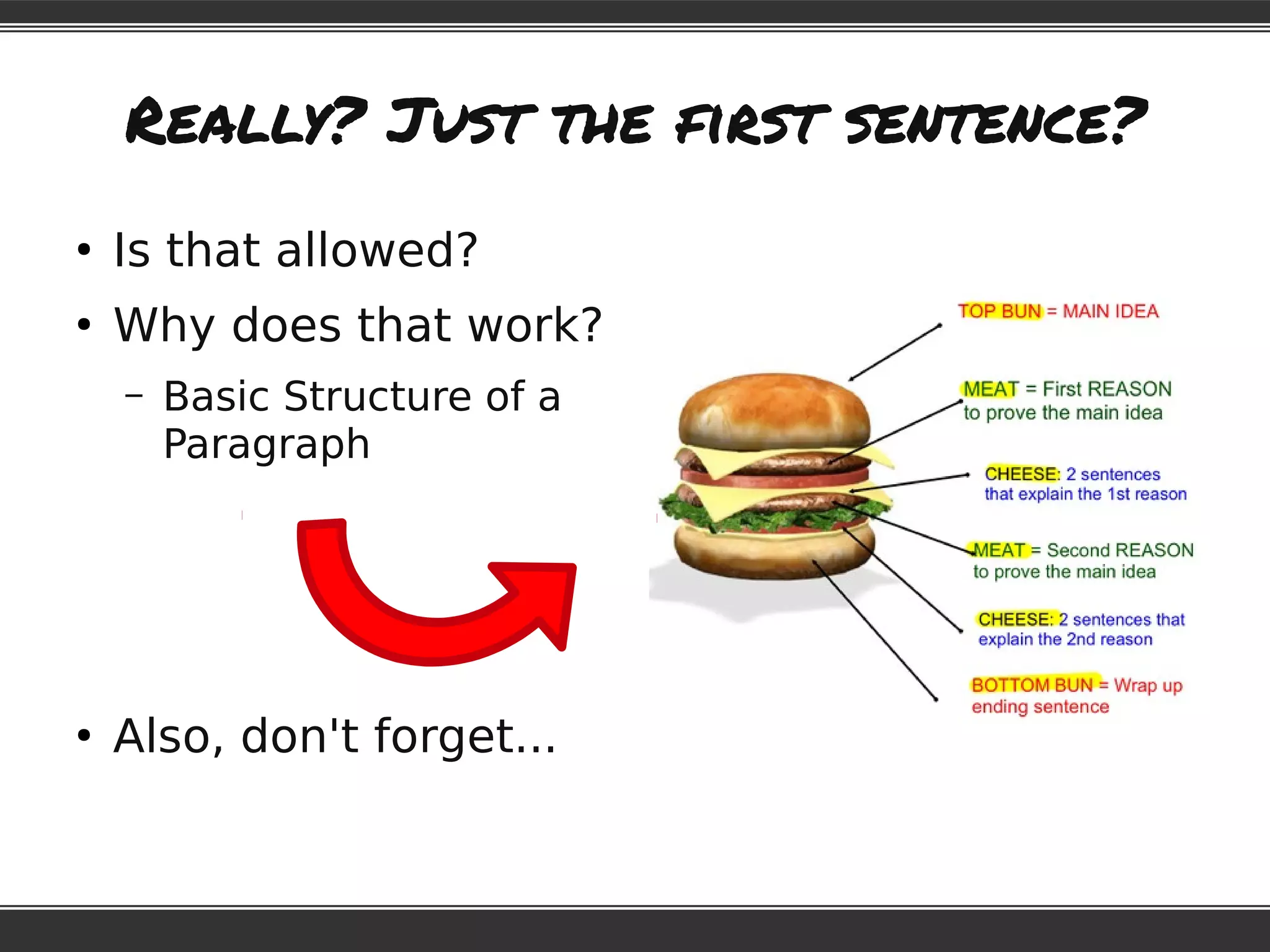
Really? Just the first sentence?
●
Is that allowed?
●
Why does that work?
– Basic Structure of a
Paragraph
●
Also, don't forget...
Figures are used to summarize...
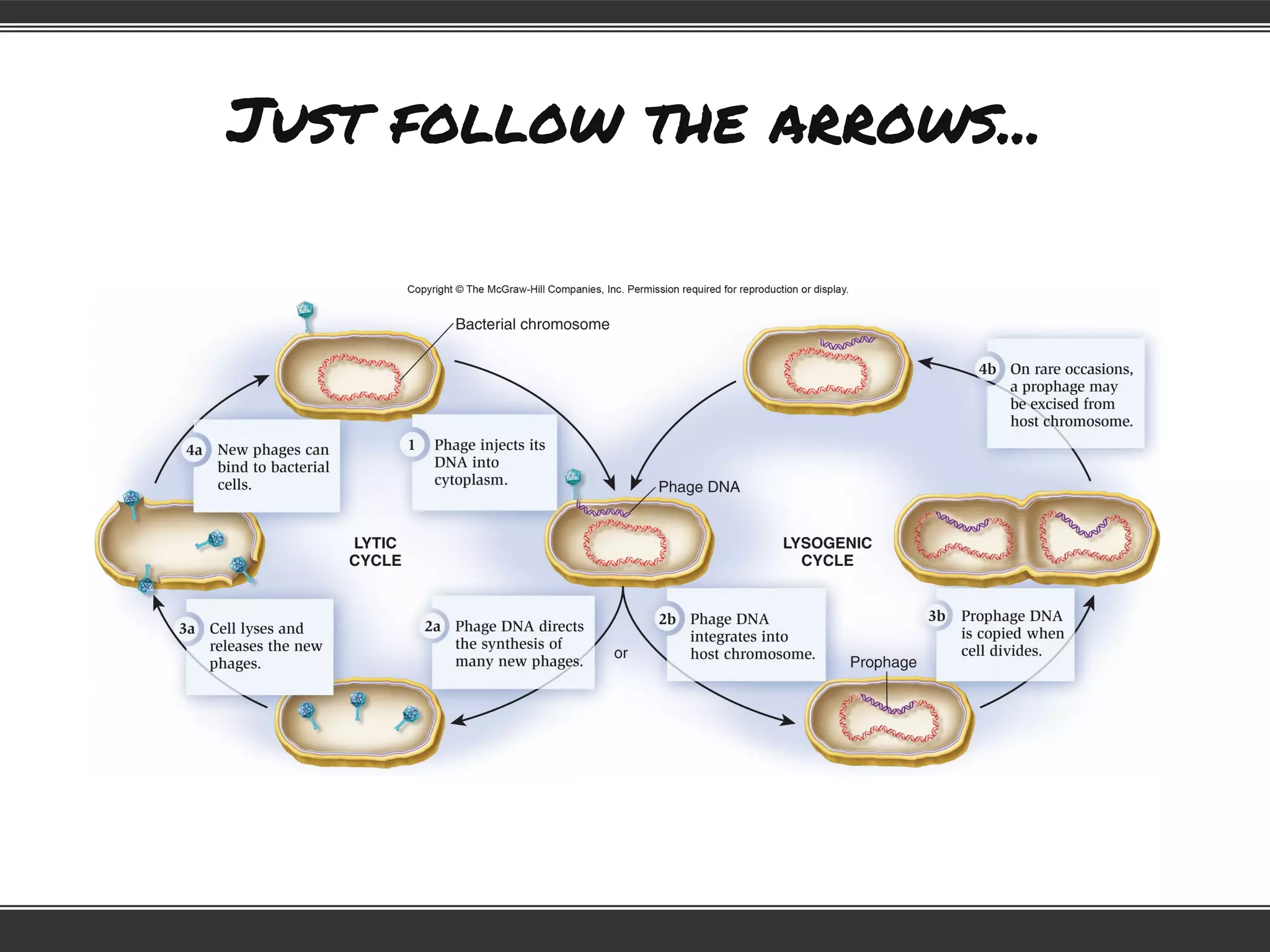
Just follow the arrows...
Chapter Summaries are Awesome!
Do not skip everything else and only read these!
Remember these?
BUT...
Advantages of Skimming
●
Gives you the main points
●
You get the big picture
●
Can fill in the details by reading the rest
●
Helps you understand lecture better
●
You're familiar with terminology
●
What is the Prof talking about?
●
What will the Prof talk about next?
●
How are these ideas linked?
●
You've seen the figures before
– How does the Prof explain them?
If you don't skim first...
It all seems important.
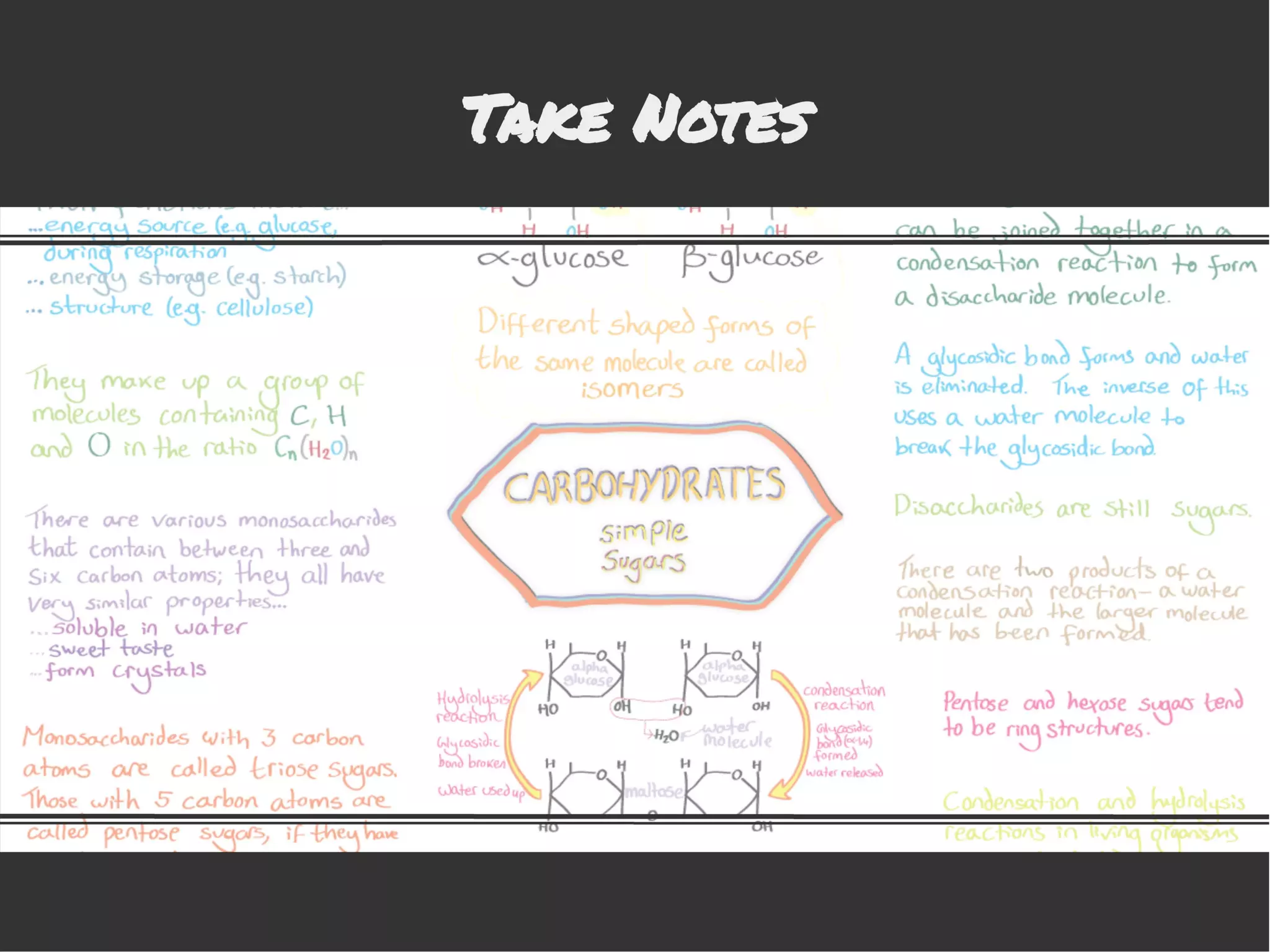
Take Notes
●
The Prof's Powerpoint notes are not enough
– They're good notes for your prof – not for you
●
He/She prepared the notes
●
They will help him/her remember
●
Writing your own notes will help you
– Your brain will have two forms of input
– Your prof's voice
– Your handwritten notes
●
Research shows this helps with encoding
How to Take Notes
●
Do not write every word
the prof says
●
Pick out the main points
●
write those down in your own
words
●
It's much easier if you
prepare
●
You can start as you read
●
Fill in details in lecture
●
Listen carefully...
●
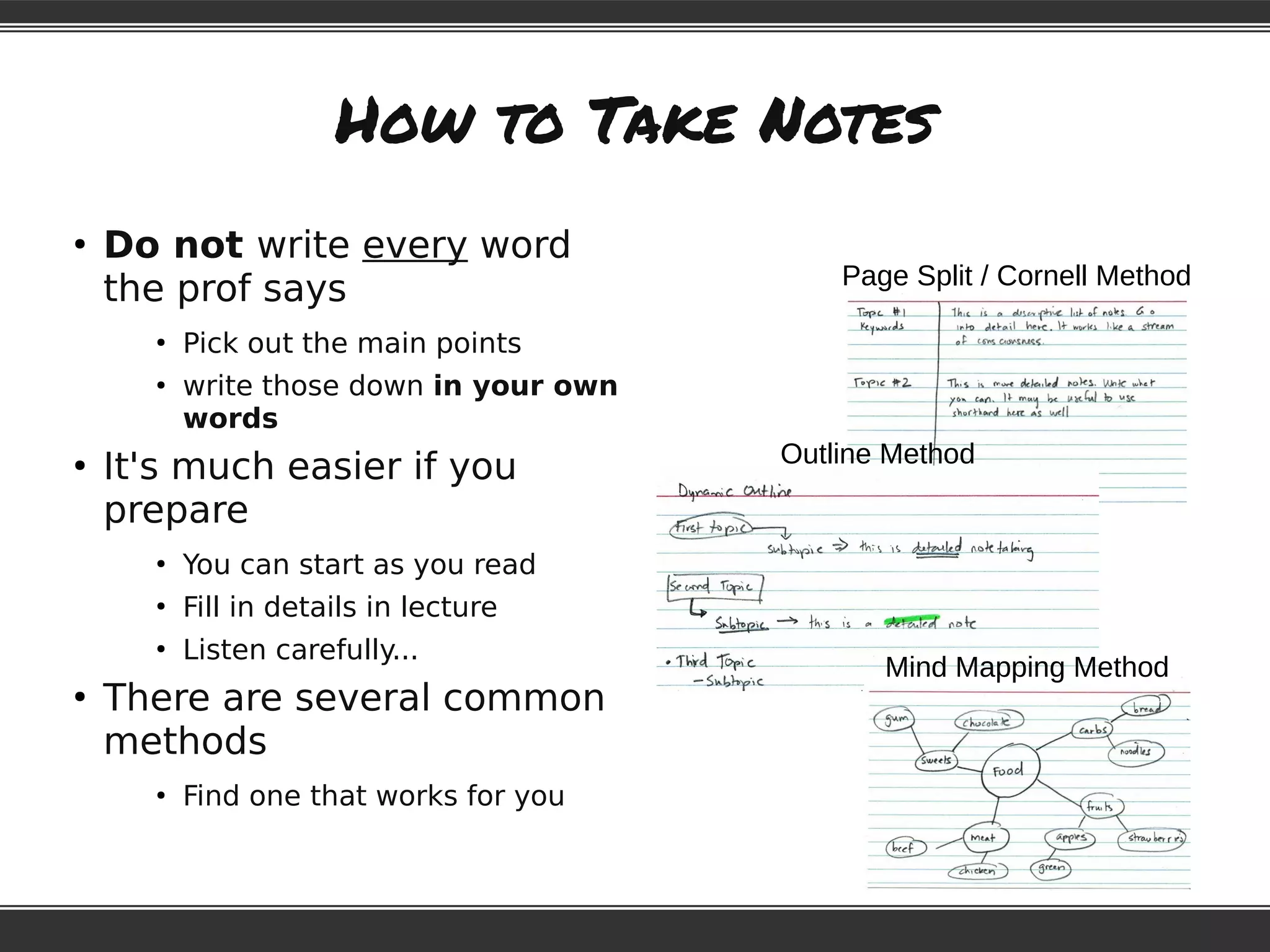
There are several common
methods
●
Find one that works for you
Page Split / Cornell Method
Outline Method
Mind Mapping Method
Review your Notes
Source: http://study-hack.com/2014/08/21/how-to-remember-better-active-recall/
Study Smart
●
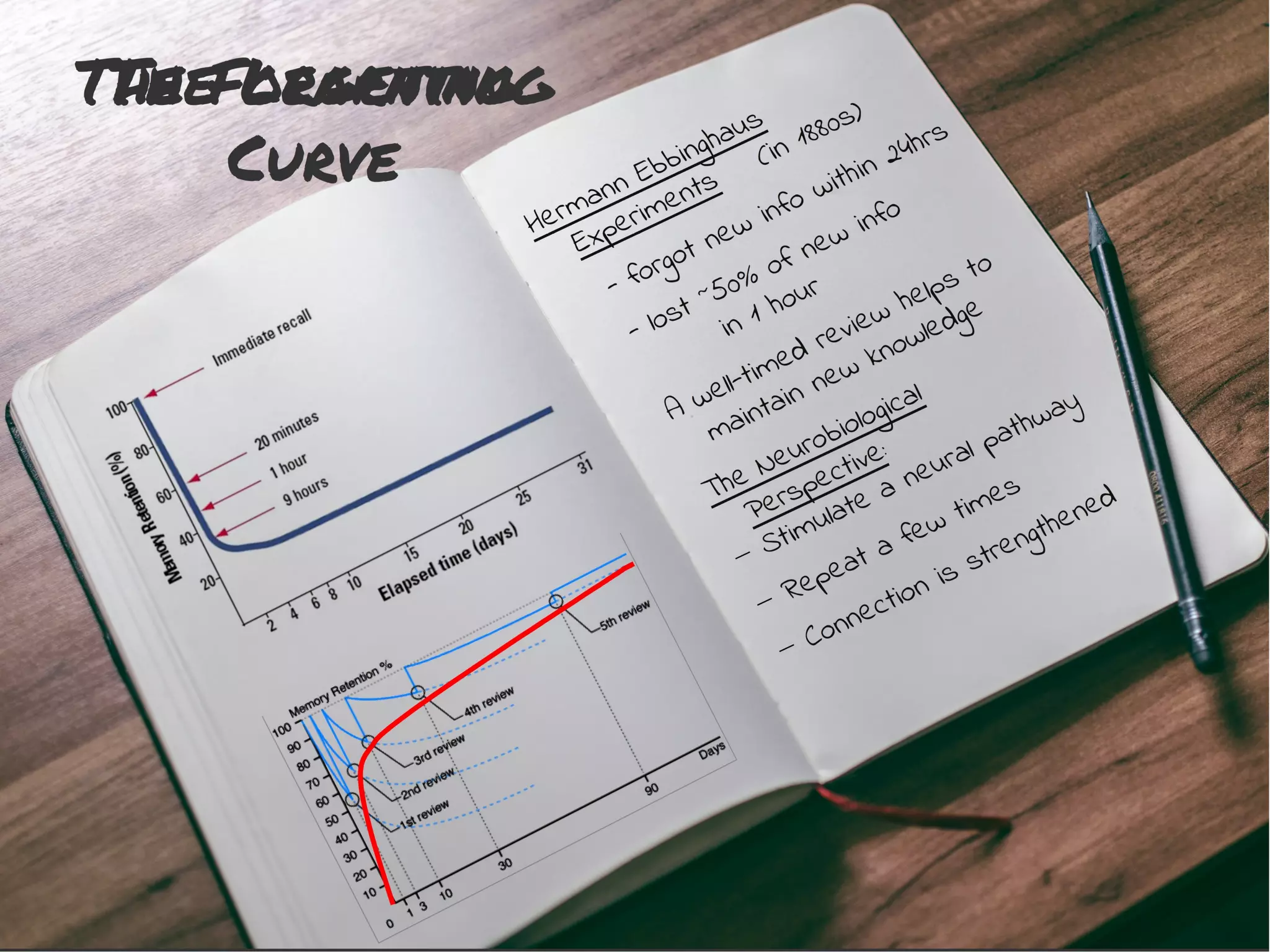
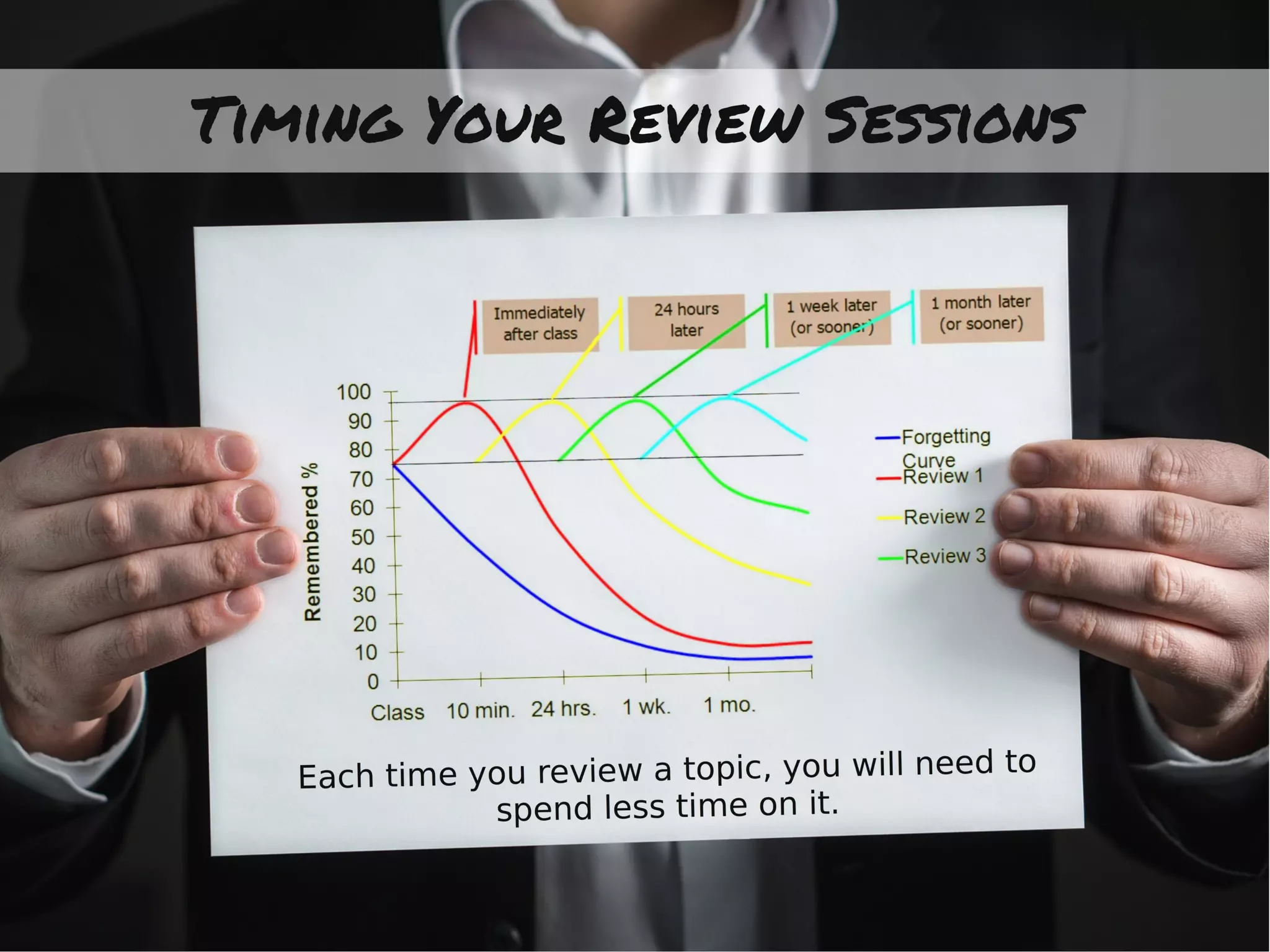
Use the idea of Spaced Repetition
●
Discover Your Learning Preferences
●
Social, Solitary
●
Visual input? Auditory input?
●
Don't try to do it all at once
●
Cramming is a waste of your time
●
Schedule your studying and review sessions
●
Take breaks
●
Avoid procrastination
●
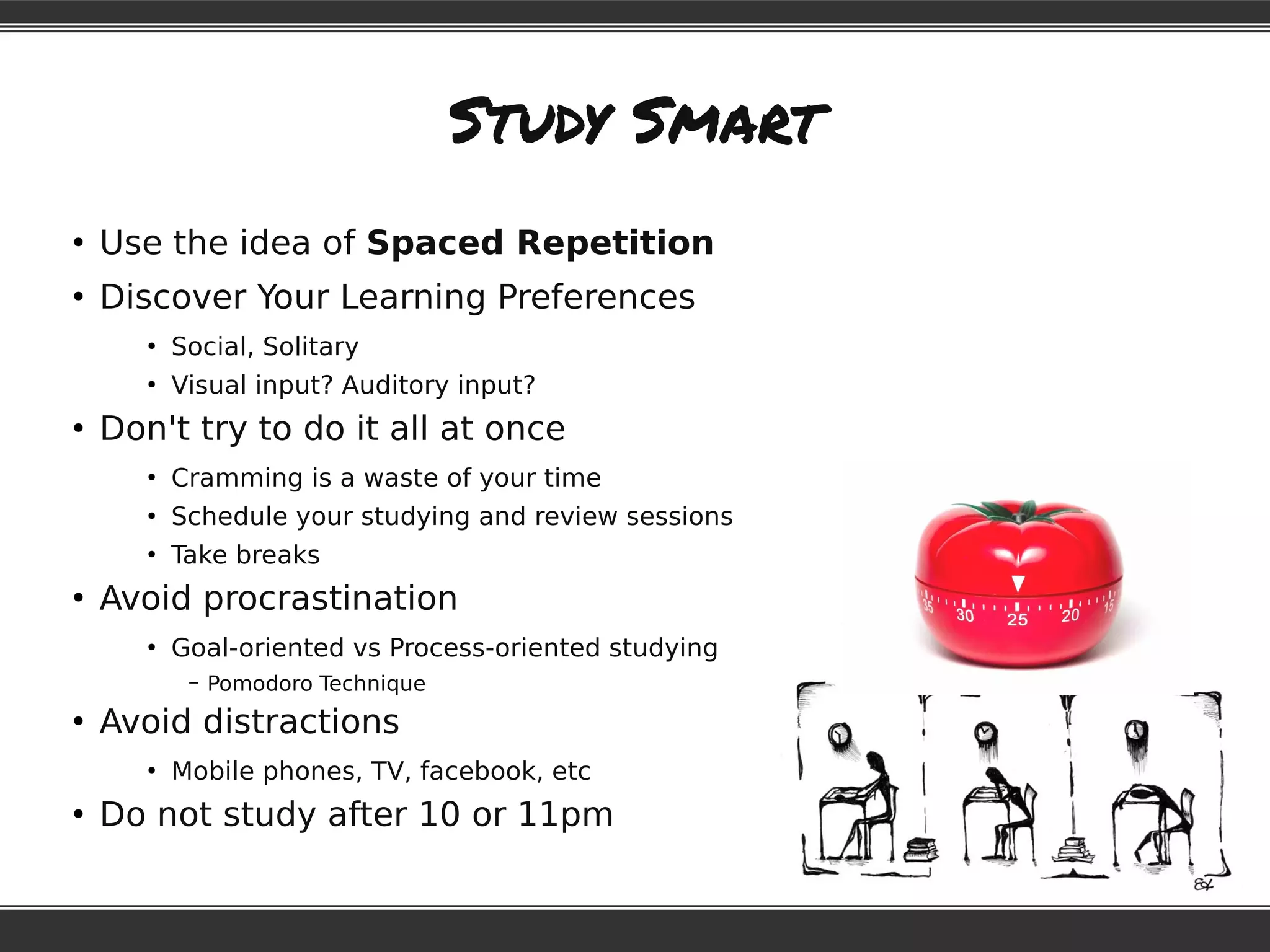
Goal-oriented vs Process-oriented studying
– Pomodoro Technique
●
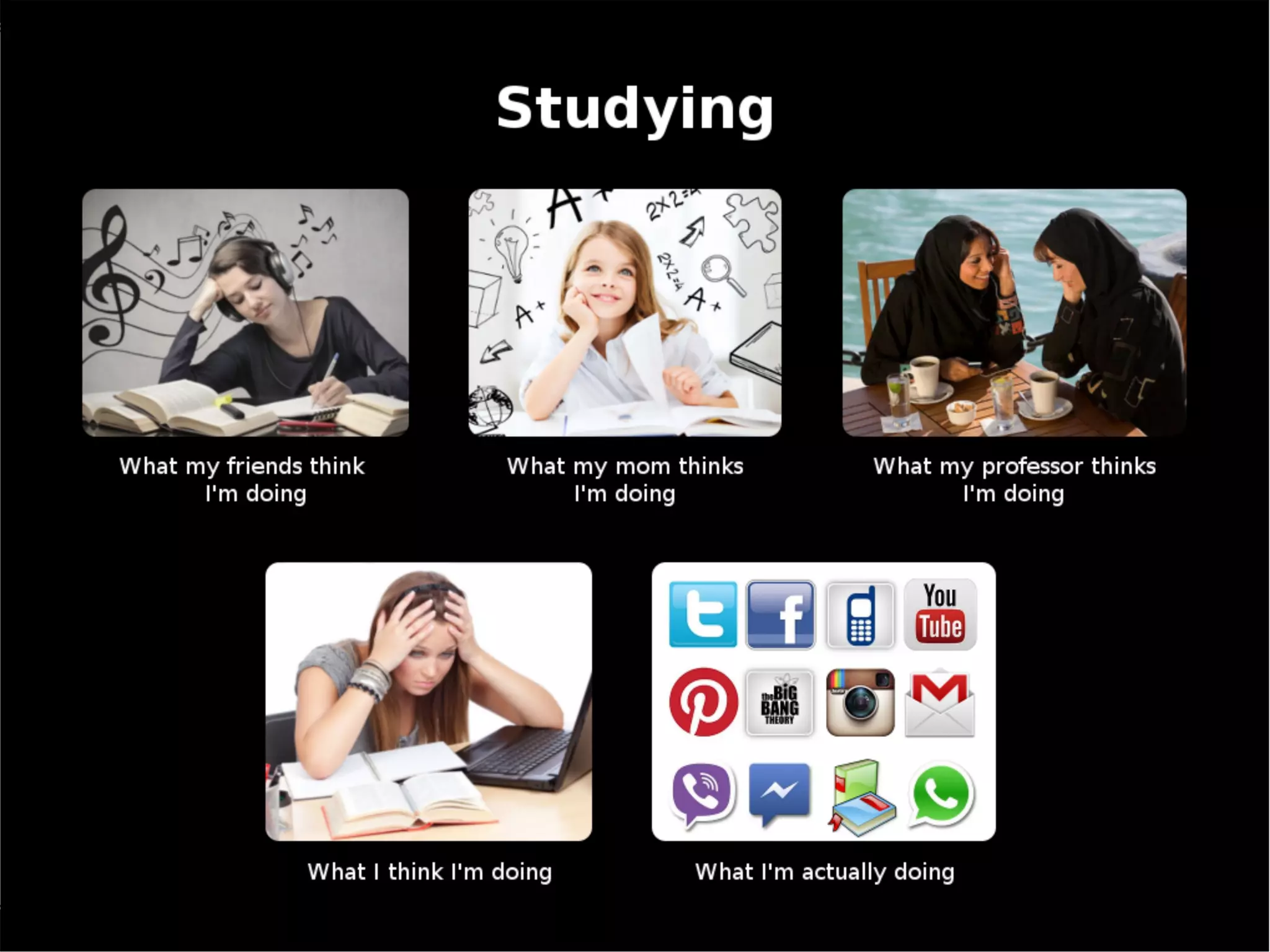
Avoid distractions
●
Mobile phones, TV, facebook, etc
●
Do not study after 10 or 11pm
Schedule and Plan
●
Go through your syllabus in each course
●
How many hours of class time?
– Multiply it by 2 – that's your study time
●
You may need to adjust it as the semester progresses
●
Make note of any due dates for assignments
●
Make note of any exam dates
– How much is each worth? ← important to know
●
Get a calendar and enter all of them
●
Use the reminder function on your electronic calendar
●
Schedule study times
●
Do not study very late at night
●
Schedule frequent breaks
●
Timing is important
Do it this weekend!
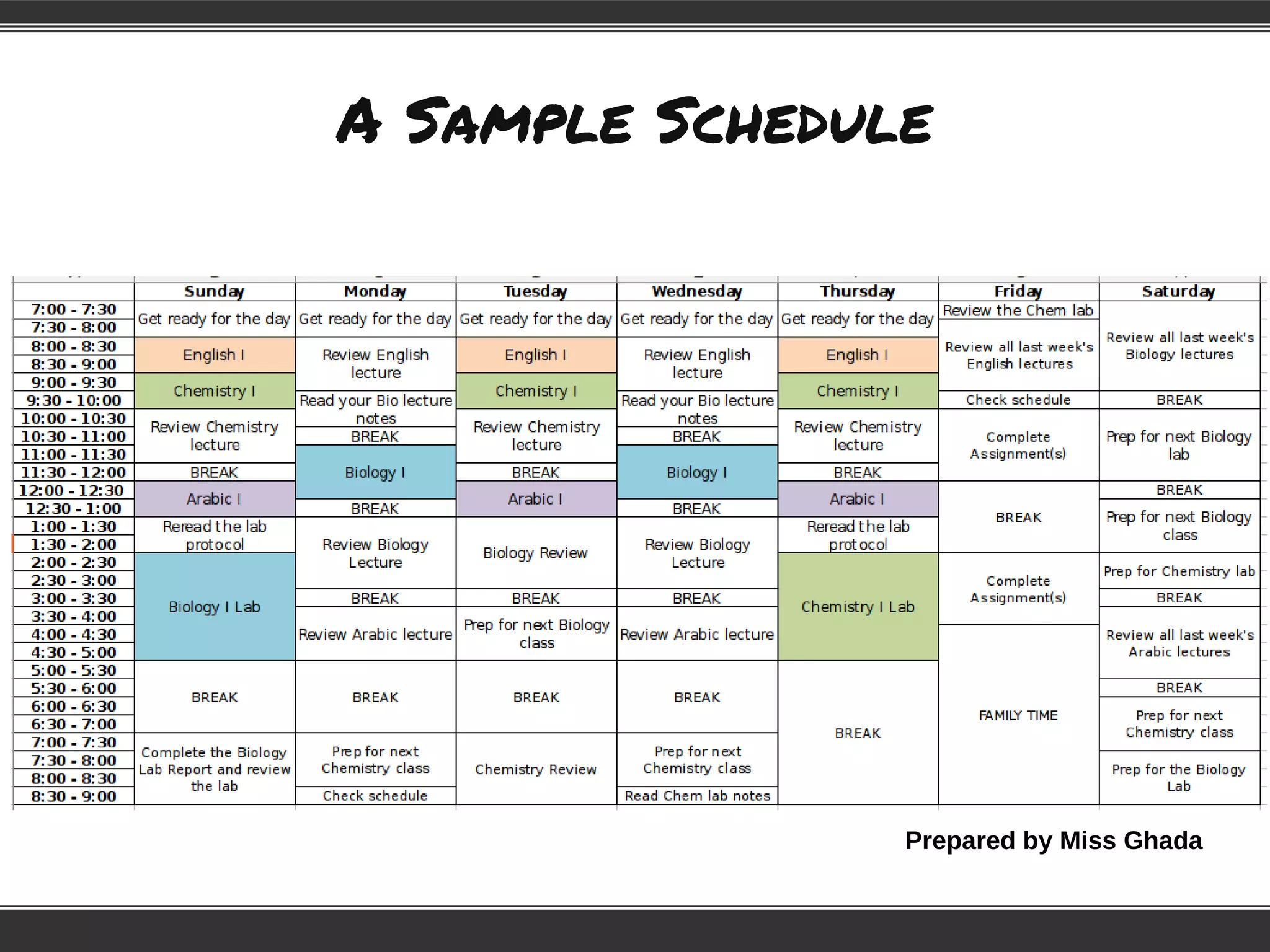
A Sample Schedule
Prepared by Miss Ghada
Your Success, a Quick Review
1)Attend Classes!
2)Be prepared → Read before class
3)Take notes in class
●
If the prof repeats it, it's probably important
4)Spend the right amount of time on studying
●
Schedule your study/review sessions
●
1-3hrs of study time per hour of lecture
●
Incorporate breaks
5)Study Smart
●
Don't try to study everything right before the exam
●
Remember the forgetting curve – spaced repetition is key
●
Avoid procrastination
Studying for Exams
●
If you follow my advice
●
You will only have to review for a few days before the
exam
●
Understanding concepts will help you with the more
advanced questions
●
If you don't study from week to week
●
Start early
●
Start making your notes ASAP
●
Review notes frequently
●
Take breaks
Sleeping
●
Sleep is critical to memory
●
Sleep through the night if you can
●
Take naps if you can’t
●
Processing happens during sleep
●
“Consolidation”
Avoid the “all-nighters”
Writing Exams
●
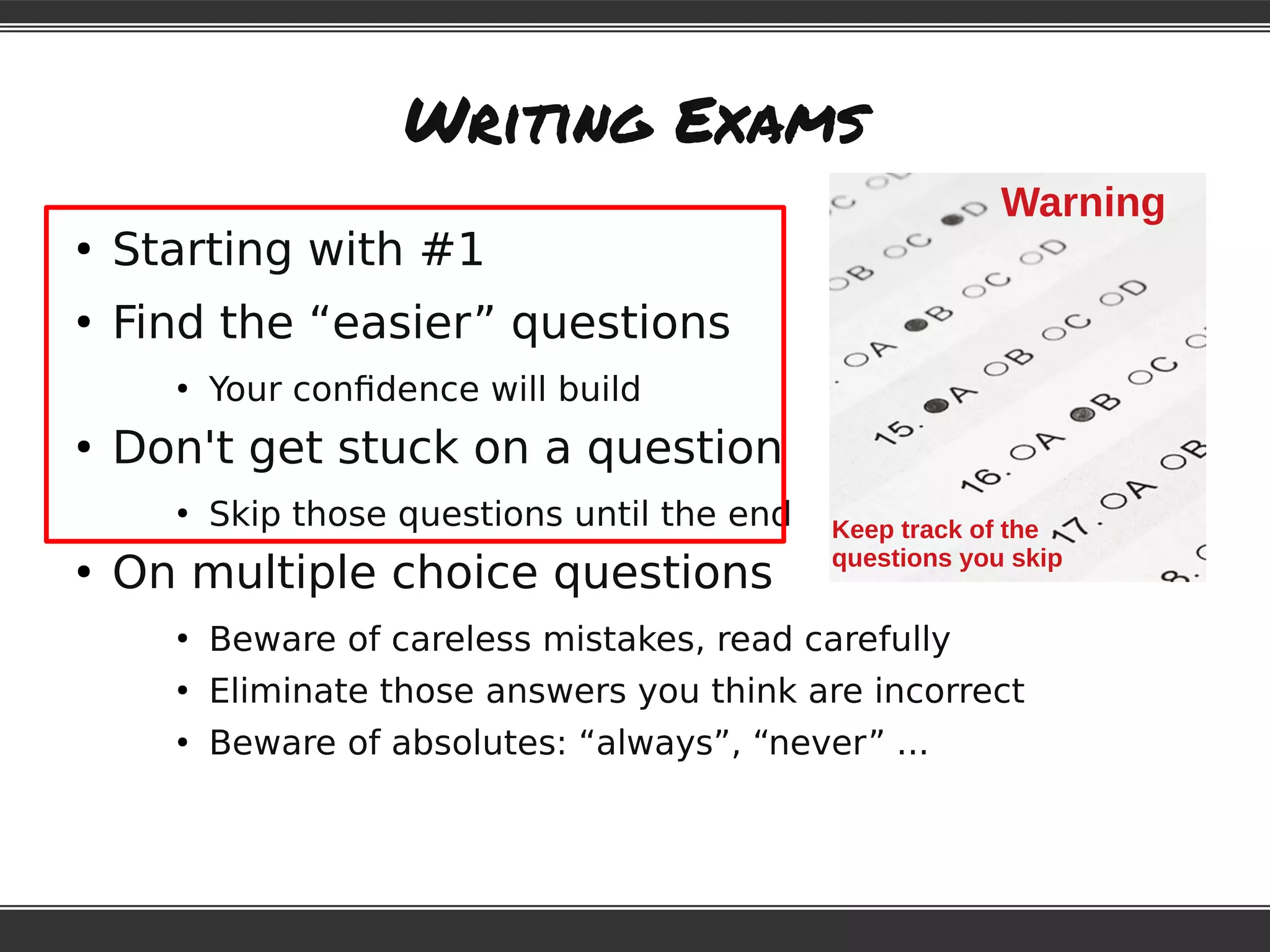
Starting with #1
●
Find the “easier” questions
●
Your confidence will build
●
Don't get stuck on a question
●
Skip those questions until the end
●
On multiple choice questions
●
Beware of careless mistakes, read carefully
●
Eliminate those answers you think are incorrect
●
Beware of absolutes: “always”, “never” ...
Warning
Keep track of the
questions you skip
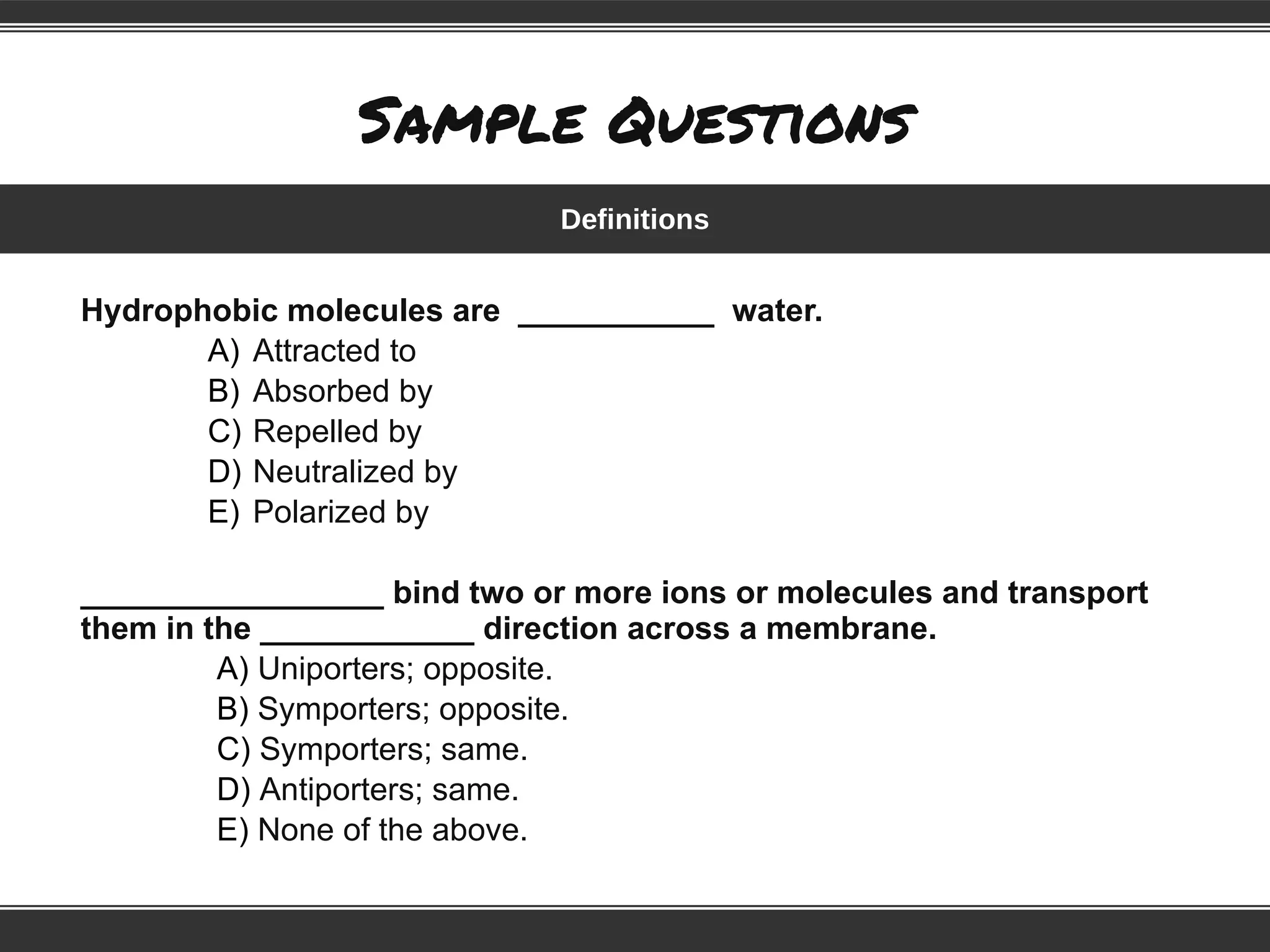
Sample Questions
Hydrophobic molecules are ___________ water.
A) Attracted to
B) Absorbed by
C) Repelled by
D) Neutralized by
E) Polarized by
_________________ bind two or more ions or molecules and transport
them in the ____________ direction across a membrane.
A) Uniporters; opposite.
B) Symporters; opposite.
C) Symporters; same.
D) Antiporters; same.
E) None of the above.
Definitions
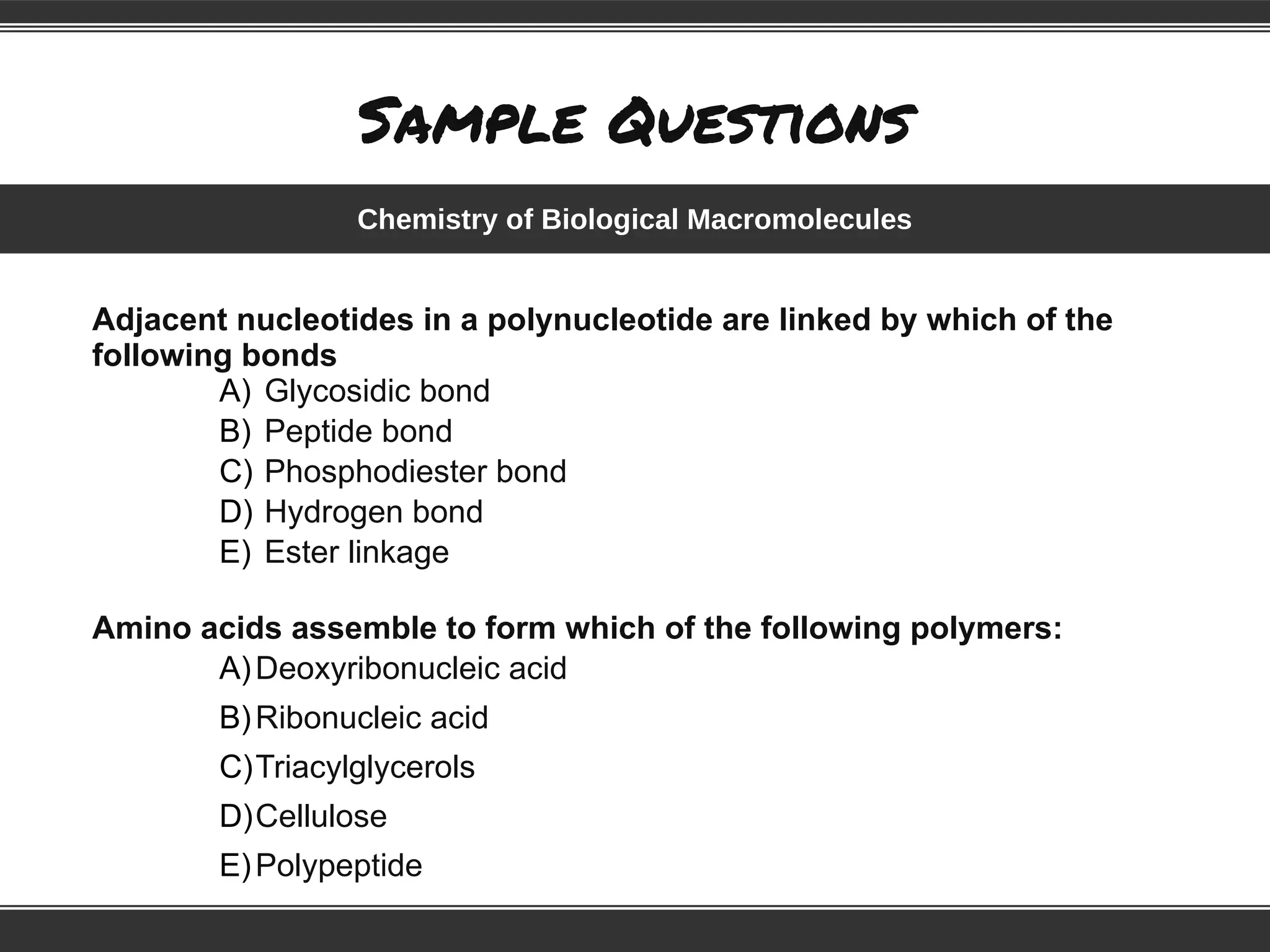
Sample Questions
Adjacent nucleotides in a polynucleotide are linked by which of the
following bonds
A) Glycosidic bond
B) Peptide bond
C) Phosphodiester bond
D) Hydrogen bond
E) Ester linkage
Amino acids assemble to form which of the following polymers:
A)Deoxyribonucleic acid
B)Ribonucleic acid
C)Triacylglycerols
D)Cellulose
E)Polypeptide
Chemistry of Biological Macromolecules
Sample Questions
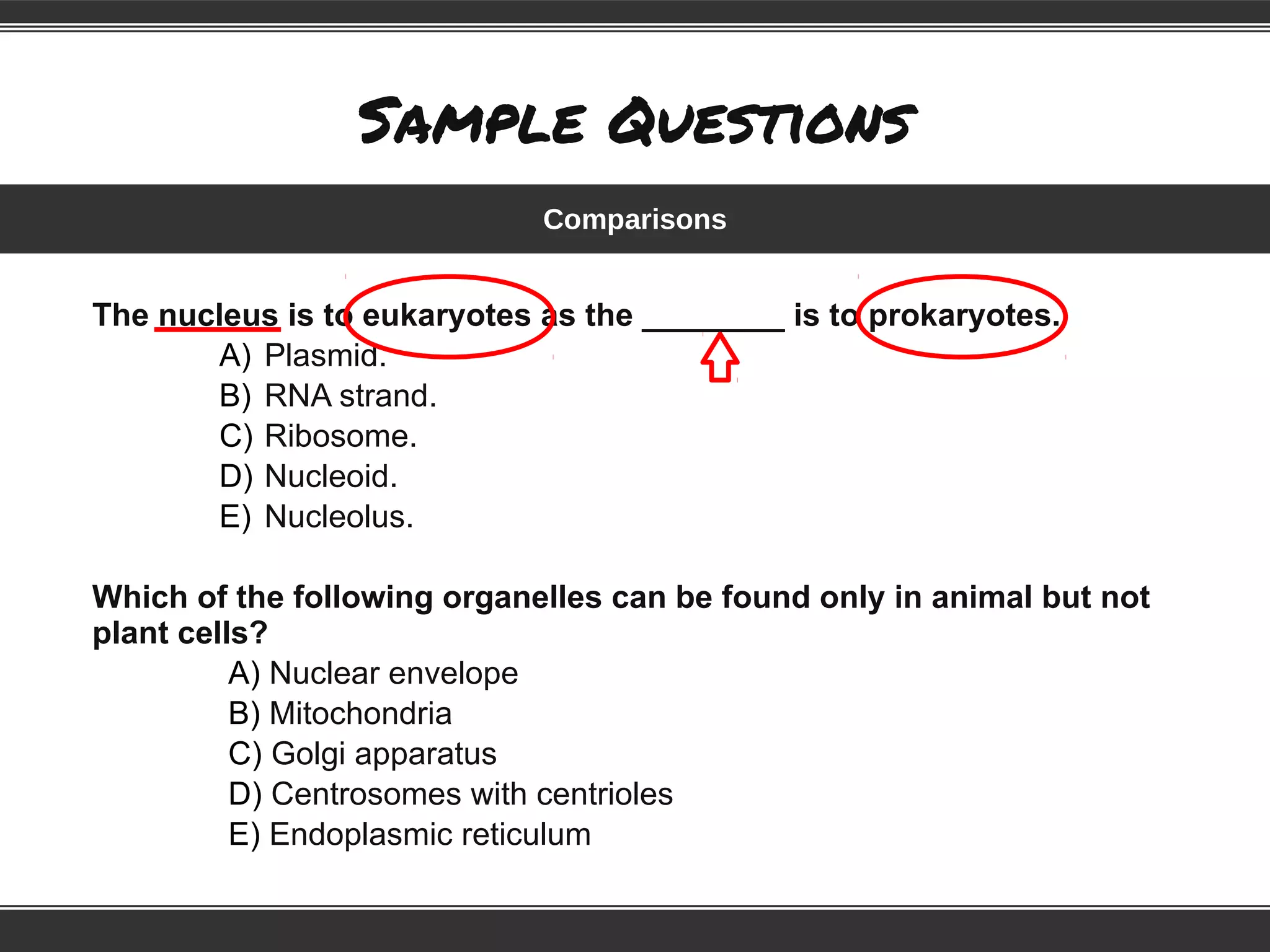
The nucleus is to eukaryotes as the ________ is to prokaryotes.
A) Plasmid.
B) RNA strand.
C) Ribosome.
D) Nucleoid.
E) Nucleolus.
Which of the following organelles can be found only in animal but not
plant cells?
A) Nuclear envelope
B) Mitochondria
C) Golgi apparatus
D) Centrosomes with centrioles
E) Endoplasmic reticulum
Comparisons
Sample Questions
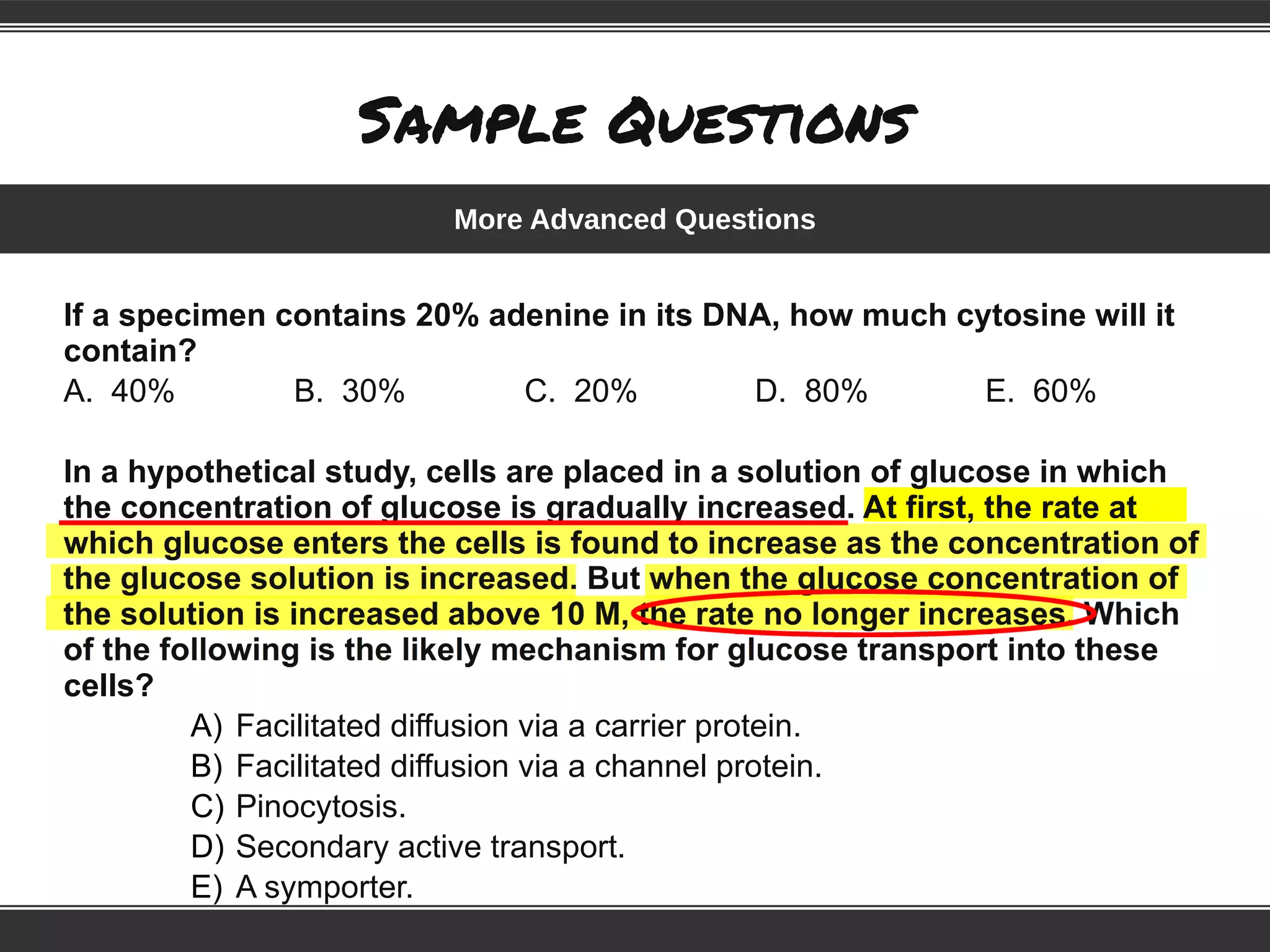
If a specimen contains 20% adenine in its DNA, how much cytosine will it
contain?
A. 40% B. 30% C. 20% D. 80% E. 60%
In a hypothetical study, cells are placed in a solution of glucose in which
the concentration of glucose is gradually increased. At first, the rate at
which glucose enters the cells is found to increase as the concentration of
cells?
A) Facilitated diffusion via a carrier protein.
B) Facilitated diffusion via a channel protein.
C) Pinocytosis.
D) Secondary active transport.
E) A symporter.
More Advanced Questions
University Study Skills

University Study Skills

  • 2.
    Does your classfeel like this?
  • 3.
    There is areason for that... High School Classes University Classes ● Teachers have been trained in teaching methods to help students learn. ● Professors have been trained as experts in their particular areas of research. ● Teachers present material to help you understand the material in the textbook. ● Professors often use the textbook as a starting point for their lectures. ● Teachers often write information on the board to be copied in your notes. ● Professors expect you to identify the important points in your notes. ● New material is presented slowly and in small amounts. ● New material is presented very quickly. Modified from: http://www.eng.mcmaster.ca/eng1/comparison.html
  • 4.
    So, you’ll needto adjust – You will need to work to keep up – You are expected to read and understand the assigned material ● Lectures and assignments start with the assumption that you've already done the necessary preparation You Need To:
  • 5.
  • 6.
    Please keep inmind: Your instructor is not trying to torture you Your instructor does not want you to fail Your instructor is trying to teach you something you will need to know But...
  • 7.
    Your instructor istrying to go from this:
  • 8.
    … to this: It'sstill a lot. To do well, you will need to put in extra effort.
  • 9.
    study(verb) The application ofthe mind to the acquisition of knowledge, as by reading, investigation, or reflection Source: www.dictionary.com
  • 10.
    First Things First: ● Decideto study ● Need to be motivated ● Set some rules for studying ● ie. mobile phone on silent and outside the room ● It might help to enlist your family/friends ● Make it routine ● Set a specific time ● Set a specific place ● Just do it – no excuses
  • 11.
    Strategies for Success ● Preparefor Lectures ● Take Notes ● Review your Notes ● Scheduling and Planing
  • 12.
    Prepare for Lectures Youare not a sponge... You can't passively absorb knowledge.
  • 13.
    Prepare for Lectures ● Beforethe lecture: ● Find out which topic is being covered ● Find out which chapter ● Go through the chapter/section ● But...
  • 14.
    Reading a TextbookBefore Lecture ● Do not start by reading the whole thing – Don't memorize. Familiarize. ● Skim the chapter to get an overview: – Section headings – Learning objectives – Stuff in bold – 1st sentence or two of a paragraph – Examine the figures and tables ● These are often used to summarize and clarify concepts – Look at chapter summaries ● Try to rephrase ideas
  • 15.
    A Chapter fromyour Textbook
  • 16.
    The main thingsto learn here...
  • 17.
  • 18.
    Really? Just thefirst sentence? ● Is that allowed? ● Why does that work? – Basic Structure of a Paragraph ● Also, don't forget...
  • 19.
    Figures are usedto summarize...
  • 20.
    Just follow thearrows...
  • 21.
    Chapter Summaries areAwesome! Do not skip everything else and only read these! Remember these? BUT...
  • 22.
    Advantages of Skimming ● Givesyou the main points ● You get the big picture ● Can fill in the details by reading the rest ● Helps you understand lecture better ● You're familiar with terminology ● What is the Prof talking about? ● What will the Prof talk about next? ● How are these ideas linked? ● You've seen the figures before – How does the Prof explain them?
  • 23.
    If you don'tskim first... It all seems important.
  • 25.
    Take Notes ● The Prof'sPowerpoint notes are not enough – They're good notes for your prof – not for you ● He/She prepared the notes ● They will help him/her remember ● Writing your own notes will help you – Your brain will have two forms of input – Your prof's voice – Your handwritten notes ● Research shows this helps with encoding
  • 26.
    How to TakeNotes ● Do not write every word the prof says ● Pick out the main points ● write those down in your own words ● It's much easier if you prepare ● You can start as you read ● Fill in details in lecture ● Listen carefully... ● There are several common methods ● Find one that works for you Page Split / Cornell Method Outline Method Mind Mapping Method
  • 27.
    Review your Notes Source:http://study-hack.com/2014/08/21/how-to-remember-better-active-recall/
  • 31.
    Study Smart ● Use theidea of Spaced Repetition ● Discover Your Learning Preferences ● Social, Solitary ● Visual input? Auditory input? ● Don't try to do it all at once ● Cramming is a waste of your time ● Schedule your studying and review sessions ● Take breaks ● Avoid procrastination ● Goal-oriented vs Process-oriented studying – Pomodoro Technique ● Avoid distractions ● Mobile phones, TV, facebook, etc ● Do not study after 10 or 11pm
  • 33.
    Schedule and Plan ● Gothrough your syllabus in each course ● How many hours of class time? – Multiply it by 2 – that's your study time ● You may need to adjust it as the semester progresses ● Make note of any due dates for assignments ● Make note of any exam dates – How much is each worth? ← important to know ● Get a calendar and enter all of them ● Use the reminder function on your electronic calendar ● Schedule study times ● Do not study very late at night ● Schedule frequent breaks ● Timing is important Do it this weekend!
  • 34.
  • 35.
    Your Success, aQuick Review 1)Attend Classes! 2)Be prepared → Read before class 3)Take notes in class ● If the prof repeats it, it's probably important 4)Spend the right amount of time on studying ● Schedule your study/review sessions ● 1-3hrs of study time per hour of lecture ● Incorporate breaks 5)Study Smart ● Don't try to study everything right before the exam ● Remember the forgetting curve – spaced repetition is key ● Avoid procrastination
  • 39.
    Studying for Exams ● Ifyou follow my advice ● You will only have to review for a few days before the exam ● Understanding concepts will help you with the more advanced questions ● If you don't study from week to week ● Start early ● Start making your notes ASAP ● Review notes frequently ● Take breaks
  • 40.
    Sleeping ● Sleep is criticalto memory ● Sleep through the night if you can ● Take naps if you can’t ● Processing happens during sleep ● “Consolidation” Avoid the “all-nighters”
  • 41.
    Writing Exams ● Starting with#1 ● Find the “easier” questions ● Your confidence will build ● Don't get stuck on a question ● Skip those questions until the end ● On multiple choice questions ● Beware of careless mistakes, read carefully ● Eliminate those answers you think are incorrect ● Beware of absolutes: “always”, “never” ... Warning Keep track of the questions you skip
  • 43.
    Sample Questions Hydrophobic moleculesare ___________ water. A) Attracted to B) Absorbed by C) Repelled by D) Neutralized by E) Polarized by _________________ bind two or more ions or molecules and transport them in the ____________ direction across a membrane. A) Uniporters; opposite. B) Symporters; opposite. C) Symporters; same. D) Antiporters; same. E) None of the above. Definitions
  • 44.
    Sample Questions Adjacent nucleotidesin a polynucleotide are linked by which of the following bonds A) Glycosidic bond B) Peptide bond C) Phosphodiester bond D) Hydrogen bond E) Ester linkage Amino acids assemble to form which of the following polymers: A)Deoxyribonucleic acid B)Ribonucleic acid C)Triacylglycerols D)Cellulose E)Polypeptide Chemistry of Biological Macromolecules
  • 45.
    Sample Questions The nucleusis to eukaryotes as the ________ is to prokaryotes. A) Plasmid. B) RNA strand. C) Ribosome. D) Nucleoid. E) Nucleolus. Which of the following organelles can be found only in animal but not plant cells? A) Nuclear envelope B) Mitochondria C) Golgi apparatus D) Centrosomes with centrioles E) Endoplasmic reticulum Comparisons
  • 46.
    Sample Questions If aspecimen contains 20% adenine in its DNA, how much cytosine will it contain? A. 40% B. 30% C. 20% D. 80% E. 60% In a hypothetical study, cells are placed in a solution of glucose in which the concentration of glucose is gradually increased. At first, the rate at which glucose enters the cells is found to increase as the concentration of cells? A) Facilitated diffusion via a carrier protein. B) Facilitated diffusion via a channel protein. C) Pinocytosis. D) Secondary active transport. E) A symporter. More Advanced Questions