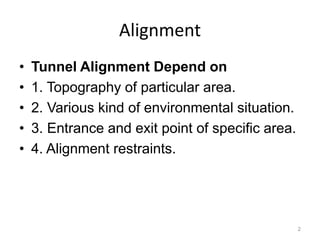
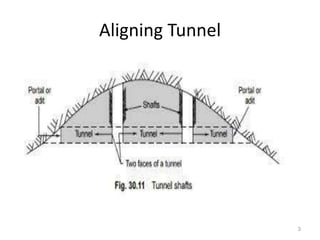
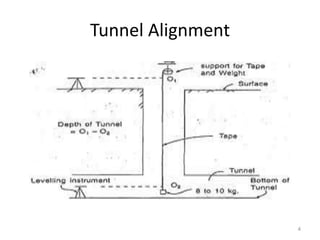
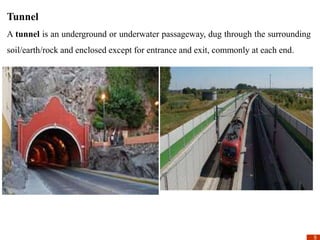
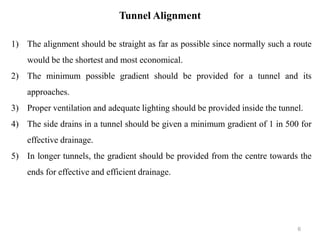
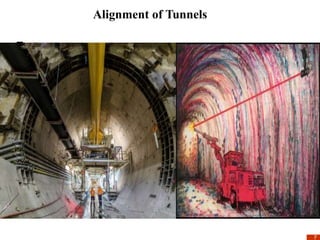
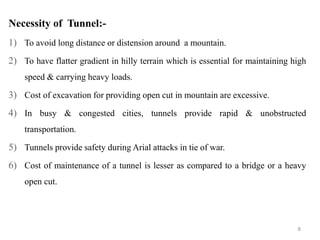
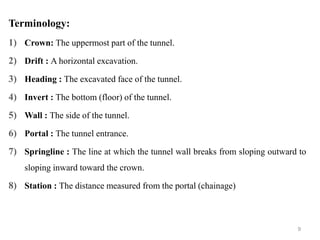
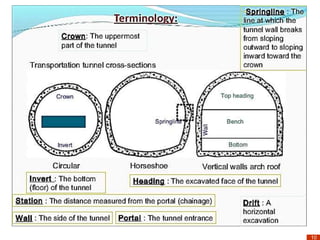
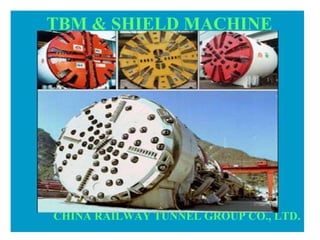
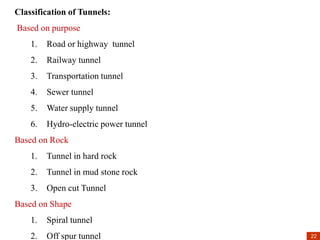
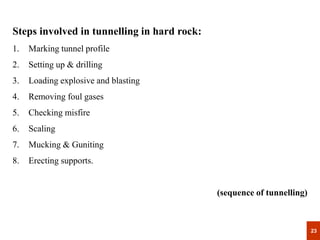
1) Tunnels are underground passages dug through soil/earth/rock, enclosed except for entrances and exits. Proper alignment, cross-section, drainage, ventilation and construction methods are important.
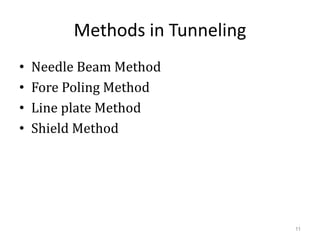
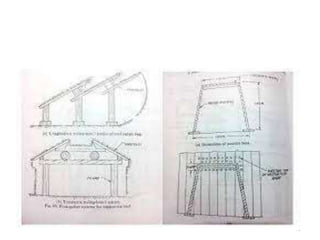
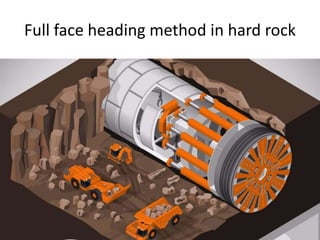
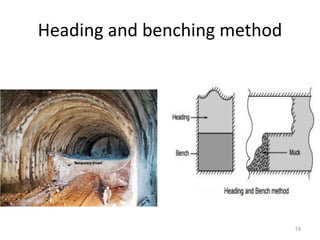
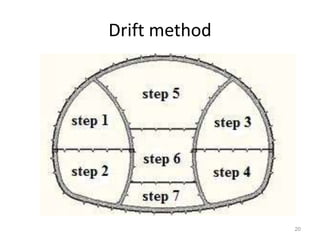
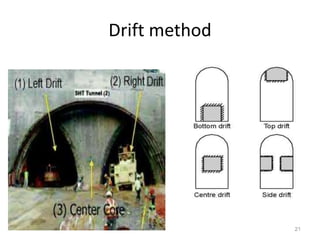
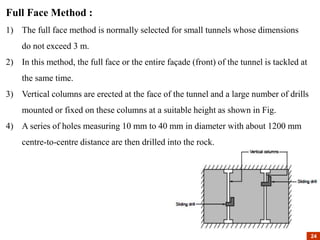
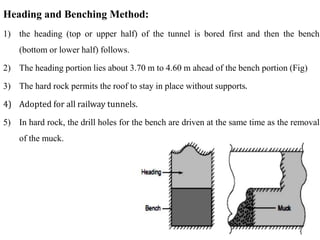
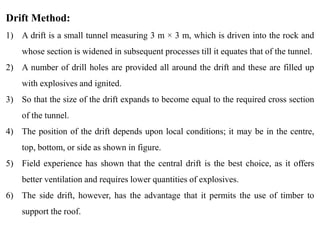
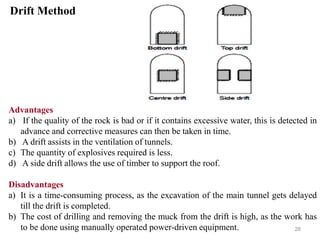
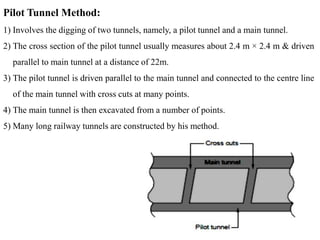
2) Tunneling methods include the full-face method for small tunnels, and the heading and benching method commonly used for rail tunnels. Drifting involves first excavating a small tunnel then expanding it.
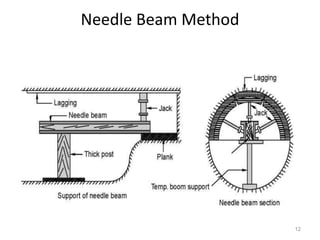
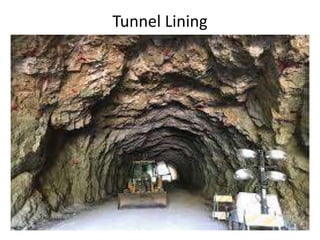
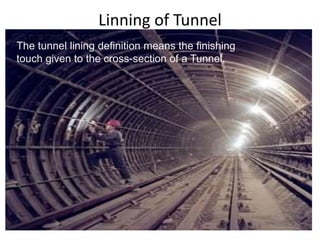
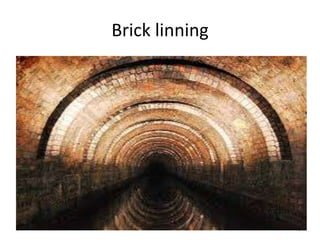
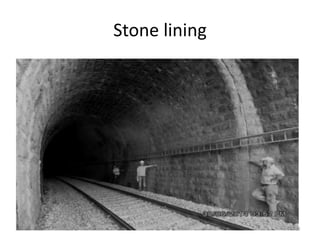
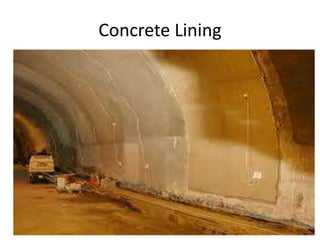
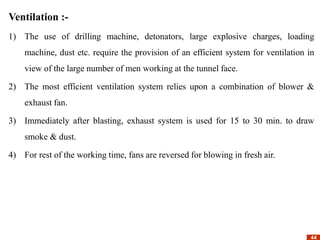
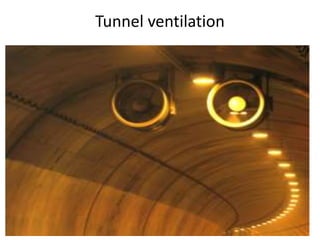
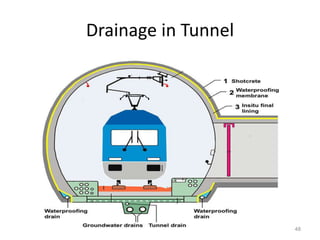
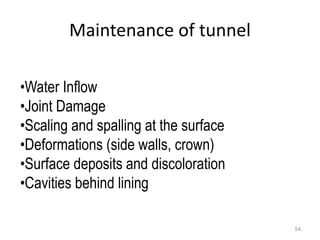
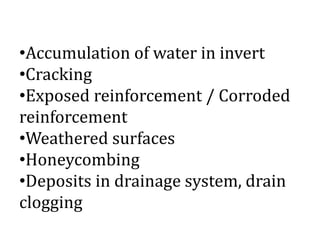
3) Tunnels require lining to reinforce weak ground, with materials including brick, stone, timber, cast iron or concrete. Ventilation, drainage, and safety measures are also critical aspects of tunnel construction and maintenance.