CS8591 COMPUTER NETWORKS
UNIT – IV
Unit - IV
TRANSPORT LAYER
Introduction – Transport Layer
Protocols – Services – Port Numbers
Protocol –
Protocol –
– User Datagram
Transmission Control
SCTP.
Behrouz A. Forouzan, Data Communications and Networking, Fifth Edition
TMH, 2013
23-1 PROCESS-TO-PROCESS DELIVERY
The transport layer is responsible for process-to-
process delivery—the delivery of a packet, part of a
message, from one process to another. Two processes
communicate in a client/server relationship, as we will
see later.
Topics discussed in this section:
Client/Server Paradigm
Multiplexing and Demultiplexing
Connectionless Versus Connection-Oriented Service
Reliable Versus Unreliable
Three Protocols
3
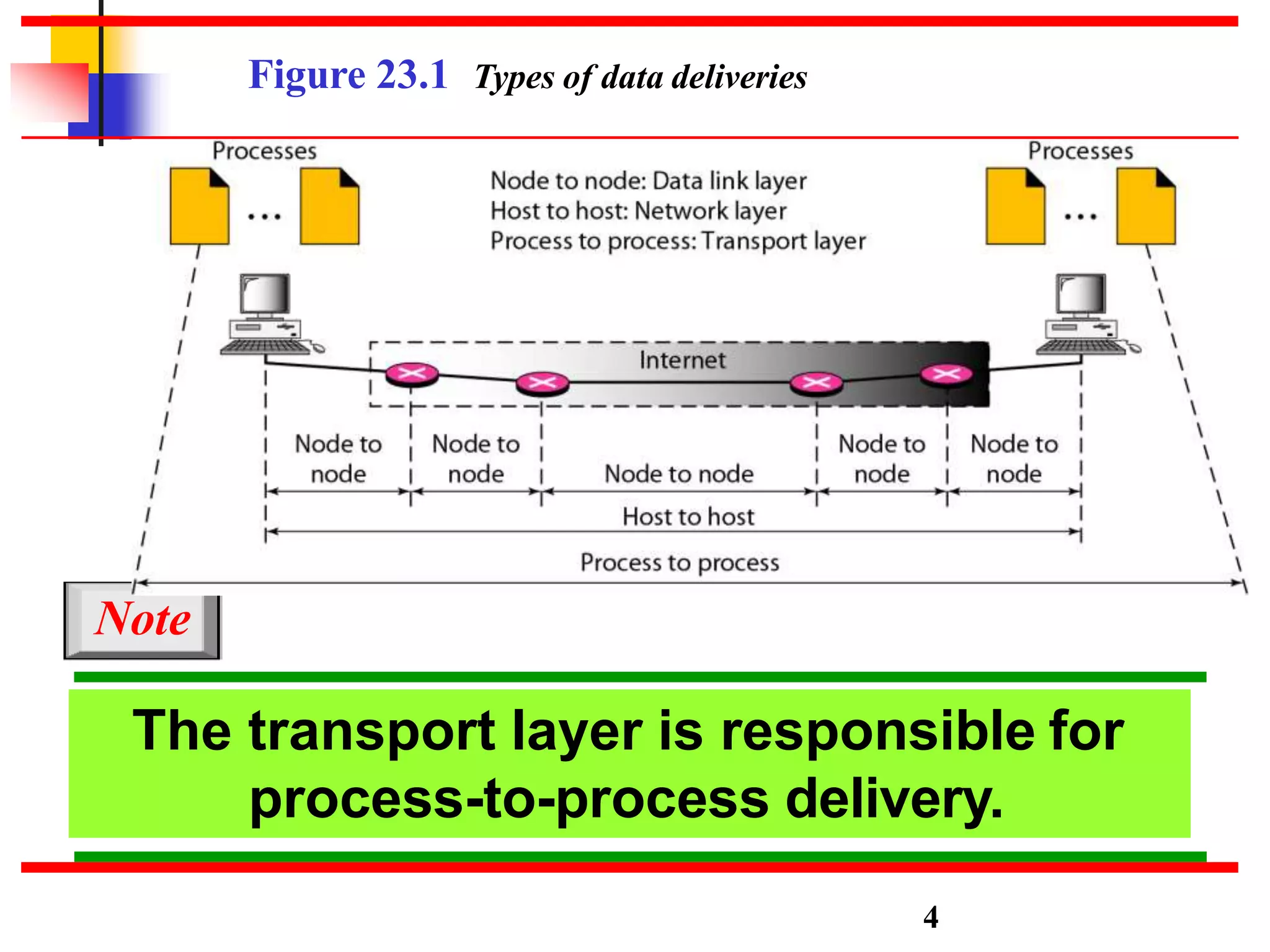
The transport layer is responsible for
process-to-process delivery.
Note
Figure 23.1 Types of data deliveries
4
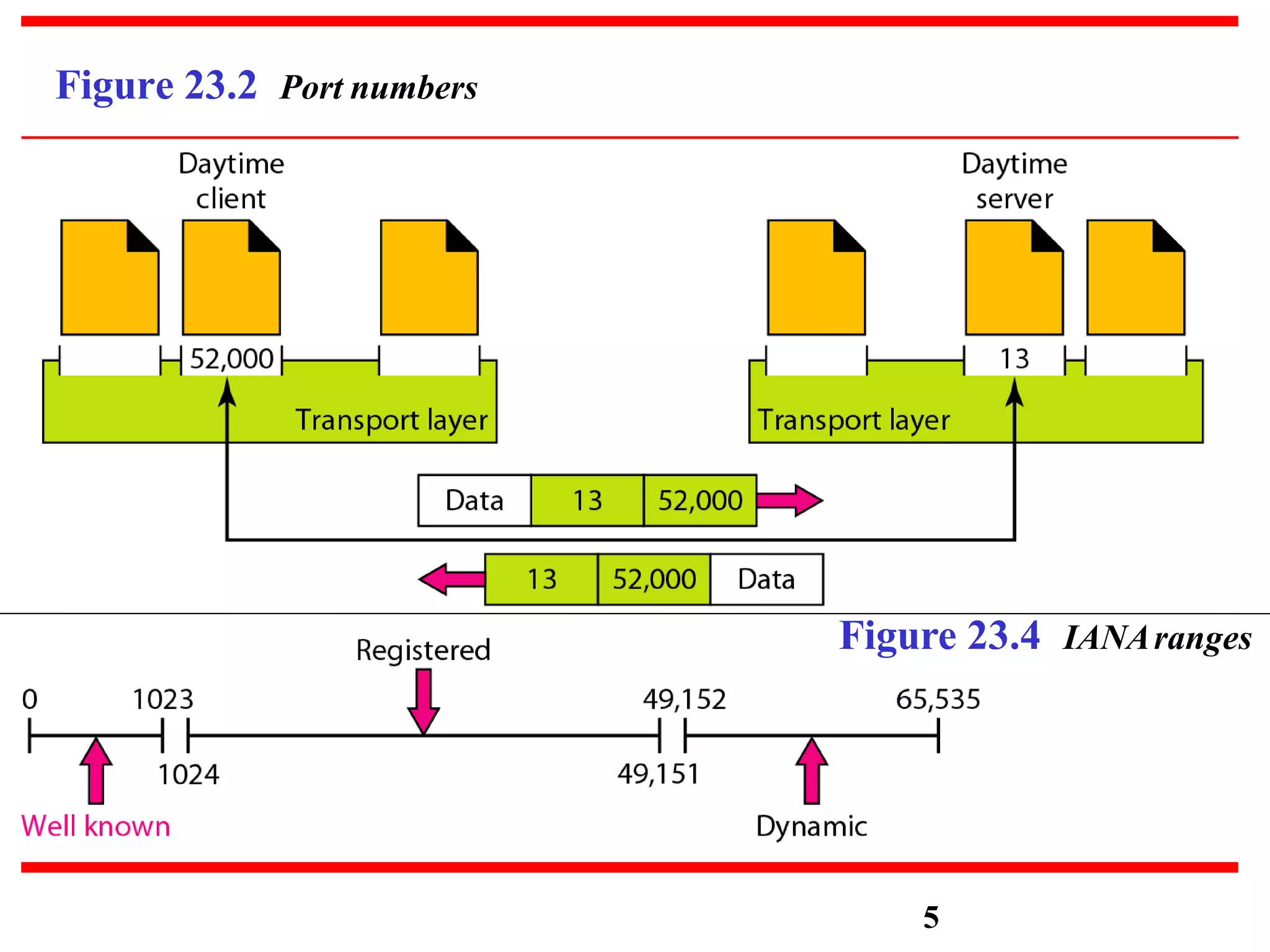
Figure 23.2 Port numbers
Figure 23.4 IANAranges
5
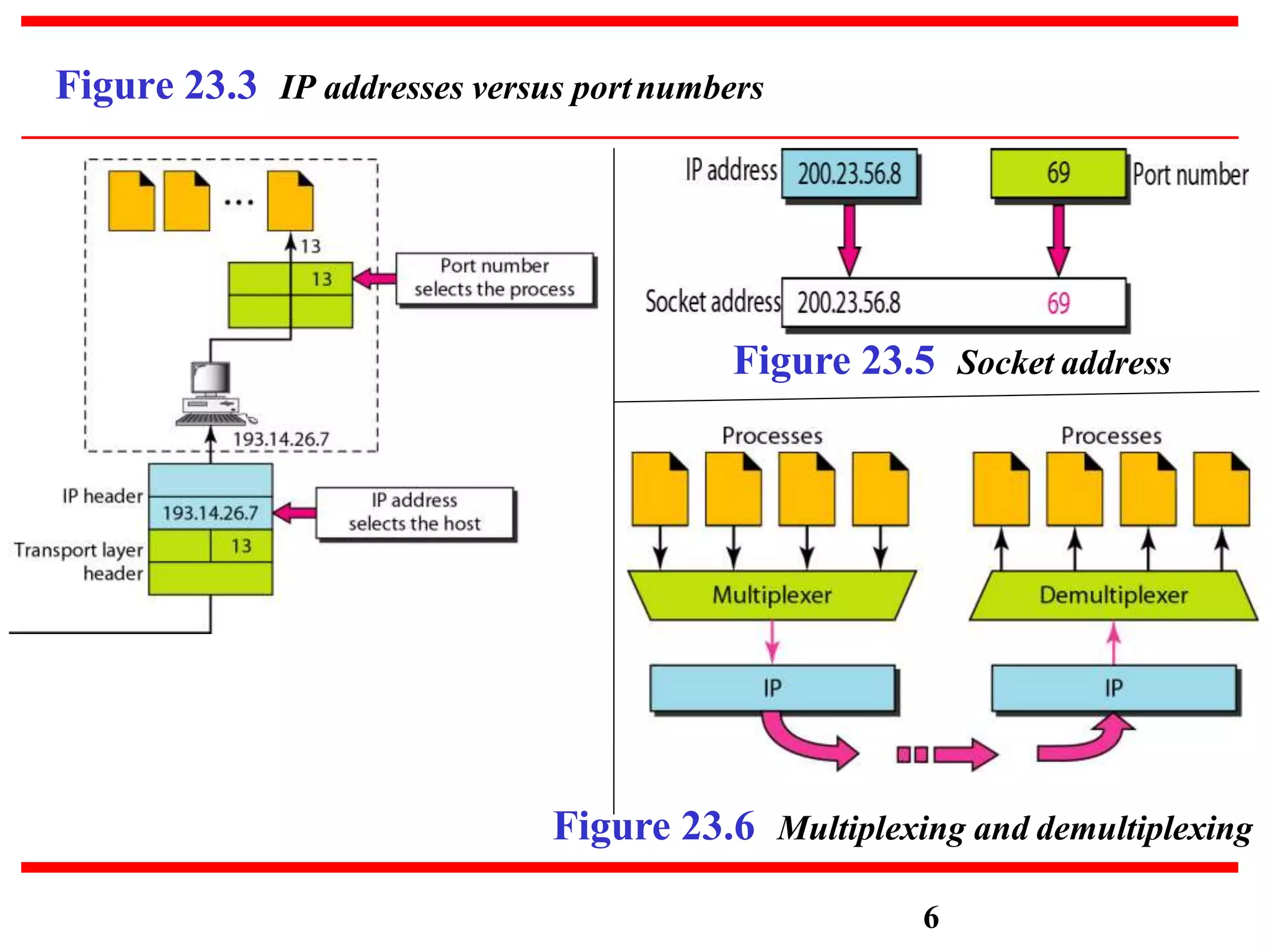
Figure 23.3 IP addresses versus portnumbers
Figure 23.6 Multiplexing and demultiplexing
Figure 23.5 Socket address
6
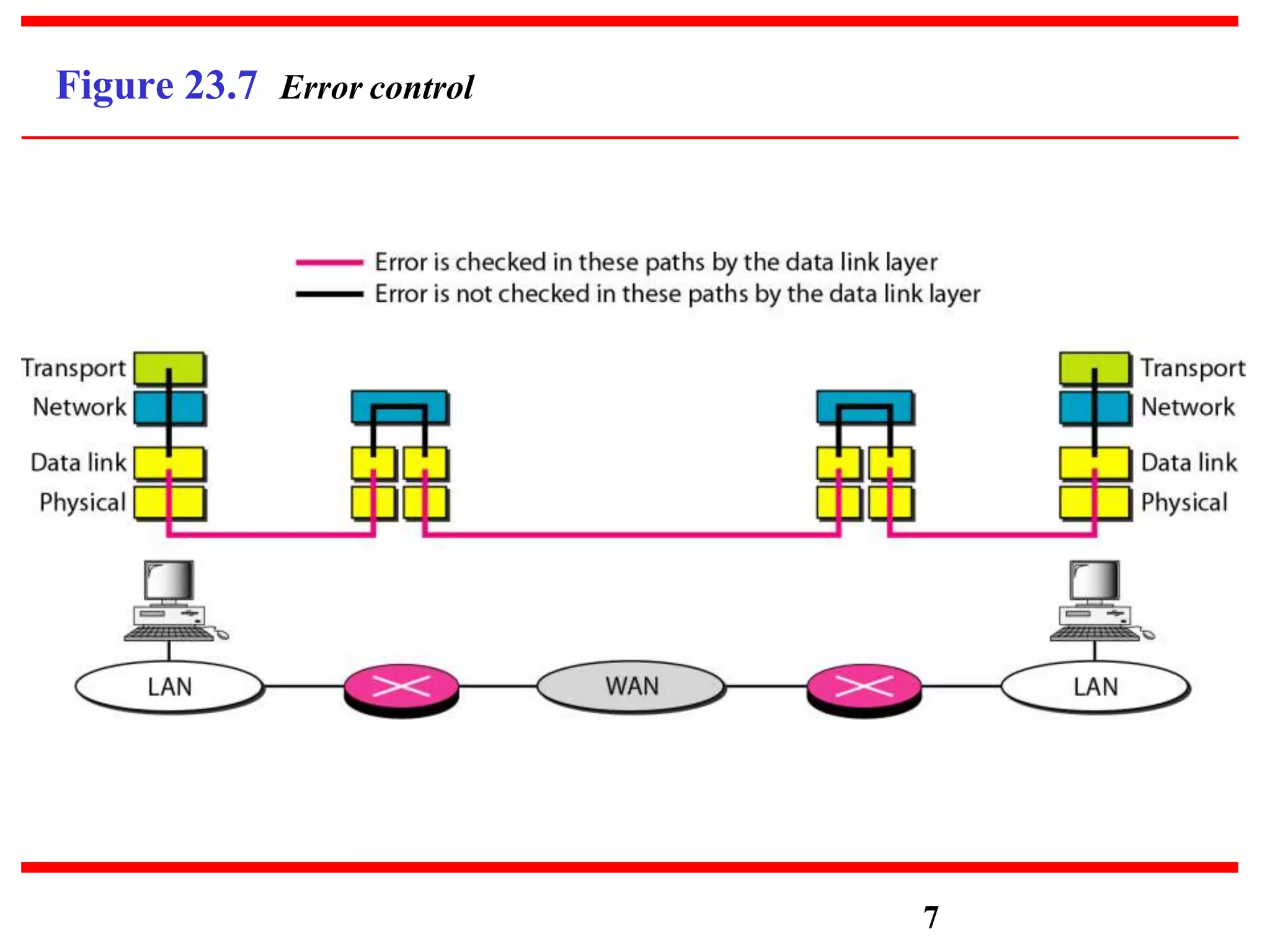
Figure 23.7 Error control
7
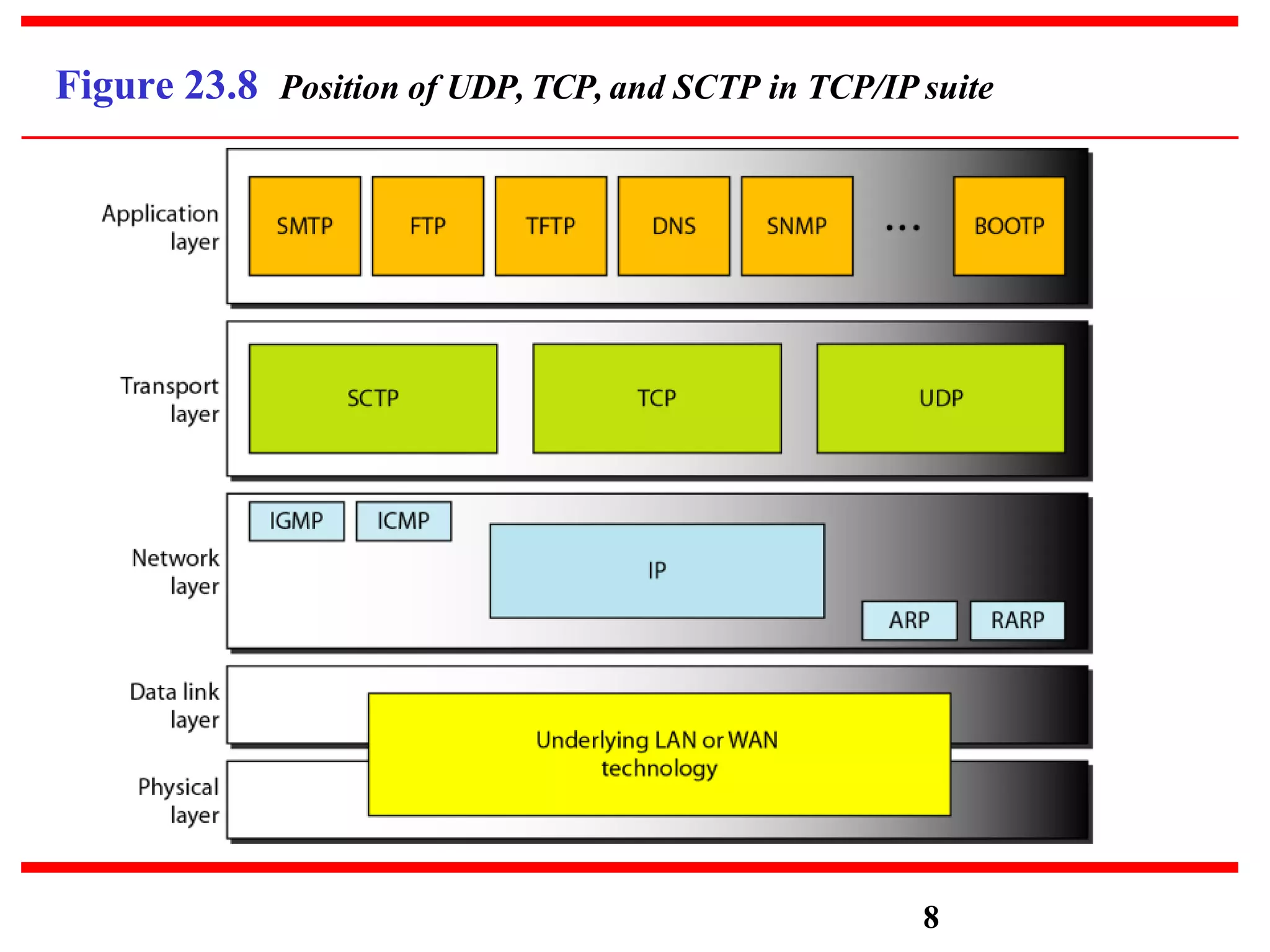
Figure 23.8 Position of UDP, TCP, and SCTP in TCP/IP suite
8
23-2 USER DATAGRAM PROTOCOL(UDP)
The User Datagram Protocol (UDP) is called a
connectionless, unreliable transport protocol. It does
not add anything to the services of IP except to provide
process-to-process communication instead of host-to-
host communication.
Topics discussed in this section:
Well-Known Ports for UDP
User Datagram
Checksum
UDPOperation
Use of UDP
9
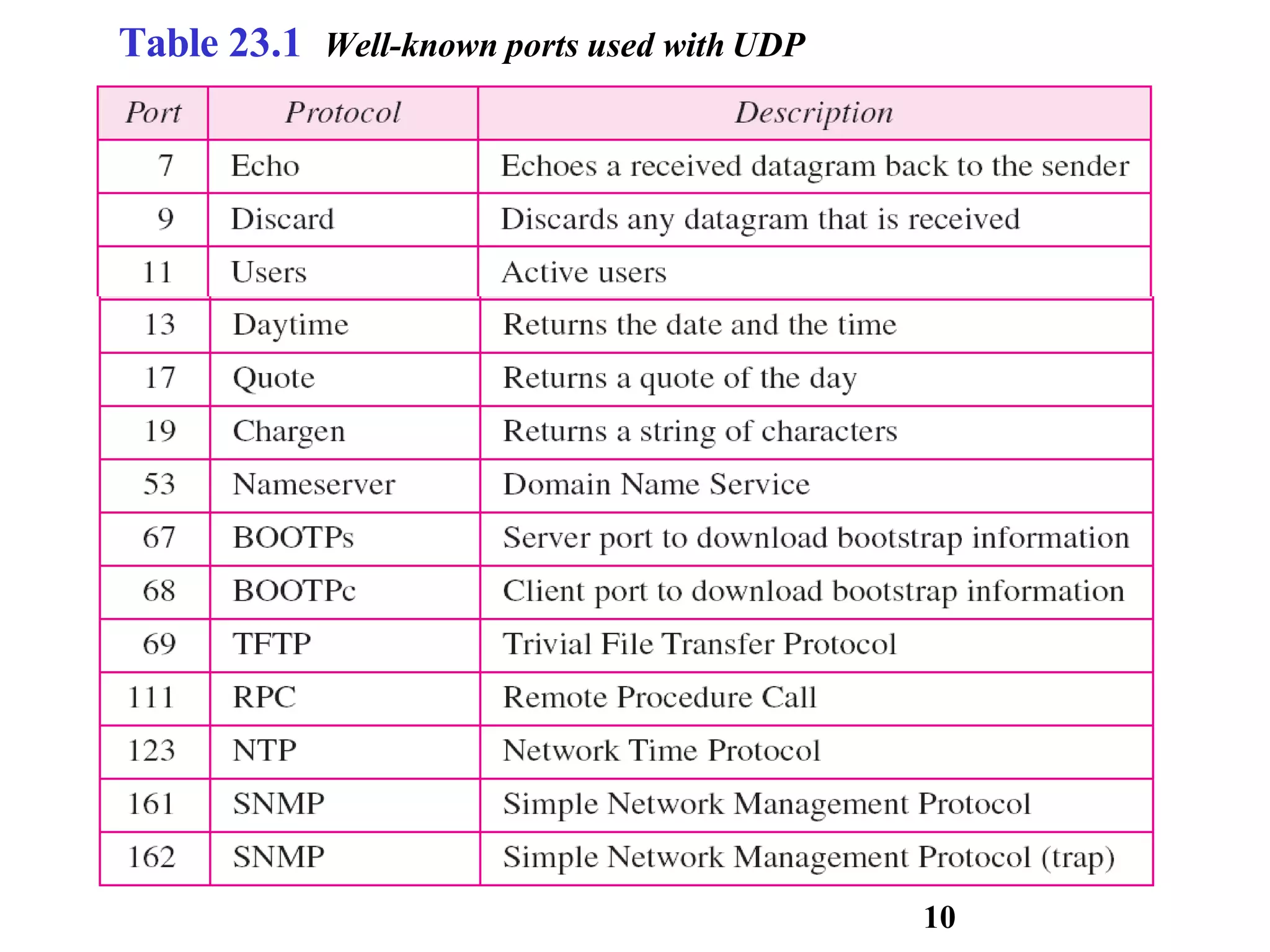
Table 23.1 Well-known ports used with UDP
10
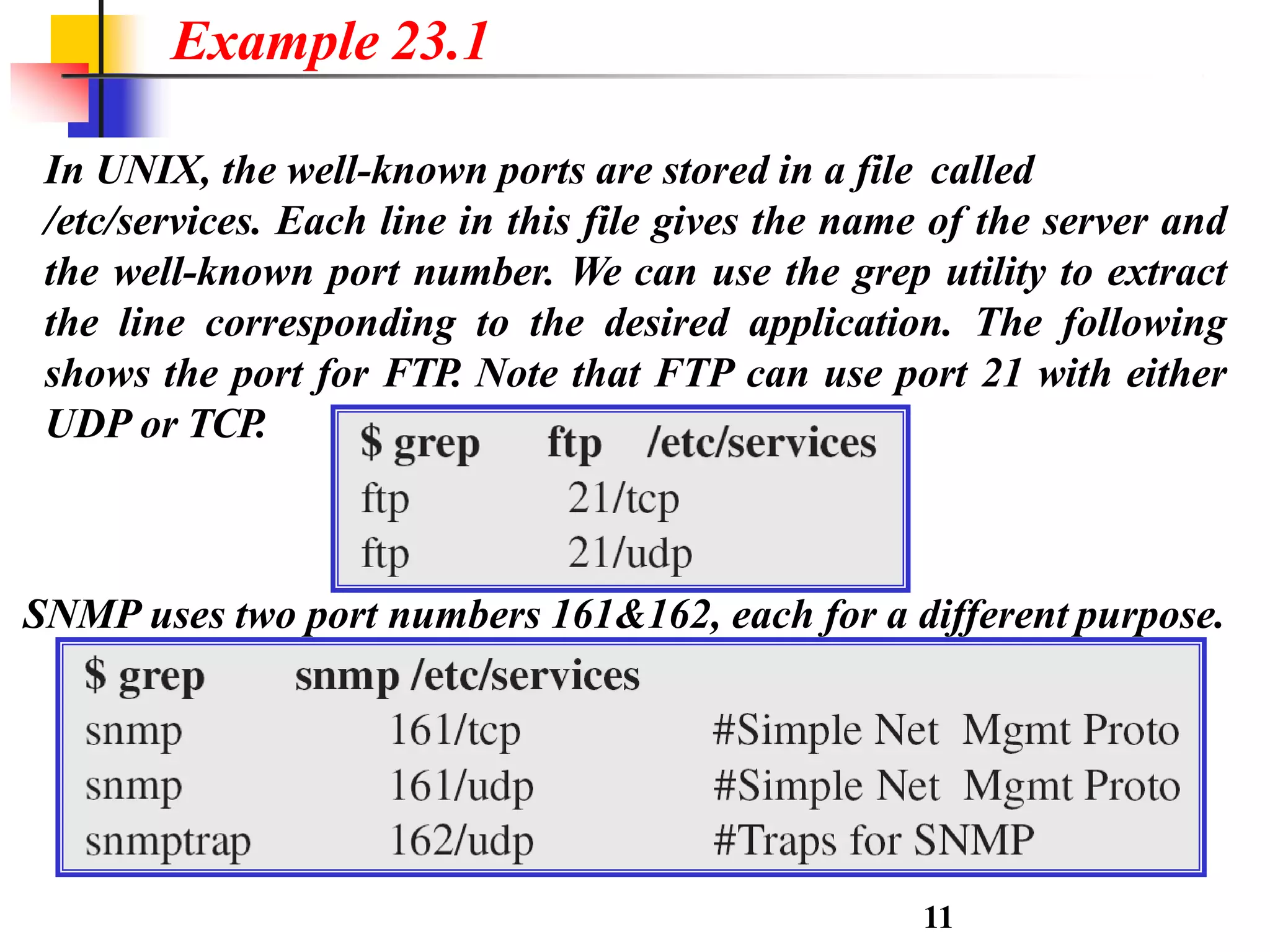
In UNIX, the well-known ports are stored in a file called
/etc/services. Each line in this file gives the name of the server and
the well-known port number. We can use the grep utility to extract
the line corresponding to the desired application. The following
shows the port for FTP. Note that FTP can use port 21 with either
UDP or TCP.
Example 23.1
SNMP uses two port numbers 161&162, each for a different purpose.
11
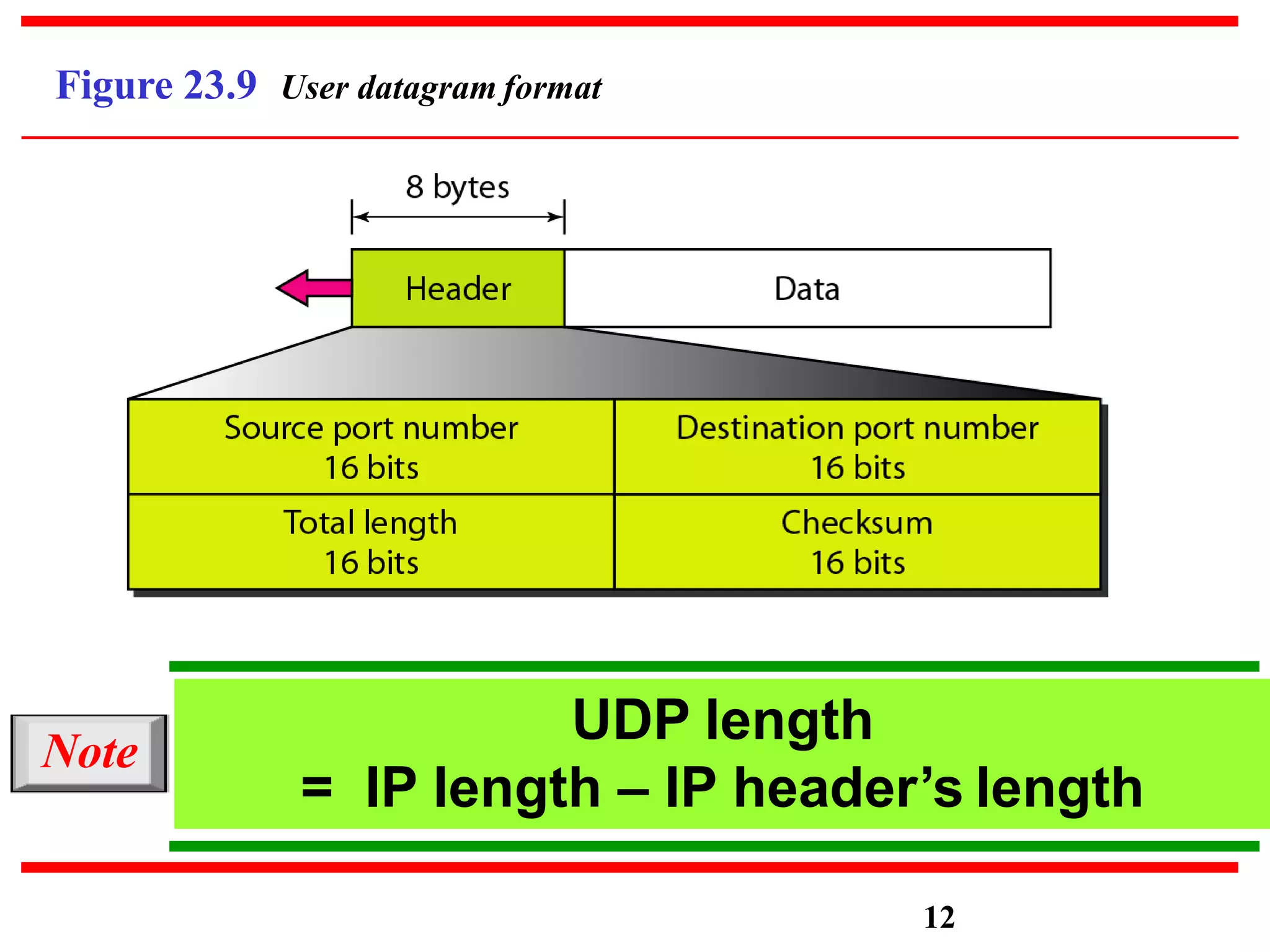
Figure 23.9 User datagram format
UDP length
= IP length – IP header’s length
Note
12
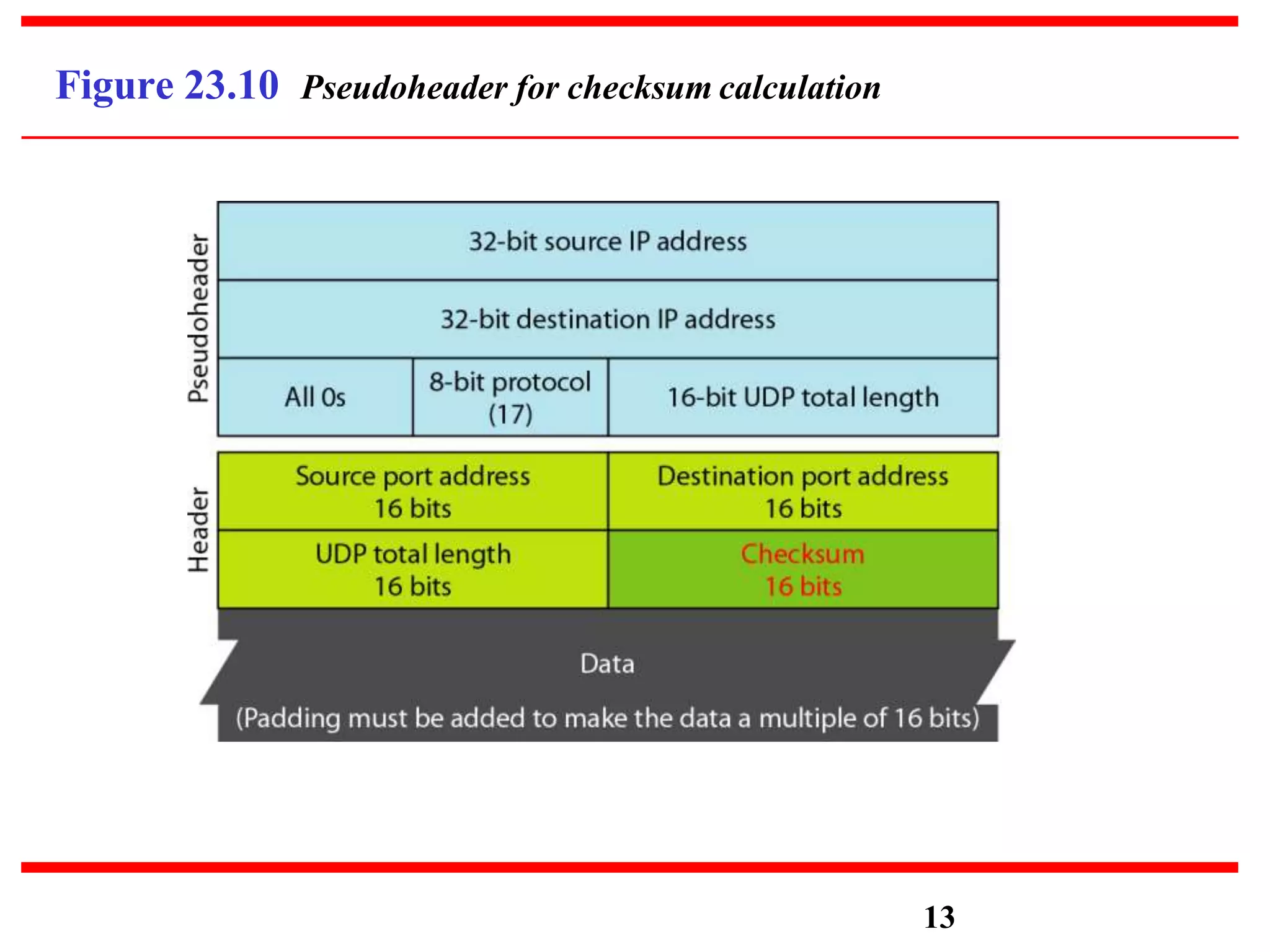
Figure 23.10 Pseudoheader for checksum calculation
13
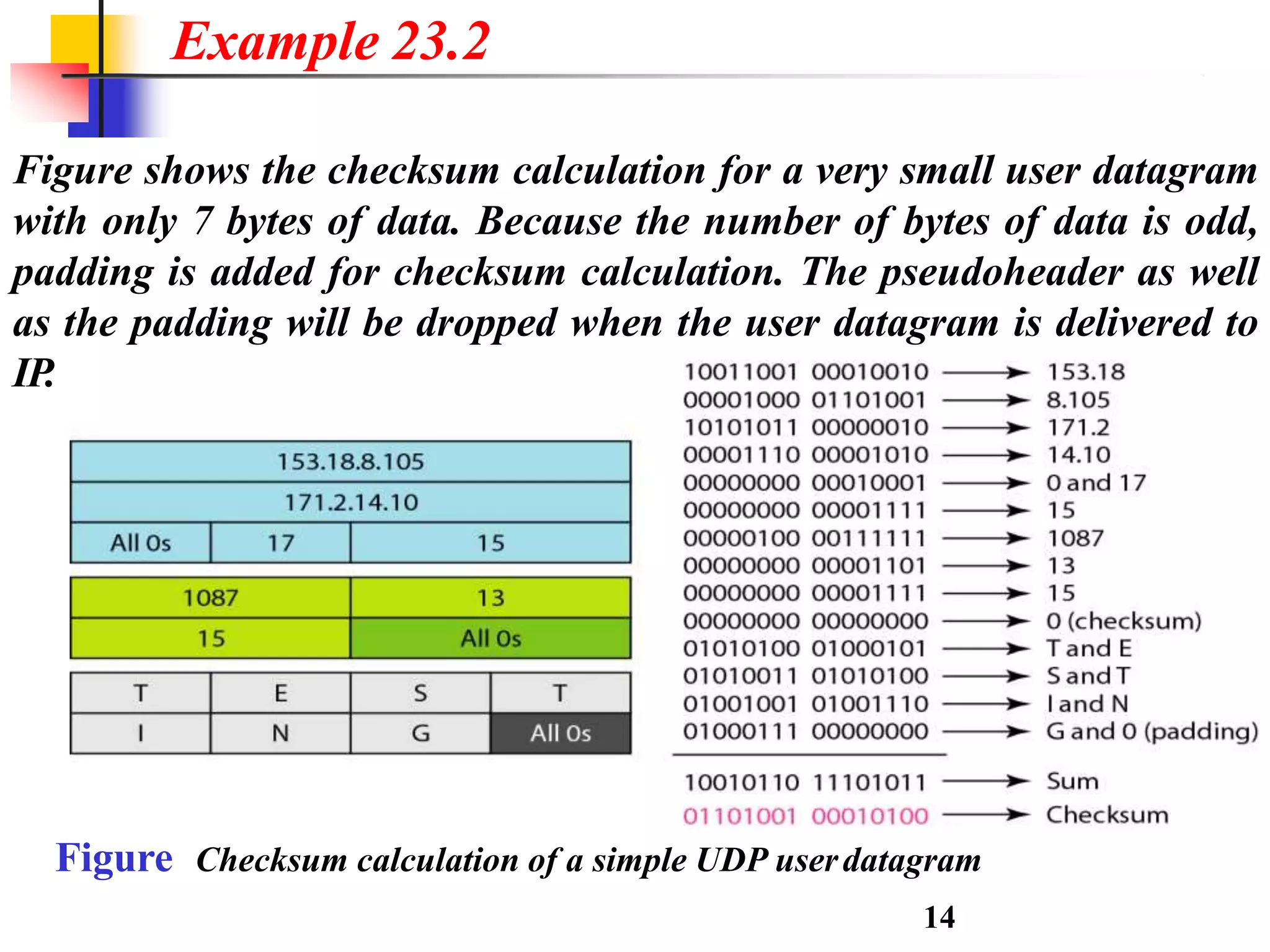
Figure shows the checksum calculation for a very small user datagram
with only 7 bytes of data. Because the number of bytes of data is odd,
padding is added for checksum calculation. The pseudoheader as well
as the padding will be dropped when the user datagram is delivered to
IP.
Example 23.2
Figure Checksum calculation of a simple UDP userdatagram
14
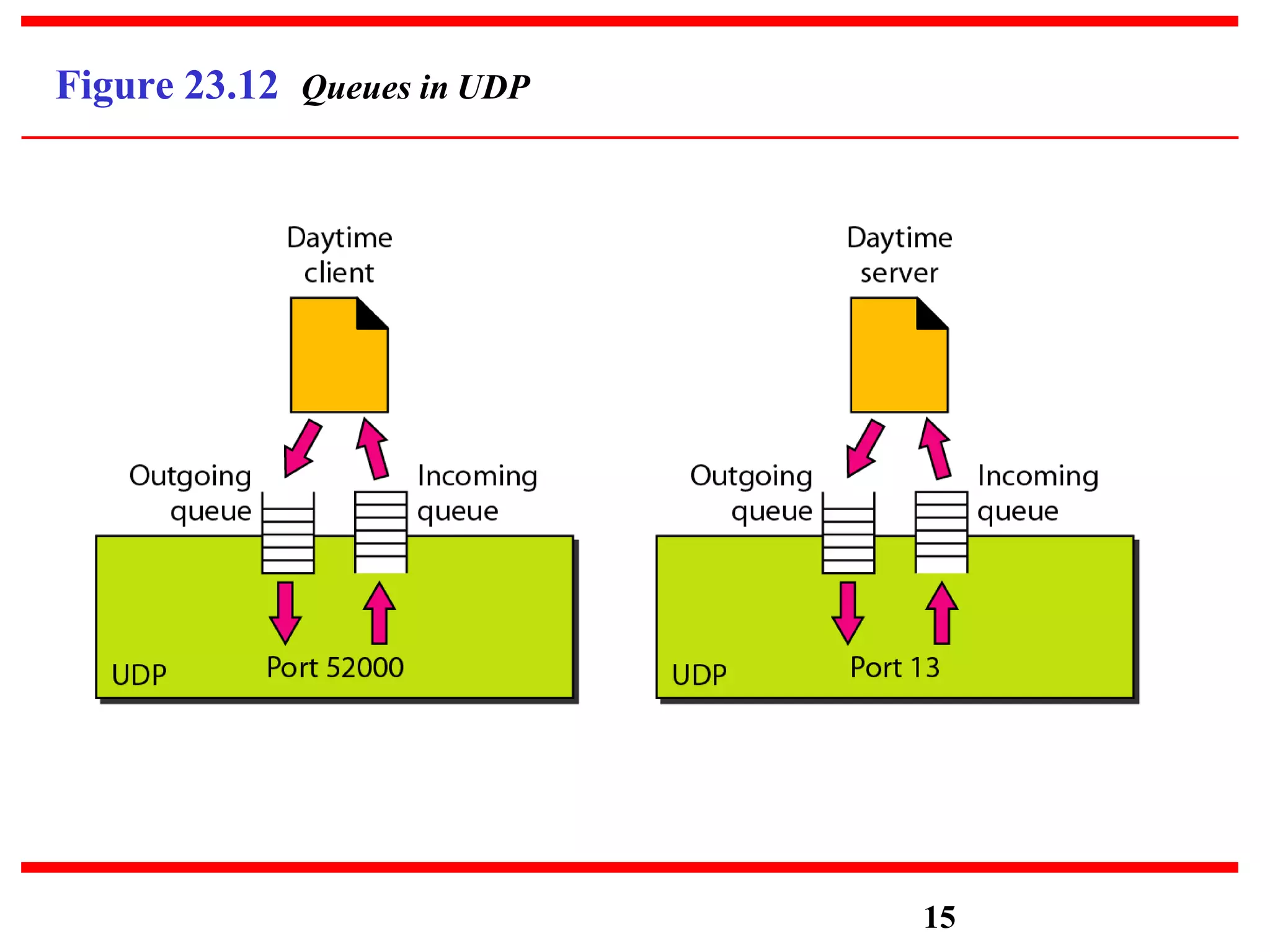
Figure 23.12 Queues in UDP
15
23-3 TCP
TCP is a connection-oriented protocol; it creates a
virtual connection between two TCPs to send data. In
addition, TCP uses flow and error control mechanisms
at the transport level.
Topics discussed in this section:
TCP Services
TCP Features
Segment
A TCPConnection
Flow Control
Error Control
16
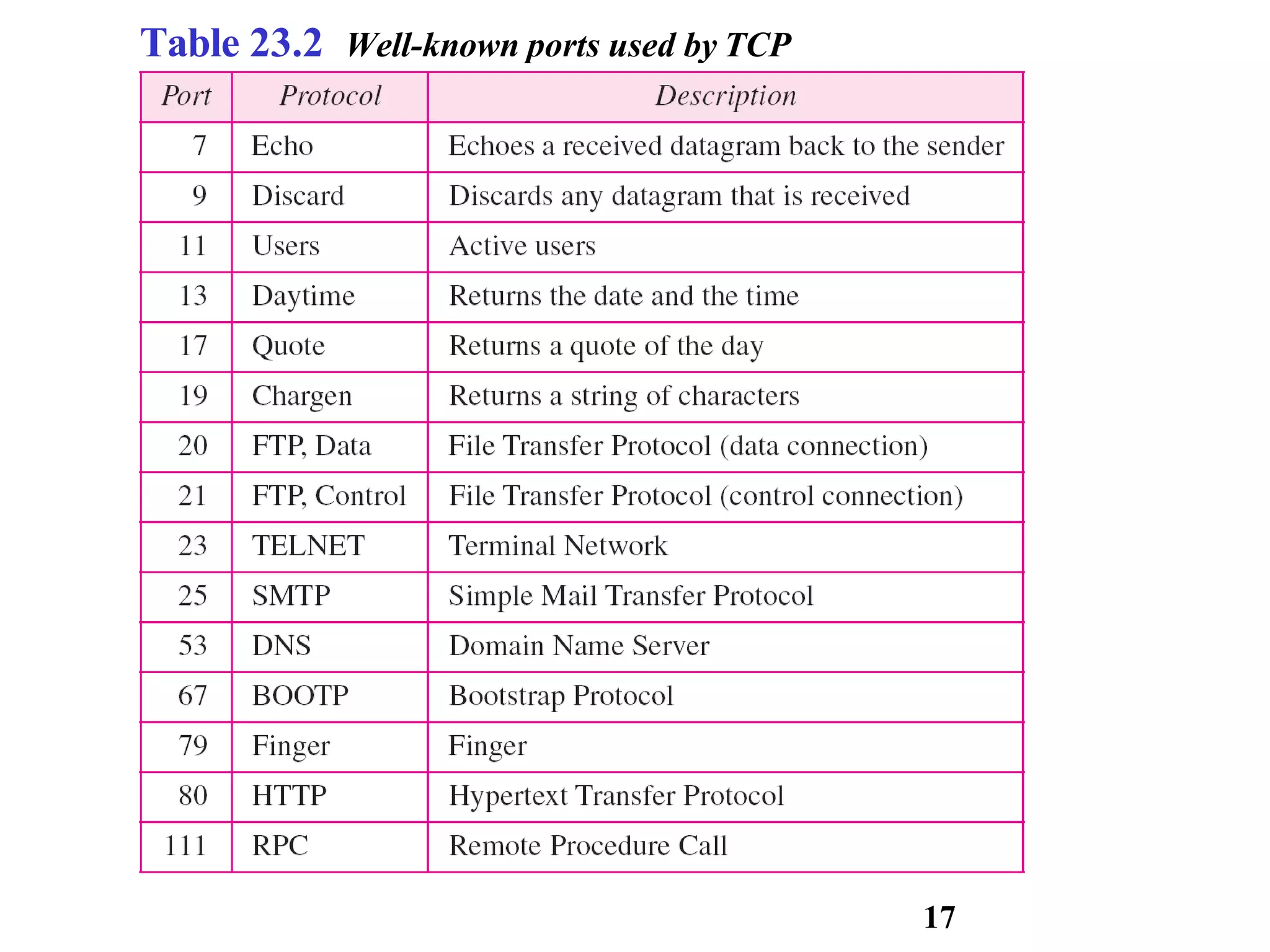
Table 23.2 Well-known ports used by TCP
17
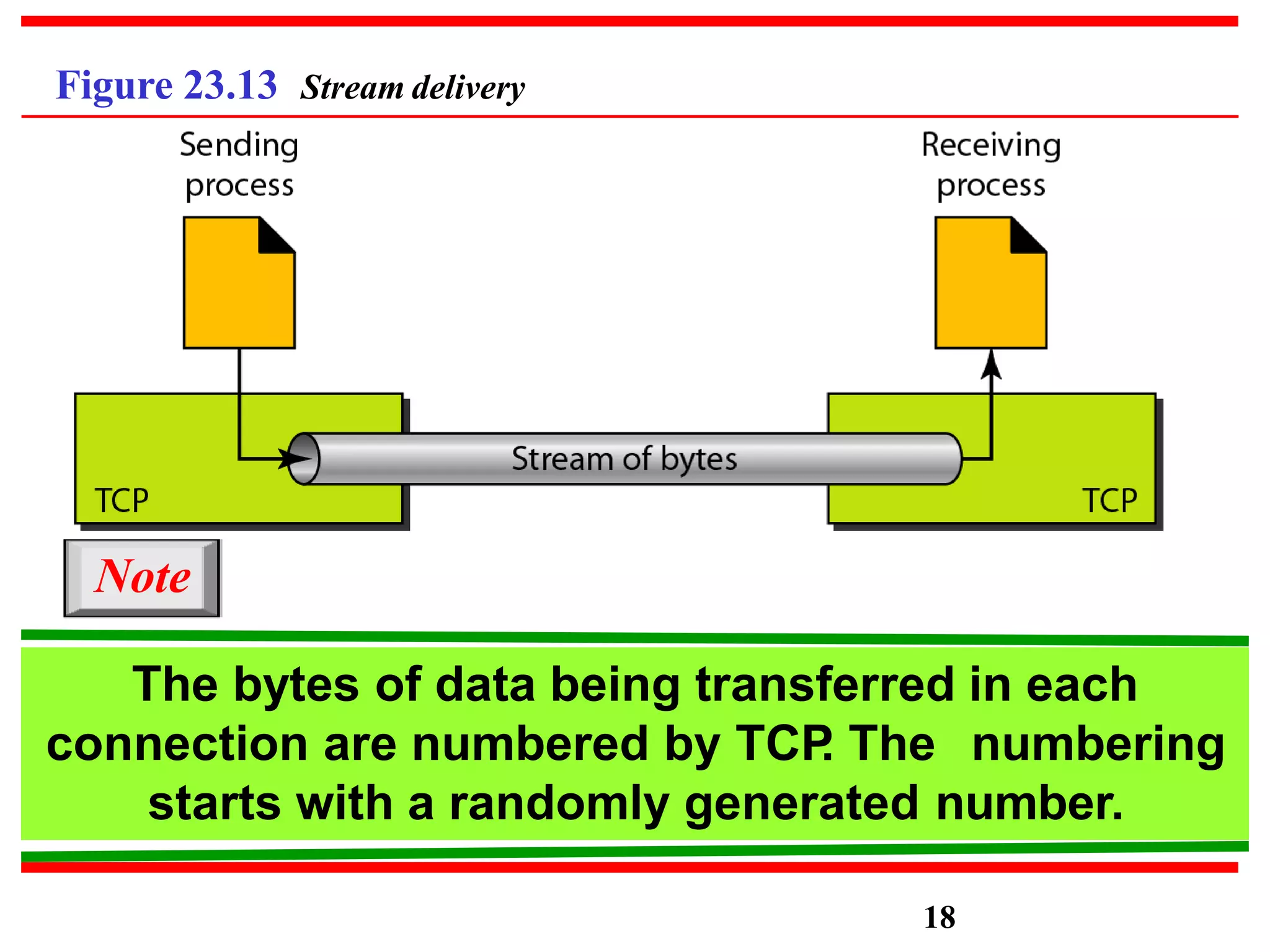
Figure 23.13 Stream delivery
The bytes of data being transferred in each
connection are numbered by TCP
. The numbering
starts with a randomly generated number.
Note
18
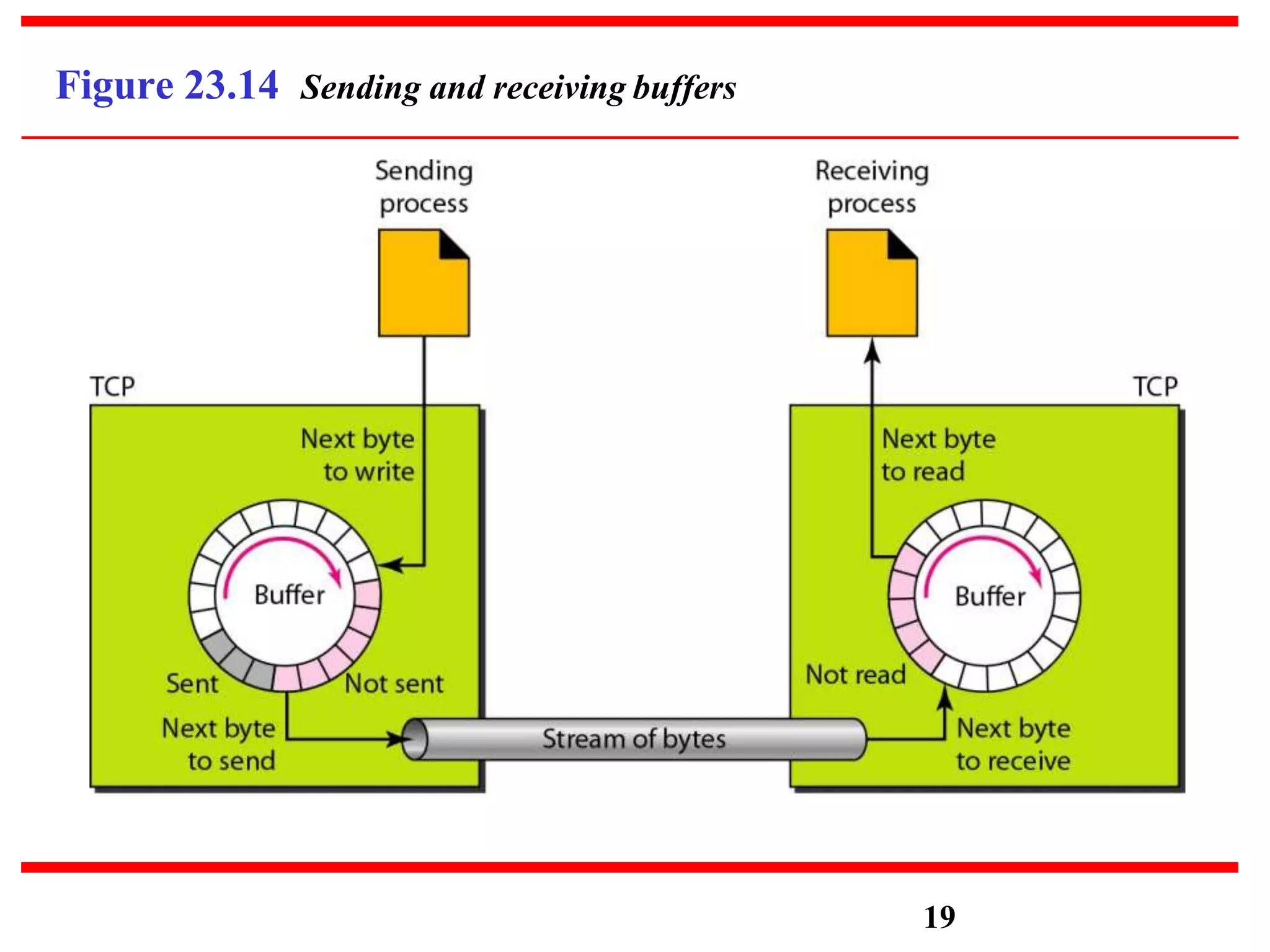
Figure 23.14 Sending and receiving buffers
19
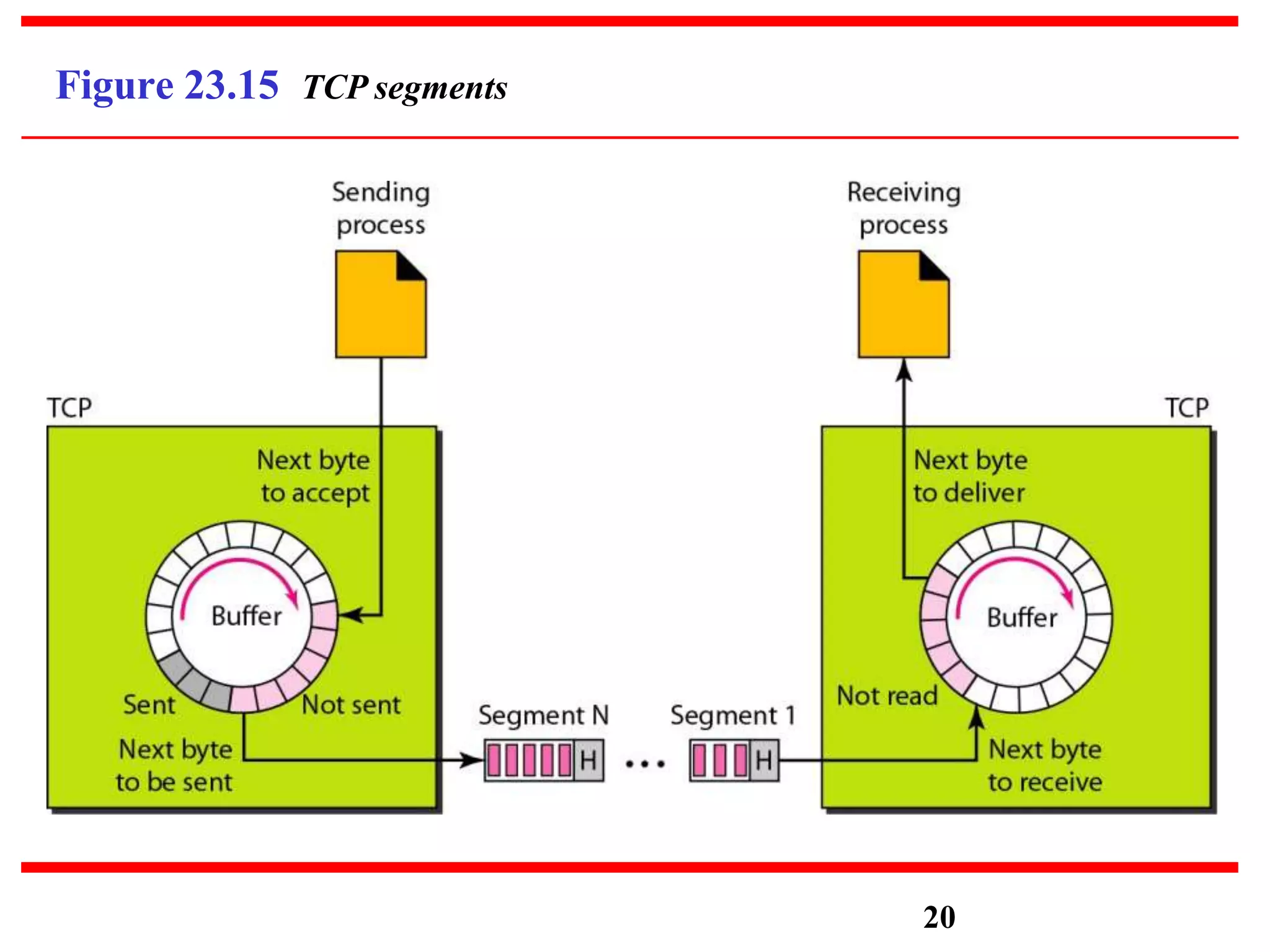
Figure 23.15 TCP segments
20
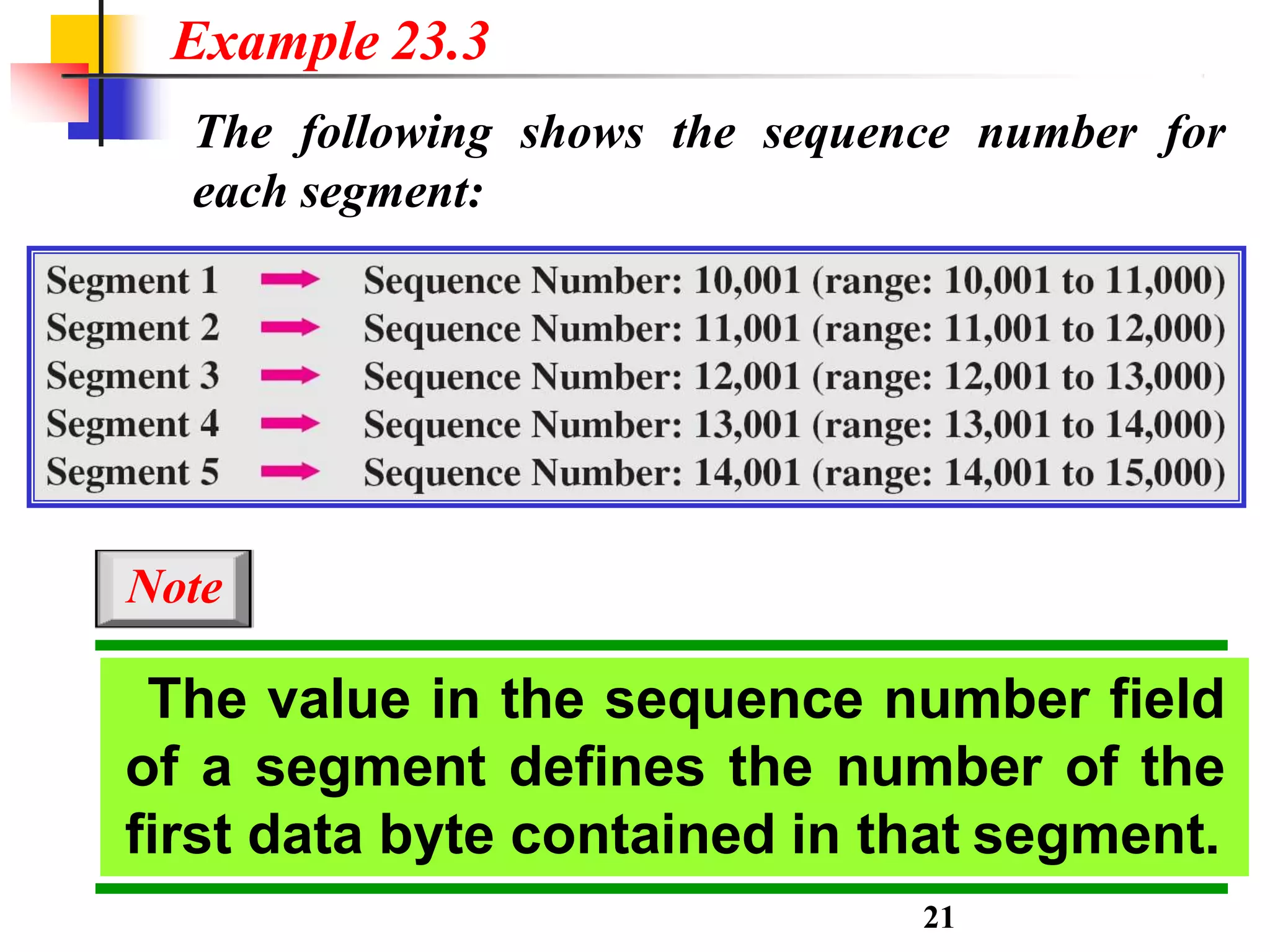
The following shows the sequence number for
each segment:
Example 23.3
The value in the sequence number field
of a segment defines the number of the
first data byte contained in that segment.
Note
21
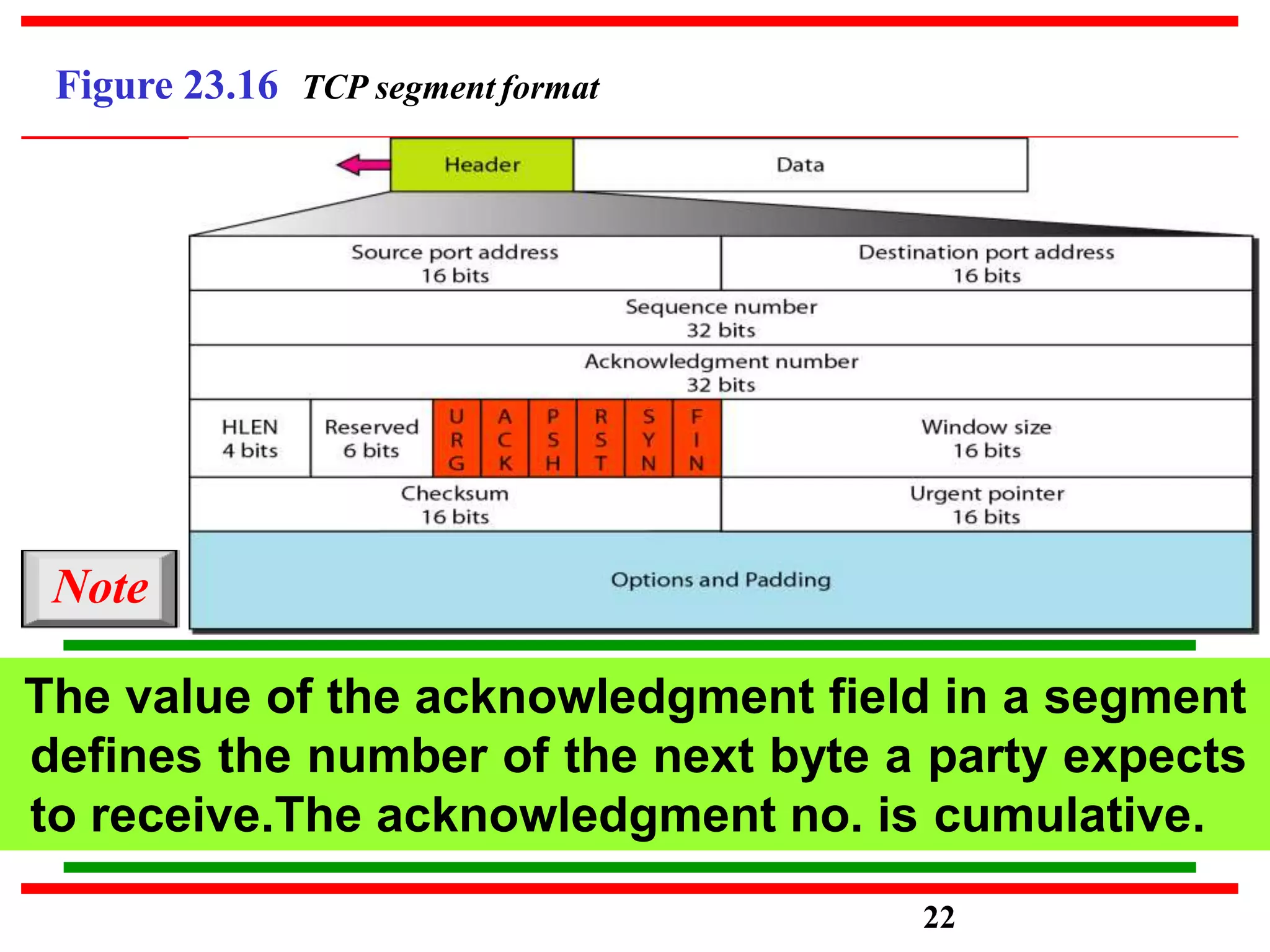
Figure 23.16 TCP segment format
Note
The value of the acknowledgment field in a segment
defines the number of the next byte a party expects
to receive.The acknowledgment no. is cumulative.
22
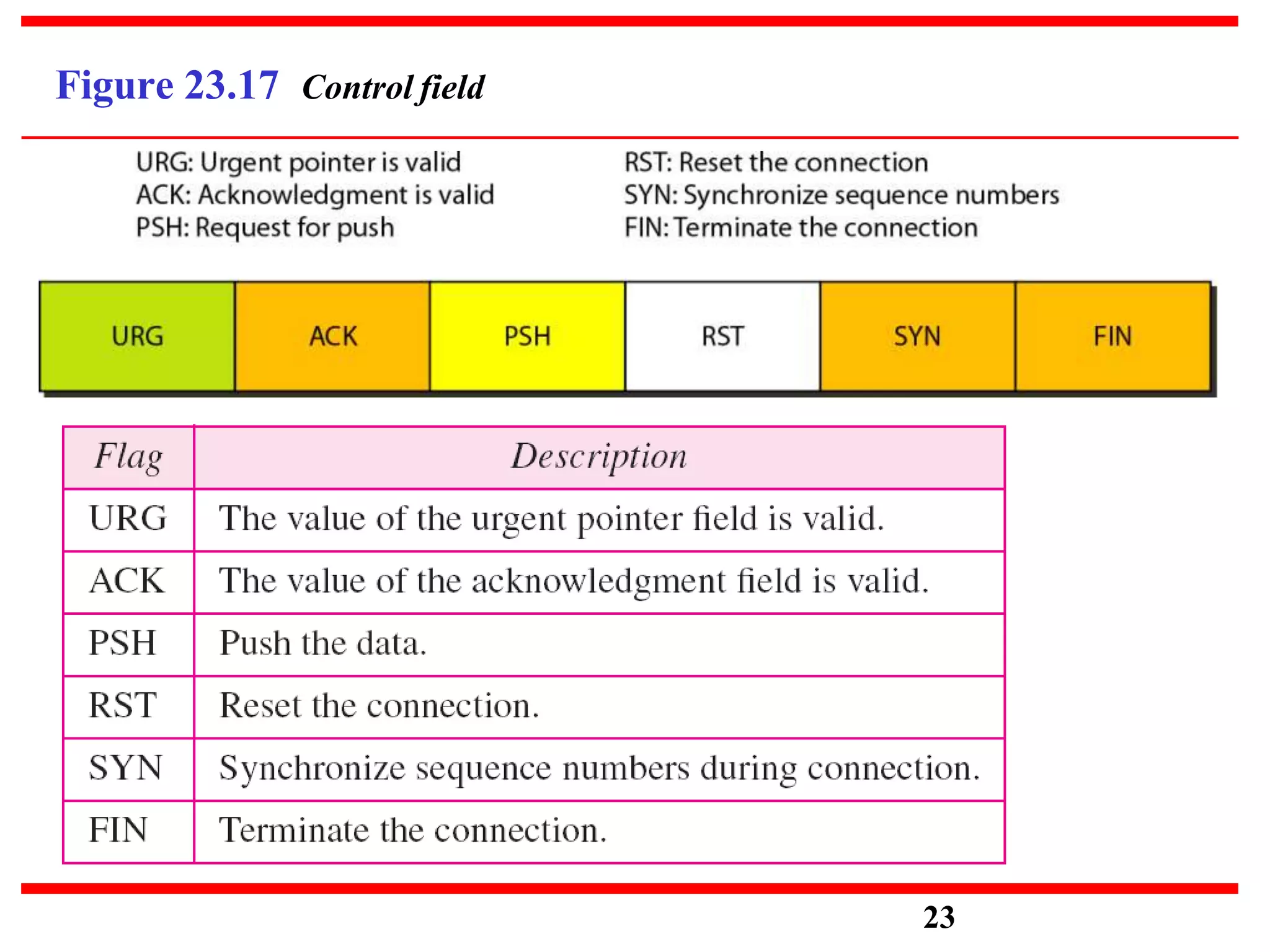
Figure 23.17 Control field
23
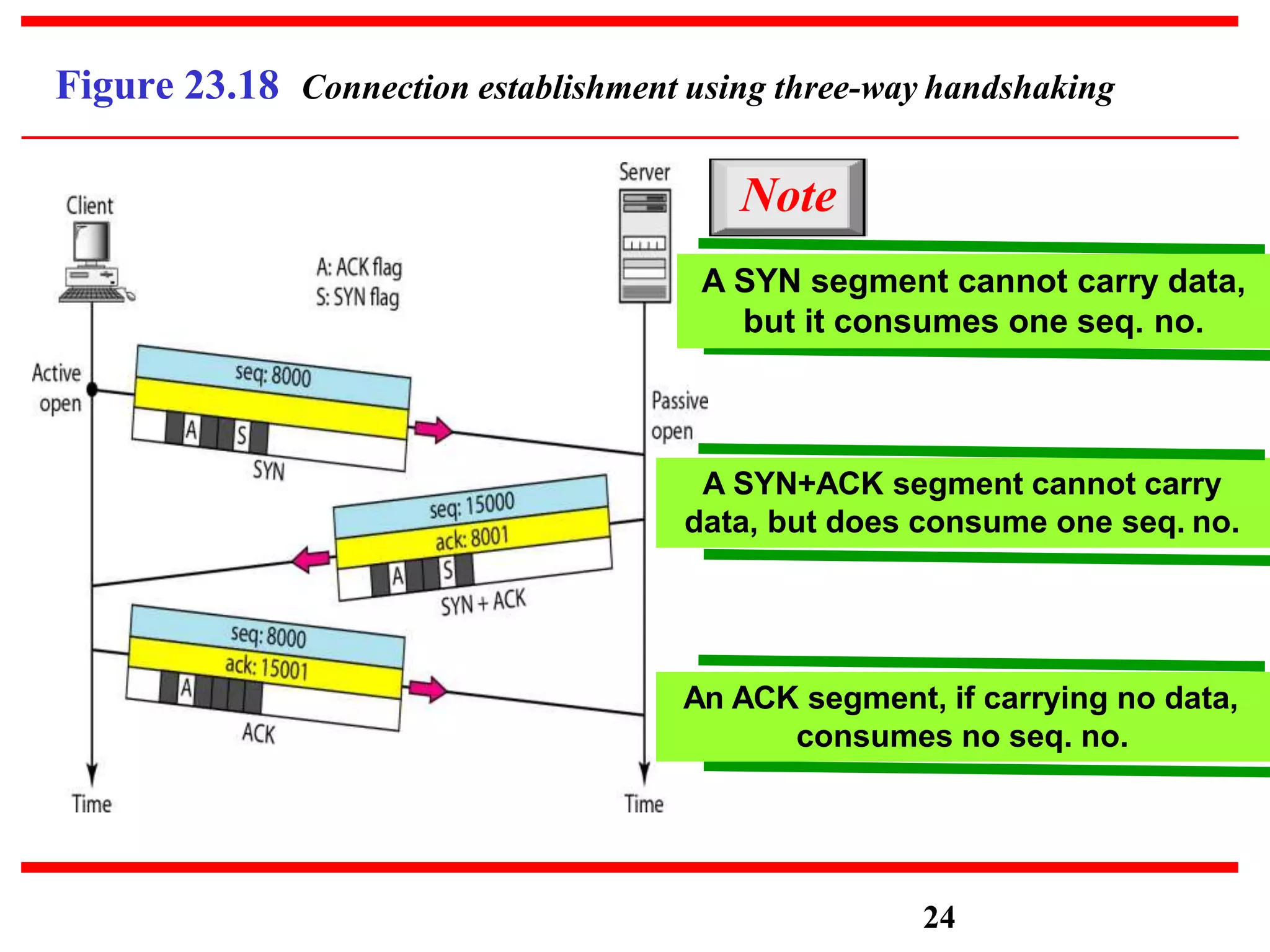
Figure 23.18 Connection establishment using three-way handshaking
Note
A SYN segment cannot carry data,
but it consumes one seq. no.
A SYN+ACK segment cannot carry
data, but does consume one seq. no.
An ACK segment, if carrying no data,
consumes no seq. no.
24
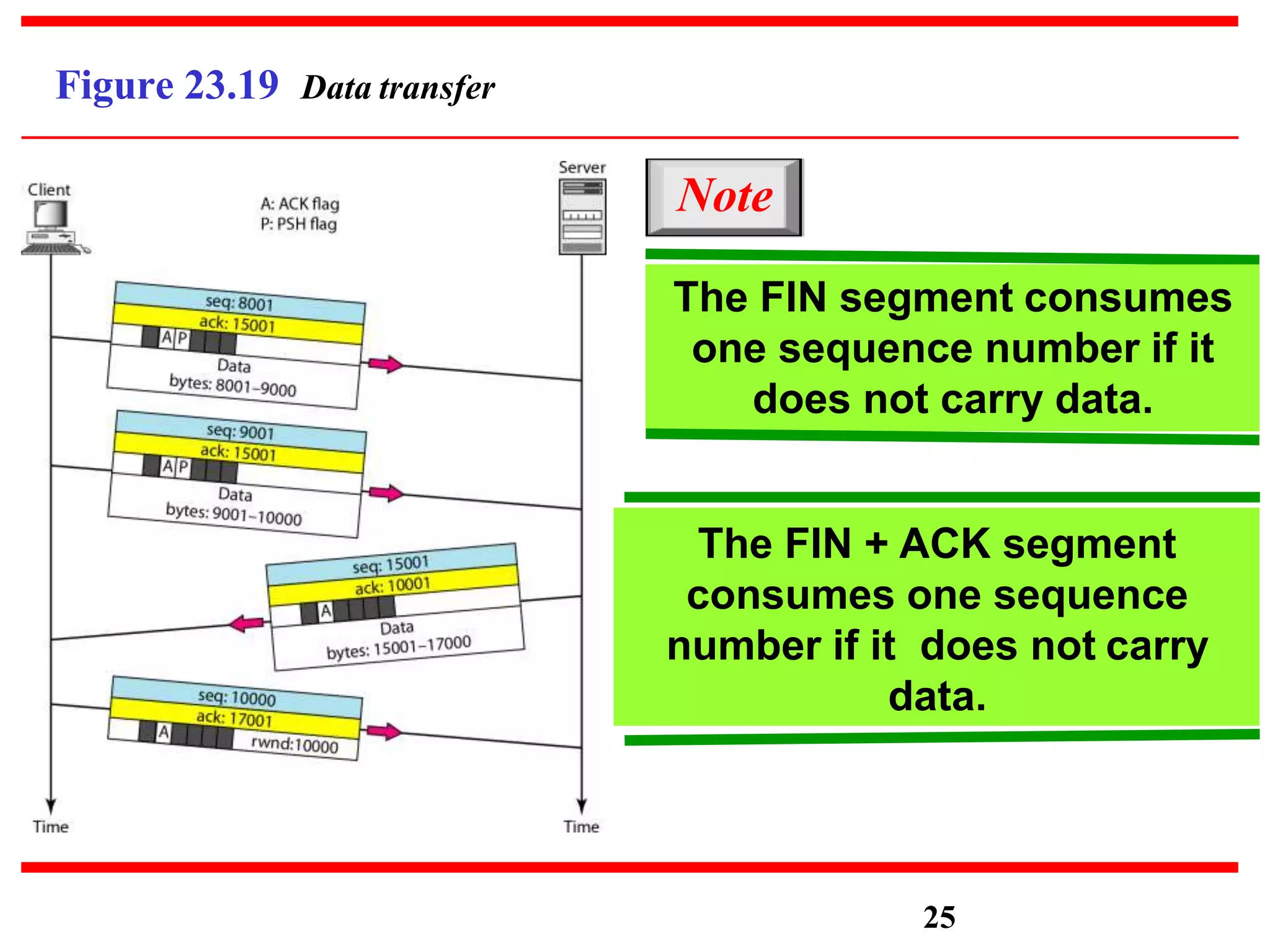
Figure 23.19 Data transfer
Note
The FIN segment consumes
one sequence number if it
does not carry data.
The FIN + ACK segment
consumes one sequence
number if it does not carry
data.
25
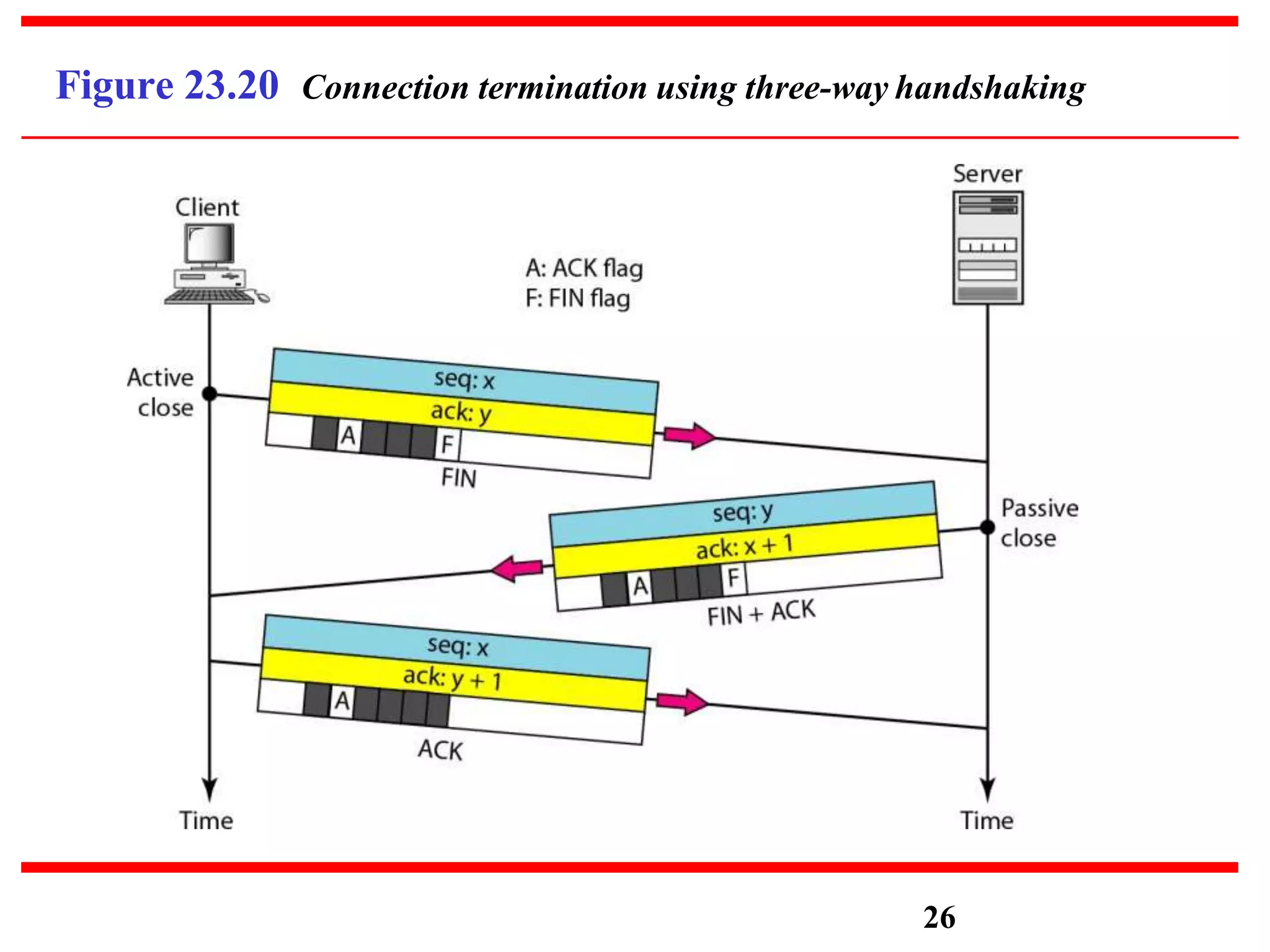
Figure 23.20 Connection termination using three-way handshaking
26
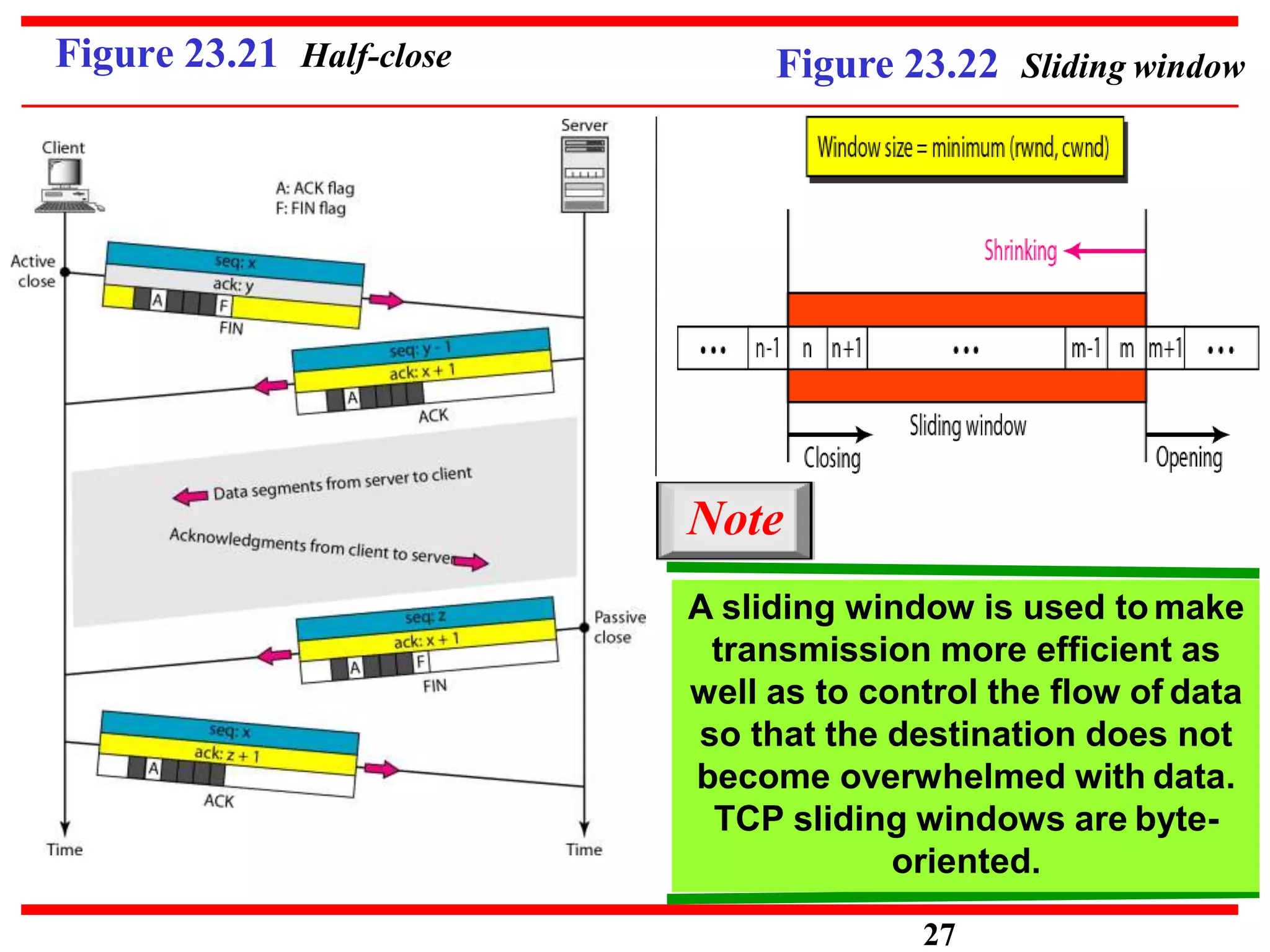
Figure 23.21 Half-close Figure 23.22 Sliding window
27
Note
A sliding window is used to make
transmission more efficient as
well as to control the flow of data
so that the destination does not
become overwhelmed with data.
TCP sliding windows are byte-
oriented.
What is the value of the receiver window (rwnd) for host A if
the receiver, host B, has a buffer size of 5000 bytes and 1000
bytes of received and unprocessed data?
Solution
The value of rwnd = 5000 − 1000 = 4000. Host B can receive only
4000 bytes of data before overflowing its buffer. Host B advertises this
value in its next segment toA.
28
Example 23.4
Example 23.5 : What is the size of the window for host A if the
value of rwnd is 3000 bytes and the value of cwnd is 3500 bytes?
Solution
The size of the window is the smaller of rwnd and cwnd, which is
3000 bytes.
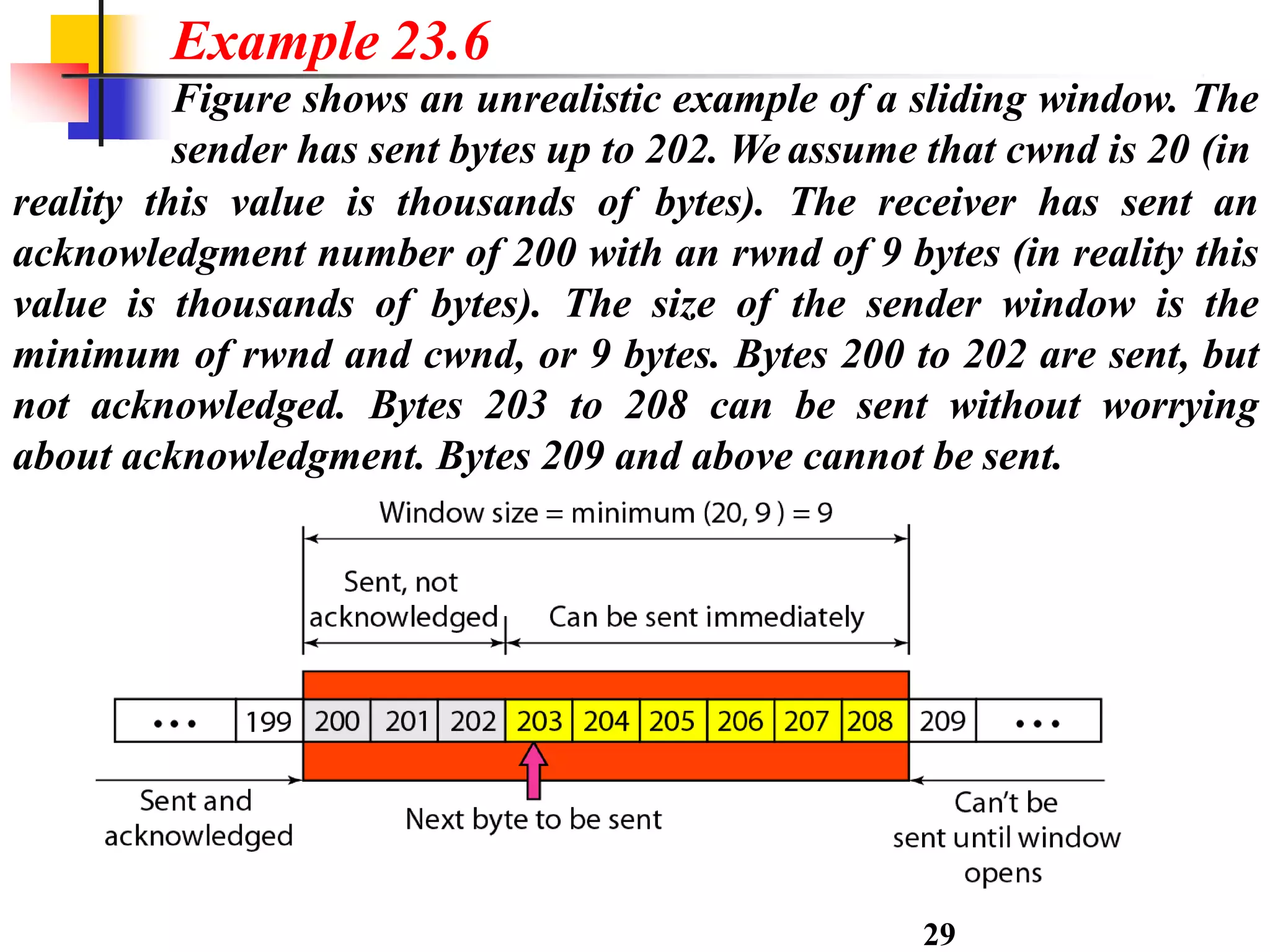
Example 23.6
Figure shows an unrealistic example of a sliding window. The
sender has sent bytes up to 202. We assume that cwnd is 20 (in
reality this value is thousands of bytes). The receiver has sent an
acknowledgment number of 200 with an rwnd of 9 bytes (in reality this
value is thousands of bytes). The size of the sender window is the
minimum of rwnd and cwnd, or 9 bytes. Bytes 200 to 202 are sent, but
not acknowledged. Bytes 203 to 208 can be sent without worrying
about acknowledgment. Bytes 209 and above cannot be sent.
29
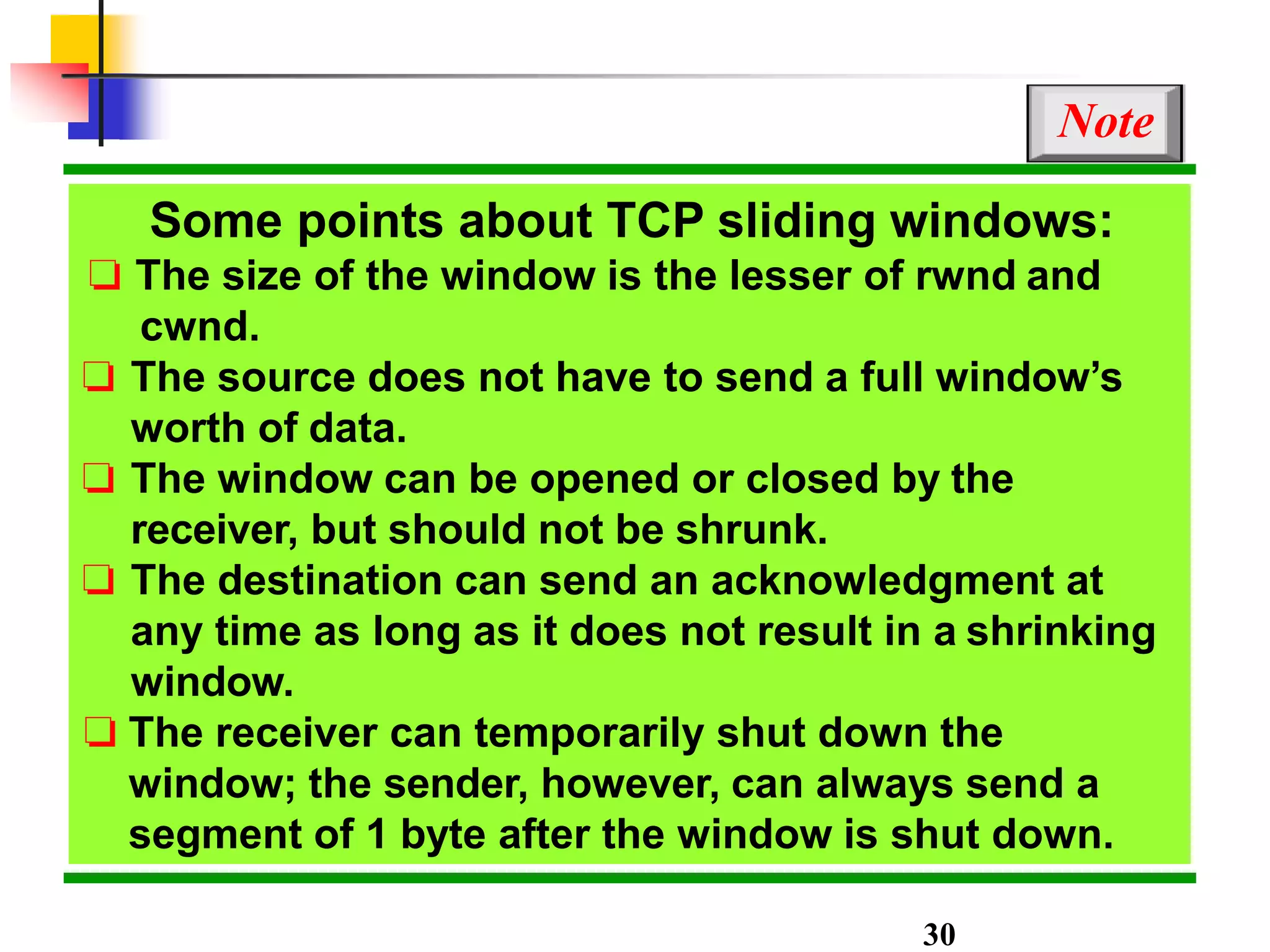
Some points about TCP sliding windows:
❏ The size of the window is the lesser of rwnd and
cwnd.
❏ The source does not have to send a full window’s
worth of data.
❏ The window can be opened or closed by the
receiver, but should not be shrunk.
❏ The destination can send an acknowledgment at
any time as long as it does not result in a shrinking
window.
❏ The receiver can temporarily shut down the
window; the sender, however, can always send a
segment of 1 byte after the window is shut down.
Note
30
Note
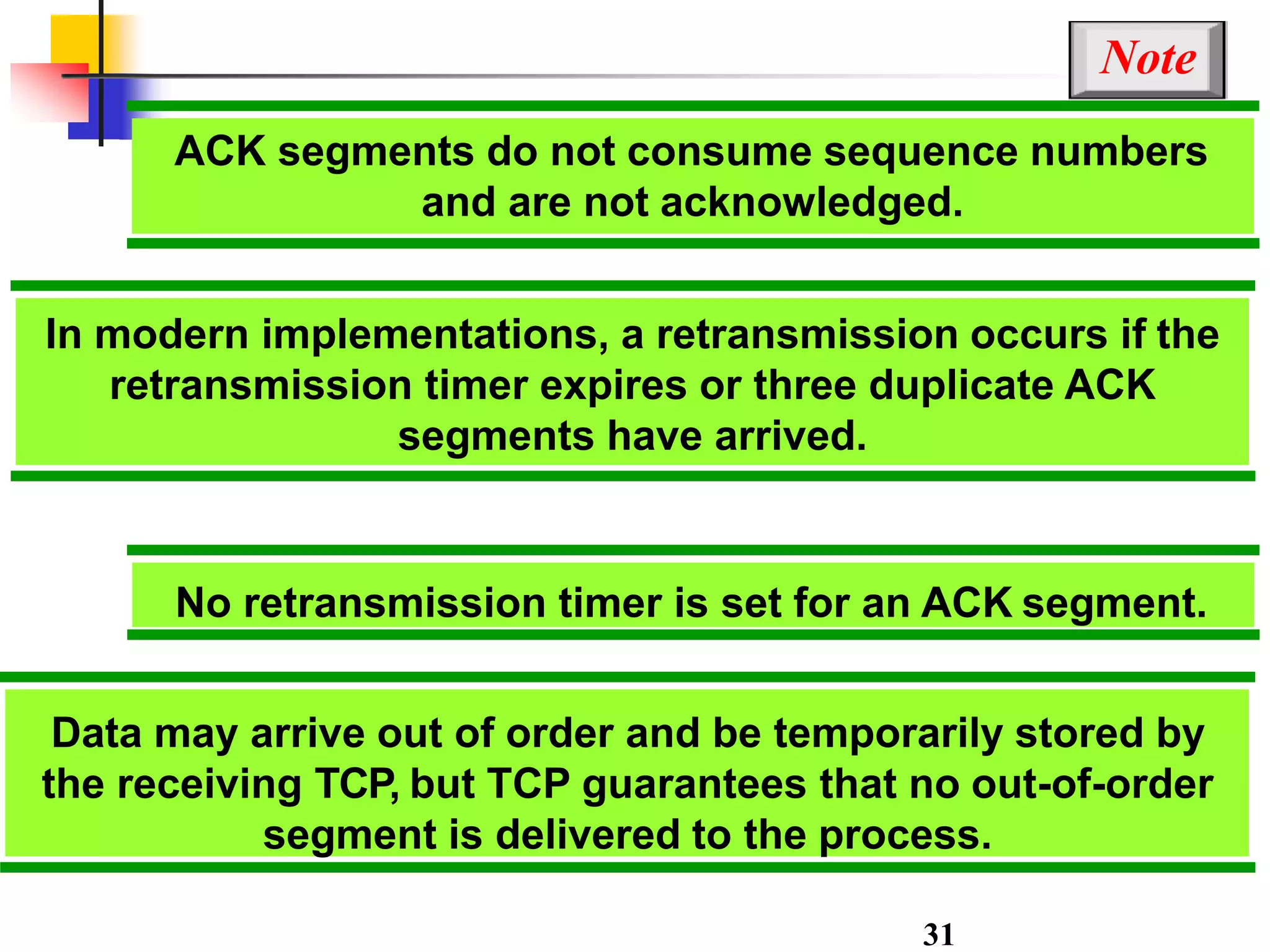
ACK segments do not consume sequence numbers
and are not acknowledged.
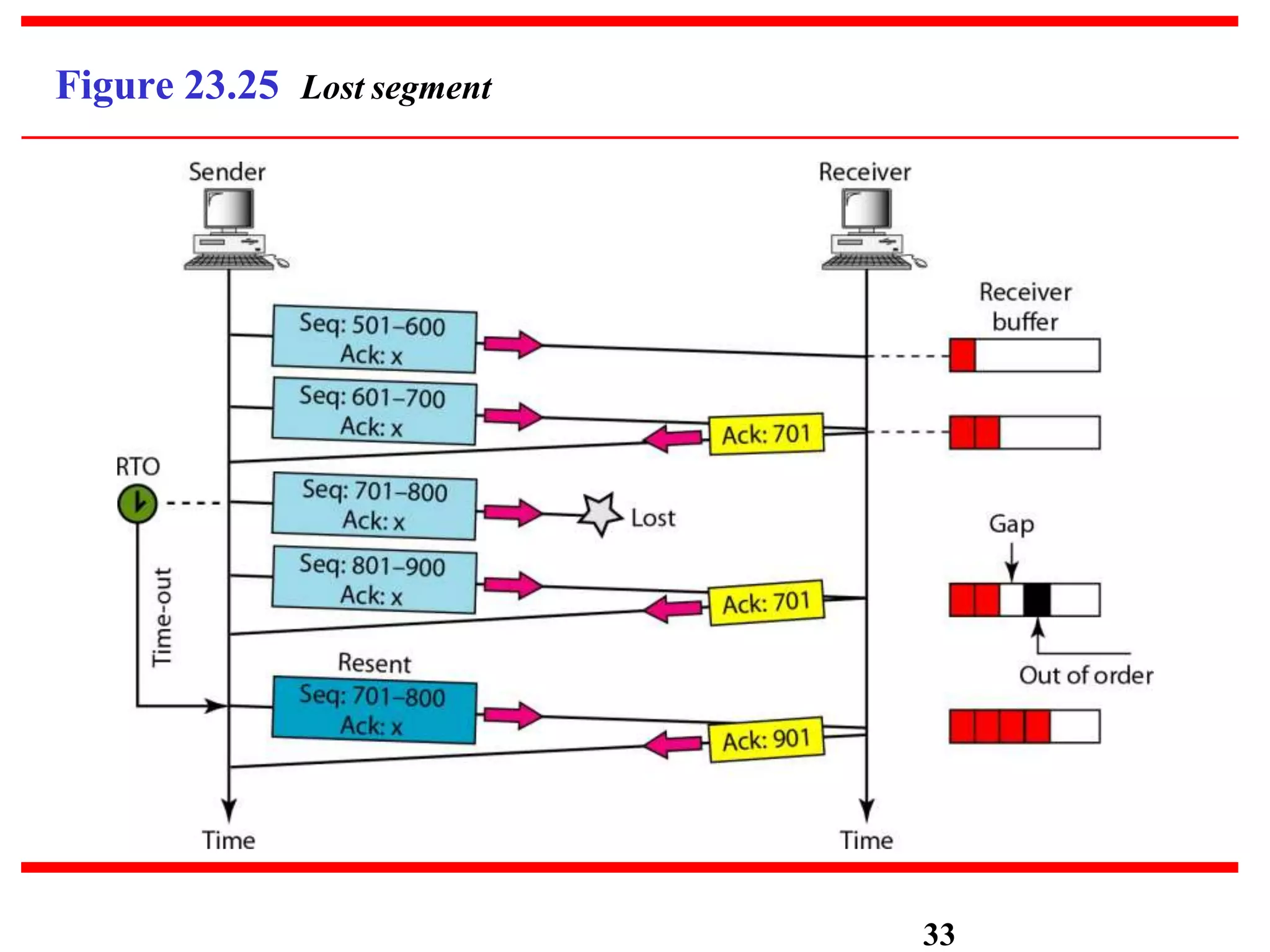
In modern implementations, a retransmission occurs if the
retransmission timer expires or three duplicate ACK
segments have arrived.
No retransmission timer is set for an ACK segment.
Data may arrive out of order and be temporarily stored by
the receiving TCP, but TCP guarantees that no out-of-order
segment is delivered to the process.
31
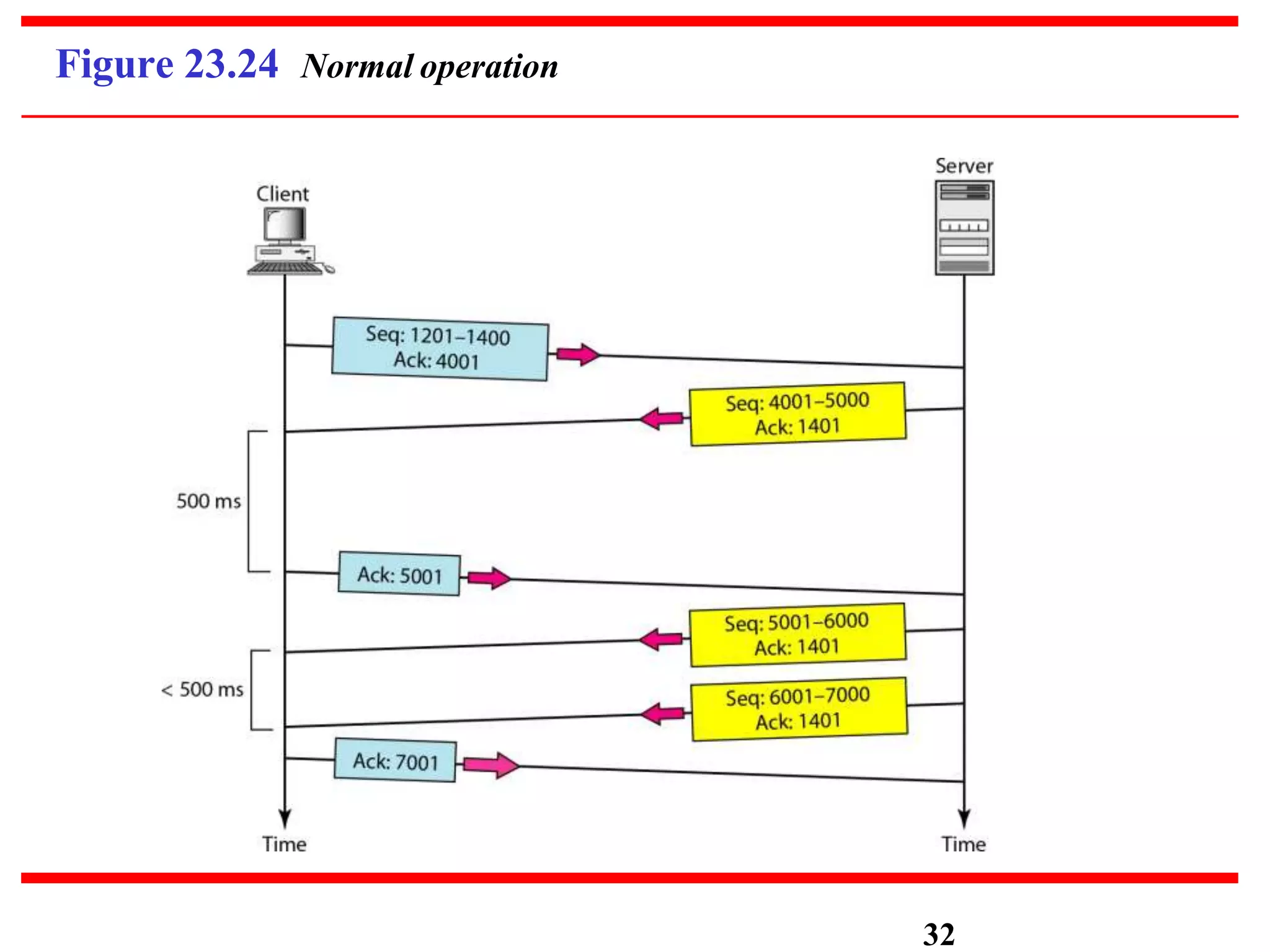
Figure 23.24 Normal operation
32
Figure 23.25 Lost segment
33
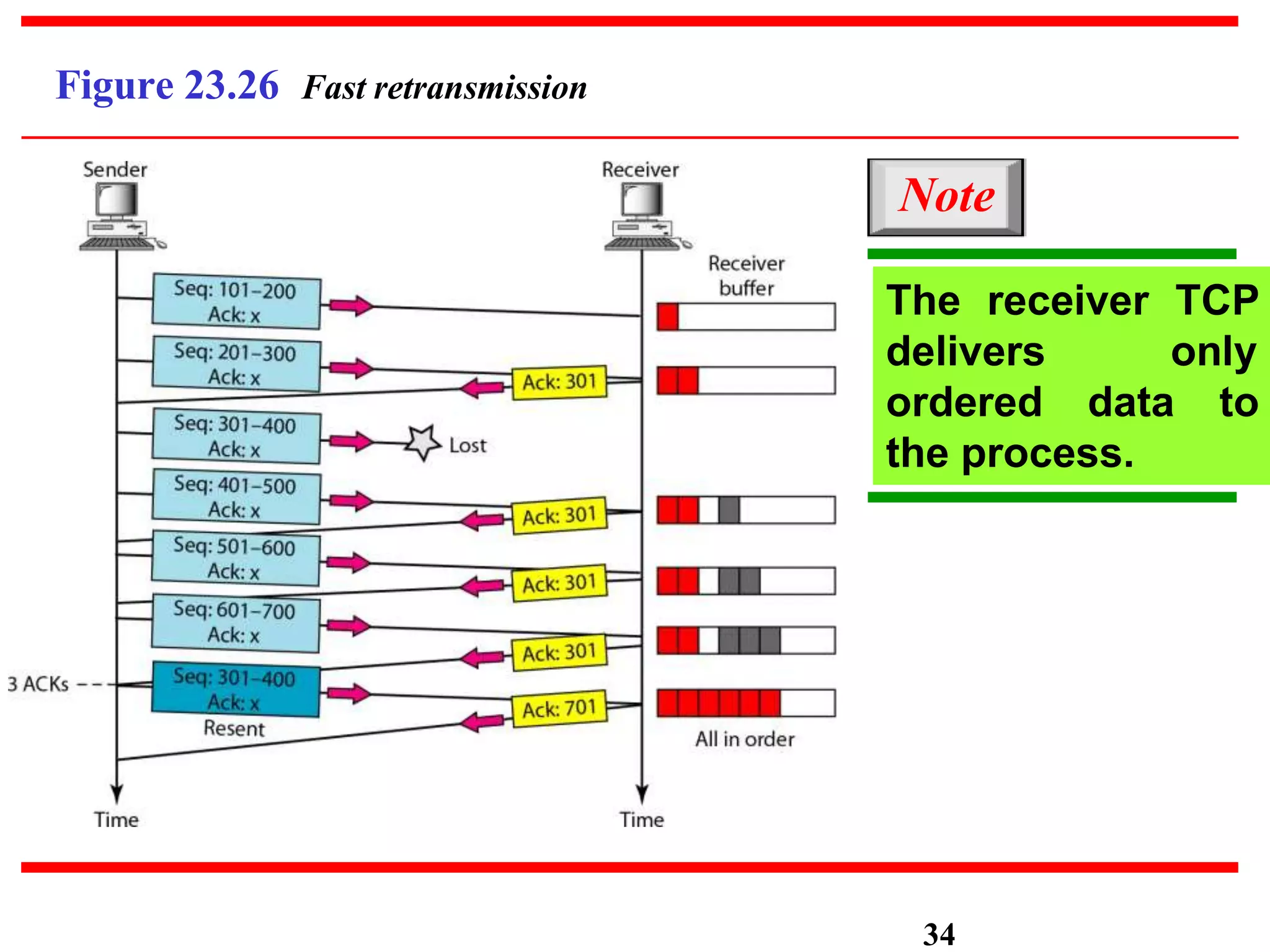
Figure 23.26 Fast retransmission
Note
The receiver TCP
delivers only
ordered data to
the process.
34
23-4 SCTP
Stream Control Transmission Protocol (SCTP) is a
new reliable, message-oriented transport layer
however, is
protocol. SCTP
,
Internet applications that
mostly
have
designed for
recently been
introduced. These new applications need a more
sophisticated service than TCP can provide.
Topics discussed in this section:
SCTP Services and Features
Packet Format
An SCTPAssociation
Flow Control and Error Control
35
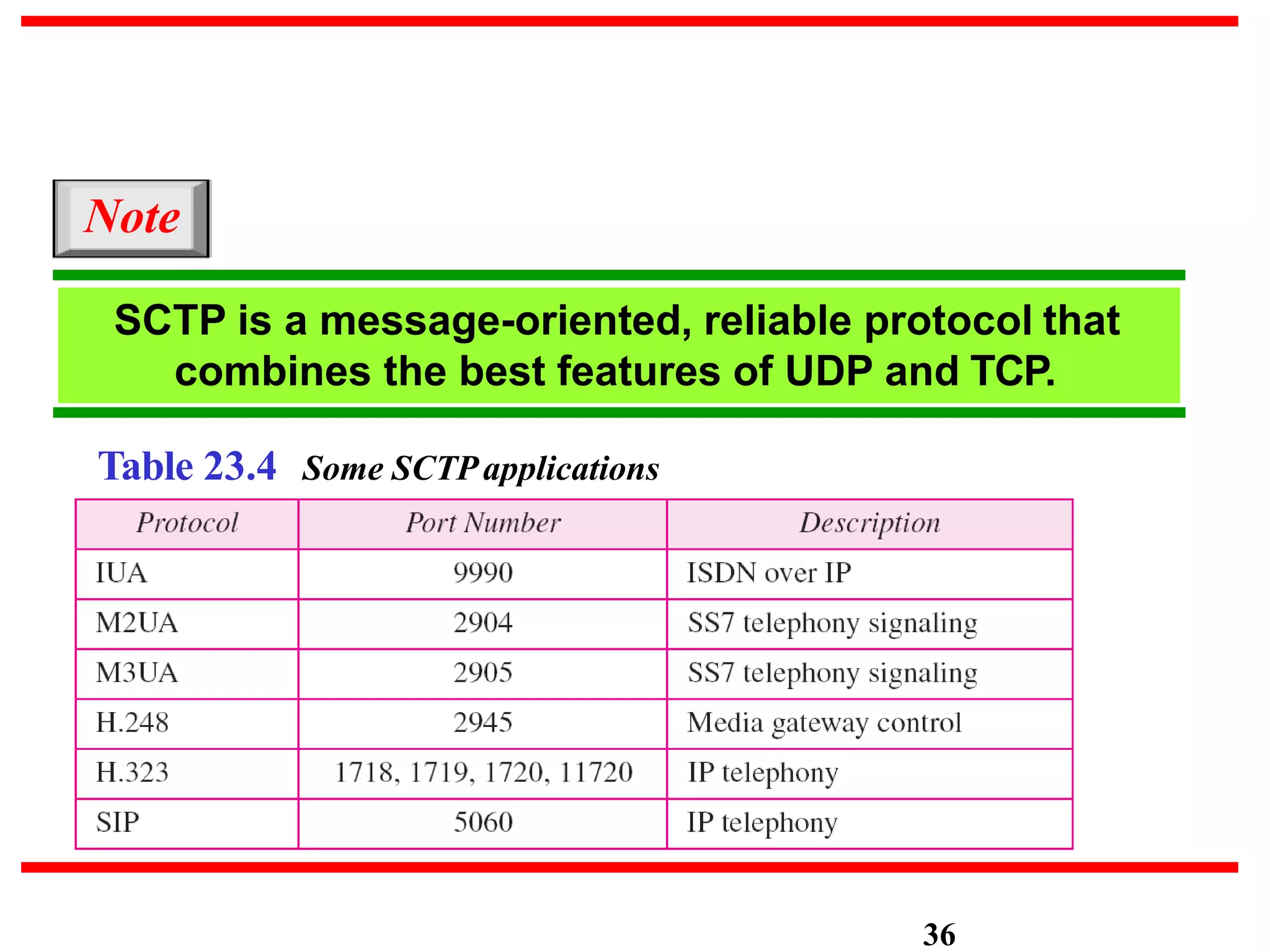
Table 23.4 Some SCTPapplications
SCTP is a message-oriented, reliable protocol that
combines the best features of UDP and TCP.
Note
36
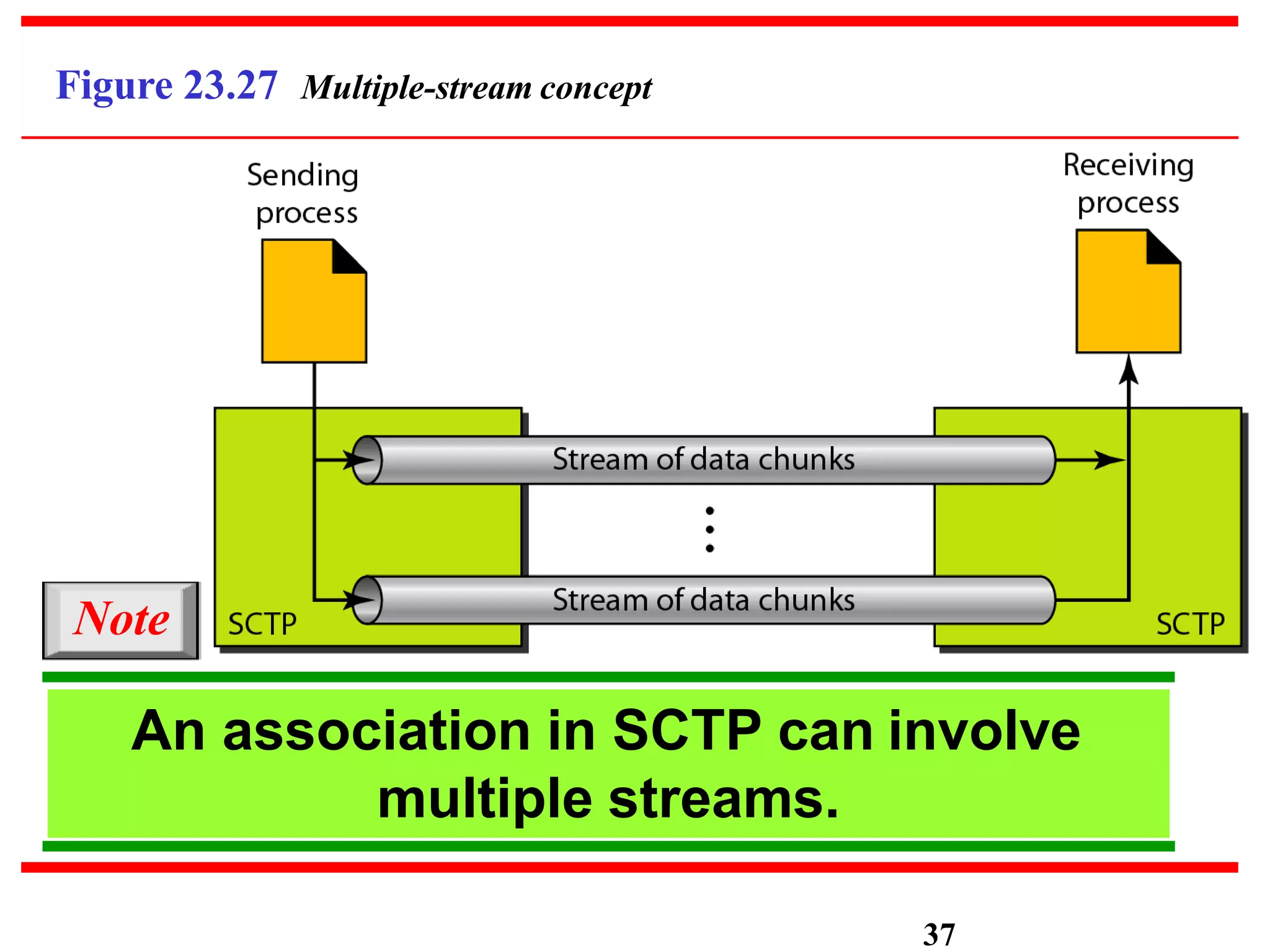
Figure 23.27 Multiple-stream concept
An association in SCTP can involve
multiple streams.
Note
37
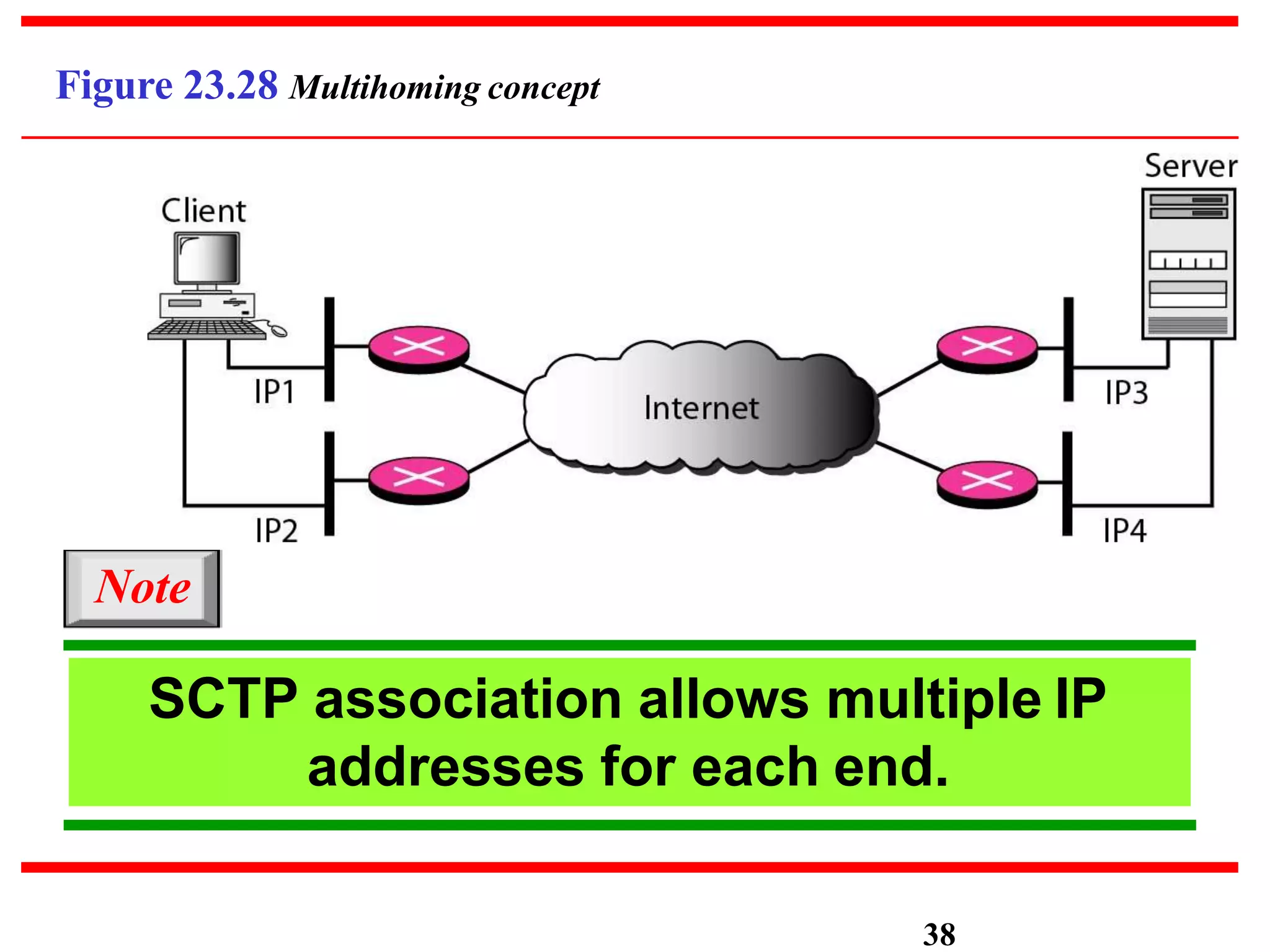
Figure 23.28 Multihoming concept
SCTP association allows multiple IP
addresses for each end.
Note
38
In SCTP, a data chunk is numbered using a TSN.
Note
To distinguish between different streams, SCTP uses an SI.
To distinguish between different data chunks belonging to
the same stream, SCTP uses SSNs.
TCP has segments; SCTP has packets.
39
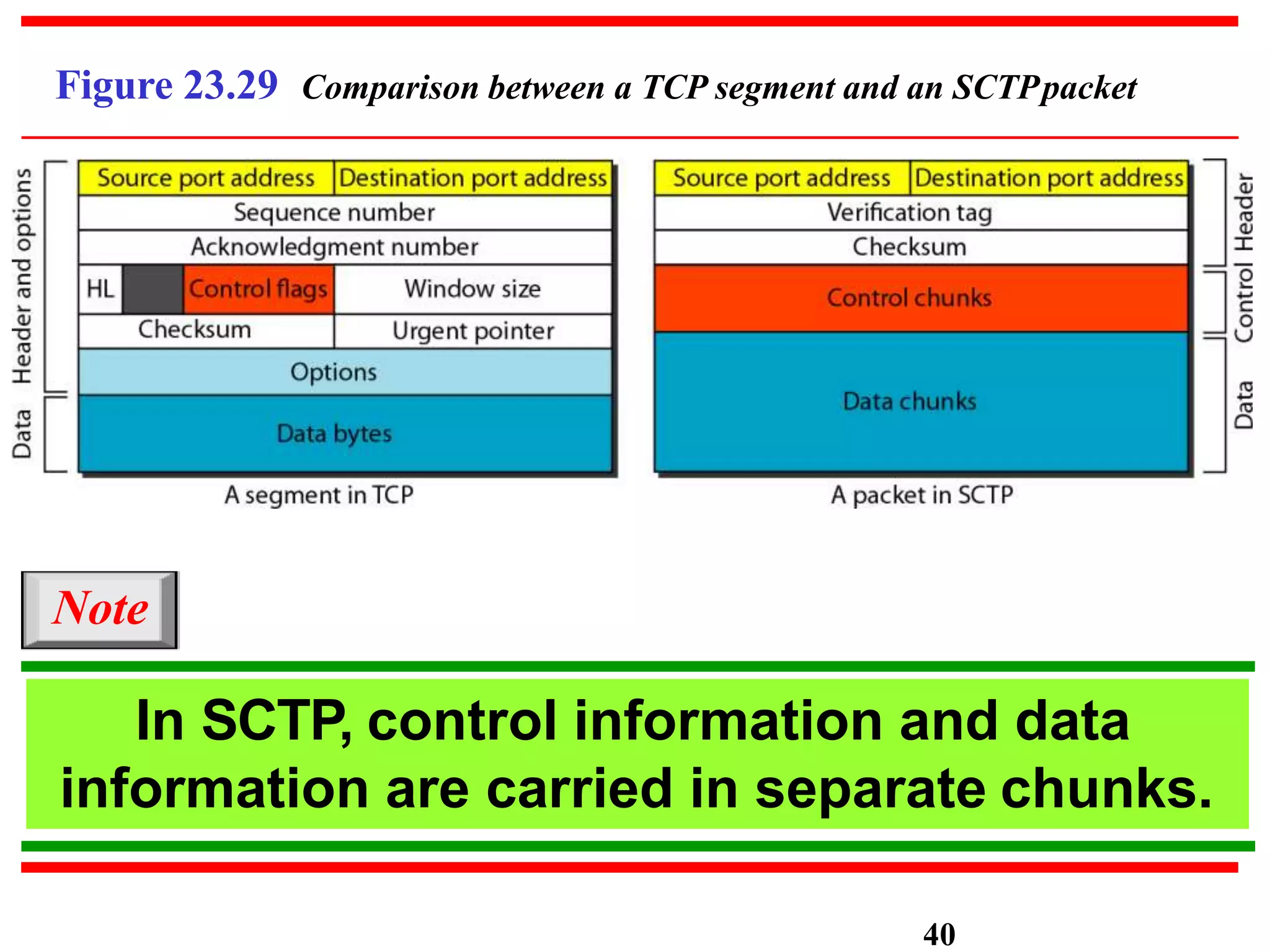
Figure 23.29 Comparison between a TCP segment and an SCTPpacket
Note
In SCTP, control information and data
information are carried in separate chunks.
40
Figure 23.30 Packet, data chunks, and streams
Note
Data chunks are identified by three items: TSN, SI, and SSN.
TSN is a cumulative number identifying the association; SI
defines the stream; SSN defines the chunk in a stream.
41
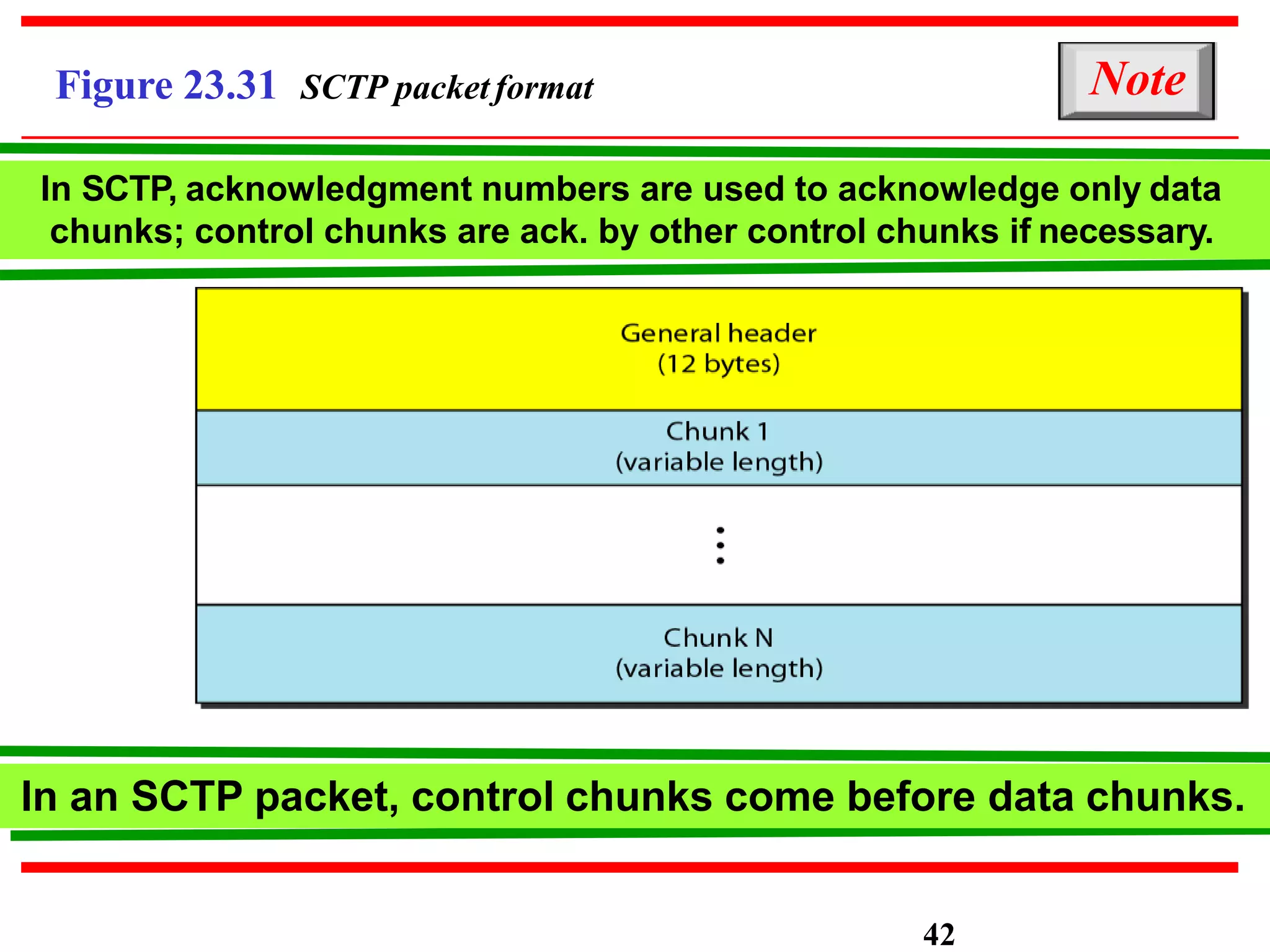
Figure 23.31 SCTP packetformat
In SCTP, acknowledgment numbers are used to acknowledge only data
chunks; control chunks are ack. by other control chunks if necessary.
Note
In an SCTP packet, control chunks come before data chunks.
42
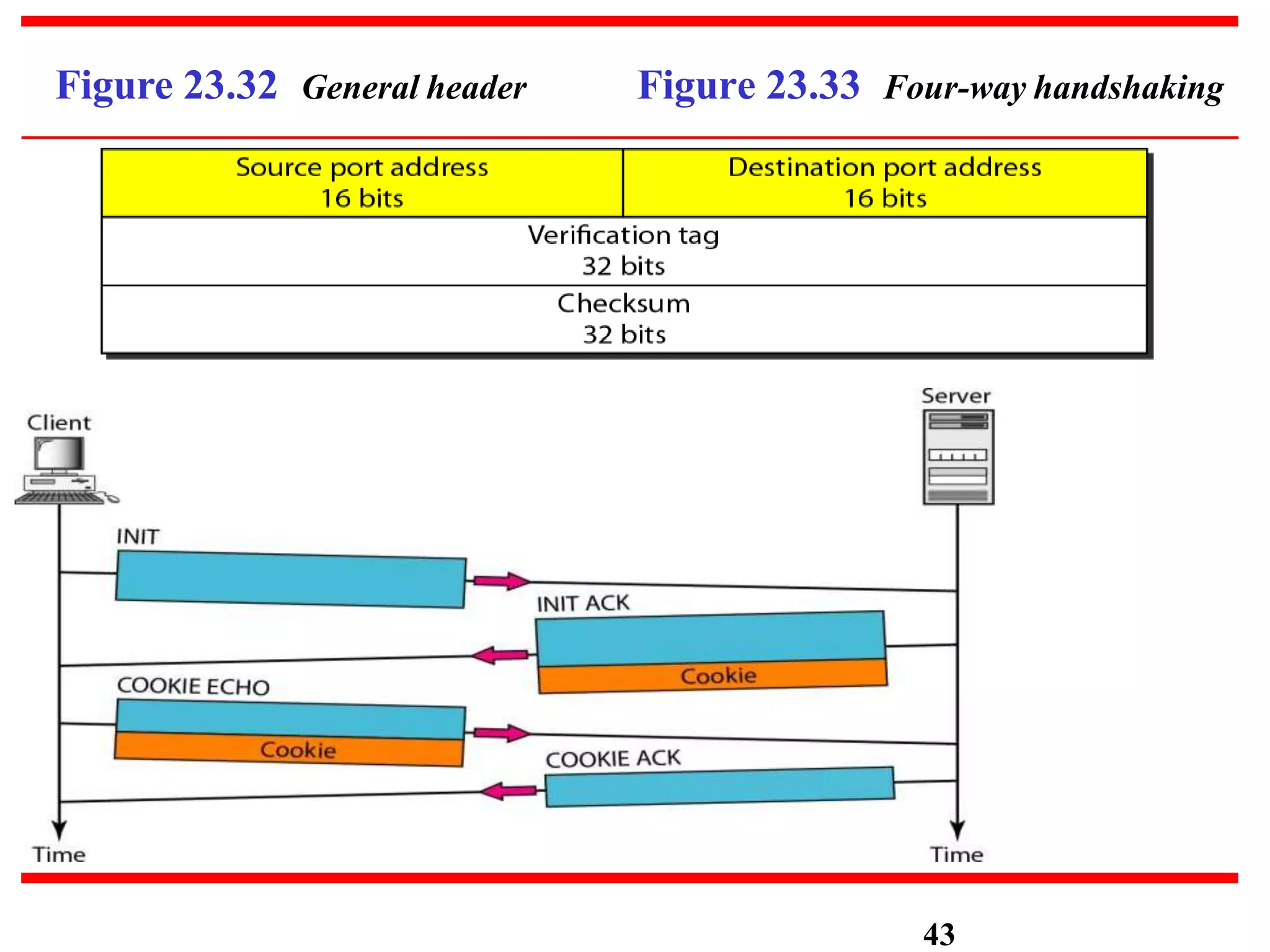
Figure 23.32 General header Figure 23.33 Four-way handshaking
43
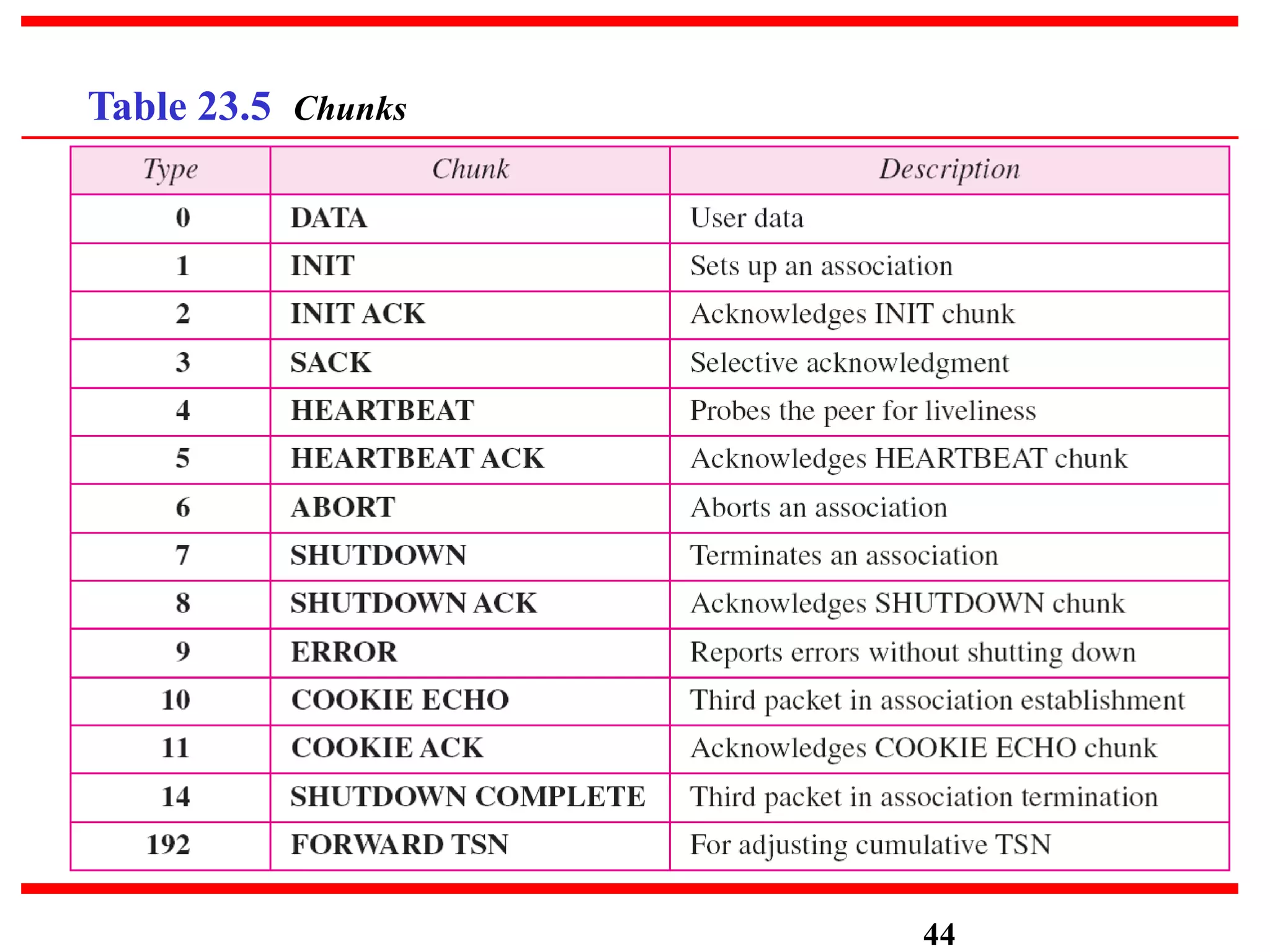
Table 23.5 Chunks
44
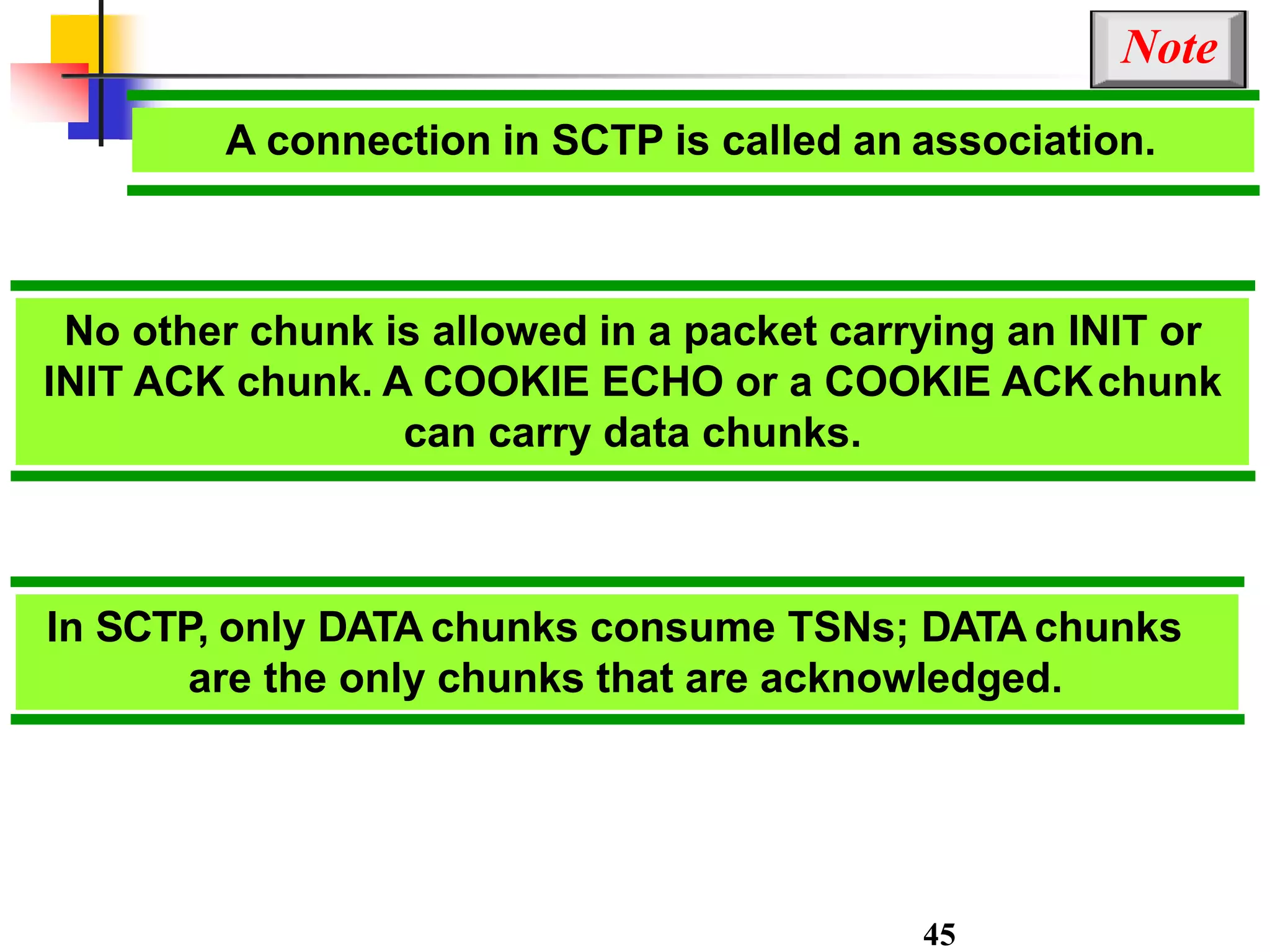
A connection in SCTP is called an association.
Note
No other chunk is allowed in a packet carrying an INIT or
INIT ACK chunk. A COOKIE ECHO or a COOKIE ACKchunk
can carry data chunks.
In SCTP, only DATA chunks consume TSNs; DATA chunks
are the only chunks that are acknowledged.
45
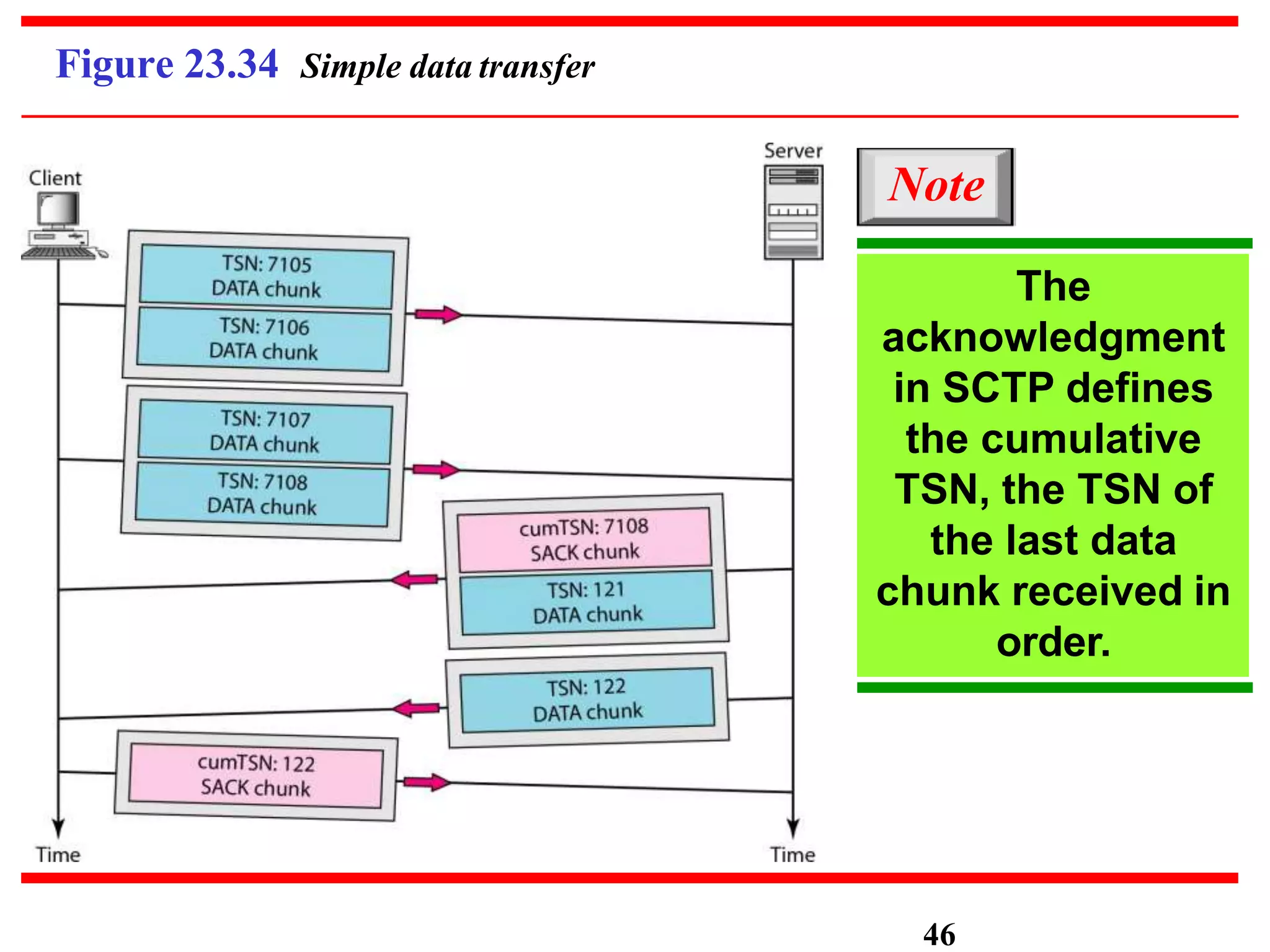
Figure 23.34 Simple data transfer
The
acknowledgment
in SCTP defines
the cumulative
TSN, the TSN of
the last data
chunk received in
order.
Note
46
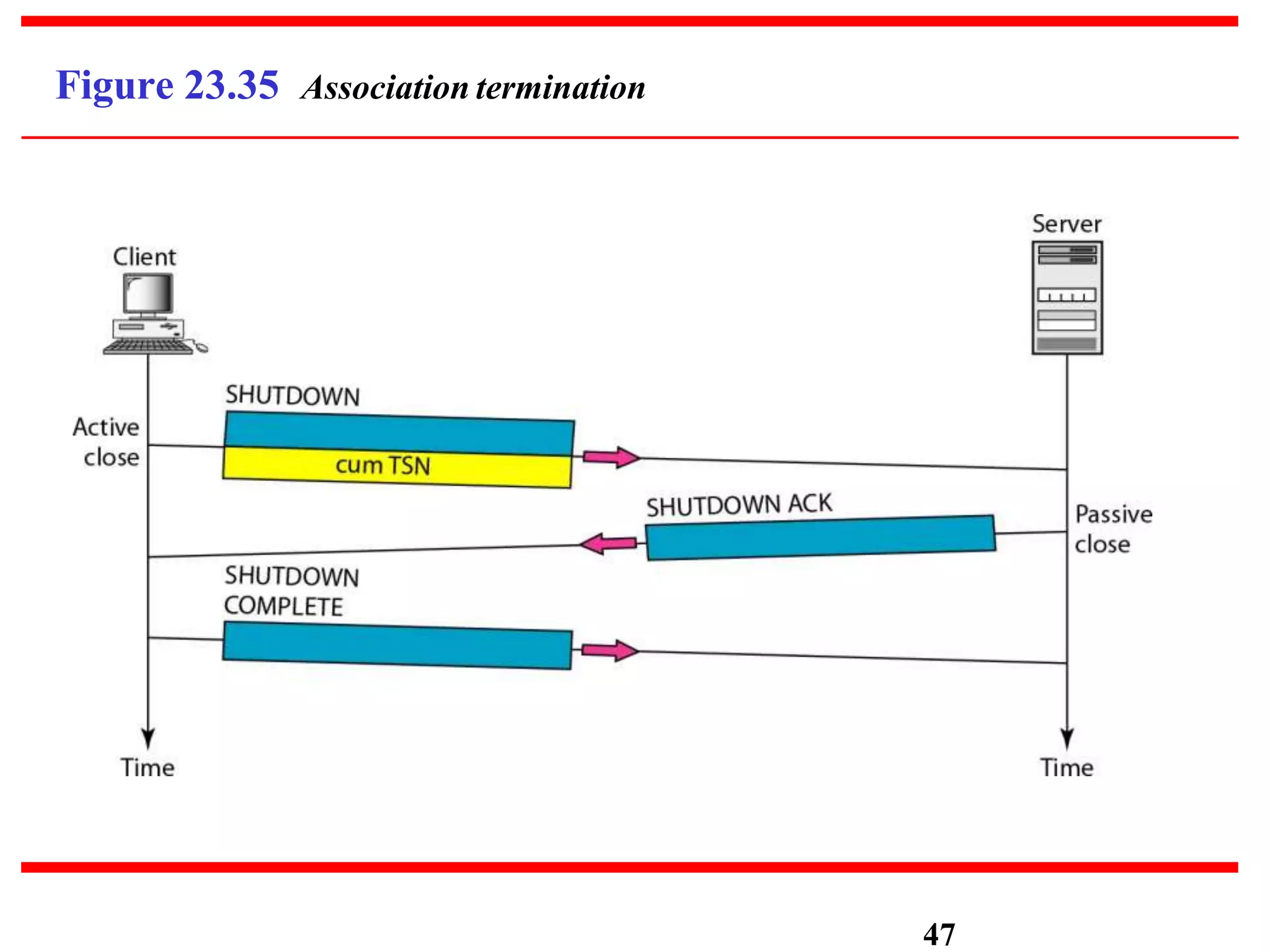
Figure 23.35 Association termination
47
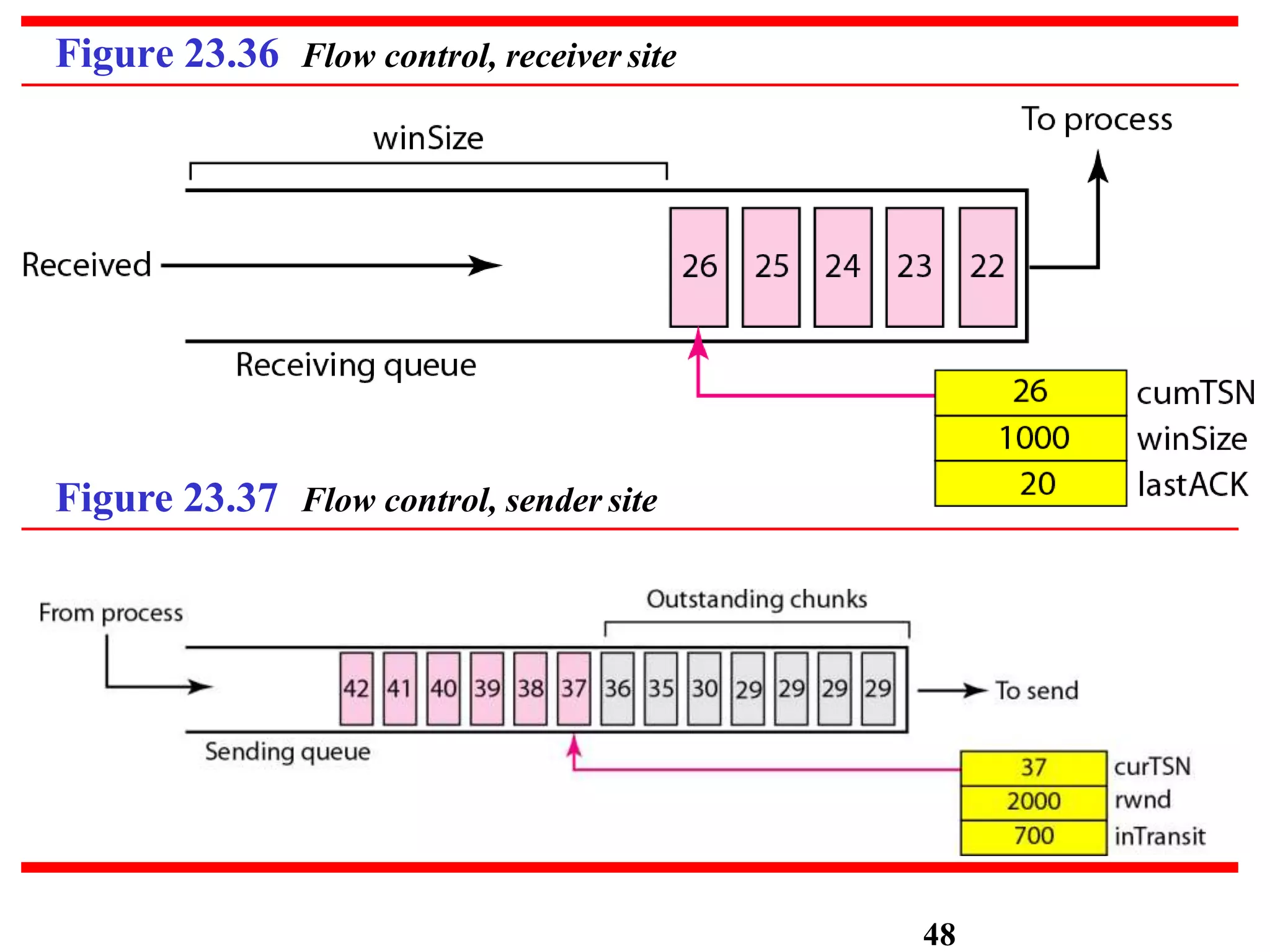
Figure 23.36 Flow control, receiver site
Figure 23.37 Flow control, sender site
48
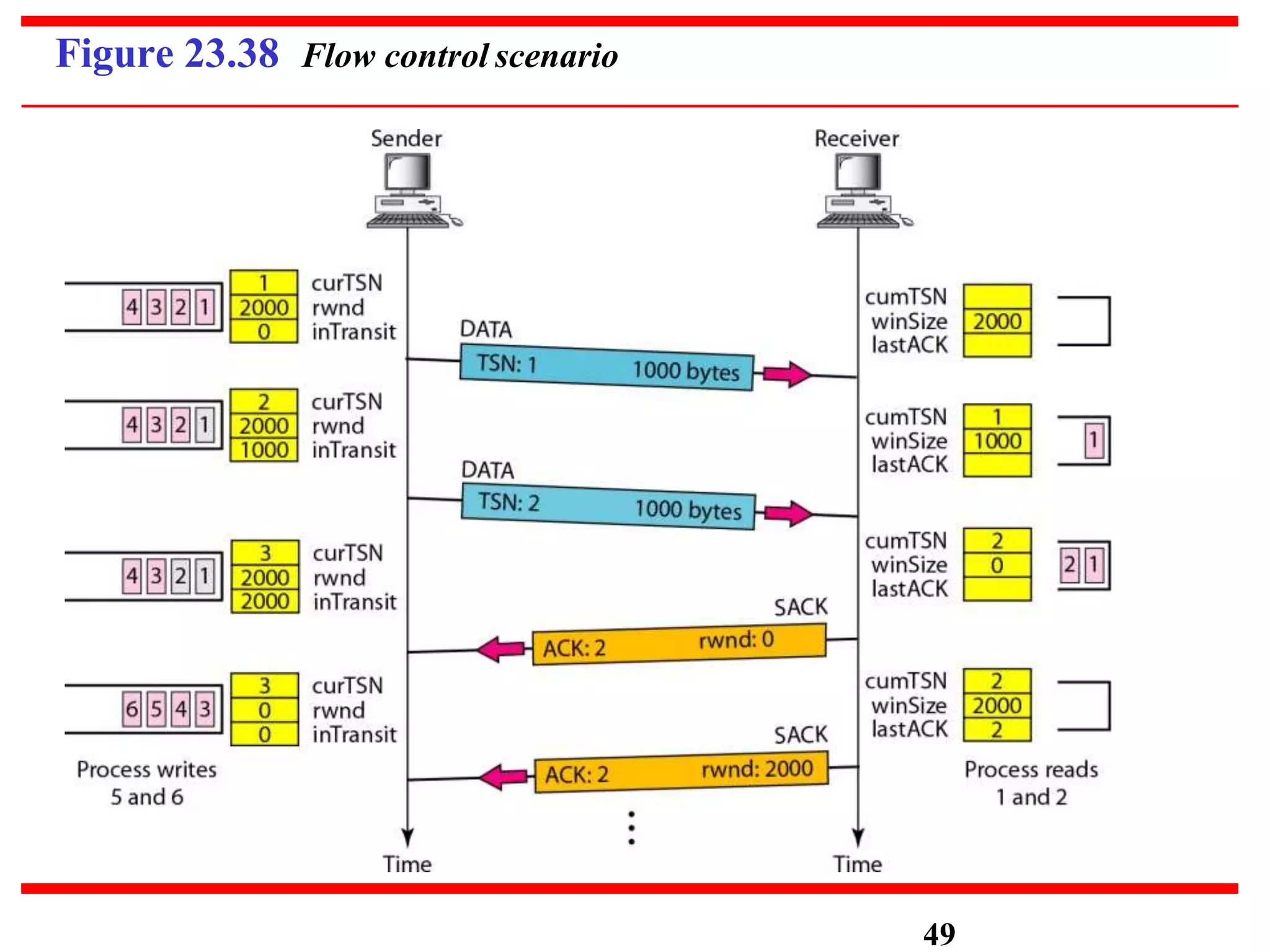
Figure 23.38 Flow control scenario
49
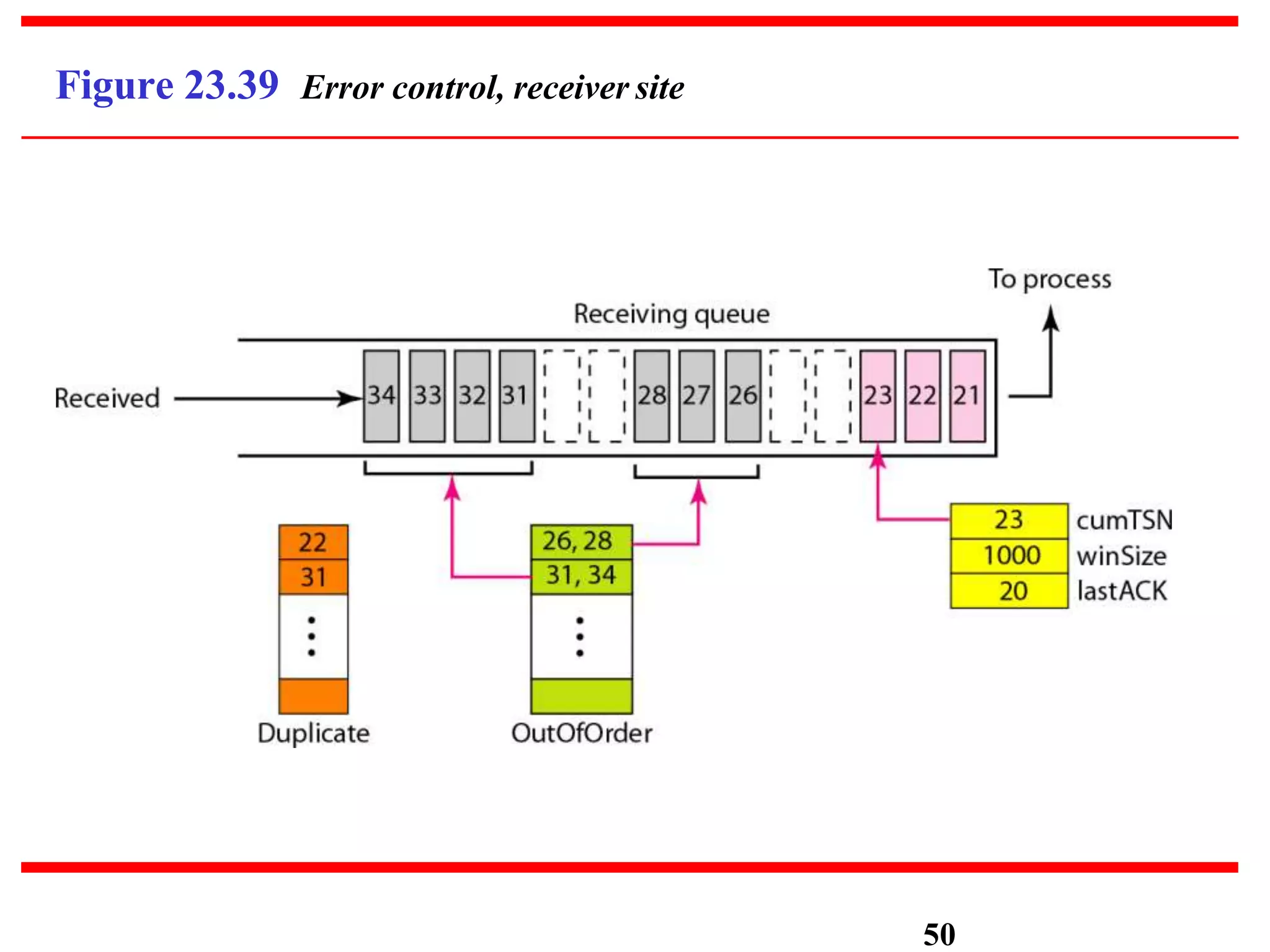
Figure 23.39 Error control, receiver site
50
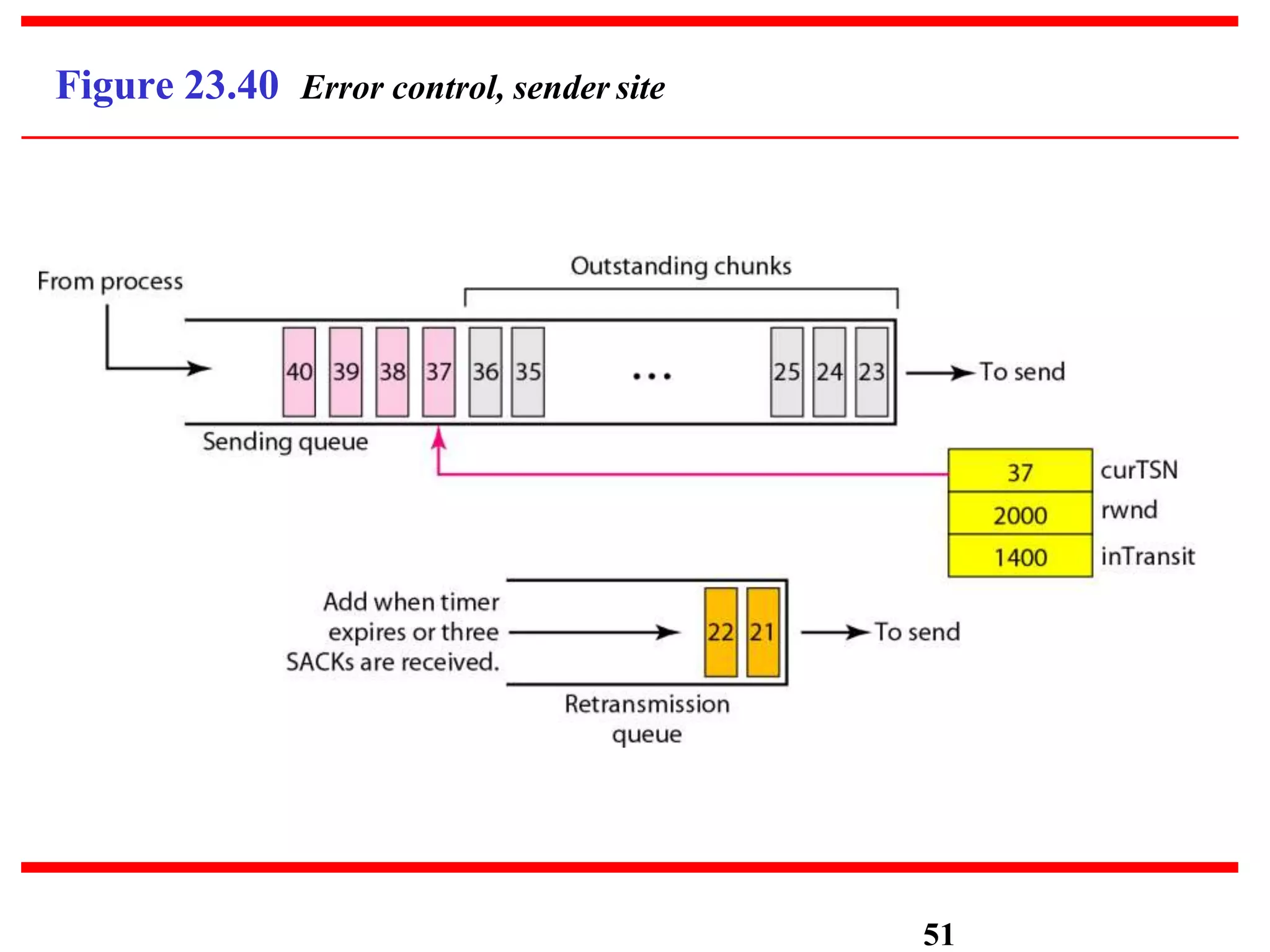
Figure 23.40 Error control, sender site
51

UNIT IV-Transport Layer.pptx

  • 1.
  • 2.
    Unit - IV TRANSPORTLAYER Introduction – Transport Layer Protocols – Services – Port Numbers Protocol – Protocol – – User Datagram Transmission Control SCTP. Behrouz A. Forouzan, Data Communications and Networking, Fifth Edition TMH, 2013
  • 3.
    23-1 PROCESS-TO-PROCESS DELIVERY Thetransport layer is responsible for process-to- process delivery—the delivery of a packet, part of a message, from one process to another. Two processes communicate in a client/server relationship, as we will see later. Topics discussed in this section: Client/Server Paradigm Multiplexing and Demultiplexing Connectionless Versus Connection-Oriented Service Reliable Versus Unreliable Three Protocols 3
  • 4.
    The transport layeris responsible for process-to-process delivery. Note Figure 23.1 Types of data deliveries 4
  • 5.
    Figure 23.2 Portnumbers Figure 23.4 IANAranges 5
  • 6.
    Figure 23.3 IPaddresses versus portnumbers Figure 23.6 Multiplexing and demultiplexing Figure 23.5 Socket address 6
  • 7.
  • 8.
    Figure 23.8 Positionof UDP, TCP, and SCTP in TCP/IP suite 8
  • 9.
    23-2 USER DATAGRAMPROTOCOL(UDP) The User Datagram Protocol (UDP) is called a connectionless, unreliable transport protocol. It does not add anything to the services of IP except to provide process-to-process communication instead of host-to- host communication. Topics discussed in this section: Well-Known Ports for UDP User Datagram Checksum UDPOperation Use of UDP 9
  • 10.
    Table 23.1 Well-knownports used with UDP 10
  • 11.
    In UNIX, thewell-known ports are stored in a file called /etc/services. Each line in this file gives the name of the server and the well-known port number. We can use the grep utility to extract the line corresponding to the desired application. The following shows the port for FTP. Note that FTP can use port 21 with either UDP or TCP. Example 23.1 SNMP uses two port numbers 161&162, each for a different purpose. 11
  • 12.
    Figure 23.9 Userdatagram format UDP length = IP length – IP header’s length Note 12
  • 13.
    Figure 23.10 Pseudoheaderfor checksum calculation 13
  • 14.
    Figure shows thechecksum calculation for a very small user datagram with only 7 bytes of data. Because the number of bytes of data is odd, padding is added for checksum calculation. The pseudoheader as well as the padding will be dropped when the user datagram is delivered to IP. Example 23.2 Figure Checksum calculation of a simple UDP userdatagram 14
  • 15.
  • 16.
    23-3 TCP TCP isa connection-oriented protocol; it creates a virtual connection between two TCPs to send data. In addition, TCP uses flow and error control mechanisms at the transport level. Topics discussed in this section: TCP Services TCP Features Segment A TCPConnection Flow Control Error Control 16
  • 17.
    Table 23.2 Well-knownports used by TCP 17
  • 18.
    Figure 23.13 Streamdelivery The bytes of data being transferred in each connection are numbered by TCP . The numbering starts with a randomly generated number. Note 18
  • 19.
    Figure 23.14 Sendingand receiving buffers 19
  • 20.
    Figure 23.15 TCPsegments 20
  • 21.
    The following showsthe sequence number for each segment: Example 23.3 The value in the sequence number field of a segment defines the number of the first data byte contained in that segment. Note 21
  • 22.
    Figure 23.16 TCPsegment format Note The value of the acknowledgment field in a segment defines the number of the next byte a party expects to receive.The acknowledgment no. is cumulative. 22
  • 23.
  • 24.
    Figure 23.18 Connectionestablishment using three-way handshaking Note A SYN segment cannot carry data, but it consumes one seq. no. A SYN+ACK segment cannot carry data, but does consume one seq. no. An ACK segment, if carrying no data, consumes no seq. no. 24
  • 25.
    Figure 23.19 Datatransfer Note The FIN segment consumes one sequence number if it does not carry data. The FIN + ACK segment consumes one sequence number if it does not carry data. 25
  • 26.
    Figure 23.20 Connectiontermination using three-way handshaking 26
  • 27.
    Figure 23.21 Half-closeFigure 23.22 Sliding window 27 Note A sliding window is used to make transmission more efficient as well as to control the flow of data so that the destination does not become overwhelmed with data. TCP sliding windows are byte- oriented.
  • 28.
    What is thevalue of the receiver window (rwnd) for host A if the receiver, host B, has a buffer size of 5000 bytes and 1000 bytes of received and unprocessed data? Solution The value of rwnd = 5000 − 1000 = 4000. Host B can receive only 4000 bytes of data before overflowing its buffer. Host B advertises this value in its next segment toA. 28 Example 23.4 Example 23.5 : What is the size of the window for host A if the value of rwnd is 3000 bytes and the value of cwnd is 3500 bytes? Solution The size of the window is the smaller of rwnd and cwnd, which is 3000 bytes.
  • 29.
    Example 23.6 Figure showsan unrealistic example of a sliding window. The sender has sent bytes up to 202. We assume that cwnd is 20 (in reality this value is thousands of bytes). The receiver has sent an acknowledgment number of 200 with an rwnd of 9 bytes (in reality this value is thousands of bytes). The size of the sender window is the minimum of rwnd and cwnd, or 9 bytes. Bytes 200 to 202 are sent, but not acknowledged. Bytes 203 to 208 can be sent without worrying about acknowledgment. Bytes 209 and above cannot be sent. 29
  • 30.
    Some points aboutTCP sliding windows: ❏ The size of the window is the lesser of rwnd and cwnd. ❏ The source does not have to send a full window’s worth of data. ❏ The window can be opened or closed by the receiver, but should not be shrunk. ❏ The destination can send an acknowledgment at any time as long as it does not result in a shrinking window. ❏ The receiver can temporarily shut down the window; the sender, however, can always send a segment of 1 byte after the window is shut down. Note 30
  • 31.
    Note ACK segments donot consume sequence numbers and are not acknowledged. In modern implementations, a retransmission occurs if the retransmission timer expires or three duplicate ACK segments have arrived. No retransmission timer is set for an ACK segment. Data may arrive out of order and be temporarily stored by the receiving TCP, but TCP guarantees that no out-of-order segment is delivered to the process. 31
  • 32.
    Figure 23.24 Normaloperation 32
  • 33.
  • 34.
    Figure 23.26 Fastretransmission Note The receiver TCP delivers only ordered data to the process. 34
  • 35.
    23-4 SCTP Stream ControlTransmission Protocol (SCTP) is a new reliable, message-oriented transport layer however, is protocol. SCTP , Internet applications that mostly have designed for recently been introduced. These new applications need a more sophisticated service than TCP can provide. Topics discussed in this section: SCTP Services and Features Packet Format An SCTPAssociation Flow Control and Error Control 35
  • 36.
    Table 23.4 SomeSCTPapplications SCTP is a message-oriented, reliable protocol that combines the best features of UDP and TCP. Note 36
  • 37.
    Figure 23.27 Multiple-streamconcept An association in SCTP can involve multiple streams. Note 37
  • 38.
    Figure 23.28 Multihomingconcept SCTP association allows multiple IP addresses for each end. Note 38
  • 39.
    In SCTP, adata chunk is numbered using a TSN. Note To distinguish between different streams, SCTP uses an SI. To distinguish between different data chunks belonging to the same stream, SCTP uses SSNs. TCP has segments; SCTP has packets. 39
  • 40.
    Figure 23.29 Comparisonbetween a TCP segment and an SCTPpacket Note In SCTP, control information and data information are carried in separate chunks. 40
  • 41.
    Figure 23.30 Packet,data chunks, and streams Note Data chunks are identified by three items: TSN, SI, and SSN. TSN is a cumulative number identifying the association; SI defines the stream; SSN defines the chunk in a stream. 41
  • 42.
    Figure 23.31 SCTPpacketformat In SCTP, acknowledgment numbers are used to acknowledge only data chunks; control chunks are ack. by other control chunks if necessary. Note In an SCTP packet, control chunks come before data chunks. 42
  • 43.
    Figure 23.32 Generalheader Figure 23.33 Four-way handshaking 43
  • 44.
  • 45.
    A connection inSCTP is called an association. Note No other chunk is allowed in a packet carrying an INIT or INIT ACK chunk. A COOKIE ECHO or a COOKIE ACKchunk can carry data chunks. In SCTP, only DATA chunks consume TSNs; DATA chunks are the only chunks that are acknowledged. 45
  • 46.
    Figure 23.34 Simpledata transfer The acknowledgment in SCTP defines the cumulative TSN, the TSN of the last data chunk received in order. Note 46
  • 47.
  • 48.
    Figure 23.36 Flowcontrol, receiver site Figure 23.37 Flow control, sender site 48
  • 49.
    Figure 23.38 Flowcontrol scenario 49
  • 50.
    Figure 23.39 Errorcontrol, receiver site 50
  • 51.
    Figure 23.40 Errorcontrol, sender site 51