CS8591 COMPUTERNETWORKS
Unit I : Introduction and
Physical Layer
Course Instructor
Dr.S.Lavanya, ASP
Department of Computer Science Engineering
CS8591 COMPUTER NETWORKS - Syllabus
Outcomes of the lesson
1. will be able to have clear understanding of managerial functions
3
Unit I Introduction to Management and
Organizations
Definition of Management – Science or Art – Manager Vs
Entrepreneur – types of managers -managerial roles and skills –
Evolution of Management – Scientific, human relations, system and
contingency approaches – Types of Business organization – Sole
proprietorship, partnership, company-public and private sector
enterprises – Organization culture and Environment – Current
trends and issues in Management.
Definition of Management
• Management is a process of planning, decision
making, organizing, leading, motivation and controlling
the human resources, financial, physical, and
information resources of an organization to reach its
goals efficiently and effectively.
• Management involves coordinating and overseeing the
work activities of others so that their activities are
completed efficiently and effectively.
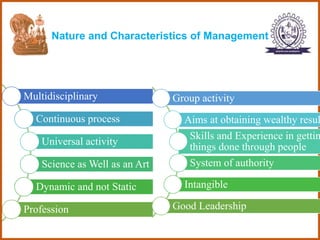
Nature and Characteristics of Management
Multidisciplinary
Continuous process
Universal activity
Science as Well as an Art
Dynamic and not Static
Profession
Group activity
Aims at obtaining wealthy resul
Skills and Experience in gettin
things done through people
System of authority
Intangible
Good Leadership
Functional areas of Management
•Financial Management
•Human Resource Management
•Marketing Management
•Production Management
•Material Management
•Purchasing Management
•Maintenance Management
•Office Management
Objective of Management
•Getting maximum results with minimum efforts.
•Increasing the efficiency of factors of production
•Maximum prosperity for employer and employees
•Human betterment & Social Justice
•Reduces Cost
•Establishes Equilibrium
•Establishes Sound Organization
What Is Management?
•Managerial Concerns
•Efficiency
•“Doing things right”
•Getting the most output for the least inputs
•Effectiveness
•“Doing the right things”
•Attaining organizational goals
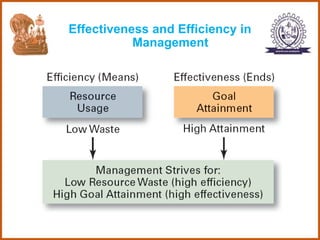
Effectiveness and Efficiency in
Management
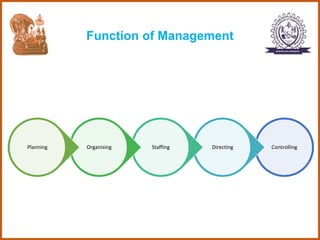
Function of Management
• According to George & Jerry
• Planning, Organizing, Actuating, & Controlling
• According to Henry Fayol
• Plan, Organize, Command & Control
• Luther Gullick (POSDCORB)
• Planning, Organizing, Staffing, Direction, Coordinating , Reporting, &
Budgeting
• Koontz & O’DONNEL
• Planning, Organizing, Staffing, Directing, & Controlling
Function of Management
Controlling
Directing
Staffing
Organising
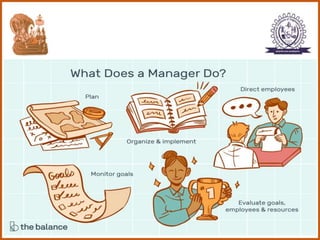
Planning
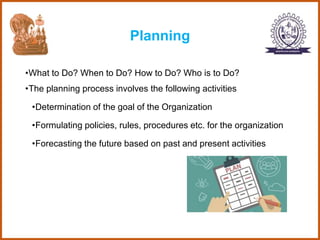
Planning
•What to Do? When to Do? How to Do? Who is to Do?
•The planning process involves the following activities
•Determination of the goal of the Organization
•Formulating policies, rules, procedures etc. for the organization
•Forecasting the future based on past and present activities
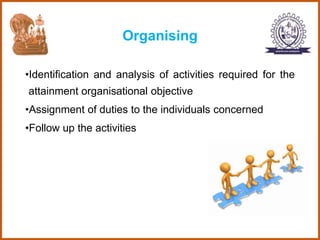
Organising
•Identification and analysis of activities required for the
attainment organisational objective
•Assignment of duties to the individuals concerned
•Follow up the activities
Staffing
•Selecting candidate for position
•Fixing salary
•Training
•Developing them for effective organization function
•Performance Appraisal
•Promotions & Transfer
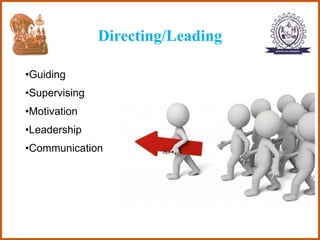
Directing/Leading
•Guiding
•Supervising
•Motivation
•Leadership
•Communication
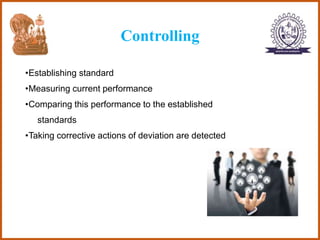
Controlling
•Establishing standard
•Measuring current performance
•Comparing this performance to the established
standards
•Taking corrective actions of deviation are detected
Management – Science or Art
•Management is science because of several reasons. They are
universally accepted principles, it has cause and effect relationship,
etc.
•it is art as it requires perfection through practice, practical
knowledge, creativity, personal skills, etc. Management is both art
and science.
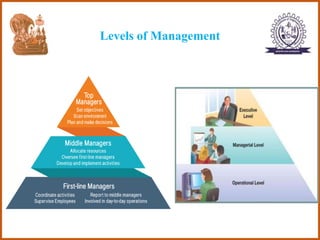
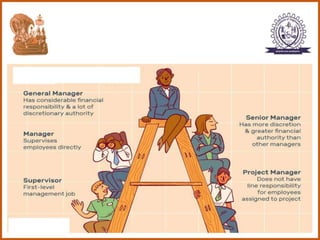
Levels of Management
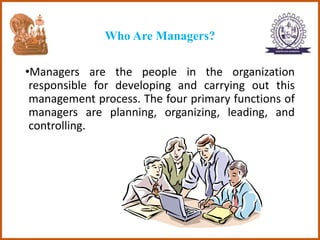
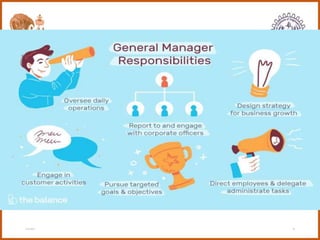
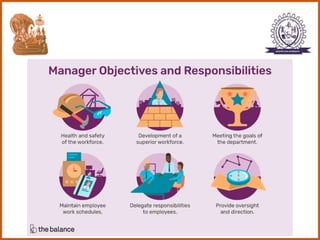
Who Are Managers?
•Managers are the people in the organization
responsible for developing and carrying out this
management process. The four primary functions of
managers are planning, organizing, leading, and
controlling.
Types of Manager
•Purchase manager- Who is responsible for procuring the raw materials in a
company
•Production manager- Who is responsible for managing the manufacturing process.
•IT manager- Who is responsible for supervising all computing and IT
communication related issues.
•Marketing manager- Who is responsible for supervising the promotion and
advertising of the company’s products/services.
1/24/2023 24
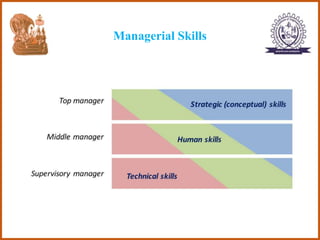
Managerial Skills
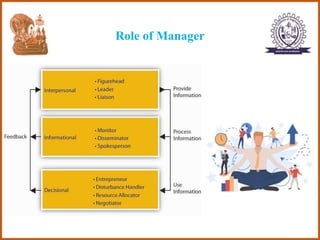
Role of Manager
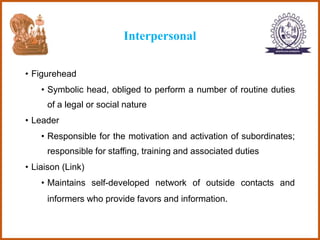
Interpersonal
• Figurehead
• Symbolic head, obliged to perform a number of routine duties
of a legal or social nature
• Leader
• Responsible for the motivation and activation of subordinates;
responsible for staffing, training and associated duties
• Liaison (Link)
• Maintains self-developed network of outside contacts and
informers who provide favors and information.
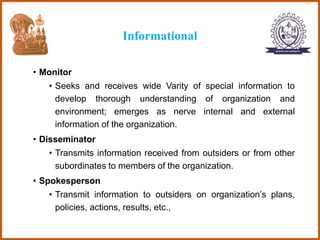
Informational
• Monitor
• Seeks and receives wide Varity of special information to
develop thorough understanding of organization and
environment; emerges as nerve internal and external
information of the organization.
• Disseminator
• Transmits information received from outsiders or from other
subordinates to members of the organization.
• Spokesperson
• Transmit information to outsiders on organization’s plans,
policies, actions, results, etc.,
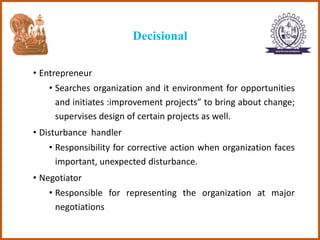
Decisional
• Entrepreneur
• Searches organization and it environment for opportunities
and initiates :improvement projects” to bring about change;
supervises design of certain projects as well.
• Disturbance handler
• Responsibility for corrective action when organization faces
important, unexpected disturbance.
• Negotiator
• Responsible for representing the organization at major
negotiations
Entrepreneur Vs Manager

CN Unit 1.pptx

  • 1.
    CS8591 COMPUTERNETWORKS Unit I: Introduction and Physical Layer Course Instructor Dr.S.Lavanya, ASP Department of Computer Science Engineering
  • 2.
  • 3.
    Outcomes of thelesson 1. will be able to have clear understanding of managerial functions 3
  • 4.
    Unit I Introductionto Management and Organizations Definition of Management – Science or Art – Manager Vs Entrepreneur – types of managers -managerial roles and skills – Evolution of Management – Scientific, human relations, system and contingency approaches – Types of Business organization – Sole proprietorship, partnership, company-public and private sector enterprises – Organization culture and Environment – Current trends and issues in Management.
  • 5.
    Definition of Management •Management is a process of planning, decision making, organizing, leading, motivation and controlling the human resources, financial, physical, and information resources of an organization to reach its goals efficiently and effectively. • Management involves coordinating and overseeing the work activities of others so that their activities are completed efficiently and effectively.
  • 6.
    Nature and Characteristicsof Management Multidisciplinary Continuous process Universal activity Science as Well as an Art Dynamic and not Static Profession Group activity Aims at obtaining wealthy resul Skills and Experience in gettin things done through people System of authority Intangible Good Leadership
  • 7.
    Functional areas ofManagement •Financial Management •Human Resource Management •Marketing Management •Production Management •Material Management •Purchasing Management •Maintenance Management •Office Management
  • 8.
    Objective of Management •Gettingmaximum results with minimum efforts. •Increasing the efficiency of factors of production •Maximum prosperity for employer and employees •Human betterment & Social Justice •Reduces Cost •Establishes Equilibrium •Establishes Sound Organization
  • 9.
    What Is Management? •ManagerialConcerns •Efficiency •“Doing things right” •Getting the most output for the least inputs •Effectiveness •“Doing the right things” •Attaining organizational goals
  • 10.
  • 11.
    Function of Management •According to George & Jerry • Planning, Organizing, Actuating, & Controlling • According to Henry Fayol • Plan, Organize, Command & Control • Luther Gullick (POSDCORB) • Planning, Organizing, Staffing, Direction, Coordinating , Reporting, & Budgeting • Koontz & O’DONNEL • Planning, Organizing, Staffing, Directing, & Controlling
  • 12.
  • 13.
    Planning •What to Do?When to Do? How to Do? Who is to Do? •The planning process involves the following activities •Determination of the goal of the Organization •Formulating policies, rules, procedures etc. for the organization •Forecasting the future based on past and present activities
  • 14.
    Organising •Identification and analysisof activities required for the attainment organisational objective •Assignment of duties to the individuals concerned •Follow up the activities
  • 15.
    Staffing •Selecting candidate forposition •Fixing salary •Training •Developing them for effective organization function •Performance Appraisal •Promotions & Transfer
  • 16.
  • 17.
    Controlling •Establishing standard •Measuring currentperformance •Comparing this performance to the established standards •Taking corrective actions of deviation are detected
  • 18.
    Management – Scienceor Art •Management is science because of several reasons. They are universally accepted principles, it has cause and effect relationship, etc. •it is art as it requires perfection through practice, practical knowledge, creativity, personal skills, etc. Management is both art and science.
  • 19.
  • 21.
    Who Are Managers? •Managersare the people in the organization responsible for developing and carrying out this management process. The four primary functions of managers are planning, organizing, leading, and controlling.
  • 22.
    Types of Manager •Purchasemanager- Who is responsible for procuring the raw materials in a company •Production manager- Who is responsible for managing the manufacturing process. •IT manager- Who is responsible for supervising all computing and IT communication related issues. •Marketing manager- Who is responsible for supervising the promotion and advertising of the company’s products/services.
  • 24.
  • 26.
  • 27.
  • 28.
    Interpersonal • Figurehead • Symbolichead, obliged to perform a number of routine duties of a legal or social nature • Leader • Responsible for the motivation and activation of subordinates; responsible for staffing, training and associated duties • Liaison (Link) • Maintains self-developed network of outside contacts and informers who provide favors and information.
  • 29.
    Informational • Monitor • Seeksand receives wide Varity of special information to develop thorough understanding of organization and environment; emerges as nerve internal and external information of the organization. • Disseminator • Transmits information received from outsiders or from other subordinates to members of the organization. • Spokesperson • Transmit information to outsiders on organization’s plans, policies, actions, results, etc.,
  • 30.
    Decisional • Entrepreneur • Searchesorganization and it environment for opportunities and initiates :improvement projects” to bring about change; supervises design of certain projects as well. • Disturbance handler • Responsibility for corrective action when organization faces important, unexpected disturbance. • Negotiator • Responsible for representing the organization at major negotiations
  • 31.