UNIT DOSE SYSTEM
Prepared by :
Marwa M. Goda
Clinical pharmacist
Dar el Shefa hospital
IN THIS LECTURE YOU ARE GOING TO LEARN :
 Unit dose system definition .
 Basic elements of any unit dose system .
 Advantages.
 Disadvantages.
 Types of unit dose systems.
 Procedures .
 Returning of the unused drugs.
MEDICATION DISTRIBUTION SYSTEMS
 Bulk Ward stock.
 Individual medication orders.
 Unit dose systems.
 Automated dispensing systems .
Which system are you using during dispensing ?
DEFINITION OF UNIT DOSE SYSTEM
 The unit dose system of medication distribution is a
pharmacy-coordinated method of dispensing and
controlling medications in organized health-care
settings.
BASIC ELEMENTS TO ALL UNIT DOSE
SYSTEMS:
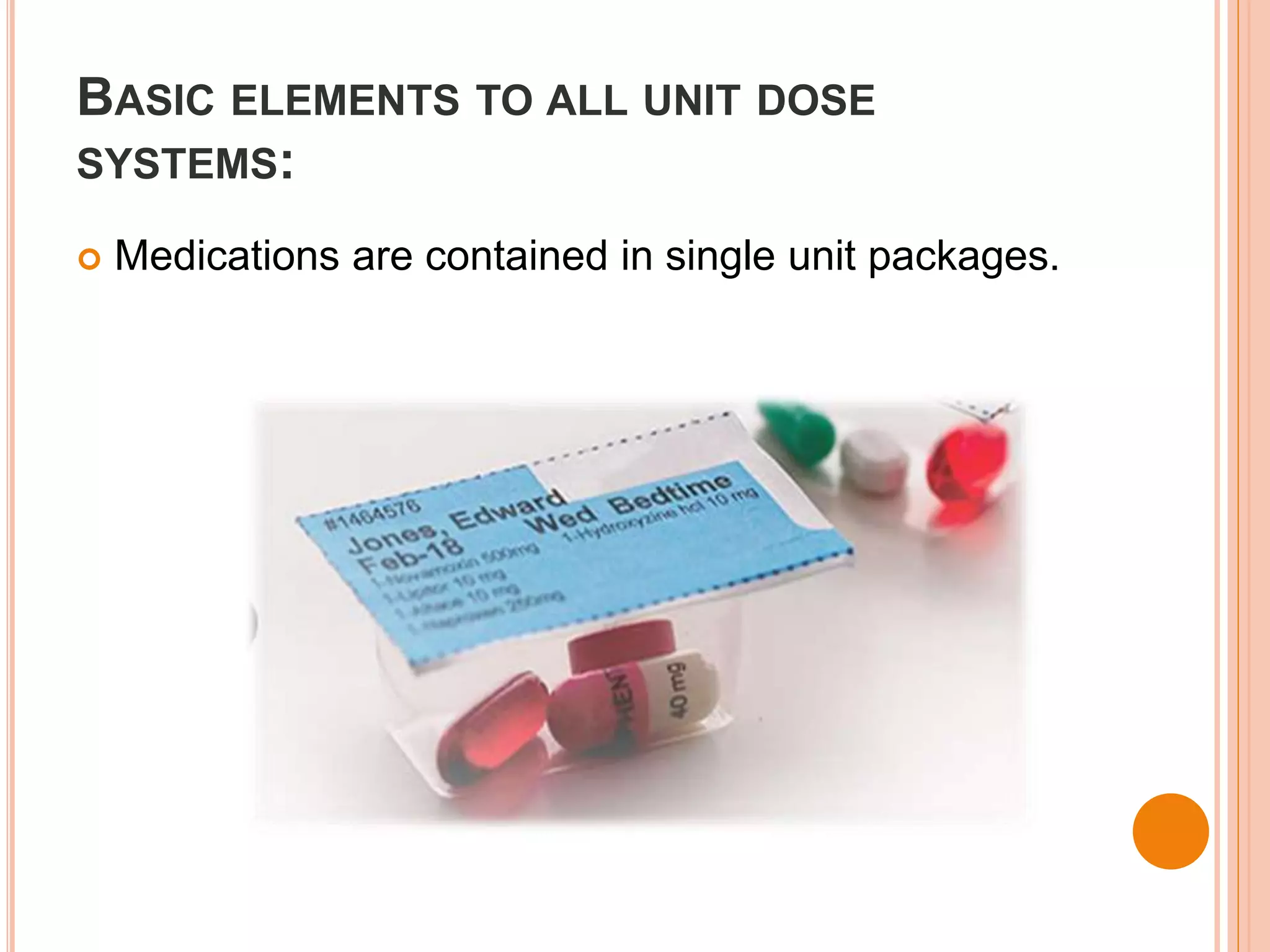
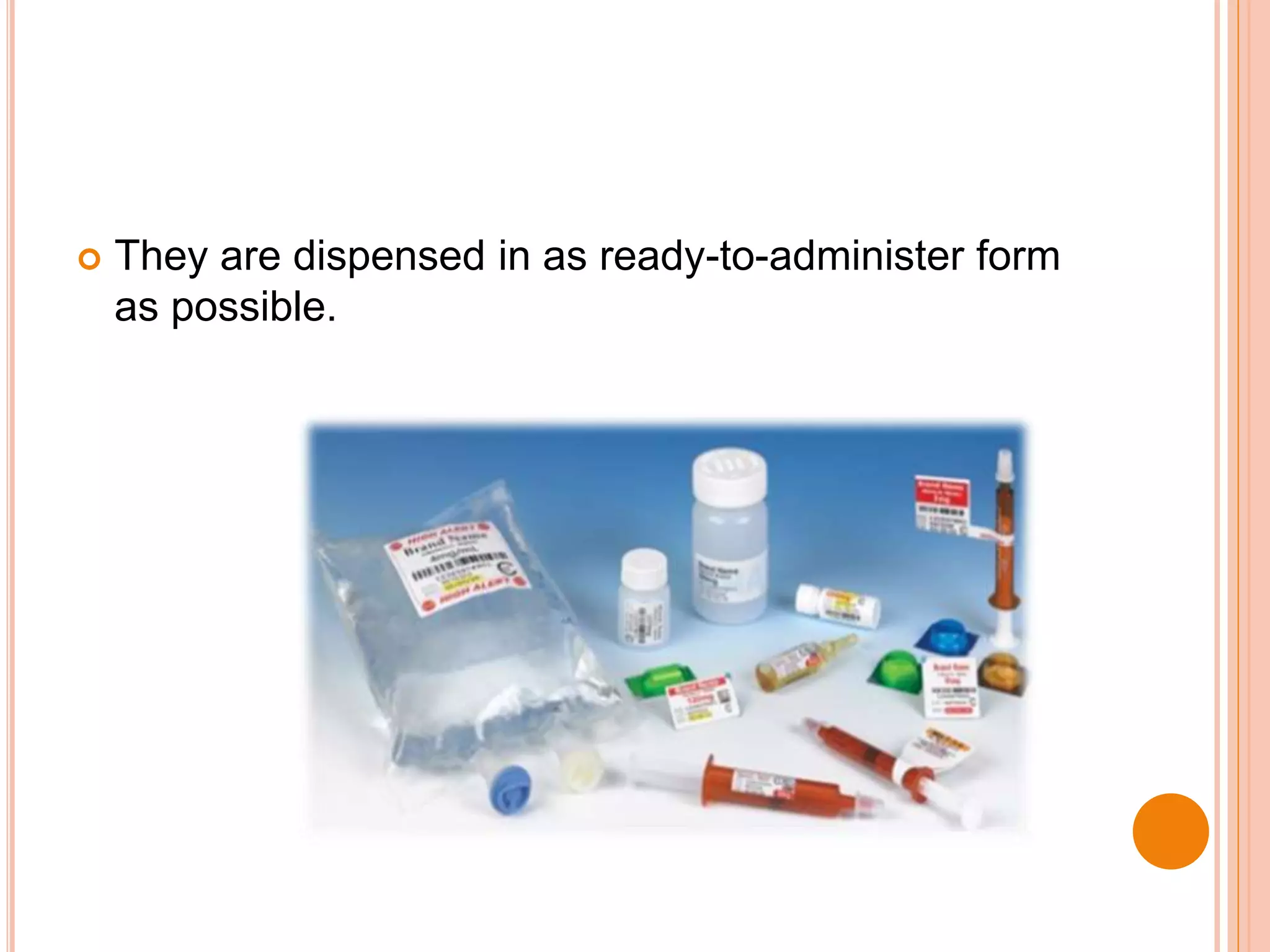
 Medications are contained in single unit packages.
 They are dispensed in as ready-to-administer form
as possible.
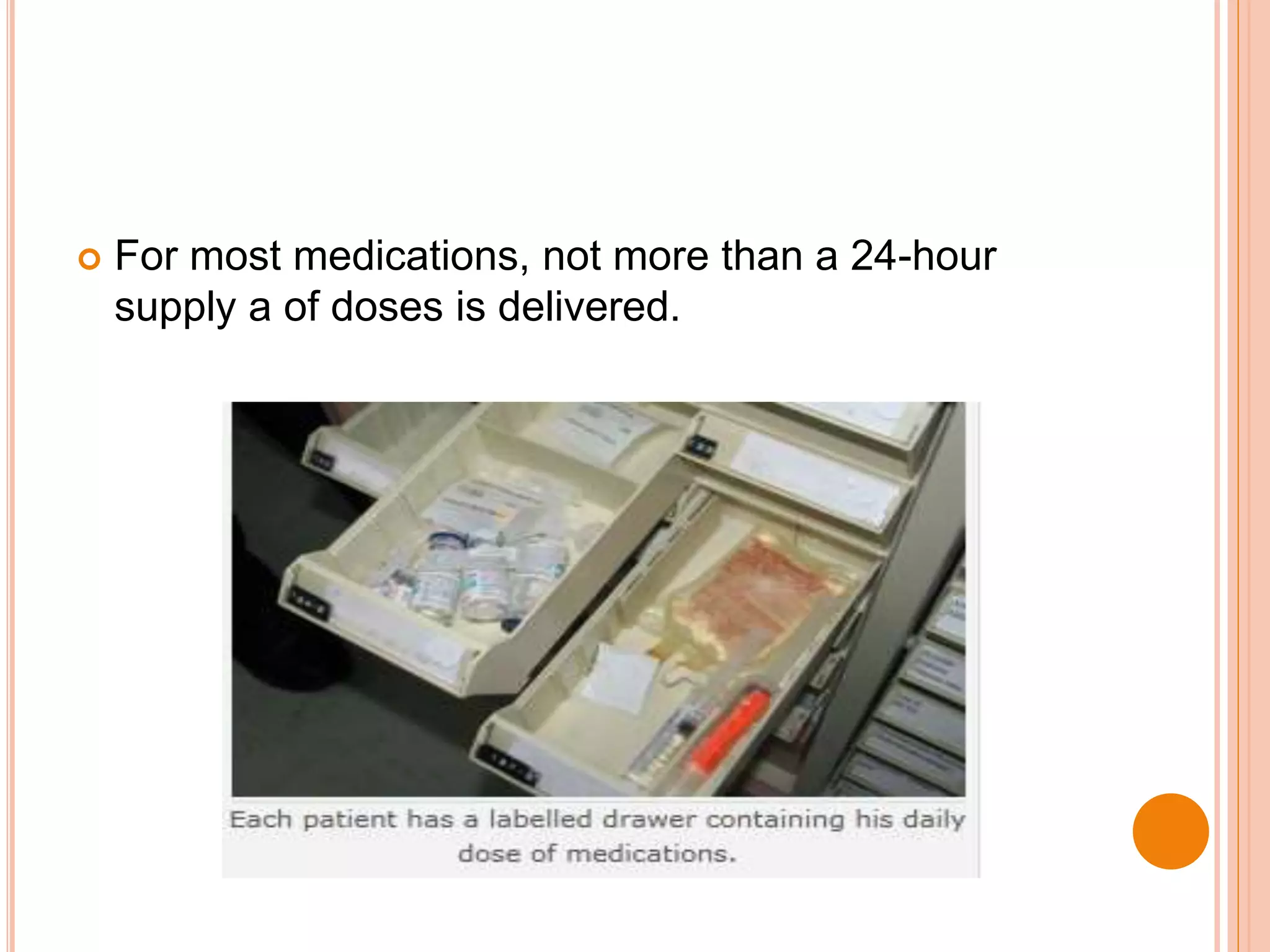
 For most medications, not more than a 24-hour
supply a of doses is delivered.
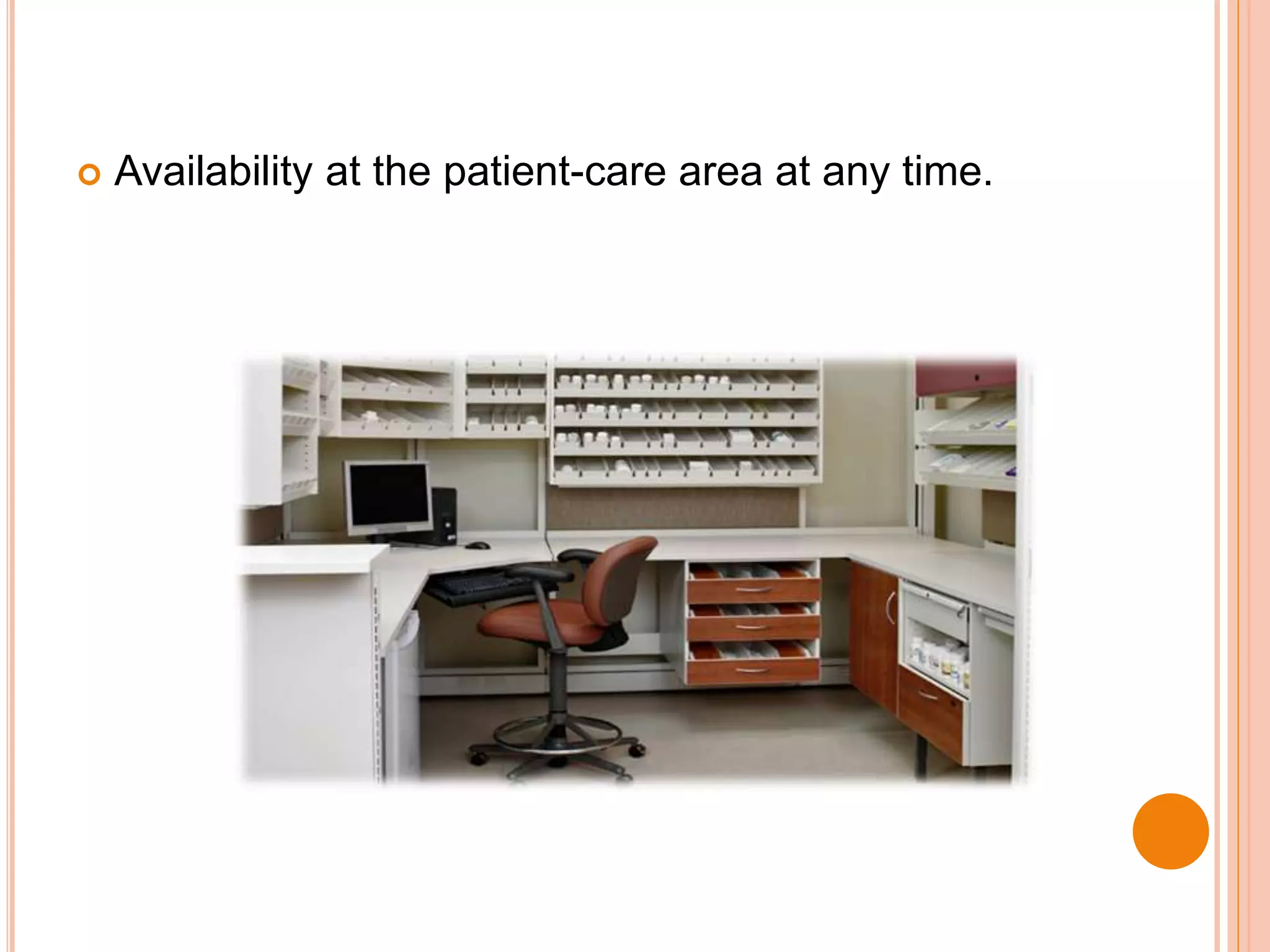
 Availability at the patient-care area at any time.
ADVANTAGES OF UNIT DOSE
SYSTEMS:
1. A reduction in the incidence of medication errors.
2. A decrease in the total cost of medication-related
Activities(prevent duplication in paper & ordering work at
nursing station & pharmacy).
3. A more efficient usage of pharmacy and nursing
personnel, allowing for more direct patient-care
involvement by pharmacists and nurses.
4. Improved overall drug control and drug use
monitoring.
5. More accurate patient billings for drugs.
6. The elimination or minimization of drug credits.
7. Greater control by the pharmacist over
pharmacy work load patterns and staff scheduling.
8. A reduction in the size of drug inventories
located inpatient-care areas.
.
9. Greater adaptability to computerized and
automated procedures.
the American Society of Hospital Pharmacists
considers the unit dose system to be an essential
part of drug distribution and control
in organized health-care settings in which drug
therapy is an integral component of health-care
delivery
DISADVANTAGES :
 More pharmacy processing time and equipment cost.
 Requires more storage place.
 Not a big cost saving to the pharmacy.
UNIT DOSING SYSTEM AT DAR EL SHEFA HOSPITAL
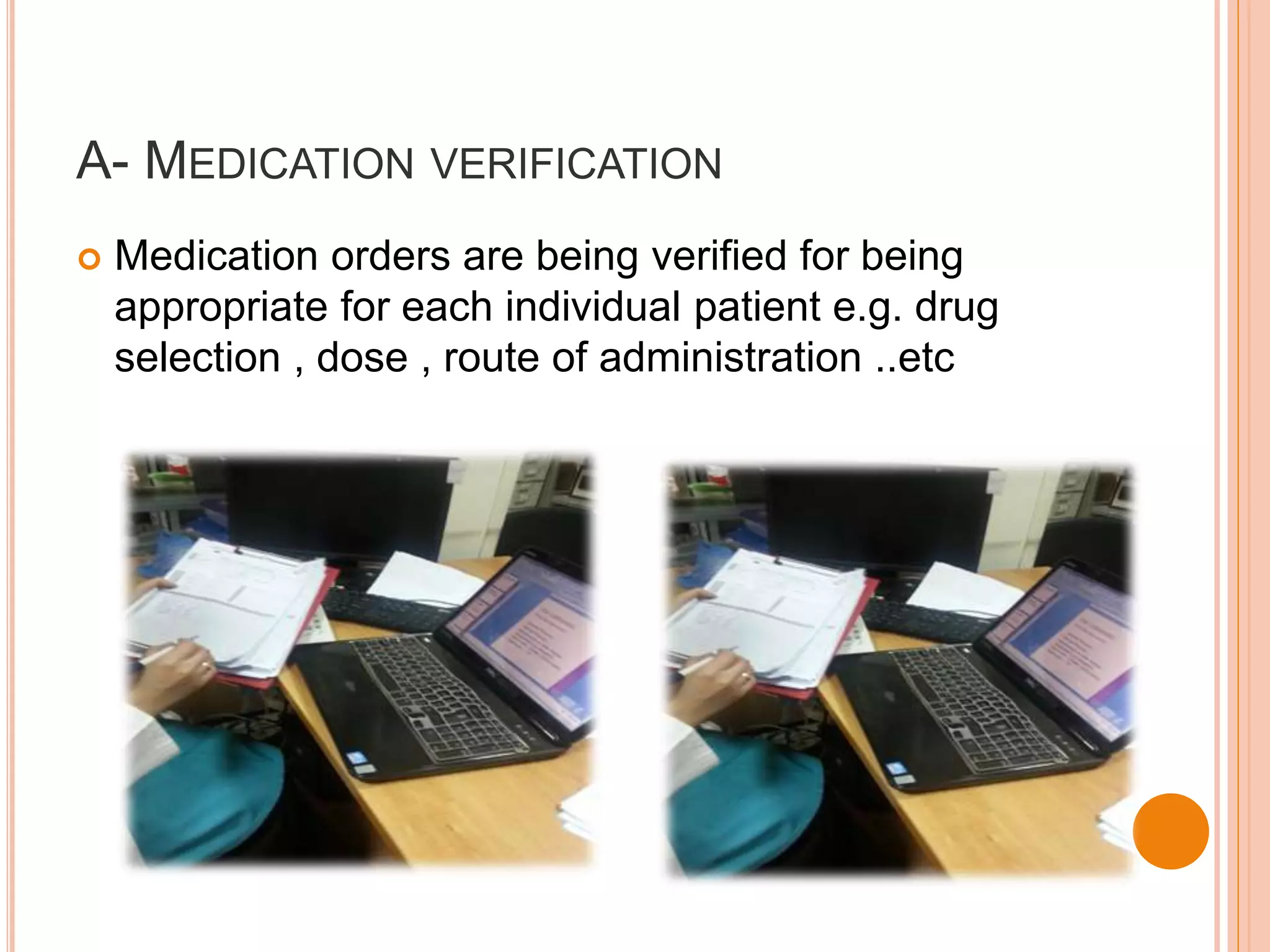
A- MEDICATION VERIFICATION
 Medication orders are being verified for being
appropriate for each individual patient e.g. drug
selection , dose , route of administration ..etc
B-DISPENSING THE UNIT DOSE
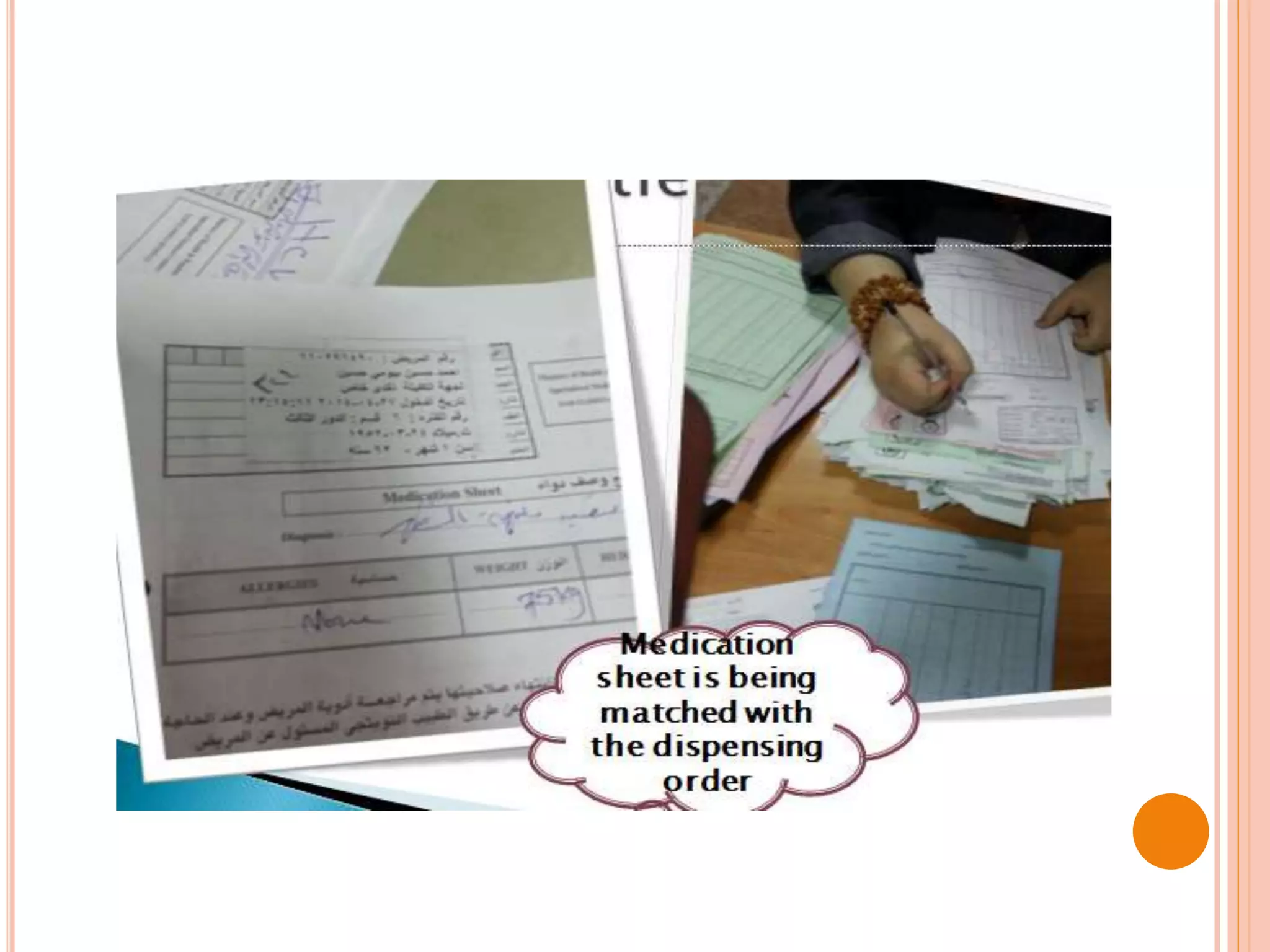
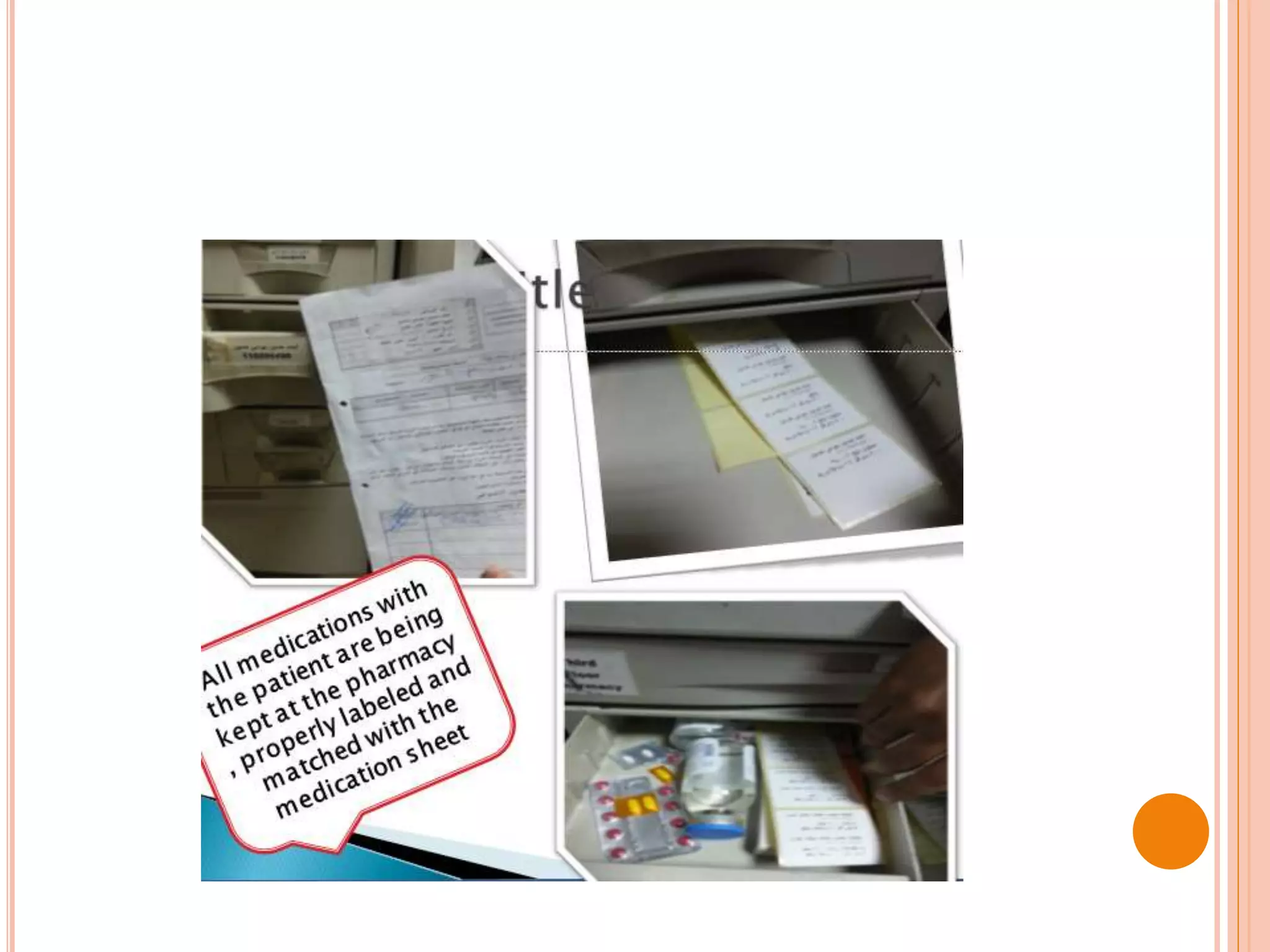
 Dispensing the 24 hrs dose for each patient
considering the proper techniques :
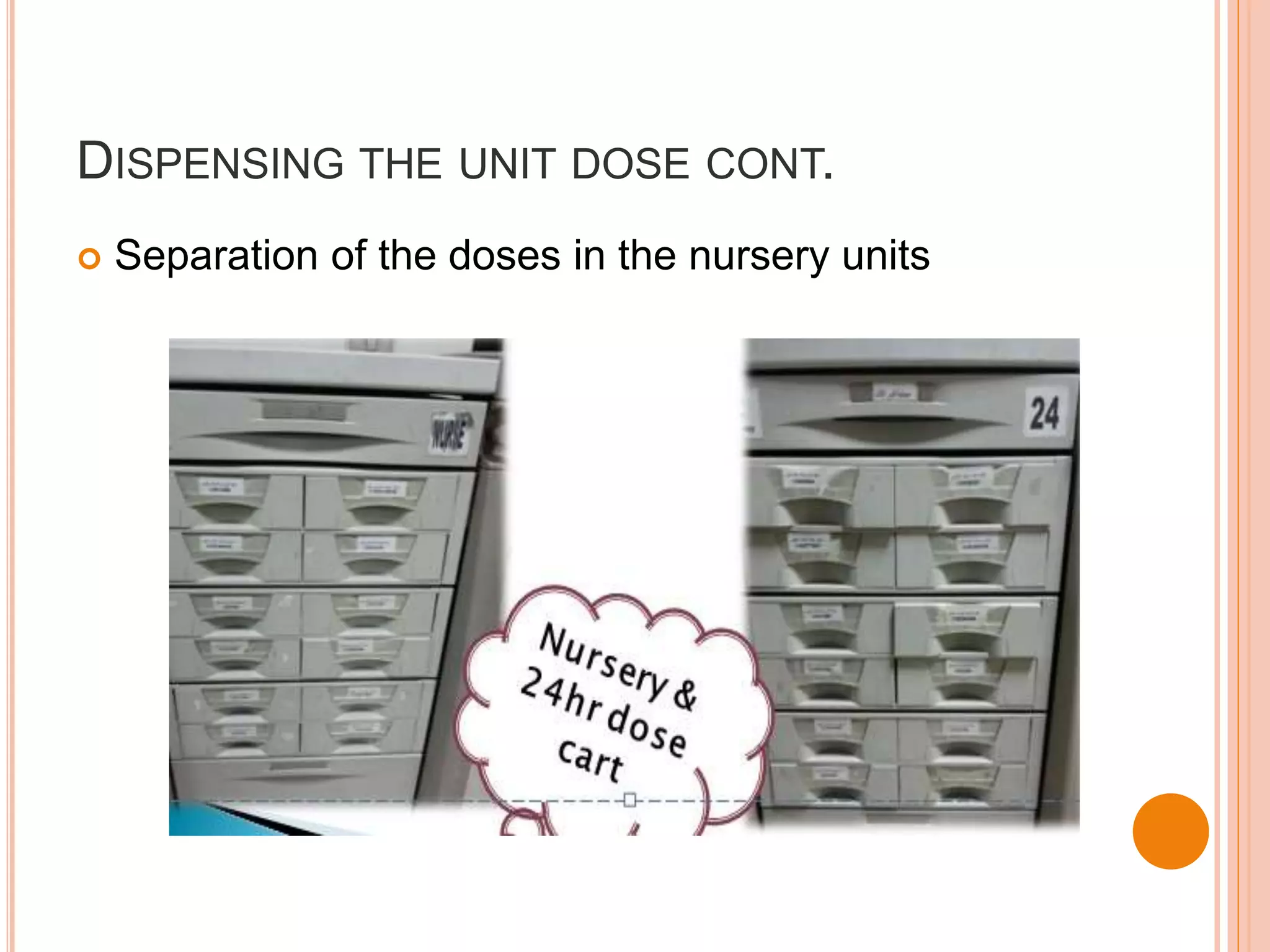
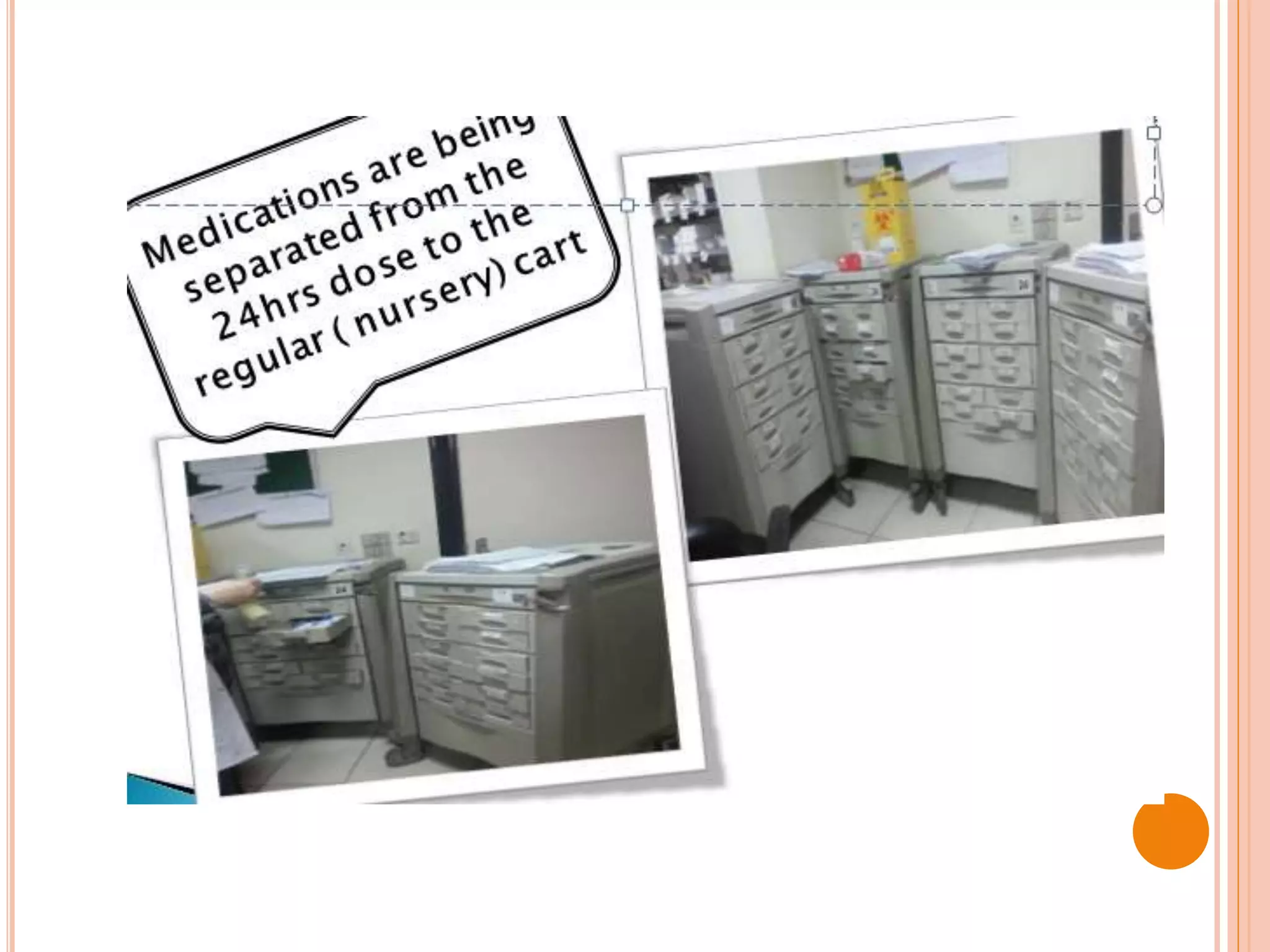
DISPENSING THE UNIT DOSE CONT.
 Separation of the doses in the nursery units
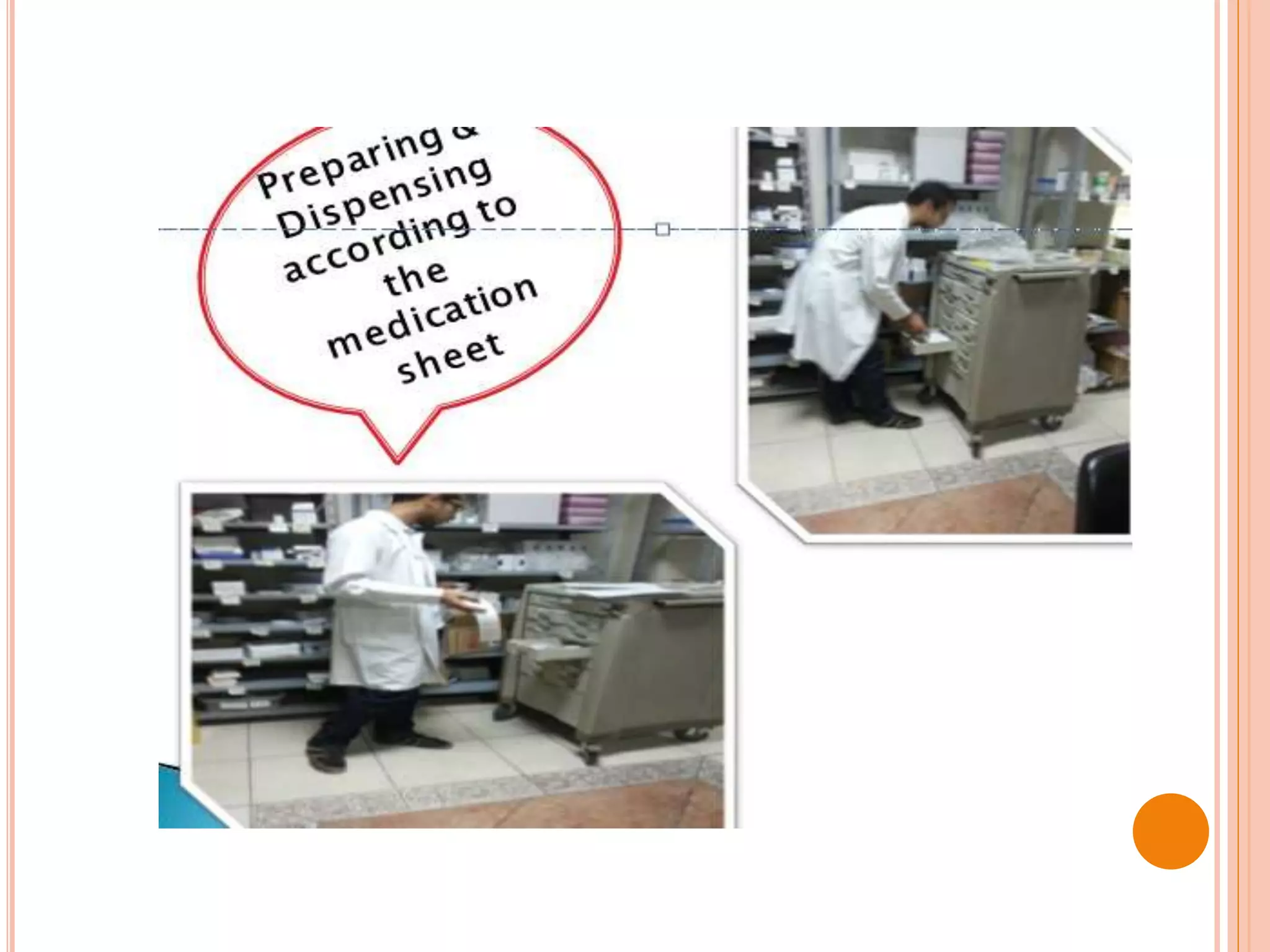
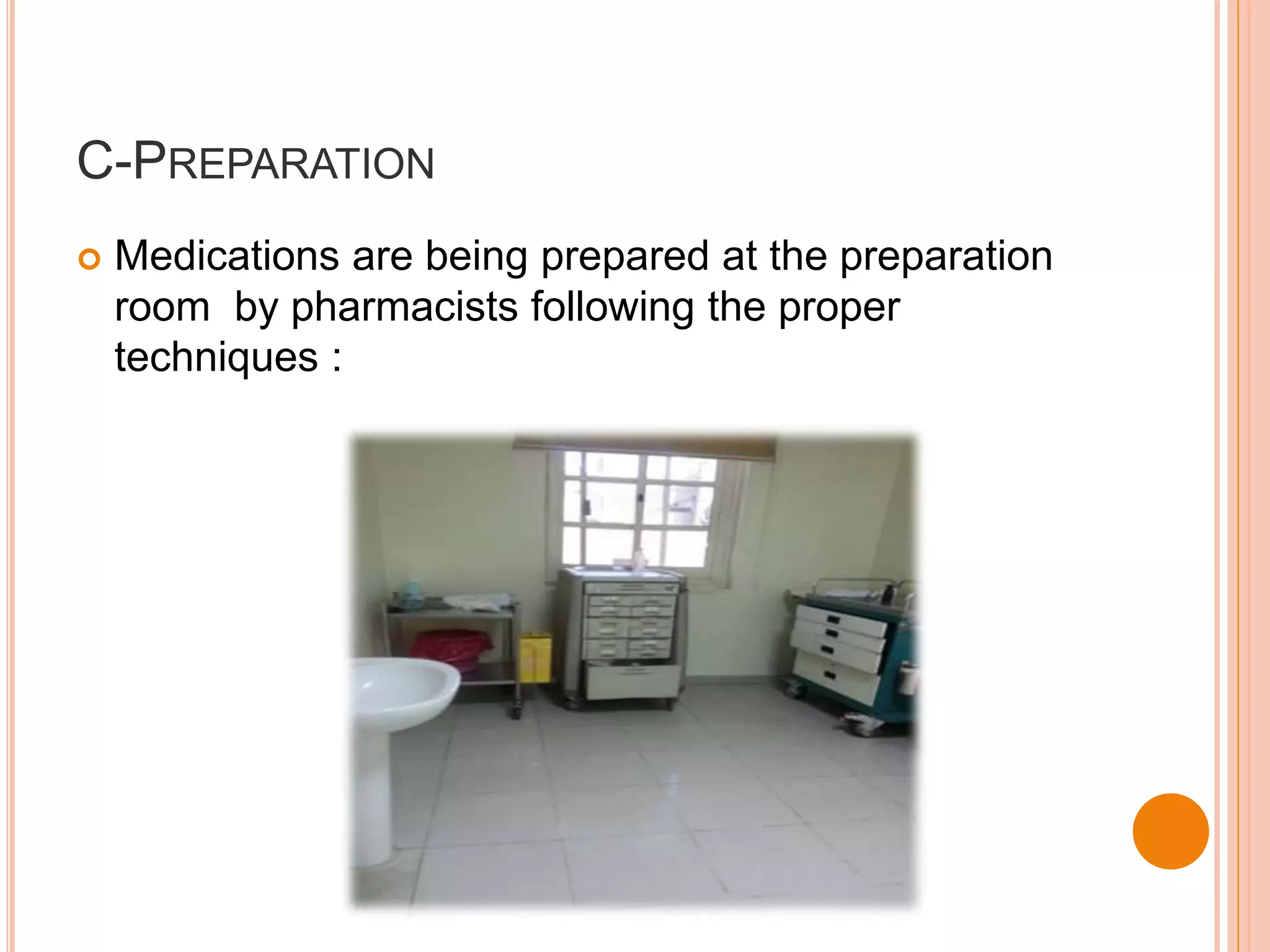
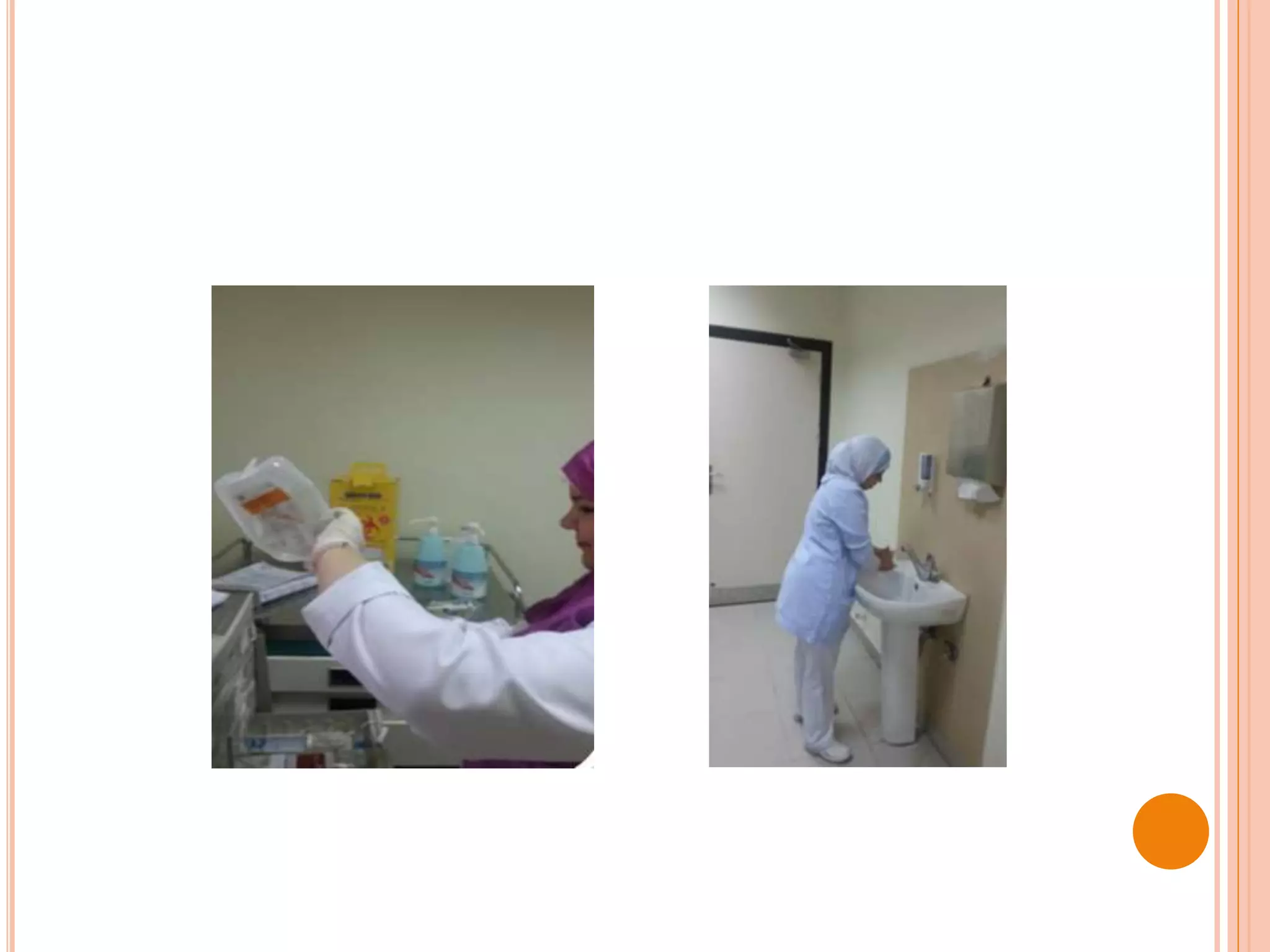
C-PREPARATION
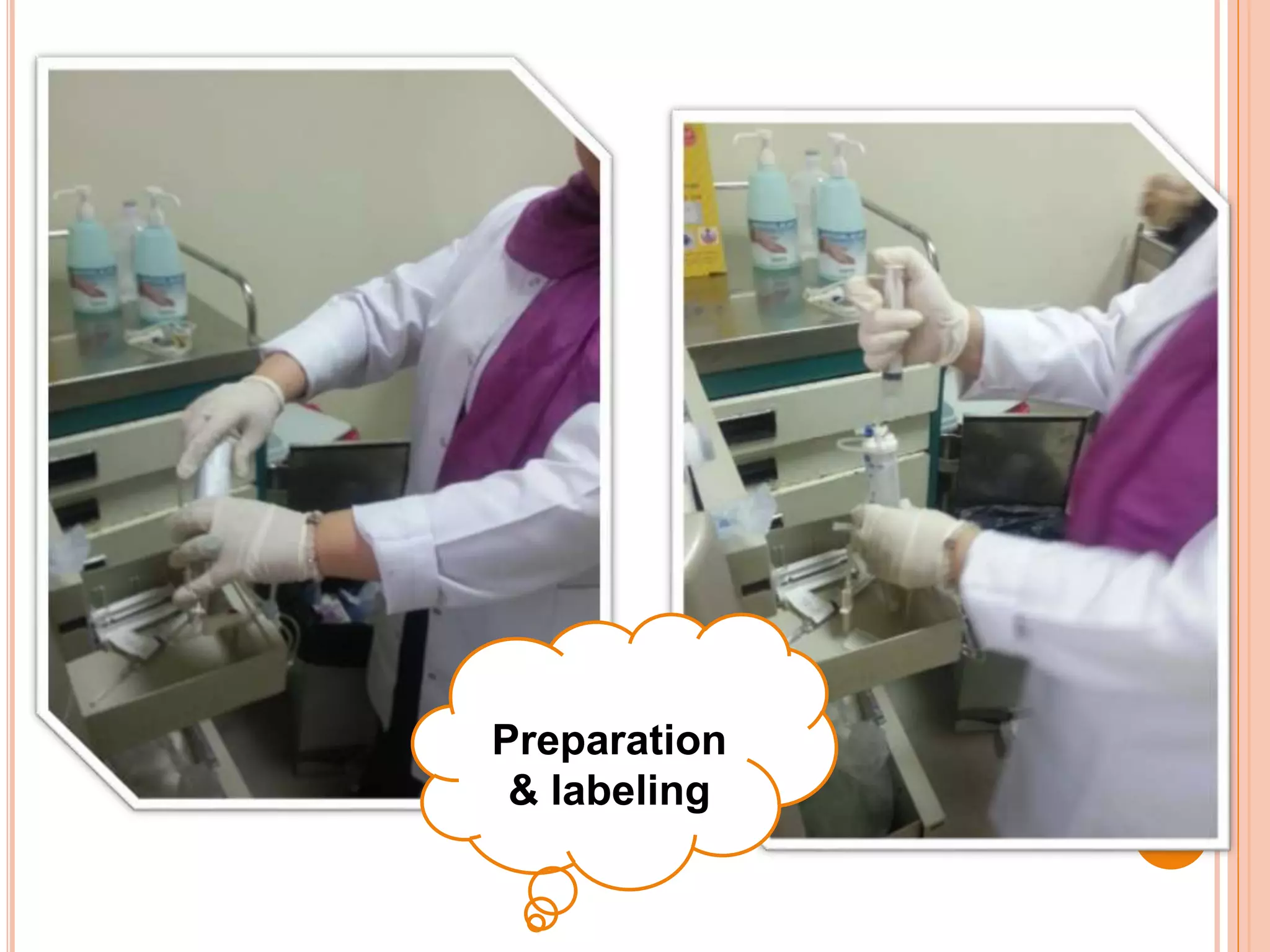
 Medications are being prepared at the preparation
room by pharmacists following the proper
techniques :
Preparation
& labeling
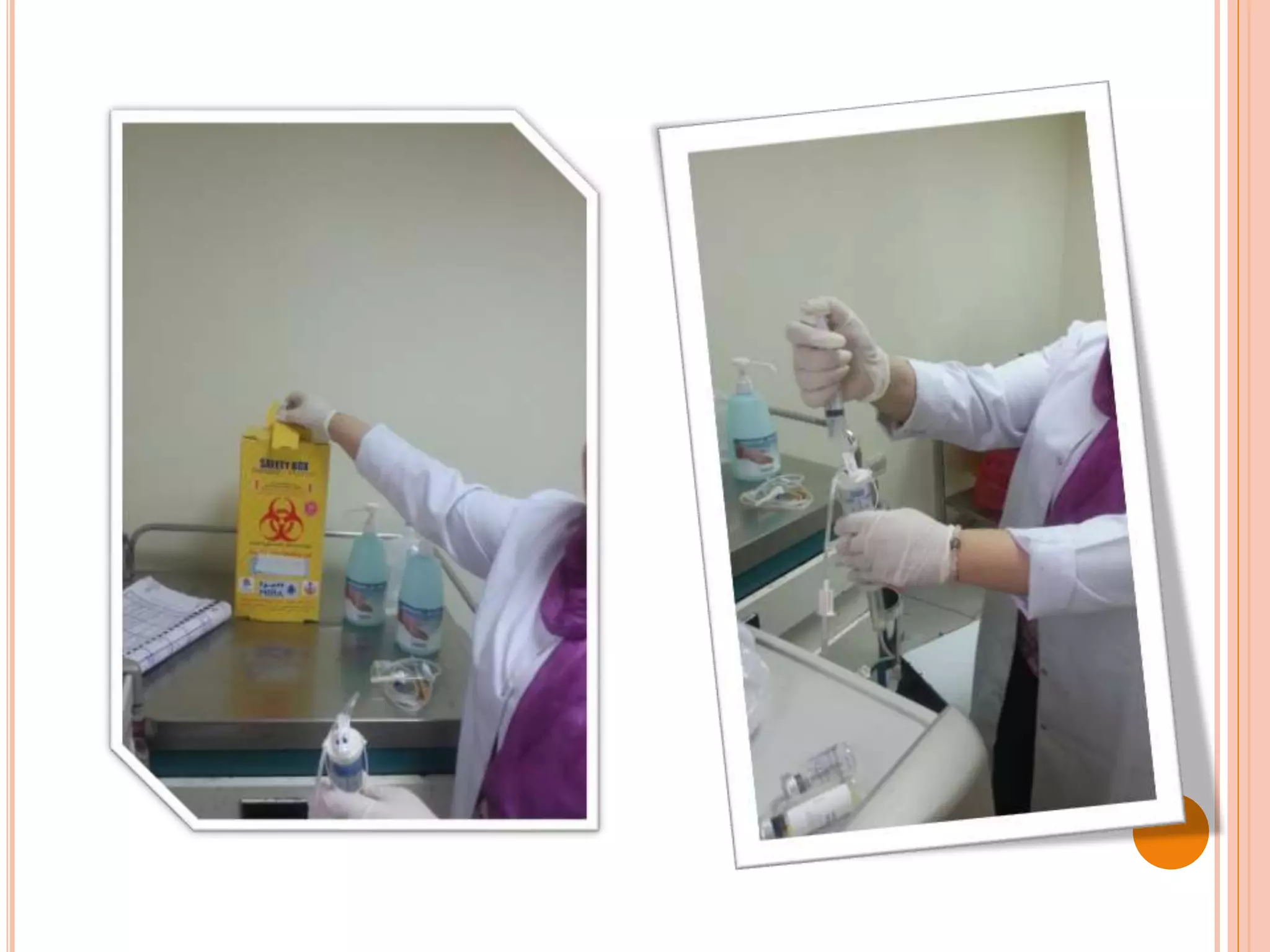
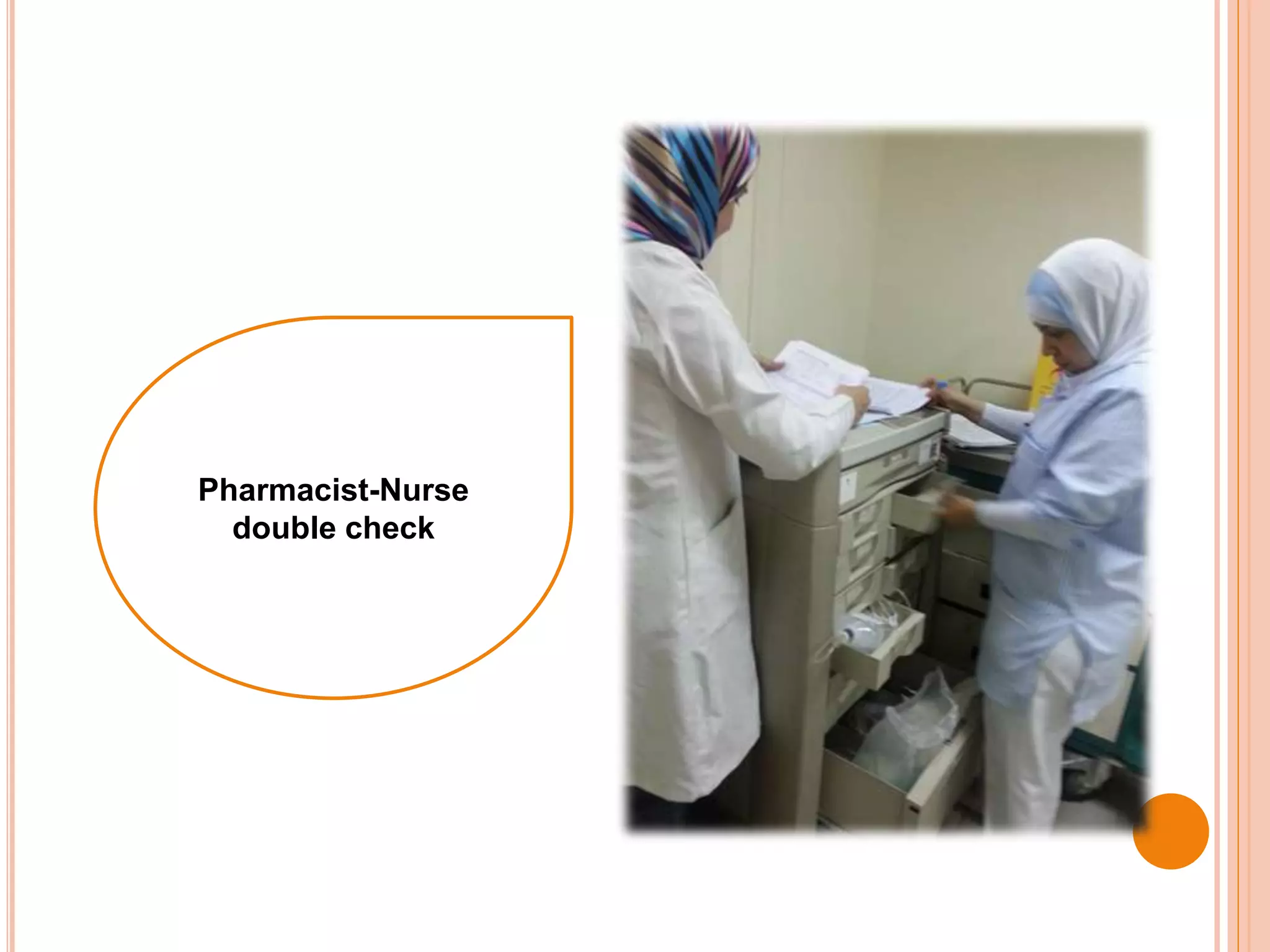
Pharmacist-Nurse
double check
THEN TO THE PATIENT ,,
RETURN OF UNUSED MEDICINES
They should meet certain requirements :
- Drugs are provided in the manufacturers unit dose
packaging or are repackaged by the pharmacy in a sealed
single unit dose container .
-The drug is repackaged by the pharmacy, each single unit
dose repackaged or repackaged container must be labeled
in accordance with the regulation.
-The drugs packaging is tamper resistant.
-The drugs do not show evidence of contamination.
-The drugs have not reached the expiration date.
-The drugs have not been redispensed in packaging that
intermingles different drugs in a single compartment
Unit dose system

Unit dose system

  • 1.
    UNIT DOSE SYSTEM Preparedby : Marwa M. Goda Clinical pharmacist Dar el Shefa hospital
  • 2.
    IN THIS LECTUREYOU ARE GOING TO LEARN :  Unit dose system definition .  Basic elements of any unit dose system .  Advantages.  Disadvantages.  Types of unit dose systems.  Procedures .  Returning of the unused drugs.
  • 3.
    MEDICATION DISTRIBUTION SYSTEMS Bulk Ward stock.  Individual medication orders.  Unit dose systems.  Automated dispensing systems . Which system are you using during dispensing ?
  • 4.
    DEFINITION OF UNITDOSE SYSTEM  The unit dose system of medication distribution is a pharmacy-coordinated method of dispensing and controlling medications in organized health-care settings.
  • 5.
    BASIC ELEMENTS TOALL UNIT DOSE SYSTEMS:  Medications are contained in single unit packages.
  • 6.
     They aredispensed in as ready-to-administer form as possible.
  • 7.
     For mostmedications, not more than a 24-hour supply a of doses is delivered.
  • 8.
     Availability atthe patient-care area at any time.
  • 9.
    ADVANTAGES OF UNITDOSE SYSTEMS: 1. A reduction in the incidence of medication errors. 2. A decrease in the total cost of medication-related Activities(prevent duplication in paper & ordering work at nursing station & pharmacy). 3. A more efficient usage of pharmacy and nursing personnel, allowing for more direct patient-care involvement by pharmacists and nurses. 4. Improved overall drug control and drug use monitoring. 5. More accurate patient billings for drugs.
  • 10.
    6. The eliminationor minimization of drug credits. 7. Greater control by the pharmacist over pharmacy work load patterns and staff scheduling. 8. A reduction in the size of drug inventories located inpatient-care areas. . 9. Greater adaptability to computerized and automated procedures.
  • 11.
    the American Societyof Hospital Pharmacists considers the unit dose system to be an essential part of drug distribution and control in organized health-care settings in which drug therapy is an integral component of health-care delivery
  • 12.
    DISADVANTAGES :  Morepharmacy processing time and equipment cost.  Requires more storage place.  Not a big cost saving to the pharmacy.
  • 16.
    UNIT DOSING SYSTEMAT DAR EL SHEFA HOSPITAL
  • 17.
    A- MEDICATION VERIFICATION Medication orders are being verified for being appropriate for each individual patient e.g. drug selection , dose , route of administration ..etc
  • 18.
    B-DISPENSING THE UNITDOSE  Dispensing the 24 hrs dose for each patient considering the proper techniques :
  • 21.
    DISPENSING THE UNITDOSE CONT.  Separation of the doses in the nursery units
  • 25.
    C-PREPARATION  Medications arebeing prepared at the preparation room by pharmacists following the proper techniques :
  • 27.
  • 29.
  • 30.
    THEN TO THEPATIENT ,,
  • 31.
    RETURN OF UNUSEDMEDICINES They should meet certain requirements : - Drugs are provided in the manufacturers unit dose packaging or are repackaged by the pharmacy in a sealed single unit dose container . -The drug is repackaged by the pharmacy, each single unit dose repackaged or repackaged container must be labeled in accordance with the regulation. -The drugs packaging is tamper resistant. -The drugs do not show evidence of contamination. -The drugs have not reached the expiration date. -The drugs have not been redispensed in packaging that intermingles different drugs in a single compartment