Unit 9
The First World War
Social Studies – ESO-4
2
The First World War
• The great powers in Europe in 1900
• The powers made plans for war
• Two crisis over Morocco
• Trouble in the Balkans
• What European powers wanted
• The wars created more tensions
• Events moved quickly towards war
• The Paris Peace and the Treaty of Versailles
• The League of Nations
3
The First World War
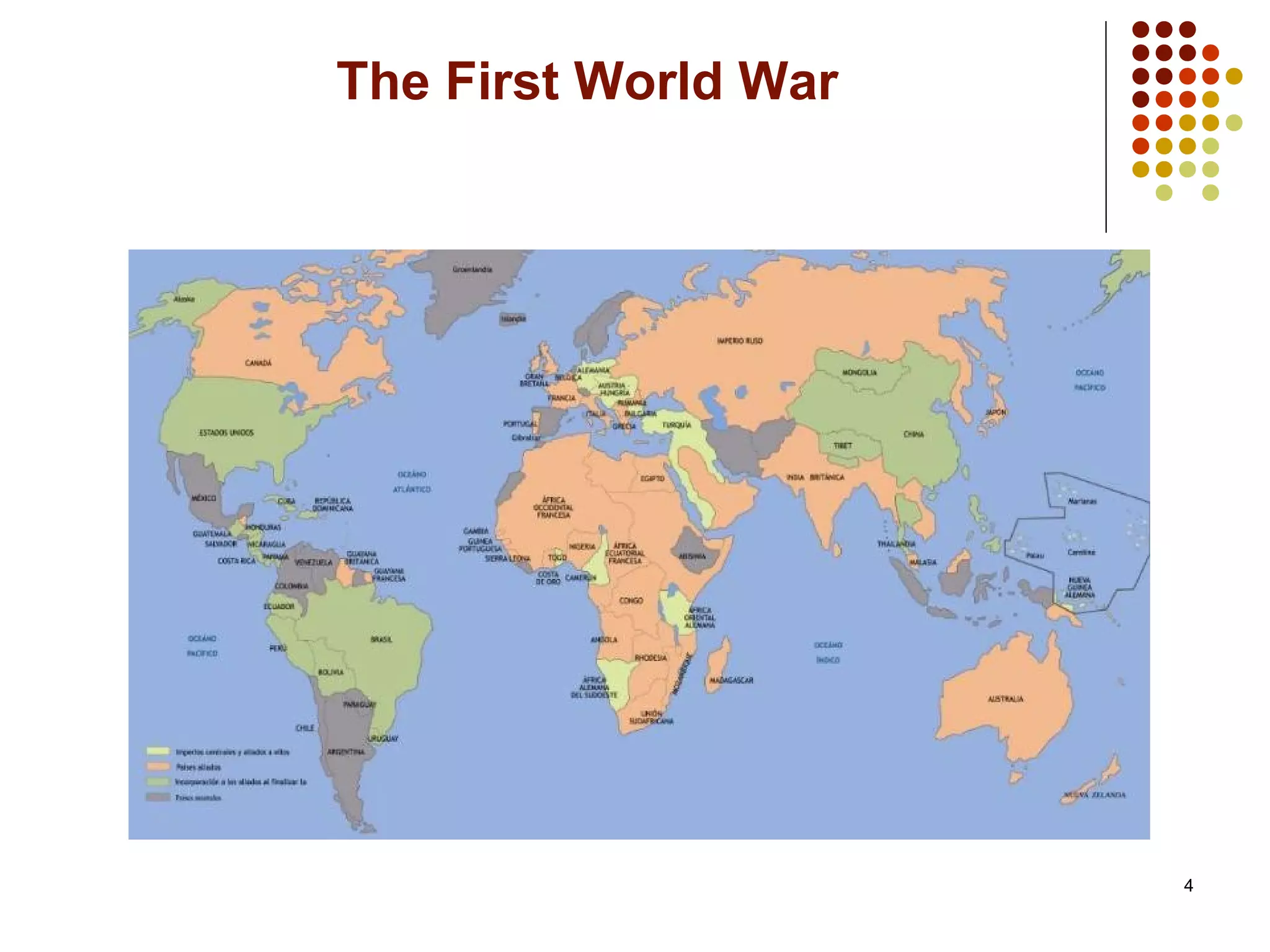
• The great powers in Europe in 1900
• Britain – a great Empire and strong navy
• France – overseas Empire & resenting previous
war
• Russia – large but no land overseas – no access to
the sea
• Austria-Hungary – two nationalities in one country
• Germany – wanted more influence abroad
• Alliances:
• 1882 – Triple Alliance: Germany, Austria-Hungary &
Italy
• 1907 – Triple Entente: Russia, Britain & France
4
The First World War
5
The First World War
• Plans for war
• Crises over Morocco
• The Moroccan crisis (1905-1906)
• The Agadir crisis (1911)
• Trouble in the Balkans
• It was controlled by the Turkish Empire
• European powers wanted influence there:
• Germany - a railway to the East
• Austria-Hungary – stop Serbia's influence
• Slavs wanted independence
• Russia wanted access to the sea
• Italy wanted to control the Adriactic sea
6
The First World War
• More tension:
• 1914- Archduke Franz Ferdinand went to Bosnia
• He was assassinated by the Black Hand in
Sarajevo
• This led to war.
• There were two fronts:
• The Western Front
• The Eastern Front
7
The First World War
• Western front
• Schlieffen Plan to defeat France didn't work:
• Germany invaded Belgium to get to France
• Britain had a treaty to defend Belgium
• Russian was ready for war
• Different war:
• Trenches, new weapons, supplies, many
men
• Important battles:
• Verdun (1916)
• The Somme (1916)
8
The First World War
• Eastern front
• Russia failed to attack Germany from the East
• Germany was attacked:
• From the Dardanelles by Britain
• Japan attacked German colonies
• African colonies were taken by Britain
• Middle East – Palestine controlled by Britain
• Arabia – Britain helped the Arabs
9
The First World War
• War at sea was important
• To protect trade
• To blockade ports
• To carry troops
• To protect British colonies
• New types of ships: German U-boat submarine
wasn't detected
• Lusitania was attacked (1,000 passengers) → USA
joined the war in 1917
War in the air
Both sides used planes and balloons
Germans used Zeppelins
Planes couldn't travel far yet
10
The First World War
• The end of war:
• Russia left war in 1917
• Starvation in 1916
and Revolution in
1917
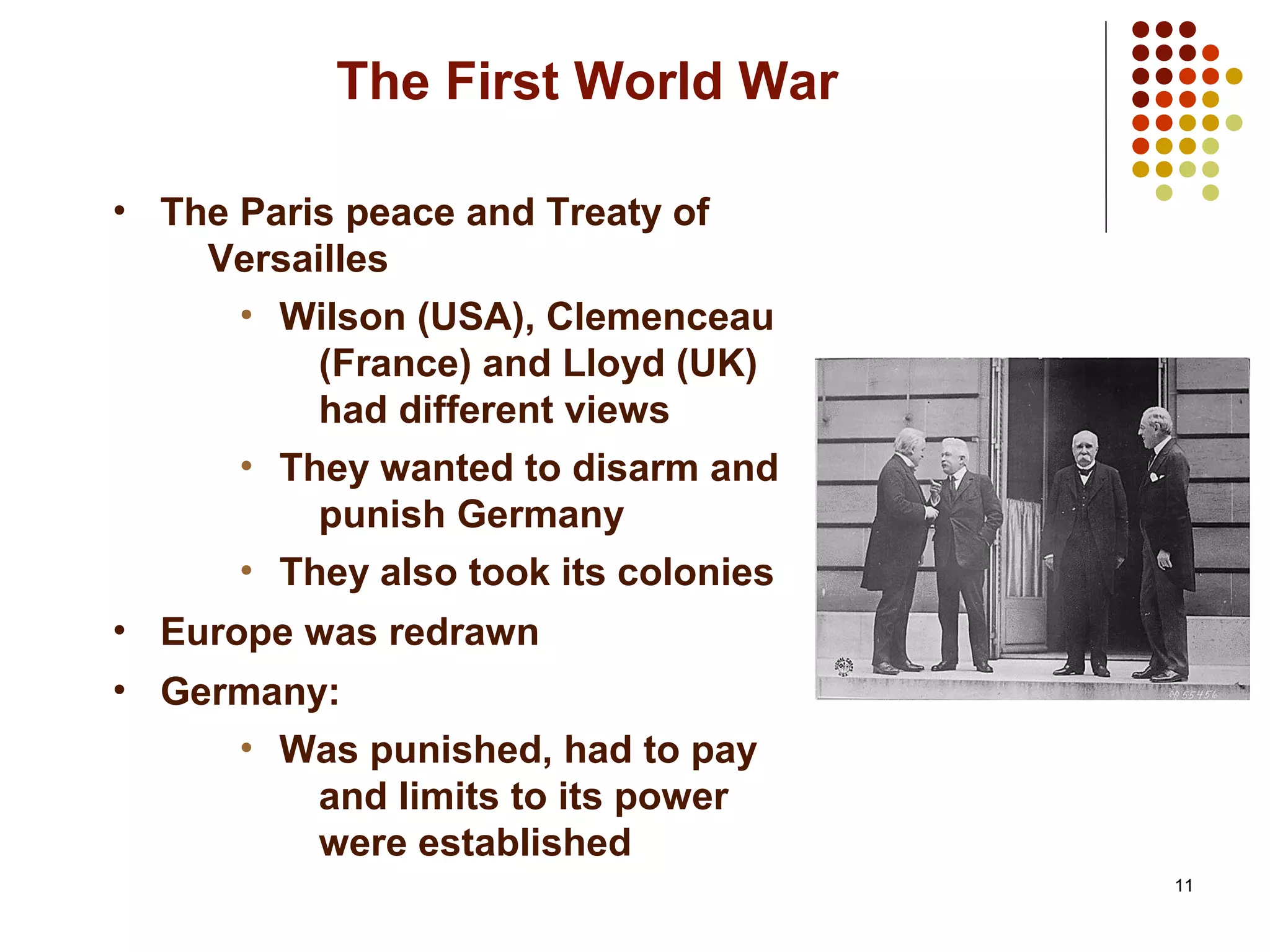
• Treaty of Brest-
Litousk with
Germany – 1918
(picture)
• Germany focussed
on the Western
front
• The USA joined the war
11
The First World War
• The Paris peace and Treaty of
Versailles
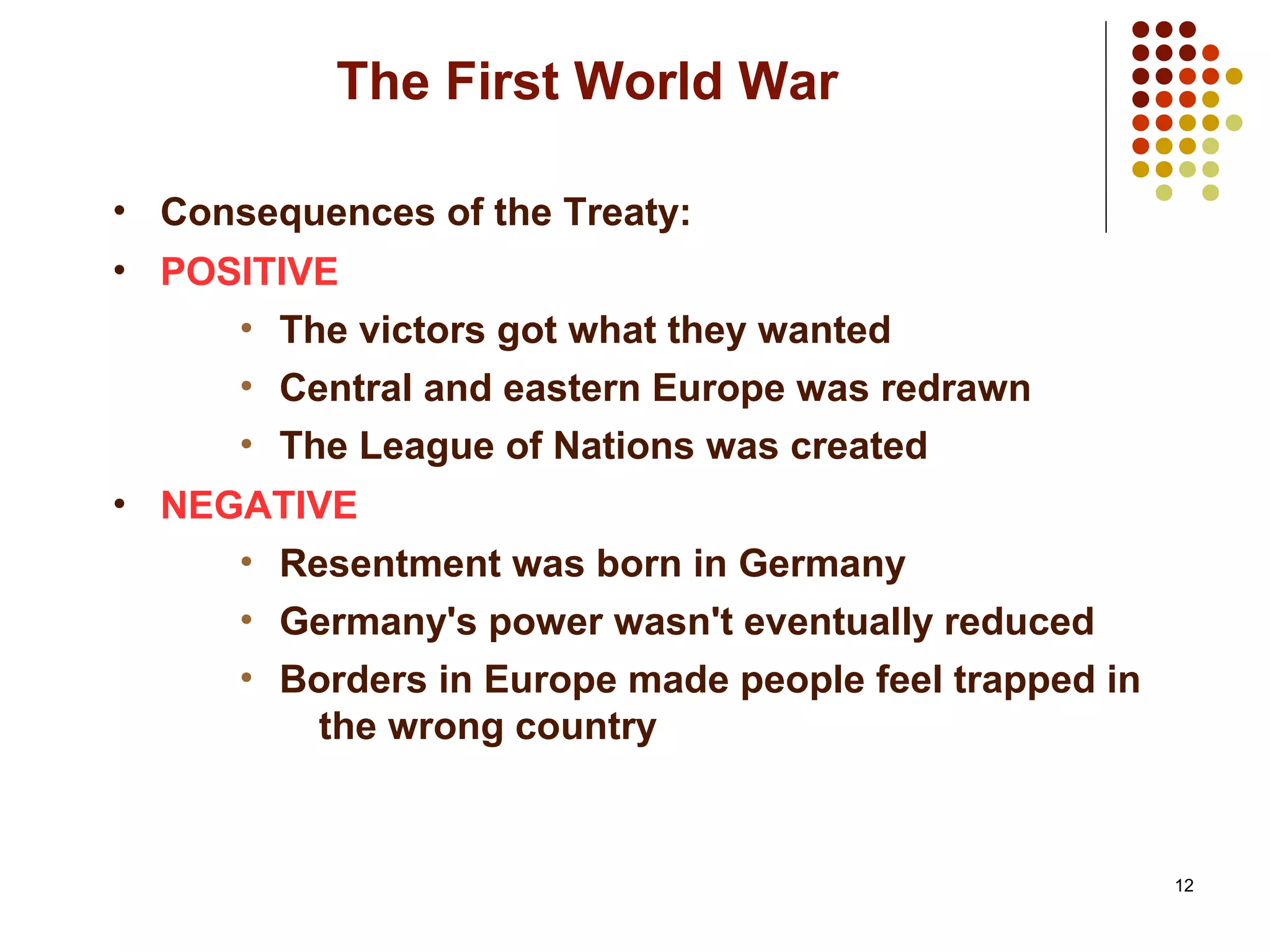
• Wilson (USA), Clemenceau
(France) and Lloyd (UK)
had different views
• They wanted to disarm and
punish Germany
• They also took its colonies
• Europe was redrawn
• Germany:
• Was punished, had to pay
and limits to its power
were established
12
The First World War
• Consequences of the Treaty:
• POSITIVE
• The victors got what they wanted
• Central and eastern Europe was redrawn
• The League of Nations was created
• NEGATIVE
• Resentment was born in Germany
• Germany's power wasn't eventually reduced
• Borders in Europe made people feel trapped in
the wrong country
13
The First World War
• The League of Nations:
• Was designed to solve disputes without war
• Aims
• Protect nations from attack
• Solve disputes peacefully
• Promote a reduction of armament
• Encourage international co-operation
14
The First World War
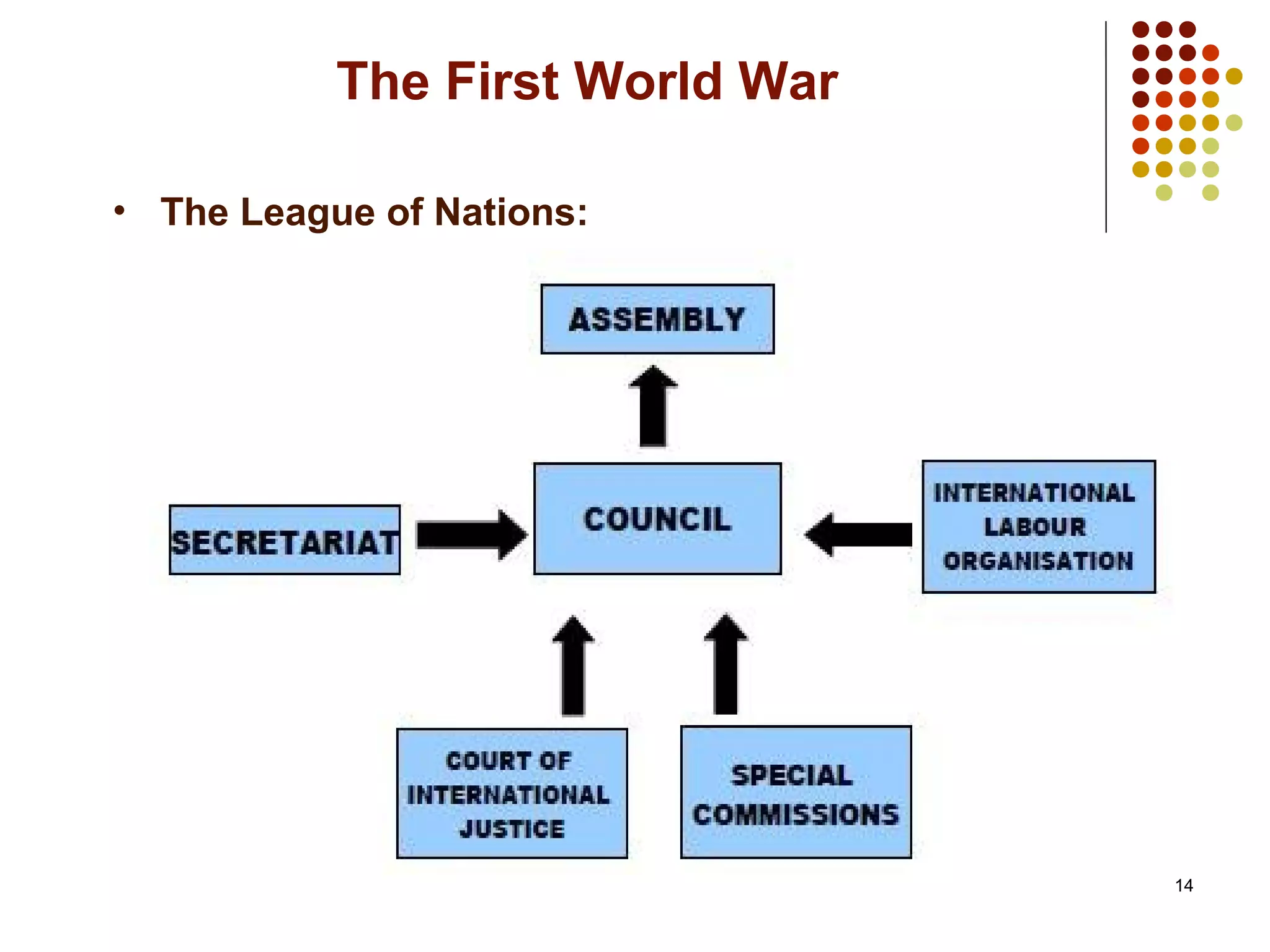
• The League of Nations:
15
The First World War
• The League of Nations:
• The assembly →one vote per country –
unanimous decisions
• The council → 4 permanent members – veto
• International Labour Organisation
• Court of International Justice
• Special commissions for several international
problems
• In neutral Geneva
16
The First World War
• The League of Nations – what was wrong:
• The USA never joined
• Unbalanced: Britain and France were more
powerful
• Disputes with non-members were difficult to
solve
• Germany or Japan only joined for some time
• It had no army – countries could not be punished

Unit 9 - The First World War

  • 1.
    Unit 9 The FirstWorld War Social Studies – ESO-4
  • 2.
    2 The First WorldWar • The great powers in Europe in 1900 • The powers made plans for war • Two crisis over Morocco • Trouble in the Balkans • What European powers wanted • The wars created more tensions • Events moved quickly towards war • The Paris Peace and the Treaty of Versailles • The League of Nations
  • 3.
    3 The First WorldWar • The great powers in Europe in 1900 • Britain – a great Empire and strong navy • France – overseas Empire & resenting previous war • Russia – large but no land overseas – no access to the sea • Austria-Hungary – two nationalities in one country • Germany – wanted more influence abroad • Alliances: • 1882 – Triple Alliance: Germany, Austria-Hungary & Italy • 1907 – Triple Entente: Russia, Britain & France
  • 4.
  • 5.
    5 The First WorldWar • Plans for war • Crises over Morocco • The Moroccan crisis (1905-1906) • The Agadir crisis (1911) • Trouble in the Balkans • It was controlled by the Turkish Empire • European powers wanted influence there: • Germany - a railway to the East • Austria-Hungary – stop Serbia's influence • Slavs wanted independence • Russia wanted access to the sea • Italy wanted to control the Adriactic sea
  • 6.
    6 The First WorldWar • More tension: • 1914- Archduke Franz Ferdinand went to Bosnia • He was assassinated by the Black Hand in Sarajevo • This led to war. • There were two fronts: • The Western Front • The Eastern Front
  • 7.
    7 The First WorldWar • Western front • Schlieffen Plan to defeat France didn't work: • Germany invaded Belgium to get to France • Britain had a treaty to defend Belgium • Russian was ready for war • Different war: • Trenches, new weapons, supplies, many men • Important battles: • Verdun (1916) • The Somme (1916)
  • 8.
    8 The First WorldWar • Eastern front • Russia failed to attack Germany from the East • Germany was attacked: • From the Dardanelles by Britain • Japan attacked German colonies • African colonies were taken by Britain • Middle East – Palestine controlled by Britain • Arabia – Britain helped the Arabs
  • 9.
    9 The First WorldWar • War at sea was important • To protect trade • To blockade ports • To carry troops • To protect British colonies • New types of ships: German U-boat submarine wasn't detected • Lusitania was attacked (1,000 passengers) → USA joined the war in 1917 War in the air Both sides used planes and balloons Germans used Zeppelins Planes couldn't travel far yet
  • 10.
    10 The First WorldWar • The end of war: • Russia left war in 1917 • Starvation in 1916 and Revolution in 1917 • Treaty of Brest- Litousk with Germany – 1918 (picture) • Germany focussed on the Western front • The USA joined the war
  • 11.
    11 The First WorldWar • The Paris peace and Treaty of Versailles • Wilson (USA), Clemenceau (France) and Lloyd (UK) had different views • They wanted to disarm and punish Germany • They also took its colonies • Europe was redrawn • Germany: • Was punished, had to pay and limits to its power were established
  • 12.
    12 The First WorldWar • Consequences of the Treaty: • POSITIVE • The victors got what they wanted • Central and eastern Europe was redrawn • The League of Nations was created • NEGATIVE • Resentment was born in Germany • Germany's power wasn't eventually reduced • Borders in Europe made people feel trapped in the wrong country
  • 13.
    13 The First WorldWar • The League of Nations: • Was designed to solve disputes without war • Aims • Protect nations from attack • Solve disputes peacefully • Promote a reduction of armament • Encourage international co-operation
  • 14.
    14 The First WorldWar • The League of Nations:
  • 15.
    15 The First WorldWar • The League of Nations: • The assembly →one vote per country – unanimous decisions • The council → 4 permanent members – veto • International Labour Organisation • Court of International Justice • Special commissions for several international problems • In neutral Geneva
  • 16.
    16 The First WorldWar • The League of Nations – what was wrong: • The USA never joined • Unbalanced: Britain and France were more powerful • Disputes with non-members were difficult to solve • Germany or Japan only joined for some time • It had no army – countries could not be punished