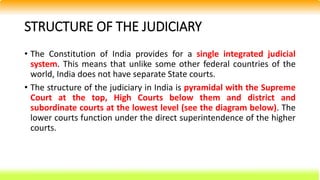
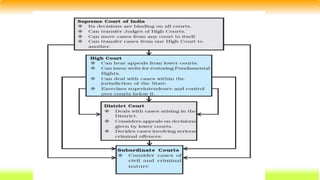
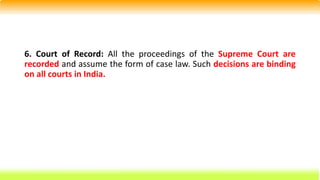
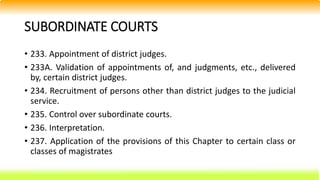
1. The document discusses the organization and functions of the Indian judiciary as outlined in the Constitution. It describes the appointment and qualifications of Supreme Court judges, their tenure, and process for removal.
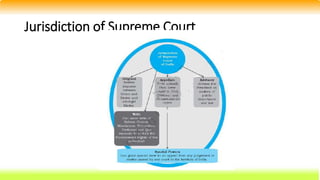
2. It also discusses the jurisdiction and powers of the Supreme Court, including its role in judicial review and protecting fundamental rights. The Supreme Court has played an active role through public interest litigation.
3. The judiciary's relationship with the executive and legislative branches is also covered, including controversies around certain laws and the landmark Kesavananda Bharati case that set limits on parliamentary amendments.