UNIT IV -Part 3
IOT Platforms Design
Methodology
Mrs. Kiran M. Pradhan
Internet of Things
MSc.CS FY Sem-II
08-04-2020
IOT Platforms DesignMethodology
It includes:
Purpose & Requirements
Specification
Process Specification
Domain Model Specification
Information Model Specification
Service Specification
IOT Platforms DesignMethodology
IoT Level Specifications
Functional view Specification
Operational View
Specification
Device & component
Integration
Application Development
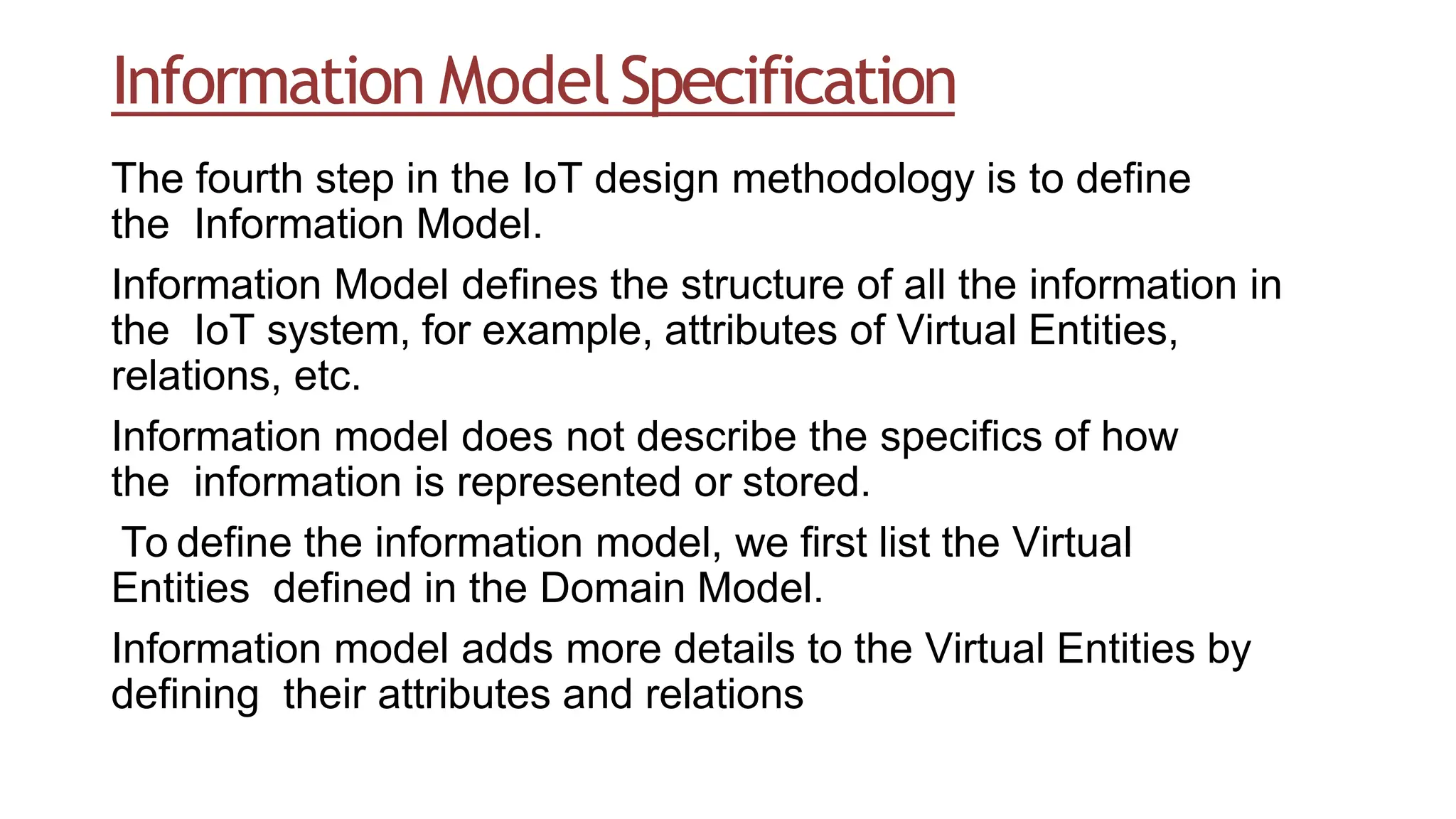
Information ModelSpecification
The fourth step in the IoT design methodology is to define
the Information Model.
Information Model defines the structure of all the information in
the IoT system, for example, attributes of Virtual Entities,
relations, etc.
Information model does not describe the specifics of how
the information is represented or stored.
To define the information model, we first list the Virtual
Entities defined in the Domain Model.
Information model adds more details to the Virtual Entities by
defining their attributes and relations
Information ModelSpecification
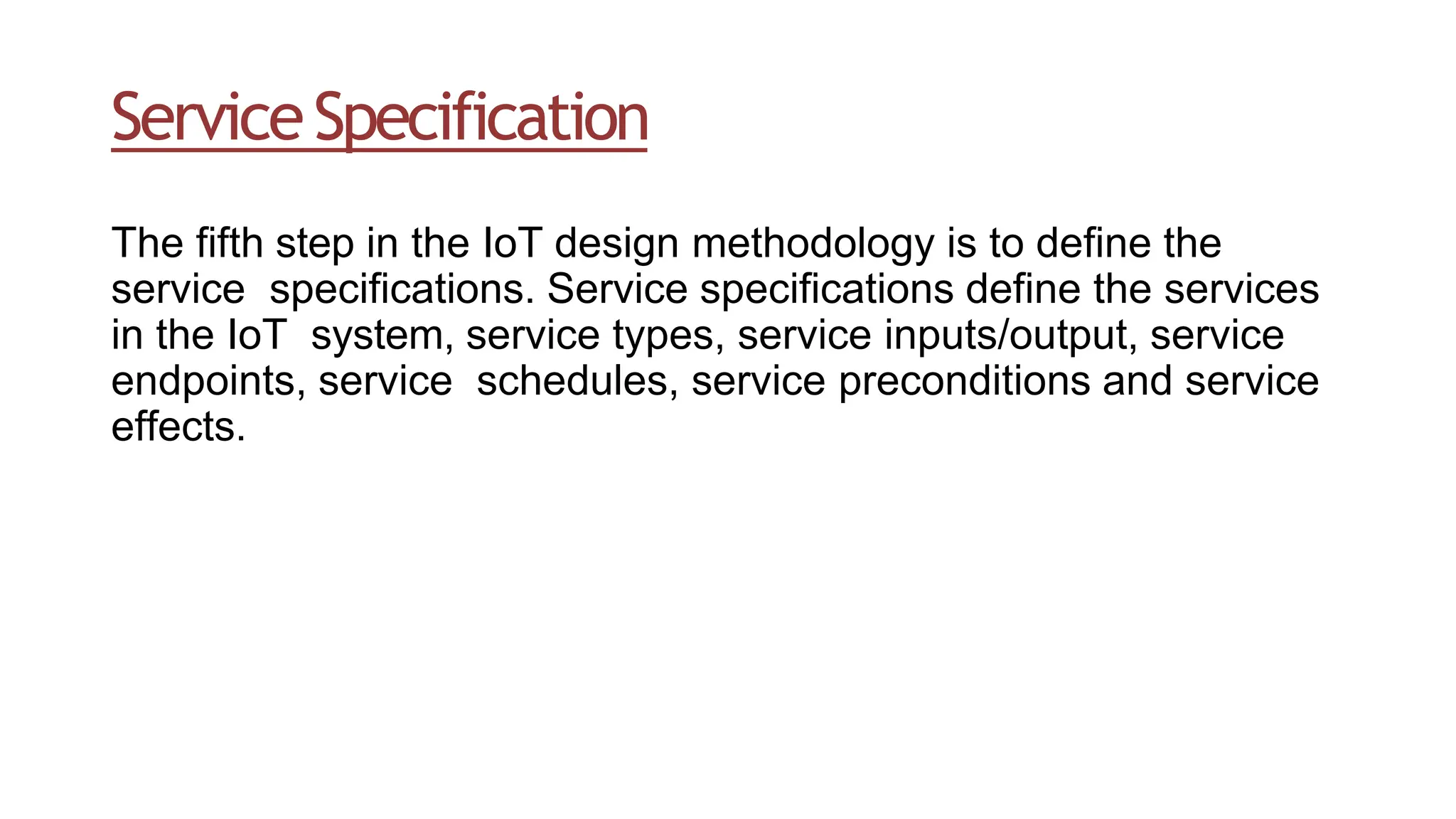
ServiceSpecification
The fifth step in the IoT design methodology is to define the
service specifications. Service specifications define the services
in the IoT system, service types, service inputs/output, service
endpoints, service schedules, service preconditions and service
effects.
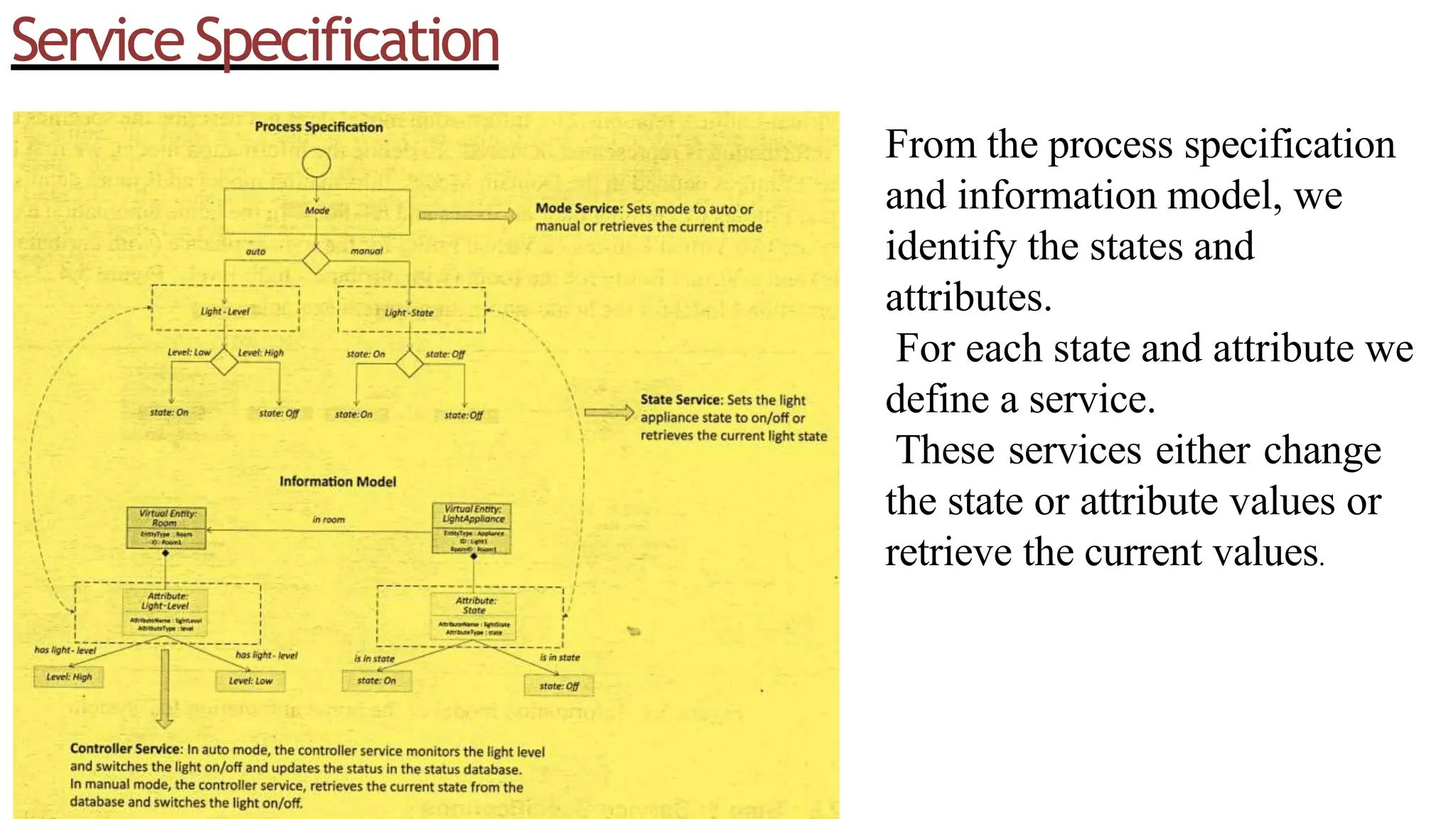
ServiceSpecification
From the process specification
and information model, we
identify the states and
attributes.
For each state and attribute we
define a service.
These services either change
the state or attribute values or
retrieve the current values.
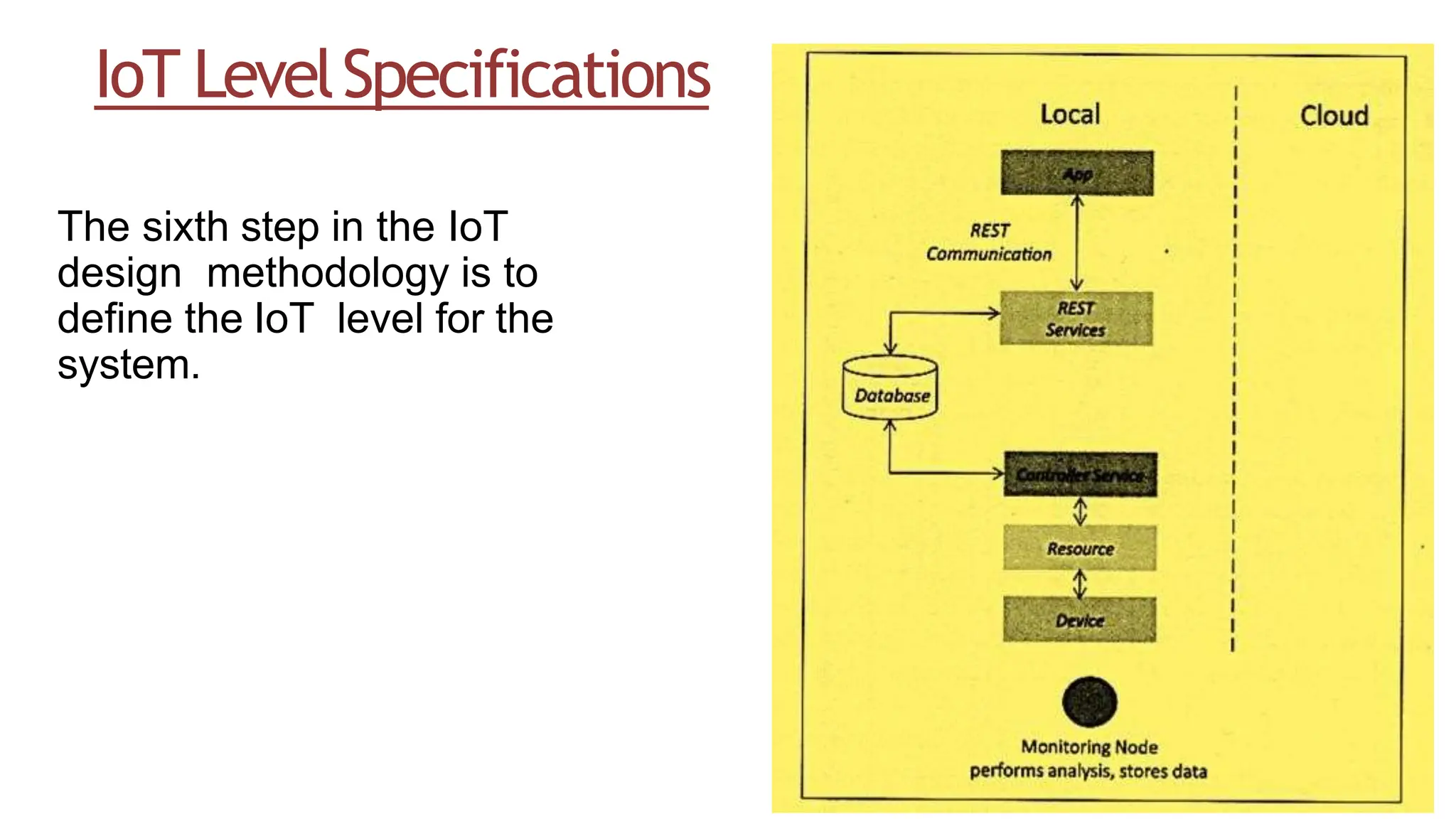
IoT LevelSpecifications
The sixth step in the IoT
design methodology is to
define the IoT level for the
system.
Thankyou
Ref: IOT by Ashdeep Bahga &Vijay
Madisetti
5
1

Unit 4 -IOT3_IoT_platform_Design_methodology.pptx

  • 1.
    UNIT IV -Part3 IOT Platforms Design Methodology Mrs. Kiran M. Pradhan Internet of Things MSc.CS FY Sem-II 08-04-2020
  • 2.
    IOT Platforms DesignMethodology Itincludes: Purpose & Requirements Specification Process Specification Domain Model Specification Information Model Specification Service Specification
  • 3.
    IOT Platforms DesignMethodology IoTLevel Specifications Functional view Specification Operational View Specification Device & component Integration Application Development
  • 4.
    Information ModelSpecification The fourthstep in the IoT design methodology is to define the Information Model. Information Model defines the structure of all the information in the IoT system, for example, attributes of Virtual Entities, relations, etc. Information model does not describe the specifics of how the information is represented or stored. To define the information model, we first list the Virtual Entities defined in the Domain Model. Information model adds more details to the Virtual Entities by defining their attributes and relations
  • 5.
  • 6.
    ServiceSpecification The fifth stepin the IoT design methodology is to define the service specifications. Service specifications define the services in the IoT system, service types, service inputs/output, service endpoints, service schedules, service preconditions and service effects.
  • 7.
    ServiceSpecification From the processspecification and information model, we identify the states and attributes. For each state and attribute we define a service. These services either change the state or attribute values or retrieve the current values.
  • 8.
    IoT LevelSpecifications The sixthstep in the IoT design methodology is to define the IoT level for the system.
  • 9.
    Thankyou Ref: IOT byAshdeep Bahga &Vijay Madisetti 5 1