UNIT- IV
Technological
Environment
Technology and Innovation
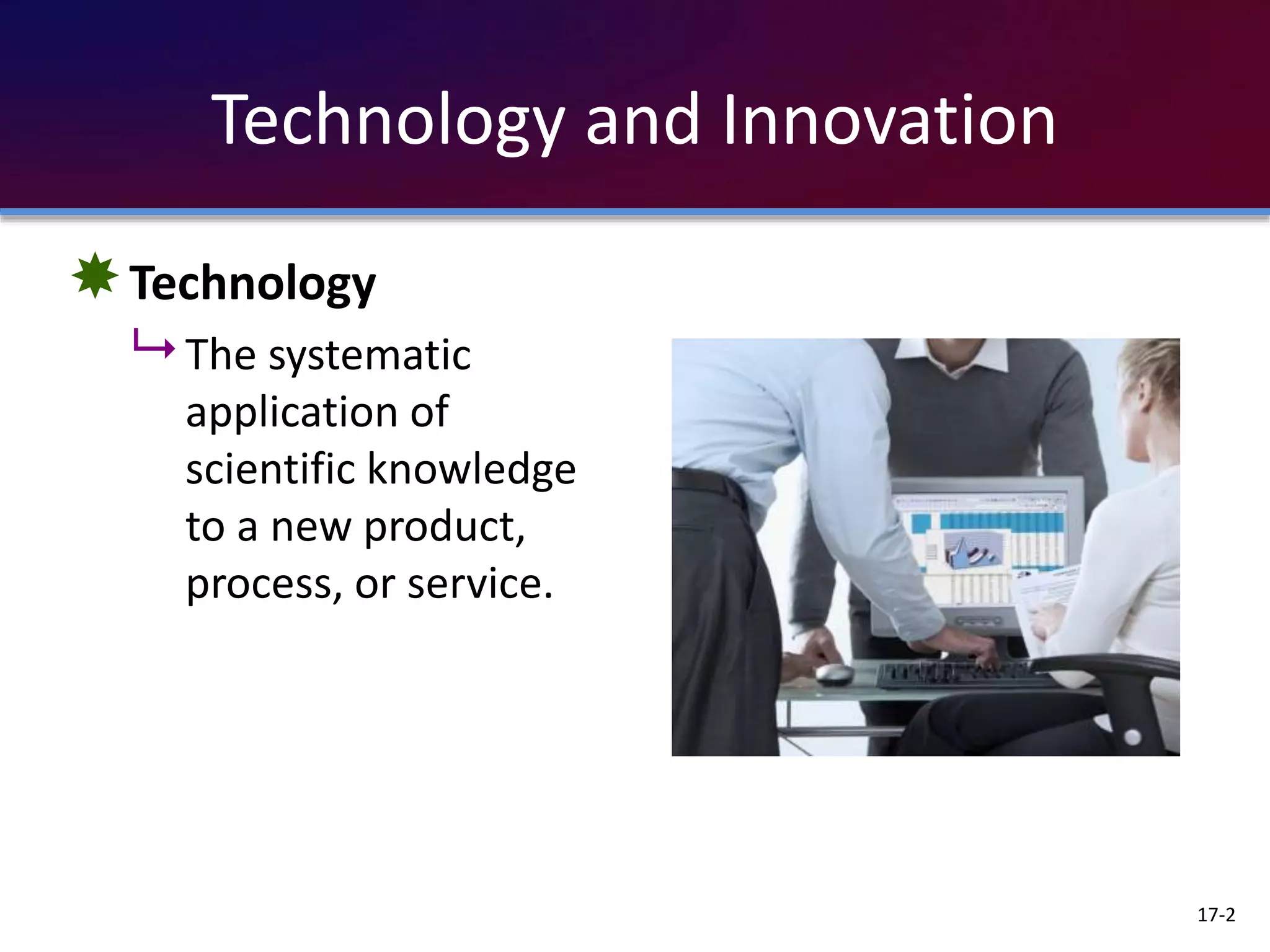
Technology
 The systematic
application of
scientific knowledge
to a new product,
process, or service.
17-2
Technology and Innovation
Innovation
 change in method or technology
 positive, useful departure from previous ways of
doing things.
17-3
Forces Driving
Technological Development
1. Must be a need, or demand, for the technology
2. Meeting the need must be theoretically
possible, and the knowledge to do so must be
available from basic science
3. Must be able to convert the scientific knowledge
into practice in both engineering and economic
terms
17-4
Forces Driving
Technological Development
4. The funding, skilled labor, time, space, and
other resources needed to develop the
technology must be available
5. Entrepreneurial initiative is needed to
identify and pull all the necessary elements
together.
17-5
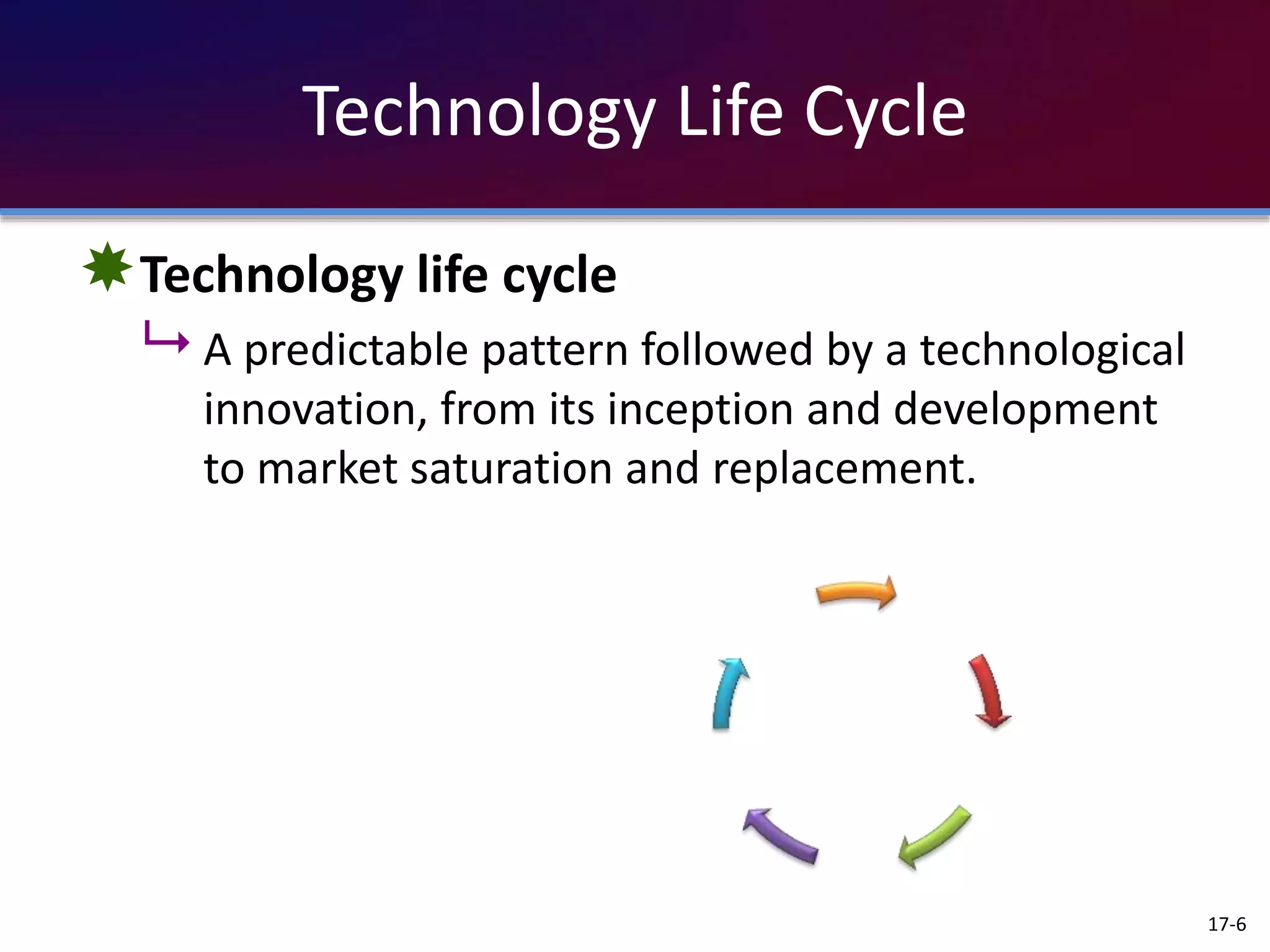
Technology Life Cycle
Technology life cycle
 A predictable pattern followed by a technological
innovation, from its inception and development
to market saturation and replacement.
17-6
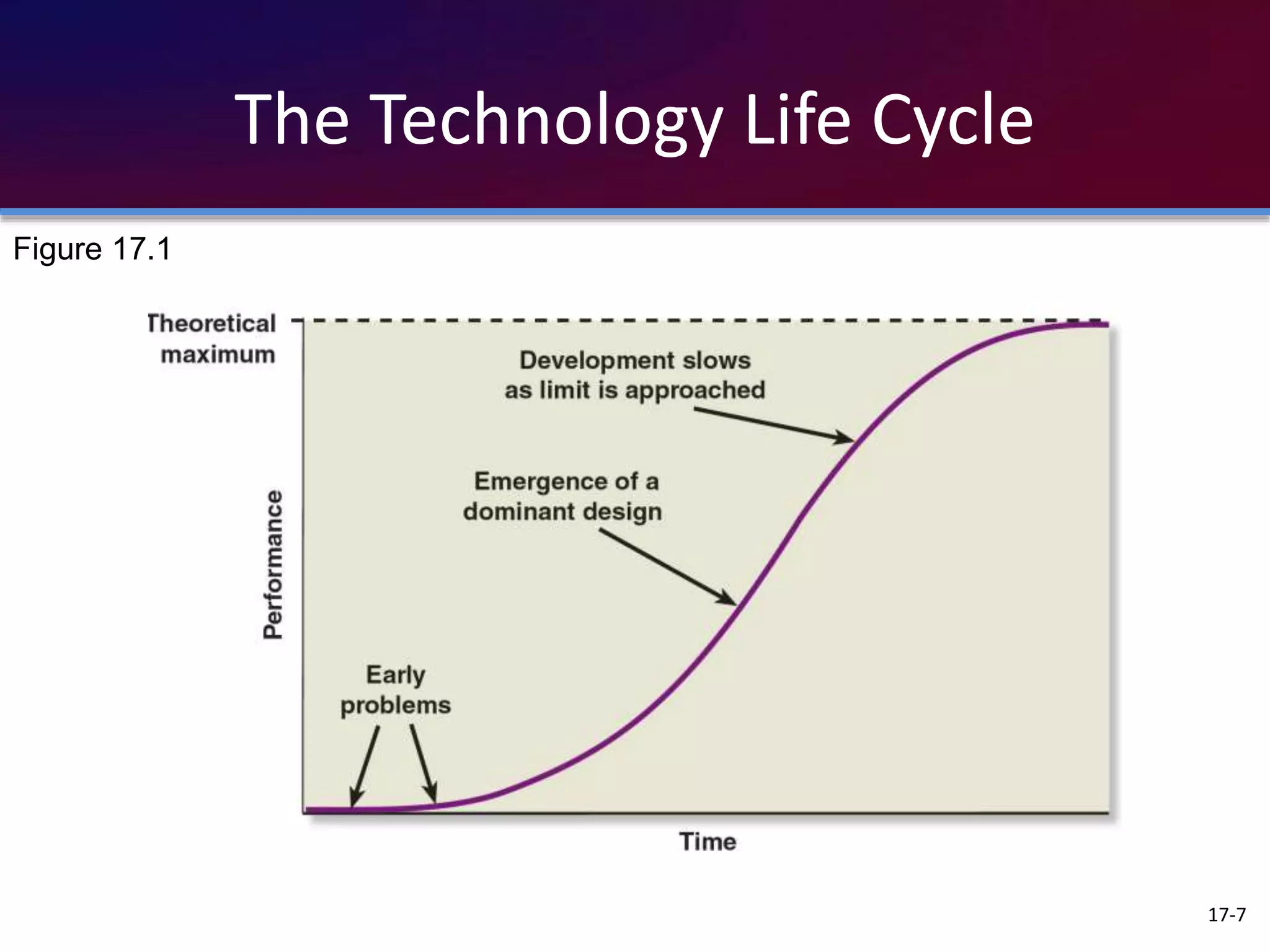
The Technology Life Cycle
17-7
Figure 17.1
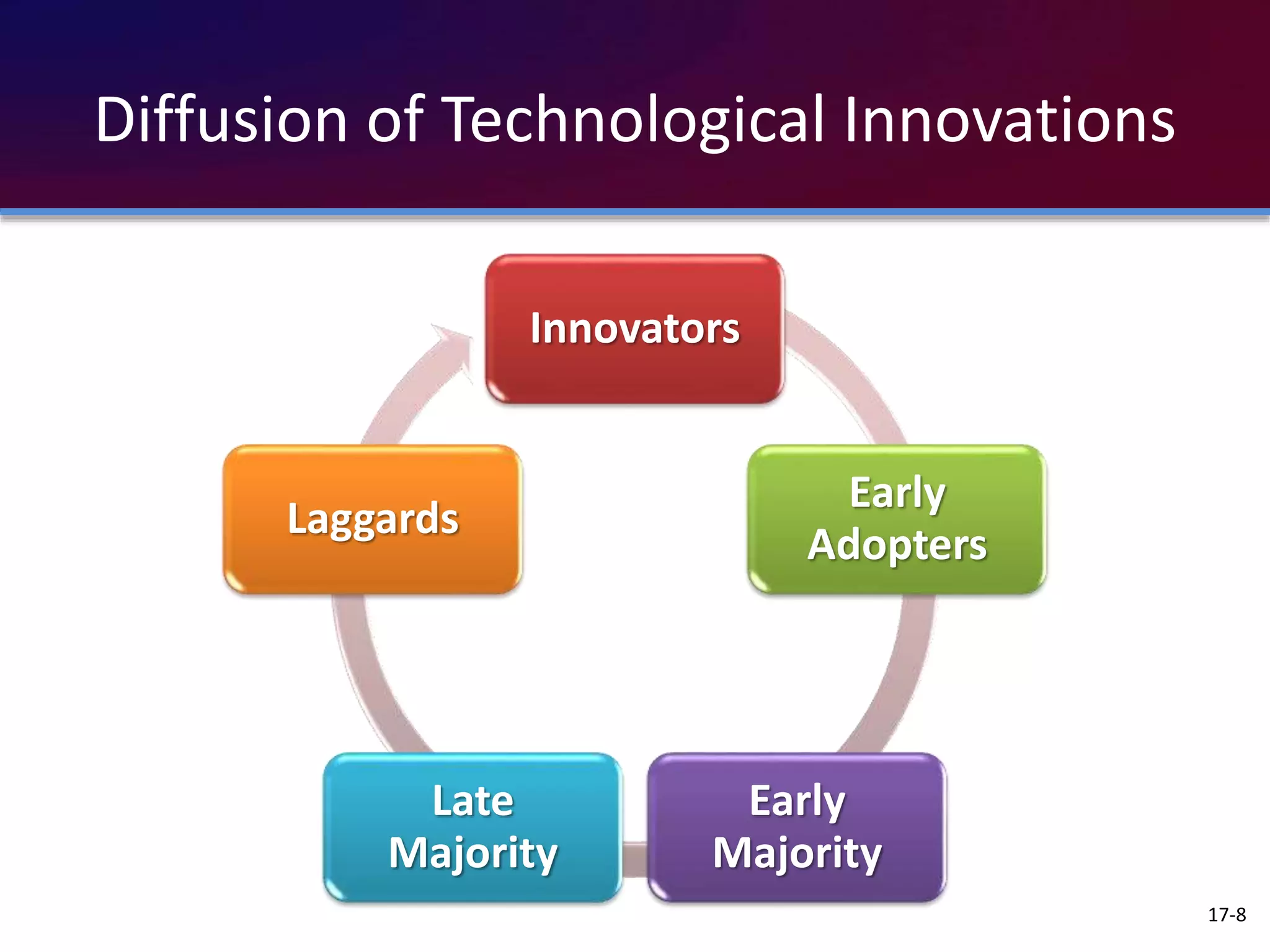
Diffusion of Technological Innovations
17-8
Innovators
Early
Adopters
Early
Majority
Late
Majority
Laggards
Diffusion of Technological Innovations
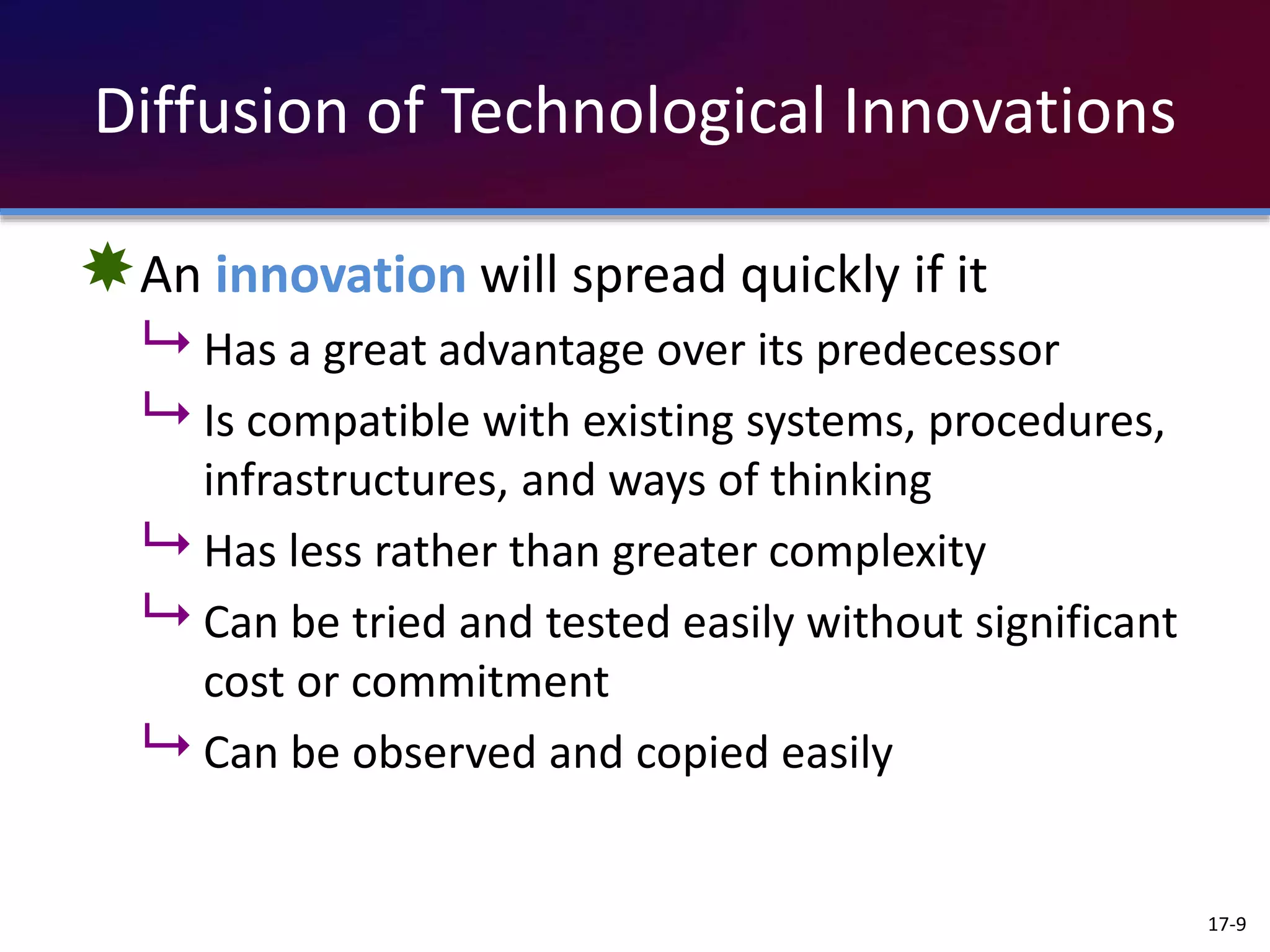
An innovation will spread quickly if it
 Has a great advantage over its predecessor
 Is compatible with existing systems, procedures,
infrastructures, and ways of thinking
 Has less rather than greater complexity
 Can be tried and tested easily without significant
cost or commitment
 Can be observed and copied easily
17-9
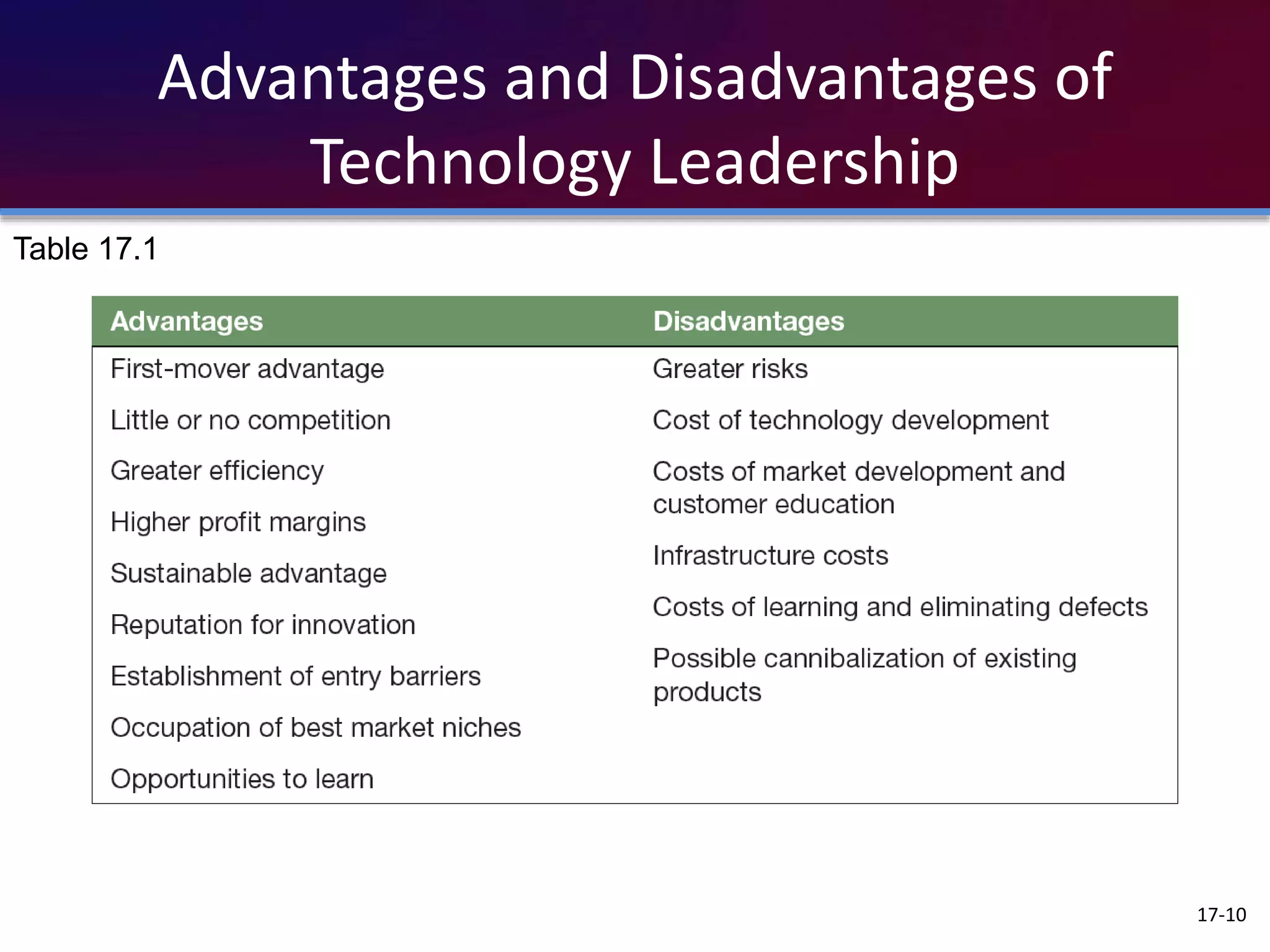
Advantages and Disadvantages of
Technology Leadership
17-10
Table 17.1
Technology Followership
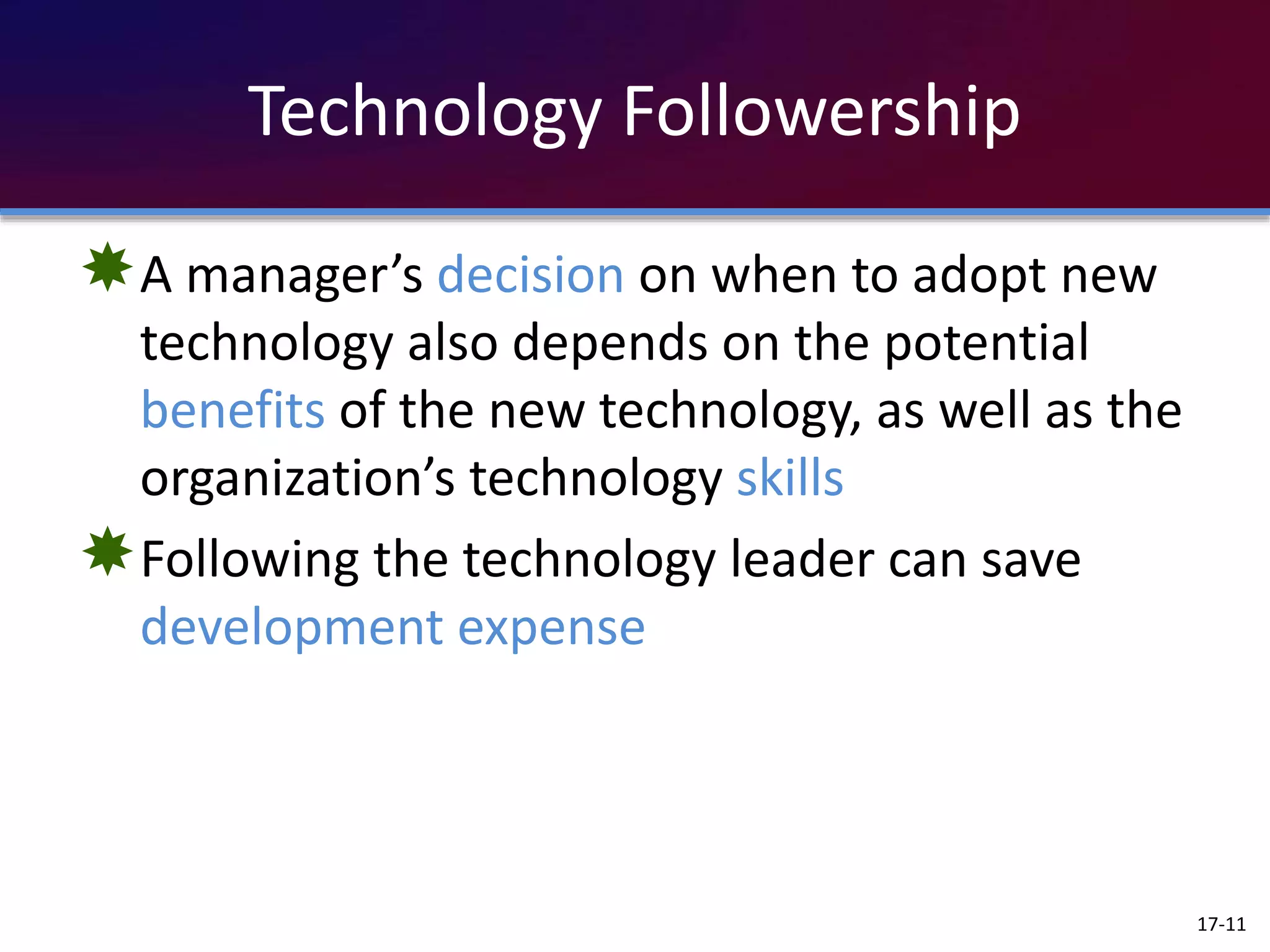
A manager’s decision on when to adopt new
technology also depends on the potential
benefits of the new technology, as well as the
organization’s technology skills
Following the technology leader can save
development expense
17-11
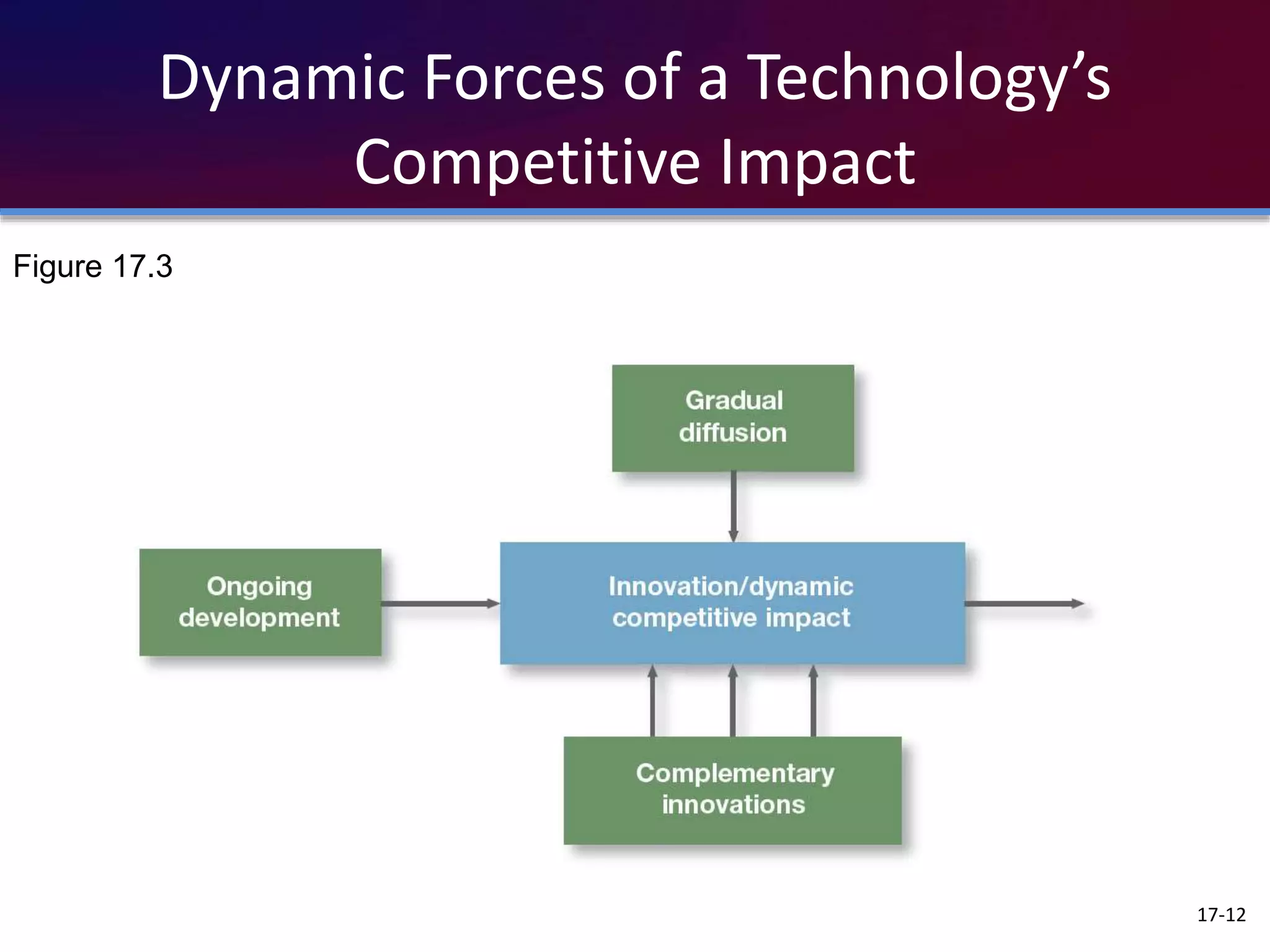
Dynamic Forces of a Technology’s
Competitive Impact
17-12
Figure 17.3
Assessing Technology Needs
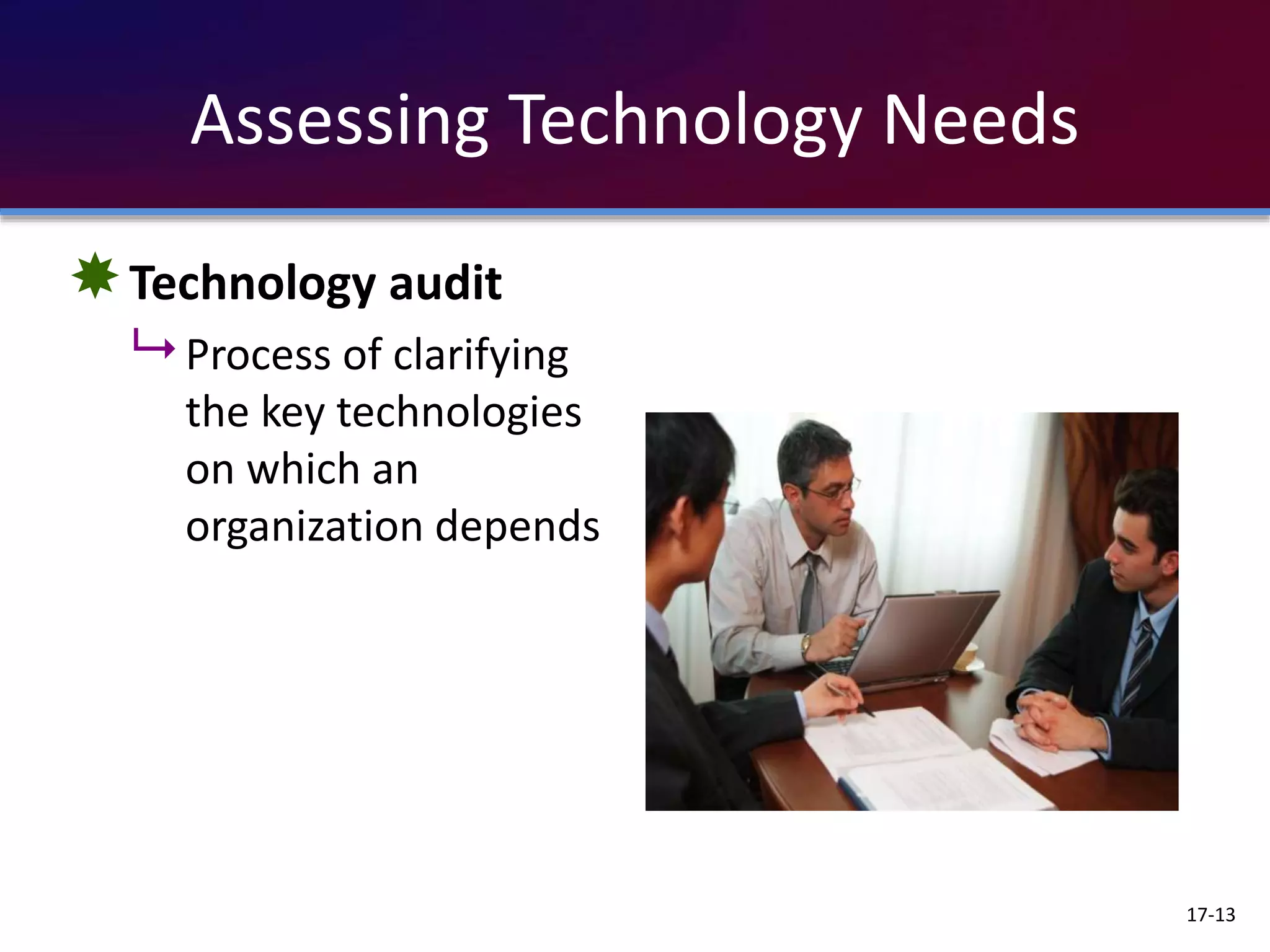
Technology audit
 Process of clarifying
the key technologies
on which an
organization depends
17-13
Measuring Current Technologies
Emerging
technologies are still
under development
and thus are
unproved
Pacing technologies
have yet to prove
their full value but
have the potential to
alter the rules of
competition by
providing significant
advantage
17-14
Measuring Current Technologies
Key technologies
have proved
effective, but they
also provide a
strategic advantage
because not
everyone uses them
Base technologies
are those that are
commonplace in the
industry; everyone
must have them to be
able to operate
17-15
Assessing External
Technological Trends
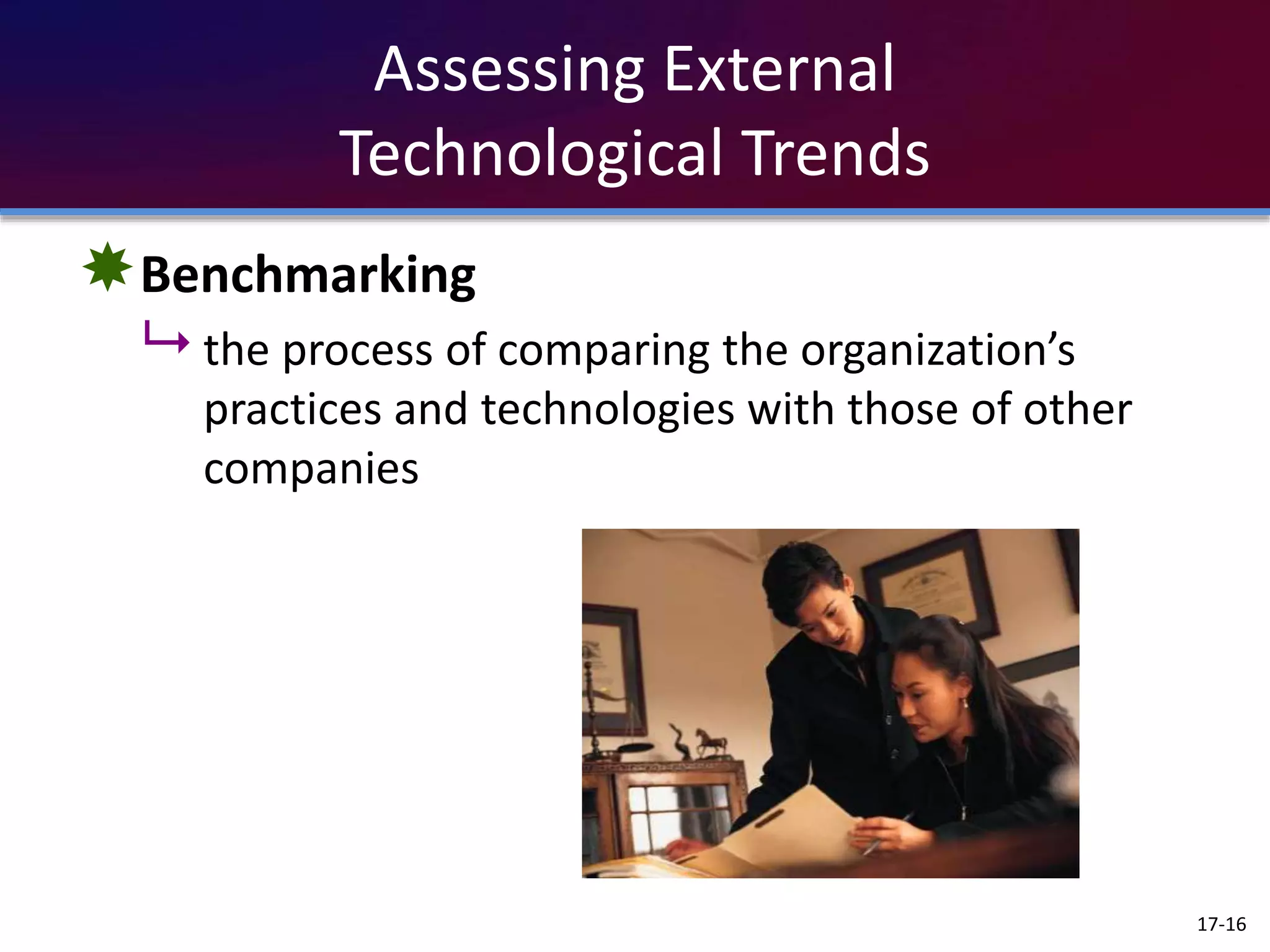
Benchmarking
 the process of comparing the organization’s
practices and technologies with those of other
companies
17-16
Assessing External
Technological Trends
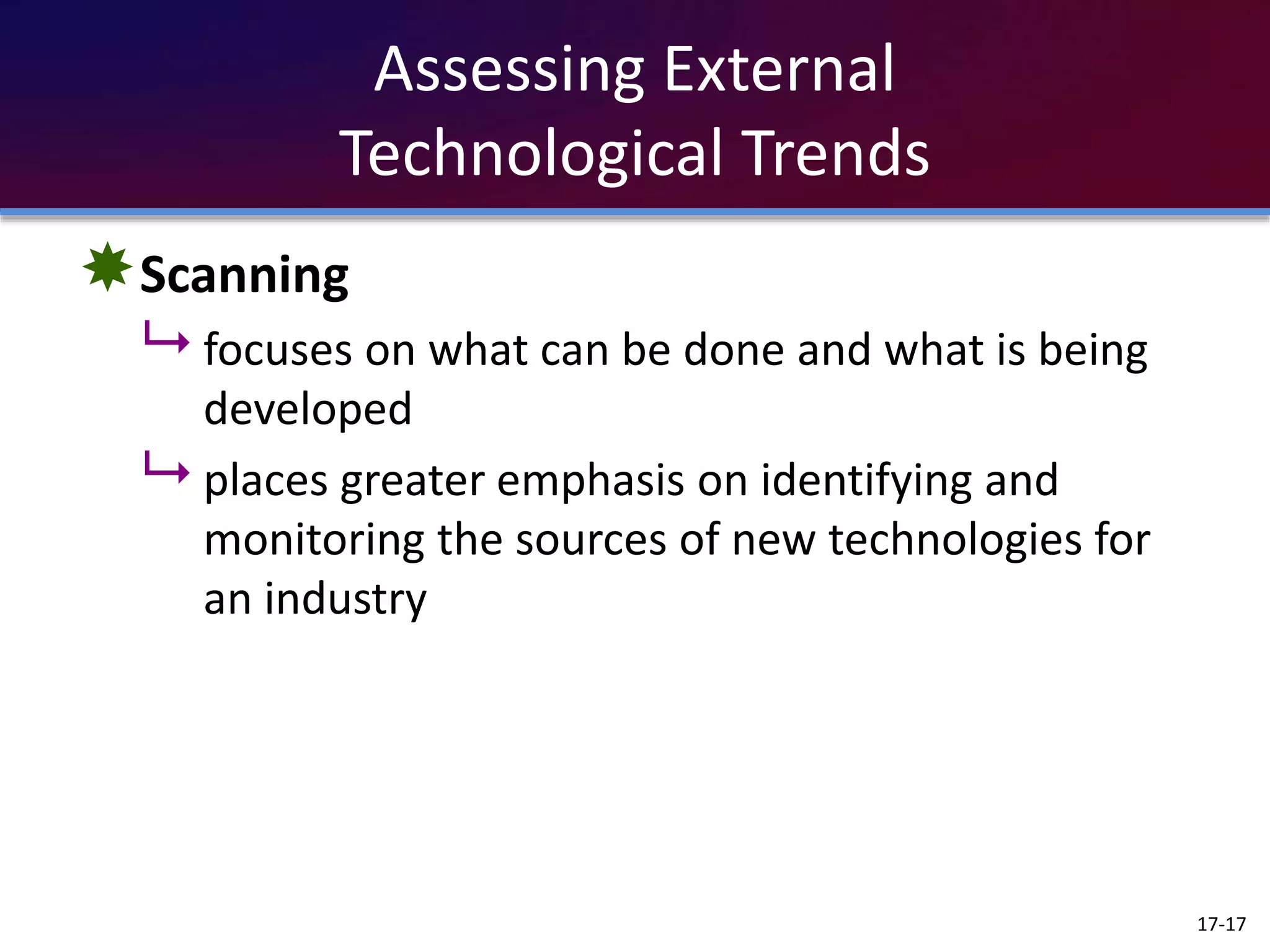
Scanning
 focuses on what can be done and what is being
developed
 places greater emphasis on identifying and
monitoring the sources of new technologies for
an industry
17-17
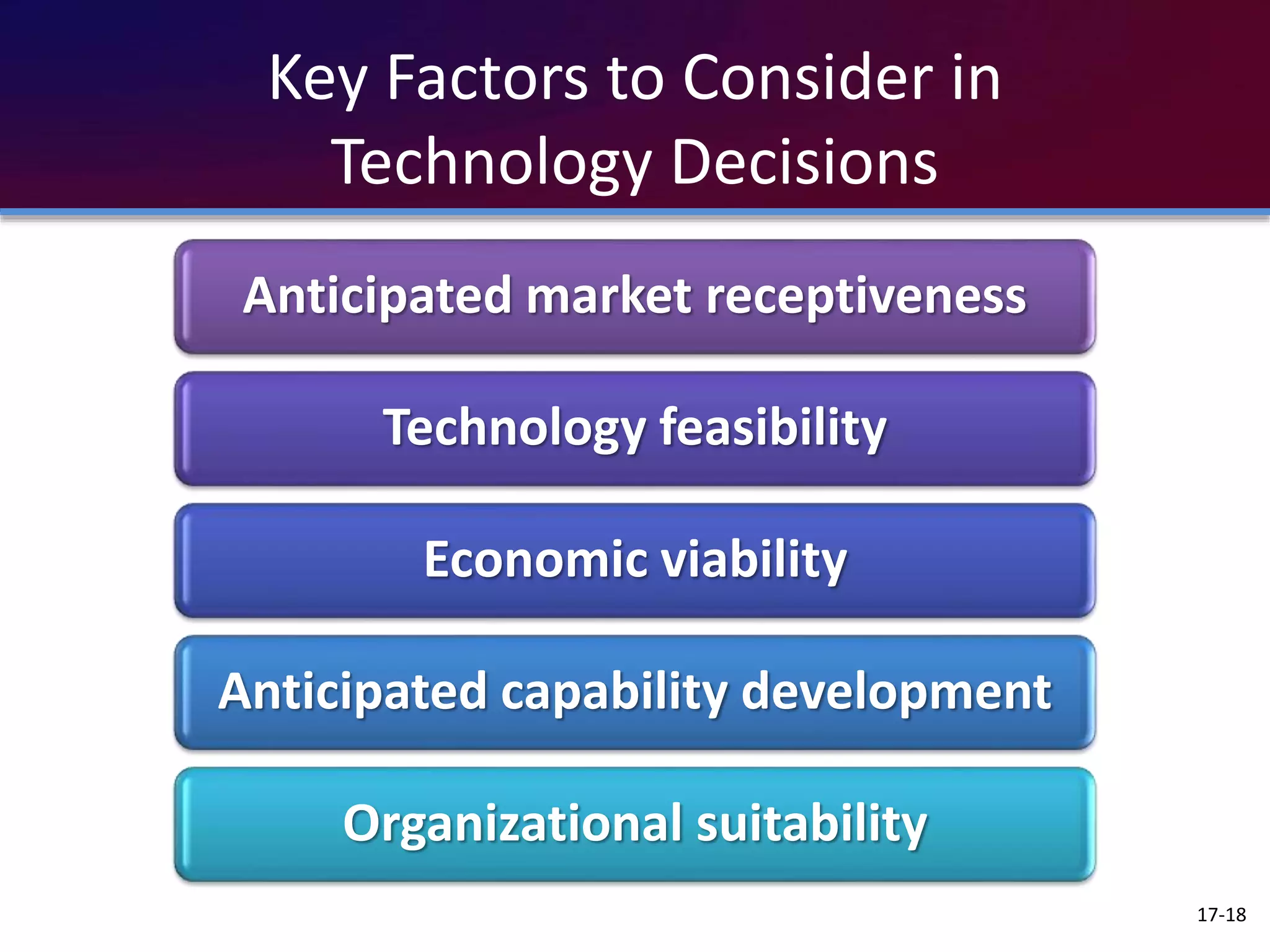
Key Factors to Consider in
Technology Decisions
17-18
Anticipated market receptiveness
Technology feasibility
Economic viability
Anticipated capability development
Organizational suitability
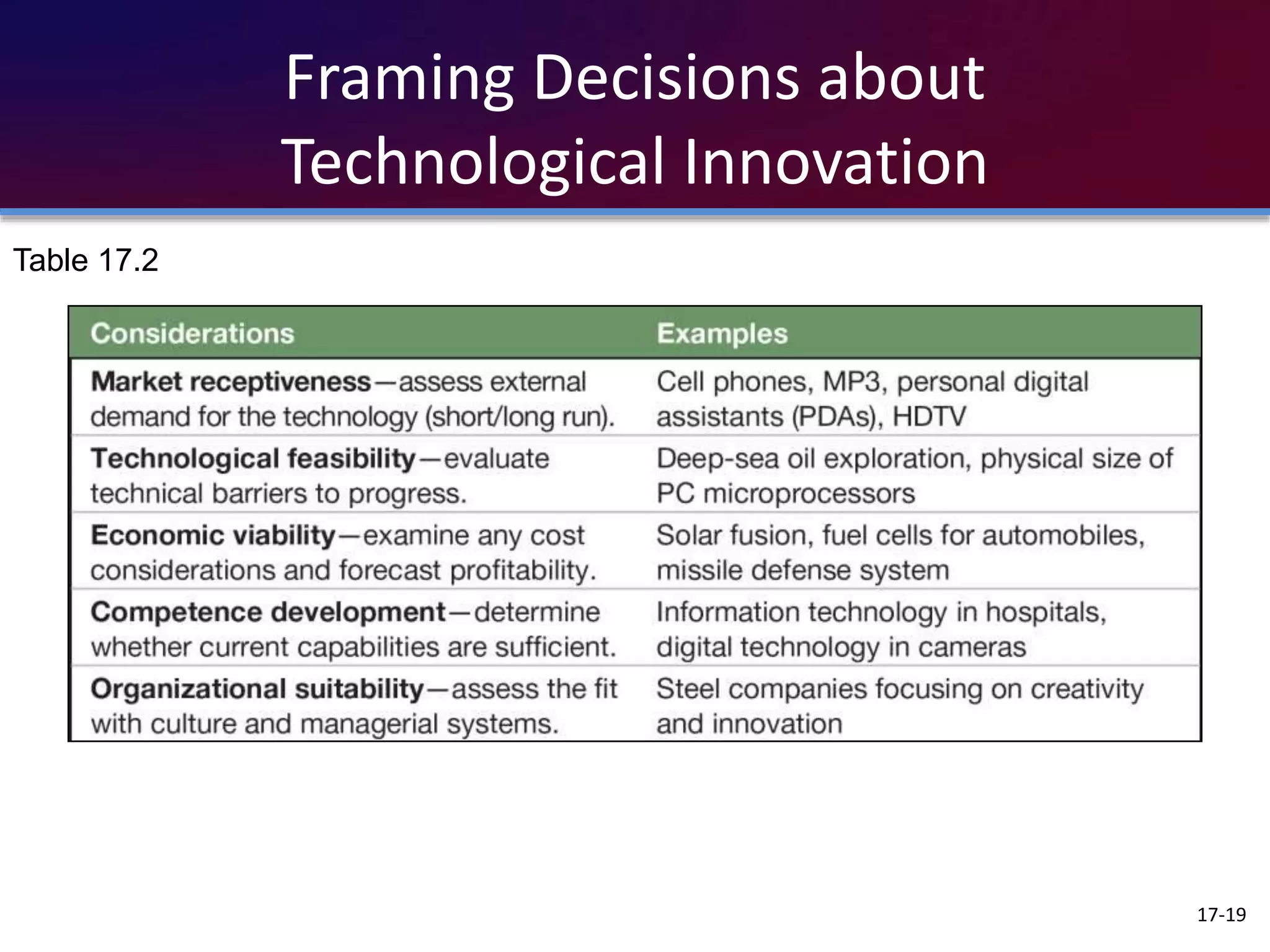
Framing Decisions about
Technological Innovation
17-19
Table 17.2
Sourcing and Acquiring
New Technologies
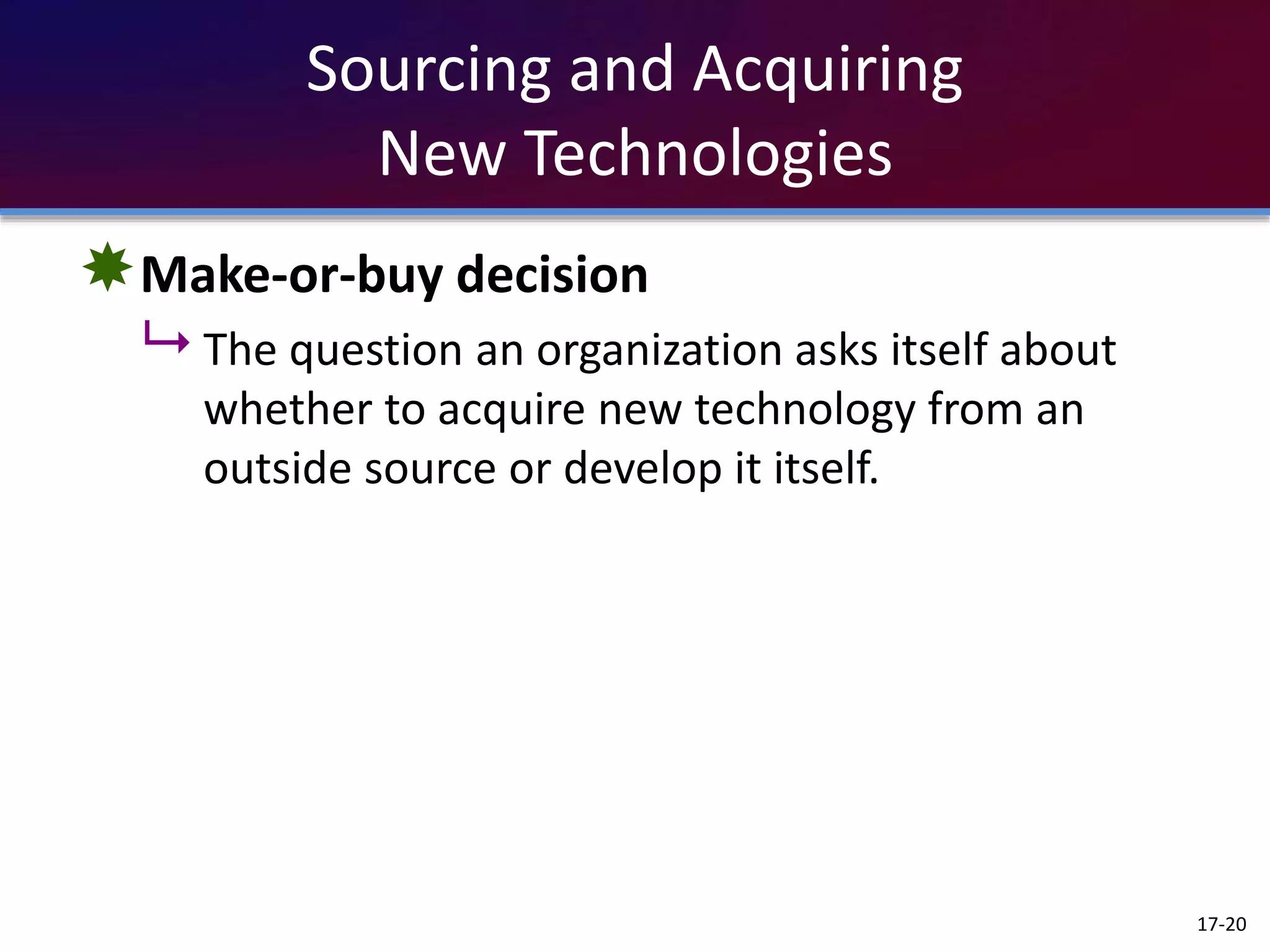
Make-or-buy decision
 The question an organization asks itself about
whether to acquire new technology from an
outside source or develop it itself.
17-20
Sourcing and Acquiring
New Technologies
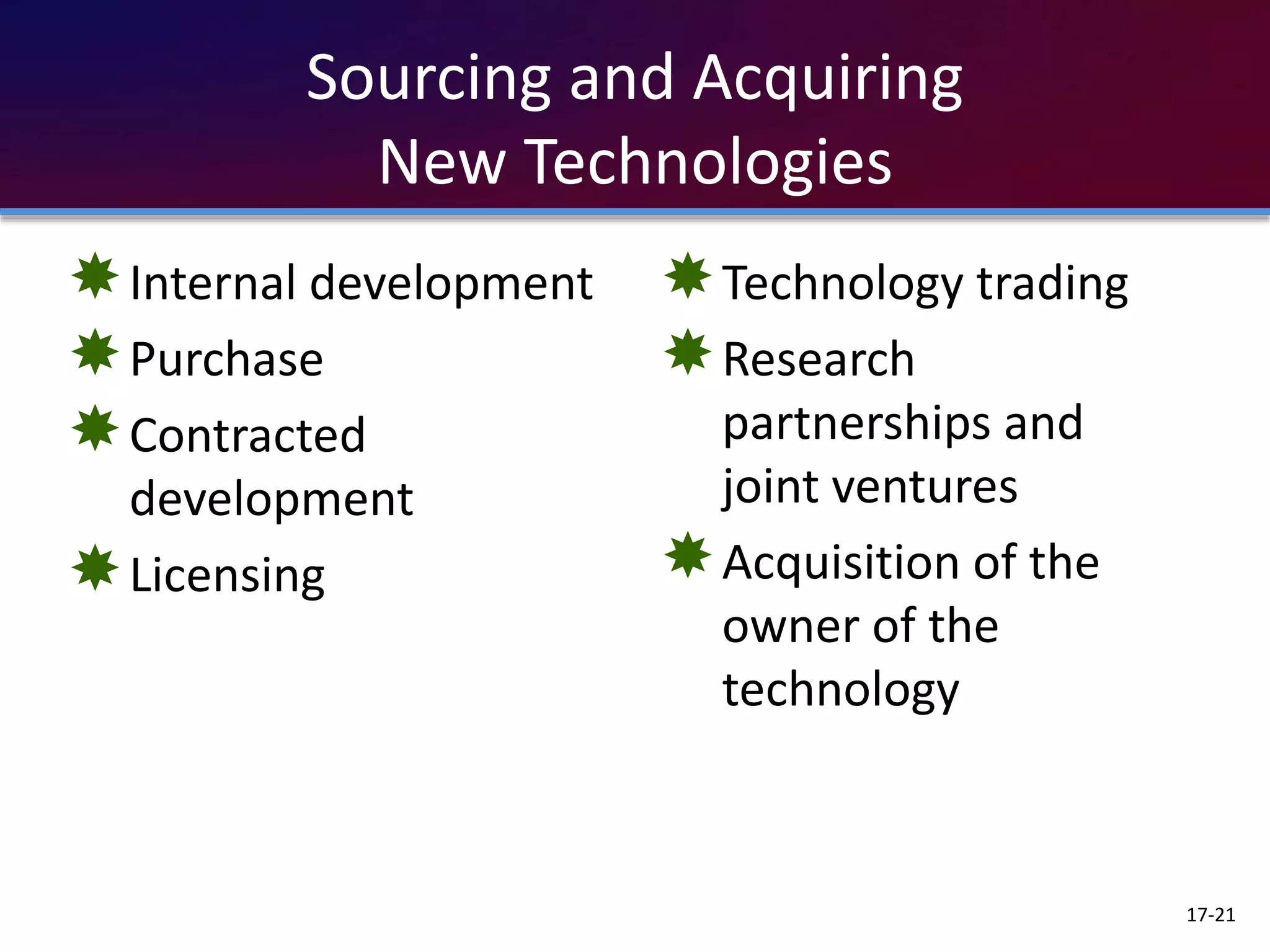
Internal development
Purchase
Contracted
development
Licensing
Technology trading
Research
partnerships and
joint ventures
Acquisition of the
owner of the
technology
17-21
Sourcing and Acquiring
New Technologies
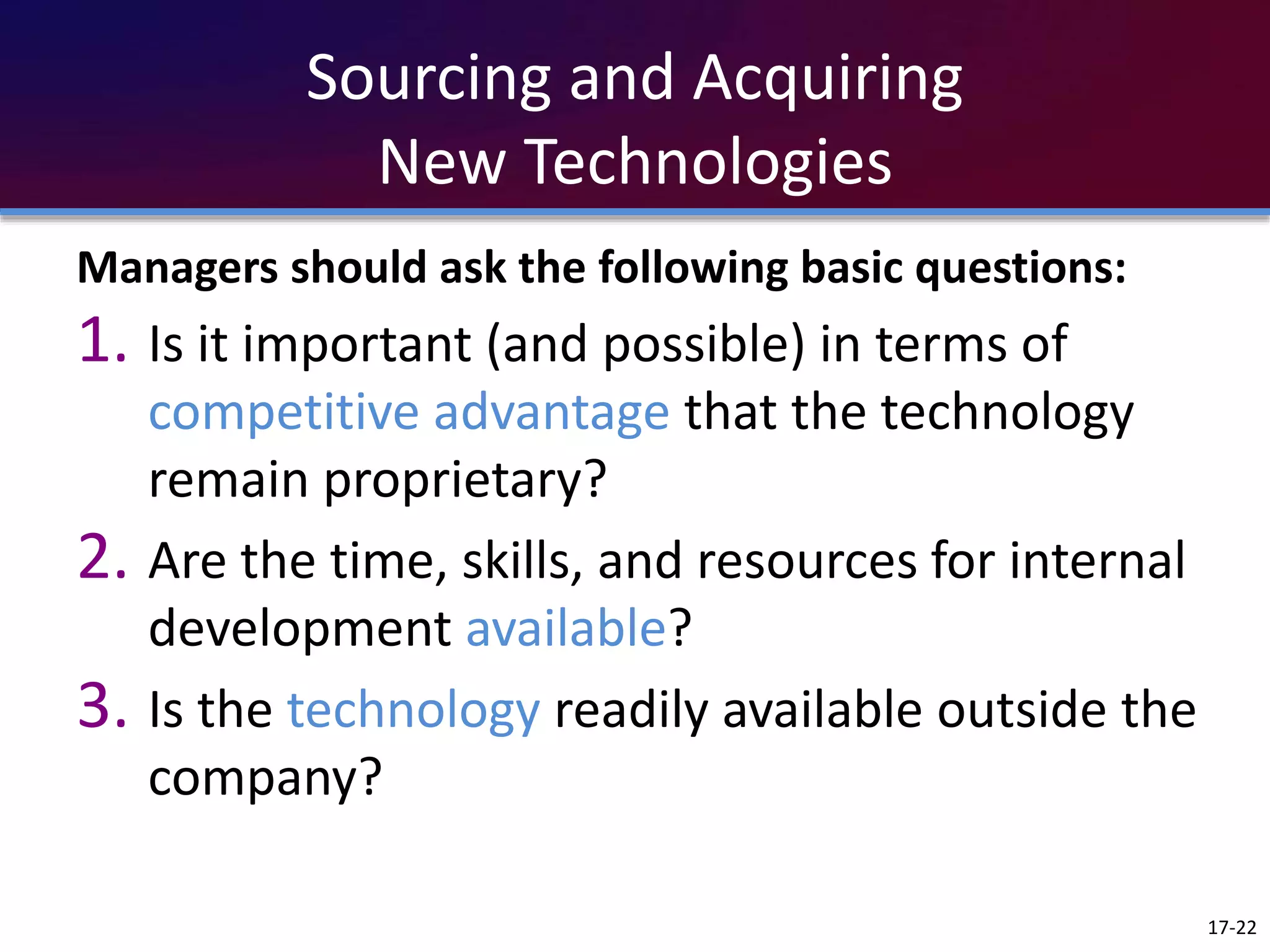
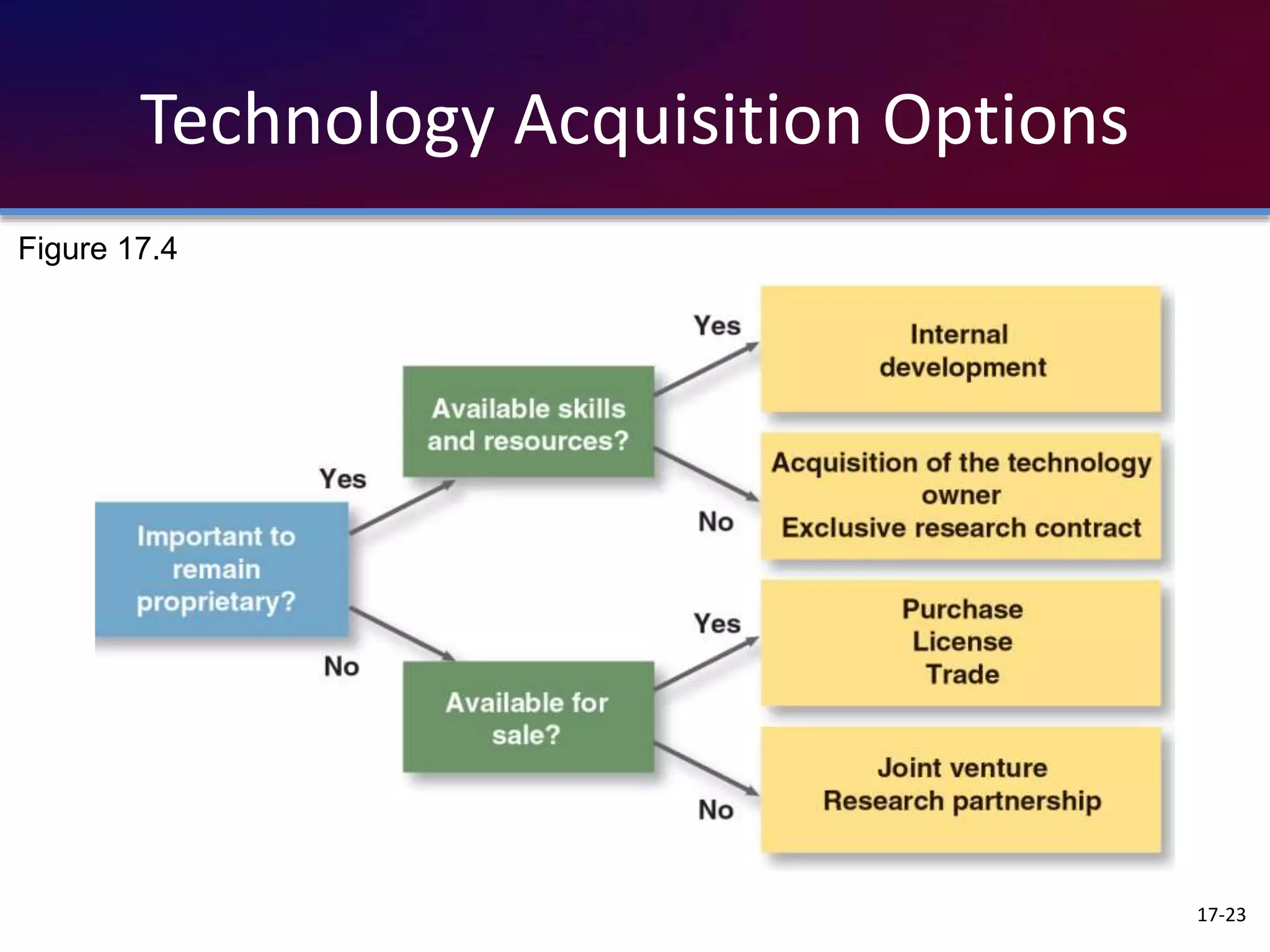
Managers should ask the following basic questions:
1. Is it important (and possible) in terms of
competitive advantage that the technology
remain proprietary?
2. Are the time, skills, and resources for internal
development available?
3. Is the technology readily available outside the
company?
17-22
Technology Acquisition Options
17-23
Figure 17.4
Technology and Managerial Roles
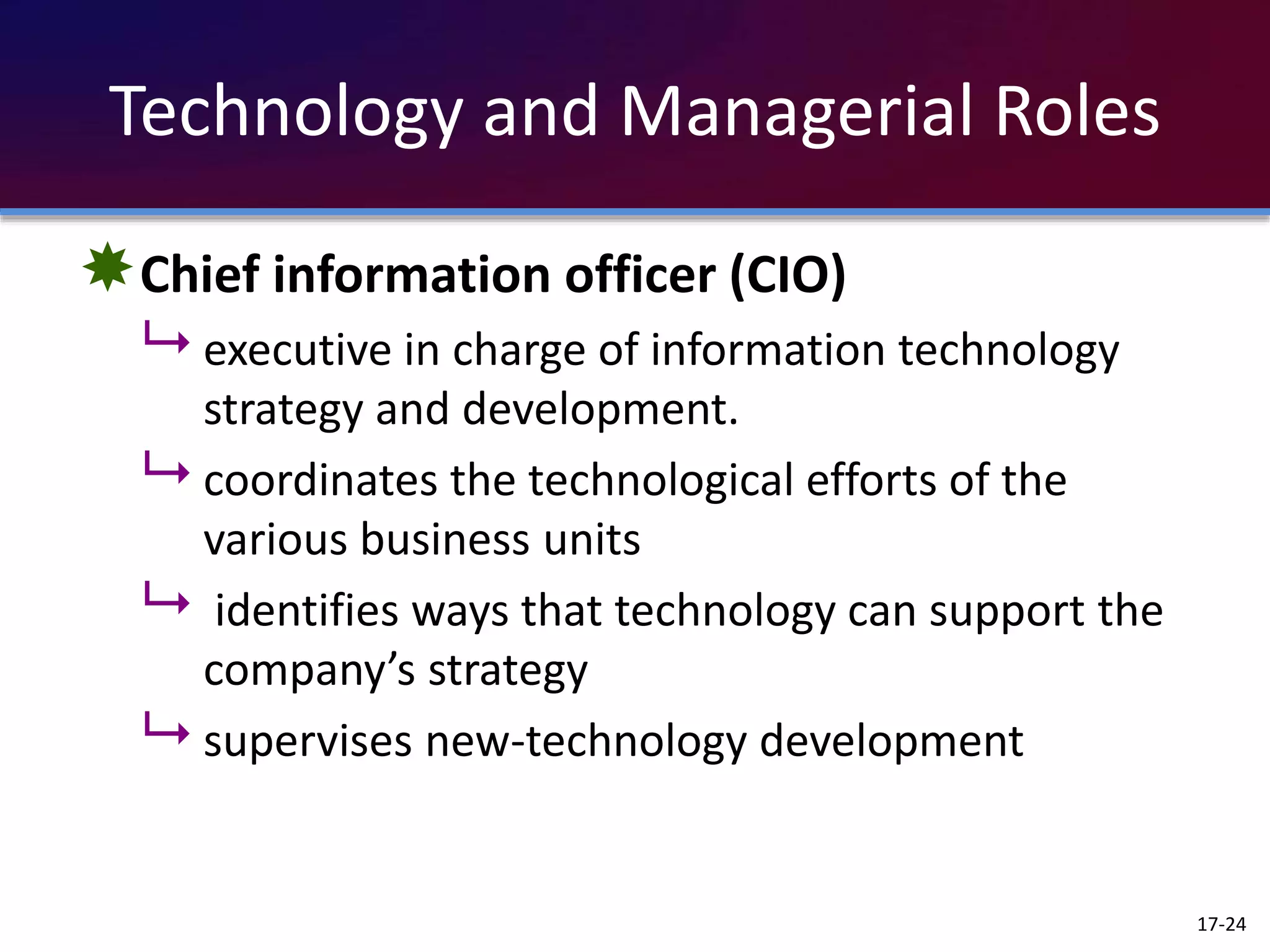
Chief information officer (CIO)
 executive in charge of information technology
strategy and development.
 coordinates the technological efforts of the
various business units
 identifies ways that technology can support the
company’s strategy
 supervises new-technology development
17-24
Technology and Managerial Roles
Technical innovator
 A person who develops a new technology or has
the key skills to install and operate the
technology
Product champion
 A person who promotes a new technology
throughout the organization in an effort to
obtain acceptance of and support for it.
17-25
Technology and Managerial Roles
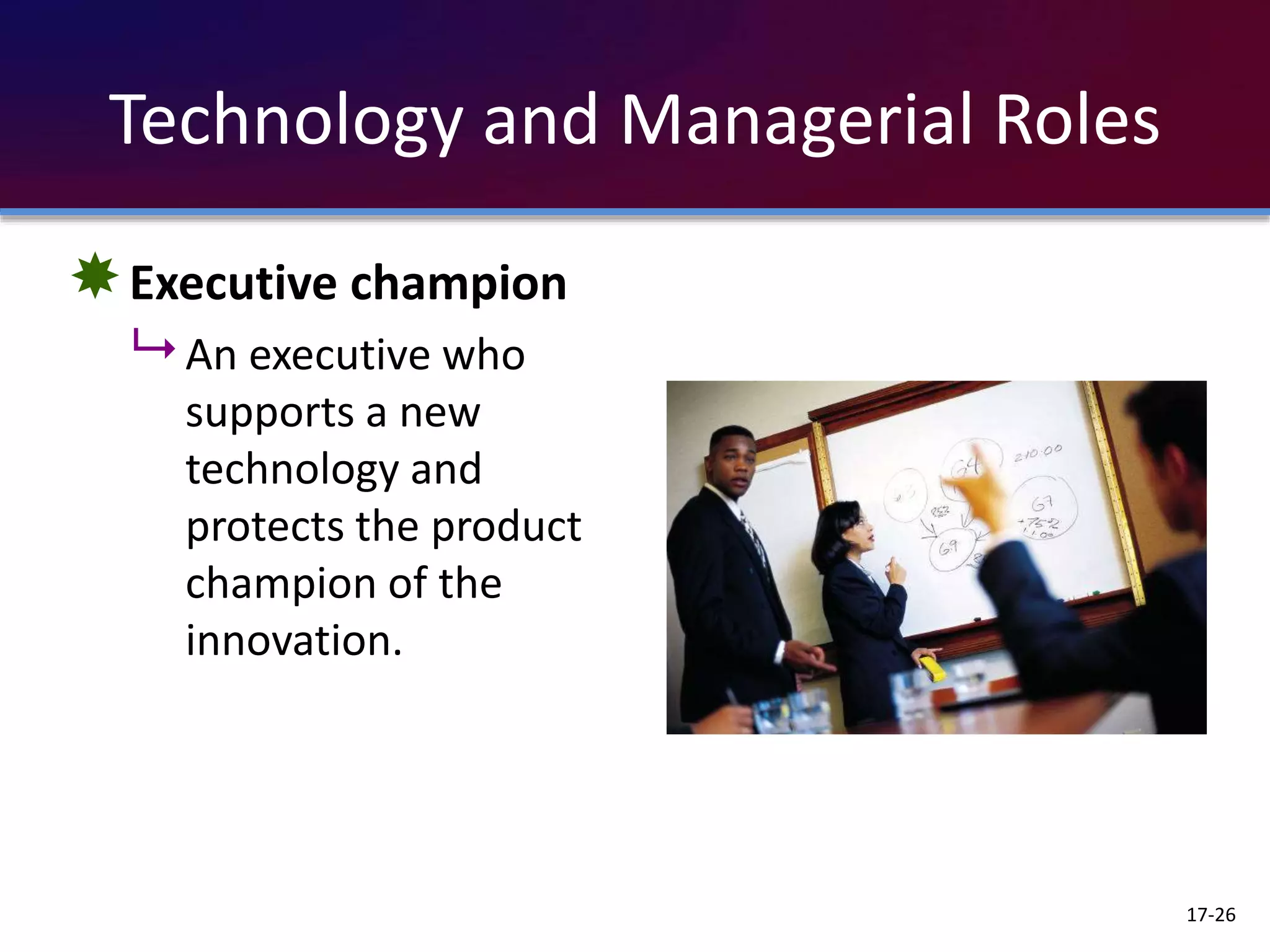
Executive champion
 An executive who
supports a new
technology and
protects the product
champion of the
innovation.
17-26
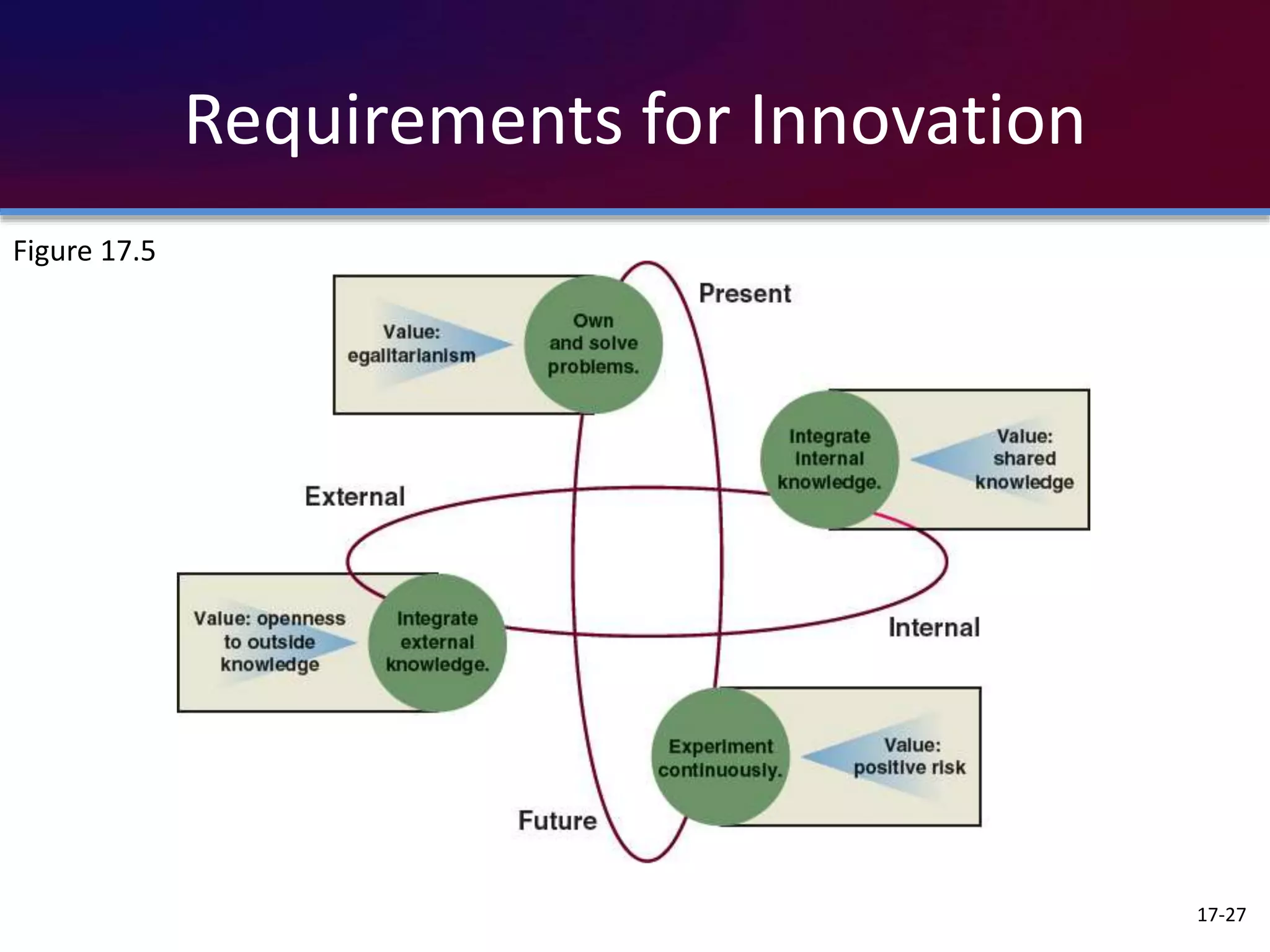
Requirements for Innovation
17-27
Figure 17.5
Organizing for Innovation
Unleashing creativity involves encouraging
creativity and celebrating failure
Bureaucracy busting is necessary because
bureaucracy is the enemy of innovation
17-28
3M’s Rules for an
Innovative Culture
17-29
Table 17.3
Organizing for Innovation
Development project
 A focused organizational effort to create a new
product or process via technological advances
17-30
Organizing for Innovation
Sociotechnical systems
 An approach to job design that attempts to
redesign tasks to optimize operation of a new
technology while preserving employees’
interpersonal relationships and other human
aspects of the work
17-31
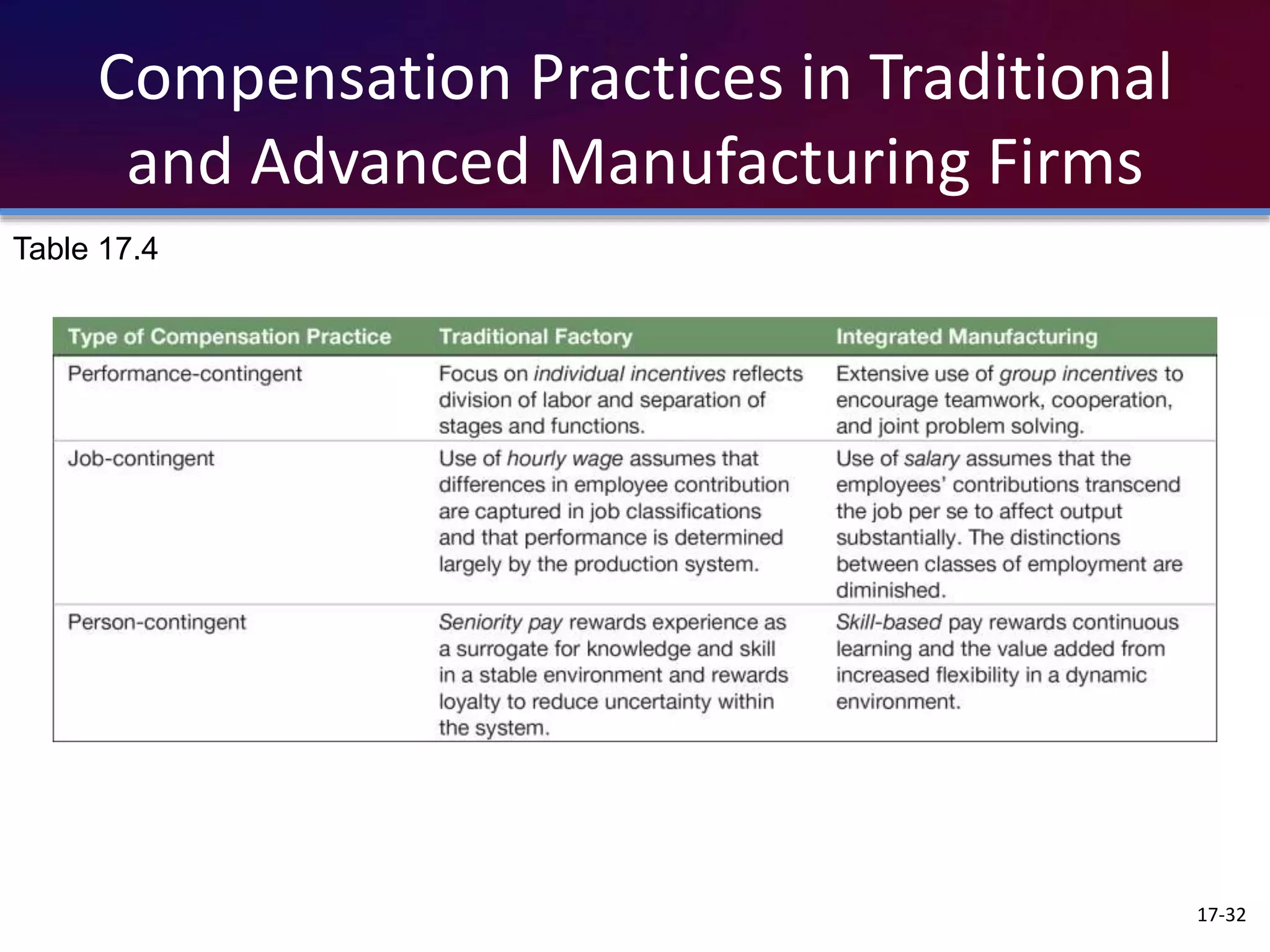
Compensation Practices in Traditional
and Advanced Manufacturing Firms
17-32
Table 17.4

Unit 4

  • 1.
  • 2.
    Technology and Innovation Technology The systematic application of scientific knowledge to a new product, process, or service. 17-2
  • 3.
    Technology and Innovation Innovation change in method or technology  positive, useful departure from previous ways of doing things. 17-3
  • 4.
    Forces Driving Technological Development 1.Must be a need, or demand, for the technology 2. Meeting the need must be theoretically possible, and the knowledge to do so must be available from basic science 3. Must be able to convert the scientific knowledge into practice in both engineering and economic terms 17-4
  • 5.
    Forces Driving Technological Development 4.The funding, skilled labor, time, space, and other resources needed to develop the technology must be available 5. Entrepreneurial initiative is needed to identify and pull all the necessary elements together. 17-5
  • 6.
    Technology Life Cycle Technologylife cycle  A predictable pattern followed by a technological innovation, from its inception and development to market saturation and replacement. 17-6
  • 7.
    The Technology LifeCycle 17-7 Figure 17.1
  • 8.
    Diffusion of TechnologicalInnovations 17-8 Innovators Early Adopters Early Majority Late Majority Laggards
  • 9.
    Diffusion of TechnologicalInnovations An innovation will spread quickly if it  Has a great advantage over its predecessor  Is compatible with existing systems, procedures, infrastructures, and ways of thinking  Has less rather than greater complexity  Can be tried and tested easily without significant cost or commitment  Can be observed and copied easily 17-9
  • 10.
    Advantages and Disadvantagesof Technology Leadership 17-10 Table 17.1
  • 11.
    Technology Followership A manager’sdecision on when to adopt new technology also depends on the potential benefits of the new technology, as well as the organization’s technology skills Following the technology leader can save development expense 17-11
  • 12.
    Dynamic Forces ofa Technology’s Competitive Impact 17-12 Figure 17.3
  • 13.
    Assessing Technology Needs Technologyaudit  Process of clarifying the key technologies on which an organization depends 17-13
  • 14.
    Measuring Current Technologies Emerging technologiesare still under development and thus are unproved Pacing technologies have yet to prove their full value but have the potential to alter the rules of competition by providing significant advantage 17-14
  • 15.
    Measuring Current Technologies Keytechnologies have proved effective, but they also provide a strategic advantage because not everyone uses them Base technologies are those that are commonplace in the industry; everyone must have them to be able to operate 17-15
  • 16.
    Assessing External Technological Trends Benchmarking the process of comparing the organization’s practices and technologies with those of other companies 17-16
  • 17.
    Assessing External Technological Trends Scanning focuses on what can be done and what is being developed  places greater emphasis on identifying and monitoring the sources of new technologies for an industry 17-17
  • 18.
    Key Factors toConsider in Technology Decisions 17-18 Anticipated market receptiveness Technology feasibility Economic viability Anticipated capability development Organizational suitability
  • 19.
    Framing Decisions about TechnologicalInnovation 17-19 Table 17.2
  • 20.
    Sourcing and Acquiring NewTechnologies Make-or-buy decision  The question an organization asks itself about whether to acquire new technology from an outside source or develop it itself. 17-20
  • 21.
    Sourcing and Acquiring NewTechnologies Internal development Purchase Contracted development Licensing Technology trading Research partnerships and joint ventures Acquisition of the owner of the technology 17-21
  • 22.
    Sourcing and Acquiring NewTechnologies Managers should ask the following basic questions: 1. Is it important (and possible) in terms of competitive advantage that the technology remain proprietary? 2. Are the time, skills, and resources for internal development available? 3. Is the technology readily available outside the company? 17-22
  • 23.
  • 24.
    Technology and ManagerialRoles Chief information officer (CIO)  executive in charge of information technology strategy and development.  coordinates the technological efforts of the various business units  identifies ways that technology can support the company’s strategy  supervises new-technology development 17-24
  • 25.
    Technology and ManagerialRoles Technical innovator  A person who develops a new technology or has the key skills to install and operate the technology Product champion  A person who promotes a new technology throughout the organization in an effort to obtain acceptance of and support for it. 17-25
  • 26.
    Technology and ManagerialRoles Executive champion  An executive who supports a new technology and protects the product champion of the innovation. 17-26
  • 27.
  • 28.
    Organizing for Innovation Unleashingcreativity involves encouraging creativity and celebrating failure Bureaucracy busting is necessary because bureaucracy is the enemy of innovation 17-28
  • 29.
    3M’s Rules foran Innovative Culture 17-29 Table 17.3
  • 30.
    Organizing for Innovation Developmentproject  A focused organizational effort to create a new product or process via technological advances 17-30
  • 31.
    Organizing for Innovation Sociotechnicalsystems  An approach to job design that attempts to redesign tasks to optimize operation of a new technology while preserving employees’ interpersonal relationships and other human aspects of the work 17-31
  • 32.
    Compensation Practices inTraditional and Advanced Manufacturing Firms 17-32 Table 17.4