Marketing
Management
Thursday, October 1, 2020 1
B
M
2
0
5
Thursday, October 1, 2020 2
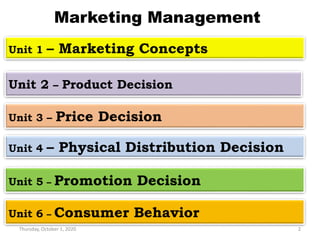
Marketing Management
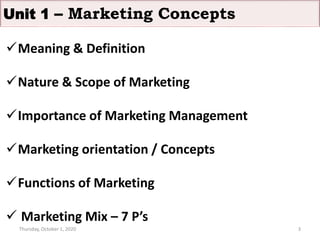
Unit 1 – Marketing Concepts
Unit 4 – Physical Distribution Decision
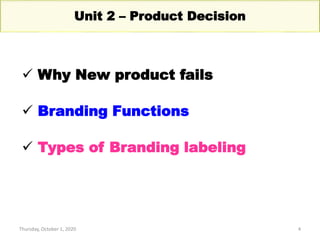
Unit 2 – Product Decision
Unit 3 – Price Decision
Unit 5 – Promotion Decision
Unit 6 – Consumer Behavior
Meaning & Definition
Nature & Scope of Marketing
Importance of Marketing Management
Marketing orientation / Concepts
Functions of Marketing
 Marketing Mix – 7 P’s
Thursday, October 1, 2020 3
Unit 1 – Marketing Concepts
Thursday, October 1, 2020 4
Unit 2 – Product Decision
 Why New product fails
 Branding Functions
 Types of Branding labeling
Thursday, October 1, 2020 5
Unit 3 – Pricing Decision
 Concepts of Price
 Factors affecting Price determination
 Pricing Policies
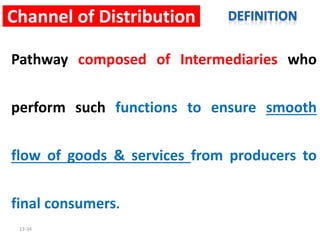
 Types of Price
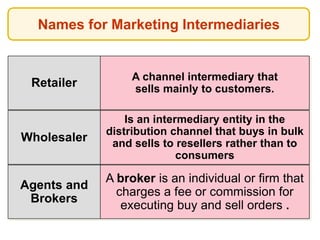
Thursday, October 1, 2020 6
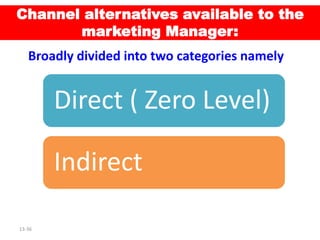
Pricing Practices & Decisions
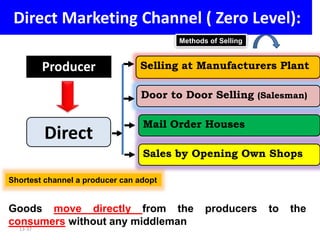
Thursday, October 1, 2020 7
Pricing Practices & Decisions
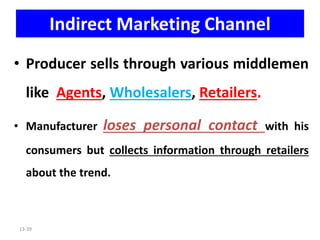
• Price is the amount of money charged
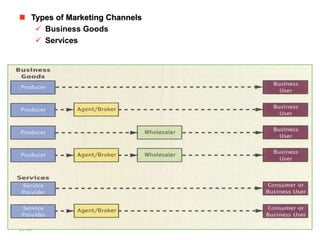
for a good or service
• The only marketing mix element that
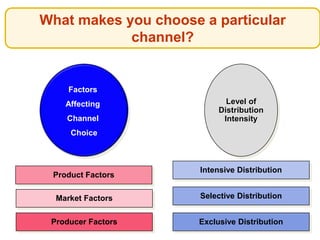
produces revenue. Marketing MIX (4 P’s)
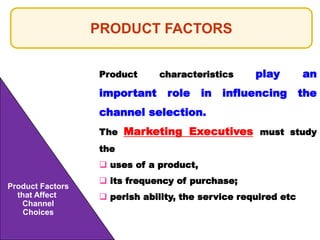
• Charging too much, chances of loosing
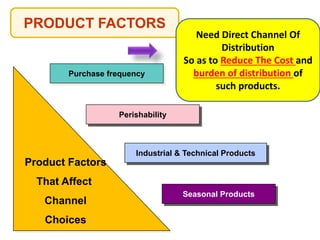
customers, charging too little cuts
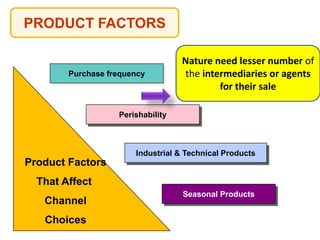
revenue
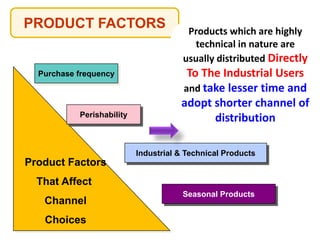
8
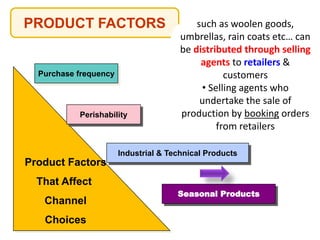
Pricing Practices & Decisions
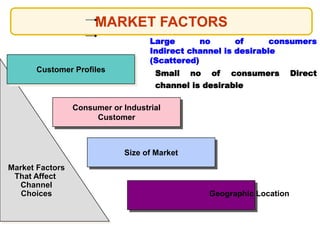
“It is the process of determining the value of
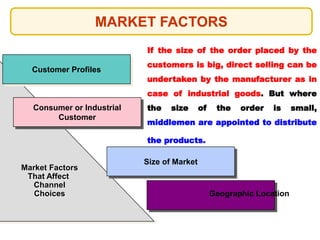
a product in terms of money before it is
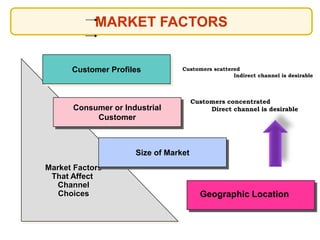
offered to the target market for sale”.
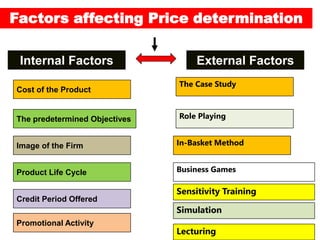
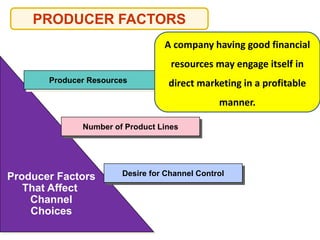
Internal Factors External Factors
Cost of the Product
The predetermined Objectives
Image of the Firm
Product Life Cycle
Credit Period Offered
The Case Study
Sensitivity Training
Business Games
In-Basket Method
Role Playing
Simulation
Lecturing
Factors affecting Price determination
Promotional Activity
10
1. Cost of the Product
The most important factor affecting the
price of a product is the product cost.
While fixing the prices of a product, the
firm should consider the cost involved in
producing the product. This cost includes
both the fixed and variable cost. Thus
while fixing the prices, the firm must
recover both these costs.
11
2. The predetermined Objectives
While fixing the prices of the product, the
marketer should consider the objectives of
the firm. For instance, if the objective of a
firm is to increase return on investment,
then it may charge a higher price, and if
the objective is to capture a large market
share, then it may charge a lower price.
12
3. Image of the firm
The price of the product may also be
determined on the basis of the image of
the firm in the market. For instance, HUL
and Procter & Gamble can demand a
higher price for their brands, as they enjoy
goodwill in the market.
13
4. Product life cycle
The stage at which the product is in its
product life cycle also affects its price. For
instance, during the introductory stage the
firm may charge lower price to attract the
customers, and during the growth stage, a
firm may increase the price.
14
5. Credit period offered:
The pricing of the product is also affected
by the credit period offered by the
company. Longer the credit period, higher
may be the price, and shorter the credit
period, lower may be the price of the
product.
15
6. Promotional activity:
The promotional activity undertaken by
the firm also determines the price. If the
firm incurs heavy advertising and sales
promotion costs, then the pricing of the
product shall be kept high in order to
recover the cost.
16
External Factors:
1. Competition:
While fixing the price of the product, the
firm needs to study the degree of
competition in the market. If there is high
competition, the prices may be kept low to
effectively face the competition, and if
competition is low, the prices may be kept
high.
17
2. Consumers:
The marketer should consider various
consumer factors while fixing the prices.
The consumer factors that must be
considered includes the price sensitivity
of the buyer, purchasing power, and so on.
18
3. Government control:
Government rules and regulation must be
considered while fixing the prices. In
certain products, government may
announce administered prices, and
therefore the marketer has to consider
such regulation while fixing the prices.
19
4. Economic conditions:
The marketer may also have to consider
the economic condition prevailing in the
market while fixing the prices. At the time
of recession, the consumer may have less
money to spend, so the marketer may
reduce the prices in order to influence the
buying decision of the consumers.
20
5. Channel intermediaries:
The marketer must consider a number of
channel intermediaries and their
expectations. The longer the chain of
intermediaries, the higher would be the
prices of the goods.
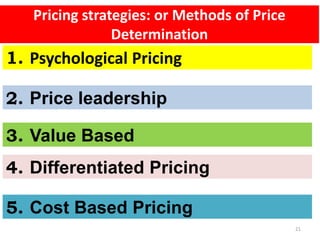
Pricing strategies: or Methods of Price
Determination
1. Psychological Pricing
21
2. Price leadership
3. Value Based
4. Differentiated Pricing
5. Cost Based Pricing
6. Competition Based Pricing
22
7. Demand Based Pricing
Pricing strategies: or Methods of Price
Determination
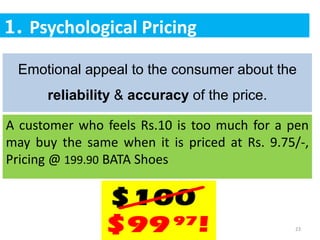
1. Psychological Pricing
23
Emotional appeal to the consumer about the
reliability & accuracy of the price.
A customer who feels Rs.10 is too much for a pen
may buy the same when it is priced at Rs. 9.75/-,
Pricing @ 199.90 BATA Shoes
24
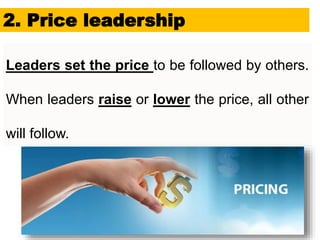
Leaders set the price to be followed by others.
When leaders raise or lower the price, all other
will follow.
2. Price leadership
25
Based on the value it creates for the
customer. i.e. "Pay for Performance"
3. Value Based
Consumers balance the benefits of a purchase
against its costs & if the benefits are more than the
cost, they will purchase the product.
26
Different prices are charged for the same
product or service in different zones or areas
of the market
4. Differentiated Pricing
27
The firm calculates the cost for producing the
product and adds on a percentage (profit) to
that price to give the selling price.
5. Cost Based Pricing
Price = Direct costs + Overhead Costs + Profit Margin
28
Setting the price based upon prices of the
similar competitor products.
6. Competition Based Pricing
29
The service firm needs to understand
relationship between demand & price, to see
how demand varies at different price levels.
7. Demand Based Pricing
New Product Pricing
30
Skimming
Pricing
A very high price is fixed in the
initial stages so as to skim the
cream of demand & earn enormous
profit
New Product Pricing
31
Penetration
Pricing
Setting a low price for the product in the
beginning
Increase the sales on a large scale
Cut down or prevent the new competitors
from entering the market.
Thursday, October 1, 2020 32
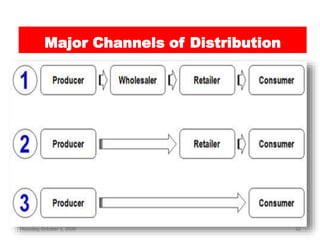
Major Channels of Distribution
13-33
Channel of Distribution
Is the 4th Component of Marketing Mix
Primary function
Find out suitable ways through which
goods have to be moved from Producers
to final Consumers.
13-34
Channel of Distribution
Pathway composed of Intermediaries who
perform such functions to ensure smooth
flow of goods & services from producers to
final consumers.
Retailer
Wholesaler
Agents and
Brokers
A channel intermediary that
sells mainly to customers.
Is an intermediary entity in the
distribution channel that buys in bulk
and sells to resellers rather than to
consumers
A broker is an individual or firm that
charges a fee or commission for
executing buy and sell orders .
Names for Marketing Intermediaries
Channel alternatives available to the
marketing Manager:
Broadly divided into two categories namely
13-36
Direct ( Zero Level)
Indirect
Direct Marketing Channel ( Zero Level):
13-37
Producer
Direct
Selling at Manufacturers Plant
Door to Door Selling (Salesman)
Mail Order Houses
Sales by Opening Own Shops
Shortest channel a producer can adopt
Goods move directly from the producers to the
consumers without any middleman
Methods of Selling
13-38
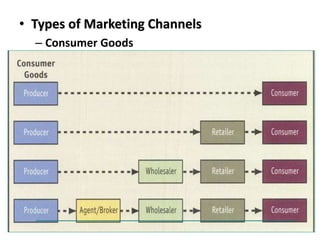
• Types of Marketing Channels
– Consumer Goods
13-39
Indirect Marketing Channel
• Producer sells through various middlemen
like Agents, Wholesalers, Retailers.
• Manufacturer loses personal contact with his
consumers but collects information through retailers
about the trend.
13-40
 Types of Marketing Channels
 Business Goods
 Services
Thursday, October 1, 2020 41
Major Channels of Distribution
Producer Factors
Product Factors
Market Factors
Factors
Affecting
Channel
Choice
Exclusive Distribution
Selective Distribution
Intensive Distribution
Level of
Distribution
Intensity
What makes you choose a particular
channel?
Product Factors
that Affect
Channel
Choices
PRODUCT FACTORS
Product characteristics play an
important role in influencing the
channel selection.
The Marketing Executives must study
the
 uses of a product,
 its frequency of purchase;
 perish ability, the service required etc
Product Factors
That Affect
Channel
Choices
Purchase frequency
Perishability
Industrial & Technical Products
Seasonal Products
PRODUCT FACTORS
Need Direct Channel Of
Distribution
So as to Reduce The Cost and
burden of distribution of
such products.
Product Factors
That Affect
Channel
Choices
Purchase frequency
Perishability
Industrial & Technical Products
Seasonal Products
PRODUCT FACTORS
Nature need lesser number of
the intermediaries or agents
for their sale
Product Factors
That Affect
Channel
Choices
Purchase frequency
Perishability
Industrial & Technical Products
Seasonal Products
PRODUCT FACTORS Products which are highly
technical in nature are
usually distributed Directly
To The Industrial Users
and take lesser time and
adopt shorter channel of
distribution
Product Factors
That Affect
Channel
Choices
Purchase frequency
Perishability
Industrial & Technical Products
Seasonal Products
PRODUCT FACTORS such as woolen goods,
umbrellas, rain coats etc… can
be distributed through selling
agents to retailers &
customers
• Selling agents who
undertake the sale of
production by booking orders
from retailers
Market Factors
That Affect
Channel
Choices
Customer Profiles
Consumer or Industrial
Customer
Size of Market
Geographic Location
MARKET FACTORS
Large no of consumers
Indirect channel is desirable
(Scattered)
Small no of consumers Direct
channel is desirable
Market Factors
That Affect
Channel
Choices
Customer Profiles
Consumer or Industrial
Customer
Size of Market
Geographic Location
MARKET FACTORS
If the size of the order placed by the
customers is big, direct selling can be
undertaken by the manufacturer as in
case of industrial goods. But where
the size of the order is small,
middlemen are appointed to distribute
the products.
Market Factors
That Affect
Channel
Choices
Customer Profiles
Consumer or Industrial
Customer
Size of Market
Geographic Location
MARKET FACTORS
Customers scattered
Indirect channel is desirable
Customers concentrated
Direct channel is desirable
Producer Factors
That Affect
Channel
Choices
Producer Resources
Number of Product Lines
Desire for Channel Control
PRODUCER FACTORS
A company having good financial
resources may engage itself in
direct marketing in a profitable
manner.
Thursday, October 1, 2020 52
Thursday, October 1, 2020 53
Unit 4 – Marketing Mix
C
Factors influencing Channel Selection
Channel Policies & Promotional
Decisions

Unit 3 pricing decision

  • 1.
  • 2.
    Thursday, October 1,2020 2 Marketing Management Unit 1 – Marketing Concepts Unit 4 – Physical Distribution Decision Unit 2 – Product Decision Unit 3 – Price Decision Unit 5 – Promotion Decision Unit 6 – Consumer Behavior
  • 3.
    Meaning & Definition Nature& Scope of Marketing Importance of Marketing Management Marketing orientation / Concepts Functions of Marketing  Marketing Mix – 7 P’s Thursday, October 1, 2020 3 Unit 1 – Marketing Concepts
  • 4.
    Thursday, October 1,2020 4 Unit 2 – Product Decision  Why New product fails  Branding Functions  Types of Branding labeling
  • 5.
    Thursday, October 1,2020 5 Unit 3 – Pricing Decision  Concepts of Price  Factors affecting Price determination  Pricing Policies  Types of Price
  • 6.
    Thursday, October 1,2020 6 Pricing Practices & Decisions
  • 7.
    Thursday, October 1,2020 7 Pricing Practices & Decisions • Price is the amount of money charged for a good or service • The only marketing mix element that produces revenue. Marketing MIX (4 P’s) • Charging too much, chances of loosing customers, charging too little cuts revenue
  • 8.
    8 Pricing Practices &Decisions “It is the process of determining the value of a product in terms of money before it is offered to the target market for sale”.
  • 9.
    Internal Factors ExternalFactors Cost of the Product The predetermined Objectives Image of the Firm Product Life Cycle Credit Period Offered The Case Study Sensitivity Training Business Games In-Basket Method Role Playing Simulation Lecturing Factors affecting Price determination Promotional Activity
  • 10.
    10 1. Cost ofthe Product The most important factor affecting the price of a product is the product cost. While fixing the prices of a product, the firm should consider the cost involved in producing the product. This cost includes both the fixed and variable cost. Thus while fixing the prices, the firm must recover both these costs.
  • 11.
    11 2. The predeterminedObjectives While fixing the prices of the product, the marketer should consider the objectives of the firm. For instance, if the objective of a firm is to increase return on investment, then it may charge a higher price, and if the objective is to capture a large market share, then it may charge a lower price.
  • 12.
    12 3. Image ofthe firm The price of the product may also be determined on the basis of the image of the firm in the market. For instance, HUL and Procter & Gamble can demand a higher price for their brands, as they enjoy goodwill in the market.
  • 13.
    13 4. Product lifecycle The stage at which the product is in its product life cycle also affects its price. For instance, during the introductory stage the firm may charge lower price to attract the customers, and during the growth stage, a firm may increase the price.
  • 14.
    14 5. Credit periodoffered: The pricing of the product is also affected by the credit period offered by the company. Longer the credit period, higher may be the price, and shorter the credit period, lower may be the price of the product.
  • 15.
    15 6. Promotional activity: Thepromotional activity undertaken by the firm also determines the price. If the firm incurs heavy advertising and sales promotion costs, then the pricing of the product shall be kept high in order to recover the cost.
  • 16.
    16 External Factors: 1. Competition: Whilefixing the price of the product, the firm needs to study the degree of competition in the market. If there is high competition, the prices may be kept low to effectively face the competition, and if competition is low, the prices may be kept high.
  • 17.
    17 2. Consumers: The marketershould consider various consumer factors while fixing the prices. The consumer factors that must be considered includes the price sensitivity of the buyer, purchasing power, and so on.
  • 18.
    18 3. Government control: Governmentrules and regulation must be considered while fixing the prices. In certain products, government may announce administered prices, and therefore the marketer has to consider such regulation while fixing the prices.
  • 19.
    19 4. Economic conditions: Themarketer may also have to consider the economic condition prevailing in the market while fixing the prices. At the time of recession, the consumer may have less money to spend, so the marketer may reduce the prices in order to influence the buying decision of the consumers.
  • 20.
    20 5. Channel intermediaries: Themarketer must consider a number of channel intermediaries and their expectations. The longer the chain of intermediaries, the higher would be the prices of the goods.
  • 21.
    Pricing strategies: orMethods of Price Determination 1. Psychological Pricing 21 2. Price leadership 3. Value Based 4. Differentiated Pricing 5. Cost Based Pricing
  • 22.
    6. Competition BasedPricing 22 7. Demand Based Pricing Pricing strategies: or Methods of Price Determination
  • 23.
    1. Psychological Pricing 23 Emotionalappeal to the consumer about the reliability & accuracy of the price. A customer who feels Rs.10 is too much for a pen may buy the same when it is priced at Rs. 9.75/-, Pricing @ 199.90 BATA Shoes
  • 24.
    24 Leaders set theprice to be followed by others. When leaders raise or lower the price, all other will follow. 2. Price leadership
  • 25.
    25 Based on thevalue it creates for the customer. i.e. "Pay for Performance" 3. Value Based Consumers balance the benefits of a purchase against its costs & if the benefits are more than the cost, they will purchase the product.
  • 26.
    26 Different prices arecharged for the same product or service in different zones or areas of the market 4. Differentiated Pricing
  • 27.
    27 The firm calculatesthe cost for producing the product and adds on a percentage (profit) to that price to give the selling price. 5. Cost Based Pricing Price = Direct costs + Overhead Costs + Profit Margin
  • 28.
    28 Setting the pricebased upon prices of the similar competitor products. 6. Competition Based Pricing
  • 29.
    29 The service firmneeds to understand relationship between demand & price, to see how demand varies at different price levels. 7. Demand Based Pricing
  • 30.
    New Product Pricing 30 Skimming Pricing Avery high price is fixed in the initial stages so as to skim the cream of demand & earn enormous profit
  • 31.
    New Product Pricing 31 Penetration Pricing Settinga low price for the product in the beginning Increase the sales on a large scale Cut down or prevent the new competitors from entering the market.
  • 32.
    Thursday, October 1,2020 32 Major Channels of Distribution
  • 33.
    13-33 Channel of Distribution Isthe 4th Component of Marketing Mix Primary function Find out suitable ways through which goods have to be moved from Producers to final Consumers.
  • 34.
    13-34 Channel of Distribution Pathwaycomposed of Intermediaries who perform such functions to ensure smooth flow of goods & services from producers to final consumers.
  • 35.
    Retailer Wholesaler Agents and Brokers A channelintermediary that sells mainly to customers. Is an intermediary entity in the distribution channel that buys in bulk and sells to resellers rather than to consumers A broker is an individual or firm that charges a fee or commission for executing buy and sell orders . Names for Marketing Intermediaries
  • 36.
    Channel alternatives availableto the marketing Manager: Broadly divided into two categories namely 13-36 Direct ( Zero Level) Indirect
  • 37.
    Direct Marketing Channel( Zero Level): 13-37 Producer Direct Selling at Manufacturers Plant Door to Door Selling (Salesman) Mail Order Houses Sales by Opening Own Shops Shortest channel a producer can adopt Goods move directly from the producers to the consumers without any middleman Methods of Selling
  • 38.
    13-38 • Types ofMarketing Channels – Consumer Goods
  • 39.
    13-39 Indirect Marketing Channel •Producer sells through various middlemen like Agents, Wholesalers, Retailers. • Manufacturer loses personal contact with his consumers but collects information through retailers about the trend.
  • 40.
    13-40  Types ofMarketing Channels  Business Goods  Services
  • 41.
    Thursday, October 1,2020 41 Major Channels of Distribution
  • 42.
    Producer Factors Product Factors MarketFactors Factors Affecting Channel Choice Exclusive Distribution Selective Distribution Intensive Distribution Level of Distribution Intensity What makes you choose a particular channel?
  • 43.
    Product Factors that Affect Channel Choices PRODUCTFACTORS Product characteristics play an important role in influencing the channel selection. The Marketing Executives must study the  uses of a product,  its frequency of purchase;  perish ability, the service required etc
  • 44.
    Product Factors That Affect Channel Choices Purchasefrequency Perishability Industrial & Technical Products Seasonal Products PRODUCT FACTORS Need Direct Channel Of Distribution So as to Reduce The Cost and burden of distribution of such products.
  • 45.
    Product Factors That Affect Channel Choices Purchasefrequency Perishability Industrial & Technical Products Seasonal Products PRODUCT FACTORS Nature need lesser number of the intermediaries or agents for their sale
  • 46.
    Product Factors That Affect Channel Choices Purchasefrequency Perishability Industrial & Technical Products Seasonal Products PRODUCT FACTORS Products which are highly technical in nature are usually distributed Directly To The Industrial Users and take lesser time and adopt shorter channel of distribution
  • 47.
    Product Factors That Affect Channel Choices Purchasefrequency Perishability Industrial & Technical Products Seasonal Products PRODUCT FACTORS such as woolen goods, umbrellas, rain coats etc… can be distributed through selling agents to retailers & customers • Selling agents who undertake the sale of production by booking orders from retailers
  • 48.
    Market Factors That Affect Channel Choices CustomerProfiles Consumer or Industrial Customer Size of Market Geographic Location MARKET FACTORS Large no of consumers Indirect channel is desirable (Scattered) Small no of consumers Direct channel is desirable
  • 49.
    Market Factors That Affect Channel Choices CustomerProfiles Consumer or Industrial Customer Size of Market Geographic Location MARKET FACTORS If the size of the order placed by the customers is big, direct selling can be undertaken by the manufacturer as in case of industrial goods. But where the size of the order is small, middlemen are appointed to distribute the products.
  • 50.
    Market Factors That Affect Channel Choices CustomerProfiles Consumer or Industrial Customer Size of Market Geographic Location MARKET FACTORS Customers scattered Indirect channel is desirable Customers concentrated Direct channel is desirable
  • 51.
    Producer Factors That Affect Channel Choices ProducerResources Number of Product Lines Desire for Channel Control PRODUCER FACTORS A company having good financial resources may engage itself in direct marketing in a profitable manner.
  • 52.
  • 53.
    Thursday, October 1,2020 53 Unit 4 – Marketing Mix C Factors influencing Channel Selection Channel Policies & Promotional Decisions