Information Processing in 
UNIT 3 NEUROPSYCHOLOGICAL BASIS OF Learning and Memory 
31 
LEARNING AND MEMORY 
“It’s a sense of flooding the brain too quickly. The brain has this disruption, 
and the short-term memory isn’t converting into long-term memory.” 
– John Hamilton 
Structure 
3.0 Introduction 
3.1 Objectives 
3.2 Memory and Brain 
3.2.1 Human Memory, Brain Damage and Amnesia 
3.2.2 Brain Surgery and Memory Loss 
3.2.3 Amnesia and the Medial Temporal Lobe 
3.3 Memory Consolidation and Hippocampus 
3.4 Anterior and Lateral Temporal Lobes and Memory 
3.5 Animal Models of Memory 
3.6 Imaging the Human Brain and Memory 
3.61 Episodic Encoding and Retrieval 
3.6.2 Semantic Encoding and Retrieval 
3.6.3 Procedural Memory Encoding and Retrieval 
3.6.4 Perceptual Priming and Implicit and Explicit Memory 
3.7 Cellular Bases of Learning and Memory 
3.8 Let Us Sum Up 
3.9 Unit End Questions 
3.10 Suggested Readings and References 
3.0 INTRODUCTION 
What is the relationship between learning and memory? Learning is the process 
of acquiring new information, whereas memory refers to the persistence of 
learning in a state that can be revealed at a later time (Squire, 1987). Learning, 
then, has an outcome, and we refer to that as memory. To put it another way, 
learning happens when a memory is created or is strengthened by repetition. 
This need not involve the conscious attempt to learn. Learning can occur and 
performance can improve simply from more exposure to information or to a 
task. For example, we remember the details of a person’s face better by seeing it 
more, without having to try to consciously memorize facial features. 
Learning and memory can be subdivided into major hypothetical stages: encoding, 
storage, and retrieval. Encoding refers to the processing of incoming information 
to be stored. The encoding stage has two separate steps: acquisition and 
consolidation. Acquisition registers inputs in sensory buffers and sensory analysis 
stages, while consolidation creates a stronger representation over time. Storage, 
the result of acquisition and consolidation, creates and maintains a permanent 
record. Finally, retrieval utilises stored information to create a conscious 
representation or to execute a learned behaviour like a motor act.
Information Processing We search for the neural correlates of learning and memory in many ways: a) 
32 
through case studies which reveal what is and is not lost in amnesia; b) by 
developing animal models of memory in simple (invertebrates) and complex 
systems (nonhuman primates); c) and with brain imaging to investigate normal 
encoding, retrieval, and recall in healthy humans. In this chapter we will explore 
all these methods in brief in order to understand the neural basis of learning and 
memory. 
3.1 OBJECTIVES 
After reading this unit, you will be able to: 
• Describe the process of memory in the brain; 
• Define neurological issues related to memory; 
• Define neuropsychological basis of learning and memory; 
• Explain the neural processes of learning and memory. 
3.2 MEMORY AND BRAIN 
The field of the cognitive and experimental psychology of memory is rich with 
theory and data and has produced a consistent set of concepts about the 
organisation of human memory. The neuro scientific studies of memory are 
important, both to understand how they have contributed to general theories of 
memory, and to investigate how specific neural circuits and systems enable the 
learning and retention of specific forms of knowledge. 
3.2.1 Human Memory, Brain Damage and Amnesia 
Deficits in memory as a function of brain damage, disease, or psychological 
trauma are known as amnesia. Amnesia can involve either the inability to learn 
new things or a loss of previous knowledge, or both. It can differentially affect 
short-term/ working memory and long-term memory abilities. Thus, by examining 
amnesia in conjunction with cognitive theories derived from experiments on 
normal subjects, we can understand the organisation of memory at a functional 
and a neural level. Much compelling information about the organisation of human 
memory during amnesia was first derived from medical treatments that left 
patients amnesic. The history is fascinating, and so let’s begin by turning back 
the clock more than fifty years. 
3.2.2 Brain Surgery and Memory Loss 
In the late 1940s and early 1950s, surgeons attempted to treat neurological and 
psychiatric disease using a variety of neurosurgical procedures, including 
prefrontal lobotomy (removing or disconnecting the prefrontal lobe), corpus 
callosotomy (surgically sectioning the corpus callosum), amygdalotomies 
(removing the amygdala), and temporal lobe resection (removal of the temporal 
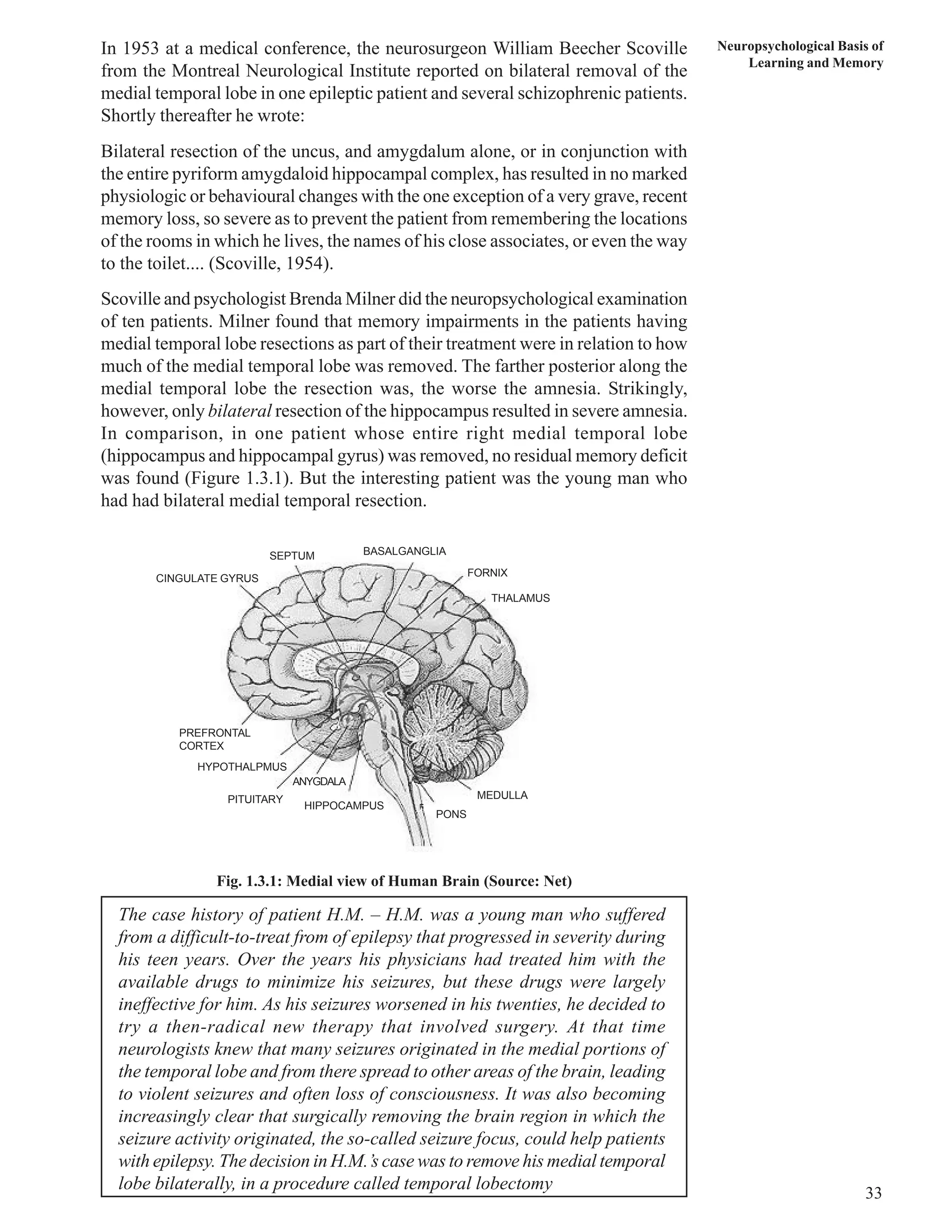
lobe) (Figure 1.3.1). These surgical procedures opened a new window on human 
brain function as they revealed, usually quite by accident, fundamentally important 
principles of the organisation of human cognition. One surgical procedure relevant 
to memory was removal of the medial portion of the temporal lobe, including 
the hippocampal formation.
Neuropsychological Basis of 
Learning and Memory 
33 
In 1953 at a medical conference, the neurosurgeon William Beecher Scoville 
from the Montreal Neurological Institute reported on bilateral removal of the 
medial temporal lobe in one epileptic patient and several schizophrenic patients. 
Shortly thereafter he wrote: 
Bilateral resection of the uncus, and amygdalum alone, or in conjunction with 
the entire pyriform amygdaloid hippocampal complex, has resulted in no marked 
physiologic or behavioural changes with the one exception of a very grave, recent 
memory loss, so severe as to prevent the patient from remembering the locations 
of the rooms in which he lives, the names of his close associates, or even the way 
to the toilet.... (Scoville, 1954). 
Scoville and psychologist Brenda Milner did the neuropsychological examination 
of ten patients. Milner found that memory impairments in the patients having 
medial temporal lobe resections as part of their treatment were in relation to how 
much of the medial temporal lobe was removed. The farther posterior along the 
medial temporal lobe the resection was, the worse the amnesia. Strikingly, 
however, only bilateral resection of the hippocampus resulted in severe amnesia. 
In comparison, in one patient whose entire right medial temporal lobe 
(hippocampus and hippocampal gyrus) was removed, no residual memory deficit 
was found (Figure 1.3.1). But the interesting patient was the young man who 
had had bilateral medial temporal resection. 
SEPTUM 
CINGULATE GYRUS 
BASALGANGLIA 
FORNIX 
THALAMUS 
MEDULLA 
PONS 
ANYGDALA 
HIPPOCAMPUS 
PREFRONTAL 
CORTEX 
HYPOTHALPMUS 
PITUITARY 
Fig. 1.3.1: Medial view of Human Brain (Source: Net) 
The case history of patient H.M. – H.M. was a young man who suffered 
from a difficult-to-treat from of epilepsy that progressed in severity during 
his teen years. Over the years his physicians had treated him with the 
available drugs to minimize his seizures, but these drugs were largely 
ineffective for him. As his seizures worsened in his twenties, he decided to 
try a then-radical new therapy that involved surgery. At that time 
neurologists knew that many seizures originated in the medial portions of 
the temporal lobe and from there spread to other areas of the brain, leading 
to violent seizures and often loss of consciousness. It was also becoming 
increasingly clear that surgically removing the brain region in which the 
seizure activity originated, the so-called seizure focus, could help patients 
with epilepsy. The decision in H.M.’s case was to remove his medial temporal 
lobe bilaterally, in a procedure called temporal lobectomy
Information Processing Following recovery from this major neurosurgical procedure, H.M.’s epilepsy 
34 
did improve. The surgery was a success, both with regard to his surviving the 
risks associated with any surgery of the brain and with regard to the epilepsy. 
However, physicians, family, and friends began to realise that H.M. was 
experiencing new difficulties. For example, a year and a half after the surgery, 
which was performed in September 1953, H.M. displayed clear problems with 
his memory. Although it was April 1955 and H.M. was 29 years old, he reported 
his age to be 27. H.M. would say he did not remember ever meeting certain 
individuals, even when he actually spoke to them a few minutes earlier and they 
merely left the room, returning after a short delay! H.M. was profoundly 
amnesic—that is, he suffered from disorders of memory. However, H.M. did not 
have the kind of amnesia one sees depicted in television shows or movies, where 
the character has a total loss of all prior memories. Indeed, H.M. knew who he 
was and could remember things about his life—that is, up until a period prior to 
his surgery. However, it became increasingly clear that H.M. could not form new 
long-term memories. 
Formal neuropsychological tests were performed on H.M. to establish the nature 
of his cognitive deficits. These tests showed that his intelligence was well above 
normal after the surgery. He also had no perceptual or language problems and 
seemed generally fine, with no changes in his personality or motivation. However, 
when memory tests were administered, H.M. scored well below normal. The 
bilateral removal of H.M.’s medial temporal lobe produced a highly selective 
deficit in his memory ability, leaving other cognitive functions intact. H.M. had 
normal short-term memory (sensory registers and working memory), but he 
developed a severe and permanent inability to acquire and store new information 
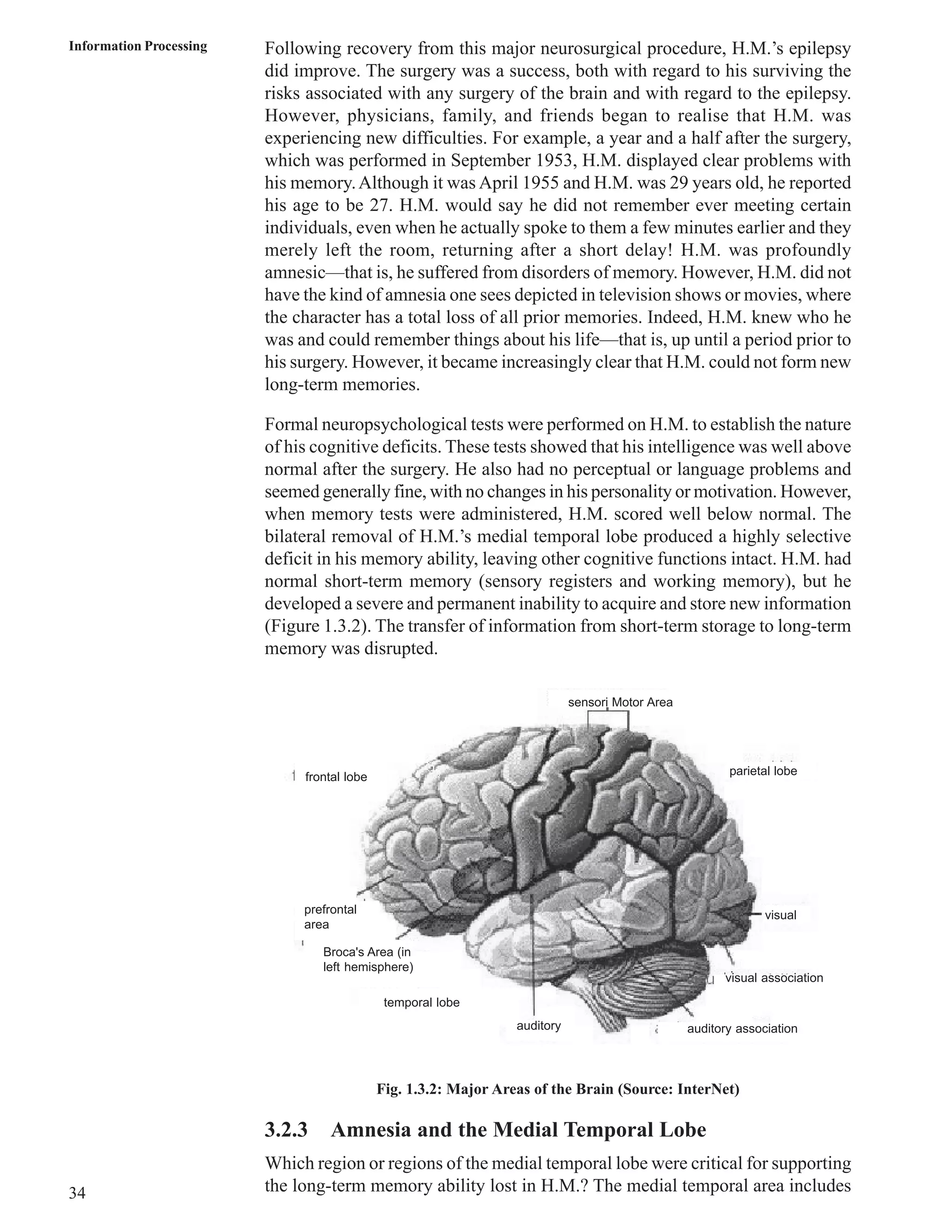
(Figure 1.3.2). The transfer of information from short-term storage to long-term 
memory was disrupted. 
sensori Motor Area 
parietal lobe 
visual association 
auditory auditory association 
frontal lobe 
prefrontal 
area 
Broca's Area (in 
left hemisphere) 
temporal lobe 
Fig. 1.3.2: Major Areas of the Brain (Source: InterNet) 
visual 
3.2.3 Amnesia and the Medial Temporal Lobe 
Which region or regions of the medial temporal lobe were critical for supporting 
the long-term memory ability lost in H.M.? The medial temporal area includes
Neuropsychological Basis of 
Learning and Memory 
35 
the amygdala, the hippocampus, the entorhinal cortex, and the surrounding 
parahippocampal and perirhinal cortical areas (Figure 1.3.1). 
For the past 40 years, scientists studying H.M. used surgical reports of his lesions 
to guide theories of memory and “amnesia and their neural bases. Reports by 
Scoville, who performed the surgery, indicated that all of H.M.’s hippocampus 
in each hemisphere had been removed. H.M.’s brain and surgical lesions were 
re-evaluated with improved accuracy with high-resolution neuroimaging methods 
such as magnetic resonance imaging (MRI), and it was found that in addition to 
the hippocampus, some of H.M.’s surrounding cortex was also removed. 
Is damage to the hippocampus sufficient to block the formation of new long-term 
memories? Consider another patient, R.B., who lost his memory after an 
ischemic episode (reduction of blood to brain) during bypass surgery. R.B. 
developed dense anterograde amnesia similar to H.M.’s. He could not form new 
long-term memories. He also had retrograde amnesia that extended back to 1 to 
2 years, slightly less severe than H.M.’s retrograde loss. After his death, R.B.’s 
brain was donated for study, permitting a detailed analysis of the extent of his 
neuroanatomical damage. In R.B.’s case, lesions were found to be restricted to 
his hippocampus; within each hippocampus, R.B. had sustained a specific lesion 
restricted to the CA1 pyramidal cells. 
These findings in patient R.B. support the idea that the hippocampus is crucial 
in forming new long-term memories. R.B.’s case also supports the distinction 
between areas that store long-term memories and the role of the hippocampus in 
forming new memories. Even though retrograde amnesia is associated with medial 
temporal lobe damage, it is temporally limited and does not affect long term 
memories of events that happened more than a few years prior to the amnesia-inducing 
event. 
3.3 MEMORY CONSOLIDATION AND 
HIPPOCAMPUS 
Memories are solidified in long-term stores over days, weeks, months, and years. 
This process is referred to as consolidation, an old concept that refers to how 
long term memory develops over time after initial acquisition. From a cognitive 
neuroscience perspective, consolidation is conceived of as biological changes 
that underlie the long-term retention of learned information, and we can ask 
what brain structures and systems support this process. 
Because damage to the medial temporal lobe does not wipe out most of the 
declarative memories formed over a lifetime, we know that the hippocampus is 
not the repository of stored knowledge. Rather, the medial temporal lobe appears 
to support the process of forming new memories; that is, the hippocampal region 
is critical for the consolidation of information in long term memory. The strongest 
evidence that the hippocampus is involved in consolidation comes from the fact 
that amnesics have retrograde amnesia for memories from one to a few years 
prior to the damage to the medial temporal lobe or diencephalon, a pattern that 
does not support a storage role but rather a role in consolidation. 
What might consolidation entail at the neural level? One idea is that consolidation 
strengthens the associations between multiple stimulus inputs and activations of
Information Processing previously stored information. The hippocampus is hypothesised to coordinate 
36 
this strengthening, but the effects are believed to take place in the neocortex. 
The idea is that once consolidation is complete, the hippocampus is no longer 
required for storage or retrieval. Nonetheless, keep in mind that although the 
memories are stored in the neocortex, the hippocampus is crucial for 
consolidation. 
Alcoholic Korsakoff’s Syndrome and Diencephalic Amnesia - The medial 
temporal lobe is not the only area of interest in human memory. Amnesia emerges 
from brain damage in other regions too. For example, damage to midline structures 
of the diencephalon of the brain causes amnesia. The prime structures are the 
dorsomedial nucleus of the thalamus and the mammillary bodies (Figure 1.3.2). 
Damage to these midline subcortical regions can be caused by stroke, tumors, 
and metabolic problems like those brought on by chronic alcoholism as well as 
by trauma. 
In the last half of the nineteenth century, the Russian psychiatrist Sergei Korsakoff 
reported an anterograde and retrograde amnesia associated with alcoholism. Long 
term alcohol abuse can lead to vitamin deficiencies that cause brain damage. 
Patients suffering from alcoholic Korsakoff’s syndrome have degeneration in 
the diencephalon, especially the dorsomedial nucleus of the thalamus and the 
mammillary bodies. It remains unclear whether the dorsomedial thalamic nucleus, 
the mammillary bodies, or both are necessary for the patients’ amnesia. 
Nonetheless, damage to the diencephalon can produce amnesia. 
3.4 ANTERIOR AND LATERAL TEMPORAL 
LOBES AND MEMORY 
If, as suggested earlier, the neocortex is crucial for the storage of memories, then 
it should be possible to demonstrate retrograde amnesia with cortical damage, 
even though most amnesias are anterograde. In line with this proposal, amnesia 
can be caused by damage to regions of the neocortex. 
One region of special interest is the temporal neocortex outside the medial 
temporal lobe. Lesions that damage the lateral cortex of the anterior temporal 
lobe, near the anterior pole, lead to a dense amnesia that includes severe retrograde 
amnesia; in such cases the entorhinal cortex and perihippocampal cortex may be 
involved. The retrograde amnesia may be severe, extending back many decades 
before the amnesia-inducing event occurred or encompassing the patient’s entire 
life. Various forms of damage can lead to this condition. Progressive neurological 
diseases like Alzheimer’s, and herpes simplex encephalitis involving viral 
infection of the brain are two such conditions. 
Some patients with dense retrograde amnesia might still form new long-term 
memories. This type of amnesia is called isolated retrograde amnesia. It is 
particularly related to damage of the anterior temporal lobe. This portion of the 
temporal lobe is not, therefore, essential for acquiring new information. 
Are these lateral and anterior regions of the temporal lobe the sites of storage of 
long-term declarative memories? The answer is maybe, but another view is that 
these regions may be particularly important for the retrieval of information from 
long-term stores. Where then are memories stored? More recent evidence from
Neuropsychological Basis of 
Learning and Memory 
37 
neuroimaging studies suggests that memories are stored as distributed 
representations throughout neocortex, involving the regions that originally 
encoded the perceptual information and regions representing information that 
was associated with this incoming information (as noted in the last section, the 
medial temporal lobe may coordinate the consolidation of this information over 
time). 
3.5 ANIMAL MODELS OF MEMORY 
Studies in monkeys with lesions to the hippocampus and surrounding cortex 
have been invaluable in learning about the contributions of the medial temporal 
lobe to primate memory systems. In general, the goal of such research is to develop 
animal models of human memory and amnesia. Through research, such models 
are providing key information on relations between specific memory and brain 
structures. Several animal species, ranging from invertebrates to monkeys, have 
been investigated for clues to human memory and its functional neuroanatomy 
and neurobiology; it is likely that monkeys will contribute the most directly 
applicable knowledge about human processes at the systems level given the 
similarity among primate brains. We must always keep in mind, however, that 
the gross organisation and functional capabilities of the brains of monkeys and 
humans differ significantly. Thus, animal models of cognitive processes like 
memory are perhaps most informative when linked with studies in humans. 
One of the key questions in memory research was how much the hippocampus 
alone, as compared with surrounding structures in the medial temporal lobe, 
participated in the memory deficits of patients like H.M. In other words, what 
structures of the medial temporal lobe system are involved in episodic memory? 
For example, does the amygdala influence memory deficits in amnesics? Data 
from amnesics indicate that the amygdala is not part of the brain’s episodic 
memory system, although it has a role in emotion and emotional memories. 
To verify this, surgical lesions were created in the medial temporal lobe and 
amygdala of monkeys, to cause memory impairment. In classic work by Mortimer 
Mishkin (1978) at the National Institute of Mental Health (NIMH), the 
hippocampus or the amygdala, or both the hippocampus and the amygdala, of 
monkeys were removed surgically. He found that the amount of impairment, as 
measured on tests, varied according to what was lesioned. 
In his early work, Mishkin found that in the monkey, memory was impaired only 
if the lesion included the hippocampus and amygdala. This led to the idea that 
the amygdala was a key structure in memory. The idea does not fit well with data 
from amnesics like R.B., who had anterograde amnesia caused by a lesion 
restricted to neurons of the hippocampus and no damage to the amygdala. Stuart 
Zola and colleagues (1993) at the University of California at San Diego 
investigated this dilemma. They performed more selective lesions of the brains 
of monkeys by distinguishing between the amygdala and hippocampus, as well 
as the surrounding cortex near each structure. They surgically created lesions of 
the amygdala, the entorhinal cortex, or the surrounding neocortex of the 
parahippocampal gyrus and the perirhipal cortex (Brodmann’s areas 35 and 36) 
(Figure 1.3.3).
Information Processing 
38 
Fig. 1.3.3: Broca’s areas of the Brain (Source: Net) 
They found that lesions of the hippocampus and amygdala produced the most 
severe memory deficits only when the cortex surrounding these regions was also 
lesioned. When lesions of the hippocampus and amygdala were made but the 
surrounding cortex was spared, the presence or absence of the amygdala lesion 
did not affect the monkey’s memory. The amygdala, then, could not be part of 
the system that supported the acquisition of long-term memory. 
In subsequent investigations, Zola and his colleagues selectively created lesions 
of the surrounding cortex in the perirhinal, entorhinal, and parahippocampal 
regions. This worsened memory performance in delayed nonmatching to sample 
tests. Follow-up work showed that lesions of only the parahippocampal and 
perirhinal cortices also produced significant memory deficit. 
How does this make sense in relation to R.B’s profound anterograde amnesia 
with damage limited to the hippocampus and not involving the surrounding para-hippocampal 
or perirhinal cortex? The parahippocampal and perirhinal areas 
receive information from the visual, auditor, and somatosensory association cortex 
and send these inputs to the hippocampus, and from there to other cortical regions. 
The hippocampus cannot function properly if these vital connections are damaged. 
But more than this, we now also know that these regions are involved in much 
processing themselves, and hence lesions restricted to the hippocampus do not 
produce as severe a form of amnesia as do lesions that include surrounding cortex. 
In summary, the data from animals are highly consistent with evidence from 
amnesic patients such as R.B. and H.M. that implicates the hippocampal system 
in the medial temporal lobe and the associated cortex as critical for forming 
long-term memories. Lesions that damage the hippocampus directly, or damage 
the input-output relation of the hippocampus with the neocortex, produce severe 
memory impairments. The amygdala is not a crucial part of the system for episodic 
memory but is important for emotional memory. Moreover, the animal data match 
well with those from amnesics with regard to the preservation of short-term 
memory processes after the medial temporal lobe has been damaged; monkeys 
memory deficits in the delay mismatching to sample task became more 
pronounced as the interval between the sample and test increased. The medial 
temporal lobe, then, is not essential for short-term or working memory processes.
Neuropsychological Basis of 
Learning and Memory 
39 
As we noted earlier, the medial temporal lobe is not the locus of long-term storage 
because retrograde amnesia is not total after damage to this area; rather, the 
medial temporal lobe is a key component in organising and consolidating long-term 
memory that is permanently stored in a distributed fashion in the neocortex. 
3.6 IMAGING THE HUMAN BRAIN AND MEMORY 
The work described so far has dealt with evidence from humans and animals 
with brain damage. These data are consistent with regard to the role of the medial 
temporal lobe in memory. Over the past decade, there has been an exponential 
increase in studies of normal subjects using functional brain imaging methods. 
The results are quite provocative and are confirming and extending the findings 
from lesion studies. In the following, we review recent studies of the brain 
organisation of episodic memory, semantic memory, procedural memory, and 
the perceptual representation system (PRS). 
3.6.1 Episodic Encoding and Retrieval 
Given the purported role of the hippocampus system in encoding memory in 
long-term stores, researchers have eagerly addressed this issue using positron 
emission tomography (PET) and functional magnetic resonance imaging (fMRI). 
One such line of work involved face encoding and recognition. The question 
was whether the Hippocampus becomes active when encoding new information. 
James Haxby, Leslie Ungerleider, and their colleagues (1996) at the NIMH 
presented subjects with pictures of either faces or nonsense patterns, and, using 
PET, investigated memory performance. In different conditions subjects were 
required to remember (encode) the face, recognise the face, and perceptually 
analyse the face by comparing two faces. During these periods, PET scans 
recorded changes in regional cerebral blood flow triggered by local neuronal 
activity. 
These investigators observed that the right hippocampus region was activated 
during encoding of the face but not during recognition, where retrieval processes 
should have been engaged. These data are consistent with those from amnesic 
patients who had medial temporal lobe damage that led to anterograde amnesia 
but preserved distant retrograde memories. Encoding also activated the left 
prefrontal cortex, whereas recognition activated the right prefrontal cortex. Thus, 
we have more support for the hippocampus’s role in memory, as well as possible 
support for hemispheric asymmetries in memory functions. 
Encoding and retrieval processes were lateralised in the left and right hemispheres, 
respectively, giving rise to a model with the acronym of HERA, which stands for 
“hemispheric encoding-retrieval asymmetry.” This model represents the idea that 
encoding involves the left hemisphere more than the right, and retrieval involves 
the right hemisphere more than the left. Both processes predominantly involve 
the dorsolateral prefrontal cortex. In encoding and retrieving information from 
long-term memory, neocortical areas were the most activated. 
Some more recent studies made use of event-related fMRI methods to track the 
processing of individual items as a function of the success of the encoding, as 
indexed by later memory performance. Anthony Wagner and his colleagues at 
MIT, Harvard University, and Massachusetts General Hospital (1998), and John
Information Processing Gabrieli and his colleagues at Stanford (Brewer et al., 1998) conducted such 
40 
studies. They presented subjects with items and scanned their brains using of 
MRI while they were encoding the information, and then later tested them for 
their memories of the items. Each research group found that event-related 
responses were larger in prefrontal and medial temporal regions (parahippocampal 
cortex) during encoding of words or pictures that were later remembered. 
3.6.2 Semantic Encoding and Retrieval 
The encoding and retrieval of semantic knowledge also have been studied using 
functional neuroimaging, and significant new findings have been uncovered. In 
particular, evidence for domain-specific organisation (i.e., knowledge of animate 
and inanimate objects is localised in different cortical regions) has proved to be 
a fascinating story. Unlike episodic retrieval that activates the right prefrontal 
cortex, semantic retrieval involves the left prefrontal cortex. The region includes 
Broca’s area (Brodmann’s area 44 extending into area 46) and the ventral lateral 
region (Brodmann’s areas 44 and 45) (Figure 1.3.3). This lateralisation to the 
left hemisphere remains regardless of whether the memories being retrieved are 
of objects or words. 
3.6.3 Procedural Memory Encoding and Retrieval 
Earlier we learned that amnesics demonstrate implicit learning of motor sequences 
(procedural knowledge) even when they cannot form explicit memories about 
the stimulus sequence. Amnesics provide powerful evidence that implicit learning 
need not be mediated by explicit knowledge about the material. 
Scott Grafton, Eliot Hazeltine, and Ivry (1995) investigated the brain basis of 
procedural motor learning in normal subjects. They compared conditions in which 
the subjects learned motor sequences implicitly during dual-task conditions, which 
helped to prevent subjects from explicitly noticing and learning the sequence. 
PET conducted during the dual-task condition demonstrated activation of the 
motor cortex and the supplementary motor area of the left hemisphere, and the 
putamen in the basal ganglia bilaterally. Also activated were the rostral prefrontal 
cortex and parietal cortex. Therefore, when subjects were implicitly learning the 
task, brain areas that control limb movements were activated. When the distracting 
auditory task was removed, the right dorsolateral prefrontal cortex, right pre 
motor cortex, right putamen, and parieto-occipital cortex were activated 
bilaterally. 
3.6.4 Perceptual Priming and Implicit and Explicit Memory 
Daniel Schacter and his colleagues (1996) at Harvard University investigated 
the neural bases of perceptual priming (implicit learning) in a PET study. The 
scanning was performed only during the task. Subjects manifested implicit 
priming behaviourally. No activations or deactivations were noted in the 
hippocampus, but blood flow in the bilateral occipital cortex, (area 19) decreased 
(Figure 1.3.3). The hippocampus was not activated, then, even though implicit 
perceptual priming was obtained. 
The conclusions from this and other studies are that implicit and explicit retrieval 
of information is subserved by separate brain systems. Together with the face 
encoding data Haxby and colleagues obtained by PET, and animal and human 
lesion data, a reasonable conclusion is that the hippocampus encodes new
Neuropsychological Basis of 
Learning and Memory 
41 
information but also retrieves recent information when explicit recollection is 
involved. Perhaps more interestingly, deactivation of the visual cortex for 
previously seen words is a correlate of perceptual priming. 
In summary, neuroimaging studies have demonstrated patterns of neuronal 
activation that are consistent with memory systems derived from cognitive 
research, studies in human amnesics, and animal models. Neuroimaging also 
has provided some notable new findings in the cognitive neuroscience of memory, 
including, for example, the hemispheric asymmetries in encoding and retrieval. 
3.7 CELLULAR BASES OF LEARNING AND 
MEMORY 
How does the activity of different brain regions change as memories are formed? 
Most models of the cellular bases of memory hold that it is the result of changes 
in the strength of synaptic interactions among neurons in neural networks. How 
would synaptic strength be altered to enable learning and memory? Neil Carlson 
(1994) described some basic physiological mechanisms for learning new 
information. 
One basic mechanism is Hebb’s law, named after the man who posited it, Canadian 
psychologist Donald Hebb, in 1949. Hebb’s rule states that if a synapse between 
two neurons is repeatedly activated at about the same time the postsynaptic neuron 
fires, the structure or the chemistry of neuron changes and the synapse will be 
strengthened—this is known as Hebbian learning. A more general, and more 
complex, mechanism is called long-term potentiation (LTP). In this process, 
neural circuits in the hippocampus that are subjected to repeated and intense 
electrical stimulation develop hippocampal cells that become more sensitive to 
stimuli. 
That an excitatory input and postsynaptic depolarisation are needed to produce 
LTP is explained by the properties of the doubly gated N-methyl-D-aspartate 
(NMDA) receptor located on the dendritic spines of postsynaptic neurons that 
show LTP. Glutamate is the major excitatory transmitter in the hippocampus, 
and it can bind with NMDA and non-NMDA receptors. When 2-amino-5- 
phosphonopentanoate (AP5) is introduced to neurons, NMDA receptors are 
chemically blocked and LTP induction is prevented. But the AP5 treatment does 
not produce any effect on previously established LTP in these cells. 
Therefore, NMDA receptors are central to producing LTP but not maintaining it. 
It turns out that maintenance of LTP may depend on the non-NMDA receptors. 
Long-Term Potentiation and Memory Performance - This effect of enhanced 
response can last for weeks or even longer, suggesting to many that this could be 
a mechanism for long-term learning and retention (Baddeley, 1993). 
Disrupting the process of long-term potentiation (say, through different drugs) 
also disrupts learning and remembering. Chemically blocking LTP in the 
hippocampus of normal mice impairs their ability to demonstrate normal place 
learning; thus, blocking LTP prevents normal spatial memory. In a similar way, 
genetic manipulations that block the cascade of molecular triggers for LTP also 
impair spatial learning.
Information Processing These experiments provide strong evidence of impairing spatial memory by 
42 
blocking NMDA receptors and preventing LTP. Moreover, we are rapidly 
developing a very clear understanding of the molecular processes that support 
synaptic plasticity, and thus learning and memory in the brain. 
3.8 LET US SUM UP 
The ability to acquire new information and retain it over time defines learning 
and memory. Cognitive theory and neuroscientific evidence argue that memory 
is supported by multiple cognitive and neural systems. These systems support 
different aspects of memory, and their distinctions in quality can be readily 
identified. Sensory registration, perceptual representation, working memory, 
procedural memory, semantic memory, and episodic memory all represent systems 
or subsystems for learning and memory. The brain structures that support various 
memory processes differ, depending on the type of information to be retained 
and how it is encoded and retrieved. 
Despite the intriguing results from neuropsychological studies, we are far from 
having a complete picture of how the brain instantiates all, or even many, memory 
phenomenon. It is not clear which aspects of memory are localised in one place 
in the brain and which are distributed across different cortical regions. Tulving 
pointed that neuroscientists today reject the idea of studying memory as though 
it were a single process. Instead, they are likely to look for neurological 
underpinnings at a more precise level – at such processes as encoding or retrieval. 
The latest neuroimaging techniques clearly will continue to provide invaluable 
information about human memory and its neural substrates in the healthy human 
in the years to come. 
3.9 UNIT END QUESTIONS 
1) Summarize the findings of neuropsychological research on localising memory 
in the brain. 
2) Compare and contrast the human and animal models of the study of neural 
basis of memory. 
3) What exactly do findings from memory studies with amnesic patients tell us 
about the way memory operates in nonamnesic people? 
4) Imagine what it would be like to recover from one of the forms of amnesia. 
Describe your impressions of and reactions to your newly recovered memory 
abilities. 
5) How would you design an experiment to study the neural process of semantic 
memory by functional MRI technique? 
6) Patient H.M. and others with damage to the medial temporal lobe develop 
amnesia. What form of amnesia do they develop, and what information can 
they retain, and what doe sthis tell us about how memories are encoded in 
the brain?
Neuropsychological Basis of 
3.10 SUGGESTED READINGS AND REFERENCES Learning and Memory 
Galotti, K.M. (2008). Cognitive Psychology: Perception, Attention, and Memory. 
London: Cengage. 
Solso, R.L. (2006). Cognitive Psychology. New Delhi: Pearson Education. 
References 
Gazzaniga, M.S., Ivry, R., & Mangun, G.R. (2002). Cognitive Neuroscience: 
The Biology of the Mind. New York: W.W. Norton. 
Gleitman, L. R., Liberman, M., & Osherson, D. N. (Eds.)(2000). An Invitation 
to Cognitive Science, 2nd Ed. Cambridge, MA: MIT Press. 
Levinthal, C.F. (1990). Introduction to Physiological Psychology. New Jersey: 
Prentice Hall. 
Sternberg, R.J. (2009). Applied Cognitive Psychology: Perceiving, Learning, 
and Remembering. London: Cengage. 
43

DEVELOPMENTAL PATHOGENESIS - Unit 3

  • 1.
    Information Processing in UNIT 3 NEUROPSYCHOLOGICAL BASIS OF Learning and Memory 31 LEARNING AND MEMORY “It’s a sense of flooding the brain too quickly. The brain has this disruption, and the short-term memory isn’t converting into long-term memory.” – John Hamilton Structure 3.0 Introduction 3.1 Objectives 3.2 Memory and Brain 3.2.1 Human Memory, Brain Damage and Amnesia 3.2.2 Brain Surgery and Memory Loss 3.2.3 Amnesia and the Medial Temporal Lobe 3.3 Memory Consolidation and Hippocampus 3.4 Anterior and Lateral Temporal Lobes and Memory 3.5 Animal Models of Memory 3.6 Imaging the Human Brain and Memory 3.61 Episodic Encoding and Retrieval 3.6.2 Semantic Encoding and Retrieval 3.6.3 Procedural Memory Encoding and Retrieval 3.6.4 Perceptual Priming and Implicit and Explicit Memory 3.7 Cellular Bases of Learning and Memory 3.8 Let Us Sum Up 3.9 Unit End Questions 3.10 Suggested Readings and References 3.0 INTRODUCTION What is the relationship between learning and memory? Learning is the process of acquiring new information, whereas memory refers to the persistence of learning in a state that can be revealed at a later time (Squire, 1987). Learning, then, has an outcome, and we refer to that as memory. To put it another way, learning happens when a memory is created or is strengthened by repetition. This need not involve the conscious attempt to learn. Learning can occur and performance can improve simply from more exposure to information or to a task. For example, we remember the details of a person’s face better by seeing it more, without having to try to consciously memorize facial features. Learning and memory can be subdivided into major hypothetical stages: encoding, storage, and retrieval. Encoding refers to the processing of incoming information to be stored. The encoding stage has two separate steps: acquisition and consolidation. Acquisition registers inputs in sensory buffers and sensory analysis stages, while consolidation creates a stronger representation over time. Storage, the result of acquisition and consolidation, creates and maintains a permanent record. Finally, retrieval utilises stored information to create a conscious representation or to execute a learned behaviour like a motor act.
  • 2.
    Information Processing Wesearch for the neural correlates of learning and memory in many ways: a) 32 through case studies which reveal what is and is not lost in amnesia; b) by developing animal models of memory in simple (invertebrates) and complex systems (nonhuman primates); c) and with brain imaging to investigate normal encoding, retrieval, and recall in healthy humans. In this chapter we will explore all these methods in brief in order to understand the neural basis of learning and memory. 3.1 OBJECTIVES After reading this unit, you will be able to: • Describe the process of memory in the brain; • Define neurological issues related to memory; • Define neuropsychological basis of learning and memory; • Explain the neural processes of learning and memory. 3.2 MEMORY AND BRAIN The field of the cognitive and experimental psychology of memory is rich with theory and data and has produced a consistent set of concepts about the organisation of human memory. The neuro scientific studies of memory are important, both to understand how they have contributed to general theories of memory, and to investigate how specific neural circuits and systems enable the learning and retention of specific forms of knowledge. 3.2.1 Human Memory, Brain Damage and Amnesia Deficits in memory as a function of brain damage, disease, or psychological trauma are known as amnesia. Amnesia can involve either the inability to learn new things or a loss of previous knowledge, or both. It can differentially affect short-term/ working memory and long-term memory abilities. Thus, by examining amnesia in conjunction with cognitive theories derived from experiments on normal subjects, we can understand the organisation of memory at a functional and a neural level. Much compelling information about the organisation of human memory during amnesia was first derived from medical treatments that left patients amnesic. The history is fascinating, and so let’s begin by turning back the clock more than fifty years. 3.2.2 Brain Surgery and Memory Loss In the late 1940s and early 1950s, surgeons attempted to treat neurological and psychiatric disease using a variety of neurosurgical procedures, including prefrontal lobotomy (removing or disconnecting the prefrontal lobe), corpus callosotomy (surgically sectioning the corpus callosum), amygdalotomies (removing the amygdala), and temporal lobe resection (removal of the temporal lobe) (Figure 1.3.1). These surgical procedures opened a new window on human brain function as they revealed, usually quite by accident, fundamentally important principles of the organisation of human cognition. One surgical procedure relevant to memory was removal of the medial portion of the temporal lobe, including the hippocampal formation.
  • 3.
    Neuropsychological Basis of Learning and Memory 33 In 1953 at a medical conference, the neurosurgeon William Beecher Scoville from the Montreal Neurological Institute reported on bilateral removal of the medial temporal lobe in one epileptic patient and several schizophrenic patients. Shortly thereafter he wrote: Bilateral resection of the uncus, and amygdalum alone, or in conjunction with the entire pyriform amygdaloid hippocampal complex, has resulted in no marked physiologic or behavioural changes with the one exception of a very grave, recent memory loss, so severe as to prevent the patient from remembering the locations of the rooms in which he lives, the names of his close associates, or even the way to the toilet.... (Scoville, 1954). Scoville and psychologist Brenda Milner did the neuropsychological examination of ten patients. Milner found that memory impairments in the patients having medial temporal lobe resections as part of their treatment were in relation to how much of the medial temporal lobe was removed. The farther posterior along the medial temporal lobe the resection was, the worse the amnesia. Strikingly, however, only bilateral resection of the hippocampus resulted in severe amnesia. In comparison, in one patient whose entire right medial temporal lobe (hippocampus and hippocampal gyrus) was removed, no residual memory deficit was found (Figure 1.3.1). But the interesting patient was the young man who had had bilateral medial temporal resection. SEPTUM CINGULATE GYRUS BASALGANGLIA FORNIX THALAMUS MEDULLA PONS ANYGDALA HIPPOCAMPUS PREFRONTAL CORTEX HYPOTHALPMUS PITUITARY Fig. 1.3.1: Medial view of Human Brain (Source: Net) The case history of patient H.M. – H.M. was a young man who suffered from a difficult-to-treat from of epilepsy that progressed in severity during his teen years. Over the years his physicians had treated him with the available drugs to minimize his seizures, but these drugs were largely ineffective for him. As his seizures worsened in his twenties, he decided to try a then-radical new therapy that involved surgery. At that time neurologists knew that many seizures originated in the medial portions of the temporal lobe and from there spread to other areas of the brain, leading to violent seizures and often loss of consciousness. It was also becoming increasingly clear that surgically removing the brain region in which the seizure activity originated, the so-called seizure focus, could help patients with epilepsy. The decision in H.M.’s case was to remove his medial temporal lobe bilaterally, in a procedure called temporal lobectomy
  • 4.
    Information Processing Followingrecovery from this major neurosurgical procedure, H.M.’s epilepsy 34 did improve. The surgery was a success, both with regard to his surviving the risks associated with any surgery of the brain and with regard to the epilepsy. However, physicians, family, and friends began to realise that H.M. was experiencing new difficulties. For example, a year and a half after the surgery, which was performed in September 1953, H.M. displayed clear problems with his memory. Although it was April 1955 and H.M. was 29 years old, he reported his age to be 27. H.M. would say he did not remember ever meeting certain individuals, even when he actually spoke to them a few minutes earlier and they merely left the room, returning after a short delay! H.M. was profoundly amnesic—that is, he suffered from disorders of memory. However, H.M. did not have the kind of amnesia one sees depicted in television shows or movies, where the character has a total loss of all prior memories. Indeed, H.M. knew who he was and could remember things about his life—that is, up until a period prior to his surgery. However, it became increasingly clear that H.M. could not form new long-term memories. Formal neuropsychological tests were performed on H.M. to establish the nature of his cognitive deficits. These tests showed that his intelligence was well above normal after the surgery. He also had no perceptual or language problems and seemed generally fine, with no changes in his personality or motivation. However, when memory tests were administered, H.M. scored well below normal. The bilateral removal of H.M.’s medial temporal lobe produced a highly selective deficit in his memory ability, leaving other cognitive functions intact. H.M. had normal short-term memory (sensory registers and working memory), but he developed a severe and permanent inability to acquire and store new information (Figure 1.3.2). The transfer of information from short-term storage to long-term memory was disrupted. sensori Motor Area parietal lobe visual association auditory auditory association frontal lobe prefrontal area Broca's Area (in left hemisphere) temporal lobe Fig. 1.3.2: Major Areas of the Brain (Source: InterNet) visual 3.2.3 Amnesia and the Medial Temporal Lobe Which region or regions of the medial temporal lobe were critical for supporting the long-term memory ability lost in H.M.? The medial temporal area includes
  • 5.
    Neuropsychological Basis of Learning and Memory 35 the amygdala, the hippocampus, the entorhinal cortex, and the surrounding parahippocampal and perirhinal cortical areas (Figure 1.3.1). For the past 40 years, scientists studying H.M. used surgical reports of his lesions to guide theories of memory and “amnesia and their neural bases. Reports by Scoville, who performed the surgery, indicated that all of H.M.’s hippocampus in each hemisphere had been removed. H.M.’s brain and surgical lesions were re-evaluated with improved accuracy with high-resolution neuroimaging methods such as magnetic resonance imaging (MRI), and it was found that in addition to the hippocampus, some of H.M.’s surrounding cortex was also removed. Is damage to the hippocampus sufficient to block the formation of new long-term memories? Consider another patient, R.B., who lost his memory after an ischemic episode (reduction of blood to brain) during bypass surgery. R.B. developed dense anterograde amnesia similar to H.M.’s. He could not form new long-term memories. He also had retrograde amnesia that extended back to 1 to 2 years, slightly less severe than H.M.’s retrograde loss. After his death, R.B.’s brain was donated for study, permitting a detailed analysis of the extent of his neuroanatomical damage. In R.B.’s case, lesions were found to be restricted to his hippocampus; within each hippocampus, R.B. had sustained a specific lesion restricted to the CA1 pyramidal cells. These findings in patient R.B. support the idea that the hippocampus is crucial in forming new long-term memories. R.B.’s case also supports the distinction between areas that store long-term memories and the role of the hippocampus in forming new memories. Even though retrograde amnesia is associated with medial temporal lobe damage, it is temporally limited and does not affect long term memories of events that happened more than a few years prior to the amnesia-inducing event. 3.3 MEMORY CONSOLIDATION AND HIPPOCAMPUS Memories are solidified in long-term stores over days, weeks, months, and years. This process is referred to as consolidation, an old concept that refers to how long term memory develops over time after initial acquisition. From a cognitive neuroscience perspective, consolidation is conceived of as biological changes that underlie the long-term retention of learned information, and we can ask what brain structures and systems support this process. Because damage to the medial temporal lobe does not wipe out most of the declarative memories formed over a lifetime, we know that the hippocampus is not the repository of stored knowledge. Rather, the medial temporal lobe appears to support the process of forming new memories; that is, the hippocampal region is critical for the consolidation of information in long term memory. The strongest evidence that the hippocampus is involved in consolidation comes from the fact that amnesics have retrograde amnesia for memories from one to a few years prior to the damage to the medial temporal lobe or diencephalon, a pattern that does not support a storage role but rather a role in consolidation. What might consolidation entail at the neural level? One idea is that consolidation strengthens the associations between multiple stimulus inputs and activations of
  • 6.
    Information Processing previouslystored information. The hippocampus is hypothesised to coordinate 36 this strengthening, but the effects are believed to take place in the neocortex. The idea is that once consolidation is complete, the hippocampus is no longer required for storage or retrieval. Nonetheless, keep in mind that although the memories are stored in the neocortex, the hippocampus is crucial for consolidation. Alcoholic Korsakoff’s Syndrome and Diencephalic Amnesia - The medial temporal lobe is not the only area of interest in human memory. Amnesia emerges from brain damage in other regions too. For example, damage to midline structures of the diencephalon of the brain causes amnesia. The prime structures are the dorsomedial nucleus of the thalamus and the mammillary bodies (Figure 1.3.2). Damage to these midline subcortical regions can be caused by stroke, tumors, and metabolic problems like those brought on by chronic alcoholism as well as by trauma. In the last half of the nineteenth century, the Russian psychiatrist Sergei Korsakoff reported an anterograde and retrograde amnesia associated with alcoholism. Long term alcohol abuse can lead to vitamin deficiencies that cause brain damage. Patients suffering from alcoholic Korsakoff’s syndrome have degeneration in the diencephalon, especially the dorsomedial nucleus of the thalamus and the mammillary bodies. It remains unclear whether the dorsomedial thalamic nucleus, the mammillary bodies, or both are necessary for the patients’ amnesia. Nonetheless, damage to the diencephalon can produce amnesia. 3.4 ANTERIOR AND LATERAL TEMPORAL LOBES AND MEMORY If, as suggested earlier, the neocortex is crucial for the storage of memories, then it should be possible to demonstrate retrograde amnesia with cortical damage, even though most amnesias are anterograde. In line with this proposal, amnesia can be caused by damage to regions of the neocortex. One region of special interest is the temporal neocortex outside the medial temporal lobe. Lesions that damage the lateral cortex of the anterior temporal lobe, near the anterior pole, lead to a dense amnesia that includes severe retrograde amnesia; in such cases the entorhinal cortex and perihippocampal cortex may be involved. The retrograde amnesia may be severe, extending back many decades before the amnesia-inducing event occurred or encompassing the patient’s entire life. Various forms of damage can lead to this condition. Progressive neurological diseases like Alzheimer’s, and herpes simplex encephalitis involving viral infection of the brain are two such conditions. Some patients with dense retrograde amnesia might still form new long-term memories. This type of amnesia is called isolated retrograde amnesia. It is particularly related to damage of the anterior temporal lobe. This portion of the temporal lobe is not, therefore, essential for acquiring new information. Are these lateral and anterior regions of the temporal lobe the sites of storage of long-term declarative memories? The answer is maybe, but another view is that these regions may be particularly important for the retrieval of information from long-term stores. Where then are memories stored? More recent evidence from
  • 7.
    Neuropsychological Basis of Learning and Memory 37 neuroimaging studies suggests that memories are stored as distributed representations throughout neocortex, involving the regions that originally encoded the perceptual information and regions representing information that was associated with this incoming information (as noted in the last section, the medial temporal lobe may coordinate the consolidation of this information over time). 3.5 ANIMAL MODELS OF MEMORY Studies in monkeys with lesions to the hippocampus and surrounding cortex have been invaluable in learning about the contributions of the medial temporal lobe to primate memory systems. In general, the goal of such research is to develop animal models of human memory and amnesia. Through research, such models are providing key information on relations between specific memory and brain structures. Several animal species, ranging from invertebrates to monkeys, have been investigated for clues to human memory and its functional neuroanatomy and neurobiology; it is likely that monkeys will contribute the most directly applicable knowledge about human processes at the systems level given the similarity among primate brains. We must always keep in mind, however, that the gross organisation and functional capabilities of the brains of monkeys and humans differ significantly. Thus, animal models of cognitive processes like memory are perhaps most informative when linked with studies in humans. One of the key questions in memory research was how much the hippocampus alone, as compared with surrounding structures in the medial temporal lobe, participated in the memory deficits of patients like H.M. In other words, what structures of the medial temporal lobe system are involved in episodic memory? For example, does the amygdala influence memory deficits in amnesics? Data from amnesics indicate that the amygdala is not part of the brain’s episodic memory system, although it has a role in emotion and emotional memories. To verify this, surgical lesions were created in the medial temporal lobe and amygdala of monkeys, to cause memory impairment. In classic work by Mortimer Mishkin (1978) at the National Institute of Mental Health (NIMH), the hippocampus or the amygdala, or both the hippocampus and the amygdala, of monkeys were removed surgically. He found that the amount of impairment, as measured on tests, varied according to what was lesioned. In his early work, Mishkin found that in the monkey, memory was impaired only if the lesion included the hippocampus and amygdala. This led to the idea that the amygdala was a key structure in memory. The idea does not fit well with data from amnesics like R.B., who had anterograde amnesia caused by a lesion restricted to neurons of the hippocampus and no damage to the amygdala. Stuart Zola and colleagues (1993) at the University of California at San Diego investigated this dilemma. They performed more selective lesions of the brains of monkeys by distinguishing between the amygdala and hippocampus, as well as the surrounding cortex near each structure. They surgically created lesions of the amygdala, the entorhinal cortex, or the surrounding neocortex of the parahippocampal gyrus and the perirhipal cortex (Brodmann’s areas 35 and 36) (Figure 1.3.3).
  • 8.
    Information Processing 38 Fig. 1.3.3: Broca’s areas of the Brain (Source: Net) They found that lesions of the hippocampus and amygdala produced the most severe memory deficits only when the cortex surrounding these regions was also lesioned. When lesions of the hippocampus and amygdala were made but the surrounding cortex was spared, the presence or absence of the amygdala lesion did not affect the monkey’s memory. The amygdala, then, could not be part of the system that supported the acquisition of long-term memory. In subsequent investigations, Zola and his colleagues selectively created lesions of the surrounding cortex in the perirhinal, entorhinal, and parahippocampal regions. This worsened memory performance in delayed nonmatching to sample tests. Follow-up work showed that lesions of only the parahippocampal and perirhinal cortices also produced significant memory deficit. How does this make sense in relation to R.B’s profound anterograde amnesia with damage limited to the hippocampus and not involving the surrounding para-hippocampal or perirhinal cortex? The parahippocampal and perirhinal areas receive information from the visual, auditor, and somatosensory association cortex and send these inputs to the hippocampus, and from there to other cortical regions. The hippocampus cannot function properly if these vital connections are damaged. But more than this, we now also know that these regions are involved in much processing themselves, and hence lesions restricted to the hippocampus do not produce as severe a form of amnesia as do lesions that include surrounding cortex. In summary, the data from animals are highly consistent with evidence from amnesic patients such as R.B. and H.M. that implicates the hippocampal system in the medial temporal lobe and the associated cortex as critical for forming long-term memories. Lesions that damage the hippocampus directly, or damage the input-output relation of the hippocampus with the neocortex, produce severe memory impairments. The amygdala is not a crucial part of the system for episodic memory but is important for emotional memory. Moreover, the animal data match well with those from amnesics with regard to the preservation of short-term memory processes after the medial temporal lobe has been damaged; monkeys memory deficits in the delay mismatching to sample task became more pronounced as the interval between the sample and test increased. The medial temporal lobe, then, is not essential for short-term or working memory processes.
  • 9.
    Neuropsychological Basis of Learning and Memory 39 As we noted earlier, the medial temporal lobe is not the locus of long-term storage because retrograde amnesia is not total after damage to this area; rather, the medial temporal lobe is a key component in organising and consolidating long-term memory that is permanently stored in a distributed fashion in the neocortex. 3.6 IMAGING THE HUMAN BRAIN AND MEMORY The work described so far has dealt with evidence from humans and animals with brain damage. These data are consistent with regard to the role of the medial temporal lobe in memory. Over the past decade, there has been an exponential increase in studies of normal subjects using functional brain imaging methods. The results are quite provocative and are confirming and extending the findings from lesion studies. In the following, we review recent studies of the brain organisation of episodic memory, semantic memory, procedural memory, and the perceptual representation system (PRS). 3.6.1 Episodic Encoding and Retrieval Given the purported role of the hippocampus system in encoding memory in long-term stores, researchers have eagerly addressed this issue using positron emission tomography (PET) and functional magnetic resonance imaging (fMRI). One such line of work involved face encoding and recognition. The question was whether the Hippocampus becomes active when encoding new information. James Haxby, Leslie Ungerleider, and their colleagues (1996) at the NIMH presented subjects with pictures of either faces or nonsense patterns, and, using PET, investigated memory performance. In different conditions subjects were required to remember (encode) the face, recognise the face, and perceptually analyse the face by comparing two faces. During these periods, PET scans recorded changes in regional cerebral blood flow triggered by local neuronal activity. These investigators observed that the right hippocampus region was activated during encoding of the face but not during recognition, where retrieval processes should have been engaged. These data are consistent with those from amnesic patients who had medial temporal lobe damage that led to anterograde amnesia but preserved distant retrograde memories. Encoding also activated the left prefrontal cortex, whereas recognition activated the right prefrontal cortex. Thus, we have more support for the hippocampus’s role in memory, as well as possible support for hemispheric asymmetries in memory functions. Encoding and retrieval processes were lateralised in the left and right hemispheres, respectively, giving rise to a model with the acronym of HERA, which stands for “hemispheric encoding-retrieval asymmetry.” This model represents the idea that encoding involves the left hemisphere more than the right, and retrieval involves the right hemisphere more than the left. Both processes predominantly involve the dorsolateral prefrontal cortex. In encoding and retrieving information from long-term memory, neocortical areas were the most activated. Some more recent studies made use of event-related fMRI methods to track the processing of individual items as a function of the success of the encoding, as indexed by later memory performance. Anthony Wagner and his colleagues at MIT, Harvard University, and Massachusetts General Hospital (1998), and John
  • 10.
    Information Processing Gabrieliand his colleagues at Stanford (Brewer et al., 1998) conducted such 40 studies. They presented subjects with items and scanned their brains using of MRI while they were encoding the information, and then later tested them for their memories of the items. Each research group found that event-related responses were larger in prefrontal and medial temporal regions (parahippocampal cortex) during encoding of words or pictures that were later remembered. 3.6.2 Semantic Encoding and Retrieval The encoding and retrieval of semantic knowledge also have been studied using functional neuroimaging, and significant new findings have been uncovered. In particular, evidence for domain-specific organisation (i.e., knowledge of animate and inanimate objects is localised in different cortical regions) has proved to be a fascinating story. Unlike episodic retrieval that activates the right prefrontal cortex, semantic retrieval involves the left prefrontal cortex. The region includes Broca’s area (Brodmann’s area 44 extending into area 46) and the ventral lateral region (Brodmann’s areas 44 and 45) (Figure 1.3.3). This lateralisation to the left hemisphere remains regardless of whether the memories being retrieved are of objects or words. 3.6.3 Procedural Memory Encoding and Retrieval Earlier we learned that amnesics demonstrate implicit learning of motor sequences (procedural knowledge) even when they cannot form explicit memories about the stimulus sequence. Amnesics provide powerful evidence that implicit learning need not be mediated by explicit knowledge about the material. Scott Grafton, Eliot Hazeltine, and Ivry (1995) investigated the brain basis of procedural motor learning in normal subjects. They compared conditions in which the subjects learned motor sequences implicitly during dual-task conditions, which helped to prevent subjects from explicitly noticing and learning the sequence. PET conducted during the dual-task condition demonstrated activation of the motor cortex and the supplementary motor area of the left hemisphere, and the putamen in the basal ganglia bilaterally. Also activated were the rostral prefrontal cortex and parietal cortex. Therefore, when subjects were implicitly learning the task, brain areas that control limb movements were activated. When the distracting auditory task was removed, the right dorsolateral prefrontal cortex, right pre motor cortex, right putamen, and parieto-occipital cortex were activated bilaterally. 3.6.4 Perceptual Priming and Implicit and Explicit Memory Daniel Schacter and his colleagues (1996) at Harvard University investigated the neural bases of perceptual priming (implicit learning) in a PET study. The scanning was performed only during the task. Subjects manifested implicit priming behaviourally. No activations or deactivations were noted in the hippocampus, but blood flow in the bilateral occipital cortex, (area 19) decreased (Figure 1.3.3). The hippocampus was not activated, then, even though implicit perceptual priming was obtained. The conclusions from this and other studies are that implicit and explicit retrieval of information is subserved by separate brain systems. Together with the face encoding data Haxby and colleagues obtained by PET, and animal and human lesion data, a reasonable conclusion is that the hippocampus encodes new
  • 11.
    Neuropsychological Basis of Learning and Memory 41 information but also retrieves recent information when explicit recollection is involved. Perhaps more interestingly, deactivation of the visual cortex for previously seen words is a correlate of perceptual priming. In summary, neuroimaging studies have demonstrated patterns of neuronal activation that are consistent with memory systems derived from cognitive research, studies in human amnesics, and animal models. Neuroimaging also has provided some notable new findings in the cognitive neuroscience of memory, including, for example, the hemispheric asymmetries in encoding and retrieval. 3.7 CELLULAR BASES OF LEARNING AND MEMORY How does the activity of different brain regions change as memories are formed? Most models of the cellular bases of memory hold that it is the result of changes in the strength of synaptic interactions among neurons in neural networks. How would synaptic strength be altered to enable learning and memory? Neil Carlson (1994) described some basic physiological mechanisms for learning new information. One basic mechanism is Hebb’s law, named after the man who posited it, Canadian psychologist Donald Hebb, in 1949. Hebb’s rule states that if a synapse between two neurons is repeatedly activated at about the same time the postsynaptic neuron fires, the structure or the chemistry of neuron changes and the synapse will be strengthened—this is known as Hebbian learning. A more general, and more complex, mechanism is called long-term potentiation (LTP). In this process, neural circuits in the hippocampus that are subjected to repeated and intense electrical stimulation develop hippocampal cells that become more sensitive to stimuli. That an excitatory input and postsynaptic depolarisation are needed to produce LTP is explained by the properties of the doubly gated N-methyl-D-aspartate (NMDA) receptor located on the dendritic spines of postsynaptic neurons that show LTP. Glutamate is the major excitatory transmitter in the hippocampus, and it can bind with NMDA and non-NMDA receptors. When 2-amino-5- phosphonopentanoate (AP5) is introduced to neurons, NMDA receptors are chemically blocked and LTP induction is prevented. But the AP5 treatment does not produce any effect on previously established LTP in these cells. Therefore, NMDA receptors are central to producing LTP but not maintaining it. It turns out that maintenance of LTP may depend on the non-NMDA receptors. Long-Term Potentiation and Memory Performance - This effect of enhanced response can last for weeks or even longer, suggesting to many that this could be a mechanism for long-term learning and retention (Baddeley, 1993). Disrupting the process of long-term potentiation (say, through different drugs) also disrupts learning and remembering. Chemically blocking LTP in the hippocampus of normal mice impairs their ability to demonstrate normal place learning; thus, blocking LTP prevents normal spatial memory. In a similar way, genetic manipulations that block the cascade of molecular triggers for LTP also impair spatial learning.
  • 12.
    Information Processing Theseexperiments provide strong evidence of impairing spatial memory by 42 blocking NMDA receptors and preventing LTP. Moreover, we are rapidly developing a very clear understanding of the molecular processes that support synaptic plasticity, and thus learning and memory in the brain. 3.8 LET US SUM UP The ability to acquire new information and retain it over time defines learning and memory. Cognitive theory and neuroscientific evidence argue that memory is supported by multiple cognitive and neural systems. These systems support different aspects of memory, and their distinctions in quality can be readily identified. Sensory registration, perceptual representation, working memory, procedural memory, semantic memory, and episodic memory all represent systems or subsystems for learning and memory. The brain structures that support various memory processes differ, depending on the type of information to be retained and how it is encoded and retrieved. Despite the intriguing results from neuropsychological studies, we are far from having a complete picture of how the brain instantiates all, or even many, memory phenomenon. It is not clear which aspects of memory are localised in one place in the brain and which are distributed across different cortical regions. Tulving pointed that neuroscientists today reject the idea of studying memory as though it were a single process. Instead, they are likely to look for neurological underpinnings at a more precise level – at such processes as encoding or retrieval. The latest neuroimaging techniques clearly will continue to provide invaluable information about human memory and its neural substrates in the healthy human in the years to come. 3.9 UNIT END QUESTIONS 1) Summarize the findings of neuropsychological research on localising memory in the brain. 2) Compare and contrast the human and animal models of the study of neural basis of memory. 3) What exactly do findings from memory studies with amnesic patients tell us about the way memory operates in nonamnesic people? 4) Imagine what it would be like to recover from one of the forms of amnesia. Describe your impressions of and reactions to your newly recovered memory abilities. 5) How would you design an experiment to study the neural process of semantic memory by functional MRI technique? 6) Patient H.M. and others with damage to the medial temporal lobe develop amnesia. What form of amnesia do they develop, and what information can they retain, and what doe sthis tell us about how memories are encoded in the brain?
  • 13.
    Neuropsychological Basis of 3.10 SUGGESTED READINGS AND REFERENCES Learning and Memory Galotti, K.M. (2008). Cognitive Psychology: Perception, Attention, and Memory. London: Cengage. Solso, R.L. (2006). Cognitive Psychology. New Delhi: Pearson Education. References Gazzaniga, M.S., Ivry, R., & Mangun, G.R. (2002). Cognitive Neuroscience: The Biology of the Mind. New York: W.W. Norton. Gleitman, L. R., Liberman, M., & Osherson, D. N. (Eds.)(2000). An Invitation to Cognitive Science, 2nd Ed. Cambridge, MA: MIT Press. Levinthal, C.F. (1990). Introduction to Physiological Psychology. New Jersey: Prentice Hall. Sternberg, R.J. (2009). Applied Cognitive Psychology: Perceiving, Learning, and Remembering. London: Cengage. 43