   He’s leaving next week.

   We’re going to Europe.
I’m
  You’re
   He’s
   She’s
   We’re
  They’re


               I’m going to Europe.
               He’s leaving next week.
               Their flying on Sunday.


  Going to
Leaving next
    week
  Flying on
   Sunday
Present verb
forms are used
 to talk about
  the future.

For example,
something is
  going to
  happen.


                  We’re going to get a new car soon.
                  Jane is going to study chemistry in Jeddah.
                  Children, there are going to be a few changes this term.


     Plans
   Decisions
Firm intentions
Going to –
  is common
    when we
  predict the
future by using
     present
  evidence –
 when we can
   see that a
future event is
on the way, or
   starting to
    happen.
                      Look – it’s going to rain.
                      Look out – we’re going to crash.
                      Great! We’re going to Paris next week.
                      Oh, dear, there’s going to be a test next week.
                      I’m going to a wedding in November.
What is going to
  happen?
                      They’re going to a camel race next Monday.
                      She’s going to class next week.
                      He’s going to America in January.
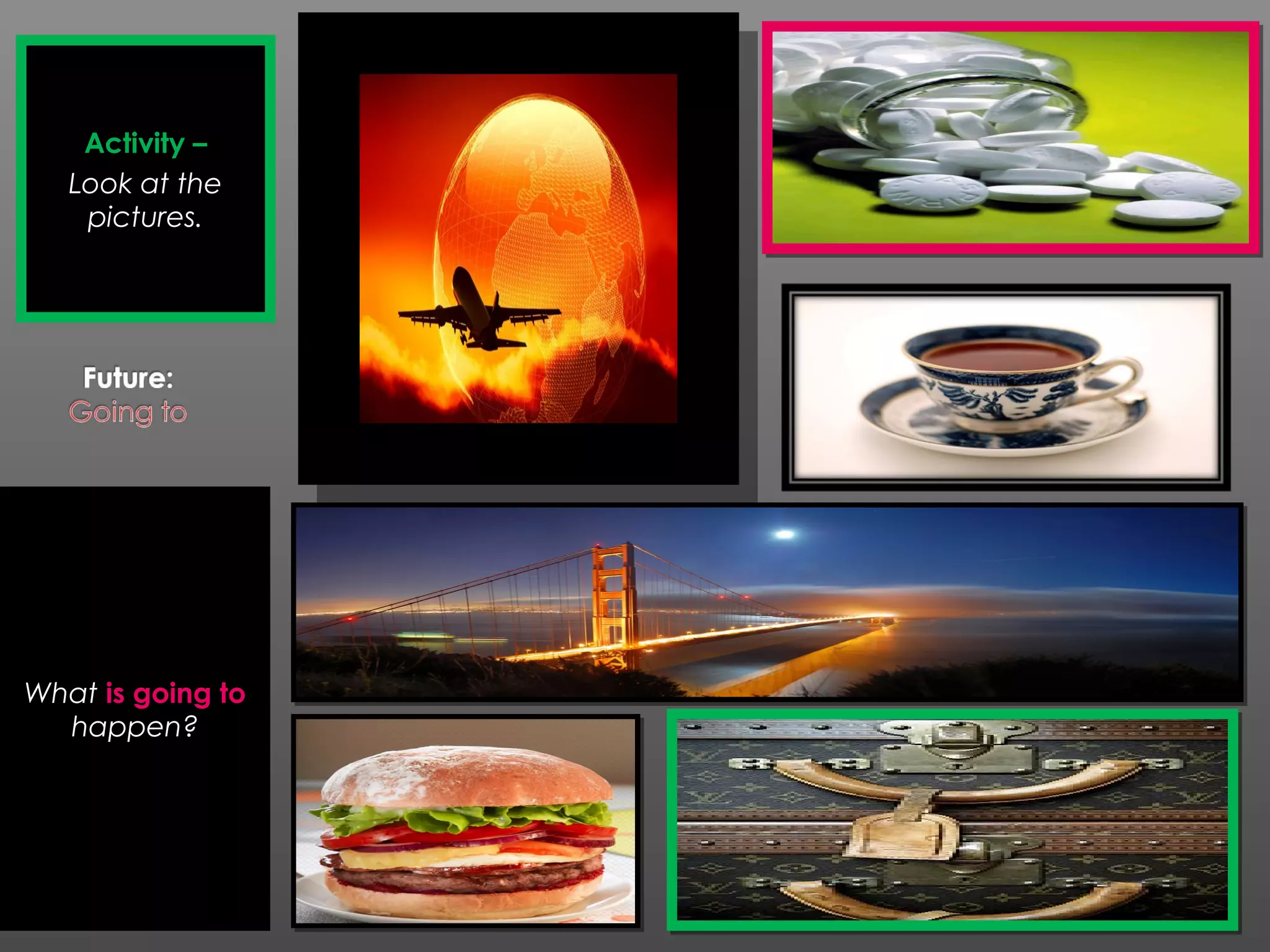
Activity –
   Look at the
    pictures.


What is going to
  happen?
   1. Plane – He is going to fly to Paris by plane.

   2. Aspirin – __________________.
   3. Coffee - _________________.
   4. Bridge - __________________.
   5. Burger - __________________.
   6. Luggage - ________________.
A friend is
 planning to go
on holiday soon.
 Ask her about
                      1. (where / go ?) ___________________
   her plans.         2. (how long / go for?) _________________
Use the words in
 brackets make        3. (when / leave ?) _____________________
   questions.
                      4. (go / family ?) _______________________
       I’m
                      5. travel / by plane ?) ___________________
     You’re
      He’s            6. where / stay ?) ______________________
      She’s
      We’re
     They’re
Shared Activity
      II:
  Look at the
dialogues and
 answer what
  you will/are
going to do for
  each one.


                      You have decided to clean your room this morning, but
                       your friend asks you if you are going out this morning.
 Complete the         1. No, I’m going to clean my room.
dialogues, and
tell us what you
  are going to        You bought a sweater that is too big, so you have
        do.            decided to take it back. Your friend says “that sweater
                       is too big for you.”
                      I know. _______________________________________________
Activity
 continued:
What are you
going to do?


                        3. You have been offered a job, but you have
                         decided not to accept it.
                        Friend: “I hear you’ve been offered a job.”
Fill in the blanks
      with your         You: That’s right, but _________________________.
 answers: what
 are you going
       to do?
                        4. You have to phone Rania. It’s morning now, and
                         you have decided to phone her tonight.
                        Friend: Have you phoned Rania yet?
                        You: No, ______________________________________.
Thank you for viewing my educational tool. This tool is not intended to replace the book,
but, serves merely to support it. I hope it helped you. ~ Belinda Baardsen, Saudi Arabia

Unit 14 future plans - going to with activities

  • 2.
    He’s leaving next week.  We’re going to Europe.
  • 3.
    I’m You’re He’s She’s We’re They’re I’m going to Europe. He’s leaving next week. Their flying on Sunday. Going to Leaving next week Flying on Sunday
  • 4.
    Present verb forms areused to talk about the future. For example, something is going to happen. We’re going to get a new car soon. Jane is going to study chemistry in Jeddah. Children, there are going to be a few changes this term. Plans Decisions Firm intentions
  • 5.
    Going to – is common when we predict the future by using present evidence – when we can see that a future event is on the way, or starting to happen.  Look – it’s going to rain.  Look out – we’re going to crash.  Great! We’re going to Paris next week.  Oh, dear, there’s going to be a test next week.  I’m going to a wedding in November. What is going to happen?  They’re going to a camel race next Monday.  She’s going to class next week.  He’s going to America in January.
  • 6.
    Activity – Look at the pictures. What is going to happen?
  • 7.
    1. Plane – He is going to fly to Paris by plane.  2. Aspirin – __________________.  3. Coffee - _________________.  4. Bridge - __________________.  5. Burger - __________________.  6. Luggage - ________________.
  • 8.
    A friend is planning to go on holiday soon. Ask her about  1. (where / go ?) ___________________ her plans.  2. (how long / go for?) _________________ Use the words in brackets make  3. (when / leave ?) _____________________ questions.  4. (go / family ?) _______________________ I’m  5. travel / by plane ?) ___________________ You’re He’s  6. where / stay ?) ______________________ She’s We’re They’re
  • 9.
    Shared Activity II: Look at the dialogues and answer what you will/are going to do for each one.  You have decided to clean your room this morning, but your friend asks you if you are going out this morning. Complete the  1. No, I’m going to clean my room. dialogues, and tell us what you are going to  You bought a sweater that is too big, so you have do. decided to take it back. Your friend says “that sweater is too big for you.”  I know. _______________________________________________
  • 10.
    Activity continued: What areyou going to do?  3. You have been offered a job, but you have decided not to accept it.  Friend: “I hear you’ve been offered a job.” Fill in the blanks with your  You: That’s right, but _________________________. answers: what are you going to do?  4. You have to phone Rania. It’s morning now, and you have decided to phone her tonight.  Friend: Have you phoned Rania yet?  You: No, ______________________________________.
  • 11.
    Thank you forviewing my educational tool. This tool is not intended to replace the book, but, serves merely to support it. I hope it helped you. ~ Belinda Baardsen, Saudi Arabia

Editor's Notes

  • #7 Objects: Plane, aspirin, coffee, bridge, burger, luggage
  • #9 Student B – has the answers: Paris, 10 days. Next Friday. No, with my family. No, by plane. In a hotel.