Evolution of Marketing
Postgraduate Certificate Course in Digital Marketing
Unit 1: Assignment 2, Task 1
The Evolution of the Internet.
How consumers use technology
and its impact on our lives.
Student Name: Benjamin Johnson
Student Number: 86563959
Introduction
The arrival and growth of the Internet has brought about substantial change.
The Internet has become deeply embedded in the way we
research information, navigate our world, shop, communicate and consume content.
This change shows no signs of slowing down as technology allows for
faster speeds, richer content and greater access to the Internet across the world’s population.
Access to the Internet – History
With humble beginning as a means for various university computers to communicate with each other,
the Internet was set on it’s course as a transformative force in the world with the establishment of the World Wide Web in 1991.
Fig 1: History of the Internet timeline (VentCube) 2019 [Online Resource]
Access to the Internet – 2007 vs 2017
Fig 2: Max Roser, Hannah Ritchie and Esteban Ortiz-Ospina (2015) - "Internet". Published online at OurWorldInData.org. [Online Resource]
The % share of the population using the Internet grew significantly in the decade 2007 to 2017
Average Internet
connection speed
in the USA
from 2007 to 2017
(in Mbps), by quarter
Average internet speeds have
increased significantly since 2012.
Faster speeds have increased the use of
rich content (such as video) as more data
can be loaded in a shorter period of time.
Fig 3: Internet Connection Speeds, USA (Statista) 2020 [Online Resource]
Digital devices used by audiences
Faster speeds and more widespread access to the internet has made the internet a more integrated part of day-to-day life.
In the past 5 years alone, the average number of internet connected devices per person has doubled.
Fig 4: Internet of Things – Future Outlook (Research Gate) 2020 [Online Resource]
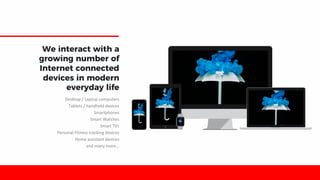
We interact with a
growing number of
Internet connected
devices in modern
everyday life
Desktop / Laptop computers
Tablets / handheld devices
Smartphones
Smart Watches
Smart TVs
Personal Fitness tracking devices
Home assistant devices
and many more…
How customers search for information
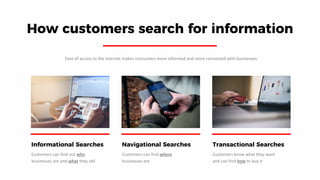
Ease of access to the internet makes consumers more informed and more connected with businesses.
Customers can find out who
businesses are and what they sell
Informational Searches
Customers can find where
businesses are
Navigational Searches
Customers know what they want
and can find how to buy it
Transactional Searches
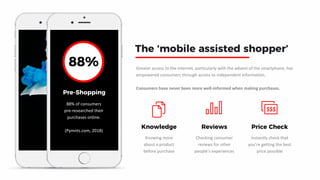
The ‘mobile assisted shopper’
Knowledge
Knowing more
about a product
before purchase
Reviews
Checking consumer
reviews for other
people’s experiences
Price Check
Instantly check that
you’re getting the best
price possible
Greater access to the internet, particularly with the advent of the smartphone, has
empowered consumers through access to independent information.
Consumers have never been more well-informed when making purchases.
88% of consumers
pre-researched their
purchases online.
(Pymnts.com, 2018)
Pre-Shopping
88%
$$$
What
consumers
buy online
A highly diverse selection of products
across many categories and industries.
Clothing, books, shoes and consumer
electronics are the most popular product
categories to purchase online.
Fig 5: Online Shopping Statistics (Big Commerce / Statista) 2020 [Online Resource]
Fig 6: Man in Green T-Shirt Riding Bicycle On Road (Pexels.com) 2020 [photograph]
What
consumers
buy online
The online service economy has boomed
with the increased access to the Internet.
Mobile apps and access to devices are
integral for businesses like Uber, delivery
services like UberEats, Deliveroo, etc.
as well as freelance facilitating
businesses like Fiverr.
Online video consumption
Fig 7: How Many Hours of Online Video Do You Watch Per Week (Statista) 2020 [Online Resource]
By 2022,
online videos will
make up more than
82% of all consumer
internet traffic
— 15 times higher than
it was in 2017.
— (Cisco, 2020)
As internet speeds
increase, content
consumption becomes
a more viable source
of entertainment.
- Streaming services
(Netflix, Hulu, Stan, Amazon Prime,
YouTube, etc.)
- Interactive live streaming
(Twitch Gaming, Facebook Live, Live Q&A)
- eSports
(both competitive and casual gaming)
Fig 8: Streaming Logos – Alex Castro (The Verge) 2020 [Illustration]
Consumer trends
The rise of the use of the internet as a part of our everyday experience shows no signs of slowing down.
In e-commerce specifically, some factors pushing the increase in online purchasing are:
• The increased use of smartphones and mobile shopping,
• Social media and social commerce,
• Transformative technology,
• Online marketplaces, and
• The way shopping behaviours have changed from generation to generation — Baby Boomers to Millennials to Gen Z.
In addition to these examples, consumer attitudes toward online shopping, consuming online streaming content, using video
conference software and working from home (due to the restrictive environment of Covid-19 lockdowns)
are shifting in a positive direction.
Ref: How Many People Shop Online? (Big Commerce) 2020 [Online Resource]
Summary
The growth of the Internet has brought about substantial change to our lives.
As technology advances, speeds and data volumes increase, the Internet will further integrate itself into daily life.
Whether you are streaming content, finding your closest retailer, buying products online or tracking your fitness goals, the Internet will
be there to facilitate it.

Unit 1: Evolution of Digital Marketing (Assignment 2) - Benjamin Johnson

  • 1.
    Evolution of Marketing PostgraduateCertificate Course in Digital Marketing Unit 1: Assignment 2, Task 1 The Evolution of the Internet. How consumers use technology and its impact on our lives. Student Name: Benjamin Johnson Student Number: 86563959
  • 2.
    Introduction The arrival andgrowth of the Internet has brought about substantial change. The Internet has become deeply embedded in the way we research information, navigate our world, shop, communicate and consume content. This change shows no signs of slowing down as technology allows for faster speeds, richer content and greater access to the Internet across the world’s population.
  • 3.
    Access to theInternet – History With humble beginning as a means for various university computers to communicate with each other, the Internet was set on it’s course as a transformative force in the world with the establishment of the World Wide Web in 1991. Fig 1: History of the Internet timeline (VentCube) 2019 [Online Resource]
  • 4.
    Access to theInternet – 2007 vs 2017 Fig 2: Max Roser, Hannah Ritchie and Esteban Ortiz-Ospina (2015) - "Internet". Published online at OurWorldInData.org. [Online Resource] The % share of the population using the Internet grew significantly in the decade 2007 to 2017
  • 5.
    Average Internet connection speed inthe USA from 2007 to 2017 (in Mbps), by quarter Average internet speeds have increased significantly since 2012. Faster speeds have increased the use of rich content (such as video) as more data can be loaded in a shorter period of time. Fig 3: Internet Connection Speeds, USA (Statista) 2020 [Online Resource]
  • 6.
    Digital devices usedby audiences Faster speeds and more widespread access to the internet has made the internet a more integrated part of day-to-day life. In the past 5 years alone, the average number of internet connected devices per person has doubled. Fig 4: Internet of Things – Future Outlook (Research Gate) 2020 [Online Resource]
  • 7.
    We interact witha growing number of Internet connected devices in modern everyday life Desktop / Laptop computers Tablets / handheld devices Smartphones Smart Watches Smart TVs Personal Fitness tracking devices Home assistant devices and many more…
  • 8.
    How customers searchfor information Ease of access to the internet makes consumers more informed and more connected with businesses. Customers can find out who businesses are and what they sell Informational Searches Customers can find where businesses are Navigational Searches Customers know what they want and can find how to buy it Transactional Searches
  • 9.
    The ‘mobile assistedshopper’ Knowledge Knowing more about a product before purchase Reviews Checking consumer reviews for other people’s experiences Price Check Instantly check that you’re getting the best price possible Greater access to the internet, particularly with the advent of the smartphone, has empowered consumers through access to independent information. Consumers have never been more well-informed when making purchases. 88% of consumers pre-researched their purchases online. (Pymnts.com, 2018) Pre-Shopping 88% $$$
  • 10.
    What consumers buy online A highlydiverse selection of products across many categories and industries. Clothing, books, shoes and consumer electronics are the most popular product categories to purchase online. Fig 5: Online Shopping Statistics (Big Commerce / Statista) 2020 [Online Resource]
  • 11.
    Fig 6: Manin Green T-Shirt Riding Bicycle On Road (Pexels.com) 2020 [photograph] What consumers buy online The online service economy has boomed with the increased access to the Internet. Mobile apps and access to devices are integral for businesses like Uber, delivery services like UberEats, Deliveroo, etc. as well as freelance facilitating businesses like Fiverr.
  • 12.
    Online video consumption Fig7: How Many Hours of Online Video Do You Watch Per Week (Statista) 2020 [Online Resource] By 2022, online videos will make up more than 82% of all consumer internet traffic — 15 times higher than it was in 2017. — (Cisco, 2020)
  • 13.
    As internet speeds increase,content consumption becomes a more viable source of entertainment. - Streaming services (Netflix, Hulu, Stan, Amazon Prime, YouTube, etc.) - Interactive live streaming (Twitch Gaming, Facebook Live, Live Q&A) - eSports (both competitive and casual gaming) Fig 8: Streaming Logos – Alex Castro (The Verge) 2020 [Illustration]
  • 14.
    Consumer trends The riseof the use of the internet as a part of our everyday experience shows no signs of slowing down. In e-commerce specifically, some factors pushing the increase in online purchasing are: • The increased use of smartphones and mobile shopping, • Social media and social commerce, • Transformative technology, • Online marketplaces, and • The way shopping behaviours have changed from generation to generation — Baby Boomers to Millennials to Gen Z. In addition to these examples, consumer attitudes toward online shopping, consuming online streaming content, using video conference software and working from home (due to the restrictive environment of Covid-19 lockdowns) are shifting in a positive direction. Ref: How Many People Shop Online? (Big Commerce) 2020 [Online Resource]
  • 15.
    Summary The growth ofthe Internet has brought about substantial change to our lives. As technology advances, speeds and data volumes increase, the Internet will further integrate itself into daily life. Whether you are streaming content, finding your closest retailer, buying products online or tracking your fitness goals, the Internet will be there to facilitate it.