UNILEVER : Combatting
Global Food Waste
Presented by
Manish Pandey
We live in a world where a significant portion of the population
is starving, but nearly one-third of all food produced is wasted.
This is human disgrace, how can we say this is sustainable????
~Pier Luigi Sigismondi, chief supply chain
officer
Unilever : The Brand
 Formed in 1929 through merger of 2 Dutch companies
 Since inception Unilever supported a broad social purpose
 Their early emphasis was on soap
 In 20th century they moved to food category
 In 2012 company was named as leading company in DOW JONES
SUSTAINABILITY INDEX
 49.8 billion pounds in 2013 with 1000 brands
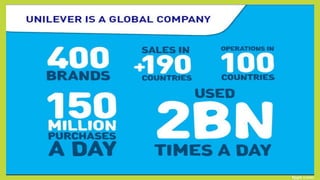
 Operates in 190 countries with 100,000 suppliers
Unilever Sustainable Living Plan
 In 2010 company introduced Unilever Sustainable Agriculture Code
 “Mandatory” , “Must” and “Should” for suppliers
 Like MANDATORY requirement prohibited animal abuse, MUST keep
record of irrigation water quality test.
 To be truly sustainable our policy should deliver triple bottom line
value-economic, environmental and social
 Unilever’s supply chain to sustainably source all agriculture products
 Planned to work with 500,000 smallholders farmers
Global Food Waste
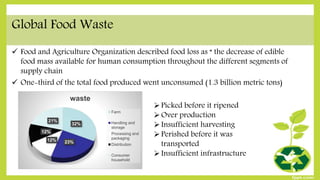
 Food and Agriculture Organization described food loss as “ the decrease of edible
food mass available for human consumption throughout the different segments of
supply chain
 One-third of the total food produced went unconsumed (1.3 billion metric tons)
32%
23%12%
12%
21%
waste
Farm
Handling and
storage
Processing and
packaging
Distribution
Consumer
household
Picked before it ripened
Over production
Insufficient harvesting
Perished before it was
transported
Insufficient infrastructure
Food waste at Unilever
 27% of firm’s revenue and 41% operating profit is by food category
 19% of firm’s revenue and 11% operating profit is by refreshment category
 Both these together contribute 63% of Unilever’s waste
 Unilever is more efficient than most primarily because most of the foods are
processed so less perishable
 Unilever has worked on building efficiencies on supply chain and by incentivizing
and supporting suppliers to reduce waste
 Unilever decided to focus first on 3 major waste sources i.e.. Tomatoes, Sugar and
Tea
 They focused on improving their own operation and through R&D and new
technologies
Managing upstream Sources of food
Tomatoes
Worked with 15 suppliers who contributed 85% of its supply
Unilever purchase 3% of world’s tomato production
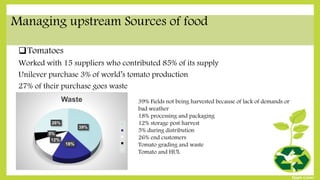
27% of their purchase goes waste
39%
18%
12%
5%
26%
Waste 39% Fields not being harvested because of lack of demands or
bad weather
18% processing and packaging
12% storage post harvest
5% during distribution
26% end customers
Tomato grading and waste
Tomato and HUL
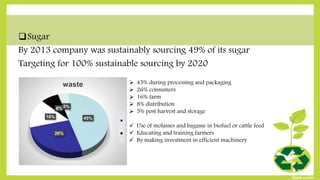
Sugar
By 2013 company was sustainably sourcing 49% of its sugar
Targeting for 100% sustainable sourcing by 2020
 45% during processing and packaging
 26% consumers
 16% farm
 8% distribution
 5% post harvest and storage
 Use of molasses and bagasse in biofuel or cattle feed
 Educating and training farmers
 By making investment in efficient machinery
45%
26%
16%
8% 5%
waste
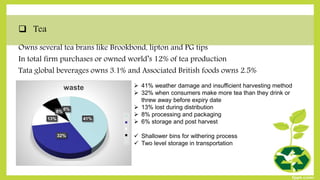
 Tea
Owns several tea brans like Brookbond, lipton and PG tips
In total firm purchases or owned world’s 12% of tea production
Tata global beverages owns 3.1% and Associated British foods owns 2.5%
41%
32%
13%
8%
6%
waste  41% weather damage and insufficient harvesting method
 32% when consumers make more tea than they drink or
threw away before expiry date
 13% lost during distribution
 8% processing and packaging
 6% storage and post harvest
 Shallower bins for withering process
 Two level storage in transportation
Managing downstream sources of food waste
 Working with customers
 Mainly in countries where global economic recession persisted
 Compete on solution rather than just on price
 Worked with food service customers such as restaurants and hotels
 Unilever Food Solution launched an app in the UK name “Wise up on Waste” directed towards
professional chef
 Working with consumers
 More than 20% of food wastage is after retail
 In UK alone value of food thrown out each year is 700 pounds, by a family with children
 Encouraged consumers to use left over food using Unilever’s food products like “Knor soups”
 In a trial practice with 12 British and Irish family, Unilever was successful in reducing their waste
by 25%-33%
 Lunched Live Better Challenge in partnership with The Gaurdian, and saved 10metric ton food
waste was prevented by participants in a week
Making Internal Changes
 Product left in packages
 Developed easy to evacuate packaging
 Packaging as per changing demographics
 Impact of waste reduction on sales
 Sales would fall down
 This is an opportunity for brands to partner with consumers to live sustainably
 It reduces wastes and increases revenue
 Also worked with competitors to reduce waste
Broader Mandates
 By 2014 company will become the first largest FMCG with zero waste to land fill
 Encourage all stakeholders for zero waste value chain
Building on Impact
 Despite of critics on overall revenue, Unilever CEO said we have to deliver rather
than responding to critic
 Sigismondi said “Food reduction will ultimately be driven by consumer demand”
 Unilever’s supply chain became one of the best recognised in the word
 Long term success ultimately relied on continue participation of all the members of
the value chain.
THANK YOU!!!!

Unilever

  • 1.
    UNILEVER : Combatting GlobalFood Waste Presented by Manish Pandey
  • 2.
    We live ina world where a significant portion of the population is starving, but nearly one-third of all food produced is wasted. This is human disgrace, how can we say this is sustainable???? ~Pier Luigi Sigismondi, chief supply chain officer
  • 3.
    Unilever : TheBrand  Formed in 1929 through merger of 2 Dutch companies  Since inception Unilever supported a broad social purpose  Their early emphasis was on soap  In 20th century they moved to food category  In 2012 company was named as leading company in DOW JONES SUSTAINABILITY INDEX  49.8 billion pounds in 2013 with 1000 brands  Operates in 190 countries with 100,000 suppliers
  • 5.
    Unilever Sustainable LivingPlan  In 2010 company introduced Unilever Sustainable Agriculture Code  “Mandatory” , “Must” and “Should” for suppliers  Like MANDATORY requirement prohibited animal abuse, MUST keep record of irrigation water quality test.  To be truly sustainable our policy should deliver triple bottom line value-economic, environmental and social  Unilever’s supply chain to sustainably source all agriculture products  Planned to work with 500,000 smallholders farmers
  • 6.
    Global Food Waste Food and Agriculture Organization described food loss as “ the decrease of edible food mass available for human consumption throughout the different segments of supply chain  One-third of the total food produced went unconsumed (1.3 billion metric tons) 32% 23%12% 12% 21% waste Farm Handling and storage Processing and packaging Distribution Consumer household Picked before it ripened Over production Insufficient harvesting Perished before it was transported Insufficient infrastructure
  • 7.
    Food waste atUnilever  27% of firm’s revenue and 41% operating profit is by food category  19% of firm’s revenue and 11% operating profit is by refreshment category  Both these together contribute 63% of Unilever’s waste  Unilever is more efficient than most primarily because most of the foods are processed so less perishable  Unilever has worked on building efficiencies on supply chain and by incentivizing and supporting suppliers to reduce waste  Unilever decided to focus first on 3 major waste sources i.e.. Tomatoes, Sugar and Tea  They focused on improving their own operation and through R&D and new technologies
  • 8.
    Managing upstream Sourcesof food Tomatoes Worked with 15 suppliers who contributed 85% of its supply Unilever purchase 3% of world’s tomato production 27% of their purchase goes waste 39% 18% 12% 5% 26% Waste 39% Fields not being harvested because of lack of demands or bad weather 18% processing and packaging 12% storage post harvest 5% during distribution 26% end customers Tomato grading and waste Tomato and HUL
  • 9.
    Sugar By 2013 companywas sustainably sourcing 49% of its sugar Targeting for 100% sustainable sourcing by 2020  45% during processing and packaging  26% consumers  16% farm  8% distribution  5% post harvest and storage  Use of molasses and bagasse in biofuel or cattle feed  Educating and training farmers  By making investment in efficient machinery 45% 26% 16% 8% 5% waste
  • 10.
     Tea Owns severaltea brans like Brookbond, lipton and PG tips In total firm purchases or owned world’s 12% of tea production Tata global beverages owns 3.1% and Associated British foods owns 2.5% 41% 32% 13% 8% 6% waste  41% weather damage and insufficient harvesting method  32% when consumers make more tea than they drink or threw away before expiry date  13% lost during distribution  8% processing and packaging  6% storage and post harvest  Shallower bins for withering process  Two level storage in transportation
  • 11.
    Managing downstream sourcesof food waste  Working with customers  Mainly in countries where global economic recession persisted  Compete on solution rather than just on price  Worked with food service customers such as restaurants and hotels  Unilever Food Solution launched an app in the UK name “Wise up on Waste” directed towards professional chef  Working with consumers  More than 20% of food wastage is after retail  In UK alone value of food thrown out each year is 700 pounds, by a family with children  Encouraged consumers to use left over food using Unilever’s food products like “Knor soups”  In a trial practice with 12 British and Irish family, Unilever was successful in reducing their waste by 25%-33%  Lunched Live Better Challenge in partnership with The Gaurdian, and saved 10metric ton food waste was prevented by participants in a week
  • 12.
    Making Internal Changes Product left in packages  Developed easy to evacuate packaging  Packaging as per changing demographics  Impact of waste reduction on sales  Sales would fall down  This is an opportunity for brands to partner with consumers to live sustainably  It reduces wastes and increases revenue  Also worked with competitors to reduce waste
  • 13.
    Broader Mandates  By2014 company will become the first largest FMCG with zero waste to land fill  Encourage all stakeholders for zero waste value chain Building on Impact  Despite of critics on overall revenue, Unilever CEO said we have to deliver rather than responding to critic  Sigismondi said “Food reduction will ultimately be driven by consumer demand”  Unilever’s supply chain became one of the best recognised in the word  Long term success ultimately relied on continue participation of all the members of the value chain.
  • 14.