Understanding the Function
WHY? What is the purpose of the statement?
Identify the Question Listen again to this part of the conversation Why does the speaker say this: What does the speaker mean?
How to answer Think about context Avoid answers that focus on the literal meaning of the repeated sentence Listen actively by trying to predict what will be repeated
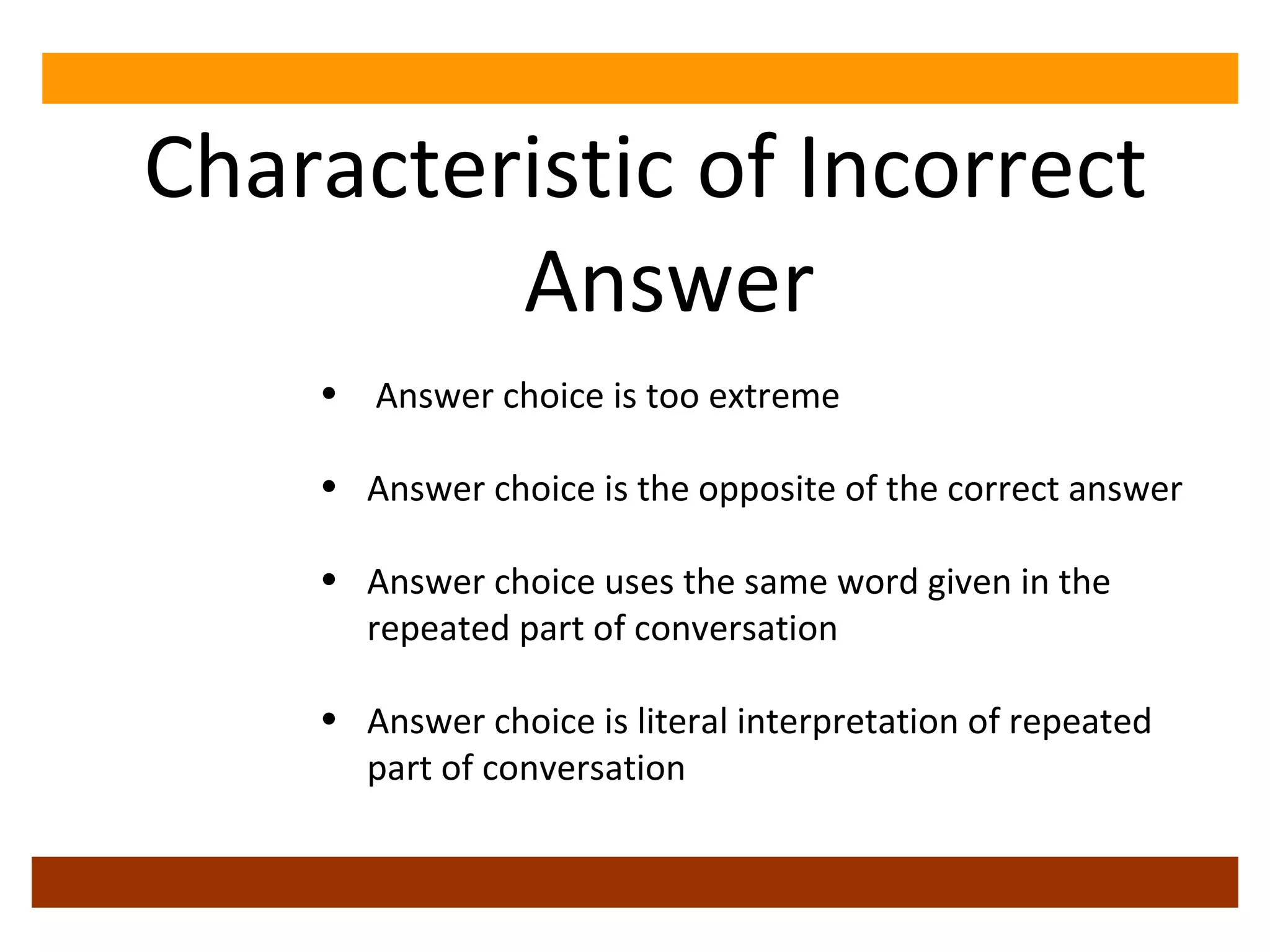
Characteristic of Incorrect Answer Answer choice is too extreme Answer choice is the opposite of the correct answer Answer choice uses the same word given in the repeated part of conversation Answer choice is literal interpretation of repeated part of conversation
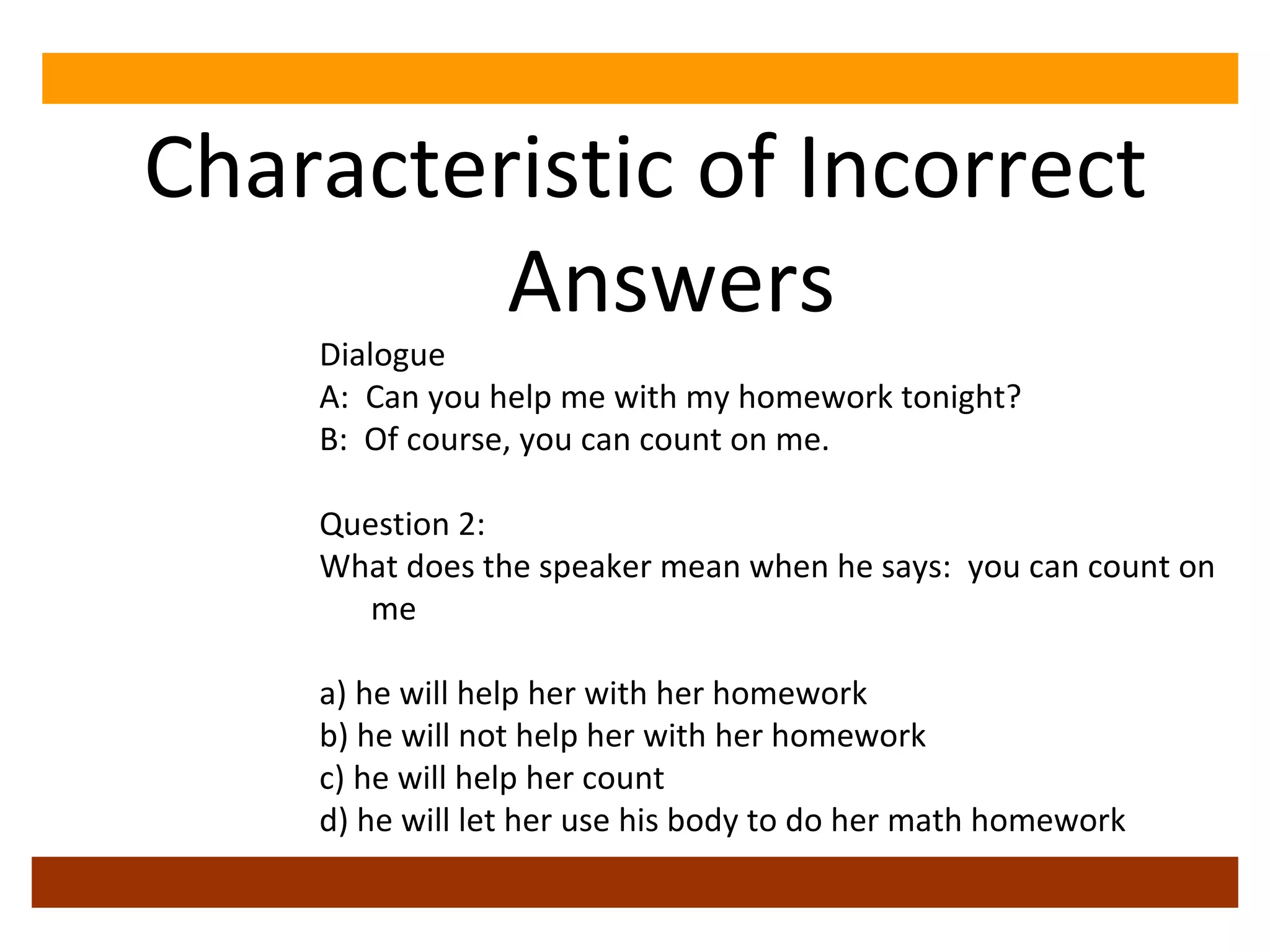
Characteristic of Incorrect Answers Dialogue A:  Can you help me with my homework tonight? B:  Of course, you can count on me. Question 2: What does the speaker mean when he says:  you can count on me a) he will help her with her homework b) he will not help her with her homework c) he will help her count  d) he will let her use his body to do her math homework
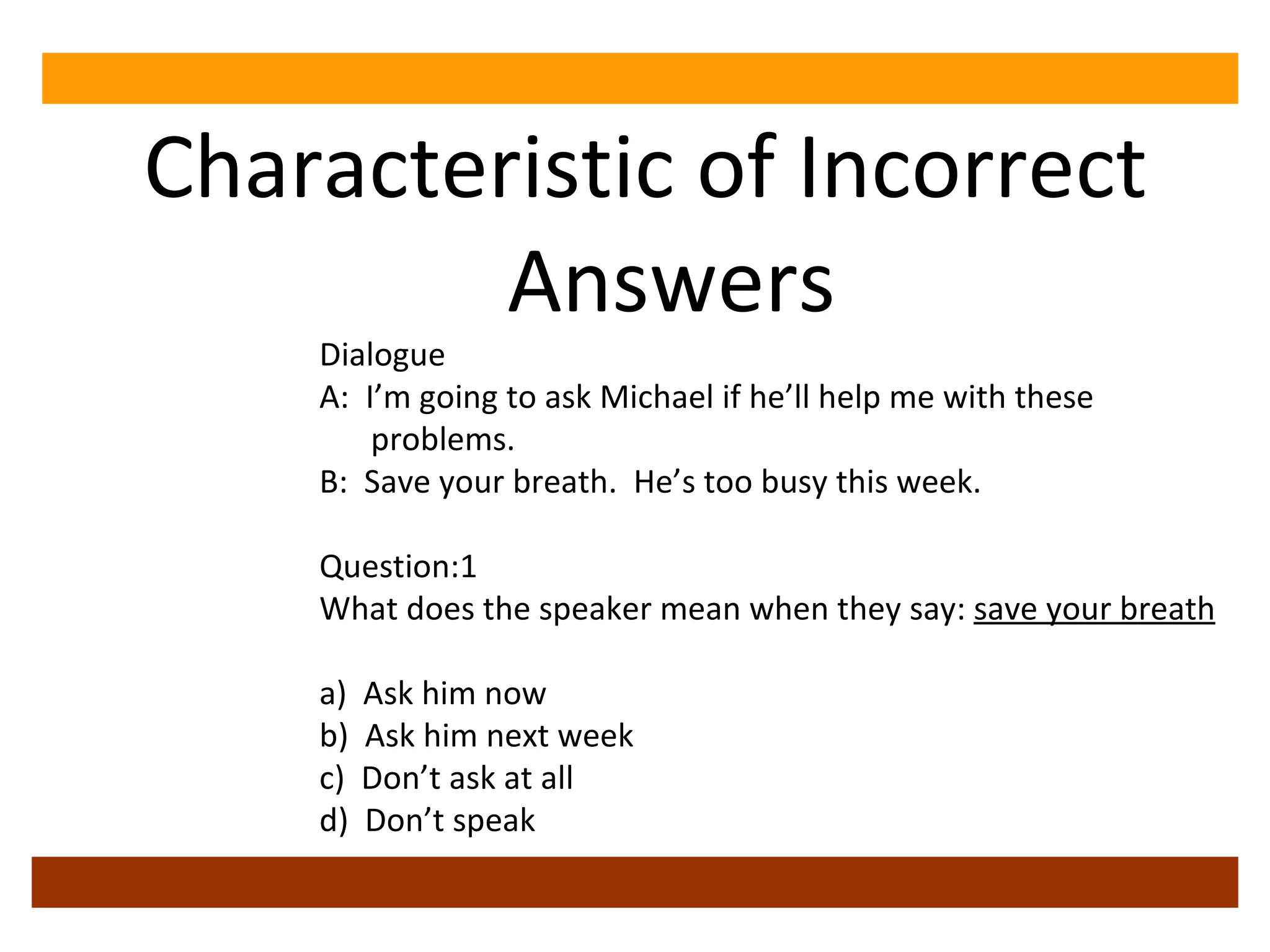
Characteristic of Incorrect Answers Dialogue A:  I’m going to ask Michael if he’ll help me with these problems. B:  Save your breath.  He’s too busy this week. Question:1 What does the speaker mean when they say:  save your breath a)  Ask him now b)  Ask him next week c)  Don’t ask at all d)  Don’t speak
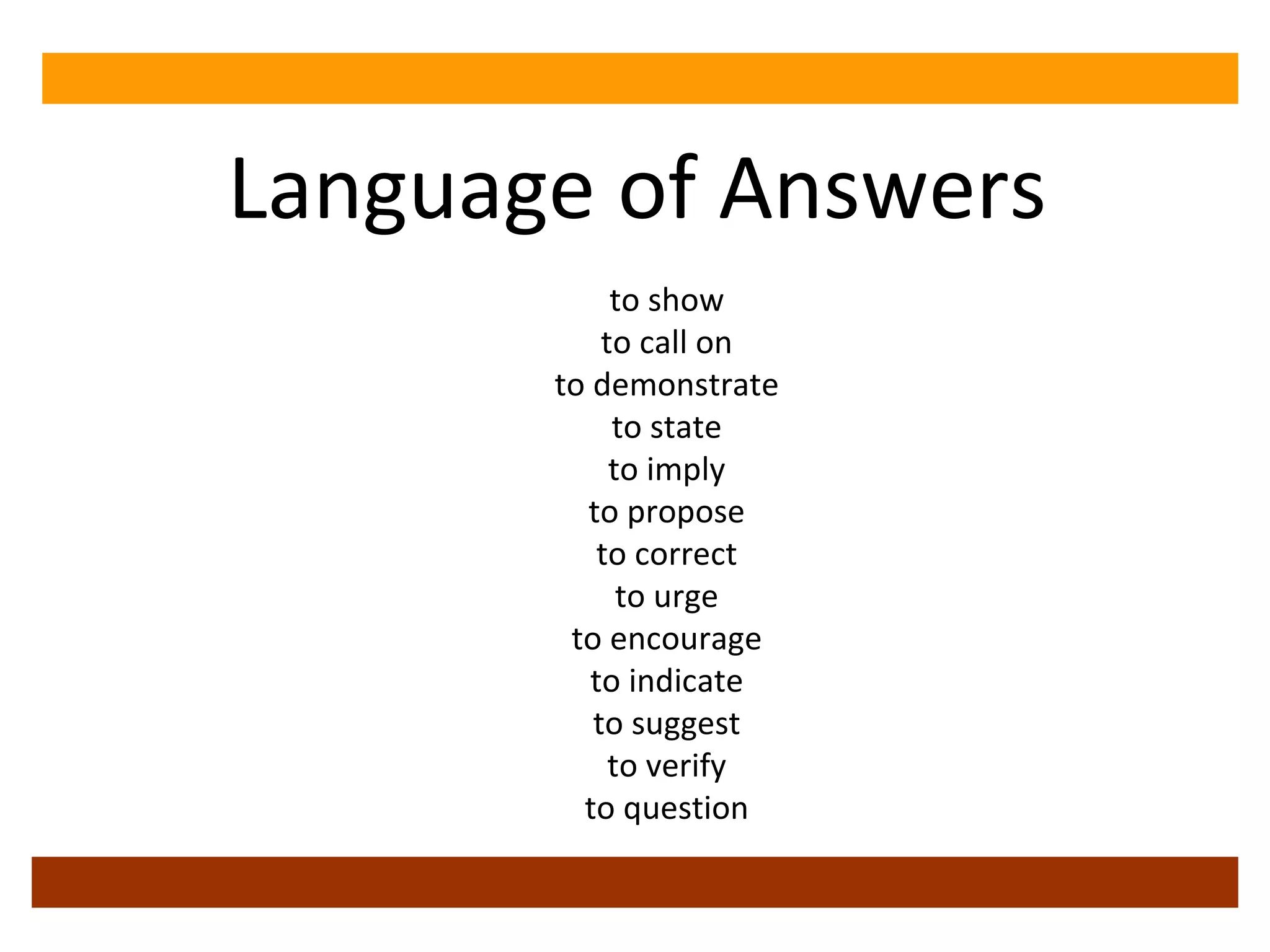
Language of Answers to show to call on to demonstrate to state to imply to propose to correct to urge to encourage to indicate to suggest to verify to question
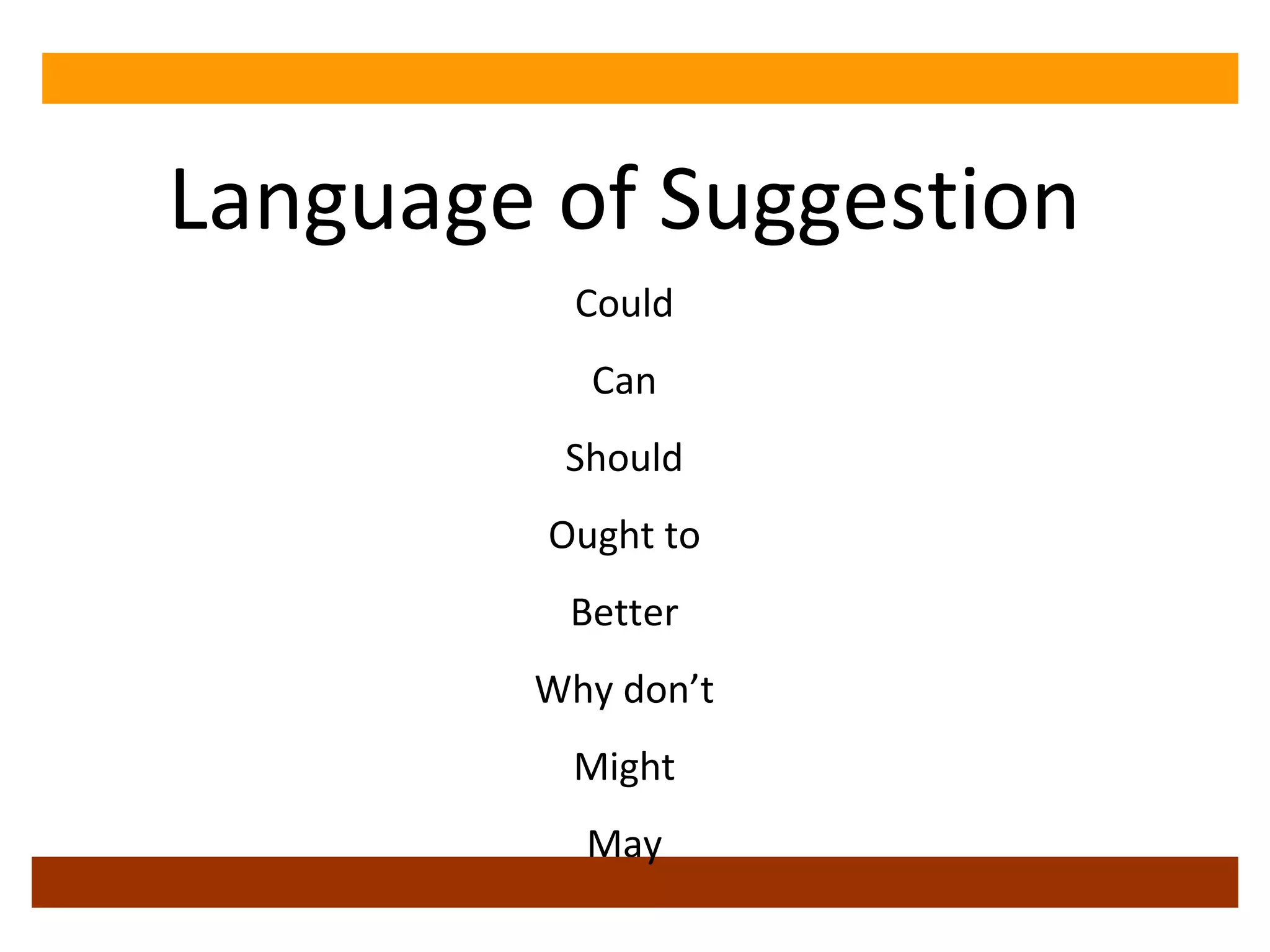
Language of Suggestion Could Can Should Ought to Better Why don’t Might May
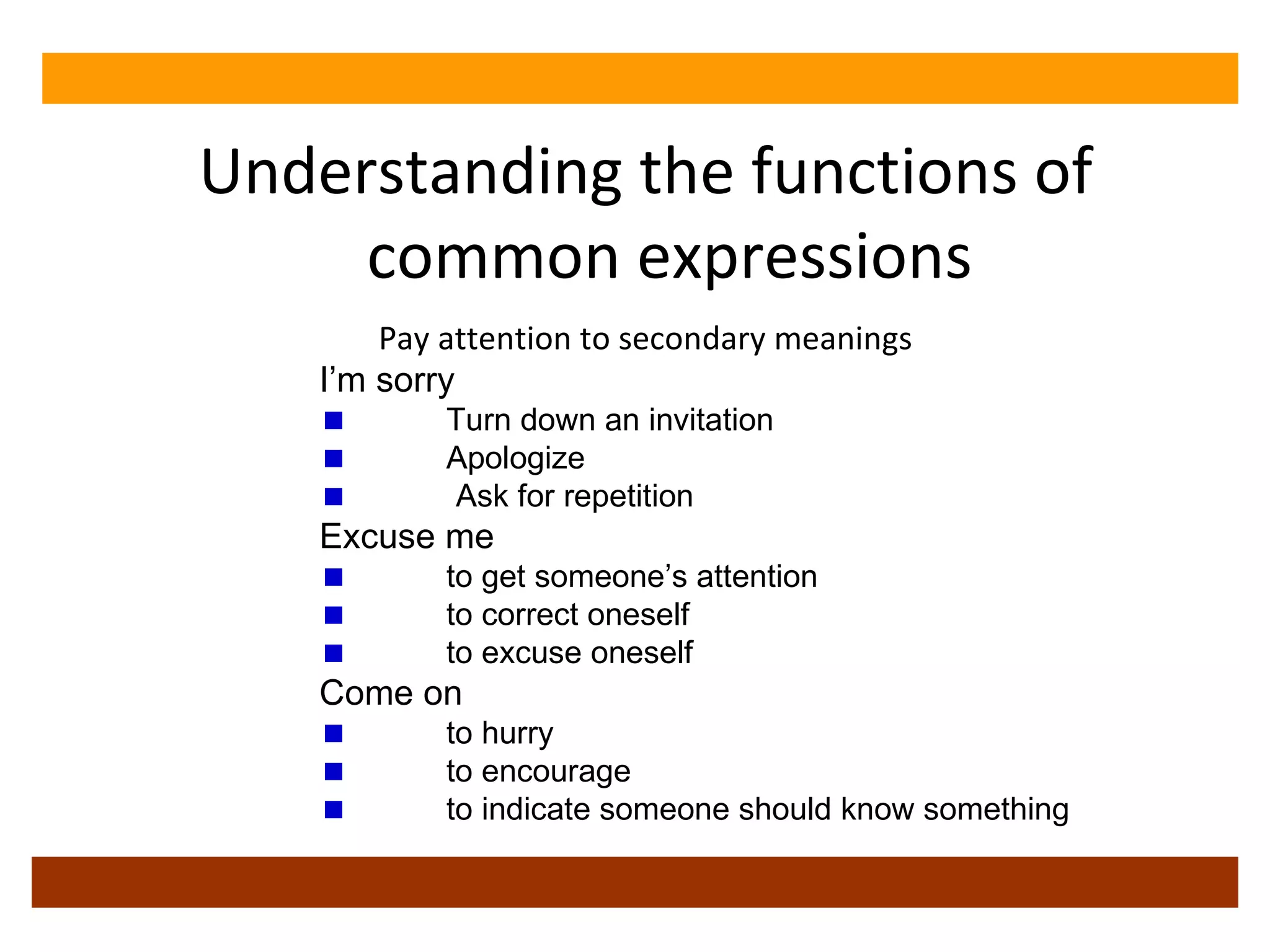
Understanding the functions of common expressions Pay attention to secondary meanings I’m sorry  Turn down an invitation Apologize Ask for repetition Excuse me to get someone’s attention to correct oneself to excuse oneself Come on to hurry to encourage to indicate someone should know something

Understanding the function

  • 1.
  • 2.
    WHY? What isthe purpose of the statement?
  • 3.
    Identify the QuestionListen again to this part of the conversation Why does the speaker say this: What does the speaker mean?
  • 4.
    How to answerThink about context Avoid answers that focus on the literal meaning of the repeated sentence Listen actively by trying to predict what will be repeated
  • 5.
    Characteristic of IncorrectAnswer Answer choice is too extreme Answer choice is the opposite of the correct answer Answer choice uses the same word given in the repeated part of conversation Answer choice is literal interpretation of repeated part of conversation
  • 6.
    Characteristic of IncorrectAnswers Dialogue A: Can you help me with my homework tonight? B: Of course, you can count on me. Question 2: What does the speaker mean when he says: you can count on me a) he will help her with her homework b) he will not help her with her homework c) he will help her count d) he will let her use his body to do her math homework
  • 7.
    Characteristic of IncorrectAnswers Dialogue A: I’m going to ask Michael if he’ll help me with these problems. B: Save your breath. He’s too busy this week. Question:1 What does the speaker mean when they say: save your breath a) Ask him now b) Ask him next week c) Don’t ask at all d) Don’t speak
  • 8.
    Language of Answersto show to call on to demonstrate to state to imply to propose to correct to urge to encourage to indicate to suggest to verify to question
  • 9.
    Language of SuggestionCould Can Should Ought to Better Why don’t Might May
  • 10.
    Understanding the functionsof common expressions Pay attention to secondary meanings I’m sorry Turn down an invitation Apologize Ask for repetition Excuse me to get someone’s attention to correct oneself to excuse oneself Come on to hurry to encourage to indicate someone should know something