Chapter 15: What Next?Chapter 15: What Next?
The Future of TerrorismThe Future of Terrorism
Martin, Understanding Terrorism Fifth
Edition. (c) SAGE Publications 2016
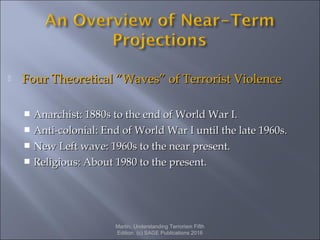
 Four Theoretical “Waves” of Terrorist ViolenceFour Theoretical “Waves” of Terrorist Violence
 Anarchist: 1880s to the end of World War I.Anarchist: 1880s to the end of World War I.
 Anti-colonial: End of World War I until the late 1960s.Anti-colonial: End of World War I until the late 1960s.
 New Left wave: 1960s to the near present.New Left wave: 1960s to the near present.
 Religious: About 1980 to the present.Religious: About 1980 to the present.
Martin, Understanding Terrorism Fifth
Edition. (c) SAGE Publications 2016
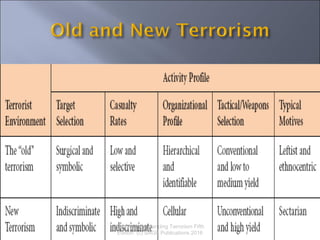
Martin, Understanding Terrorism Fifth
Edition. (c) SAGE Publications 2016
 Terrorist Environments in the 21Terrorist Environments in the 21stst
CenturyCentury
 State-sponsored terrorism.State-sponsored terrorism.
 Dissident terrorism.Dissident terrorism.
 Religious terrorism.Religious terrorism.
 Ideological terrorism.Ideological terrorism.
 Criminal dissident terrorism.Criminal dissident terrorism.
Martin, Understanding Terrorism Fifth
Edition. (c) SAGE Publications 2016
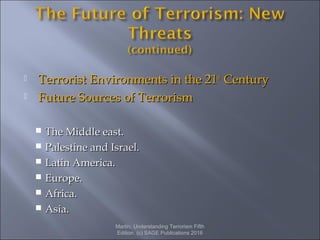
 Terrorist Environments in the 21Terrorist Environments in the 21stst
CenturyCentury
 Future Sources of TerrorismFuture Sources of Terrorism
 The Middle east.The Middle east.
 Palestine and Israel.Palestine and Israel.
 Latin America.Latin America.
 Europe.Europe.
 Africa.Africa.
 Asia.Asia.
Martin, Understanding Terrorism Fifth
Edition. (c) SAGE Publications 2016
 High-Tech TerrorismHigh-Tech Terrorism
 Information technologies and Cyberterrorism.Information technologies and Cyberterrorism.
 Weapons of mass destruction.Weapons of mass destruction.
 Case: Exotic technologies.Case: Exotic technologies.
 Soft Targets and Terrorist SymbolismSoft Targets and Terrorist Symbolism
Martin, Understanding Terrorism Fifth
Edition. (c) SAGE Publications 2016
 Government ResponsesGovernment Responses
 Societal ResponsesSocietal Responses
 Countering ExtremismCountering Extremism
Martin, Understanding Terrorism Fifth
Edition. (c) SAGE Publications 2016
 New Fronts in a New WarNew Fronts in a New War
 Covert shadow wars.Covert shadow wars.
 Domestic “Homeland” security measures.Domestic “Homeland” security measures.
 Counterterrorist financial operations.Counterterrorist financial operations.
 Global surveillance of communications technologies.Global surveillance of communications technologies.
 Identifying and disrupting transnational terrorist cellsIdentifying and disrupting transnational terrorist cells
and support networks.and support networks.
Martin, Understanding Terrorism Fifth
Edition. (c) SAGE Publications 2016
 Continued Utility of ForceContinued Utility of Force
 Elimination of terrorist threats.Elimination of terrorist threats.
 General deterrence.General deterrence.
 Specific deterrence.Specific deterrence.
 Demonstrations of national will.Demonstrations of national will.
 Countering Terrorist Financial OperationsCountering Terrorist Financial Operations
 Finding hidden fortunes.Finding hidden fortunes.
 Case: Hawala.Case: Hawala.
Martin, Understanding Terrorism Fifth
Edition. (c) SAGE Publications 2016
 The Case for International CooperationThe Case for International Cooperation
 Intelligence and law enforcement.Intelligence and law enforcement.
Martin, Understanding Terrorism Fifth
Edition. (c) SAGE Publications 2016
 The Future of International TerrorismThe Future of International Terrorism
 The Future of the Violent LeftThe Future of the Violent Left
 The Future of the Violent RightThe Future of the Violent Right
Martin, Understanding Terrorism Fifth
Edition. (c) SAGE Publications 2016

Understanding terror 5e ch 15

  • 1.
    Chapter 15: WhatNext?Chapter 15: What Next? The Future of TerrorismThe Future of Terrorism Martin, Understanding Terrorism Fifth Edition. (c) SAGE Publications 2016
  • 2.
     Four Theoretical“Waves” of Terrorist ViolenceFour Theoretical “Waves” of Terrorist Violence  Anarchist: 1880s to the end of World War I.Anarchist: 1880s to the end of World War I.  Anti-colonial: End of World War I until the late 1960s.Anti-colonial: End of World War I until the late 1960s.  New Left wave: 1960s to the near present.New Left wave: 1960s to the near present.  Religious: About 1980 to the present.Religious: About 1980 to the present. Martin, Understanding Terrorism Fifth Edition. (c) SAGE Publications 2016
  • 3.
    Martin, Understanding TerrorismFifth Edition. (c) SAGE Publications 2016
  • 4.
     Terrorist Environmentsin the 21Terrorist Environments in the 21stst CenturyCentury  State-sponsored terrorism.State-sponsored terrorism.  Dissident terrorism.Dissident terrorism.  Religious terrorism.Religious terrorism.  Ideological terrorism.Ideological terrorism.  Criminal dissident terrorism.Criminal dissident terrorism. Martin, Understanding Terrorism Fifth Edition. (c) SAGE Publications 2016
  • 5.
     Terrorist Environmentsin the 21Terrorist Environments in the 21stst CenturyCentury  Future Sources of TerrorismFuture Sources of Terrorism  The Middle east.The Middle east.  Palestine and Israel.Palestine and Israel.  Latin America.Latin America.  Europe.Europe.  Africa.Africa.  Asia.Asia. Martin, Understanding Terrorism Fifth Edition. (c) SAGE Publications 2016
  • 6.
     High-Tech TerrorismHigh-TechTerrorism  Information technologies and Cyberterrorism.Information technologies and Cyberterrorism.  Weapons of mass destruction.Weapons of mass destruction.  Case: Exotic technologies.Case: Exotic technologies.  Soft Targets and Terrorist SymbolismSoft Targets and Terrorist Symbolism Martin, Understanding Terrorism Fifth Edition. (c) SAGE Publications 2016
  • 7.
     Government ResponsesGovernmentResponses  Societal ResponsesSocietal Responses  Countering ExtremismCountering Extremism Martin, Understanding Terrorism Fifth Edition. (c) SAGE Publications 2016
  • 8.
     New Frontsin a New WarNew Fronts in a New War  Covert shadow wars.Covert shadow wars.  Domestic “Homeland” security measures.Domestic “Homeland” security measures.  Counterterrorist financial operations.Counterterrorist financial operations.  Global surveillance of communications technologies.Global surveillance of communications technologies.  Identifying and disrupting transnational terrorist cellsIdentifying and disrupting transnational terrorist cells and support networks.and support networks. Martin, Understanding Terrorism Fifth Edition. (c) SAGE Publications 2016
  • 9.
     Continued Utilityof ForceContinued Utility of Force  Elimination of terrorist threats.Elimination of terrorist threats.  General deterrence.General deterrence.  Specific deterrence.Specific deterrence.  Demonstrations of national will.Demonstrations of national will.  Countering Terrorist Financial OperationsCountering Terrorist Financial Operations  Finding hidden fortunes.Finding hidden fortunes.  Case: Hawala.Case: Hawala. Martin, Understanding Terrorism Fifth Edition. (c) SAGE Publications 2016
  • 10.
     The Casefor International CooperationThe Case for International Cooperation  Intelligence and law enforcement.Intelligence and law enforcement. Martin, Understanding Terrorism Fifth Edition. (c) SAGE Publications 2016
  • 11.
     The Futureof International TerrorismThe Future of International Terrorism  The Future of the Violent LeftThe Future of the Violent Left  The Future of the Violent RightThe Future of the Violent Right Martin, Understanding Terrorism Fifth Edition. (c) SAGE Publications 2016