




UNDER
STAND
ING
R
E
P
R
E
S
E
N
T
A
T
I
O
N
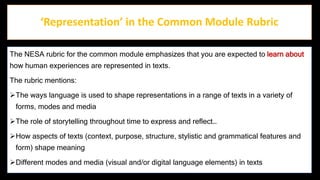
‘Representation’ in the Common Module Rubric
The NESA rubric for the common module emphasizes that you are expected to learn about
how human experiences are represented in texts.
The rubric mentions:
The ways language is used to shape representations in a range of texts in a variety of
forms, modes and media
The role of storytelling throughout time to express and reflect…
How aspects of texts (context, purpose, structure, stylistic and grammatical features and
form) shape meaning
Different modes and media (visual and/or digital language elements) in texts
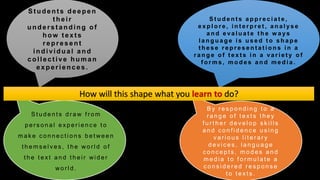
B y r e s p o n d i n g t o a
r a n g e o f t e x t s t h e y
f u r t h e r d e v e l o p s k i l l s
a n d c o n f i d e n c e u s i n g
v a r i o u s l i t e r a r y
d e v i c e s , l a n g u a g e
c o n c e p t s , m o d e s a n d
m e d i a t o f o r m u l a t e a
c o n s i d e r e d r e s p o n s e
t o t e x t s .
How will this shape what you learn to do?
St udent s deepen
t heir
underst anding of
how t ext s
represent
individual and
collect ive human
experiences.
S t u d e n t s a p p r e c i a t e ,
e x p l o r e , i n t e r p r e t , a n a l y s e
a n d e va l u a t e t h e w a y s
l a n g u a g e i s u s e d t o s h a p e
t h e s e r e p r e s e n t a t i o n s i n a
r a n g e o f t e x t s i n a va r i e t y o f
f o r m s , m o d e s a n d m e d i a .
S t u d e n t s d r a w f r o m
p e r s o n a l e x p e r i e n c e t o
m a k e c o n n e c t i o n s b e t we e n
t h e m s e l v e s , t h e wo r l d o f
t h e t e x t a n d t h e i r wi d e r
wo r l d .
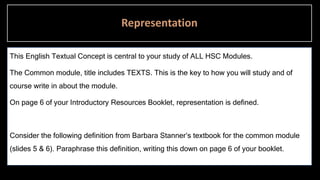
Representation
This English Textual Concept is central to your study of ALL HSC Modules.
The Common module, title includes TEXTS. This is the key to how you will study and of
course write in about the module.
On page 6 of your Introductory Resources Booklet, representation is defined.
Consider the following definition from Barbara Stanner’s textbook for the common module
(slides 5 & 6). Paraphrase this definition, writing this down on page 6 of your booklet.
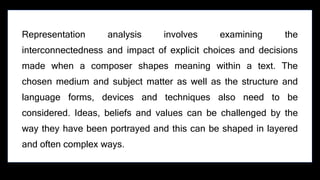
Representation analysis involves examining the
interconnectedness and impact of explicit choices and decisions
made when a composer shapes meaning within a text. The
chosen medium and subject matter as well as the structure and
language forms, devices and techniques also need to be
considered. Ideas, beliefs and values can be challenged by the
way they have been portrayed and this can be shaped in layered
and often complex ways.
Contextual influences can also play a significant part in shaping
textual and stylistic representation. The composer’s personal
attitudes, values and explicit purpose as well as various historical
or social elements can manipulate the portrayal of themes, motifs
or characterisation as well as audience response. How ideas are
developed within a text can also prompt audience reflection about
their own beliefs, behavior and values.
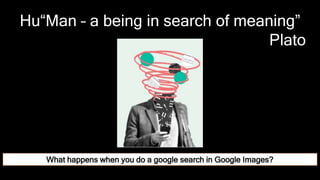
Hu“Man – a being in search of meaning”
Plato
What happens when you do a google search in Google Images?
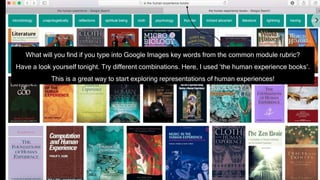
What will you find if you type into Google Images key words from the common module rubric?
Have a look yourself tonight. Try different combinations. Here, I used ‘the human experience books’.
This is a great way to start exploring representations of human experiences!
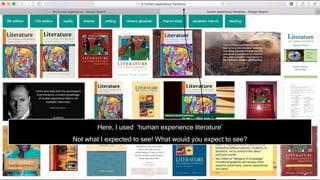
Here, I used ‘human experience literature’
Not what I expected to see! What would you expect to see?
Revision: what are we looking for in texts
about human experiences?
o Individual human experience
o Collective human experience
o Human qualities and emotions arising from or associated with human experiences
o Anomalies, paradoxes and inconsistencies in human behavior and motivations
o Human behavior and motivations
o Particular lives and cultures
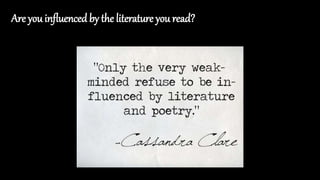
Are you influenced by the literature you read?
What is meant by ‘Human Experiences’?
In layman’s terms, ‘human experiences’ refers to the episodes, situations and moments
people encounter within their lifetime, such as:
• Engaging with our people and forming relationships
• Making decisions and responding to the outcomes of these
• Engaging in the trials and tribulations we encounter and using these as opportunities for
growth
• making judgements and evaluating these to make better judgements the next time
• Repeating these experiences, hopeful you will get it ‘more right’ next time.
These representation of these experiences will be influenced by aspects such as ideology,
context and purpose.
Read page 8 in your ‘Introductory Resources’ booklet to explore this further.
By Meghann Plunkett https://www.youtube.com/watch?v=JiMmjaI636w

Understanding representation

  • 1.
  • 2.
    ‘Representation’ in theCommon Module Rubric The NESA rubric for the common module emphasizes that you are expected to learn about how human experiences are represented in texts. The rubric mentions: The ways language is used to shape representations in a range of texts in a variety of forms, modes and media The role of storytelling throughout time to express and reflect… How aspects of texts (context, purpose, structure, stylistic and grammatical features and form) shape meaning Different modes and media (visual and/or digital language elements) in texts
  • 3.
    B y re s p o n d i n g t o a r a n g e o f t e x t s t h e y f u r t h e r d e v e l o p s k i l l s a n d c o n f i d e n c e u s i n g v a r i o u s l i t e r a r y d e v i c e s , l a n g u a g e c o n c e p t s , m o d e s a n d m e d i a t o f o r m u l a t e a c o n s i d e r e d r e s p o n s e t o t e x t s . How will this shape what you learn to do? St udent s deepen t heir underst anding of how t ext s represent individual and collect ive human experiences. S t u d e n t s a p p r e c i a t e , e x p l o r e , i n t e r p r e t , a n a l y s e a n d e va l u a t e t h e w a y s l a n g u a g e i s u s e d t o s h a p e t h e s e r e p r e s e n t a t i o n s i n a r a n g e o f t e x t s i n a va r i e t y o f f o r m s , m o d e s a n d m e d i a . S t u d e n t s d r a w f r o m p e r s o n a l e x p e r i e n c e t o m a k e c o n n e c t i o n s b e t we e n t h e m s e l v e s , t h e wo r l d o f t h e t e x t a n d t h e i r wi d e r wo r l d .
  • 4.
    Representation This English TextualConcept is central to your study of ALL HSC Modules. The Common module, title includes TEXTS. This is the key to how you will study and of course write in about the module. On page 6 of your Introductory Resources Booklet, representation is defined. Consider the following definition from Barbara Stanner’s textbook for the common module (slides 5 & 6). Paraphrase this definition, writing this down on page 6 of your booklet.
  • 5.
    Representation analysis involvesexamining the interconnectedness and impact of explicit choices and decisions made when a composer shapes meaning within a text. The chosen medium and subject matter as well as the structure and language forms, devices and techniques also need to be considered. Ideas, beliefs and values can be challenged by the way they have been portrayed and this can be shaped in layered and often complex ways.
  • 6.
    Contextual influences canalso play a significant part in shaping textual and stylistic representation. The composer’s personal attitudes, values and explicit purpose as well as various historical or social elements can manipulate the portrayal of themes, motifs or characterisation as well as audience response. How ideas are developed within a text can also prompt audience reflection about their own beliefs, behavior and values.
  • 7.
    Hu“Man – abeing in search of meaning” Plato What happens when you do a google search in Google Images?
  • 8.
    What will youfind if you type into Google Images key words from the common module rubric? Have a look yourself tonight. Try different combinations. Here, I used ‘the human experience books’. This is a great way to start exploring representations of human experiences!
  • 9.
    Here, I used‘human experience literature’ Not what I expected to see! What would you expect to see?
  • 10.
    Revision: what arewe looking for in texts about human experiences? o Individual human experience o Collective human experience o Human qualities and emotions arising from or associated with human experiences o Anomalies, paradoxes and inconsistencies in human behavior and motivations o Human behavior and motivations o Particular lives and cultures
  • 13.
    Are you influencedby the literature you read?
  • 17.
    What is meantby ‘Human Experiences’? In layman’s terms, ‘human experiences’ refers to the episodes, situations and moments people encounter within their lifetime, such as: • Engaging with our people and forming relationships • Making decisions and responding to the outcomes of these • Engaging in the trials and tribulations we encounter and using these as opportunities for growth • making judgements and evaluating these to make better judgements the next time • Repeating these experiences, hopeful you will get it ‘more right’ next time. These representation of these experiences will be influenced by aspects such as ideology, context and purpose. Read page 8 in your ‘Introductory Resources’ booklet to explore this further.
  • 18.
    By Meghann Plunketthttps://www.youtube.com/watch?v=JiMmjaI636w

Editor's Notes

  • #2 This powerpoint aims to demonstrate to students the importance of the key word in the module – TEXTS We will look at the English textual concepts representation, codes and conventions, narrative and theme throughout this module The powerpoint should stimulate conversation about these.
  • #8 Answer – the HSC Common Module dominates. BUT if you change the syntax to “human experience texts/books” the options are interesting…
  • #18 This is in the students booklet. No need to copy anything down.