FUNDAMENTALS OF
Computers
Introduction
Evolution of
Computer
Generation of
Computers
Classification of
Computer
The Computer
system
Computing
Concepts
Application of
Computer
Evolution of Computer
Manual Computing Devices Automated Computing Devices
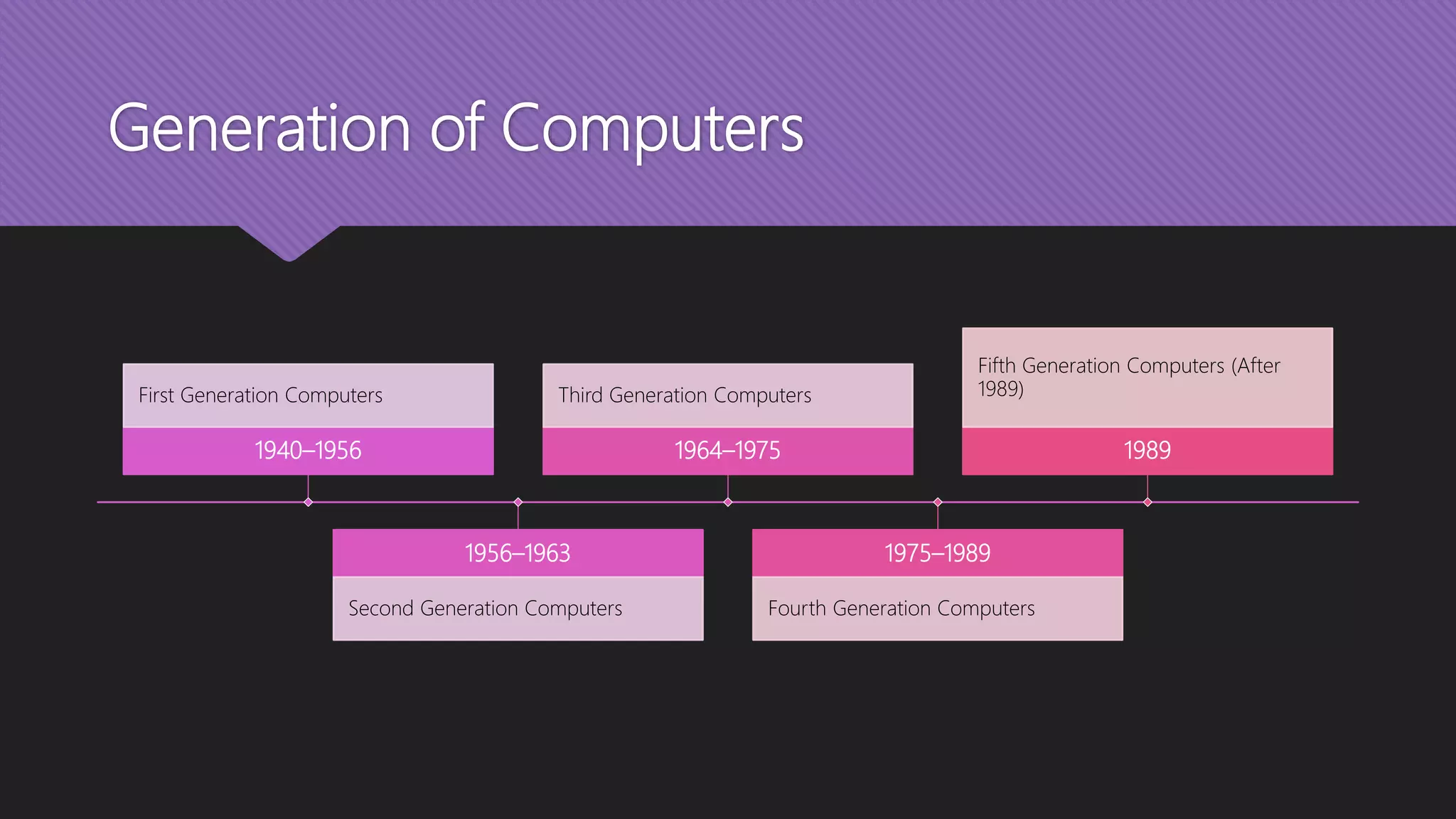
Generation of Computers
1940–1956
First Generation Computers
1956–1963
Second Generation Computers
1964–1975
Third Generation Computers
1975–1989
Fourth Generation Computers
1989
Fifth Generation Computers (After
1989)
First Generation Computers
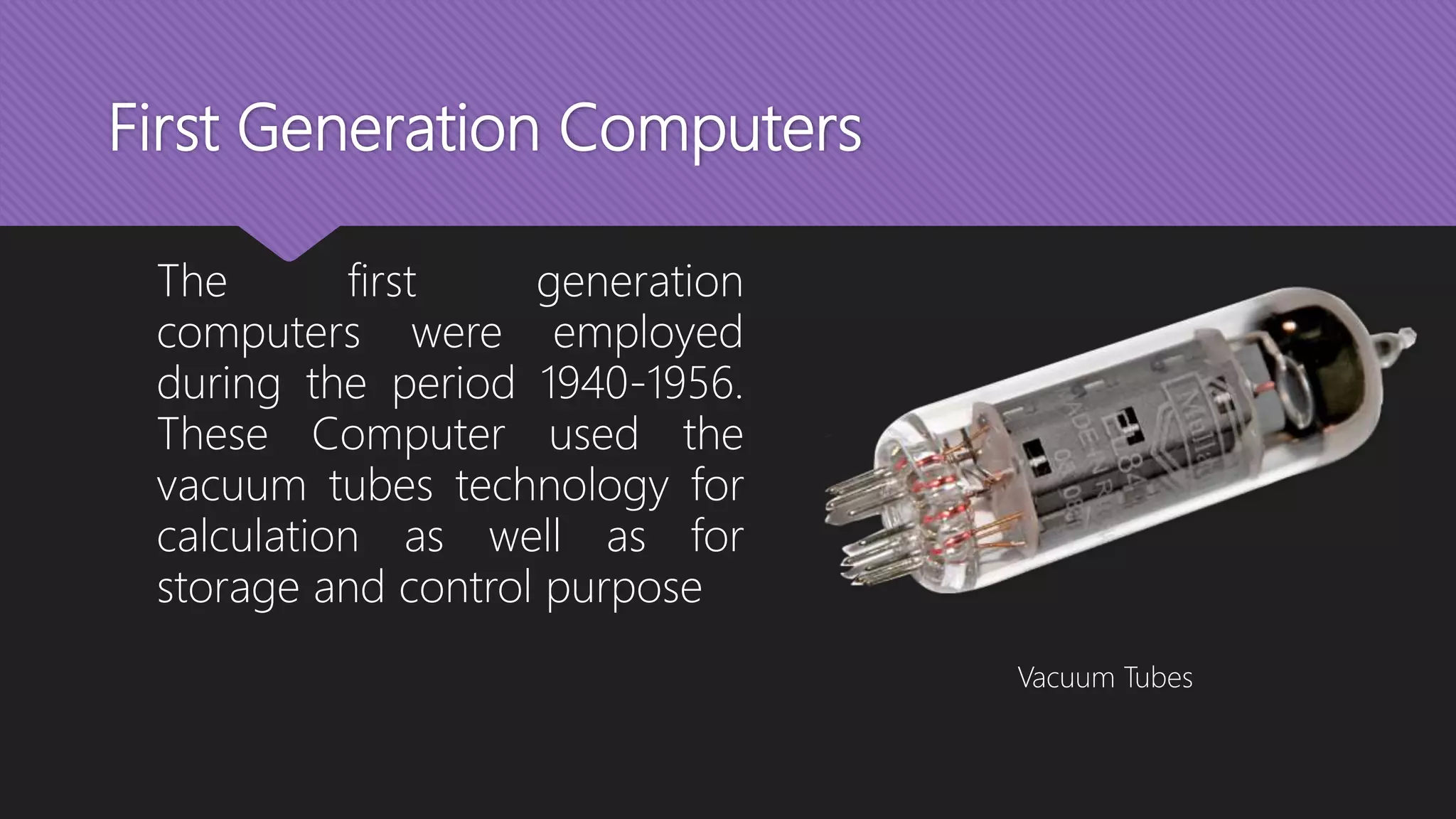
Vacuum Tubes
The first generation
computers were employed
during the period 1940-1956.
These Computer used the
vacuum tubes technology for
calculation as well as for
storage and control purpose
Second Generation
Computers
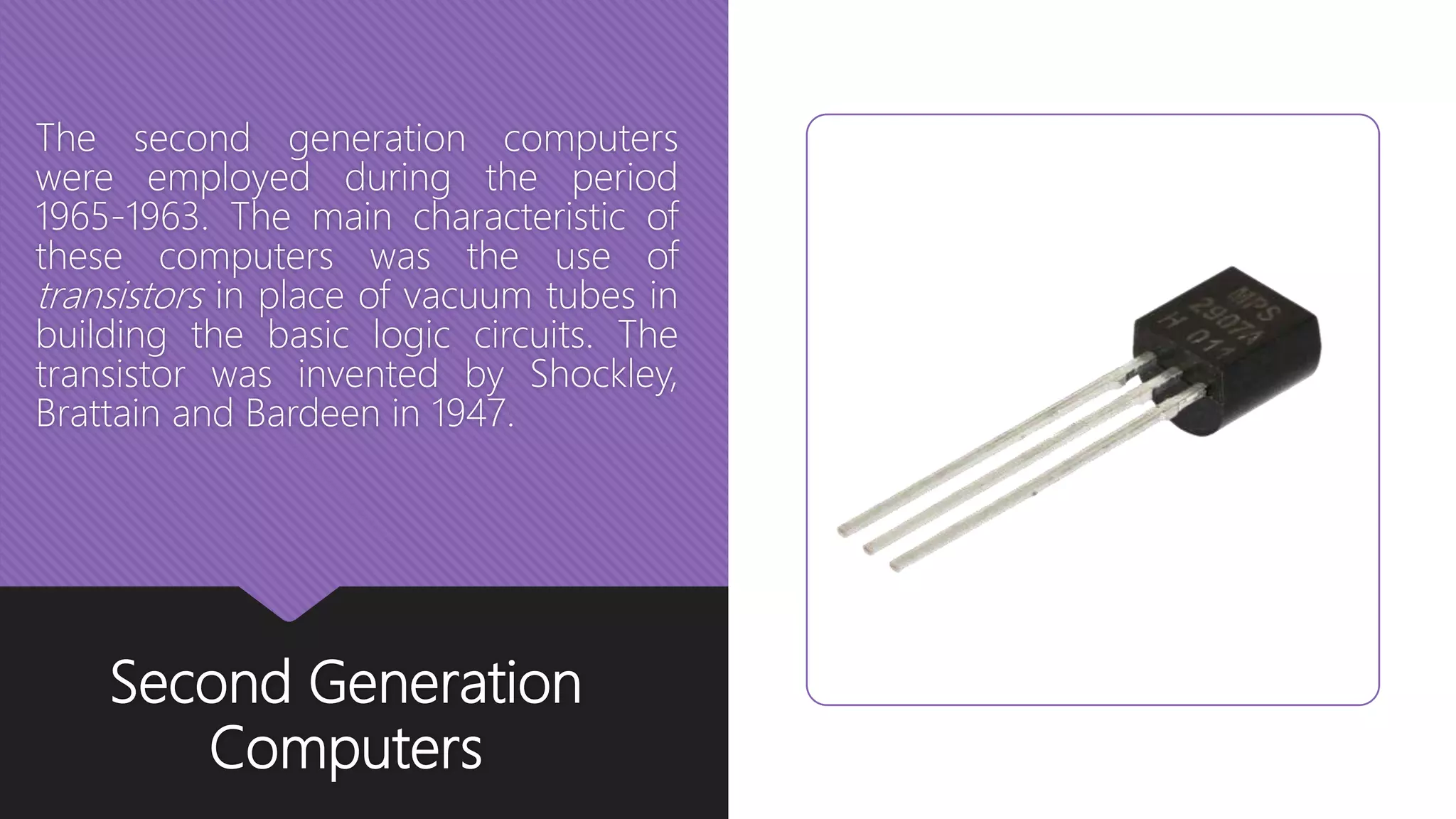
The second generation computers
were employed during the period
1965-1963. The main characteristic of
these computers was the use of
transistors in place of vacuum tubes in
building the basic logic circuits. The
transistor was invented by Shockley,
Brattain and Bardeen in 1947.
Third Generation
Computers
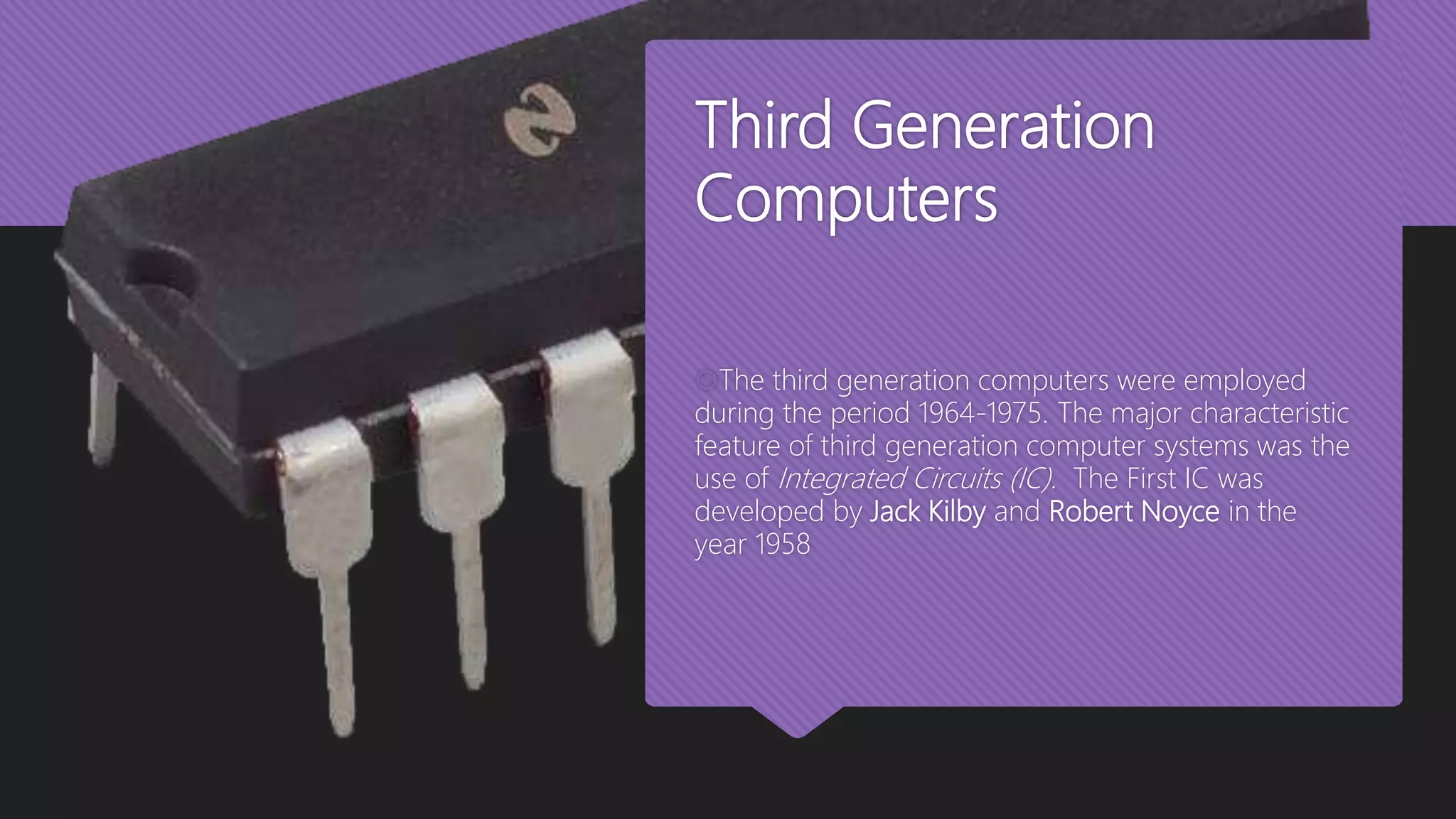
The third generation computers were employed
during the period 1964-1975. The major characteristic
feature of third generation computer systems was the
use of Integrated Circuits (IC). The First IC was
developed by Jack Kilby and Robert Noyce in the
year 1958
Fourth Generation
Computers
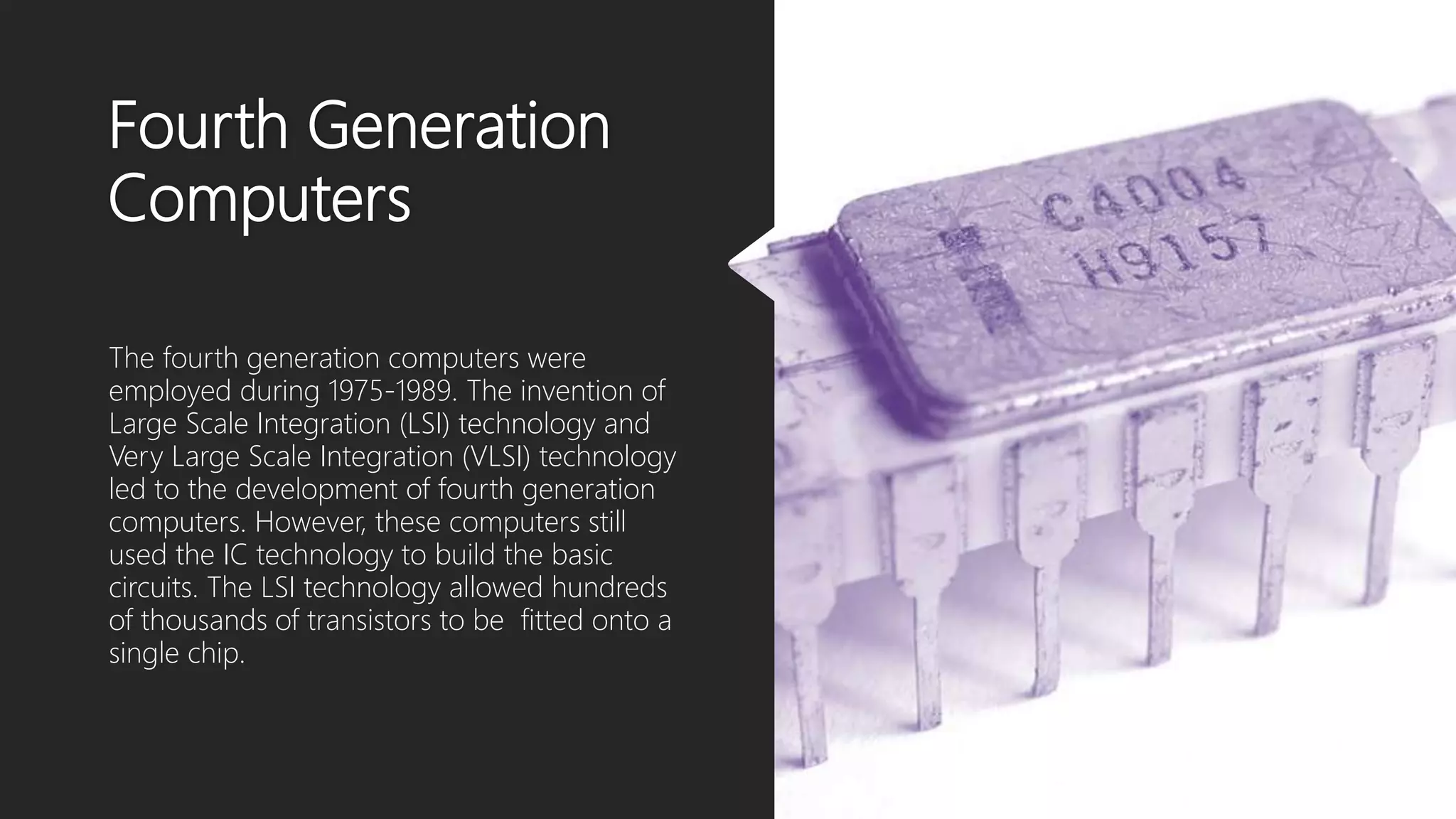
The fourth generation computers were
employed during 1975-1989. The invention of
Large Scale Integration (LSI) technology and
Very Large Scale Integration (VLSI) technology
led to the development of fourth generation
computers. However, these computers still
used the IC technology to build the basic
circuits. The LSI technology allowed hundreds
of thousands of transistors to be fitted onto a
single chip.
Fifth Generation Computers
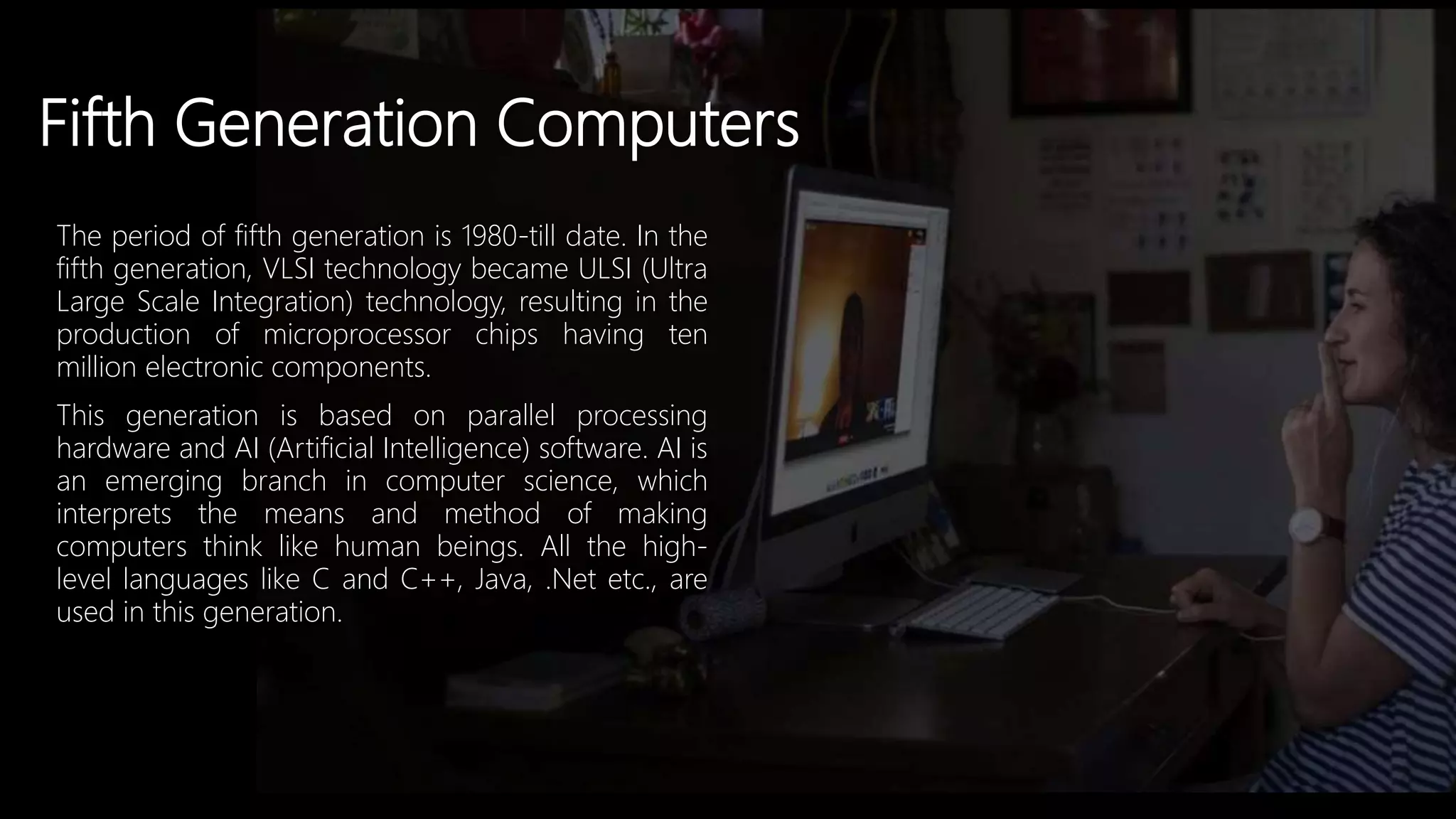
The period of fifth generation is 1980-till date. In the
fifth generation, VLSI technology became ULSI (Ultra
Large Scale Integration) technology, resulting in the
production of microprocessor chips having ten
million electronic components.
This generation is based on parallel processing
hardware and AI (Artificial Intelligence) software. AI is
an emerging branch in computer science, which
interprets the means and method of making
computers think like human beings. All the high-
level languages like C and C++, Java, .Net etc., are
used in this generation.
Classification
of Computer
Based on Operation Principles
Based on Applications
Based on size and Capability
Based on
Operation
Principles
On the Basis of Operations performed and
methods used to store and process the data and
information, computers can be classified into the
following categories:-
 Analog Computers
 Digital Computers
 Hybrid Computers
Based on
Applications
Different Computers are designed for different
purposes so that they can perform their tasks
according to their capabilities. On the basis of
different applications or purposes, computers can
be classified into the following categories:-
General
Purpose
Computers.
Special
Purpose
Computers.
Based on size and Capability
Computers differ from each other is terms of their shape, size and
weights. Each types of computer performs some unique functions
and can be employed in the fields suited for them. These
computers also differ in terms of processing speed. Some of them
are of moderate speed, whereas some other operate at a very fast
speed. On the basis of size and capability, computers can be
classified into the following categories
 Micro Computers
 Mini Computers
 Mainframe Computers
 Super Computers
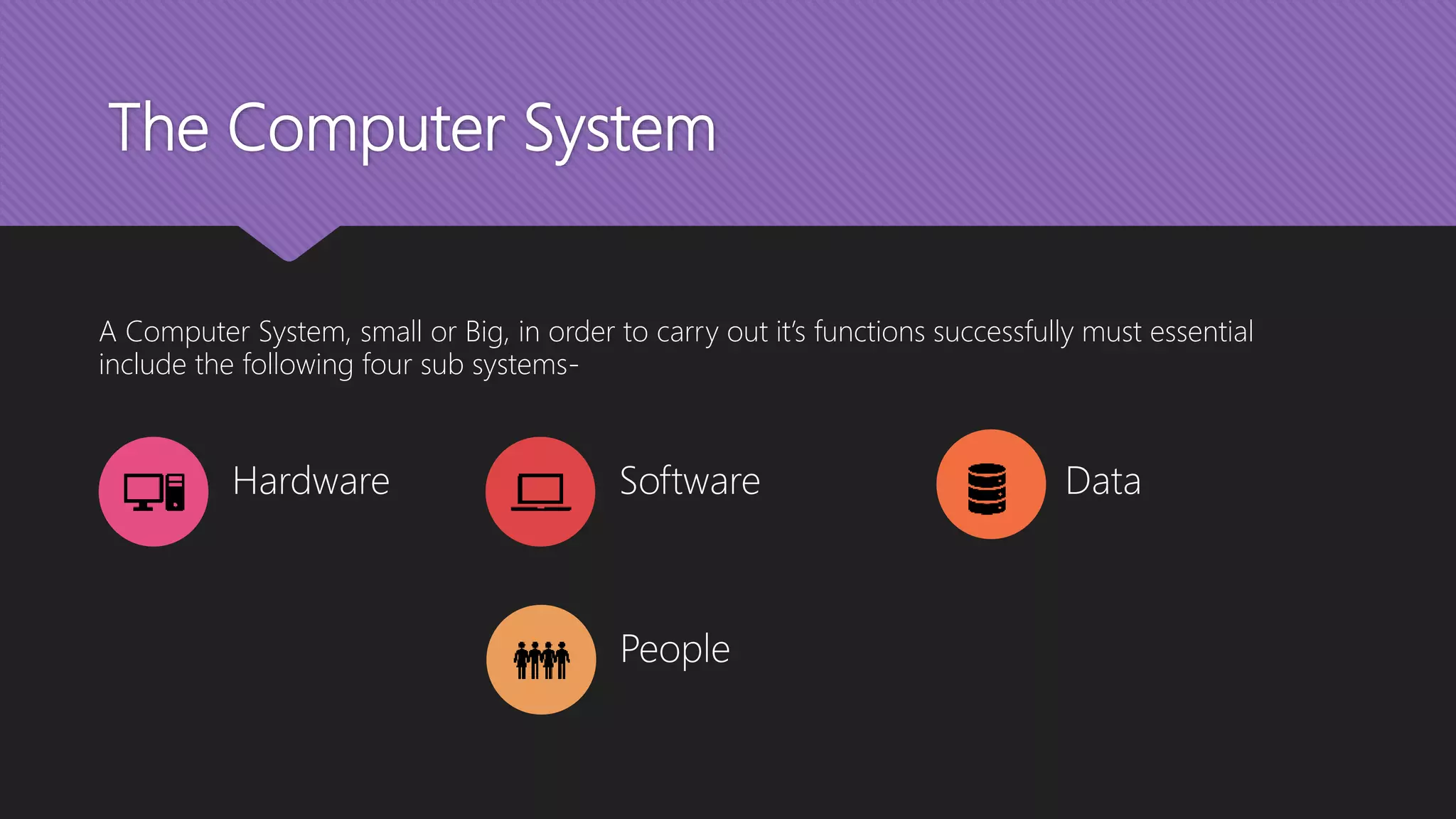
The Computer System
Hardware Software Data
People
A Computer System, small or Big, in order to carry out it’s functions successfully must essential
include the following four sub systems-
Hardware
Keyboard Mouse Memory CPU Monitor Printer
The physical devices that make up the computer are called hardware. The basic Hardware units are –
Software
Application Software System Software
The term software refers to a set of programs and instructions that help the computers in carrying out
their processing. There are mainly two types of software :-
Data
QUALITATIVE DATA QUANTITATIVE DATA
Data refers to the raw facts and pieces of information that is usually entered into the computer system by
the user so as to generate the desired output . The data are presented in the form understandable by the
computer.
Depending on the requirement, data can be presented in two forms:-
People
Computer system are designed by the people for the
people. People, therefore, include the people who
design and build hardware and software
Computing
Concepts
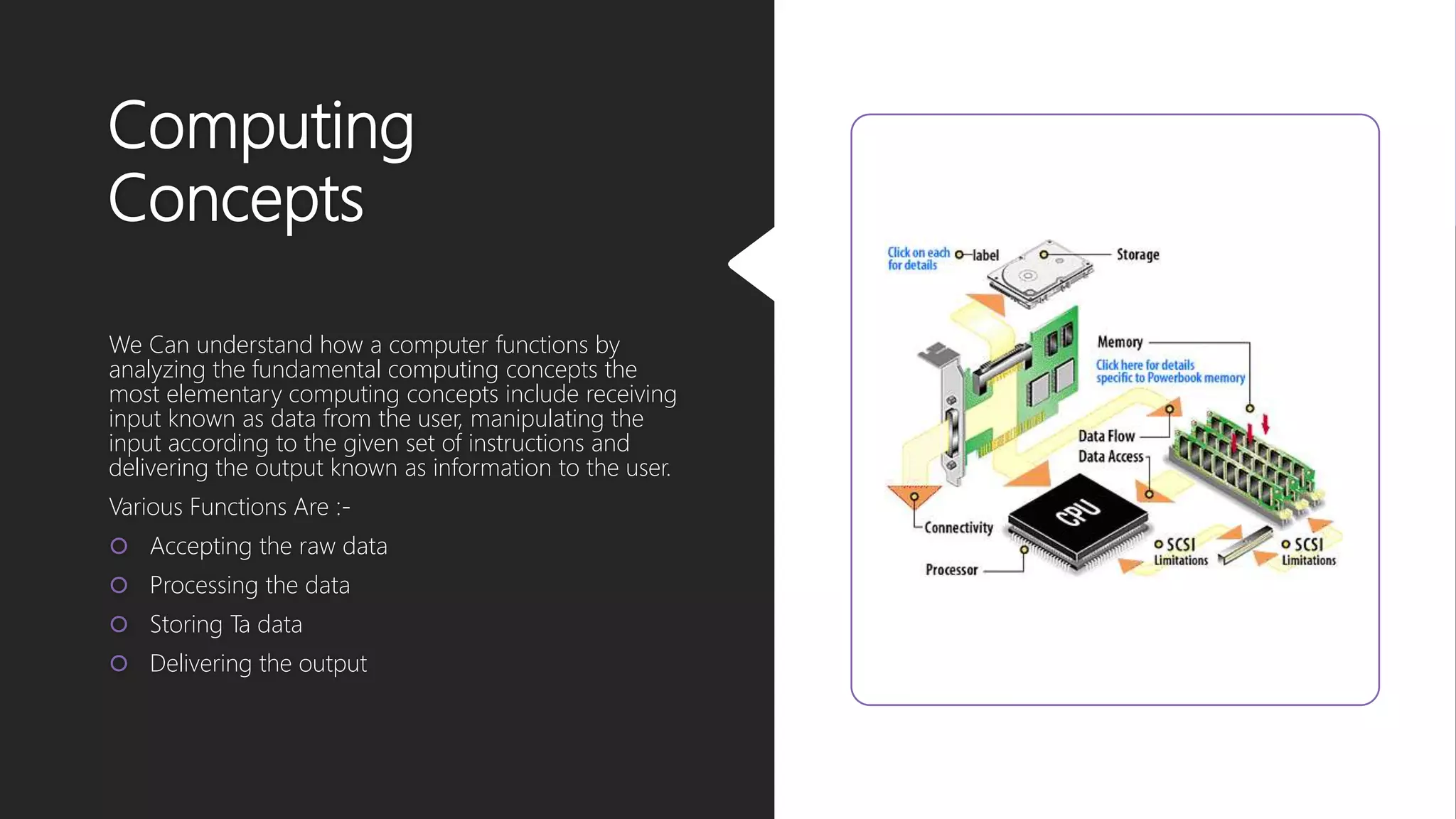
We Can understand how a computer functions by
analyzing the fundamental computing concepts the
most elementary computing concepts include receiving
input known as data from the user, manipulating the
input according to the given set of instructions and
delivering the output known as information to the user.
Various Functions Are :-
 Accepting the raw data
 Processing the data
 Storing Ta data
 Delivering the output
Application of Computer
Education Business
Communicatio
n
Science Engineering
Entertainments Banking Health Government
Bangladesh Computer
Samity
&
Internet
Popularly known as BCS, Bangladesh
Computer Samity has been seamlessly
catalyzing the public and private sectors’ ICT
stakeholders of Bangladesh for last three
decades. Established in 1987, this was the first
of its kind to emerge as the ICT industry trade
association of the country

Understanding of Computer | Introduction | Computer In Business

  • 1.
  • 2.
    Introduction Evolution of Computer Generation of Computers Classificationof Computer The Computer system Computing Concepts Application of Computer
  • 3.
    Evolution of Computer ManualComputing Devices Automated Computing Devices
  • 4.
    Generation of Computers 1940–1956 FirstGeneration Computers 1956–1963 Second Generation Computers 1964–1975 Third Generation Computers 1975–1989 Fourth Generation Computers 1989 Fifth Generation Computers (After 1989)
  • 5.
    First Generation Computers VacuumTubes The first generation computers were employed during the period 1940-1956. These Computer used the vacuum tubes technology for calculation as well as for storage and control purpose
  • 6.
    Second Generation Computers The secondgeneration computers were employed during the period 1965-1963. The main characteristic of these computers was the use of transistors in place of vacuum tubes in building the basic logic circuits. The transistor was invented by Shockley, Brattain and Bardeen in 1947.
  • 7.
    Third Generation Computers The thirdgeneration computers were employed during the period 1964-1975. The major characteristic feature of third generation computer systems was the use of Integrated Circuits (IC). The First IC was developed by Jack Kilby and Robert Noyce in the year 1958
  • 8.
    Fourth Generation Computers The fourthgeneration computers were employed during 1975-1989. The invention of Large Scale Integration (LSI) technology and Very Large Scale Integration (VLSI) technology led to the development of fourth generation computers. However, these computers still used the IC technology to build the basic circuits. The LSI technology allowed hundreds of thousands of transistors to be fitted onto a single chip.
  • 9.
    Fifth Generation Computers Theperiod of fifth generation is 1980-till date. In the fifth generation, VLSI technology became ULSI (Ultra Large Scale Integration) technology, resulting in the production of microprocessor chips having ten million electronic components. This generation is based on parallel processing hardware and AI (Artificial Intelligence) software. AI is an emerging branch in computer science, which interprets the means and method of making computers think like human beings. All the high- level languages like C and C++, Java, .Net etc., are used in this generation.
  • 10.
    Classification of Computer Based onOperation Principles Based on Applications Based on size and Capability
  • 11.
    Based on Operation Principles On theBasis of Operations performed and methods used to store and process the data and information, computers can be classified into the following categories:-  Analog Computers  Digital Computers  Hybrid Computers
  • 12.
    Based on Applications Different Computersare designed for different purposes so that they can perform their tasks according to their capabilities. On the basis of different applications or purposes, computers can be classified into the following categories:- General Purpose Computers. Special Purpose Computers.
  • 13.
    Based on sizeand Capability Computers differ from each other is terms of their shape, size and weights. Each types of computer performs some unique functions and can be employed in the fields suited for them. These computers also differ in terms of processing speed. Some of them are of moderate speed, whereas some other operate at a very fast speed. On the basis of size and capability, computers can be classified into the following categories  Micro Computers  Mini Computers  Mainframe Computers  Super Computers
  • 14.
    The Computer System HardwareSoftware Data People A Computer System, small or Big, in order to carry out it’s functions successfully must essential include the following four sub systems-
  • 15.
    Hardware Keyboard Mouse MemoryCPU Monitor Printer The physical devices that make up the computer are called hardware. The basic Hardware units are –
  • 16.
    Software Application Software SystemSoftware The term software refers to a set of programs and instructions that help the computers in carrying out their processing. There are mainly two types of software :-
  • 17.
    Data QUALITATIVE DATA QUANTITATIVEDATA Data refers to the raw facts and pieces of information that is usually entered into the computer system by the user so as to generate the desired output . The data are presented in the form understandable by the computer. Depending on the requirement, data can be presented in two forms:-
  • 18.
    People Computer system aredesigned by the people for the people. People, therefore, include the people who design and build hardware and software
  • 19.
    Computing Concepts We Can understandhow a computer functions by analyzing the fundamental computing concepts the most elementary computing concepts include receiving input known as data from the user, manipulating the input according to the given set of instructions and delivering the output known as information to the user. Various Functions Are :-  Accepting the raw data  Processing the data  Storing Ta data  Delivering the output
  • 20.
    Application of Computer EducationBusiness Communicatio n Science Engineering Entertainments Banking Health Government
  • 21.
    Bangladesh Computer Samity & Internet Popularly knownas BCS, Bangladesh Computer Samity has been seamlessly catalyzing the public and private sectors’ ICT stakeholders of Bangladesh for last three decades. Established in 1987, this was the first of its kind to emerge as the ICT industry trade association of the country