UNDERSTANDING
CATARACTS
CAUSES, SYMPTOMS, TREATMENTS
AND MORE
WHAT ARE
CATARACTS?
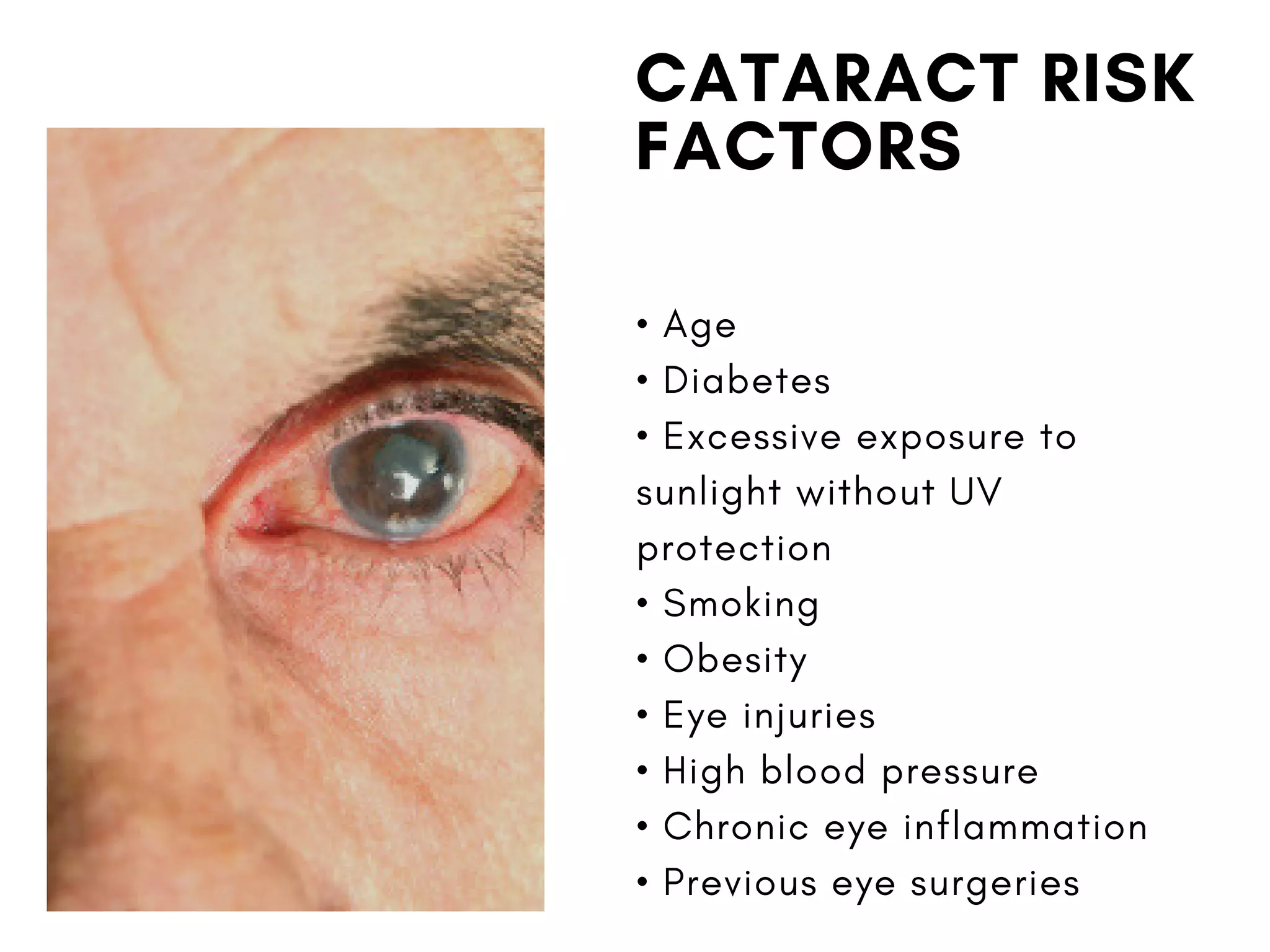
A cataract is a clouding of your eye's natural lens. It
causes light to scatter when it passes through your
lens, preventing it from focusing properly on your
retina. If left untreated, cataracts can eventually lead
to blindness.
WHAT CAUSES
CATARACTS?
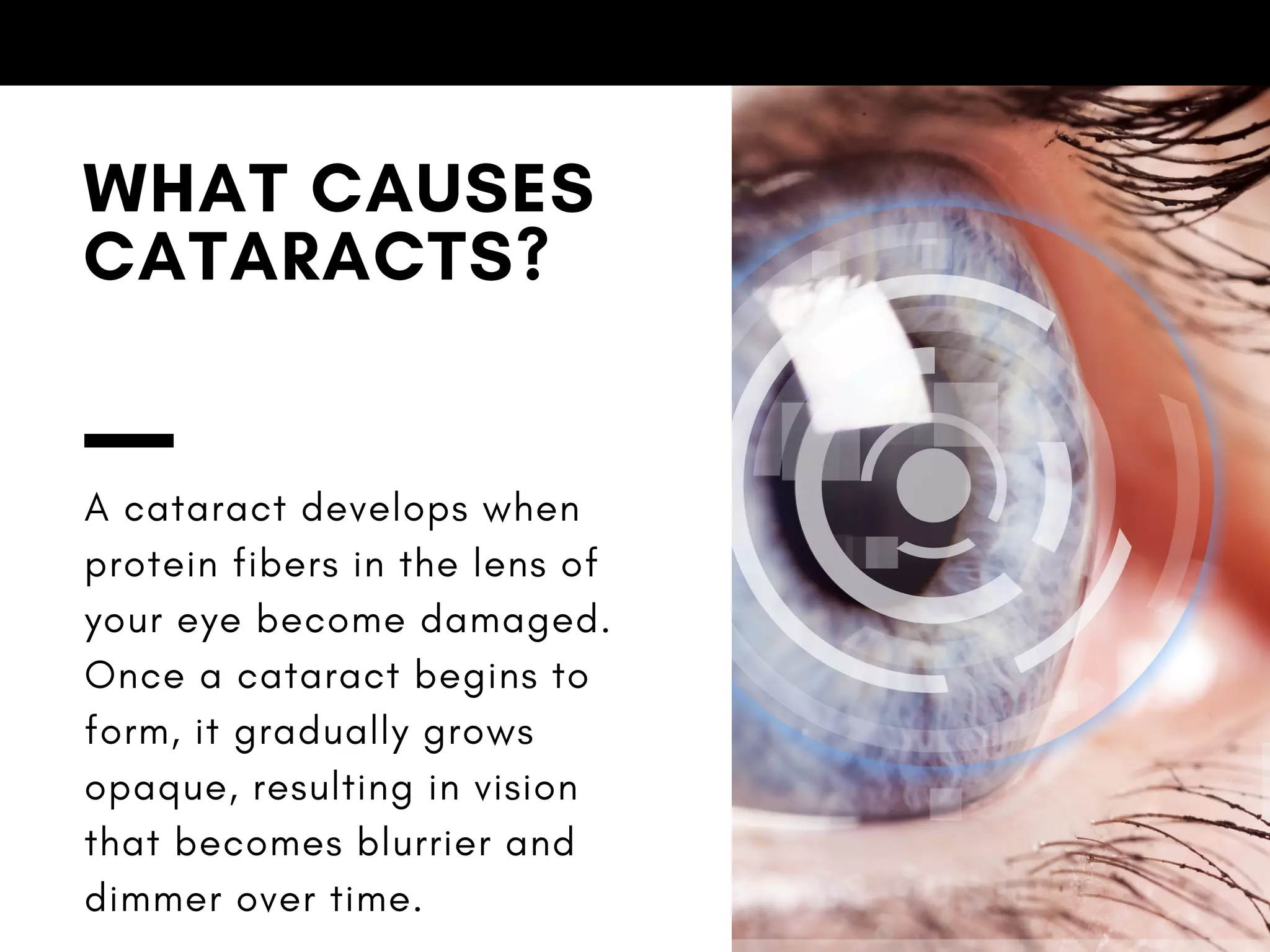
A cataract develops when
protein fibers in the lens of
your eye become damaged.
Once a cataract begins to
form, it gradually grows
opaque, resulting in vision
that becomes blurrier and
dimmer over time.
CATARACT RISK
FACTORS
• Age
• Diabetes
• Excessive exposure to
sunlight without UV
protection
• Smoking
• Obesity
• Eye injuries
• High blood pressure
• Chronic eye inflammation
• Previous eye surgeries
CATARACT
SYMPTOMS
Blurred, foggy vision
Glare from lamps or
the sun
Poor night vision
Colors that seem to
fade
Frequent changes to
your eyeglass
prescription
Double vision
Sensitivity to light
TYPES OF
CATARACTS
• Traumatic Cataract: A
cataract caused by a traumatic
eye injury.
• Radiation Cataract: Ultraviolet
light and other forms of radiation
can be responsible for cataract
development.
• Congenital Cataract: In rare
instances, newborns can suffer
from cataracts.
• Secondary Cataract: These
cataracts develop after eye
surgery. Secondary cataracts are
most common in patients who
have undergone surgery to
address glaucoma or various
retinal issues.
• Age-Related Cataract: This
highly common form of cataract
generally affects patients in their
60s or 70s.
CATARACT SURGERY
Clear vision can be restored with cataract surgery. During your
procedure, your eye's cloudy natural lens will be removed and
replaced with with an artificial intraocular lens (IOL).
RECOVERY AFTER
CATARACT SURGERY
Vision should improve significantly
within a few days of surgery. In order
to ensure proper healing, make sure to
take the following precautions during
the recovery period:
• Administer all prescription eye drops
as directed
• Avoid exposing your eyes to irritants
such as wind and dust
• Wear sunglasses to minimize light
sensitivity
• Stay out of hot tubs and swimming
pools
• Avoid strenuous activities that
increase your risk of eye trauma
WHY CHOOSE KIRK
EYE CENTER
• More than 25 years of
experience performing cataract
surgery procedures
• Cataract surgery is a primary
focus of the practice
• State-of-the-art technology is
used during your procedure
• Consistently recognized as
Loveland's "Best Eye Care
Center" by the Reporter-Herald's
annual Reader's Choice award
• Provides you with the
exceptional levels of patient care
you deserve
CONTACT US
Please call 970-669-1107
today to schedule your
cataract evaluation. Serving
patients in Loveland, Fort
Collins and throughout
Northern Colorado.

Understanding Cataracts

  • 1.
  • 2.
    WHAT ARE CATARACTS? A cataractis a clouding of your eye's natural lens. It causes light to scatter when it passes through your lens, preventing it from focusing properly on your retina. If left untreated, cataracts can eventually lead to blindness.
  • 3.
    WHAT CAUSES CATARACTS? A cataractdevelops when protein fibers in the lens of your eye become damaged. Once a cataract begins to form, it gradually grows opaque, resulting in vision that becomes blurrier and dimmer over time.
  • 4.
    CATARACT RISK FACTORS • Age •Diabetes • Excessive exposure to sunlight without UV protection • Smoking • Obesity • Eye injuries • High blood pressure • Chronic eye inflammation • Previous eye surgeries
  • 5.
    CATARACT SYMPTOMS Blurred, foggy vision Glarefrom lamps or the sun Poor night vision Colors that seem to fade Frequent changes to your eyeglass prescription Double vision Sensitivity to light
  • 6.
    TYPES OF CATARACTS • TraumaticCataract: A cataract caused by a traumatic eye injury. • Radiation Cataract: Ultraviolet light and other forms of radiation can be responsible for cataract development. • Congenital Cataract: In rare instances, newborns can suffer from cataracts. • Secondary Cataract: These cataracts develop after eye surgery. Secondary cataracts are most common in patients who have undergone surgery to address glaucoma or various retinal issues. • Age-Related Cataract: This highly common form of cataract generally affects patients in their 60s or 70s.
  • 7.
    CATARACT SURGERY Clear visioncan be restored with cataract surgery. During your procedure, your eye's cloudy natural lens will be removed and replaced with with an artificial intraocular lens (IOL).
  • 8.
    RECOVERY AFTER CATARACT SURGERY Visionshould improve significantly within a few days of surgery. In order to ensure proper healing, make sure to take the following precautions during the recovery period: • Administer all prescription eye drops as directed • Avoid exposing your eyes to irritants such as wind and dust • Wear sunglasses to minimize light sensitivity • Stay out of hot tubs and swimming pools • Avoid strenuous activities that increase your risk of eye trauma
  • 9.
    WHY CHOOSE KIRK EYECENTER • More than 25 years of experience performing cataract surgery procedures • Cataract surgery is a primary focus of the practice • State-of-the-art technology is used during your procedure • Consistently recognized as Loveland's "Best Eye Care Center" by the Reporter-Herald's annual Reader's Choice award • Provides you with the exceptional levels of patient care you deserve
  • 10.
    CONTACT US Please call970-669-1107 today to schedule your cataract evaluation. Serving patients in Loveland, Fort Collins and throughout Northern Colorado.