Cross Cultural
Communication Workshop
Nataly Blas
Emily Mann
May 23, 2013
Dinámica
• Dame esos cinco si, has viajado a otro país
• Mujeres a la derecha y hombres a la izquierda
• Todos de pie si, hablas dos o más idiomas
• Levanten la mano si, han ayudado a un
estudiante internacional
• Parasen en un pie si, trabajas con el público
Activity
• Have you traveled to another country?
• To the right or to the left?
• Do you speak more than one language?
• Have you ever helped an international student?
• Do you work in Public Services?
Diversity at UNCG
UNCG fully supports and values an inclusive
community.
University Libraries Diversity and Inclusion Survey
• Need for multilingual services, resources, and signs
OMA Focus Groups
• Need for more language support for Asian and
Hispanic students
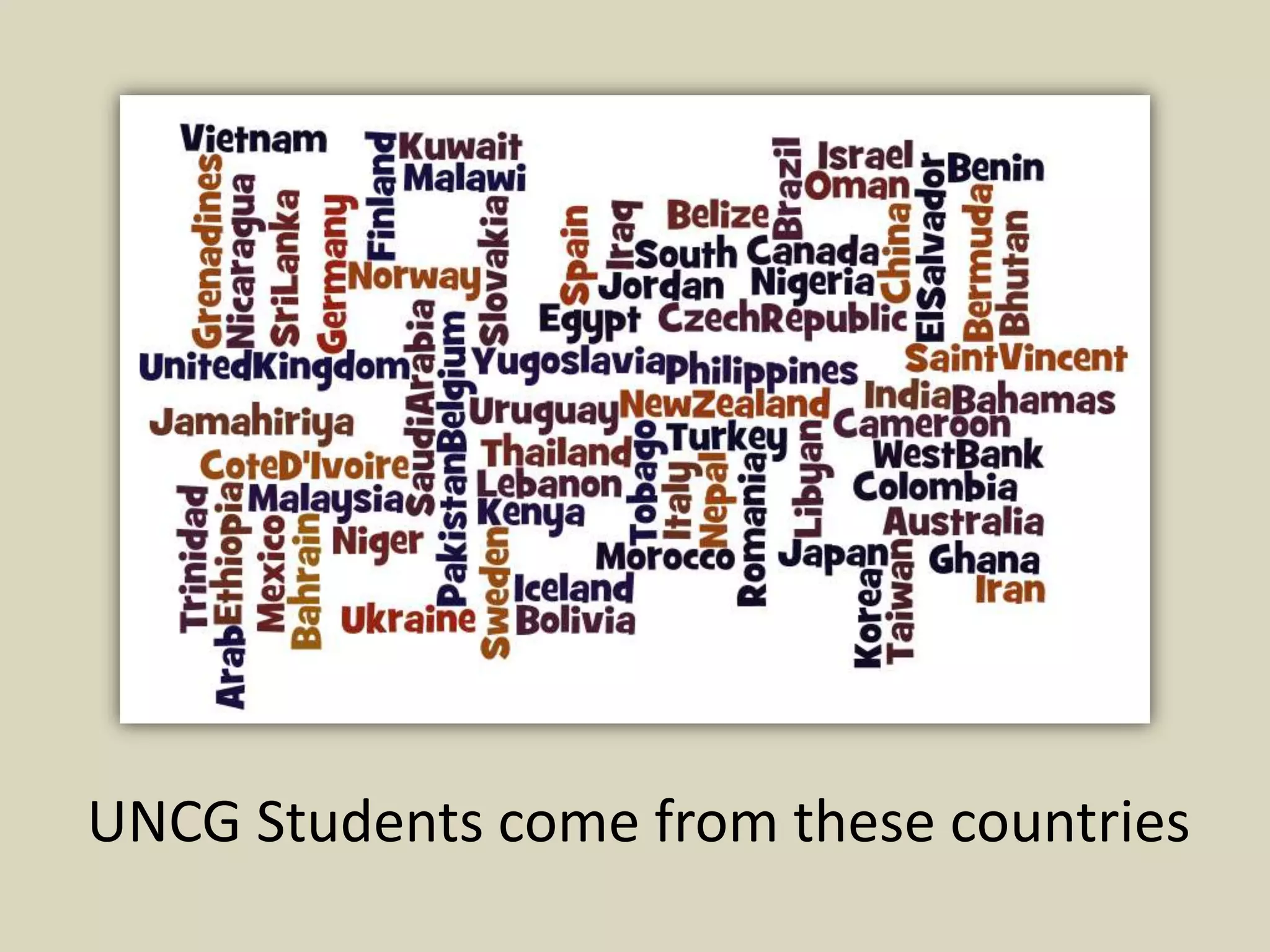
UNCG Students come from these countries
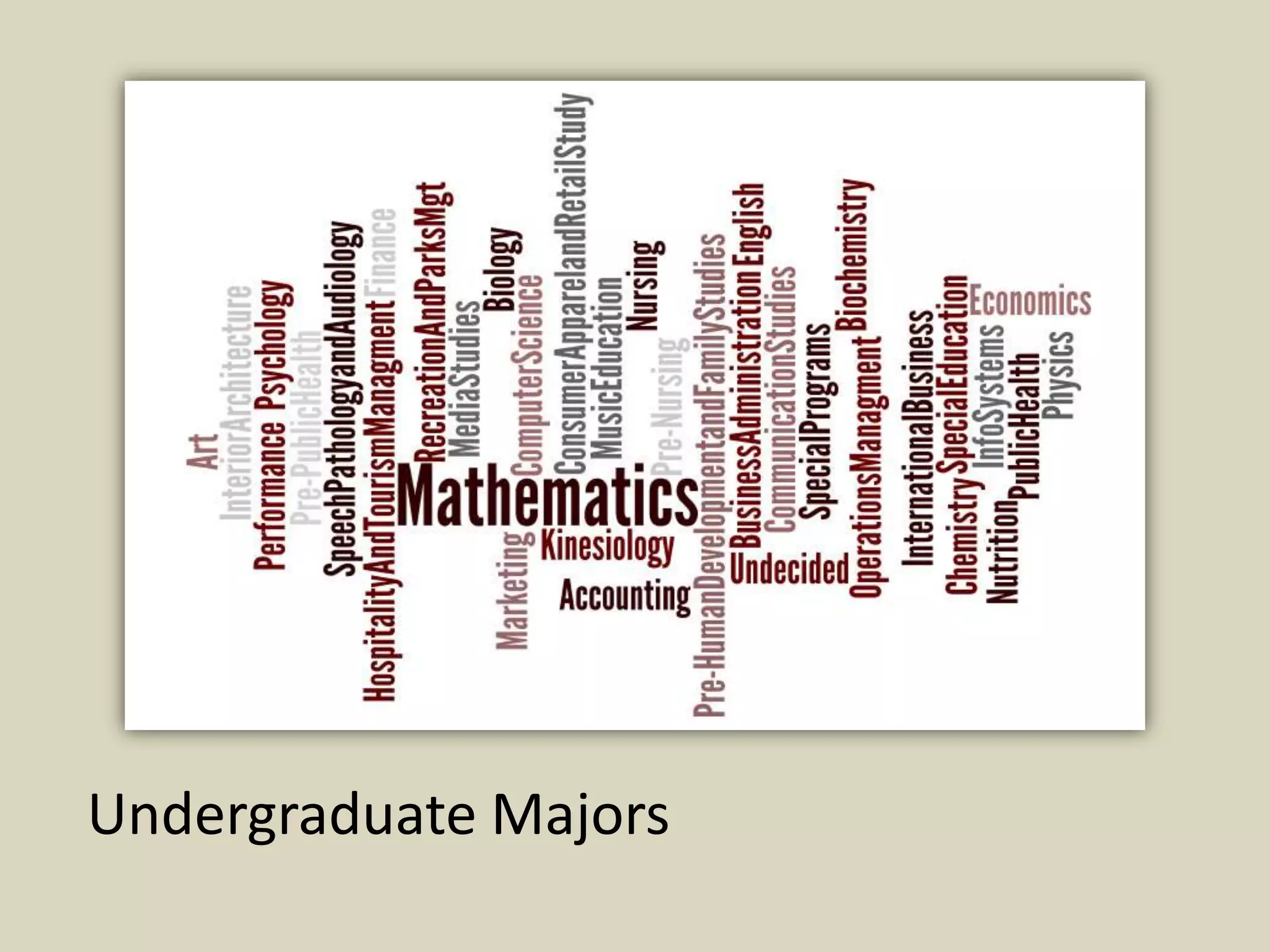
Undergraduate Majors
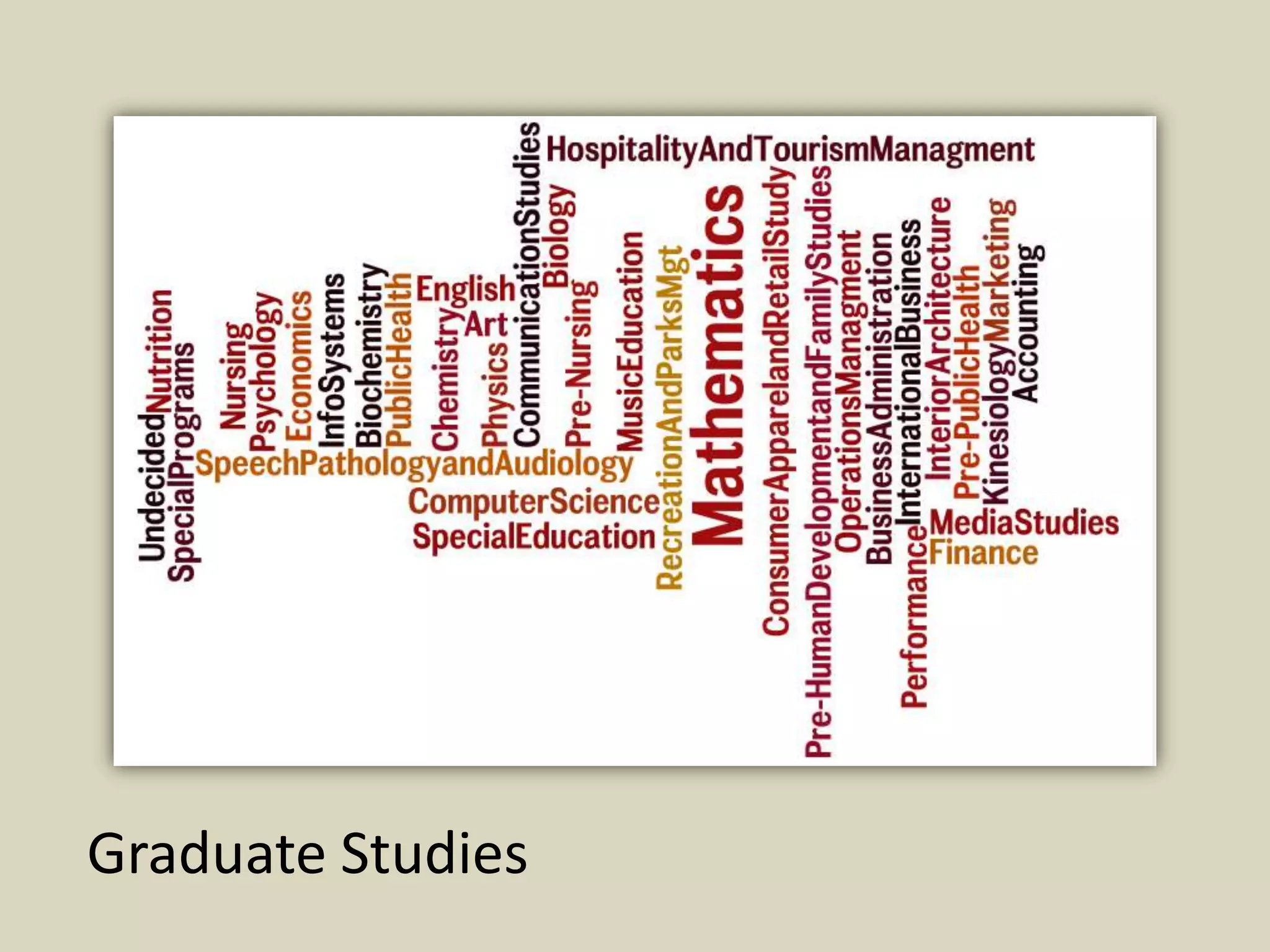
Graduate Studies
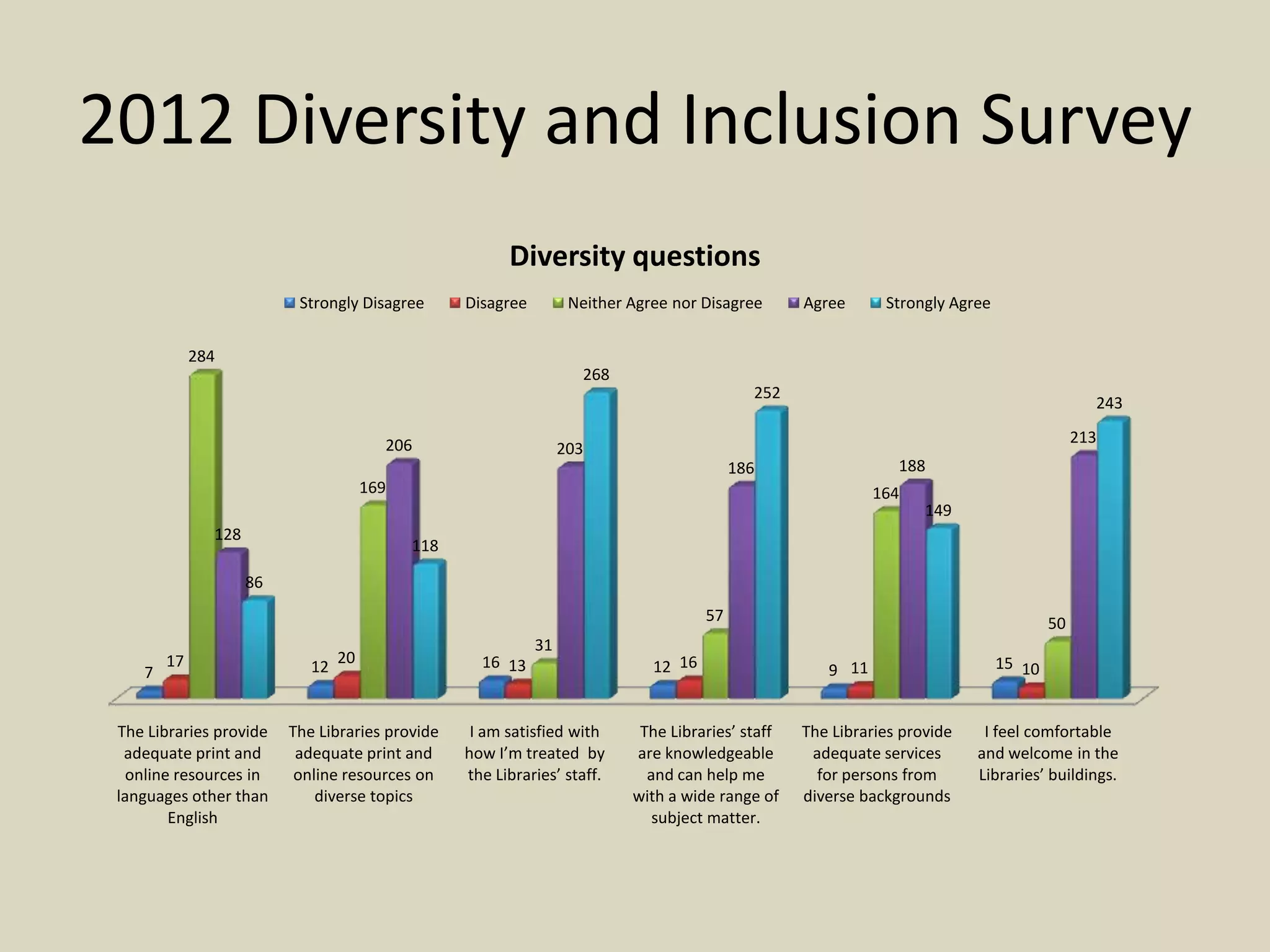
2012 Diversity and Inclusion Survey
The Libraries provide
adequate print and
online resources in
languages other than
English
The Libraries provide
adequate print and
online resources on
diverse topics
I am satisfied with
how I’m treated by
the Libraries’ staff.
The Libraries’ staff
are knowledgeable
and can help me
with a wide range of
subject matter.
The Libraries provide
adequate services
for persons from
diverse backgrounds
I feel comfortable
and welcome in the
Libraries’ buildings.
7 12 16 12 9 1517 20 13 16 11 10
284
169
31
57
164
50
128
206 203
186 188
213
86
118
268
252
149
243
Diversity questions
Strongly Disagree Disagree Neither Agree nor Disagree Agree Strongly Agree
What makes a library non-welcoming?
• Unfriendly, non-diverse staff
• Poor communication skills with foreign
students
• Physical barriers to stacks and services
• Signs all in English
• Inadequate resources on diverse topics
We are doing a great job!
Adequate print
and online
resources in
languages other
than English
Adequate print
and online
resources on
diverse topics
Satisfied with how
I’m treated by
the Libraries’
staff.
The Libraries’ staff
can help me with
a wide range of
subject matter.
Adequate services
for persons from
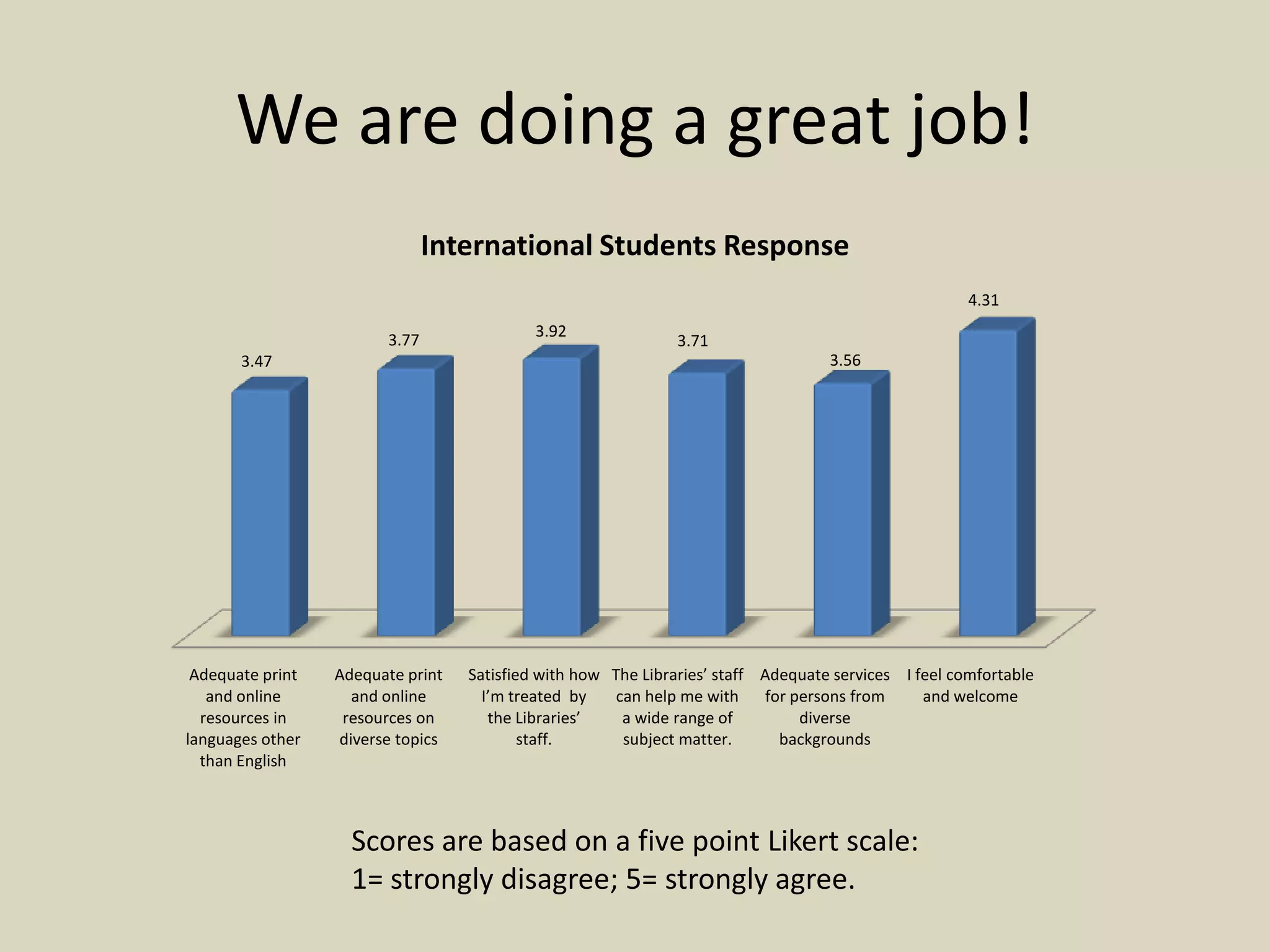
diverse
backgrounds
I feel comfortable
and welcome
3.47
3.77
3.92
3.71
3.56
4.31
International Students Response
Scores are based on a five point Likert scale:
1= strongly disagree; 5= strongly agree.
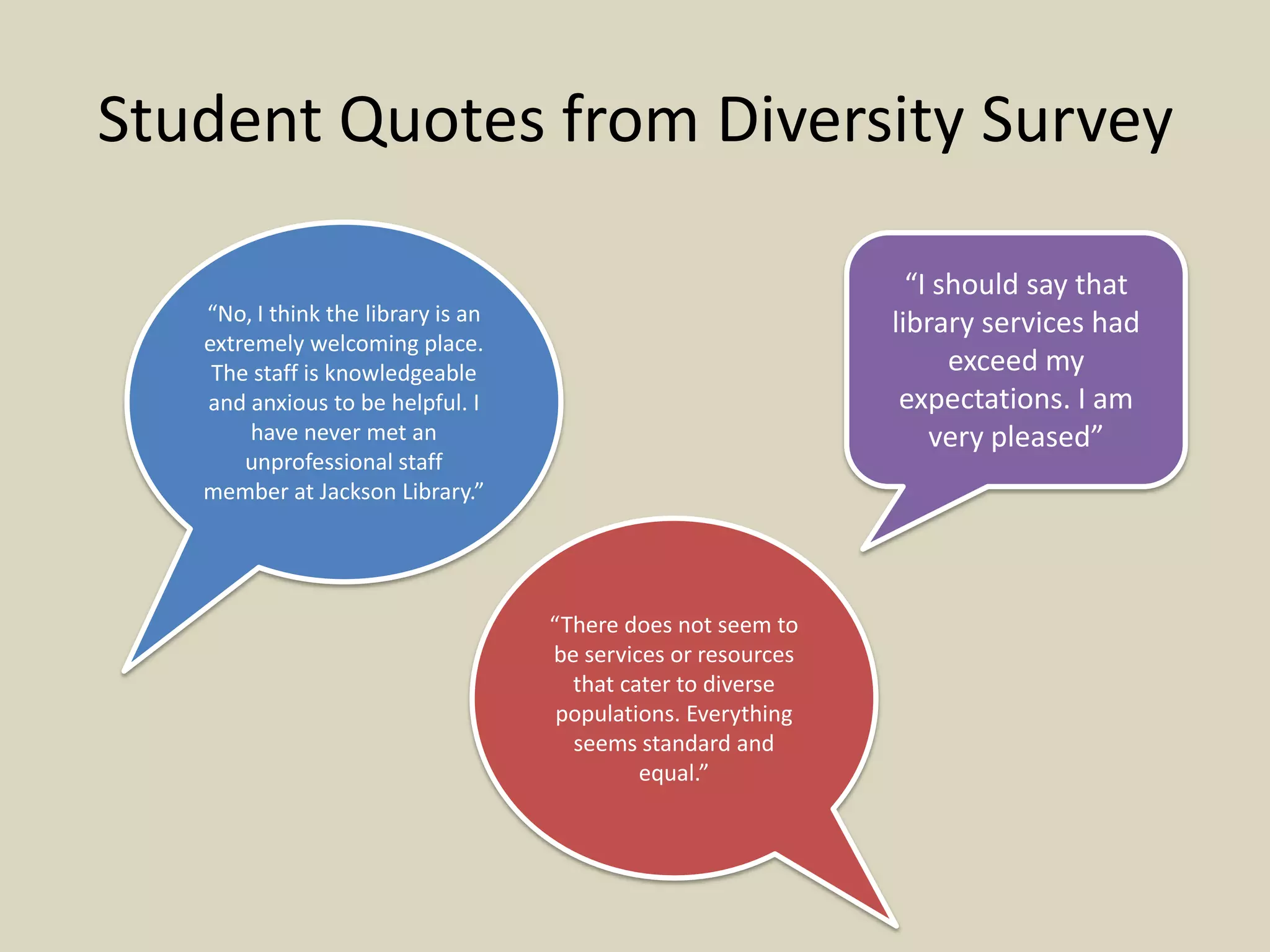
Student Quotes from Diversity Survey
“I should say that
library services had
exceed my
expectations. I am
very pleased”
“No, I think the library is an
extremely welcoming place.
The staff is knowledgeable
and anxious to be helpful. I
have never met an
unprofessional staff
member at Jackson Library.”
“There does not seem to
be services or resources
that cater to diverse
populations. Everything
seems standard and
equal.”
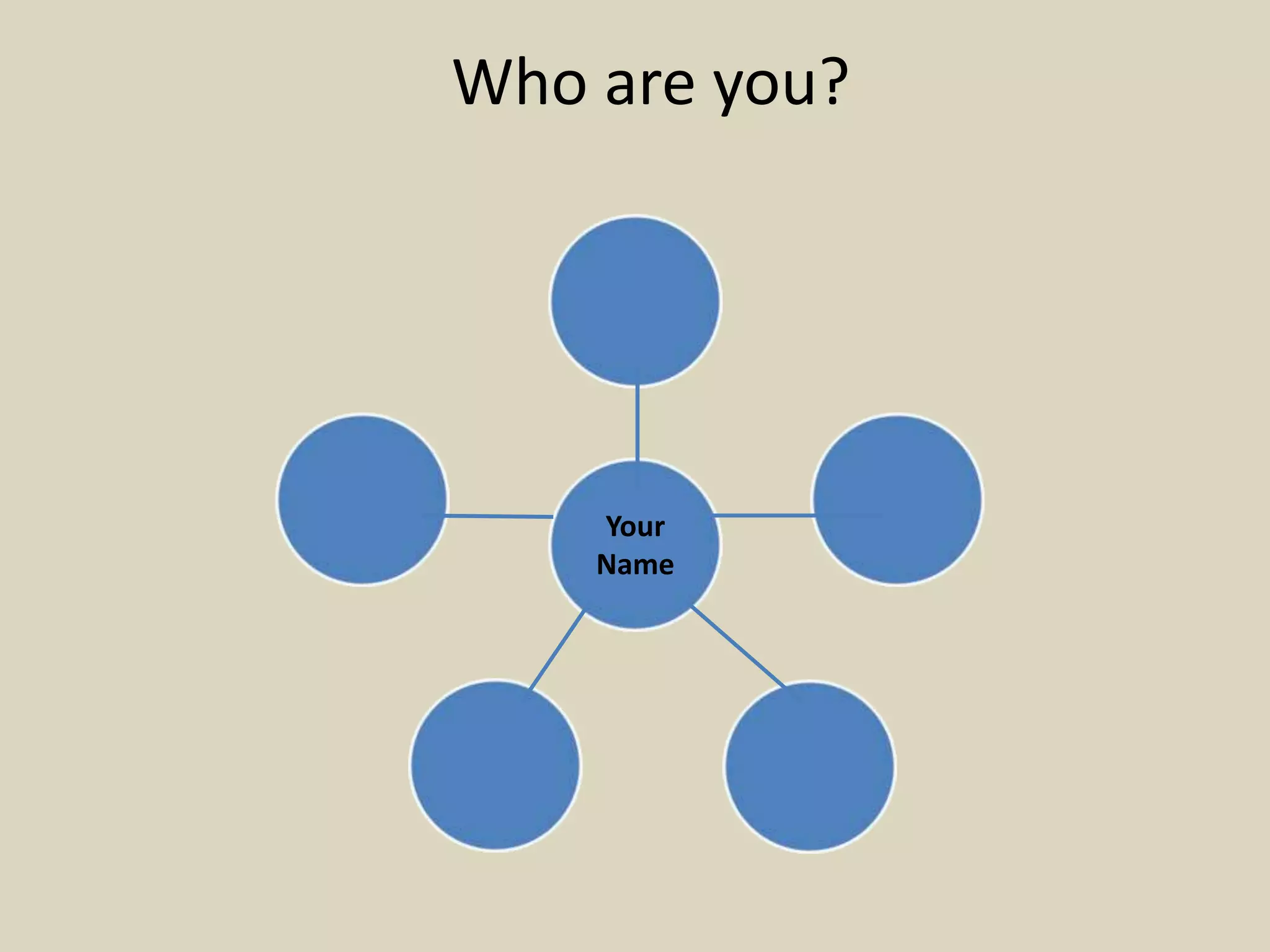
Identity Molecule Activity
Who are you?
Your
Name
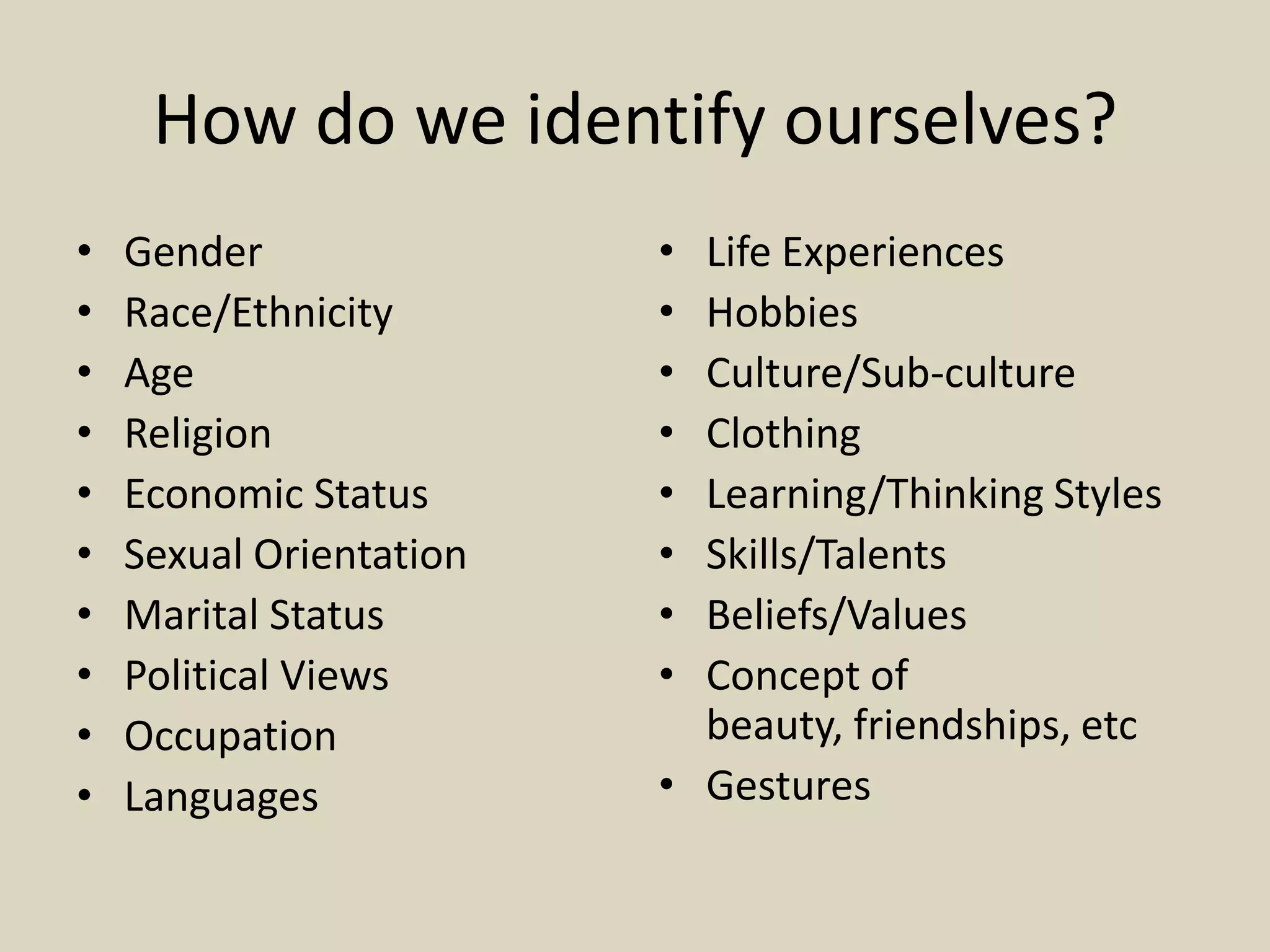
How do we identify ourselves?
• Gender
• Race/Ethnicity
• Age
• Religion
• Economic Status
• Sexual Orientation
• Marital Status
• Political Views
• Occupation
• Languages
• Life Experiences
• Hobbies
• Culture/Sub-culture
• Clothing
• Learning/Thinking Styles
• Skills/Talents
• Beliefs/Values
• Concept of
beauty, friendships, etc
• Gestures
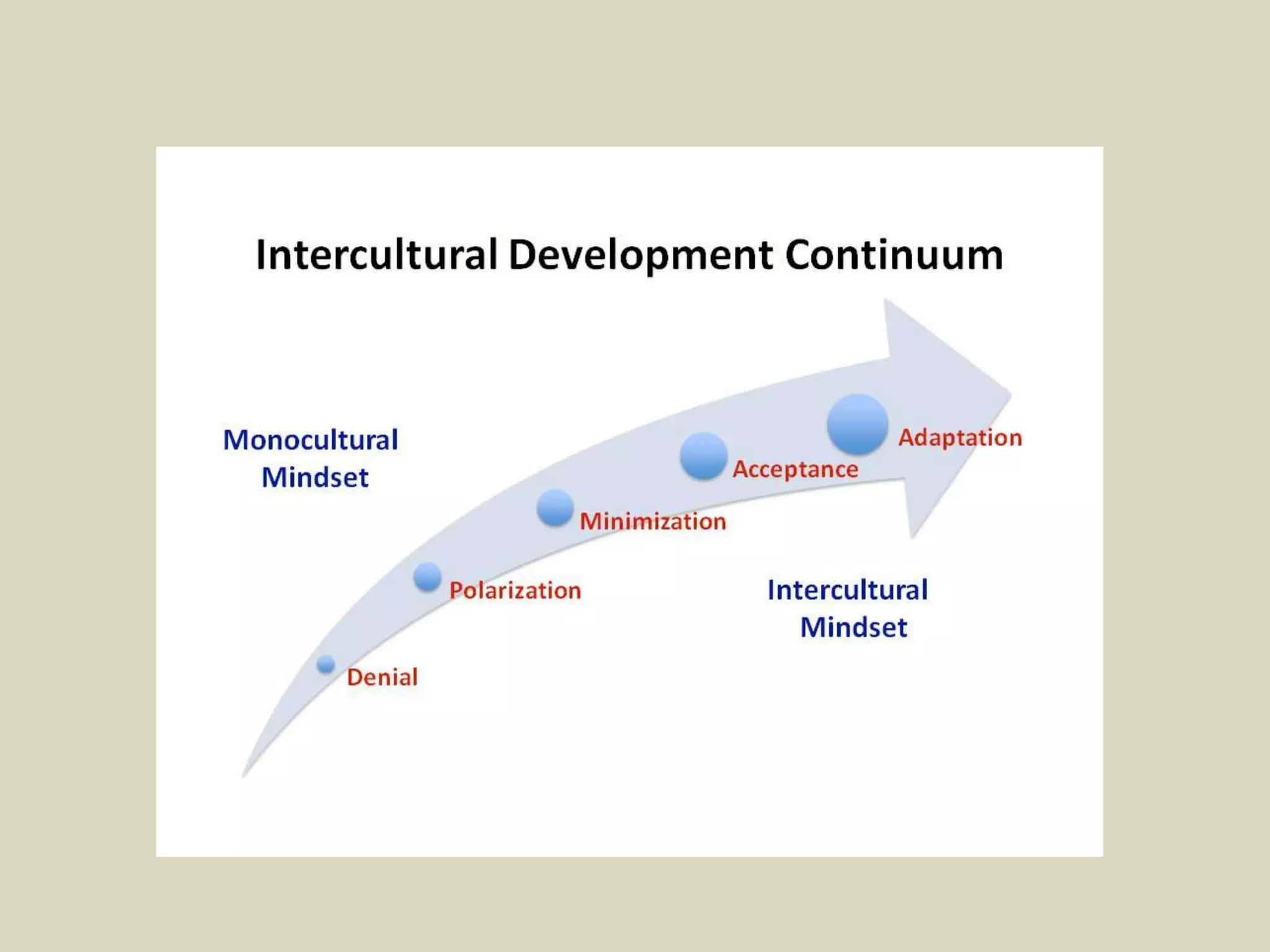
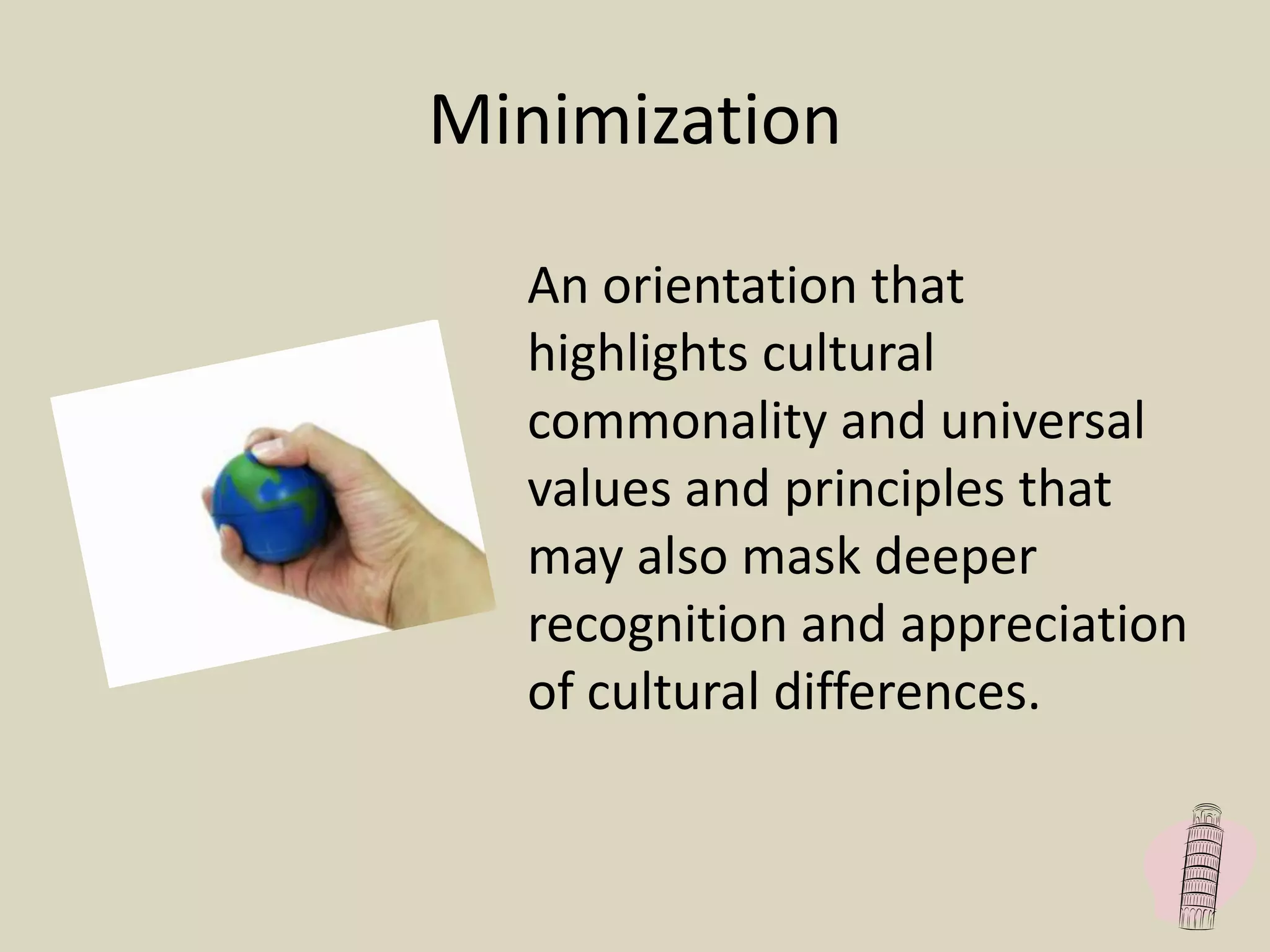
Minimization
An orientation that
highlights cultural
commonality and universal
values and principles that
may also mask deeper
recognition and appreciation
of cultural differences.
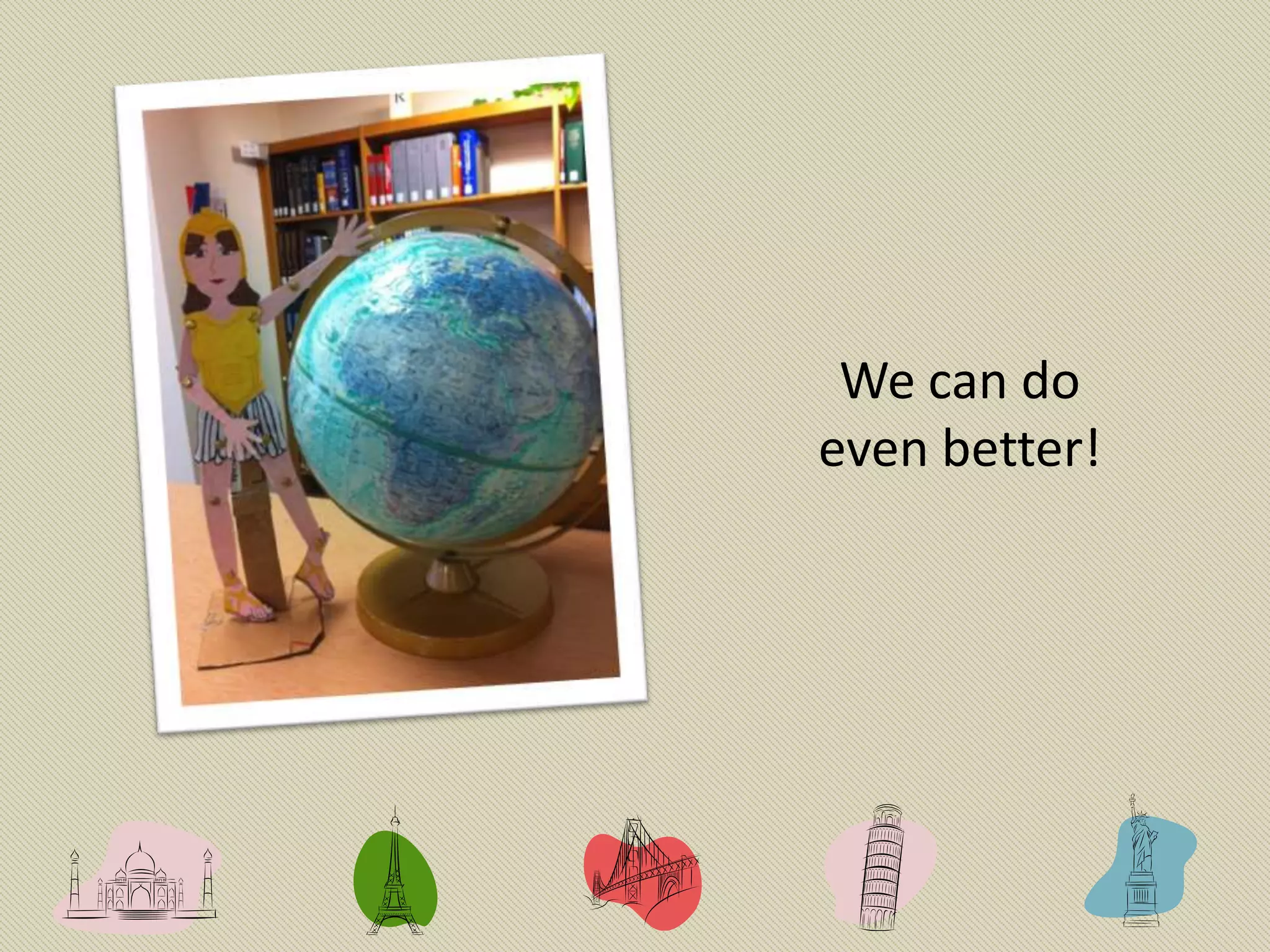
We can do
even better!
Public Service Points
• Circulation
• DMC
• SCUA
• Reference
• Music Library
• Express Desk
Communication Barriers
Cultural
Functional
Language
Cultural Barriers
• Lack of cultural awareness
• Different non-verbal communications
• Different role relationships (teacher – student)
• “Cultural activities make public libraries more
attractive to get to know the local traditions”-
International Student
Adapted from Sarah D. Garner’s study
Functional Barriers
• Different experiences with academic libraries
• Different research skills
• Different experience with technology
Adapted from Sarah D. Garner’s study
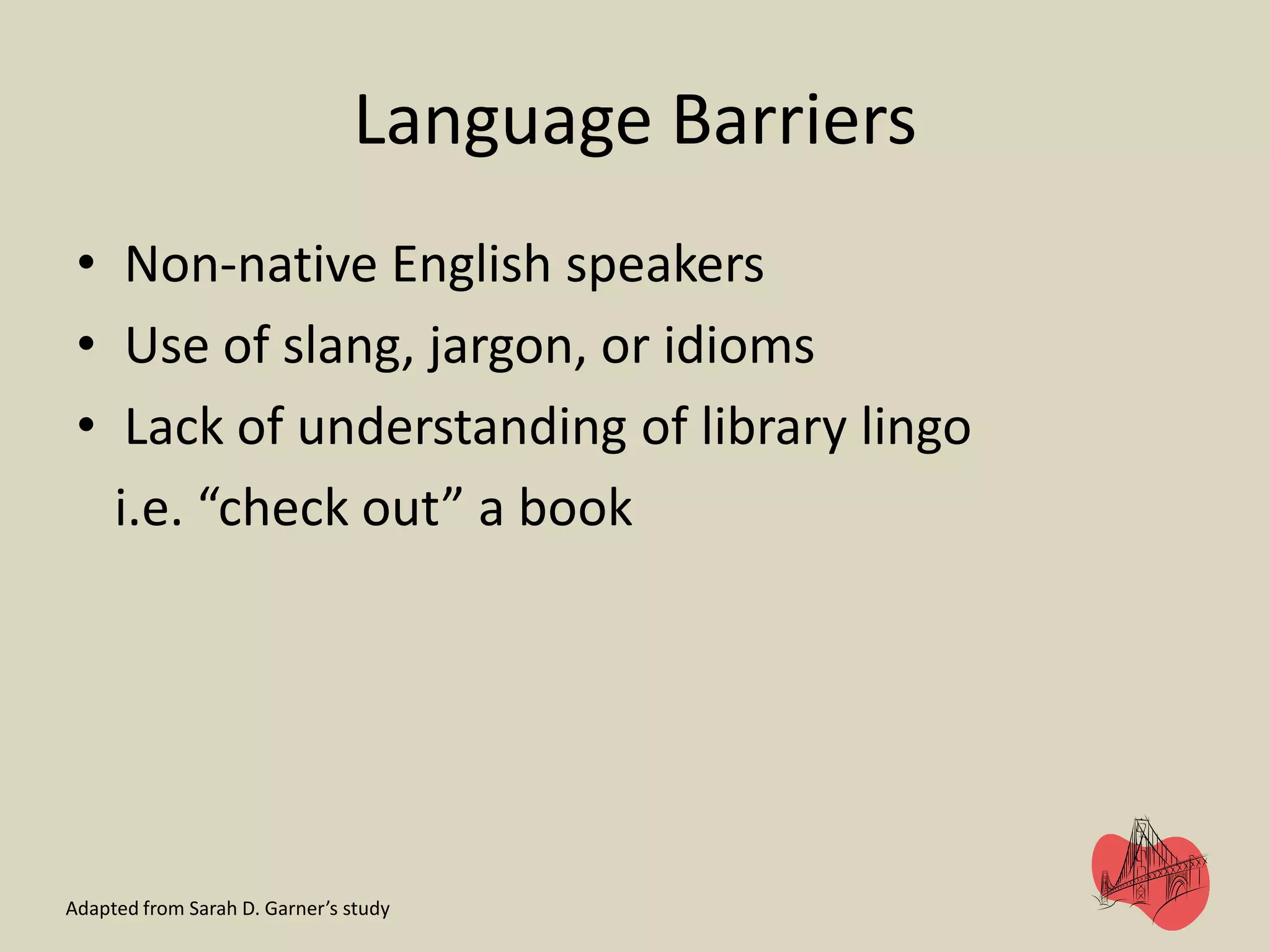
Language Barriers
• Non-native English speakers
• Use of slang, jargon, or idioms
• Lack of understanding of library lingo
i.e. “check out” a book
Adapted from Sarah D. Garner’s study
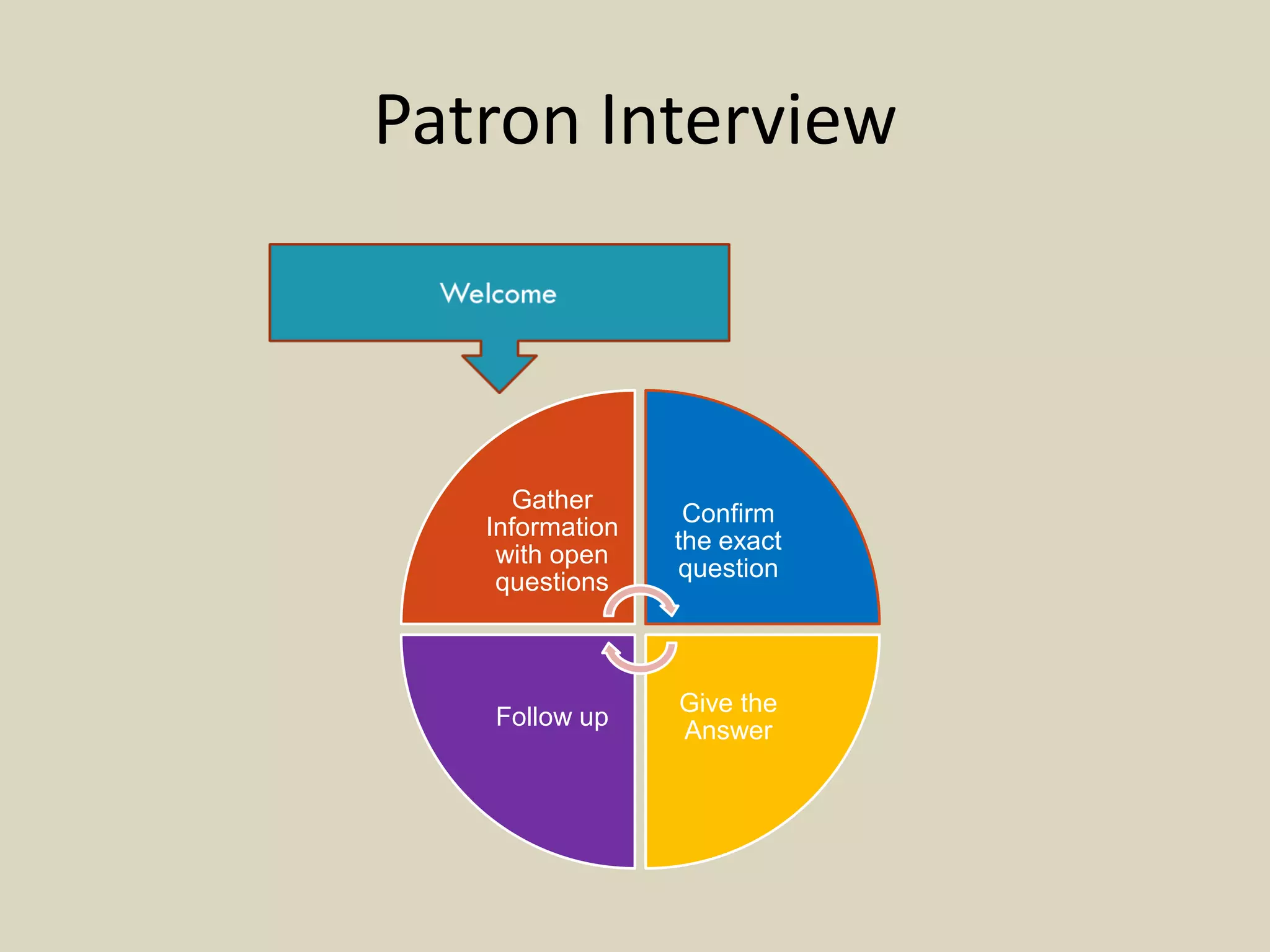
Patron Interview
Gather
Information
with open
questions
Confirm
the exact
question
Give the
Answer
Follow up
Welcome
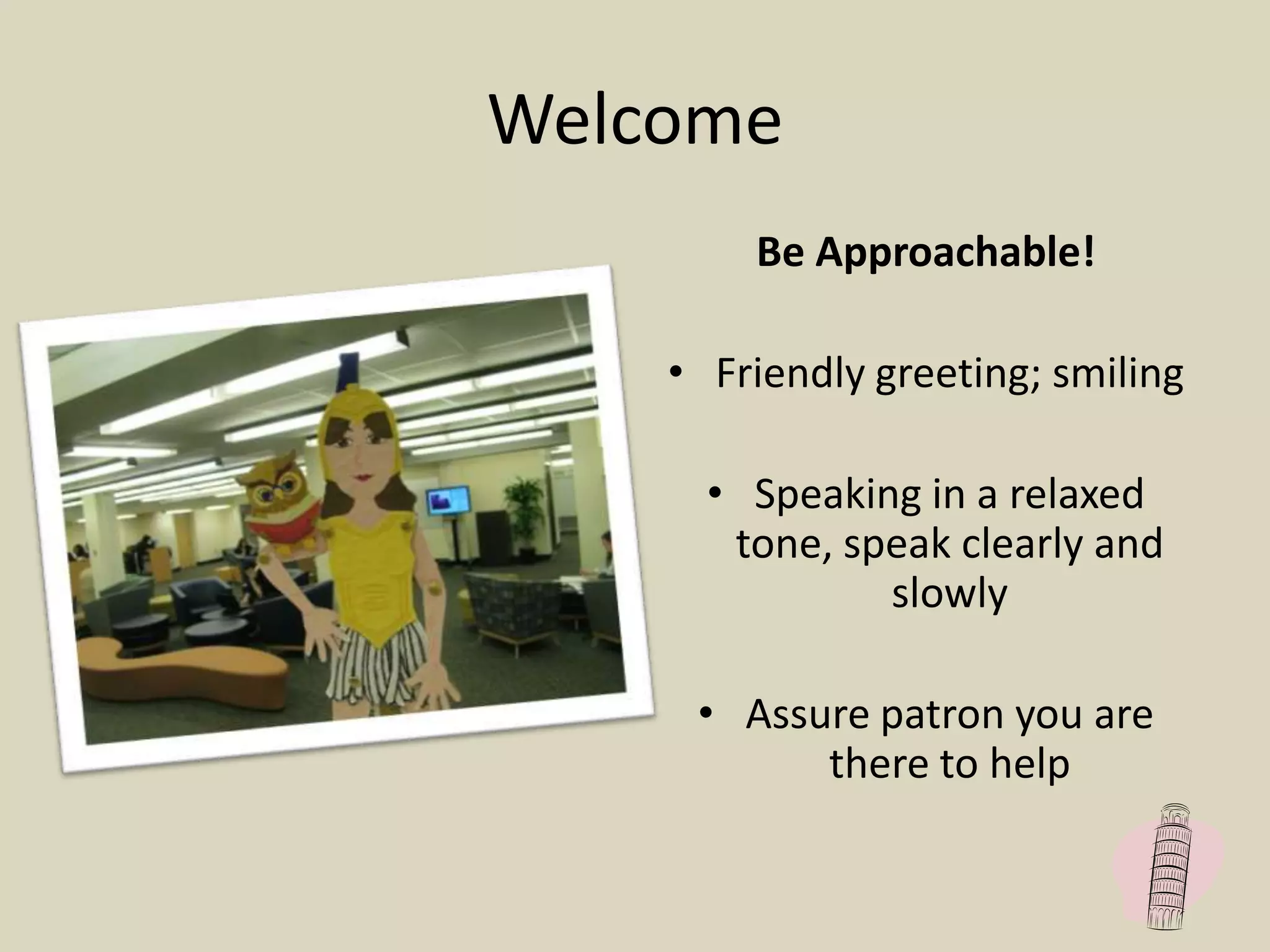
Be Approachable!
• Friendly greeting; smiling
• Speaking in a relaxed
tone, speak clearly and
slowly
• Assure patron you are
there to help
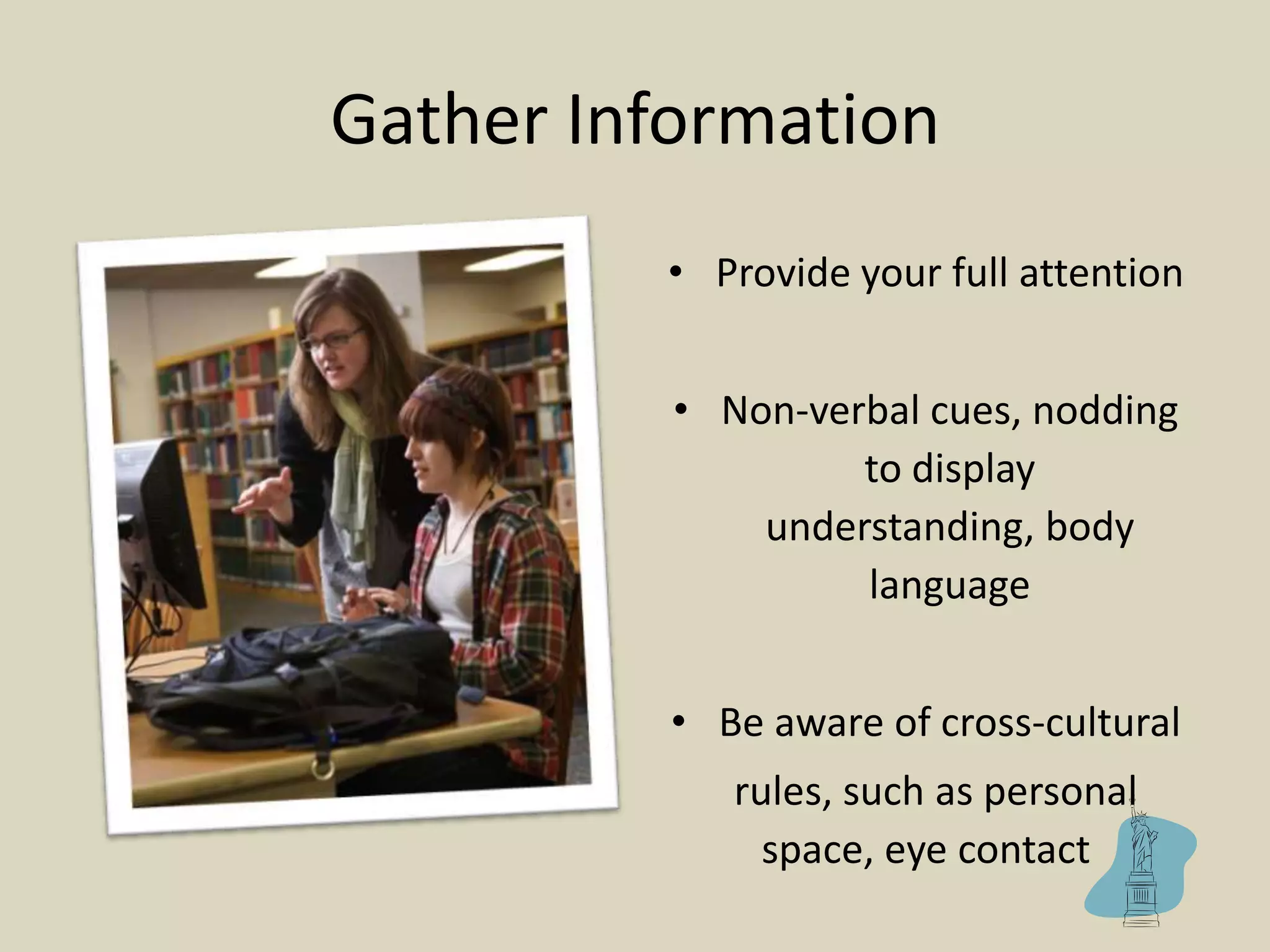
Gather Information
• Provide your full attention
• Non-verbal cues, nodding
to display
understanding, body
language
• Be aware of cross-cultural
rules, such as personal
space, eye contact
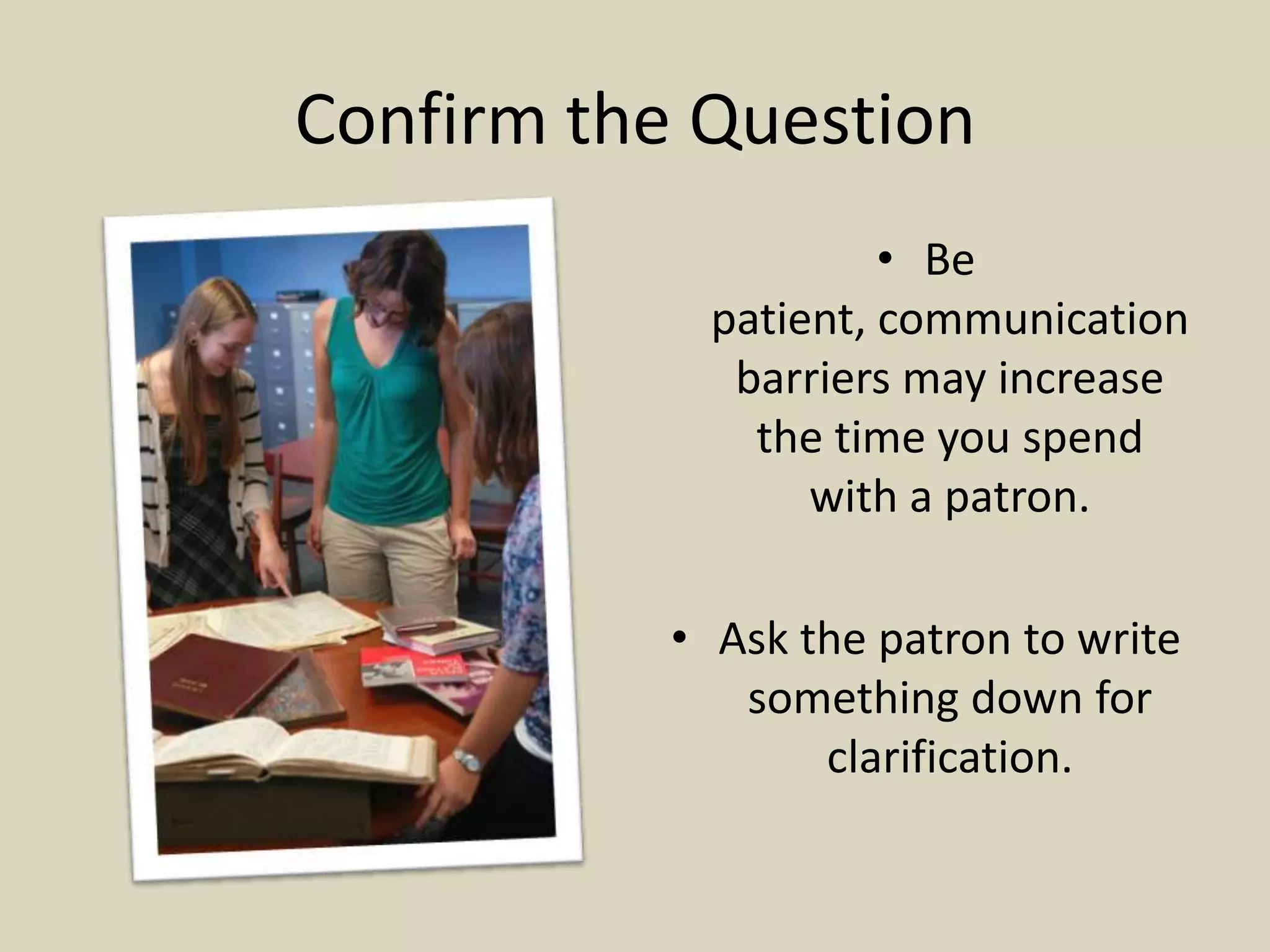
Confirm the Question
• Be
patient, communication
barriers may increase
the time you spend
with a patron.
• Ask the patron to write
something down for
clarification.
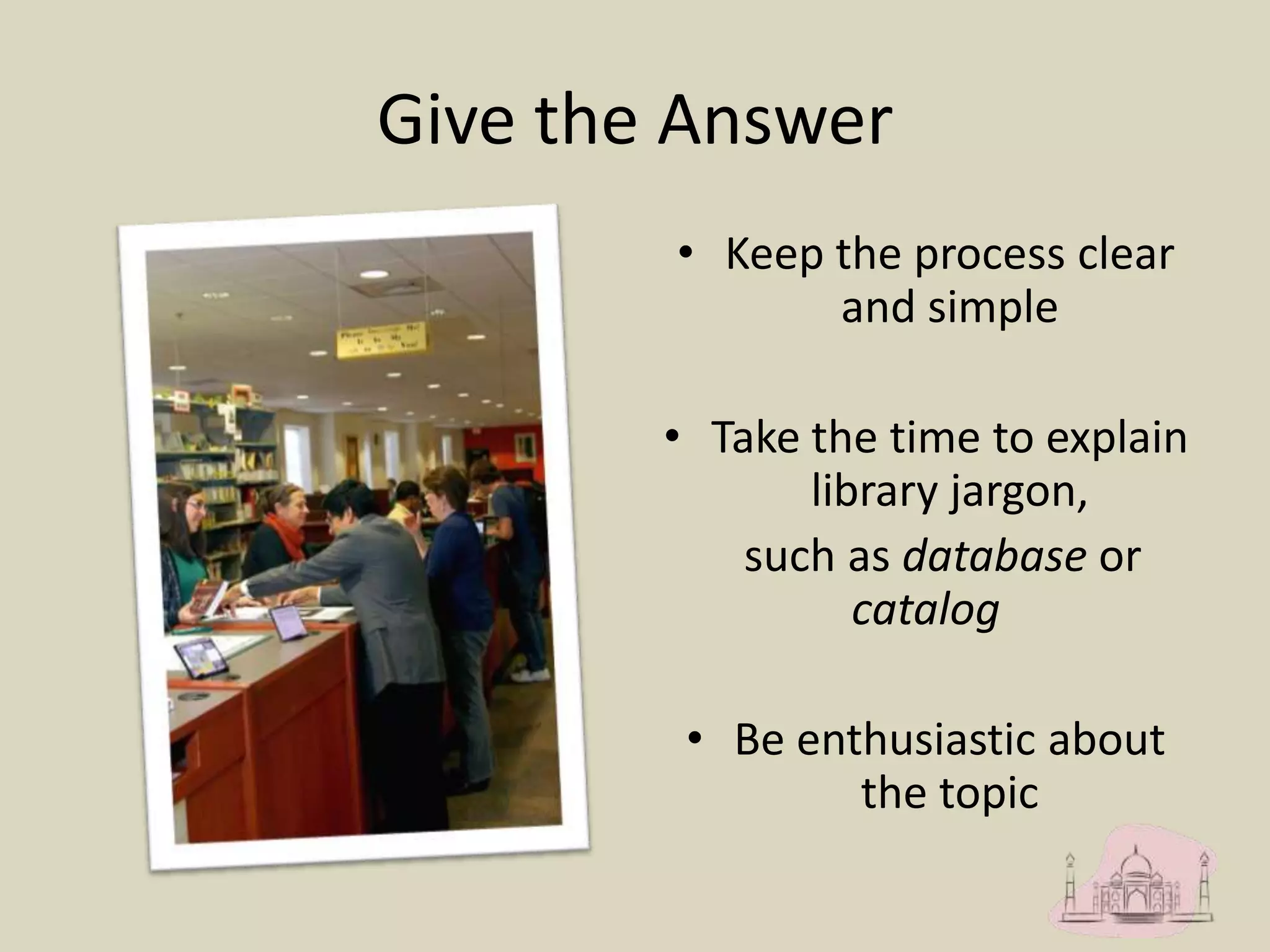
Give the Answer
• Keep the process clear
and simple
• Take the time to explain
library jargon,
such as database or
catalog
• Be enthusiastic about
the topic
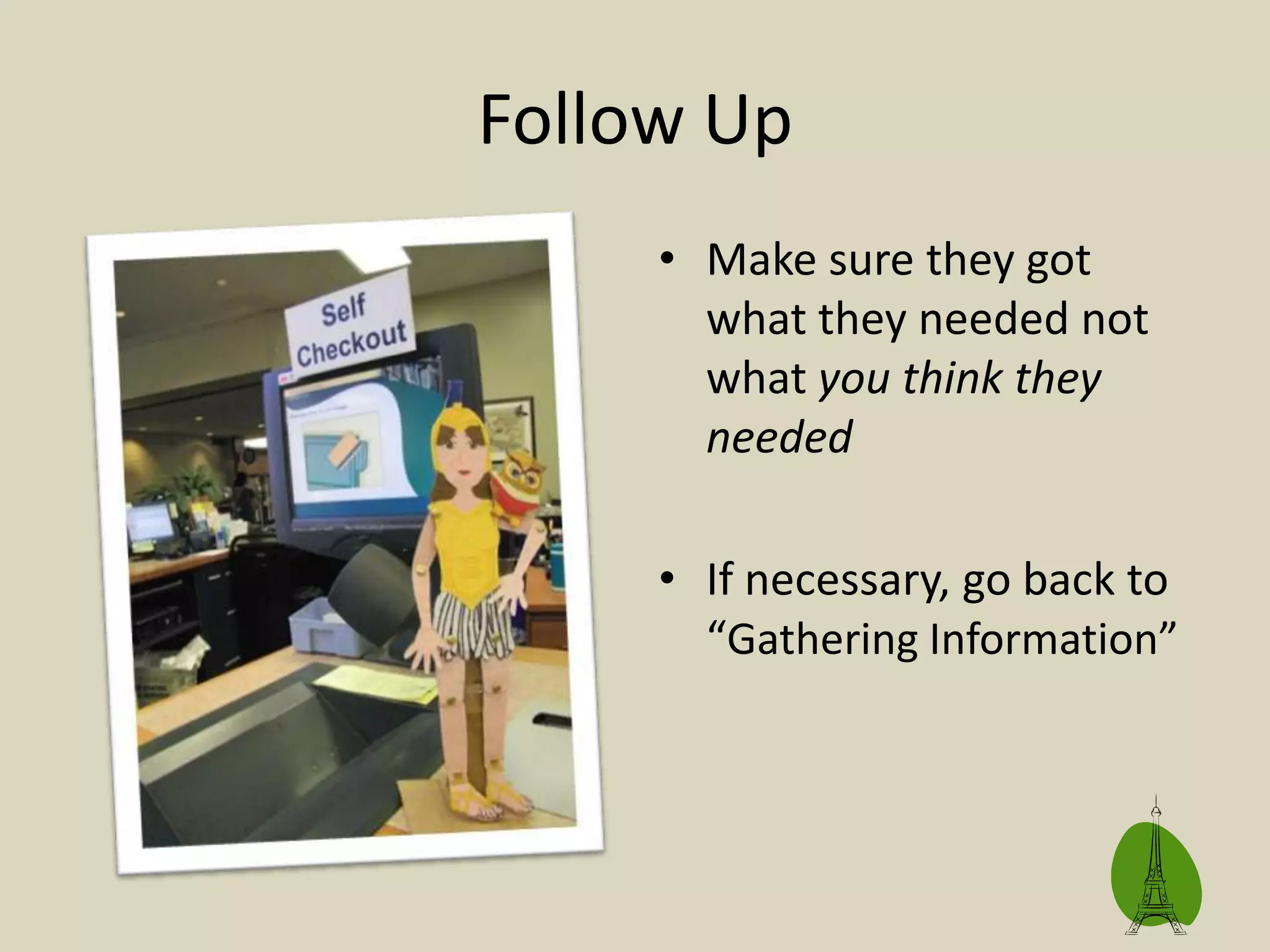
Follow Up
• Make sure they got
what they needed not
what you think they
needed
• If necessary, go back to
“Gathering Information”
Tips for Communicating Across Cultures
• Be patient, don’t be afraid to ask for clarifications, and follow up
• Don’t make assumptions, one size does not fit all
• Avoid jargon, idioms, and jokes (this includes library jargon)
• Utilize teachable moments
• Be aware of your body language, such as personal space and eye contact
• Listen and pause before responding
• Treat the patron like they want to be treated—take cues from them
• Be friendly and enthusiastic
• Try different ways of communication
• View similarities and differences as equally important
• Assume you are capable of successfully interacting with others
Tell us your story!
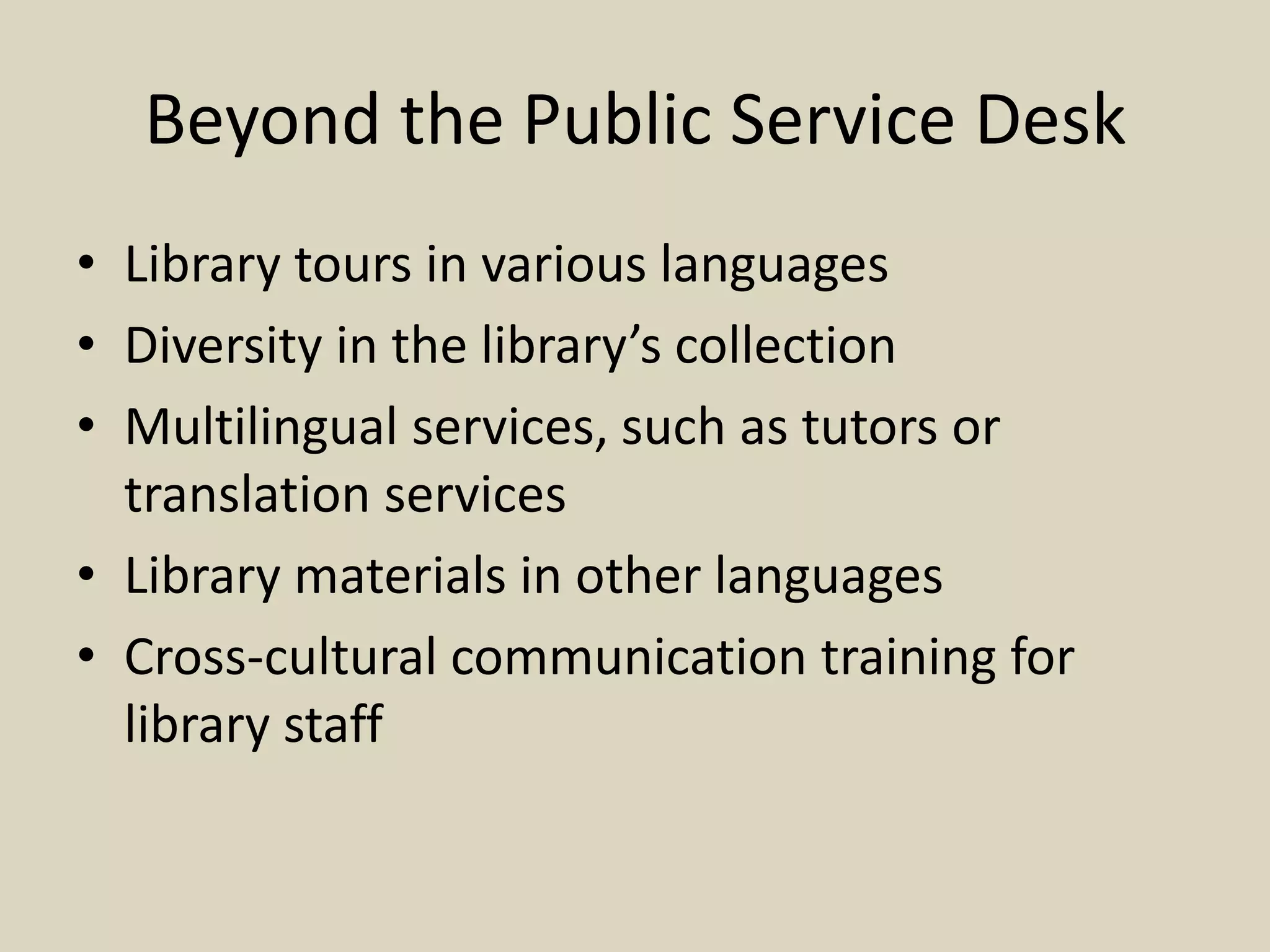
Beyond the Public Service Desk
• Library tours in various languages
• Diversity in the library’s collection
• Multilingual services, such as tutors or
translation services
• Library materials in other languages
• Cross-cultural communication training for
library staff
Questions?
References
• ACRL Diversity Standards, http://www.ala.org/acrl/standards/diversity
• Brothen, E. & Bennet, E. (2013). The Culturally Relevant Reference Interview: How to
Enhance Reference Transactions in a Era of Diversity. In Library Sources for Multicultural
Patrons, 35, 297-302
• Garner, S. (2003). Bridging the Intercultural Communication Gap at the Reference Desk. Legal
Services Quarterly. 22(2), 7-33.
• Osa, J. O., Nyana, S. A., & Ogbaa, C. A. (2006). Effective Cross-Cultural Communication to
Enhance Reference Transactions: Training Guidelines and Tips. Knowledge Quest, 35(2), 22-
24.
• RUSA Guidelines http://www.ala.org/rusa/resources/guidelines/guidelinesbehavioral

Uncg ccc training 1

  • 1.
  • 2.
    Dinámica • Dame esoscinco si, has viajado a otro país • Mujeres a la derecha y hombres a la izquierda • Todos de pie si, hablas dos o más idiomas • Levanten la mano si, han ayudado a un estudiante internacional • Parasen en un pie si, trabajas con el público
  • 3.
    Activity • Have youtraveled to another country? • To the right or to the left? • Do you speak more than one language? • Have you ever helped an international student? • Do you work in Public Services?
  • 4.
    Diversity at UNCG UNCGfully supports and values an inclusive community. University Libraries Diversity and Inclusion Survey • Need for multilingual services, resources, and signs OMA Focus Groups • Need for more language support for Asian and Hispanic students
  • 5.
    UNCG Students comefrom these countries
  • 6.
  • 7.
  • 8.
    2012 Diversity andInclusion Survey The Libraries provide adequate print and online resources in languages other than English The Libraries provide adequate print and online resources on diverse topics I am satisfied with how I’m treated by the Libraries’ staff. The Libraries’ staff are knowledgeable and can help me with a wide range of subject matter. The Libraries provide adequate services for persons from diverse backgrounds I feel comfortable and welcome in the Libraries’ buildings. 7 12 16 12 9 1517 20 13 16 11 10 284 169 31 57 164 50 128 206 203 186 188 213 86 118 268 252 149 243 Diversity questions Strongly Disagree Disagree Neither Agree nor Disagree Agree Strongly Agree
  • 9.
    What makes alibrary non-welcoming? • Unfriendly, non-diverse staff • Poor communication skills with foreign students • Physical barriers to stacks and services • Signs all in English • Inadequate resources on diverse topics
  • 10.
    We are doinga great job! Adequate print and online resources in languages other than English Adequate print and online resources on diverse topics Satisfied with how I’m treated by the Libraries’ staff. The Libraries’ staff can help me with a wide range of subject matter. Adequate services for persons from diverse backgrounds I feel comfortable and welcome 3.47 3.77 3.92 3.71 3.56 4.31 International Students Response Scores are based on a five point Likert scale: 1= strongly disagree; 5= strongly agree.
  • 11.
    Student Quotes fromDiversity Survey “I should say that library services had exceed my expectations. I am very pleased” “No, I think the library is an extremely welcoming place. The staff is knowledgeable and anxious to be helpful. I have never met an unprofessional staff member at Jackson Library.” “There does not seem to be services or resources that cater to diverse populations. Everything seems standard and equal.”
  • 12.
  • 13.
  • 14.
    How do weidentify ourselves? • Gender • Race/Ethnicity • Age • Religion • Economic Status • Sexual Orientation • Marital Status • Political Views • Occupation • Languages • Life Experiences • Hobbies • Culture/Sub-culture • Clothing • Learning/Thinking Styles • Skills/Talents • Beliefs/Values • Concept of beauty, friendships, etc • Gestures
  • 16.
    Minimization An orientation that highlightscultural commonality and universal values and principles that may also mask deeper recognition and appreciation of cultural differences.
  • 17.
  • 18.
    Public Service Points •Circulation • DMC • SCUA • Reference • Music Library • Express Desk
  • 19.
  • 20.
    Cultural Barriers • Lackof cultural awareness • Different non-verbal communications • Different role relationships (teacher – student) • “Cultural activities make public libraries more attractive to get to know the local traditions”- International Student Adapted from Sarah D. Garner’s study
  • 21.
    Functional Barriers • Differentexperiences with academic libraries • Different research skills • Different experience with technology Adapted from Sarah D. Garner’s study
  • 22.
    Language Barriers • Non-nativeEnglish speakers • Use of slang, jargon, or idioms • Lack of understanding of library lingo i.e. “check out” a book Adapted from Sarah D. Garner’s study
  • 23.
  • 24.
    Welcome Be Approachable! • Friendlygreeting; smiling • Speaking in a relaxed tone, speak clearly and slowly • Assure patron you are there to help
  • 25.
    Gather Information • Provideyour full attention • Non-verbal cues, nodding to display understanding, body language • Be aware of cross-cultural rules, such as personal space, eye contact
  • 26.
    Confirm the Question •Be patient, communication barriers may increase the time you spend with a patron. • Ask the patron to write something down for clarification.
  • 27.
    Give the Answer •Keep the process clear and simple • Take the time to explain library jargon, such as database or catalog • Be enthusiastic about the topic
  • 28.
    Follow Up • Makesure they got what they needed not what you think they needed • If necessary, go back to “Gathering Information”
  • 29.
    Tips for CommunicatingAcross Cultures • Be patient, don’t be afraid to ask for clarifications, and follow up • Don’t make assumptions, one size does not fit all • Avoid jargon, idioms, and jokes (this includes library jargon) • Utilize teachable moments • Be aware of your body language, such as personal space and eye contact • Listen and pause before responding • Treat the patron like they want to be treated—take cues from them • Be friendly and enthusiastic • Try different ways of communication • View similarities and differences as equally important • Assume you are capable of successfully interacting with others
  • 30.
  • 31.
    Beyond the PublicService Desk • Library tours in various languages • Diversity in the library’s collection • Multilingual services, such as tutors or translation services • Library materials in other languages • Cross-cultural communication training for library staff
  • 32.
  • 33.
    References • ACRL DiversityStandards, http://www.ala.org/acrl/standards/diversity • Brothen, E. & Bennet, E. (2013). The Culturally Relevant Reference Interview: How to Enhance Reference Transactions in a Era of Diversity. In Library Sources for Multicultural Patrons, 35, 297-302 • Garner, S. (2003). Bridging the Intercultural Communication Gap at the Reference Desk. Legal Services Quarterly. 22(2), 7-33. • Osa, J. O., Nyana, S. A., & Ogbaa, C. A. (2006). Effective Cross-Cultural Communication to Enhance Reference Transactions: Training Guidelines and Tips. Knowledge Quest, 35(2), 22- 24. • RUSA Guidelines http://www.ala.org/rusa/resources/guidelines/guidelinesbehavioral

Editor's Notes

  • #3 Give each other HIGH FIVE if, you have traveled to another countryWomen to the right and Men to the leftStand up if, you speak more than one languageRaise your hand if, you have helped an international studentStand on one foot if you work in Public Services