Masaka District Local Government:
ASF Biosecurity, Centralized Slaughter
Efforts And Other Interventions
Lawrence Mayega
Uganda Livestock Sector Consultative Meeting, Kampala, 14 March 2017
Presentation outline
2
 ILRI-Masaka partnership
 Animal health interventions
 Bio-security: African Swine Fever (ASF) control
measures on the farm
 African Swine Fever (ASF) surveillance
 Centralized slaughter efforts
 Other interventions
 Pig Multi-stakeholder platforms
 Sweet Potato silage; an alternative pig feed
 Marketing (Pig business hubs)
ILRI- Masaka partnership
3
 At the project inception in 2012, Masaka was
ranked as a potential site for SPVCD
 During the scoping survey by ILRI there was
evidence of active small holder pig farmers
that justified the need for SPVCD work
 A partnership was then formed between
Masaka District Local Government and ILRI
to implement the program
 Several Interventions have been piloted with
this partnership
Animal health interventions4
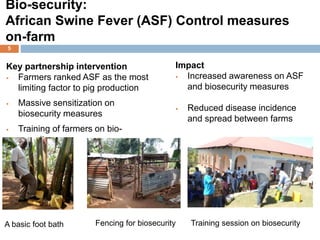
Bio-security:
African Swine Fever (ASF) Control measures
on-farm
5
Key partnership intervention
 Farmers ranked ASF as the most
limiting factor to pig production
 Massive sensitization on
biosecurity measures
 Training of farmers on bio-
security
A basic foot bath Fencing for biosecurity Training session on biosecurity
Impact
 Increased awareness on ASF
and biosecurity measures
 Reduced disease incidence
and spread between farms
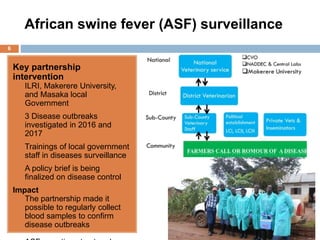
African swine fever (ASF) surveillance
6
Key partnership
intervention
 ILRI, Makerere University,
and Masaka local
Government
 3 Disease outbreaks
investigated in 2016 and
2017
 Trainings of local government
staff in diseases surveillance
 A policy brief is being
finalized on disease control
Impact
• The partnership made it
possible to regularly collect
blood samples to confirm
disease outbreaks
Centralized Slaughter efforts7
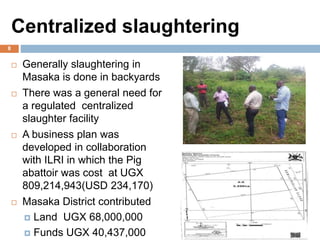
Centralized slaughtering
 Generally slaughtering in
Masaka is done in backyards
 There was a general need for
a regulated centralized
slaughter facility
 A business plan was
developed in collaboration
with ILRI in which the Pig
abattoir was cost at UGX
809,214,943(USD 234,170)
 Masaka District contributed
 Land UGX 68,000,000
 Funds UGX 40,437,000
8
 Pig Multi-stakeholder
platforms
 Sweet Potato silage; an
alternative pig feed
 Marketing (Pig business
hubs)
Other interventions9
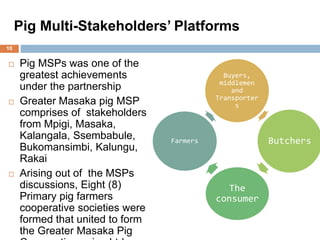
Pig Multi-Stakeholders’ Platforms
Buyers,
middlemen
and
Transporter
s
Butchers
The
consumer
Farmers
10
 Pig MSPs was one of the
greatest achievements
under the partnership
 Greater Masaka pig MSP
comprises of stakeholders
from Mpigi, Masaka,
Kalangala, Ssembabule,
Bukomansimbi, Kalungu,
Rakai
 Arising out of the MSPs
discussions, Eight (8)
Primary pig farmers
cooperative societies were
formed that united to form
the Greater Masaka Pig
Marketing(Pig business hub)
11
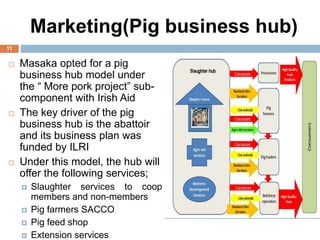
 Masaka opted for a pig
business hub model under
the “ More pork project” sub-
component with Irish Aid
 The key driver of the pig
business hub is the abattoir
and its business plan was
funded by ILRI
 Under this model, the hub will
offer the following services;
 Slaughter services to coop
members and non-members
 Pig farmers SACCO
 Pig feed shop
 Extension services
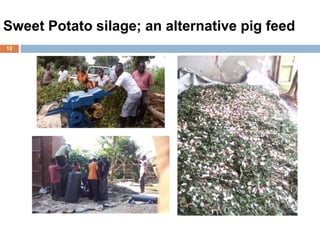
Sweet Potato silage; an alternative pig feed
12
Capacity development
13
 392 farmers connected to the cooperative
were trained in enterprise development
 300 farmers have been trained in silage
making
 Extension staff have had trainings in; pork
inspection, silage making, biosecurity,
disease surveillance
 Pork Butchers trained in safe handling of
pork
Conclusion
14
 The value chain approach ensures holistic
development
 The farmers’ desire to market together is a
commendable achievement as it ensures faster
development
 However, to succeed funds are needed to construct
the pig business hub to unlock the market
opportunities
 We seek the Ministry of Agriculture, Animal Industry
and Fisheries and Partners to give technical and
financial support to complete the pig-hub proposal to
fulfill the farmers objective of having fair trade of their
15
I THANK YOU
FOR YOUR
ATTENTION

Masaka District Local Government: ASF biosecurity, centralized slaughter efforts and other interventions

  • 1.
    Masaka District LocalGovernment: ASF Biosecurity, Centralized Slaughter Efforts And Other Interventions Lawrence Mayega Uganda Livestock Sector Consultative Meeting, Kampala, 14 March 2017
  • 2.
    Presentation outline 2  ILRI-Masakapartnership  Animal health interventions  Bio-security: African Swine Fever (ASF) control measures on the farm  African Swine Fever (ASF) surveillance  Centralized slaughter efforts  Other interventions  Pig Multi-stakeholder platforms  Sweet Potato silage; an alternative pig feed  Marketing (Pig business hubs)
  • 3.
    ILRI- Masaka partnership 3 At the project inception in 2012, Masaka was ranked as a potential site for SPVCD  During the scoping survey by ILRI there was evidence of active small holder pig farmers that justified the need for SPVCD work  A partnership was then formed between Masaka District Local Government and ILRI to implement the program  Several Interventions have been piloted with this partnership
  • 4.
  • 5.
    Bio-security: African Swine Fever(ASF) Control measures on-farm 5 Key partnership intervention  Farmers ranked ASF as the most limiting factor to pig production  Massive sensitization on biosecurity measures  Training of farmers on bio- security A basic foot bath Fencing for biosecurity Training session on biosecurity Impact  Increased awareness on ASF and biosecurity measures  Reduced disease incidence and spread between farms
  • 6.
    African swine fever(ASF) surveillance 6 Key partnership intervention  ILRI, Makerere University, and Masaka local Government  3 Disease outbreaks investigated in 2016 and 2017  Trainings of local government staff in diseases surveillance  A policy brief is being finalized on disease control Impact • The partnership made it possible to regularly collect blood samples to confirm disease outbreaks
  • 7.
  • 8.
    Centralized slaughtering  Generallyslaughtering in Masaka is done in backyards  There was a general need for a regulated centralized slaughter facility  A business plan was developed in collaboration with ILRI in which the Pig abattoir was cost at UGX 809,214,943(USD 234,170)  Masaka District contributed  Land UGX 68,000,000  Funds UGX 40,437,000 8
  • 9.
     Pig Multi-stakeholder platforms Sweet Potato silage; an alternative pig feed  Marketing (Pig business hubs) Other interventions9
  • 10.
    Pig Multi-Stakeholders’ Platforms Buyers, middlemen and Transporter s Butchers The consumer Farmers 10 Pig MSPs was one of the greatest achievements under the partnership  Greater Masaka pig MSP comprises of stakeholders from Mpigi, Masaka, Kalangala, Ssembabule, Bukomansimbi, Kalungu, Rakai  Arising out of the MSPs discussions, Eight (8) Primary pig farmers cooperative societies were formed that united to form the Greater Masaka Pig
  • 11.
    Marketing(Pig business hub) 11 Masaka opted for a pig business hub model under the “ More pork project” sub- component with Irish Aid  The key driver of the pig business hub is the abattoir and its business plan was funded by ILRI  Under this model, the hub will offer the following services;  Slaughter services to coop members and non-members  Pig farmers SACCO  Pig feed shop  Extension services
  • 12.
    Sweet Potato silage;an alternative pig feed 12
  • 13.
    Capacity development 13  392farmers connected to the cooperative were trained in enterprise development  300 farmers have been trained in silage making  Extension staff have had trainings in; pork inspection, silage making, biosecurity, disease surveillance  Pork Butchers trained in safe handling of pork
  • 14.
    Conclusion 14  The valuechain approach ensures holistic development  The farmers’ desire to market together is a commendable achievement as it ensures faster development  However, to succeed funds are needed to construct the pig business hub to unlock the market opportunities  We seek the Ministry of Agriculture, Animal Industry and Fisheries and Partners to give technical and financial support to complete the pig-hub proposal to fulfill the farmers objective of having fair trade of their
  • 15.
    15 I THANK YOU FORYOUR ATTENTION