What do you do when you are assigned
a reading for class?
Embrace Reading
How does it help?
• Acquire knowledge
• Develop an understanding of the material
• Introduced to new ideas and terms
• Gain more exposure to class material
• Get ideas for major assignments and projects
• Critically think and process information
Find and Understand the purpose
• Reading before class
• Introduce ideas, concepts, and formulas
• Ground the lectures
• Gain the basics of the class lecture
• Reading after class
• Clarify concepts and look for connections to lecture material
• Reinforce class time
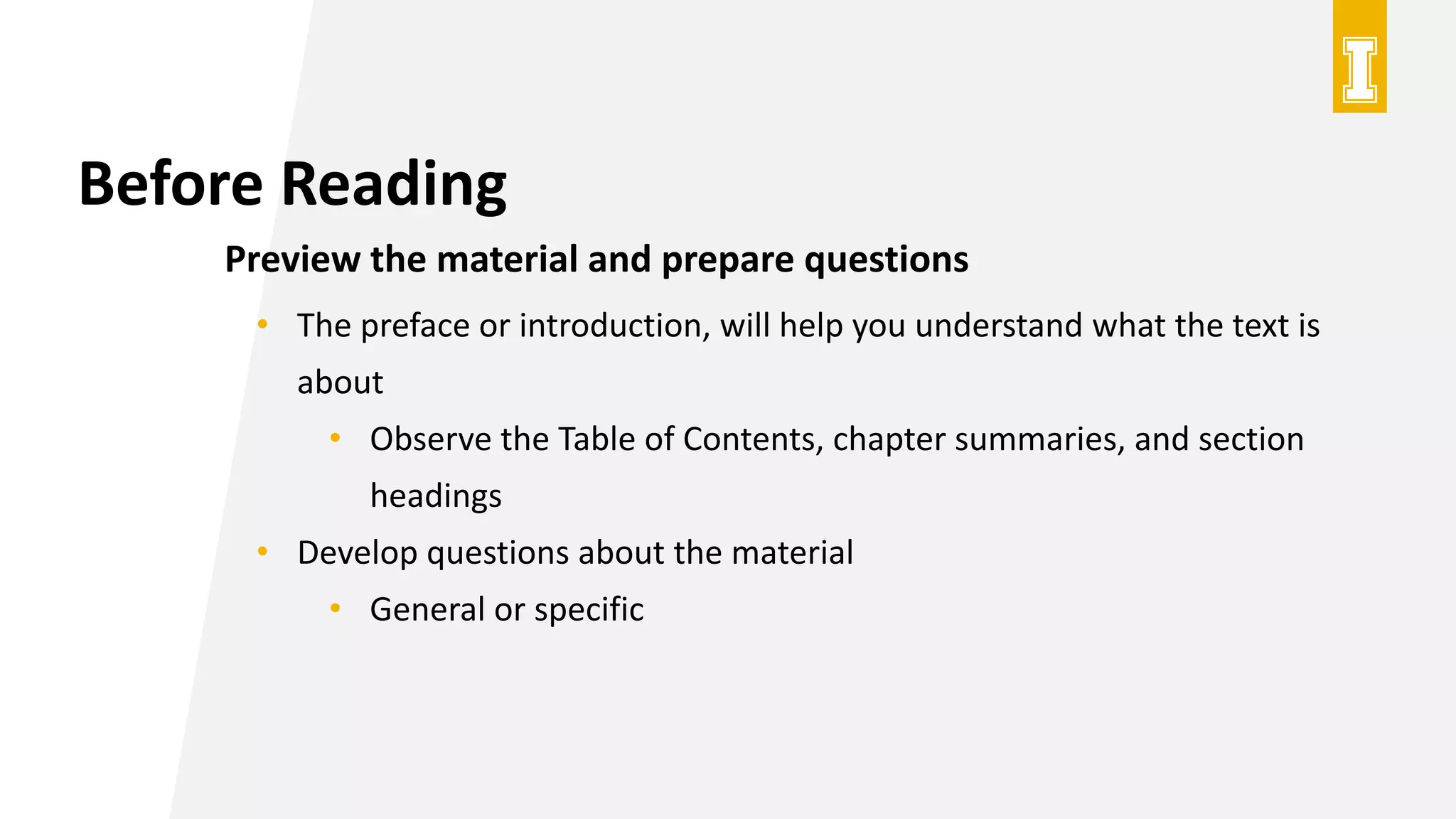
Before Reading
Preview the material and prepare questions
• The preface or introduction, will help you understand what the text is
about
• Observe the Table of Contents, chapter summaries, and section
headings
• Develop questions about the material
• General or specific
Read with focus
Engage with the text
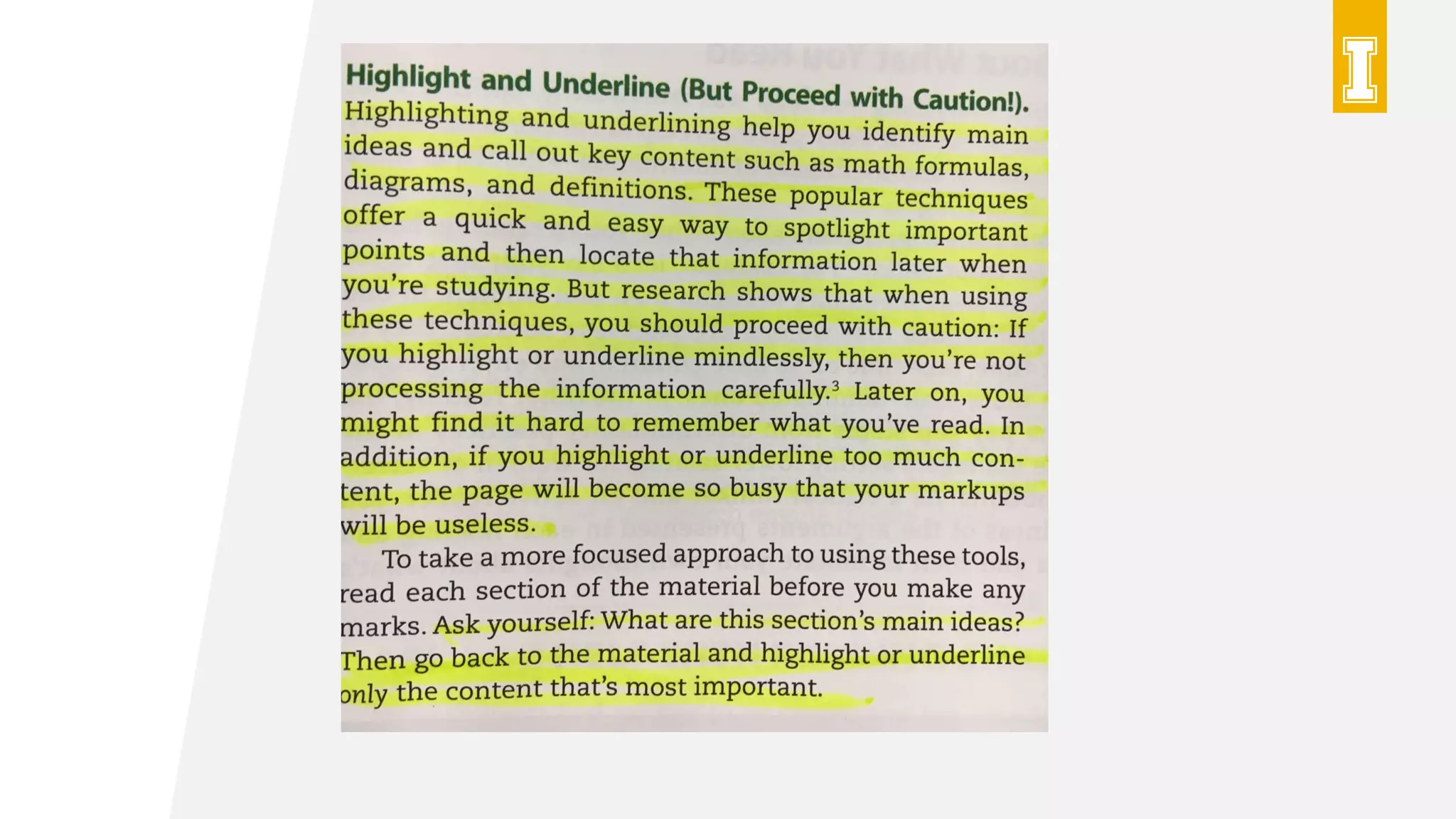
• Mark up key aspects of the text
• Definitions, examples, connections
• Highlight and underline things that stick out
• Formulas, definitions, main ideas
• Key concepts
• Take notes while reading
• Works well with especially dense material
Read with focus
Clarify confusing material
• Carefully reread any material you find confusing
• Write questions
• Look up definitions
• Glossaries
• Footnotes
• Ask a classmate or instructor for help
• Build a foundation of knowledge
Develop a system for your own
reading!
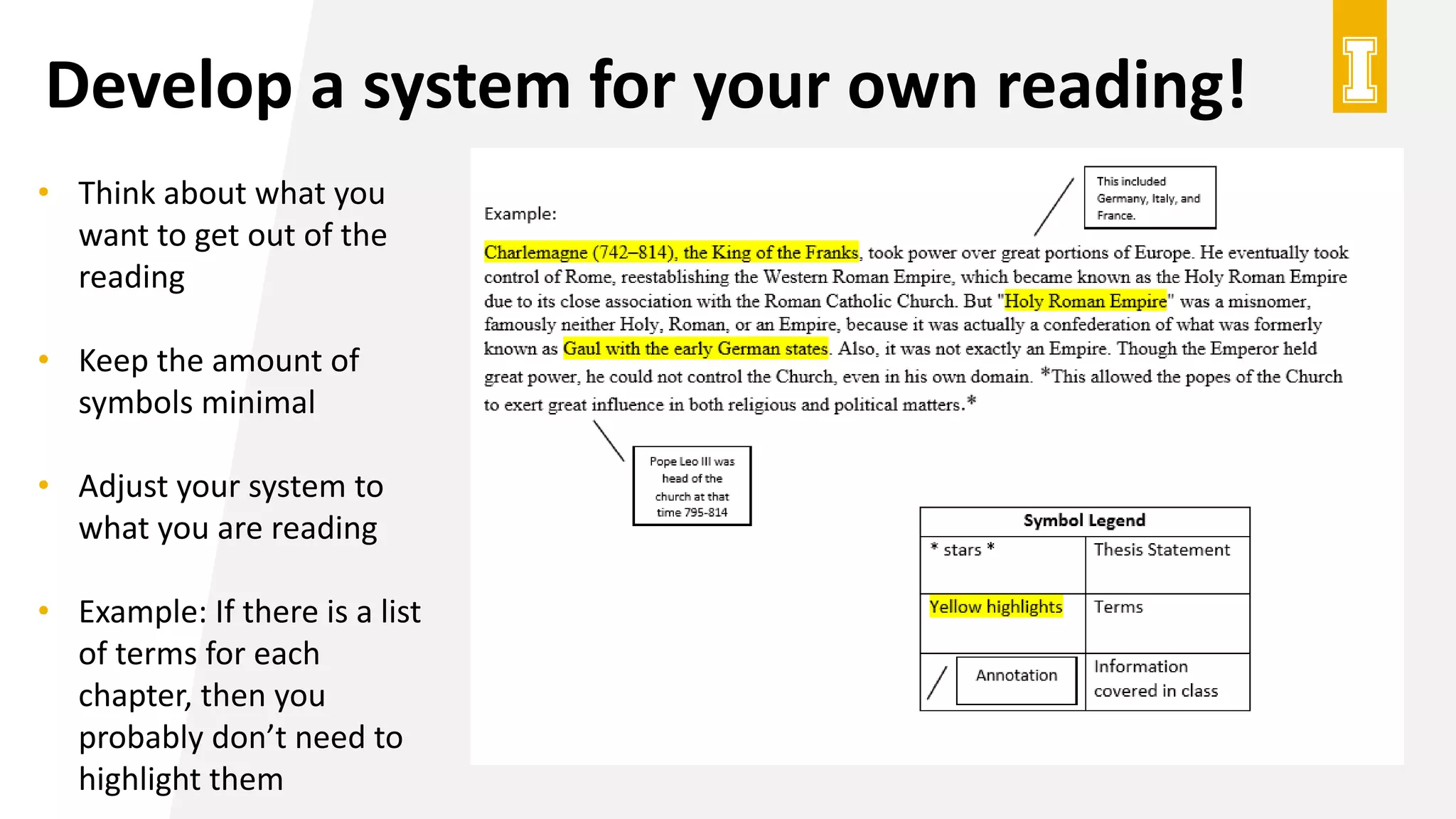
Develop a system for your own reading!
• Think about what you
want to get out of the
reading
• Keep the amount of
symbols minimal
• Adjust your system to
what you are reading
• Example: If there is a list
of terms for each
chapter, then you
probably don’t need to
highlight them
After Reading
Revisit the material
• Write your own summaries
• Create questions and try to answer them
• Reread important sections
• Look for where emphasis is placed
• Identify bold or italicized words
• Rewrite your margin notes into a notebook
After Reading
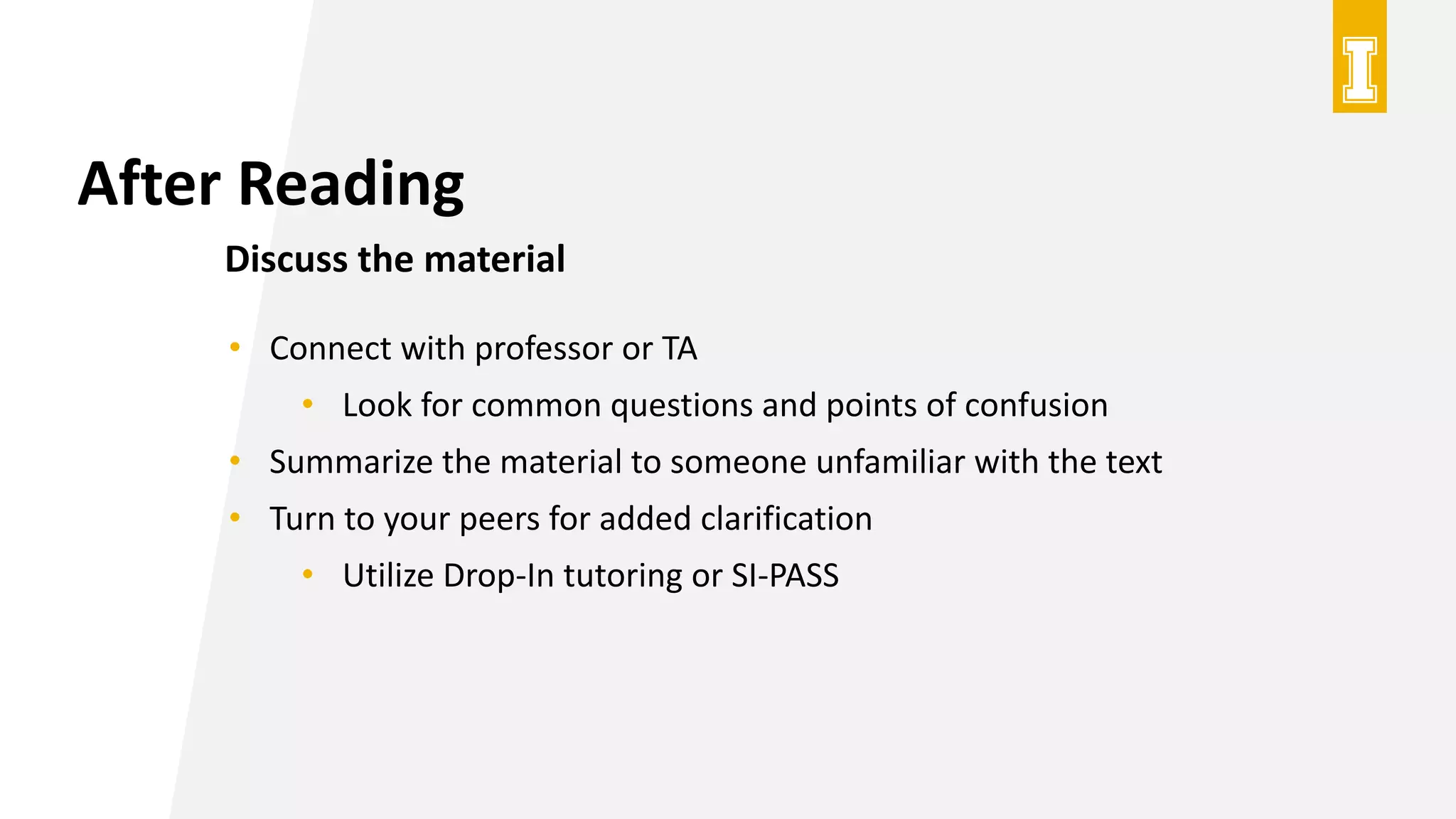
Discuss the material
• Connect with professor or TA
• Look for common questions and points of confusion
• Summarize the material to someone unfamiliar with the text
• Turn to your peers for added clarification
• Utilize Drop-In tutoring or SI-PASS
After Reading
Reread with supplemental sources
• Review sections that are confusing
• Search YouTube
• May contain summaries or explanations of the text you need to
read
• Look for supplemental readings to help clarify
• Example: Beginning Theory: An Introduction to Literary and
Cultural Theory
Critical Reading: Beyond
Textbooks
Assignment Prompts
Figuring out what you need to do
• When you get the prompt
• Read it completely!
• Underline keypoints and requirements
• Ask Questions
Assignment Prompts: Breaking Down the
Assignment
• Figure out the background information that contextualizes the
task you're being asked to do
• Understand what you’re being asked to do
• Determine the technical guidelines
• Due dates
• Expected length
• Style guidelines
Assignment Prompts: Additional Questions
to Consider
• Are there any guiding questions that should be included in the
assignment?
• What is the purpose of the assignment?
• Is there a style that the field uses that you could incorporate into
your assignment?
• Academic papers
• Lab reports
U of I INTR 101 03 Critical Reading

U of I INTR 101 03 Critical Reading

  • 2.
    What do youdo when you are assigned a reading for class?
  • 3.
    Embrace Reading How doesit help? • Acquire knowledge • Develop an understanding of the material • Introduced to new ideas and terms • Gain more exposure to class material • Get ideas for major assignments and projects • Critically think and process information
  • 4.
    Find and Understandthe purpose • Reading before class • Introduce ideas, concepts, and formulas • Ground the lectures • Gain the basics of the class lecture • Reading after class • Clarify concepts and look for connections to lecture material • Reinforce class time
  • 5.
    Before Reading Preview thematerial and prepare questions • The preface or introduction, will help you understand what the text is about • Observe the Table of Contents, chapter summaries, and section headings • Develop questions about the material • General or specific
  • 6.
    Read with focus Engagewith the text • Mark up key aspects of the text • Definitions, examples, connections • Highlight and underline things that stick out • Formulas, definitions, main ideas • Key concepts • Take notes while reading • Works well with especially dense material
  • 8.
    Read with focus Clarifyconfusing material • Carefully reread any material you find confusing • Write questions • Look up definitions • Glossaries • Footnotes • Ask a classmate or instructor for help • Build a foundation of knowledge
  • 9.
    Develop a systemfor your own reading!
  • 10.
    Develop a systemfor your own reading! • Think about what you want to get out of the reading • Keep the amount of symbols minimal • Adjust your system to what you are reading • Example: If there is a list of terms for each chapter, then you probably don’t need to highlight them
  • 11.
    After Reading Revisit thematerial • Write your own summaries • Create questions and try to answer them • Reread important sections • Look for where emphasis is placed • Identify bold or italicized words • Rewrite your margin notes into a notebook
  • 12.
    After Reading Discuss thematerial • Connect with professor or TA • Look for common questions and points of confusion • Summarize the material to someone unfamiliar with the text • Turn to your peers for added clarification • Utilize Drop-In tutoring or SI-PASS
  • 13.
    After Reading Reread withsupplemental sources • Review sections that are confusing • Search YouTube • May contain summaries or explanations of the text you need to read • Look for supplemental readings to help clarify • Example: Beginning Theory: An Introduction to Literary and Cultural Theory
  • 14.
  • 15.
    Assignment Prompts Figuring outwhat you need to do • When you get the prompt • Read it completely! • Underline keypoints and requirements • Ask Questions
  • 16.
    Assignment Prompts: BreakingDown the Assignment • Figure out the background information that contextualizes the task you're being asked to do • Understand what you’re being asked to do • Determine the technical guidelines • Due dates • Expected length • Style guidelines
  • 17.
    Assignment Prompts: AdditionalQuestions to Consider • Are there any guiding questions that should be included in the assignment? • What is the purpose of the assignment? • Is there a style that the field uses that you could incorporate into your assignment? • Academic papers • Lab reports