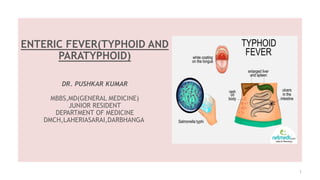
Enteric fever is caused by Salmonella enterica serotypes Typhi and Paratyphi A, B, and C. It is transmitted through the fecal-oral route by contaminated food or water. Individuals with low stomach acid are most at risk. The bacteria penetrate the intestinal mucosa and spread to organs. Symptoms may include fever, abdominal pain, constipation or diarrhea. Complications can include intestinal bleeding or perforation. Treatment involves antibiotics like fluoroquinolones. Vaccines can help prevent infection.