 By
Mohammed Munawwar
VIII 'A' sec
The sources from which we draw power to drive our
daily needs and actions.
 Conventional Resources :-
Those which have been in a common use for a long time.
 Non-Conventional Resources:-
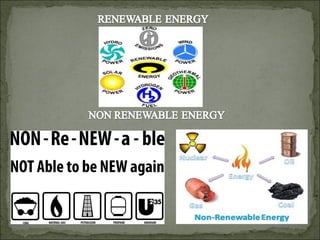
Non conventional energy resources is energy that is
renewable. That means that it will replenish itself naturally.
 Firewood
 Coal
 Petroleum
 Natural Gas
 Hydel Power
 Solar energy
 Wind energy
 Nuclear energy
 Geo-thermal energy
 Tidal energy
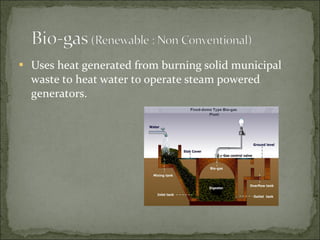
 Bio-gas
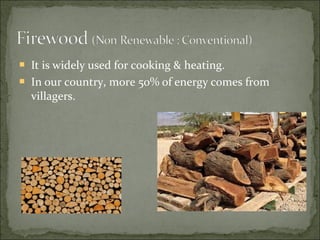
 It is widely used for cooking & heating.
 In our country, more 50% of energy comes from
villagers.
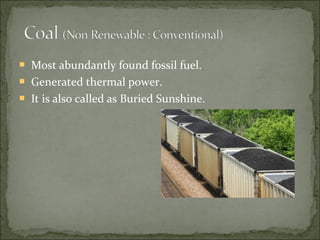
 Most abundantly found fossil fuel.
 Generated thermal power.
 It is also called as Buried Sunshine.
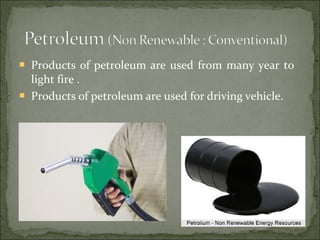
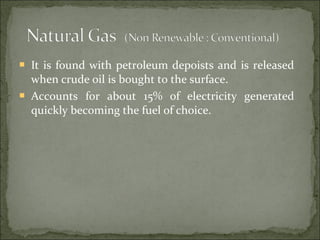
 Products of petroleum are used from many year to
light fire .
 Products of petroleum are used for driving vehicle.
 It is found with petroleum depoists and is released
when crude oil is bought to the surface.
 Accounts for about 15% of electricity generated
quickly becoming the fuel of choice.
 Rain water stored in dams is made to fall from
heights. The falling water flows through pipes in the
dams thus generating electricity called as hydro
electricity.
 One fourth of world's electricity is produced by
hydel power.
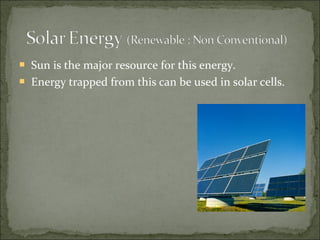
 Sun is the major resource for this energy.
 Energy trapped from this can be used in solar cells.
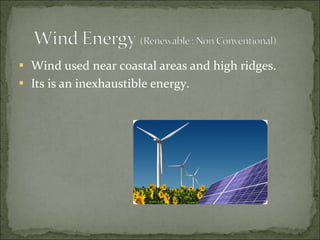
 Wind used near coastal areas and high ridges.
 Its is an inexhaustible energy.
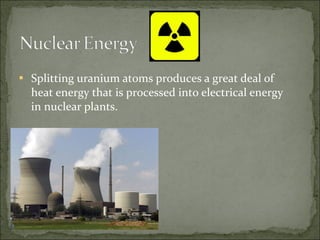
 Splitting uranium atoms produces a great deal of
heat energy that is processed into electrical energy
in nuclear plants.
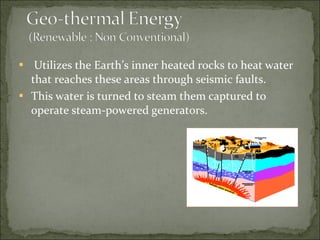
 Utilizes the Earth’s inner heated rocks to heat water
that reaches these areas through seismic faults.
 This water is turned to steam them captured to
operate steam-powered generators.
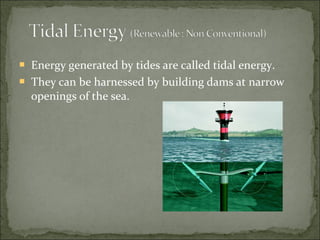
 Energy generated by tides are called tidal energy.
 They can be harnessed by building dams at narrow
openings of the sea.
 Uses heat generated from burning solid municipal
waste to heat water to operate steam powered
generators.
Thank You

Types of electrical_power

  • 1.
  • 2.
    The sources fromwhich we draw power to drive our daily needs and actions.
  • 3.
     Conventional Resources:- Those which have been in a common use for a long time.  Non-Conventional Resources:- Non conventional energy resources is energy that is renewable. That means that it will replenish itself naturally.
  • 4.
     Firewood  Coal Petroleum  Natural Gas  Hydel Power
  • 5.
     Solar energy Wind energy  Nuclear energy  Geo-thermal energy  Tidal energy  Bio-gas
  • 7.
     It iswidely used for cooking & heating.  In our country, more 50% of energy comes from villagers.
  • 8.
     Most abundantlyfound fossil fuel.  Generated thermal power.  It is also called as Buried Sunshine.
  • 9.
     Products ofpetroleum are used from many year to light fire .  Products of petroleum are used for driving vehicle.
  • 10.
     It isfound with petroleum depoists and is released when crude oil is bought to the surface.  Accounts for about 15% of electricity generated quickly becoming the fuel of choice.
  • 11.
     Rain waterstored in dams is made to fall from heights. The falling water flows through pipes in the dams thus generating electricity called as hydro electricity.  One fourth of world's electricity is produced by hydel power.
  • 12.
     Sun isthe major resource for this energy.  Energy trapped from this can be used in solar cells.
  • 13.
     Wind usednear coastal areas and high ridges.  Its is an inexhaustible energy.
  • 14.
     Splitting uraniumatoms produces a great deal of heat energy that is processed into electrical energy in nuclear plants.
  • 15.
     Utilizes theEarth’s inner heated rocks to heat water that reaches these areas through seismic faults.  This water is turned to steam them captured to operate steam-powered generators.
  • 16.
     Energy generatedby tides are called tidal energy.  They can be harnessed by building dams at narrow openings of the sea.
  • 17.
     Uses heatgenerated from burning solid municipal waste to heat water to operate steam powered generators.
  • 18.