TYPES
OF
DESIGNS
DESIGN i s t h e p r a c t i c e o f
c o n c e i v i n g a n d p l a n n i n g w h a t d o e s n ' t
e x i s t . I t i s a b r o a d t e r m t h a t c a n b e
a p p l i e d t o c r e a t i n g s t r u c t u r e s ,
e n v i r o n m e n t s , i n t e r f a c e s , p r o d u c t s ,
s e r v i c e s , f e a t u r e s a n d p r o c e s s e s . T h e
f o l l o w i n g a r e c o m m o n t y p e s o f
d e s i g n .
2
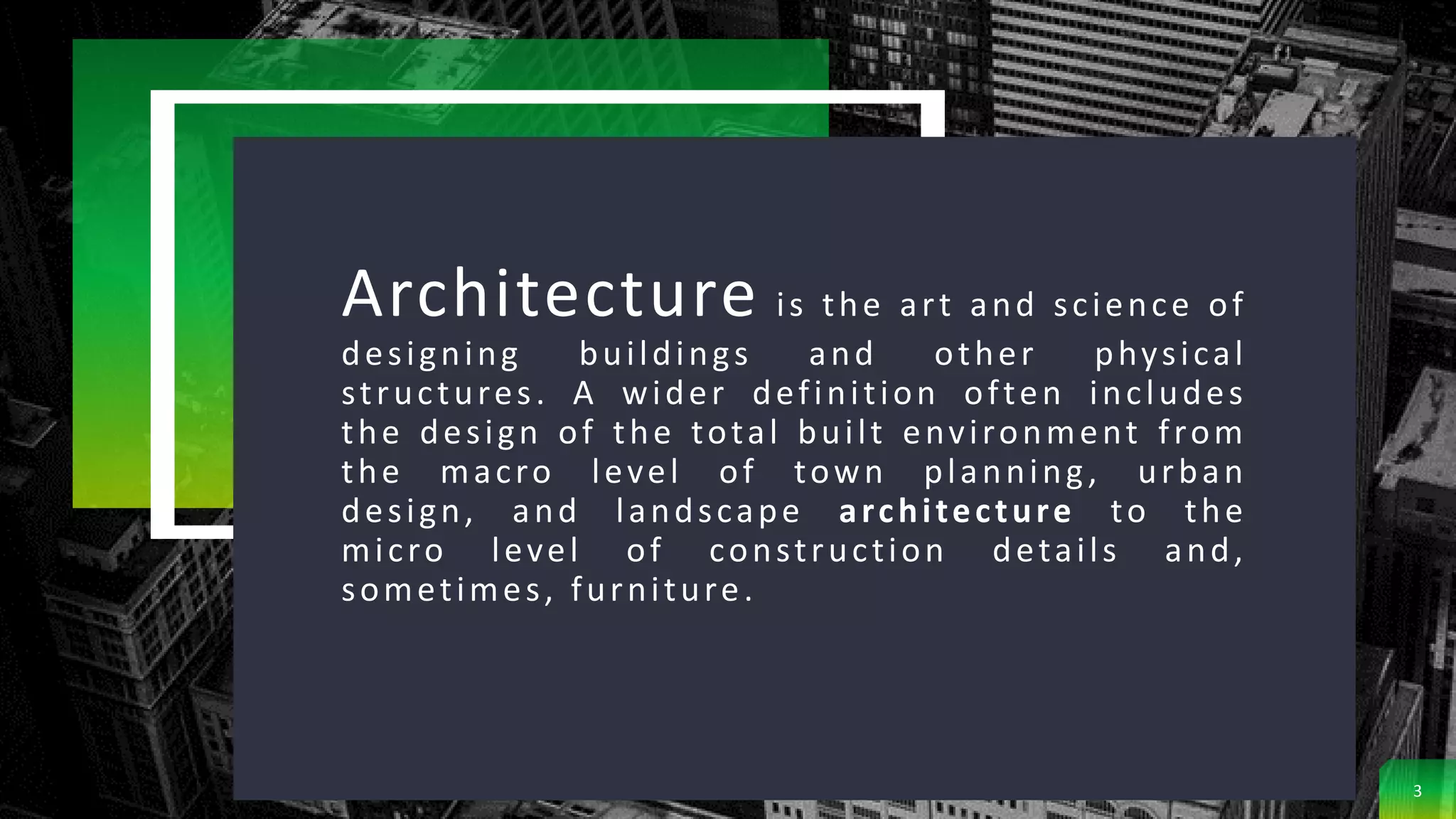
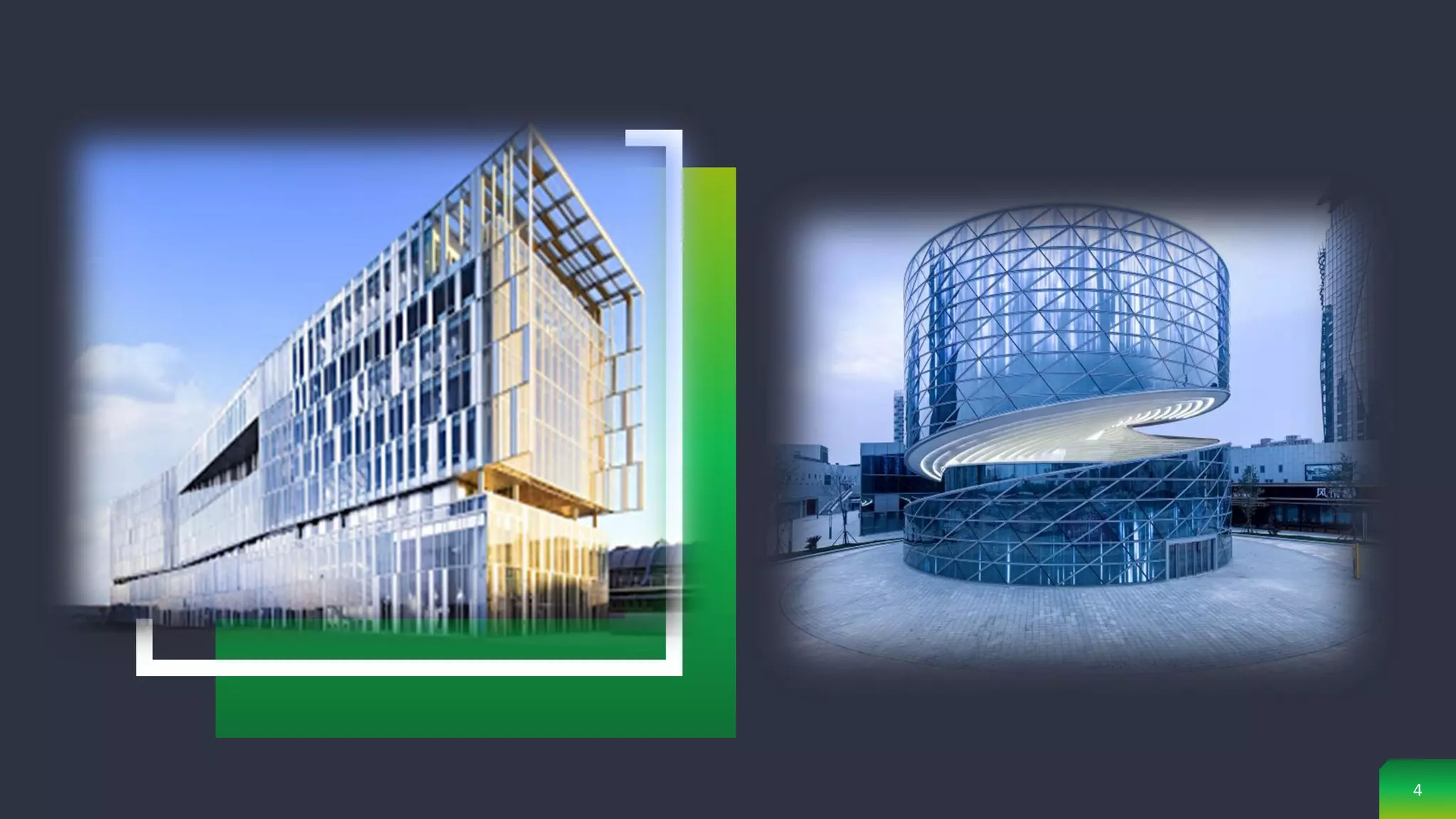
Architecture is the art and science of
designing buildings and other physical
structures. A wider definition often includes
the design of the total built environment from
the macro level of town planning, urban
design, and landscape architecture to the
micro level of construction details and,
sometimes, furniture.
3
4
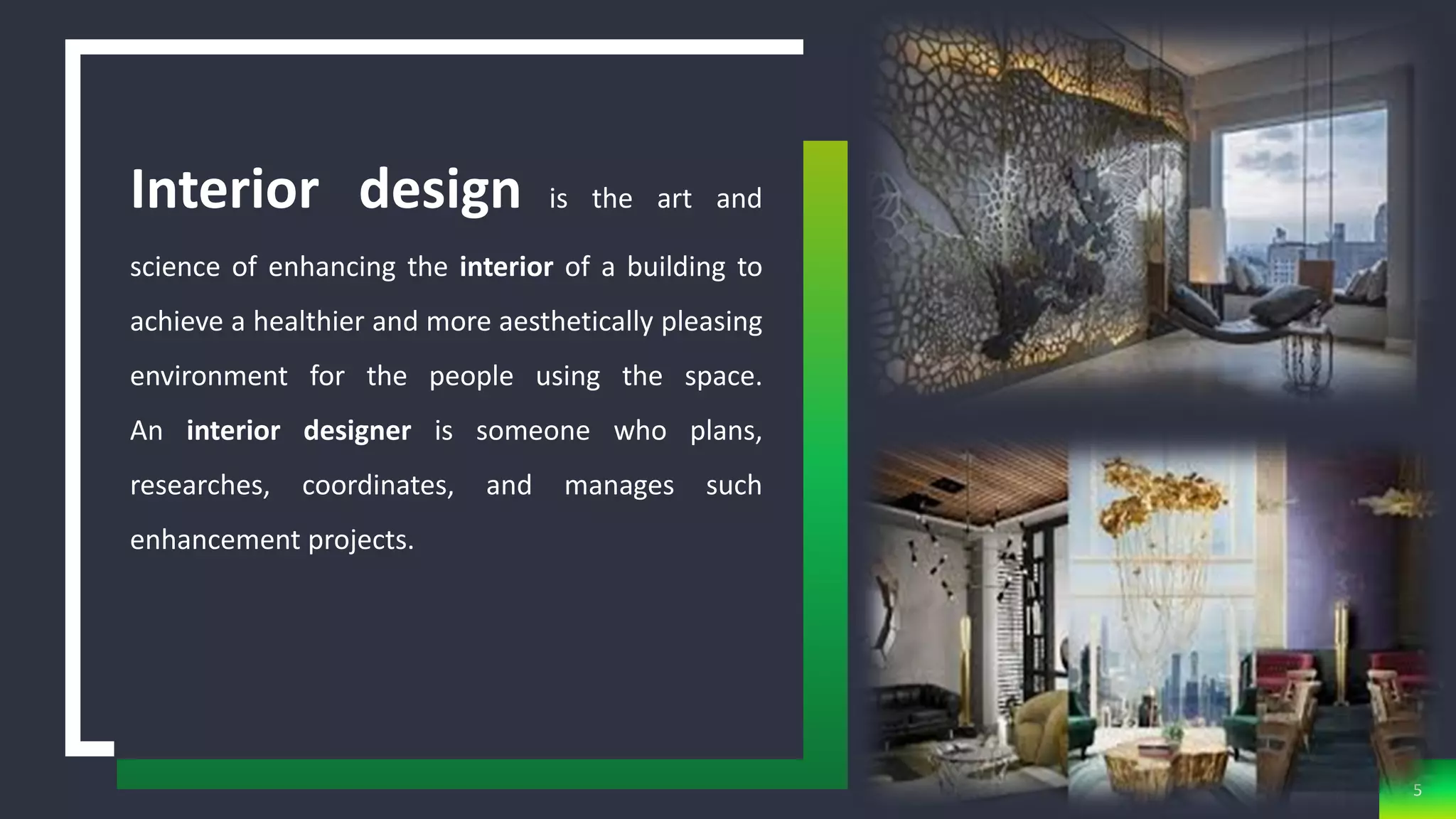
Interior design is the art and
science of enhancing the interior of a building to
achieve a healthier and more aesthetically pleasing
environment for the people using the space.
An interior designer is someone who plans,
researches, coordinates, and manages such
enhancement projects.
5
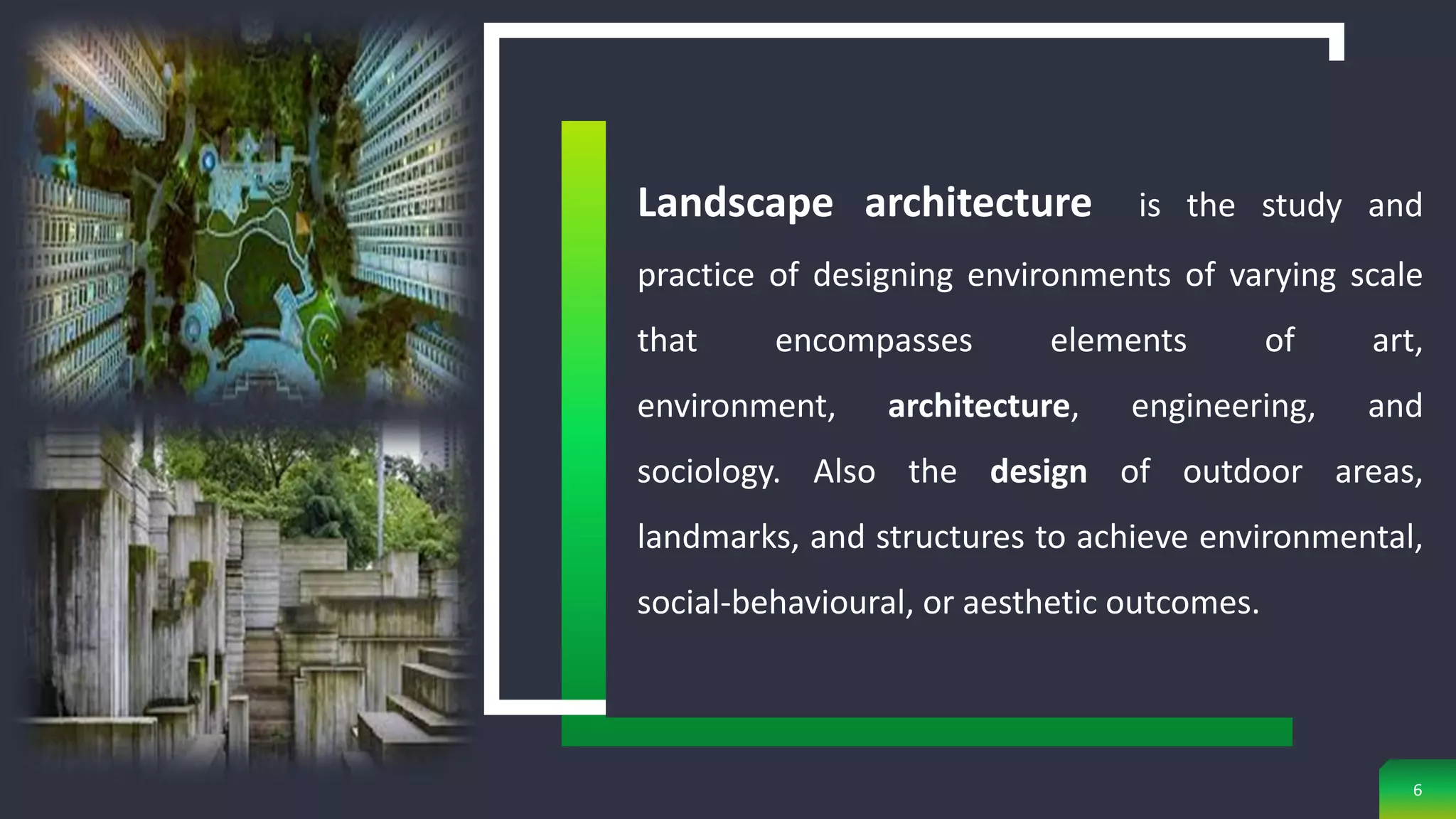
Landscape architecture is the study and
practice of designing environments of varying scale
that encompasses elements of art,
environment, architecture, engineering, and
sociology. Also the design of outdoor areas,
landmarks, and structures to achieve environmental,
social-behavioural, or aesthetic outcomes.
6
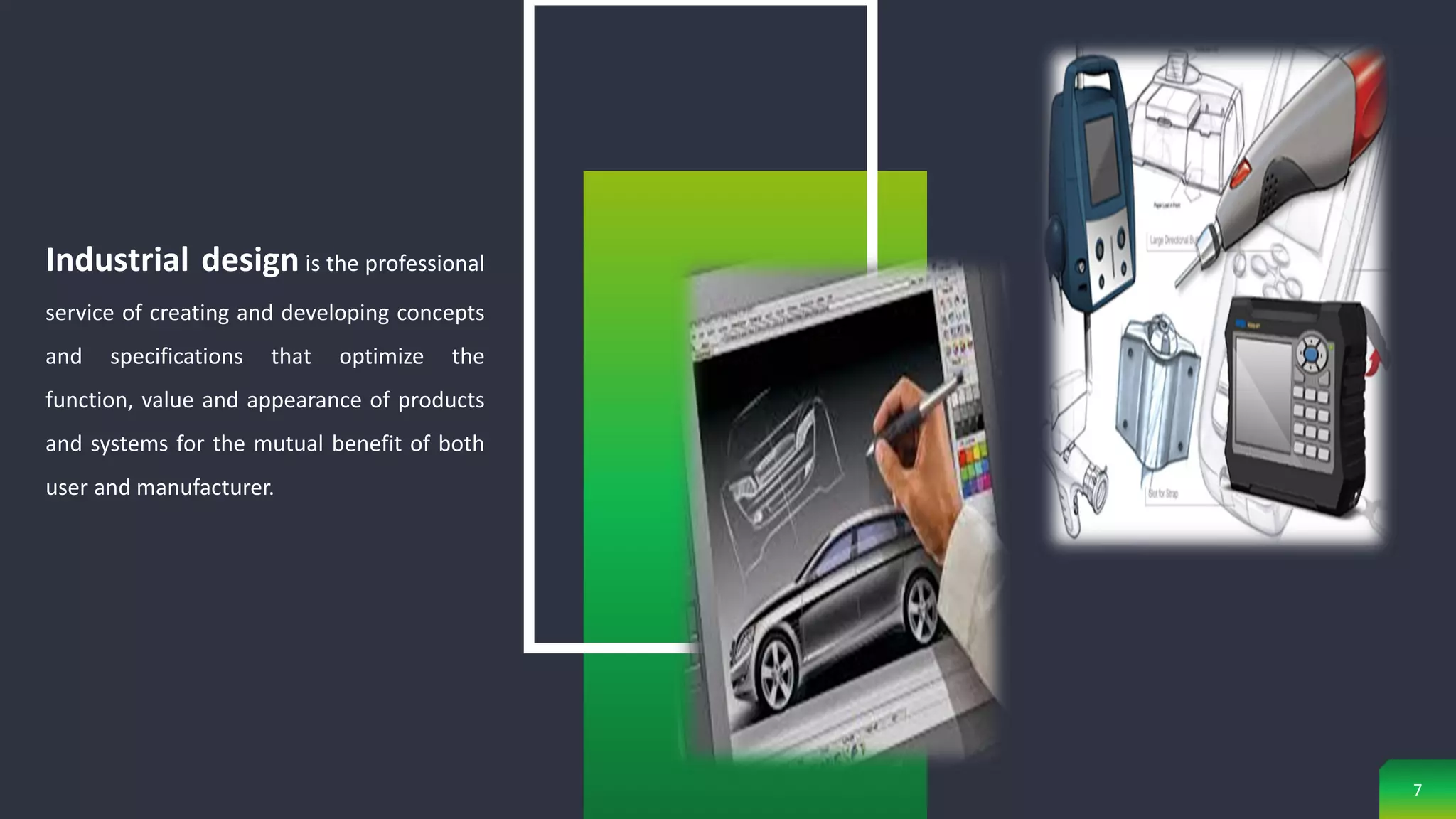
Industrial design is the professional
service of creating and developing concepts
and specifications that optimize the
function, value and appearance of products
and systems for the mutual benefit of both
user and manufacturer.
7
8
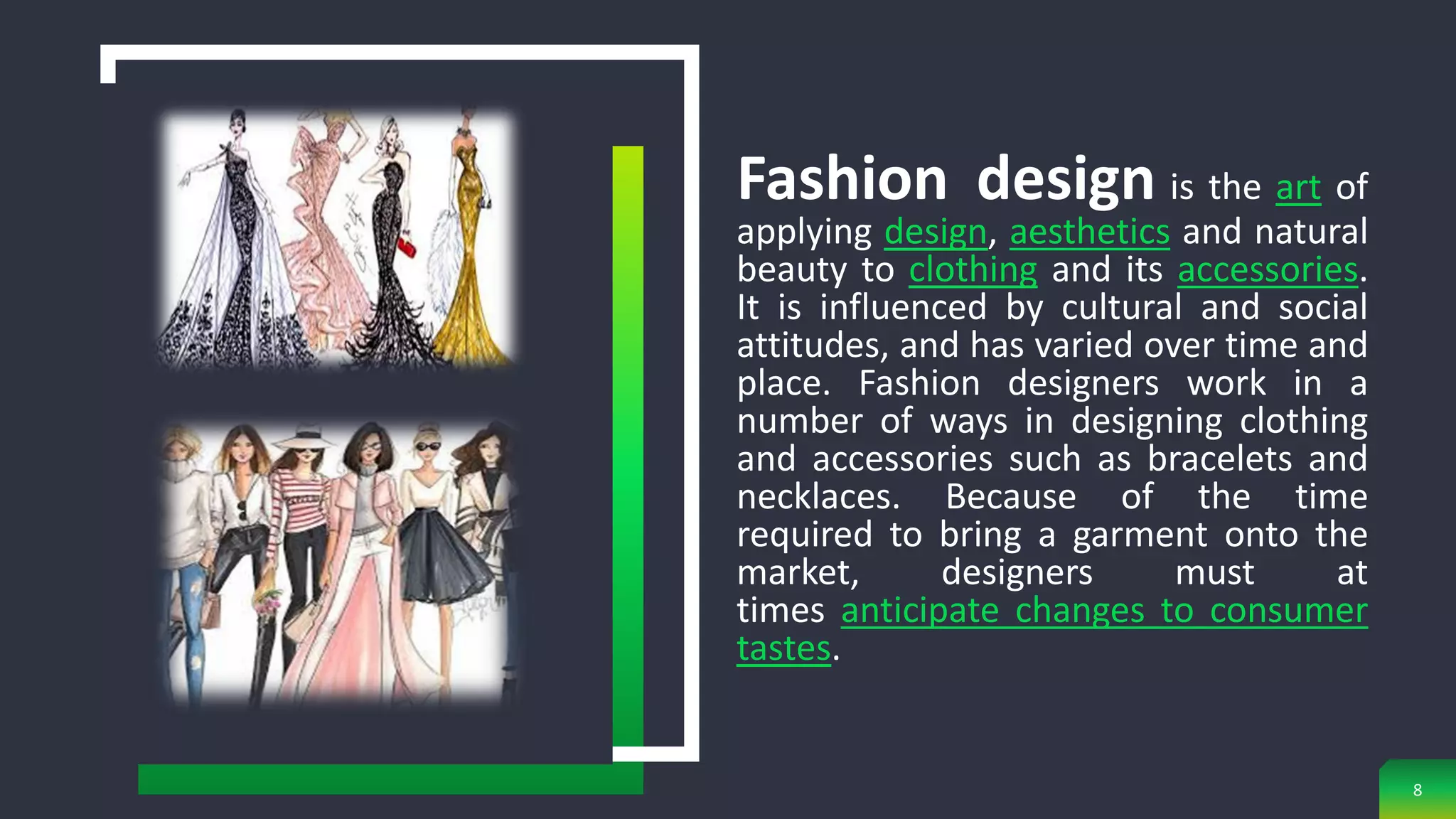
Fashion design is the art of
applying design, aesthetics and natural
beauty to clothing and its accessories.
It is influenced by cultural and social
attitudes, and has varied over time and
place. Fashion designers work in a
number of ways in designing clothing
and accessories such as bracelets and
necklaces. Because of the time
required to bring a garment onto the
market, designers must at
times anticipate changes to consumer
tastes.
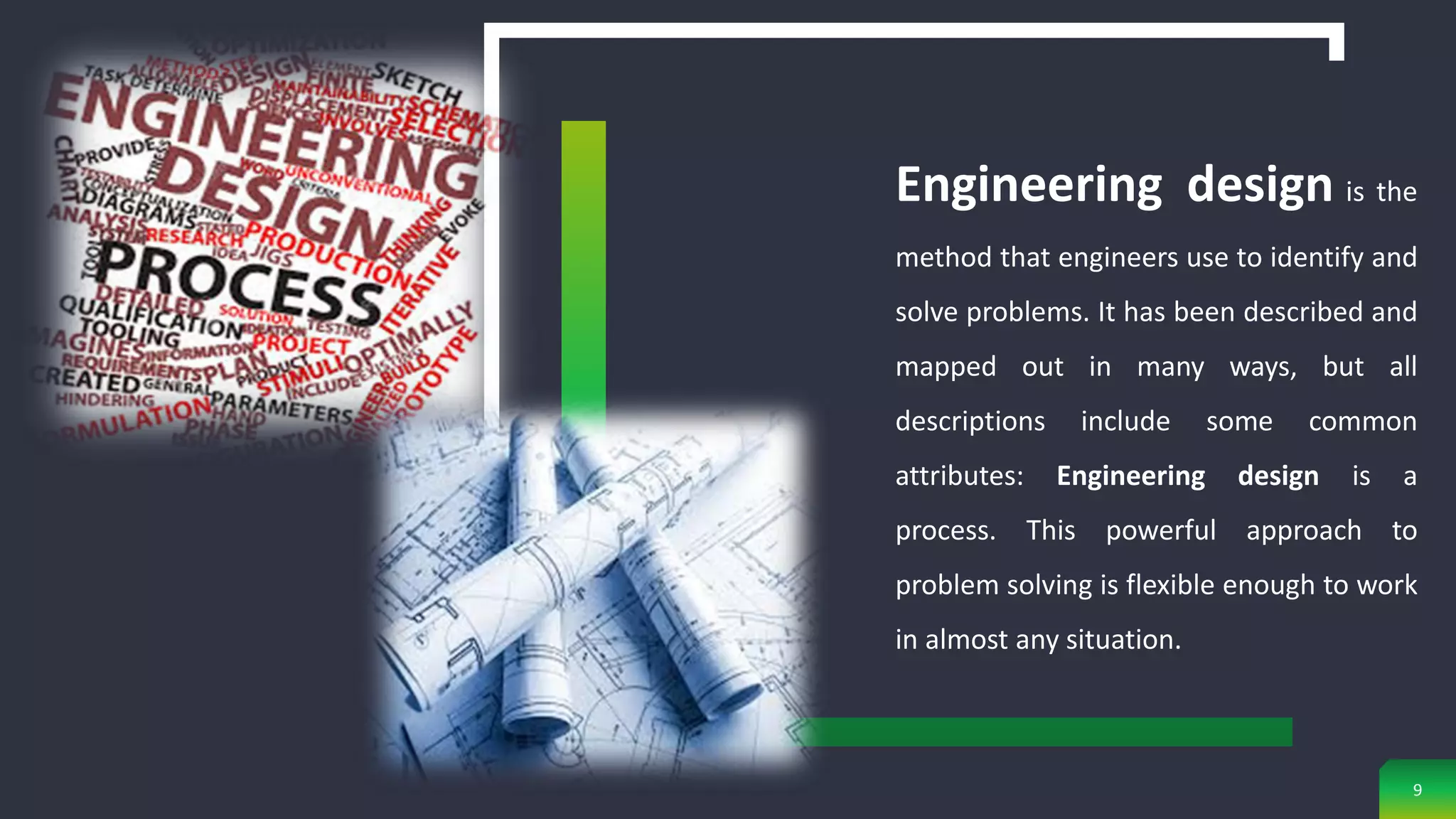
Engineering design is the
method that engineers use to identify and
solve problems. It has been described and
mapped out in many ways, but all
descriptions include some common
attributes: Engineering design is a
process. This powerful approach to
problem solving is flexible enough to work
in almost any situation.
9
10
Software designis the process by which
an agent creates a specification of a software artifact,
intended to accomplish goals, using a set of primitive
components and subject to constraints.Software
design may refer to either "all the activity involved in
conceptualizing, framing, implementing,
commissioning, and ultimately modifying complex
systems" or "the activity
following requirements specification and
before programming, as ... [in] a stylized software
engineering process.
11
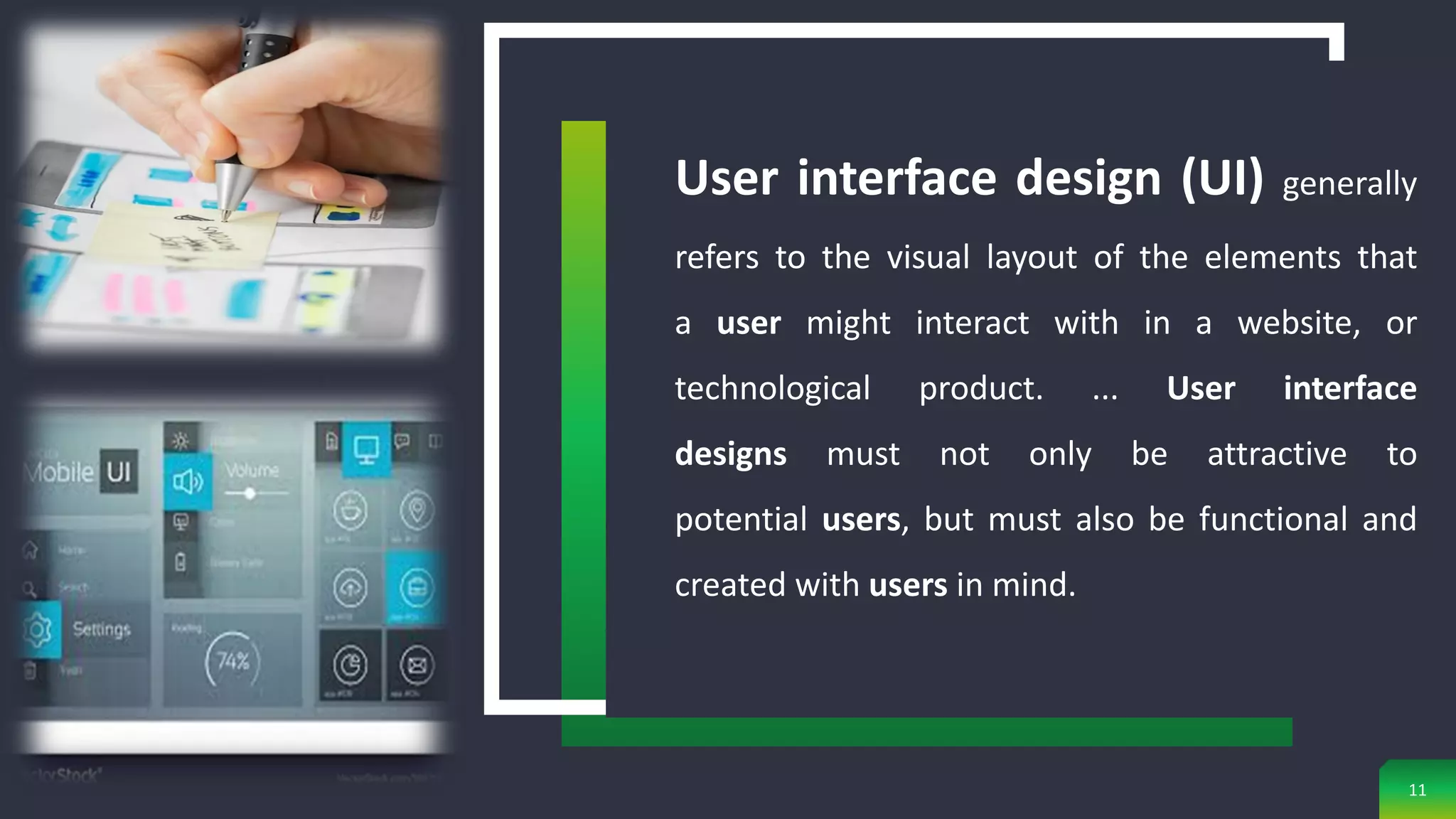
User interface design (UI) generally
refers to the visual layout of the elements that
a user might interact with in a website, or
technological product. ... User interface
designs must not only be attractive to
potential users, but must also be functional and
created with users in mind.
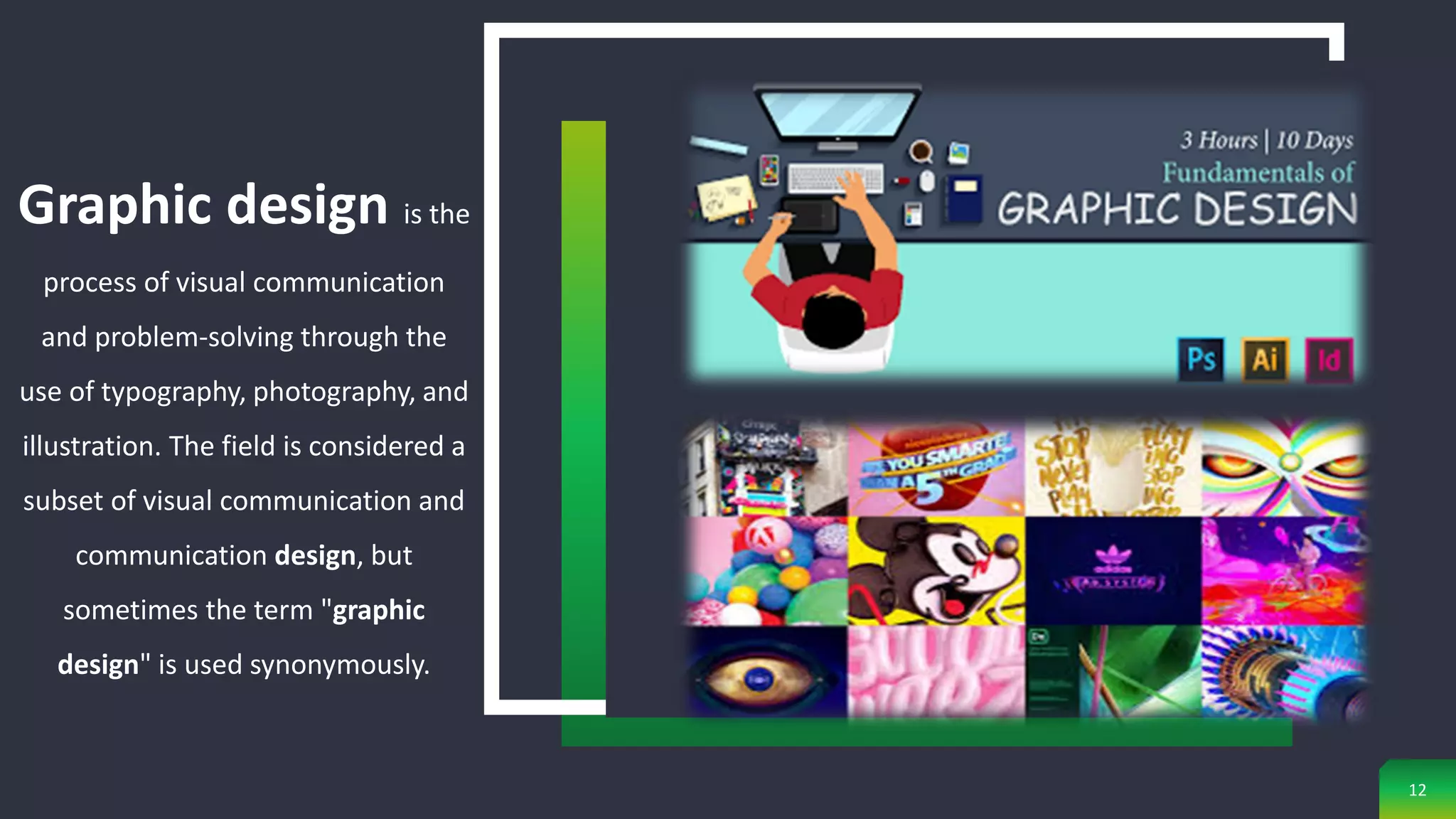
Graphic design is the
process of visual communication
and problem-solving through the
use of typography, photography, and
illustration. The field is considered a
subset of visual communication and
communication design, but
sometimes the term "graphic
design" is used synonymously.
12
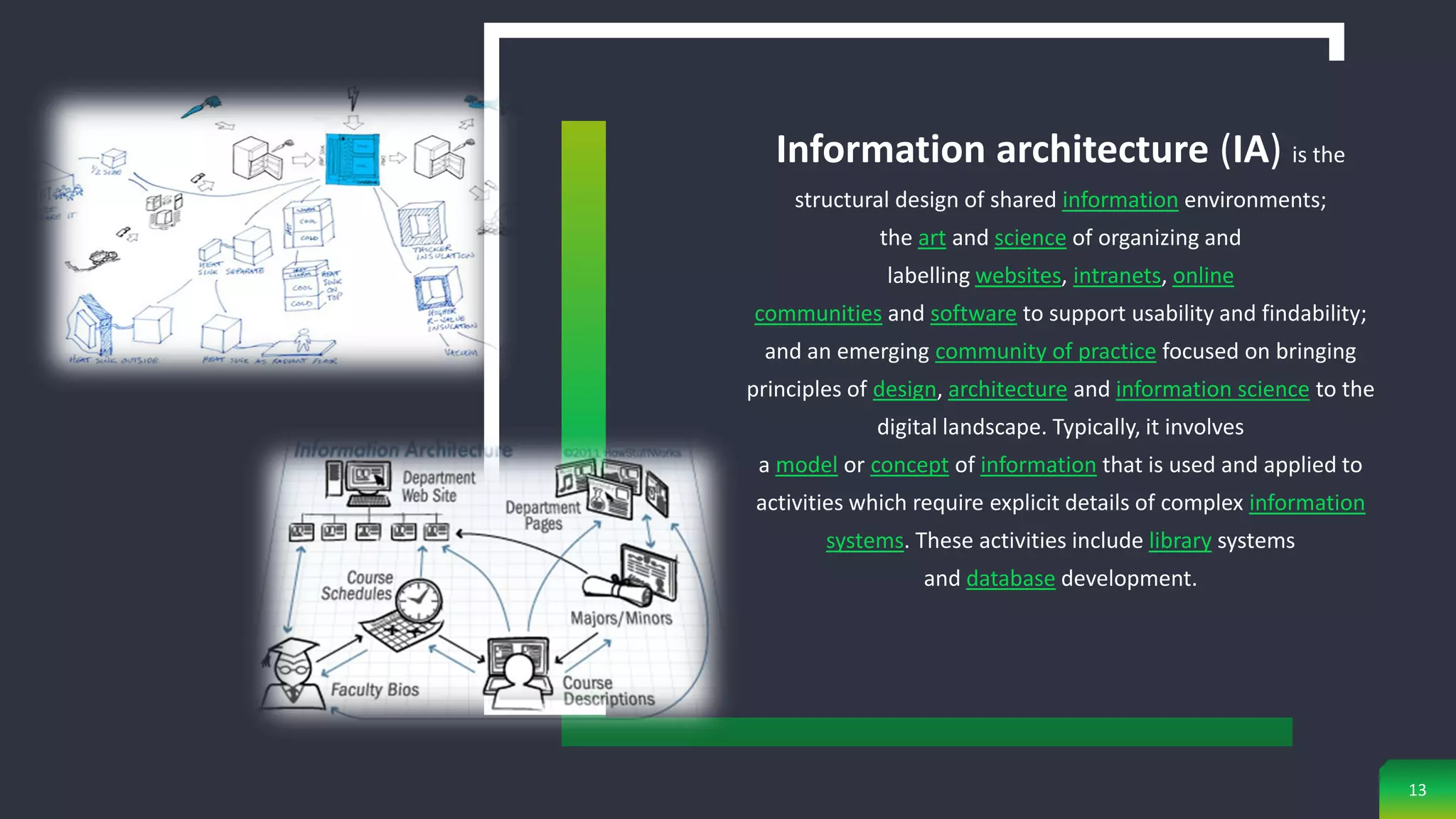
Information architecture (IA) is the
structural design of shared information environments;
the art and science of organizing and
labelling websites, intranets, online
communities and software to support usability and findability;
and an emerging community of practice focused on bringing
principles of design, architecture and information science to the
digital landscape. Typically, it involves
a model or concept of information that is used and applied to
activities which require explicit details of complex information
systems. These activities include library systems
and database development.
13
14
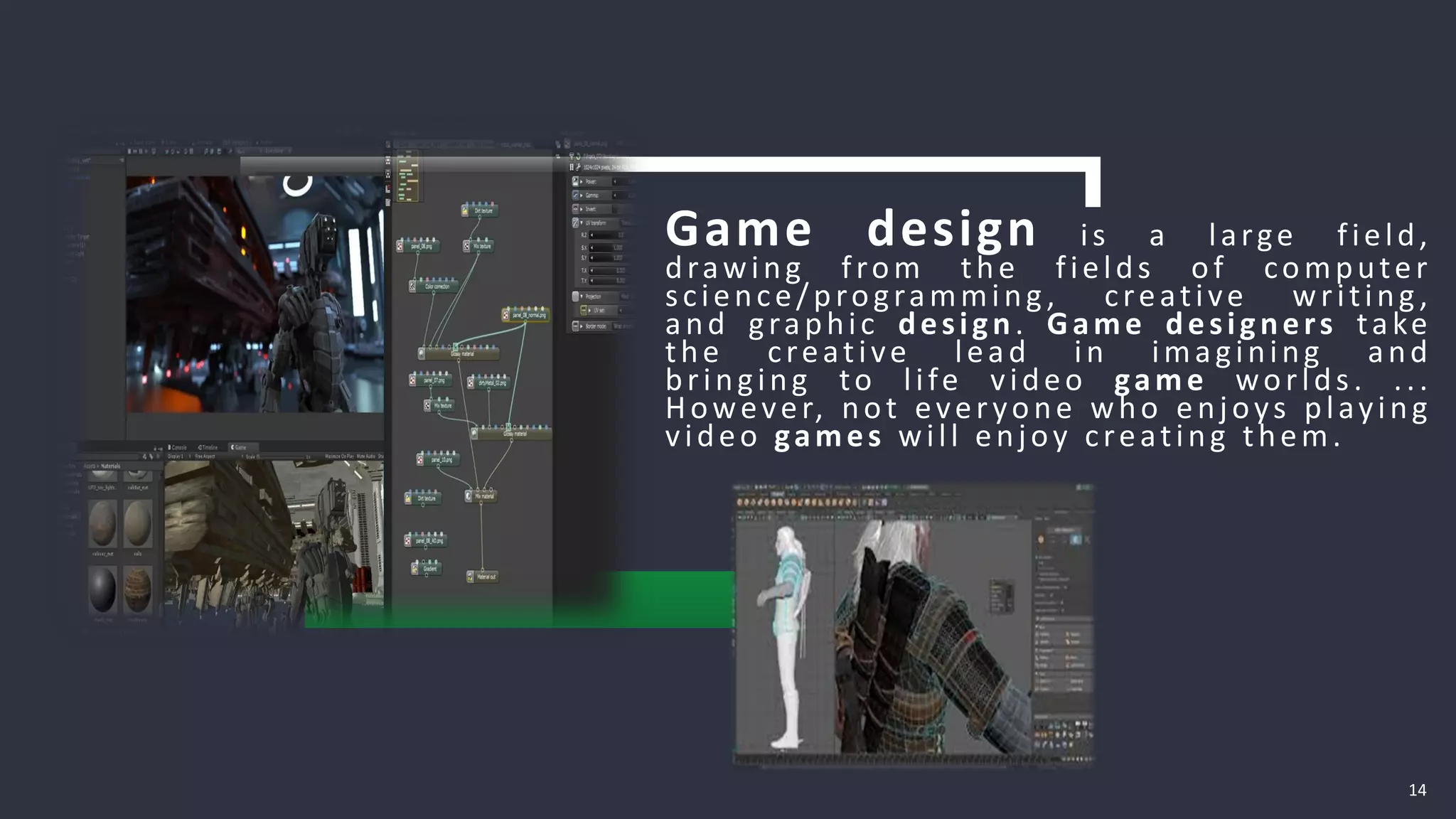
Game design is a large field,
drawing from the fields of computer
science/programming, creative writing,
and graphic design. Game designers take
the creative lead in imagining and
bringing to life video game worlds. ...
However, not everyone who enjoys playing
video games will enjoy creating them.
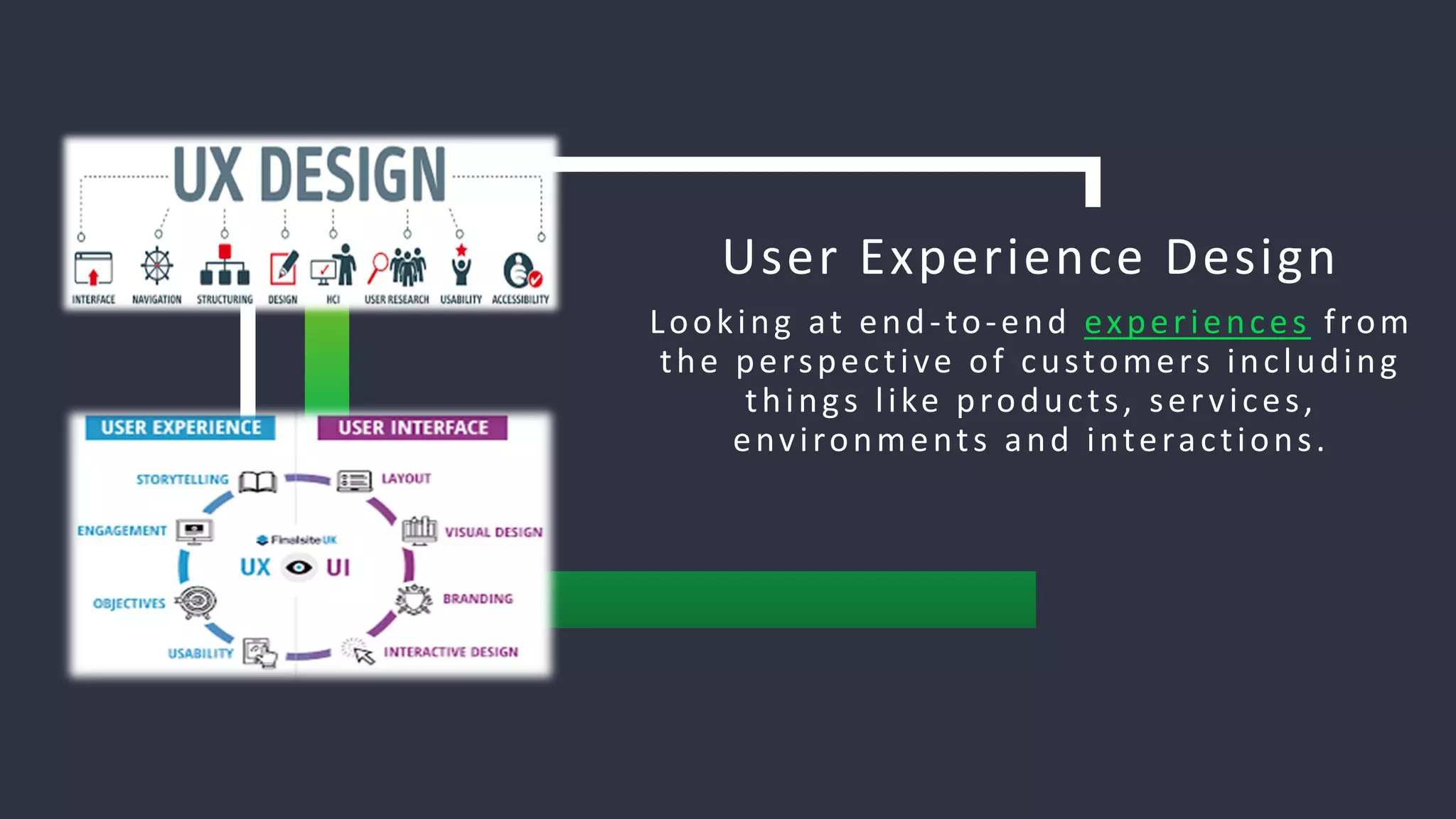
User Experience Design
Looking at end-to-end experiences from
the perspective of customers including
things like products, services,
environments and interactions.
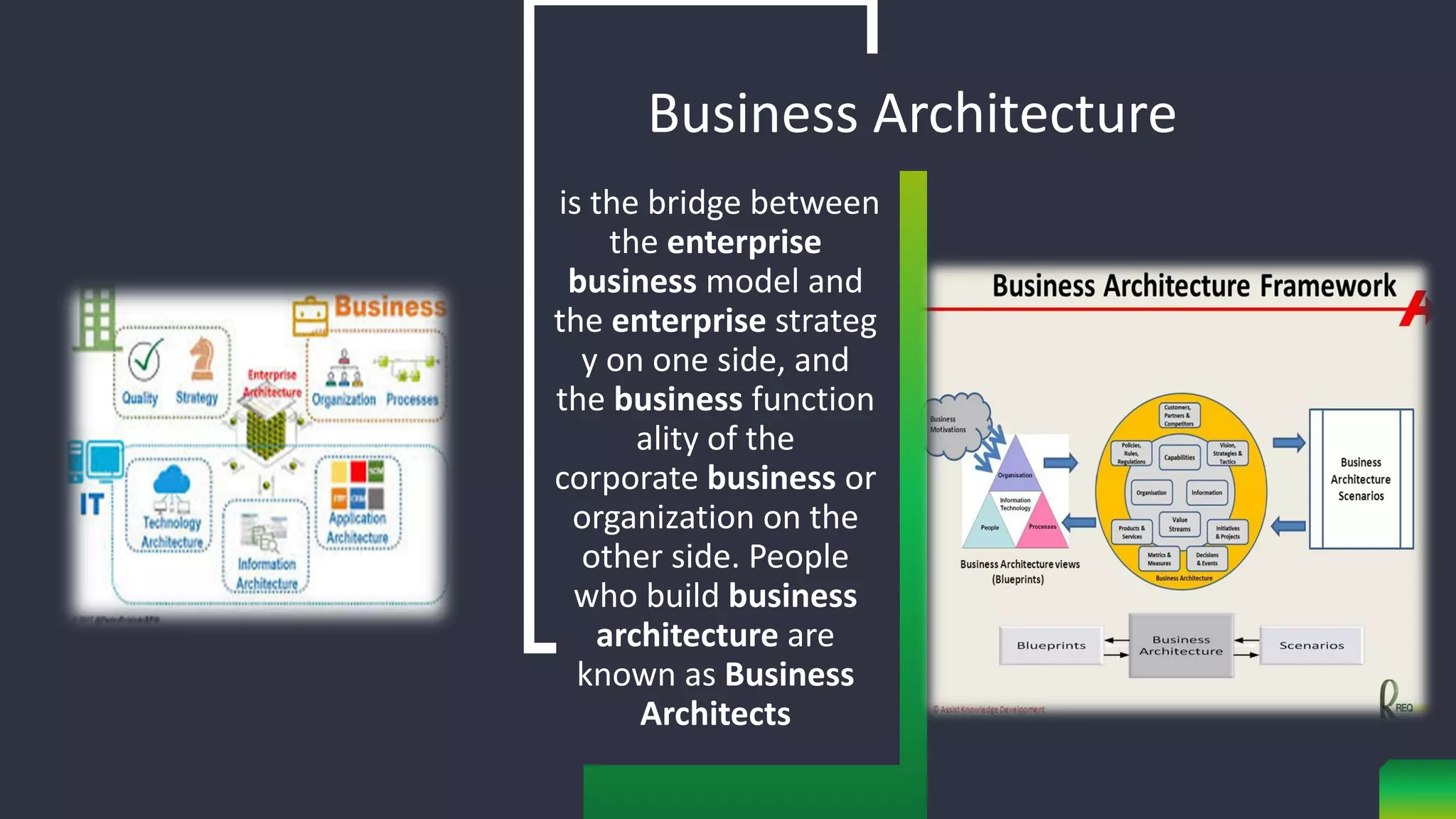
is the bridge between
the enterprise
business model and
the enterprise strateg
y on one side, and
the business function
ality of the
corporate business or
organization on the
other side. People
who build business
architecture are
known as Business
Architects
Business Architecture
17
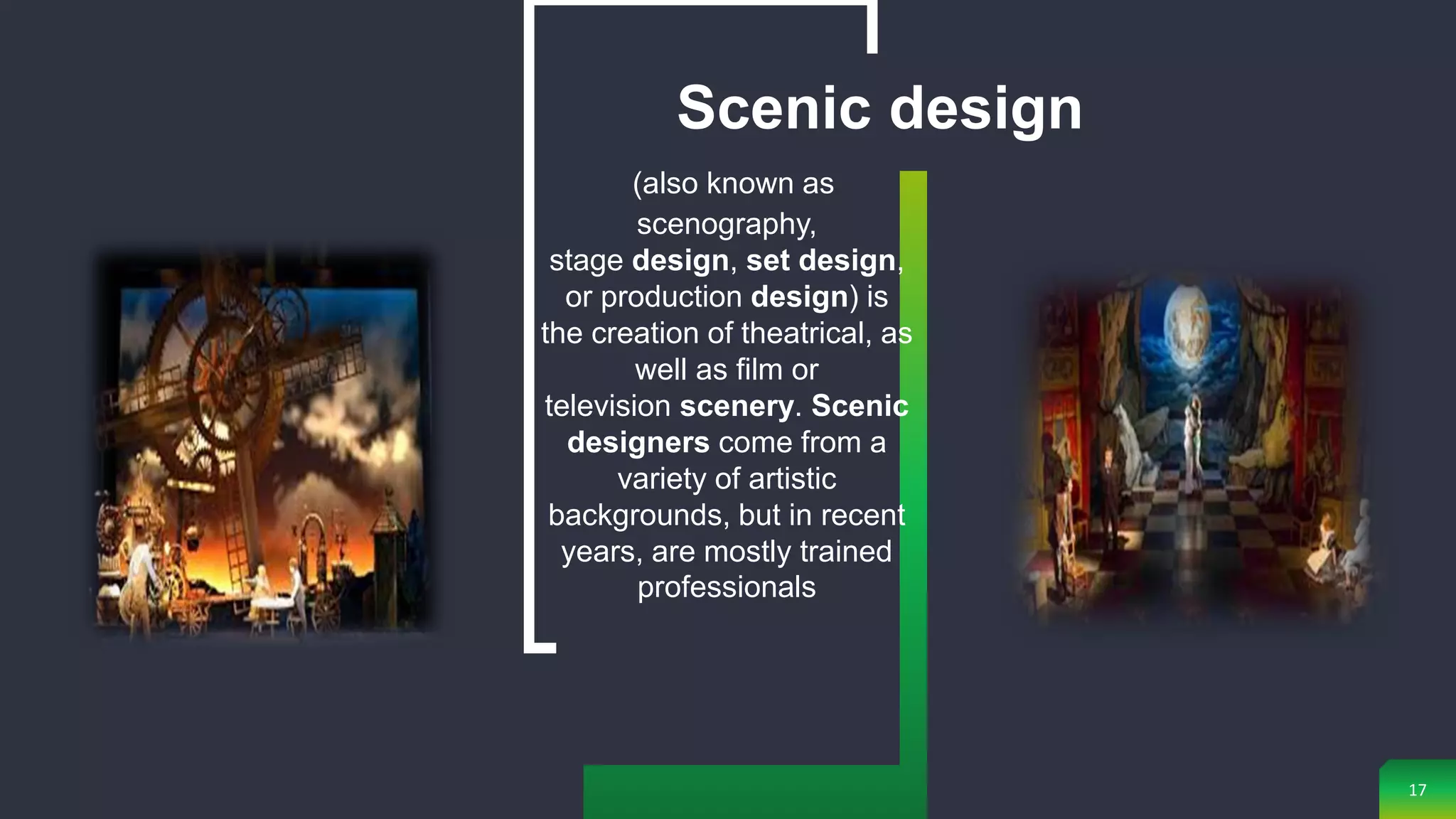
(also known as
scenography,
stage design, set design,
or production design) is
the creation of theatrical, as
well as film or
television scenery. Scenic
designers come from a
variety of artistic
backgrounds, but in recent
years, are mostly trained
professionals
Scenic design
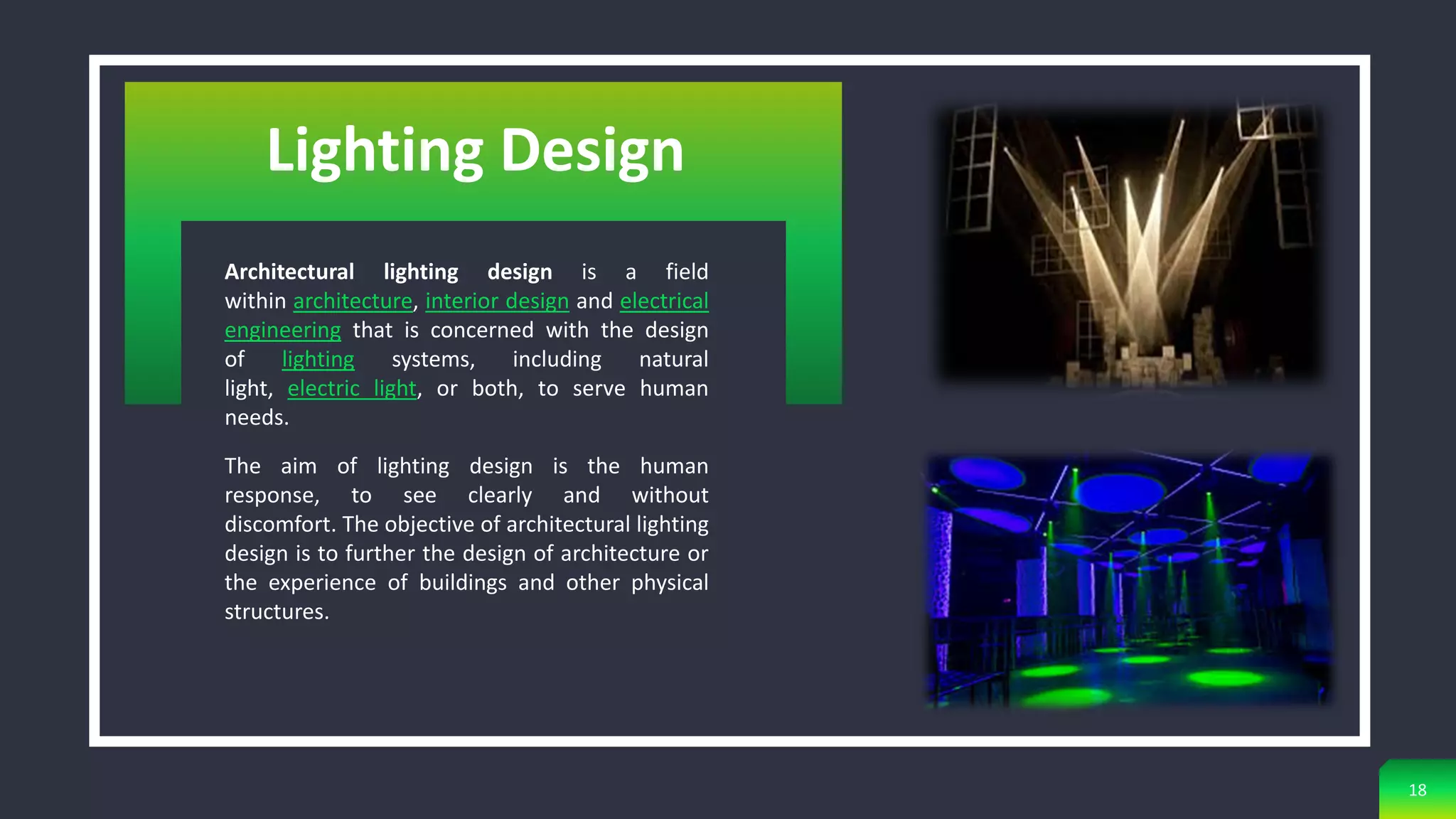
Architectural lighting design is a field
within architecture, interior design and electrical
engineering that is concerned with the design
of lighting systems, including natural
light, electric light, or both, to serve human
needs.
The aim of lighting design is the human
response, to see clearly and without
discomfort. The objective of architectural lighting
design is to further the design of architecture or
the experience of buildings and other physical
structures.
18
Lighting Design
19
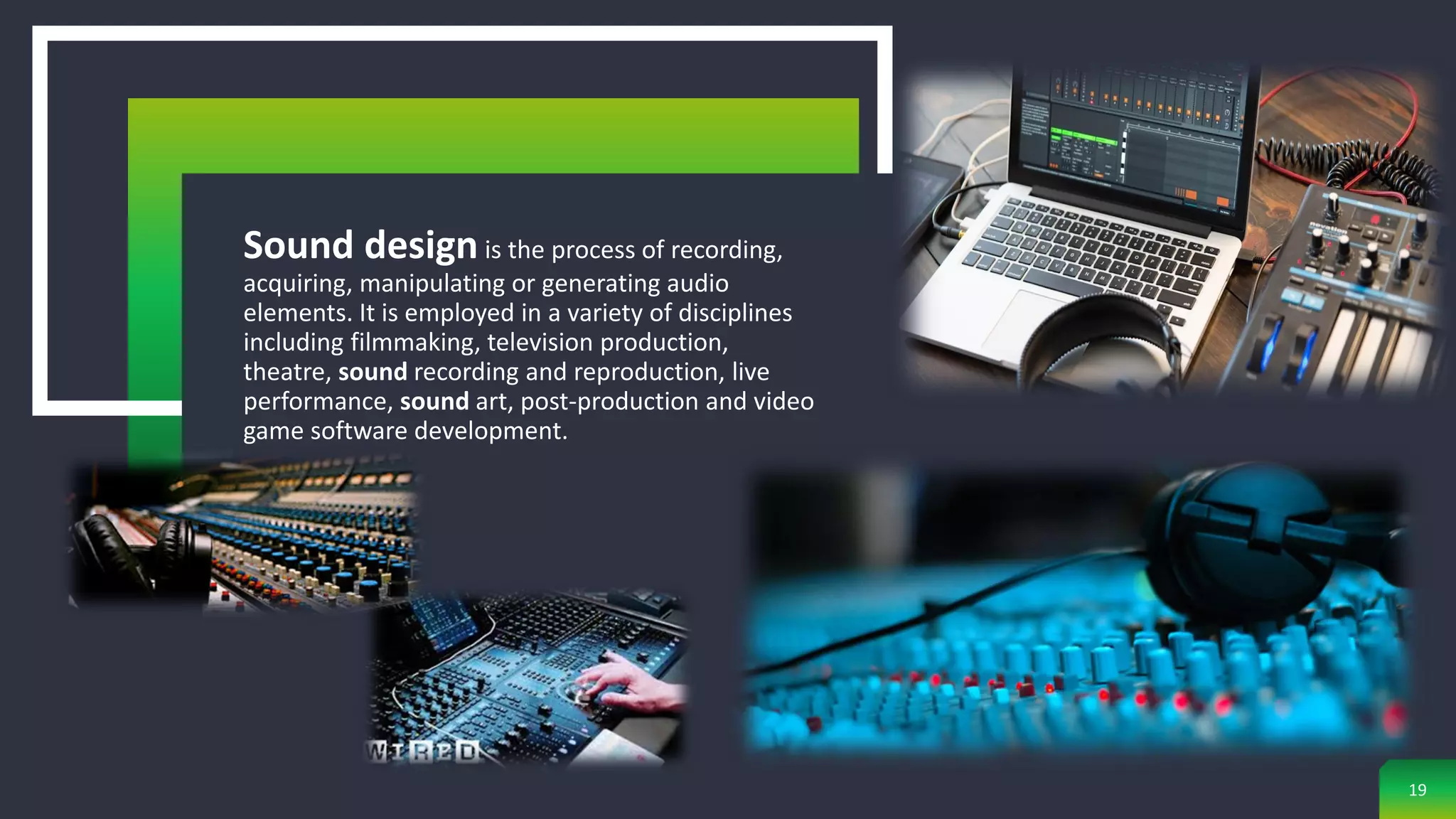
Sound design is the process of recording,
acquiring, manipulating or generating audio
elements. It is employed in a variety of disciplines
including filmmaking, television production,
theatre, sound recording and reproduction, live
performance, sound art, post-production and video
game software development.
THANK YOU
For Listen in g
20

Types of design

  • 1.
  • 2.
    DESIGN i st h e p r a c t i c e o f c o n c e i v i n g a n d p l a n n i n g w h a t d o e s n ' t e x i s t . I t i s a b r o a d t e r m t h a t c a n b e a p p l i e d t o c r e a t i n g s t r u c t u r e s , e n v i r o n m e n t s , i n t e r f a c e s , p r o d u c t s , s e r v i c e s , f e a t u r e s a n d p r o c e s s e s . T h e f o l l o w i n g a r e c o m m o n t y p e s o f d e s i g n . 2
  • 3.
    Architecture is theart and science of designing buildings and other physical structures. A wider definition often includes the design of the total built environment from the macro level of town planning, urban design, and landscape architecture to the micro level of construction details and, sometimes, furniture. 3
  • 4.
  • 5.
    Interior design isthe art and science of enhancing the interior of a building to achieve a healthier and more aesthetically pleasing environment for the people using the space. An interior designer is someone who plans, researches, coordinates, and manages such enhancement projects. 5
  • 6.
    Landscape architecture isthe study and practice of designing environments of varying scale that encompasses elements of art, environment, architecture, engineering, and sociology. Also the design of outdoor areas, landmarks, and structures to achieve environmental, social-behavioural, or aesthetic outcomes. 6
  • 7.
    Industrial design isthe professional service of creating and developing concepts and specifications that optimize the function, value and appearance of products and systems for the mutual benefit of both user and manufacturer. 7
  • 8.
    8 Fashion design isthe art of applying design, aesthetics and natural beauty to clothing and its accessories. It is influenced by cultural and social attitudes, and has varied over time and place. Fashion designers work in a number of ways in designing clothing and accessories such as bracelets and necklaces. Because of the time required to bring a garment onto the market, designers must at times anticipate changes to consumer tastes.
  • 9.
    Engineering design isthe method that engineers use to identify and solve problems. It has been described and mapped out in many ways, but all descriptions include some common attributes: Engineering design is a process. This powerful approach to problem solving is flexible enough to work in almost any situation. 9
  • 10.
    10 Software designis theprocess by which an agent creates a specification of a software artifact, intended to accomplish goals, using a set of primitive components and subject to constraints.Software design may refer to either "all the activity involved in conceptualizing, framing, implementing, commissioning, and ultimately modifying complex systems" or "the activity following requirements specification and before programming, as ... [in] a stylized software engineering process.
  • 11.
    11 User interface design(UI) generally refers to the visual layout of the elements that a user might interact with in a website, or technological product. ... User interface designs must not only be attractive to potential users, but must also be functional and created with users in mind.
  • 12.
    Graphic design isthe process of visual communication and problem-solving through the use of typography, photography, and illustration. The field is considered a subset of visual communication and communication design, but sometimes the term "graphic design" is used synonymously. 12
  • 13.
    Information architecture (IA)is the structural design of shared information environments; the art and science of organizing and labelling websites, intranets, online communities and software to support usability and findability; and an emerging community of practice focused on bringing principles of design, architecture and information science to the digital landscape. Typically, it involves a model or concept of information that is used and applied to activities which require explicit details of complex information systems. These activities include library systems and database development. 13
  • 14.
    14 Game design isa large field, drawing from the fields of computer science/programming, creative writing, and graphic design. Game designers take the creative lead in imagining and bringing to life video game worlds. ... However, not everyone who enjoys playing video games will enjoy creating them.
  • 15.
    User Experience Design Lookingat end-to-end experiences from the perspective of customers including things like products, services, environments and interactions.
  • 16.
    is the bridgebetween the enterprise business model and the enterprise strateg y on one side, and the business function ality of the corporate business or organization on the other side. People who build business architecture are known as Business Architects Business Architecture
  • 17.
    17 (also known as scenography, stagedesign, set design, or production design) is the creation of theatrical, as well as film or television scenery. Scenic designers come from a variety of artistic backgrounds, but in recent years, are mostly trained professionals Scenic design
  • 18.
    Architectural lighting designis a field within architecture, interior design and electrical engineering that is concerned with the design of lighting systems, including natural light, electric light, or both, to serve human needs. The aim of lighting design is the human response, to see clearly and without discomfort. The objective of architectural lighting design is to further the design of architecture or the experience of buildings and other physical structures. 18 Lighting Design
  • 19.
    19 Sound design isthe process of recording, acquiring, manipulating or generating audio elements. It is employed in a variety of disciplines including filmmaking, television production, theatre, sound recording and reproduction, live performance, sound art, post-production and video game software development.
  • 20.