PRESENTED BY:-
 NILESH KUMAR
 KUMAR PARITOSH
 RAVI RANJAN
 SEBIN TITUS
 AKSHAY ROY
CONTENTS:-
CORROSION & IT’S MECHANISM
TYPES OF CORROSION
DIFFERENCE BETWEEN DRY & WET CORROSION
 Corrosion is the deterioration
of a metal as a result of
chemical reactions between it
and the surrounding
environment.
It is an oxidation process. It causes
loss of metal.
Corrosion comes in many different forms
and can be classified by the cause of the
chemical deterioration of a metal
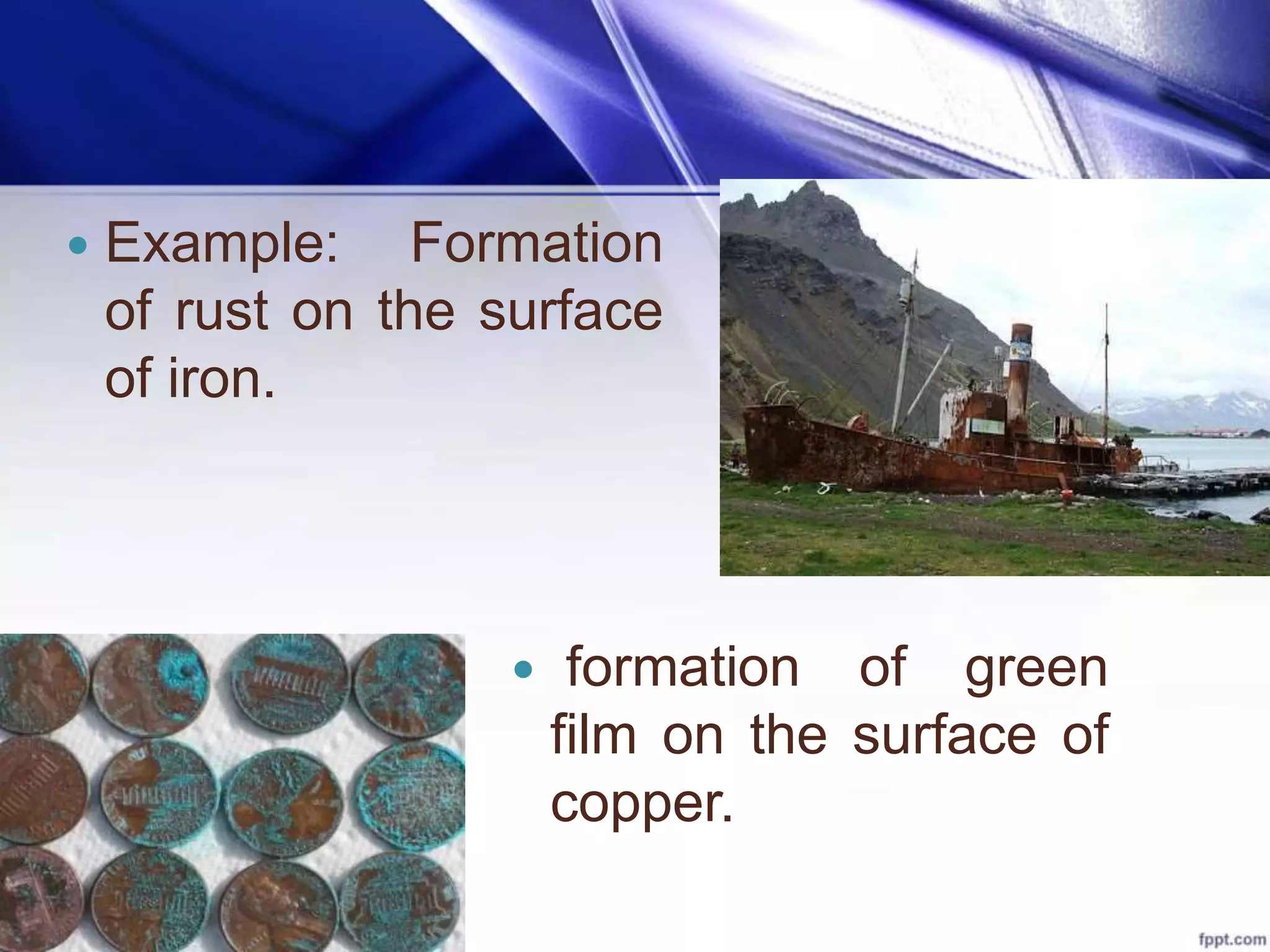
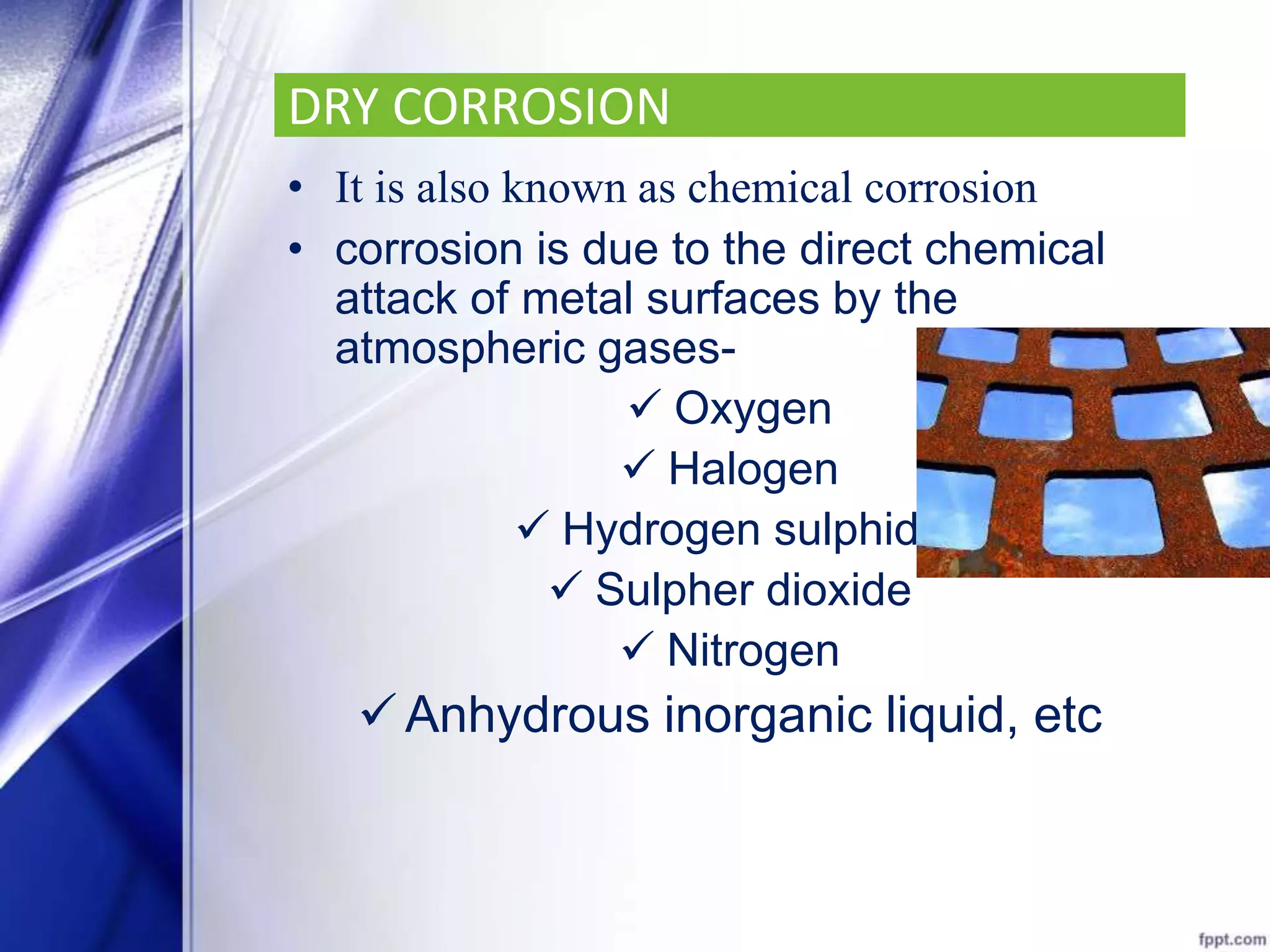
 Example: Formation
of rust on the surface
of iron.
 formation of green
film on the surface of
copper.
DRY CORROSION WET CORROSION
OXIDATION CORROSION
LIQUID METAL CORROSION
CORROSION BY OTHER GASES
GALVANIC /BIMETALLIC
CORROSION
DIFFERENTIAL AERATION/
CONCENTRATION CELL
CORROSION
DRY CORROSION
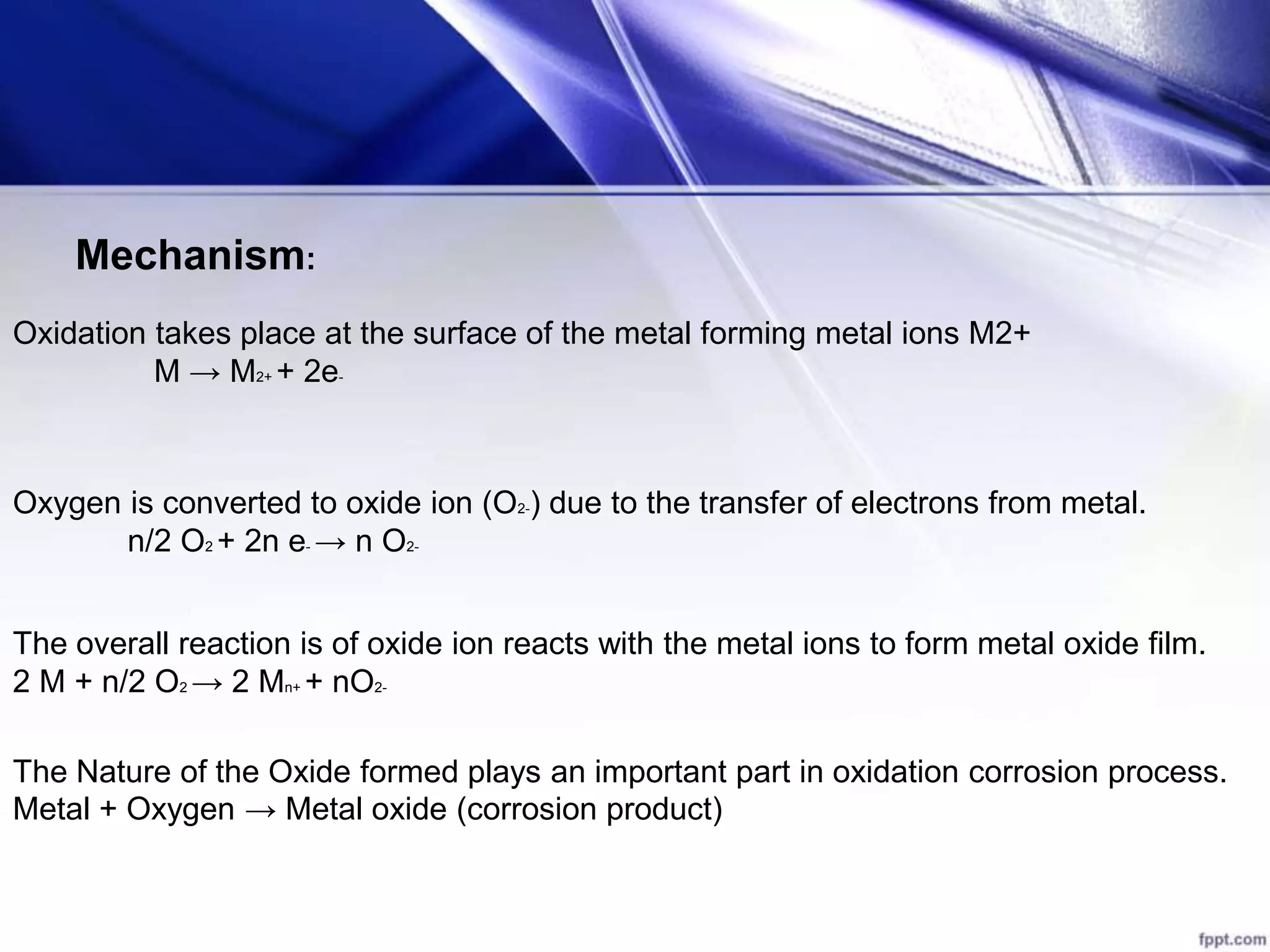
• It is also known as chemical corrosion
• corrosion is due to the direct chemical
attack of metal surfaces by the
atmospheric gases-
 Oxygen
 Halogen
 Hydrogen sulphide
 Sulpher dioxide
 Nitrogen
Anhydrous inorganic liquid, etc
OXIDATION CORROSION
 direct attack of oxygen at low or high
temperature on metal surfaces in the absence of
moisture.
 Alkali metals –(Na,Li,K etc..) and alkaline
metals(Mg,Ca,Sn etc..) are rapidly oxidised at
low temperature.
 At high temperature, almost all metals (except
Ag, Au and Pt) are oxidized.
Mechanism:
Oxidation takes place at the surface of the metal forming metal ions M2+
M → M2+ + 2e-
Oxygen is converted to oxide ion (O2-) due to the transfer of electrons from metal.
n/2 O2 + 2n e- → n O2-
The overall reaction is of oxide ion reacts with the metal ions to form metal oxide film.
2 M + n/2 O2 → 2 Mn+ + nO2-
The Nature of the Oxide formed plays an important part in oxidation corrosion process.
Metal + Oxygen → Metal oxide (corrosion product)
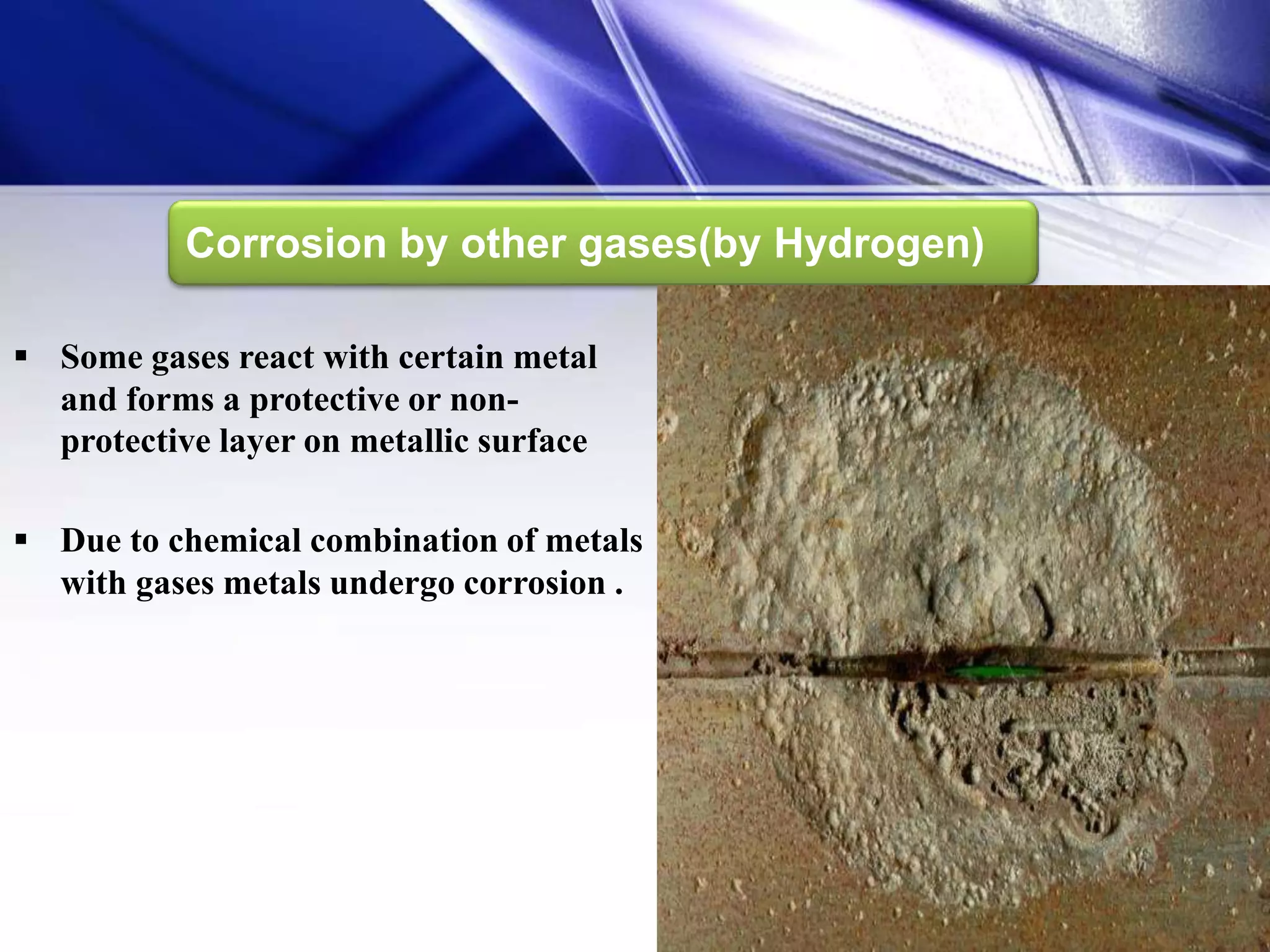
 Some gases react with certain metal
and forms a protective or non-
protective layer on metallic surface
 Due to chemical combination of metals
with gases metals undergo corrosion .
Corrosion by other gases(by Hydrogen)
Decarburisation
EXAMPLE:-
 The presence of carbon in steel gives sufficient strength to it. But when steel is
exposed to hydrogen environment at high temperature, atomic hydrogen is formed
H2 + Heat 2H
 Atomic hydrogen reacts with the carbon of the steel and produces methane
gas.
C + 4H → CH4
 Hence, the carbon content in steel is decreases. The process of decrease in
carbon content in steel is known as decarburization
 Collection of methane gas in the voids of steel develops high pressure, which
causes cracking
 When a liquid metal is allowed to flow over solid
metal at high temperature is called liquid metal corrosion.
Liquid metal corrosion
Example-
In nuclear reactor sodium metal is used as coolant & it
leads to corrosion of cadmium .
 This is due to chemical action of flowing liquid
metal at high temperatures on solid metal or alloy.
Such Corrosion occur in devices used for nuclear
power.
WET CORROSION
• It is also known as electrochemical corrosion .
• Such type of corrosion is due to the flow of
electron from metal surface anodic area
towards cathodic area through a conducting
solution.
Electrochemical corrosion involves:
i) The formation of anodic and cathodic areas or parts in contact with
each other
ii) Presence of a conducting medium
iii) Corrosion of anodic areas only
iv) Formation of corrosion product somewhere between anodic and
cathodic areas.
This involves flow of electron-current between the anodic and
cathodic areas
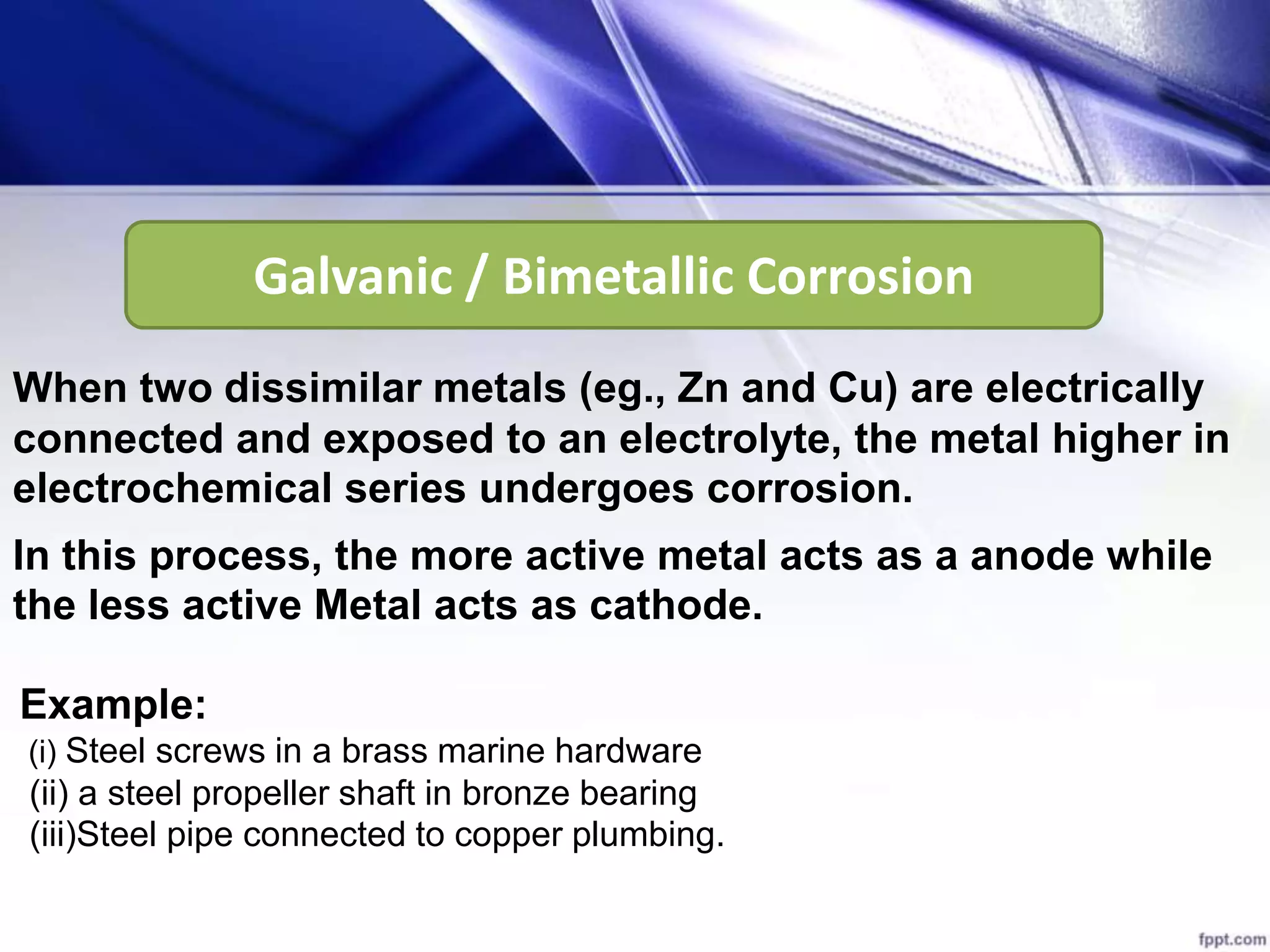
Galvanic / Bimetallic Corrosion
When two dissimilar metals (eg., Zn and Cu) are electrically
connected and exposed to an electrolyte, the metal higher in
electrochemical series undergoes corrosion.
In this process, the more active metal acts as a anode while
the less active Metal acts as cathode.
Example:
(i) Steel screws in a brass marine hardware
(ii) a steel propeller shaft in bronze bearing
(iii)Steel pipe connected to copper plumbing.
Mechanism:
In acidic solution, the corrosion occurs by the hydrogen
evolution process;
while in neutral or slightly alkaline solution, oxygen
absorption occurs.
The electron-current flows from the anode metal, zinc to the
cathode metal, copper.
Zn Zn+2 + 2e- (Oxidation)
Thus it is evident that the corrosion occurs at the anode
metal;
while the cathodic part is protected from the attack.
CONCENTRATION CELL CORROSION
Concentration Cell Corrosion
It is due to electrochemical attack on the metal surface,
exposed to an electrolyte of varying concentrations or of
varying aeration.
It occurs when one part of metal is exposed to a different air
concentration from the other part.
This causes a difference in potential between differently
aerated areas. It has been found experimentally that poor-
oxygenated parts are anodic.
Examples:
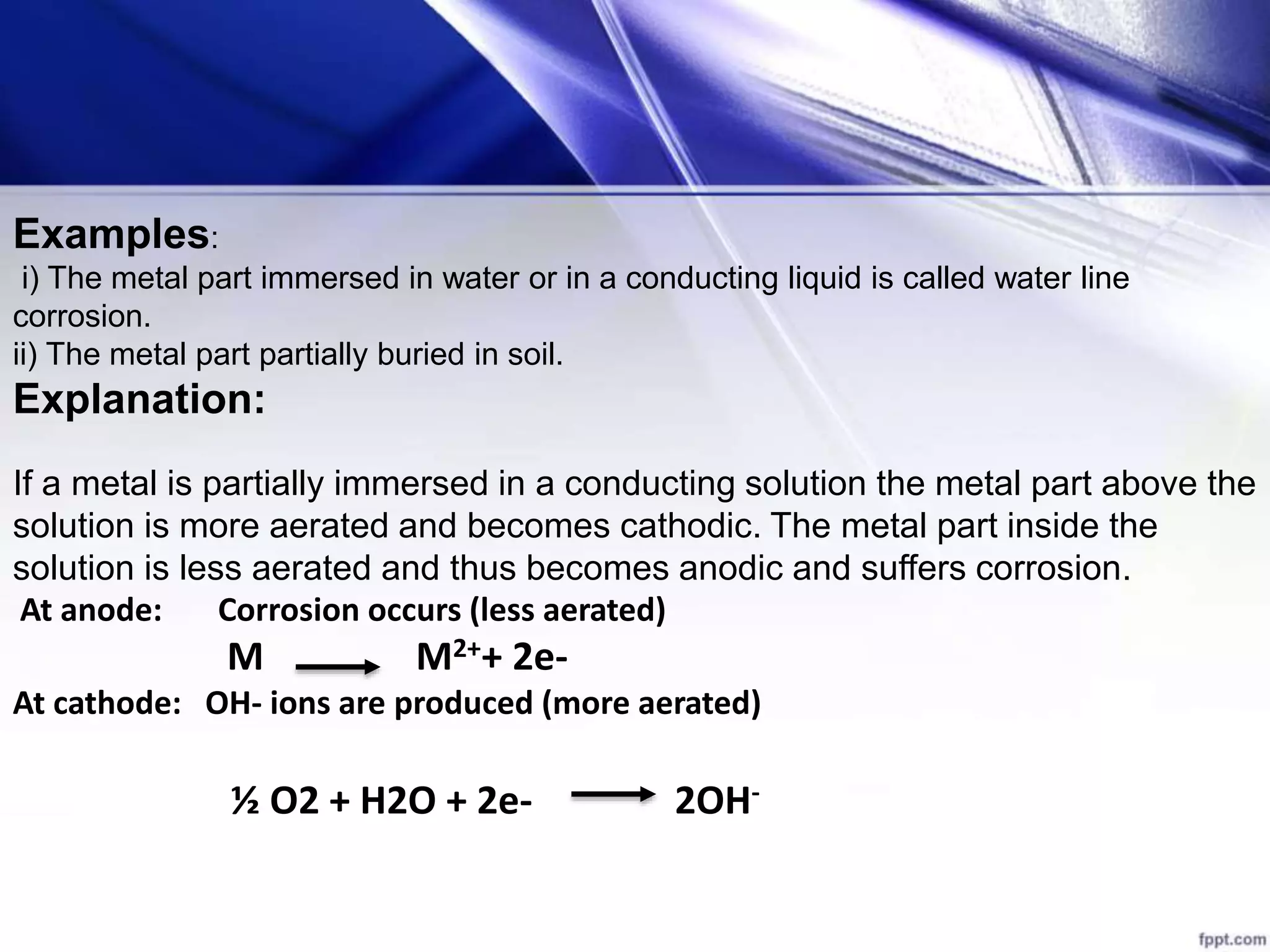
i) The metal part immersed in water or in a conducting liquid is called water line
corrosion.
ii) The metal part partially buried in soil.
Explanation:
If a metal is partially immersed in a conducting solution the metal part above the
solution is more aerated and becomes cathodic. The metal part inside the
solution is less aerated and thus becomes anodic and suffers corrosion.
At anode: Corrosion occurs (less aerated)
M M2++ 2e-
At cathode: OH- ions are produced (more aerated)
½ O2 + H2O + 2e- 2OH-
:
Difference between (dry) chemical and (wet) electrochemical corrosion
Sl.
No.
Chemical Corrosion Electrochemical Corrosion
1 It occurs in dry condition It occurs in the presence of moisture or
electrolyte.
2 It is due to the direct chemical attack
of
the metal by the environment.
It is due to the formation of a large
number
of anodic and cathodic areas.
3 Even a homogeneous metal surface
gets
corroded.
Heterogeneous (bimetallic) surface alone
gets corroded
4 Corrosion products accumulate at the
place of corrosion
Corrosion occurs at the anode while the
products are formed elsewhere
5 It is a self controlled process. It is a continuous process
6 It adopts adsorption mechanism It follows electrochemical reaction
Types of corrosion

Types of corrosion

  • 1.
    PRESENTED BY:-  NILESHKUMAR  KUMAR PARITOSH  RAVI RANJAN  SEBIN TITUS  AKSHAY ROY
  • 2.
    CONTENTS:- CORROSION & IT’SMECHANISM TYPES OF CORROSION DIFFERENCE BETWEEN DRY & WET CORROSION
  • 3.
     Corrosion isthe deterioration of a metal as a result of chemical reactions between it and the surrounding environment. It is an oxidation process. It causes loss of metal. Corrosion comes in many different forms and can be classified by the cause of the chemical deterioration of a metal
  • 4.
     Example: Formation ofrust on the surface of iron.  formation of green film on the surface of copper.
  • 5.
    DRY CORROSION WETCORROSION OXIDATION CORROSION LIQUID METAL CORROSION CORROSION BY OTHER GASES GALVANIC /BIMETALLIC CORROSION DIFFERENTIAL AERATION/ CONCENTRATION CELL CORROSION
  • 6.
    DRY CORROSION • Itis also known as chemical corrosion • corrosion is due to the direct chemical attack of metal surfaces by the atmospheric gases-  Oxygen  Halogen  Hydrogen sulphide  Sulpher dioxide  Nitrogen Anhydrous inorganic liquid, etc
  • 7.
    OXIDATION CORROSION  directattack of oxygen at low or high temperature on metal surfaces in the absence of moisture.  Alkali metals –(Na,Li,K etc..) and alkaline metals(Mg,Ca,Sn etc..) are rapidly oxidised at low temperature.  At high temperature, almost all metals (except Ag, Au and Pt) are oxidized.
  • 8.
    Mechanism: Oxidation takes placeat the surface of the metal forming metal ions M2+ M → M2+ + 2e- Oxygen is converted to oxide ion (O2-) due to the transfer of electrons from metal. n/2 O2 + 2n e- → n O2- The overall reaction is of oxide ion reacts with the metal ions to form metal oxide film. 2 M + n/2 O2 → 2 Mn+ + nO2- The Nature of the Oxide formed plays an important part in oxidation corrosion process. Metal + Oxygen → Metal oxide (corrosion product)
  • 9.
     Some gasesreact with certain metal and forms a protective or non- protective layer on metallic surface  Due to chemical combination of metals with gases metals undergo corrosion . Corrosion by other gases(by Hydrogen)
  • 10.
    Decarburisation EXAMPLE:-  The presenceof carbon in steel gives sufficient strength to it. But when steel is exposed to hydrogen environment at high temperature, atomic hydrogen is formed H2 + Heat 2H  Atomic hydrogen reacts with the carbon of the steel and produces methane gas. C + 4H → CH4  Hence, the carbon content in steel is decreases. The process of decrease in carbon content in steel is known as decarburization  Collection of methane gas in the voids of steel develops high pressure, which causes cracking
  • 11.
     When aliquid metal is allowed to flow over solid metal at high temperature is called liquid metal corrosion. Liquid metal corrosion Example- In nuclear reactor sodium metal is used as coolant & it leads to corrosion of cadmium .  This is due to chemical action of flowing liquid metal at high temperatures on solid metal or alloy. Such Corrosion occur in devices used for nuclear power.
  • 12.
    WET CORROSION • Itis also known as electrochemical corrosion . • Such type of corrosion is due to the flow of electron from metal surface anodic area towards cathodic area through a conducting solution.
  • 13.
    Electrochemical corrosion involves: i)The formation of anodic and cathodic areas or parts in contact with each other ii) Presence of a conducting medium iii) Corrosion of anodic areas only iv) Formation of corrosion product somewhere between anodic and cathodic areas. This involves flow of electron-current between the anodic and cathodic areas
  • 14.
    Galvanic / BimetallicCorrosion When two dissimilar metals (eg., Zn and Cu) are electrically connected and exposed to an electrolyte, the metal higher in electrochemical series undergoes corrosion. In this process, the more active metal acts as a anode while the less active Metal acts as cathode. Example: (i) Steel screws in a brass marine hardware (ii) a steel propeller shaft in bronze bearing (iii)Steel pipe connected to copper plumbing.
  • 15.
    Mechanism: In acidic solution,the corrosion occurs by the hydrogen evolution process; while in neutral or slightly alkaline solution, oxygen absorption occurs. The electron-current flows from the anode metal, zinc to the cathode metal, copper. Zn Zn+2 + 2e- (Oxidation) Thus it is evident that the corrosion occurs at the anode metal; while the cathodic part is protected from the attack.
  • 17.
  • 18.
    Concentration Cell Corrosion Itis due to electrochemical attack on the metal surface, exposed to an electrolyte of varying concentrations or of varying aeration. It occurs when one part of metal is exposed to a different air concentration from the other part. This causes a difference in potential between differently aerated areas. It has been found experimentally that poor- oxygenated parts are anodic.
  • 19.
    Examples: i) The metalpart immersed in water or in a conducting liquid is called water line corrosion. ii) The metal part partially buried in soil. Explanation: If a metal is partially immersed in a conducting solution the metal part above the solution is more aerated and becomes cathodic. The metal part inside the solution is less aerated and thus becomes anodic and suffers corrosion. At anode: Corrosion occurs (less aerated) M M2++ 2e- At cathode: OH- ions are produced (more aerated) ½ O2 + H2O + 2e- 2OH-
  • 20.
    : Difference between (dry)chemical and (wet) electrochemical corrosion Sl. No. Chemical Corrosion Electrochemical Corrosion 1 It occurs in dry condition It occurs in the presence of moisture or electrolyte. 2 It is due to the direct chemical attack of the metal by the environment. It is due to the formation of a large number of anodic and cathodic areas. 3 Even a homogeneous metal surface gets corroded. Heterogeneous (bimetallic) surface alone gets corroded 4 Corrosion products accumulate at the place of corrosion Corrosion occurs at the anode while the products are formed elsewhere 5 It is a self controlled process. It is a continuous process 6 It adopts adsorption mechanism It follows electrochemical reaction