TYPES AND
STRUCTURES
OF SALES
ORGANIZATION
DATE:
06/08/2021
WHAT IS SALES
ORGANIZATION?
Sales organization
is a department in
company within
logistics that
designs the
company as per
the sales
requirements.
2
CHARACTERISTICS OF SALES
ORGANIZATION
• A sales organization subsists of a group of people who handle different activities like
distribution, advertising, selling etc.
• It works to achieve the sales objectives, like increasing sales volume and maximizing
profit and market share of the company.
• It specifies the responsibilities and duties of the salesperson and also co-ordinates their
activities with other departments.
• It helps to develop a relationship with the other personnel in the organization by setting
up a sales programe.
• General Sales Manager is the head of the sales organization.
3
BASIC TYPES OF SALES
ORGANIZATIONS
• Line Organization.
• Line and Staff Organization.
• Functional Organization.
• Horizontal Organization.
Sales organizations are generally classified into four basic types:
4
LINE ORGANIZATION
5
All managers have line authority to direct and control
subordinates. Used in small firms / departments
Characteristics
Simple organization, clear authority, quick decisions, low cost
Advantages
6
No support to line managers from subordinates who have specialized knowledge
/ skills. Less time for planning / analysis
Disadvantages
LINE AND STAFF ORGANIZATION
7
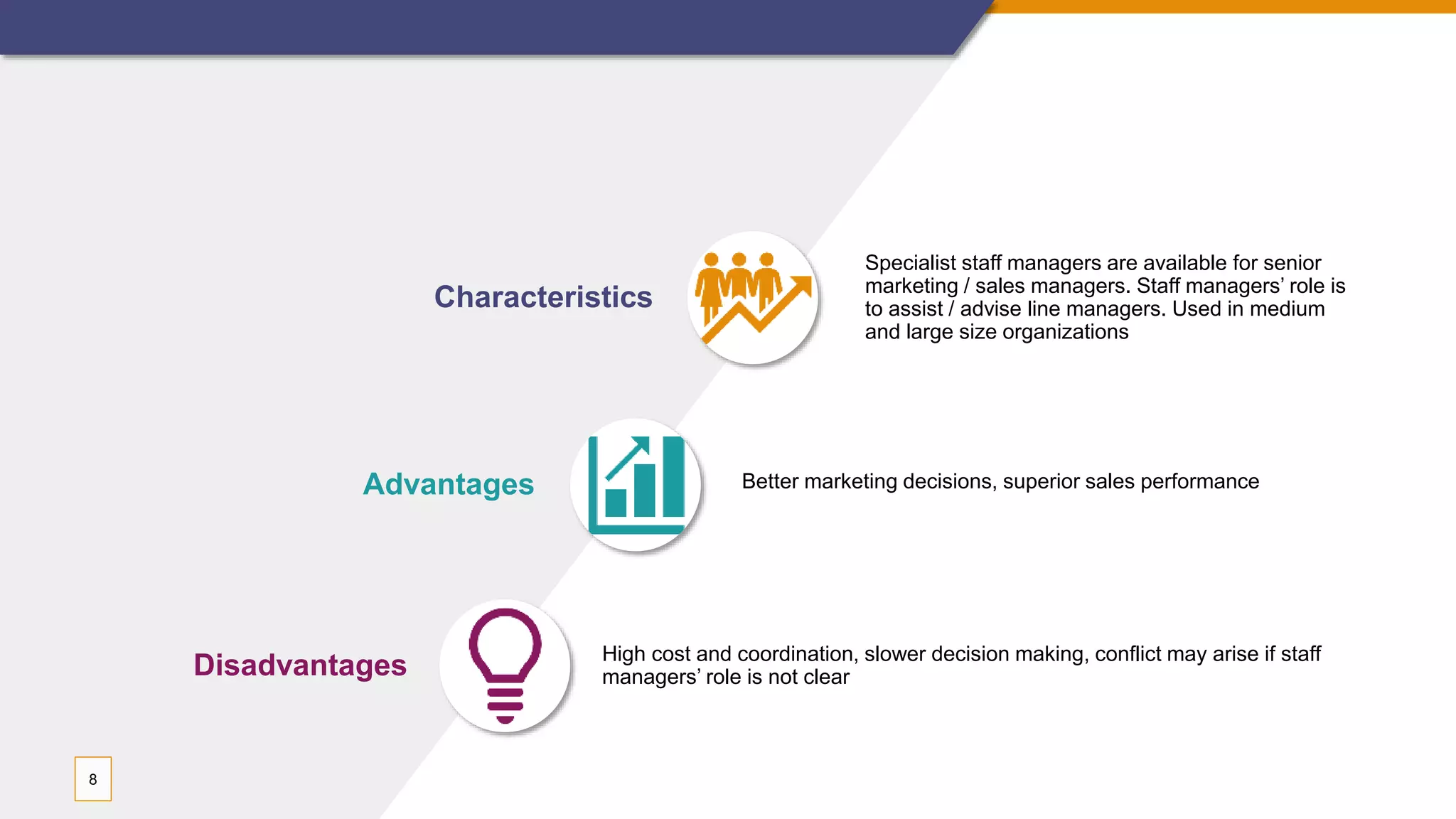
Specialist staff managers are available for senior
marketing / sales managers. Staff managers’ role is
to assist / advise line managers. Used in medium
and large size organizations
Characteristics
Better marketing decisions, superior sales performance
Advantages
8
High cost and coordination, slower decision making, conflict may arise if staff
managers’ role is not clear
Disadvantages
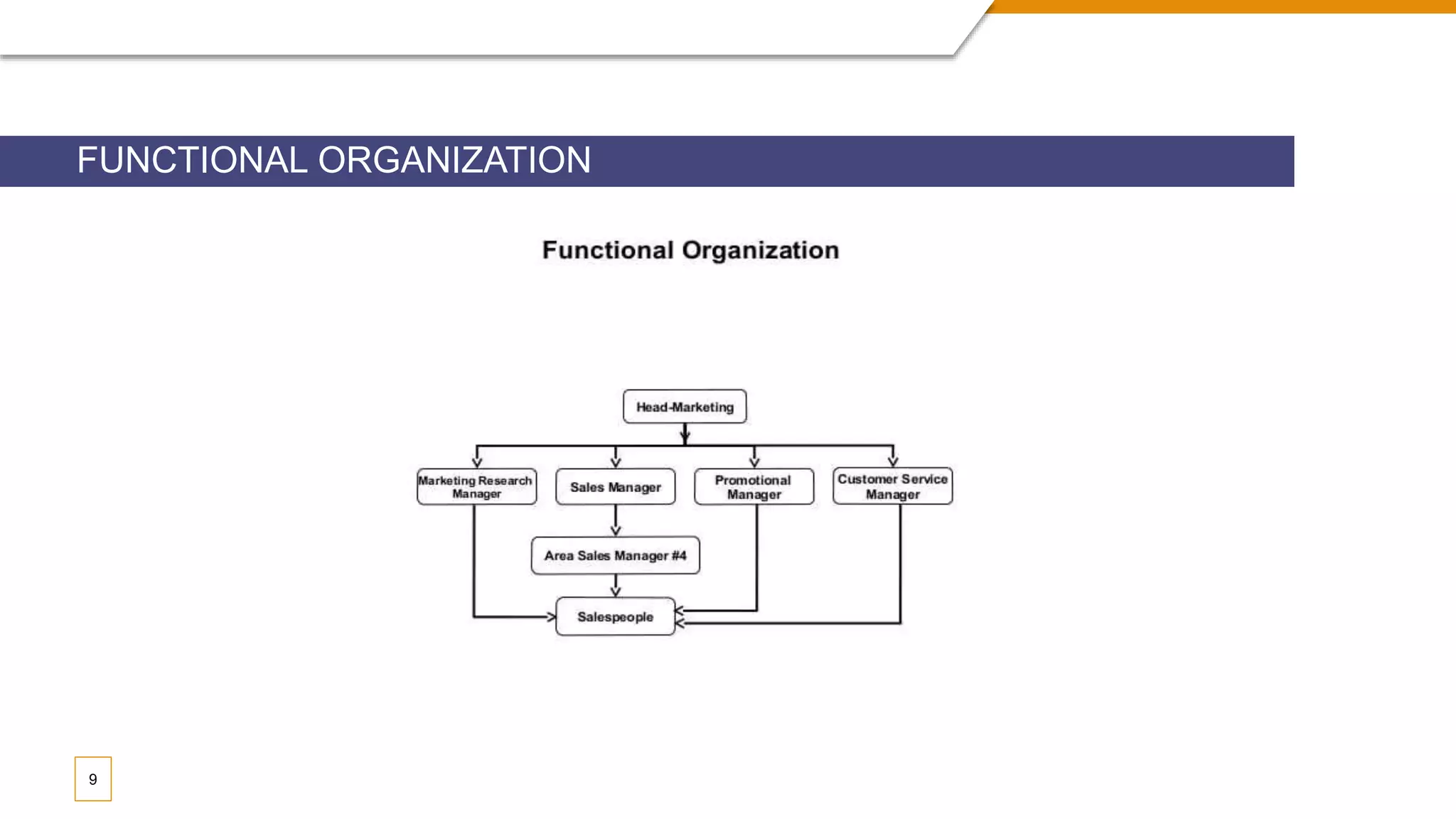
FUNCTIONAL ORGANIZATION
9
Each functional specialist has line responsibility
over salespeople. Used by a large firm with many
products / market segments, minimizing line
authority to functional managers
Characteristics
Qualified specialists guide sales force, simple to administer
Advantages
10
confusion due to more managers giving orders to sales force
Disadvantages
HORIZONTAL ORGANIZATION
11
Removes management levels & departmental
boundaries. Except planning team, all others are
members of cross- functional teams. Used by firms
having partnering relationships with customers.
Characteristics
Reduction in supervision, unnecessary tasks, & cost; Improved
efficiency and customer responses.
Advantages
12
SPECIALIZATI
ON WITHIN
SALES
ORGANIZATIO
N
• Needed to increase effectiveness of sales force
• Done by expanding basic sales organization
• Basis of specialization
• Geography
• Type of product
• Market
• Combination of above
• Criteria for selection – (1) nature of product, (2) sales force
abilities, (3) demands of selling job, (4) customer and
market facts.
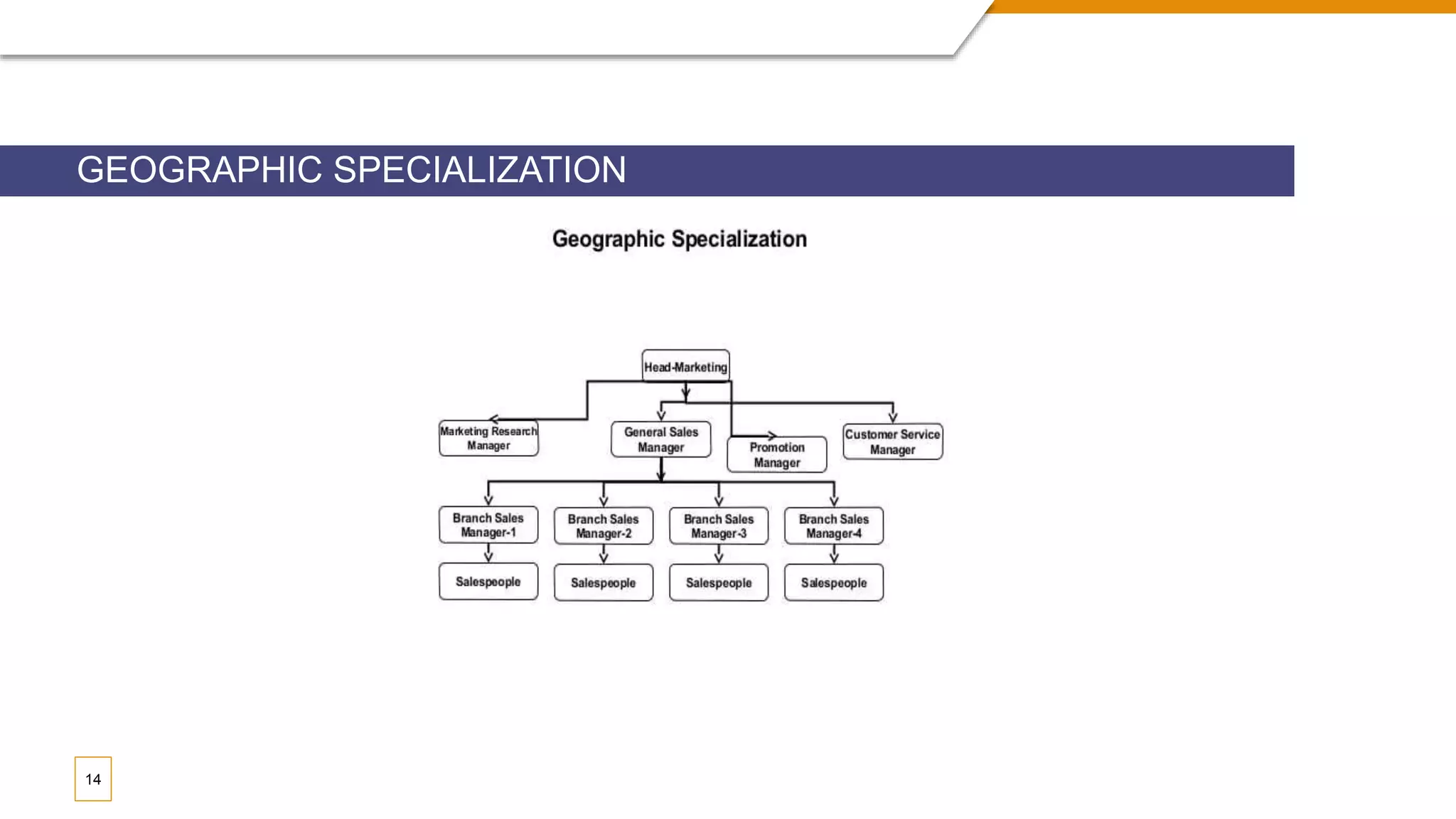
GEOGRAPHIC SPECIALIZATION
14
15
PRODUCT SPECIALIZATION
16
17
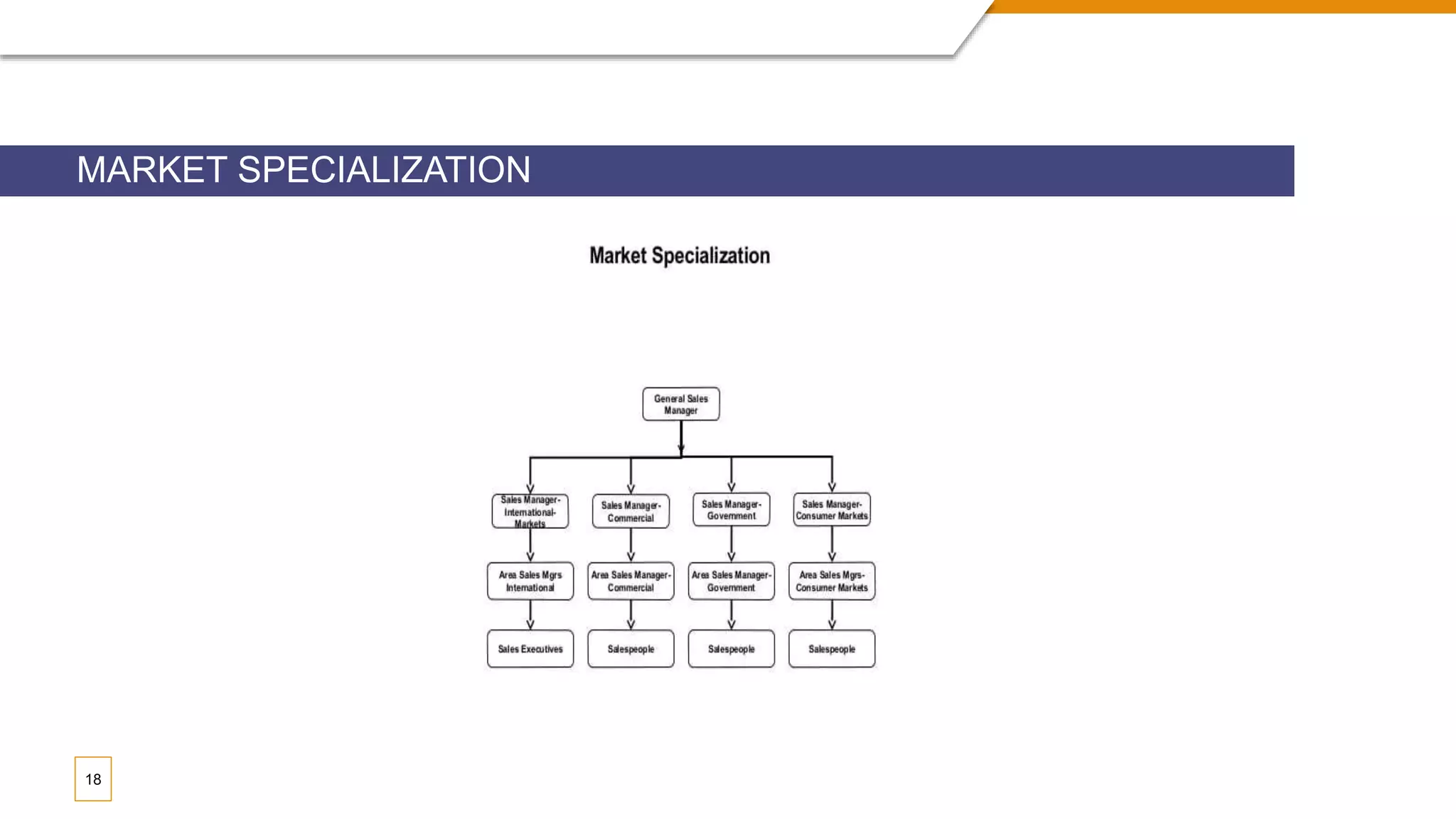
MARKET SPECIALIZATION
18
19
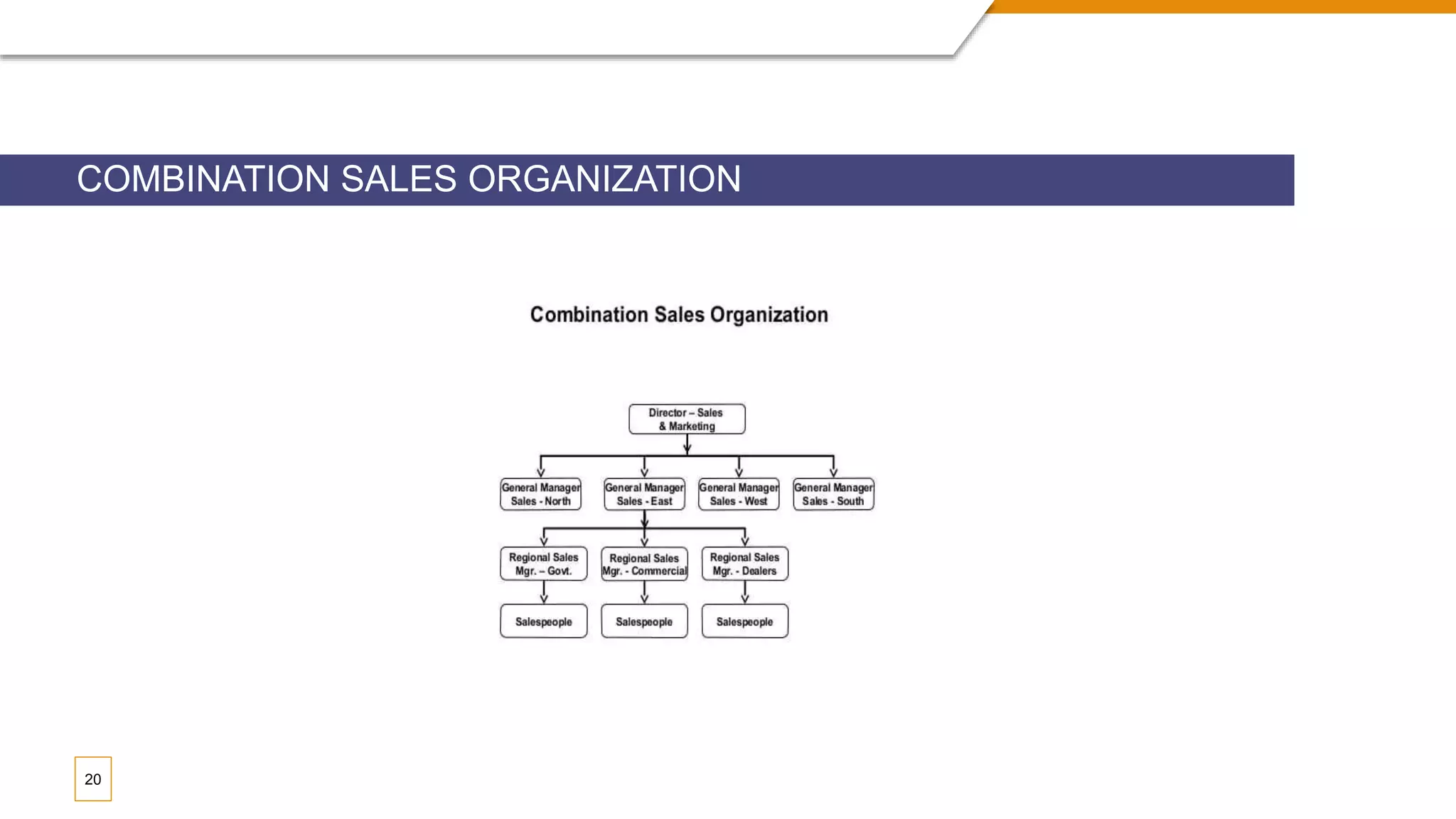
COMBINATION SALES ORGANIZATION
20
21
TABLE
22
Title Content Content Content Content
PIE CHART
23
1st Qtr 2nd Qtr 3rd Qtr 4th Qtr
Lorem ipsum dolor sit
amet, consectetuer
adipiscing elit. Maecenas
porttitor congue massa.
Fusce posuere, magna sed
pulvinar ultricies, purus
lectus malesuada libero, sit
amet commodo magna
eros quis urna.
THANK YOU.

Types and structures of sales organization

  • 1.
  • 2.
    WHAT IS SALES ORGANIZATION? Salesorganization is a department in company within logistics that designs the company as per the sales requirements. 2
  • 3.
    CHARACTERISTICS OF SALES ORGANIZATION •A sales organization subsists of a group of people who handle different activities like distribution, advertising, selling etc. • It works to achieve the sales objectives, like increasing sales volume and maximizing profit and market share of the company. • It specifies the responsibilities and duties of the salesperson and also co-ordinates their activities with other departments. • It helps to develop a relationship with the other personnel in the organization by setting up a sales programe. • General Sales Manager is the head of the sales organization. 3
  • 4.
    BASIC TYPES OFSALES ORGANIZATIONS • Line Organization. • Line and Staff Organization. • Functional Organization. • Horizontal Organization. Sales organizations are generally classified into four basic types: 4
  • 5.
  • 6.
    All managers haveline authority to direct and control subordinates. Used in small firms / departments Characteristics Simple organization, clear authority, quick decisions, low cost Advantages 6 No support to line managers from subordinates who have specialized knowledge / skills. Less time for planning / analysis Disadvantages
  • 7.
    LINE AND STAFFORGANIZATION 7
  • 8.
    Specialist staff managersare available for senior marketing / sales managers. Staff managers’ role is to assist / advise line managers. Used in medium and large size organizations Characteristics Better marketing decisions, superior sales performance Advantages 8 High cost and coordination, slower decision making, conflict may arise if staff managers’ role is not clear Disadvantages
  • 9.
  • 10.
    Each functional specialisthas line responsibility over salespeople. Used by a large firm with many products / market segments, minimizing line authority to functional managers Characteristics Qualified specialists guide sales force, simple to administer Advantages 10 confusion due to more managers giving orders to sales force Disadvantages
  • 11.
  • 12.
    Removes management levels& departmental boundaries. Except planning team, all others are members of cross- functional teams. Used by firms having partnering relationships with customers. Characteristics Reduction in supervision, unnecessary tasks, & cost; Improved efficiency and customer responses. Advantages 12
  • 13.
    SPECIALIZATI ON WITHIN SALES ORGANIZATIO N • Neededto increase effectiveness of sales force • Done by expanding basic sales organization • Basis of specialization • Geography • Type of product • Market • Combination of above • Criteria for selection – (1) nature of product, (2) sales force abilities, (3) demands of selling job, (4) customer and market facts.
  • 14.
  • 15.
  • 16.
  • 17.
  • 18.
  • 19.
  • 20.
  • 21.
  • 22.
    TABLE 22 Title Content ContentContent Content Title Content Content Content Content Title Content Content Content Content Title Content Content Content Content Title Content Content Content Content Title Content Content Content Content
  • 23.
    PIE CHART 23 1st Qtr2nd Qtr 3rd Qtr 4th Qtr Lorem ipsum dolor sit amet, consectetuer adipiscing elit. Maecenas porttitor congue massa. Fusce posuere, magna sed pulvinar ultricies, purus lectus malesuada libero, sit amet commodo magna eros quis urna.
  • 24.