DIABETES MELLITUS
GENERAL INTRODUCTION
CONTENTS
▪ Introduction
▪ History
▪ Epidemiology
▪ Classification
▪ Type 1 DM
▪ Type 2 DM
▪ Gestational DM
▪ Pre-diabetes
▪ Complications: Acute & chronic: the Proposed mechanisms
▪ Diagnostic criteria’s: Laboratory tests
▪ Management
▪ Conclusion
▪ References
▪ "Diabetes" and “Mellitus” are derived from Greek.
▪ “Diabetes” denotes "a passer through; a siphon" whereas the "Mellitus"
denotes "sweet". It is thought that the Greeks named it so due to the
excessive amounts of urine produced by diabetics attracted flies and
bees.
▪ Insulin deficiency in turn leads to chronic hyperglycaemia with
disturbances of carbohydrate, fat and protein metabolism.
INTRODUCTION
Diabetes Mellitus (DM) is a group of metabolic diseases
characterized by hyperglycemia resulting from defects of insulin
secretion and/or increased cellular resistance to insulin
HISTORY
▪ Diabetes mellitus has been known since antiquity, its treatments were
known since the Middle Ages, and the elucidation of its pathogenesis
occurred mainly in the 20th century.
▪ The discovery of the role of the pancreas in diabetes was made by
Joseph Von Mering and Oskar Minkowski in 1889.
▪ In 1910, Sir Edward Albert Sharpey-Schafer of Edinburgh in Scotland
suggested that diabetics lacked a single chemical which was normally
produced by the pancreas.
▪ Name of this chemical was later proposed to be Insulin by Himsworth,
1936.
▪ In 1921, Frederick Grant Banting and Charles Herbert Best repeated the
work of Von Mering and Minkowski but went a step further and
managed to show that they could reverse the induced diabetes in dogs
by giving them an extract from the pancreatic islets of Langerhans of
healthy dogs.
▪ These scientists proceeded on to isolate insulin from bovine pancreases at
the University of Toronto in Canada, thereby leading to the availability
of an effective treatment of diabetes mellitus, with the first clinical
patient being treated in 1922
▪ The distinction between what is now known as type I and type II
diabetes was made by Sir Harold Percival (Harry) Himsworth in 1935
▪ Other landmark discoveries followed viz; identification of sulfonylureas
in 1942
▪ The radioimmunoassay for insulin, as discovered by Rosalyn Yallow
and Solomon Berson
▪ Identification of thiazolidinediones as effective antidiabetics in the 1990s
EPIDEMIOLOGY
▪ Approximately 285 million people worldwide (6.6%) in the 20–79
year age group have diabetes in 2010 and by 2030, 438 million
people (7.8%) of the adult population, is expected to have diabetes.
▪ India leads the world with largest number of diabetic subjects
earning the dubious distinction of being termed the “diabetes
capital of the world”
CLASSIFICATION OF DIABETES MELLITUS
American Diabetes Association in 2001
TYPE 1 DIABETES
MELLITUS
▪ Type 1 diabetes is one of the most frequent chronic childhood
diseases.
▪ According to the American Diabetes Association, this form is
present in the 5–10% of patients with diabetes.
▪ Peak incidence occurs during puberty, around 10–12 years of age in
girls and 12–14 years of age in boys.
•Results from cellular mediated
autoimmune destruction of
pancreatic β cells, usually leading
to total loss of insulin secretion
•Usually present in children and
adolescents
•‘‘Insulin-dependent diabetes.’’
•Ketoacidosis, a life-threatening
condition
Type 1
Diabetes
▪ Markers of autoimmune destruction have been identified and can be
used for diagnosis or risk assessment.
▪ These include antibodies to islet cells and to insulin, glutamic acid
decarboxylase and tyrosine phosphatase IA-2 and IA-2b.
▪ Type 1 diabetes has a genetic predisposition with strong human
leukocyte antigen associations.
▪ Monozygous twins have a concordance for type1 diabetes of 30–50%.
These patients are also prone to other autoimmune disorders.
PATHOGENESIS OF TYPE 1 DM
ETIOLOGY
Genetic
susceptibilit
y
Autoimmune
destruction of
β cells
Environment
al factors
Viruses &
infections
Infant
feeding
practices
CLINICAL FEATURES
▪ Weight loss
▪ Polyurea
▪ Polydypsia
▪ Polyphagia
▪ Constipation fatigue
▪ Cramps
▪ Blurred vision, and
▪ Candidiasis
▪ Long lasting type 1 DM patients may susceptible to
microvascular complications and macrovascular disease
RISK FACTORS
Family
history
Genetics
Geography
Viral
exposure
Early
vitamin D
Other
dietary
factors
TYPE 2 DIABETES
MELLITUS
▪ Type 2 diabetes has a stronger genetic component than type 1, with a
concordance rate of up to 90% in identical twins.
▪ In addition to genetic risk factors, acquired or environmental factors
play a major role; foremost among these is obesity.
▪ Increased consumption of more energy dense, nutrient-poor foods with
high levels of sugar and saturated fats, combined with reduced physical
activity, have led to obesity rates that have risen three-fold or more
since 1980 in some areas of North America, the UK, Eastern Europe, the
Middle East, the Pacific Islands, Australia and China.
•“Non–insulin dependent diabetes”
•Have altered insulin production however,
autoimmune destruction of β-cells does not
occur and patients retain the capacity for some
insulin production
•The incidence of ketoacidosis is very low.
•But ketoacidosis can occur in association with
the stress of another illness such as an infection
Type 2
Diabetes
▪ In many patients, especially early in the disease, insulin production is
increased, resulting in hyperinsulinemia.
▪ As the condition progresses, insulin production often decreases and
patients have a relative insulin deficiency in association with peripheral
insulin resistance.
▪ The primary abnormality is insulin resistance and the β-cell
dysfunction arises from the prolonged, increased secretory demand
placed on them by the insulin resistance.
▪ They can remain undiagnosed for many years because the
hyperglycemia appears gradually and many times without symptoms.
INSULIN RESISTANCE
▪ Insulin resistance is a state in which a given concentration of insulin
produces a less-than-expected biological effect.
▪ Insulin resistance has also been arbitrarily defined as the requirement
of 200 or more units of insulin per day to attain Glycemic control and
to prevent ketosis.
▪ The pathogenesis of type 2 diabetes involves abnormalities in both
insulin action and secretion.
NORMAL INSULIN SIGNALLING PATHWAY
CAUSES OF INSULIN RESISTANCE
▪ Combinations of defects: Obesity is associated mainly with post
receptor abnormality and is also associated with a decreased number
of insulin receptors. Obesity is the most common cause of insulin
resistance.
▪ Aging: This may cause insulin resistance through a decreased
production of GLUT-4 transporters.
▪ Increased production of insulin antagonists: A number of disorders
are associated with increased production of insulin antagonists, such
as -
-Cushing syndrome
-Acromegaly
-Stress states, such as trauma, surgery, diabetes
ketoacidosis, severe infection, uremia, and liver cirrhosis.
▪ Medications: include glucocorticoids (Cushing syndrome),
cyclosporine, niacin, and protease inhibitors.
▪ Human immunodeficiency virus (HIV): Protease inhibitor –
associated lipodystrophy is a recognized entity. Nucleoside
analogues have also been implicated in the development of insulin
resistance.
▪ Insulin treatment: Low titer IgG anti-insulin antibody levels are
present in most patients who receive insulin.
Enhanced destruction of insulin at the site of subcutaneous injection
has also been implicated.
PATHOGENESIS
OF TYPE 2 DM
ETIOLOGY OF TYPE 2 DM
MODY (Mature onset diabetes of
youth)
Pregnancy
Acromegaly
Cushings syndrome
Pheochromocytoma
Hyperthyroidism
Mitochondrial mutations
Insulin gene mutations
Insulin receptor mutations
CLINICAL FEATURES
▪ Carries a high risk of large vessel atherosclerosis commonly
associated with hypertension, hyperlipidaemia and obesity.
▪ Most patients with type 2 diabetes die from cardiovascular
complications and end stage renal disease.
▪ Geographical variation can contribute in the magnitude of the
problems and to overall morbidity and mortality.
RISK FACTORS
Weight
Fat
distribution
Inactivity
Family
history
Race
Age
Prediabetes
Gestational
diabetes
OBESITY & TYPE 2 DM
▪ There is a close association between BMI and risk of developing T2D,
the relative risk of T2D increasing with Body Mass Index (BMI).
▪ The normal BMI is under 25 kg/m2, whereas a BMI between 25 and 30
kg/m2 is defined as overweight, and a BMI of over 30 kg/m2 is
defined as obese.
▪ Adipose tissue plays an important role in the development of insulin
resistance.
▪ Elevated circulating levels of free fatty acids (FFA) derived from
adipocytes contribute to insulin resistance by inhibiting glucose uptake,
glycogen synthesis, and glycolysis and by increasing hepatic glucose
production.
‘Diabesity’
GESTATIONAL DIABETES
Gestational
diabetes
(GDM)
• Onset or initial recognition of glucose
intolerance during pregnancy, usually in the
second or third trimester.
• GDM occurs inapproximately 4% of
pregnancies
• Under normal conditions, insulin secretion is
increased by 1.5 - to 2.5 fold during
pregnancy, reflecting a state of insulin
resistance.
• A woman with a limited β-cell reserve may be
incapable of increasing insulin production to
compensate for her insulin-resistant state,
resulting in hyperglycemia.
Women with gestational diabetes mellitus have an increased
frequency of:
▪ Hypertensive disorders
▪ Increases the risk for foetal congenital abnormalities
▪ Stillbirth
▪ Macrosomia
▪ Hypoglycemia
▪ Jaundice
▪ Respiratory distress syndrome
▪ Polycythemia and
▪ Hypocalcemia
PRE-DIABETES
Pre-
diabetes
• Impaired fasting glucose (IFG): 100-125
mg/dL.
• Impaired glucose tolerance (IGT): 140-
199 mg/dL.
• Both are strong predictors for future
development of type 2 diabetes.
• IGT is a significant predictor of
myocardial infarction and stroke.
ACUTE COMPLICATIONS
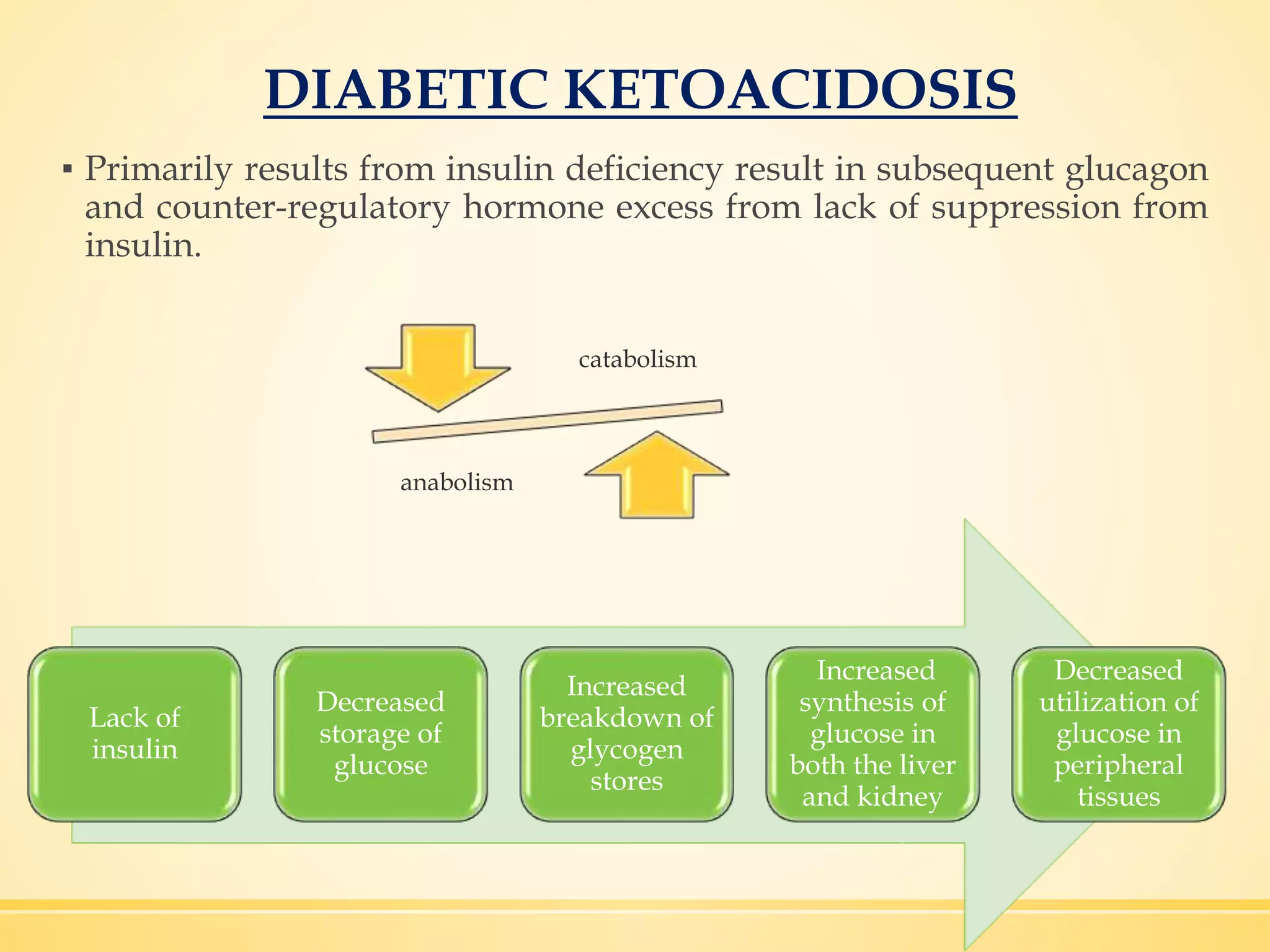
DIABETIC KETOACIDOSIS
▪ Primarily results from insulin deficiency result in subsequent glucagon
and counter-regulatory hormone excess from lack of suppression from
insulin.
catabolism
anabolism
Lack of
insulin
Decreased
storage of
glucose
Increased
breakdown of
glycogen
stores
Increased
synthesis of
glucose in
both the liver
and kidney
Decreased
utilization of
glucose in
peripheral
tissues
PATHOGENESIS
▪ The situation is complicated by the fact that in this more catabolic state
there is breakdown of proteins to form new amino acids that in turn are
used to build glucose
▪ The risk of DKA increases with any increased stress state. In a so-called
‘‘stressed state,’’ there is a relative abundance of epinephrine and cortisol.
▪ In a stressed state, such as infection, myocardial infarction, intoxication,
pregnancy, or stroke there is an increased demand for insulin, but a
diminished supply by the stress put on the pancreas.
Epinephrine
Block the action
of insulin
Release of
glucagon
▪ Insulin is normally the most important regulator in production and
utilization of ketones.
▪ It inhibit lipolysis and oxidation of FFA.
▪ The fruity breath odour of ketone further suggest the diagnosis of
DKA
Increased
ketone
production
Body to
buffer with
bicarbonate
Increase in
unmeasured
anions
Metabolic
acidosis
Vomiting
may induce
a hidden
alkalosis
Elevated blood glucose
shifts water into the
extracellular compartment.
and osmotic diuresis occurs
Glycosuria and Polyuria
result
Water losses are typically
greater than electrolyte
losses, and thus there is an
increased serum osmolality
Polydypsia
SYMPTOMS
▪ Nausea
▪ Vomiting
▪ abdominal pain
▪ respiratory insufficiency
HYPERGLYCEMIC HYPEROSMOLAR STATE
▪ The second most common life-threatening form of decompensated DM.
▪ The greatest risk is for elderly people, particularly those bedridden or
dependent on others for their daily care.
▪ Infection is a common precipitating event, as is poor compliance with
insulin therapy.
▪ Various drugs that alter carbohydrate metabolism, such as corticosteroids,
sympathomimetic agents, β-adrenergic blockers, and excessive use of
diuretics in the elderly may also precipitate the development of
hyperglycemic hyperosmolar state.
▪ Mortality rate is around 15%. Most deaths occur in the first 2 days of
hospitalization; thereafter, a significant decrease in morbidity and
mortality is seen.
Metabolic abnormality
Severe hyperglycemia in the absence of
significant ketosis
With hyperosmolarity and dehydration
Secondary to insulin deficiency
Massive glycosuria
Excessive water loss
SYMPTOMS
 Weakness
Polyuria
Polydipsia
Weight loss
Mental confusion
Lethargy and
Coma
Some patients present with focal neurological signs (hemiparesis or
hemianopsia) and seizures
TREATMENT
Vigorous hydration
Electrolyte replacement
Small amounts of insulin
HYPOGLYCEMIA
▪ Common problem in diabetic patients and in the seriously ill patient because of
the combination of medical conditions and the use of multiple medications,
particularly insulin.
▪ More likely to be encountered in the dental office.
▪ Many hypoglycemic episodes are never brought to medical attention because
they are treated at home. However, severe hypoglycemia is a life-threatening
event, and must be managed immediately.
▪ In some diabetic patients, especially those whose glucose levels are tightly
controlled, the patient’s physiological response to decreasing blood glucose
levels becomes diminished over time. This phenomenon is known as
hypoglycemia unawareness.
CLASSIC/CHRONIC
COMPLICATIONS
Diabetes has been classically associated with a group of
microvascular and macrovascular complications
Microvascular
complications
6th complication:
PERIODONTITIS
H. Loe, 1993
PROPOSED MECHANISMS
1) INCREASED POLYOL PATHWAY
Glucose Glucose alcohol (Sorbitol)
Aldose reductase
High glucose levels
Increase the flux of sugar molecules
Sorbitol accumulation in cells
Osmotic stress
Reactive oxygen species
Cellular dysfunction
REACTIVE OXYGEN SPECIES?
▪ Defined as highly reactive oxygen-centered chemical species containing one or
two unpaired electrons. The unpaired electron containing chemical species can
also be called “free radicals.”
▪ ROS are generated by a variety of sources from our environment and by
physiological cellular functions (e.g. neutrophil phagocytosis and
mitochondrial cell respiration).
▪ Include free radicals (e.g. superoxide and hydroxyl radicals ), nonradical
oxygen species [e.g. hydrogen peroxide (H2O2)] and reactive lipids and
carbohydrates.
▪ In diabetes, reactive oxygen species are the major player in the pathology of
microvascular complications.
▪ Pathological condition causing diabetic complications is an overproduction of
superoxide by the mitochondrial electron transport chain.
Phagocytosis
Phagosome
develops
Fusion of
the
phagosome
with
lysosomes
Proteolytic
enzymes
and reactive
oxygen
species
Microorganisms
are killed
Incomplete
phagocytosis
Extracellular
release of
granules
Reactive
oxygen
species
Damage to
the local
tissue
2) ACTIVATION OF PKC PATHWAY
▪ DAG and PKC are important intracellular signalling molecules that can
regulate many vascular functions.
▪ Intracellular hyperglycemia increases the formation of DAG leading to
activation of PKC pathway
▪ Thus, PKC activation involving several isoforms is likely to be responsible
for some of the pathologies in DR, nephropathy and cardiovascular
disease.
Alterations in
blood flow
Basement
membrane
thickening
ECM
expansion
Increases in
vascular
permeability
Abnormal
angiogenesis
Excessive
apoptosis
Increased
leukocyte
adhesion
Changes in
enzymatic
activity
alterations
3) ADVANCED GLYCATION END PRODUCTS (AGEs)
▪ AGEs are proteins or lipids that become glycated as a result of
exposure to sugars.
▪ Constitute a heterogenous group of molecules formed by the
non-enzymatic reaction of reducing sugars, ascorbate and
other carbohydrates with amino acids, lipids peroxidation as
well.
▪ Although this process take place continuously within the body
during aging, it is extremely accelerated in DIABETES.
Early
stage
Intermediate
stage
Late
stage
glucose protein
Schiff
base
Amadori
product
Dicarbonyl
compounds
Advanced
glycation end
product
aminoguanidine-
Maillard Reaction
AGEs in collagen
Collagen cross-linking
Highly stable collagen macromolecules
(AGE-modified collagen)
Resistance to normal
enzymatic degradation and
tissue turn over.
In blood vessels accumulates
Thickening the vessel wall
and narrowing the lumen
Covalently cross-links with circulating low
density lipoprotein
Atherosclerosis
Basement membrane
of small blood vessels
Increases basement
membrane thickness
Normal homeostatic
transport across the
membrane.
• AGEs have major effects at the cellular level.
• A receptor for AGEs known as RAGE (receptor for AGE) has been identified on the
surface of endothelial cells, neurons, smooth muscle cells, and monocytes/macrophages
• AGEs are chemotactic for monocytes.
Hyperglycemia
Increased expression
of the receptor and
increased AGE–
RAGE interaction
Effect on endothelial
cells is an increase in
vascular permeability
and thrombus
formation
Monocyte/macrophage
membranes induces
increased cellular
oxidant stress
Transcription factor
NF-kB
Change in the
monocyte/macro
phage phenotype
Increased
production of
proinflammatory
cytokines
Chronic
inflammatory process
in atheroma formation
4) INCREASED FLUX THROUGH HEXOSAMINE PATHWAY
▪ In a normal glucose condition, only a small fraction (approximately 1–3%) of
glucose is metabolized through the hexosamine pathway.
▪ Elevation of intracellular glucose levels can cause an increased flux through
the hexosamine pathway which generates Fructose-6-Phosphate.
▪ Fructose-6-Phosphate glucosamine-6-phosphate
▪ End-product: uridine diphosphate N-acetylglucosamine (UDP-GlcNAc),
which is a substrate for the subsequent O-linked GlcNAc
alter the function of glycosylation of protein
glutamine
fructose-6-phosphate
aminotransferase (GFAT)
5) INCREASED OXIDATIVE STRESS
 Oxidative stress occurs when the production of reactive oxygen species
(ROS) exceeds the capability of antioxidant systems.
 There is substantial evidence showing that ROS production is
increased in endothelial cells, kidney, retina either exposed to
hyperglycemia.
 These compounds may activate all four of the pathways described.
 Antioxidant therapies have been applied in animal experiments, such
as vitamin C, vitamin E and α-lipoic acids. All of them have showed
improved biological and pathological changes, and prevented or
slowed the progression of diabetic complications.
DIAGNOSTIC CRITERIA
LABORATORY TESTS
Casual plasma (blood) glucose
Fasting plasma glucose (FPG)
Postprandial Blood Glucose Test
1. BLOOD INVESTIGATIONS
In 1998, the WHO adopted the diagnostic parameters for diabetes
established by the American Diabetes Association.
ORAL GLUCOSE TOLERANCE TEST
The criterion for a diagnosis of diabetes with this test
is a two-hour blood glucose level of 200 mg/dl or
higher. Prediabetes is diagnosed if the two-hour blood
glucose level is 140–199 mg/dl.
(mg/dl)
Time in minutes
Concentrationinmg/dl
Diabetic vs Normal curve
EVALUATION OF GLYCEMIC CONTROL
HbA1C: Glycated Haemoglobin
▪ HbA1c is used to monitor the patient’s overall glycemic control.
HbA1C Test:
▪ Used to measure glycohemoglobin levels and provides an estimate of
the average blood glucose level over the preceding 30 to 90-day period
▪ It is not recommended for diagnosis because there is not a gold
standard assay for the HbA1c and because many countries do not
have ready access to the test.
DIAGNOSIS OF GESTATIONAL DM
▪ At least 6 weeks after the pregnancy ends, the woman should receive
an oral glucose tolerance test and be reclassified as having diabetes,
normal glucose tolerance, impaired.
2. URINE ANALYSIS
DETECTION OF GLUCOSURIA
▪ Benedict’s & Fehling’s test
▪ This involves testing the urine with the Benedict’s reagent.
▪ Results indicate the person having diabetes based on the colour
formation.
Light colour = normal
Parrot green colour = >120 mg/dl
Dark yellow colour = >180mg/dl
Reddish brown colour = +++ > 250 mg/dl
Brown colour = ++++ > 350 mg/dl
Diasticks (detection of glucosuria)
▪ These are strips that used to indicate the person having diabetes mellitus
or not. These strips tested with urine and based on the color change only
diagnosis the diabetes mellitus.
DETECTION OF KETONURIA
▪ Qualitative detection of ketone bodies can be accomplished by
nitroprusside tests, Rothera’s test etc.
▪ Ketone bodies may be present in a normal subject as a result
of simple prolonged fasting.
DETECTION OF MICROALBUMINURIA
▪ May be defined as an albumin excretion rate intermediate between
normality (2.5-25 mg/day) and macroalbuminuria (250 mg/day).
▪ The small increase in urinary albumin excretion is not detected by
simple albumin stick tests and requires confirmation by careful
quantization in a 24 hour urine specimen.
▪ The importance of micro- albuminuria in the diabetic patient is that it
is a signal of early reversible renal damage.
3. GLUCOMETERS
▪ These meters are also involving in diagnosing the diabetes mellitus.
Within the fraction of seconds these will give results about blood
glucose levels.
Other
Laboratory
Tests
Blood urea
nitrogen
(BUN)
Blood
creatinine
Levels of
triglycerides
Total
cholesterol
Low-
density
lipoprotein
(LDL)
High-
density
lipoprotein
(HDL)
MANAGEMENT
The goals of therapy for Type 1 or Type 2 DM are to:
(1) Eliminate symptoms related to hyperglycemia.
(2) Reduce or eliminate the long-term micro vascular and macro vascular
complications of DM.
(3) Allow the patient to achieve as normal a lifestyle as possible.
TREATMENT
Drug treatment for
diabetes
Non drug treatment
for diabetes
DRUG TREATMENT
▪ Anti-diabetic drugs treat diabetes mellitus by lowering glucose levels in
the blood.
▪ With the exceptions of Insulin, Exenatide, and Pramlintide, all are
administered orally and are thus also called oral hypoglycemic agents
or oral anti hyperglycemic agents.
▪ Type 1 DM: Insulin is used which must be injected or inhaled.
▪ Type 2 DM: agents which increase the amount of insulin secreted by the
pancreas, agents which increase the sensitivity of target organs to
insulin and agents which decrease the rate at which glucose is absorbed
from the gastrointestinal tract.
INSULIN
Insulin is usually given subcutaneously,
either by injections or by an insulin pump.
In acute care settings, insulin may also be given intravenously.
There are several types of insulin, characterized by the rate which they
are metabolized by the body.
Insulin is essential for the treatment of type 1 diabetes.
For many years it was assumed, as an act of faith, that normalizing
plasma glucose would prevent diabetic complications. The diabetes
control and complications trial (American Diabetes Association, 1993)
showed that this faith was well placed: type1 diabetic patients were
randomly allocated to intensive or conventional management.
INSULIN SENSITIZERS
A. Sulfonylureas
First widely used oral hypoglycemic medications.
They are insulin secretagogues, triggering insulin release by direct
action on the KATP channel of the pancreatic beta cells.
B. Meglitinides
Help the pancreas produce insulin and are often called "short-acting
secretagogues."
Their mode of action is original, affecting channels.
By closing the potassium channels of the pancreatic β cells, they open
the calcium channels, hence enhancing insulin secretion.
Eg: Repaglinide, Nateglinide
C. Biguanides
Reduce hepatic glucose output and increase uptake of glucose by the
periphery, including skeletal muscle.
Although it must be used with caution in patients with impaired liver
or kidney function, it has become the most commonly used agent for
type 2 diabetes in children and teenagers.
Eg: Metformin, Phenformin, Buformin.
D.Thiazolidinediones (TZDs)
Also known as "glitazones," bind to PPARγ, a type of nuclear
regulatory proteins involved in transcription of genes regulating
glucose and fat metabolism.
The PPREs influence insulin sensitive genes, which enhance
production of mRNAs of insulin dependent enzymes.
The final result is better use of glucose by the cells.
Eg: Rosiglitazone, Pioglitazone, Troglitazone .
E. Alpha-Glucosidase Inhibitors
Are "diabetes pills" but not technically hypoglycemic agents because
they do not have a direct effect on insulin secretion or sensitivity.
These agents slow the digestion of starch in the small intestine, so that
glucose from the starch of a meal enters the bloodstream more slowly,
and can be matched more effectively by an impaired insulin response
or sensitivity.
These delays carbohydrates adsorption, reducing the postprandial
increase in blood glucose.
Eg: Miglitol, Acarbose
NEWLY APPROVED AGENTS FOR DIABETES
PEPTIDE ANALOGS
A. Incretin Mimetics
Incretions are insulin secretagogues.
The two main candidate molecules that fulfill criteria for being an incretion
are Glucagons-like peptide-1 (GLP-1) and Gastric inhibitory peptide (aqua
glucose-dependent Insulin tropic peptide or GIP).
Both GLP-1 and GIP are rapidly inactivated by the enzyme dipeptidyl
peptidase-4 (DPP-4).
B. Glucagon-Like Peptide (GLP) Analogs And Agonists
 GLP agonists bind to a membrane GLP receptor.
As a consequence of this, insulin release from the pancreatic β cells is
increased.
Exenatide, Liraglutide.
Injected subcutaneously in a dose of 5 or 10 µg twice daily, given within 1
h before meals
C. Gastric Inhibitory Peptide (GIP) Analogs: DPP-4 Inhibitors
Dipeptidyl peptidase-4 (DPP-4) inhibitors increase blood concentration of
the incretin GLP-1 (glucagon-like peptide-1) by inhibiting its degradation
by dipeptidyl peptidase-4 (DPP-4).
Vildagliptin, Sitagliptin
AMYLIN ANALOGUES
Approved by the FDA in 2005, is an antihyperglycemic drug for use in
diabetic patients who are also being treated with insulin.
Amylin analogues slow gastric emptying and suppress glucagons.
Injection of amylin decreases post-prandial glucose elevations and
decreases cellular oxidative stress.
Like insulin, it is administered by subcutaneous injection.
Pramlintide
The FDA requires that the package insert for pramlintide carry a “black
box warning”, clearly identifying the high risk for hypoglycemia.
MANAGEMENT OF TYPE 1 DM
ISLET CELL TRANSPLANTATION
 Largiadèr et al were the first to report
insulin independence following islet cell
allotransplantation in a patient with type 1
DM in 1980
 Is a minimally invasive procedure, wide
application of this procedure for the
treatment of type 1 diabetes is limited by
the dependence on multiple donors and the
requirement for potent long-term
immunotherapy.
STEM CELL THERAPY-
 Stem cell therapy is one of the most
promising treatments for the near
future.
 It is expected that this kind of
therapy can ameliorate or even
reverse some diseases.
 To promote regeneration and/or
preservation of β cell mass.
NON DRUG TREATMENT
1. Life style changes which are used to controlling diabetes
Life style change is defined as the way of living which has been altered
by variety manner.
Life style have seven principles of good diabetes care:
• Learn as much as you can about diabetes
• Get regular care for diabetes
• Learn how to control your diabetes
• Take care of your diabetic ABC’s
• Monitor your diabetic ABC’s
• Prevent long term diabetes problems
• Get checked for long term problems and treat them
2. Exercise
It is an important in helping to prevent diabetes and is having vital role
of our treatment. Some good qualities of exercise:
1. It helps in losing weight
2. It can reduce blood glucose levels and keep it low for
several hours afterwards
3. Exercise can reduce cholesterol and blood pressure
4. Exercise helps reduce stress
5. Exercise makes the tissues in your body more sensitive to
the effects of insulin. This allows insulin to push more glucose out of the
blood stream into the cells, which will reduce the level of glucose in our
blood.
3. Diet
The diet recommends places an emphasis on foods that are higher in
fiber and low in fat.
High fiber, low fat diet can make body more sensitive to insulin.
Diet also involves weight loss which is another way to increase
diabetic patient’s body sensitivity to the effects of insulin.
CONCLUSION
▪ The considered view is that the diabetes therapy should focus on
delaying progression of the disease.
▪ Treatment options are supposed to be directed at the known pathogenetic
disturbances of the disease.
▪ The realization that DM is a “metabolic curse” should be a trigger for
desire to seek understanding of the biochemical and molecular basis of
this metabolic disorder.
▪ Such an understanding will inform efforts to elucidate more effective
management interventions against diabetes mellitus.
REFERENCES
▪ Habtamu Wondifraw Baynest; Classification, Pathophysiology, Diagnosis and
Management of Diabetes Mellitus; J Diabetes Metab; Volume 6 , Issue 5
▪ M.N. Piero, G.M. Nzaro, J.M. Njagi; Diabetes mellitus – a devastating metabolic
disorder; Asian Journal of Biomedical and Pharmaceutical Sciences; 4(40) 2014,1-
7.
▪ K.Harikumar, B. Kishore Kumar, G.J.Hemalatha, M.Bharath Kumar, Steven
Fransis Saky Lado; A Review on Diabetes Mellitus; international journal of
novel trends in pharmaceutical sciences; volume 5, number 3, jun 2015.
▪ Gretchen Perilli, Christine Saraceni, Michael N. Daniels, Aakif Ahmad; Diabetic
Ketoacidosis: A Review and Update; Curr Emerg Hosp Med Rep (2013) 1:10–17
▪ W Todd Cade; Diabetes-Related Microvascular and Macrovascular Diseases in
the Physical Therapy Setting; Journal of American Physical Therapy
Assocoation; Volume 88 Number 11
▪ Abdullah S Al-Goblan, Mohammed A Al-Alfi, Muhammad Z Khan; Mechanism
linking diabetes mellitus and obesity; Diabetes, Metabolic Syndrome and
Obesity: Targets and Therapy; 2014
▪ Brian L. Mealey and Thomas W. Oate; Diabetes Mellitus and Periodontal
Diseases; Journal of Periodontology; August 2006
▪ Brian L. Mealey &Alan J. Moritz; Hormonal influences: effects of diabetes
mellitus and endogenous female sex steroid hormones on the periodontium;
Periodontology 2000, Vol. 32, 2003, 59–81
▪ Varun Parkash Singh, Anjana Bali, Nirmal Singh, and Amteshwar Singh Jaggi ;
Advanced Glycation End Products and Diabetic Complications; Korean J
Physiol Pharmacol Vol 18: 1- 14, February, 2014
▪ Internet sources
General introduction to diabetes mellitus

General introduction to diabetes mellitus

  • 2.
  • 3.
    CONTENTS ▪ Introduction ▪ History ▪Epidemiology ▪ Classification ▪ Type 1 DM ▪ Type 2 DM ▪ Gestational DM ▪ Pre-diabetes ▪ Complications: Acute & chronic: the Proposed mechanisms ▪ Diagnostic criteria’s: Laboratory tests ▪ Management ▪ Conclusion ▪ References
  • 4.
    ▪ "Diabetes" and“Mellitus” are derived from Greek. ▪ “Diabetes” denotes "a passer through; a siphon" whereas the "Mellitus" denotes "sweet". It is thought that the Greeks named it so due to the excessive amounts of urine produced by diabetics attracted flies and bees. ▪ Insulin deficiency in turn leads to chronic hyperglycaemia with disturbances of carbohydrate, fat and protein metabolism. INTRODUCTION Diabetes Mellitus (DM) is a group of metabolic diseases characterized by hyperglycemia resulting from defects of insulin secretion and/or increased cellular resistance to insulin
  • 5.
    HISTORY ▪ Diabetes mellitushas been known since antiquity, its treatments were known since the Middle Ages, and the elucidation of its pathogenesis occurred mainly in the 20th century. ▪ The discovery of the role of the pancreas in diabetes was made by Joseph Von Mering and Oskar Minkowski in 1889. ▪ In 1910, Sir Edward Albert Sharpey-Schafer of Edinburgh in Scotland suggested that diabetics lacked a single chemical which was normally produced by the pancreas. ▪ Name of this chemical was later proposed to be Insulin by Himsworth, 1936.
  • 6.
    ▪ In 1921,Frederick Grant Banting and Charles Herbert Best repeated the work of Von Mering and Minkowski but went a step further and managed to show that they could reverse the induced diabetes in dogs by giving them an extract from the pancreatic islets of Langerhans of healthy dogs. ▪ These scientists proceeded on to isolate insulin from bovine pancreases at the University of Toronto in Canada, thereby leading to the availability of an effective treatment of diabetes mellitus, with the first clinical patient being treated in 1922
  • 7.
    ▪ The distinctionbetween what is now known as type I and type II diabetes was made by Sir Harold Percival (Harry) Himsworth in 1935 ▪ Other landmark discoveries followed viz; identification of sulfonylureas in 1942 ▪ The radioimmunoassay for insulin, as discovered by Rosalyn Yallow and Solomon Berson ▪ Identification of thiazolidinediones as effective antidiabetics in the 1990s
  • 8.
    EPIDEMIOLOGY ▪ Approximately 285million people worldwide (6.6%) in the 20–79 year age group have diabetes in 2010 and by 2030, 438 million people (7.8%) of the adult population, is expected to have diabetes. ▪ India leads the world with largest number of diabetic subjects earning the dubious distinction of being termed the “diabetes capital of the world”
  • 9.
    CLASSIFICATION OF DIABETESMELLITUS American Diabetes Association in 2001
  • 10.
  • 11.
    ▪ Type 1diabetes is one of the most frequent chronic childhood diseases. ▪ According to the American Diabetes Association, this form is present in the 5–10% of patients with diabetes. ▪ Peak incidence occurs during puberty, around 10–12 years of age in girls and 12–14 years of age in boys.
  • 12.
    •Results from cellularmediated autoimmune destruction of pancreatic β cells, usually leading to total loss of insulin secretion •Usually present in children and adolescents •‘‘Insulin-dependent diabetes.’’ •Ketoacidosis, a life-threatening condition Type 1 Diabetes
  • 13.
    ▪ Markers ofautoimmune destruction have been identified and can be used for diagnosis or risk assessment. ▪ These include antibodies to islet cells and to insulin, glutamic acid decarboxylase and tyrosine phosphatase IA-2 and IA-2b. ▪ Type 1 diabetes has a genetic predisposition with strong human leukocyte antigen associations. ▪ Monozygous twins have a concordance for type1 diabetes of 30–50%. These patients are also prone to other autoimmune disorders.
  • 14.
  • 15.
  • 16.
    CLINICAL FEATURES ▪ Weightloss ▪ Polyurea ▪ Polydypsia ▪ Polyphagia ▪ Constipation fatigue ▪ Cramps ▪ Blurred vision, and ▪ Candidiasis ▪ Long lasting type 1 DM patients may susceptible to microvascular complications and macrovascular disease
  • 17.
  • 18.
  • 19.
    ▪ Type 2diabetes has a stronger genetic component than type 1, with a concordance rate of up to 90% in identical twins. ▪ In addition to genetic risk factors, acquired or environmental factors play a major role; foremost among these is obesity. ▪ Increased consumption of more energy dense, nutrient-poor foods with high levels of sugar and saturated fats, combined with reduced physical activity, have led to obesity rates that have risen three-fold or more since 1980 in some areas of North America, the UK, Eastern Europe, the Middle East, the Pacific Islands, Australia and China.
  • 20.
    •“Non–insulin dependent diabetes” •Havealtered insulin production however, autoimmune destruction of β-cells does not occur and patients retain the capacity for some insulin production •The incidence of ketoacidosis is very low. •But ketoacidosis can occur in association with the stress of another illness such as an infection Type 2 Diabetes
  • 21.
    ▪ In manypatients, especially early in the disease, insulin production is increased, resulting in hyperinsulinemia. ▪ As the condition progresses, insulin production often decreases and patients have a relative insulin deficiency in association with peripheral insulin resistance. ▪ The primary abnormality is insulin resistance and the β-cell dysfunction arises from the prolonged, increased secretory demand placed on them by the insulin resistance. ▪ They can remain undiagnosed for many years because the hyperglycemia appears gradually and many times without symptoms.
  • 22.
    INSULIN RESISTANCE ▪ Insulinresistance is a state in which a given concentration of insulin produces a less-than-expected biological effect. ▪ Insulin resistance has also been arbitrarily defined as the requirement of 200 or more units of insulin per day to attain Glycemic control and to prevent ketosis. ▪ The pathogenesis of type 2 diabetes involves abnormalities in both insulin action and secretion.
  • 23.
  • 24.
    CAUSES OF INSULINRESISTANCE ▪ Combinations of defects: Obesity is associated mainly with post receptor abnormality and is also associated with a decreased number of insulin receptors. Obesity is the most common cause of insulin resistance. ▪ Aging: This may cause insulin resistance through a decreased production of GLUT-4 transporters. ▪ Increased production of insulin antagonists: A number of disorders are associated with increased production of insulin antagonists, such as - -Cushing syndrome -Acromegaly -Stress states, such as trauma, surgery, diabetes ketoacidosis, severe infection, uremia, and liver cirrhosis.
  • 25.
    ▪ Medications: includeglucocorticoids (Cushing syndrome), cyclosporine, niacin, and protease inhibitors. ▪ Human immunodeficiency virus (HIV): Protease inhibitor – associated lipodystrophy is a recognized entity. Nucleoside analogues have also been implicated in the development of insulin resistance. ▪ Insulin treatment: Low titer IgG anti-insulin antibody levels are present in most patients who receive insulin. Enhanced destruction of insulin at the site of subcutaneous injection has also been implicated.
  • 26.
  • 27.
    ETIOLOGY OF TYPE2 DM MODY (Mature onset diabetes of youth) Pregnancy Acromegaly Cushings syndrome Pheochromocytoma Hyperthyroidism Mitochondrial mutations Insulin gene mutations Insulin receptor mutations
  • 28.
    CLINICAL FEATURES ▪ Carriesa high risk of large vessel atherosclerosis commonly associated with hypertension, hyperlipidaemia and obesity. ▪ Most patients with type 2 diabetes die from cardiovascular complications and end stage renal disease. ▪ Geographical variation can contribute in the magnitude of the problems and to overall morbidity and mortality.
  • 29.
  • 30.
    OBESITY & TYPE2 DM ▪ There is a close association between BMI and risk of developing T2D, the relative risk of T2D increasing with Body Mass Index (BMI). ▪ The normal BMI is under 25 kg/m2, whereas a BMI between 25 and 30 kg/m2 is defined as overweight, and a BMI of over 30 kg/m2 is defined as obese. ▪ Adipose tissue plays an important role in the development of insulin resistance. ▪ Elevated circulating levels of free fatty acids (FFA) derived from adipocytes contribute to insulin resistance by inhibiting glucose uptake, glycogen synthesis, and glycolysis and by increasing hepatic glucose production.
  • 31.
  • 32.
  • 33.
    Gestational diabetes (GDM) • Onset orinitial recognition of glucose intolerance during pregnancy, usually in the second or third trimester. • GDM occurs inapproximately 4% of pregnancies • Under normal conditions, insulin secretion is increased by 1.5 - to 2.5 fold during pregnancy, reflecting a state of insulin resistance. • A woman with a limited β-cell reserve may be incapable of increasing insulin production to compensate for her insulin-resistant state, resulting in hyperglycemia.
  • 35.
    Women with gestationaldiabetes mellitus have an increased frequency of: ▪ Hypertensive disorders ▪ Increases the risk for foetal congenital abnormalities ▪ Stillbirth ▪ Macrosomia ▪ Hypoglycemia ▪ Jaundice ▪ Respiratory distress syndrome ▪ Polycythemia and ▪ Hypocalcemia
  • 36.
  • 37.
    Pre- diabetes • Impaired fastingglucose (IFG): 100-125 mg/dL. • Impaired glucose tolerance (IGT): 140- 199 mg/dL. • Both are strong predictors for future development of type 2 diabetes. • IGT is a significant predictor of myocardial infarction and stroke.
  • 38.
  • 39.
    DIABETIC KETOACIDOSIS ▪ Primarilyresults from insulin deficiency result in subsequent glucagon and counter-regulatory hormone excess from lack of suppression from insulin. catabolism anabolism Lack of insulin Decreased storage of glucose Increased breakdown of glycogen stores Increased synthesis of glucose in both the liver and kidney Decreased utilization of glucose in peripheral tissues
  • 40.
    PATHOGENESIS ▪ The situationis complicated by the fact that in this more catabolic state there is breakdown of proteins to form new amino acids that in turn are used to build glucose ▪ The risk of DKA increases with any increased stress state. In a so-called ‘‘stressed state,’’ there is a relative abundance of epinephrine and cortisol. ▪ In a stressed state, such as infection, myocardial infarction, intoxication, pregnancy, or stroke there is an increased demand for insulin, but a diminished supply by the stress put on the pancreas. Epinephrine Block the action of insulin Release of glucagon
  • 41.
    ▪ Insulin isnormally the most important regulator in production and utilization of ketones. ▪ It inhibit lipolysis and oxidation of FFA. ▪ The fruity breath odour of ketone further suggest the diagnosis of DKA
  • 42.
    Increased ketone production Body to buffer with bicarbonate Increasein unmeasured anions Metabolic acidosis Vomiting may induce a hidden alkalosis Elevated blood glucose shifts water into the extracellular compartment. and osmotic diuresis occurs Glycosuria and Polyuria result Water losses are typically greater than electrolyte losses, and thus there is an increased serum osmolality Polydypsia
  • 43.
    SYMPTOMS ▪ Nausea ▪ Vomiting ▪abdominal pain ▪ respiratory insufficiency
  • 45.
    HYPERGLYCEMIC HYPEROSMOLAR STATE ▪The second most common life-threatening form of decompensated DM. ▪ The greatest risk is for elderly people, particularly those bedridden or dependent on others for their daily care. ▪ Infection is a common precipitating event, as is poor compliance with insulin therapy. ▪ Various drugs that alter carbohydrate metabolism, such as corticosteroids, sympathomimetic agents, β-adrenergic blockers, and excessive use of diuretics in the elderly may also precipitate the development of hyperglycemic hyperosmolar state. ▪ Mortality rate is around 15%. Most deaths occur in the first 2 days of hospitalization; thereafter, a significant decrease in morbidity and mortality is seen.
  • 46.
    Metabolic abnormality Severe hyperglycemiain the absence of significant ketosis With hyperosmolarity and dehydration Secondary to insulin deficiency Massive glycosuria Excessive water loss
  • 47.
    SYMPTOMS  Weakness Polyuria Polydipsia Weight loss Mentalconfusion Lethargy and Coma Some patients present with focal neurological signs (hemiparesis or hemianopsia) and seizures TREATMENT Vigorous hydration Electrolyte replacement Small amounts of insulin
  • 48.
    HYPOGLYCEMIA ▪ Common problemin diabetic patients and in the seriously ill patient because of the combination of medical conditions and the use of multiple medications, particularly insulin. ▪ More likely to be encountered in the dental office. ▪ Many hypoglycemic episodes are never brought to medical attention because they are treated at home. However, severe hypoglycemia is a life-threatening event, and must be managed immediately. ▪ In some diabetic patients, especially those whose glucose levels are tightly controlled, the patient’s physiological response to decreasing blood glucose levels becomes diminished over time. This phenomenon is known as hypoglycemia unawareness.
  • 51.
  • 52.
    Diabetes has beenclassically associated with a group of microvascular and macrovascular complications Microvascular complications
  • 53.
  • 54.
  • 56.
    1) INCREASED POLYOLPATHWAY Glucose Glucose alcohol (Sorbitol) Aldose reductase High glucose levels Increase the flux of sugar molecules Sorbitol accumulation in cells Osmotic stress Reactive oxygen species Cellular dysfunction
  • 57.
    REACTIVE OXYGEN SPECIES? ▪Defined as highly reactive oxygen-centered chemical species containing one or two unpaired electrons. The unpaired electron containing chemical species can also be called “free radicals.” ▪ ROS are generated by a variety of sources from our environment and by physiological cellular functions (e.g. neutrophil phagocytosis and mitochondrial cell respiration). ▪ Include free radicals (e.g. superoxide and hydroxyl radicals ), nonradical oxygen species [e.g. hydrogen peroxide (H2O2)] and reactive lipids and carbohydrates. ▪ In diabetes, reactive oxygen species are the major player in the pathology of microvascular complications. ▪ Pathological condition causing diabetic complications is an overproduction of superoxide by the mitochondrial electron transport chain.
  • 58.
    Phagocytosis Phagosome develops Fusion of the phagosome with lysosomes Proteolytic enzymes and reactive oxygen species Microorganisms arekilled Incomplete phagocytosis Extracellular release of granules Reactive oxygen species Damage to the local tissue
  • 59.
    2) ACTIVATION OFPKC PATHWAY ▪ DAG and PKC are important intracellular signalling molecules that can regulate many vascular functions. ▪ Intracellular hyperglycemia increases the formation of DAG leading to activation of PKC pathway ▪ Thus, PKC activation involving several isoforms is likely to be responsible for some of the pathologies in DR, nephropathy and cardiovascular disease. Alterations in blood flow Basement membrane thickening ECM expansion Increases in vascular permeability Abnormal angiogenesis Excessive apoptosis Increased leukocyte adhesion Changes in enzymatic activity alterations
  • 60.
    3) ADVANCED GLYCATIONEND PRODUCTS (AGEs) ▪ AGEs are proteins or lipids that become glycated as a result of exposure to sugars. ▪ Constitute a heterogenous group of molecules formed by the non-enzymatic reaction of reducing sugars, ascorbate and other carbohydrates with amino acids, lipids peroxidation as well. ▪ Although this process take place continuously within the body during aging, it is extremely accelerated in DIABETES.
  • 61.
  • 62.
    AGEs in collagen Collagencross-linking Highly stable collagen macromolecules (AGE-modified collagen) Resistance to normal enzymatic degradation and tissue turn over. In blood vessels accumulates Thickening the vessel wall and narrowing the lumen Covalently cross-links with circulating low density lipoprotein Atherosclerosis Basement membrane of small blood vessels Increases basement membrane thickness Normal homeostatic transport across the membrane.
  • 63.
    • AGEs havemajor effects at the cellular level. • A receptor for AGEs known as RAGE (receptor for AGE) has been identified on the surface of endothelial cells, neurons, smooth muscle cells, and monocytes/macrophages • AGEs are chemotactic for monocytes. Hyperglycemia Increased expression of the receptor and increased AGE– RAGE interaction Effect on endothelial cells is an increase in vascular permeability and thrombus formation Monocyte/macrophage membranes induces increased cellular oxidant stress Transcription factor NF-kB Change in the monocyte/macro phage phenotype Increased production of proinflammatory cytokines Chronic inflammatory process in atheroma formation
  • 64.
    4) INCREASED FLUXTHROUGH HEXOSAMINE PATHWAY ▪ In a normal glucose condition, only a small fraction (approximately 1–3%) of glucose is metabolized through the hexosamine pathway. ▪ Elevation of intracellular glucose levels can cause an increased flux through the hexosamine pathway which generates Fructose-6-Phosphate. ▪ Fructose-6-Phosphate glucosamine-6-phosphate ▪ End-product: uridine diphosphate N-acetylglucosamine (UDP-GlcNAc), which is a substrate for the subsequent O-linked GlcNAc alter the function of glycosylation of protein glutamine fructose-6-phosphate aminotransferase (GFAT)
  • 65.
    5) INCREASED OXIDATIVESTRESS  Oxidative stress occurs when the production of reactive oxygen species (ROS) exceeds the capability of antioxidant systems.  There is substantial evidence showing that ROS production is increased in endothelial cells, kidney, retina either exposed to hyperglycemia.  These compounds may activate all four of the pathways described.  Antioxidant therapies have been applied in animal experiments, such as vitamin C, vitamin E and α-lipoic acids. All of them have showed improved biological and pathological changes, and prevented or slowed the progression of diabetic complications.
  • 66.
  • 67.
    Casual plasma (blood)glucose Fasting plasma glucose (FPG) Postprandial Blood Glucose Test 1. BLOOD INVESTIGATIONS In 1998, the WHO adopted the diagnostic parameters for diabetes established by the American Diabetes Association.
  • 69.
    ORAL GLUCOSE TOLERANCETEST The criterion for a diagnosis of diabetes with this test is a two-hour blood glucose level of 200 mg/dl or higher. Prediabetes is diagnosed if the two-hour blood glucose level is 140–199 mg/dl.
  • 70.
  • 71.
  • 72.
    EVALUATION OF GLYCEMICCONTROL HbA1C: Glycated Haemoglobin ▪ HbA1c is used to monitor the patient’s overall glycemic control.
  • 73.
    HbA1C Test: ▪ Usedto measure glycohemoglobin levels and provides an estimate of the average blood glucose level over the preceding 30 to 90-day period ▪ It is not recommended for diagnosis because there is not a gold standard assay for the HbA1c and because many countries do not have ready access to the test.
  • 74.
    DIAGNOSIS OF GESTATIONALDM ▪ At least 6 weeks after the pregnancy ends, the woman should receive an oral glucose tolerance test and be reclassified as having diabetes, normal glucose tolerance, impaired.
  • 75.
    2. URINE ANALYSIS DETECTIONOF GLUCOSURIA ▪ Benedict’s & Fehling’s test ▪ This involves testing the urine with the Benedict’s reagent. ▪ Results indicate the person having diabetes based on the colour formation. Light colour = normal Parrot green colour = >120 mg/dl Dark yellow colour = >180mg/dl Reddish brown colour = +++ > 250 mg/dl Brown colour = ++++ > 350 mg/dl
  • 76.
    Diasticks (detection ofglucosuria) ▪ These are strips that used to indicate the person having diabetes mellitus or not. These strips tested with urine and based on the color change only diagnosis the diabetes mellitus. DETECTION OF KETONURIA ▪ Qualitative detection of ketone bodies can be accomplished by nitroprusside tests, Rothera’s test etc. ▪ Ketone bodies may be present in a normal subject as a result of simple prolonged fasting.
  • 77.
    DETECTION OF MICROALBUMINURIA ▪May be defined as an albumin excretion rate intermediate between normality (2.5-25 mg/day) and macroalbuminuria (250 mg/day). ▪ The small increase in urinary albumin excretion is not detected by simple albumin stick tests and requires confirmation by careful quantization in a 24 hour urine specimen. ▪ The importance of micro- albuminuria in the diabetic patient is that it is a signal of early reversible renal damage.
  • 78.
    3. GLUCOMETERS ▪ Thesemeters are also involving in diagnosing the diabetes mellitus. Within the fraction of seconds these will give results about blood glucose levels.
  • 79.
  • 80.
  • 81.
    The goals oftherapy for Type 1 or Type 2 DM are to: (1) Eliminate symptoms related to hyperglycemia. (2) Reduce or eliminate the long-term micro vascular and macro vascular complications of DM. (3) Allow the patient to achieve as normal a lifestyle as possible.
  • 82.
    TREATMENT Drug treatment for diabetes Nondrug treatment for diabetes
  • 83.
    DRUG TREATMENT ▪ Anti-diabeticdrugs treat diabetes mellitus by lowering glucose levels in the blood. ▪ With the exceptions of Insulin, Exenatide, and Pramlintide, all are administered orally and are thus also called oral hypoglycemic agents or oral anti hyperglycemic agents. ▪ Type 1 DM: Insulin is used which must be injected or inhaled. ▪ Type 2 DM: agents which increase the amount of insulin secreted by the pancreas, agents which increase the sensitivity of target organs to insulin and agents which decrease the rate at which glucose is absorbed from the gastrointestinal tract.
  • 84.
    INSULIN Insulin is usuallygiven subcutaneously, either by injections or by an insulin pump. In acute care settings, insulin may also be given intravenously. There are several types of insulin, characterized by the rate which they are metabolized by the body. Insulin is essential for the treatment of type 1 diabetes. For many years it was assumed, as an act of faith, that normalizing plasma glucose would prevent diabetic complications. The diabetes control and complications trial (American Diabetes Association, 1993) showed that this faith was well placed: type1 diabetic patients were randomly allocated to intensive or conventional management.
  • 86.
    INSULIN SENSITIZERS A. Sulfonylureas Firstwidely used oral hypoglycemic medications. They are insulin secretagogues, triggering insulin release by direct action on the KATP channel of the pancreatic beta cells. B. Meglitinides Help the pancreas produce insulin and are often called "short-acting secretagogues." Their mode of action is original, affecting channels. By closing the potassium channels of the pancreatic β cells, they open the calcium channels, hence enhancing insulin secretion. Eg: Repaglinide, Nateglinide
  • 87.
    C. Biguanides Reduce hepaticglucose output and increase uptake of glucose by the periphery, including skeletal muscle. Although it must be used with caution in patients with impaired liver or kidney function, it has become the most commonly used agent for type 2 diabetes in children and teenagers. Eg: Metformin, Phenformin, Buformin. D.Thiazolidinediones (TZDs) Also known as "glitazones," bind to PPARγ, a type of nuclear regulatory proteins involved in transcription of genes regulating glucose and fat metabolism. The PPREs influence insulin sensitive genes, which enhance production of mRNAs of insulin dependent enzymes. The final result is better use of glucose by the cells. Eg: Rosiglitazone, Pioglitazone, Troglitazone .
  • 88.
    E. Alpha-Glucosidase Inhibitors Are"diabetes pills" but not technically hypoglycemic agents because they do not have a direct effect on insulin secretion or sensitivity. These agents slow the digestion of starch in the small intestine, so that glucose from the starch of a meal enters the bloodstream more slowly, and can be matched more effectively by an impaired insulin response or sensitivity. These delays carbohydrates adsorption, reducing the postprandial increase in blood glucose. Eg: Miglitol, Acarbose
  • 89.
    NEWLY APPROVED AGENTSFOR DIABETES PEPTIDE ANALOGS A. Incretin Mimetics Incretions are insulin secretagogues. The two main candidate molecules that fulfill criteria for being an incretion are Glucagons-like peptide-1 (GLP-1) and Gastric inhibitory peptide (aqua glucose-dependent Insulin tropic peptide or GIP). Both GLP-1 and GIP are rapidly inactivated by the enzyme dipeptidyl peptidase-4 (DPP-4). B. Glucagon-Like Peptide (GLP) Analogs And Agonists  GLP agonists bind to a membrane GLP receptor. As a consequence of this, insulin release from the pancreatic β cells is increased. Exenatide, Liraglutide. Injected subcutaneously in a dose of 5 or 10 µg twice daily, given within 1 h before meals
  • 90.
    C. Gastric InhibitoryPeptide (GIP) Analogs: DPP-4 Inhibitors Dipeptidyl peptidase-4 (DPP-4) inhibitors increase blood concentration of the incretin GLP-1 (glucagon-like peptide-1) by inhibiting its degradation by dipeptidyl peptidase-4 (DPP-4). Vildagliptin, Sitagliptin AMYLIN ANALOGUES Approved by the FDA in 2005, is an antihyperglycemic drug for use in diabetic patients who are also being treated with insulin. Amylin analogues slow gastric emptying and suppress glucagons. Injection of amylin decreases post-prandial glucose elevations and decreases cellular oxidative stress. Like insulin, it is administered by subcutaneous injection. Pramlintide The FDA requires that the package insert for pramlintide carry a “black box warning”, clearly identifying the high risk for hypoglycemia.
  • 91.
    MANAGEMENT OF TYPE1 DM ISLET CELL TRANSPLANTATION  Largiadèr et al were the first to report insulin independence following islet cell allotransplantation in a patient with type 1 DM in 1980  Is a minimally invasive procedure, wide application of this procedure for the treatment of type 1 diabetes is limited by the dependence on multiple donors and the requirement for potent long-term immunotherapy.
  • 92.
    STEM CELL THERAPY- Stem cell therapy is one of the most promising treatments for the near future.  It is expected that this kind of therapy can ameliorate or even reverse some diseases.  To promote regeneration and/or preservation of β cell mass.
  • 93.
    NON DRUG TREATMENT 1.Life style changes which are used to controlling diabetes Life style change is defined as the way of living which has been altered by variety manner. Life style have seven principles of good diabetes care: • Learn as much as you can about diabetes • Get regular care for diabetes • Learn how to control your diabetes • Take care of your diabetic ABC’s • Monitor your diabetic ABC’s • Prevent long term diabetes problems • Get checked for long term problems and treat them
  • 94.
    2. Exercise It isan important in helping to prevent diabetes and is having vital role of our treatment. Some good qualities of exercise: 1. It helps in losing weight 2. It can reduce blood glucose levels and keep it low for several hours afterwards 3. Exercise can reduce cholesterol and blood pressure 4. Exercise helps reduce stress 5. Exercise makes the tissues in your body more sensitive to the effects of insulin. This allows insulin to push more glucose out of the blood stream into the cells, which will reduce the level of glucose in our blood.
  • 95.
    3. Diet The dietrecommends places an emphasis on foods that are higher in fiber and low in fat. High fiber, low fat diet can make body more sensitive to insulin. Diet also involves weight loss which is another way to increase diabetic patient’s body sensitivity to the effects of insulin.
  • 96.
    CONCLUSION ▪ The consideredview is that the diabetes therapy should focus on delaying progression of the disease. ▪ Treatment options are supposed to be directed at the known pathogenetic disturbances of the disease. ▪ The realization that DM is a “metabolic curse” should be a trigger for desire to seek understanding of the biochemical and molecular basis of this metabolic disorder. ▪ Such an understanding will inform efforts to elucidate more effective management interventions against diabetes mellitus.
  • 97.
    REFERENCES ▪ Habtamu WondifrawBaynest; Classification, Pathophysiology, Diagnosis and Management of Diabetes Mellitus; J Diabetes Metab; Volume 6 , Issue 5 ▪ M.N. Piero, G.M. Nzaro, J.M. Njagi; Diabetes mellitus – a devastating metabolic disorder; Asian Journal of Biomedical and Pharmaceutical Sciences; 4(40) 2014,1- 7. ▪ K.Harikumar, B. Kishore Kumar, G.J.Hemalatha, M.Bharath Kumar, Steven Fransis Saky Lado; A Review on Diabetes Mellitus; international journal of novel trends in pharmaceutical sciences; volume 5, number 3, jun 2015. ▪ Gretchen Perilli, Christine Saraceni, Michael N. Daniels, Aakif Ahmad; Diabetic Ketoacidosis: A Review and Update; Curr Emerg Hosp Med Rep (2013) 1:10–17 ▪ W Todd Cade; Diabetes-Related Microvascular and Macrovascular Diseases in the Physical Therapy Setting; Journal of American Physical Therapy Assocoation; Volume 88 Number 11 ▪ Abdullah S Al-Goblan, Mohammed A Al-Alfi, Muhammad Z Khan; Mechanism linking diabetes mellitus and obesity; Diabetes, Metabolic Syndrome and Obesity: Targets and Therapy; 2014
  • 98.
    ▪ Brian L.Mealey and Thomas W. Oate; Diabetes Mellitus and Periodontal Diseases; Journal of Periodontology; August 2006 ▪ Brian L. Mealey &Alan J. Moritz; Hormonal influences: effects of diabetes mellitus and endogenous female sex steroid hormones on the periodontium; Periodontology 2000, Vol. 32, 2003, 59–81 ▪ Varun Parkash Singh, Anjana Bali, Nirmal Singh, and Amteshwar Singh Jaggi ; Advanced Glycation End Products and Diabetic Complications; Korean J Physiol Pharmacol Vol 18: 1- 14, February, 2014 ▪ Internet sources