TWINS, TRIPLETS, QUINTUPLETS
Myrish C. Tejano
BSMT- IIMYRISH C. TEJANO
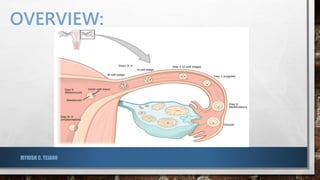
OVERVIEW:
MYRISH C. TEJANO
TWINS
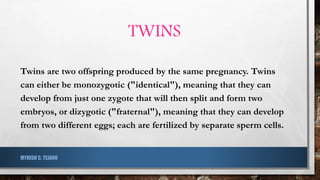
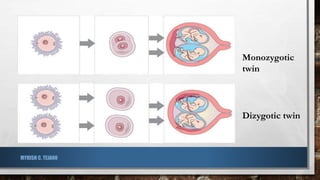
Twins are two offspring produced by the same pregnancy. Twins
can either be monozygotic ("identical"), meaning that they can
develop from just one zygote that will then split and form two
embryos, or dizygotic ("fraternal"), meaning that they can develop
from two different eggs; each are fertilized by separate sperm cells.
MYRISH C. TEJANO
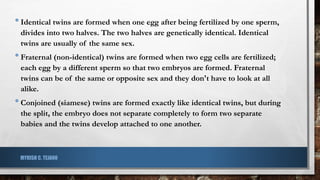
•Identical twins are formed when one egg after being fertilized by one sperm,
divides into two halves. The two halves are genetically identical. Identical
twins are usually of the same sex.
•Fraternal (non-identical) twins are formed when two egg cells are fertilized;
each egg by a different sperm so that two embryos are formed. Fraternal
twins can be of the same or opposite sex and they don't have to look at all
alike.
•Conjoined (siamese) twins are formed exactly like identical twins, but during
the split, the embryo does not separate completely to form two separate
babies and the twins develop attached to one another.
MYRISH C. TEJANO
Monozygotic
twin
Dizygotic twin
MYRISH C. TEJANO
MYRISH C. TEJANO
TRIPLETS
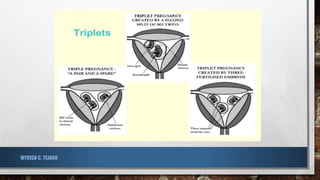
•The majority of triplets are what is known as trizygotic. This is
because they are formed when three separate, individual eggs are
fertilized by three separate sperm. These babies share the same
characteristics as any other siblings with the same biological
parents. They can be the same or opposite genders.
MYRISH C. TEJANO
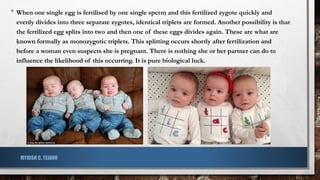
• When one single egg is fertilised by one single sperm and this fertilized zygote quickly and
evenly divides into three separate zygotes, identical triplets are formed. Another possibility is that
the fertilized egg splits into two and then one of these eggs divides again. These are what are
known formally as monozygotic triplets. This splitting occurs shortly after fertilization and
before a woman even suspects she is pregnant. There is nothing she or her partner can do to
influence the likelihood of this occurring. It is pure biological luck.
MYRISH C. TEJANO
MYRISH C. TEJANO
QUINTUPLETS
MYRISH C. TEJANO
• Quintuplets occur naturally in 1 in 55,000,000 births.[10] the first quintuplets known to
survive infancy were the all-female Canadian Dionne quintuplets, born in 1934.
MYRISH C. TEJANO
MYRISH C. TEJANO
Video clip on
the formation
of multiple
pregnancies
RISKS OF MULTIPLE PREGNANCY
• Miscarriage of one or more babies (fetuses).
• Gestational diabetes.
• High blood pressure and preeclampsia.
• Anemia.
• Increased chance of Cesarean delivery.
• Increased chance of giving birth before 37 weeks (preterm birth), which poses greater risks of illness,
disability, and death.
• Having a baby born with a birth defect that occurs when something is wrong with the genes or
chromosomes. Certain genetic disorders may be more likely to occur in multiple pregnancies.
• Multiple pregnancies conceived by the use of assisted reproductive technology (ART) may have a greater
risk of certain pregnancy problems.
MYRISH C. TEJANO
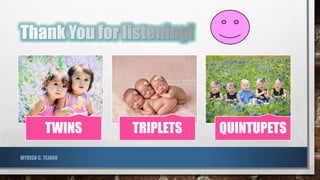
TWINS TRIPLETS QUINTUPETS
MYRISH C. TEJANO

Twins, Triplets and Quintuplets

  • 1.
    TWINS, TRIPLETS, QUINTUPLETS MyrishC. Tejano BSMT- IIMYRISH C. TEJANO
  • 2.
  • 3.
    TWINS Twins are twooffspring produced by the same pregnancy. Twins can either be monozygotic ("identical"), meaning that they can develop from just one zygote that will then split and form two embryos, or dizygotic ("fraternal"), meaning that they can develop from two different eggs; each are fertilized by separate sperm cells. MYRISH C. TEJANO
  • 4.
    •Identical twins areformed when one egg after being fertilized by one sperm, divides into two halves. The two halves are genetically identical. Identical twins are usually of the same sex. •Fraternal (non-identical) twins are formed when two egg cells are fertilized; each egg by a different sperm so that two embryos are formed. Fraternal twins can be of the same or opposite sex and they don't have to look at all alike. •Conjoined (siamese) twins are formed exactly like identical twins, but during the split, the embryo does not separate completely to form two separate babies and the twins develop attached to one another. MYRISH C. TEJANO
  • 5.
  • 6.
  • 7.
    TRIPLETS •The majority oftriplets are what is known as trizygotic. This is because they are formed when three separate, individual eggs are fertilized by three separate sperm. These babies share the same characteristics as any other siblings with the same biological parents. They can be the same or opposite genders. MYRISH C. TEJANO
  • 8.
    • When onesingle egg is fertilised by one single sperm and this fertilized zygote quickly and evenly divides into three separate zygotes, identical triplets are formed. Another possibility is that the fertilized egg splits into two and then one of these eggs divides again. These are what are known formally as monozygotic triplets. This splitting occurs shortly after fertilization and before a woman even suspects she is pregnant. There is nothing she or her partner can do to influence the likelihood of this occurring. It is pure biological luck. MYRISH C. TEJANO
  • 9.
  • 10.
  • 11.
    • Quintuplets occurnaturally in 1 in 55,000,000 births.[10] the first quintuplets known to survive infancy were the all-female Canadian Dionne quintuplets, born in 1934. MYRISH C. TEJANO
  • 12.
    MYRISH C. TEJANO Videoclip on the formation of multiple pregnancies
  • 13.
    RISKS OF MULTIPLEPREGNANCY • Miscarriage of one or more babies (fetuses). • Gestational diabetes. • High blood pressure and preeclampsia. • Anemia. • Increased chance of Cesarean delivery. • Increased chance of giving birth before 37 weeks (preterm birth), which poses greater risks of illness, disability, and death. • Having a baby born with a birth defect that occurs when something is wrong with the genes or chromosomes. Certain genetic disorders may be more likely to occur in multiple pregnancies. • Multiple pregnancies conceived by the use of assisted reproductive technology (ART) may have a greater risk of certain pregnancy problems. MYRISH C. TEJANO
  • 14.