Trichostrongyliasis
FOOD AND WATERBORNE PARASITIC DISEASES (PARA-704)
SUBMITTED TO: DR. M. KASIB KHAN
SUBMITTED BY: TANZEELA NUREEN(2021-AG-379)
INTRODUCTION:
• Trichostrongyliasis is a zoonotic disease caused by the intestinal
nematodes, Trichostrongylus spp.
• The most common Trichostrongylus species infecting humans were T.
colubriformis and T. orientalis
• These parasites are ubiquitous among herbivores, including cattle,
sheep, goats, and deer, worldwide
• Human infections occur mostly by consumption of raw vegetables
contaminated with infective filariform larvae
• It is estimated that 5.5 million people are infected globally
LIFE CYCLE:
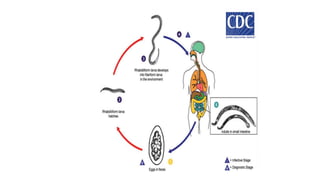
• The life-cycle of Trichostrongylus spp. is direct, simple and without an
intermediate host.
• Eggs are passed in the stool of the definitive host (usually a
herbivorous mammal
• under favorable conditions (moisture, warmth, shade), and larvae
hatch within several days. The released rhabditiform larvae grow in
the soil or on vegetation
• after 5 to 10 days (and two molts) they become filariform (third-
stage) larvae that are infective
• Infection of the human host occurs upon ingestion of these filariform
larvae
• The larvae reach the small intestine, where they reside and mature
into adults.
• Adult worms inhabit the digestive tract of their definitive hosts and
may occur as incidental infections in humans
CLINICAL FINDING:
• Most infections are asymptomatic
• Heavy infections can cause
• gastrointestinal problems
• abdominal pain
• diarrhea
• anorexia
• headache
• fatigue
• anemia
• eosinophilia
DIAGNOSIS:
• Clinical diagnosis of infection is based on the finding of eggs in the
feces of humans and herbivores.
• Because eggs may be difficult to find in light infections, a
concentration or flotation procedure is recommended
• Several DNA based techniques can discriminate different species
of Trichostrongylus, including all life-cycle stages and sexes, e.g. PCR-
restriction fragment length polymorphism (PCR-RFLP)
Treatment and prevention:
• Since the use of herbivore manure as fertilizer is a common practice
preceding infection, thorough cleaning and cooking of vegetables is
required for the prevention of infection.
• Treatment with pyrantel pamoate is recommended as the first-line
drug.
• Alternative agents include mebendazole and albendazole. Successful
treatment with ivermectin has also been reported.
• Another way of avoiding these free-swimming stages of infective
larvae is to wear protective footwear when walking in areas of
parasite prominence and maintain general sanitary practices
throughout the day.
THANK YOU

Trichostrongyliasis.pptx

  • 1.
    Trichostrongyliasis FOOD AND WATERBORNEPARASITIC DISEASES (PARA-704) SUBMITTED TO: DR. M. KASIB KHAN SUBMITTED BY: TANZEELA NUREEN(2021-AG-379)
  • 2.
    INTRODUCTION: • Trichostrongyliasis isa zoonotic disease caused by the intestinal nematodes, Trichostrongylus spp. • The most common Trichostrongylus species infecting humans were T. colubriformis and T. orientalis • These parasites are ubiquitous among herbivores, including cattle, sheep, goats, and deer, worldwide • Human infections occur mostly by consumption of raw vegetables contaminated with infective filariform larvae • It is estimated that 5.5 million people are infected globally
  • 3.
    LIFE CYCLE: • Thelife-cycle of Trichostrongylus spp. is direct, simple and without an intermediate host. • Eggs are passed in the stool of the definitive host (usually a herbivorous mammal • under favorable conditions (moisture, warmth, shade), and larvae hatch within several days. The released rhabditiform larvae grow in the soil or on vegetation
  • 4.
    • after 5to 10 days (and two molts) they become filariform (third- stage) larvae that are infective • Infection of the human host occurs upon ingestion of these filariform larvae • The larvae reach the small intestine, where they reside and mature into adults. • Adult worms inhabit the digestive tract of their definitive hosts and may occur as incidental infections in humans
  • 6.
    CLINICAL FINDING: • Mostinfections are asymptomatic • Heavy infections can cause • gastrointestinal problems • abdominal pain • diarrhea • anorexia • headache • fatigue • anemia • eosinophilia
  • 7.
    DIAGNOSIS: • Clinical diagnosisof infection is based on the finding of eggs in the feces of humans and herbivores. • Because eggs may be difficult to find in light infections, a concentration or flotation procedure is recommended • Several DNA based techniques can discriminate different species of Trichostrongylus, including all life-cycle stages and sexes, e.g. PCR- restriction fragment length polymorphism (PCR-RFLP)
  • 8.
    Treatment and prevention: •Since the use of herbivore manure as fertilizer is a common practice preceding infection, thorough cleaning and cooking of vegetables is required for the prevention of infection. • Treatment with pyrantel pamoate is recommended as the first-line drug. • Alternative agents include mebendazole and albendazole. Successful treatment with ivermectin has also been reported. • Another way of avoiding these free-swimming stages of infective larvae is to wear protective footwear when walking in areas of parasite prominence and maintain general sanitary practices throughout the day.
  • 9.